The Paris AtlasCharting the artists, works, and places worth returning to.

Lettres à Milton Hindus

Letters to Milton Hindus

1947–1949

by Louis-Ferdinand Céline · Cahiers Céline, vol. 11 of 13

Cahiers Céline 11 — 302 pages of the intense, then broken correspondence between Céline in Danish exile and the American Jewish literary scholar Milton Hindus, culminating in Hindus's 1948 visit to Denmark and his 1950 portrait of Céline as a crippled giant.

Published
2012Posthumous
Setting
Shelf rating
3.6

About Louis-Ferdinand Céline

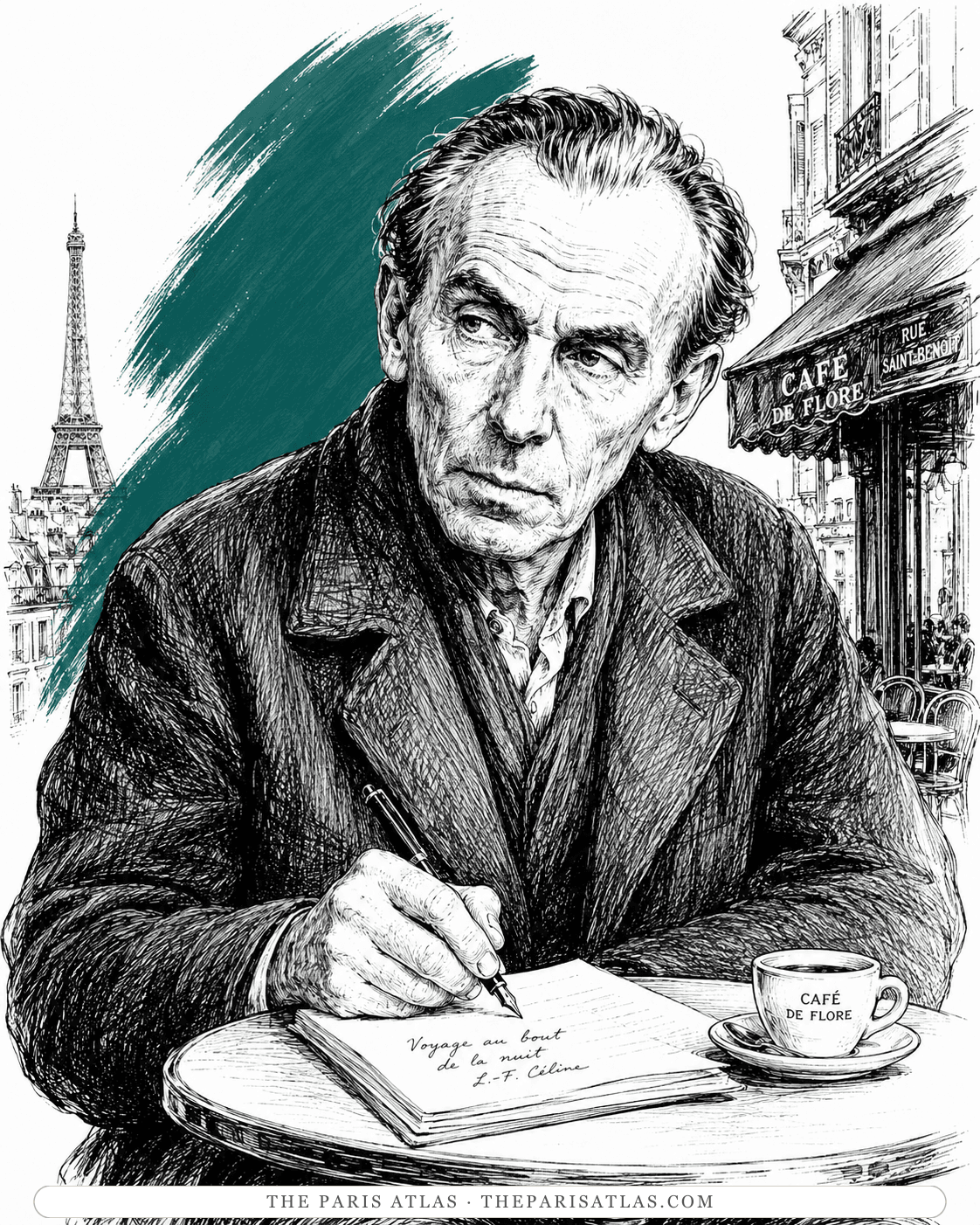
Illustrated portrait of Louis-Ferdinand Céline

The story, briefly

Spoiler-free

Milton Hindus was a young American Jewish literary critic and Yiddish-speaking Boston academic who admired Journey to the End of the Night and, in 1947, began writing to Céline in Danish exile. Their correspondence is one of the strangest in twentieth-century letters: a Jewish American scholar defending Céline as a great novelist while Céline was still under indictment in France for the antisemitic pamphlets. The letters cover 1947–1949; in the summer of 1948 Hindus actually travelled to Denmark and spent a month with Céline and Lucette; the two men fought; Hindus went home; in 1950 he published The Crippled Giant, a bruising and complicated portrait; Céline never fully forgave him. This 2012 Gallimard scholarly edition, edited by Jean-Paul Louis, prints their full surviving exchange with the apparatus.

The story, in more detail

The correspondence opens in 1947. Hindus is teaching in Chicago and then at Brandeis, has read Journey to the End of the Night in French, and writes to Céline as an admirer of the novels.

Céline is at Vestre Fængsel in Copenhagen and then living under Danish surveillance in the country. He answers.

The letters build. Hindus proposes a book about Céline — the first serious postwar critical study in English. Céline agrees and begins feeding him material, memories, positions, denunciations, and the shape of the argument he wants Hindus to make.

In July 1948 Hindus travels to Denmark and spends a month with Céline and Lucette Almanzor. The visit does not go well. Céline is angry, ill, unpredictable; Hindus is measured and finds himself alarmed. The two men part badly.

Hindus goes home. In 1950 he publishes The Crippled Giant — a portrait that treats Céline as a great novelist and a cornered, spiteful, damaged man. Céline is furious. The correspondence effectively ends.

The letters printed here run 1947–1949 and stop with the immediate aftermath of the visit.

The full plot

What happens, beginning to end — the ending included. Open when you're ready.

This is the record of an admirer becoming a friend, becoming a witness, becoming an enemy.

Hindus's letters are patient, generous, and increasingly worried. He is trying to argue in America for a novelist who has published unforgivable pamphlets, and is asking Céline to help him make the case; Céline keeps refusing to make it easy.

Céline's letters use Hindus. He wants a champion in America, a book, a rehabilitation. He also cannot keep himself from writing paragraphs Hindus will not be able to defend.

The 1948 visit is documented in the letters written around it — the arrangements, the aftermath, the accusations. What happened inside the month itself is in Hindus's book, not here.

How it ends — spoilers aheadThe final movement, ending included. Open when you're ready.

The correspondence closes shortly after Hindus's return to America in the fall of 1948, with a handful of increasingly cold letters through 1949.

The Crippled Giant appears in 1950. Céline never forgives Hindus. The record printed here is the story of a friendship that a book destroyed.

Why we recommend it

  1. One of the strangest correspondences of the century

    A Jewish American scholar arguing for a great French novelist under indictment for antisemitic pamphlets, and the novelist trying to use him. There is nothing else like it in the record.

  2. The prehistory of The Crippled Giant

    Hindus's 1950 portrait is one of the most important early attempts to reckon with Céline in English. These letters are what was written around it.

  3. Céline handling a foreign admirer

    The letters show Céline trying, and failing, to keep an ally on his side by force of will. The failure is the interesting part.

What this book explores

Book editions

Paperback
Paperback
French
Éditions Gallimard (Cahiers Céline vol. 11)

Reader reviews

Loading reviews…

Lettres à Milton Hindus: frequently asked questions

Who was Milton Hindus?

American literary scholar (1916–1998), Yiddish-speaking, based at Brandeis. Author of The Crippled Giant (1950), one of the first postwar English-language studies of Céline. Later wrote on Whitman and modern American Jewish literature.

How long is the correspondence?

302 pages in the 2012 Gallimard scholarly edition, covering the years 1947–1949.

What is The Crippled Giant?

Hindus's 1950 book about his month with Céline in Denmark and his reading of the novels. It treats Céline as a great writer and a cornered, damaged man. Céline never forgave him for it.

Did Hindus actually meet Céline?

Yes. In July 1948 he travelled to Denmark and spent a month with Céline and Lucette Almanzor. The visit ended badly.

Is any of this available in English?

The correspondence has not been translated. Hindus's own book The Crippled Giant (1950) is the closest English-language account of the exchange.

Why does this correspondence matter?

It is the primary documentary source for Céline's postwar attempt to have himself read again in America, and for how that attempt collapsed under the weight of the pamphlets he had already written.

If you like Louis-Ferdinand Céline

Explore authors with a similar voice, perspective, and influence.

  • Illustrated portrait of Henry Miller

    Henry Miller

    Miller read Journey in manuscript while writing Tropic of Cancer and never recovered — the two books are the era's twin gutter-testaments.

    View author
  • Illustrated portrait of Blaise Cendrars

    Blaise Cendrars

    The other French modernist Céline could not look away from: a war-wounded amputee whose spoken prose ran ahead of grammar and whose Moravagine anticipates Bardamu's tour of the century's slaughterhouses.

    View author
  • Illustrated portrait of Ernest Hemingway

    Ernest Hemingway

    The same war, the same refusal of the big words — delivered in whispers where Céline delivers it in screams. Both writers died in the same week of July 1961.

    View author
References

References

The sources below include biographies, scholarly essays, interviews, and primary materials that informed this page. They reflect both the historical record and ongoing critical conversations about Louis-Ferdinand Céline and their work.

  1. 1Bibliothèque de la Pléiade Céline catalogue — scholarly editions including Entretiens avec le professeur Y, La Volonté du roi Krogold, La Légende du Roi René, Guerre and Londres

    Éditions Gallimard
    View source
  1. 2Céline (biography)

    Gallimard, 2011
    View source
i
Why these sources are here

These references anchor the page in the documented record and in the scholarly conversations around Louis-Ferdinand Céline. Every claim on this page traces back to one or more of the works listed here.

Explore more resources