The Paris AtlasCharting the artists, works, and places worth returning to.

Lettres à Marie Canavaggia

Letters to Marie Canavaggia

1936–1960

by Louis-Ferdinand Céline · Cahiers Céline, vol. 9 of 13

Cahiers Céline 9 — the 758-page scholarly edition of Céline's letters to his literary secretary Marie Canavaggia, twenty-four years of the working relationship that saw the novels into print.

Published
2007Posthumous
Setting
Shelf rating
3.4

About Louis-Ferdinand Céline

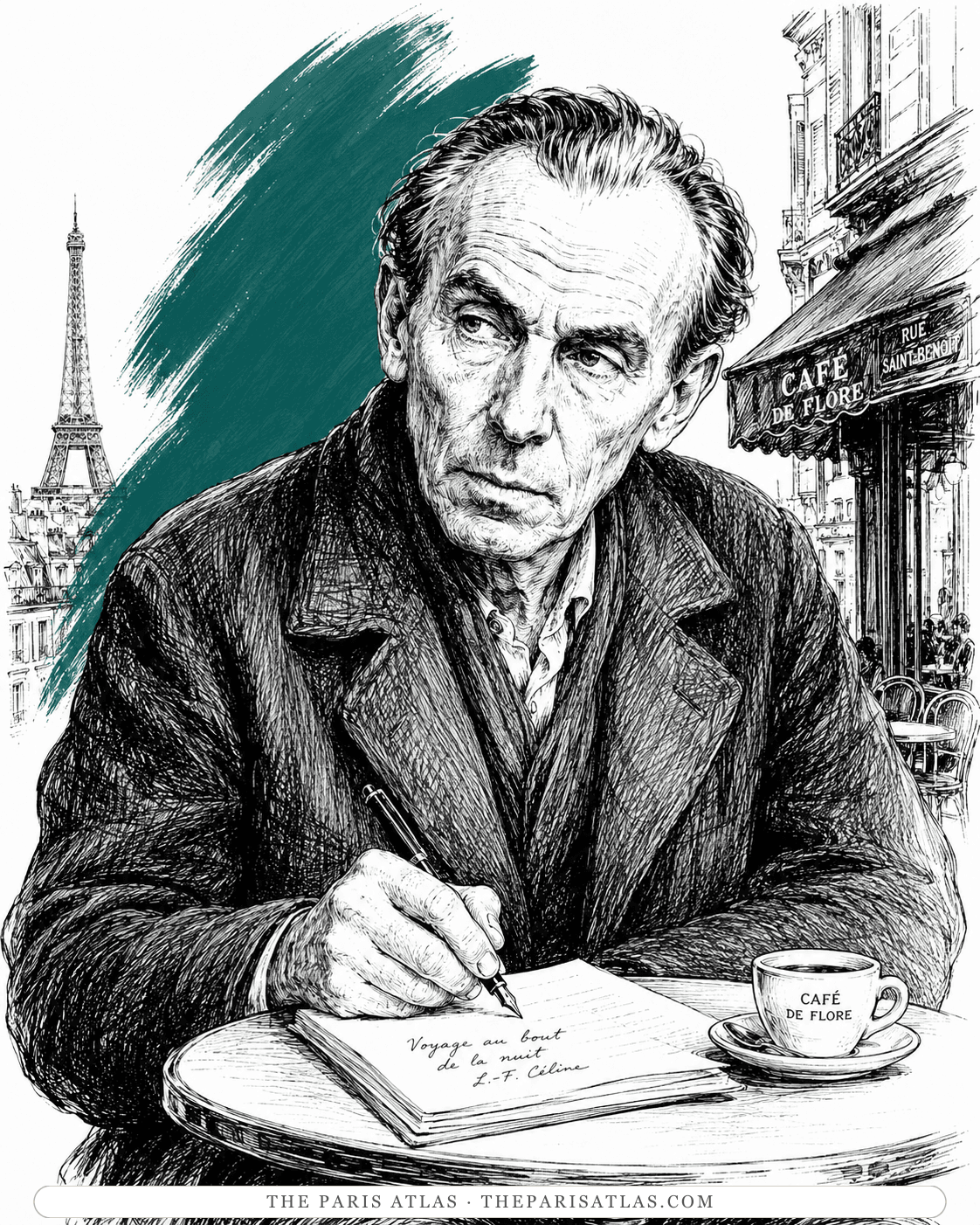
Illustrated portrait of Louis-Ferdinand Céline

The story, briefly

Spoiler-free

Marie Canavaggia was Céline's literary secretary from 1936 until his death in 1961 — the trusted intermediary who handled manuscripts, prepared texts for the press, dealt with publishers on his behalf, and preserved material through the 1944 flight from Paris. This 2007 Gallimard edition, edited by Jean-Paul Louis for the revived Cahiers Céline sequence, prints their surviving correspondence — 758 pages of instructions, drafts, disputes with editors, family news, and the quotidian business of turning Céline's manuscripts into books. It is the closest thing the record has to a professional diary of the writing years.

The story, in more detail

The correspondence opens in 1936, the year Canavaggia became Céline's literary secretary. She was thirty-nine, from a Corsican intellectual family in Paris, and worked from her apartment.

The early letters cover the preparation of Bagatelles pour un massacre (1937), L'École des cadavres (1938) and Les Beaux draps (1941) — instructions on typing, corrections to send to publishers, disputes over paragraphs and cover copy.

The wartime letters thin. Céline is in Paris under the Occupation and then, from 1944, in flight. Canavaggia keeps working from Paris; the material she was custodian of survives, and later feeds into the manuscripts that were only rediscovered in 2021.

The Danish exile letters (1945–1951) are practical and urgent. Céline is in Copenhagen — first at Vestre Fængsel, then living under surveillance in the country — and Canavaggia is his channel to French publishing, editors, lawyers and money.

After 1951 the correspondence covers the return to Meudon and the composition of the German trilogy: D'un château l'autre, Nord and the still-unfinished Rigodon. Canavaggia types, reads, corrects and forwards proofs.

The final letters are dated 1960. Céline dies in July 1961. Canavaggia continues as a custodian of the papers into the following decades.

The full plot

What happens, beginning to end — the ending included. Open when you're ready.

The volume is not a narrative but the record of a working relationship. Céline writes to Canavaggia about a passage he needs cut, a paragraph he wants re-inserted, a page proof that arrived without a cover; she writes back about which editor is available, what a printer is asking for, who owes whom money.

Around this working traffic sit the personal registers — family news from the Canavaggia sisters, cats, Céline's health, Lucette's dance work, weather.

The middle years (1944–1951) become a survival correspondence: Céline in Denmark, unable to publish under his own name in France, dependent on Canavaggia to see any manuscript into print at all. The letters lose their pre-war ease and become instructions and appeals.

The late years (1951–1960) return to the work of getting books written and shipped, from a very different place: an aging writer at Meudon dictating corrections by mail to a secretary in Paris.

How it ends — spoilers aheadThe final movement, ending included. Open when you're ready.

The correspondence stops in 1960. Céline dies six months later on 1 July 1961; Canavaggia lives on until 1976 and keeps custody of much of the paper trail.

What the volume documents, from opening page to close, is twenty-four years of the person who kept Céline's writing alive on the page.

Why we recommend it

  1. The novels being made

    The letters are where the decisions live — which passages Céline cut, which he defended, how he pushed back on publishers, how he corrected proofs by mail from Denmark. The finished books stop being finished when you read them.

  2. The person who kept the record

    Almost everything the Atlas holds about the mechanics of Céline's later writing life passes through this correspondence. Reading it is reading over Canavaggia's shoulder.

  3. How the German trilogy got typed

    The 1950s letters follow the composition of D'un château l'autre, Nord and Rigodon — Céline dictating corrections by mail from Meudon, Canavaggia keeping the manuscripts moving toward Gallimard. The trilogy is what the correspondence built.

What this book explores

Book editions

Paperback
Paperback
French
Éditions Gallimard (Cahiers Céline vol. 9)

Reader reviews

Loading reviews…

Cover of Semmelweis et autres écrits médicaux by Louis-Ferdinand Céline

Semmelweis et autres écrits médicaux

Louis-Ferdinand Céline

Gallimard's Cahiers Céline 3 — the collected medical corpus of Dr. Louis Destouches, before he became Céline: the 1924 Semmelweis thesis and the public-health and factory-medicine writings that surrounded it.

Read our take
Cover of Cahiers de prison by Louis-Ferdinand Céline

Cahiers de prison

Louis-Ferdinand Céline

Louis-Ferdinand Céline's ten Copenhagen prison notebooks — February to October 1946 — first published in complete scholarly form in 2019, and the workshop in which the postwar novels began.

Read our take

Recommended alongside Lettres à Albert Paraz, Lettres à des amies and Lettres à Milton Hindus.

Lettres à Marie Canavaggia: frequently asked questions

Who was Marie Canavaggia?

A French literary secretary from a Corsican intellectual family, born 1896. From 1936 until Céline's death in 1961 she was his trusted intermediary — typing manuscripts, corresponding with publishers on his behalf, and preserving material through the 1944 flight from Paris.

How long is the correspondence?

The 2007 Gallimard scholarly edition runs 758 pages, covering the years 1936–1960.

Who edited the volume?

Jean-Paul Louis, for the revived Cahiers Céline sequence. It is volume 9 in the series numbering — the first of three correspondence editions Louis produced between 2007 and 2012.

Are Canavaggia's own letters included?

Not always. The surviving correspondence is largely Céline's side; Canavaggia's letters to him were less consistently preserved, especially through the wartime and exile years.

Is any of this available in English?

No. The correspondence has not been translated. English readers who want it must read it in French or through the scholarship that quotes from it.

What is the connection to the manuscripts rediscovered in 2021?

The papers that surfaced in 2021 and were published as Guerre and Londres in 2022 come from the corpus Canavaggia and her circle preserved. Reading the letters is reading the working relationship that kept those manuscripts alive to be found later.

If you like Louis-Ferdinand Céline

Explore authors with a similar voice, perspective, and influence.

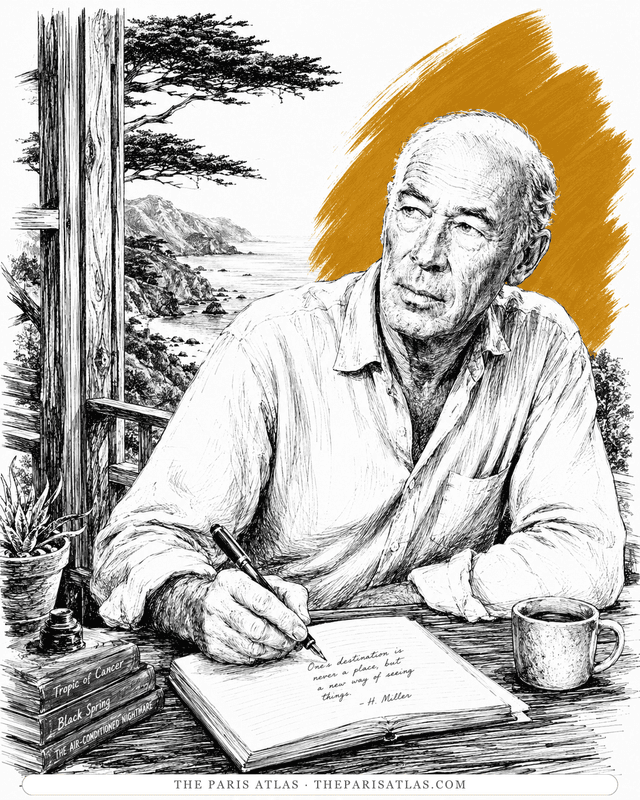
  • Illustrated portrait of Henry Miller

    Henry Miller

    Miller read Journey in manuscript while writing Tropic of Cancer and never recovered — the two books are the era's twin gutter-testaments.

    View author
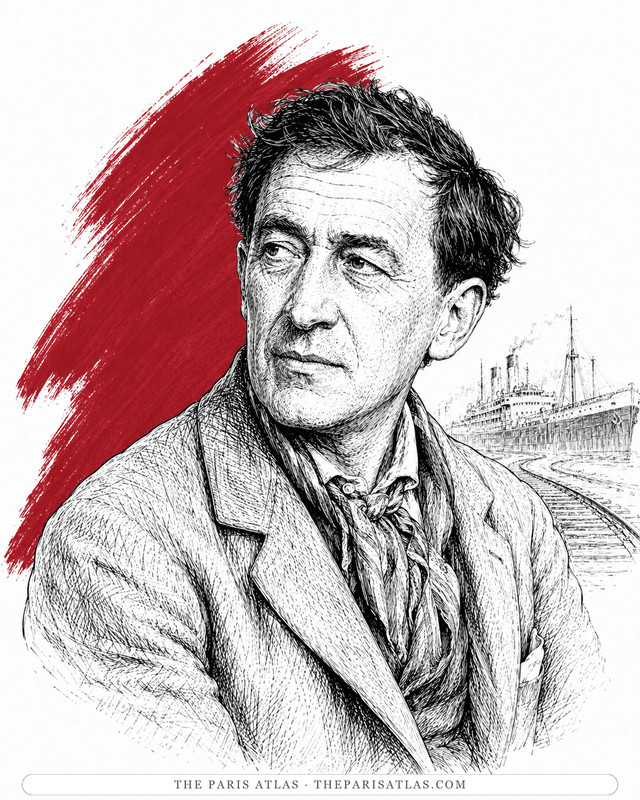
  • Illustrated portrait of Blaise Cendrars

    Blaise Cendrars

    The other French modernist Céline could not look away from: a war-wounded amputee whose spoken prose ran ahead of grammar and whose Moravagine anticipates Bardamu's tour of the century's slaughterhouses.

    View author
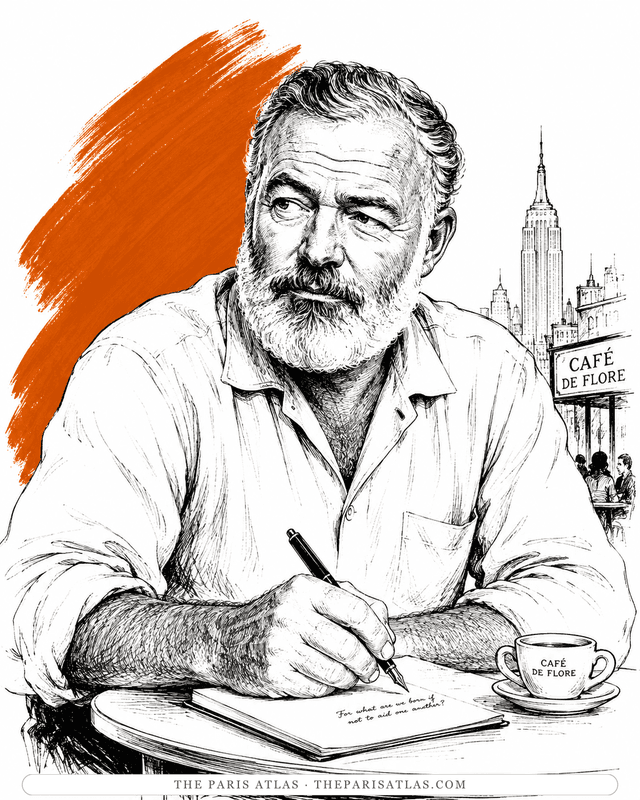
  • Illustrated portrait of Ernest Hemingway

    Ernest Hemingway

    The same war, the same refusal of the big words — delivered in whispers where Céline delivers it in screams. Both writers died in the same week of July 1961.

    View author
References

References

The sources below include biographies, scholarly essays, interviews, and primary materials that informed this page. They reflect both the historical record and ongoing critical conversations about Louis-Ferdinand Céline and their work.

  1. 1Bibliothèque de la Pléiade Céline catalogue — scholarly editions including Entretiens avec le professeur Y, La Volonté du roi Krogold, La Légende du Roi René, Guerre and Londres

    Éditions Gallimard
    View source
  2. 2Un roman retrouvé de Céline — Marie Canavaggia's discovery of Céline's manuscript material after his death and Robert Poulet's preparation of the 1964 edition of Le Pont de Londres

    Le Petit Célinien
    View source
  1. 3Céline (biography)

    Gallimard, 2011
    View source
i
Why these sources are here

These references anchor the page in the documented record and in the scholarly conversations around Louis-Ferdinand Céline. Every claim on this page traces back to one or more of the works listed here.

Explore more resources