

Semmelweis
Céline's earlier medical thesis, reissued in the same 1936 volume as Mea culpa to give the pamphlet enough length to publish.
Read our take
Louis-Ferdinand Céline's 1936 political and philosophical pamphlet — a short, disillusioned report from the Soviet Union that quickly widens into an argument against political utopianism.
Written after Céline's visit to the Soviet Union in the summer of 1936, Mea culpa is a short political and philosophical pamphlet that examines Soviet communism and, more broadly, the possibility of building an egalitarian society. Céline begins with observations of Soviet life — wage disparities, hospital conditions, propaganda, policing — but quickly widens the argument. His central contention is that changing political or economic institutions cannot by itself transform human behavior, and the pamphlet ultimately becomes a pessimistic meditation on ambition, selfishness, hierarchy, materialism and the limits of political idealism.
Céline had travelled to the USSR during the summer of 1936. Mea culpa, published soon after his return, belongs to a group of French "return from the USSR" books published in the same period, including André Gide's Retour de l'U.R.S.S. Unlike Gide, however, Céline had not gone to the Soviet Union as a committed communist intellectual who then abandoned the cause; his skepticism about political systems was already deeply established.
The pamphlet considers the discrepancy between Soviet promises of equality and the society Céline believed he had observed. He comments on differences in salaries and status, the condition of medical care, an extensive police presence, propaganda, and a governing hierarchy that he sees as having replaced rather than abolished older forms of inequality.
But the USSR gradually becomes an example for a much larger argument. Céline turns from communism to human nature itself. He argues that people continue to desire status, possessions, power, recognition and advantage regardless of the political structure placed around them.
The problem, in his formulation, is therefore not simply Stalinism or communism. It is the expectation that a political revolution can produce a fundamentally different kind of human being.
The text begins with the Soviet experiment and the promise that abolishing capitalist ownership will produce a more equitable society. Céline compares that promise with what he says he encountered during his trip.
He notes economic inequalities within Soviet society, contrasting highly paid professionals and officials with poorly paid workers. As a physician, he pays particular attention to hospitals and public health and presents the medical system as materially inadequate. He also describes bureaucracy, propaganda, political trials and extensive policing. Contemporary responses to Mea culpa particularly noticed these observations.
From there, the pamphlet shifts from reportage into philosophical argument. Céline maintains that removing private capital does not eliminate competition, selfishness, vanity, envy, hierarchy or the desire for privilege. The forms of power may change, in his view, but the impulses producing them remain.
He therefore rejects the expectation that collective ownership will automatically produce fraternity. Material prosperity is not enough either: Céline contrasts materialist political promises with older religious traditions that, in his interpretation, were more realistic about suffering and human imperfection.
Yet the text is not entirely reducible to misanthropy. Henri Godard has pointed out an important countercurrent: Céline also leaves room for a "fraternal feeling," a dimension of existence that cannot be produced mechanically by an economic system. Godard regards Mea culpa as a compact statement of Céline's anthropology at an important stage in his development.
There is no narrative ending.
Céline moves from the particular case of Soviet communism to his larger conclusion: political systems fail when they assume that human beings themselves can be perfected through institutional change.
The pamphlet therefore ends on the same question it has gradually widened toward throughout the text — not "Did communism work in Russia?" so much as "Can any political system overcome recurring features of human behavior?"
That shift from political observation to a general theory of human nature is what gives the very short Mea culpa its importance within Céline's work.
Hospital imagery offers a useful way into the pamphlet, but its medical language does more than describe wards. Near the end, Céline contrasts privileged medical facilities with others he calls destitute, then compares society's self-inflicted torment to disease. The movement from uneven provision to a diagnosis of humanity is a rhetorical leap, not a demonstrated medical conclusion. His authority as a physician helps make that leap sound inevitable. Reading the passage closely means distinguishing a complaint about institutions from the much larger claim it is recruited to support.
The demand for a fourth dimension interrupts the pamphlet's abuse with an unexpected criterion of solidarity. Céline proposes sharing other people's sufferings, not merely redistributing wealth, then gives the reluctant heart a series of evasive movements. Short clauses enact the refusal to accept that burden. This is not a practical programme, and it does not cancel the text's cruelty or antisemitic allusions. It exposes a tension inside the argument: fellowship is imaginable, but the speaker's sweeping contempt repeatedly works against the possibility he has just opened.
Mea culpa is useful because its true subject is broader than Soviet communism. The USSR supplies Céline with his immediate example, but the pamphlet is fundamentally an argument against political idealism based on the perfectibility of humanity.
This also distinguishes it from the three polemical books that follow. Mea culpa does not organise itself around the racial politics that dominate Bagatelles pour un massacre, L'École des cadavres and significant portions of Les Beaux draps. Instead, it concentrates on class, materialism, inequality, political power and Céline's longstanding pessimism about human motives. Henri Godard consequently describes it as an important condensed statement of Céline's view of humanity.
Its style is already characteristically Célinian: compressed, conversational, emphatic and deliberately opposed to detached political theory. Rather than construct a systematic political-science argument, Céline moves rapidly from anecdote to accusation, observation to generalisation.
What the pamphlet explores:
Mea culpa is the shortest and clearest place he ever stated his view that human beings — not institutions — set the ceiling on any political program. Henri Godard treats it as the compact statement of the anthropology behind everything Céline later wrote.
Mea culpa comes a year before Bagatelles pour un massacre and organises itself around class, materialism and human nature rather than the racial arguments of the three pamphlets that follow. Reading it first shows what he sounded like when the argument was still purely political.
Mea culpa belongs beside André Gide's Retour de l'U.R.S.S. as one of the French 1936–1937 books written after visits to Stalin's Soviet Union. The contrast between the two is a small chapter in the intellectual history of the decade.
Summer 1936
Céline visits the Soviet Union.
1936
After returning, he writes Mea culpa, using the journey as the starting point for his political critique.
December 1936
Denoël publishes the pamphlet with a reprint of Semmelweis.
Céline's earlier medical thesis, reissued in the same 1936 volume as Mea culpa to give the pamphlet enough length to publish.
Read our take
Céline's 1932 debut, whose pessimistic view of human motives Mea culpa states directly in essay form four years later.
Read our take
Céline's second novel, published earlier the same year (1936); Mea culpa is his prose-argument companion to it.
Read our takeNo. Mea culpa is a short political and philosophical pamphlet, originally only around twenty pages of new text.
He wrote it shortly after visiting the Soviet Union in the summer of 1936 and used his impressions of Soviet society as the starting point for a broader critique of communism and political idealism.
No. His position differed significantly from that of André Gide, whose famous Retour de l'U.R.S.S. described the disillusionment of a writer who had been much more sympathetic to the Soviet experiment.
That changing ownership, institutions or economic systems cannot by itself eliminate hierarchy, selfishness, rivalry or the desire for power.
Mea culpa was so short that its original commercial volume was supplemented by a new edition of Céline's earlier medical work on Ignaz Semmelweis, giving the book enough length to publish.
Because it states unusually directly his pessimistic view of politics and human nature, ideas that recur throughout his later fiction and polemical writing.
Explore authors with a similar voice, perspective, and influence.

Miller read Journey in manuscript while writing Tropic of Cancer and never recovered — the two books are the era's twin gutter-testaments.
View author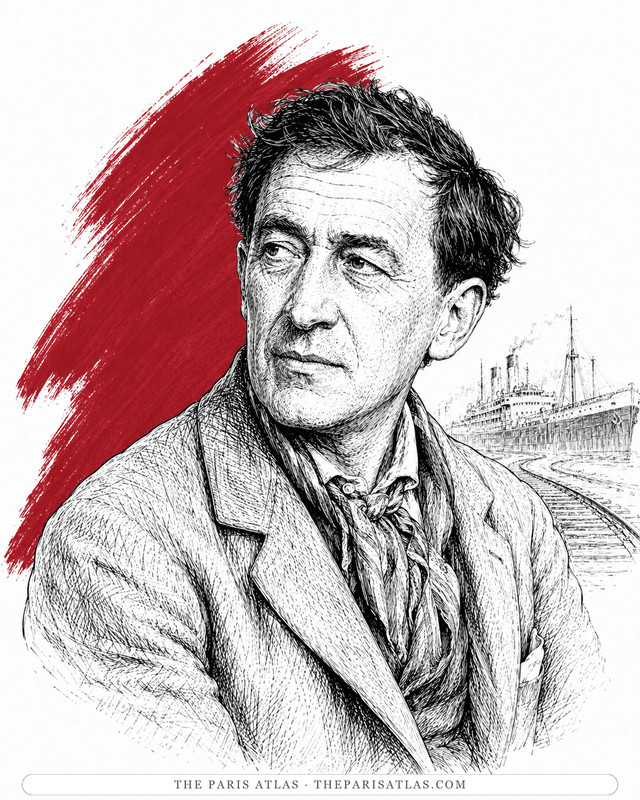
The other French modernist Céline could not look away from: a war-wounded amputee whose spoken prose ran ahead of grammar and whose Moravagine anticipates Bardamu's tour of the century's slaughterhouses.
View author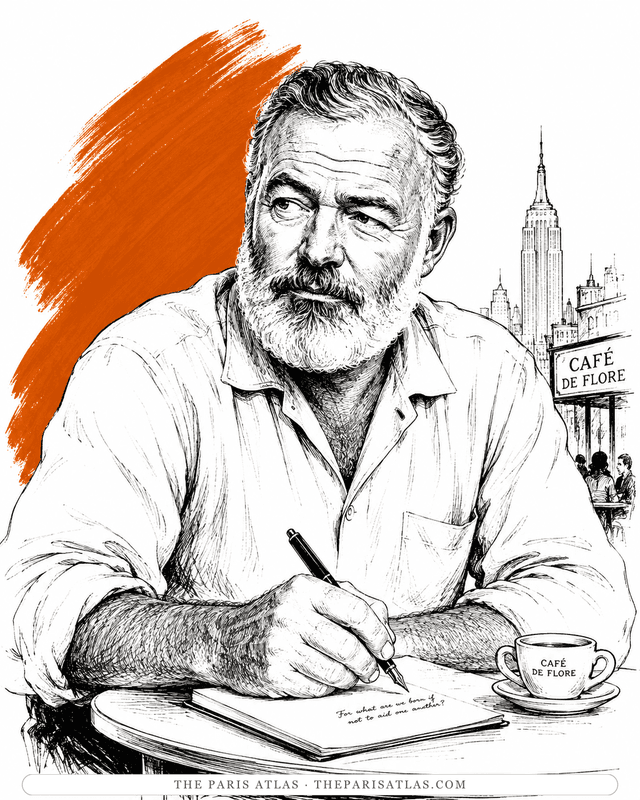
The same war, the same refusal of the big words — delivered in whispers where Céline delivers it in screams. Both writers died in the same week of July 1961.
View authorThe sources below include the primary text, editions, scholarship, archival materials, and other records that informed this page. They document Mea culpa, its publication, and its place in literary history.


The primary text represented by this page, used for descriptions of the work’s contents and for any quoted passages shown here.

Published analysis and historical context used in preparing the Mea culpa page.
Published analysis and historical context used in preparing the Mea culpa page.
Published analysis and historical context used in preparing the Mea culpa page.
Published analysis and historical context used in preparing the Mea culpa page.
Published analysis and historical context used in preparing the Mea culpa page.
The primary text is the baseline reference for every book page. Additional references document publication history, interpretation, and historical context where that evidence is available.
 Explore more resources