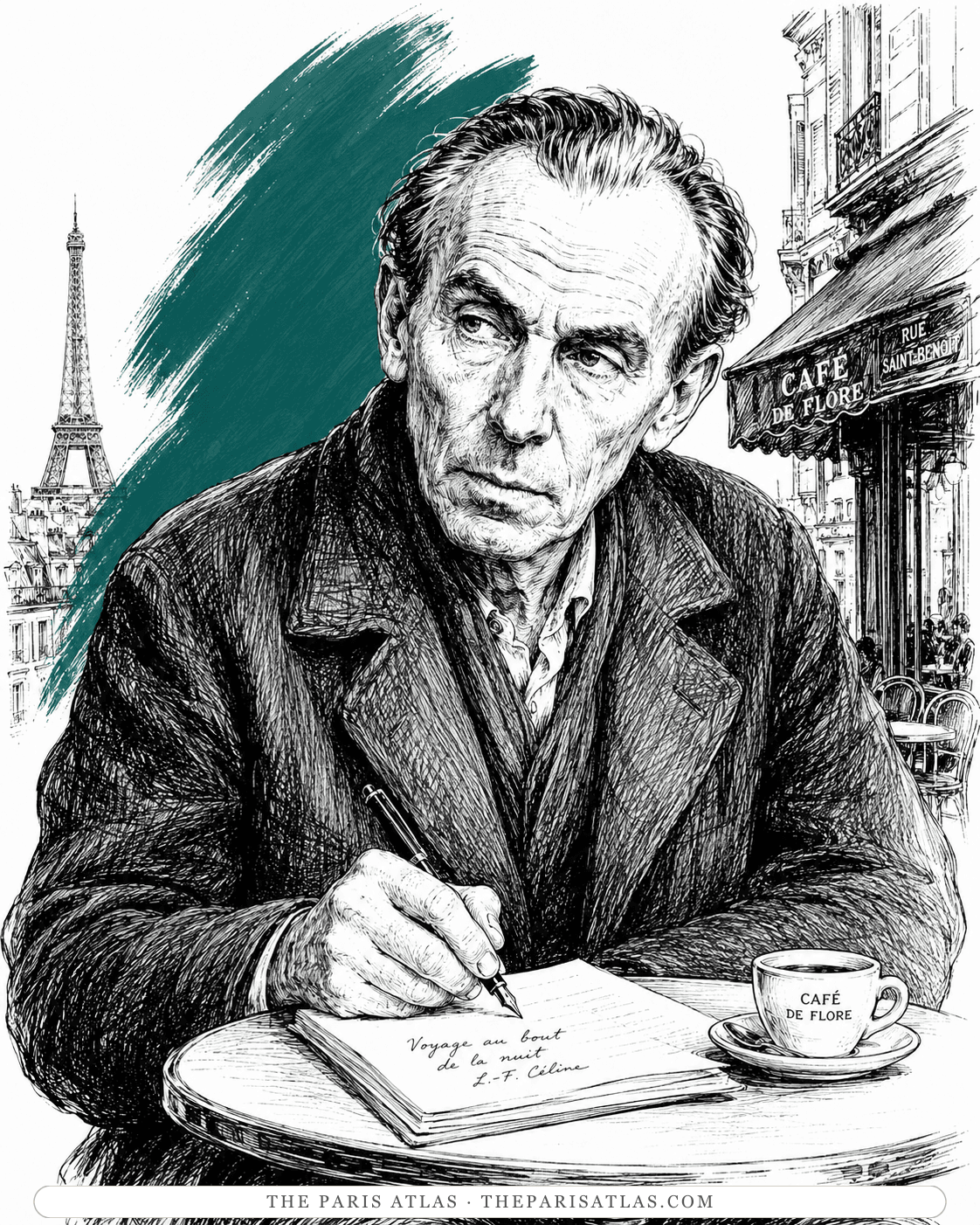

Journey to the End of the Night
His first novel, about Ferdinand's adult life. Most readers should start there.
Read our take
Céline's shrieking, hilarious portrait of a Belle Époque Paris childhood in the Paris arcades — poverty as opera.
Céline's second novel — Mort à crédit in French, later retranslated into English as Death on Credit as well as Death on the Installment Plan — goes back before the First World War, to the childhood of Ferdinand, the narrator of Journey to the End of the Night. He grows up in a glass-roofed Paris arcade, where his mother sells lace that no one buys and his father, an insurance clerk, rages at the dinner table. School, apprenticeships, and an English boarding school all end in disaster, until an uncle places him with Courtial des Pereires — inventor, balloonist, editor, and fraud. The style is wilder than Journey's, broken into short bursts by Céline's trademark ellipses, and the misery is played as comedy.
After the success of Journey to the End of the Night, Céline wrote about his childhood. Mort à crédit, published in 1936, rebuilds his boyhood in the Passage Choiseul — renamed the Passage des Bérésinas — where his family kept a failing lace shop under the glass roof. Everything is enlarged: the mother's limp, the father's rages, the ruined apprenticeships, the schemes. It is fiction built from his own life, exaggerated into comedy.[1]
The style went further than Journey's. The famous three-dot ellipses arrive here — sentences broken into short bursts, closer to a speaking voice than to written French. Reviewers who had accepted Journey rejected this one, and Denoël published it with blank spaces where passages had been cut, which drew attention to exactly what was missing. Sales disappointed, and Céline took the reception badly.[1]
The verdict has since reversed. Many readers, and many French writers, now consider this rather than Journey his best novel. Under the noise it is a family story: a boy, a failing shop, and parents worn down by small commerce.[1]
The novel rebuilds the childhood of Ferdinand, the narrator of Journey, in a glass-roofed Paris shopping passage at the turn of the century. His mother runs a lace shop and drags the family toward respectability; his father, a minor insurance clerk, predicts catastrophe nightly at the dinner table. Every attempt to launch the boy — school, first jobs, apprenticeships — ends in disaster, half through Ferdinand's fault and half through the world's.[1]
Two kinder figures interrupt the failures: Uncle Édouard, the one adult who believes in the boy, and an English boarding school where Ferdinand, sent to learn the language, refuses to speak at all. It is Uncle Édouard who arranges the last act, placing Ferdinand with Roger-Marin Courtial des Pereires — balloonist, inventor, magazine editor, and complete fraud.[1]
Courtial's enterprises collapse one after another: the balloon, a perpetual-motion contest that enrages its entrants, the magazine, and finally a scheme to grow potatoes by 'radio-telluric' waves in the countryside, which produces rotten crops and furious neighbors. Ruined, Courtial shoots himself one winter night, and Ferdinand finds the body. Back in Paris with nothing, and with Uncle Édouard's support, Ferdinand decides to join the army — where the events of Journey to the End of the Night will begin.
Philip H. Solomon's reading of Auguste's rages connects the cramped household to the authority outside it. Submissive at work, the father tries to govern his son through furious lessons in respectability: a trade, suitable clothes, obedience and freedom from debt. Those lessons promise a way out of the family's insecurity, yet their delivery reproduces domination at home. The enclosed arcade is therefore more than a gloomy backdrop. It gives spatial form to a contradiction: the parent who wants Ferdinand to escape his circumstances makes the domestic world harder for him to inhabit.
Solomon also links Courtial's expansive scientific talk to Auguste's verbal force. The inventor appears to offer Ferdinand a different world, but the new mentor likewise tries to create a reality that will answer to his words. Technical knowledge changes the vocabulary of authority without guaranteeing control over events. Beside the imagined agricultural apparatus, this reading shifts attention from an isolated bad invention to the larger promise of mastery. Courtial's projects can seem liberating because they propose alternatives to ordinary life; their vulnerability emerges when conviction cannot prevent the outside world from breaking in.
The inventor, balloonist, and fraud who employs Ferdinand in the last third of the book is one of the great comic characters in French literature.
This is the book where Céline's broken, three-dot style arrives. The sentences read like a voice, not like prose.
The era's good old days as lived by shopkeepers one bad month from ruin — the opposite of the usual picture of turn-of-the-century Paris.
1936
Céline publishes Mort à crédit with Denoël, a novel built from his own Paris childhood.
1936
Reviewers who had accepted Journey reject the new style, and Denoël prints the book with blank spaces where passages were cut.
1966
Ralph Manheim's English translation is published by New Directions.


His first novel, about Ferdinand's adult life. Most readers should start there.
Read our take
Henry Miller's book about his own furious childhood and youth in Brooklyn.
Read our take
Miller's 14th Ward chapters cover a poor childhood with affection instead of rage.
Read our take
Hemingway's Paris, one social class and a few streets away from Céline's.
Read our takeLouis-Ferdinand Céline. Published in 1936, it was his second novel, after Journey to the End of the Night.
The childhood and youth of Ferdinand, who grows up in a glass-roofed Paris arcade where his mother sells lace and his father rages. After failed schools and apprenticeships, he goes to work for Courtial des Pereires, an inventor and fraud.
It tells the childhood of Journey's narrator, so it takes place first even though it was written second. The style is wilder, with the sentences broken up by Céline's three-dot ellipses.
Largely. Céline grew up in the Passage Choiseul, where his mother kept a shop, and the novel reworks that childhood into fiction, greatly exaggerated.
This is the book where Céline's signature style arrives: short bursts of spoken French separated by ellipses. It pushed the experiment of his first novel much further.
Explore authors with a similar voice, perspective, and influence.
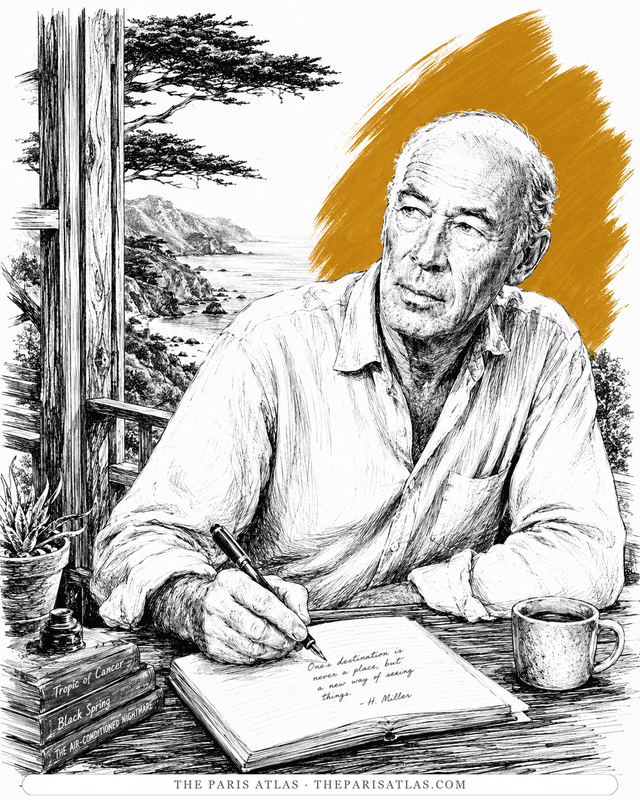
Miller read Journey in manuscript while writing Tropic of Cancer and never recovered — the two books are the era's twin gutter-testaments.
View author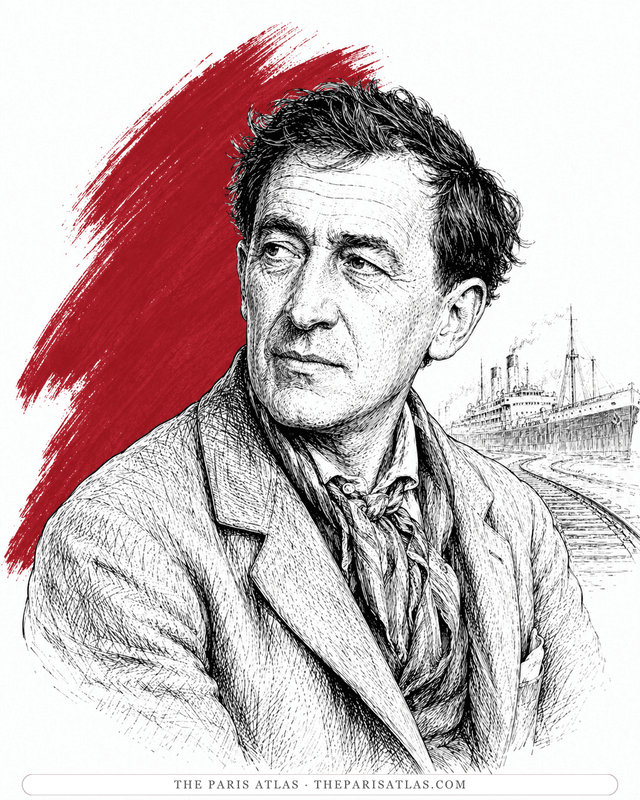
The other French modernist Céline could not look away from: a war-wounded amputee whose spoken prose ran ahead of grammar and whose Moravagine anticipates Bardamu's tour of the century's slaughterhouses.
View author
The same war, the same refusal of the big words — delivered in whispers where Céline delivers it in screams. Both writers died in the same week of July 1961.
View author
Depicted
The novel rebuilds the passage of Céline's childhood as the Passage des Bérésinas — the airless glass 'gas jar' where Ferdinand's family suffocates on respectability, the most complete transformation of a real address in the book.
Visit the place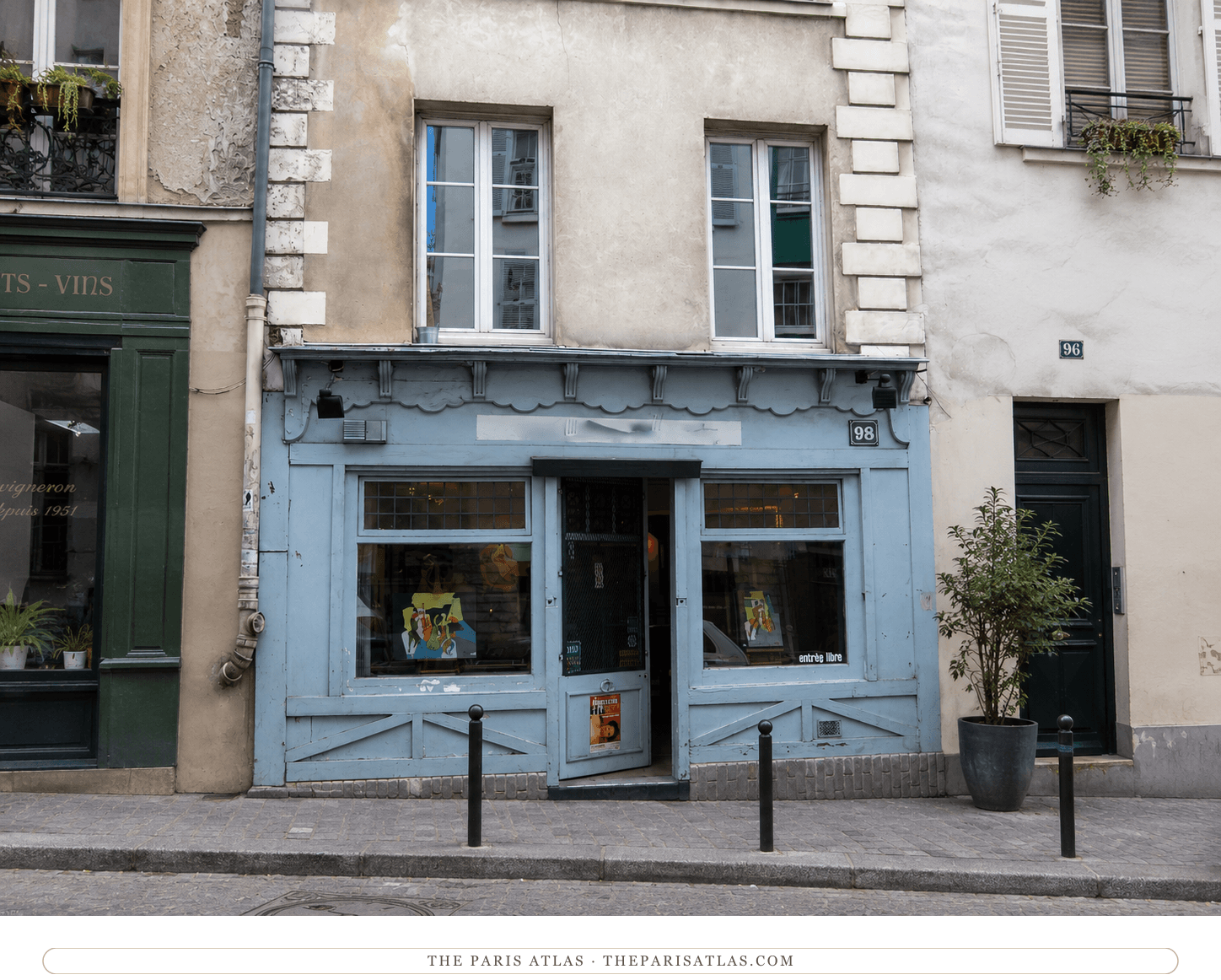
Written here
Céline wrote the novel in his rue Lepic flat, returning from that Montmartre desk to the Passage Choiseul childhood transformed in its pages.
Visit the placeThe sources below include the primary text, editions, scholarship, archival materials, and other records that informed this page. They document Death on the Installment Plan, its publication, and its place in literary history.


Publicly displayed abridged essay; section locators identify the passages used. Critical interpretation is attributed, not presented as direct primary-edition access.

A work-specific scholarly source used for the novel's publication, form, and critical context.
Used for manuscript and archival evidence relating to Mort à crédit.
Used for independent scholarship on Céline's language and technique in the novel.
Used to verify Louis-Ferdinand Céline's bibliography and place Death on the Installment Plan within the broader chronology of Louis-Ferdinand Céline's career.
The primary text is the baseline reference for every book page. Additional references document publication history, interpretation, and historical context where that evidence is available.
 Explore more resources
