
Discussed in
Inside the Whale and Other Essays
Orwell names Miller's newest book and explains that police and customs seizures had prevented him from obtaining a copy, a practical example of the censorship surrounding Miller's work.

by Henry Miller
Before Paris: the Brooklyn years, the Cosmodemonic Telegraph Company, and the fury that made the flight necessary.
The prequel written afterward: Miller's New York decade as hiring boss at the 'Cosmodemonic' telegraph company — a Chaplinesque machine of hirings, firings, and human wreckage — amid marriage, hackwork, and the gathering conviction that American life was a death sentence commuted only by art. Angrier than Cancer and stranger, it ends where the legend begins: with the departure for Paris. Banned, like its siblings, until 1961.
The sequel is a prequel: Capricorn drops back to the New York decade before Paris — the twenties Miller spent as employment manager of the 'Cosmodemonic Telegraph Company' (Western Union, barely disguised), hiring and firing the city's desperate by the hundred while his own life came apart and reassembled around June, the taxi-dance-hall enigma the book calls Mona and Mara. He wrote it in Paris, at a decade's safe distance, which is what made it writable at all.
Obelisk Press published it in Paris in 1939, on the eve of the catastrophe: within months the war had begun and Jack Kahane, its publisher, was dead. The Paris that had sheltered the banned books was closing; Capricorn was in effect the era's last dispatch, and it spent the next twenty-three years as contraband alongside Cancer.
Grove Press brought it home in 1962, into the same courtroom weather as its sibling. Read second, as intended, it completes the arc: the American 'before' picture — fury, machinery, the city as enemy — that explains why the Paris of Cancer felt like liberation. Its opening pages contain the most sustained attack on American life in the national literature, delivered by a man who eventually, complicatedly, came home.
The New York book: Miller's twenties, spent as employment manager of the messenger department at the 'Cosmodemonic Telegraph Company' — Western Union in the thinnest of disguises — hiring and firing the desperate of the whole city by the hundreds, a job that gave him a parade-ground view of American misery while his own life ran to ruin on schedule. The book is the portrait of the decade before Paris: marriage failing, ambitions humiliated, the city rendered as a machine for grinding exactly the kind of man he was.
Into the grind arrives the woman the book calls Mona and Mara — June, the taxi-dance-hall enigma who would dominate his life and books for decades — and with her the conviction that he must write or die. There is no plot in the carpentered sense; there is a long, furious, often ecstatic settling of accounts with America, and it ends where the legend begins: with everything burned away but the resolve that would put him, broke and free, on a boat to France.
There is no twist to protect — the book's destination is a person. In the final movement the narrator walks into a Broadway taxi-dance palace and meets the woman the book calls Mona: the great enigma of Miller's life and books, the encounter that makes the whole grinding decade suddenly negotiable. Job, marriage, the city's grip — all of it begins to shear away against the one thing that matters. The book closes with him suspended in expectation of her — she may come back tomorrow, he insists — caught between the New York years the reader has just crossed and the Paris flight the reader knows is coming. The real ending of Tropic of Capricorn, in other words, is Tropic of Cancer.
The narrator remembers his grandfather's expression more clearly than the books he read aloud. That reversal makes the workbench scene an education in something words have not yet taught the child: the possibility of being inwardly elsewhere. The boy interprets the tailor's daydreaming as freedom, although the man's body remains at work. Against the child's sense of being inseparable from everyone around him, this moment suggests an interior life that cannot simply be shared or observed. The remembered pause matters because its meaning remains partly inaccessible, not because the adult explains what he is thinking.
The rejected application exposes the narrator's pride as well as his insecurity. He considers messenger work beneath him, yet has invented a doctorate for the form; humiliation grows from the clash between that inflated self-presentation and the refusal. His return to the company's senior offices does not simply vindicate his abilities. Office rivalries and managerial antisemitism help make his complaint useful, and advancement requires observing other workers secretly. The episode turns exclusion into recruitment: the man who resents the institution's judgment accepts a role in its machinery. His anger does not place him outside its compromises.
Discussed in
Orwell names Miller's newest book and explains that police and customs seizures had prevented him from obtaining a copy, a practical example of the censorship surrounding Miller's work.

Discussed in
The diary follows Miller's work on Tropic of Capricorn and records Nin's judgment that its passages of void and disintegration were among his strongest writing.
Miller processing four decades of American office life into one infernal telegraph company — the funniest sustained assault on employment in the language.
Where Cancer celebrates escape, Capricorn autopsies what was escaped — the money-madness Miller believed was eating the country alive. It reads uncomfortably current.
The mid-book 'Ovarian Trolley' section is Miller's stylistic high-wire act — twenty pages critics still argue about, and the closest American prose came to surrealism's deep end.
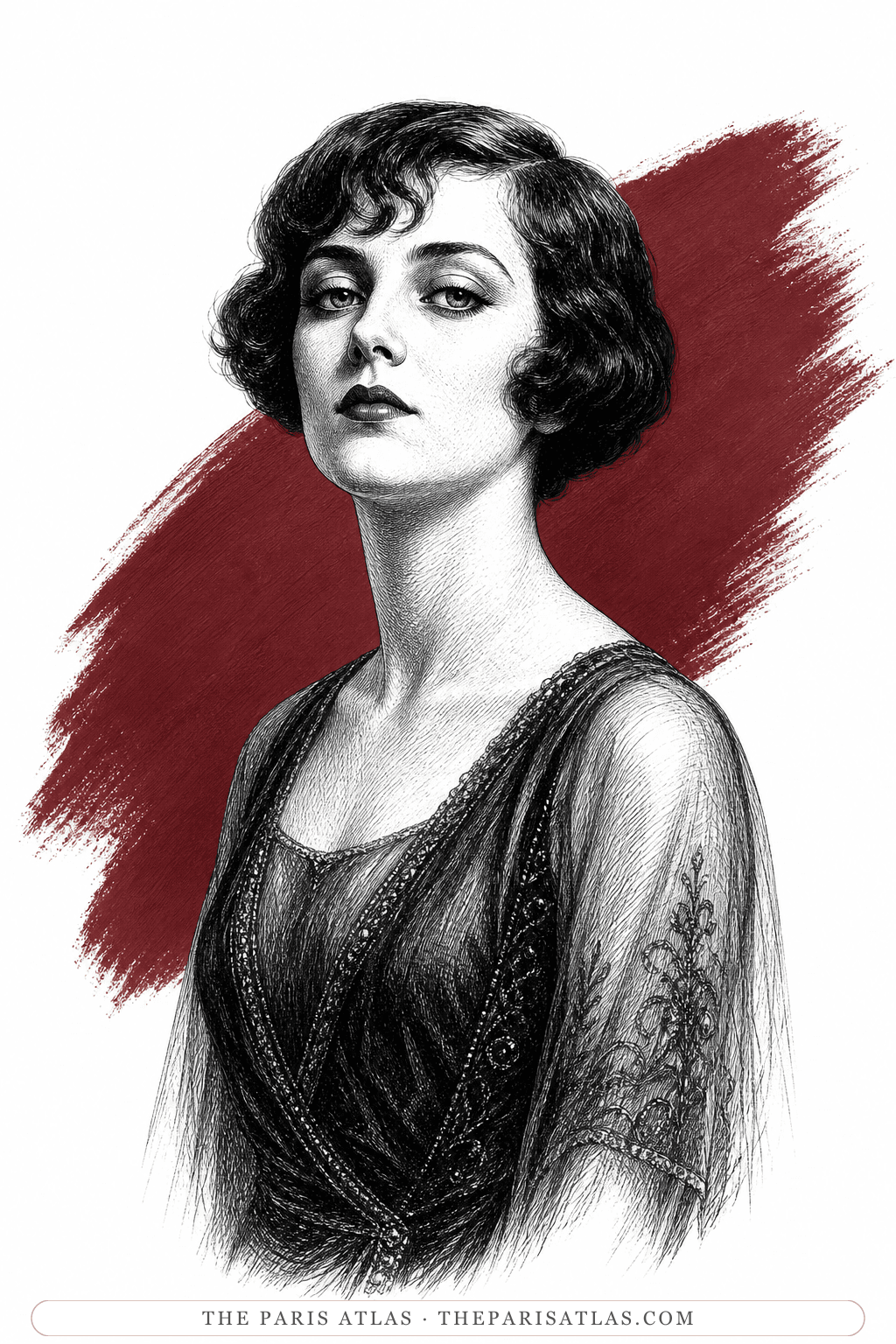
The woman the book is addressed to and named for no one — 'her' throughout, called Mara exactly twice in the whole novel. June Miller, at the moment Miller met her.
1939
Writing the New York years from a decade's distance in Paris, Miller publishes it with the Obelisk Press.
1939
Within months the war begins and Jack Kahane, its publisher, is dead, and the Paris that had sheltered the banned books is closing.
1962
Grove Press brings it to American readers, into the same obscenity-trial weather as Tropic of Cancer.


Céline's version of the same project: excavate the years that made the voice.
Read our take
Bardamu's American chapters cover this exact machine-world — from the assembly line instead of the hiring desk.
Read our takeHenry Miller. It was published in Paris in 1939, five years after Tropic of Cancer.
Miller's New York decade as hiring manager at the "Cosmodemonic" telegraph company — a barely disguised Western Union — amid marriage, hackwork, and a growing conviction that only art could redeem American life. It ends where the legend begins: the departure for Paris.
It is a companion and, in time, a prequel — written afterward, it covers the New York years that came before the Paris of Cancer.
Like its siblings, for explicit sexual content. It remained contraband in the English-speaking world until 1961.
Autobiographical fiction, drawn directly from Miller's own New York years before Paris.
Explore authors with a similar voice, perspective, and influence.

Miller's acknowledged master at making literature out of the gutter. Journey gave him permission; Cancer is what he did with it.
View author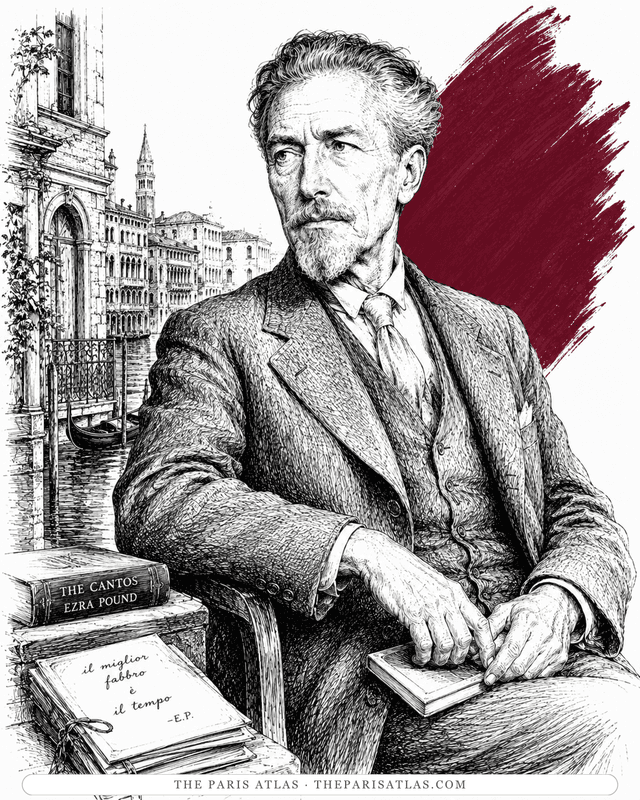
Pound read Cancer and sent Miller a famously backhanded postcard. Both believed literature's job was to wake the reader by any means necessary.
View author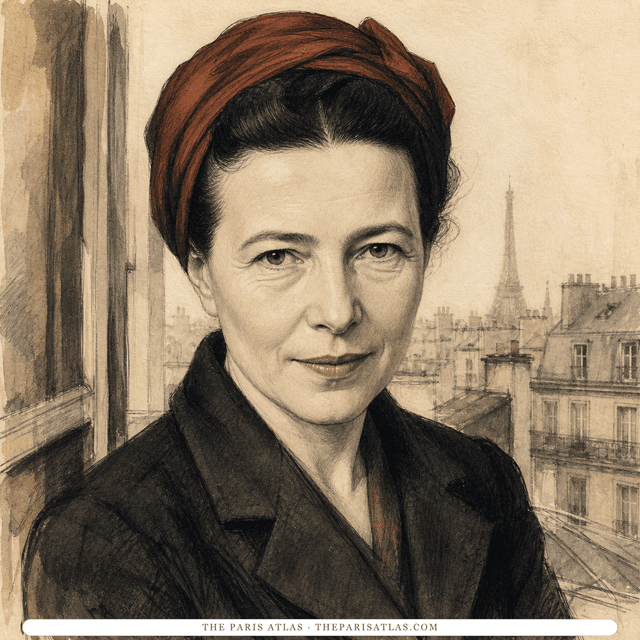
French writer and philosopher whose novels, memoirs, and social analysis examined freedom, gender, responsibility, aging, and the material conditions that shape a life.
View authorThe sources below include the primary text, editions, scholarship, archival materials, and other records that informed this page. They document Tropic of Capricorn, its publication, and its place in literary history.


Biographical evidence used to verify chronology, relationships, and historical context connected to Tropic of Capricorn.
Biographical evidence used to verify chronology, relationships, and historical context connected to Tropic of Capricorn.
Biographical evidence used to verify chronology, relationships, and historical context connected to Tropic of Capricorn.
Biographical evidence used to verify chronology, relationships, and historical context connected to Tropic of Capricorn.
The new readings use the public publisher excerpt's grandfather recollection and messenger rejection followed by the promotion offer. The narrator's memories and judgments are distinguished from independently established biography; no print-edition pagination is supplied.
The primary text is the baseline reference for every book page. Additional references document publication history, interpretation, and historical context where that evidence is available.
 Explore more resources