
Broke, shameless, and ecstatically alive in 1930s Paris — the banned book that ended American censorship.
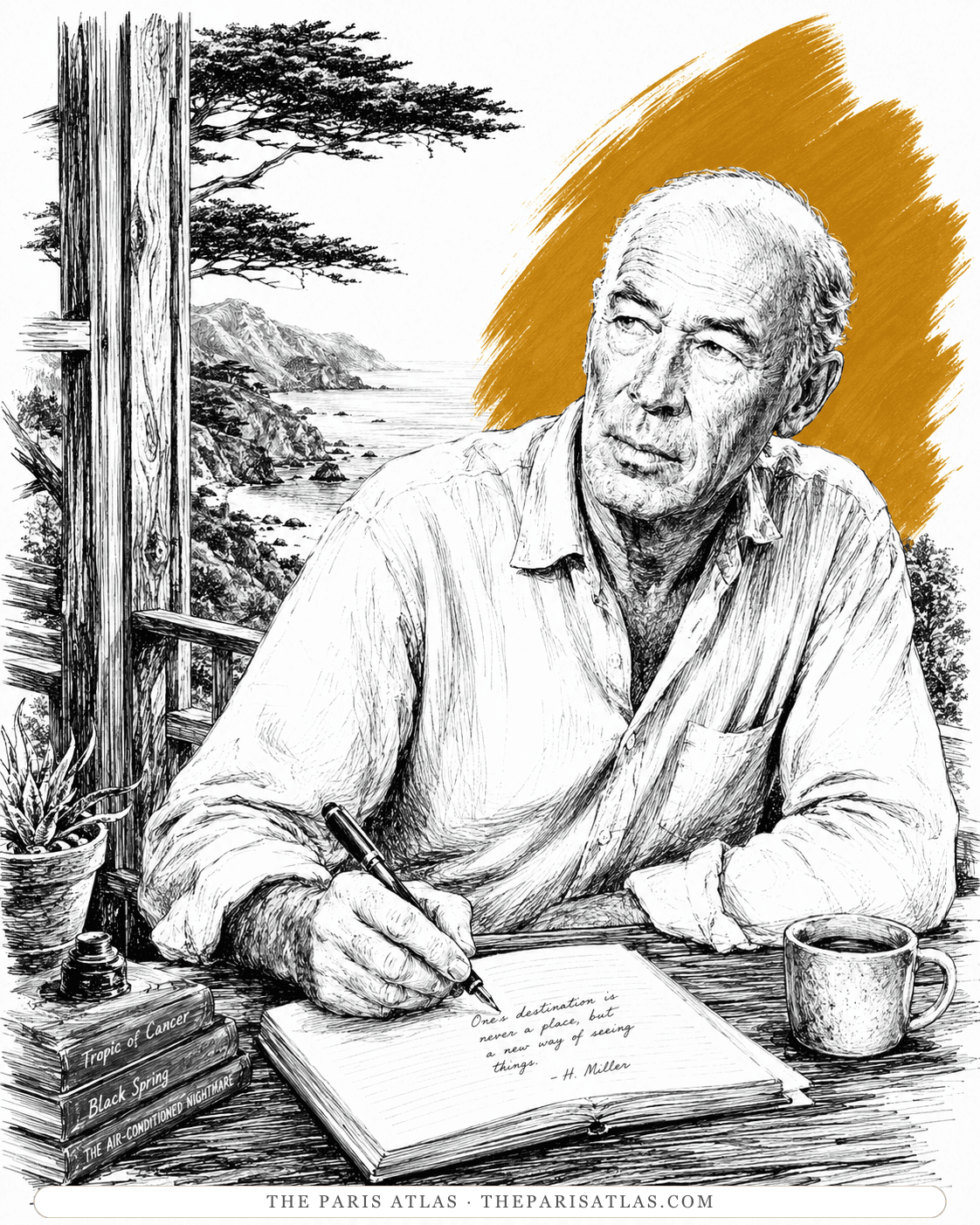
84 Henry Miller titles: 9 novels, 7 story collections, 1 play, 29 memoirs and travel books, 9 volumes of correspondence, and 29 volumes of nonfiction. They are listed below by form, earliest first, and every one links to its own page.
Start with Tropic of Cancer, then read the Paris books in publication order: Black Spring, then Tropic of Capricorn. They aren't a plotted trilogy — each stands alone — but the voice builds in that order. The later Rosy Crucifixion trilogy (Sexus, Plexus, Nexus) is for readers who want the full autobiography.
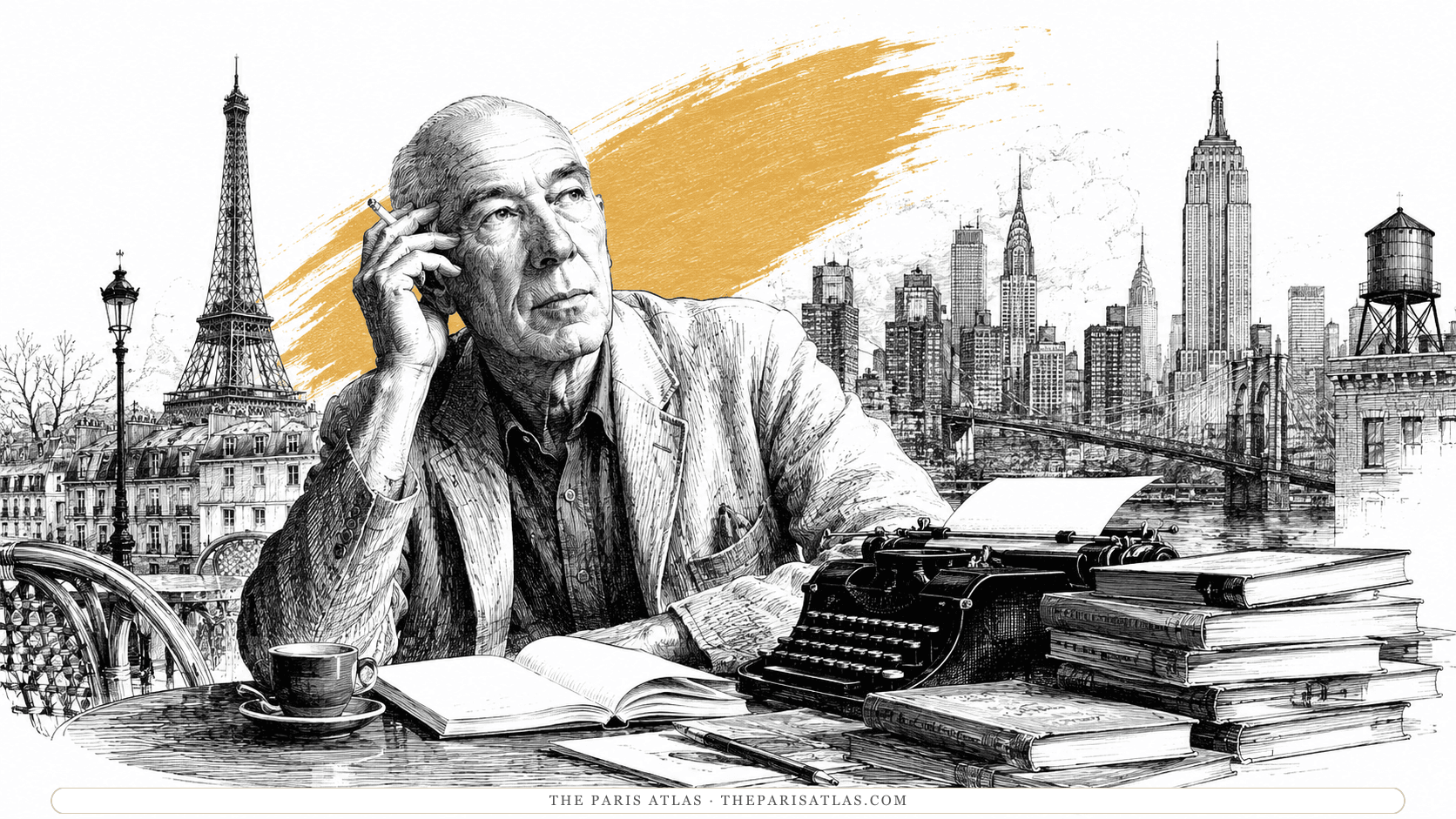
Broke, shameless, and ecstatically alive in 1930s Paris — the banned book that ended American censorship.

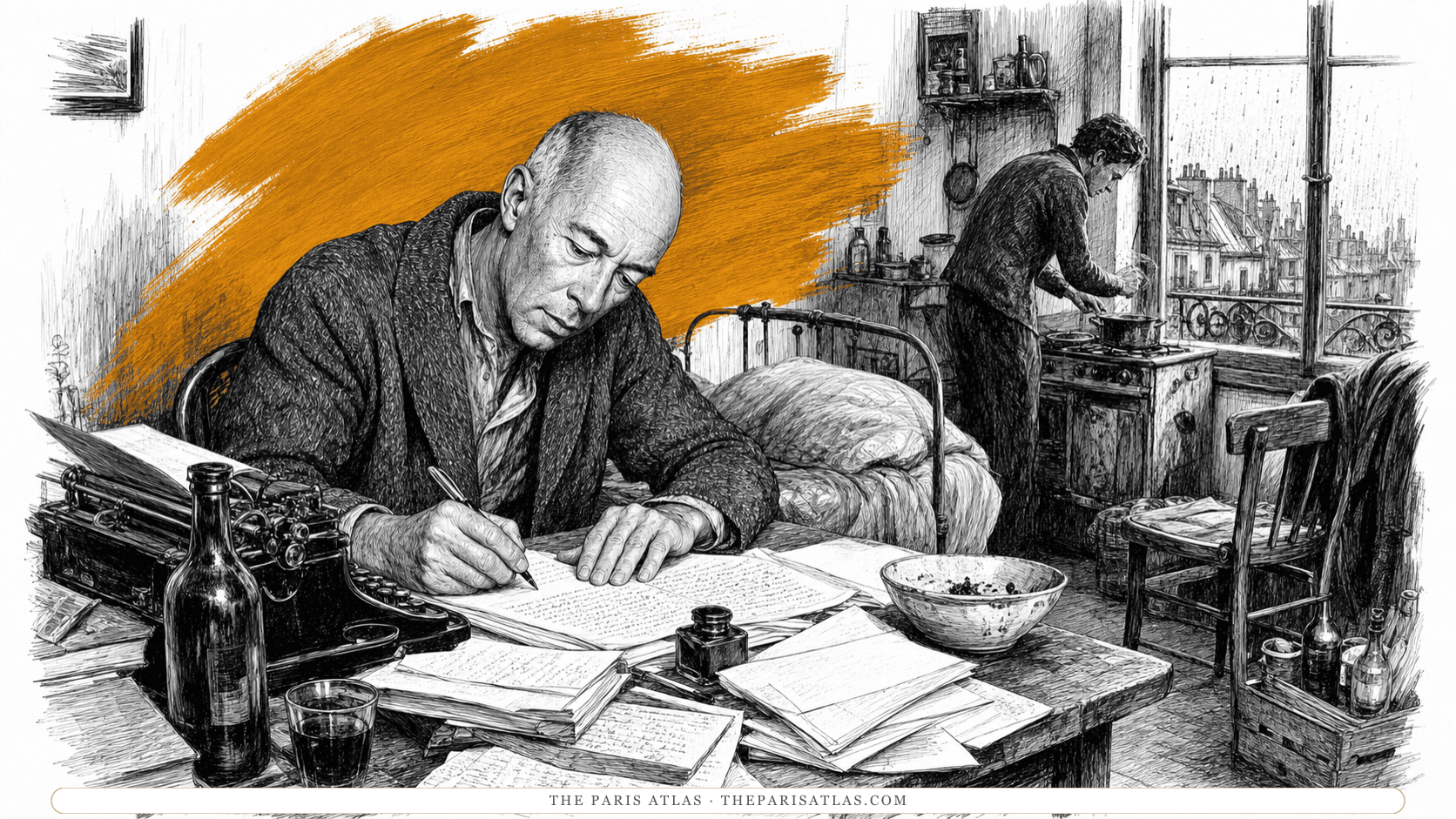
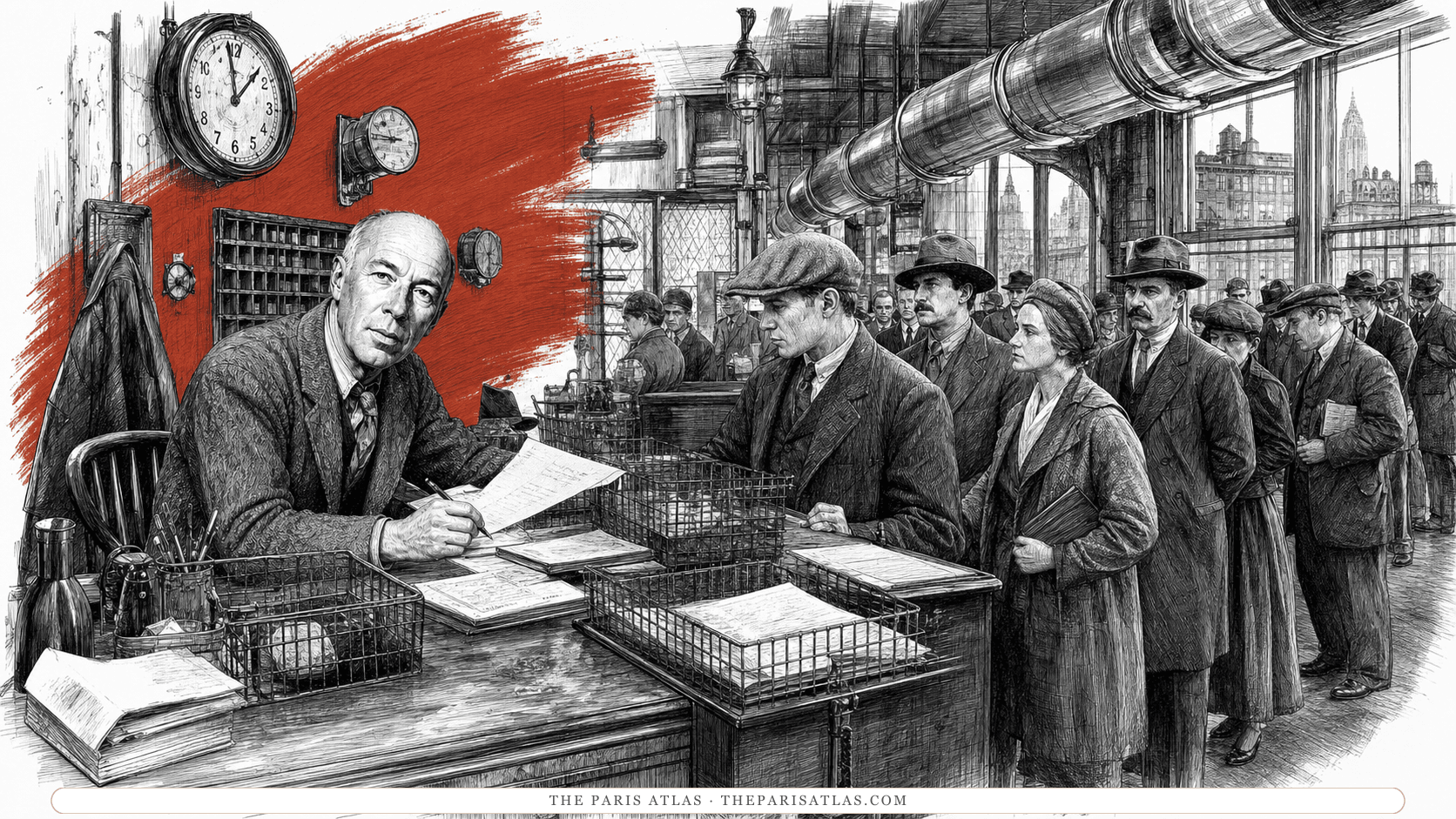
Before Paris: the Brooklyn years, the Cosmodemonic Telegraph Company, and the fury that made the flight necessary.

A clown, a ladder, a moon: the fable Miller called the strangest story he ever wrote — begun as a favor to Fernand Léger.

The Rosy Crucifixion begins: New York in the twenties, the marriage that must end, the woman who must be Mona — his most banned book.

The Rosy Crucifixion, book two: married to Mona, done with jobs forever, and learning — expensively — how to become a writer.

The happiest of the Paris books: two broke friends in a Clichy flat, and the era remembered as pure appetite.

Two British volumes gather Miller’s major prose modes—Paris, America, travel, art, friendship, and the essayistic voice between them.

The novel Miller wrote about losing June to another woman — abandoned in 1930, published in 1991, and rawer than anything he ever polished.

Miller's first surviving novel — Western Union, a failing first marriage, and New York as a machine for grinding men down, written in 1927 and unpublished for sixty-five years.
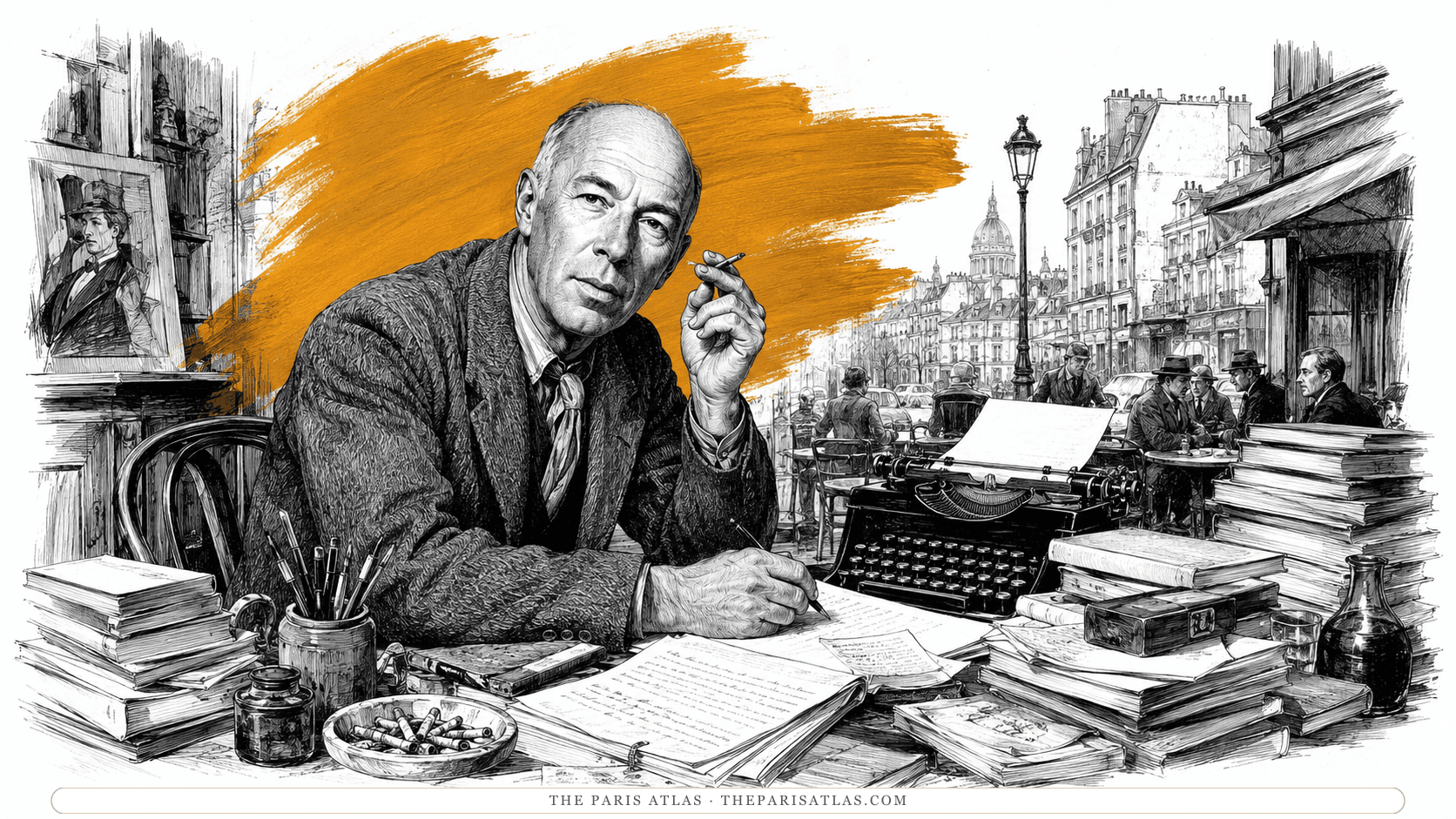

The Villa Seurat portfolio — portraits, surrealist manifestos, and the essay on Brassaï, gathered by Obelisk in 1938 and never quite reprinted whole.

The first Miller book America was allowed to read: stories and essays smuggled home from the Paris years, Tropics not included.

A 1955 mass-market paperback of Henry Miller's legal writing, sold for twenty-five cents while his major books were still banned in America.

Henry Miller's best pages from thirty years of writing, selected by his friend Lawrence Durrell.

A pocket-sized self-portrait assembled from stories, essays, autobiographical sketches, and photographs for readers meeting Miller beyond the scandal.

Seven short works—essay, letter, memory, fiction, and meditation—issued as the eleventh number of Irving Stettner’s Stroker.

Six commissioned erotic pieces, published after Miller’s death under two titles — and shadowed by a serious authorship dispute.
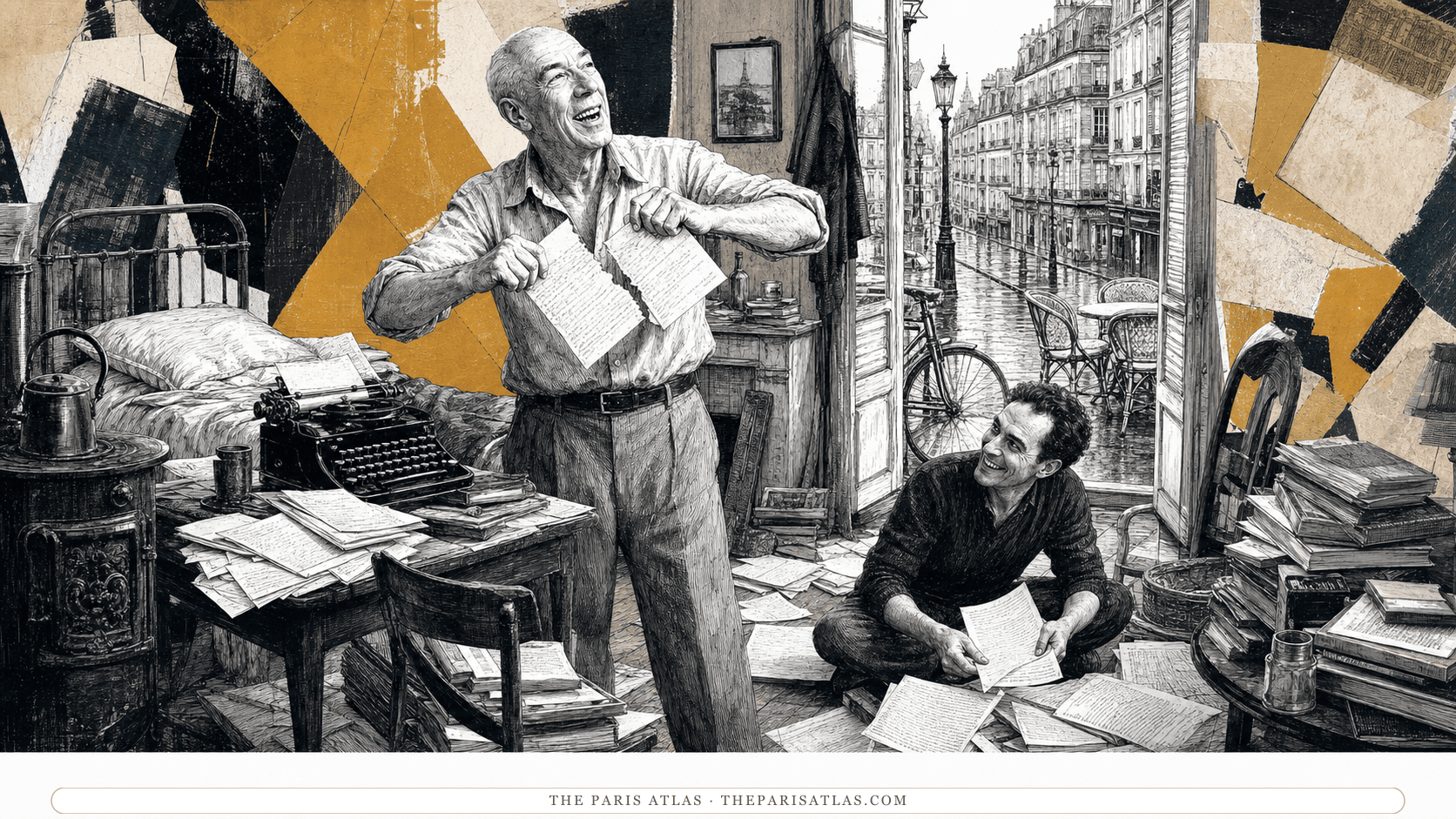

Miller’s only play sends a heartless American through seven absurd, slapstick scenes toward mortality, love, and reluctant feeling.

One long letter to Alfred Perlès — Miller sails to New York in 1935, hates it magnificently, and sails back. A round trip, as the title says.

Ten hallucinatory riffs between Brooklyn's 14th Ward and the Paris streets — Miller at his most purely musical.

Greece, 1939: the light, the ruins, and a monologuist named Katsimbalis — the book Miller himself called his best.

A wartime miscellany with one masterpiece inside: 'Reunion in Brooklyn,' the exile's homecoming to the parents he fled.

Henry Miller's 1945 account of driving across the United States for a year and disliking most of what he found.

A Black Spring dream rewritten by hand and carried across eighty silkscreened pages by Bezalel Schatz.

Miller’s watercolor argument turns seeing into renewal: the familiar world made liquid, bright, and strange again.

The scandalous autobiographer turns to the shelf: a reading life told like an adventure, from boyhood pulp to Cendrars.

Henry Miller's account of inviting a destitute Paris astrologer to live with him at Big Sur, and of how badly it went.

The scandalous exile finds his paradise: fog, cliffs, children, neighbors, pilgrims — and the question of whether paradise can be lived in.

A facsimile notebook from Miller’s American journey, preserving the raw handwriting, drawings, lists, and reversals behind finished prose.

The trilogy's last act: a third party in the marriage, the darkest New York winter — and at the end of it, a boat to Paris.

Miller’s case for amateur freedom: painting as renewed attention, appetite, and affection rather than professional mastery.

Anne Poor’s postwar drawings meet Miller’s memories of prewar Greece in a compact, independent collaboration.

The life, told aloud at eighty: taped talk, photographs, watercolors — the scandalous century recollected from a sunny room.

Georges Belmont’s Paris conversations draw Miller into direct speech about Brooklyn, France, sex, censorship, painting, and the making of a public self.

Miller at eighty: gratitude, bodily comedy, and a refusal to treat old age as the end of imaginative appetite.

The 1939 travel notebook Miller gave away whole — begun on Hydra, finished at Delphi, and dedicated to George Seferis.

Old age falls in love and can't sleep: the last great infatuation, confessed in prose and painted through the small hours.

The raw feed of the Nightmare: the actual notebook from the 1940–41 American tour, published in facsimile — blots, sketches, and all.

At eighty-four, the rememberer goes back to the beginning: the boys of the Fourteenth Ward, named and thanked one by one.

At Pacific Palisades, Christian de Bartillat prompts an aging Miller to move backward through Paris, America, friendships, work, and survival.

Six late chamber pieces in one volume — the old man's small forms, from a dream of his mother to the view from eighty.

A late dream of death and reconciliation, followed by Miller’s imaginative China: the lifelong quarrel with his mother finally released.

Volume two of the friendships — opened, without apology, by the truest friend of all: the bicycle.

The last portrait in the gallery is the best friend of all: Fred Perlès — Carl of Clichy — thanked at last under the old pet name.

The century's most famous literary love affair, in its own hand: two decades of the Nin–Miller letters, selected by Gunther Stuhlmann.

A centennial Miller arranged as a life journey: ten books distilled into a bracing autobiography of appetite, independence, and renewal.

Miller and June’s first Paris trip, recovered from an unfinished manuscript before the city became part of his legend.
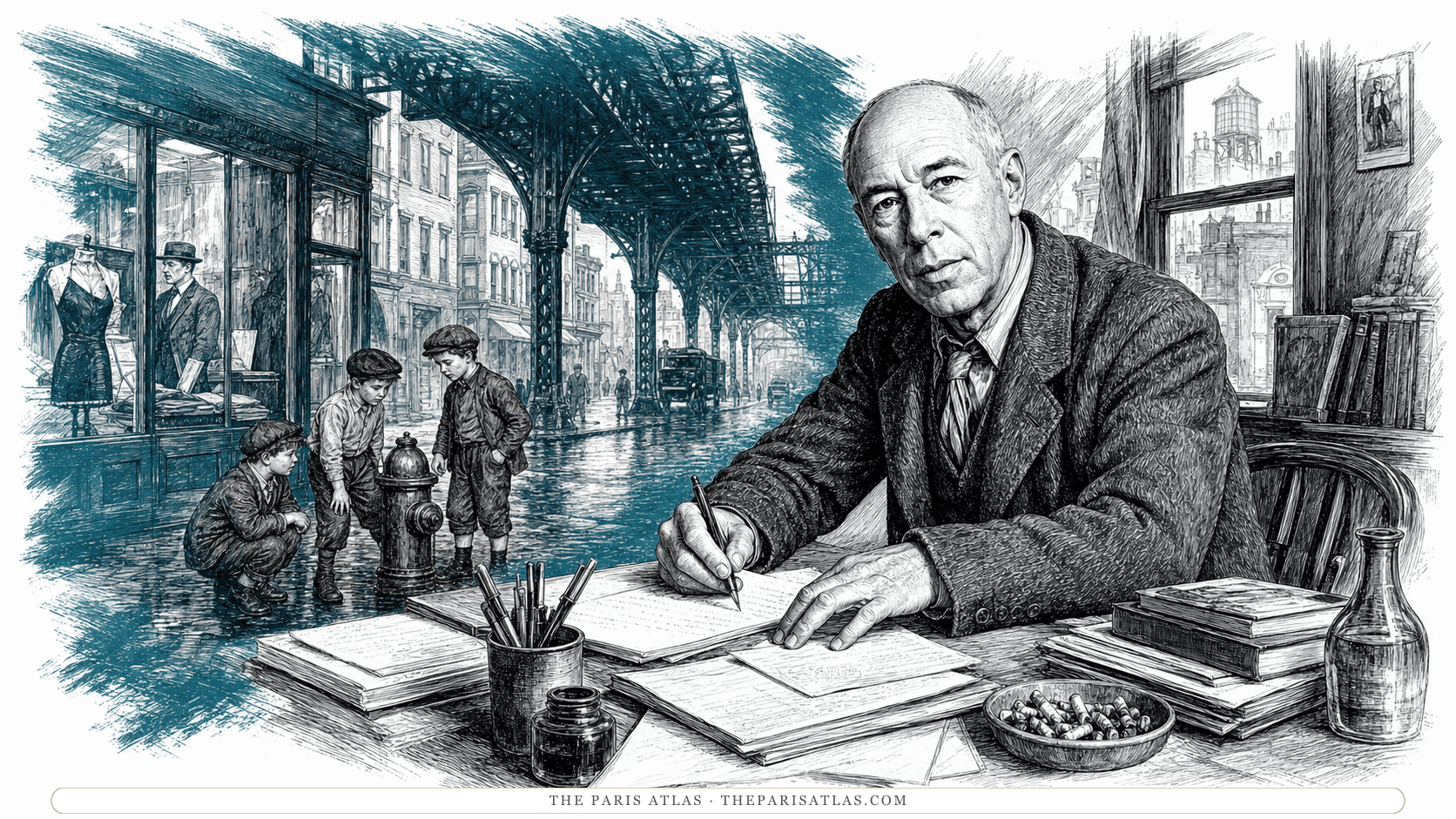
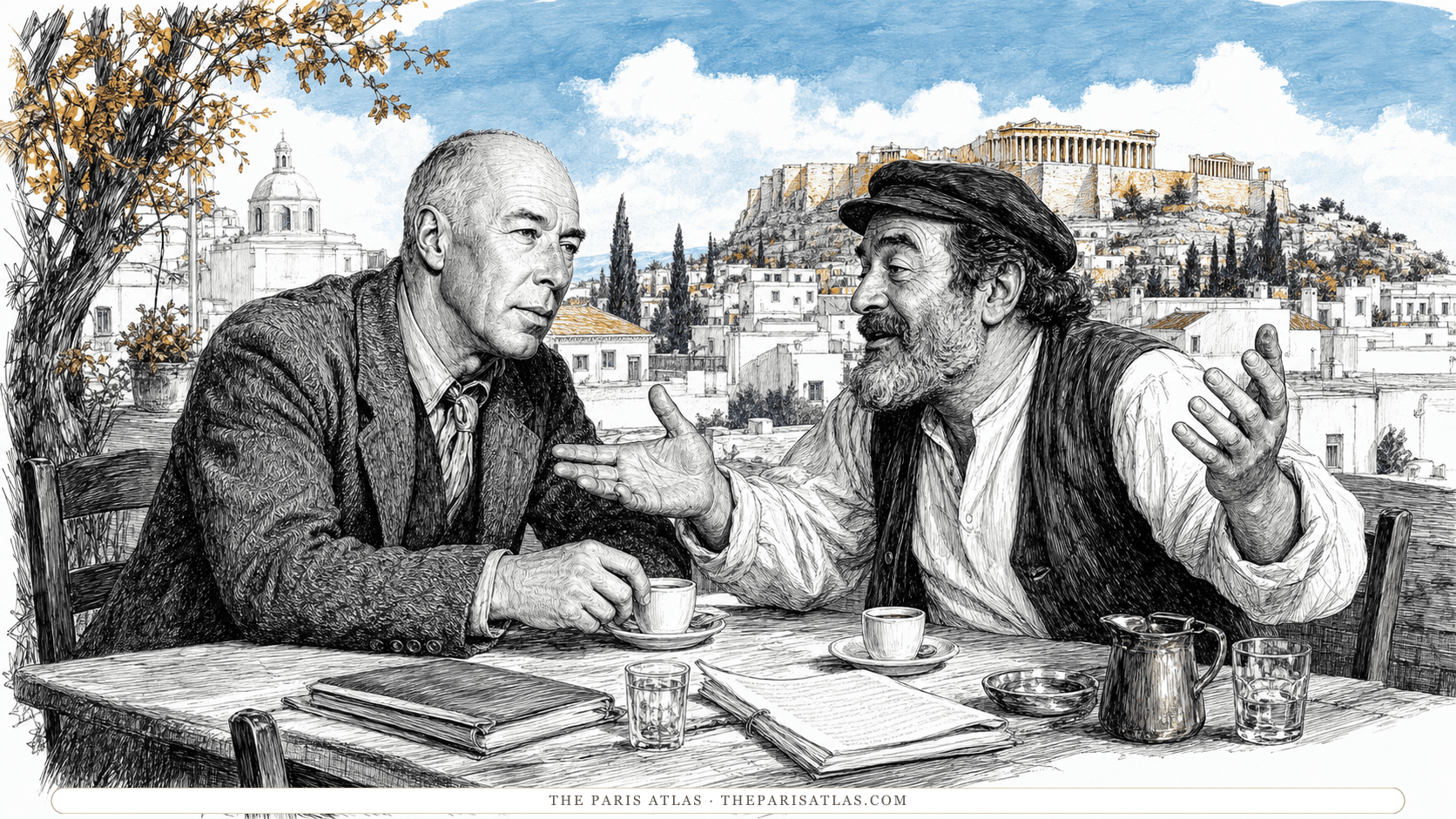

A first, scarce window into Miller’s letters to Emil Schnellock, preserving the apprenticeship before the fuller archive appeared.

Miller’s side of the defining Paris correspondence: love, rivalry, manuscripts, money, and two writers inventing themselves in public and private.

A collector and a writer negotiate books, manuscripts, friendship, and literary survival across eighteen years of letters.

A critic’s manuscript prompts Miller to contest interpretation, explain intention, and turn disagreement into sustained correspondence.

Three decades of letters join a self-made writer to a scholar of France through Rimbaud, Nin, Gide, and remembered Paris.

Miller’s late letters to Irving Stettner and his handmade magazine stay funny, visual, and fiercely attentive to ordinary life.

Forty-five years and nearly a million words — the expanded correspondence that restored lost letters and passages cut from the 1963 selection.

Before Paris became legend, Miller wrote the struggle in real time to his oldest artistic confidant: work, failure, books, marriage, and escape.

Two exuberant old literary outsiders exchange myth, appetite, illness, books, and encouragement across the Atlantic.

Miller passes the hat for Alfred Perlès: a funny, urgent Paris appeal to buy his friend six months in Ibiza and the freedom to finish a novel.

Miller's surrealist film-on-paper, written after Anaïs Nin's House of Incest — 200 copies from Obelisk in 1937, with a drawing by Abraham Rattner.

A Pound-prompted comic anatomy of money: part mock economics, part cultural history, and wholly suspicious of the value people agree to worship.

A thousand pages of argument by mail — Miller and Michael Fraenkel start with Shakespeare and end with everything, from the Villa Seurat to the war.

Miller's own explanation of the banned books — the essay where he tells censors, critics, and readers what he thought the sex was for.

Essays from the turn of the decade — writing, Balzac, healers, and bums — where the Paris provocateur starts sounding like a sage.

A blocked writing day becomes a horse, a bridge, a volcano, a gondola, and finally the sad angel hovering above them all.

Miller’s wartime antiwar argument: an open letter to Alfred Perlès followed by a demand that violence be confronted first within the self.

An illustrated wartime indictment of the American market for art—and of the commercial compromises demanded from writers who want to survive.

Three friends argue about abstract painting in one slim volume — the painter from the Jockey bar, Miller, and Saroyan.

A five-hundred-copy Berkeley cabinet of corrected typescripts, a work schedule, a Black Spring epilogue, circus memory, art, and publisher intervention.

Eleven Miller watercolors issued as a portfolio: color, line, and visual improvisation allowed to stand without prose explanation.

Miller’s incandescent portrait of Beauford Delaney: painter, friend, and proof that creative abundance could survive American neglect.

Miller’s passionate appraisal of Jakob Wassermann’s miscarriage-of-justice novel, first made as a five-hundred-copy illustrated Colt Press book.

Volume two of the Nightmare: America surveyed again — but the heart of the book is the long, aching essay remembering France.

Miller salutes Jean Varda—painter, collagist, host, and floating-world architect of an improvisational California life.

Miller on Rimbaud — the boy who invented modern poetry and walked away — in the least objective, most alive study ever written of him.

Late essays from the sage of Big Sur: Thoreau, the young Beats, the art of staying still while beating your wings.

Bob Nash’s art prompts an imaginative journey in a brief illustrated essay from Miller’s Big Sur circle.

Miller joins a compact international tribute to Joseph Delteil, celebrating the French writer’s appetite, independence, and stubborn singularity.

Everything Miller ever said about the work itself, gathered into one volume — the accidental craft book of the century's least teachable writer.

A richly made tribute to the painter Hans Reichel, where friendship, abstraction, order, and improvisation converge.

An aging pacifist writer confronts Mishima’s spectacular death without endorsing his militarism or reducing him to a diagnosis.

Miller’s four-page salute to John Cowper Powys: youthful idol, joyful philosopher, daily writer, and proof that age need not diminish imaginative life.

Herta Hilscher-Wittgenstein’s photographs visit the Gotham Book Mart founder, with Miller and Anaïs Nin adding affectionate testimony.

Six late essays moving from the Florida wetlands to Picasso, Cabeza de Vaca, Marie Corelli, a Japanese stranger, and Jack Nicholson.

Miller, Kay Boyle, Erica Jong, and Thomas Sanchez offer four dissenting Americas: lunacy, imprisonment, migration, and the contested West.

A late, hand-sized argument that American sexual freedom remains stunted by puritanism and emotional immaturity.

The white whale of the Villa Seurat: the D. H. Lawrence book that nearly swallowed Miller in 1933, published at last in 1980.
Your progress
The debut, the scandal, and the manifesto in one. The first forty pages are the audition — for both of you.
The best-written of the three: Brooklyn boyhood and Paris present in ten prose arias. Quieter scandal, louder sentences.
The prequel decade — New York, the Cosmodemonic Telegraph Company, and the fury that made the flight to Paris necessary.
Greece on the eve of the war — the travel book he considered his best work. Sex-free and radiant; the ideal gift Miller.
The California years — the wild man domesticated into a sage, mostly willingly.
The Villa Seurat portfolio; most of it now lives in The Cosmological Eye.
The selected Nin–Miller correspondence, edited by Gunther Stuhlmann and published in 1987.
No — Cancer and Capricorn share a narrator but not a plot, and each stands alone. Publication order (Cancer, Black Spring, Capricorn) tracks the style's development and is the order we recommend.
Chronologically it's the opposite: Capricorn covers the New York years before the move to Paris where Cancer takes place. Think of it as the prequel written afterward.
Tropic of Cancer, with its content notes read first. If you want Miller's prose without the full scandal, Black Spring is the side door; if you want no scandal at all, The Colossus of Maroussi is the surprise.
The explicit sexual content made them unpublishable in the US and UK from 1934 until Grove Press's 1961 American edition of Cancer, which survived dozens of obscenity prosecutions and a Supreme Court case — the effective end of literary censorship in America.
Tropic of Cancer, published in Paris in 1934 and contraband in America until the Grove Press edition of 1961. The scandal is why most readers know the name, and the book has outlasted it: Black Spring and Tropic of Capricorn are the ones critics argue about, and Cancer is the one people have heard of.
The sources below include bibliographies, archives, publisher records, and scholarship used to verify the Henry Miller catalogue and publication order.


Archival evidence used to document the historical record connected to Henry Miller books.

Biographical evidence used to verify chronology, relationships, and historical context connected to Henry Miller books.
Biographical evidence used to verify chronology, relationships, and historical context connected to Henry Miller books.
Biographical evidence used to verify chronology, relationships, and historical context connected to Henry Miller books.
These references document which titles belong in the bibliography and when they appeared. The recommended reading order remains an editorial judgment by The Paris Atlas.
 Explore more resources
Newsletter
We will tell you when this guide adds a book, review, or new reading-order recommendation.