


From Your Capricorn Friend
by Henry Miller
Miller’s late letters to Irving Stettner and his handmade magazine stay funny, visual, and fiercely attentive to ordinary life.
- 1984
- 128
About Henry Miller
About the volume
From Your Capricorn Friend collects Henry Miller’s 1978–80 correspondence with Irving Stettner and Stettner’s little magazine, The Stroker. Published by New Directions in 1984, the book combines letters, drawings, and short prose on painting, Brooklyn, reading, health, friendship, and Isaac Bashevis Singer’s Nobel Prize. The title preserves Miller’s affectionate self-identification as Stettner’s fellow Capricorn.
The volume, in more detail
Stettner’s independent magazine invites the informal Miller: reader, painter, Brooklyn rememberer, and correspondent. The letters move easily from literary news to health and the practical texture of a day.
Because Miller was nearing the end of his life, ordinary observations acquire extra weight without losing humor. Drawings and handwritten energy keep the exchange closer to a handmade gift than a formal literary testament.
Themes and analysis
What the book actually collects
From Your Capricorn Friend gathers material Henry Miller sent to Irving Stettner and his magazine Stroker during 1978–1980. Letters are central, but the volume also contains drawings, short prose, and a story. The magazine gave the aging writer a place to publish on a small and personal scale.
Among the pieces are Memory and Forgettery, America, America, A Few Chaotic Recollections, and Vienna and Back. Toccata for Half-Wits, a response to the film Bonnie and Clyde, dates from 1968. That earlier essay prevents the subtitle’s date range from being treated as a composition date for everything in the volume.
An editor as a correspondent
Stettner was a poet, painter, and magazine editor. His several interests help explain why Miller’s contributions move so easily between visual art and writing. The book records a relationship with someone able to publish a drawing or an informal reflection alongside a letter.
The address to a particular reader matters. Miller can respond to a recent event, mention a book, or resume an old subject without building the framework of an essay. Readers share in that informality, although the published selection is a book assembled from the exchange.
In the letter excerpt reproduced by New Directions, Miller values Stroker for the freedom it gives him rather than its fame. The contrast between a little-known magazine and unrestricted speech reverses the usual ambition to reach the largest audience. His thanks also show that independence needs support: Stettner provides the place where Miller can speak freely. The editor is more than a recipient of news. He helps create the conditions in which the writing can continue.
Old age and continued attention
Miller discusses painting, Brooklyn, books, and Isaac Bashevis Singer’s Nobel Prize acceptance speech. Such subjects place the collection in the last years of a long reading and writing life. The range also resists reducing him to an elderly commentator on his own famous novels.
His late writing can be read beside Letters to Emil, which follows the much younger Miller trying to become an author. The contrast is between different circumstances of correspondence: the struggle to get started and the continued wish to communicate after a reputation has been established.
Publication and related volumes
New Directions published the collection in 1984, after Miller’s death in 1980. The publisher lists the edition bearing ISBN 9780811208918 as a paperback. Its posthumous publication should not obscure the fact that the underlying relationship and magazine contributions belong to Miller’s lifetime.
The Theatre and Other Pieces was itself a Stroker issue from 1979. It offers a related selection from the same publishing connection. Reading the two books together makes Stettner’s role more visible than describing From Your Capricorn Friend simply as another volume of Miller letters.
Why we recommend it
A warm late voice
Age and illness narrow Miller’s range of movement but not his curiosity or humor.
A handmade exchange
The drawings and magazine context keep the correspondence visibly personal.
Words and drawings together
The volume gives readers Miller’s visual contributions alongside his correspondence, rather than restricting the friendship to letters alone.
What this book explores
The people in its pages

Irving Stettner
Poet, painter, and editor of The Stroker, whose friendship drew out Miller’s informal late voice.
Timeline
1978
The correspondence represented in the volume begins.
1980
Miller’s exchange with Stettner reaches its final year.
1984
New Directions publishes the posthumous collection.
Book editions

- Paperback
- New Directions
- 1984
- 9780811208918
Reader reviews
Readers may also like

The Red Notebook
Another publication where handwriting and drawing are part of the record.
Read our take
Letters to Emil
An early correspondence that frames the opposite end of Miller’s writing life.
Read our takeFrom Your Capricorn Friend: frequently asked questions
Who was ‘the Stroker’?
The name refers to Irving Stettner’s independent magazine, The Stroker, and by extension to Stettner himself.
What years do the letters cover?
They cover 1978 through 1980.
Does the book include art?
Yes. It includes Miller’s drawings alongside letters and short prose.
Was the collection published during Miller’s lifetime?
No. New Directions published it in 1984, after Miller’s death.
Is the recipient a fictional person?
No. Irving Stettner was the editor associated with Stroker and Miller’s correspondent.
If you like Henry Miller
Explore authors with a similar voice, perspective, and influence.

Louis-Ferdinand Céline
Miller's acknowledged master at making literature out of the gutter. Journey gave him permission; Cancer is what he did with it.
View author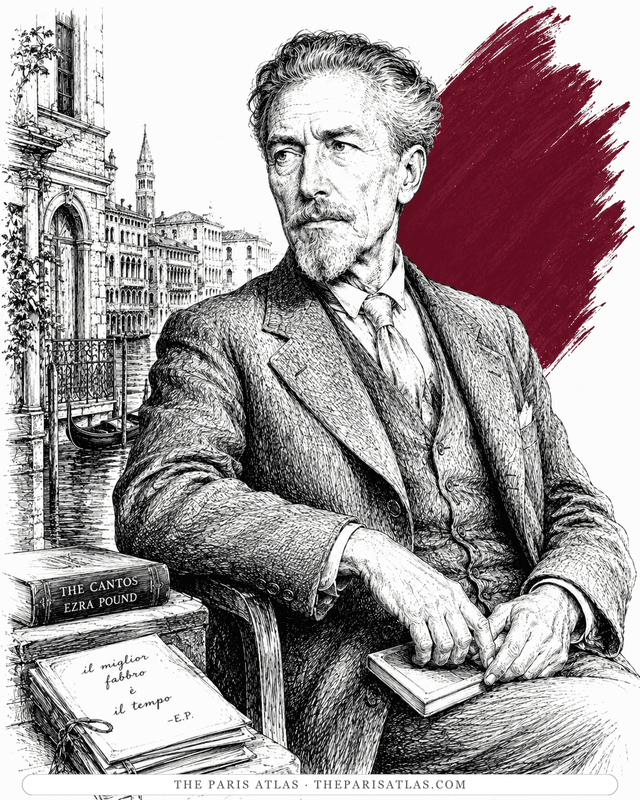
Ezra Pound
Pound read Cancer and sent Miller a famously backhanded postcard. Both believed literature's job was to wake the reader by any means necessary.
View author
Simone de Beauvoir
French writer and philosopher whose novels, memoirs, and social analysis examined freedom, gender, responsibility, aging, and the material conditions that shape a life.
View author
References
References
The sources below include the primary text, editions, scholarship, archival materials, and other records that informed this page. They document From Your Capricorn Friend, its publication, and its place in literary history.


1From Your Capricorn Friend
LettersHenry Miller, 1984Used forThe primary text represented by this page, used for descriptions of the work’s contents and for any quoted passages shown here.
2From Your Capricorn Friend
WebsiteNew DirectionsUsed forWeb source consulted for documented facts and historical context presented on the From Your Capricorn Friend page.
3The Happiest Man Alive: A Biography of Henry Miller
BiographySimon & Schuster, 1991Used forBiographical evidence used to verify chronology, relationships, and historical context connected to From Your Capricorn Friend.
4Henry Miller: A Life
BiographyW. W. Norton, 1991Used forBiographical evidence used to verify chronology, relationships, and historical context connected to From Your Capricorn Friend.

5Henry Miller: An Inventory of His Collection
ArchiveHarry Ransom Center, The University of Texas at AustinUsed forArchival evidence used to document the historical record connected to From Your Capricorn Friend.
i
Why these sources are here
The primary text is the baseline reference for every book page. Additional references document publication history, interpretation, and historical context where that evidence is available.
 Explore more resources