The Paris AtlasCharting the artists, works, and places worth returning to.

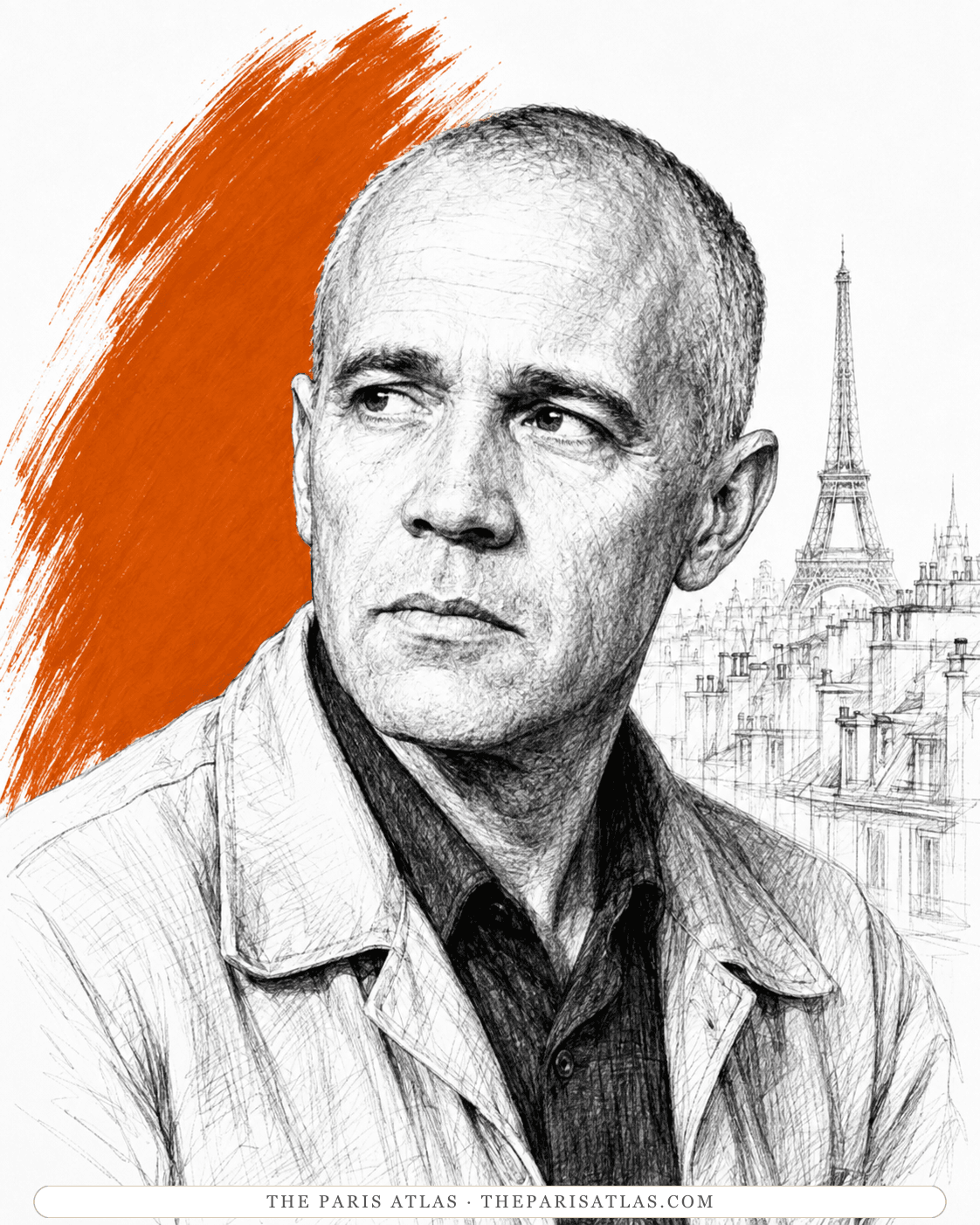
Simone de Beauvoir

French writer and philosopher whose novels, memoirs, and social analysis examined freedom, gender, responsibility, aging, and the material conditions that shape a life.

Details

Lived
1908–1986
Born
9 January 1908
Birthplace
Paris, France
Died
14 April 1986 · aged 78
Place of death
Paris, France
Nationality
French
Partner
Jean-Paul Sartre · 1929–1980
Roles
AuthorPhilosopherEducatorEditor

About Simone de Beauvoir

Simone de Beauvoir was a French writer and philosopher. She wrote novels, memoirs, travel books, political essays, and works of social analysis. The Second Sex, published in 1949, examined how societies make woman the subordinate 'Other' and became one of the most influential books in modern feminism.
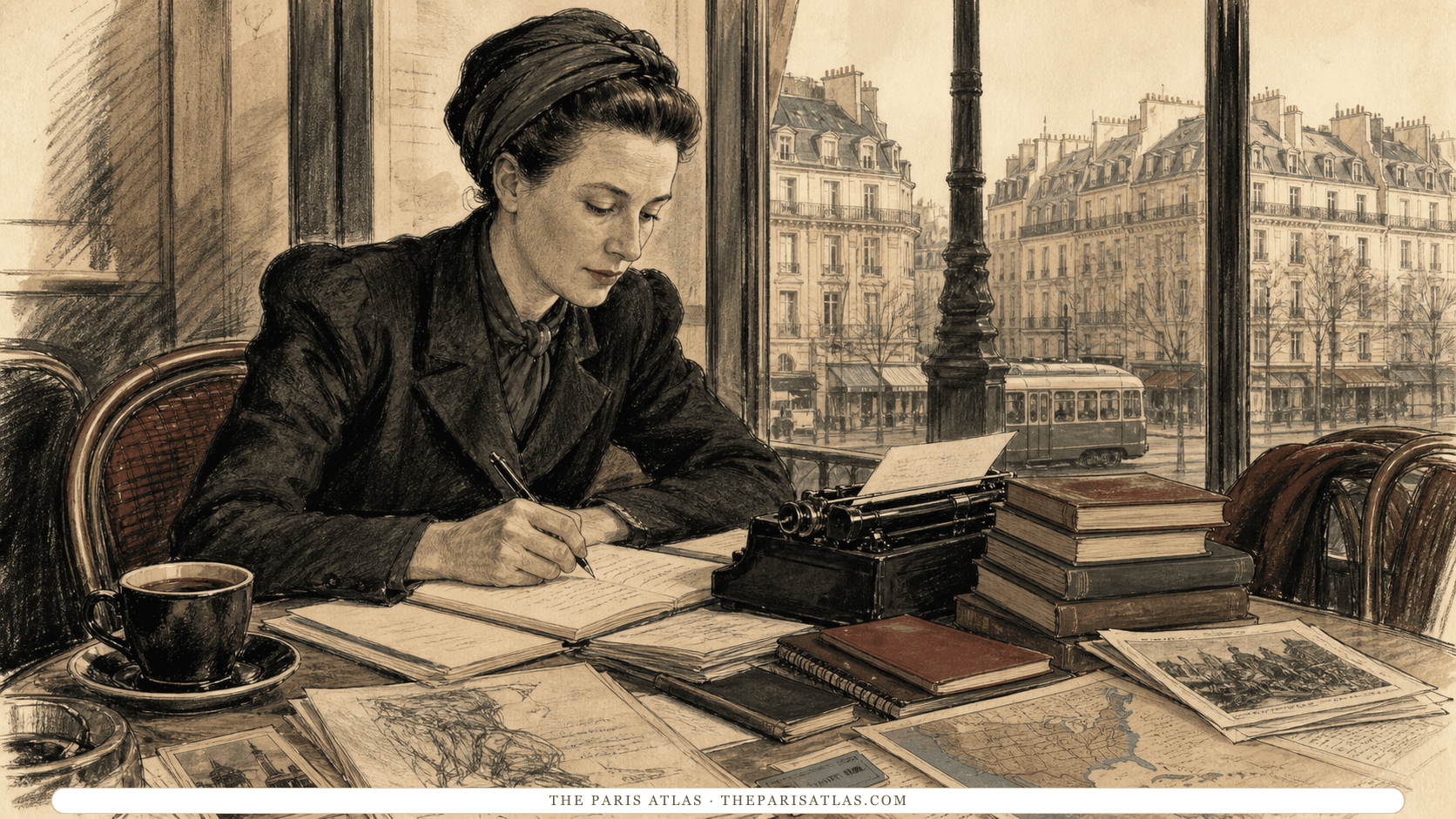
Her work begins from a plain but difficult fact: people make choices, but they do not choose the bodies, histories, institutions, and power relations within which they act. Beauvoir used the word 'situation' for those conditions. Freedom was never an excuse to ignore them; it created a responsibility to understand and change the conditions that prevent other people from acting freely.

A Paris education and a life organized around writing

Simone Lucie Ernestine Marie Bertrand de Beauvoir was born in the 6th arrondissement of Paris on 9 January 1908. She grew up in a Catholic bourgeois family whose declining finances made paid work necessary. School, reading, and philosophical study gave her a route toward a life outside the marriage expected for women of her class.

In 1929 she passed the agrégation in philosophy, the competitive examination for teaching at the highest level in France. She met Jean-Paul Sartre, a French philosopher and writer, during the same period. They formed a lifelong partnership but did not marry or share one permanent household. Both had other relationships. That arrangement was presented as freedom, but later diaries, letters, and biographies have also shown unequal effects on younger people drawn into their circle.

Novels, occupation, and an ethics of freedom

Beauvoir taught philosophy in Marseille, Rouen, and Paris before leaving teaching in 1943, the year Gallimard published She Came to Stay. The novel turns a difficult relationship into a conflict between one person's freedom and another person's attempt to possess or define it.

During and after the German occupation of France, The Blood of Others, Pyrrhus and Cineas, and The Ethics of Ambiguity asked what responsibility follows when no action is pure and refusing to choose also has consequences. Beauvoir helped establish the journal Les Temps modernes in 1945 with Sartre and other writers, then worked on its editorial life for four decades.

The Second Sex

The Second Sex appeared in two French volumes in 1949. Beauvoir combined philosophy, history, biology, economics, literature, and accounts of lived experience to argue that femininity is produced through social conditions rather than fixed by a single natural destiny. The book's account of woman as 'Other' gave later feminists a durable way to analyze subordination.

The book is foundational, not final. Later readers have challenged its generalizations about women, race, sexuality, motherhood, and cultures outside France. Translation matters too: the first English version cut and altered the French text, while the 2010 translation by Constance Borde and Sheila Malovany-Chevallier restored material but produced new debates about wording.

Fiction, memoir, and public action after 1949

The Mandarins, a novel about writers and political responsibility after the liberation of Paris, won the 1954 Prix Goncourt. Beauvoir then began a four-volume memoir sequence with Memoirs of a Dutiful Daughter. The memoirs explain how she understood her formation, partnership, work, and political commitments, but they remain shaped narratives that should be compared with letters, diaries, and other witnesses.


Beauvoir opposed French colonial violence in Algeria, worked with the lawyer Gisèle Halimi to publicize the torture of the Algerian activist Djamila Boupacha, supported abortion rights, and participated in the renewed French women's movement of the 1970s. Her later nonfiction included The Coming of Age, a study of how societies turn biological aging into social exclusion.

Death and the books that remain

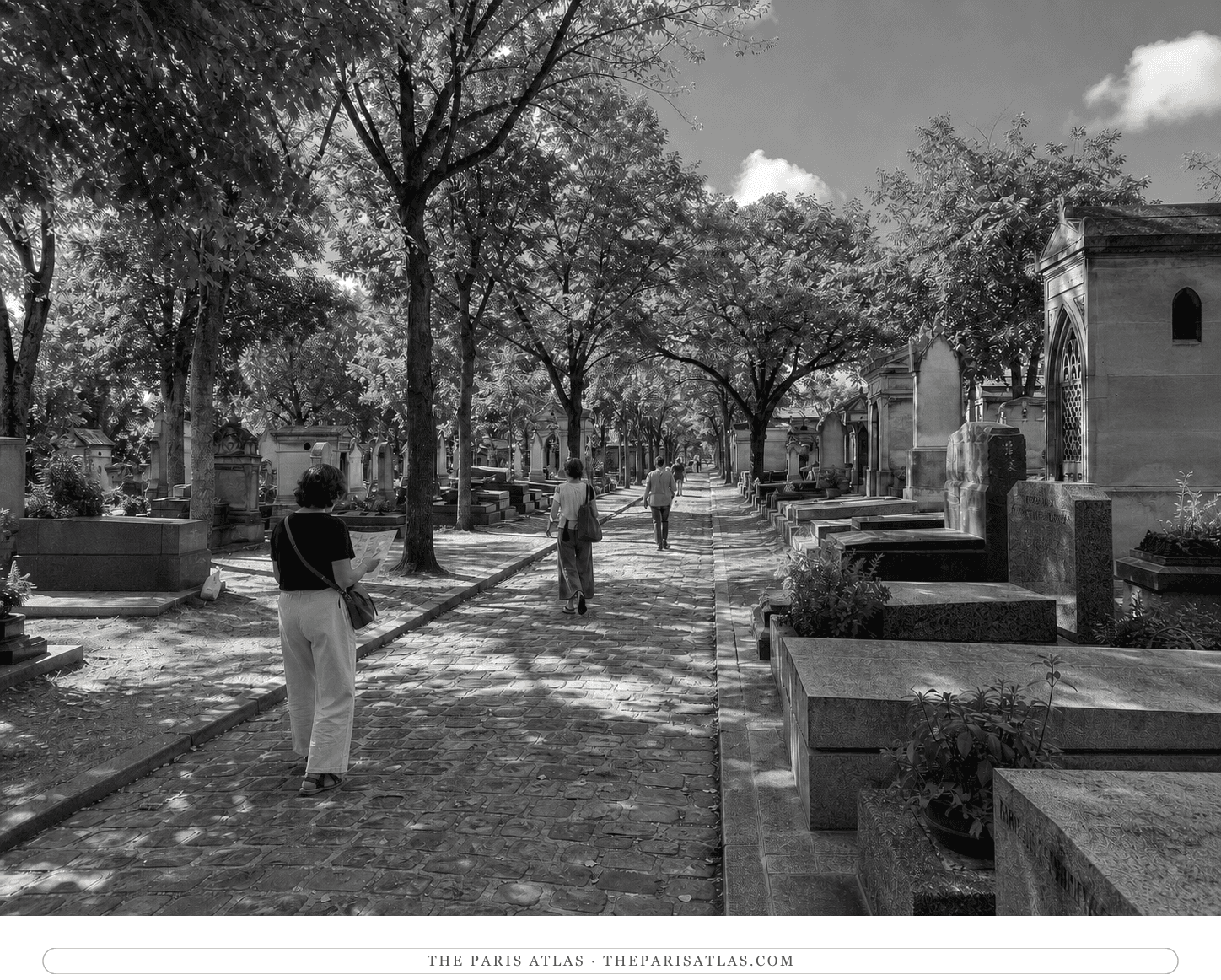
Jean-Paul Sartre died in 1980. Beauvoir described his final decade in Adieux: A Farewell to Sartre, a difficult account of illness, dependence, care, and public memory. She died in Paris on 14 April 1986 and was buried beside Sartre in the Montparnasse Cemetery.

No single label contains Beauvoir's work. She was a philosopher who argued through fiction, a memoirist who treated her own life as evidence, and a political writer whose commitments changed with events. The most useful reading path keeps those forms together instead of reducing her to one famous sentence or to her partnership with Sartre.

Life events

  1. 1908

    Born in the 6th arrondissement of Paris on 9 January.

    Beauvoir, Simone de (1908–1986)

  2. 1929

    Passes the agrégation in philosophy and begins the lifelong partnership with Jean-Paul Sartre.

    Debra Bergoffen and Megan Burke, Simone de Beauvoir

  3. 1943

    Gallimard publishes She Came to Stay, her first published novel.

    Debra Bergoffen and Megan Burke, Simone de Beauvoir

  4. 1945

    Helps establish the review Les Temps modernes and publishes The Blood of Others and Who Shall Die?.

    Simone de Beauvoir

  5. 1949

    Gallimard publishes The Second Sex in two volumes.

    Debra Bergoffen and Megan Burke, Simone de Beauvoir

  6. 1954

    The Mandarins receives the Prix Goncourt.

    Simone de Beauvoir

  7. 1958

    Publishes Memoirs of a Dutiful Daughter, the first volume of her main memoir sequence.

    Debra Bergoffen and Megan Burke, Simone de Beauvoir

  8. 1970

    Publishes The Coming of Age, her study of old age as a bodily and social condition.

    Debra Bergoffen and Megan Burke, Simone de Beauvoir

  9. 1981

    Publishes Adieux: A Farewell to Sartre after Jean-Paul Sartre's death.

    Simone de Beauvoir

  10. 1986

    Dies in Paris on 14 April.

    Beauvoir, Simone de (1908–1986)

Start here

Memoirs of a Dutiful Daughter

It introduces Simone de Beauvoir as a person and writer before asking a new reader to enter the larger philosophical and historical argument of The Second Sex.

Books by Simone de Beauvoir

Popular reading paths

Want the full backlist and where each title fits? See every Simone de Beauvoir book in publication order.

Simone de Beauvoir’s Places

The cataloged places connected to Simone de Beauvoir — through the books, and through the documented record.

Places you can enter today appear first, followed by addresses to see from outside and sites that have vanished.

Questions about Simone de Beauvoir

Who was Simone de Beauvoir?

Simone de Beauvoir was a French writer and philosopher born in Paris in 1908. She wrote novels, memoirs, travel books, political essays, The Second Sex, and The Ethics of Ambiguity.

What is Simone de Beauvoir best known for?

Simone de Beauvoir is best known for The Second Sex, her 1949 study of how societies make women subordinate and teach femininity as a social role.

Was Simone de Beauvoir an existentialist?

Yes, though her philosophy should not be treated as an appendix to Jean-Paul Sartre's. She developed her own account of embodied freedom, situation, ambiguity, and responsibility to other people.

Which Simone de Beauvoir book should I read first?

Start with Memoirs of a Dutiful Daughter for her life, The Ethics of Ambiguity for philosophy, The Mandarins for fiction, or the introduction and conclusion of The Second Sex for her most influential argument.

Were Simone de Beauvoir and Jean-Paul Sartre married?

No. Simone de Beauvoir and the French philosopher Jean-Paul Sartre formed a lifelong partnership beginning in 1929, but they did not marry or keep one shared household.

Where is Simone de Beauvoir buried?

Simone de Beauvoir is buried beside Jean-Paul Sartre in Montparnasse Cemetery in Paris.

Sourced claims

Every connection the graph holds for Simone, with the evidence behind it.

Frequented · 1939–1945

Café de Flore

The Café de Flore's own history identifies Simone de Beauvoir as one of the first writers to adopt the café's heated room after Paul Boubal took over in 1939. During the German occupation of Paris, she and Jean-Paul Sartre used the café as a regular place to work and meet people.

Behind the scenes of a cult café: 1939–1945

Sources and further reading

  • Beauvoir, Simone de (1908–1986)
  • Works catalogued under Simone de Beauvoir
  • Simone de Beauvoir
  • Debra Bergoffen and Megan Burke, Simone de Beauvoir
Browse all authors