

Memoirs of a Dutiful Daughter
The first volume of Beauvoir's memoirs: a bourgeois Catholic Paris childhood, the loss of faith, philosophy at the Sorbonne, and a friendship whose ending she said cost her her freedom.
Read our take
The second memoir volume, covering Beauvoir from her 1929 meeting with Sartre through the Occupation and the Liberation of Paris — the years the intellectual partnership at the centre of her life was built and tested.
The second volume of Simone de Beauvoir's memoirs picks up in October 1929, at twenty-one, from the last line of Memoirs of a Dutiful Daughter, and closes in the summer of 1944 with the Liberation of Paris. Fifteen years of teaching in Marseille and Rouen and finally Paris, the philosophy essays and novels Beauvoir wrote in each of them, the partnership with Jean-Paul Sartre, the 1935–37 trio with Olga Kosakiewicz that She Came to Stay would fictionalise, Sartre's mobilisation and captivity in 1939–40, the Occupation, the writing of L'Invitée and The Blood of Others in occupied Paris, the 1943 dismissal from her teaching post, and the Liberation itself. Written at fifty-two, published in 1960.
Beauvoir wrote La Force de l'âge between 1958 and 1960 and Gallimard published it in Paris in November 1960, two years after Memoirs of a Dutiful Daughter. Peter Green's English translation appeared from World Publishing in Cleveland in 1962 and from André Deutsch in London the same year. The volume is longer than the first (roughly six hundred pages in most editions) and less shaped: Beauvoir's argument, in the preface, is that the years after her agrégation are less easily narrated as one story because she was living them rather than being made by them.
The book covers what would prove to be the years of Beauvoir's professional and personal formation. She and Sartre established, in the first months after the agrégation, the ground rules of their partnership — the essential relationship, the contingent affairs, the promise of complete honesty — that would last, in some form, for fifty years. She began serious fiction alongside her teaching. She and Sartre travelled every summer they could afford it (Spain, Italy, Greece, Morocco, Berlin, London). She took up with Olga Kosakiewicz in Rouen in 1935 in the intense three-year triangle that both She Came to Stay and this volume describe from the two sides available.
The second half of the book is the war. Sartre is mobilised in September 1939, captured at Padoux in June 1940, held at Stalag XII-D until March 1941, and released after faking a medical exemption. Occupied Paris follows. Beauvoir teaches, writes, cycles hundreds of kilometres in the summers to visit Sartre's family in the free zone, is dismissed from her teaching post in June 1943 after a complaint from the mother of her former student Nathalie Sorokine, and works on La Force de l'âge's third major novel, Le Sang des autres (published later as The Blood of Others). The book closes on the celebration in the streets of Paris when the Germans left in August 1944.
Part I opens in October 1929, days after the agrégation results. Beauvoir at twenty-one moves out of her parents' apartment on the rue de Rennes and into a rented room at her grandmother's flat on rue Denfert-Rochereau, where she does not have to explain herself. She and Sartre, who has just been called up for eighteen months of military service, work out the terms of their relationship over a park bench in the Jardin du Luxembourg: a two-year pact renewable, allowing each other 'contingent loves' but promising complete honesty. It becomes the shape of their life. In 1931 Beauvoir takes her first teaching post at the Lycée Montgrand in Marseille, where she walks eight or nine hours a day in the surrounding hills; in 1932 she is transferred to the Lycée Jeanne d'Arc in Rouen, where she remains for four years. She writes her first novel in Rouen and cannot get it published. She and Sartre travel every summer they can afford: Spain in 1931, Italy in 1932, Berlin in the winter of 1933–34 (where Sartre is on a fellowship at the Institut Français and where they see Nazi rallies in the street), Corsica in 1935, Greece in 1937.
Part II is the trio and its aftermath. In 1935, Olga Kosakiewicz — a Russian-born former pupil of Beauvoir's from Rouen — moves to Paris to prepare her baccalauréat. Beauvoir and Sartre take her up together, financially and emotionally; the three of them form the intense triangle that Beauvoir would fictionalise as Françoise, Pierre, and Xavière in She Came to Stay. The real trio ends in 1937 in exhaustion and separate re-attachments rather than in murder; Olga marries Sartre's young protégé Jacques-Laurent Bost in 1938, and Beauvoir begins her own relationship with Bost that would run alongside her partnership with Sartre for the rest of both lives. In 1936 Beauvoir moves to Paris — teaching first at the Lycée Molière in Passy, then from 1938 at the Lycée Camille Sée in the 15th arrondissement. She continues writing; she starts the novel that would become L'Invitée in the summer of 1938 and finishes the first draft in the spring of 1941.
Part III is the war. Germany invades Poland in September 1939. Sartre is mobilised as a meteorologist and posted to Alsace. Beauvoir keeps his letters and her own diary — she quotes both at length in the memoir, and the war chapters are, in their sourcing, closer to a documentary account than the earlier volumes. In June 1940 France falls; Sartre is captured at Padoux and sent to Stalag XII-D in Trier. He is released in March 1941 after producing a false medical certificate. Occupied Paris follows: teaching under the Vichy state, writing L'Invitée, then Pyrrhus and Cineas, then Le Sang des autres, cycling hundreds of kilometres in the summers to visit Sartre's family in the free zone, food shortages, a small resistance group Sartre founds called Socialisme et Liberté that dissolves after a few months. In June 1943 the mother of her former student Nathalie Sorokine — with whom Beauvoir had been in an affair — files a complaint with the Vichy education ministry and Beauvoir is dismissed from her teaching post for 'incitement of a minor to debauchery.' She never teaches again.
The last hundred pages carry Paris from the summer of 1943 to August 1944. L'Invitée is published in the autumn of 1943 and Beauvoir has, for the first time, an income from writing. She spends the winter of 1943–44 on The Blood of Others and Pyrrhus and Cineas. The Allied landings in Normandy in June 1944 make the Liberation predictable but not near; the last two months of the Occupation, in the summer of 1944, are the tightest of the four years. On 19 August 1944 the insurrection in Paris begins. On 25 August the Germans surrender. The memoir closes in the streets of the newly-liberated Left Bank, Beauvoir walking with Sartre through the crowds, still in the same partnership they had made on the bench in the Jardin du Luxembourg fifteen years earlier, and looking at the ruined city they had spent the war writing about.
The last paragraphs are a summing-up. Beauvoir names what the fifteen years had given her: a completed intellectual partnership, three finished novels, one philosophical essay, a body of teaching that had ended in scandal, and, at the age of thirty-six, the ability to make a living from her own writing. The Prime of Life closes on a threshold rather than a decision. Force of Circumstance, which will follow in 1963, picks up from the same Liberation crowds and carries the story through the years of The Second Sex, The Mandarins, and the affair with Nelson Algren.
The room enters Beauvoir's story through the memory of an illustration: as a child, she envied a fictional schoolgirl who could read and work unwatched. Her adult room answers that earlier image, but privacy matters more than attractive furniture. Even the stove's unpleasant smell becomes welcome because it seems to guard her solitude. Rent paid to her grandmother, teaching income and her sister's help with the furniture give this freedom a practical foundation. Independence appears not as life without other people, but as an arrangement that lets her choose when to admit them.
The Marseille arrival is framed by a qualification: Beauvoir denies that any single instant decisively changed her life, then explains how later memory gives particular moments their force. Her pause above the city is therefore both a remembered experience and a scene shaped by hindsight. The descent leads quickly to practical choices: an affordable room with a useful table, a visit to the headmistress and a teaching timetable. These details bring the apparent fresh start down to daily scale. The city promises discovery, but making a life there also means arranging work and somewhere to sleep.
It is the memoir of the years the intellectual partnership at the centre of Beauvoir's life was actually built — and the volume most read as a portrait of how the pact she and Sartre made in 1929 held through fifteen years, one triangle, one war, and one dismissal.
Read it after Memoirs of a Dutiful Daughter; the two volumes together cover Beauvoir from her birth in 1908 through the Liberation in 1944 and form one continuous first-person account.
The Occupation chapters draw on the letters and diary Beauvoir kept between 1939 and 1944 (published separately as Wartime Diary in 1990) and are the closest her memoirs come to primary source material — the Sartre captivity, the 1943 teaching dismissal, and the Liberation itself, all in something close to real time.
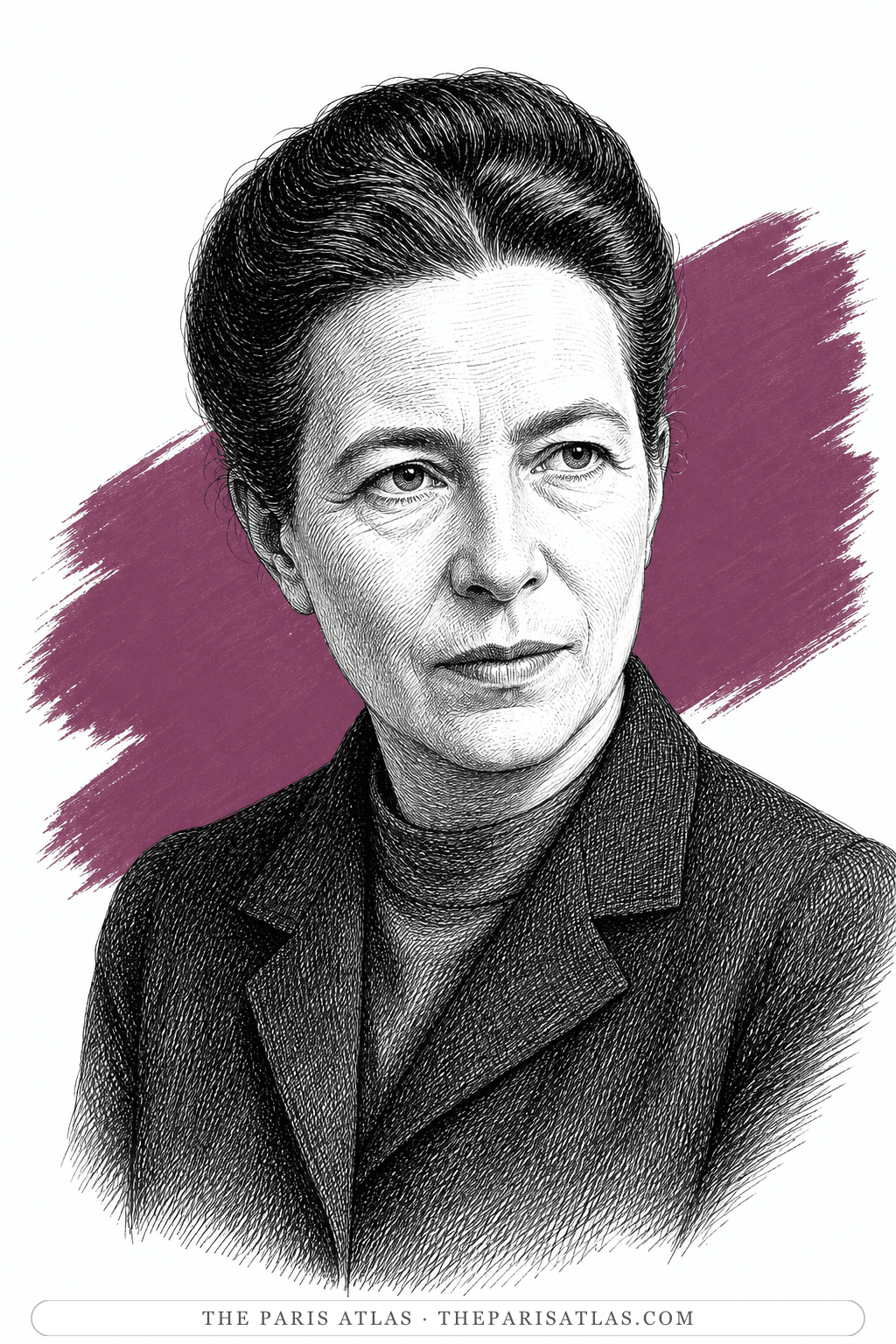
The book's first-person narrator, at fifty-two, covering the fifteen years from her 1929 agrégation to the Liberation. Teaches successively at Marseille, Rouen, and Paris; writes three novels; makes and holds the partnership with Sartre; is dismissed from teaching in 1943; is a witness of Paris under Occupation.

The philosophical and personal partnership at the centre of the book. Teaches at Le Havre and Laon, then Paris. Publishes Nausea (1938) and The Wall (1939) in the years the memoir covers. Mobilised September 1939, captured at Padoux June 1940, held at Stalag XII-D until March 1941. In occupied Paris founds and dissolves the small resistance group Socialisme et Liberté.

A Russian-born former pupil of Beauvoir's from the Lycée Jeanne d'Arc in Rouen. Moves to Paris in 1935; the trio with Beauvoir and Sartre runs for the next two years and ends in exhaustion in 1937. Marries Sartre's young protégé Jacques-Laurent Bost in 1938 and has a long stage career under the name Olga Bost. She Came to Stay (1943) is dedicated to her.

Sartre's protégé from his teaching years in Le Havre. Enters the memoir as a young man in the mid-1930s; marries Olga Kosakiewicz in 1938; becomes Beauvoir's own long-term lover starting the same year. He and Beauvoir remain together, alongside her partnership with Sartre and his marriage to Olga, for the rest of both lives.
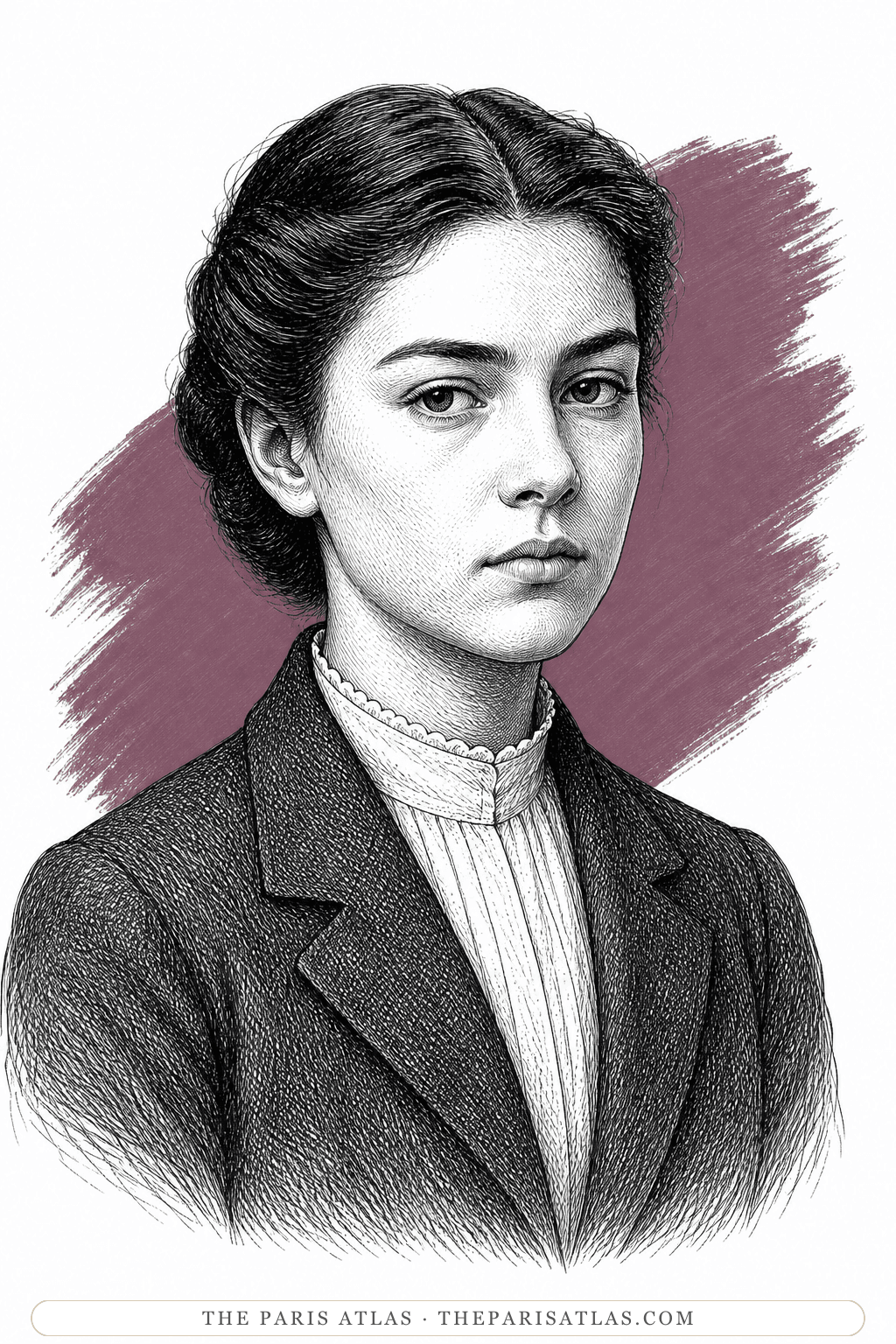
A Russian-born pupil of Beauvoir's at the Lycée Molière in the late 1930s. Beauvoir began a sexual relationship with her while she was Sorokine's teacher. Sorokine's mother filed a complaint with the Vichy education ministry in 1943; Beauvoir was dismissed from her teaching post for 'incitement of a minor to debauchery' and never taught again. Sorokine emigrated to the United States after the war and died in 1967.

Olga's younger sister. Becomes Sartre's long-term contingent partner from the late 1930s onward — a relationship that runs, largely in parallel to Sartre's other attachments, until Sartre's death in 1980.
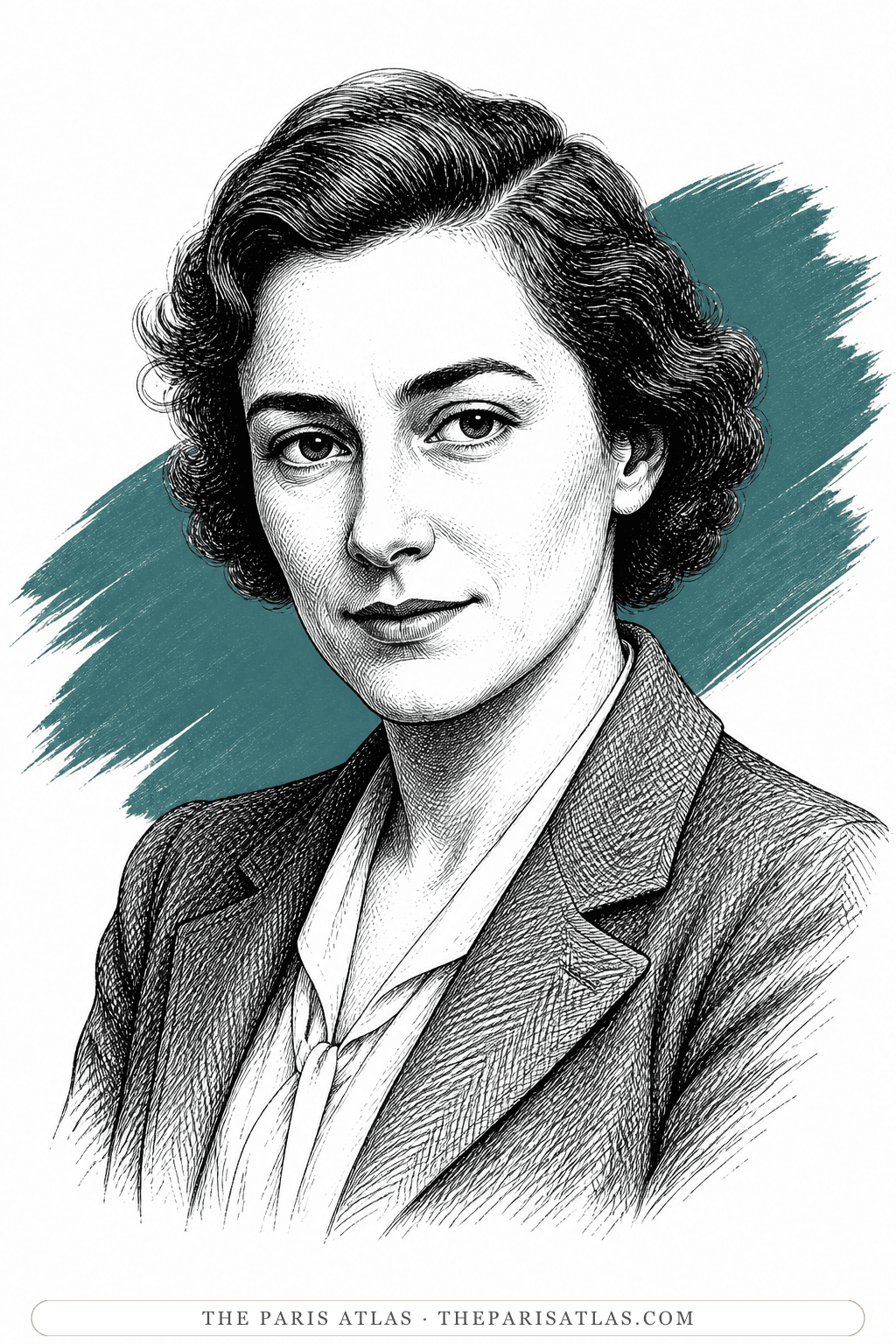
Beauvoir's colleague at the Lycée Jeanne d'Arc in Rouen and a lifelong friend. A committed left-wing writer and later a founder of the Union of the Democratic Left; part of Beauvoir's political education in the Rouen years.
October 1929
Beauvoir and Sartre pass the agrégation. On a bench in the Jardin du Luxembourg they work out the terms of their partnership.
1931–1932
Beauvoir's first teaching post at the Lycée Montgrand in Marseille.
1932–1936
Teaching post at the Lycée Jeanne d'Arc in Rouen, where she works alongside Colette Audry.
1935–1937
The trio with Olga Kosakiewicz — later fictionalised as Françoise, Pierre, and Xavière in She Came to Stay.
1936–1938
Beauvoir teaches at the Lycée Molière in Paris; from 1938 at the Lycée Camille Sée.
1938
Beauvoir begins the novel that will become L'Invitée. Olga Kosakiewicz marries Jacques-Laurent Bost, and Beauvoir's long relationship with Bost begins the same year.
September 1939
Sartre is mobilised as a meteorologist and posted to Alsace.
June 1940
France falls; Sartre is captured at Padoux and sent to Stalag XII-D in Trier.
March 1941
Sartre is released from the Stalag after producing a false medical certificate. Occupied Paris begins in the memoir.
Autumn 1943
Gallimard publishes L'Invitée. It is Beauvoir's first novel to reach print.
June 1943
Nathalie Sorokine's mother files a complaint; Beauvoir is dismissed from her teaching post at the Lycée Camille Sée.
August 1944
Liberation of Paris. The memoir closes in the streets of the newly-liberated Left Bank.
November 1960
Gallimard publishes La Force de l'âge in Paris.
1962
Peter Green's English translation appears from World Publishing and André Deutsch.
1990
Beauvoir's Wartime Diary — the notebooks she kept from September 1939 through January 1941, the source material for the Occupation chapters of The Prime of Life — is published in French.

The first volume of Beauvoir's memoirs: a bourgeois Catholic Paris childhood, the loss of faith, philosophy at the Sorbonne, and a friendship whose ending she said cost her her freedom.
Read our take
The third and longest volume of Beauvoir's memoirs: the eighteen years from the Liberation of Paris in August 1944 through 1962, the years in which she wrote The Second Sex and The Mandarins, met Nelson Algren, campaigned against French torture in Algeria, and became one of the most-watched public intellectuals in Europe.
Read our takeThe second volume of Beauvoir's memoirs, covering the fifteen years from her 1929 meeting with Sartre through the Liberation of Paris in August 1944. Teaching posts in Marseille, Rouen, and Paris; the establishment of the partnership with Sartre; the 1935–37 trio with Olga Kosakiewicz that She Came to Stay would fictionalise; Sartre's mobilisation and captivity in 1939–41; the writing of L'Invitée and The Blood of Others in occupied Paris; the 1943 dismissal from Beauvoir's teaching post; and the Liberation itself.
Gallimard published La Force de l'âge in Paris in November 1960, two years after Memoirs of a Dutiful Daughter. Peter Green's English translation appeared from World Publishing in Cleveland and from André Deutsch in London in 1962.
In October 1929, days after both had passed the agrégation, Beauvoir and Sartre worked out the terms of their partnership on a park bench in the Luxembourg gardens: a two-year renewable pact, allowing each other 'contingent loves' but promising complete honesty. The Prime of Life records the negotiation, and the fifty years the pact held (in some form) through Sartre's death in 1980 is the shape of the book that follows.
The mother of her former student Nathalie Sorokine filed a complaint with the Vichy education ministry in June 1943, over Beauvoir's affair with her daughter. The formal charge was 'incitement of a minor to debauchery.' Beauvoir was dismissed from her post at the Lycée Camille Sée and never taught again. She had by then earned an income from writing (L'Invitée published autumn 1943) and made writing her full-time work.
The Prime of Life is Beauvoir's own account of the years 1935–37 that She Came to Stay (1943) had fictionalised — the intense triangle with Olga Kosakiewicz that ended in exhaustion in real life and in murder in the novel. Reading the two together gives the strongest sense of what Beauvoir's fiction and her memoirs did with the same material.
Memoirs of a Dutiful Daughter (1958), covering 1908 to 1929. The Prime of Life (1960), covering 1929 to 1944. Force of Circumstance (1963), covering 1944 to 1962 and including The Second Sex, The Mandarins, and the affair with Nelson Algren. All Said and Done (1972), the last volume, written at sixty-four.
Explore authors with a similar voice, perspective, and influence.

Both French writers used novels, essays, journalism, and public argument to ask how freedom and responsibility operate without a fixed moral system.
View author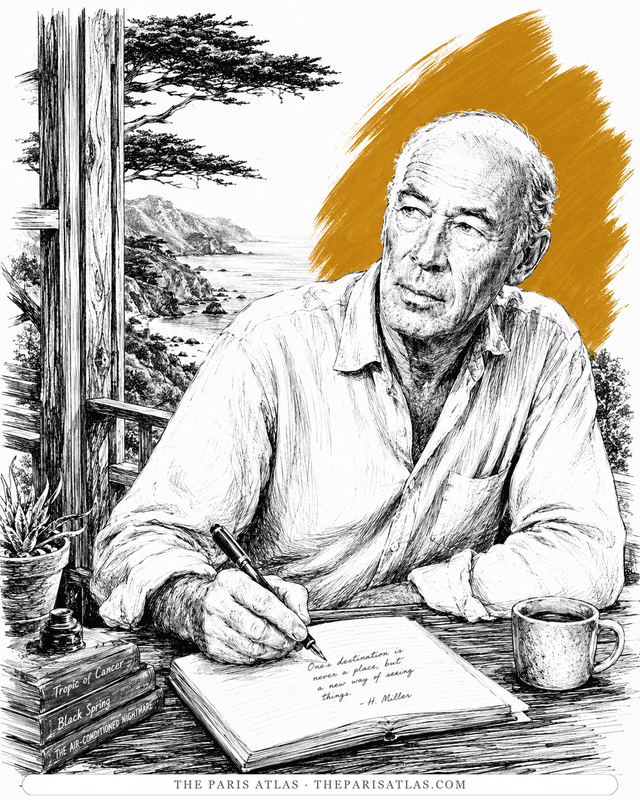
The Brooklyn dropout who arrived in Paris broke at thirty-eight and wrote the exuberant, banned books that ended American censorship.
View author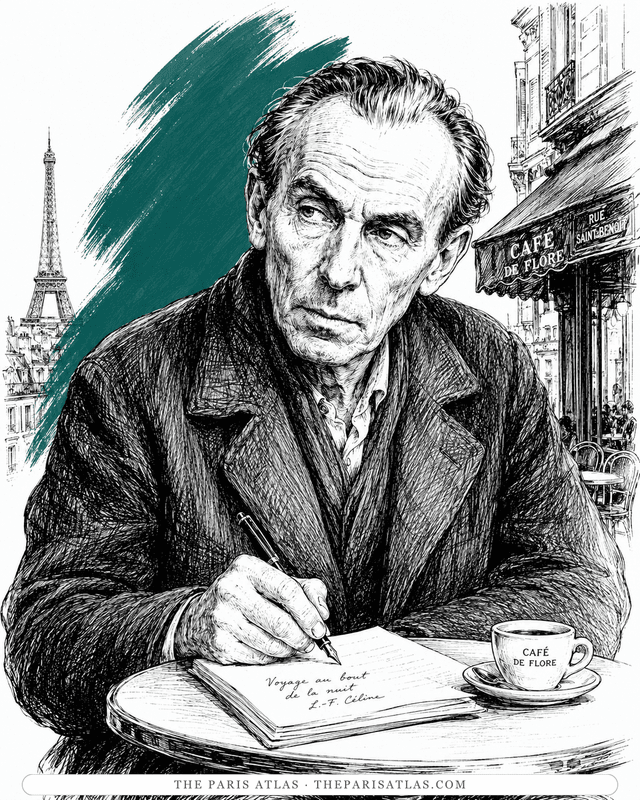
The doctor of the Paris slums who wrote the century's blackest, funniest novel — and changed the sound of French prose.
View authorThe sources below include the primary text, editions, scholarship, archival materials, and other records that informed this page. They document The Prime of Life, its publication, and its place in literary history.

Peter Green's translation, Part One, chapter 1, pp. 1–2, supplies the private-room reading. The publisher's sample also identifies the edition; no complete memoir was newly collated.
The original French Marseille passage is reproduced on p. 2 of the official 2025 DNB paper. The analysis reads Beauvoir's text, not an examination answer or commentary.

The public library catalogue verifies Peter Green's translation, the 2024 English edition, and its ISBN.
Used to place The Prime of Life within Simone de Beauvoir's published work and verify its bibliographic context.
Used for independent biographical, archival, or historical context surrounding Simone de Beauvoir's career and the period in which The Prime of Life appeared.
Used to cross-check authorship, chronology, and the work's place in Simone de Beauvoir's wider catalogue.
Used to verify Simone de Beauvoir's bibliography and place The Prime of Life within the broader chronology of Simone de Beauvoir's career.
The primary text is the baseline reference for every book page. Additional references document publication history, interpretation, and historical context where that evidence is available.
 Explore more resources