
The Prime of Life
The second memoir volume, covering Beauvoir from her 1929 meeting with Sartre through the Occupation and the Liberation of Paris — the years the intellectual partnership at the centre of her life was built and tested.
Read our take
Beauvoir's account of Sartre's last ten years — the blindness, the strokes, the political engagements, the dependence on her care — followed by the 1974 interviews the two of them recorded together, the most direct testimony we have of what fifty years of that partnership actually consisted of.
Simone de Beauvoir's La Cérémonie des adieux (1981) has two parts. The first is a chronological account of Jean-Paul Sartre's last decade, from his near-blindness in early 1971 through his death on 15 April 1980 at Hôpital Broussais in Paris. It is a plain-language record — Beauvoir does not soften what has happened to the philosopher — of the strokes, the political engagements (Sartre's late campaigns for Israeli–Palestinian dialogue, for Solzhenitsyn, for the Vietnamese boat people), the increasing round-the-clock care, and the final week. The second part, printed with the book in every edition since 1981, is the transcript of the long interviews Beauvoir recorded with Sartre in the summer of 1974, in the last six weeks of his intellectual clarity. It is the closest either of them ever came to a systematic account of what their partnership had been.
Beauvoir wrote La Cérémonie des adieux in the year after Sartre's death — 1980 into early 1981 — and Gallimard published it in Paris in November 1981. Patrick O'Brian's English translation, Adieux: A Farewell to Sartre, appeared from Pantheon Books in New York and from André Deutsch in London in 1984. The chronological narrative section runs to about a hundred and thirty pages; the 1974 interviews run to another two hundred and fifty. In some French editions the two parts are separately volumed; in most editions they are printed together, the interviews framed by the memoir.
The book is Beauvoir's answer to the two problems any famous partnership has to face at the end. The first — how do you tell the story of someone else's decline honestly when that person is a public monument? — she answered by writing what she saw. She describes Sartre in the last three years in ways her readers found alternately essential and unforgivably plain. Her account of the loss of his eyesight, his difficulty with what he had thought of as his own work, his falls, and the final Broussais week is not softened by piety toward a philosophical career. The second — how do you introduce the private evidence for a partnership that had been public for fifty years? — she answered by publishing the 1974 conversations. The interviews are the direct evidence.
The book was widely and often bitterly discussed on publication. Sartre's adopted daughter and literary executor, Arlette Elkaïm-Sartre, whose position Beauvoir describes coldly in the narrative section, wrote her own answer (Lettre ouverte à Simone de Beauvoir, 1993). Others in Sartre's circle objected to specific claims. Beauvoir stood by the book. It is her last published work of significant length and — with A Very Easy Death (1964) — one of the two books in which she wrote from within a specific grief rather than an argument.
Part One opens on 6 January 1971, the day of Sartre's eye operation for the retinal detachment that had begun to take his sight the previous autumn. Beauvoir is at the clinic. The operation is only partly successful, and Sartre's near-blindness from that point on becomes the shape the rest of the book will work around. Beauvoir then works chronologically through the 1970s: Sartre's continuing political work with Pierre Victor and the Maoist Gauche Prolétarienne, the collective editorship of Libération, the campaigns for Israel–Palestine dialogue, the June 1974 stroke that briefly paralysed his right side, the campaigns for Solzhenitsyn's release from Soviet imprisonment, the recording sessions with Beauvoir in the summer of 1974 (which she describes as she has decided will fill Part Two), the deepening dependence of the late 1970s on a small rotation of women — Beauvoir; Sartre's long-standing companion Michelle Vian; his adopted daughter Arlette Elkaïm-Sartre; his lover Wanda Kosakiewicz; a devoted secretary named Liliane Siegel — and, in the last three years, the 1978 campaigning for the Vietnamese boat people, the failing kidneys, and the return to intensive care at Broussais in March 1980.
Part Two, printed in the same volume in every edition, is the interviews. Beauvoir prepared a set of questions and recorded Sartre over roughly six weeks in the summer of 1974, in his own flat on the boulevard Edgar-Quinet, in her studio on the rue Victor Schoelcher, and on their annual holiday together at the Villa Le Bost in Junas (Gard). The interviews are Sartre's account, in his own voice, of his childhood, his schooldays, the École Normale, the 1929 pact with Beauvoir, his relationships with women, his political trajectory (the war, the postwar CP crisis, Algeria, May 1968, Maoism), his books, and his views on philosophical questions he had spent his career on. Beauvoir edited the transcripts down but did not, she says, alter Sartre's answers. She published them after his death because he had never assembled a systematic autobiography himself and because they are, she thought, the truest witness there will be of what his mind was actually working on.
Part One closes on the last week of Sartre's life. On 20 March 1980 he was hospitalised at Broussais with pulmonary oedema and failing kidneys. He remained partly conscious for the next three weeks. Beauvoir was at the hospital daily, and Arlette Elkaïm-Sartre; Sartre's friends visited in shifts. On 15 April 1980 at nine in the evening he died. On 19 April 1980 his funeral procession moved from Broussais through the boulevard Raspail and the boulevard du Montparnasse to the Cimetière du Montparnasse, followed by roughly fifty thousand people who had come out into the streets on their own accord — the largest French intellectual funeral of the century and the closest anything came to the Hugo funeral of 1885.
The last chapter of the memoir is Sartre's funeral. Beauvoir describes the day plainly: the procession from Broussais, the streets closed, the crowd, the burial at Montparnasse, her return alone to her studio on rue Victor Schoelcher (which looks out over the cemetery). She spent the following days, she says, drinking; she was hospitalised herself in the first week of May with liver failure and pneumonia and did not go home again until the summer.
The last paragraph of the book — the sentence Beauvoir chose for the last thing she published of significant length in her life — is a plain statement rather than a peroration: 'His death separates us. My death will not reunite us. That is how it is; it is already a great thing that we have been able to share our lives so long.' She died six years later, on 14 April 1986 — a day before the sixth anniversary of Sartre's death — and was buried beside him at Montparnasse. Adieux is the book by which she deliberately ended the sequence of writing that had begun with Memoirs of a Dutiful Daughter in 1958. There is no seventh volume; there is nothing after this.
Beauvoir's opening note makes clear that the portrait is assembled, not simply recovered. She names her diary and other people's accounts as its materials, and acknowledges that a witness belongs inside the evidence she presents. That admission gives the conversation illustration an important qualification: knowing someone intimately does not provide a view from nowhere. The memoir's authority comes from a particular participant who must choose what to include. Its restraint about her own feelings is therefore a narrative decision, not proof that affection has disappeared or that memory has become neutral.
The opening address to Sartre performs an exchange it immediately declares impossible. Beauvoir recalls an old debating joke, gives its image of enclosure a final meaning, and then identifies the living friends who are really her audience. The change of addressee matters beside the funeral illustration. Public remembrance can gather people around a shared loss, but it cannot restore the reply of the person being mourned. Writing preserves testimony and creates another encounter among readers; Beauvoir refuses to present that continuation as reunion with the dead.
It completes the shared life begun in Memoirs of a Dutiful Daughter and The Prime of Life without turning decline into a legend.
Read it last among the memoirs because its force depends on knowing the partnership and public work that came before it.
Beauvoir wrote it in the year after Sartre's 1980 death and included, at the end, the 1974 interviews she recorded with him — the most direct testimony we have of what fifty years of the century's most watched philosophical partnership actually consisted of.
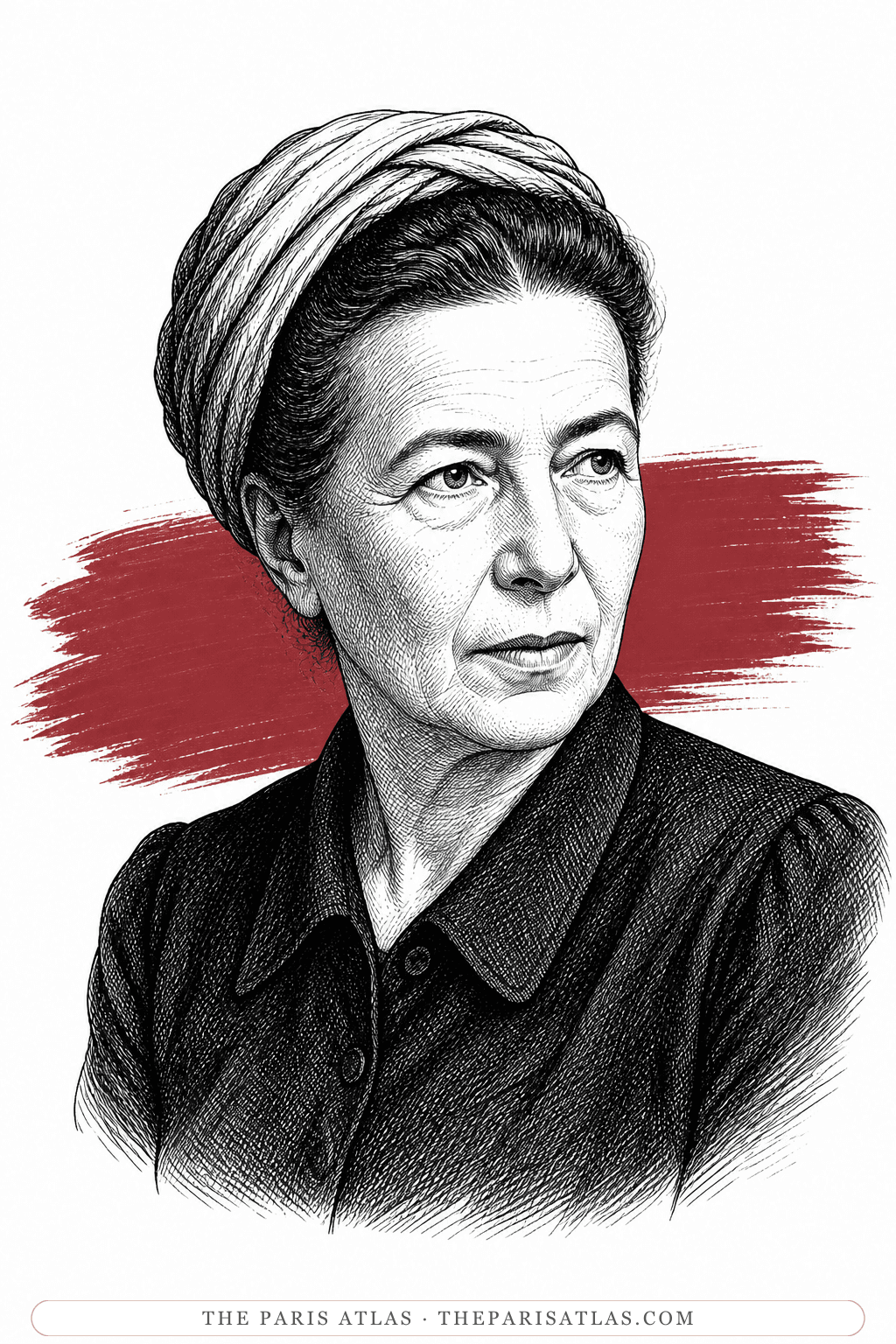
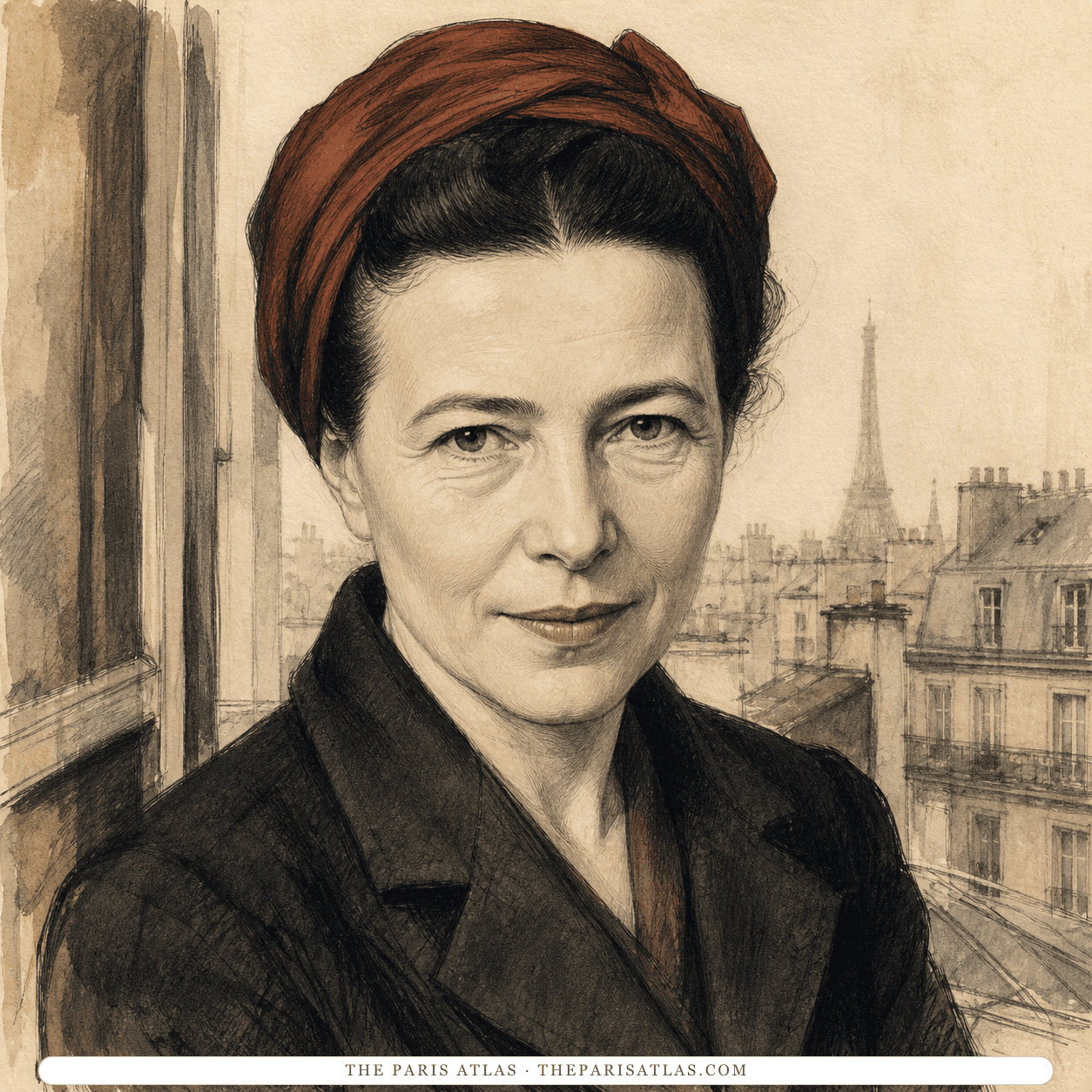
The book's first-person narrator, at seventy-two, writing in the year after Sartre's death. Records what she saw of Sartre's last decade and edits the 1974 interviews for publication.
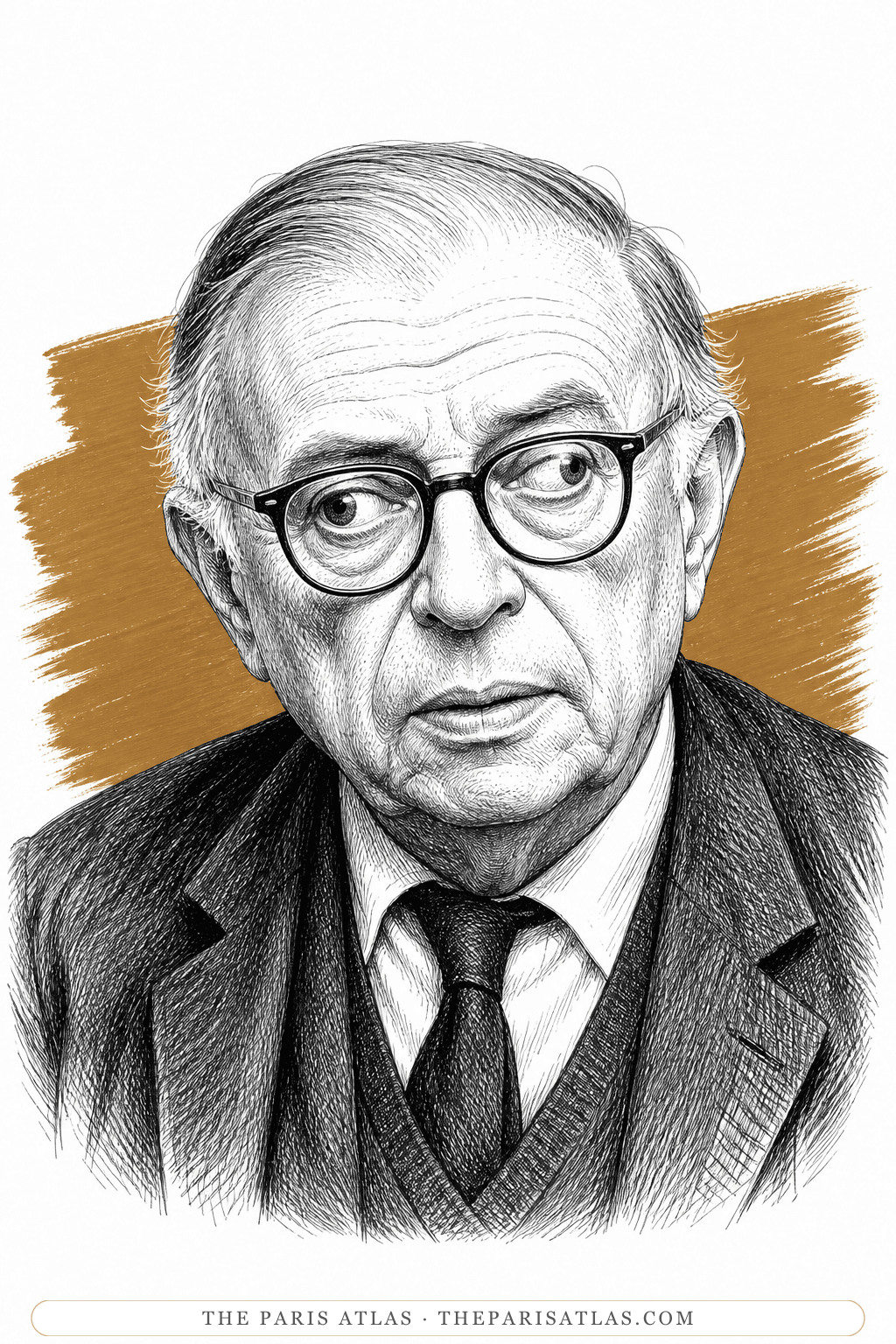
The book's subject. Sixty-five at the opening, seventy-four at his death. The 1971 eye operation, the 1973 stroke, the political campaigns of the 1970s (Israel-Palestine, Solzhenitsyn, the Vietnamese boat people), the small rotating circle of women who cared for him, and the last week at Broussais.

The Algerian-Jewish woman Sartre adopted as his daughter in 1965 and made his literary executor. Beauvoir describes her role in Sartre's late care with a coldness Arlette answered in 1993 with her own book, Lettre ouverte à Simone de Beauvoir.
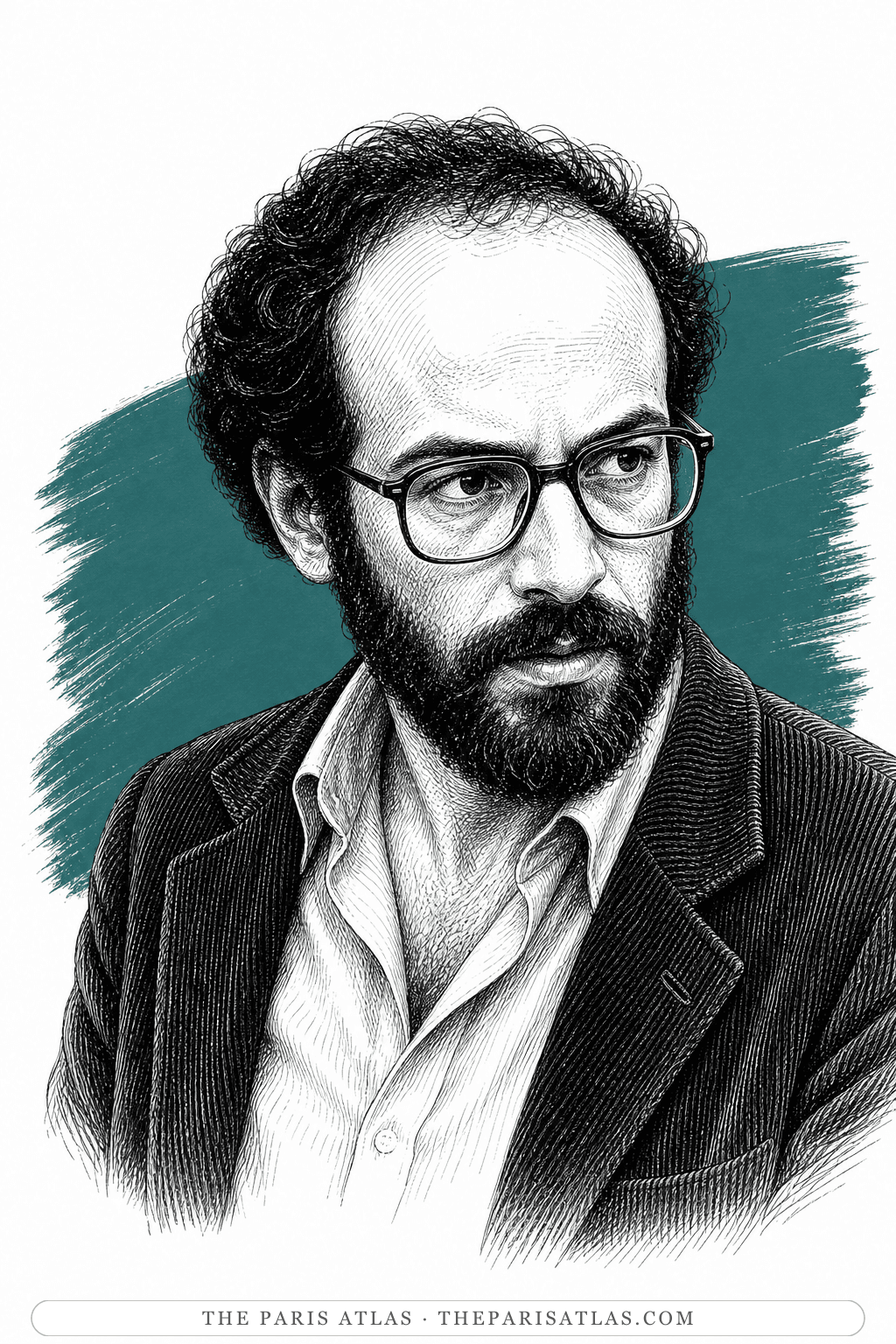
The former Maoist activist who became Sartre's secretary and closest political interlocutor from 1974 onward. The controversial 1980 interviews Lévy published in Le Nouvel Observateur just before Sartre's death raised the objection Beauvoir devotes several chapters of the memoir to.

Olga Kosakiewicz's younger sister, Sartre's long-standing contingent partner from the late 1930s onward. Named repeatedly in Adieux as one of the small circle of women who took turns caring for Sartre in his last years.

Sartre's long-term lover from 1949 onward. Formerly married to the novelist Boris Vian. One of the women in Sartre's late-life circle who alternated with Beauvoir and Arlette Elkaïm-Sartre in the care of the failing philosopher.
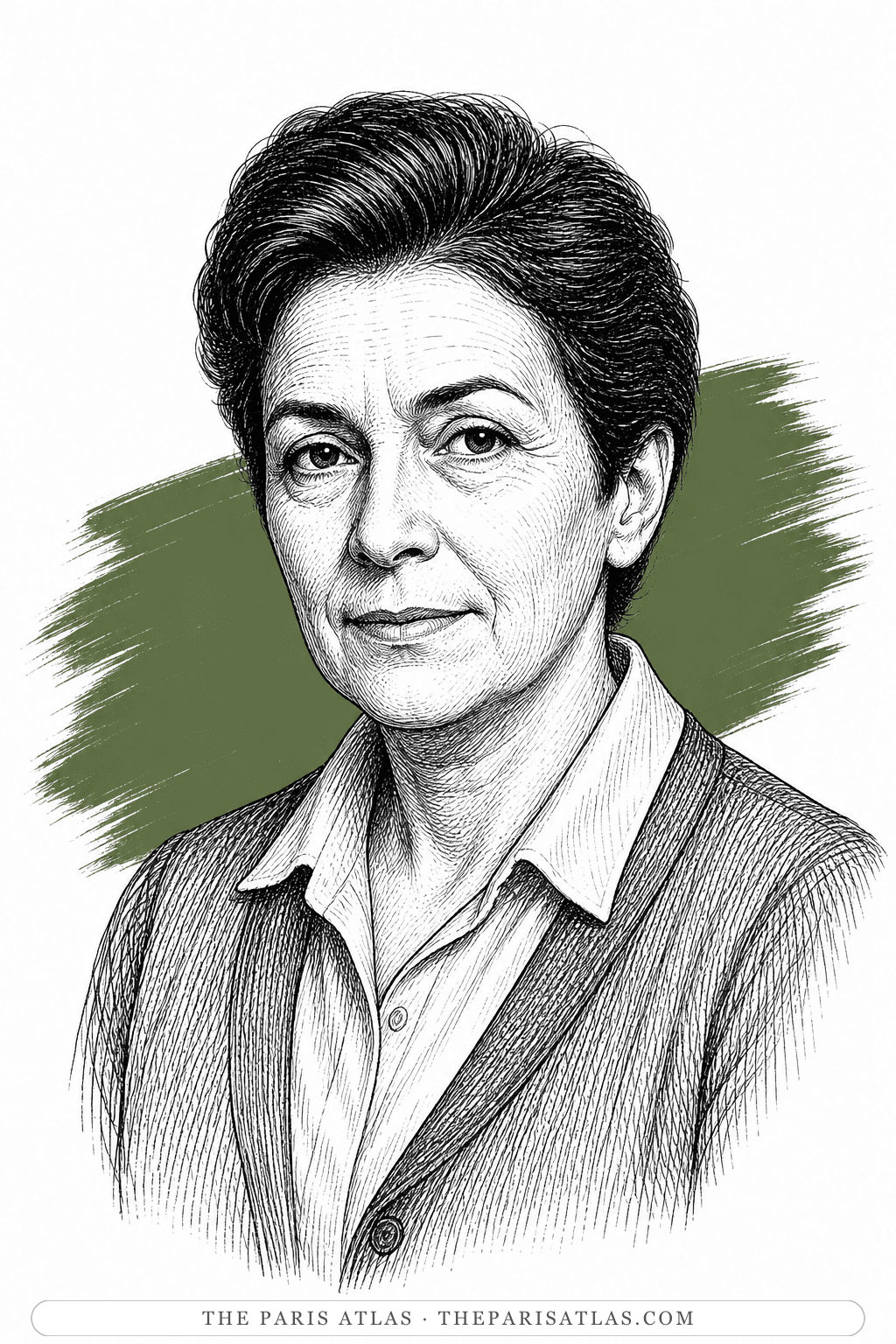
The devoted secretary and personal assistant of Sartre's last decade. Wrote her own account of the same years (La Clandestine, 1988).
October 1929
Beauvoir and Sartre make their partnership pact on a bench in the Jardin du Luxembourg. The partnership will last, in some form, for the next fifty years.
6 January 1971
Sartre undergoes eye surgery for a retinal detachment. His near-blindness dates from this point.
June 1973
Sartre suffers a mild stroke that briefly paralyses his right side.
Summer 1974
Beauvoir records the systematic interviews with Sartre that will make up Part Two of Adieux, at Villa Le Bost in Junas and in their Paris flats.
1974–1980
Sartre's daily political work continues, with the campaigns for Israel-Palestine dialogue, for Solzhenitsyn, and (from 1978) for the Vietnamese boat people. Round-the-clock care from a small rotating circle of women.
March 1980
Pierre Victor (Benny Lévy) publishes controversial interviews with Sartre in Le Nouvel Observateur. Beauvoir devotes several chapters of Adieux to the objection.
20 March 1980
Sartre is hospitalised at Broussais with pulmonary oedema and failing kidneys.
15 April 1980
Sartre dies at Broussais at nine in the evening.
19 April 1980
Funeral procession from Broussais through the boulevard Raspail to the Cimetière du Montparnasse, followed by roughly fifty thousand people.
November 1981
Gallimard publishes La Cérémonie des adieux in Paris.
1984
Patrick O'Brian's English translation, Adieux: A Farewell to Sartre, appears from Pantheon in New York and André Deutsch in London.
14 April 1986
Beauvoir dies in Paris and is buried beside Sartre at the Cimetière du Montparnasse.
1993
Arlette Elkaïm-Sartre publishes Lettre ouverte à Simone de Beauvoir, her own answer to Beauvoir's account.

The second memoir volume, covering Beauvoir from her 1929 meeting with Sartre through the Occupation and the Liberation of Paris — the years the intellectual partnership at the centre of her life was built and tested.
Read our take
The fourth and final volume of Beauvoir's memoirs — written at sixty-four with the whole life visible behind her, organised by theme rather than chronology, and containing the reckoning with 'I was cheated' that Force of Circumstance had ended on.
Read our takeTwo parts in one volume. The first is Beauvoir's chronological account of Jean-Paul Sartre's last decade — from his 1971 eye operation through his death on 15 April 1980 — including his blindness, his strokes, the political campaigns of the 1970s, and the round-the-clock care by a small circle of women. The second is the transcripts of the interviews Beauvoir recorded with Sartre in the summer of 1974, published together with the memoir because Sartre had never assembled a systematic autobiography himself.
Gallimard published La Cérémonie des adieux in Paris in November 1981, nineteen months after Sartre's death. Patrick O'Brian's English translation, Adieux: A Farewell to Sartre, appeared from Pantheon Books in New York and from André Deutsch in London in 1984.
Sartre was hospitalised at Hôpital Broussais in Paris on 20 March 1980 with pulmonary oedema and failing kidneys. He remained partly conscious for the next three weeks. On 15 April 1980 at nine in the evening he died. On 19 April a funeral procession from Broussais to the Cimetière du Montparnasse was followed by roughly fifty thousand people — the largest French intellectual funeral of the twentieth century.
In the summer of 1974, over roughly six weeks, Beauvoir recorded a systematic series of interviews with Sartre at his flat on the boulevard Edgar-Quinet, at her studio on the rue Victor Schoelcher, and on their annual holiday together at the Villa Le Bost in Junas in the south of France. She had prepared the questions in advance and edited the transcripts down after his death. They are Sartre's account, in his own voice, of his childhood, his schooldays, the 1929 pact with Beauvoir, his relationships with women, his political trajectory, his books, and his views on philosophy. They are the closest either of them came to a systematic public statement of what their fifty-year partnership had been.
Sartre had legally adopted Arlette Elkaïm as his daughter in 1965 and made her his literary executor. Beauvoir's Adieux describes Arlette's role in Sartre's late care coldly and objects to some of the decisions Arlette made after Sartre's death, including the publication of the March 1980 interviews Sartre had given to Pierre Victor (Benny Lévy) in Le Nouvel Observateur. Arlette answered with her own book, Lettre ouverte à Simone de Beauvoir, in 1993 — seven years after Beauvoir's own death — and objected to Beauvoir's presentation of both her role and Sartre's.
'His death separates us. My death will not reunite us. That is how it is; it is already a great thing that we have been able to share our lives so long.' Beauvoir chose the sentence as the last thing she published of any significant length. She died on 14 April 1986 and was buried beside Sartre at the Cimetière du Montparnasse.
Explore authors with a similar voice, perspective, and influence.
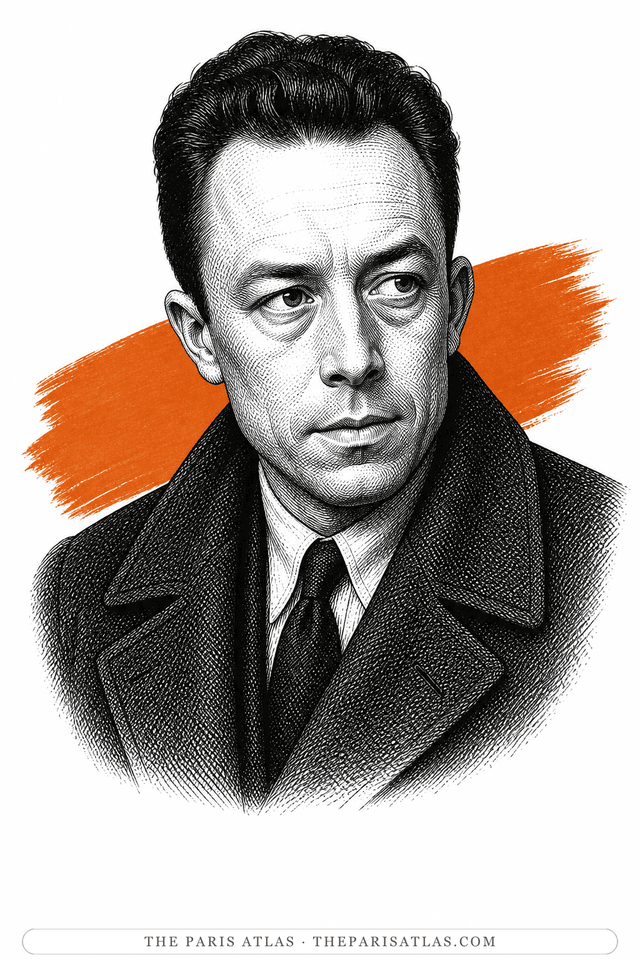
Both French writers used novels, essays, journalism, and public argument to ask how freedom and responsibility operate without a fixed moral system.
View author
The Brooklyn dropout who arrived in Paris broke at thirty-eight and wrote the exuberant, banned books that ended American censorship.
View author
The doctor of the Paris slums who wrote the century's blackest, funniest novel — and changed the sound of French prose.
View authorThe sources below include the primary text, editions, scholarship, archival materials, and other records that informed this page. They document Adieux: A Farewell to Sartre, its publication, and its place in literary history.


Publisher's primary prefatory excerpt in Patrick O'Brian's translation; not a newly collated complete memoir or interview sequence.

Publisher record used to verify the 1985 Pantheon paperback edition, ISBN, pagination, and Patrick O'Brian translation credit.
Used to place Adieux: A Farewell to Sartre within Simone de Beauvoir's published work and verify its bibliographic context.
Used for independent biographical, archival, or historical context surrounding Simone de Beauvoir's career and the period in which Adieux: A Farewell to Sartre appeared.
Used to cross-check authorship, chronology, and the work's place in Simone de Beauvoir's wider catalogue.
Used to verify Simone de Beauvoir's bibliography and place Adieux: A Farewell to Sartre within the broader chronology of Simone de Beauvoir's career.
The primary text is the baseline reference for every book page. Additional references document publication history, interpretation, and historical context where that evidence is available.
 Explore more resources