
Beauvoir's first novel: an established Parisian couple's promise of freedom is tested — and shattered — by the younger woman they invite into their lives.

21 Simone de Beauvoir titles: 5 novels, 2 story collections, 1 play, 8 memoirs and travel books, and 5 volumes of nonfiction. They are listed below by form, earliest first, and every one links to its own page.
Start with Memoirs of a Dutiful Daughter if you want her life, The Ethics of Ambiguity if you want a short philosophical argument, or The Mandarins if you want a novel. Read The Second Sex when you are ready for a large two-volume study; its introduction and conclusion provide a useful first route through it. The novels stand alone, but the four main memoir volumes should be read in order.

Beauvoir's first novel: an established Parisian couple's promise of freedom is tested — and shattered — by the younger woman they invite into their lives.

Beauvoir's Resistance novel, written in secret in Occupied Paris and published at the Liberation — an ethical thriller about a man who cannot forgive his own privilege and the woman he sends into a mission she may not survive.

A twentieth-century Parisian actor meets a man who cannot die, and asks him to remember her. His answer runs seven centuries and every version of that promise.

Beauvoir's Prix Goncourt novel: a six-hundred-page roman à clef of the Parisian intellectual left in the four years after Liberation — Sartre, Camus, Koestler and Nelson Algren all present under lightly changed names.

Beauvoir's late short novel about a Paris advertising executive and the polished consumer world that has trained her, her family, and her ten-year-old daughter to see other people's suffering as a stain to be removed from the picture.
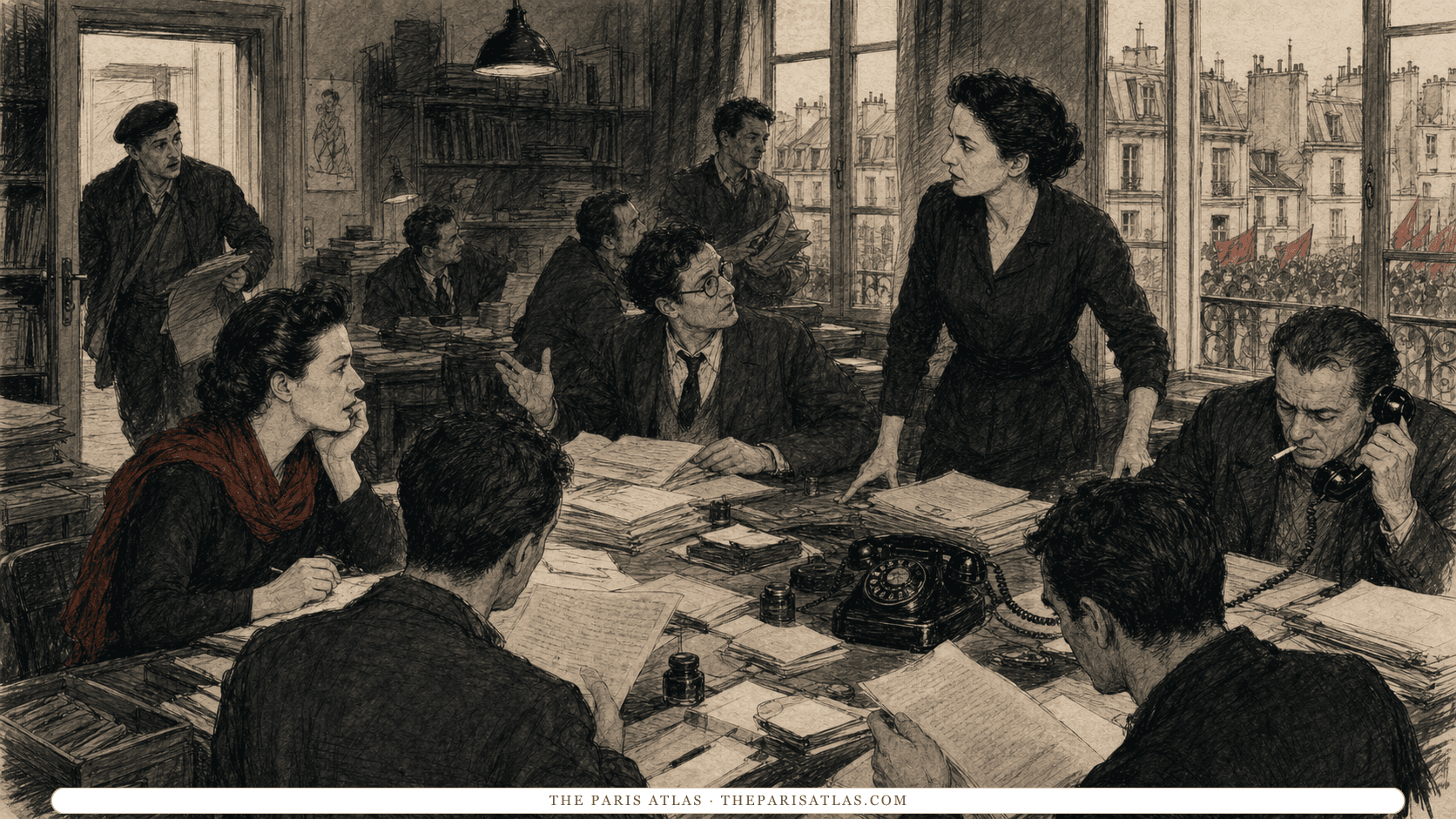
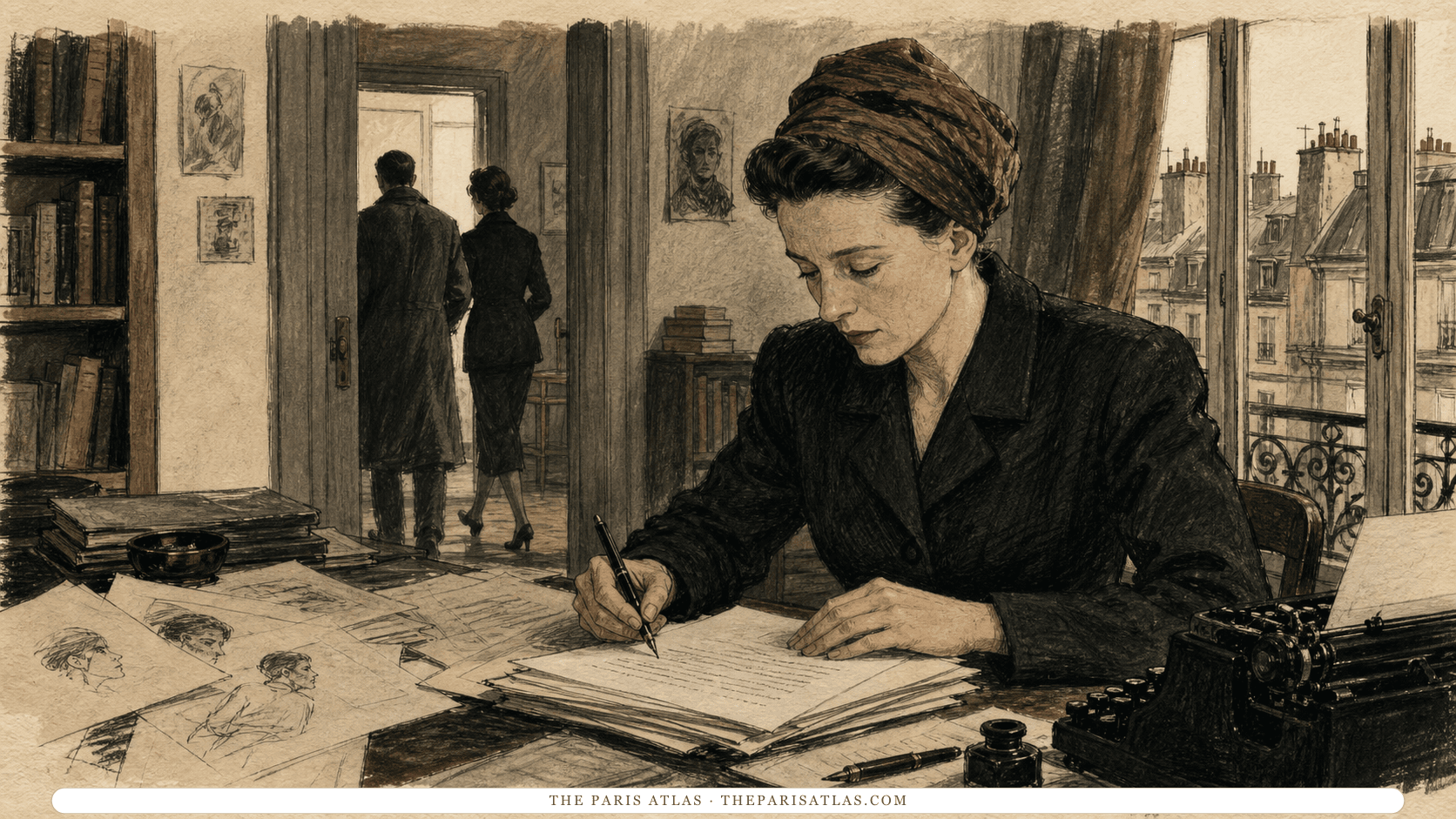

Three long stories of middle-aged women whose lives are coming apart — Beauvoir at her most Chekhovian, in the fiction that best carries the analysis of women's mid-life she had made in The Second Sex twenty years before.

Beauvoir's earliest book — five linked stories about young Catholic bourgeois Paris women written in 1935–37, rejected by Gallimard and Grasset, and published only forty-two years later as a document of the author before she had learned to write.
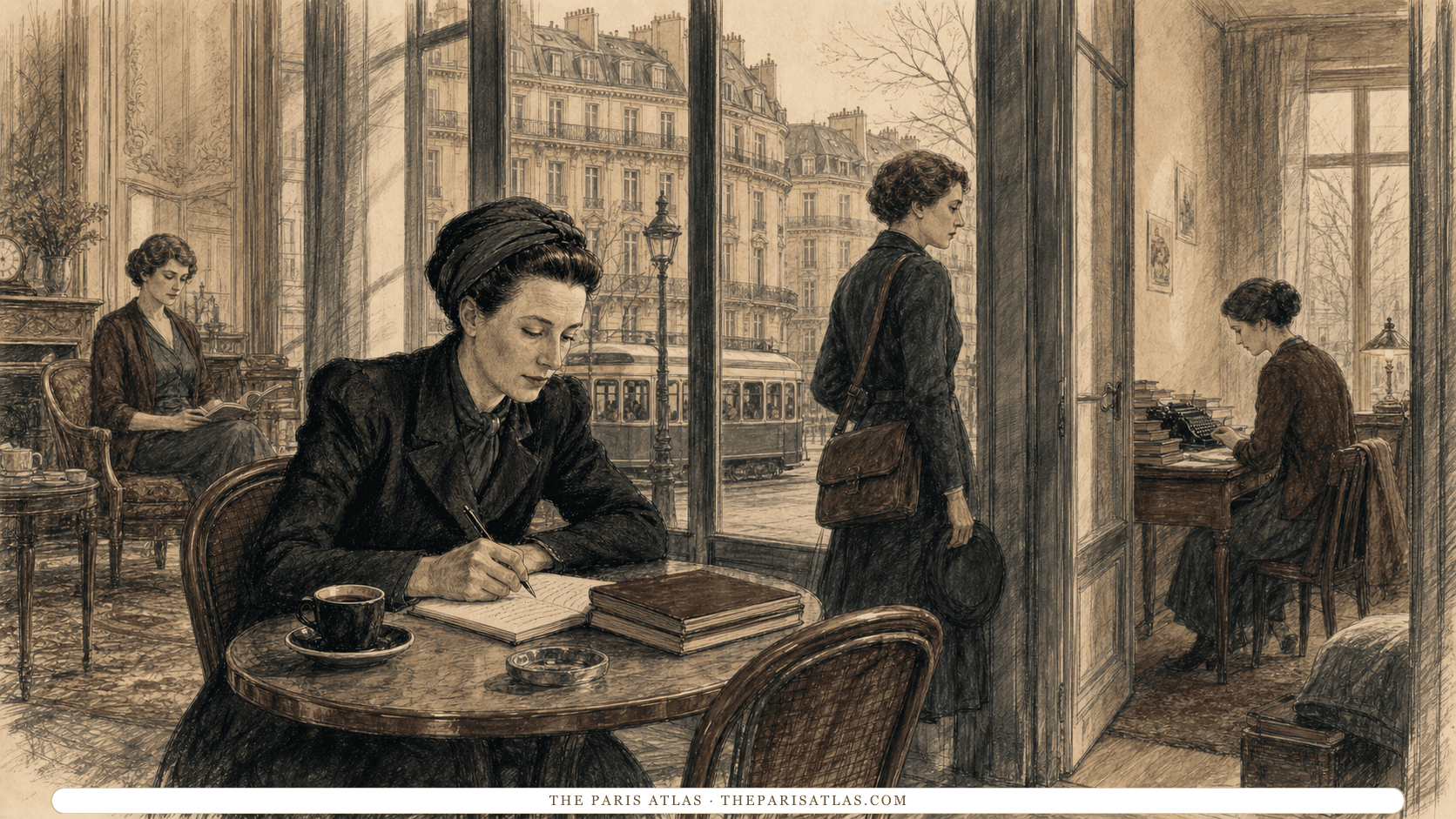

Beauvoir's only completed play, written under the Occupation and staged in Paris in October 1945 — a besieged fourteenth-century Flanders town choosing which of its own people it will not feed.
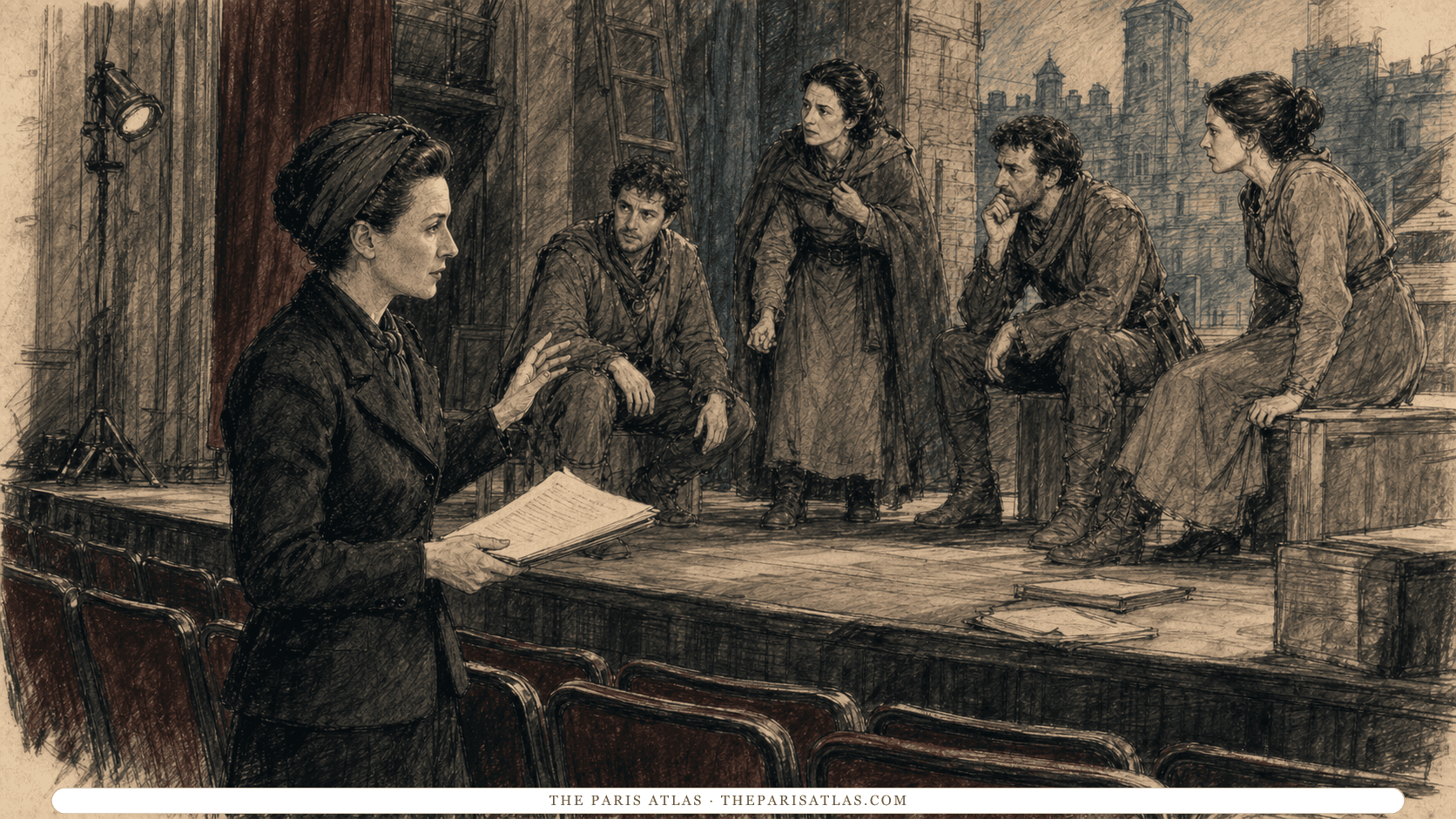

Beauvoir's diary of her four-month lecture tour across the United States in 1947 — the trip on which she met Nelson Algren, an encounter later scored across The Mandarins and her Letters to Nelson Algren.

Beauvoir's 1957 book on her two-month trip to Mao's China — the most politically contested of her nonfiction, a document of what a serious European left intellectual could and could not see in the People's Republic in the mid-1950s.

The first volume of Beauvoir's memoirs: a bourgeois Catholic Paris childhood, the loss of faith, philosophy at the Sorbonne, and a friendship whose ending she said cost her her freedom.

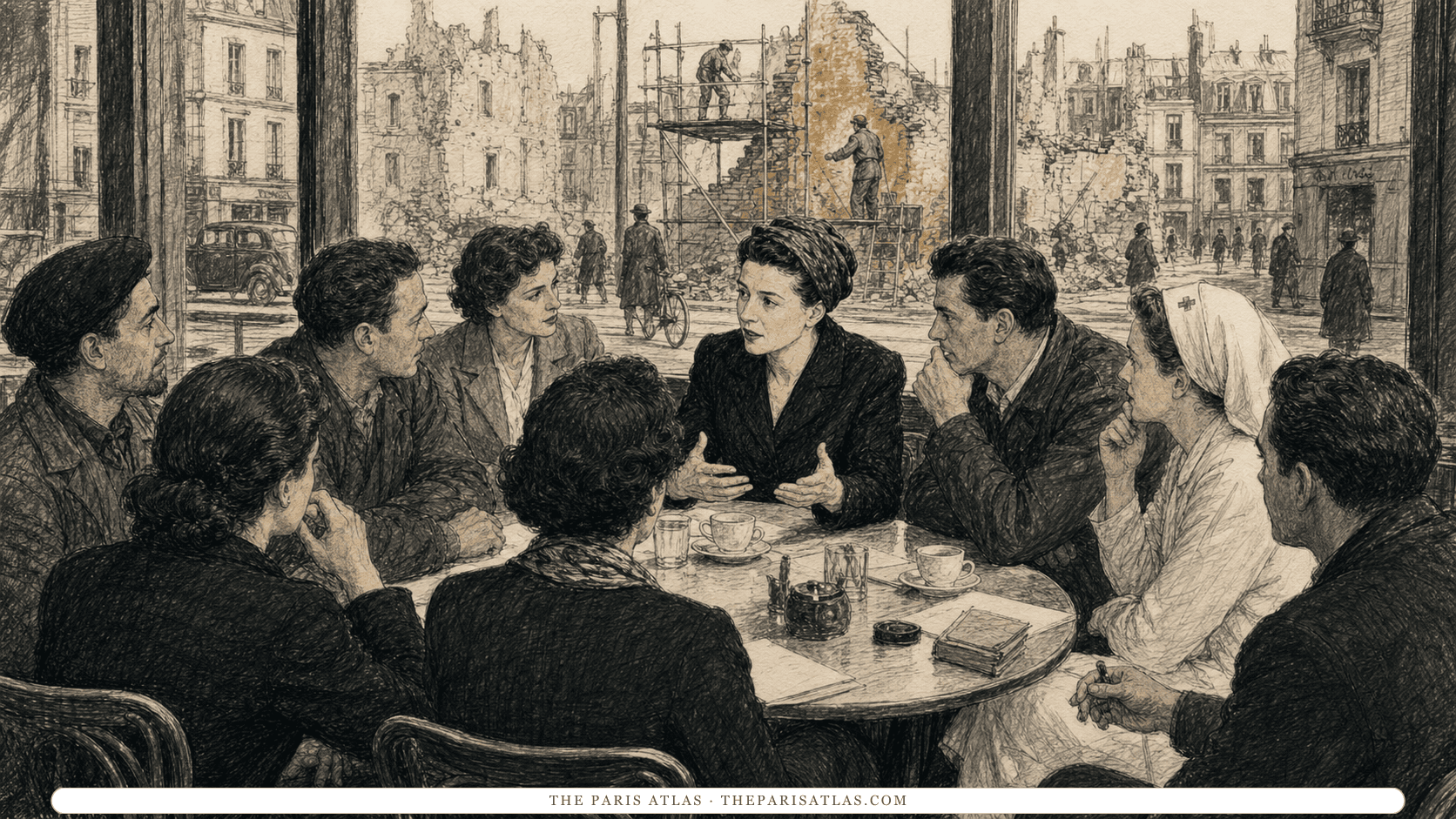
The second memoir volume, covering Beauvoir from her 1929 meeting with Sartre through the Occupation and the Liberation of Paris — the years the intellectual partnership at the centre of her life was built and tested.

The third and longest volume of Beauvoir's memoirs: the eighteen years from the Liberation of Paris in August 1944 through 1962, the years in which she wrote The Second Sex and The Mandarins, met Nelson Algren, campaigned against French torture in Algeria, and became one of the most-watched public intellectuals in Europe.

Beauvoir's hundred-page account of her mother's month-long death from cancer in a Paris clinic — the shortest and most direct book she wrote, and the case study The Coming of Age would turn into general argument six years later.

The fourth and final volume of Beauvoir's memoirs — written at sixty-four with the whole life visible behind her, organised by theme rather than chronology, and containing the reckoning with 'I was cheated' that Force of Circumstance had ended on.

Beauvoir's account of Sartre's last ten years — the blindness, the strokes, the political engagements, the dependence on her care — followed by the 1974 interviews the two of them recorded together, the most direct testimony we have of what fifty years of that partnership actually consisted of.
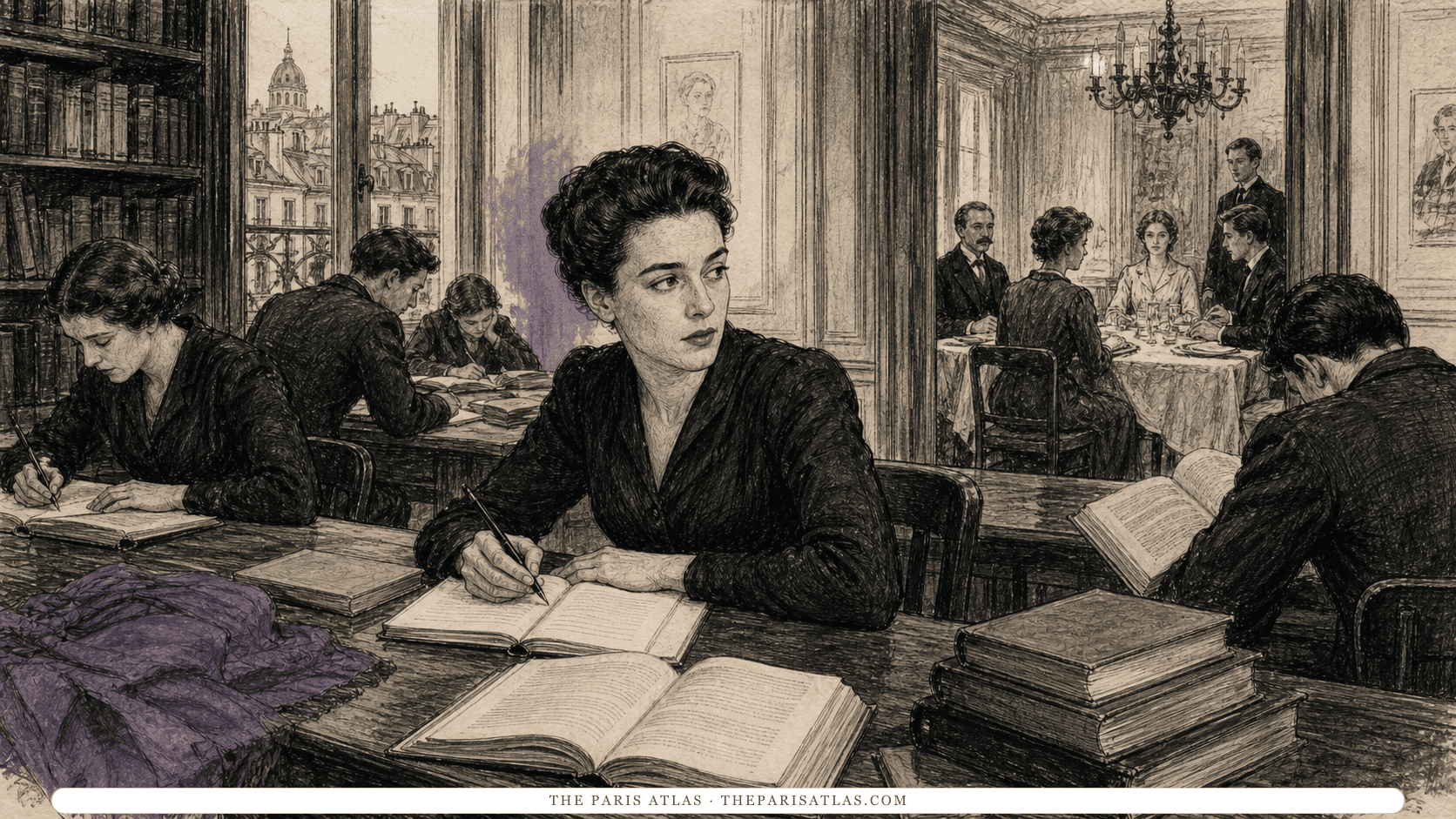


Beauvoir's first philosophical essay, written under the Occupation and published a few months after the Liberation — the shorter, earlier statement of the argument The Ethics of Ambiguity would work out at book length three years later.

Beauvoir's 1947 essay giving existentialism the ethics Sartre never got around to writing — the philosophical statement of the argument She Came to Stay had put in a novel and The Second Sex would put in a thousand pages two years later.

Beauvoir's thousand-page 1949 argument that femininity is made and not born — the founding book of second-wave feminism and the century's most influential work of feminist philosophy.

Beauvoir's long 1951–52 essay on the Marquis de Sade for Les Temps modernes — the philosophical argument that turned Sade from a scandal into a serious moral problem for postwar existentialism.

Beauvoir's six-hundred-page 1970 study of old age — the companion volume to The Second Sex, arguing that Western societies treat their elderly as a scandal to be hidden and that this is a decision, not a fact.

Your progress
The most welcoming first book: Paris childhood, education, loss of faith, philosophy, friendship, and the decision to build an independent writing life.
The shortest direct statement of Beauvoir's philosophy of situated freedom and responsibility to other people.
The best first novel: postwar Paris, writers, journalism, political parties, friendship, and love after liberation.
Begin with the introduction and conclusion, then choose chapters by subject before returning to the full historical sequence.
Beauvoir applies a similarly broad historical and social method to aging, poverty, work, the body, and exclusion.
Childhood through the 1929 philosophy examination and the death of her friend Élisabeth 'Zaza' Lacoin.
Teaching, travel, the partnership with the French philosopher and writer Jean-Paul Sartre, first fiction, war, and the German occupation of France.
Postwar fame, The Second Sex, international travel, Cold War politics, and the Algerian War.
A thematic later assessment of the work, relationships, political commitments, and aging described in the earlier volumes.
Writers and political responsibility after the liberation of Paris; the novel that won the 1954 Prix Goncourt.
A relationship triangle turns freedom, jealousy, and the existence of another person into a Paris novel.
Three shorter first-person works about age, betrayal, family roles, and narrators who cannot fully see their own situation.
The compact novel of advertising, prosperity, family appearances, and a child who refuses adult denial.
The fantasy outlier: an immortal man discovers why a life without an ending does not secure meaning or progress.
A vivid and limited outsider's account of a 1947 trip across the United States, including segregation, class, cities, and the novelist Nelson Algren.
The early short essay on projects and other people, best paired with The Ethics of Ambiguity.
Literary criticism and political essays testing where revolt becomes domination.
The brief, direct account of Beauvoir's mother's last illness; accessible on its own, stronger after the first memoir.
Read last: Jean-Paul Sartre's final decade, care, decline, death, and the public memory of a lifelong partnership.
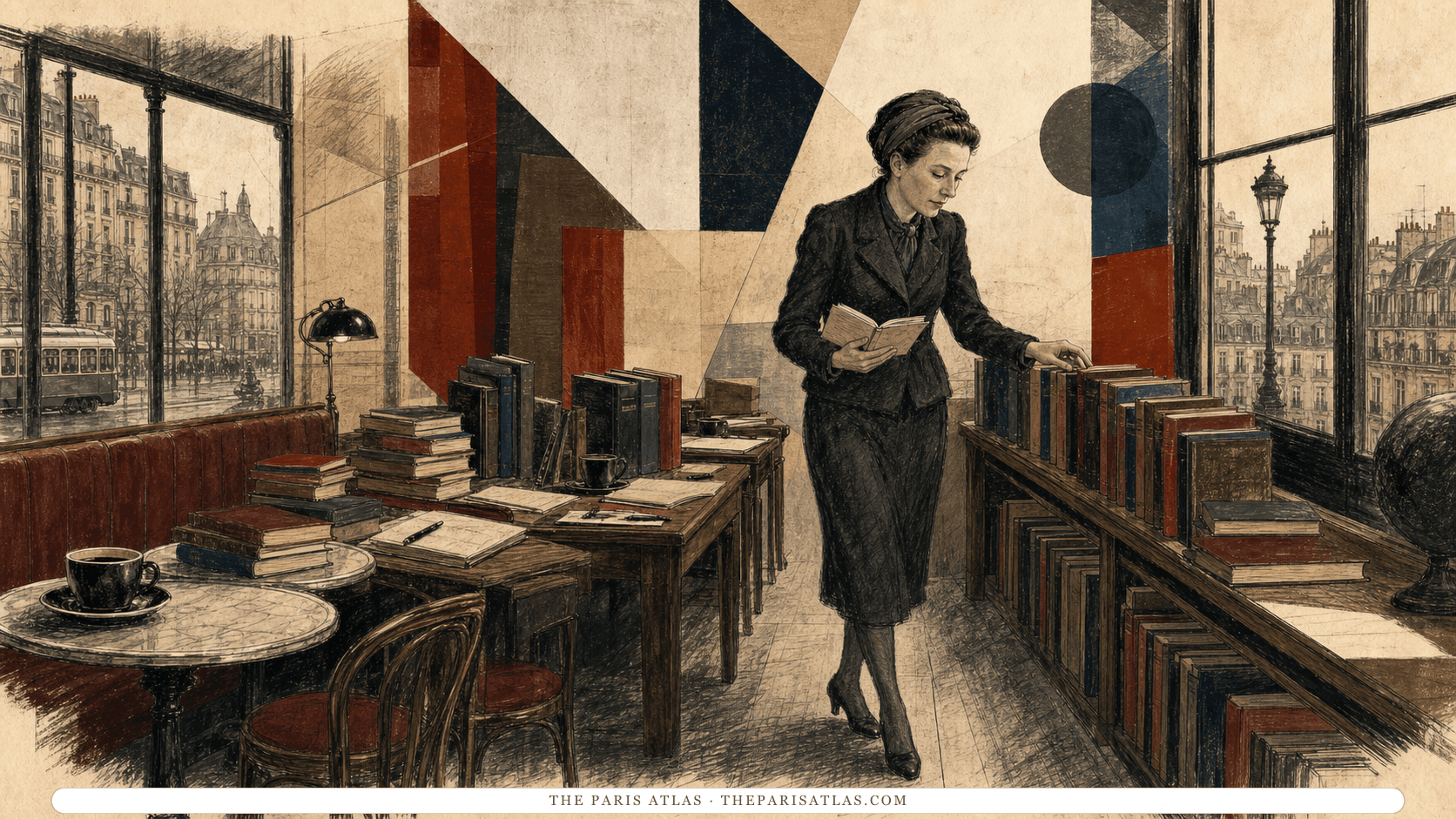
Memoirs of a Dutiful Daughter is the best general starting point because it introduces Simone de Beauvoir's Paris childhood, education, family, friendships, and decision to become a writer. Choose The Ethics of Ambiguity if you want philosophy or The Mandarins if you want a novel.
Read Memoirs of a Dutiful Daughter, The Prime of Life, Force of Circumstance, and All Said and Done in that order. A Very Easy Death can be read after the first volume, and Adieux: A Farewell to Sartre belongs at the end.
Start with The Mandarins for a large postwar Paris novel or The Woman Destroyed for three shorter works. She Came to Stay is the best next novel because it introduces Beauvoir's conflict between freedom and possession.
You can, but you do not have to begin that way. Read the introduction and conclusion first, then choose chapters by subject. Return to the full two-volume sequence when you know which parts of the historical and philosophical argument you want to follow closely.
Six novels are usually counted: She Came to Stay, The Blood of Others, All Men Are Mortal, The Mandarins, Les Belles Images, and When Things of the Spirit Come First. The Woman Destroyed is a collection of three novellas, and Who Shall Die? is a play.
No. Gender is central to The Second Sex and much of her later activism, but her books also address freedom, ethics, political violence, war, colonialism, travel, literature, aging, death, memory, and the practical work of making a life.
No. This page counts twenty-one major standalone works Simone de Beauvoir published or prepared for publication. Posthumous diaries and correspondence are important further reading, but editors and correspondents shaped those volumes, so they are not presented as part of the core author bibliography.
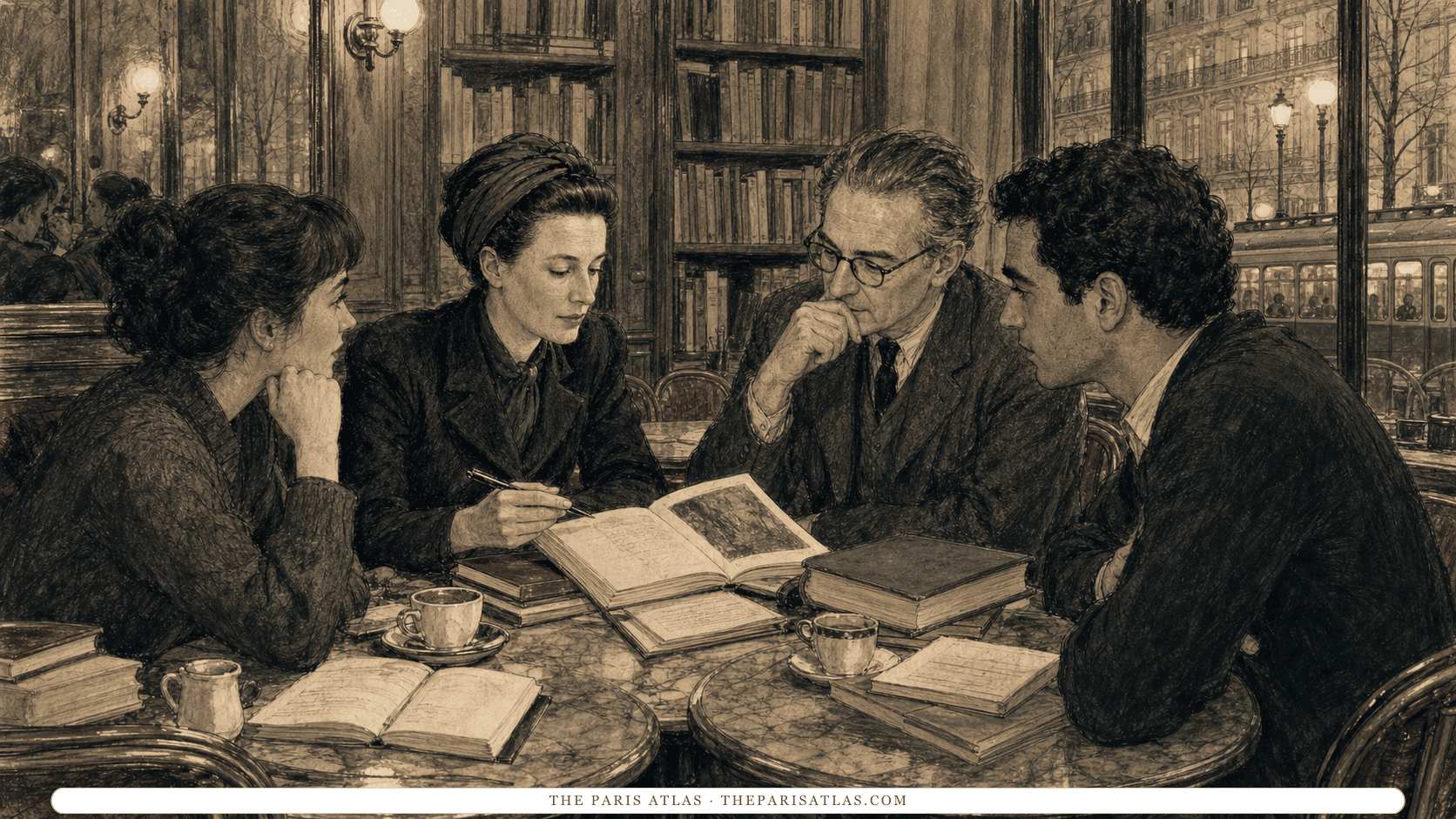
The sources below include bibliographies, archives, publisher records, and scholarship used to verify the Simone de Beauvoir catalogue and publication order.


Official record used to verify names, dates, institutional details, or other factual information on this page.
Archival evidence used to document the historical record connected to Simone de Beauvoir books.

Web source consulted for documented facts and historical context presented on the Simone de Beauvoir books page.
Published analysis and historical context used in preparing the Simone de Beauvoir books page.
These references document which titles belong in the bibliography and when they appeared. The recommended reading order remains an editorial judgment by The Paris Atlas.
 Explore more resources
Newsletter
We will tell you when this guide adds a book, review, or new reading-order recommendation.