
America Day by Day
Beauvoir's diary of her four-month lecture tour across the United States in 1947 — the trip on which she met Nelson Algren, an encounter later scored across The Mandarins and her Letters to Nelson Algren.
Read our take
Beauvoir's 1957 book on her two-month trip to Mao's China — the most politically contested of her nonfiction, a document of what a serious European left intellectual could and could not see in the People's Republic in the mid-1950s.
Simone de Beauvoir's La Longue marche is a nearly five-hundred-page book on the People's Republic of China, published by Gallimard in November 1957 and translated into English by Austryn Wainhouse the following year. It is Beauvoir's account of the two-month trip she and Jean-Paul Sartre took to China in September and October 1955 at the invitation of the Chinese government, in a French delegation of intellectuals and journalists. The book is not a travel diary. It is Beauvoir's attempt to explain to French readers what the six-year-old People's Republic was, historically and politically — its land question, its industry, its family structures, its treatment of women, its literary and cultural policy — and to argue that the achievements she believed the revolution had produced deserved the sympathy of the European left. It is her most politically committed and, in 2026, her most contested piece of nonfiction. The information she was working from was managed, and the disasters of the Great Leap Forward (1958–1962) and the Cultural Revolution (1966–1976) lay just past the book's publication date. La Longue marche is a valuable primary document of Western left engagement with revolutionary China; it is not a reliable description of the country it describes.
Beauvoir and Sartre travelled to China in September 1955 as guests of the Chinese People's Association for Cultural Relations with Foreign Countries — a state-sponsored trip in a period when the People's Republic was actively courting Western left intellectuals for propaganda purposes. Their delegation moved through Beijing, Shanghai, Nanjing, Hangzhou, Canton, and villages in between over roughly two months, with official minders, planned itineraries, and staged access. Beauvoir did no reading in Chinese, spoke no Chinese, and worked from Chinese-government-provided figures, French-translated Chinese-government texts, and interviews conducted through interpreters. She was aware of the mediation and does at points acknowledge it; the book's central problem, in hindsight, is how much of what she was shown she took at face value.
The book was published by Gallimard in November 1957 in a print run of ten thousand, unusually large for a Beauvoir nonfiction title. Austryn Wainhouse's English translation, The Long March: An Account of Modern China, appeared from World Publishing in Cleveland in 1958 and from André Deutsch in London the same year. The book was widely reviewed on both sides of the Cold War: the Communist and left French press praised it, Raymond Aron and other liberal French critics dismissed it as a credulous tour report, the Anglo-American reception was mixed and by 1960 firmly negative. Beauvoir was defensive about the book in Force of Circumstance (1963) and did not repudiate its argument, but she rarely returned to Chinese subjects and admitted in later interviews that the trip had shown her what she had wanted to see.
In 2026 the book is read primarily as a document of the Western intellectual response to Maoism between 1949 and 1966 — the same period that produced the visits and books by Han Suyin, Simon Leys's later riposte Les Habits neufs du président Mao (1971), and the broader French Maoist moment of the 1960s and 1970s. La Longue marche is one of the founding texts of that response and one of the earliest to which the historical record has been unkind. It is on Beauvoir's shelf as the piece of her nonfiction that most demands to be read with the primary-source discipline she urged elsewhere. It is honest about what an invited delegation could and could not see, and it is honest about the political sympathy that shaped the writing. It is not honest, because it could not be honest, about the state that was hosting her.
The book opens with several hundred pages of historical and political context on China from the late Qing collapse through the 1911 revolution, the warlord period, the Kuomintang, the Long March of 1934–35 (from which the book takes its title), and the establishment of the People's Republic in October 1949. Beauvoir's aim is to make the political situation legible to a French reader who has no prior background — and, implicitly, to argue that the People's Republic is the political heir of the anti-imperialist and modernising struggle of the previous century, not a Soviet imposition.
The middle section moves through observed daily life: peasant work and the land reform, industrial cities, the family, the position of women, education and literacy programmes, culture and the arts, religion. Each chapter combines Beauvoir's direct observations with the Chinese-government figures she was given, and each closes with a comparative judgment against pre-revolutionary conditions.
The concluding chapters argue that the revolution's achievements — literacy, women's legal equality, agrarian reform, the elimination of famine — outweighed the political costs Beauvoir acknowledges (the ongoing suppression of counter-revolutionaries, the control of speech, the absence of political pluralism), and that Western intellectuals had a responsibility to defend the People's Republic against Cold War distortion. It is these chapters that the historical record has treated most severely.
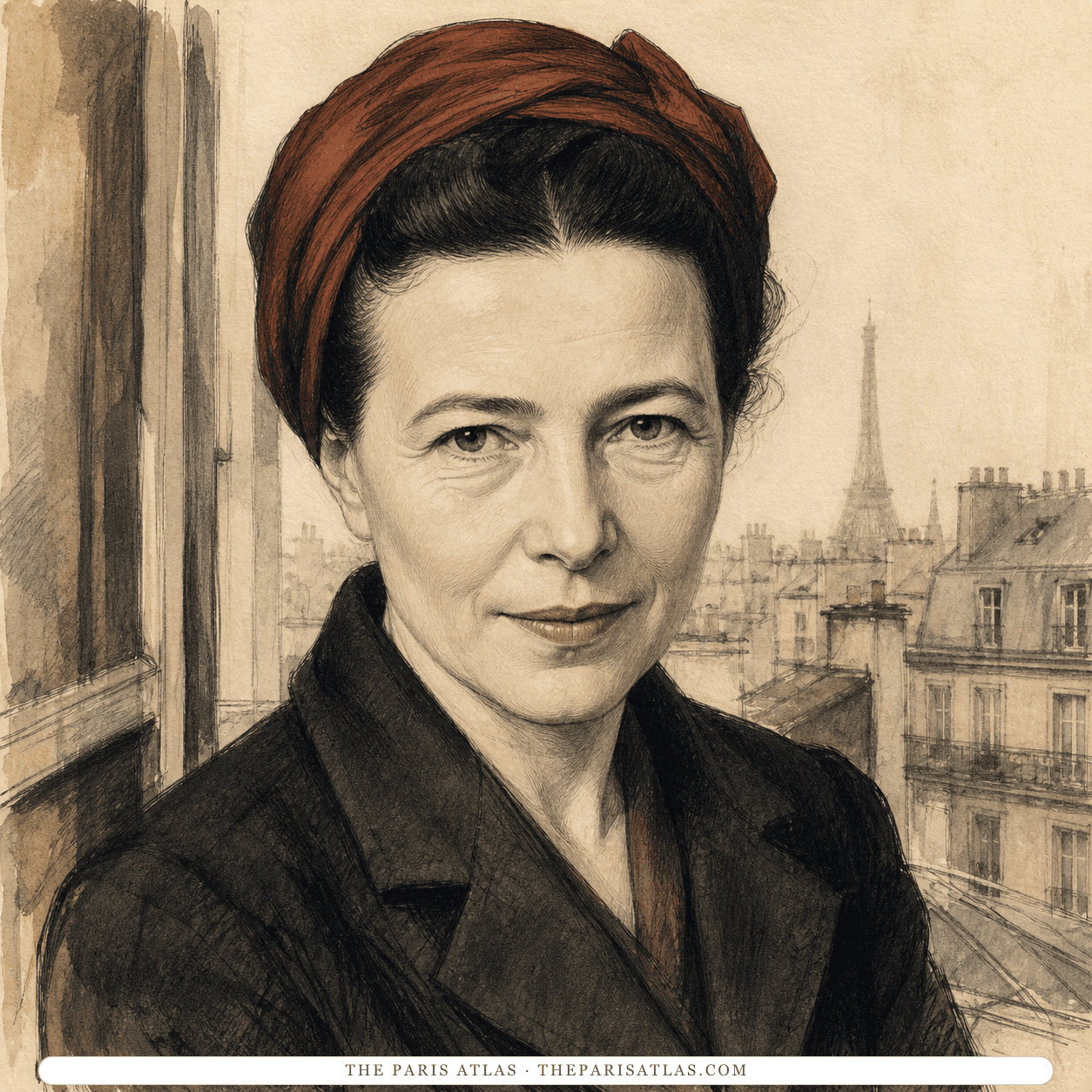
In a surviving preliminary draft, arrival unsettles the categories through which Beauvoir had imagined China. An interpreter makes the welcome intelligible, while flowers, humidity and the smell of vegetation give the place a bodily immediacy that political abstractions had lacked. The contrast is not between knowing nothing and suddenly knowing everything. It is between an idea of a country and the disorienting experience of being there. The illustration draws on that draft, rather than documenting an encounter; its sensory welcome opens a question about understanding without answering whether the visitor's later judgments are trustworthy.
The manuscript illustration points to a consequential distance between travel and publication. According to the surviving fragments' catalogue, much of the preliminary arrival narrative was cut before the final version. Meryl Altman likewise describes the published book as deliberately less personal than Beauvoir's American travel writing, combining observation with extensive reading and political argument. Revision therefore concerns the kind of authority the narrator claims, not just polished sentences. Moving from an impression to an explanation can widen the inquiry, but a more systematic account is not automatically a more reliable one.
It is the most politically committed of Beauvoir's nonfiction and the primary document of the mid-1950s Western left engagement with Maoist China.
Read it alongside America Day by Day (1948) to see the same reporting method applied to two very different states — and to see how much more suspicious Beauvoir is of the country whose politics she distrusts.
Beauvoir's 1957 book on her two-month trip to Mao's China — the most politically contested of her nonfiction, a document of what a serious European left intellectual could and could not see in the People's Republic in the mid-1950s.

The philosopher (1905–1980), Beauvoir's partner, travelled with her on the two-month 1955 delegation and wrote his own dispatches from the trip for Les Temps modernes and France-Observateur. The Chinese government's invitation was primarily addressed to him.
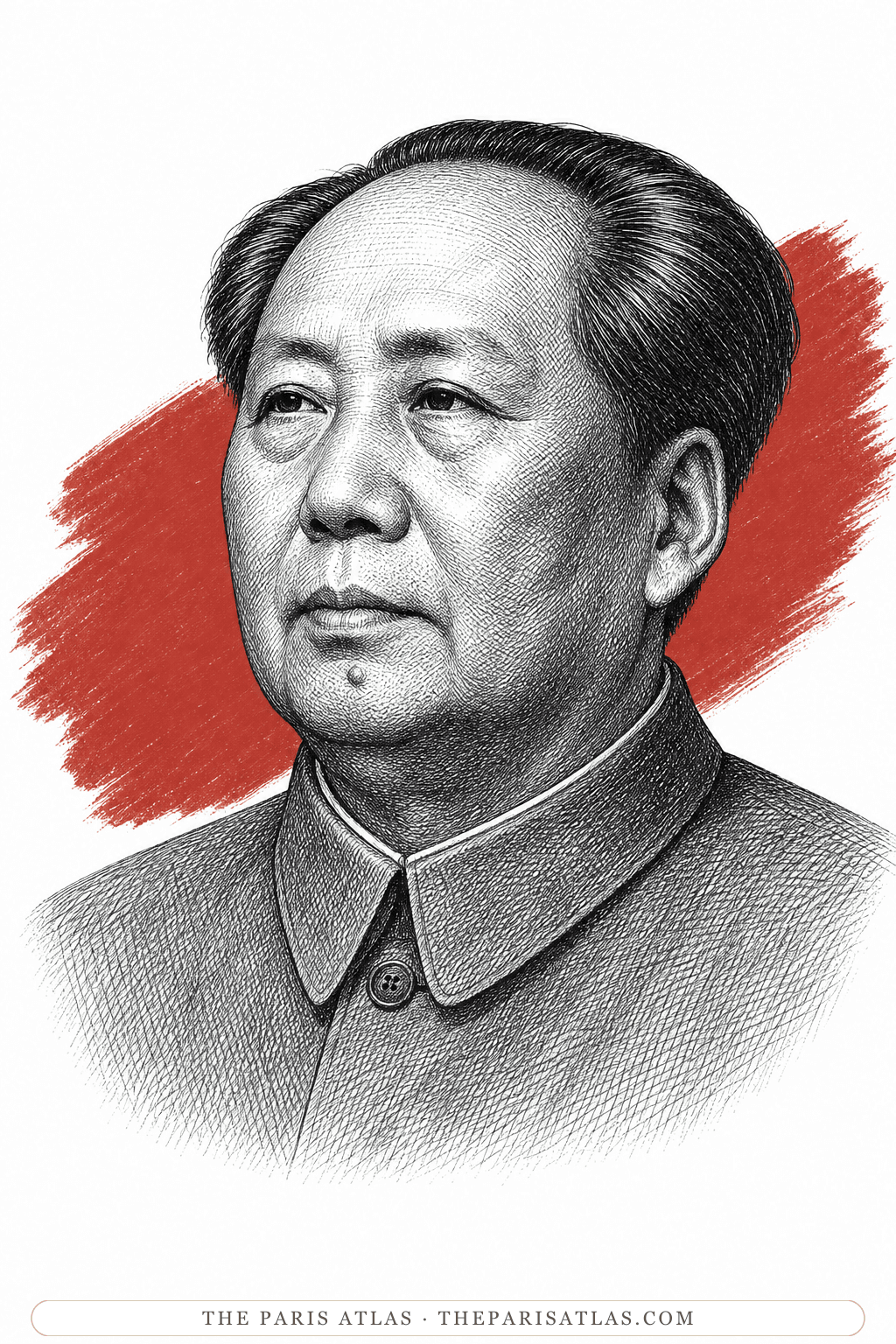
Chairman of the Chinese Communist Party (1893–1976) and founder of the People's Republic in October 1949. Beauvoir does not meet him during the 1955 trip; the book treats him as the political author of the regime she is describing and quotes his writing extensively in the historical and political chapters.
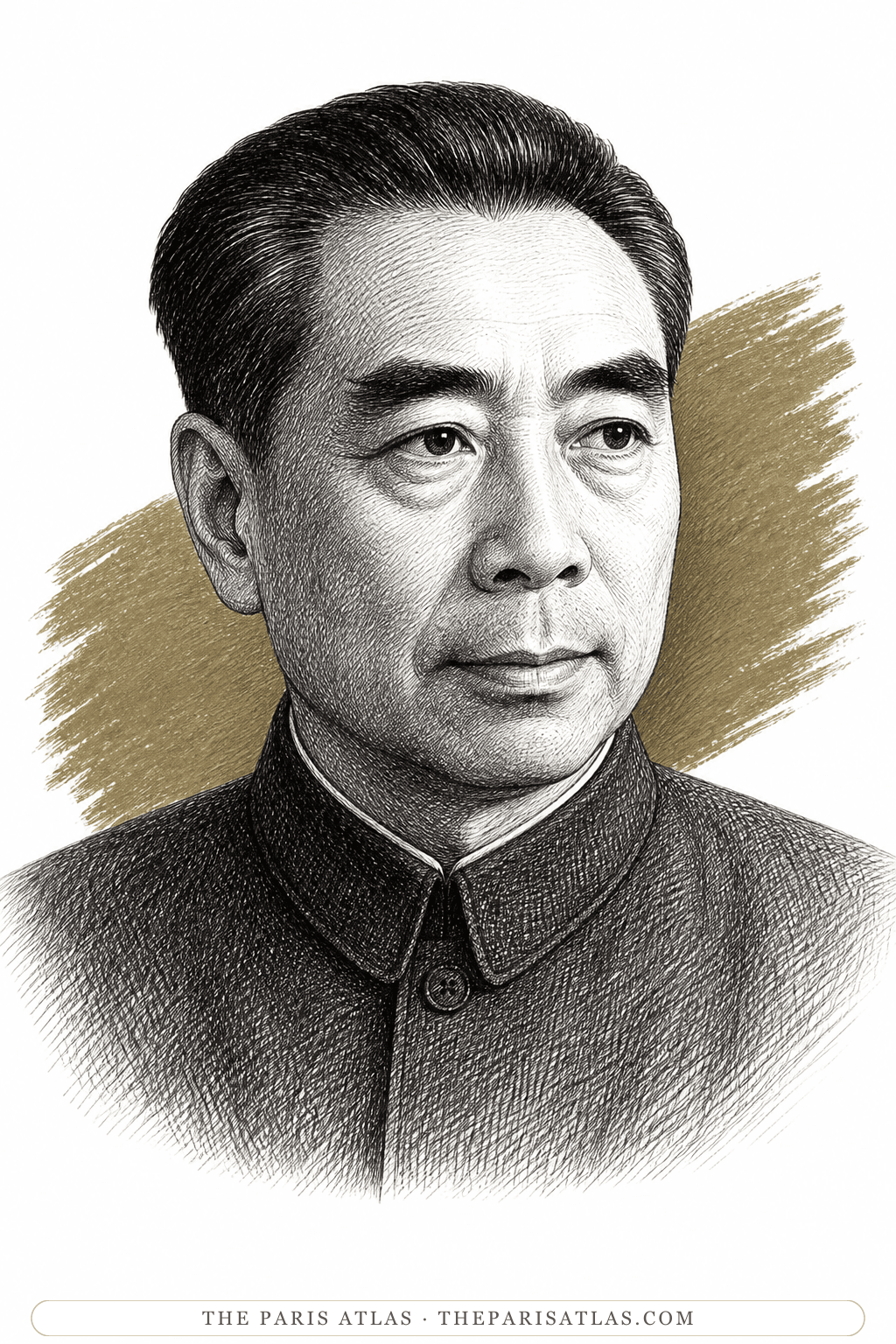
Premier of the People's Republic (1898–1976). Beauvoir and Sartre met Zhou during the 1955 delegation; he is the highest Chinese official the book records the delegation as having spoken with directly.
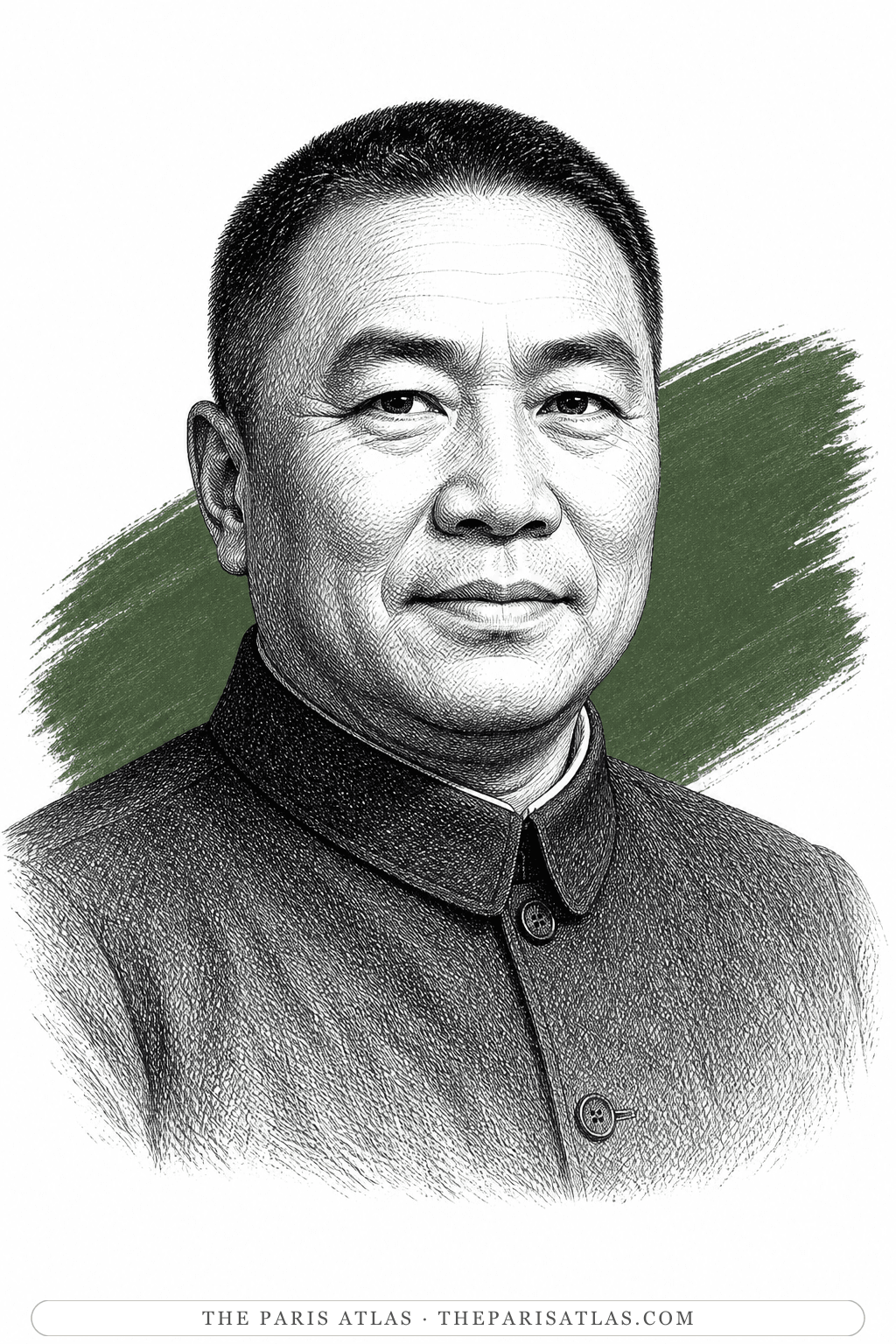
Mayor of Shanghai in 1955 (1901–1972) and later Foreign Minister. Beauvoir and the delegation met him in Shanghai and he is one of the named Communist officials whose optimism about industrial modernisation the book records at face value.
October 1949
The People's Republic of China is proclaimed by Mao Zedong; Beauvoir follows the political shift from Paris.
September–October 1955
Beauvoir and Sartre travel through China for approximately two months as guests of the Chinese People's Association for Cultural Relations with Foreign Countries.
1955–1957
Beauvoir writes La Longue marche in Paris, drawing on notes from the trip, Chinese-government sources, and French Sinological writing.
November 1957
Gallimard publishes La Longue marche in Paris in a print run of ten thousand.
1958
Austryn Wainhouse's English translation, The Long March: An Account of Modern China, appears from World Publishing (Cleveland) and André Deutsch (London).
1958–1962
The Great Leap Forward — Mao's collectivisation and industrial mobilisation campaign, which would kill tens of millions in famine — begins within a year of the book's publication.
1963
Force of Circumstance, the third volume of Beauvoir's memoirs, discusses the trip and defends the book against its by-then-hostile critical reception.
1971
Simon Leys publishes Les Habits neufs du président Mao (The Chairman's New Clothes), the classic riposte to the Western-intellectual sympathy for Maoism La Longue marche belongs to.

Beauvoir's diary of her four-month lecture tour across the United States in 1947 — the trip on which she met Nelson Algren, an encounter later scored across The Mandarins and her Letters to Nelson Algren.
Read our take
The third and longest volume of Beauvoir's memoirs: the eighteen years from the Liberation of Paris in August 1944 through 1962, the years in which she wrote The Second Sex and The Mandarins, met Nelson Algren, campaigned against French torture in Algeria, and became one of the most-watched public intellectuals in Europe.
Read our takeIt is Beauvoir's book-length account of the People's Republic of China, published by Gallimard in November 1957 and based on a two-month trip she and Jean-Paul Sartre took at the invitation of the Chinese government in September and October 1955. The book combines a two-hundred-page history of the Chinese revolution with a report on daily life, industry, family structures, the status of women, and cultural policy in the six-year-old People's Republic, and argues that the achievements she believed she saw outweighed the political costs she acknowledged.
Gallimard published La Longue marche in Paris in November 1957. Austryn Wainhouse's English translation, The Long March: An Account of Modern China, appeared from World Publishing (Cleveland) and André Deutsch (London) in 1958.
Not very. The trip was a state-sponsored delegation with official minders, planned itineraries, and staged access; Beauvoir worked from Chinese-government-provided figures and translated Chinese-government texts, and she did no reading in Chinese and did not speak the language. The disasters of the Great Leap Forward (1958–1962) and the Cultural Revolution (1966–1976) followed publication, and the historical record has been unkind to Beauvoir's assessment. The book is read now as a primary document of Western left engagement with revolutionary China, not as a reliable description of the country it describes.
Because it takes the People's Republic at close to its own valuation at a moment when the primary sources she was given were, in retrospect, unreliable in ways she did not fully register. Beauvoir was defensive about the book in Force of Circumstance (1963) and never repudiated it, but she rarely returned to Chinese subjects, and by the 1970s the French Maoist moment she had helped inaugurate had produced its own critique in books like Simon Leys's Les Habits neufs du président Mao (1971).
Both are Beauvoir's traveller-reports on states she visited on invitation. America Day by Day (1948) is the four-month American trip; The Long March (1957) is the two-month Chinese trip. The comparison is uncomfortable and instructive: Beauvoir was suspicious of the United States, whose politics she distrusted, and takes almost nothing on trust. She was sympathetic to the People's Republic, whose politics she supported, and takes far more on trust. The two books, read together, are a case study in how a good observer's assumptions shape what she is prepared to see.
Explore authors with a similar voice, perspective, and influence.
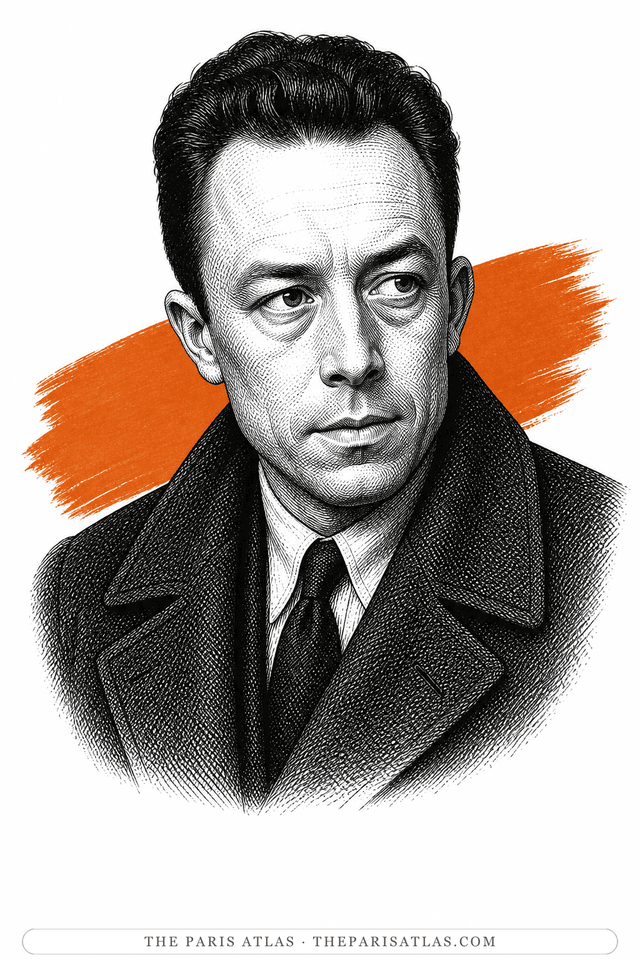
Both French writers used novels, essays, journalism, and public argument to ask how freedom and responsibility operate without a fixed moral system.
View author
The Brooklyn dropout who arrived in Paris broke at thirty-eight and wrote the exuberant, banned books that ended American censorship.
View author
The doctor of the Paris slums who wrote the century's blackest, funniest novel — and changed the sound of French prose.
View authorThe sources below include the primary text, editions, scholarship, archival materials, and other records that informed this page. They document The Long March, its publication, and its place in literary history.

Dealer transcription of preliminary draft passages; used for the arrival reading and the documented revision, not as verification of China's political history.
Pages 465–469 supply an attributed reading of the book's impersonal form, research and limitations; this is critical interpretation, not a new collation of the complete book.
British National Bibliography record used to verify the 2001 Phoenix edition and ISBN.
Cambridge chronology used to verify Austryn Wainhouse's English translation and its original 1958 publication history.

Used to verify The Long March's bibliographic context and its place within Simone de Beauvoir's published work.
Used for independent archival, institutional, or historical context surrounding Simone de Beauvoir and The Long March.
Used to cross-check chronology, publication history, and the circumstances in which The Long March appeared.
Used for an additional scholarly or biographical perspective on The Long March and Simone de Beauvoir's wider career.
The primary text is the baseline reference for every book page. Additional references document publication history, interpretation, and historical context where that evidence is available.
 Explore more resources