The Paris AtlasCharting the artists, works, and places worth returning to.
  • Philosopher
  • Author
  • Playwright
  • Editor
· French · 1905–1980

Jean-Paul Sartre

French philosopher, novelist and playwright, co-founder of Les Temps modernes, life partner of Simone de Beauvoir, and the central figure of French existentialism whose 1952 dispute with Albert Camus over The Rebel ended their friendship.

Details

Lived
1905–1980
Born
1905
Died
1980
Nationality
French
Roles
PhilosopherAuthorPlaywrightEditor
Also known as
Jean-Paul Charles Aymard Sartre

People they knew

Documented connections — every one carries its source.

Illustrated portrait of Albert Camus

Albert Camus

  • Author
  • Journalist
  • Editor
  • +2

Met · 1943–1952

Camus and Sartre first met in occupied Paris in 1943, at the June opening of Sartre's play The Flies. They became close through the Resistance and post-Liberation Left Bank years, appeared together in the founding circle around Les Temps modernes, and broke publicly in 1952 after a hostile review of The Rebel in the journal. The friendship ended and was never repaired; Camus died in 1960 with the break unresolved.

Albert Camus – Biographical (1957); Ronald Aronson, Albert Camus

Illustrated portrait of Louis-Ferdinand Céline

Louis-Ferdinand Céline

  • Author

Clashed with · 1945–1948

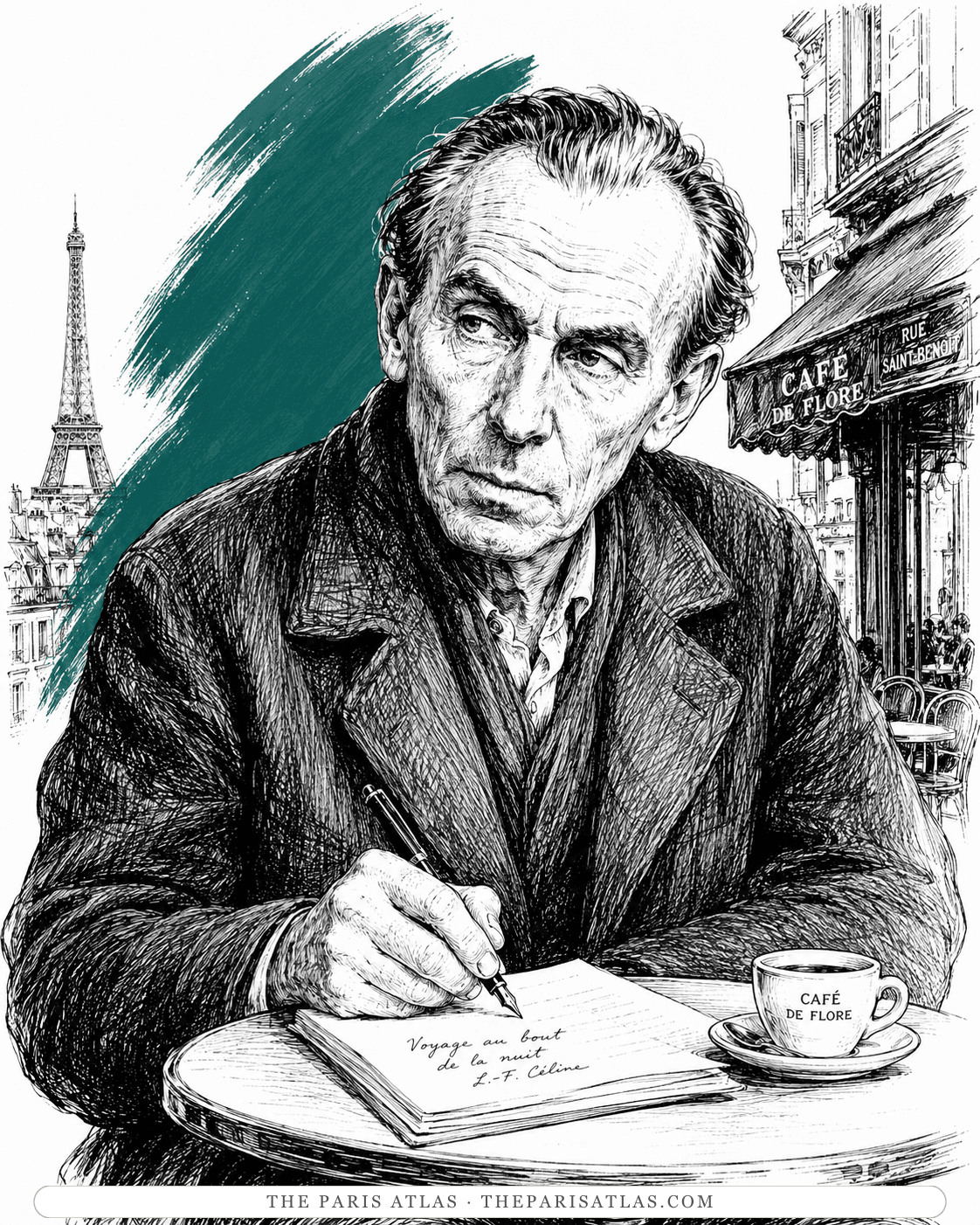
The dispute begins with the passage in Sartre's essay in Les Temps modernes no. 3 (December 1945) asserting that Céline had supported Nazi political positions because he had been paid to do so. Céline learned of the passage in Denmark and replied in late 1947 with the short pamphlet À l'agité du bocal, published by Albert Paraz in 1948 in Le Gala des vaches and in Pierre Lanauve de Tartas's separate edition.

Jean-Paul Sartre, Jean-Paul Sartre's essay in Les Temps modernes no. 3 (December 1945) — the piece containing the passage about Louis-Ferdinand Céline that triggered À l'agité du bocal, later expanded into Réflexions sur la question juive in 1946 (1945); À l'agité du bocal — publication history reconstructed from Céline's correspondence with Albert Paraz: composition in late 1947 in Denmark, publication in Le Gala des vaches and in Pierre Lanauve de Tartas's separate 1948 edition, and the pasted-slip correction of the earlier title Lettre à J.-P. Sartre

Arthur Miller

  • Playwright
  • Author

Clashed with · 1957

Sartre wrote both the scenario and the dialogue for Les Sorcières de Salem (1957), Raymond Rouleau's film of Miller's play The Crucible, with Yves Montand and Simone Signoret as the Proctors; the Cinémathèque française credits him as scénariste and dialoguiste. Sartre rewrote the Salem hysteria as a class conflict, making the accused poor and the accusers propertied, and cut the Reverend Hale's reasoned turn against the court. Miller rejected the reading in print: the screenplay, he wrote in Timebends, seemed to him to toss an arbitrary Marxist mesh over the story that led to a few absurdities. This is a documented public disagreement over a single work, not a personal quarrel — the Atlas has no evidence that the two men ever met.

Arthur Miller, Timebends: A Life (1987), p. 349; Julie Vatain-Corfdir, Les Montand-Signoret jouent Arthur Miller. La première française des Sorcières de Salem (2022); Les Sorcières de Salem (1957)

Jean-Paul Sartre’s Places

The cataloged places connected to Jean-Paul Sartre — through the books, and through the documented record.

Places you can enter today appear first, followed by addresses to see from outside and sites that have vanished.

Sourced claims

Every connection the graph holds for Jean-Paul, with the evidence behind it.

Buried at · 1980

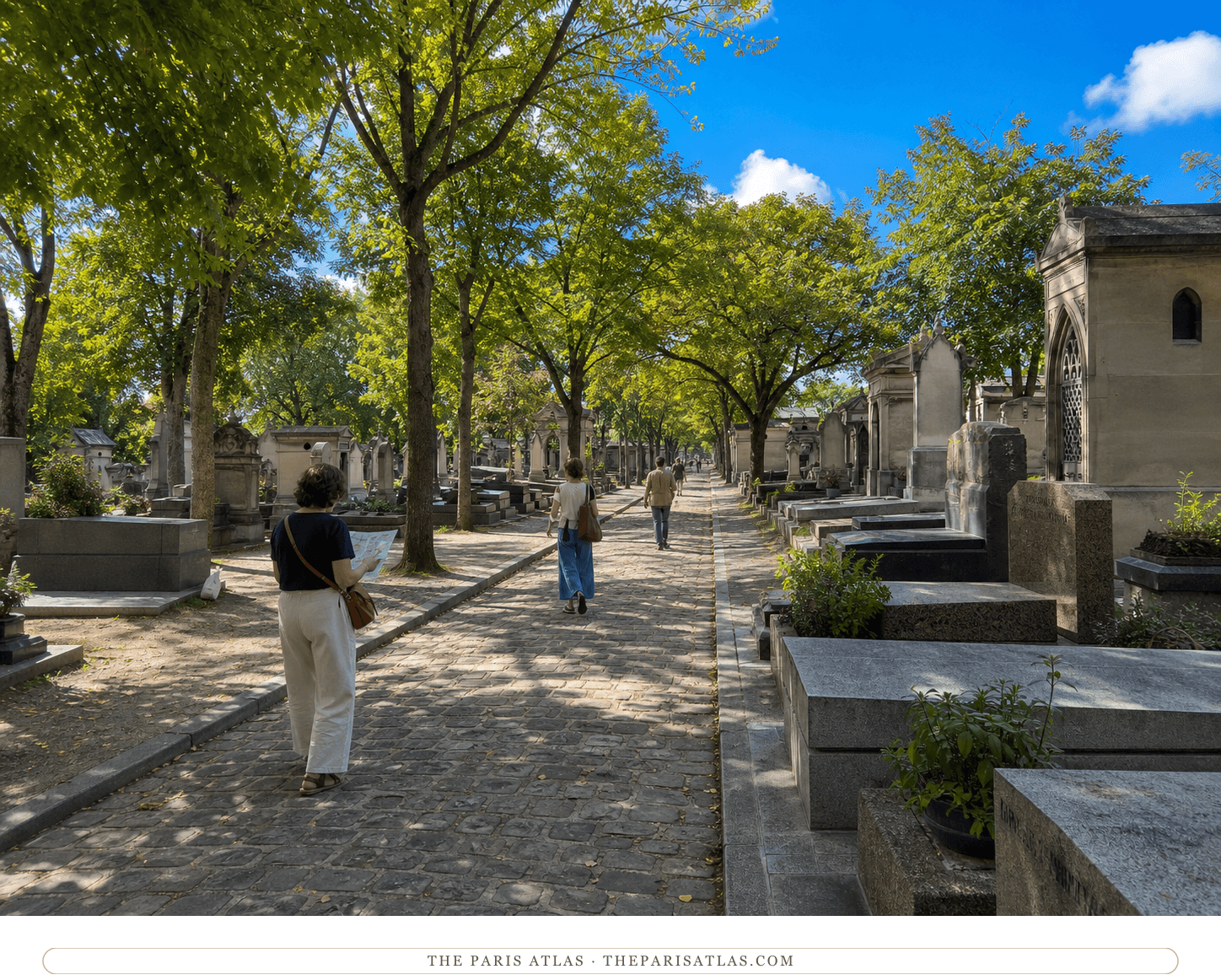
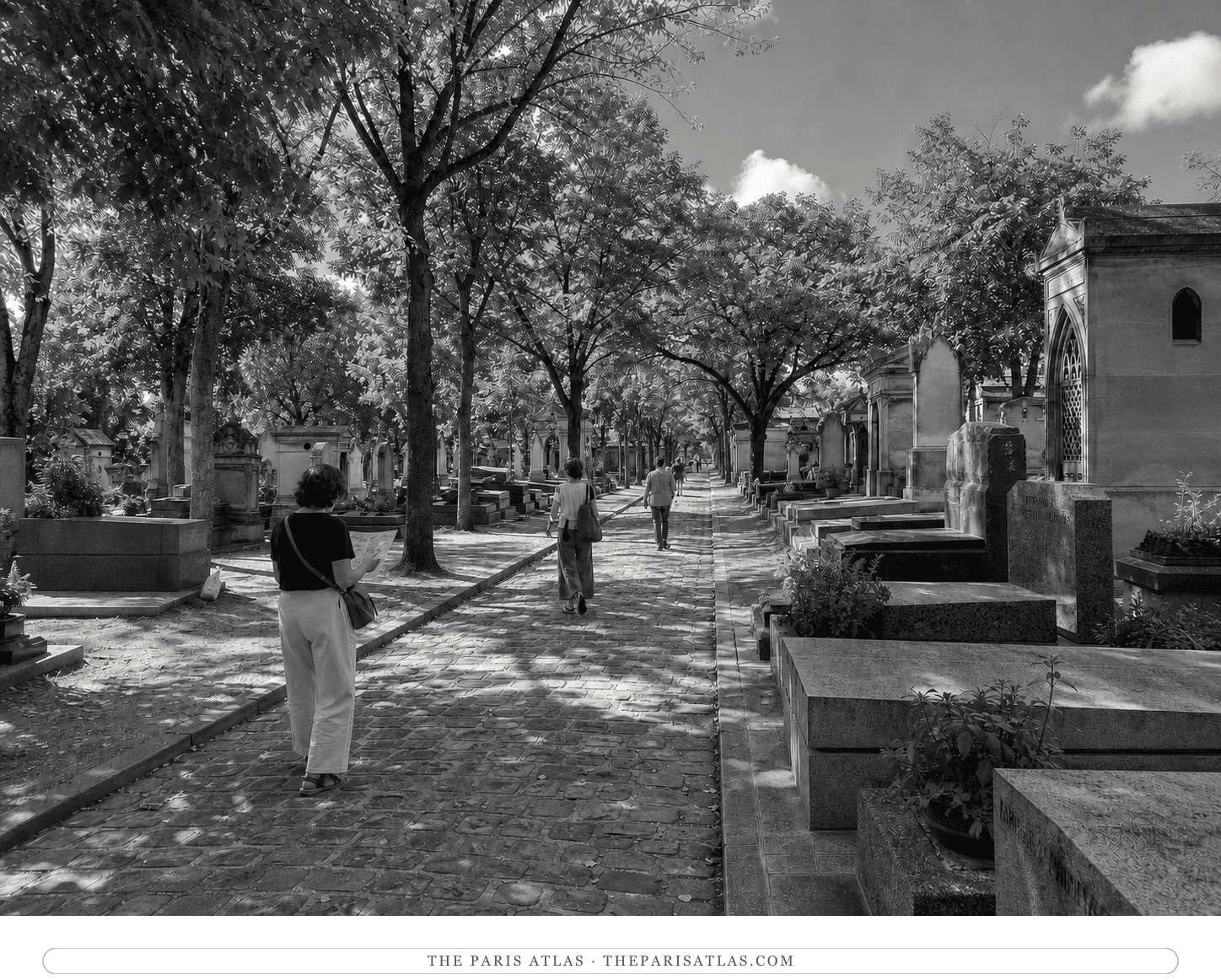
Montparnasse Cemetery

Sartre was buried in Montparnasse cemetery in 1980; Beauvoir was buried in the same grave six years later.

Dans les pas de Simone de Beauvoir, rive gauche

Frequented

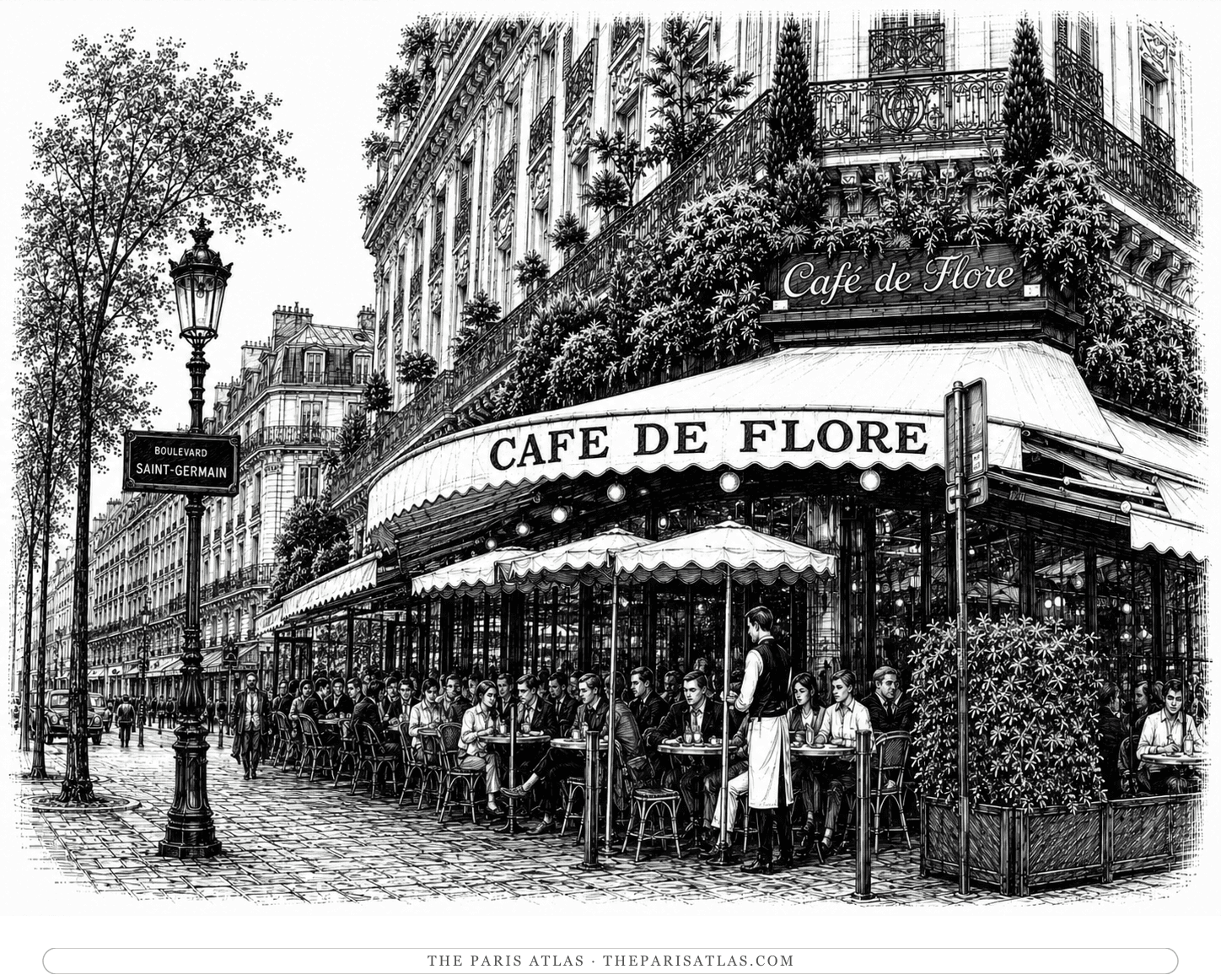
Café de Flore

The Flore was Sartre and Beauvoir's working café for years — warm when their own rooms were not, and close enough to Saint-Germain-des-Prés to serve as an office.

Dans les pas de Simone de Beauvoir, rive gauche

Frequented

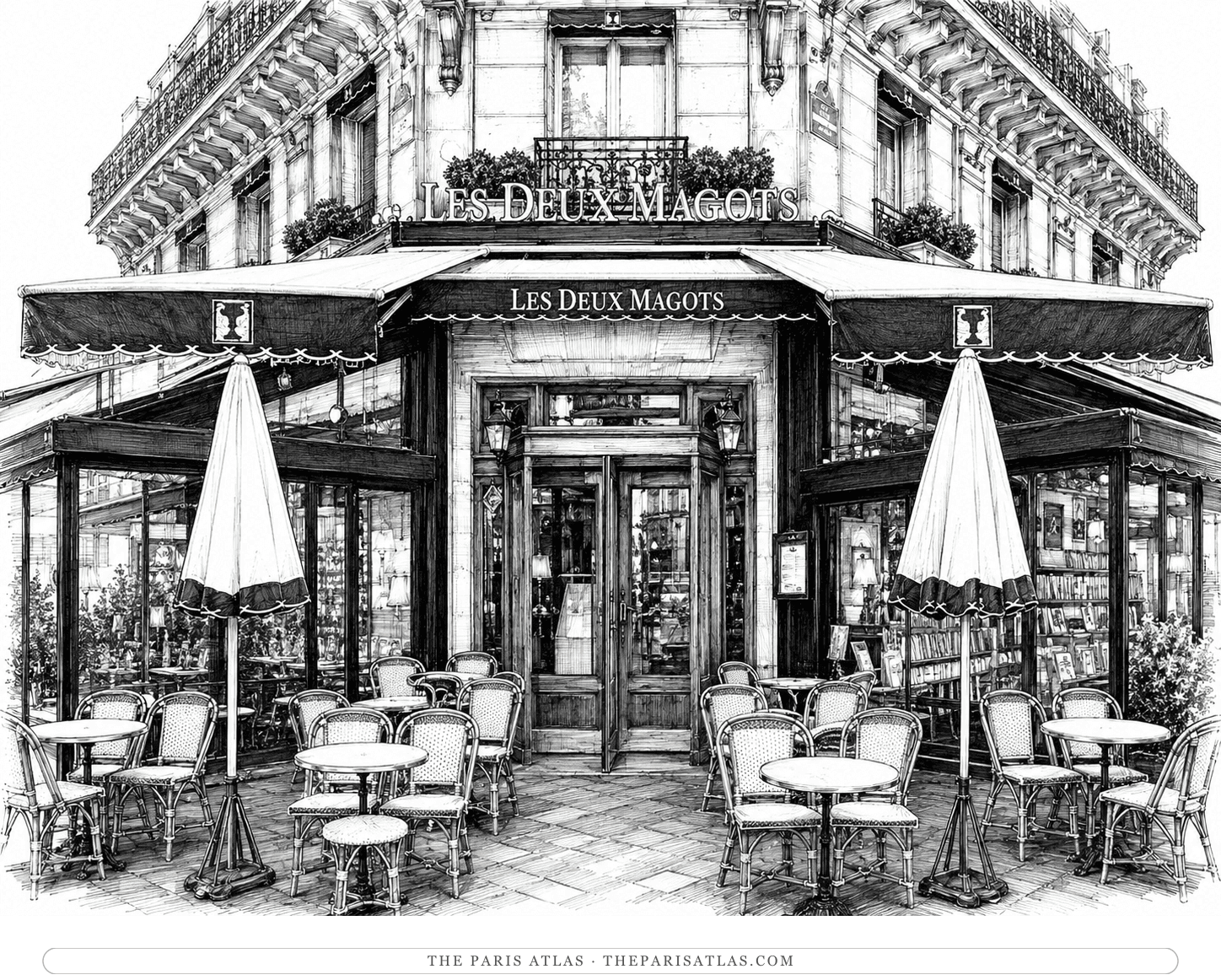
Les Deux Magots

One of the two cafés on the junction now named for Sartre and Beauvoir, and part of the pair's daily working geography in Saint-Germain-des-Prés.

Dans les pas de Simone de Beauvoir, rive gauche

Frequented

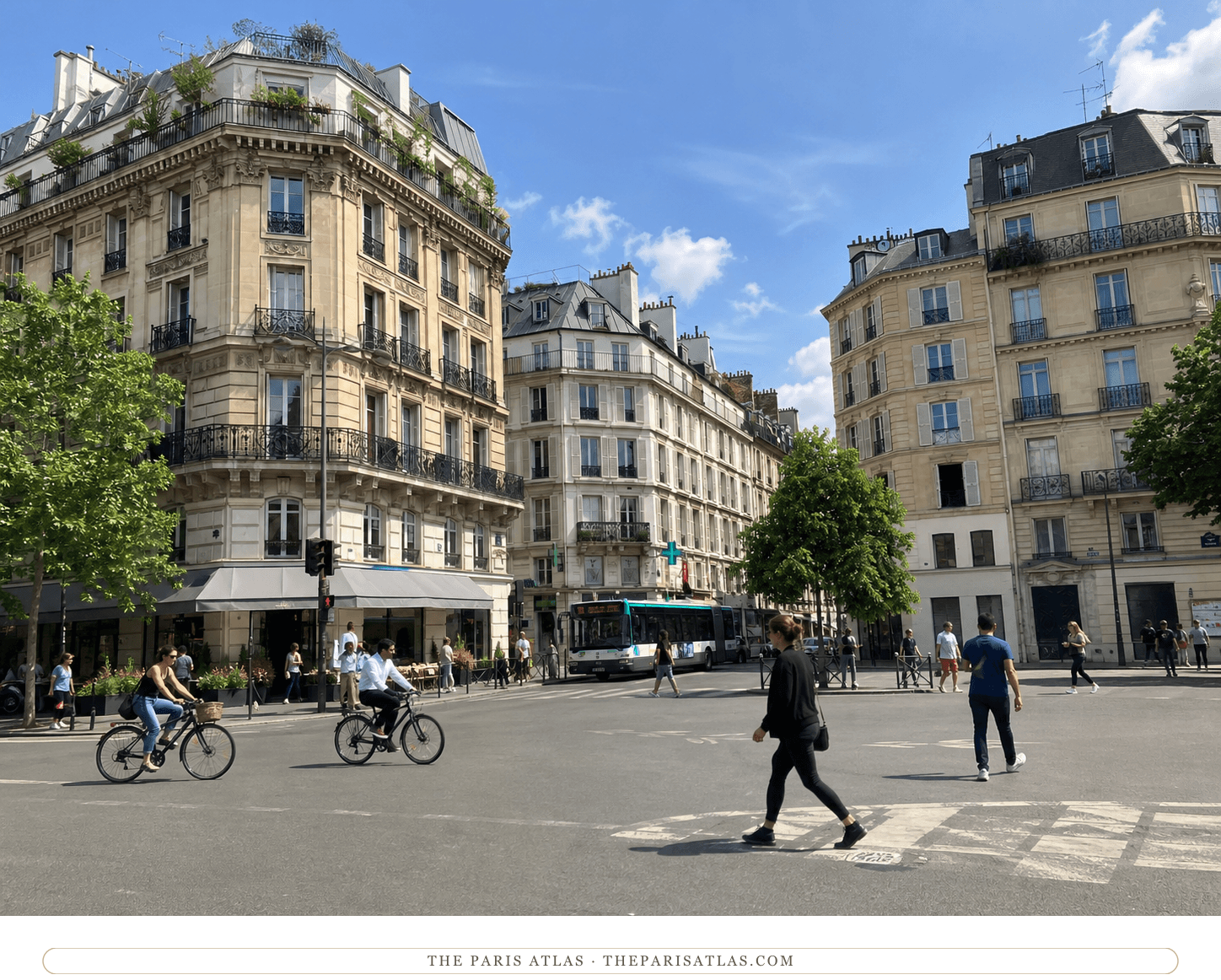
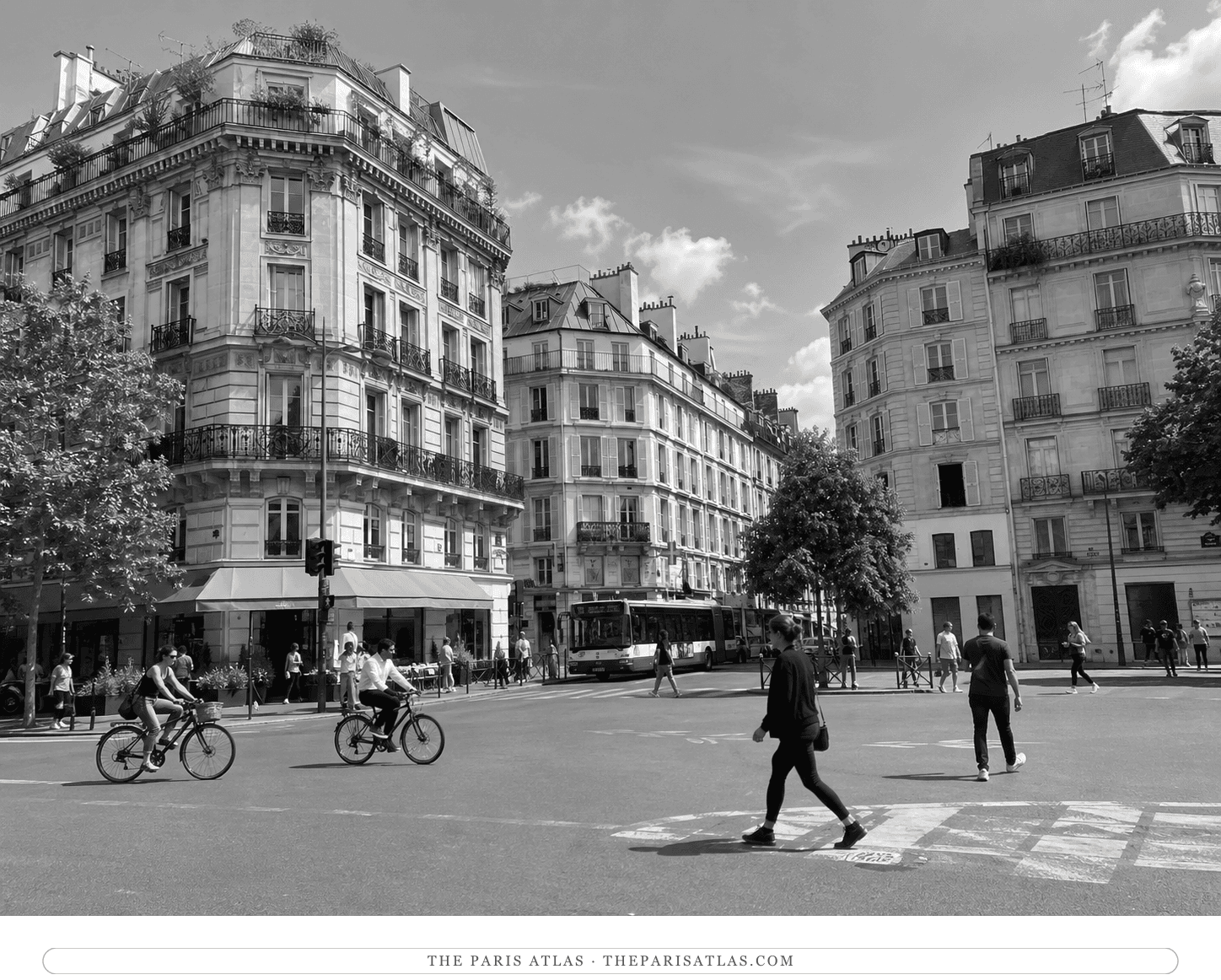
Place Jean-Paul-Sartre-et-Simone-de-Beauvoir

The square beside Saint-Germain-des-Prés, renamed for Sartre and Beauvoir together in 2000 — the junction of the two cafés the pair used as offices for decades.

Dans les pas de Simone de Beauvoir, rive gauche

Studied at

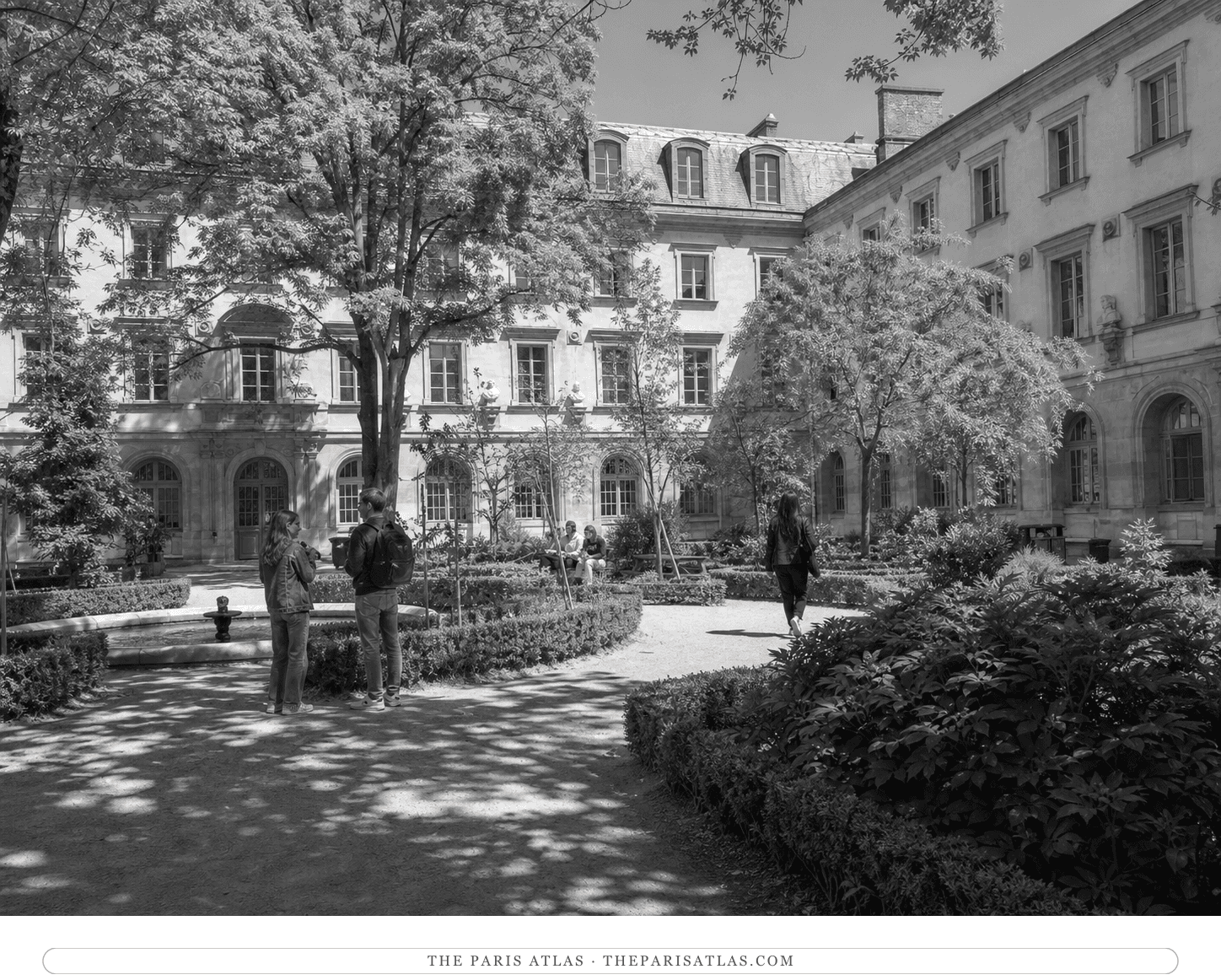
École normale supérieure

Sartre studied at the École normale supérieure in the 1920s and prepared for the agrégation in philosophy there — failing at the first attempt, then placing first in 1929.

Sam Slote, Samuel Beckett — Trinity Writers; Dans les pas de Simone de Beauvoir, rive gauche

Met · 1943–1952

Albert Camus

Camus and Sartre first met in occupied Paris in 1943, at the June opening of Sartre's play The Flies. They became close through the Resistance and post-Liberation Left Bank years, appeared together in the founding circle around Les Temps modernes, and broke publicly in 1952 after a hostile review of The Rebel in the journal. The friendship ended and was never repaired; Camus died in 1960 with the break unresolved.

Albert Camus – Biographical (1957); Ronald Aronson, Albert Camus

Clashed with · 1945–1948

Louis-Ferdinand Céline

The dispute begins with the passage in Sartre's essay in Les Temps modernes no. 3 (December 1945) asserting that Céline had supported Nazi political positions because he had been paid to do so. Céline learned of the passage in Denmark and replied in late 1947 with the short pamphlet À l'agité du bocal, published by Albert Paraz in 1948 in Le Gala des vaches and in Pierre Lanauve de Tartas's separate edition.

Jean-Paul Sartre, Jean-Paul Sartre's essay in Les Temps modernes no. 3 (December 1945) — the piece containing the passage about Louis-Ferdinand Céline that triggered À l'agité du bocal, later expanded into Réflexions sur la question juive in 1946 (1945); À l'agité du bocal — publication history reconstructed from Céline's correspondence with Albert Paraz: composition in late 1947 in Denmark, publication in Le Gala des vaches and in Pierre Lanauve de Tartas's separate 1948 edition, and the pasted-slip correction of the earlier title Lettre à J.-P. Sartre

Clashed with · 1957

Arthur Miller

Sartre wrote both the scenario and the dialogue for Les Sorcières de Salem (1957), Raymond Rouleau's film of Miller's play The Crucible, with Yves Montand and Simone Signoret as the Proctors; the Cinémathèque française credits him as scénariste and dialoguiste. Sartre rewrote the Salem hysteria as a class conflict, making the accused poor and the accusers propertied, and cut the Reverend Hale's reasoned turn against the court. Miller rejected the reading in print: the screenplay, he wrote in Timebends, seemed to him to toss an arbitrary Marxist mesh over the story that led to a few absurdities. This is a documented public disagreement over a single work, not a personal quarrel — the Atlas has no evidence that the two men ever met.

Arthur Miller, Timebends: A Life (1987), p. 349; Julie Vatain-Corfdir, Les Montand-Signoret jouent Arthur Miller. La première française des Sorcières de Salem (2022); Les Sorcières de Salem (1957)