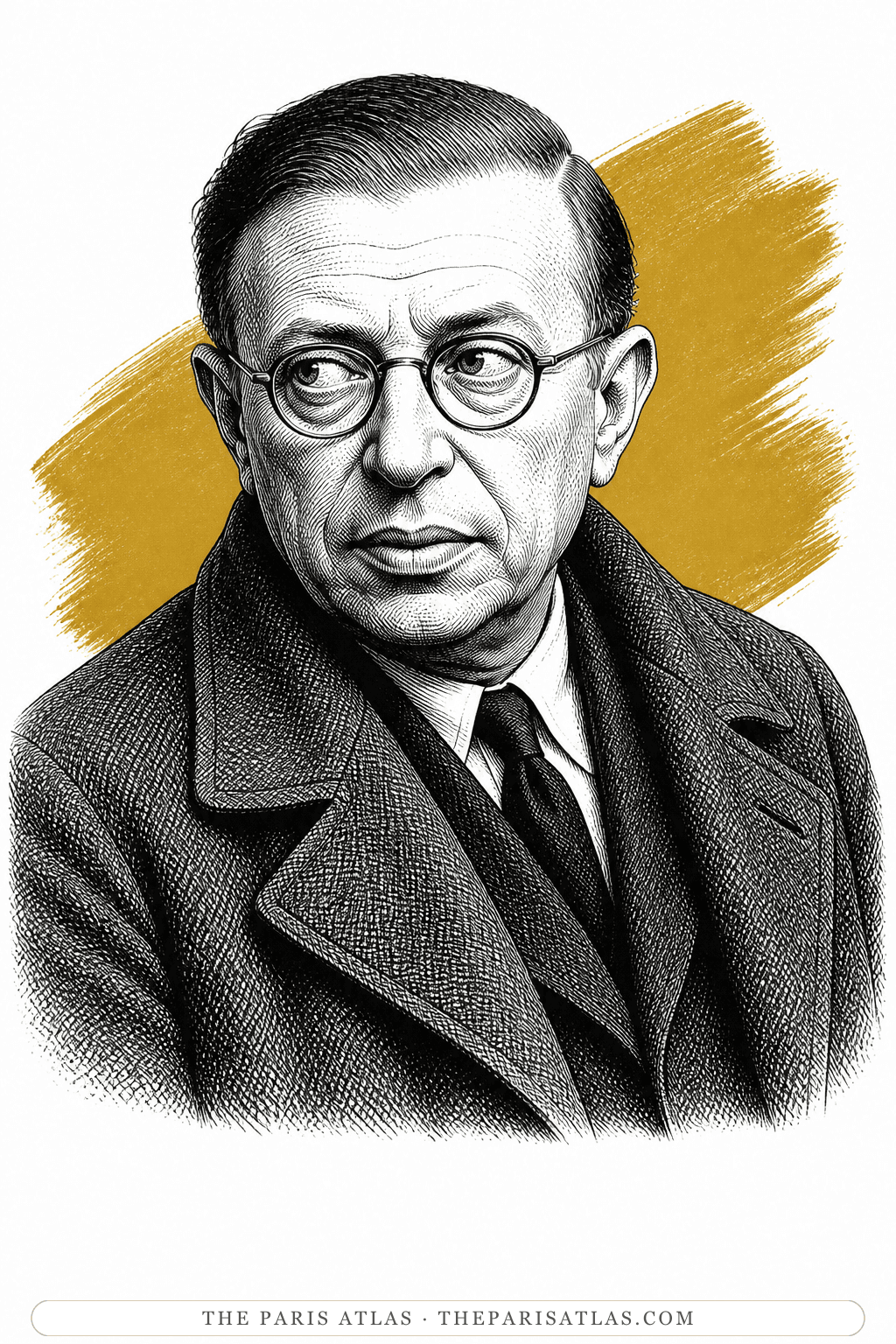
Jean-Paul Sartre
Frequented by
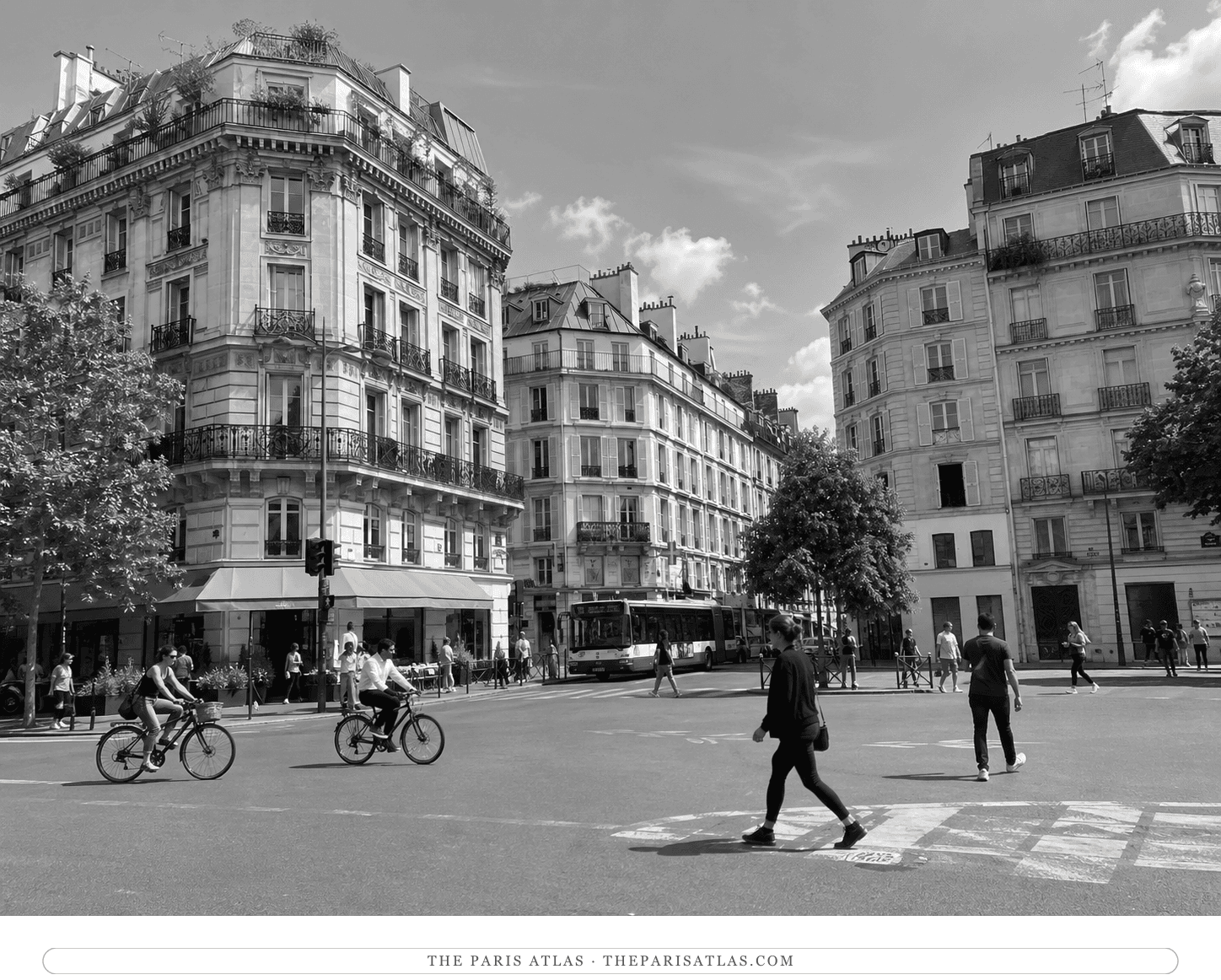
The square beside Saint-Germain-des-Prés, renamed for Sartre and Beauvoir together in 2000 — the junction of the two cafés the pair used as offices for decades.
A small square in Saint-Germain-des-Prés, renamed in 2000 for Jean-Paul Sartre and Simone de Beauvoir together — a few steps from the Café de Flore and Les Deux Magots, where they worked.
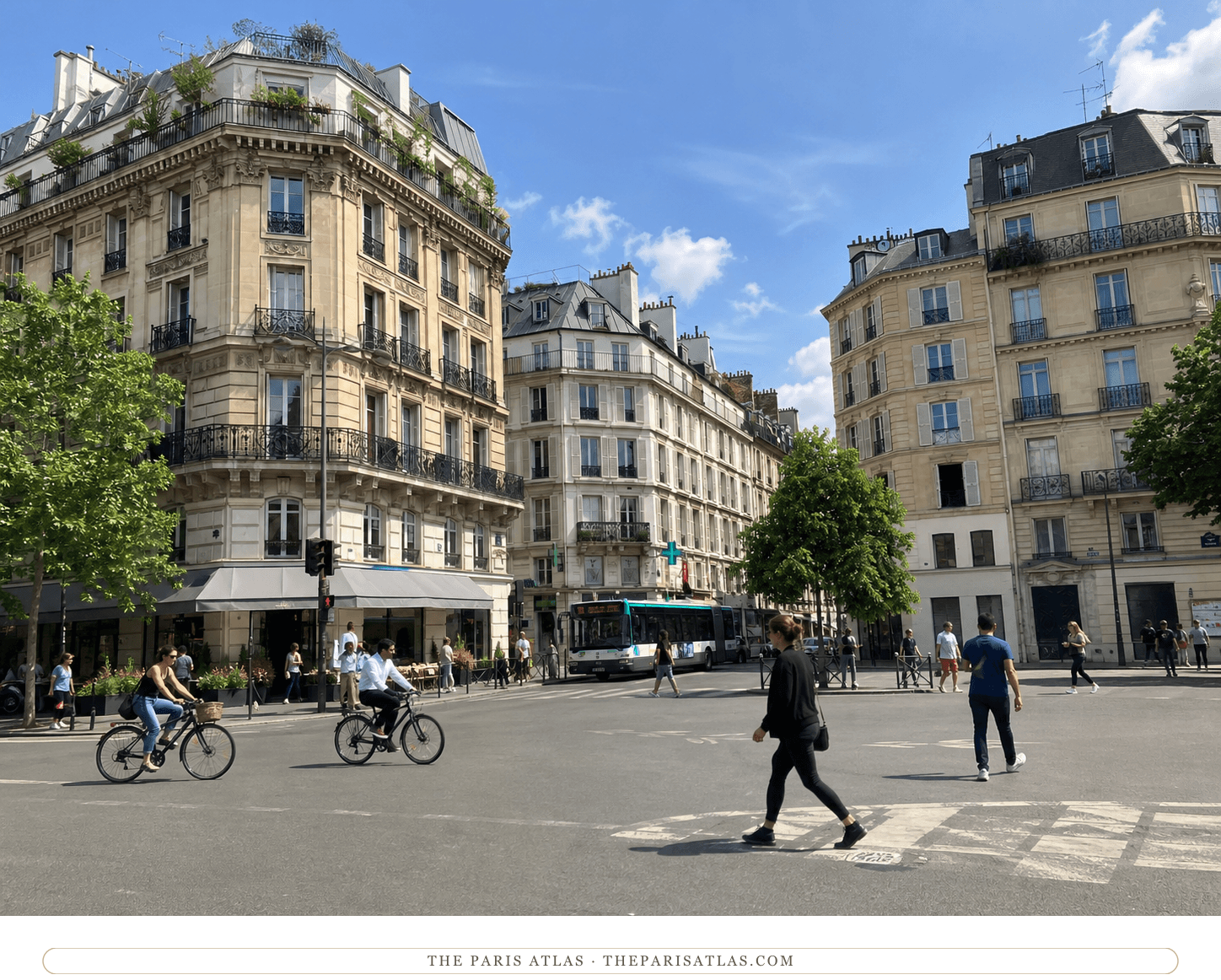
The square beside the church of Saint-Germain-des-Prés was renamed in 2000 as the place Jean-Paul-Sartre-et-Simone-de-Beauvoir.
Naming a Paris square for two people is unusual, and naming it for an unmarried couple who never lived together is more so. But it is the accurate memorial. Sartre and Beauvoir met over the 1929 agrégation, worked in the same cafés for fifty years, founded Les Temps modernes together, and are buried in one grave in Montparnasse cemetery. Neither has a Paris square of their own.
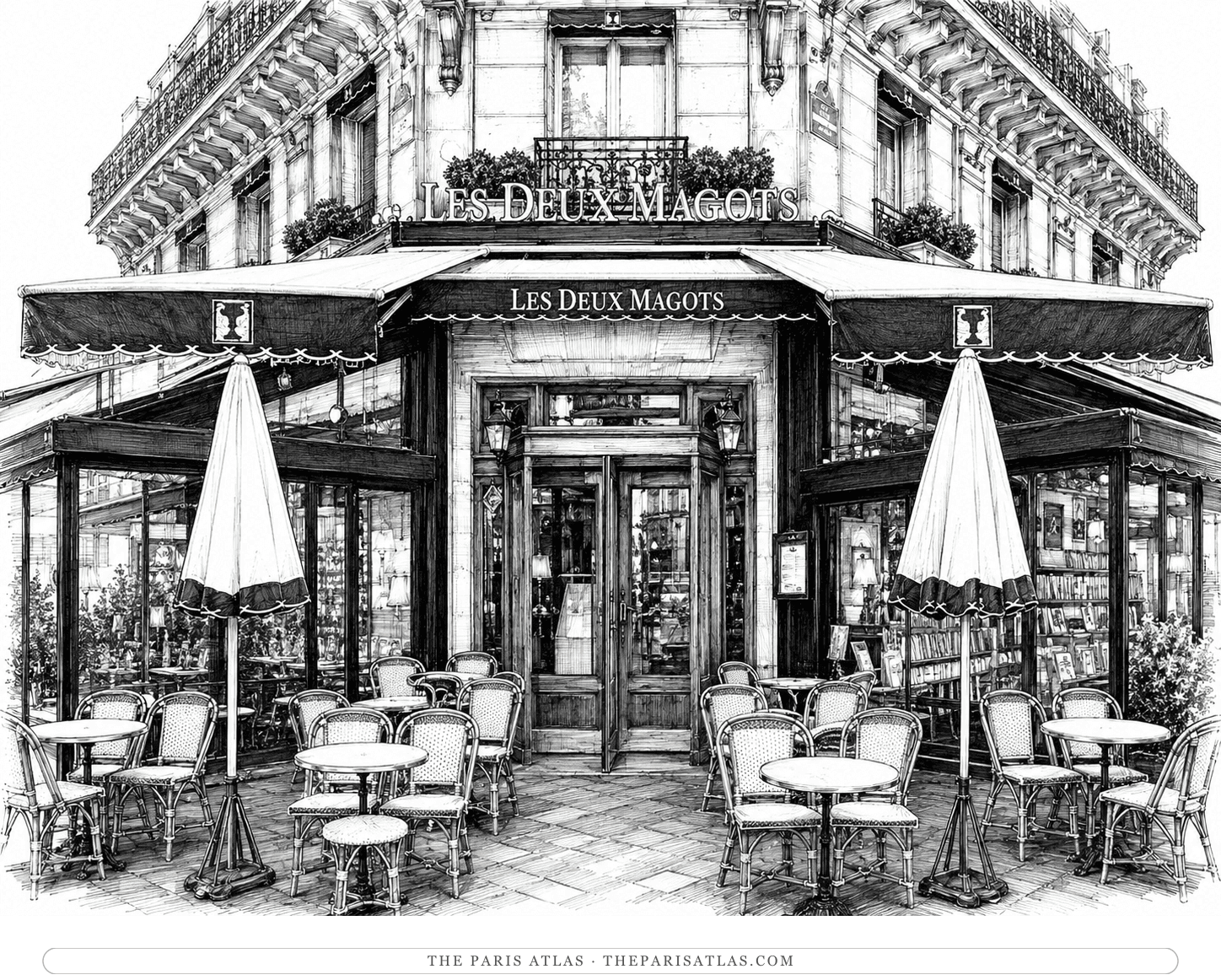
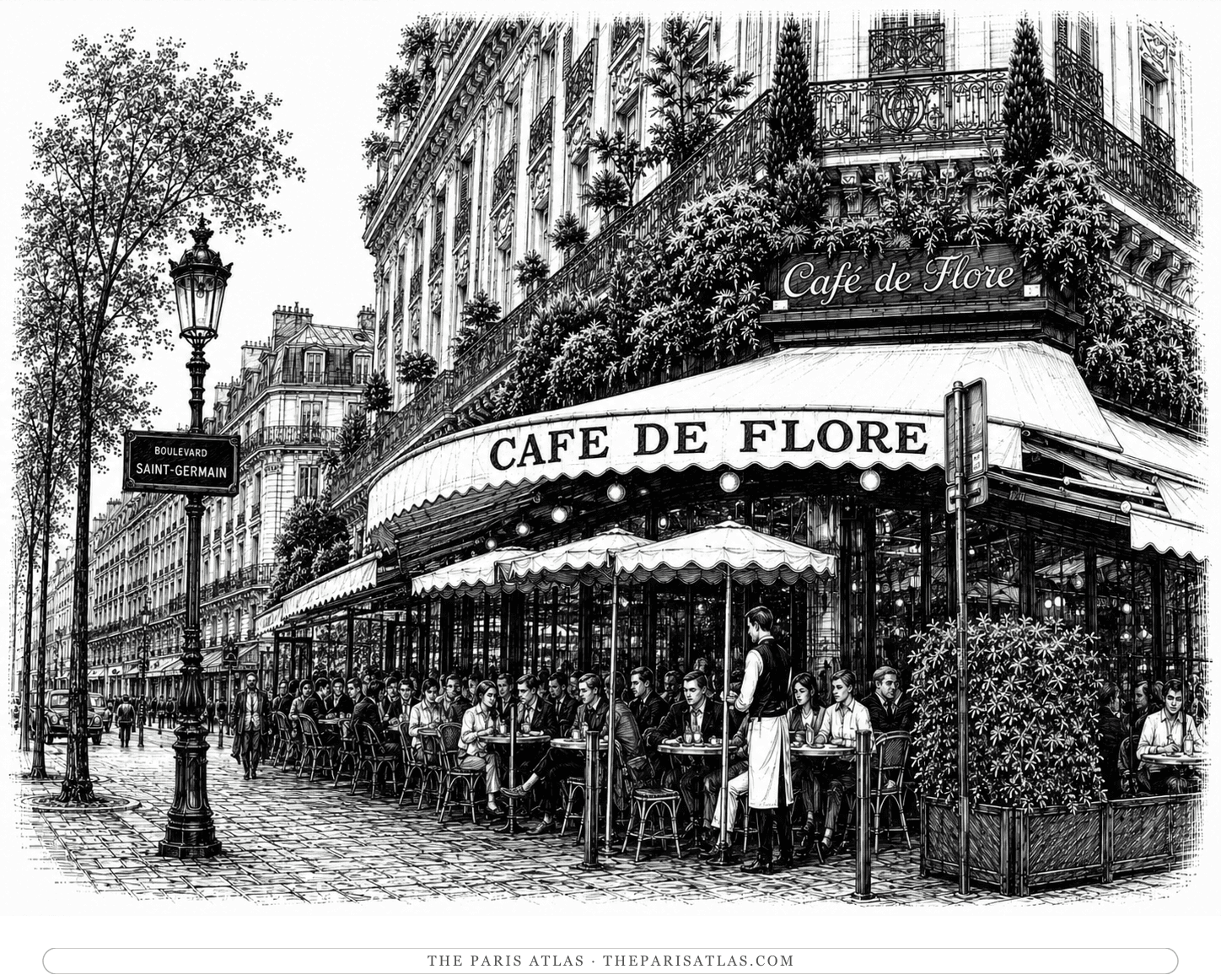
The location is exact rather than symbolic. The Café de Flore and Les Deux Magots are both on this junction, and those were their offices — Beauvoir spent her working days upstairs at the Flore, and the two of them wrote there through the Occupation partly because the cafés were heated and their rooms were not.
It is a small square and it takes two minutes. What it gives you is the geographic centre of postwar French intellectual life, which turns out to be a café junction in the sixth arrondissement.
Sartre and Beauvoir meet over the agrégation in philosophy — he places first, she places second.
The pair work daily in the cafés on this junction, partly because they are heated.
They found the review Les Temps modernes.
The square is renamed the place Jean-Paul-Sartre-et-Simone-de-Beauvoir.
In Saint-Germain-des-Prés, beside the church, in the 6th arrondissement. It was renamed in 2000 for Jean-Paul Sartre and Simone de Beauvoir together, and both the Café de Flore and Les Deux Magots stand on it.
Because the partnership is the thing being commemorated. They met over the 1929 agrégation, worked in the same cafés for fifty years, founded Les Temps modernes together, and share a grave in Montparnasse cemetery. Neither has a Paris square of their own.
Partly for the company and partly for the heat. Through the Occupation the cafés were warm and their own rooms were not, and Beauvoir in particular worked whole days at a table on the first floor of the Café de Flore.
Frequented by
The square beside Saint-Germain-des-Prés, renamed for Sartre and Beauvoir together in 2000 — the junction of the two cafés the pair used as offices for decades.
Frequented by
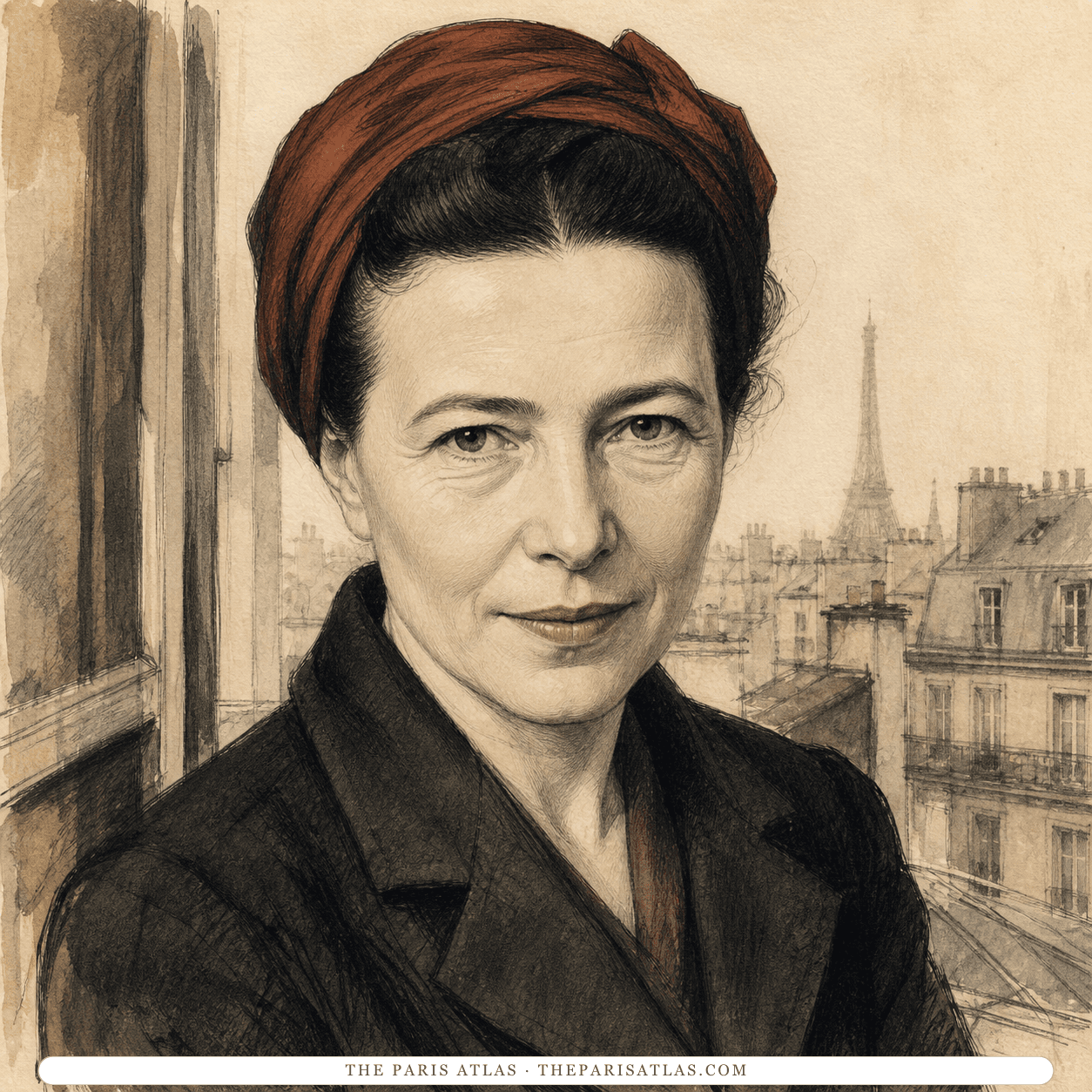
The square beside Saint-Germain-des-Prés, renamed for Beauvoir and Sartre together in 2000. The Café de Flore and Les Deux Magots stand on it, and Beauvoir worked whole days at a table on the Flore's first floor.
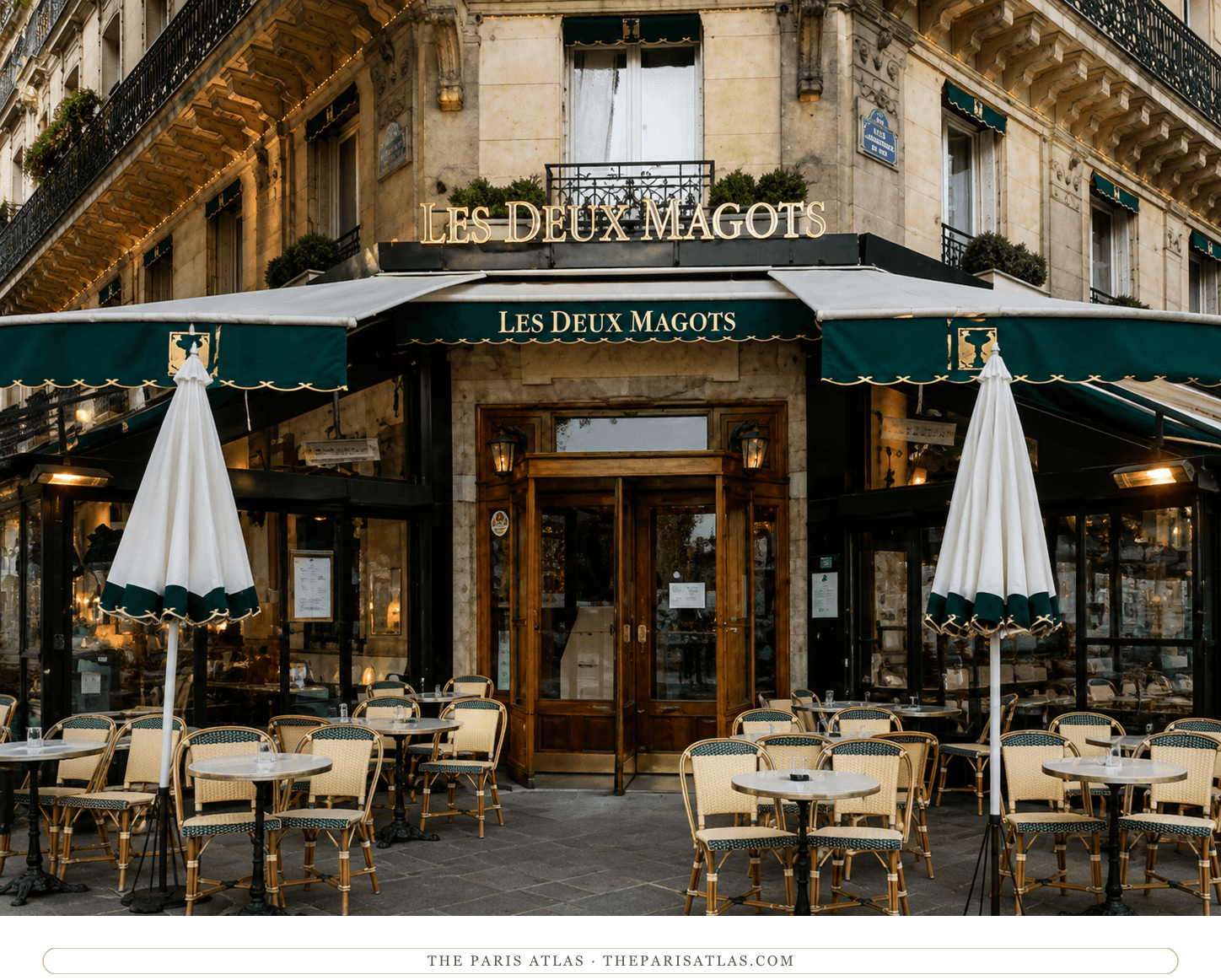
The famous literary terrace where the expat crowd gathered. Ernest Hemingway came here, though he preferred La Closerie for actual work.
Visit the place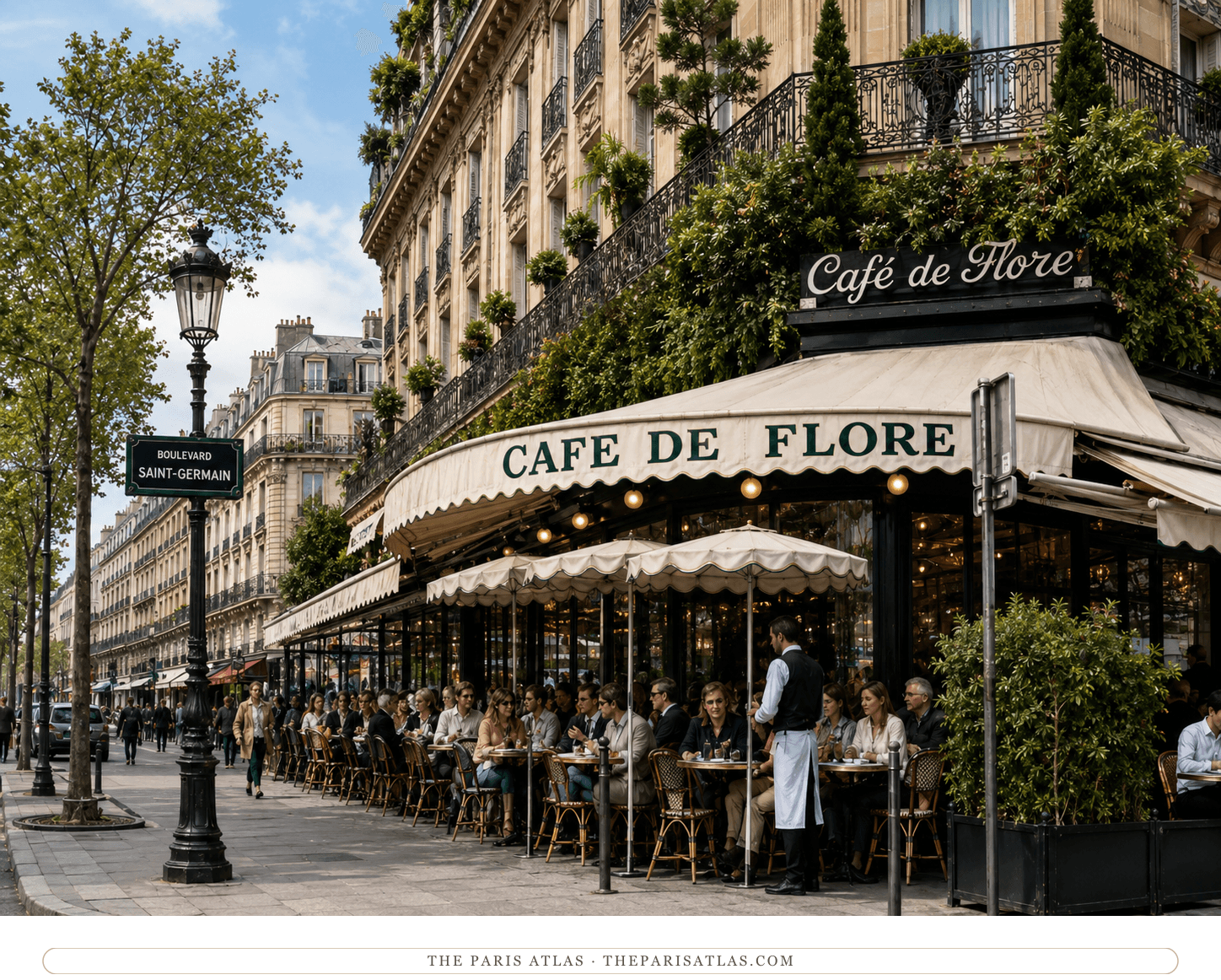
A few doors from Les Deux Magots and part of the same Left Bank circuit. Later became more associated with Jean-Paul Sartre and Simone de Beauvoir.
Visit the place
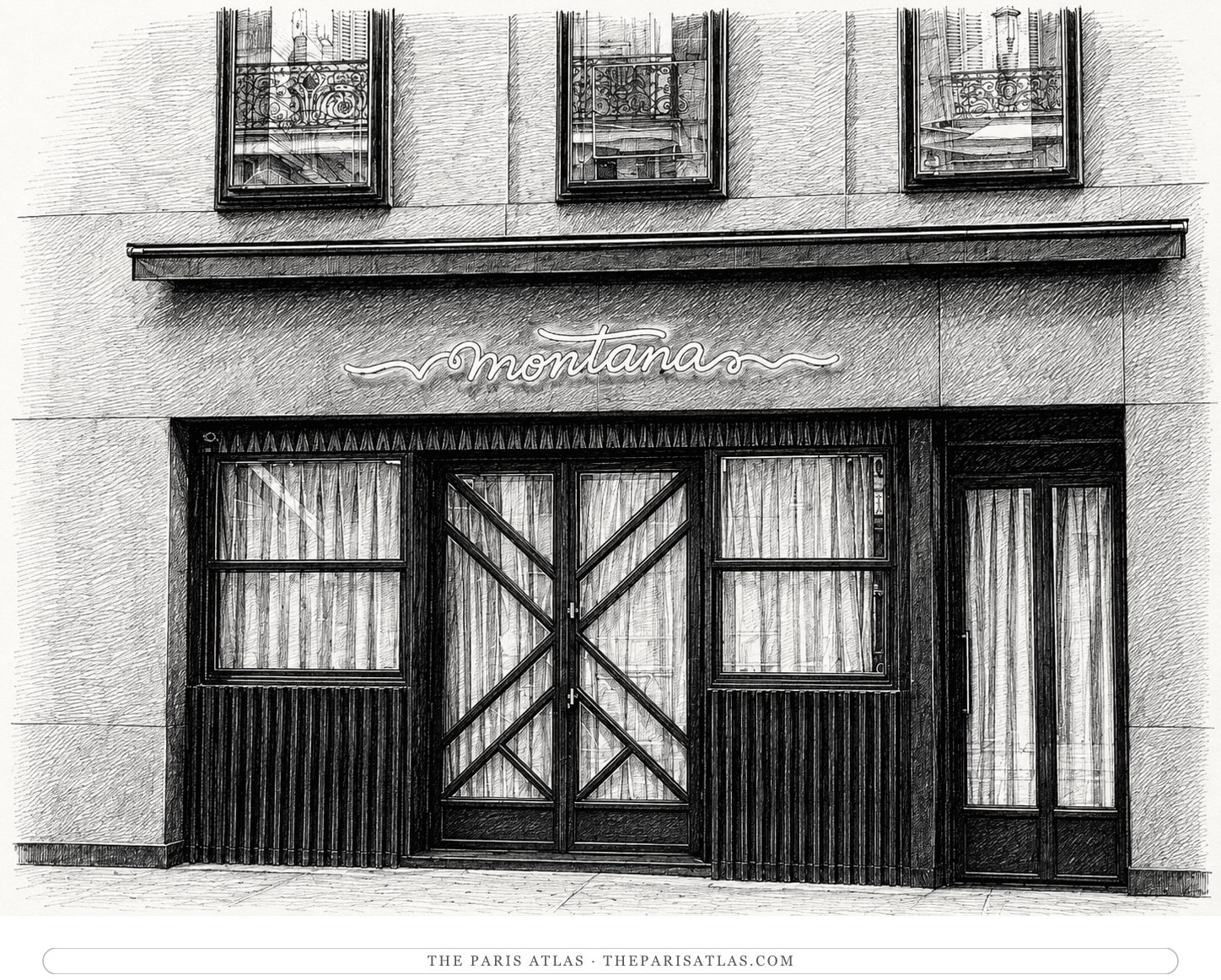
A Saint-Germain bar of the postwar years, steps from the Café de Flore, that the City of Paris counts among the gay clubs James Baldwin frequented.
Visit the place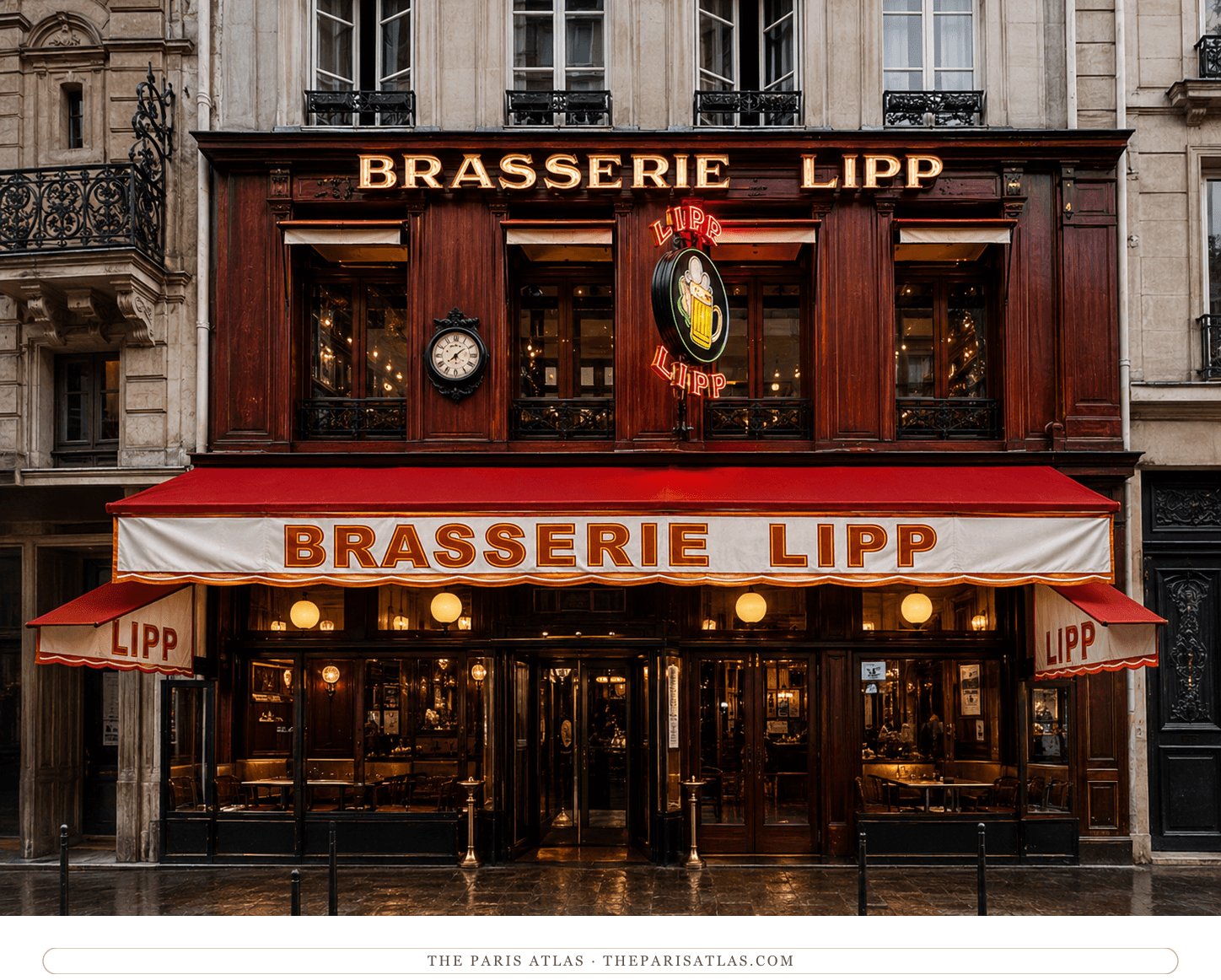
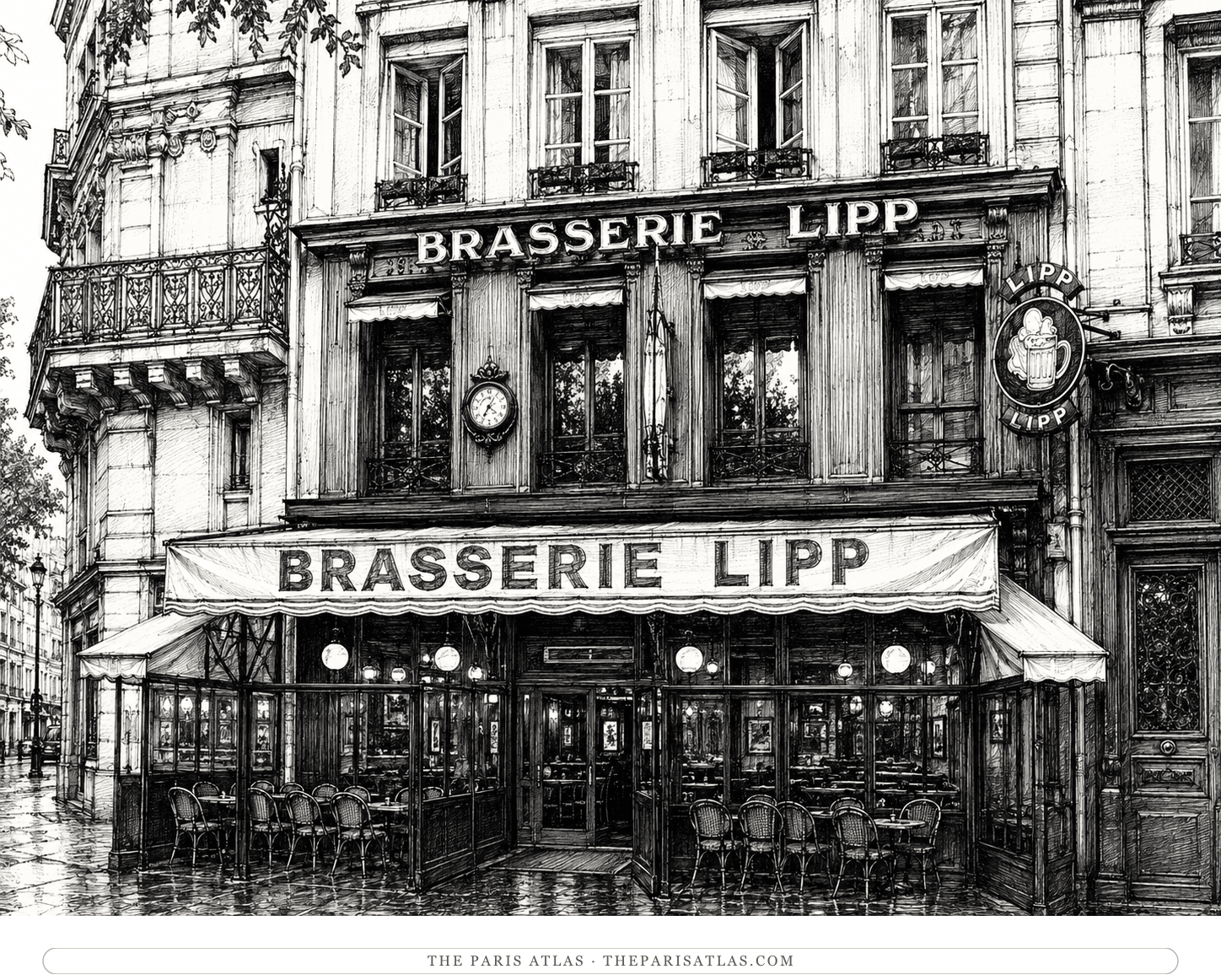
Beer, potato salad, and choucroute after a day's work. Ernest Hemingway considered it one of the best places in Paris.
Visit the placeThe sources below include histories, archival materials, scholarly research, and official records that informed this page. They document Place Jean-Paul-Sartre-et-Simone-de-Beauvoir, the people connected to it, and its place in Paris.


The city's Beauvoir walk records the square's renaming to "Sartre-Beauvoir" in 2000, and her working days upstairs at the Café de Flore.

Map data used to verify addresses, geographic coordinates, and the placement associated with Place Jean-Paul-Sartre-et-Simone-de-Beauvoir.
Published analysis and historical context used in preparing the Place Jean-Paul-Sartre-et-Simone-de-Beauvoir page.
Catalogue scholarship used to verify attribution, provenance, chronology, and interpretive context for Place Jean-Paul-Sartre-et-Simone-de-Beauvoir.
These references provide the documented foundation for this page's history and context. Claim-level citations remain attached to the specific claims they support.
 Explore more resources
Newsletter
The cafés, studios, and walk-up flats where the work was made — one story from the map in every letter.