The Paris AtlasCharting the artists, works, and places worth returning to.

Restaurant · Saint-Germain-des-Prés · 6e arrondissement

Brasserie Lipp

The buildingStill standing
Getting inIn, as a customer
What's there nowStill the same

Beer, potato salad, and choucroute after a day's work. Ernest Hemingway considered it one of the best places in Paris.

Address
151 Bd Saint-Germain, 75006 Paris
Years
1880–present
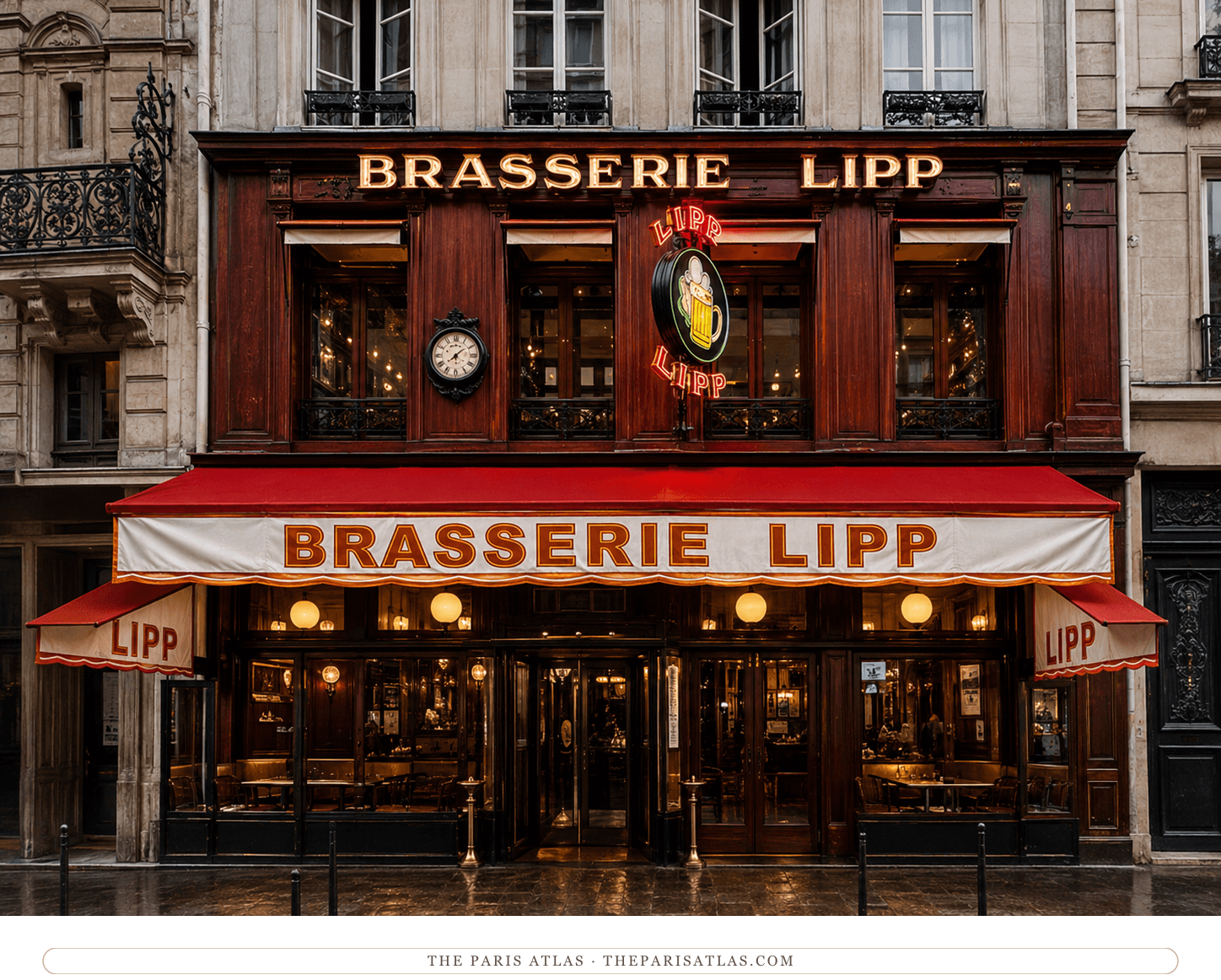
IllustrationBrasserie Lipp today, red awning lit at dusk with the neon LIPP sign above the door

The red awning and neon stein, largely unchanged.

Editorial illustration

The story

Where James Baldwin and Richard Wright fell out

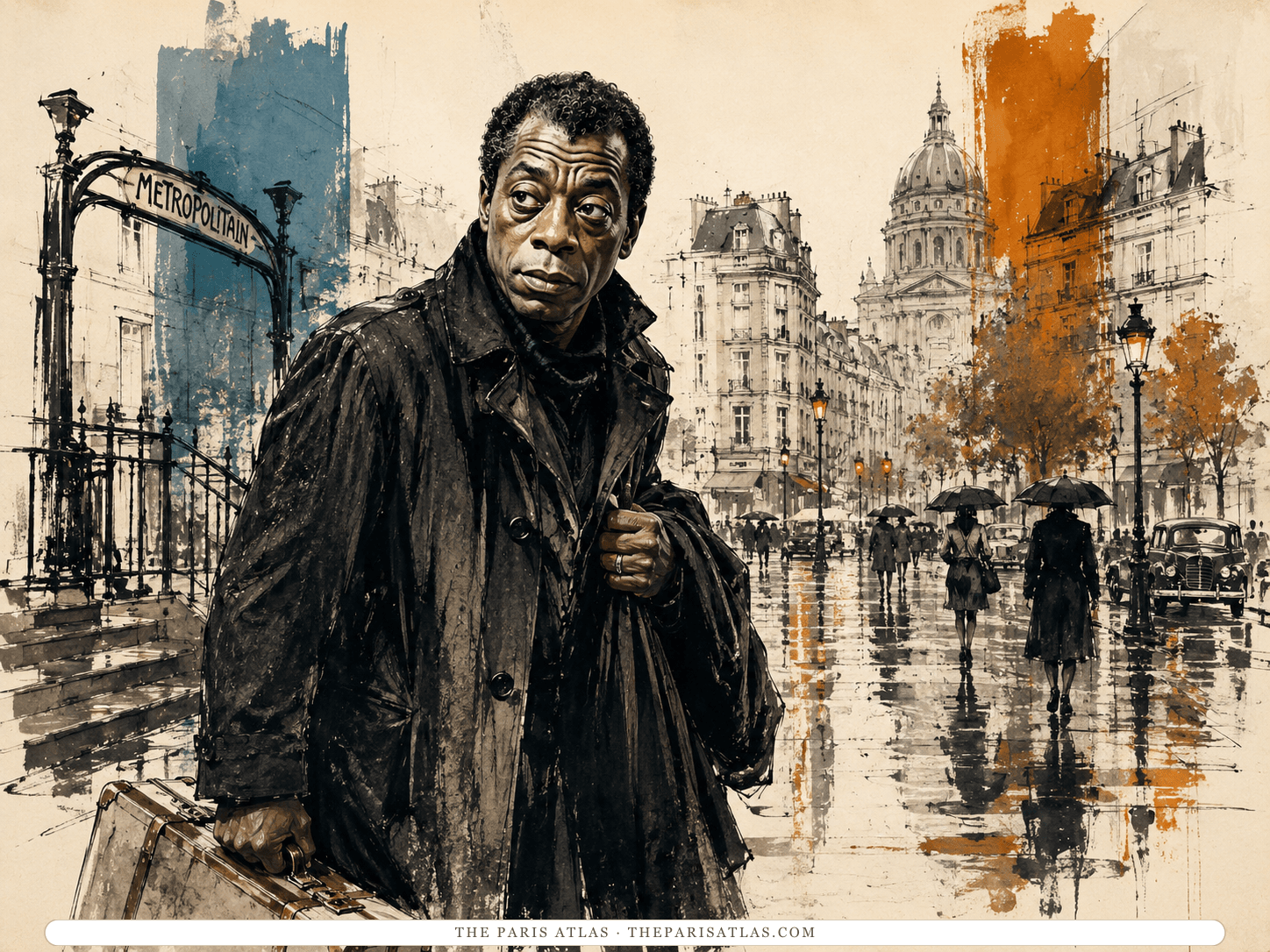
In the spring of 1949 the novelist James Baldwin published an essay called Everybody's Protest Novel in the small Paris magazine Zero. It argued that the protest novel flattened the people it meant to defend, and it used Native Son — the most celebrated Black American novel of the decade — as its example.

Native Son was Richard Wright's book, and Wright was the man who had made Baldwin's career possible. He had read Baldwin's unfinished first novel in 1944 and backed him for the fellowship that eventually paid his passage to France. He had greeted Baldwin at Les Deux Magots on his first day in the city, four months before the essay appeared.

The two men had it out at Brasserie Lipp, on the day Zero published the essay. Baldwin described the afternoon himself in 1961, in an essay called "Alas, Poor Richard": he walked in, Richard Wright was already sitting there, and Wright called him over. Wright thought he had been repaid with an ambush. Baldwin thought he had written literary criticism. The friendship never fully recovered, and Baldwin returned to the break in two later essays, regretting the parting without withdrawing the argument.

I walked into the Brasserie Lipp. Richard was there, and he called me over.

James Baldwin, "Alas, Poor Richard", in Nobody Knows My Name (1961)

Baldwin puts himself in this room that afternoon, so that much is settled. Whether he came back is shakier. The story goes that he dropped in now and then rather than regularly, usually for a drink before going somewhere cheaper to eat, which fits a writer who spent his first Paris years genuinely broke, in a brasserie that has always known exactly who ranks where.

James Baldwin and Richard Wright quarreled twice, and the two occasions are often told as one story. The second came four years later, in 1953, at Les Deux Magots up the boulevard: an evening that also involved the novelist Chester Himes and carried on afterwards at a Martinican café nearby. Wright and Himes later described that night in sharply different terms. The argument on this page is the first one, in 1949, about the essay.

Served here

The dishes the books ate at this table — quoted verbatim from the text.

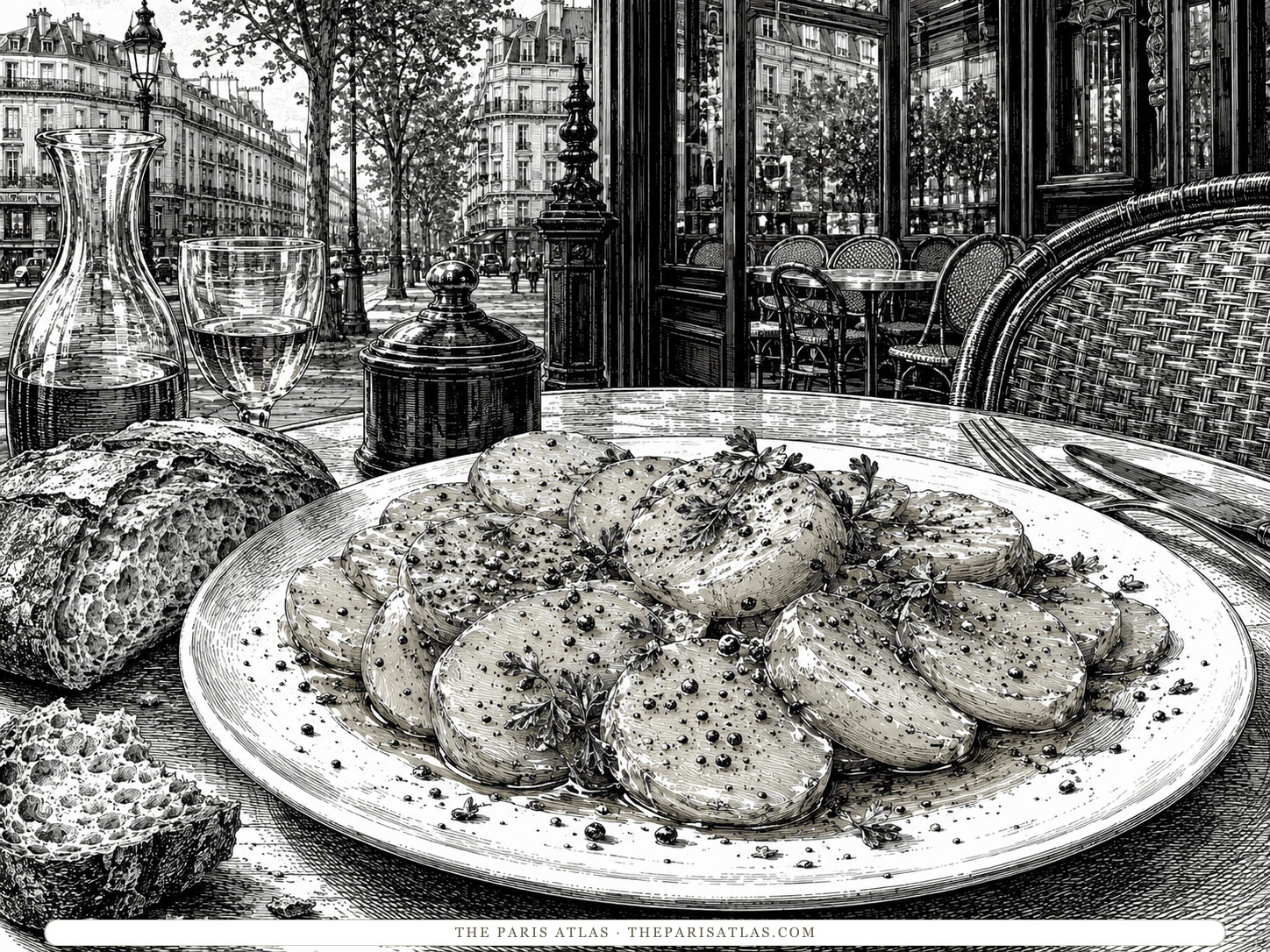
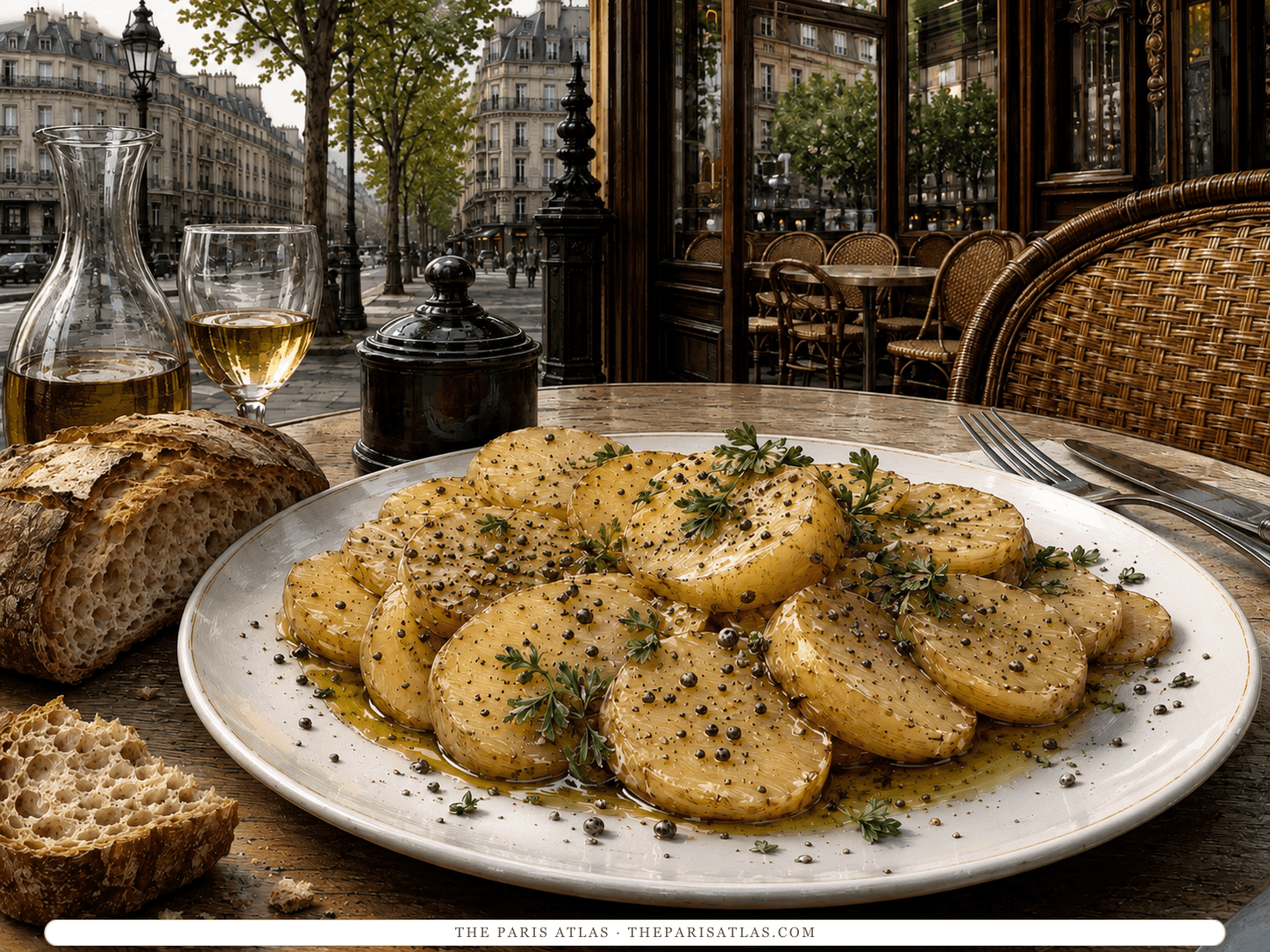
Sliced potatoes glistening with olive oil and scattered with parsley and coarse black pepper on a wide white plate, a carafe of wine and a loaf of country bread alongside, on a Paris brasserie terrace.

'Hunger Was Good Discipline' — lunch on the Boulevard Saint-Germain

Pommes à l'huile at Brasserie Lipp

The beer was very cold and wonderful to drink. The pommes à l'huile were firm and marinated and the olive oil delicious. I ground black pepper over the potatoes and moistened the bread in the olive oil.

Potato salad in the French manner, dressed with oil instead of mayonnaise. He has walked to Lipp's after a morning of skipping lunch on purpose, which is the discipline the chapter is named for.

From A Moveable Feast
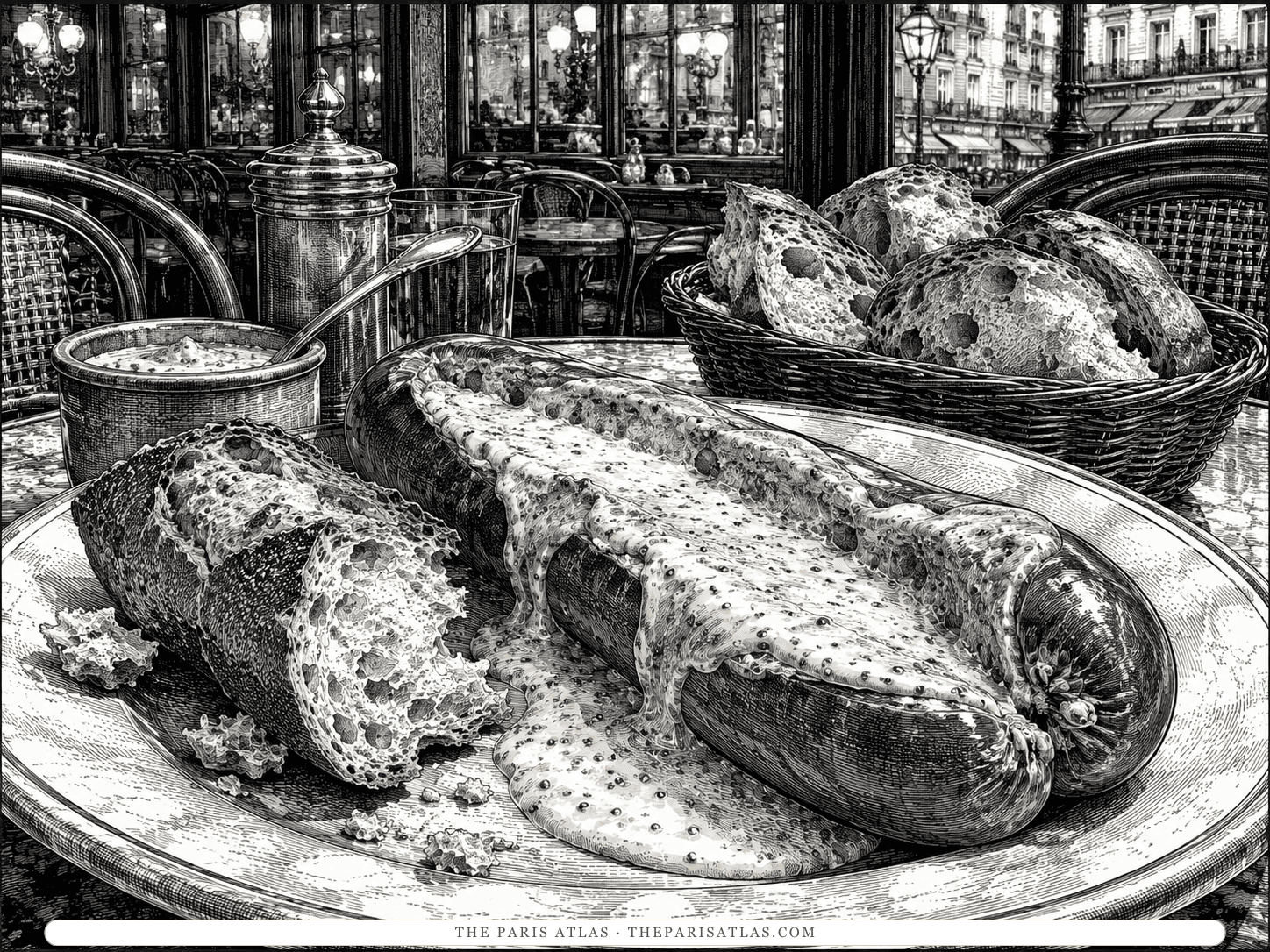
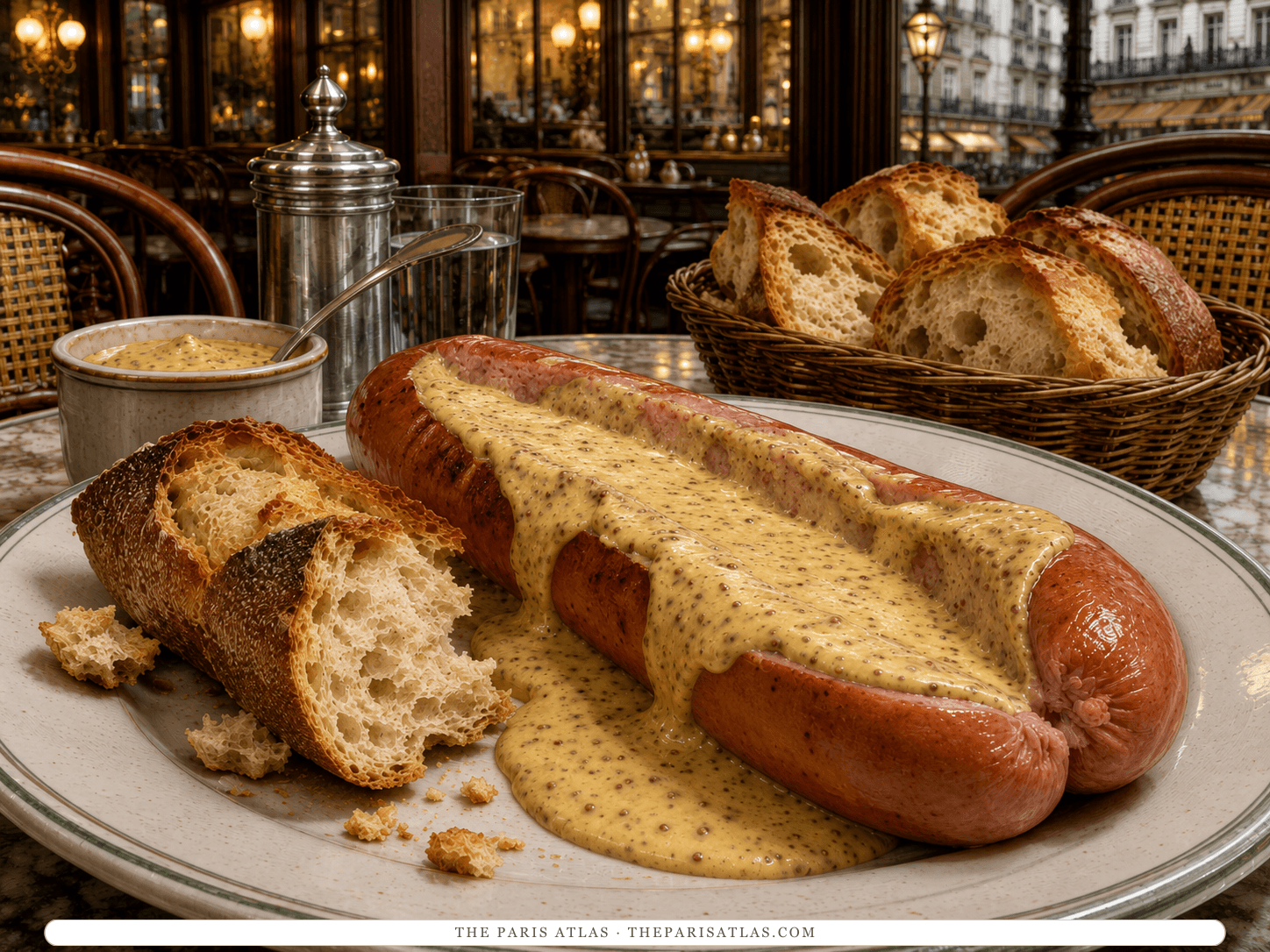
A thick sausage split lengthwise under a blanket of grainy mustard sauce on an oval plate, with a mustard pot, a tall glass of beer and a basket of bread behind it.

'Hunger Was Good Discipline' — the second course at Lipp's

Cervelas with mustard sauce

When the pommes à l'huile were gone I ordered another serving and a cervelas. This was a sausage like a heavy, wide frankfurter split in two and covered with a special mustard sauce.

Cervelas is a fat, mildly smoked pork sausage — brasserie food, cheap and filling. It follows the potato salad, and the two of them together end the walk he had spent talking himself out of eating.

From A Moveable Feast

Key facts

Opened
1880, by Léonard Lipp of Alsace
What it was
Alsatian brasserie — beer, choucroute, and the literary lunch
Neighborhood
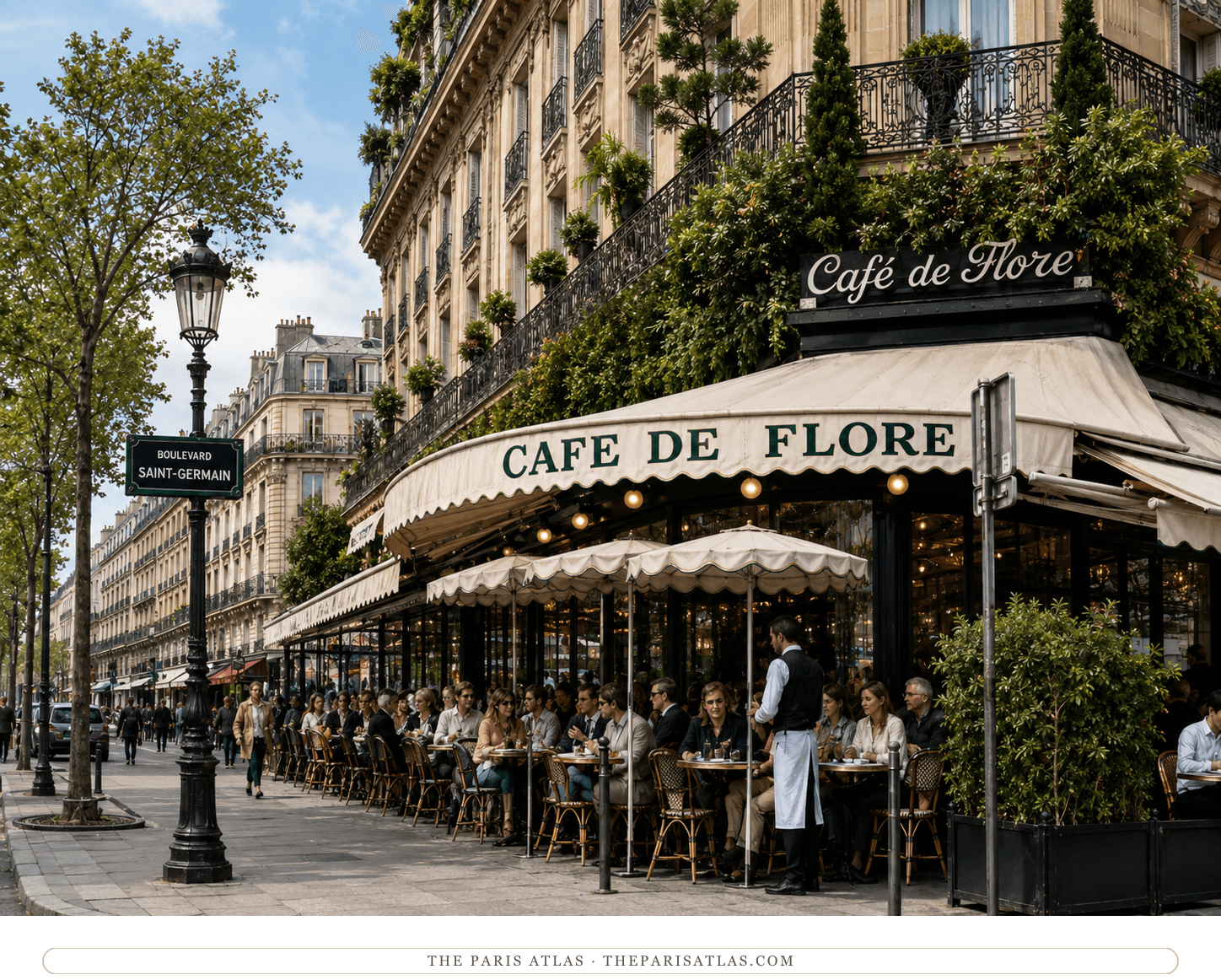
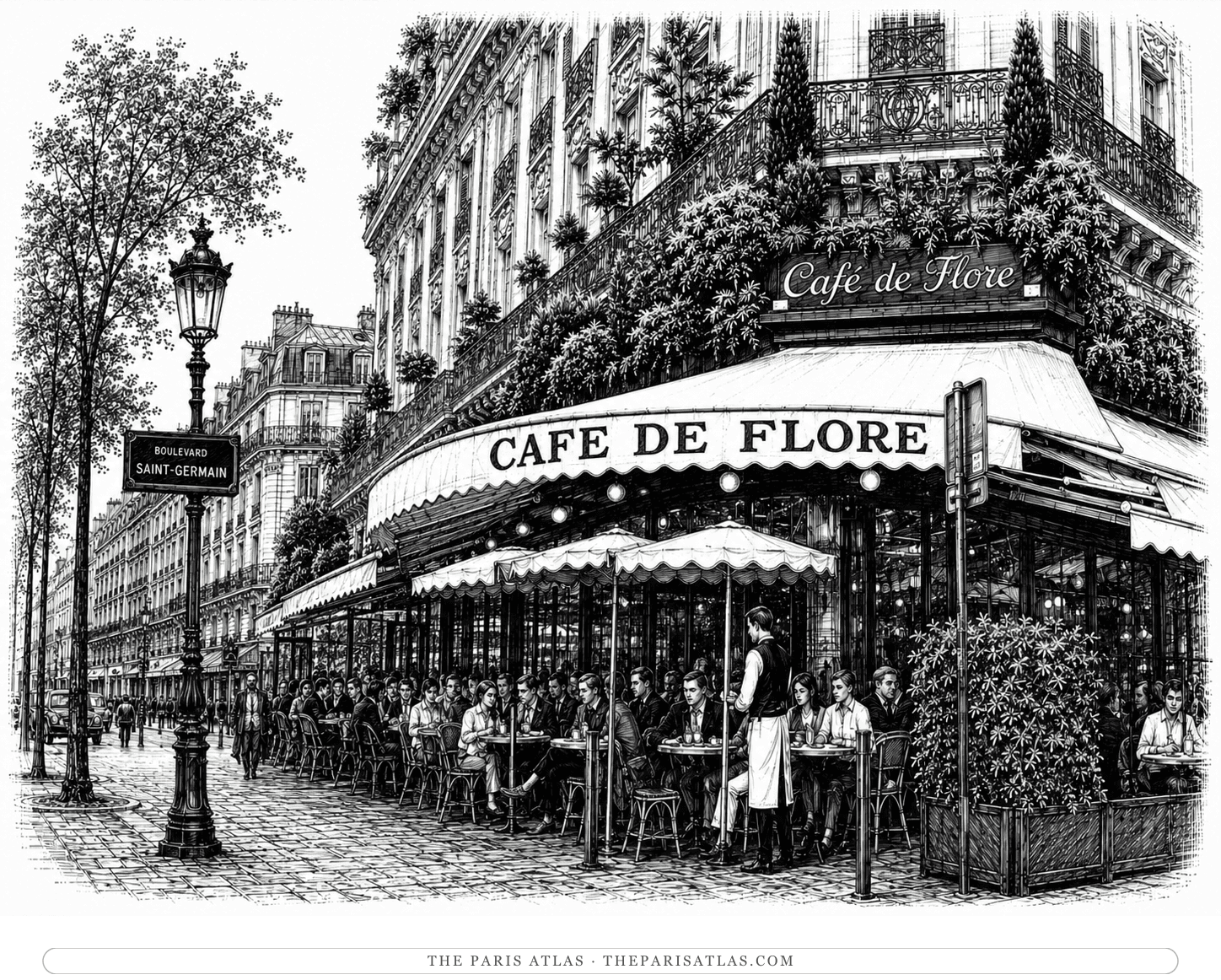
Saint-Germain-des-Prés, facing the Flore across the boulevard
Notable regulars
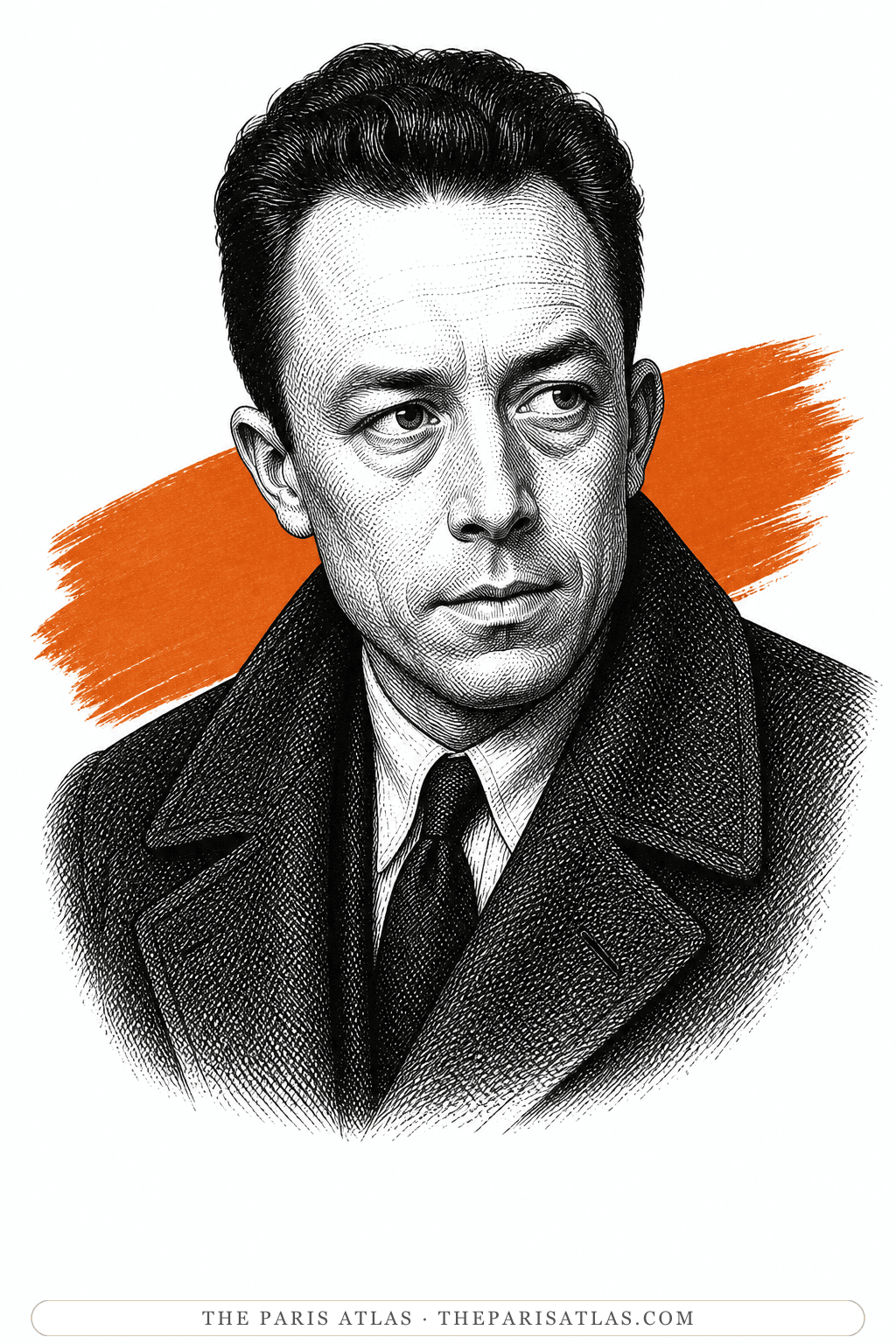
Gide, Malraux, Camus, Saint-Exupéry, later Mitterrand
Today
Still open, still family-run in spirit — the cervelas is still on the menu
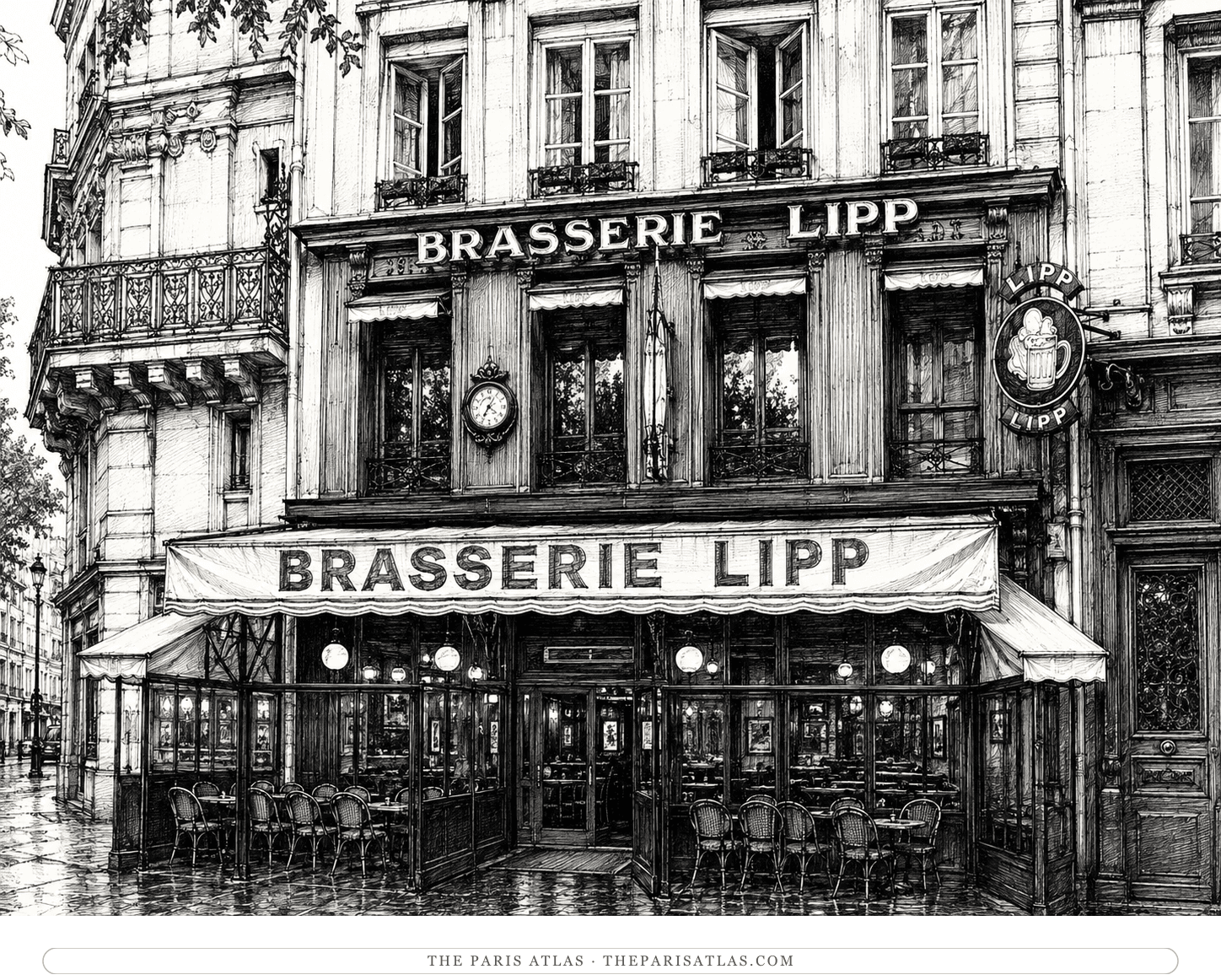
The Alsatian brasserie across the boulevard from the Flore.Editorial illustration
The red awning and neon stein, largely unchanged.Editorial illustration

Timeline

  1. 1880

    Léonard Lipp opens the Brasserie des Bords du Rhin, serving the beer of annexed Alsace.

  2. 1920

    Marcellin Cazes buys the house and begins courting the writing trade.

  3. 1920s

    Hemingway's post-hunger meal — distingué, pommes à l'huile, cervelas — later immortalized in A Moveable Feast.

  4. 1935

    The house founds the Prix Cazes, a literary prize awarded at its own tables.

  5. 1958

    Classified décor and political clientele make Lipp the unofficial annex of the Assemblée.

  6. Today

    Still open; the ceramics, the mirrors, and most of the menu survive intact.

On the map

Questions before you go

Why is Brasserie Lipp famous?

For its clientele as much as its choucroute. Marcellin Cazes bought the brasserie in 1920 and set about courting writers; by mid-century Lipp was the canteen of literary and political Paris, drawing André Gide, André Malraux, Albert Camus and later François Mitterrand. Ernest Hemingway made it famous to English-language readers by describing a meal here in A Moveable Feast.

What did Hemingway order at Brasserie Lipp?

A distingué — the large glass of beer, roughly a liter — with pommes à l'huile and a cervelas sausage split lengthwise and covered in mustard sauce. He describes the meal in the hunger chapter of A Moveable Feast, eaten on a day when he finally had money in his pocket. Most of that order is still on the menu.

Did James Baldwin and Richard Wright argue at Brasserie Lipp?

Yes, in the spring of 1949, and Baldwin said so himself. In his essay "Alas, Poor Richard" he describes walking into Lipp on the day the magazine Zero published his "Everybody's Protest Novel" and finding Richard Wright there, waiting to call him over. The essay had criticized Wright's novel Native Son, and Wright had been Baldwin's early champion. The friendship never fully recovered. A second quarrel between them, in 1953, happened at Les Deux Magots and is often confused with this one.

Was James Baldwin a regular at Brasserie Lipp?

Probably not, though he was definitely here at least once. The story goes that he dropped in now and then rather than regularly, usually for a drink before eating somewhere cheaper. His steady rooms in these years were the cafés a few doors away — the Café de Flore, Les Deux Magots and Le Tournon — where he could sit over one coffee and work in the warmth.

Is Brasserie Lipp still open?

Yes, at 151 boulevard Saint-Germain, facing the Café de Flore and Les Deux Magots across the boulevard. The painted ceramics and mirrored hall are classified, and most of the menu Hemingway ordered from survives.

Related books

Cover of A Moveable Feast by Ernest Hemingway

Recalled in the memoir

A Moveable Feast

Ernest Hemingway · 1964

Beer, potato salad, and choucroute after a day's work. Hemingway considered it one of the best places in Paris.

Writers who knew this place

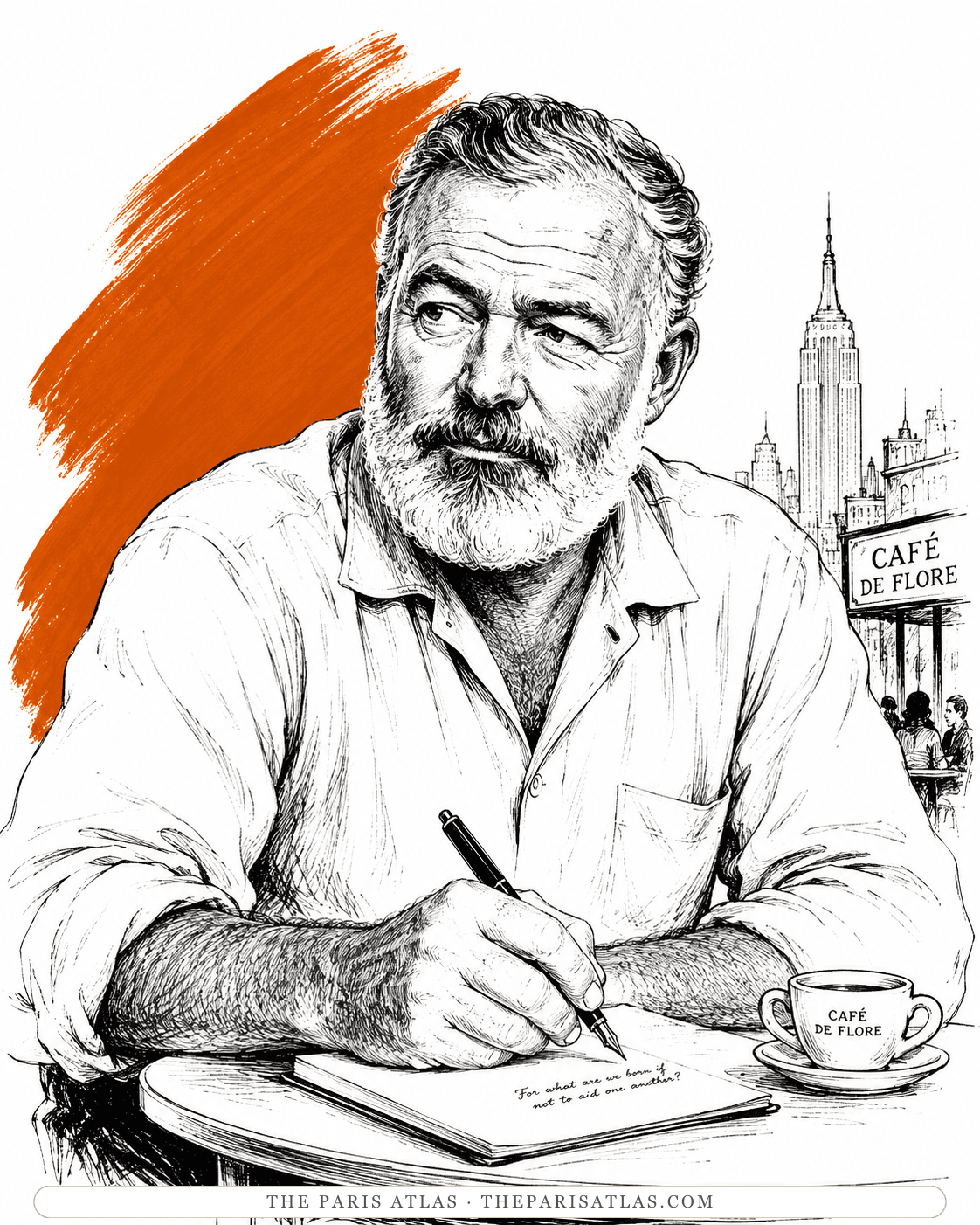
Illustrated portrait of Ernest Hemingway

Ernest Hemingway

American · Author of The Sun Also Rises and A Moveable Feast; his pared-down style, developed in 1920s Paris, became the most imitated in American prose.

Frequented by

Beer, potato salad, and choucroute after a day's work — he counted it among the best places in Paris to eat.

Ernest Hemingway, A Moveable Feast (1964)

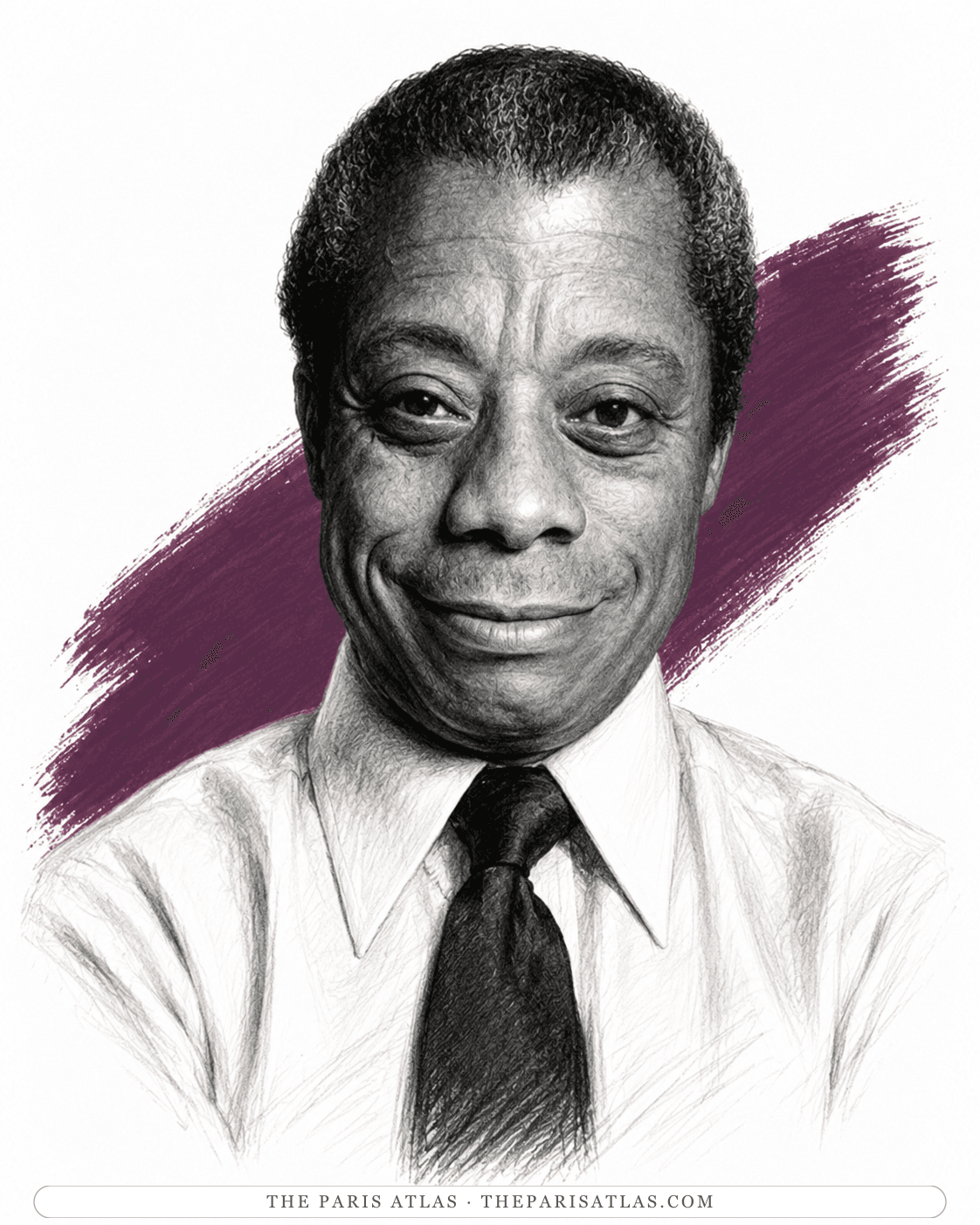
Illustrated portrait of James Baldwin

James Baldwin

American · American novelist and essayist who left Harlem for Paris at twenty-four with forty dollars, and wrote the books that made him the most quoted witness to race, sex and belonging in twentieth-century America.

Frequented by

Held at probable as a habit: France Revisited has Baldwin stopping in occasionally rather than as a regular, usually before eating somewhere cheaper. That he was in the room at all is documented — he put himself there in "Alas, Poor Richard", walking in on the day Zero published "Everybody's Protest Novel" and finding Richard Wright waiting.

James Baldwin: Scrutinizing America from Paris (2020); James Baldwin, Nobody Knows My Name (1961), "Alas, Poor Richard", pp. 196–197 (Vintage International, 1993)

Guides featuring Brasserie Lipp

Take them with you.

Within walking distance

The Friday Letter

Paris, one address at a time.

The cafés, studios, and walk-up flats where the work was made — one story from the map in every letter.

One email a week. No spam, no selling your address. Unsubscribe anytime.