The Paris AtlasCharting the artists, works, and places worth returning to.
  • Author
  • Poet
  • Journalist
· American · 1908–1960

Richard Wright

American novelist whose Native Son made him the most famous Black writer in the country, and who moved to Paris in 1946; he helped the young James Baldwin win the fellowship that got him there, then never forgave him for the essay that followed.

In images

Details

Lived
1908–1960
Born
4 September 1908
Birthplace
Rucker's Plantation, near Natchez, Mississippi
Died
28 November 1960 · aged 52
Place of death
Paris, France
Nationality
American
Married
Dhimah Rose Meadman · 1939–1941Ellen Poplar · 1941–1960
Children
Julia Wright, Rachel Wright
Roles
AuthorPoetJournalist
Also known as
Richard Nathaniel Wright

About Richard Wright

Richard Wright was an American novelist and memoirist, born on a cotton plantation near Natchez, Mississippi, in 1908. The novel Native Son (1940) and the autobiography Black Boy (1945) made him the most famous Black writer in America. In 1946 the French government invited him to Paris, and in 1947 he moved his family there permanently.

He spent his last fourteen years in Paris as the central figure of the Black American expatriate scene, helped launch the journal Présence Africaine, and wrote a second shelf of novels, reportage, and — in his final eighteen months — several thousand haiku. He died in Paris in 1960, at fifty-two, and his ashes rest at Père Lachaise cemetery.

When the twenty-year-old James Baldwin knocked on his door in 1944, Richard Wright was the most famous Black writer in America, the author of Native Son and Black Boy. Within a decade both men were living in Paris, and the mentorship had curdled into the most public quarrel in Black American letters. Wright's own story runs from a Mississippi plantation through Chicago and New York to a café table below the French Senate, where for a decade he presided over the capital of Black literary exile.

Mississippi

Wright was born on 4 September 1908 on Rucker's Plantation, some twenty miles from Natchez, Mississippi, to Nathan Wright, a sharecropper, and Ella Wilson Wright, a schoolteacher. His father deserted the family when he was seven, and the childhood that followed — Memphis, Jackson, a scatter of relatives' houses in Arkansas and Mississippi — was poor, hungry, and constantly uprooted. He told it all in Black Boy. The schooling was as uneven as the addresses, yet he graduated from Jackson's Smith Robertson Junior High School in May 1925, published a story in a local Black newspaper as a teenager, and discovered H. L. Mencken, Theodore Dreiser, and Sherwood Anderson in Memphis.

In 1927 he joined the Great Migration to Chicago, worked as a postal clerk, and began writing in earnest through the John Reed Club, joining the Communist Party in 1934 and working for the Federal Writers' Project.

Native Son and Black Boy

Richard Wright photographed by Carl Van Vechten on 23 June 1939. He was thirty; Native Son appeared nine months later and made him the most famous Black writer in America. (Carl Van Vechten, Library of Congress · Public domain)

New York, 1937. A first-prize story in a magazine contest led to Uncle Tom's Children in 1938, and then the two books that made him: Native Son in 1940, the novel of Bigger Thomas that put the rage of the Black urban North in front of a mass white readership, and Black Boy in 1945, the autobiography of his Jim Crow childhood. The NAACP gave him the Spingarn Medal in 1941. He broke publicly with the Communist Party in the 1944 essay I Tried to Be a Communist.

It was in these years, at the top of his fame, that he read an unfinished novel by a twenty-year-old from Harlem and backed him for the Eugene F. Saxton fellowship. The novel eventually became Go Tell It on the Mountain; the young writer was James Baldwin.

The invitation

Leaving America took connections. Wright applied for a passport in January 1946 and was refused. Gertrude Stein, who had been corresponding with him since he reviewed her work admiringly, pressed for a remedy from Paris, and the anthropologist Claude Lévi-Strauss, then France's cultural attaché in Washington, delivered one: an official invitation from the French government. The passport came through, and Wright stepped off the boat train on 9 May 1946 to find Stein waiting on the platform. She had reserved him a room at the Hôtel Trianon on rue de Vaugirard, a short walk from her apartment.

Stein died that July, in the middle of Wright's first stay. They had known each other in person for about ten weeks.

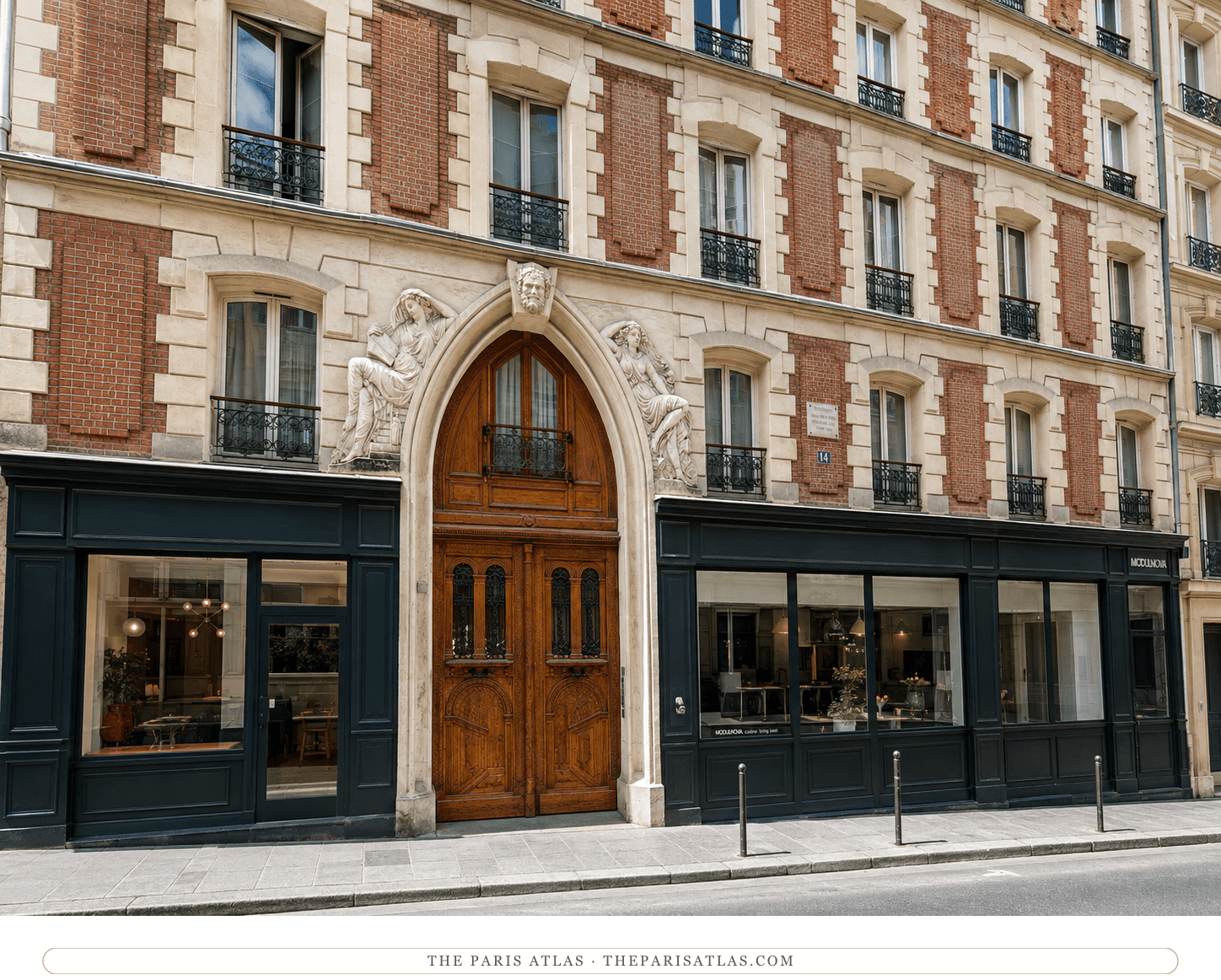
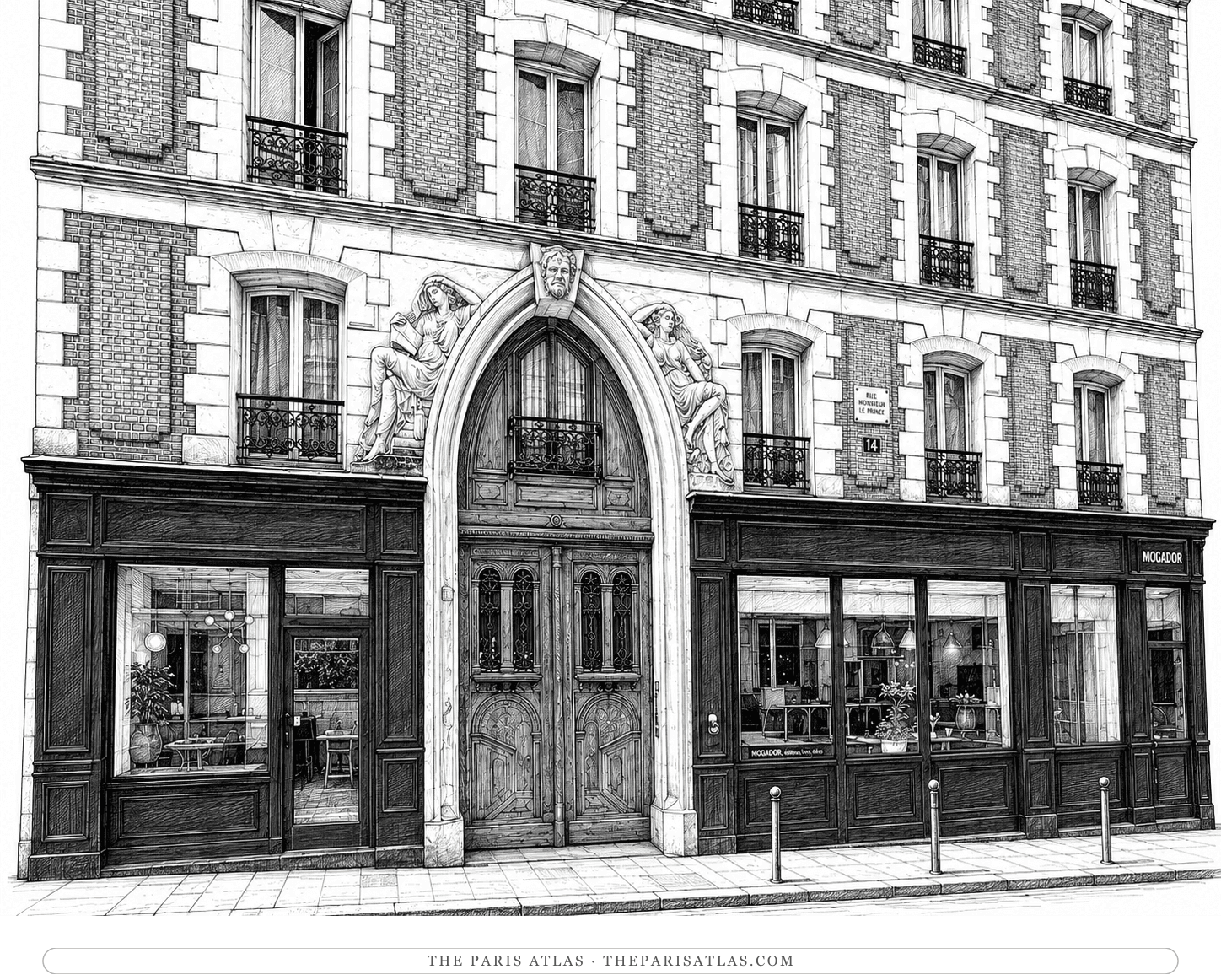
The plaque at 14 rue Monsieur-le-Prince, Richard Wright's Paris address from 1948 to 1959. The inscription reads "L'homme de lettres noir américain Richard Wright habita cet immeuble de 1948 à 1959." It was dedicated in February 1992. (Mu, Wikimedia Commons · CC BY-SA 3.0)

He went back to New York, decided against staying, and moved the family to Paris in 1947 — first to a year in a comfortable apartment at 166 avenue de Neuilly, then, in 1948, to 14 rue Monsieur-le-Prince, near the Luxembourg Gardens. That remained his address for eleven years. A marble plaque has marked the building since February 1992, when Julia Wright and the biographer Michel Fabre unveiled it: "L'homme de lettres noir américain Richard Wright habita cet immeuble de 1948 à 1959" — the Black American man of letters Richard Wright lived in this building from 1948 to 1959.

Paris, and the quarrel

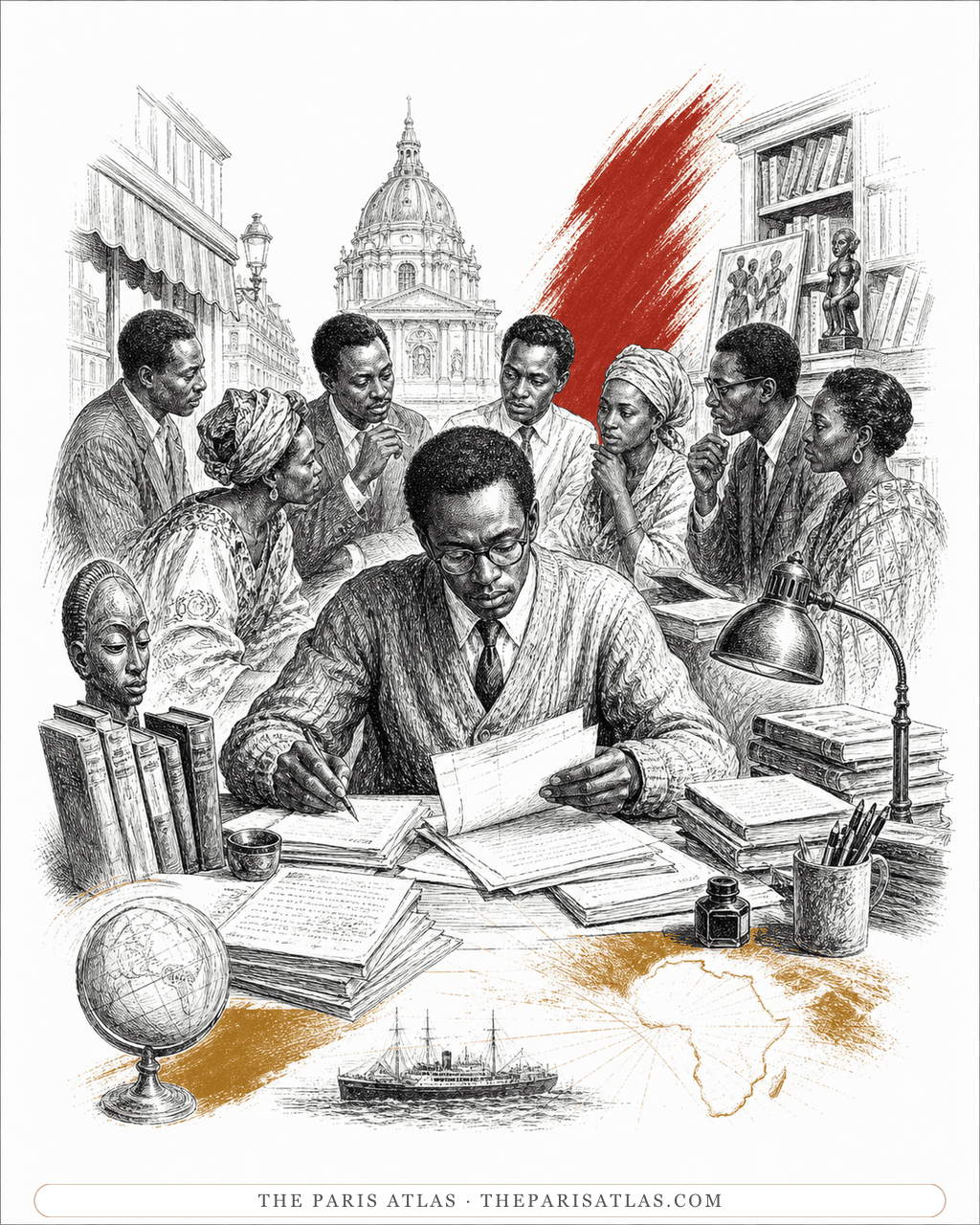
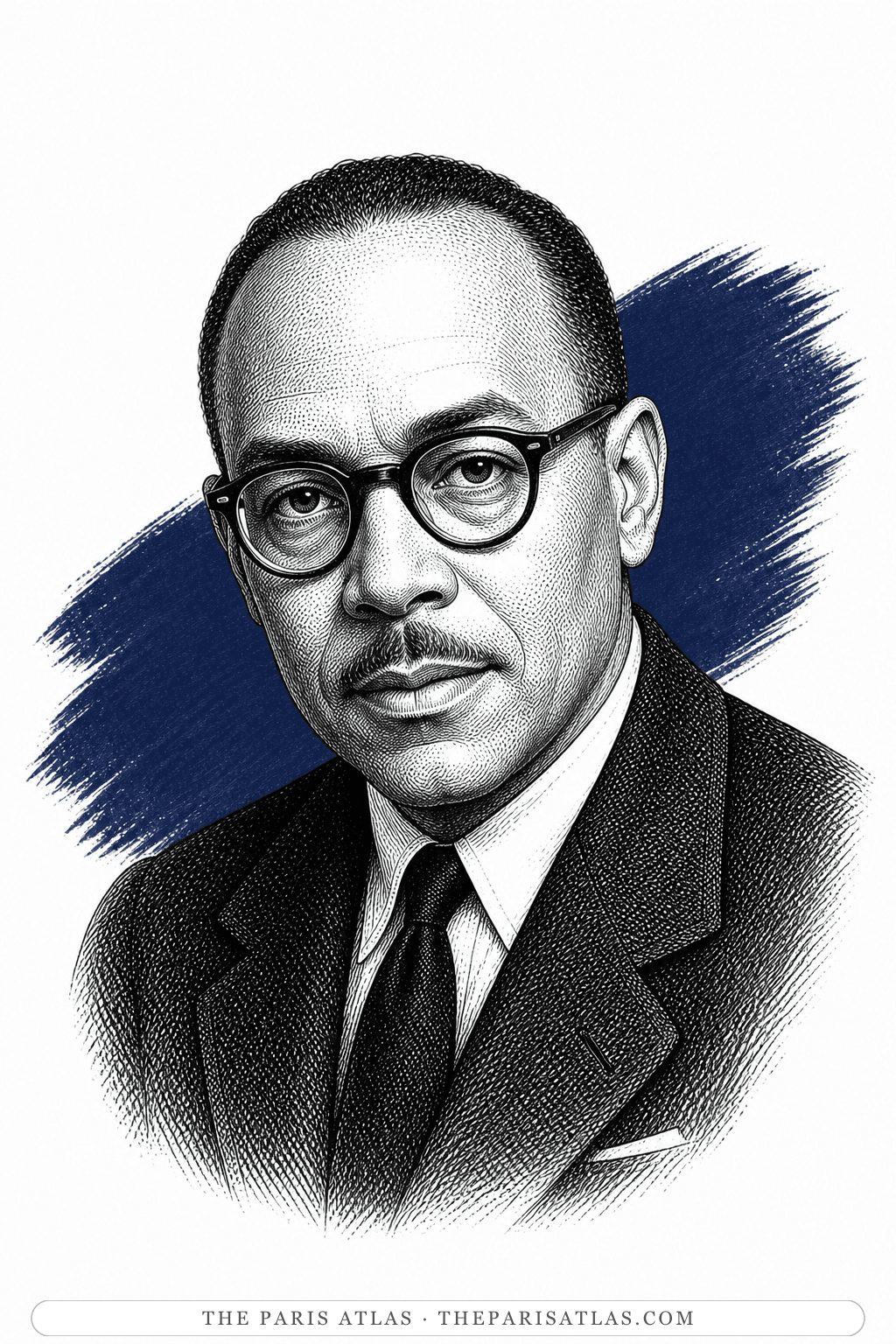
Wright in Paris, where he spent his last fourteen years. (Illustration — The Paris Atlas)

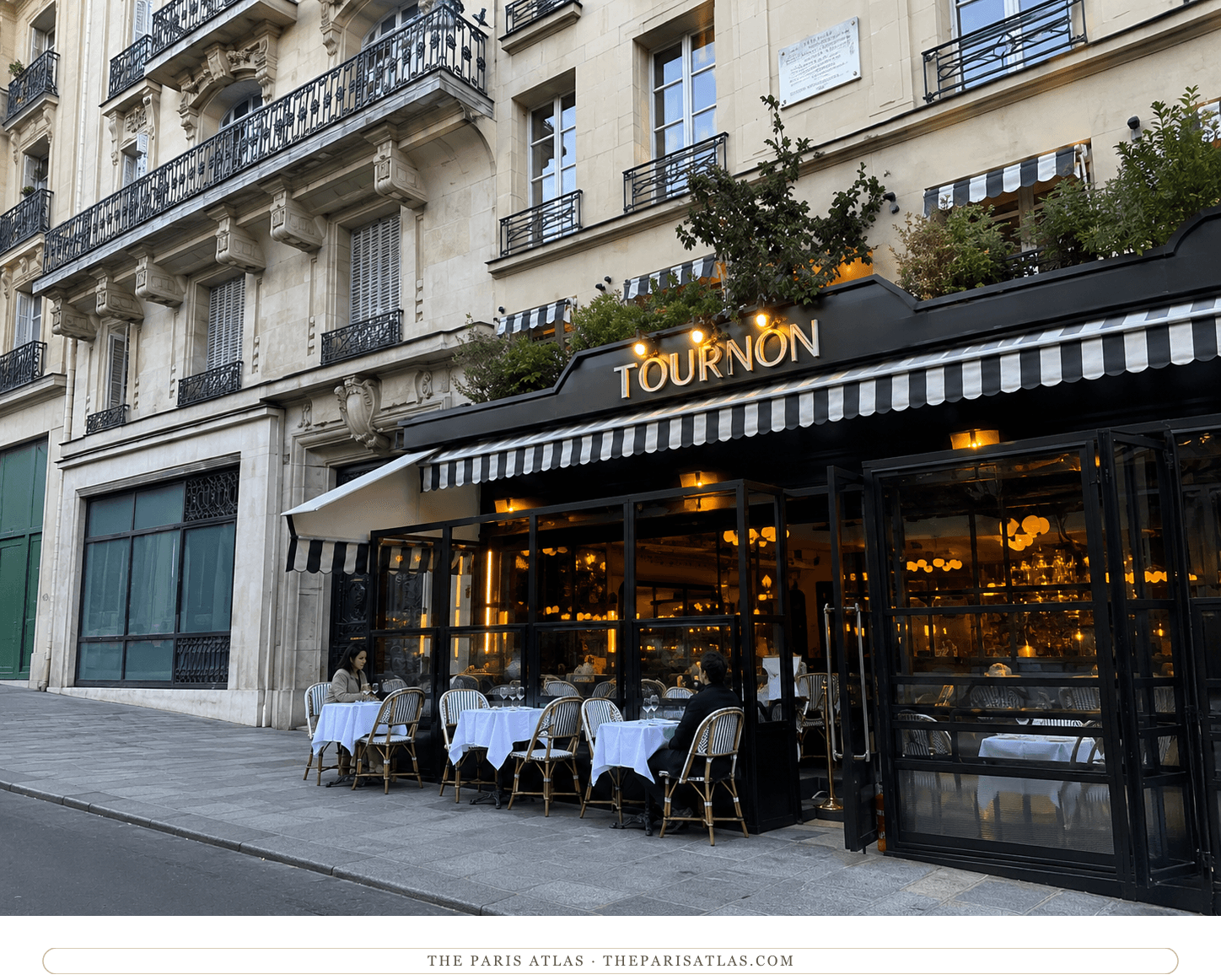
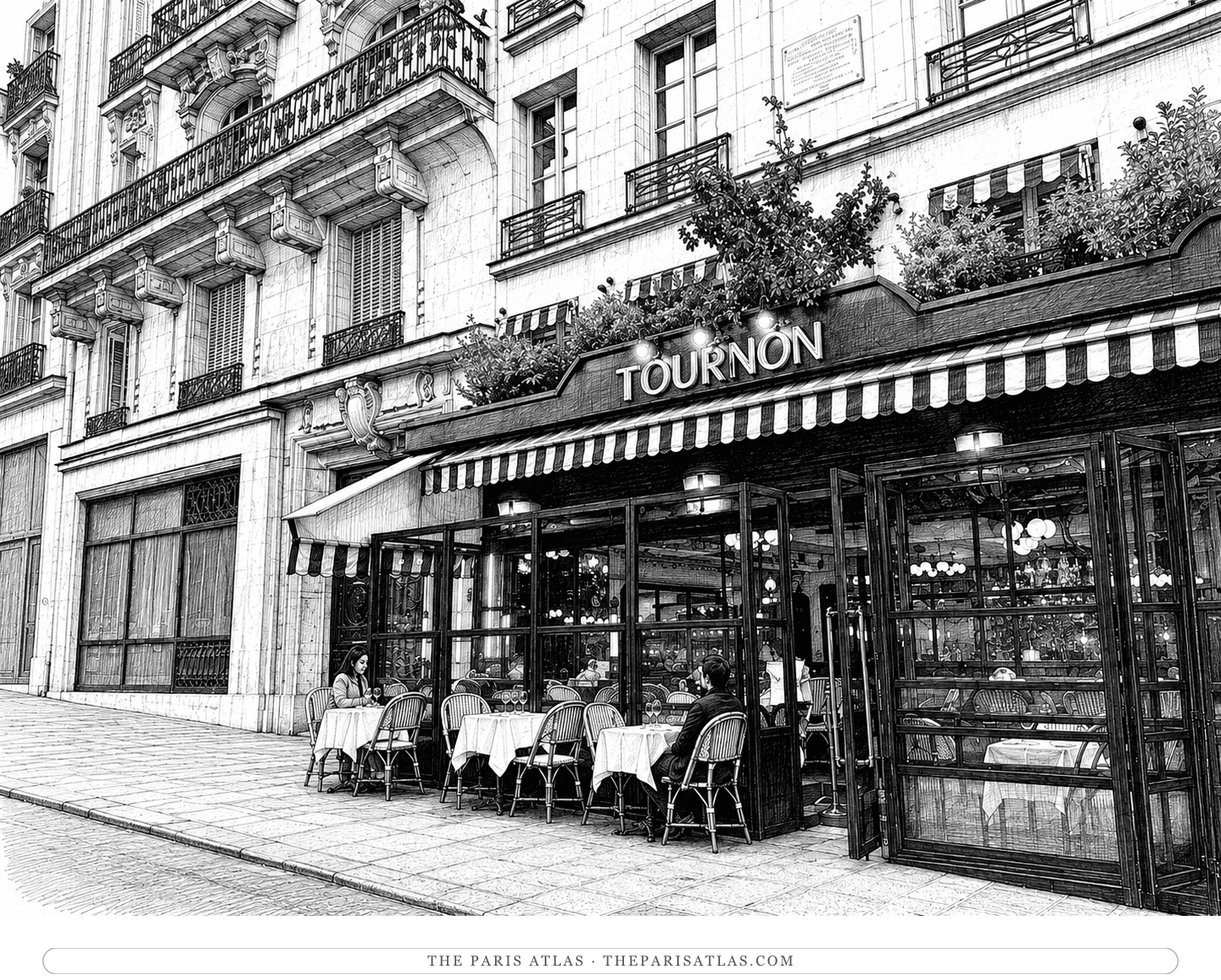
Wright visited Paris in 1946 and moved his family there for good in 1947, seeking, as the Mississippi Encyclopedia puts it, an atmosphere in which to explore what it meant to be human without carrying quite so much racial baggage. The move cost him standing with American critics and gained him Europe. His table at Le Tournon, the café below the Senate, became the unofficial headquarters of the Black American writers in postwar Paris — Chester Himes, the cartoonist Ollie Harrington, the painter Beauford Delaney.

Baldwin was in that Paris too, and the friendship did not survive it. Baldwin's 1949 essay Everybody's Protest Novel, published in the Paris magazine Zero, took Native Son as its central example of the protest fiction it dismantled. Wright took it as a betrayal by the younger writer he had carried, and confronted him at Brasserie Lipp on the day Zero published it. The friendship never fully recovered. The two argued again four years later, in 1953, at Les Deux Magots with the novelist Chester Himes present, and Wright and Himes each described that evening differently afterwards. Baldwin returned to the break in two later essays and regretted the parting without ever retracting the criticism.

The exile years produced a second shelf of books: the existentialist novel The Outsider (1953), the travel and political writing of Black Power (1954), The Color Curtain (1956), and Pagan Spain (1957), the lectures of White Man, Listen! (1957), the novel The Long Dream (1958) — and, near the end, some four thousand haiku.

The strangest item from those years is a film. Wright co-wrote the screenplay for a screen version of Native Son, directed by Pierre Chenal and shot mainly in Buenos Aires. When the intended lead could not travel, Wright took the role himself: the film was released in 1951 with its forty-two-year-old author playing Bigger Thomas, a character twenty years younger. A restored print returned to circulation in 2021.

The institutions of Black Paris

Wright did more in Paris than hold a café table. When Alioune Diop founded the journal Présence Africaine in 1947 — the quarterly that grew into the publishing house of the Black francophone world — Wright joined its founding patronage committee alongside Léopold Sédar Senghor, Aimé Césaire, André Gide, Jean-Paul Sartre, and Albert Camus.

The world is greater than America or Russia.

Richard Wright, addressing a rally of the Rassemblement Démocratique Révolutionnaire, Paris, December 1948

In December 1948 he spoke to a crowd of five thousand at a rally of Jean-Paul Sartre's short-lived political movement, the Rassemblement Démocratique Révolutionnaire, refusing to choose a side in the Cold War from the platform. Around 1950 he organized the Franco-American Fellowship, a pressure group against discrimination by American companies and institutions operating in Paris; its constitution and correspondence survive in the Schomburg Center's Richard Wright papers.

In September 1956 the First International Congress of Black Writers and Artists met at the Sorbonne, organized by Présence Africaine. Wright spoke alongside Senghor, Césaire, and Frantz Fanon, and was the only speaker to remark on the absence of women from the platform.

Watched

The expatriate scene did not sit outside the Cold War. The FBI had carried Wright on its Security Index since 1942, the American embassy reported on his press appearances, and the CIA-funded Congress for Cultural Freedom sponsored some of his lecture tours without his knowledge. In the mid-1950s a dispute between two members of his Le Tournon circle, the journalist Richard Gibson and the cartoonist Ollie Harrington, escalated into letters published under Harrington's name that Harrington had not written, and Wright became convinced the community was infiltrated. He turned the poisoned atmosphere into a novel, Island of Hallucination, which has never been published.

The end in Paris

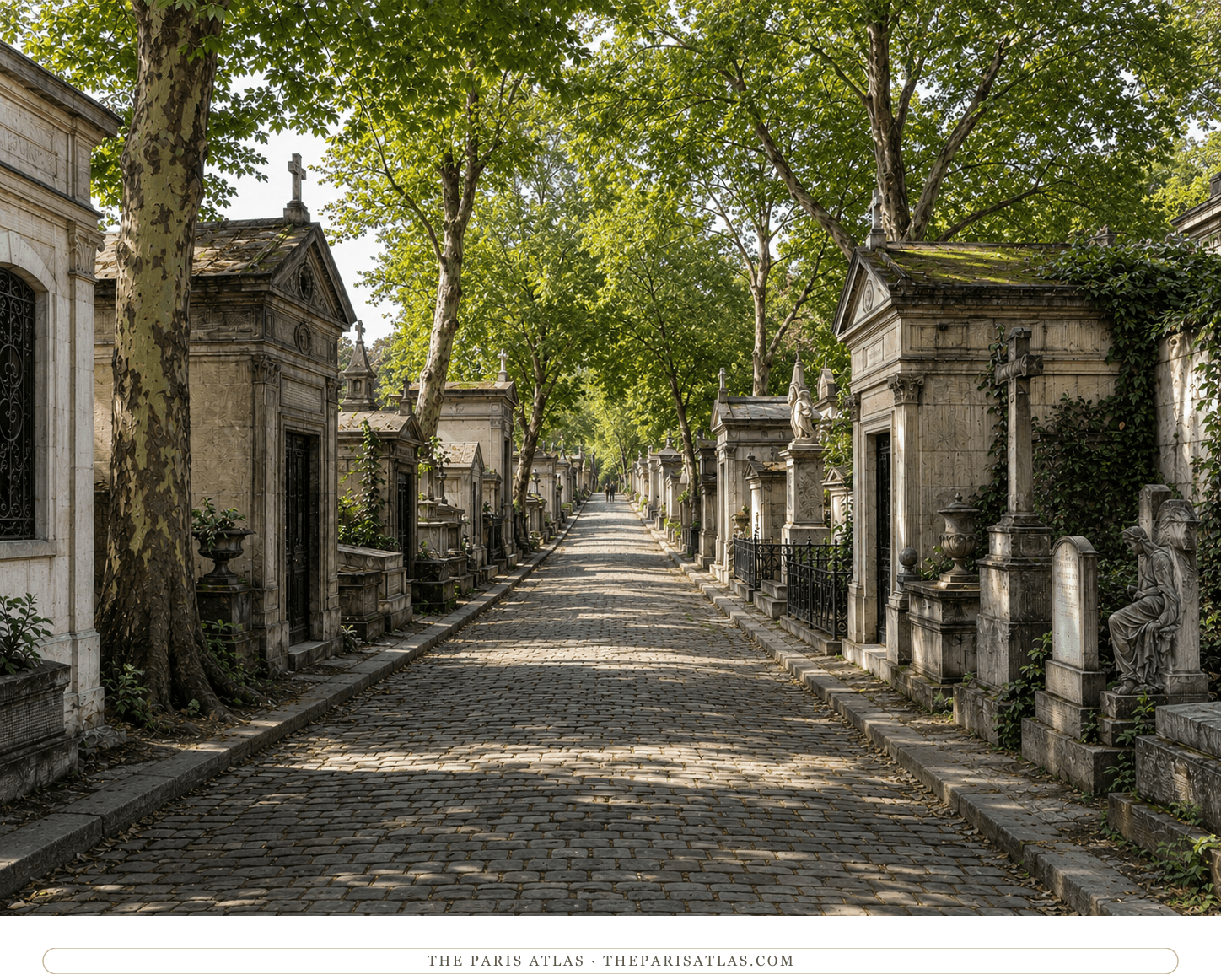
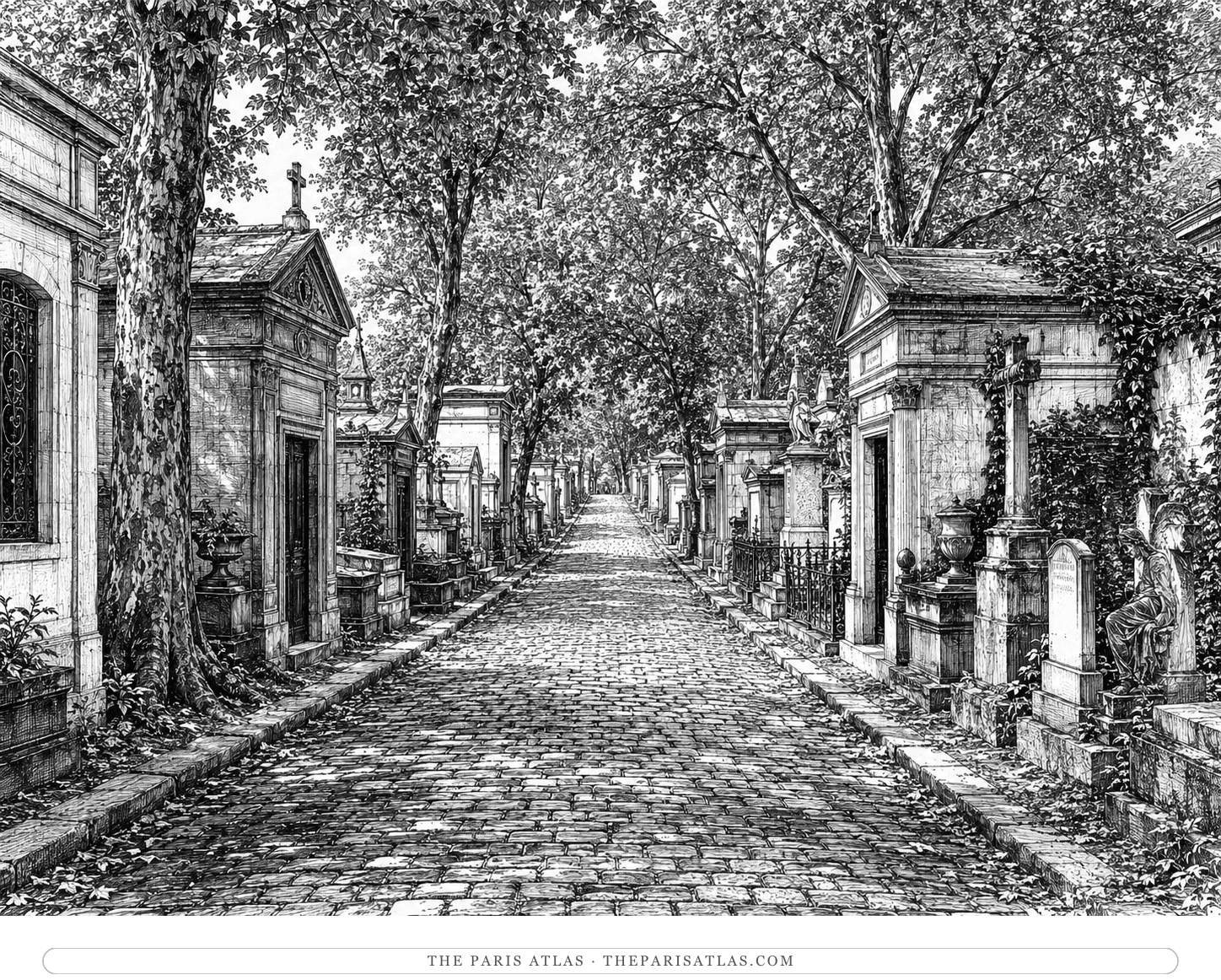
Wright died of heart failure in a Paris clinic on 28 November 1960, at fifty-two. He was cremated, and his ashes were interred at Père Lachaise. The following year Baldwin published Nobody Knows My Name, which closes on three linked essays about Wright — a review, a memoir of their Paris years, and a final accounting of the argument that had separated them since 1949.

He had been ill for more than a year. In August 1959 he was diagnosed with amoebic dysentery, probably contracted on his 1953 reporting trip to the Gold Coast, and the treatments of the era wore him down. Confined to bed for stretches of his last eighteen months, he wrote more than four thousand haiku and selected 817 of them for a collection that was finally published in 1998 as Haiku: This Other World.

The suddenness of the death bred suspicion. His daughter Julia Wright and his close friend Ollie Harrington both came to believe he might have been murdered, and the theory has circulated ever since. The documented record shows surveillance, not poison: his biographer Hazel Rowley examined the theories and concluded that nothing beyond the official cause — a heart attack in a man weakened by illness and stress — can be established.

Life events

  1. 1908

    Born on Rucker's Plantation near Natchez, Mississippi, on 4 September, to a sharecropper and a schoolteacher.

  2. 1927

    Moves to Chicago and finds work as a postal clerk.

  3. 1934

    Joins the Communist Party; the Federal Writers' Project follows.

  4. 1938

    Uncle Tom's Children, four stories of the rural South, is published.

  5. 1939

    Co-writes the blues poem Red Clay Blues with Langston Hughes for New Masses; Carl Van Vechten photographs him in June.

    Richard Wright photographed by Carl Van Vechten on 23 June 1939. He was thirty; Native Son appeared nine months later and made him the most famous Black writer in America. (Carl Van Vechten, Library of Congress)
  6. 1940

    Native Son makes him the most famous Black writer in America.

  7. 1941

    Receives the NAACP's Spingarn Medal; marries Ellen Poplar, with whom he has two daughters.

  8. 1944

    Breaks publicly with the Communist Party in I Tried to Be a Communist.

  9. 1945

    Black Boy, the autobiography of his Mississippi childhood, is published. The same year he backs the young James Baldwin for the Eugene F. Saxton fellowship.

  10. 1946

    Arrives in Paris on 9 May for a first stay of several months, invited by the French government and met at the station by Gertrude Stein.

  11. 1947

    Moves his family to Paris for good, after a first stay the year before.

  12. 1948

    The family settles at 14 rue Monsieur-le-Prince, his address for the next eleven years. In December he addresses a rally of Jean-Paul Sartre's Rassemblement Démocratique Révolutionnaire.

    The plaque at 14 rue Monsieur-le-Prince, Richard Wright's Paris address from 1948 to 1959. The inscription reads "L'homme de lettres noir américain Richard Wright habita cet immeuble de 1948 à 1959." It was dedicated in February 1992. (Mu, Wikimedia Commons)
  13. 1949

    Baldwin's essay Everybody's Protest Novel appears in Zero; the two have it out at Brasserie Lipp the same day, and the friendship breaks.

  14. 1951

    The film of Native Son is released, shot in Buenos Aires with Wright himself playing Bigger Thomas.

  15. 1953

    The Outsider opens the exile shelf: Black Power, The Color Curtain, Pagan Spain, and The Long Dream follow across the decade.

  16. 1956

    Speaks at the First International Congress of Black Writers and Artists at the Sorbonne, organized by Présence Africaine.

  17. 1959

    Diagnosed with amoebic dysentery in August; largely confined to bed, he writes more than four thousand haiku over his last eighteen months.

  18. 1960

    Dies of heart failure in a Paris clinic on 28 November, at fifty-two; his ashes are interred at Père Lachaise.

Richard Wright quotes

Verbatim, as recorded by the witnesses of the era — sources on every quotation.

Why have I decided to live beyond the shores of my native land? It is because I love freedom, and I tell you frankly that there is more freedom in one square block of Paris than there is in the entire United States of America!
Richard Wright, "I Choose Exile", unpublished essay written for Ebony, 1951
I was not sorry when my ship sailed past the Statue of Liberty!
Richard Wright, "I Choose Exile", unpublished essay written for Ebony, 1951
I love my adopted city. Its sunsets, its teeming boulevards, its slow and humane tempo of life have entered deeply into my heart.
Richard Wright, "I Choose Exile", unpublished essay written for Ebony, 1951
All 7 Richard Wright quotes

People they knew

Documented connections — every one carries its source.

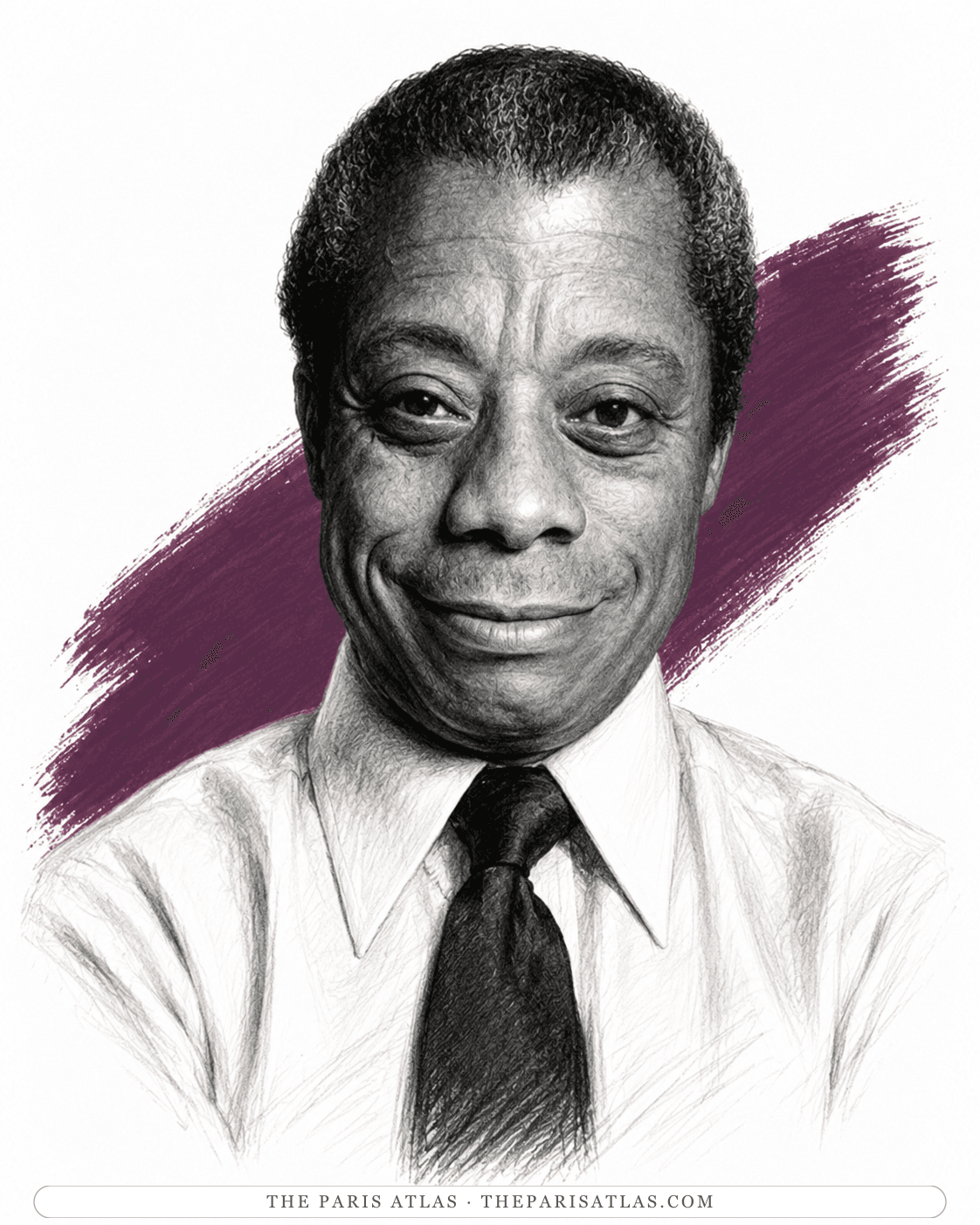
Illustrated portrait of James Baldwin

James Baldwin

  • Author
  • Playwright
  • Critic
  • +1

Mentored · 1944

Wright read the twenty-year-old Baldwin's unfinished first novel and backed him for the Eugene F. Saxton fellowship he won in 1945. The support is what put Baldwin on a ship to Paris three years later, and it is also what made the 1949 Zero essay read as a betrayal.

Chicago Public Library — James Baldwin Biography

Clashed with · 1949

Baldwin's 1949 essay Everybody's Protest Novel, published in the Paris magazine Zero, used Wright's Native Son as its example. Baldwin's own account, in "Alas, Poor Richard", puts the confrontation at Brasserie Lipp on the day Zero published the essay. The friendship never fully recovered; he returned to the break in two later essays and regretted the parting without retracting the argument. A separate 1953 quarrel involving Chester Himes happened at Les Deux Magots and is often merged with this one — Wright and Himes later gave conflicting accounts of that evening.
James Baldwin, Nobody Knows My Name (1961), "Alas, Poor Richard", pp. 196–197 (Vintage International, 1993); Baldwin in France

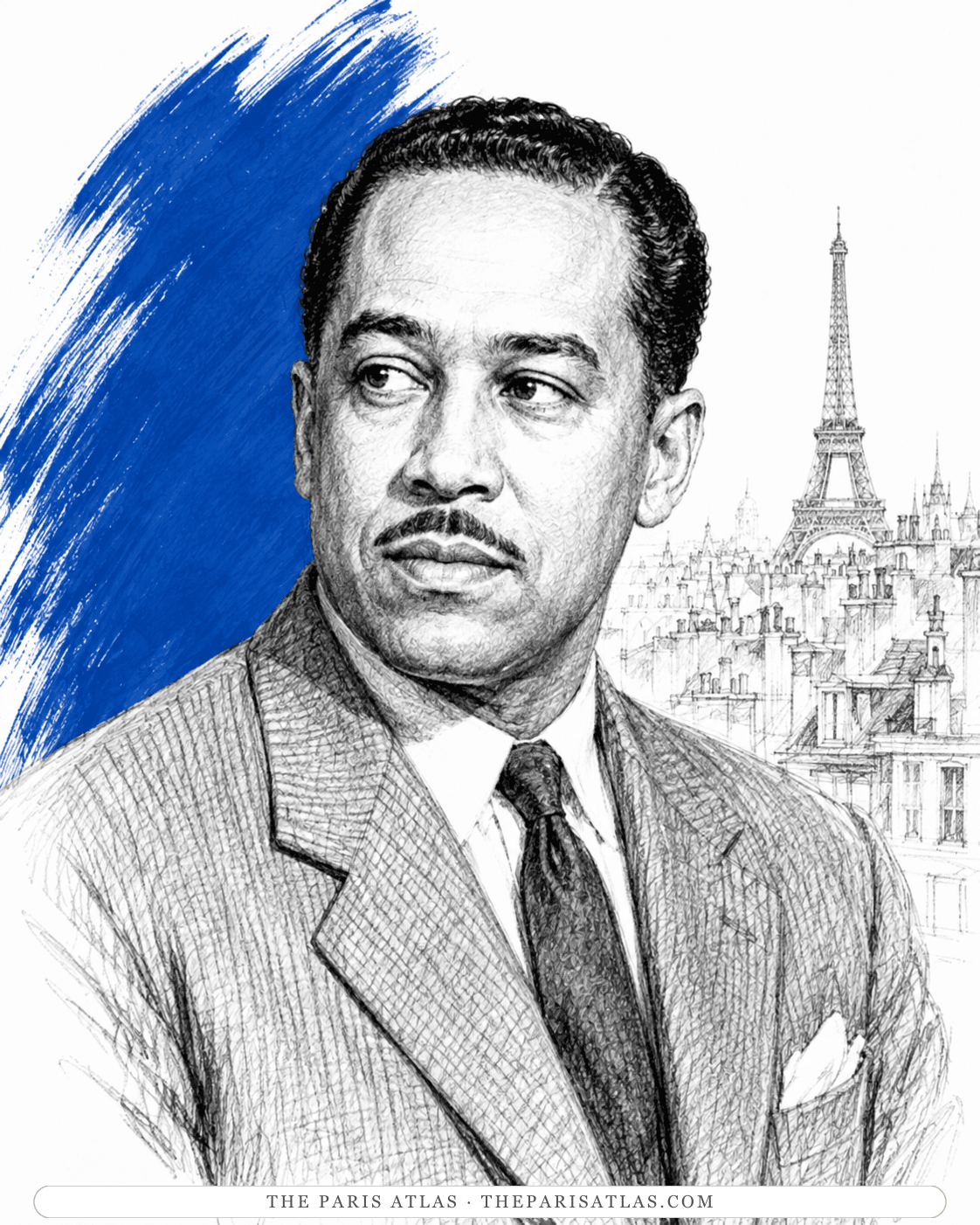
Illustrated portrait of Langston Hughes

Langston Hughes

  • Poet
  • Author
  • Playwright
  • +1

Collaborated with · 1939

The two co-wrote the poem "Red Clay Blues", published in New Masses on 1 August 1939 over both names. The magazine's contents page credits it to Richard Wright and Langston Hughes, in that order.

Richard Wright and Langston Hughes, Red Clay Blues (1939)

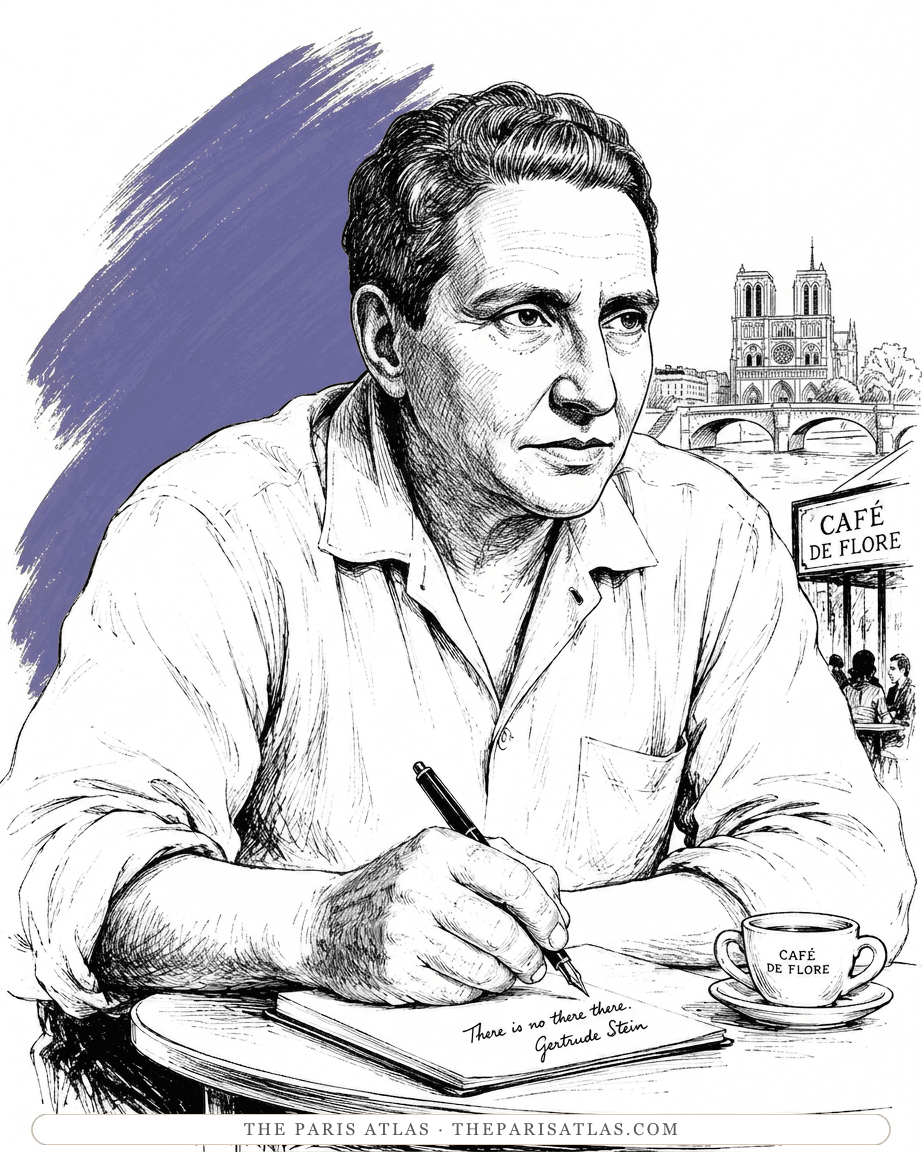
Illustrated portrait of Gertrude Stein

Gertrude Stein

  • Author
  • Salon host
  • Patron

Met · 1946

Stein read Native Son and Black Boy and began corresponding with Wright in 1945. After his passport application was refused in January 1946, she helped arrange the official French government invitation that brought him over; he arrived on 9 May 1946 to a room she had reserved at the Hôtel Trianon. The friendship ended with her death that July.

M. Lynn Weiss, Gertrude Stein and Richard Wright: The Poetics and Politics of Modernism (1998); Gertrude Stein and Richard Wright

Richard Wright’s Places

The cataloged places connected to Richard Wright — through the books, and through the documented record.

Places you can enter today appear first, followed by addresses to see from outside and sites that have vanished.

In works

Works in these pages connected to Richard through the claims of the graph.

Cover of Nobody Knows My Name by James Baldwin

Depicted in · Book

Nobody Knows My Name

James Baldwin · 1961

The collection closes on three linked pieces about Wright, written just after his death in 1960 — a review, a memoir of their Paris years, and a reckoning with the argument that had separated them since 1949.

James Baldwin, Nobody Knows My Name (1961), 'Alas, Poor Richard'

Cover of Notes of a Native Son by James Baldwin

Depicted in · Book

Notes of a Native Son

James Baldwin · 1955

The collection opens with the attack on protest fiction that took Wright's Native Son as its central example and ended the friendship. Wright had helped Baldwin win the fellowship that got him to Paris.

James Baldwin, Notes of a Native Son (1955), 'Everybody's Protest Novel' and 'Many Thousands Gone'

Organizations

Member of · 1947

Présence Africaine

Wright sat on the founding patronage committee Alioune Diop assembled for the review in 1947, alongside Senghor, Césaire, Gide, Sartre, and Camus, and spoke at the house's 1956 Congress of Black Writers and Artists at the Sorbonne.

Présence Africaine; Présence Africaine — a Black Paris Icon

Questions about Richard Wright

Who was Richard Wright?

An American novelist and memoirist, born on a Mississippi plantation in 1908. Native Son (1940) and Black Boy (1945) made him the most famous Black writer in America, and in 1947 he moved his family permanently to Paris, where he wrote novels, political reportage, and travel books until his death in 1960.

What happened between Richard Wright and James Baldwin?

Wright mentored him first: in 1945 he backed the twenty-year-old James Baldwin for the fellowship that funded his early writing. In 1949 Baldwin published Everybody's Protest Novel, which used Wright's Native Son as its prime example of the protest fiction it rejected. Wright took it as a betrayal, the two argued publicly on a Paris street, and the friendship never fully recovered — though Baldwin kept returning to Wright in print for the rest of his life.

Why did Richard Wright move to Paris?

He left the United States in search of a life where he was not defined at every step by race — the Mississippi Encyclopedia describes him seeking an atmosphere in which to explore the meaning of being human without the weight of racial baggage. He visited Paris in 1946, moved his family there in 1947, and stayed for the rest of his life, at some cost to his standing with American critics.

How did Richard Wright die?

Of heart failure, in a Paris clinic on 28 November 1960. He was fifty-two. He was cremated and his ashes were interred at Père Lachaise cemetery in Paris.

What are Richard Wright's most famous books?

Native Son (1940), the novel of Bigger Thomas, and Black Boy (1945), his autobiography, are the two that made his name. Uncle Tom's Children (1938) preceded them; the Paris years produced The Outsider (1953), Black Power (1954), The Color Curtain (1956), Pagan Spain (1957), and The Long Dream (1958), with Eight Men published the year after his death.

Where did Richard Wright live in Paris?

At 14 rue Monsieur-le-Prince, near the Luxembourg Gardens, from 1948 to 1959 — a marble plaque has marked the building since 1992. Before that the family spent a year in Neuilly-sur-Seine, and on his first stay in 1946 he lodged at the Hôtel Trianon on rue de Vaugirard, in a room reserved by Gertrude Stein.

Did Richard Wright know Langston Hughes?

Yes. They co-wrote a poem, Red Clay Blues, published in the magazine New Masses on 1 August 1939 with both names on it. Langston Hughes reached Paris long before Wright did — he washed dishes in a Montmartre nightclub in 1924, while Wright arrived as a celebrity in 1946.

Did Richard Wright write haiku?

Yes — more than four thousand of them, almost all in his last eighteen months, when illness kept him in bed for long stretches. He selected 817 for publication; the collection appeared in 1998, thirty-eight years after his death, as Haiku: This Other World.

Was Richard Wright murdered?

The official record says no: he died of a heart attack on 28 November 1960, weakened by more than a year of amoebic dysentery and its era's harsh treatments. His daughter Julia Wright and his friend Ollie Harrington suspected murder, and the theory has never fully gone away, but no evidence has ever substantiated it. What is documented is that American agencies watched him — the FBI kept him on its Security Index from 1942 — which is not the same thing. His biographer Hazel Rowley reviewed the theories and concluded the truth beyond the official cause is unknowable.

Sourced claims

Every connection the graph holds for Richard, with the evidence behind it.

Mentored · 1944

James Baldwin

Wright read the twenty-year-old Baldwin's unfinished first novel and backed him for the Eugene F. Saxton fellowship he won in 1945. The support is what put Baldwin on a ship to Paris three years later, and it is also what made the 1949 Zero essay read as a betrayal.

Chicago Public Library — James Baldwin Biography

Clashed with · 1949

James Baldwin

Baldwin's 1949 essay Everybody's Protest Novel, published in the Paris magazine Zero, used Wright's Native Son as its example. Baldwin's own account, in "Alas, Poor Richard", puts the confrontation at Brasserie Lipp on the day Zero published the essay. The friendship never fully recovered; he returned to the break in two later essays and regretted the parting without retracting the argument. A separate 1953 quarrel involving Chester Himes happened at Les Deux Magots and is often merged with this one — Wright and Himes later gave conflicting accounts of that evening.
James Baldwin, Nobody Knows My Name (1961), "Alas, Poor Richard", pp. 196–197 (Vintage International, 1993); Baldwin in France

Buried at · 1960

Père-Lachaise Cemetery

Wright died in a Paris clinic on 28 November 1960. He was cremated, and his ashes were interred at Père Lachaise.

Wright, Richard; Richard Wright (author)

Frequented · 1950

Le Tournon

Wright held court at the café below the Senate nearly every day in the early 1950s, and the circle of Black American expatriate writers and artists — Chester Himes, Ollie Harrington, Beauford Delaney among them — formed around his table.

What has become of the Café Tournon?

Collaborated with · 1939

Langston Hughes

The two co-wrote the poem "Red Clay Blues", published in New Masses on 1 August 1939 over both names. The magazine's contents page credits it to Richard Wright and Langston Hughes, in that order.

Richard Wright and Langston Hughes, Red Clay Blues (1939)

Lived at · 1948–1959

14 Rue Monsieur-le-Prince

The family apartment for eleven years, where nearly all the exile-era books were written. The marble plaque dedicated in February 1992 records the dates.

Richard Wright in Neuilly; Marking Richard Wright's Passage

Member of · 1947

Présence Africaine

Wright sat on the founding patronage committee Alioune Diop assembled for the review in 1947, alongside Senghor, Césaire, Gide, Sartre, and Camus, and spoke at the house's 1956 Congress of Black Writers and Artists at the Sorbonne.

Présence Africaine; Présence Africaine — a Black Paris Icon

Depicted in

Nobody Knows My Name

The collection closes on three linked pieces about Wright, written just after his death in 1960 — a review, a memoir of their Paris years, and a reckoning with the argument that had separated them since 1949.

James Baldwin, Nobody Knows My Name (1961), 'Alas, Poor Richard'

Depicted in

Notes of a Native Son

The collection opens with the attack on protest fiction that took Wright's Native Son as its central example and ended the friendship. Wright had helped Baldwin win the fellowship that got him to Paris.

James Baldwin, Notes of a Native Son (1955), 'Everybody's Protest Novel' and 'Many Thousands Gone'

Met · 1946

Gertrude Stein

Stein read Native Son and Black Boy and began corresponding with Wright in 1945. After his passport application was refused in January 1946, she helped arrange the official French government invitation that brought him over; he arrived on 9 May 1946 to a room she had reserved at the Hôtel Trianon. The friendship ended with her death that July.

M. Lynn Weiss, Gertrude Stein and Richard Wright: The Poetics and Politics of Modernism (1998); Gertrude Stein and Richard Wright

Sources and further reading

  • Wright, Richard
  • Richard Wright (author)
  • M. Lynn Weiss, Gertrude Stein and Richard Wright: The Poetics and Politics of Modernism (1998)
  • Gertrude Stein and Richard Wright
  • What has become of the Café Tournon?
  • Richard Wright in Neuilly
  • Marking Richard Wright's Passage
  • Présence Africaine
  • Richard Wright and the French Left
  • First International Congress of Black Writers and Artists
  • Hazel Rowley, The 'Exile' Years? Richard Wright in Paris
  • Richard Wright and Langston Hughes, Red Clay Blues (1939)
Browse all authors