The Paris AtlasCharting the artists, works, and places worth returning to.
  • Poet
  • Author
  • Playwright
  • Journalist
· American · 1901–1967

Langston Hughes

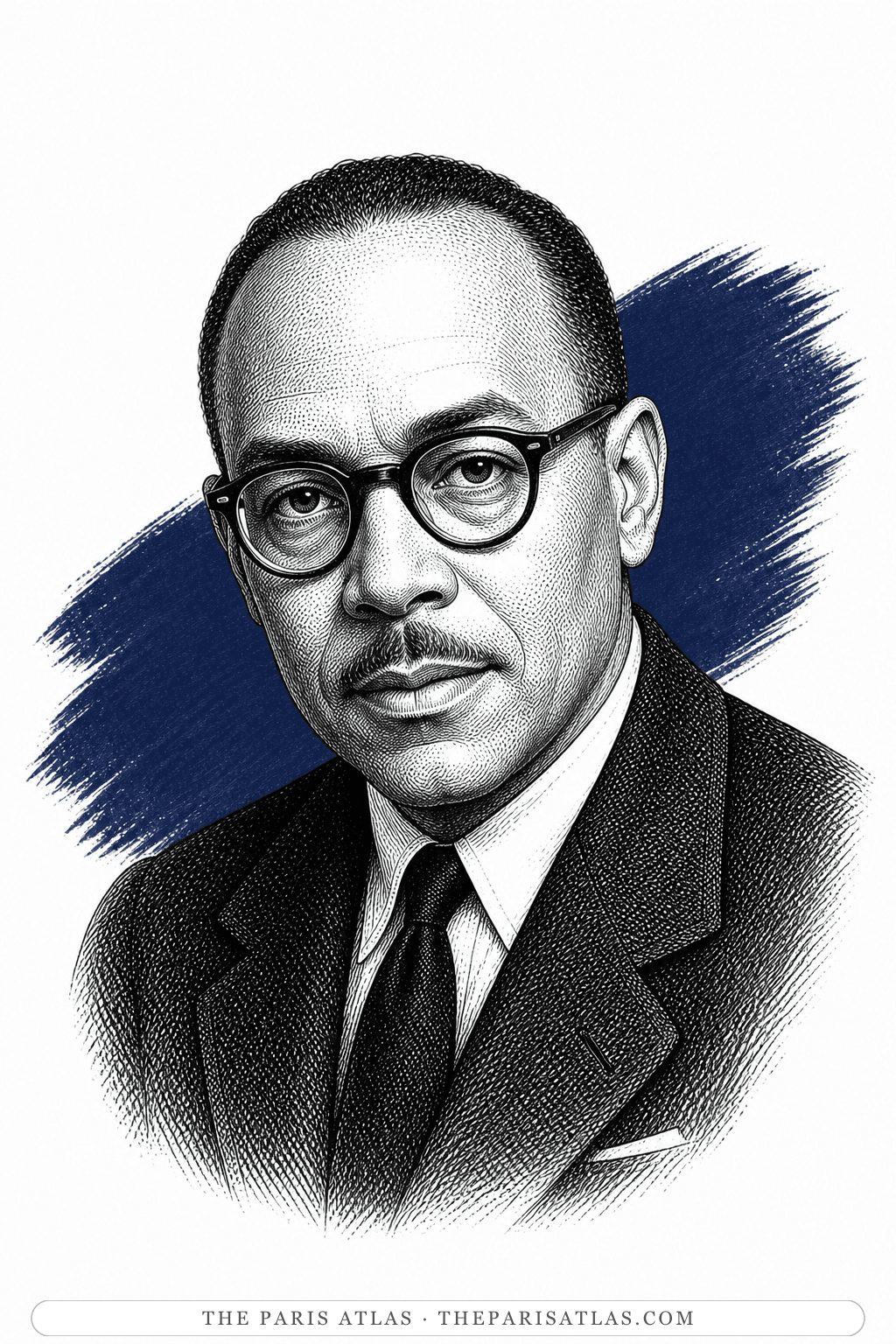
American poet at the center of the Harlem Renaissance. He spent most of 1924 in Montmartre, washing dishes at the Grand Duc nightclub, and told the story in his memoir The Big Sea.

In images

Details

Lived
1901–1967
Born
1 February 1901
Birthplace
Joplin, Missouri
Died
22 May 1967 · aged 66
Place of death
New York City
Nationality
American
Roles
PoetAuthorPlaywrightJournalist
Also known as
James Mercer Langston Hughes

About Langston Hughes

Langston Hughes was one of the most important American writers of the twentieth century and the poet most closely associated with the Harlem Renaissance. Over a career lasting more than four decades, he wrote poetry, novels, short stories, plays, essays, newspaper columns, children's books, song lyrics and two autobiographies. The enormous range of his work was held together by a remarkably consistent idea: ordinary Black life belonged at the center of American literature.

Hughes wrote about cooks, musicians, maids, laborers, railway porters, mothers, hustlers, tenants, lovers and people trying to make enough money to get through another week. He wrote about racism and poverty, but also dancing, jokes, desire, music, friendship and pleasure. Rather than treating blues and jazz merely as subjects, he absorbed their rhythms, repetitions, improvisations and changes of mood into the structure of his poetry, so that his writing could sound conversational and immediately understandable while doing sophisticated things with form, voice and rhythm.

Paris had him for most of one year. He arrived in February 1924, twenty-three years old, with seven dollars, and found work in Montmartre — first as a doorman, then as second cook at the Grand Duc nightclub on the rue Pigalle, where the title meant dishwasher. The club sat at the center of the district's Black American music scene, and the year fed directly into the poems of The Weary Blues. His memoir The Big Sea, published in 1940, gives the fullest firsthand account of that Montmartre anyone wrote.

He returned to Europe in 1937 as a war correspondent, covering Black volunteers in the Spanish Civil War for the Baltimore Afro-American. He spent his last decades in Harlem, at 20 East 127th Street, and died in New York in 1967. His ashes are interred beneath the floor of the Schomburg Center for Research in Black Culture, under a cosmogram named for the river poem that began his career.

A childhood shaped by books, separation and abolitionist history

James Mercer Langston Hughes was born in Joplin, Missouri, on February 1, 1901. For most of the twentieth century, biographies gave his birth year as 1902; later documentary research established the earlier date, which is now used by institutions including the National Park Service. His parents separated when he was very young. His father eventually made his life in Mexico, while his mother moved frequently in search of work, leaving Hughes for long periods with his maternal grandmother in Lawrence, Kansas.

His grandmother, Mary Sampson Patterson Leary Langston, gave him something more lasting than a stable address: a direct connection to the nineteenth-century struggle against slavery. Her first husband, Lewis Sheridan Leary, joined John Brown's armed attempt to spark a revolt against slavery at Harpers Ferry in 1859 and died from wounds received there. She later married Charles Henry Langston, another prominent abolitionist. Hughes grew up hearing family stories in which slavery, resistance and Black political struggle were not remote historical subjects but part of his own ancestry.

One family object became especially important to Hughes's understanding of that inheritance. His grandmother kept an old shawl associated with Lewis Leary and Harpers Ferry — in The Big Sea, Hughes wrote of the shawl "in which Sheridan Leary had been killed with John Brown at Harpers Ferry" — and Hughes remembered being covered with it while he slept. He donated it to the Ohio Historical Society in 1943 with an account of its history. Modern research has cast doubt on whether the shawl was literally worn during the raid, but there is no doubt that Hughes and his grandmother understood it as a physical link to Leary's sacrifice.

Books provided another kind of inheritance. Hughes later remembered his childhood as lonely, and reading became a refuge. After his grandmother's death he lived for a time with family friends and later rejoined his mother and stepfather. The family moved through Illinois before settling in Cleveland, where Hughes attended Central High School, edited school publications, and was elected class poet and editor of the yearbook.

  • Paul Laurence Dunbar, whose poems were the only ones Hughes liked as a child, demonstrated the literary possibilities of Black vernacular traditions.
  • Carl Sandburg — brought to him by a Central High English teacher — showed that modern poetry could use relatively plain American speech; Hughes began by trying to write like him.
  • Walt Whitman offered an expansive model for writing about America itself.
  • Claude McKay was part of the emerging Black modernist tradition Hughes was entering.
  • W. E. B. Du Bois's The Souls of Black Folk, Hughes wrote, "had stirred my youth"; at Central High, one of his teachers was the daughter of the novelist Charles W. Chesnutt, his fellow Clevelander.

Hughes would eventually combine these influences with something no literary mentor could give him: the music, speech and people he encountered in everyday Black life.

"The Negro Speaks of Rivers" and the beginning of a career

Hughes's first major poem came remarkably early. In 1921, while traveling by train to Mexico to spend time with his father, the twenty-year-old Hughes wrote "The Negro Speaks of Rivers." The poem imagines Black history through a sequence of great rivers — the Euphrates, Congo, Nile and Mississippi — and gave the young writer a voice that already seemed older than he was. The Crisis, the magazine of the NAACP, published it that June.

Later that year Hughes entered Columbia University in New York. Columbia did not become his intellectual home. Harlem did. Hughes left Columbia after a year, but his first encounter with Harlem was transformative: the neighborhood was becoming a center of Black publishing, music, theater and intellectual life, populated by writers, editors, performers and political thinkers whose work would soon be grouped under the name Harlem Renaissance. Hughes would eventually become one of its defining figures. Before that happened, he went to sea.

Africa, Europe and throwing the textbooks overboard

In June 1923 Hughes signed on as a mess boy aboard the S.S. Malone, a freighter bound for the west coast of Africa. Years later, when he began his autobiography The Big Sea, Hughes chose a theatrical image to describe this escape from the conventional future his father had imagined for him: as the ship left New York harbor, he threw his old Columbia textbooks overboard.

The voyage took him to West Africa. Another trip carried him to Europe. When his ship reached Rotterdam, Hughes left it and headed south by train, and the chapter ends at a border whose name he recorded with excitement: La Frontière! La France!

Paris in 1924: seven dollars and a dishwashing job

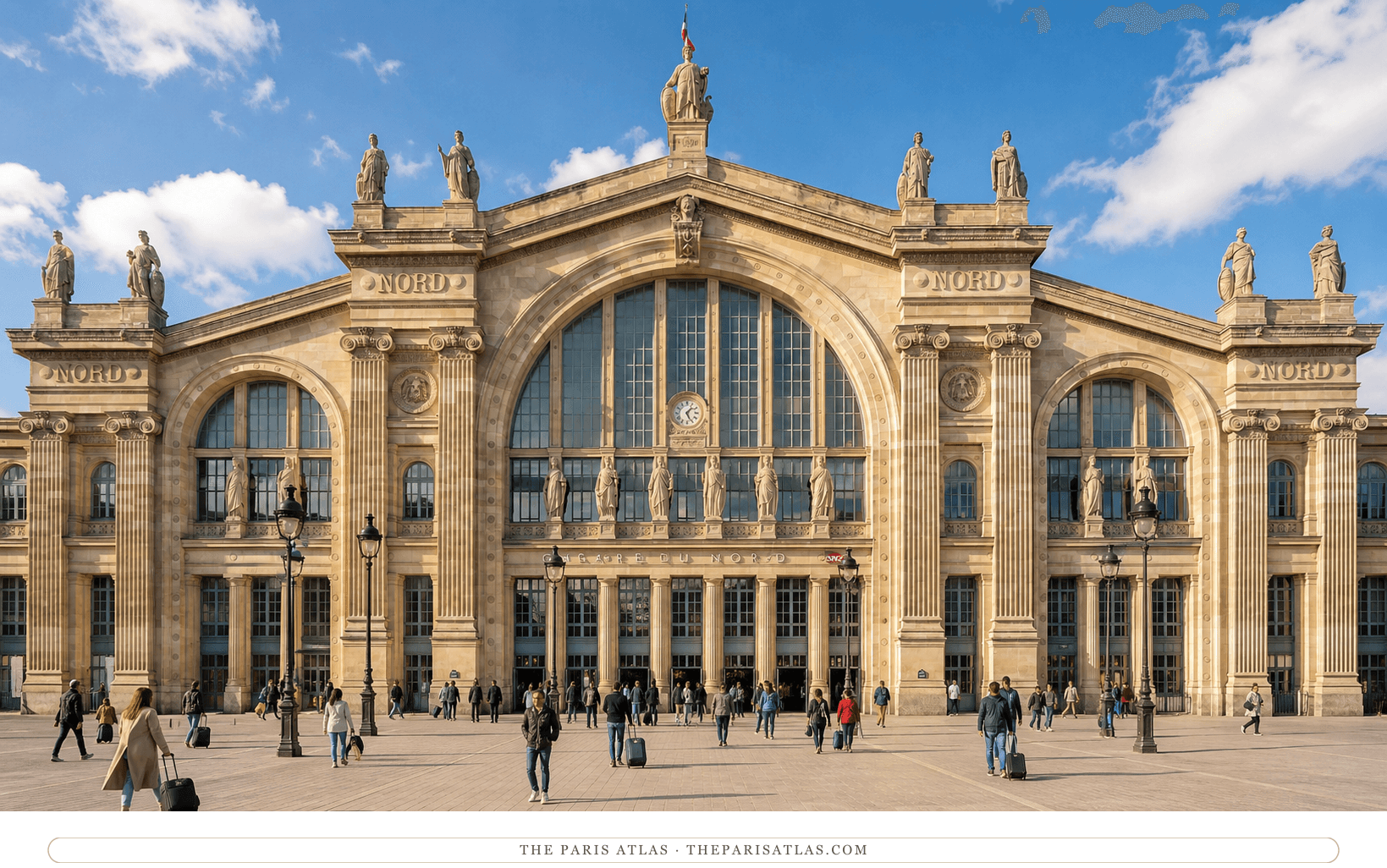
Hughes reached the Gare du Nord early one February morning in 1924. He was twenty-three years old, knew almost no one in Europe and, in The Big Sea's words, had "only seven dollars in my pockets." He soon made his way toward Montmartre and Pigalle, where Black American musicians had become an important part of Parisian nightlife after the First World War.

His first job was hardly glamorous: doorman at a small club on the rue Fontaine — the street where the much larger Zelli's drew the fashionable crowds — for five francs a night and dinner. Then he met Rayford Logan, an African American veteran living in Montmartre who had already seen Hughes's poetry in The Crisis. Logan told him that the Grand Duc, a nightclub on the rue Pigalle, needed a "second cook." Hughes took the job; the title turned out to mean dishwasher. He spent the rest of his Paris stay working under Bruce, the club's formidable one-eyed cook.

The position placed an unknown young poet inside one of the most interesting rooms in Black Paris. The Grand Duc's star was the Harlem singer Florence Embry Jones, known simply as Florence. When she left to establish her own club, her replacement was a short, freckled, red-haired American entertainer named Ada "Bricktop" Smith, who would become one of the most famous nightclub hostesses in interwar Paris. Hughes later remembered well-known writers and cultural figures among the Grand Duc's patrons, including Anita Loos, Robert McAlmon, Louis Aragon and Nancy Cunard. They should not be mistaken for personal friends of the dishwasher, but Hughes was watching a remarkable cultural world from behind the scenes.

His living arrangements were considerably less glamorous. In April he rented an attic room at 15 rue Nollet, near the place de Clichy, in a building so unpretentious that Hughes remembered its sign simply saying HOTEL. One of the most consequential visitors of his early career found him there: Alain Locke, the Howard University philosopher and critic, who admired Hughes's poems and wanted material for the special Survey Graphic issue that developed into The New Negro, the landmark 1925 anthology of the Harlem Renaissance. Later Hughes moved to another attic on the rue des Trois Frères, climbing farther into Montmartre. Hughes remembered the sophisticated philosopher, with his Oxford background and elegant manner, appearing at the young poet's cheap rue Nollet lodging just before that move.

The encounter summarizes Hughes's position in 1924: he was still washing dishes for a living, but the people building one of the most important Black literary movements in American history were already looking for him. Paris also placed Hughes inside the musical world that would become essential to his writing. Clubs, singers, pianists and late-night performances were part of his working environment rather than material observed from a respectable distance, and his first poetry collection, The Weary Blues, would emerge from precisely this meeting of literature and Black music.
Robbed in Italy and stranded in Genoa

When the Grand Duc closed for the summer in July 1924, Hughes traveled through Italy third class with two Italian waiters from the club. Alain Locke met him in Venice and showed him paintings by Titian and Tintoretto; Hughes soon tired of palaces and went exploring the back streets instead. On a crowded train through Italy, he fell asleep, and a pickpocket cut away the inside pocket containing his passport and all of his money.

Hughes got off the train in Genoa nearly destitute and remained stranded there for weeks, sleeping in a flophouse costing two lire a night while attempting to find a way home. The American consul could offer little beyond the possibility of signing aboard another ship, and eventually Hughes did exactly that. He worked his passage back across the Atlantic and docked at the tip of Manhattan on November 24, 1924. Ten months earlier he had entered Paris carrying seven dollars. He returned to America still poor — but with a great deal more to write about.

The busboy who had already been "discovered"

Langston Hughes photographed by Carl Van Vechten in 1936. Van Vechten had written the introduction to Hughes's first book, The Weary Blues, ten years earlier. (Carl Van Vechten, Library of Congress · Public domain)

The most famous story about Hughes's literary discovery happened the following year in Washington, D.C. Hughes was working as a busboy at the Wardman Park Hotel in December 1925 when the poet Vachel Lindsay came to dinner. Hughes quietly placed three poems beside Lindsay's plate. Lindsay read them publicly from the stage that evening, and by the next morning newspapers were reporting that the famous poet had discovered a talented "Negro busboy poet." Underwood & Underwood even photographed Hughes posing with a tray of dirty dishes.

It was irresistible publicity. It was also not really a discovery. Hughes had already been publishing for years, had won a poetry prize from Opportunity magazine that May, and had a book contract with Alfred A. Knopf; his first collection was already on its way toward publication. The Weary Blues appeared in 1926, with an introduction by Carl Van Vechten, and established Hughes as one of the major young writers of the Harlem Renaissance. His second collection, Fine Clothes to the Jew, followed in 1927. Hughes later studied at Lincoln University in Pennsylvania and completed his degree in 1929. His first novel, Not Without Laughter, followed in 1930 and won the Harmon Gold Medal. His fame was growing. So was his argument about what Black literature should be.

"The Negro Artist and the Racial Mountain"

In 1926 Hughes published "The Negro Artist and the Racial Mountain," one of the most important statements of artistic purpose produced during the Harlem Renaissance. The essay grew from a problem Hughes saw among Black artists: the pressure to make their work acceptable either to white cultural standards or to Black middle-class ideas of respectability. Hughes rejected both limitations.

He believed Black artists should be free to write about the full range of Black life without worrying whether white audiences approved and without feeling obligated to present Black people as uniformly admirable. Cabarets, churches, working people, respectable families, gamblers, blues singers, laughter, ugliness, beauty and contradiction could all belong in art. For Hughes, artistic freedom meant refusing shame. The essay helps explain why working-class people occupy so much of his writing: Hughes did not think a poet had to leave ordinary Black life behind in order to produce important literature. He believed that ordinary life was important literature's raw material.

Why Langston Hughes sounded different

Hughes's greatest innovation was not simply that he wrote poems about jazz and blues. He learned to make poems behave like music. The blues supplied structures based on repetition and variation: a phrase could return and return again, gathering a different emotional meaning each time; a final line could change the meaning of the lines preceding it; sadness and humor could coexist. Jazz offered another set of possibilities — syncopation, interruption, improvisation, changing voices and unexpected shifts in tempo.
Hughes combined these musical traditions with modernist techniques and the influence of writers such as Walt Whitman, Carl Sandburg, Paul Laurence Dunbar and Claude McKay. The result was a poetic voice that sounded unmistakably his own. The apparent simplicity of his language can be deceptive: his poems often rely on short lines, repetition, recognizable speech and memorable images, but the structure underneath can be complex.

Whitman was particularly important to Hughes's idea of America. Whitman had written in an expansive voice that attempted to contain the entire nation; Hughes inherited that ambition but questioned the optimism behind it. Again and again, his poems ask whether America's promises actually apply to everyone who lives there. That tension runs through much of his best-known work — "The Negro Speaks of Rivers," "Mother to Son," "I, Too," "The Weary Blues," "Dreams," "Let America Be America Again," "Theme for English B" and "Harlem." Together they reveal a writer who could simultaneously love the idea of America and refuse to pretend that the country had already become what it claimed to be.

Harlem Renaissance friendships — and one spectacular falling-out

Hughes's career grew inside a remarkable network of writers, artists, editors and patrons. Alain Locke encouraged him. Carl Van Vechten helped bring his poems to Knopf and remained his friend for decades. Hughes moved through the same cultural world as W. E. B. Du Bois, Countee Cullen, Jessie Redmon Fauset, Claude McKay, Wallace Thurman, Aaron Douglas, Nella Larsen and many other figures of the Harlem Renaissance.

One of his closest early literary friendships was with Zora Neale Hurston. They met at the Opportunity magazine literary awards, traveled together through the American South, took part in the experimental literary magazine Fire!!, exchanged affectionate letters and shared an interest in Black folklore, speech, comedy and everyday life. Then they tried to write a play together.

The project was Mule Bone, a comedy drawing on Black Southern folk culture. What began as a collaboration descended into a bitter dispute over authorship, money and the role of their typist and collaborator Louise Thompson, and the disagreement effectively ended the friendship. Hughes eventually wrote a bleakly funny note on his copy of the manuscript: the play had never been produced because its authors had fallen out. The note held for sixty years. Mule Bone was not professionally produced until 1991, long after both writers were dead.

A Harlem Renaissance writer who was rarely in one place

The phrase "Harlem Renaissance" can make Hughes's career sound geographically smaller than it actually was. He was intensely attached to Harlem, but he was also one of the most widely traveled American writers of his generation. In 1932 Hughes joined a group of Black Americans who traveled to the Soviet Union for a proposed film about racism in the United States. The film fell apart, but Hughes remained abroad and traveled extensively through the Soviet Union and Central Asia. The trip became part of his increasingly international understanding of race, colonialism, labor and politics.

His political writing became especially radical during the Depression. Hughes's poetry from the 1930s contains some of his sharpest criticism of capitalism, racism, war and economic inequality. The more inspirational Hughes familiar from school anthologies exists alongside this much more political writer; the Academy of American Poets notes that repeated anthologizing of his least controversial work has sometimes obscured the range of his politics.

Back to Paris — and then the Spanish Civil War

Hughes returned to Europe in 1937 under very different circumstances from the young man who had arrived with seven dollars thirteen years earlier. This time he was working as a correspondent for the Baltimore Afro-American, covering the Spanish Civil War and particularly the Black Americans serving with the Abraham Lincoln Brigade. He stopped in Paris in July and addressed the Second International Writers Congress — the speech was printed as "Too Much of Race" — before continuing to Spain. In Madrid he worked from the Alianza de Intelectuales and traveled with the Cuban poet Nicolás Guillén.

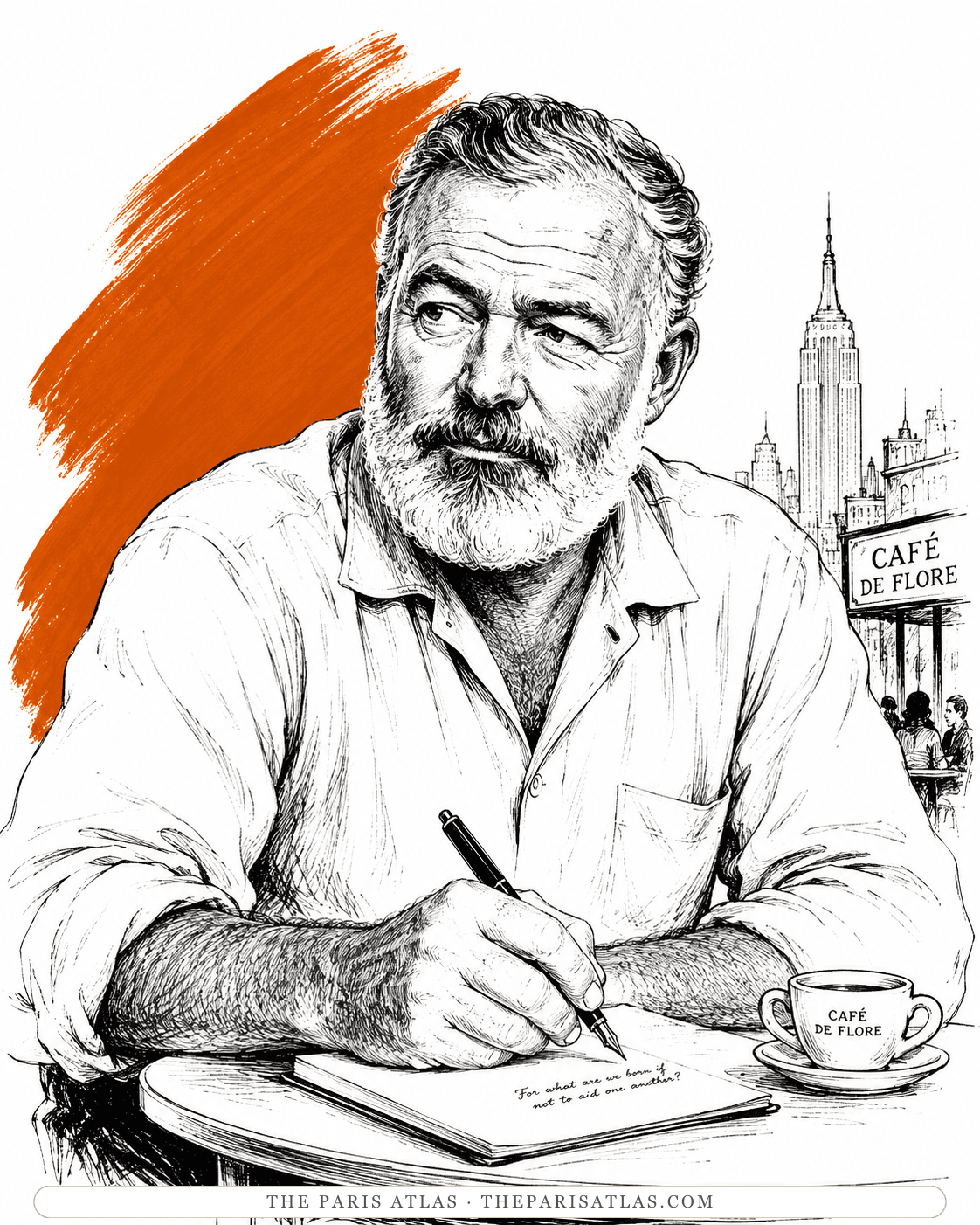
The war also brought Hughes into the same rooms as Ernest Hemingway, who was reporting from Spain for the North American Newspaper Alliance. Their encounter is not merely anecdotal: a 1937 photograph by Paco Mayo shows Hughes and Hemingway together in Madrid with Guillén and the Soviet journalist Mikhail Koltsov, and a print survives in the Hemingway Collection at the John F. Kennedy Presidential Library. Hughes later wrote about these travels in his second autobiography, I Wonder as I Wander.

Novels, stories, theater and the invention of Simple

Poetry made Hughes famous, but it never contained him. His first novel, Not Without Laughter, appeared in 1930; a Guggenheim Fellowship followed in 1935. His story collection The Ways of White Folks came in 1934, and he wrote plays, librettos, children's literature, essays, histories and autobiographical works. In 1940 he published The Big Sea, the first of his two autobiographies, whose scenes of ships, Paris nightclubs, Harlem writers and European misadventures contain some of the richest surviving firsthand accounts of his youth. His second autobiography, I Wonder as I Wander, appeared in 1956 and dealt with the increasingly international life that followed.

Hughes also became an important newspaper columnist. In his weekly Chicago Defender column, which ran from 1942 to 1962, he developed a recurring Harlem character named Jesse B. Semple, better known simply as Simple. Through Simple's conversations, complaints and comic observations, Hughes could talk about segregation, work, money, relationships, politics and the absurdities of American racial life in a voice that was funny precisely because it was so observant. The Simple pieces were eventually collected into books, and they demonstrate an aspect of Hughes that disappears when he is remembered only as a solemn poet of racial struggle: he was extremely funny.

Politics and the McCarthy years

Hughes's politics eventually brought consequences. His travels in the Soviet Union, left-wing associations and radical writing from the 1930s attracted attention during the anti-Communist investigations of the early Cold War. In 1953 Hughes was called before Senator Joseph McCarthy's Permanent Subcommittee on Investigations and questioned about Communist influence in his work. The closed-door interrogation pitted him against the subcommittee's chief counsel, Roy Cohn; the transcripts were made public only fifty years later, with other McCarthy-era Senate records.

The episode complicates any attempt to turn Hughes into a simple political symbol. His positions evolved, he made compromises, and his relationship to the American left changed considerably over the course of his life. What remained much more consistent was the question at the center of his writing: who was permitted to participate fully in the American promise?

The dream deferred

Langston Hughes photographed by Gordon Parks in 1943 for the Office of War Information. Parks was then the OWI's first Black staff photographer. (Gordon Parks, Farm Security Administration/Office of War Information collection, Library of Congress · Public domain)

One of Hughes's greatest later achievements was Montage of a Dream Deferred, published in 1951. The collection used the rapidly shifting voices and rhythms of bebop to portray postwar Harlem, showing that his experimentation with Black music had not ended with the blues poetry of his twenties: as Black music changed, his poetry changed with it. Its most famous individual poem became "Harlem," centered on the question of what happens when a dream is repeatedly postponed.

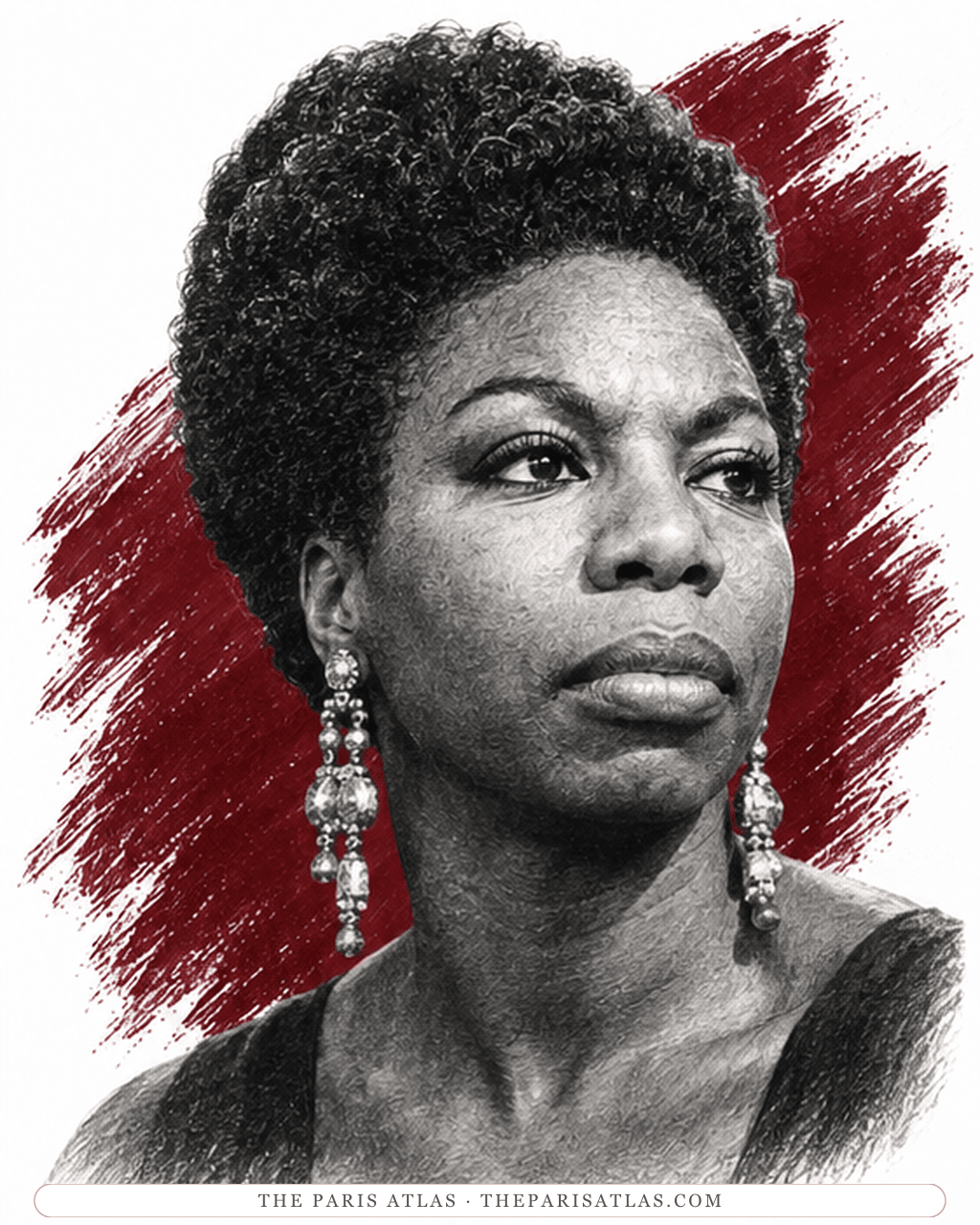
That short poem traveled far beyond Hughes's own work. Lorraine Hansberry took the title of her play A Raisin in the Sun from it. In 1961 Hansberry, Hughes and James Baldwin appeared together on a WBAI radio discussion about the Black writer in America; by then Hughes had lived long enough to sit beside a generation of writers whose careers belonged to the emerging civil-rights era rather than the Harlem Renaissance of his youth. Near the end of his life he formed another memorable artistic connection: Hughes sent Nina Simone the poem "The Backlash Blues," and Simone set his words to music and recorded the song in 1967, the year Hughes died. The poet who had spent his career bringing Black music onto the printed page had, in a sense, completed the circle. His words went back into song.

His private life

Hughes never married and had no children. For someone who published two autobiographies and spent much of his adult life in public, he revealed remarkably little about his intimate relationships, and his sexuality has consequently become the subject of substantial scholarly debate. Later writers and historians have interpreted Hughes as gay, and queer literary history has claimed him as an important figure. At the same time, Hughes himself never publicly defined his sexuality or spoke openly about his intimate relationships; the Smithsonian's National Museum of African American History and Culture notes that Hughes was among the influential Harlem Renaissance figures who never spoke publicly about their intimate lives, with later conclusions drawn from correspondence, unpublished writings and the accounts of contemporaries.

The careful conclusion is not that the question is irrelevant, nor that it has been definitively solved. Hughes's private life was private, even by the standards of a man who wrote extensively about himself.

The house in Harlem

For all his wandering, Hughes eventually became deeply rooted in Harlem. From 1947 until his death in 1967, he lived and worked on the top floor of a rowhouse at 20 East 127th Street. There he wrote important later works including Montage of a Dream Deferred and I Wonder as I Wander. The house was designated a New York City landmark in 1981, and the block became known as Langston Hughes Place.

His career by then stretched across extraordinary changes in American history. Hughes had begun publishing when the Harlem Renaissance had barely started. He lived through the Depression, the rise of fascism, the Spanish Civil War, the Second World War, McCarthyism and the modern civil-rights movement. He had watched jazz develop into new forms, watched younger Black writers challenge assumptions his own generation had fought against, and seen poems he had written decades earlier enter the American literary canon. He never really stopped working.

Death and the rivers

Langston Hughes died in New York on May 22, 1967, at the age of sixty-six, from complications following surgery for prostate cancer. His final memorial returned to the image with which his literary career had begun: his ashes were interred beneath the floor of the Schomburg Center for Research in Black Culture in Harlem, under a cosmogram called Rivers, named for the river imagery of "The Negro Speaks of Rivers."

It is an unusually fitting memorial. The young Hughes had imagined history flowing through the Euphrates, Congo, Nile and Mississippi before he himself had seen much of the world. He then spent the rest of his life moving through it — Mexico, Africa, Paris, Italy, the Soviet Union, Central Asia, Spain, Harlem — before finally coming to rest only a few blocks from his last home.

Why Langston Hughes matters

Hughes helped permanently enlarge the idea of what American literature could sound like. He showed that blues could provide not merely a subject for poetry but a structure. He demonstrated that jazz rhythms, Black vernacular speech, jokes, repetition and the conversations of ordinary people could coexist with serious literary ambition. He also challenged one of the most persistent pressures placed on marginalized artists: the demand that they represent their communities respectably. Hughes wanted something more difficult than respectability. He wanted freedom — for Black characters to be heroic, foolish, angry, poor, joyous, tired, funny, ambitious, contradictory and human; for cabarets to be written about as confidently as churches; for the life of a musician, maid or laborer to be as worthy of literature as the subjects traditionally considered poetic.

His influence reaches far beyond the Harlem Renaissance. The Academy of American Poets traces his impact through later writers including Gwendolyn Brooks, Rita Dove, Yusef Komunyakaa and Kevin Young, and his combination of literary writing with Black musical traditions helped establish a lineage that runs through later jazz poetry, performance poetry and spoken-word traditions.

But Hughes's longevity may come from something simpler. He rarely wrote as though literature were a private code that readers had to solve before they were allowed inside. His language invites people in, and only after entering do they discover how much is happening beneath it: blues structure, political criticism, racial history, irony, modernist technique, humor, and an argument with America that continued throughout his life. Hughes could write about America with affection without flattering it. He could write about hardship without denying pleasure. He could write politically without abandoning music. And he could take the everyday language of Black Americans — a language much of the literary establishment had treated as something outside serious art — and make it impossible to leave out of the story of American literature.
Langston Hughes, illustrated

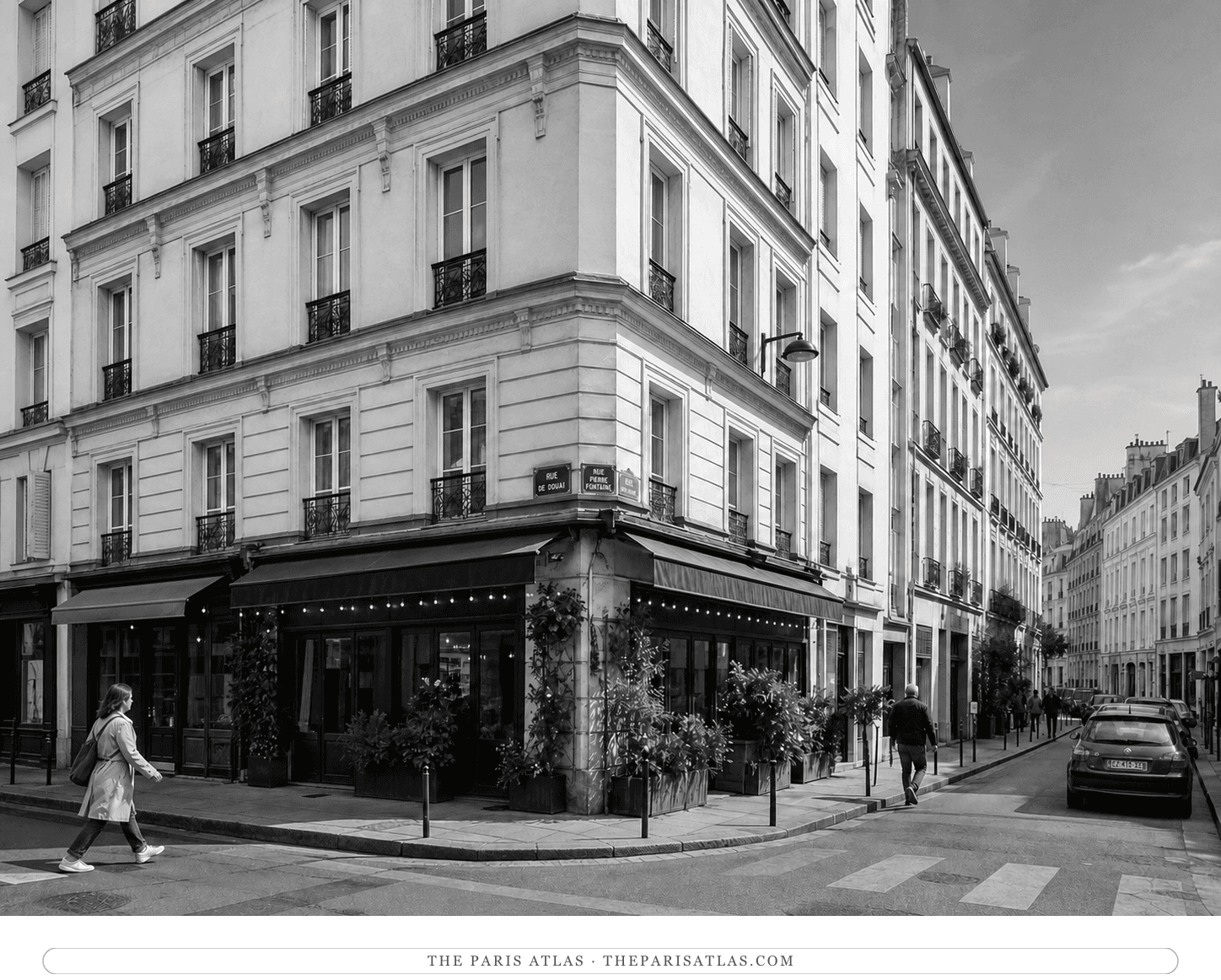
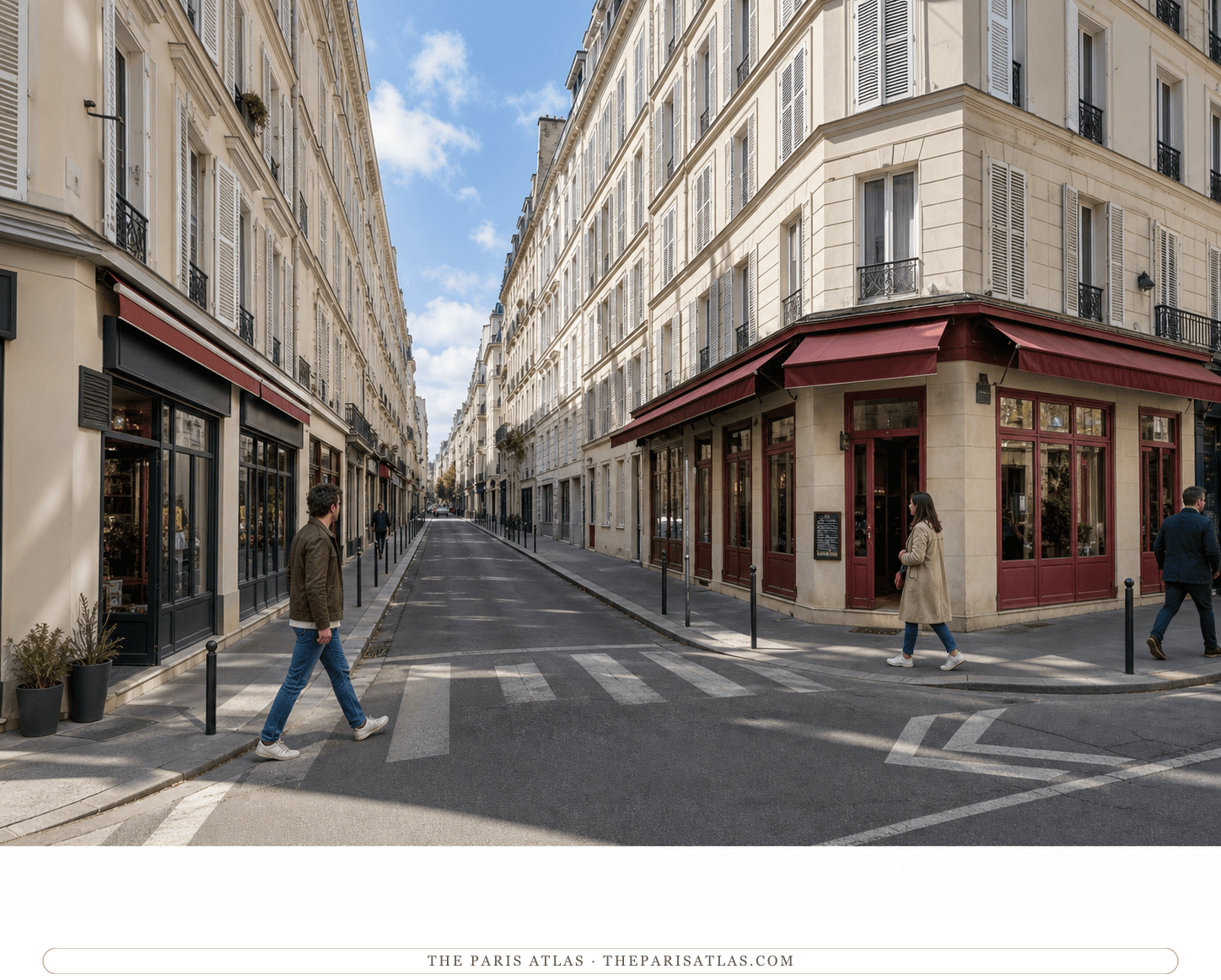
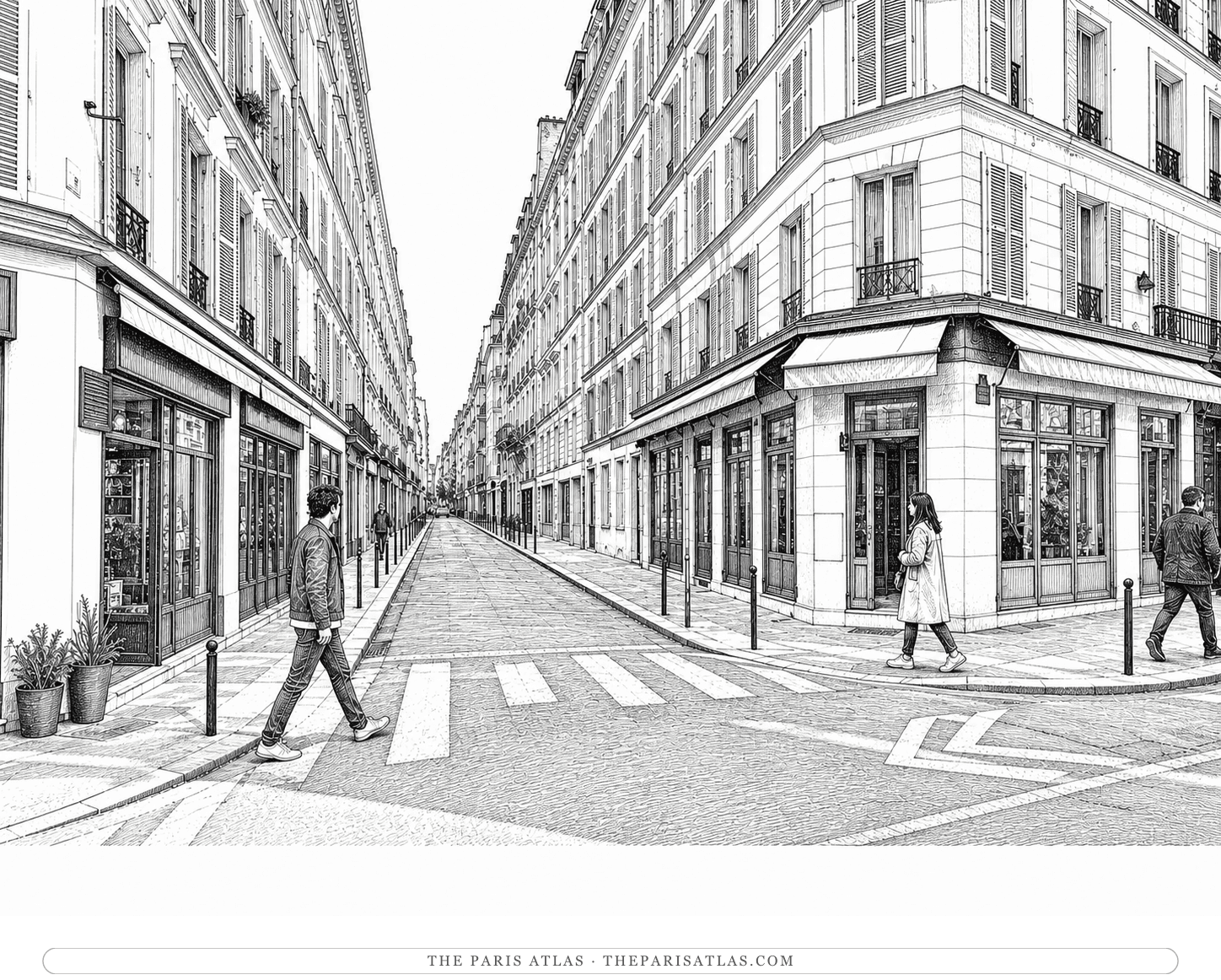
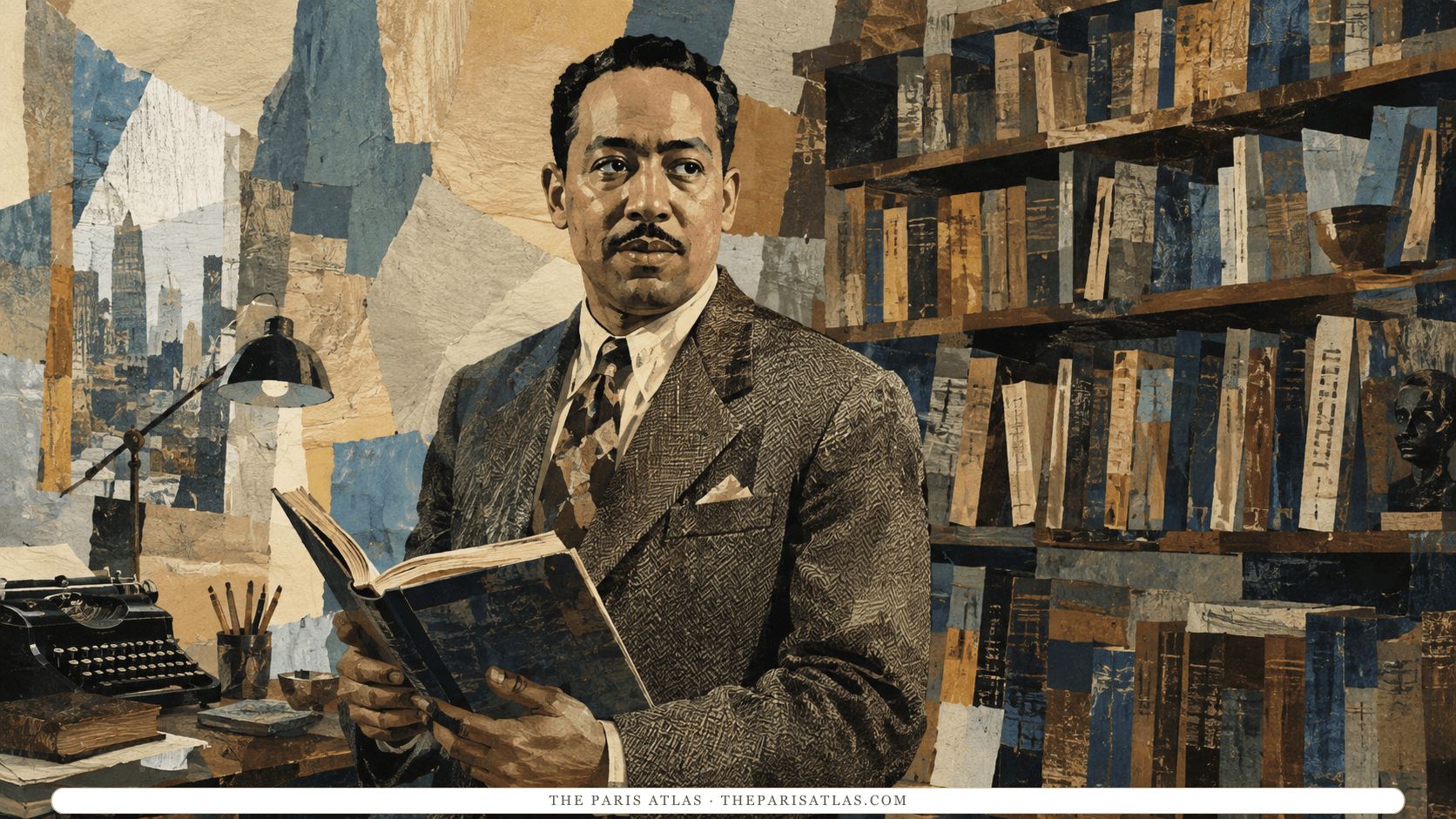
Five studies of Hughes drawn for the Atlas, in five manners. These are original illustrations, not photographs of him.

The night shift: the Defender columns and the poems were written against windows like these.
He read his poems to audiences all his life — the work was written to be heard.
A café table, a notebook, a coffee — the working posture of the traveling years.
At home in Harlem, in the armchair years of East 127th Street.
Among the books: poet, novelist, playwright, columnist, editor and anthologist.
Illustrations — The Paris Atlas

Life events

  1. 1901

    Born James Mercer Langston Hughes in Joplin, Missouri, on February 1. Most references said 1902 for over a century; newspaper notices found in 2018 confirmed 1901.

  2. 1921

    Writes "The Negro Speaks of Rivers" on the train to Mexico; The Crisis publishes it in June. Enrolls at Columbia University in September.

  3. 1923

    Sails as mess boy on the S.S. Malone for West Africa, throwing his Columbia textbooks overboard on the way out of New York harbor.

  4. 1924

    Arrives in Paris in February with seven dollars. Washes dishes at the Grand Duc nightclub on the rue Pigalle until July; robbed in Italy; works his way home, docking in New York on November 24.

  5. 1925

    Wins Opportunity magazine's poetry prize in May. In December, the Vachel Lindsay "busboy poet" story breaks from the Wardman Park Hotel in Washington.

  6. 1926

    The Weary Blues published by Alfred A. Knopf, with an introduction by Carl Van Vechten, and "The Negro Artist and the Racial Mountain" states his artistic creed. Enrolls at Lincoln University, Pennsylvania.

  7. 1930

    Not Without Laughter, his first novel, wins the Harmon Gold Medal.

  8. 1932

    Travels to Moscow with a group of Black Americans for a film about American racism that is never made; stays abroad for months, traveling through the Soviet Union and Central Asia.

  9. 1936

    Photographed by Carl Van Vechten, who had introduced The Weary Blues a decade earlier.

    Langston Hughes photographed by Carl Van Vechten in 1936. Van Vechten had written the introduction to Hughes's first book, The Weary Blues, ten years earlier. (Carl Van Vechten, Library of Congress)
  10. 1937

    Covers the Spanish Civil War from Madrid for the Baltimore Afro-American; addresses the writers' congress in Paris in July; photographed with Ernest Hemingway in Madrid.

  11. 1940

    The Big Sea, his first autobiography, publishes the fullest firsthand account of Black Montmartre in 1924.

  12. 1943

    Photographed by Gordon Parks for the Office of War Information. The Chicago Defender "Simple" columns, begun the year before, run until 1962.

    Langston Hughes photographed by Gordon Parks in 1943 for the Office of War Information. Parks was then the OWI's first Black staff photographer. (Gordon Parks, Farm Security Administration/Office of War Information collection, Library of Congress)
  13. 1951

    Montage of a Dream Deferred contains "Harlem," the poem Lorraine Hansberry later answers with the title of A Raisin in the Sun.

  14. 1953

    Questioned in closed session by Senator Joseph McCarthy's Permanent Subcommittee on Investigations about Communist influence in his writing; the transcripts stay sealed for fifty years.

  15. 1961

    Sits on the WBAI radio panel on the Black writer in America with James Baldwin and Lorraine Hansberry.

  16. 1967

    Nina Simone records his poem "The Backlash Blues." Hughes dies in New York on May 22, of complications following prostate surgery; his ashes are interred at the Schomburg Center.

Langston Hughes quotes

Verbatim, as recorded by the witnesses of the era — sources on every quotation.

Hold fast to dreams / For if dreams die / Life is a broken-winged bird / That cannot fly.
Langston Hughes, "Dreams"
What happens to a dream deferred? / Does it dry up / like a raisin in the sun?
Langston Hughes, "Harlem", from Montage of a Dream Deferred (1951)
We younger Negro artists who create now intend to express our individual dark-skinned selves without fear or shame. If white people are pleased we are glad. If they are not, it doesn't matter. We know we are beautiful. And ugly too.
Langston Hughes, "The Negro Artist and the Racial Mountain", The Nation, 1926
All 22 Langston Hughes quotes

Selected works

Cataloged from the holding institutions' records. Reproductions appear only where the rights are verified.

People they knew

Documented connections — every one carries its source.

Illustrated portrait of Nina Simone

Nina Simone

  • Singer
  • Musician

Collaborated with · 1966–1967

Shortly before his death Hughes sent Simone the poem "The Backlash Blues"; she set it to music and recorded it on Nina Simone Sings the Blues (1967). Their 1960s correspondence survives, and Simone's 1966 letter to Hughes is held at the Beinecke Library.

Nina Simone Writes an Admiring Letter to Langston Hughes (2020); The Backlash Blues: Nina Simone and Langston Hughes, a Digital Archive

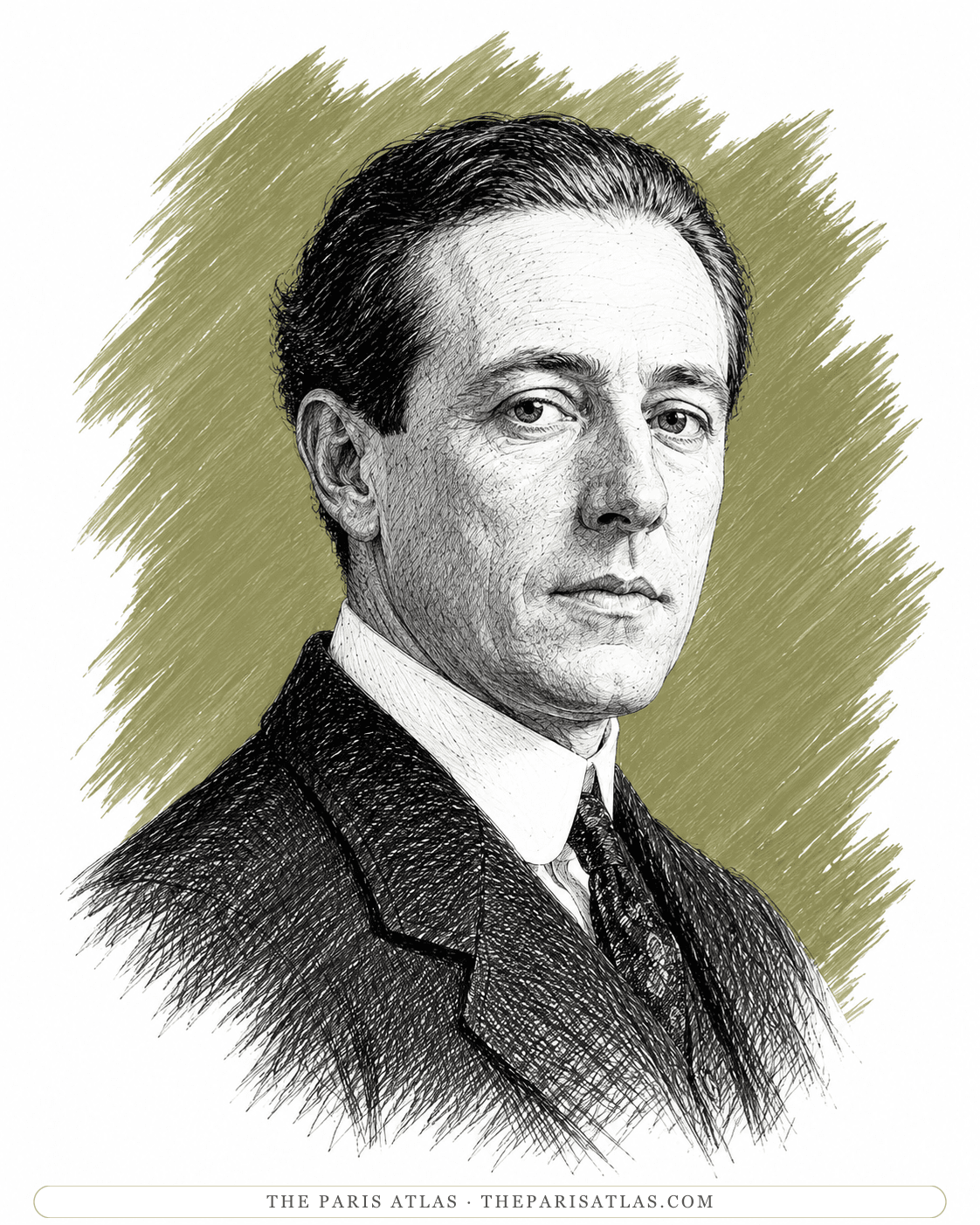
Illustrated portrait of Ernest Hemingway

Ernest Hemingway

  • Author
  • Journalist

Met · 1937

Both covered the Spanish Civil War from Madrid in 1937 — Hemingway for the North American Newspaper Alliance, Hughes for the Baltimore Afro-American. A photograph by Paco Mayo, Madrid 1937, shows the two together with Mikhail Koltsov and Nicolás Guillén; the print is in the Hemingway Collection at the John F. Kennedy Presidential Library. Hughes's account of his Madrid months is in I Wonder as I Wander (1956).

The Spanish Civil War: Hughes and Hemingway (2012), Reproduces and identifies the Paco Mayo photograph; read 2026-08-11

Illustrated portrait of Albert C. Barnes

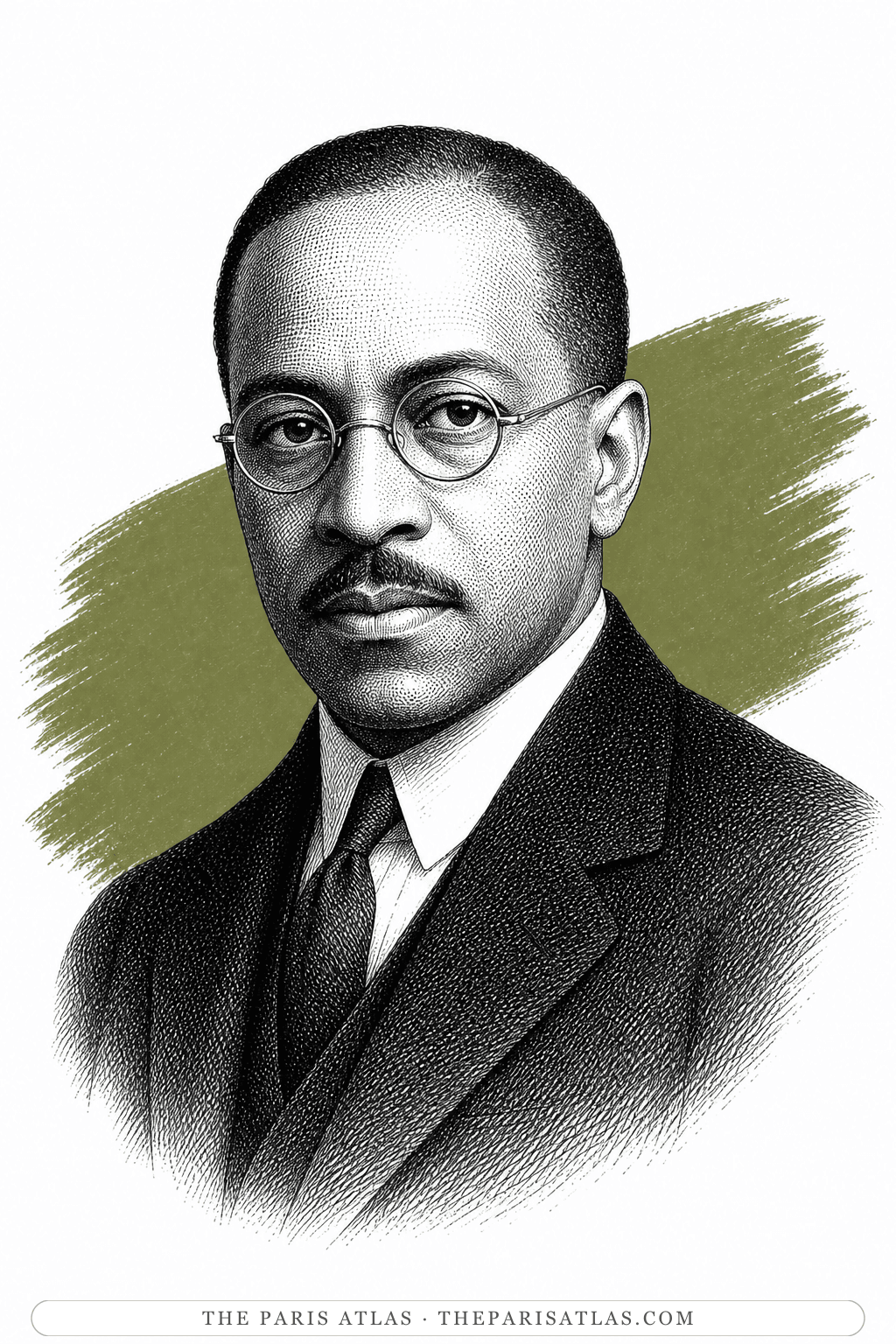
Albert C. Barnes

  • Collector

Met · 1924

Alain Locke arranged the introduction. Hughes joined Barnes and Thomas Monroe for lunch at the Café Royale near the Louvre in 1924.

Langston Hughes, The Big Sea (1940), Distinguished Visitor chapter

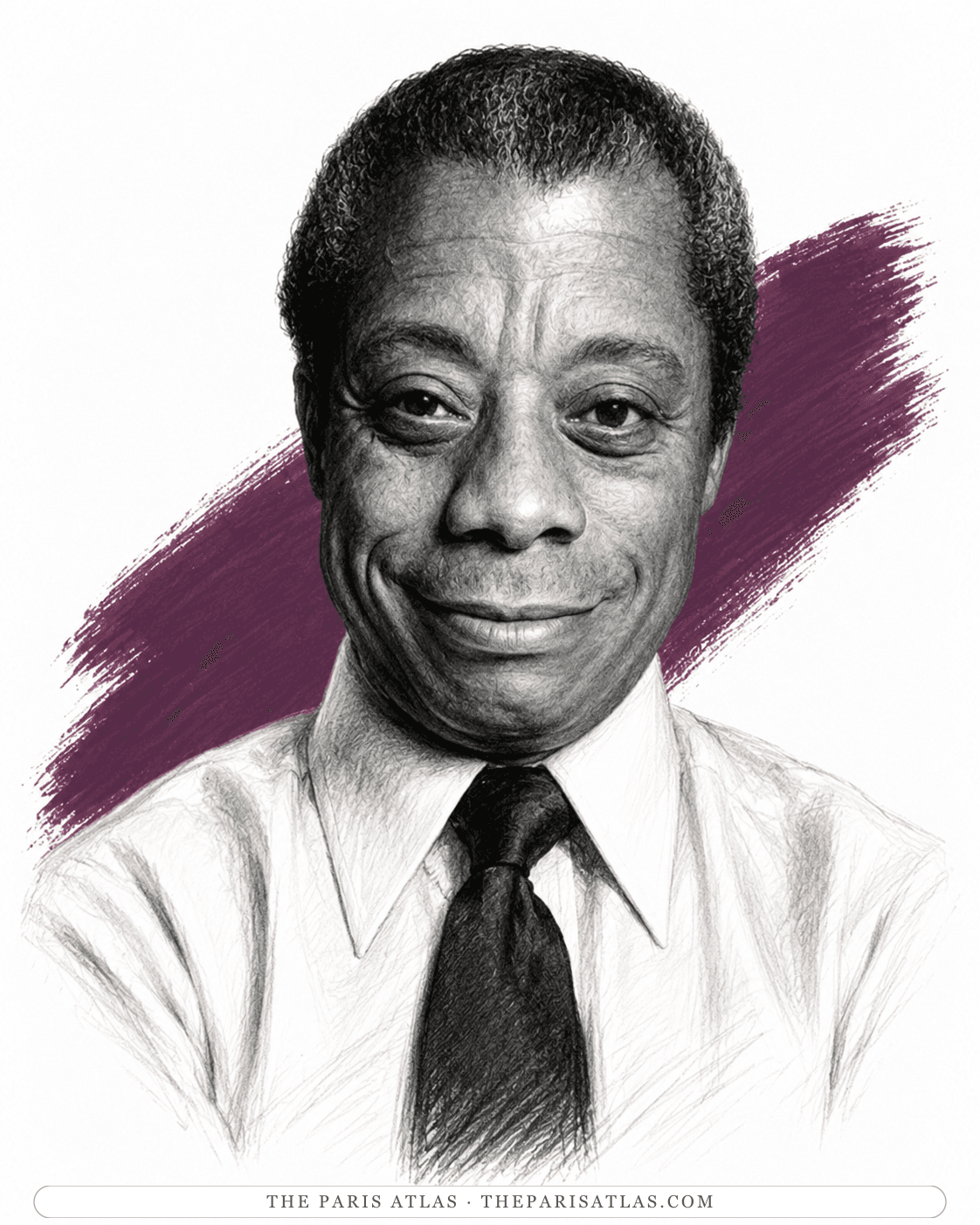
Illustrated portrait of James Baldwin

James Baldwin

  • Author
  • Playwright
  • Critic
  • +1

Met · 1961

In January 1961 the two sat on the same WBAI radio panel on the Black writer in America, alongside Lorraine Hansberry, Alfred Kazin, and Emile Capouya, with Nat Hentoff moderating. The recording survives in the American Archive of Public Broadcasting.

The Negro in American Culture; No. 3; The Negro Writer In America (WBAI, 1961) (1961)

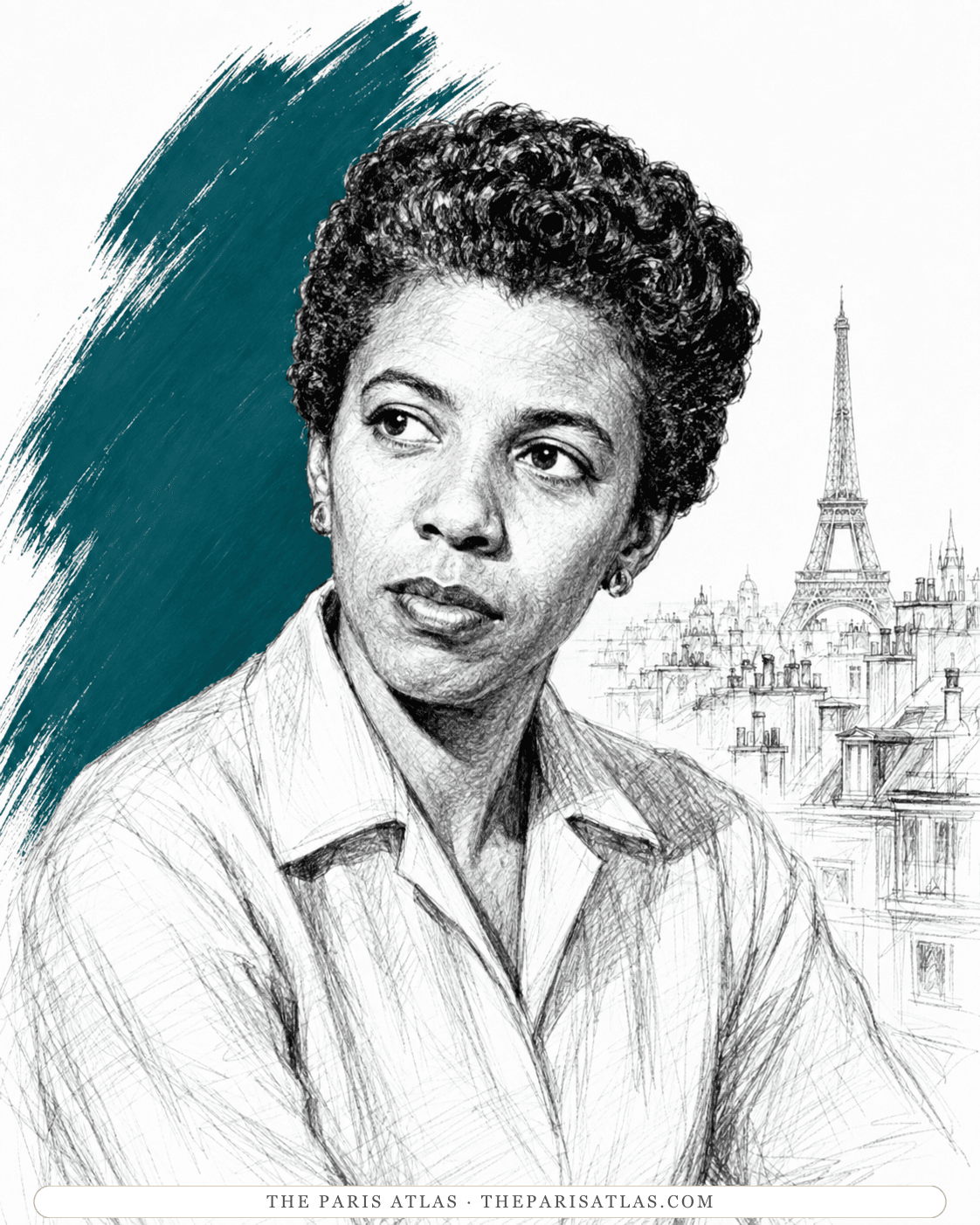
Illustrated portrait of Lorraine Hansberry

Lorraine Hansberry

  • Playwright

Met · 1961

Both sat on the January 1961 WBAI radio panel on the Black writer in America, with James Baldwin, Alfred Kazin, and Emile Capouya. The recording survives in the American Archive of Public Broadcasting.

The Negro in American Culture; No. 3; The Negro Writer In America (WBAI, 1961) (1961)

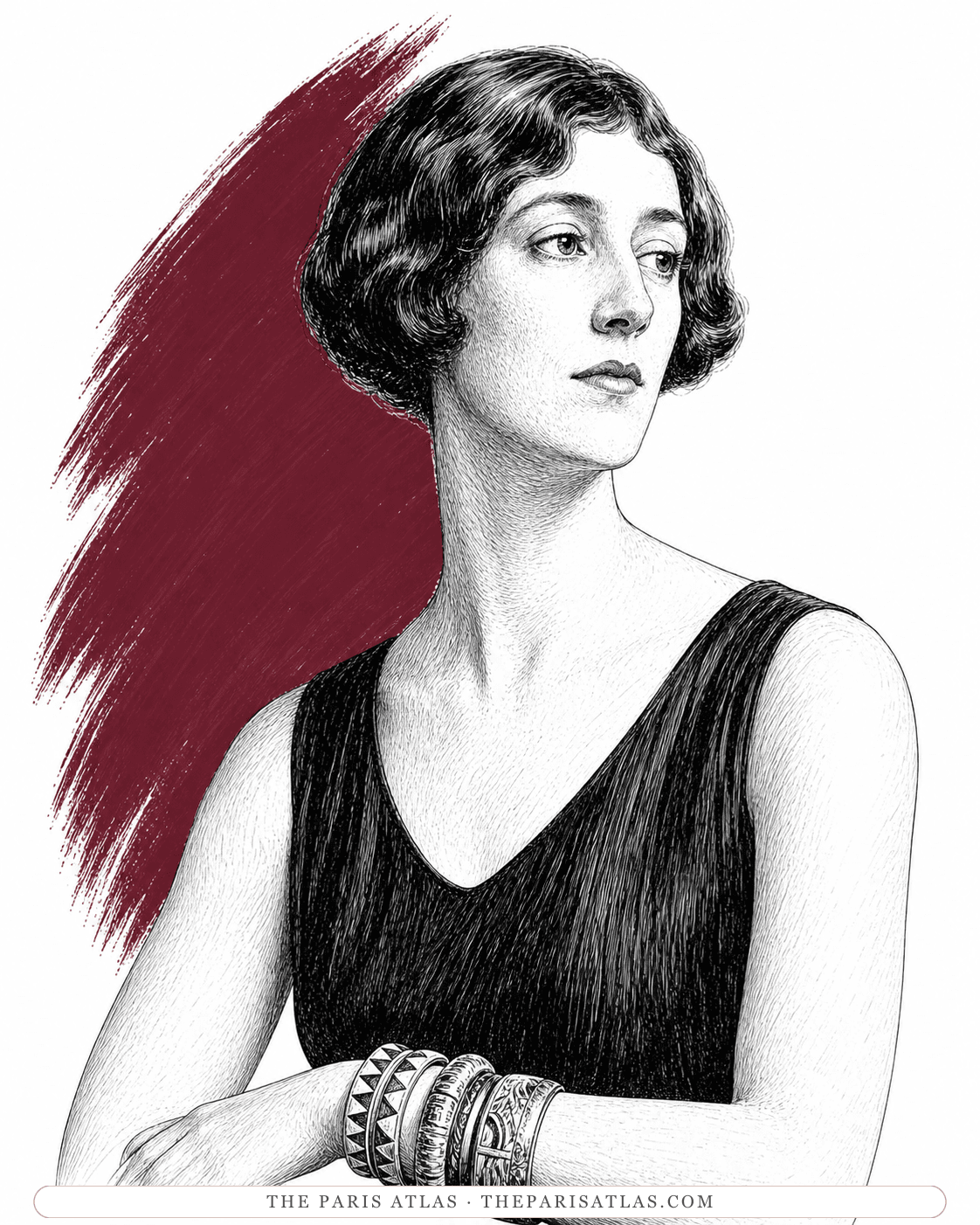
Illustrated portrait of Nancy Cunard

Nancy Cunard

  • Poet
  • Publisher
  • Printer
  • +4

Collaborated with · 1931–1934

Hughes was among the contributors to Negro: An Anthology, which Cunard compiled between 1931 and 1933 and published in 1934. Their correspondence is in the Cunard collection at the Harry Ransom Center, which names him in its inventory of the letters.

Cunard, Nancy. Negro: Anthology 1931–1933, first edition (Nancy Cunard at Wishart and Co., 1934) — catalogue record; Nancy Cunard: An Inventory of Her Collection (MS-01010)

Illustrated portrait of Richard Wright

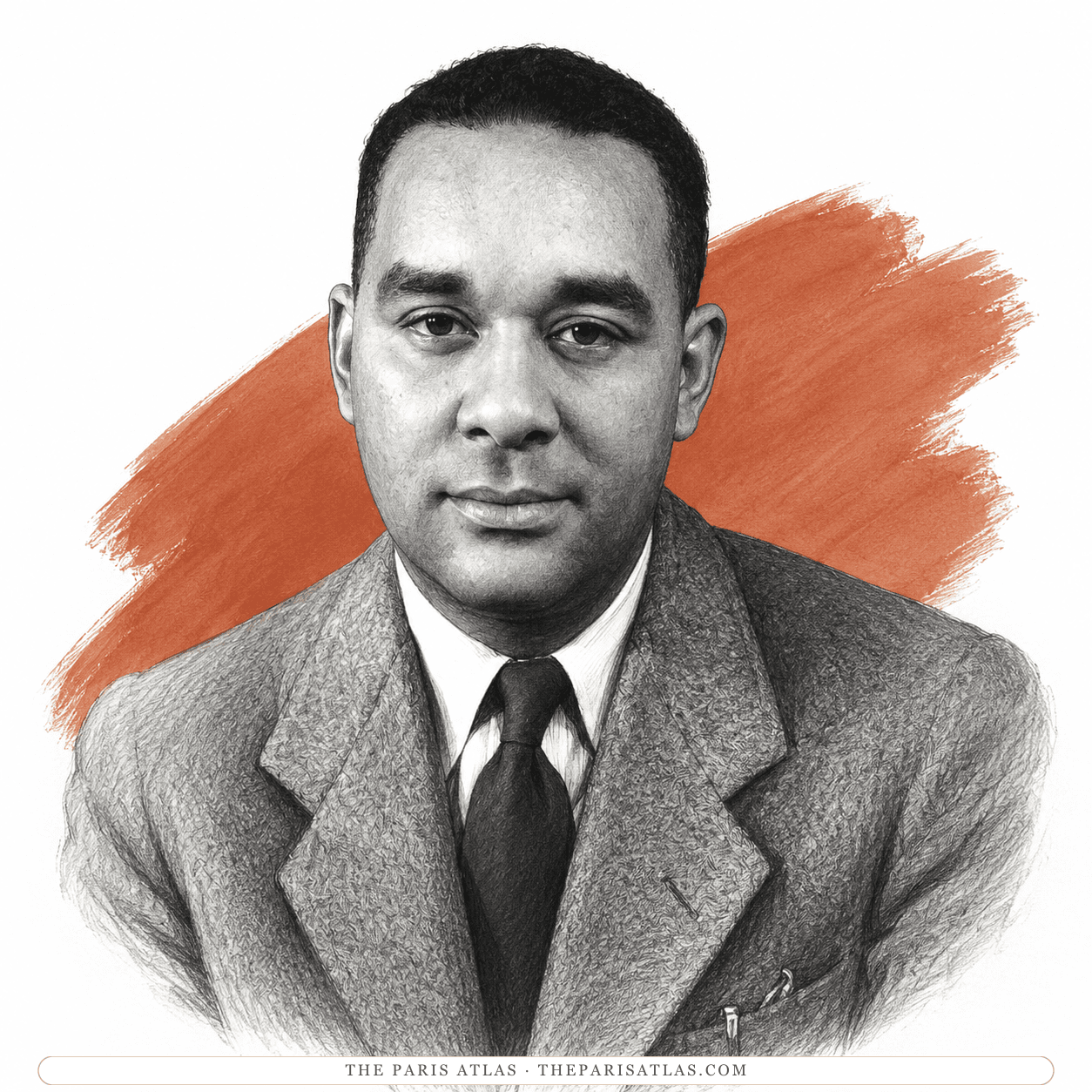
Richard Wright

  • Author
  • Poet
  • Journalist

Collaborated with · 1939

The two co-wrote the poem "Red Clay Blues", published in New Masses on 1 August 1939 over both names. The magazine's contents page credits it to Richard Wright and Langston Hughes, in that order.

Richard Wright and Langston Hughes, Red Clay Blues (1939)

Illustrated portrait of Zora Neale Hurston

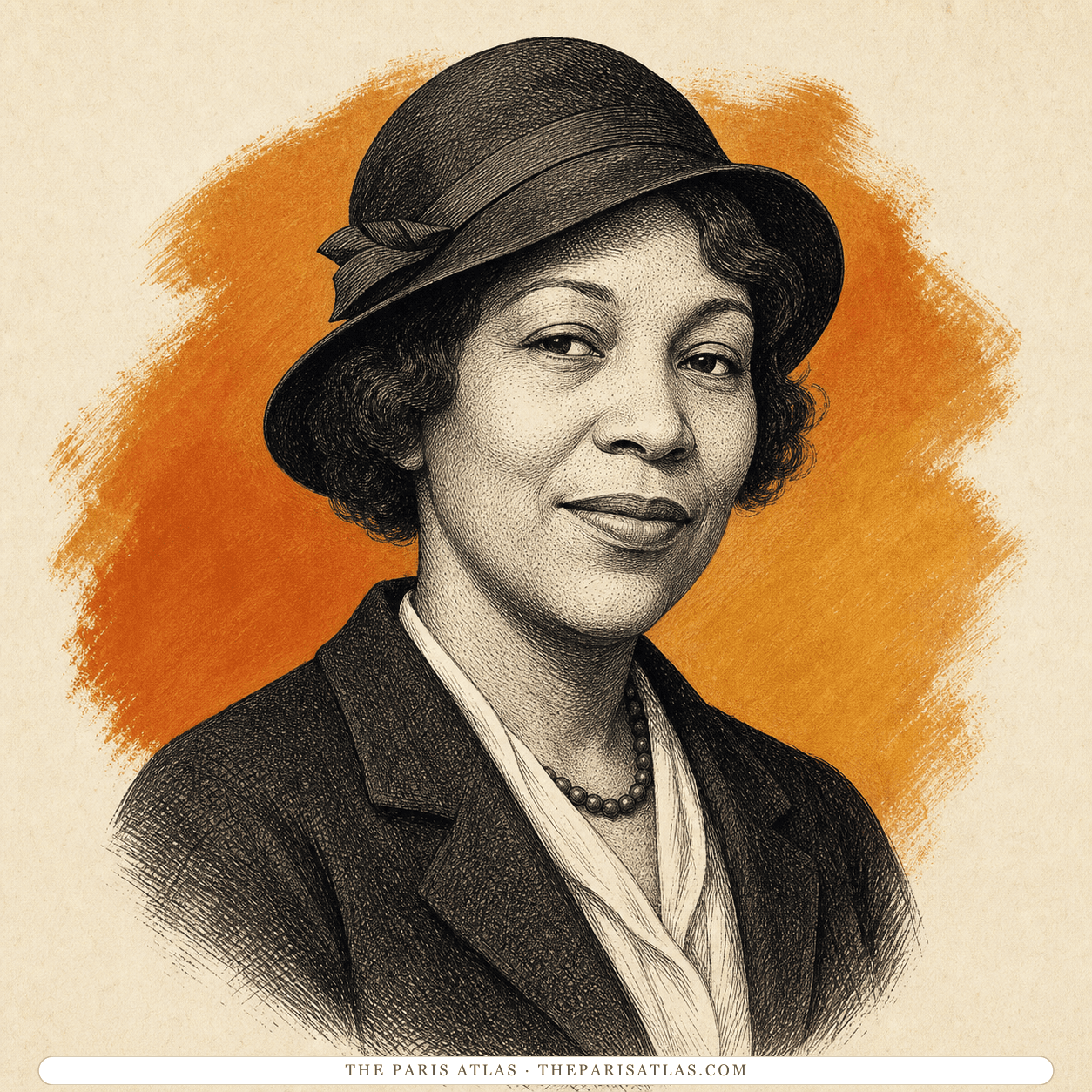
Zora Neale Hurston

  • Author
  • Playwright
  • Anthropologist
  • +1

Collaborated with · 1930–1931

Hurston and Hughes wrote the folk comedy Mule Bone together. An authorship and royalties dispute ended both the project and their friendship; the play was not professionally produced until 1991.

Kayla Chenault, A Bone to Pick with the Writing and Fallout of Mule Bone

Illustrated portrait of Alain Locke

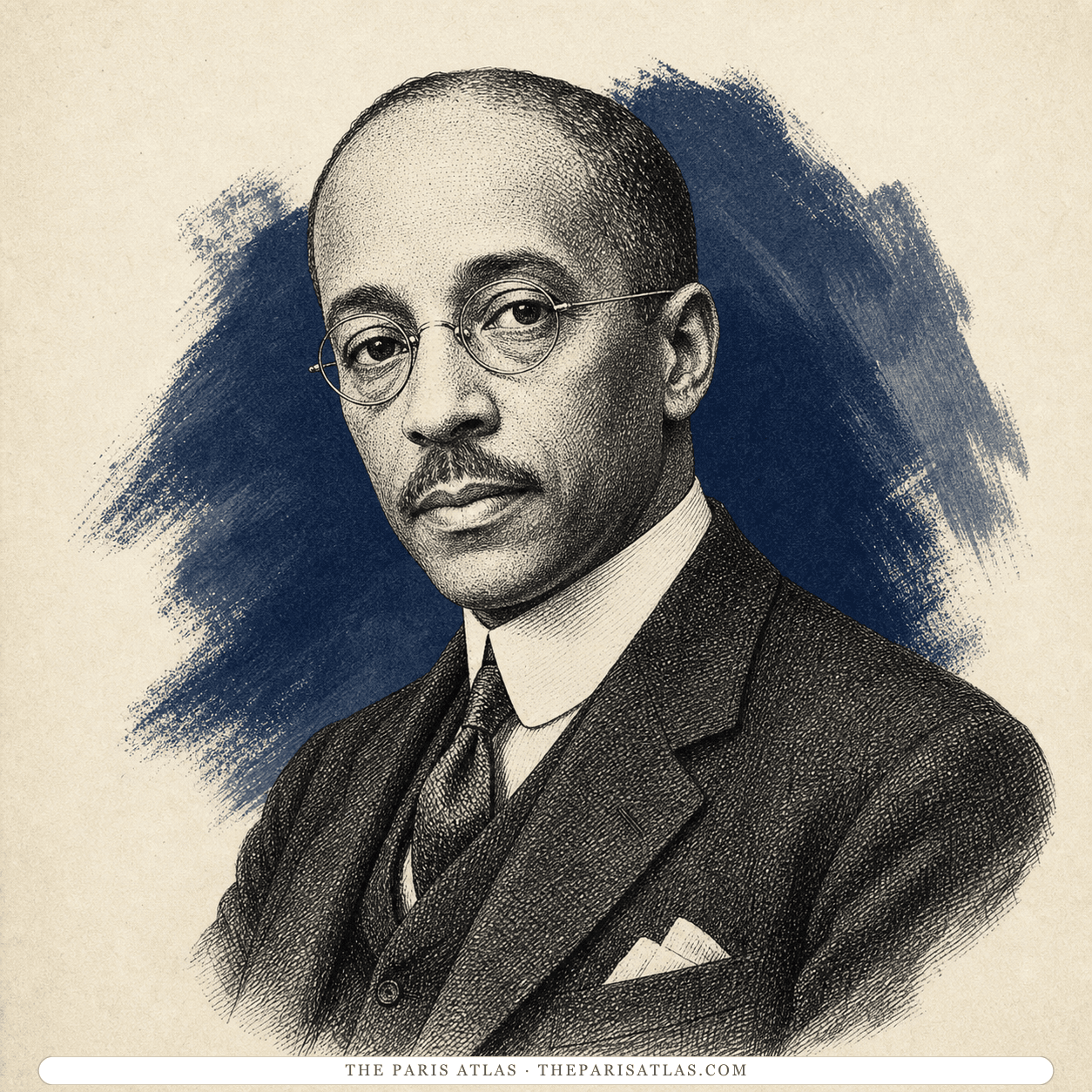
Alain Locke

  • Philosopher
  • Educator
  • Editor
  • +2

Met · 1924

Locke sought Hughes out in Paris in 1924, visited the young poet's Montmartre attic, recruited poems for the project that became The New Negro, and became an important early mentor.

Langston Hughes, The Big Sea (1940); Alain Locke

Movements

The artistic and literary currents this life ran through.

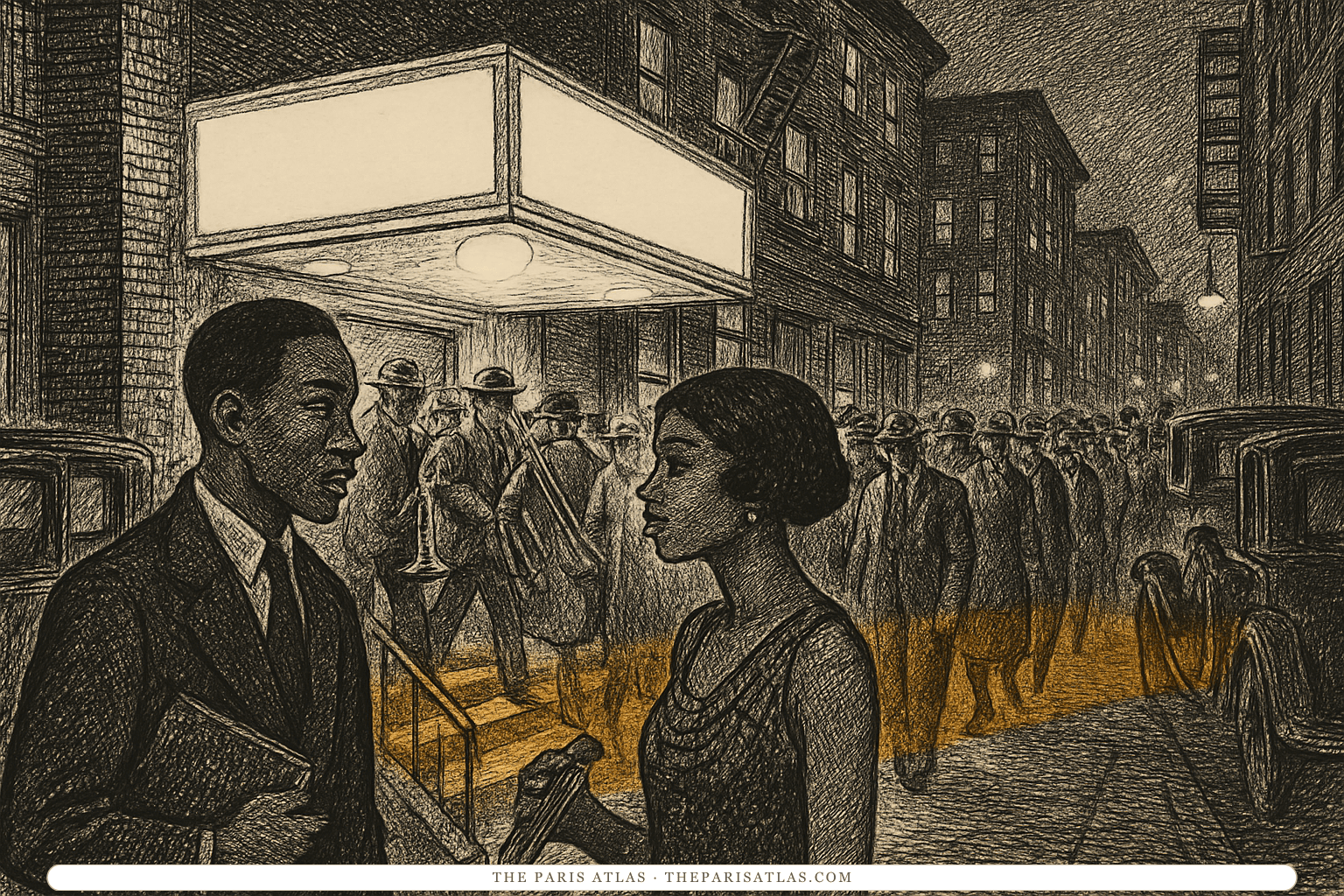
Pen-and-ink illustration of a 1920s Harlem avenue at night: a young Black poet holding a book talks with a woman in a beaded dress while musicians carry a trumpet and trombone into a club under a glowing marquee, the crowd and brownstones behind them swept with one gold brush stroke

Cultural movement · c. 1918 – mid-1930s

The Harlem Renaissance

The movement's central poet, from "The Negro Speaks of Rivers" in The Crisis (1921) through The Weary Blues (1926) and the "Racial Mountain" essay to the memoir that recorded the era, The Big Sea (1940).

A New African American Identity: The Harlem Renaissance; Langston Hughes

Books by Langston Hughes

Cover of The Weary Blues by Langston Hughes

Poetry

Langston Hughes's first book: the poems of Lenox Avenue, the sea, and the Paris nightclub kitchen, published when he was twenty-four.

5.0
Cover of The Big Sea by Langston Hughes

Memoir & autofiction

Hughes's autobiography to age twenty-nine: Africa by tramp steamer, Paris by dishwater, and the Harlem Renaissance from inside.

4.5
Cover of I Wonder as I Wander by Langston Hughes

Memoir & autofiction

The sequel to The Big Sea: Cuba, Haiti, the Soviet Union, and besieged Madrid, ending in Montmartre on New Year's night.

4.0

Langston Hughes’s Places

The cataloged places connected to Langston Hughes — through the books, and through the documented record.

Places you can enter today appear first, followed by addresses to see from outside and sites that have vanished.

Color present-day view of the Gare du Nord façade beneath a blue sky, with travelers crossing the open forecourt

Railway station · Faubourg Saint-Denis

Open — go in

Gare du Nord

Hughes arrived here from Rotterdam early one February morning in 1924 with seven dollars, checked his bags, and had coffee and rolls before beginning his first walk through Paris.

Visit the place
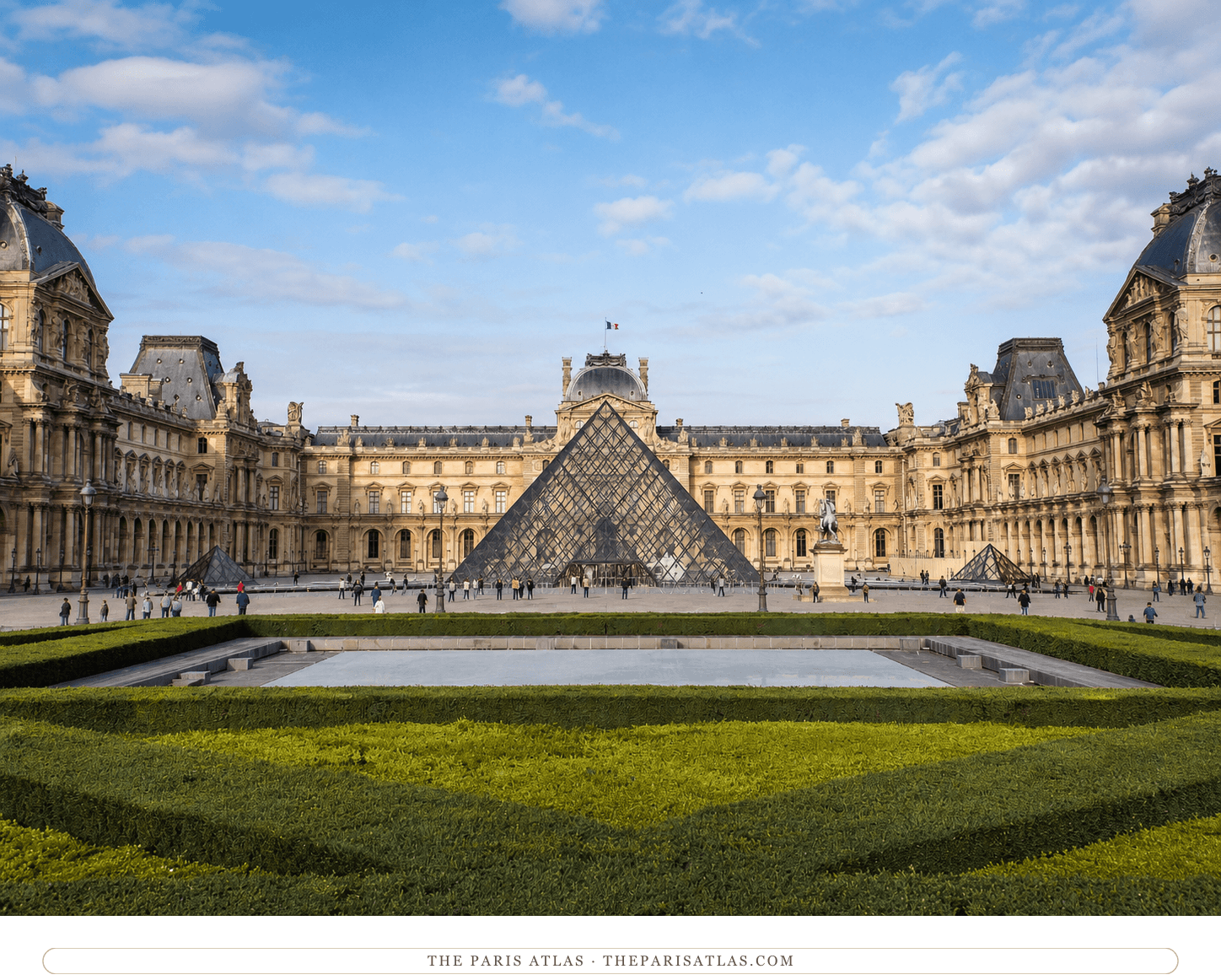
Color editorial illustration of the Louvre Pyramid centered among the palace façades under a blue sky

Museum · Louvre

Open — go in

Musée du Louvre

On his first morning in Paris, Hughes came in from the wet snow, looked at the Venus de Milo and the Greek statues, and took courage from their long survival in the city.

Visit the place
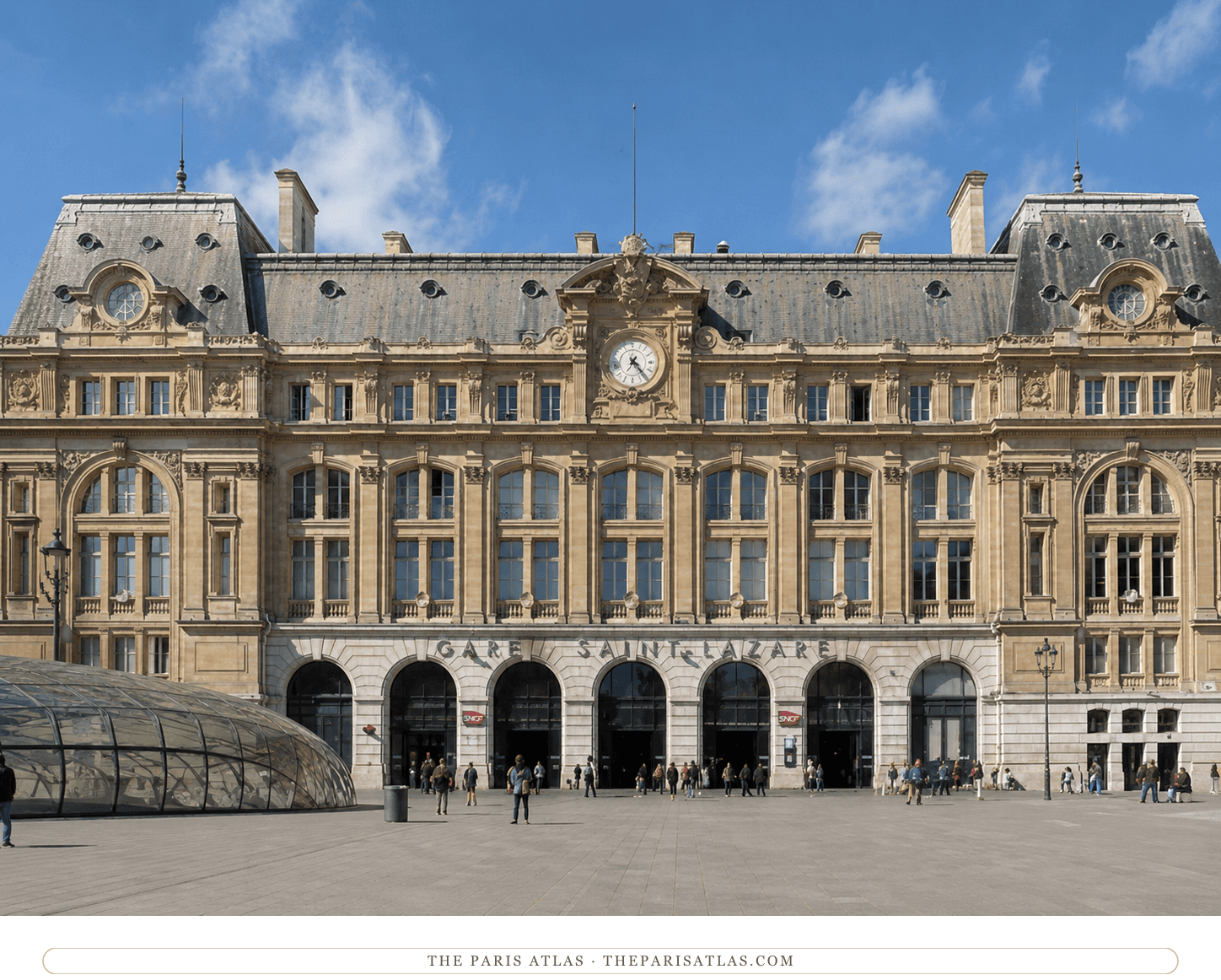
The Gare Saint-Lazare in color — the stone front and forecourt in daylight

Railway station · Quartier de l'Europe

Open — go in

Gare Saint-Lazare

Hughes said goodbye to Sonya here on a rainy March afternoon in 1924 as she left for a dancing engagement in Le Havre.

Visit the place
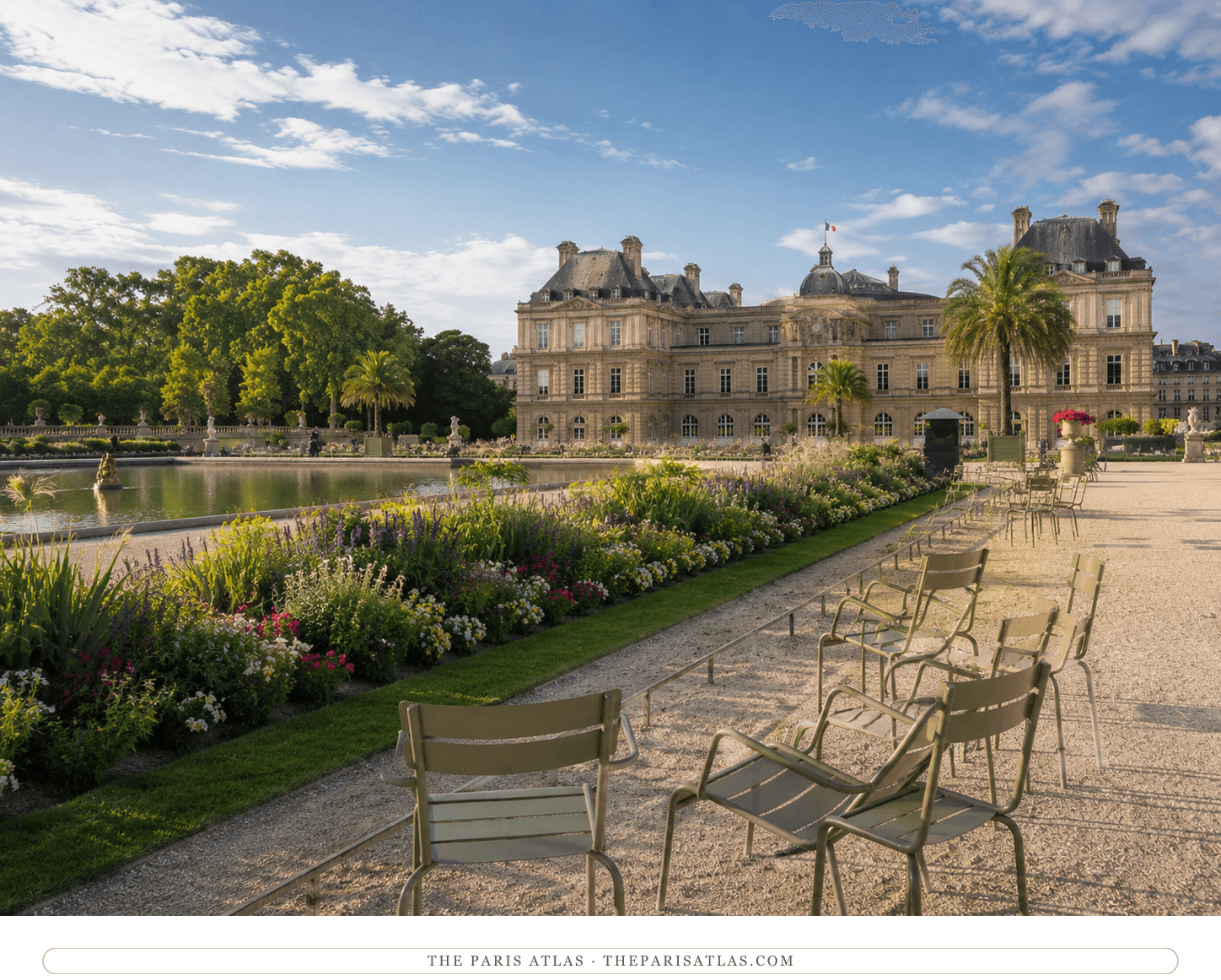
The Jardin du Luxembourg today, flowerbeds and green chairs facing the palace in late light

Park · Odéon / Luxembourg

Open — go in

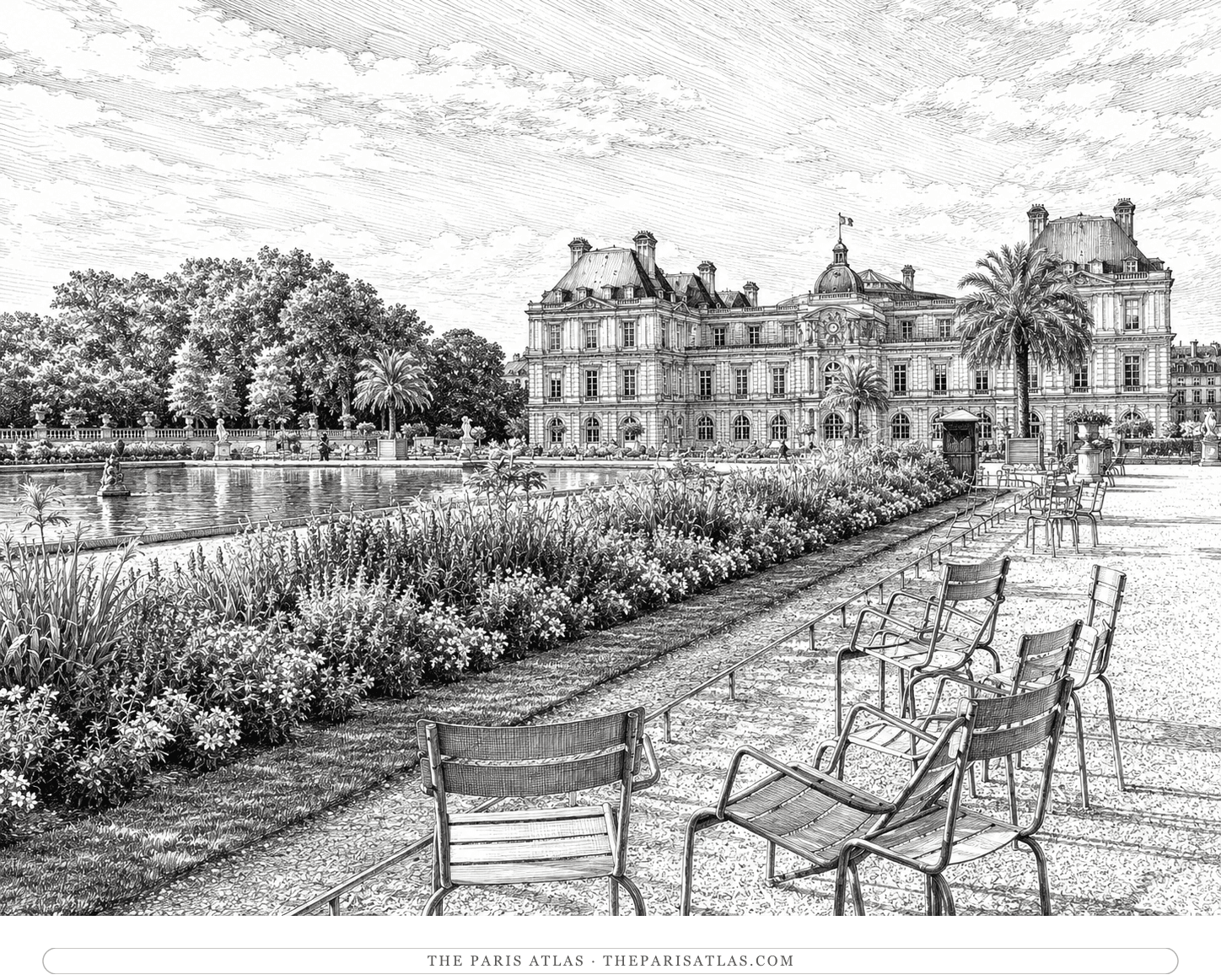
Jardin du Luxembourg

Hughes returned to the gardens opposite Mary's home as their friendship became a romance in spring 1924.

Visit the place
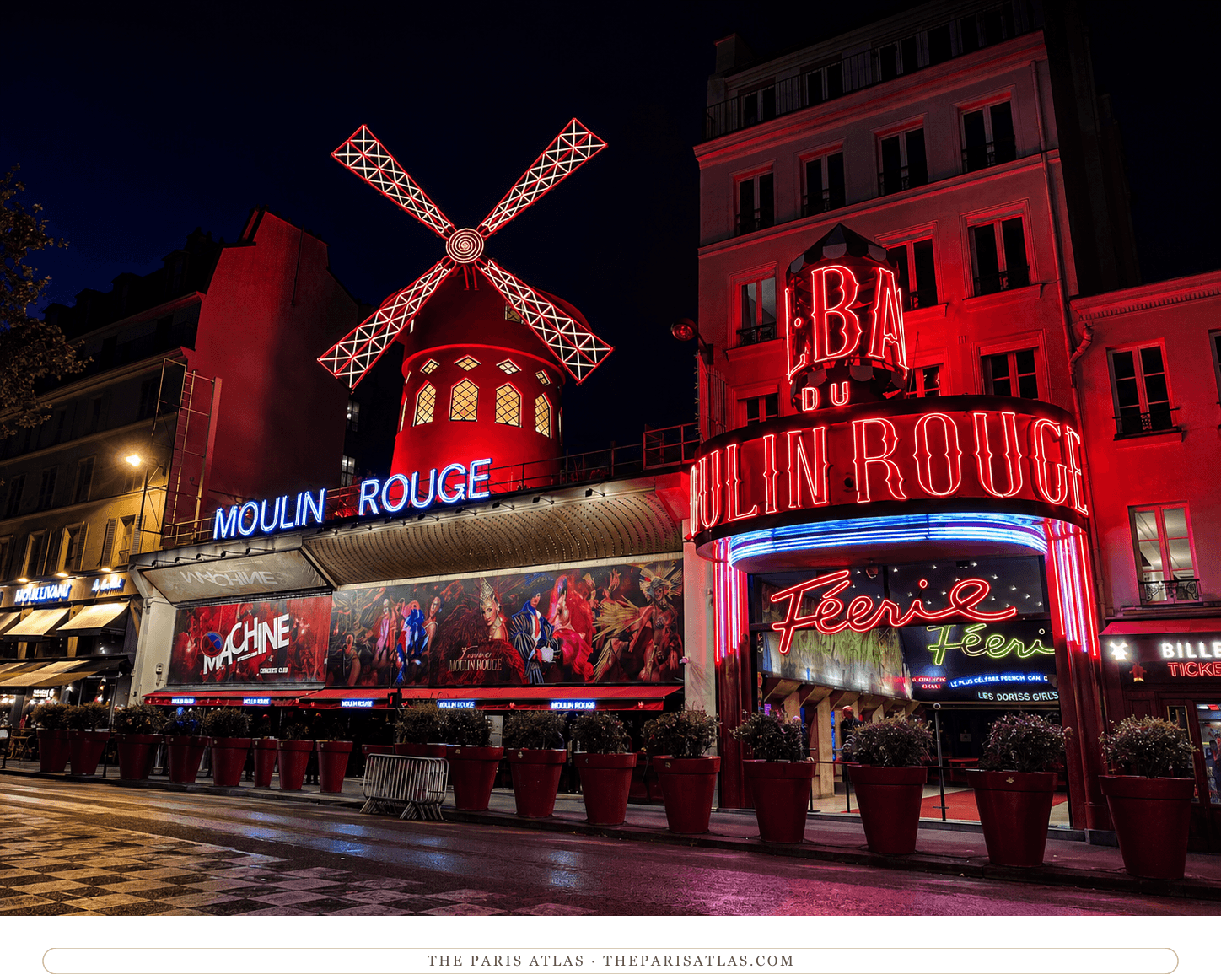
The Moulin Rouge lit red at night, the windmill and neon signage in colour

Nightclub · Pigalle

Open — go in

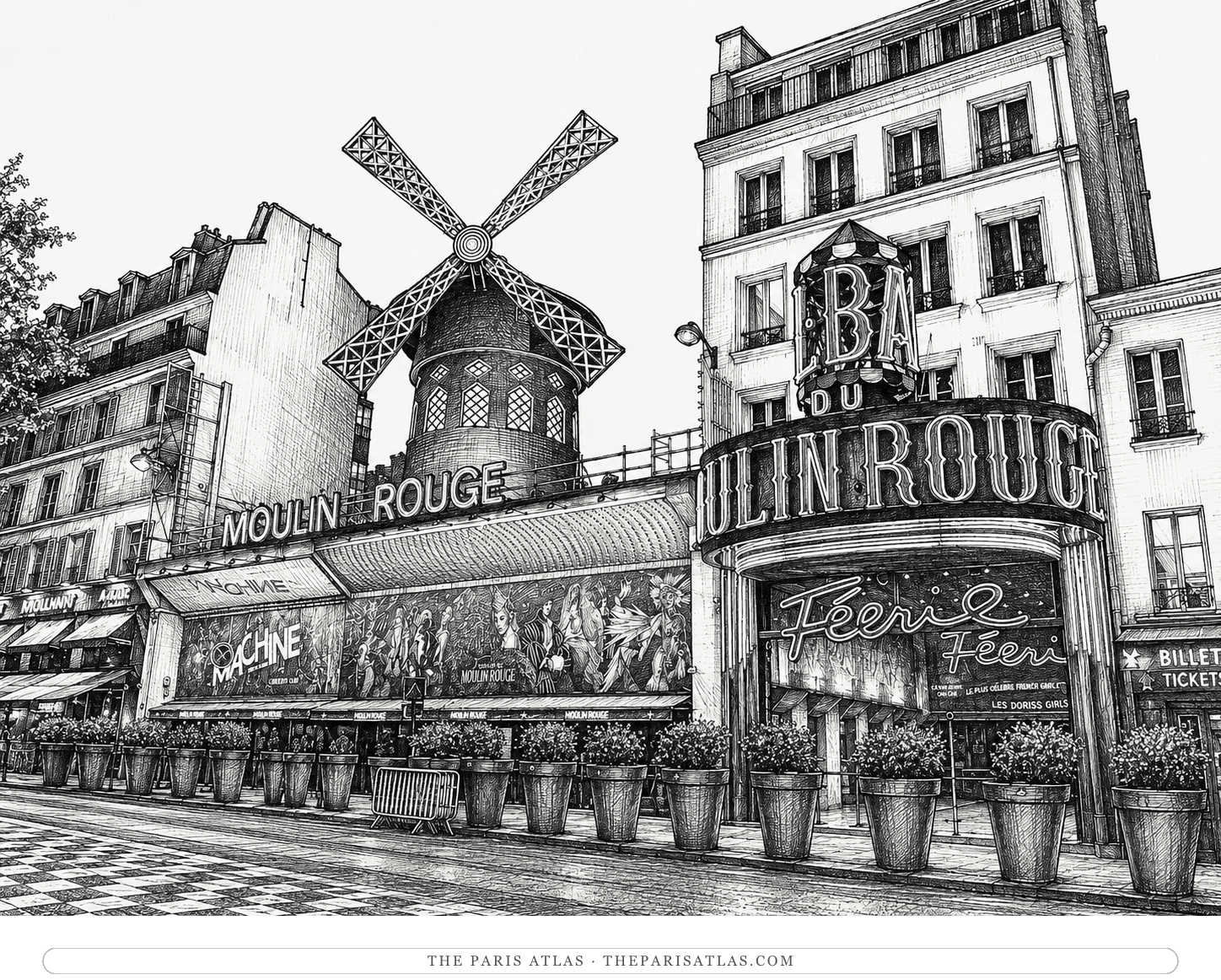
Moulin Rouge

Hughes danced here with Anne Marie Coussey, whom he calls Mary, during their spring 1924 romance.

Visit the place
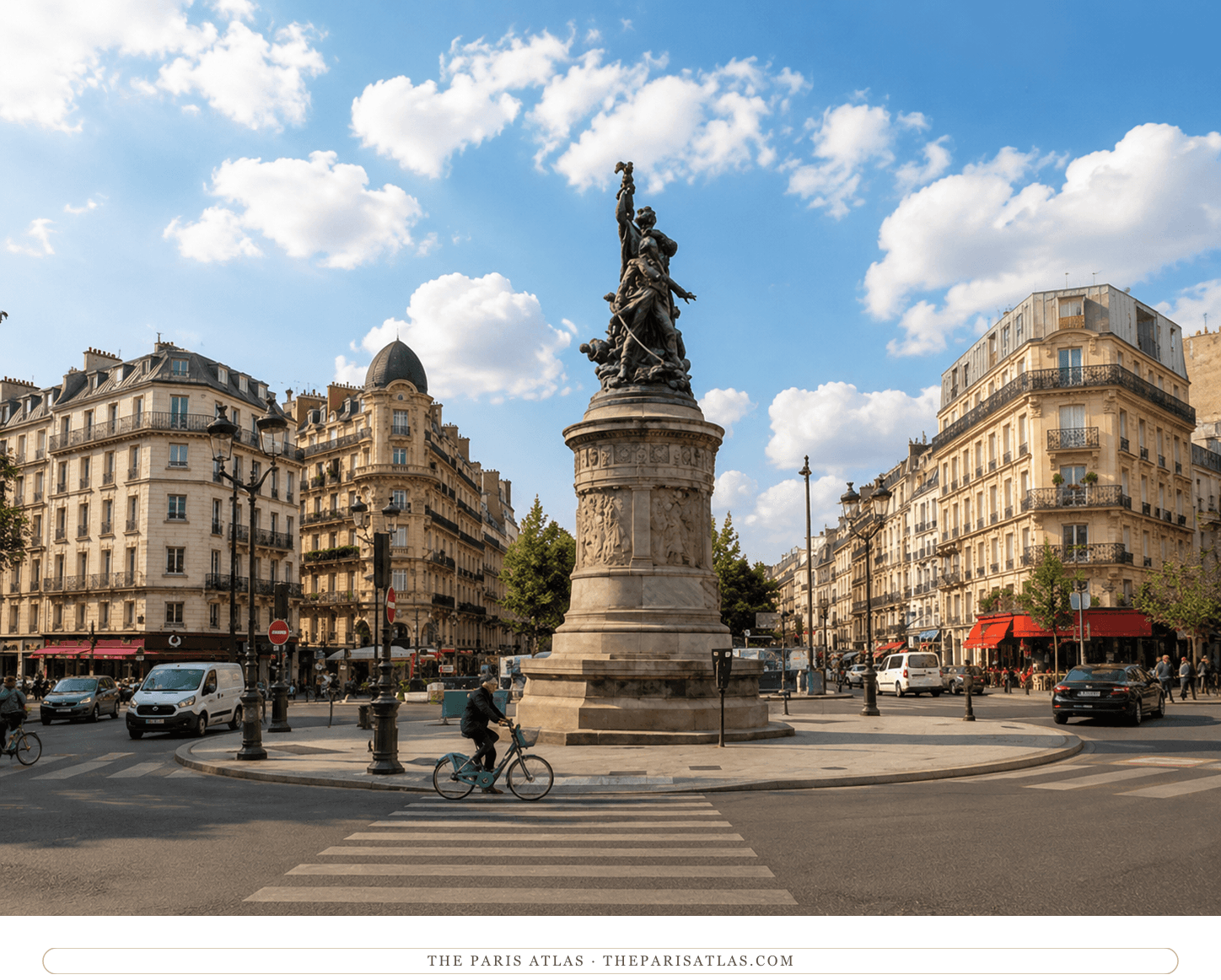
The Place de Clichy in color — the monument, the corners, the traffic circling

Square · Clichy — Montmartre's edge

Open — go in

Place de Clichy

Hughes lived nearby at 15 rue Nollet and lunched with Alain Locke at an unnamed restaurant near the square.

Visit the place
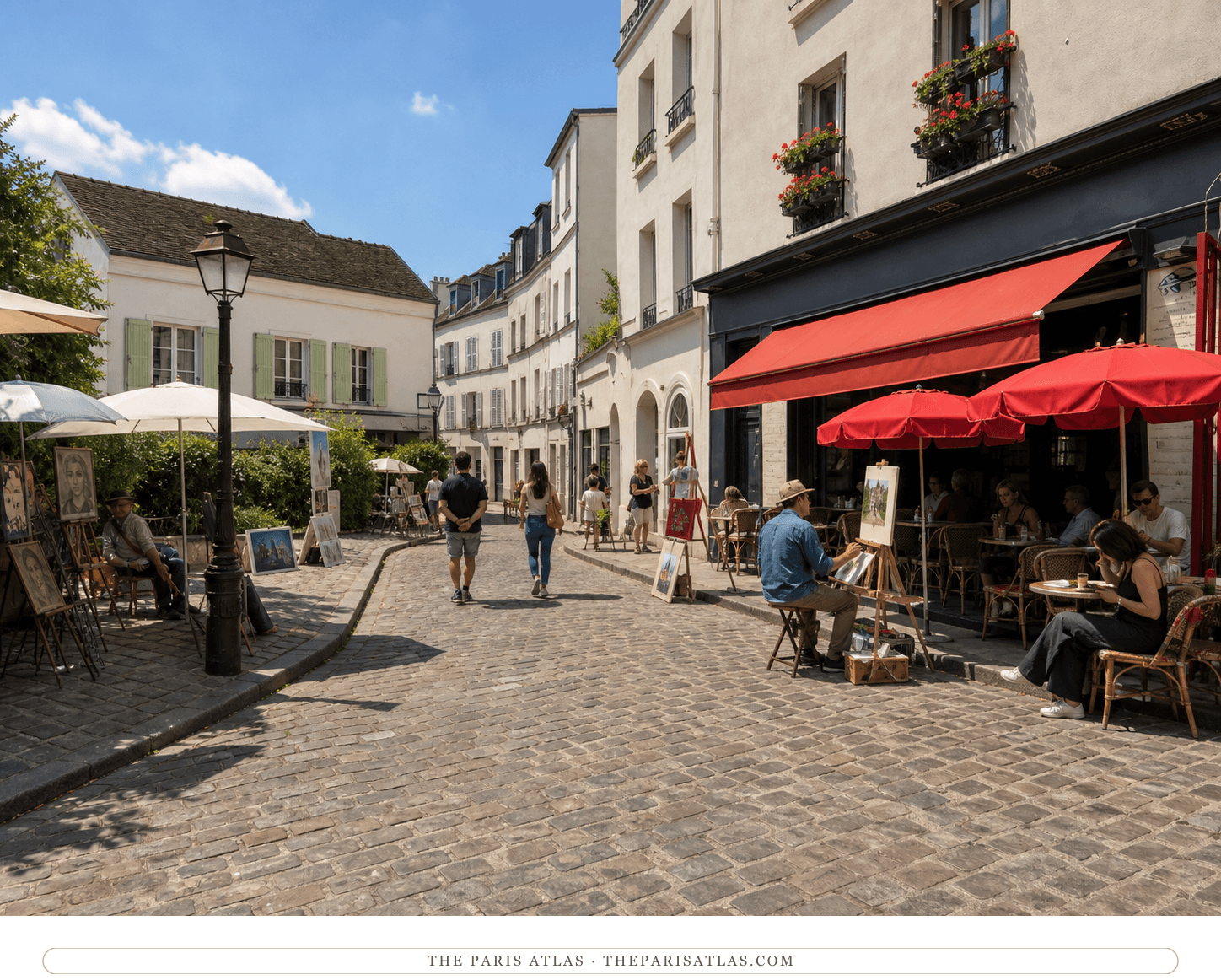
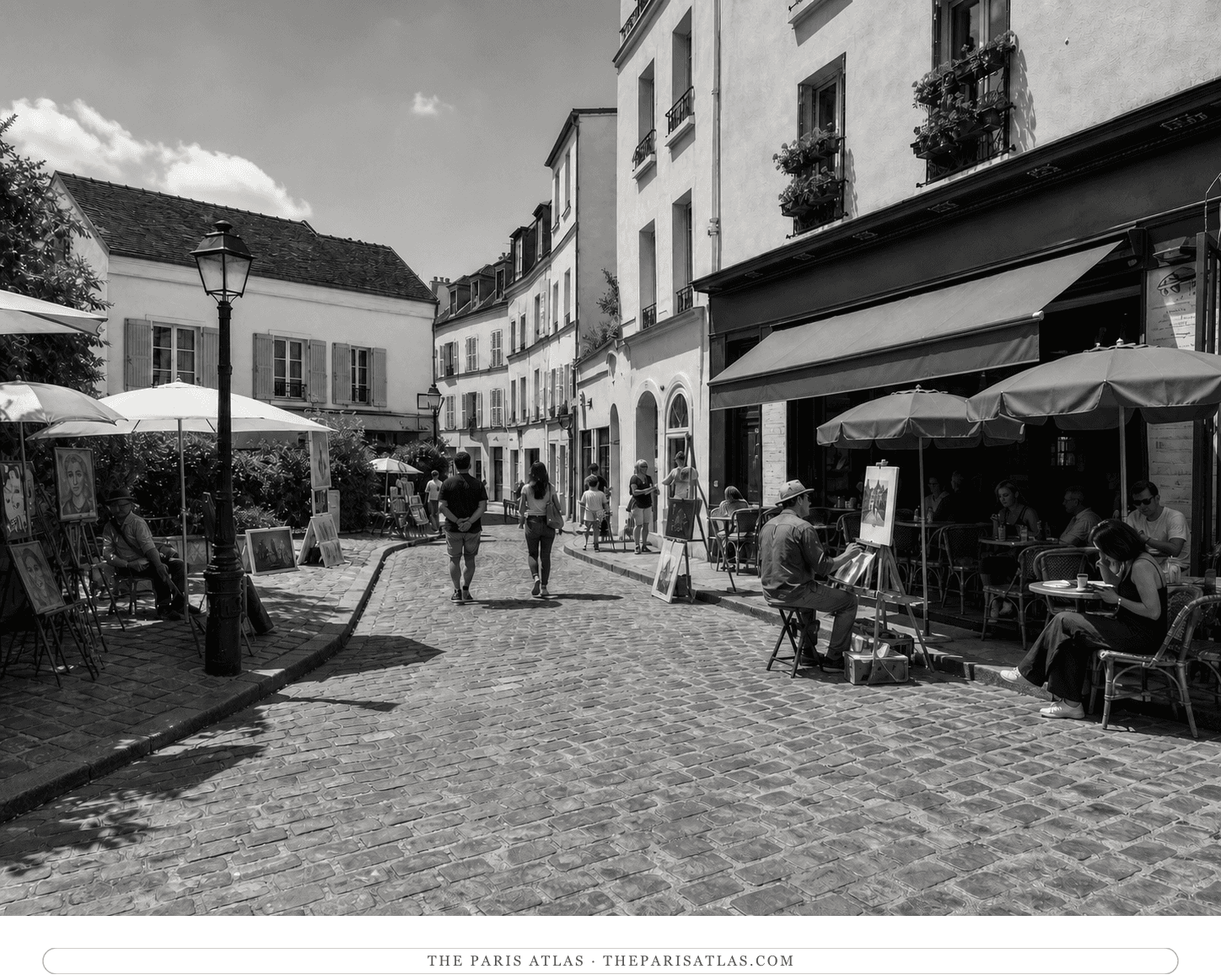
Color present-day view of Place du Tertre with artists, café terraces and low Montmartre façades under a blue sky

Square · Montmartre

Open — go in

Place du Tertre

Hughes and Mary ate their last dinner together at an unnamed small restaurant on the square, then walked down through Montmartre toward his rue Nollet attic.
Visit the place
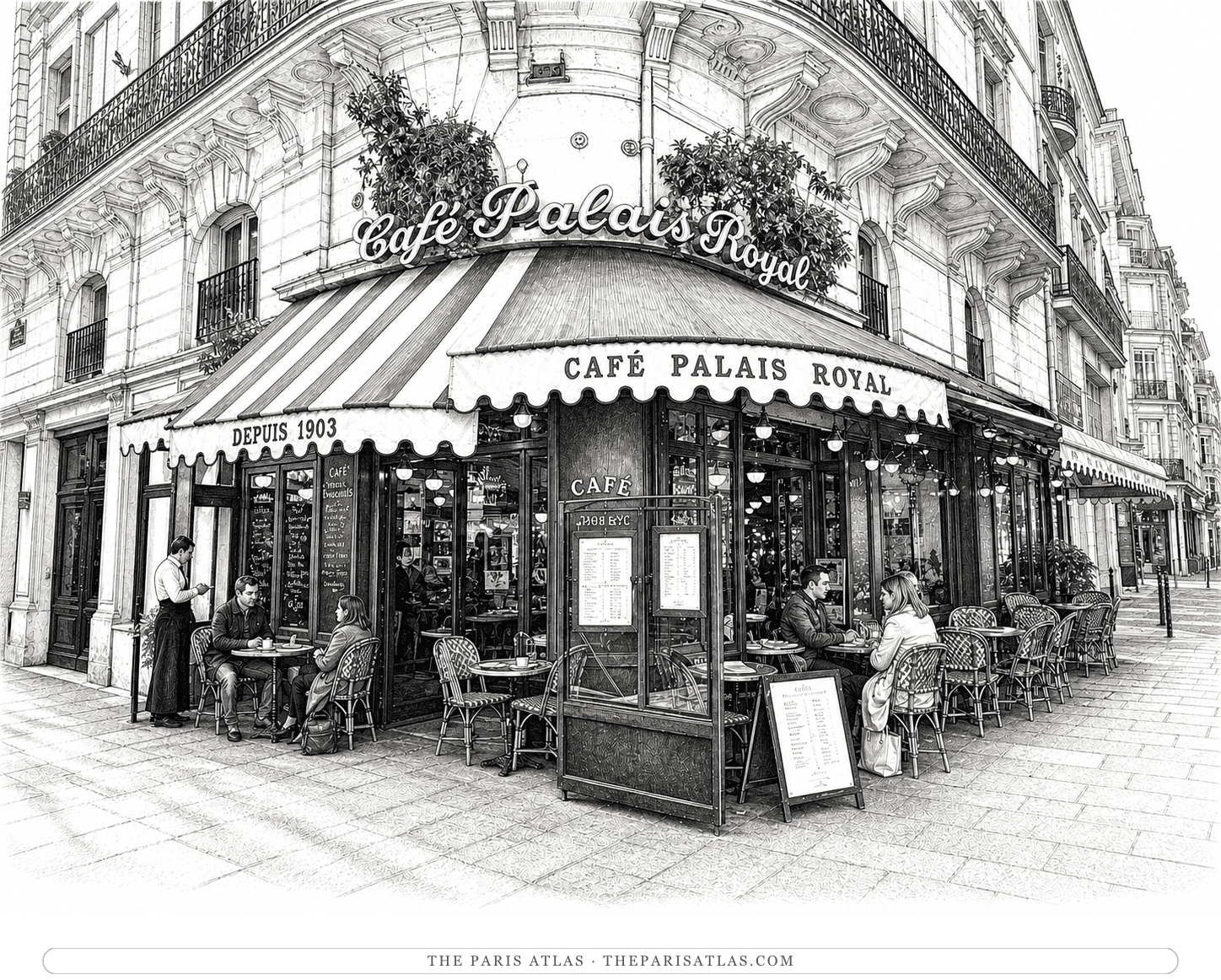
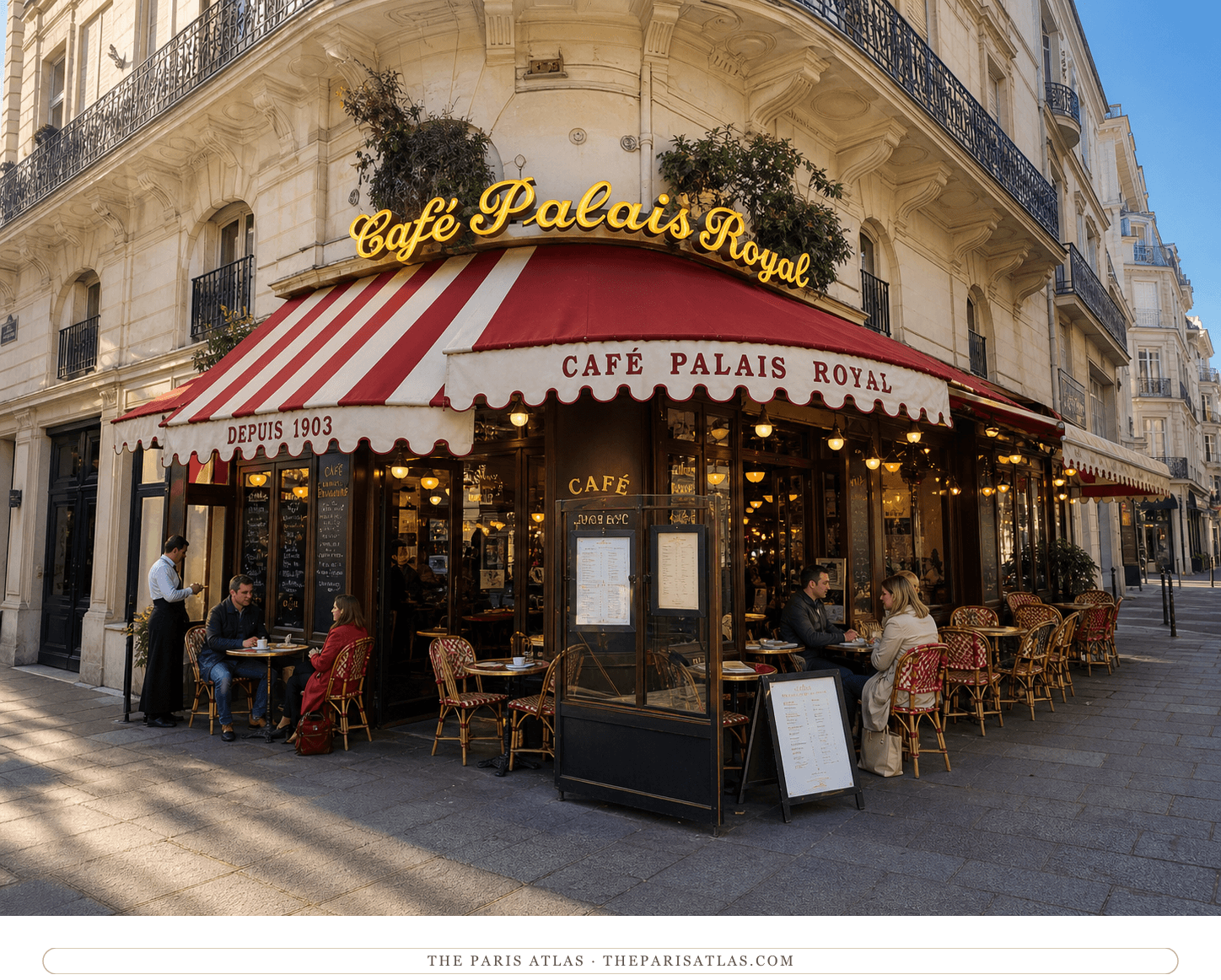
Café Palais Royal's red-awning corner storefront at 202 rue Saint-Honoré in the present day

Café · Palais-Royal / Louvre

Open — go in

Café Royale near the Louvre

Hughes received a pneumatique from Albert C. Barnes, joined Barnes and Thomas Monroe at the Café Royale near the Louvre at one o'clock, and ordered wild strawberries. The lunch is certain. Restaurant Léon Royal at 202 rue Saint-Honoré is the strongest site candidate, but the address identification remains probable rather than proved.

Visit the place
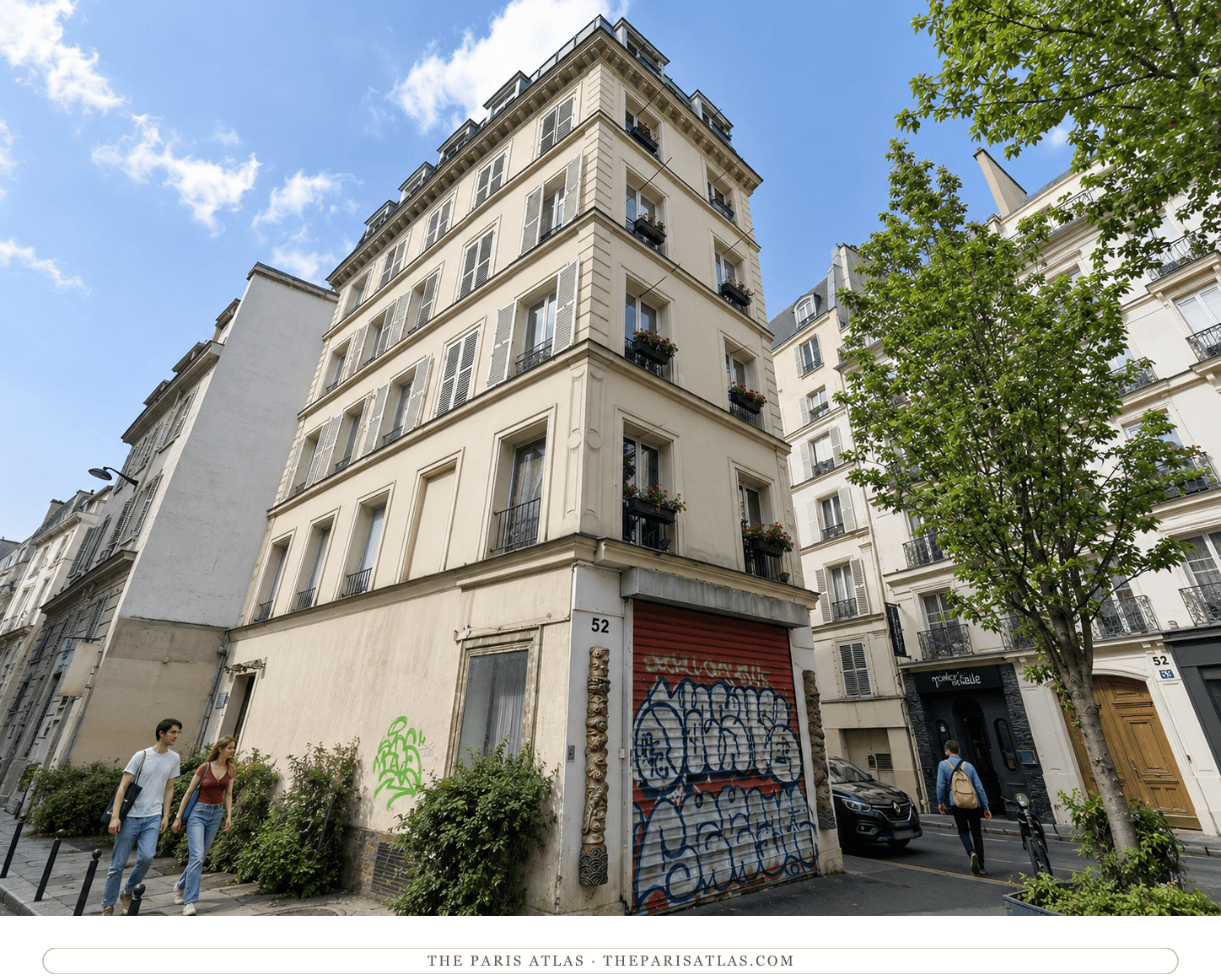
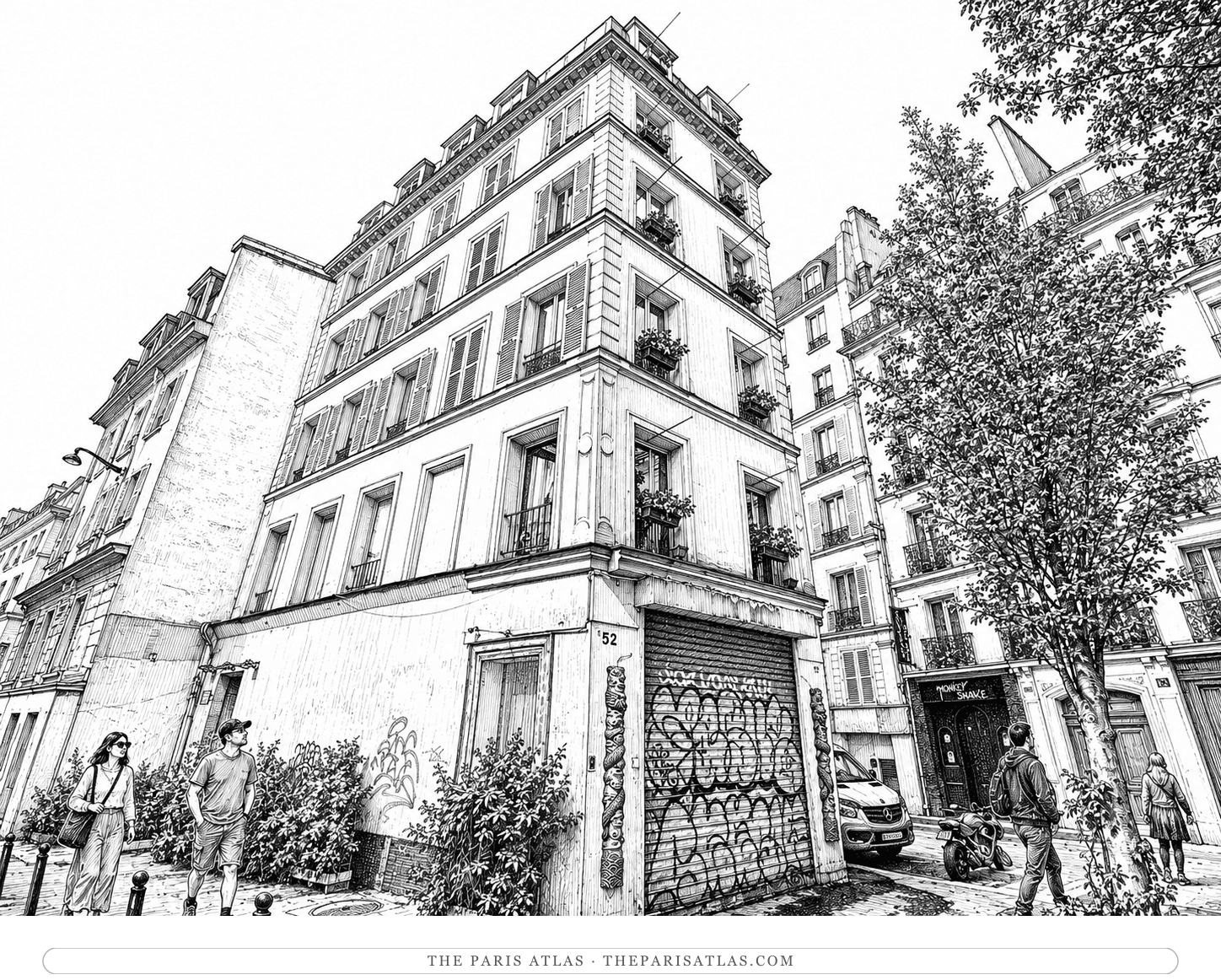
The same corner at 52 rue Jean-Baptiste Pigalle in color, cream facade under a blue sky, red shutter tagged with graffiti

Nightclub · Montmartre (Pigalle)

Outside only

Le Grand Duc

Hughes was hired at the club in February 1924 under the title "second cook", which he says in The Big Sea really meant dishwasher, and worked there until he left Paris in July. His account of the club's after-hours jam sessions is one of the memoir's best-known passages.

Visit the place
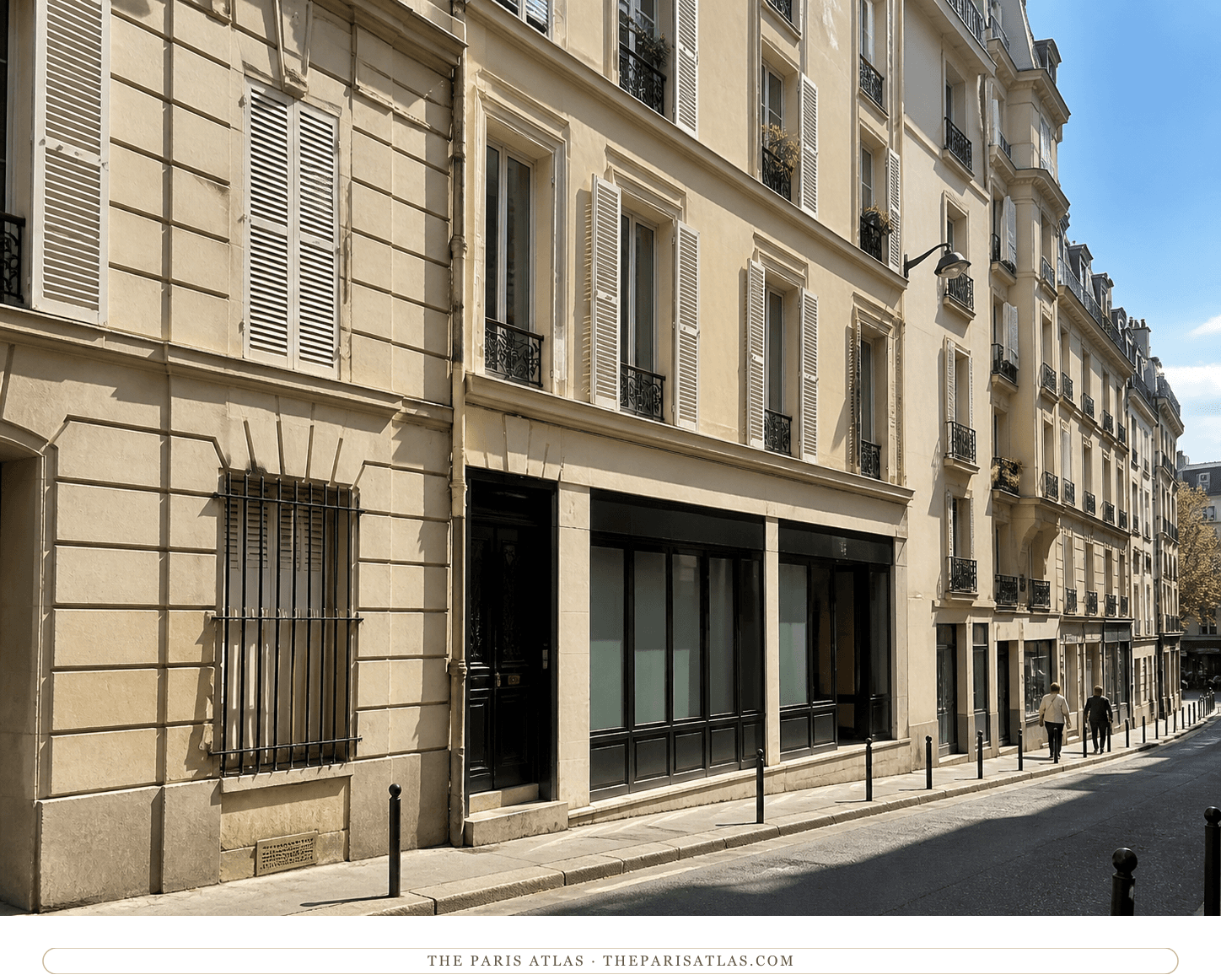
Color present-day editorial view of cream residential façades along the narrow rue Nollet

Hotel · Batignolles

Outside only

15 rue Nollet

From April 1924, Hughes rented a cheap attic room under the slanting roofs here, overlooking Paris chimney pots; Alain Locke came to this room to ask for poems for the Survey Graphic project that became The New Negro.

Visit the place
Color present-day view down rue des Trois Frères with pale façades, cobbles and a small café terrace

Street · Montmartre

Outside only

Rue des Trois Frères

Later in 1924 Hughes moved to another attic chamber somewhere on this street, higher on the Montmartre hill toward Sacré-Cœur; he did not record a house number.

Visit the place
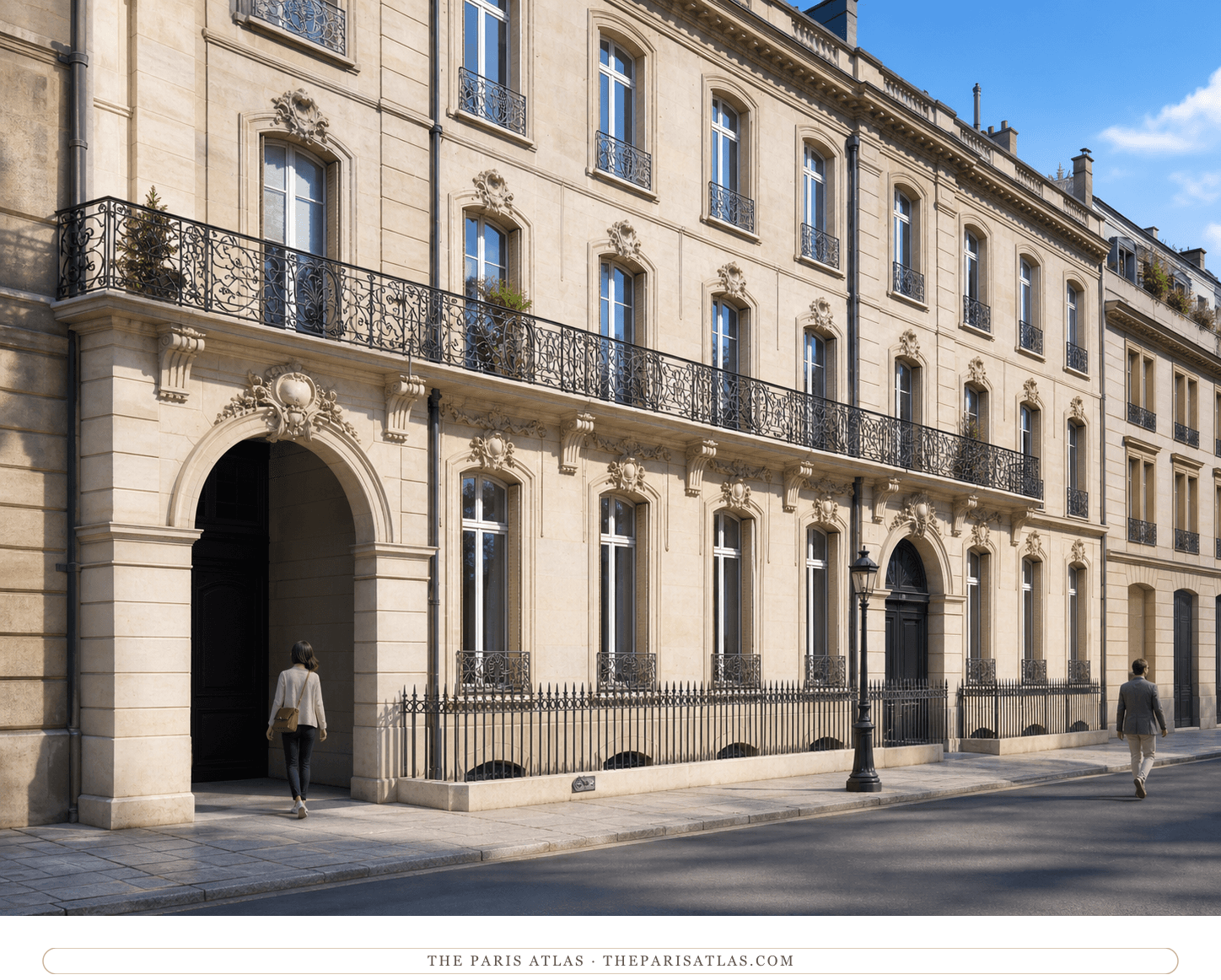
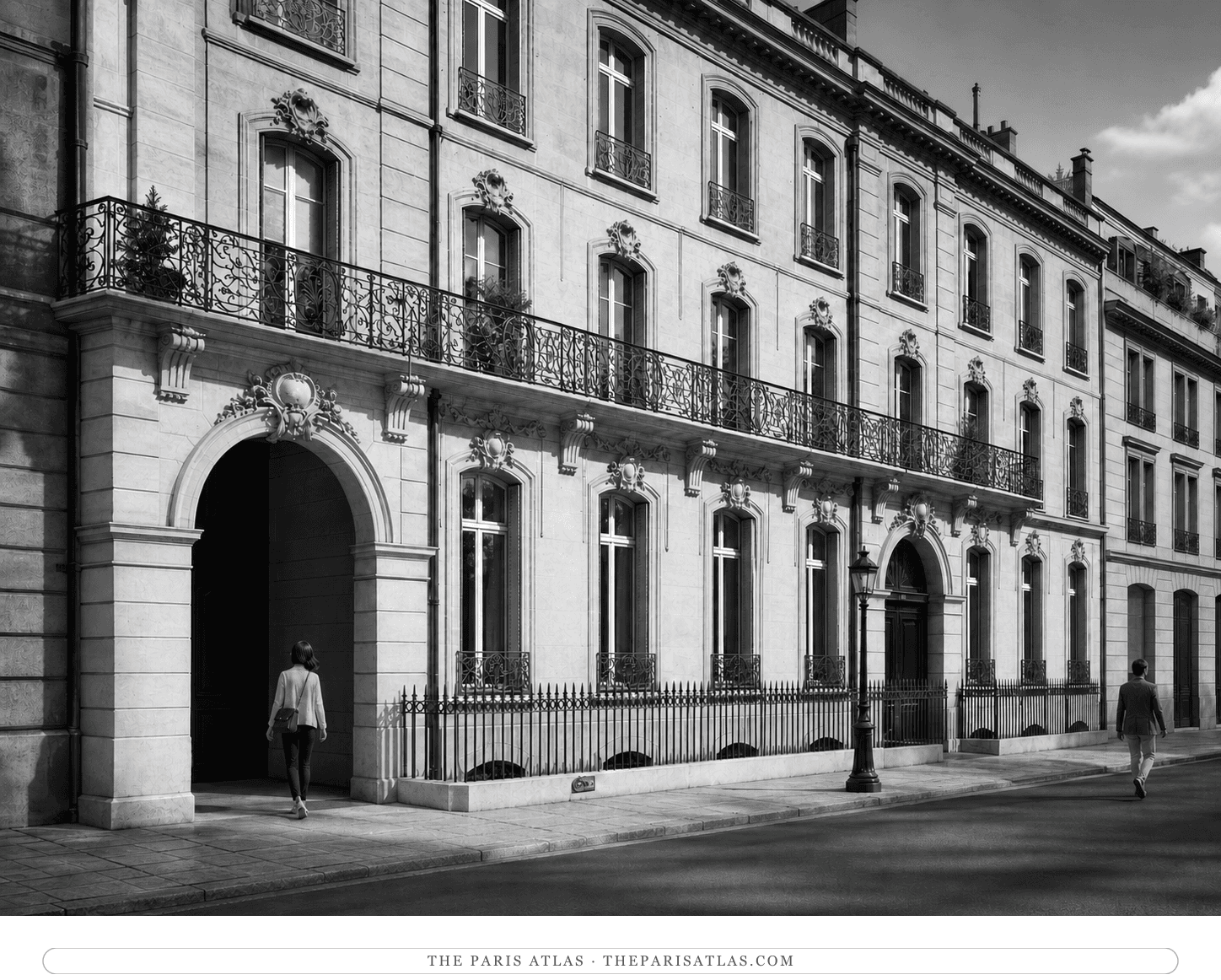
Color present-day editorial view of the pale stone mansion at 10 rue de l'Élysée with its long iron balcony

Library · Madeleine–Élysée

Outside only

American Library in Paris — 10 rue de l'Élysée

On his second day in Paris, Hughes came to the American Library's then-address at 10 rue de l'Élysée looking for work. Like the Embassy, American Express and the newspaper offices, it had none for him.

Visit the place
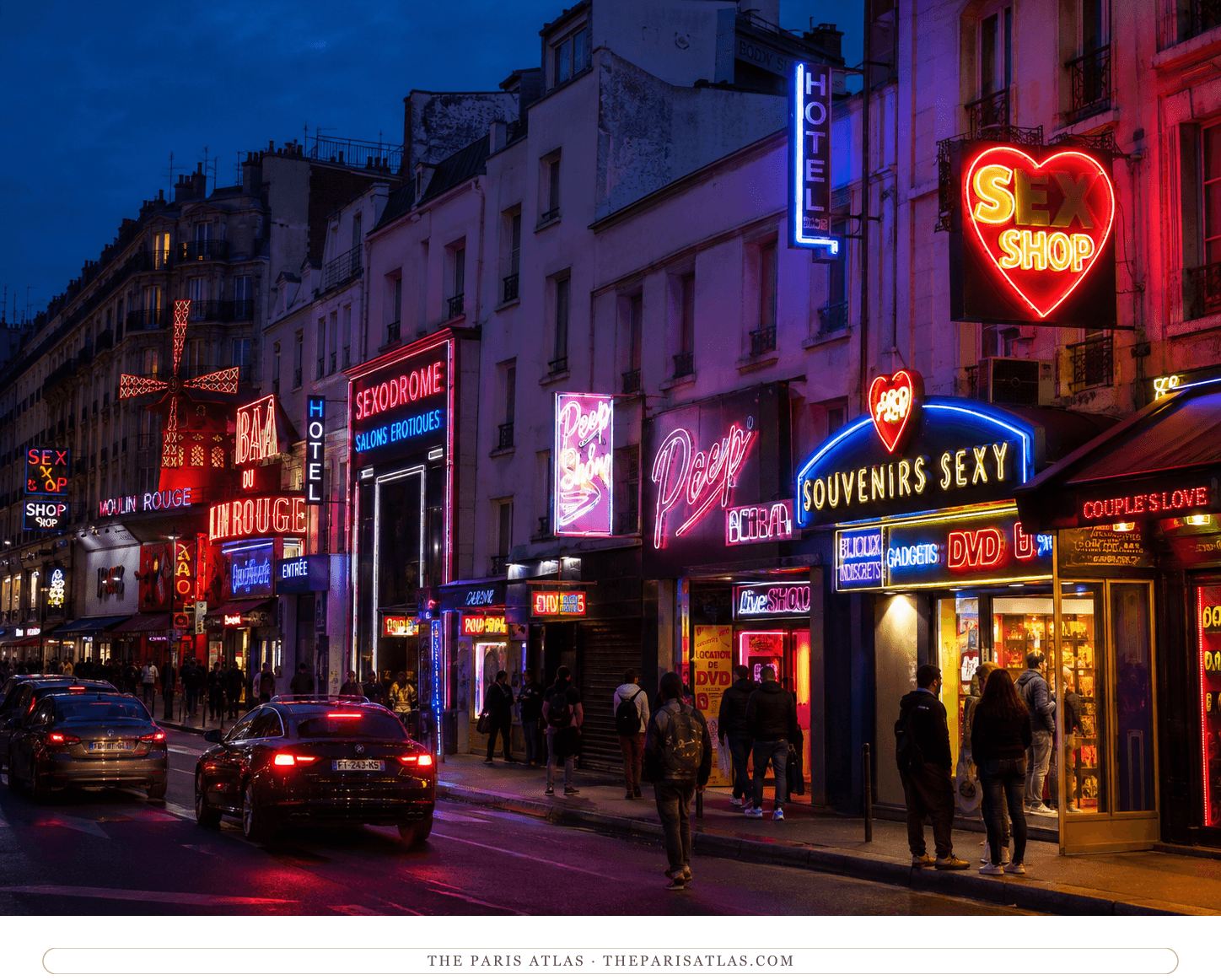
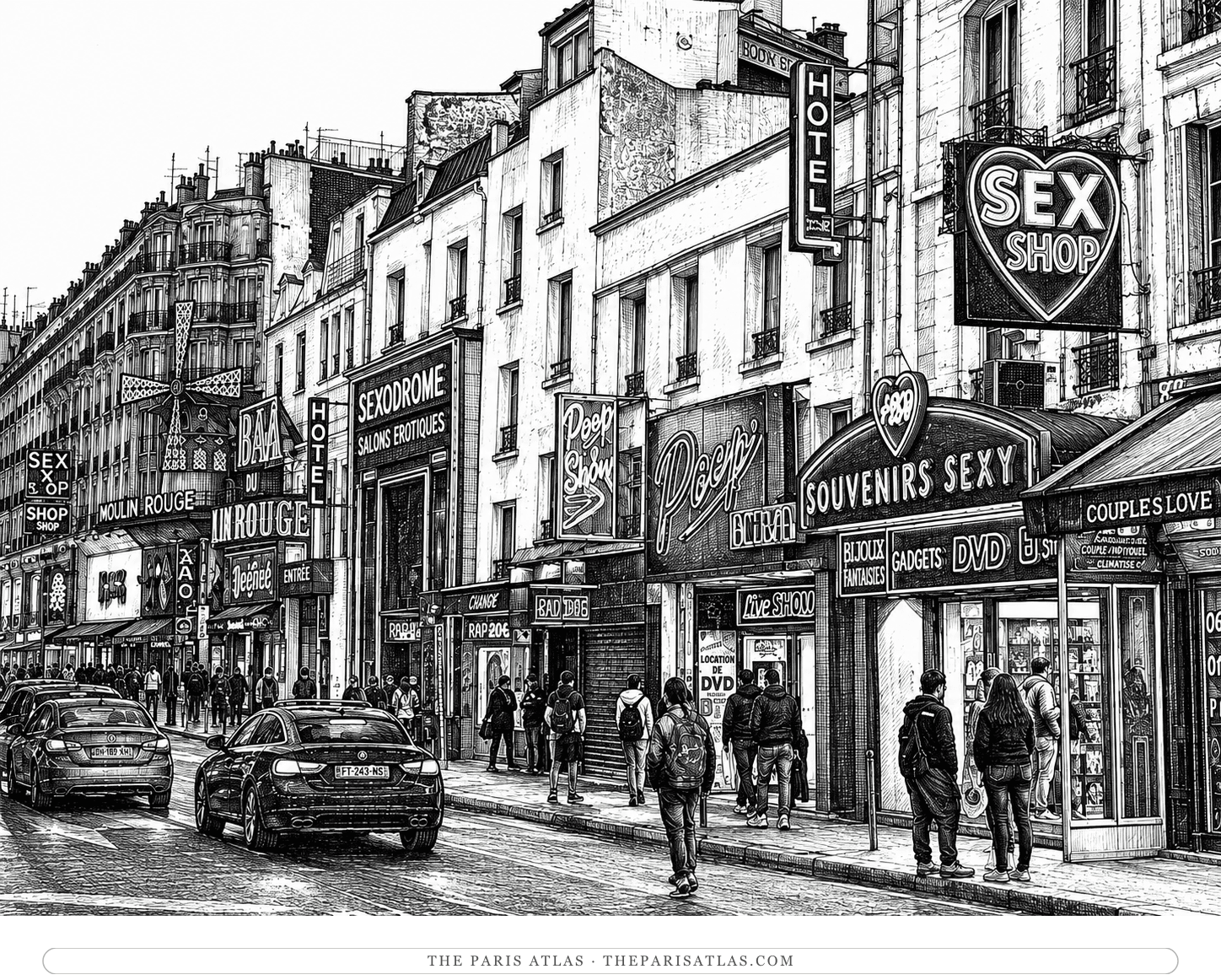
Colour drawing of the boulevard de Clichy at night, neon signs for sex shops and peep shows along the frontages with the Moulin Rouge windmill beyond

Quarter · Pigalle

Outside only

Pigalle

Hughes lunched with Sonya at an unnamed café on Place Pigalle before a movie and an evening at the Flea Pit.

Visit the place
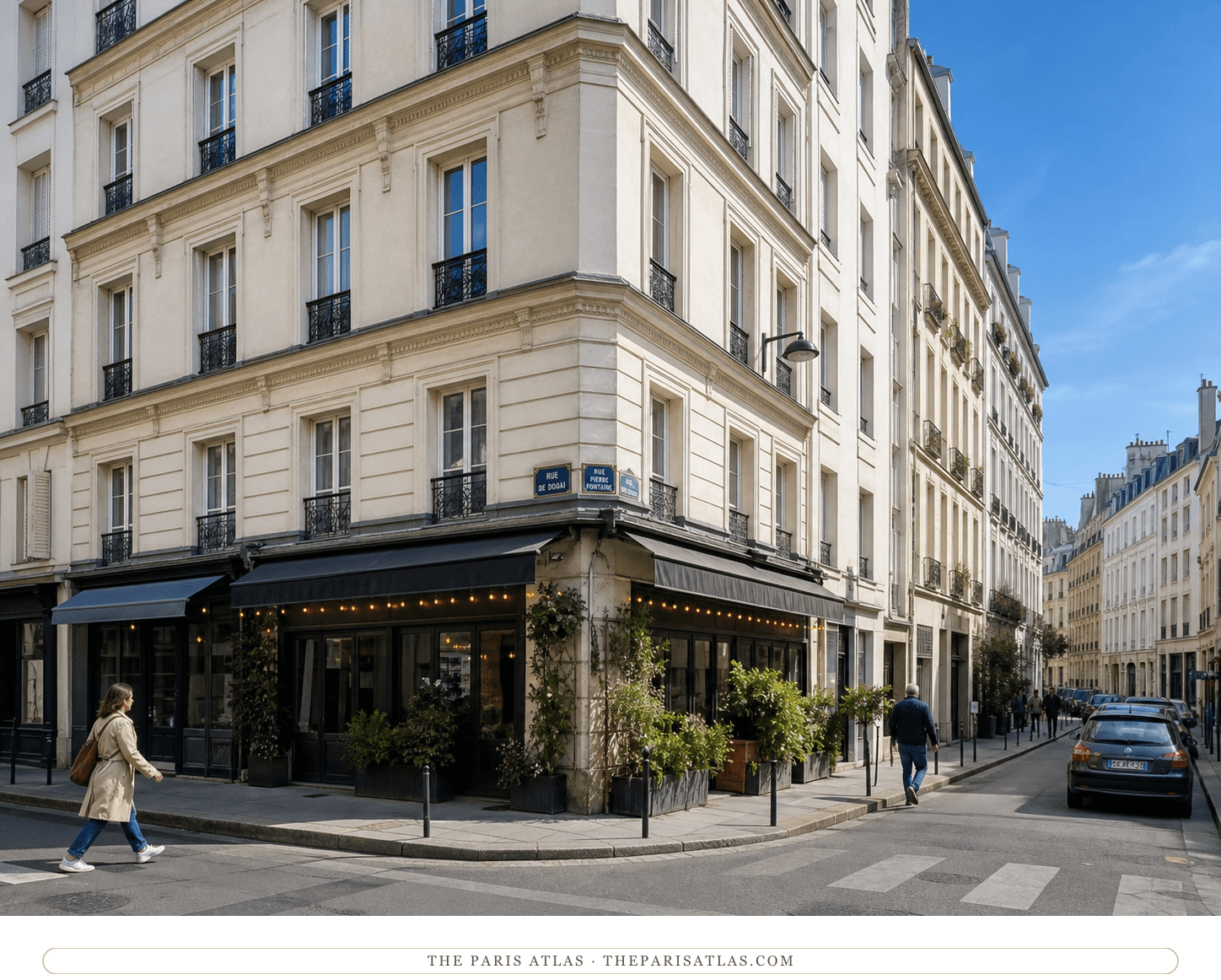
Color present-day view of the surviving building at 24 rue Pierre-Fontaine and rue de Douai under a clear blue sky

Hotel · Montmartre (Pigalle)

Outside only

Hotel Liseux and Café Liseux

Monique Y. Wells identifies the hotel above Café Liseux at 24 rue Fontaine as Hughes's lodging on his returns to Paris in 1937 and 1938. Her possible identification of Hughes's unnamed first-night hotel in 1924 is kept out of this claim.

Visit the place
Present-day color view of the corner of rue La Bruyère and rue Jean-Baptiste Pigalle, with cream façades and burgundy awnings beneath a blue sky

Café · Montmartre (Pigalle)

Outside only

The Flea Pit

Hughes identifies this little rue La Bruyère café as the late-afternoon hangout of Montmartre performers and remembers sitting at its window with Sonya in 1924.

Visit the place

Questions about Langston Hughes

When was Langston Hughes born?

February 1, 1901, in Joplin, Missouri. For most of a century references gave 1902; in 2018 the poet Eric McHenry found newspaper items from December 1901 naming the infant Hughes, and government records confirmed the earlier year. Many older books and plaques still carry 1902.

What was Langston Hughes known for?

For being the leading poet of the Harlem Renaissance, and for bringing the forms of blues and jazz into American poetry. His best-known poems include "The Negro Speaks of Rivers," "Mother to Son," "I, Too" and "Harlem." He also wrote novels, plays, short stories, two autobiographies, and twenty years of newspaper columns built around the Harlem character Jesse B. Semple, known as Simple.

What was Langston Hughes doing in Paris?

Washing dishes. He arrived in February 1924 with seven dollars, worked briefly as a doorman on the rue Fontaine, then spent the spring and summer as "second cook" — dishwasher — at the Grand Duc nightclub on the rue Pigalle in Montmartre, the center of the district's Black American music scene. He left when the club closed for the summer in July, and told the whole story in The Big Sea (1940).

How did Langston Hughes contribute to the Harlem Renaissance?

He was its defining poet and one of its manifesto writers. The Weary Blues (1926) put blues form at the center of literary poetry; his 1926 essay "The Negro Artist and the Racial Mountain" argued that Black artists should write about the full range of Black life without seeking anyone's approval; and he worked inside the movement's magazines and anthologies, from The New Negro to the experimental Fire!!.

Who influenced Langston Hughes?

He named Paul Laurence Dunbar, Carl Sandburg and Walt Whitman as his early models — Dunbar for Black vernacular poetry, Sandburg for plainspoken free verse, Whitman for the ambition to contain America in a poem — along with Claude McKay among the emerging Black modernists. The deepest influence was musical: the blues and jazz he heard in Harlem, Washington and the Montmartre clubs where he worked in 1924.

How did Langston Hughes die?

Of complications following surgery for prostate cancer, on May 22, 1967, in a New York hospital. He was sixty-six. His ashes are interred beneath a floor cosmogram titled Rivers in the lobby of the Schomburg Center for Research in Black Culture in Harlem.

Was Langston Hughes married?

No. He never married and had no children. He kept his private life closed, and biographers have read that silence in different ways; the documentary record itself is thin.

Was Langston Hughes gay?

He never said publicly, and that is the honest answer. Hughes never married, never publicly defined his sexuality, and never discussed his intimate relationships in print. Later scholars and writers have interpreted him as gay, drawing on correspondence, unpublished work and the accounts of contemporaries, and queer literary history claims him as an important figure — while the Smithsonian's National Museum of African American History and Culture notes that Hughes was among the Harlem Renaissance figures who never spoke publicly about their intimate lives.

Where did Langston Hughes live in Harlem?

From 1947 until his death in 1967, on the top floor of a rowhouse at 20 East 127th Street, where he wrote Montage of a Dream Deferred and I Wonder as I Wander. The house was designated a New York City landmark in 1981, and the block is now named Langston Hughes Place.

What is Langston Hughes's most famous poem?

"Harlem" (1951), which opens by asking what happens to a dream deferred — the line Lorraine Hansberry answered with the title of her play A Raisin in the Sun. "The Negro Speaks of Rivers" (1921), written when he was nineteen, and "I, Too" are close behind it.

Did Langston Hughes know Ernest Hemingway?

They were in Madrid at the same time in 1937, both covering the Spanish Civil War — Hughes for the Baltimore Afro-American, Hemingway for the North American Newspaper Alliance. A photograph taken there shows them together with Mikhail Koltsov and Nicolás Guillén; the print is in the Hemingway Collection at the John F. Kennedy Presidential Library.

What did Langston Hughes write besides poetry?

A great deal: the novel Not Without Laughter (1930), the story collection The Ways of White Folks (1934), plays, two autobiographies — The Big Sea (1940) and I Wonder as I Wander (1956) — and twenty years of weekly Chicago Defender columns built around the character Jesse B. Semple, known as Simple.

Sourced claims

Every connection the graph holds for Langston, with the evidence behind it.

Collaborated with · 1966–1967

Nina Simone

Shortly before his death Hughes sent Simone the poem "The Backlash Blues"; she set it to music and recorded it on Nina Simone Sings the Blues (1967). Their 1960s correspondence survives, and Simone's 1966 letter to Hughes is held at the Beinecke Library.

Nina Simone Writes an Admiring Letter to Langston Hughes (2020); The Backlash Blues: Nina Simone and Langston Hughes, a Digital Archive

Met · 1937

Ernest Hemingway

Both covered the Spanish Civil War from Madrid in 1937 — Hemingway for the North American Newspaper Alliance, Hughes for the Baltimore Afro-American. A photograph by Paco Mayo, Madrid 1937, shows the two together with Mikhail Koltsov and Nicolás Guillén; the print is in the Hemingway Collection at the John F. Kennedy Presidential Library. Hughes's account of his Madrid months is in I Wonder as I Wander (1956).

The Spanish Civil War: Hughes and Hemingway (2012), Reproduces and identifies the Paco Mayo photograph; read 2026-08-11

Worked at · 1924

Le Grand Duc

Hughes was hired at the club in February 1924 under the title "second cook", which he says in The Big Sea really meant dishwasher, and worked there until he left Paris in July. His account of the club's after-hours jam sessions is one of the memoir's best-known passages.

Langston Hughes, The Big Sea (1940); William A. Shack, Harlem in Montmartre: A Paris Jazz Story Between the Great Wars (2001)

Associated with · 1921

The Harlem Renaissance

The movement's central poet, from "The Negro Speaks of Rivers" in The Crisis (1921) through The Weary Blues (1926) and the "Racial Mountain" essay to the memoir that recorded the era, The Big Sea (1940).

A New African American Identity: The Harlem Renaissance; Langston Hughes

Lived at · 1924

15 rue Nollet

From April 1924, Hughes rented a cheap attic room under the slanting roofs here, overlooking Paris chimney pots; Alain Locke came to this room to ask for poems for the Survey Graphic project that became The New Negro.

Langston Hughes, The Big Sea (1940), Paris in the Spring chapter

Lived at · 1924

Rue des Trois Frères

Later in 1924 Hughes moved to another attic chamber somewhere on this street, higher on the Montmartre hill toward Sacré-Cœur; he did not record a house number.

Langston Hughes, The Big Sea (1940), Paris in the Spring chapter

Visited · 1924

American Library in Paris — 10 rue de l'Élysée

On his second day in Paris, Hughes came to the American Library's then-address at 10 rue de l'Élysée looking for work. Like the Embassy, American Express and the newspaper offices, it had none for him.

Langston Hughes, The Big Sea (1940), Montmartre chapter; The American Library in Paris, Our History

Visited · 1924

Gare du Nord

Hughes arrived here from Rotterdam early one February morning in 1924 with seven dollars, checked his bags, and had coffee and rolls before beginning his first walk through Paris.

Langston Hughes, The Big Sea (1940), Montmartre chapter

Visited · 1924

Musée du Louvre

On his first morning in Paris, Hughes came in from the wet snow, looked at the Venus de Milo and the Greek statues, and took courage from their long survival in the city.

Langston Hughes, The Big Sea (1940), Montmartre chapter

Frequented · 1924

The Flea Pit

Hughes identifies this little rue La Bruyère café as the late-afternoon hangout of Montmartre performers and remembers sitting at its window with Sonya in 1924.

Langston Hughes, The Big Sea (1940), Work chapter; William A. Shack, Harlem in Montmartre: A Paris Jazz Story Between the Great Wars (2001)

Visited

Gare Saint-Lazare

Hughes said goodbye to Sonya here on a rainy March afternoon in 1924 as she left for a dancing engagement in Le Havre.

Langston Hughes, The Big Sea (1940)

Visited

Jardin du Luxembourg

Hughes returned to the gardens opposite Mary's home as their friendship became a romance in spring 1924.

Langston Hughes, The Big Sea (1940)

Visited

Moulin Rouge

Hughes danced here with Anne Marie Coussey, whom he calls Mary, during their spring 1924 romance.

Langston Hughes, The Big Sea (1940)

Visited

Pigalle

Hughes lunched with Sonya at an unnamed café on Place Pigalle before a movie and an evening at the Flea Pit.

Langston Hughes, The Big Sea (1940)

Visited

Place de Clichy

Hughes lived nearby at 15 rue Nollet and lunched with Alain Locke at an unnamed restaurant near the square.

Langston Hughes, The Big Sea (1940)

Visited · 1924

Place du Tertre

Hughes and Mary ate their last dinner together at an unnamed small restaurant on the square, then walked down through Montmartre toward his rue Nollet attic.
Langston Hughes, The Big Sea (1940), Paris in the Spring chapter

Lived at · 1937–1938

Hotel Liseux and Café Liseux

Monique Y. Wells identifies the hotel above Café Liseux at 24 rue Fontaine as Hughes's lodging on his returns to Paris in 1937 and 1938. Her possible identification of Hughes's unnamed first-night hotel in 1924 is kept out of this claim.
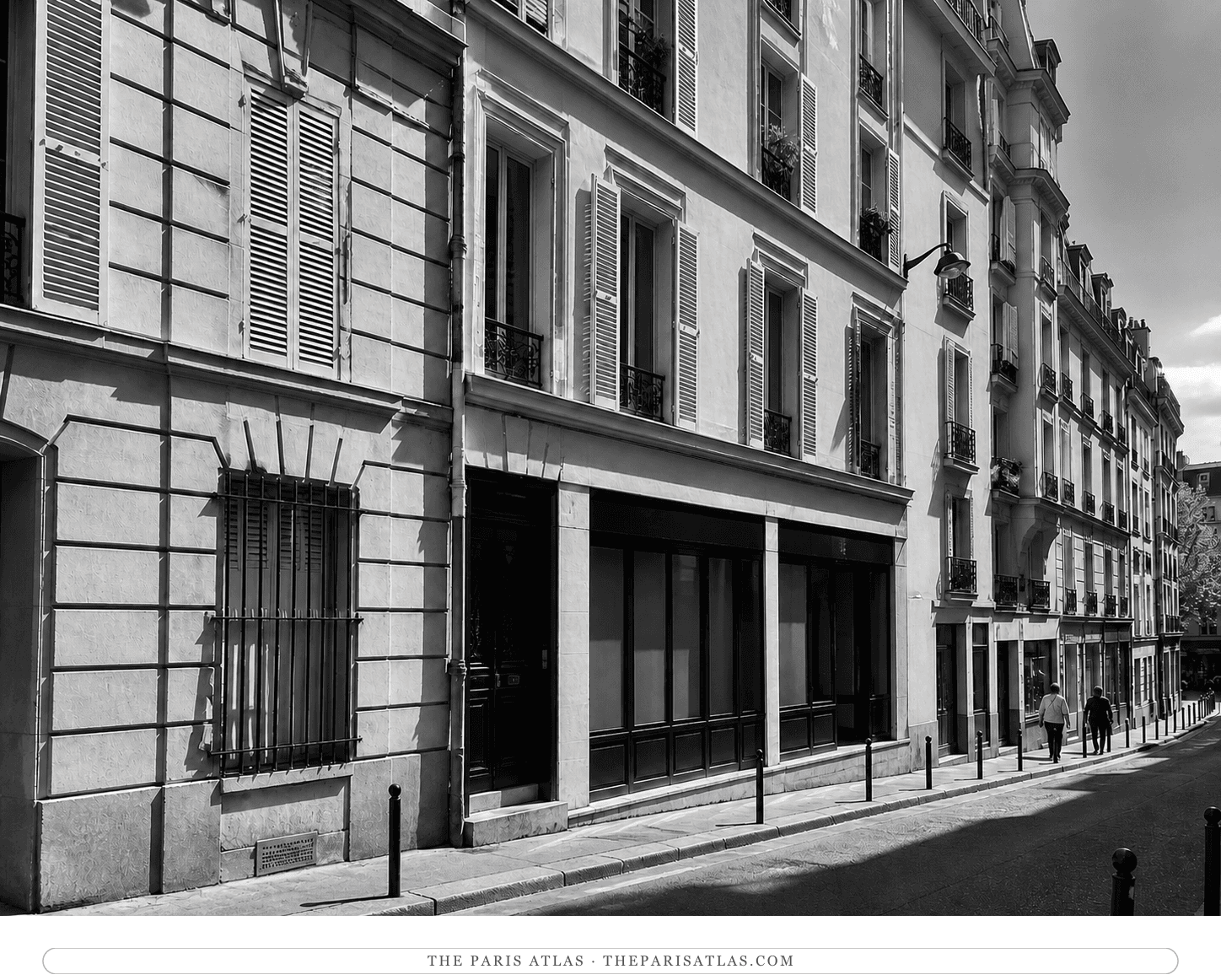
Monique Y. Wells, Stepping Back in Time: Langston Hughes' writings reveal Black Montmartre (2003)

Met · 1924

Albert C. Barnes

Alain Locke arranged the introduction. Hughes joined Barnes and Thomas Monroe for lunch at the Café Royale near the Louvre in 1924.

Langston Hughes, The Big Sea (1940), Distinguished Visitor chapter

Visited · 1924

Café Royale near the Louvre

Hughes received a pneumatique from Albert C. Barnes, joined Barnes and Thomas Monroe at the Café Royale near the Louvre at one o'clock, and ordered wild strawberries. The lunch is certain. Restaurant Léon Royal at 202 rue Saint-Honoré is the strongest site candidate, but the address identification remains probable rather than proved.

Langston Hughes, The Big Sea (1940), Distinguished Visitor chapter

Met · 1961

James Baldwin

In January 1961 the two sat on the same WBAI radio panel on the Black writer in America, alongside Lorraine Hansberry, Alfred Kazin, and Emile Capouya, with Nat Hentoff moderating. The recording survives in the American Archive of Public Broadcasting.

The Negro in American Culture; No. 3; The Negro Writer In America (WBAI, 1961) (1961)

Met · 1961

Lorraine Hansberry

Both sat on the January 1961 WBAI radio panel on the Black writer in America, with James Baldwin, Alfred Kazin, and Emile Capouya. The recording survives in the American Archive of Public Broadcasting.

The Negro in American Culture; No. 3; The Negro Writer In America (WBAI, 1961) (1961)

Collaborated with · 1931–1934

Nancy Cunard

Hughes was among the contributors to Negro: An Anthology, which Cunard compiled between 1931 and 1933 and published in 1934. Their correspondence is in the Cunard collection at the Harry Ransom Center, which names him in its inventory of the letters.

Cunard, Nancy. Negro: Anthology 1931–1933, first edition (Nancy Cunard at Wishart and Co., 1934) — catalogue record; Nancy Cunard: An Inventory of Her Collection (MS-01010)

Collaborated with · 1939

Richard Wright

The two co-wrote the poem "Red Clay Blues", published in New Masses on 1 August 1939 over both names. The magazine's contents page credits it to Richard Wright and Langston Hughes, in that order.

Richard Wright and Langston Hughes, Red Clay Blues (1939)

Collaborated with · 1930–1931

Zora Neale Hurston

Hurston and Hughes wrote the folk comedy Mule Bone together. An authorship and royalties dispute ended both the project and their friendship; the play was not professionally produced until 1991.

Kayla Chenault, A Bone to Pick with the Writing and Fallout of Mule Bone

Met · 1924

Alain Locke

Locke sought Hughes out in Paris in 1924, visited the young poet's Montmartre attic, recruited poems for the project that became The New Negro, and became an important early mentor.

Langston Hughes, The Big Sea (1940); Alain Locke

Sources and further reading

  • Langston Hughes, The Big Sea (1940)
  • Langston Hughes
  • A Reading Guide to Langston Hughes
  • Langston Hughes
  • Steven Lubet and Rachel Maines, This Shawl Belonged to Langston Hughes (True) and Was Worn by One of John Brown's Men at Harpers Ferry (Well . . .)
  • Kayla Chenault, A Bone to Pick with the Writing and Fallout of Mule Bone
  • Kate A. Baldwin, Langston Hughes in the Soviet Union
  • Langston Hughes on Trial
  • The Harlem Renaissance in Black Queer History
  • Langston Hughes Residence
  • Researcher Finds Earlier Birth Date for Langston Hughes (2018)
  • Langston Hughes: D.C.'s Original Busboy Poet (2024)
  • The Spanish Civil War: Hughes and Hemingway (2012)
Browse all authors