The Paris AtlasCharting the artists, works, and places worth returning to.
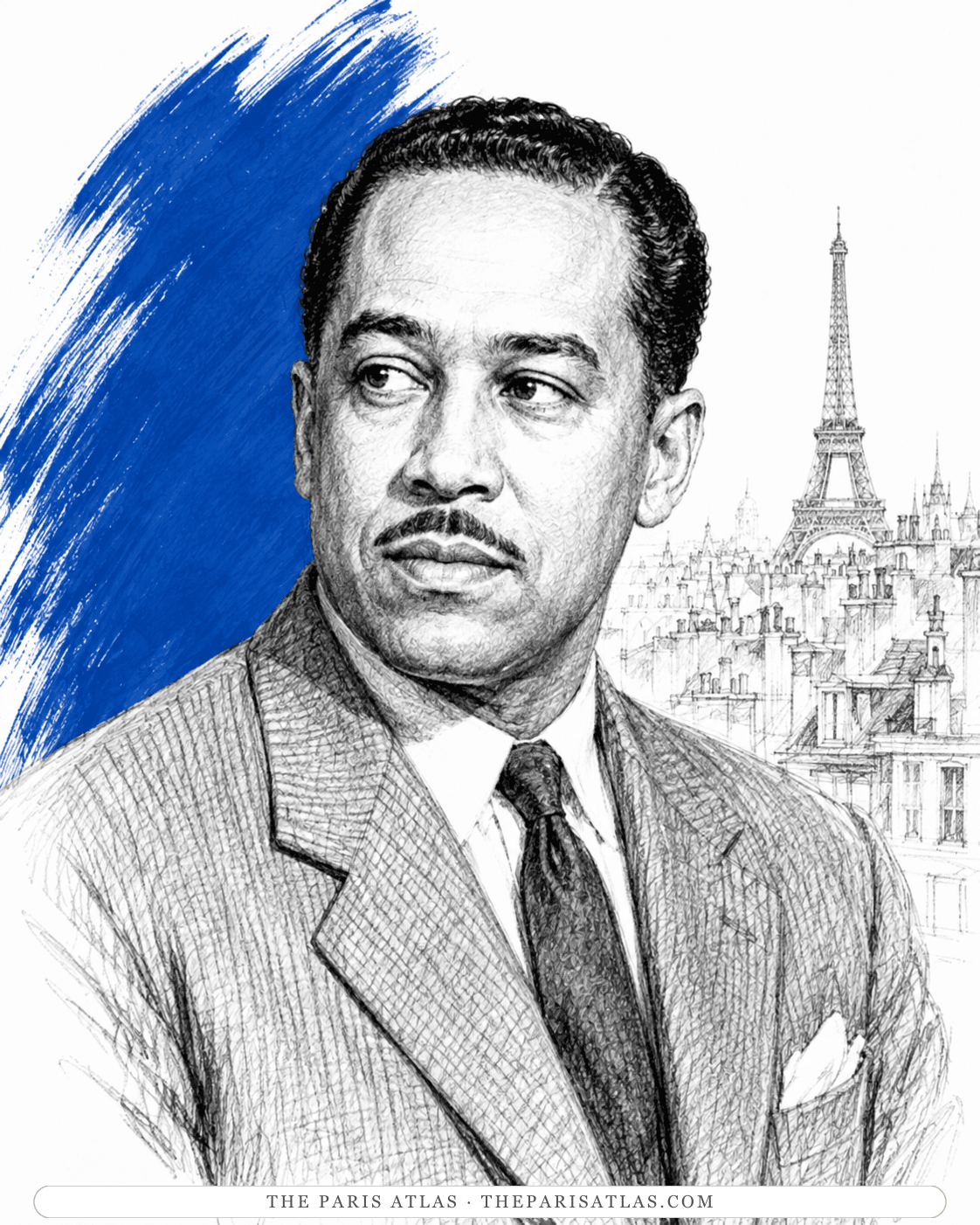
Illustrated portrait of Langston Hughes

Poetry guide

Langston Hughes Poems

Last reviewed Langston Hughes’s profile

Where to start

Begin with “The Negro Speaks of Rivers,” written when Hughes was nineteen. Follow it with “Mother to Son” and “I, Too,” then move to the political argument of “Let America Be America Again” and the compressed warning of “Harlem.” Together the five poems run from 1921 to 1951 and show how his music and politics changed.

The three poems from the 1926 edition of The Weary Blues are in the United States public domain and appear in full. The 1936 and 1951 poems remain in copyright and are represented by short, verified excerpts.

1921–1926

The early poems: rivers, stairs, and the American table

These three poems belong to the beginning of Hughes’s career and to his first collection, The Weary Blues. The images are simple enough to remember after one reading: a river carrying history, a damaged staircase still being climbed, and a table from which the speaker has been excluded. None is simple in what it asks the image to hold.

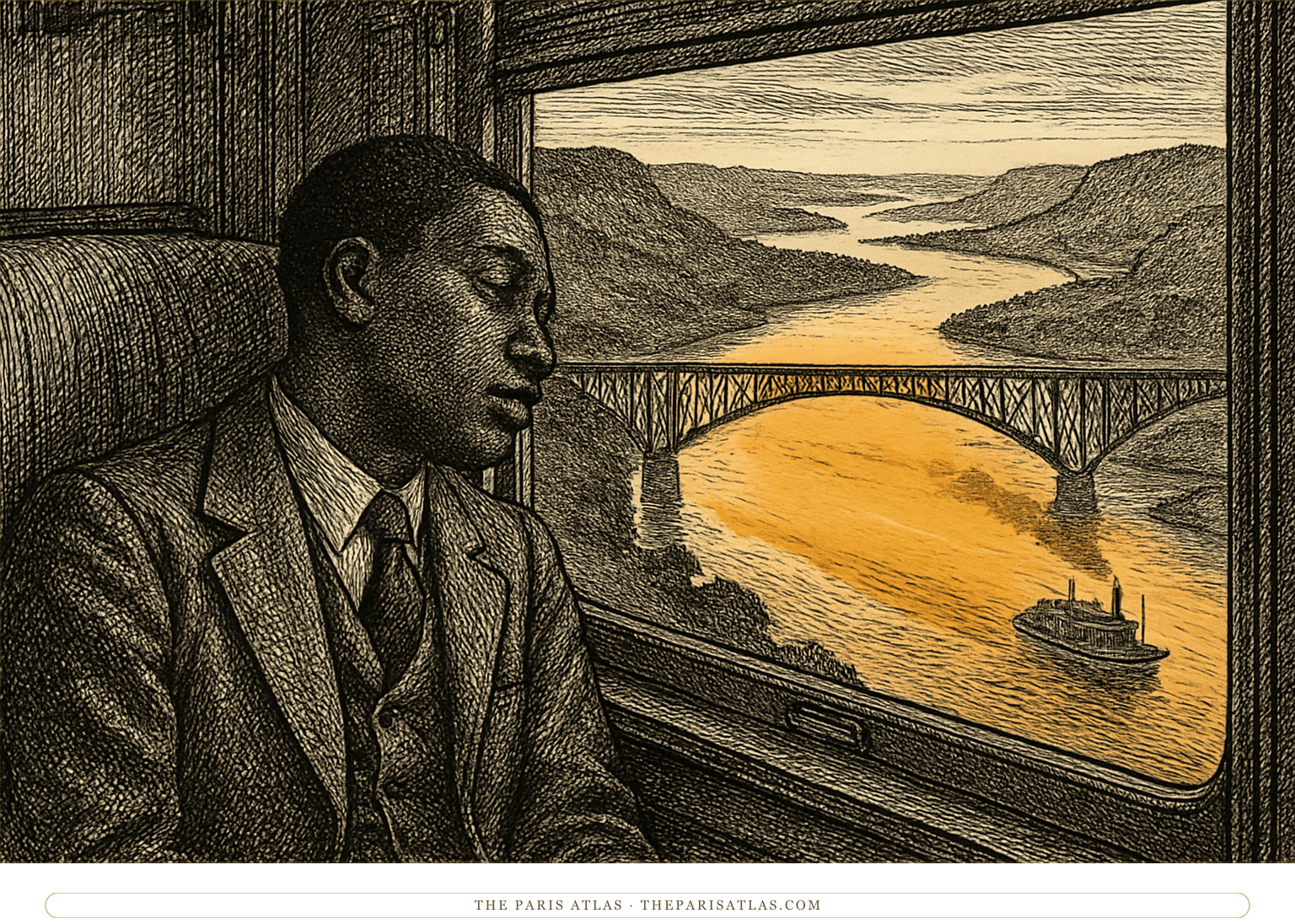
Pen-and-ink illustration for The Negro Speaks of Rivers: a young Black man rests against a train window as the train crosses a bridge over a vast winding river, a paddle-wheel steamboat below and the water swept with a single golden brush stroke

The Negro Speaks of Rivers

1921

The poem Langston Hughes wrote on a train at nineteen — Black history carried through four rivers, from the Euphrates to the Mississippi — and the work that opened his career. Its last line is carved into the floor above his ashes.

Full public-domain text

I’ve known rivers:

I’ve known rivers ancient as the world and older than the flow of human blood in human veins.

My soul has grown deep like the rivers.

I bathed in the Euphrates when dawns were young. I built my hut near the Congo and it lulled me to sleep. I looked upon the Nile and raised the pyramids above it. I heard the singing of the Mississippi when Abe Lincoln went down to New Orleans, and I’ve seen its muddy bosom turn all golden in the sunset.

I’ve known rivers: Ancient, dusky rivers.

My soul has grown deep like the rivers.
Text: The Weary Blues (1926), dedicated to W. E. B. Du Bois, checked against Project Gutenberg eBook #74745.

Read the close reading and publication history
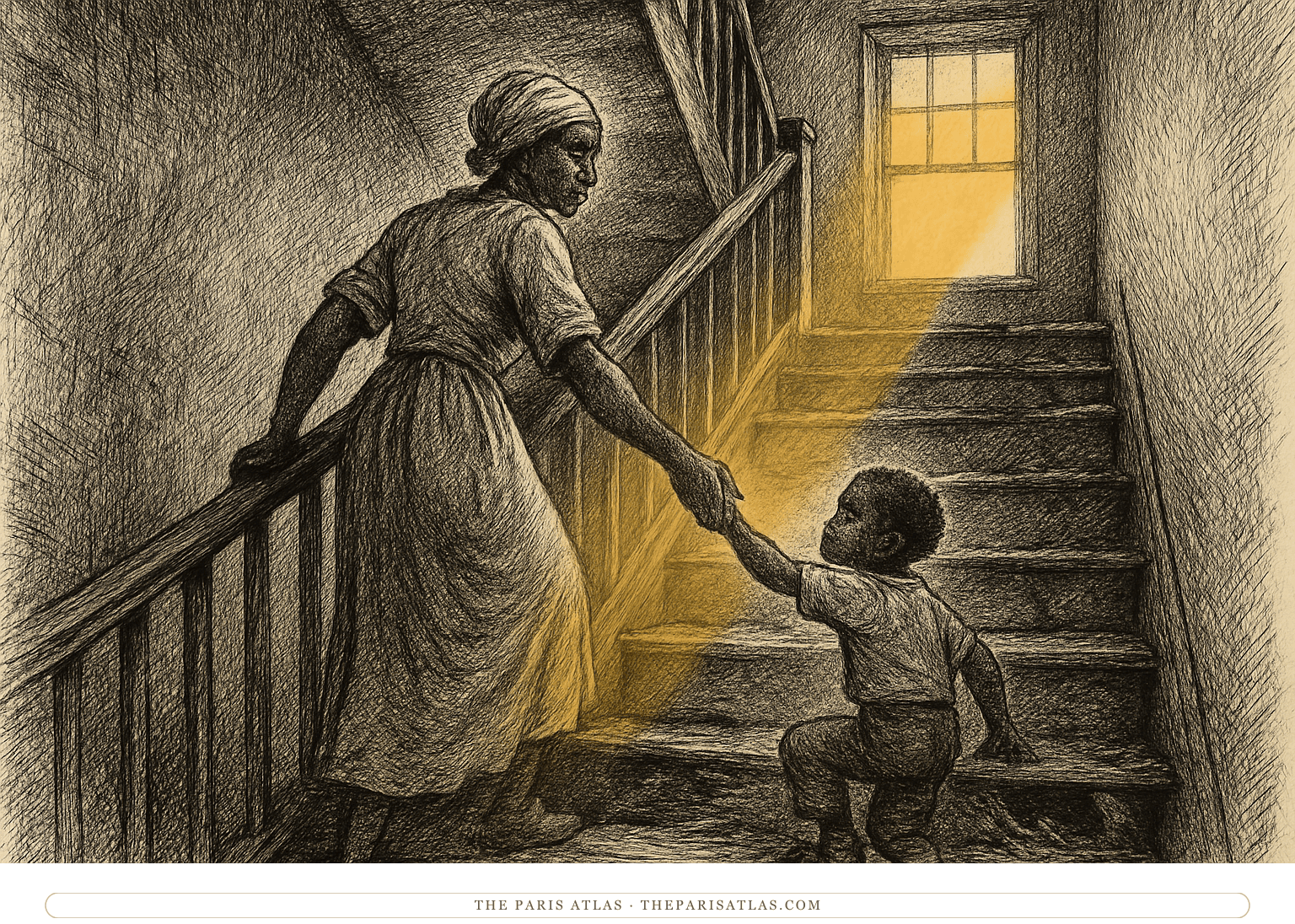
Pen-and-ink illustration for Mother to Son: on a worn tenement staircase a mother in a headwrap grips the rail and reaches a hand back down to her young son on the lower steps, warm gold light falling from a landing window above

Mother to Son

1922

A mother tells her son that life for her "ain't been no crystal stair" — and that she is still climbing. Twenty lines in one woman's voice, published when Langston Hughes was twenty-one, and quoted from pulpits ever since.

Full public-domain text

Well, son, I’ll tell you: Life for me ain’t been no crystal stair. It’s had tacks in it, And splinters, And boards torn up, And places with no carpet on the floor— Bare. But all the time I’se been a-cimbin’ on, And reachin’ landin’s, And turnin’ corners, And sometimes goin’ in the dark Where there ain’t been no light. So boy, don’t you turn back. Don’t you set down on the steps ’Cause you finds it’s kinder hard. Don’t you fall now— For I’se still goin’, honey, I’se still climbin’, And life for me ain’t been no crystal stair.

Text: The Weary Blues (1926), checked against Project Gutenberg eBook #74745. The text below preserves the 1926 edition’s “a-cimbin’” spelling.

Read the close reading and publication history
Pen-and-ink illustration for I, Too: a strong young Black man laughs with his head thrown back at a kitchen table set with a full plate, a formal dining table with empty chairs visible through the doorway behind him, a single yellow stroke of morning light across his shoulders

I, Too

1926

"I, too, sing America." The darker brother is sent to eat in the kitchen when company comes — and announces that tomorrow he will be at the table. Eighteen lines that answer Walt Whitman and close Langston Hughes's first book.

Full public-domain text

I, too, sing America.

I am the darker brother. They send me to eat in the kitchen When company comes, But I laugh, And eat well, And grow strong.

Tomorrow, I’ll sit at the table When company comes. Nobody’ll dare Say to me, “Eat in the kitchen,” Then.

Besides, They’ll see how beautiful I am And be ashamed,—

I, too, am America.

Text: The Weary Blues (1926), printed as “Epilogue”, checked against Project Gutenberg eBook #74745.

Read the close reading and publication history

1936–1951

The later poems: the promise and the delay

The later Hughes kept the plain speech and memorable images, but the structure grew more argumentative. One poem lets a national anthem be interrupted by the people it left out; the other reduces postwar Harlem to a sequence of unanswered questions.

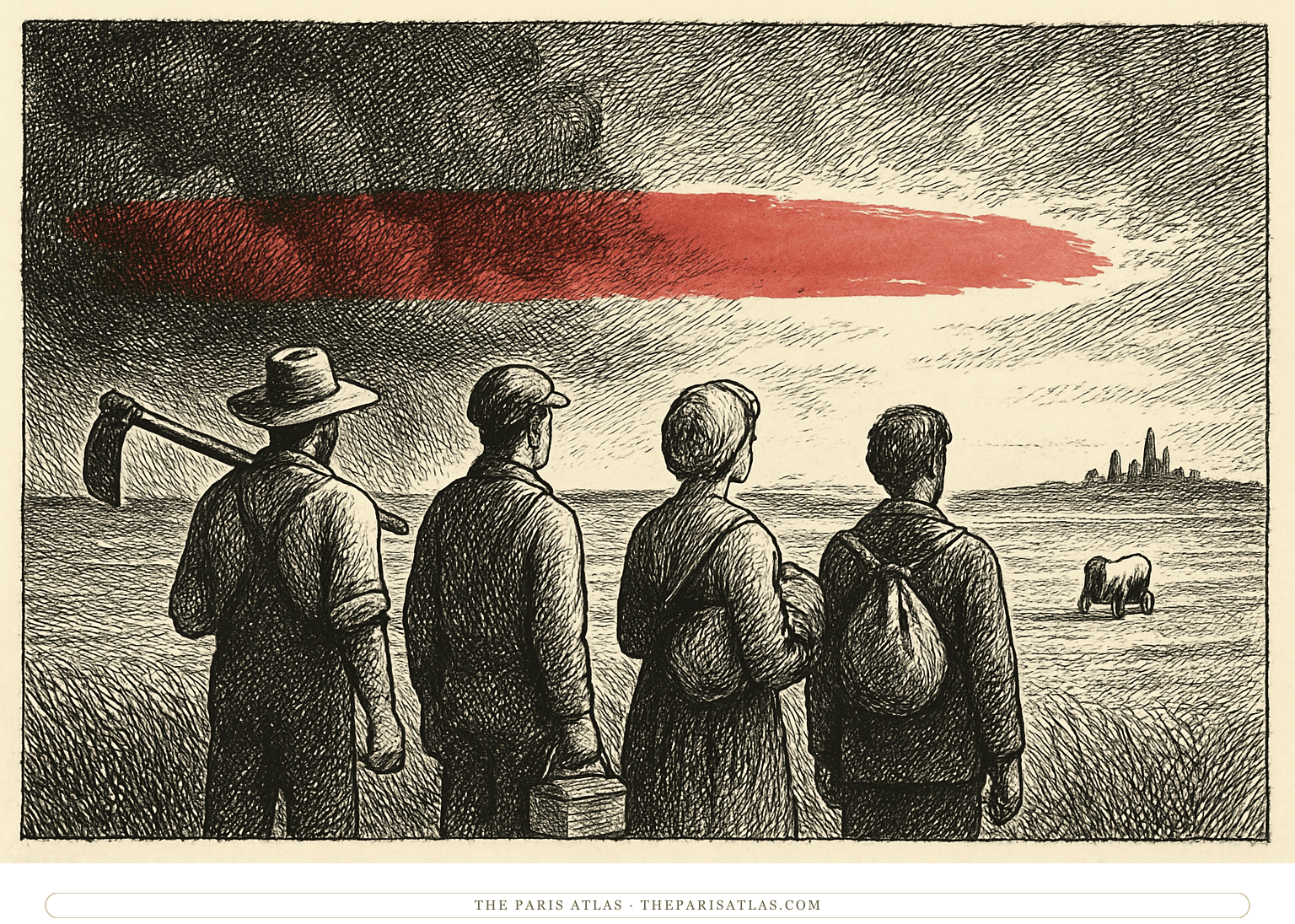
Pen-and-ink illustration for Let America Be America Again: a farmer with a hoe, a worker with a lunch box, a woman with a bundle and a man with a pack stand with their backs turned, looking across open plains toward a distant wagon and far-off skyline under a divided sky crossed by one long red brush stroke

The Depression and the political poems

Let America Be America Again

1936
Let America be America again. Let it be the dream it used to be. Let it be the pioneer on the plain Seeking a home where he himself is free. (America never was America to me.)

Published in 1936, the poem sets an anthem against the parenthetical voice of everyone the national promise excluded. The interruption is the form: the promised country and the lived one speak across each other until Hughes demands “the land that never has been yet.”

Short excerpt only; the poem remains in copyright in the United States.

Read the close reading and publication history
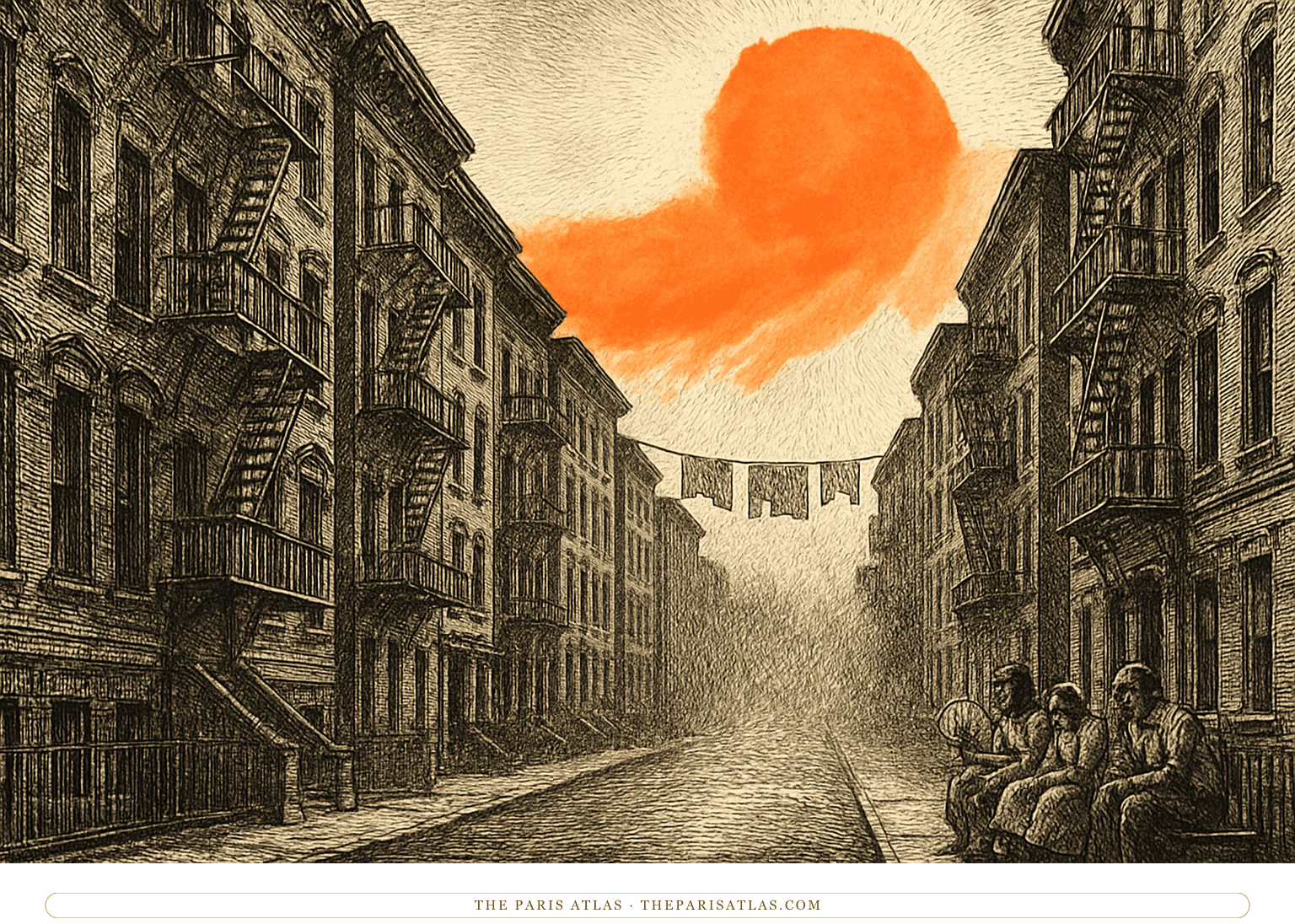
Pen-and-ink illustration for Harlem: a brownstone street with zigzagging fire escapes and laundry strung between buildings in dead-still summer heat, figures fanning themselves on a stoop, and a burning orange sun bleeding down over the rooftops in a single color stroke

Postwar Harlem and the deferred dream

Harlem

1951
What happens to a dream deferred? Does it dry up like a raisin in the sun?

The eleven-line poem from Montage of a Dream Deferred asks six questions and withholds a settled answer. Lorraine Hansberry took the title of A Raisin in the Sun from its second question; the final question turns postponement into a warning.

Short excerpt only; the poem remains in copyright in the United States.

Read the close reading and publication history

Common questions about Langston Hughes’s poems

What is Langston Hughes’s most famous poem?

“Harlem,” which begins “What happens to a dream deferred?”, is probably the most widely recognized. “The Negro Speaks of Rivers,” “Mother to Son” and “I, Too” are nearly as central to his reputation, and each represents a different part of his range.

Which Langston Hughes poem should I read first?

Start with “The Negro Speaks of Rivers.” Hughes wrote it at nineteen, it opened his national career, and its thirteen lines already contain the historical scale and plain musical phrasing he kept for the next four decades. Read “Mother to Son” and “I, Too” next.

Which Langston Hughes poems are in the public domain?

His poems published in The Weary Blues in 1926 are in the United States public domain. This page therefore prints the complete 1926 texts of “The Negro Speaks of Rivers,” “Mother to Son” and the poem later titled “I, Too.” Later work remains protected for now.

Why did Langston Hughes write about dreams so often?

Dreams let Hughes hold private hope and public promises in the same image. In the early poem “Dreams,” they sustain a life; in “Let America Be America Again,” the national dream has never reached everyone; in “Harlem,” repeated postponement makes the dream dangerous.

How did jazz and blues shape Langston Hughes’s poems?

He used their structures, not just their subject matter: repeated lines that change meaning, interruptions, call and response, shifting speakers, and the tension between sorrow and humor. The Weary Blues draws most directly on blues; Montage of a Dream Deferred turns to the faster breaks of bebop.

Can I read Let America Be America Again and Harlem in full here?

No. Both remain in copyright in the United States, so this guide gives short verified excerpts and links to the Atlas pages that explain their publication, form and meaning. Complete authorized texts are available through the publishers and poetry institutions cited there.

Continue with the Langston Hughes books guide or return to his full life and Paris profile.

The Friday Letter

Follow the poems back to the life.

New close readings, publication histories, and the Paris places behind the work — sent occasionally, never daily.

One email a week. No spam, no selling your address. Unsubscribe anytime.