The Paris AtlasCharting the artists, works, and places worth returning to.

Railway station · Quartier de l'Europe · 8e arrondissement

Gare Saint-Lazare

The buildingStill standing
Getting inWalk straight in
What's there nowStill the same

Paris's oldest terminus — Claude Monet's steam-filled train shed, the boat trains to the Atlantic liners, and the platform where the Paris chapters of F. Scott Fitzgerald's Tender Is the Night end in pistol shots.

Address
13 Rue d'Amsterdam, 75008 Paris
Years
1837–present
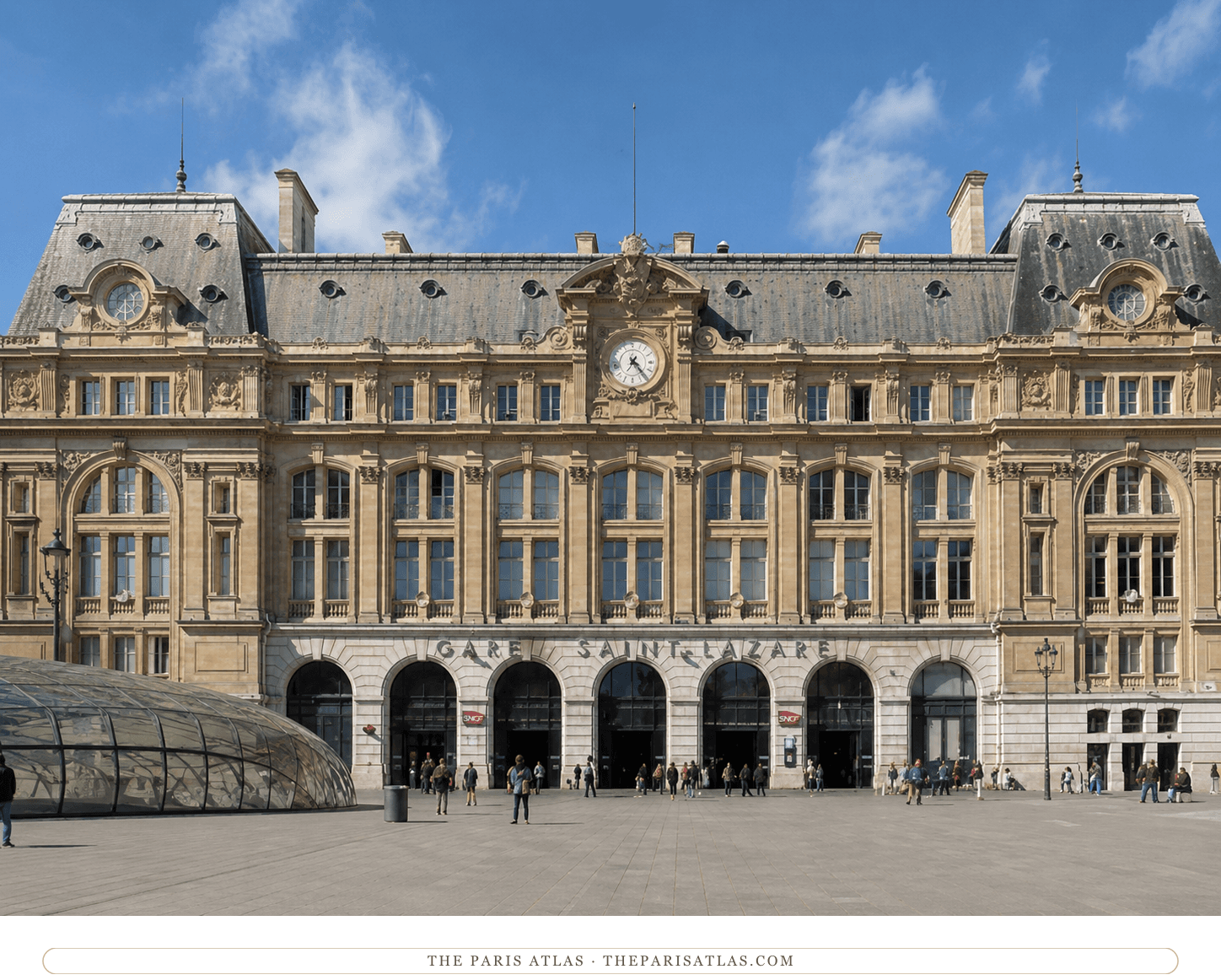
IllustrationThe Gare Saint-Lazare in color — the stone front and forecourt in daylight

The station today — Normandy, the suburbs, and a century of departures behind one clock.

Editorial illustration

The place, briefly

Saint-Lazare is where Parisian railways began: the city's first passenger terminus opened here in 1837, and the station grew with the century until Juste Lisch wrapped it in the great stone façade of 1889, clock at the center, for the Exposition year. The painters arrived before the novelists — Monet set up inside the shed in 1877 and painted its steam and glass a dozen times, and Caillebotte fixed the iron bridge behind it — because Saint-Lazare was the modern world's front door: Normandy, the suburbs, and, crucially, the boat trains that met the transatlantic liners at Le Havre and Cherbourg. For a generation of Americans, Paris began and ended on these platforms.

That is exactly how Tender Is the Night uses it. The novel's Paris section closes at Saint-Lazare: the Divers and the young film star Rosemary Hoyt come to see Abe North — the circle's ruined composer — off on the boat train — hungover, magnificent, already lost — amid the farewells of the American colony. And as the train pulls out, the enameled surface of the expatriate morning cracks: a woman named Maria Wallis draws a revolver and shoots her Englishman dead on the platform, and the party walks out of the station into a changed book. Fitzgerald chose his station precisely — the glamorous threshold between the Paris idyll and the Atlantic's real world, violence arriving exactly at the point of departure.

For Langston Hughes, the platform held a real farewell. In March 1924, the dancer Sonya found a contract in Le Havre, and Hughes came with her to Saint-Lazare on a rainy afternoon. She cried, waved through the carriage window as the train pulled out, and disappeared from his life; in The Big Sea, he ends the episode simply by saying that he never saw her again.

The station's own story never paused: it remains Paris's great commuter machine, second only to the Nord in traffic, its Lisch front restored and a glass canopy added to the forecourt in the 2010s renovation. The clock still presides; the boat trains are gone, but the platforms still perform a dozen small departures a minute for anyone collecting material.
Key facts

Opened
1837 — the first railway terminus in Paris
The façade
Juste Lisch's stone front and clock, built for the 1889 Exposition
The painters
Monet painted the shed's steam and glass a dozen times in 1877
In Fitzgerald's Tender Is the Night
The boat-train farewell — and the shots on the platform that end the Paris idyll
Langston Hughes
Said goodbye to Sonya here in March 1924 as she left to dance in Le Havre
Today
Paris's great commuter hub — restored in the 2010s, glass canopy on the forecourt

Documentary photographs

Archival and present-day photographs, reproduced with rights verified.

The cour du Havre about 1910 — the station front as the boat-train generation would have met it, arriving from Le Havre and the Atlantic crossing.1910 · Photographer unknown, contemporary postcard · Public domain
The Lisch façade and its clock — Paris's oldest terminus, wearing its newest glass at the forecourt.Editorial illustration
The station today — Normandy, the suburbs, and a century of departures behind one clock.Editorial illustration

Timeline

  1. 1837

    The first passenger terminus in Paris opens — the railway age arrives at the Quartier de l'Europe.

  2. 1877

    Monet paints the train shed from inside — steam, glass, and iron, a dozen canvases.

  3. 1889

    Juste Lisch's façade and clock complete the station for the Exposition.

  4. 1920s

    The boat trains: Le Havre and Cherbourg for the liners — the American colony's revolving door.

  5. March 1924

    Langston Hughes sees Sonya off for Le Havre on a rainy afternoon; he never sees her again.

  6. 1934

    Fitzgerald ends the Paris chapters of Tender Is the Night on the platform — a farewell, a revolver, and the idyll over.

  7. Today

    The commuter machine runs on — Lisch's front restored, new glass on the forecourt.

On the map

Related books

Cover of Tender Is the Night by F. Scott Fitzgerald

Setting of the story

Tender Is the Night

F. Scott Fitzgerald · 1934

The boat-train farewell that closes the novel's Paris idyll: Abe North departing in ruins, and Maria Wallis's revolver shots on the platform as the train pulls out — violence timed exactly to the point of departure.

Cover of The Big Sea by Langston Hughes

Recalled in the memoir

The Big Sea

Langston Hughes · 1940

Hughes recalls saying goodbye to Sonya here on a rainy March afternoon in 1924 as she left for a dancing engagement in Le Havre.

Writers who knew this place

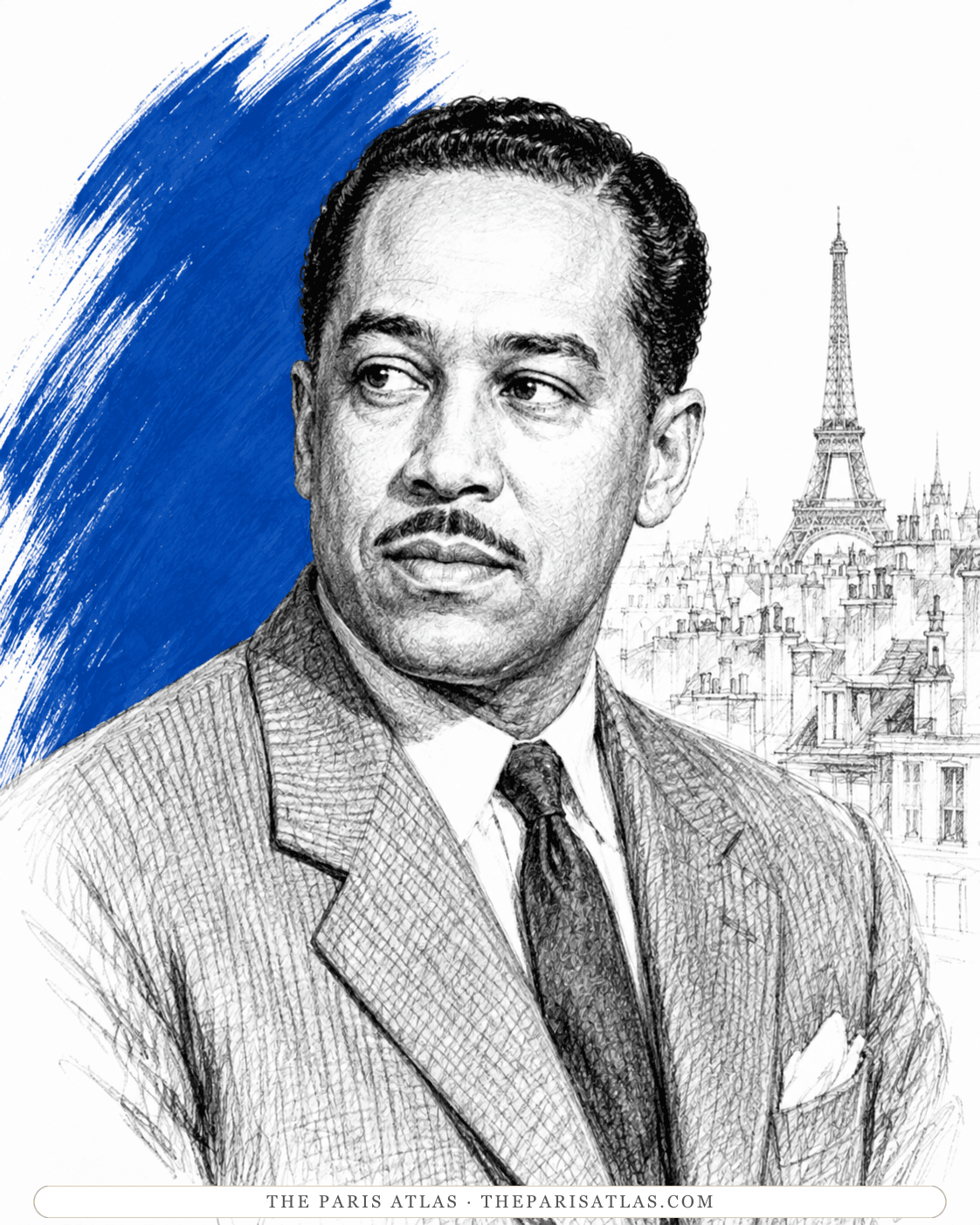
Illustrated portrait of Langston Hughes

Langston Hughes

American · American poet at the center of the Harlem Renaissance. He spent most of 1924 in Montmartre, washing dishes at the Grand Duc nightclub, and told the story in his memoir The Big Sea.

Visited by

Hughes said goodbye to Sonya here on a rainy March afternoon in 1924 as she left for a dancing engagement in Le Havre.

Langston Hughes, The Big Sea (1940)

Illustrated portrait of F. Scott Fitzgerald

F. Scott Fitzgerald

American · The Jazz Age's laureate — famous at twenty-three, author of Gatsby at twenty-eight, and owner of the longest posthumous comeback in American letters.

F. Scott Fitzgerald wrote about Gare Saint-Lazare in Tender Is the Night.

Within walking distance

The Friday Letter

Paris, one address at a time.

The cafés, studios, and walk-up flats where the work was made — one story from the map in every letter.

One email a week. No spam, no selling your address. Unsubscribe anytime.