The Paris AtlasCharting the artists, works, and places worth returning to.
  • Author
  • Playwright
  • Anthropologist
  • Folklorist
· American · 1891–1960

Zora Neale Hurston

American novelist, folklorist and anthropologist who grew up in self-governing Black Eatonville, became an electric presence in the Harlem Renaissance, and wrote Their Eyes Were Watching God.

Details

Lived
1891–1960
Born
7 January 1891
Birthplace
Notasulga, Alabama
Died
28 January 1960 · aged 69
Place of death
Fort Pierce, Florida
Nationality
American
Roles
AuthorPlaywrightAnthropologistFolklorist

About Zora Neale Hurston

Zora Neale Hurston was a novelist, folklorist, anthropologist and playwright who treated Black Southern life as a source of knowledge, comedy, beauty and literary form. She collected sermons, songs, folktales, work chants and life histories, then carried their voices into fiction without translating them into the language respectable publishers expected. Her best-known novel, Their Eyes Were Watching God (1937), is now a classic of American literature. During her lifetime, however, fame and poverty repeatedly occupied the same room.

She was one of the liveliest figures of the Harlem Renaissance, a Barnard-trained anthropologist who studied under Franz Boas, a field researcher who joined the communities she documented, and a writer whose ear for speech changed what an American novel could sound like. She was also politically independent to the point of isolation, capable of falling out spectacularly with friends and movements that expected agreement. The contradictions belong to the story: Hurston resisted being made representative of anyone but herself.

Eatonville: growing up inside a Black town

Hurston was born on 7 January 1891 in Notasulga, Alabama, but moved as a small child to Eatonville, Florida. She later preferred to name Eatonville as her birthplace and frequently reduced her age on official forms. The documentary record supports Notasulga and 1891; the self-invention is itself part of her biography, not a mistake to repeat silently.

Eatonville was one of the earliest incorporated Black municipalities in the United States. Hurston grew up seeing Black people as mayors, shopkeepers, teachers, preachers and storytellers rather than as exceptions in a white-run town. The men talking on Joe Clarke's store porch and the women exchanging news across yards gave her a first education in how stories are performed. Eatonville later became both a setting and a method: she wrote from inside a community whose speech had its own precision, jokes and authority.

Her mother, Lucy Ann Potts Hurston, encouraged her curiosity and ambition. After Lucy died in 1904, Hurston's relationship with her father and stepmother deteriorated. The following years were unstable. She moved between relatives and jobs, disappeared for stretches from the public record, and eventually worked as a maid to an actress in a traveling theatrical company. The job brought books, movement and another route toward education.

New York, Barnard and the Harlem Renaissance

Hurston reached New York in 1925 with, as she later put it, little money and a great deal of hope. She had already published the story “Drenched in Light” and won prizes at Opportunity magazine's literary awards. Harlem supplied the circle: Langston Hughes, Countee Cullen, Wallace Thurman, Dorothy West, Aaron Douglas, Alain Locke, Carl Van Vechten and the publishers, patrons and parties clustered around the movement's small magazines.

She entered Barnard College in 1925 and became its only Black student. The novelist Fannie Hurst helped her obtain admission and remained an important friend. At Barnard and Columbia, the anthropologist Franz Boas trained her in fieldwork and argued against biological theories of racial hierarchy. Hurston earned her Barnard degree in 1928 and continued graduate study at Columbia, working with Boas, Ruth Benedict and Melville Herskovits.

Academic training did not domesticate her. At Harlem parties she was famous for stories delivered in a booming voice and for cutting through pretension. With Hughes, Thurman and Aaron Douglas she helped make Fire!!, the rebellious one-issue magazine of 1926. The younger writers wanted Black art to include sex, poverty, satire, queer life, rural speech and anything else respectability preferred to leave out.

The spyglass of anthropology

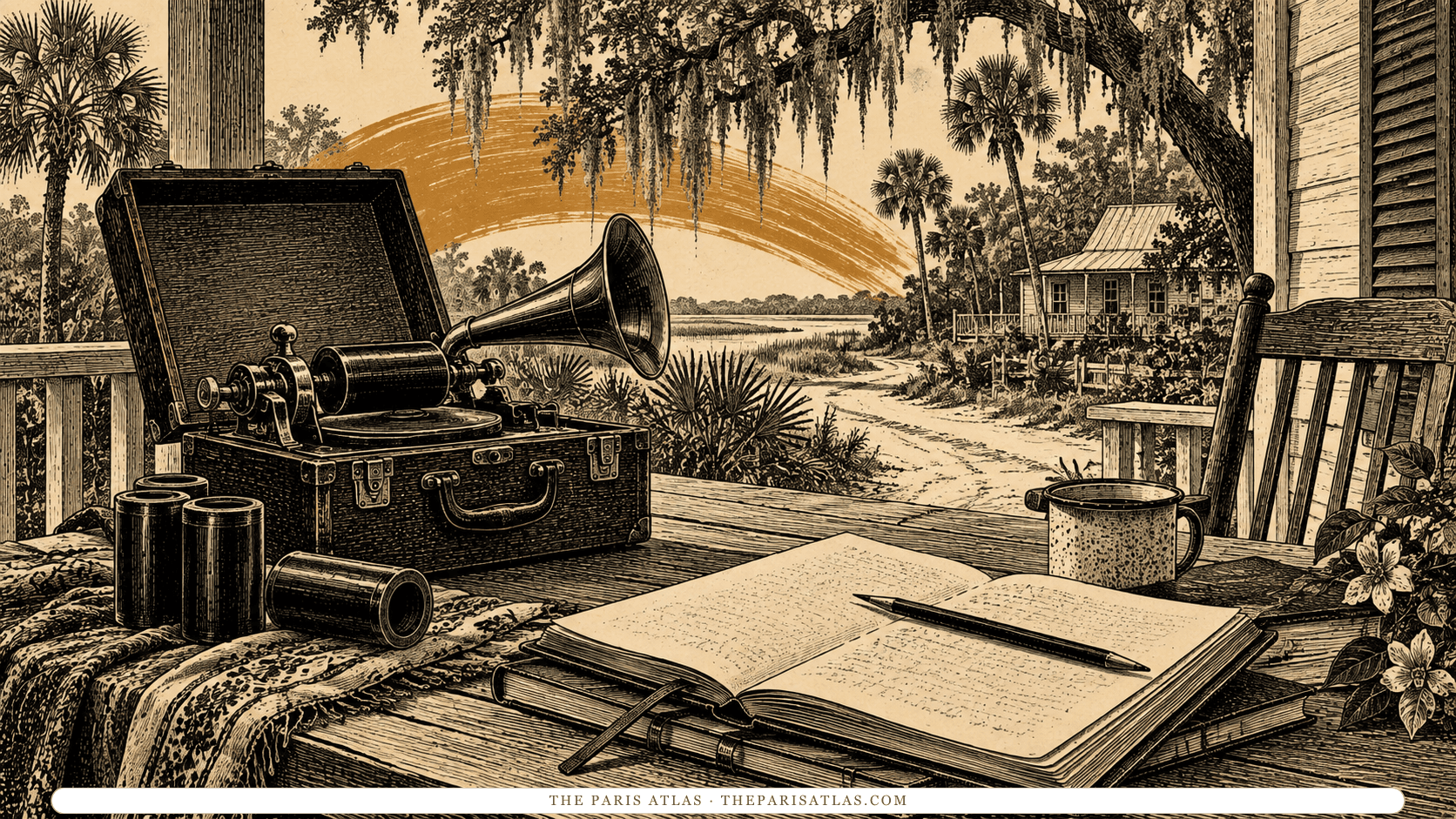
Hurston returned south to collect folklore in Florida, Alabama and Louisiana. Her first trips were difficult because academic distance made people wary; she found more by presenting herself as the local woman she also was. She joined work camps, listened on porches, recorded songs, filmed dances and entered religious ceremonies. Her method unsettled the usual hierarchy between observer and subject: she did not pretend that the person holding the notebook stood outside the culture being described.

The patron Charlotte Osgood Mason financed part of this work, while also imposing demands over how the material could be used. Hurston later worked in the Caribbean, studying religious practice in Jamaica and Haiti, and with the Federal Writers' Project in Florida. Her fieldwork fed Mules and Men (1935), Tell My Horse (1938), plays, essays and all four novels. The fiction and anthropology are not separate careers: each taught the other how to listen.

One of her most important interviews did not become a book in her lifetime. In 1927 she met Cudjo Lewis, born Oluale Kossola, a survivor of the Clotilda, the last known ship to carry captive Africans illegally into the United States. Hurston shaped his account in his own speech as Barracoon. Publishers rejected the manuscript, and it finally appeared in 2018, revealing how early she had understood that preserving a person's voice could matter more than smoothing it for print.

Four novels and a seven-week masterpiece

Jonah's Gourd Vine (1934), her first novel, turns the life of a flawed Southern preacher into a story about language, charisma, marriage and appetite. Mules and Men followed in 1935. In 1937, while conducting research in Haiti, Hurston wrote Their Eyes Were Watching God in seven weeks. Janie Crawford's journey through three marriages toward a voice of her own joined Eatonville storytelling to lyrical narration and gave Hurston the book by which most readers first meet her.

The novel was not universally welcomed. Richard Wright objected that its folk humor entertained white readers and lacked the protest he wanted from Black fiction. Hurston rejected the premise behind that criticism: Black characters did not need to behave as political representatives before they could be fully imagined. Moses, Man of the Mountain (1939), the autobiography Dust Tracks on a Road (1942), and Seraph on the Suwanee (1948) continued a career that never settled into one expected position.

Mule Bone and the end of a friendship

Hurston and Langston Hughes began writing Mule Bone, a comedy built from Black Southern folktales, in 1930. They hired Louise Thompson to type the script. Disagreement about Thompson's share, their patron Charlotte Mason, authorship and Hurston's circulation of a revised manuscript turned the collaboration into a public rupture. Both writers left accounts that favored their own position; the secure fact is that the play was jointly made and the dispute ended a close friendship.

Mule Bone remained unproduced for sixty years. Its Broadway premiere came in 1991, long after both authors were dead. The delay is one of the Harlem Renaissance's strangest afterlives: a comedy intended to preserve the pleasure and verbal play of Black folk culture became inseparable from the bitterness of who had the right to claim it.

Fame, poverty and political solitude

Hurston was well known but rarely secure. In 1942 Dust Tracks on a Road won the Anisfield-Wolf Book Award, yet publishing income remained erratic. A false criminal accusation in 1948 was dismissed, but the publicity damaged her. Her political positions also separated her from much of the Black literary left: she distrusted federal power, opposed communism, and criticized the Brown v. Board of Education decision from a defense of Black institutions that many contemporaries found perverse or indefensible.

Her books slipped out of print. She worked at different times as a teacher, librarian, journalist and domestic servant. After a stroke in 1959, she entered the St. Lucie County Welfare Home in Fort Pierce, Florida, and died there on 28 January 1960. She was buried in an unmarked grave. The poverty was real; the later myth that she had been forgotten by absolutely everyone is too simple. Friends and local readers remembered her, even when the national literary world did not know what to do with her work.

Alice Walker and the return of Zora Neale Hurston

In 1973 the writer Alice Walker traveled to Fort Pierce looking for Hurston's grave. She placed a marker there naming Hurston “A Genius of the South” and published an account of the search in Ms. magazine in 1975. Walker was part of a larger recovery led by Black women writers and scholars, but her essay gave that recovery a vivid public story and helped return Hurston's books to classrooms and print.

Their Eyes Were Watching God is now read far beyond the categories once used to contain it. Hurston's larger achievement is equally visible: she showed that folklore was not raw material waiting for an educated writer to improve it. The porch story, sermon, work song, boast, insult and joke were already forms. Her task was to hear their intelligence and build books spacious enough to let it live.

Life events

  1. 1891

    Born in Notasulga, Alabama, on 7 January; moves to Eatonville, Florida, as a small child.

    Zora Neale Hurston

  2. 1925

    Arrives in New York, wins recognition at the Opportunity awards, and enters Barnard College as its only Black student.

    Zora Neale Hurston at Barnard

  3. 1926

    Joins Langston Hughes, Wallace Thurman, Aaron Douglas and others in producing the one-issue magazine Fire!!

  4. 1928

    Receives her Barnard degree and continues anthropological study at Columbia under Franz Boas.

    Zora Neale Hurston at Barnard

  5. 1930–1931

    Writes Mule Bone with Langston Hughes; the authorship dispute ends their friendship.

    Kayla Chenault, A Bone to Pick with the Writing and Fallout of Mule Bone

  6. 1934

    Publishes her first novel, Jonah's Gourd Vine.

    Zora Neale Hurston at Barnard

  7. 1935

    Publishes Mules and Men, built from her Southern folklore fieldwork.

    Zora Neale Hurston

  8. 1937

    Writes Their Eyes Were Watching God in Haiti and publishes it that September.

    Zora's Place

  9. 1939

    Works with the Florida Federal Writers' Project, recording and preserving local songs and stories.

    Preserving Songs and Culture: Zora Neale Hurston and the Federal Writers' Project (2015)

  10. 1942

    Publishes Dust Tracks on a Road, winner of an Anisfield-Wolf Book Award.

    Zora's Place

  11. 1960

    Dies in Fort Pierce, Florida, on 28 January and is buried in an unmarked grave.

  12. 1973–1975

    Alice Walker locates the grave, places a marker there, and publishes the search that helps revive Hurston's reputation.

    Zora's Place

  13. 2018

    Barracoon, her account of Clotilda survivor Cudjo Lewis, is published nine decades after she recorded it.

    Sydney Coleman, Zora Neale Hurston and Cudjo's Own Story

People they knew

Documented connections — every one carries its source.

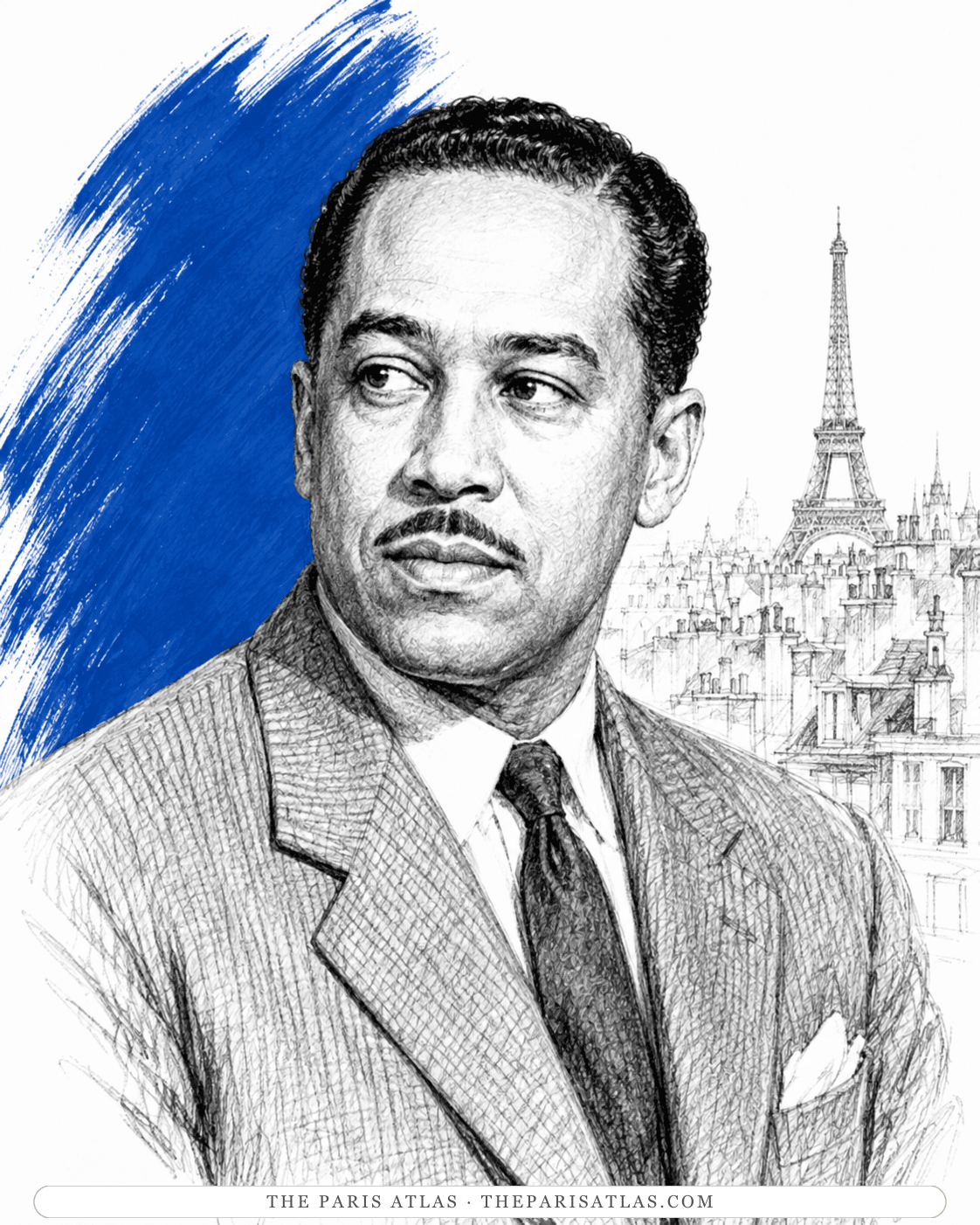
Illustrated portrait of Langston Hughes

Langston Hughes

  • Poet
  • Author
  • Playwright
  • +1

Collaborated with · 1930–1931

Hurston and Hughes wrote the folk comedy Mule Bone together. An authorship and royalties dispute ended both the project and their friendship; the play was not professionally produced until 1991.
Kayla Chenault, A Bone to Pick with the Writing and Fallout of Mule Bone

Movements

The artistic and literary currents this life ran through.

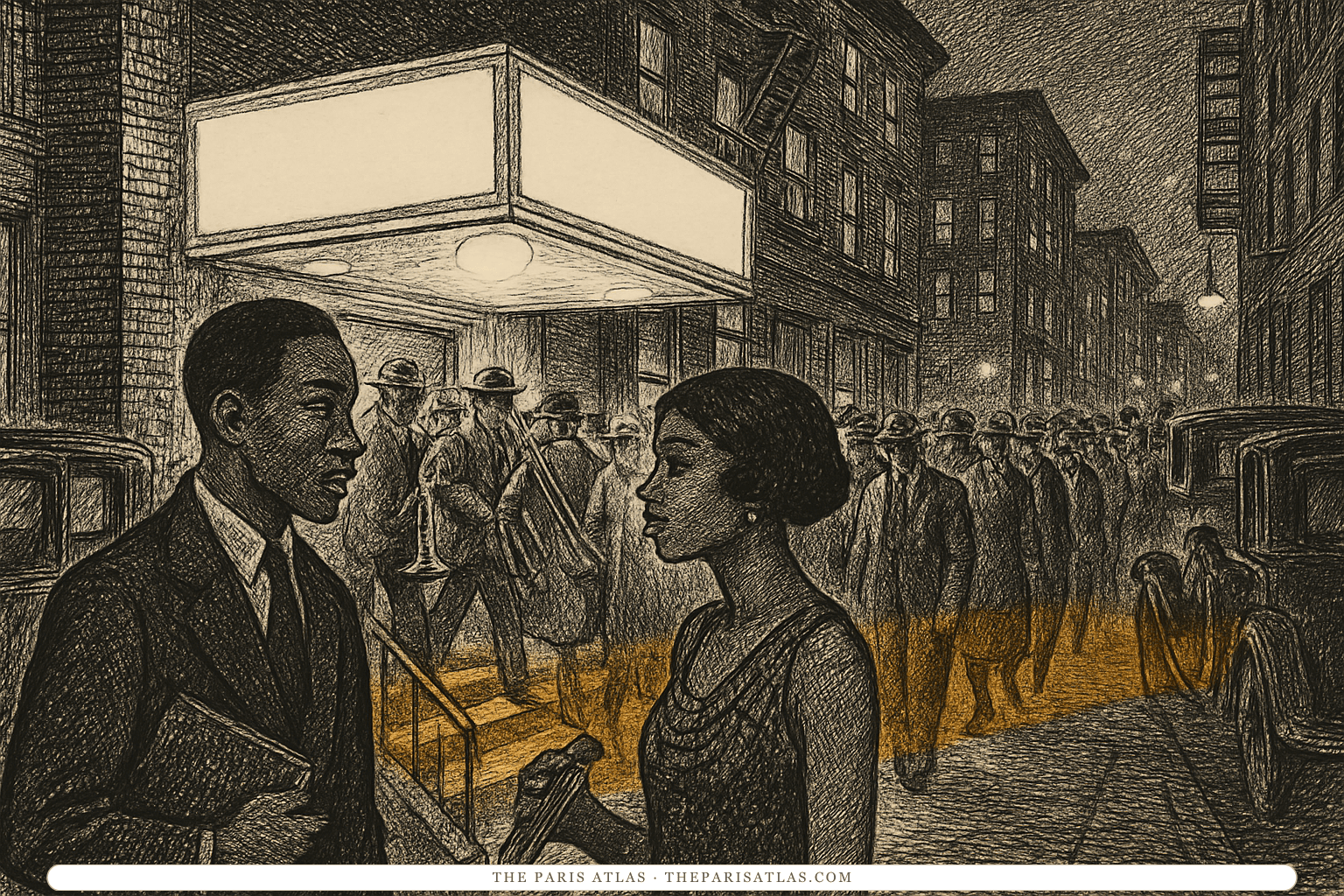
Pen-and-ink illustration of a 1920s Harlem avenue at night: a young Black poet holding a book talks with a woman in a beaded dress while musicians carry a trumpet and trombone into a club under a glowing marquee, the crowd and brownstones behind them swept with one gold brush stroke

Cultural movement · c. 1918 – mid-1930s

The Harlem Renaissance

Hurston arrived in New York in 1925, published in the movement's magazines, joined the younger writers behind Fire!!, and became one of its defining novelists and folklorists.

Zora Neale Hurston; Charles King, What Zora Went Looking For (2021)

Questions about Zora Neale Hurston

What is Zora Neale Hurston best known for?

Zora Neale Hurston is best known for the 1937 novel Their Eyes Were Watching God. She was also a pioneering folklorist and anthropologist whose fieldwork produced Mules and Men, Tell My Horse and the posthumously published Barracoon.

Was Zora Neale Hurston part of the Harlem Renaissance?

Yes. Hurston arrived in New York in 1925, published in the movement's magazines, joined the writers and artists behind Fire!!, and became one of the Harlem Renaissance's defining authors—even though much of her most important writing was rooted in Florida and appeared after the movement's peak.

Where was Zora Neale Hurston born?

The documentary record places Hurston's birth in Notasulga, Alabama, on 7 January 1891. She preferred to identify Eatonville, Florida, where she grew up, as her birthplace and often reported herself as younger than she was.

What did Zora Neale Hurston study at Barnard?

Hurston studied anthropology at Barnard and Columbia under Franz Boas and worked with scholars including Ruth Benedict and Melville Herskovits. She earned her Barnard degree in 1928 and used that training in fieldwork across the American South and Caribbean.

Were Zora Neale Hurston and Langston Hughes friends?

They were close friends and collaborators during the Harlem Renaissance, but their friendship ended during a bitter dispute over the jointly written play Mule Bone in 1930–1931. The play was not professionally produced until 1991.

Why was Zora Neale Hurston buried in an unmarked grave?

Hurston died in poverty in 1960, after much of her work had gone out of print, and was buried without a marker in Fort Pierce. Alice Walker located the grave in 1973 and placed a headstone naming her “A Genius of the South.”

How was Zora Neale Hurston rediscovered?

Black women writers and scholars restored Hurston to print and study during the 1970s. Alice Walker's search for her grave and 1975 essay gave the revival a widely read public story; new editions then brought Their Eyes Were Watching God and Hurston's other work to generations of readers.

Sourced claims

Every connection the graph holds for Zora, with the evidence behind it.

Associated with · 1925

The Harlem Renaissance

Hurston arrived in New York in 1925, published in the movement's magazines, joined the younger writers behind Fire!!, and became one of its defining novelists and folklorists.

Zora Neale Hurston; Charles King, What Zora Went Looking For (2021)

Collaborated with · 1930–1931

Langston Hughes

Hurston and Hughes wrote the folk comedy Mule Bone together. An authorship and royalties dispute ended both the project and their friendship; the play was not professionally produced until 1991.

Kayla Chenault, A Bone to Pick with the Writing and Fallout of Mule Bone

Sources and further reading

  • Zora Neale Hurston
  • Zora Neale Hurston at Barnard
  • Zora's Place
  • Charles King, What Zora Went Looking For (2021)
  • Sydney Coleman, Zora Neale Hurston and Cudjo's Own Story
  • Preserving Songs and Culture: Zora Neale Hurston and the Federal Writers' Project (2015)
  • Zora Neale Hurston
  • Kayla Chenault, A Bone to Pick with the Writing and Fallout of Mule Bone
Browse all authors