The Paris AtlasCharting the artists, works, and places worth returning to.

Cultural movement · Harlem, New York · c. 1918 – mid-1930s

The Harlem Renaissance

The flowering of Black American literature, music, and art centered on Harlem between the end of the First World War and the mid-1930s — and its Paris outpost in the nightclubs of Montmartre.

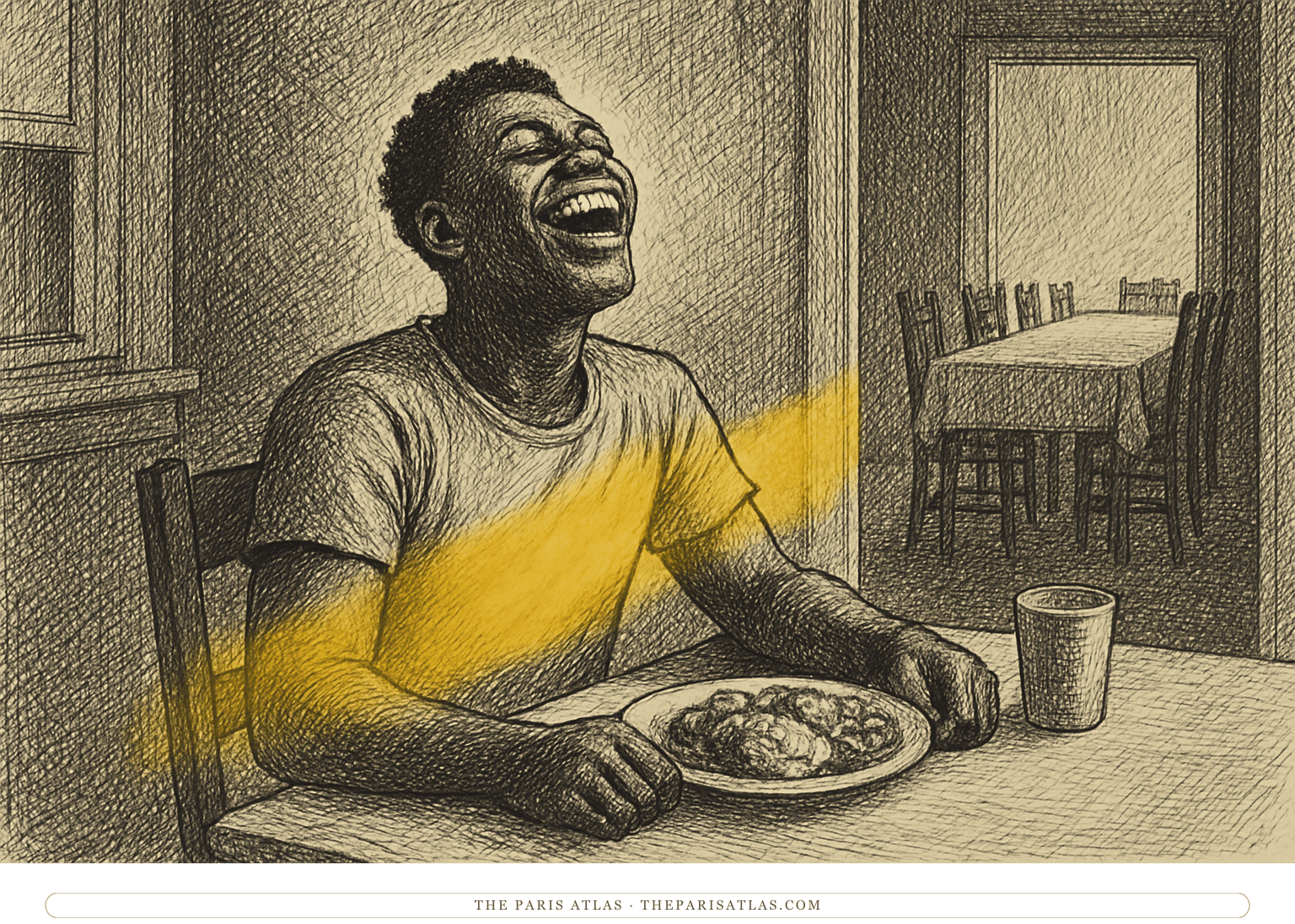
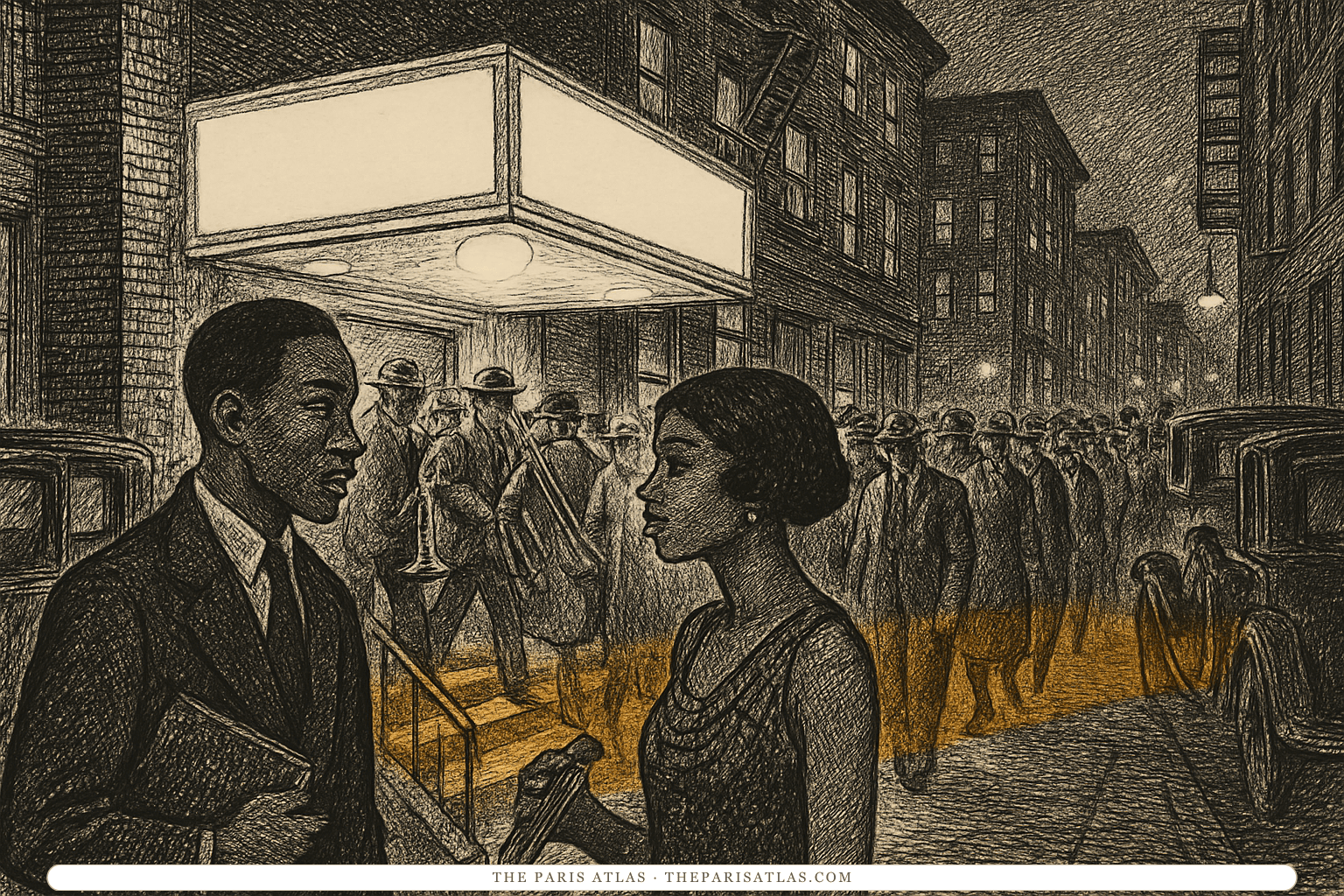
Pen-and-ink illustration of a 1920s Harlem avenue at night: a young Black poet holding a book talks with a woman in a beaded dress while musicians carry a trumpet and trombone into a club under a glowing marquee, the crowd and brownstones behind them swept with one gold brush stroke
Editorial illustrationA Harlem avenue at night, drawn for the Atlas — the poet, the musicians, and the club door all on one block.

Three square miles that changed American culture

The Harlem Renaissance was the flowering of Black American literature, music, visual art, theater, and thought centered on the Harlem section of Manhattan between the end of the First World War and the mid-1930s. It had no manifesto and no membership roll; it was a concentration of talent in one place at one time, and the institutions — magazines, publishers, nightclubs, patrons — that turned the concentration into work.

The place itself was new. The Great Migration had been drawing Black Southerners north since the turn of the century, and Harlem — about three square miles — drew nearly 175,000 African Americans, the largest concentration of Black people in the world at the time. Sharecroppers' children, an educated middle class, West Indian immigrants, preachers, musicians, and writers arrived with, in the Smithsonian's phrase, a shared determination to forge a new identity as free people.

The movement's art forms had one thing in common: they presented Black life in America as it actually was, without apology. Its energy also ran beyond Manhattan — Cleveland, Chicago, Los Angeles — and, as this atlas maps in detail, across the Atlantic to a hillside in Paris.

Alain Locke and The New Negro

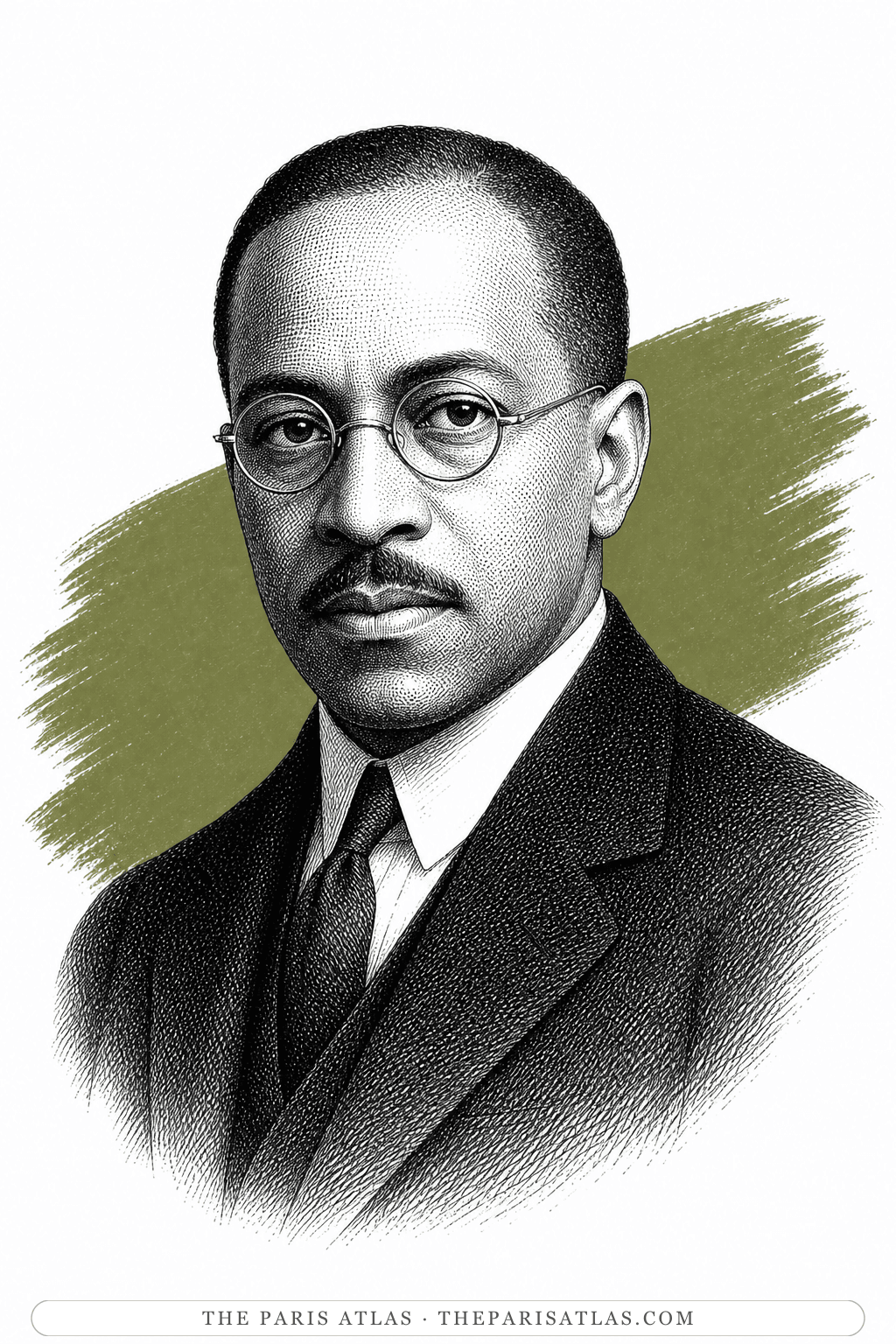
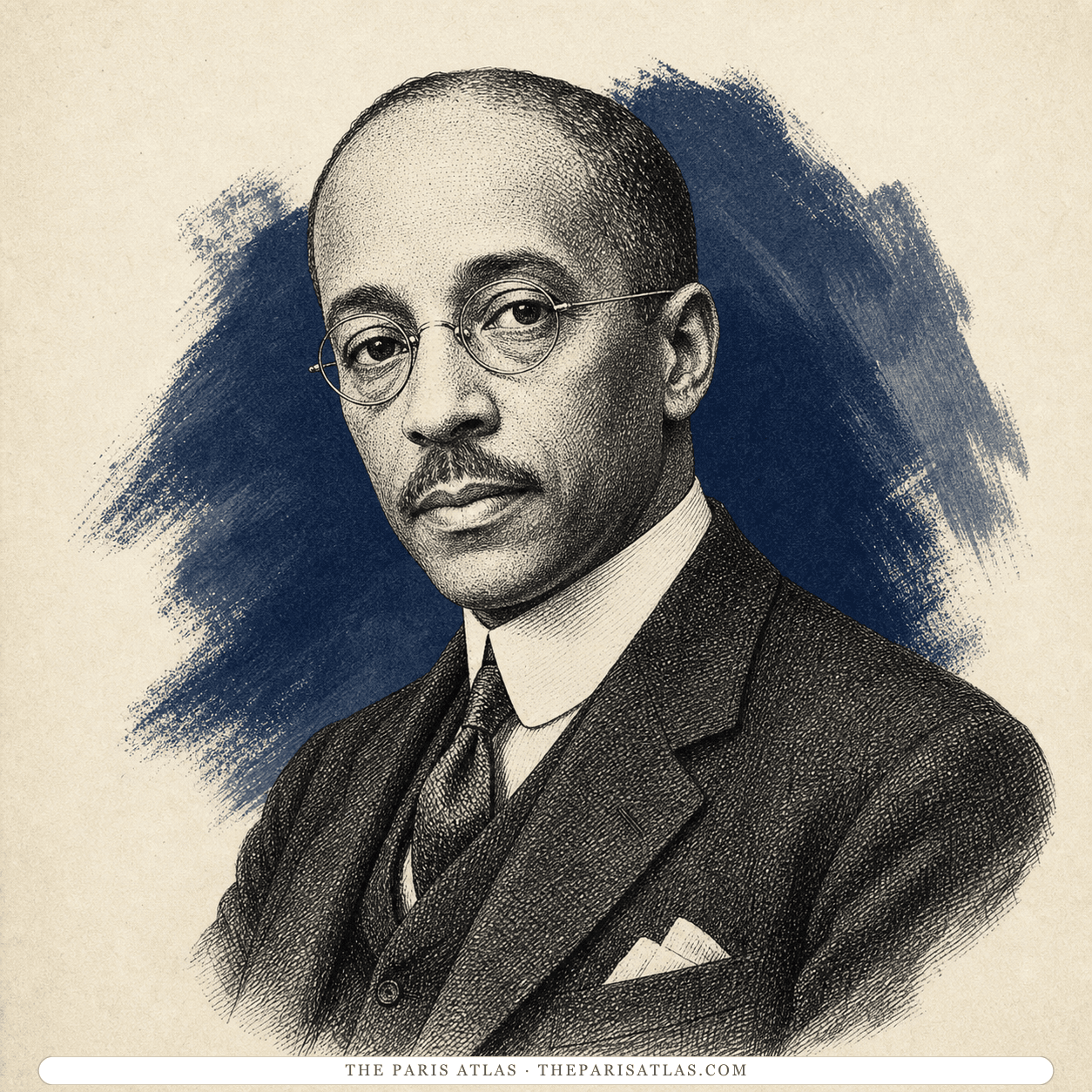
The movement's first name was the New Negro Renaissance, and its chief theorist was [Alain Locke](person:alain-locke) — the Harvard-educated Howard University philosopher whom contemporaries called the dean of the movement. Locke described what was happening as a "spiritual coming of age" in which Black Americans transformed "social disillusionment to race pride."

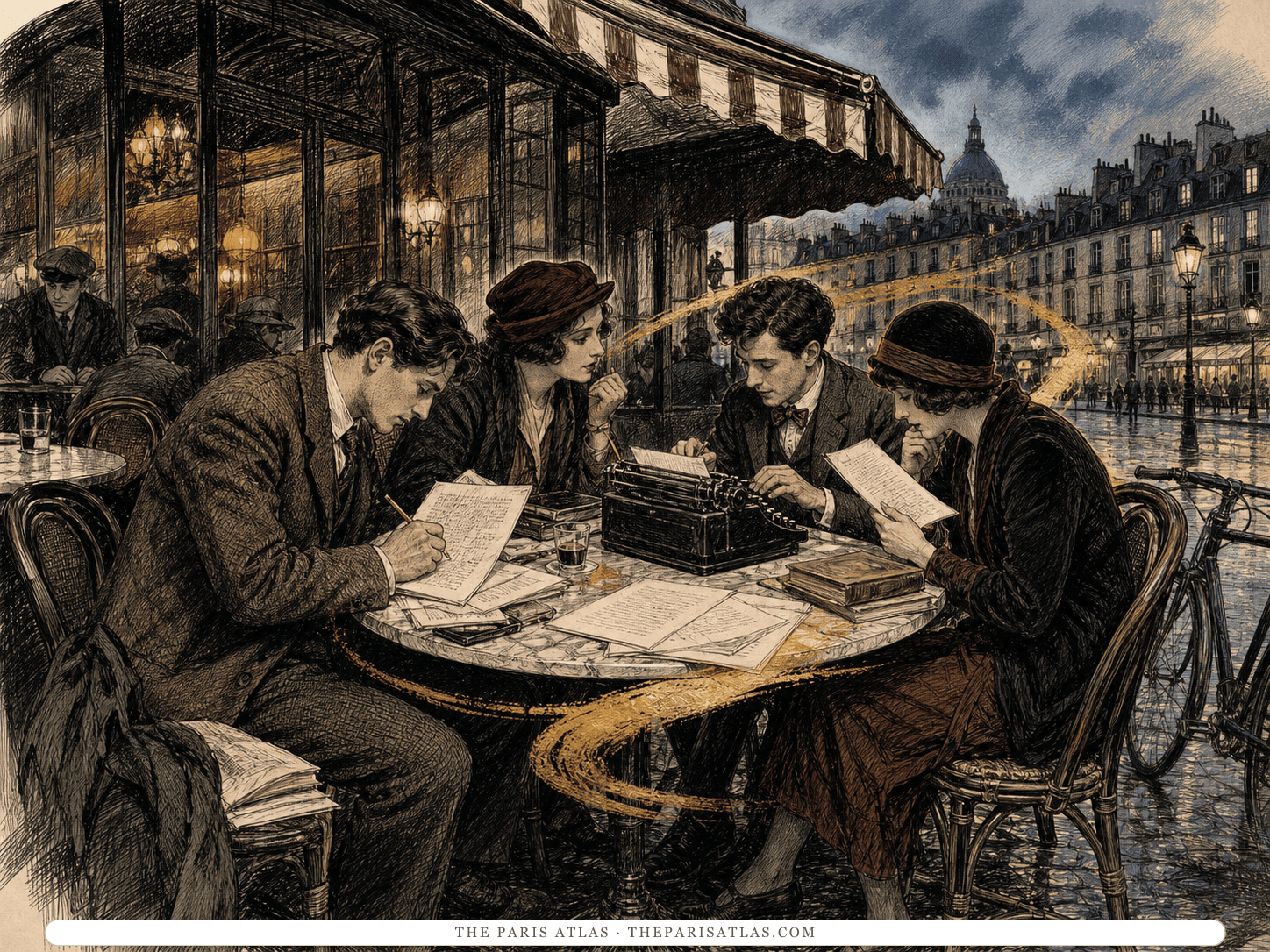
Locke edited the movement's founding document. A special issue of the magazine Survey Graphic, expanded in 1925 into the anthology The New Negro, gathered the poems, stories, and essays of the emerging generation into a single declaration. He recruited for it personally — in the summer of 1924 he climbed to a Montmartre attic to find a young [Langston Hughes](person:langston-hughes), then washing dishes in a Paris nightclub, and asked for poems.

The anthology's argument was Locke's: that Black artists no longer needed anyone's permission, and that the art itself would remake the race's standing. Hughes answered the same call in his own register the following year, in the essay "The Negro Artist and the Racial Mountain": "We build our temples for tomorrow, strong as we know how, and we stand on top of the mountain, free within ourselves."

The writers

Langston Hughes

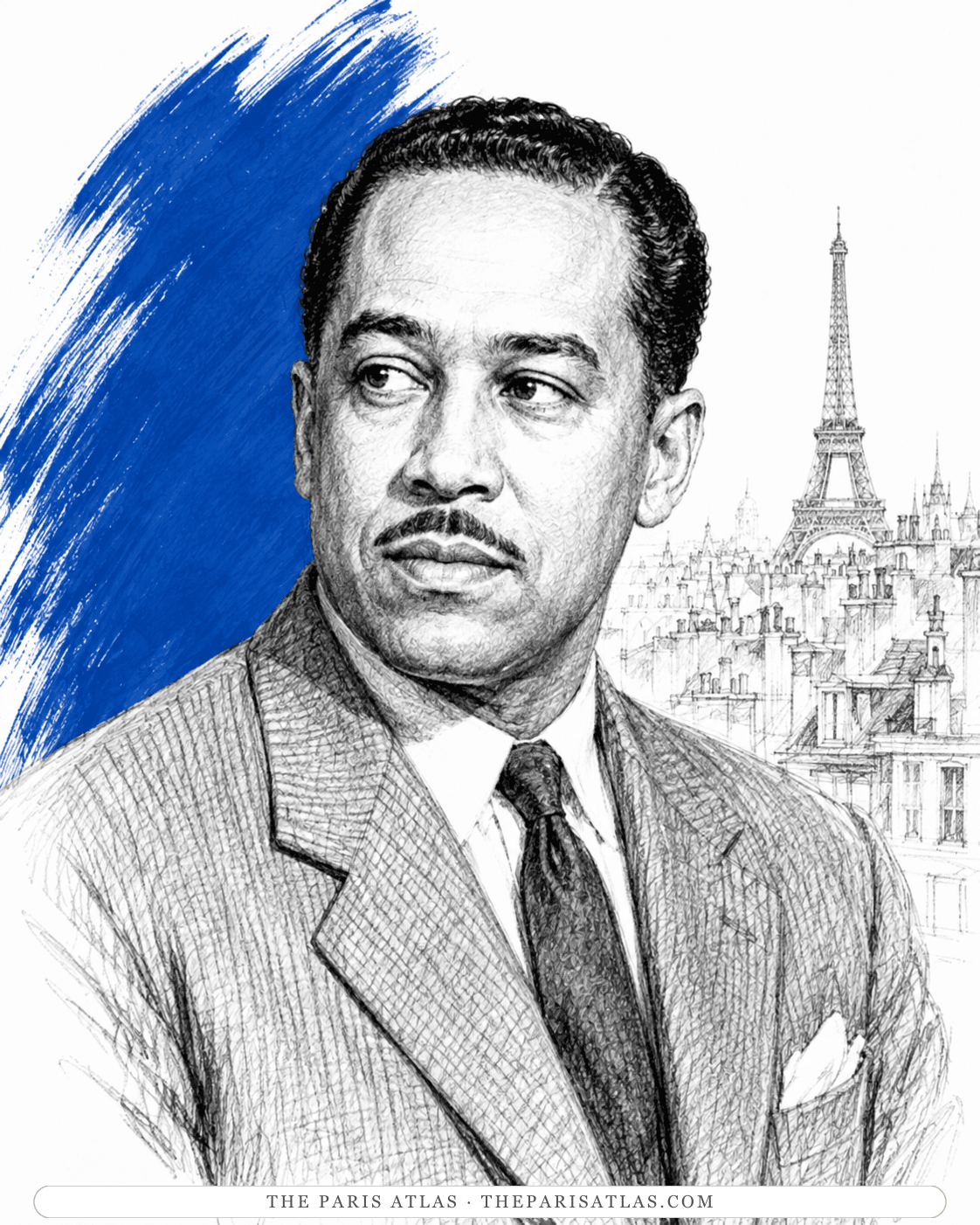
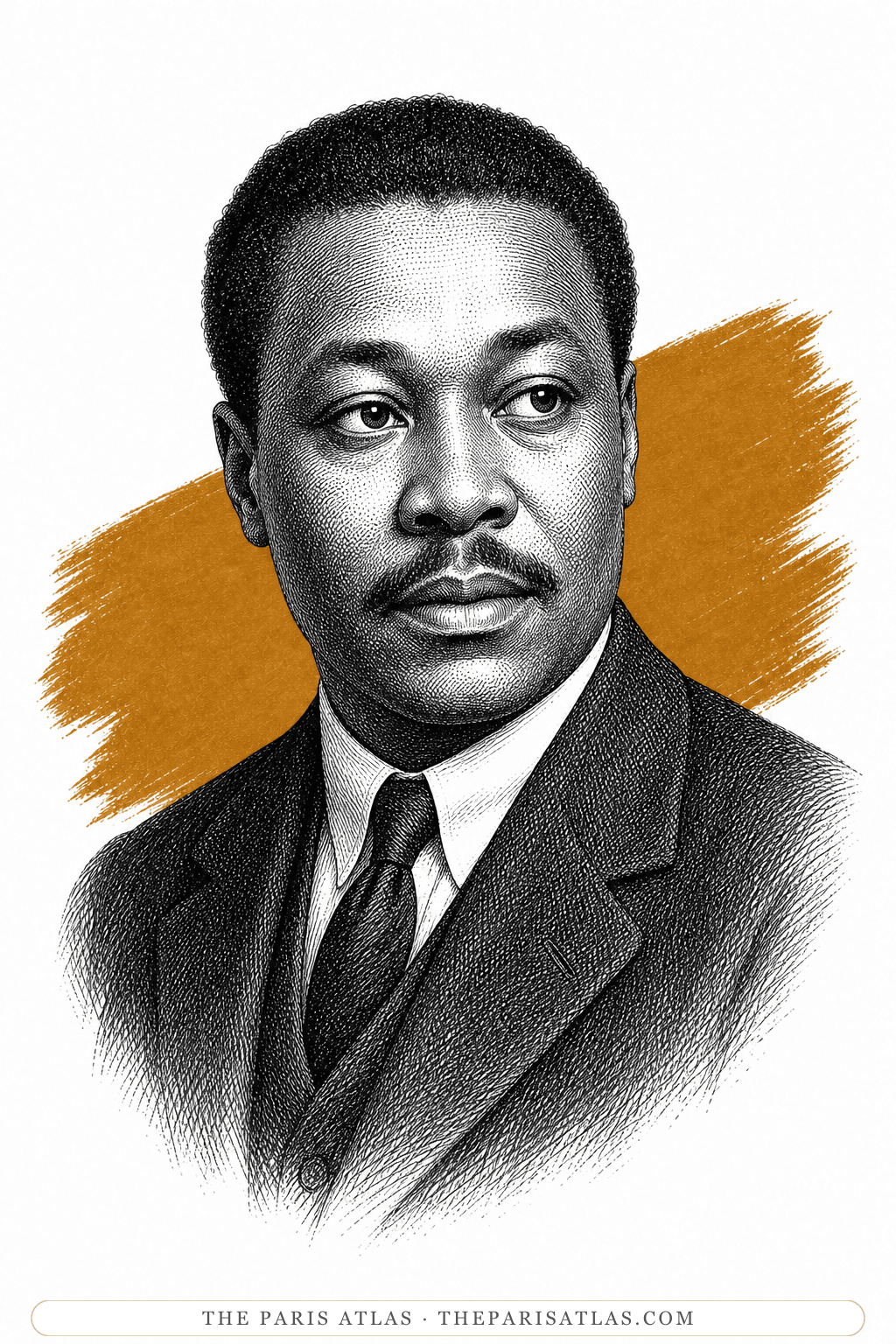
The movement's central poet, and the one most committed to its everyday voices. [Langston Hughes](person:langston-hughes) put blues structure into American poetry in The Weary Blues (1926), argued the movement's creed in "The Negro Artist and the Racial Mountain," and outlived the era to become its memoirist in The Big Sea (1940).

Zora Neale Hurston

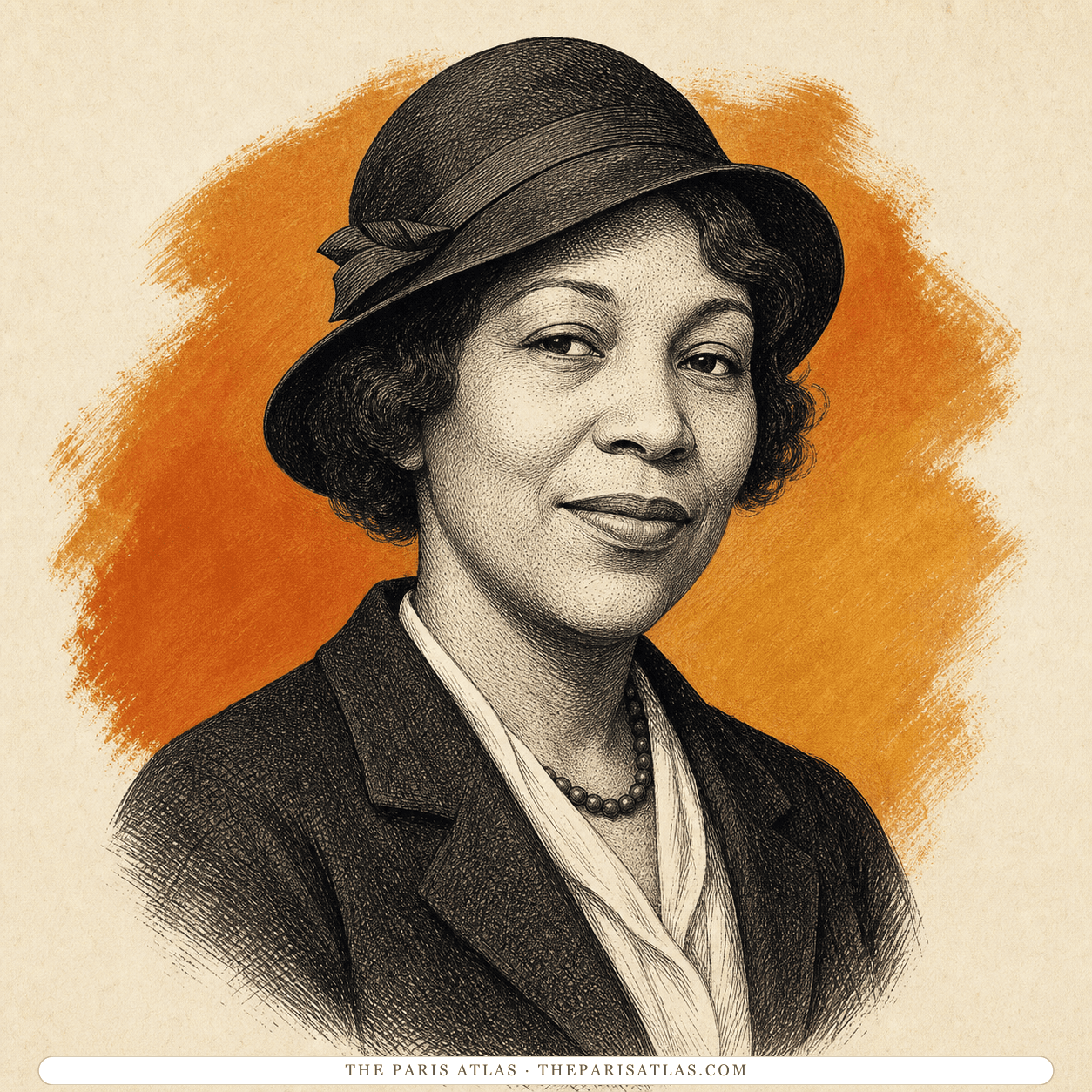
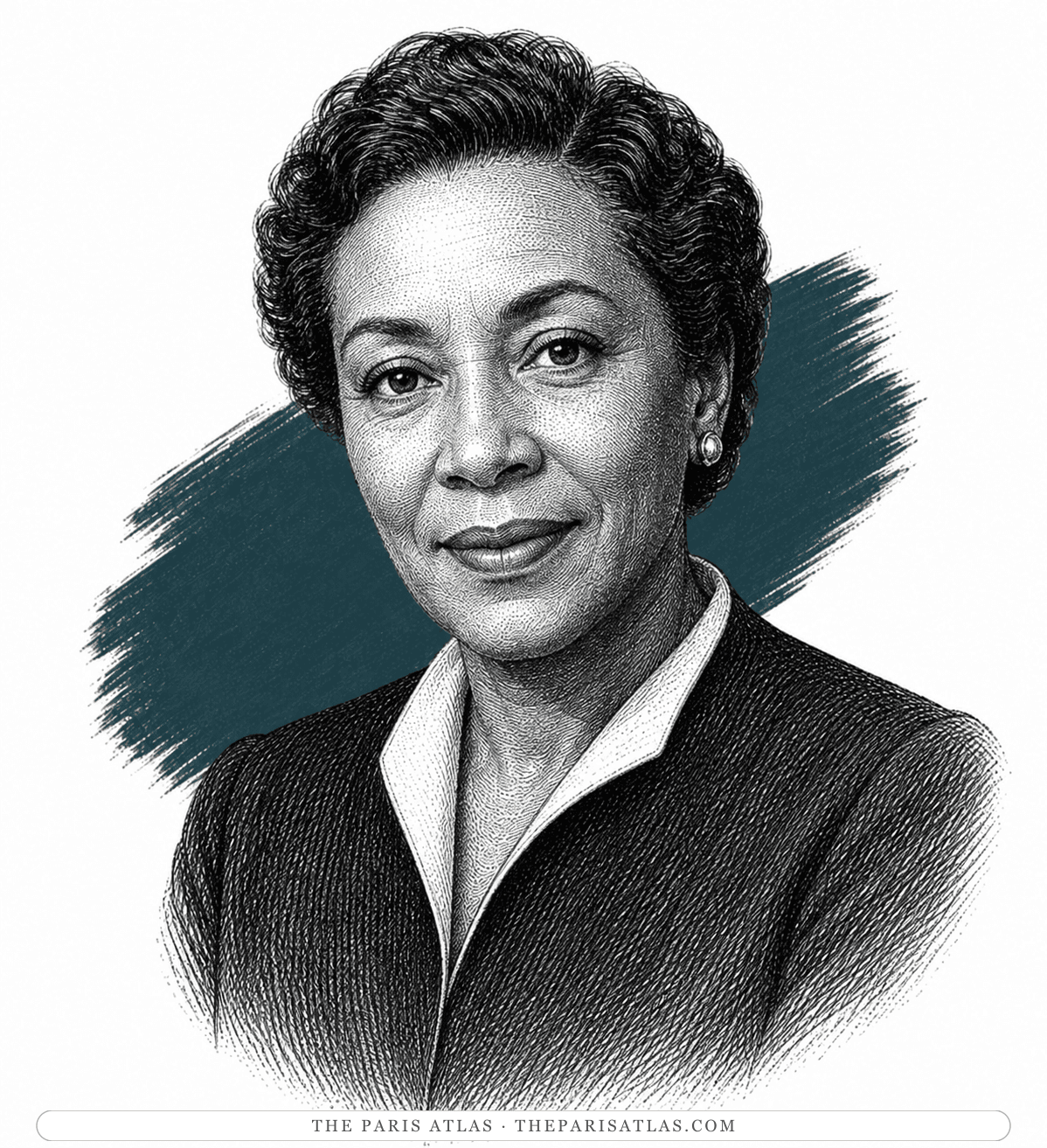
Novelist, folklorist, and anthropologist — [Zora Neale Hurston](person:zora-neale-hurston) was the movement's great collector of Black Southern speech and story. She and Hughes were close collaborators on the magazine Fire!! and the play Mule Bone until the collaboration collapsed; her masterpiece, Their Eyes Were Watching God, came in 1937, after the movement's heyday.

Claude McKay and Countee Cullen

The movement's two poles of poetic form. Claude McKay, Jamaican-born, put protest into the sonnet; [Countee Cullen](person:countee-cullen) wrote in the English lyric tradition and was celebrated as the movement's prodigy. Hughes's essay quietly argued with Cullen's position that a poet should be a poet first and not a Negro poet.

The editors who built the stage

W. E. B. Du Bois's The Crisis (the NAACP's magazine, with Jessie Redmon Fauset as its literary editor) and Charles S. Johnson's Opportunity (the Urban League's) published the young writers first and staged the awards dinners where careers began — Hughes's poem "The Weary Blues" won Opportunity's first poetry prize in May 1925, and the book contract followed from the banquet.

The rebels of Fire!!

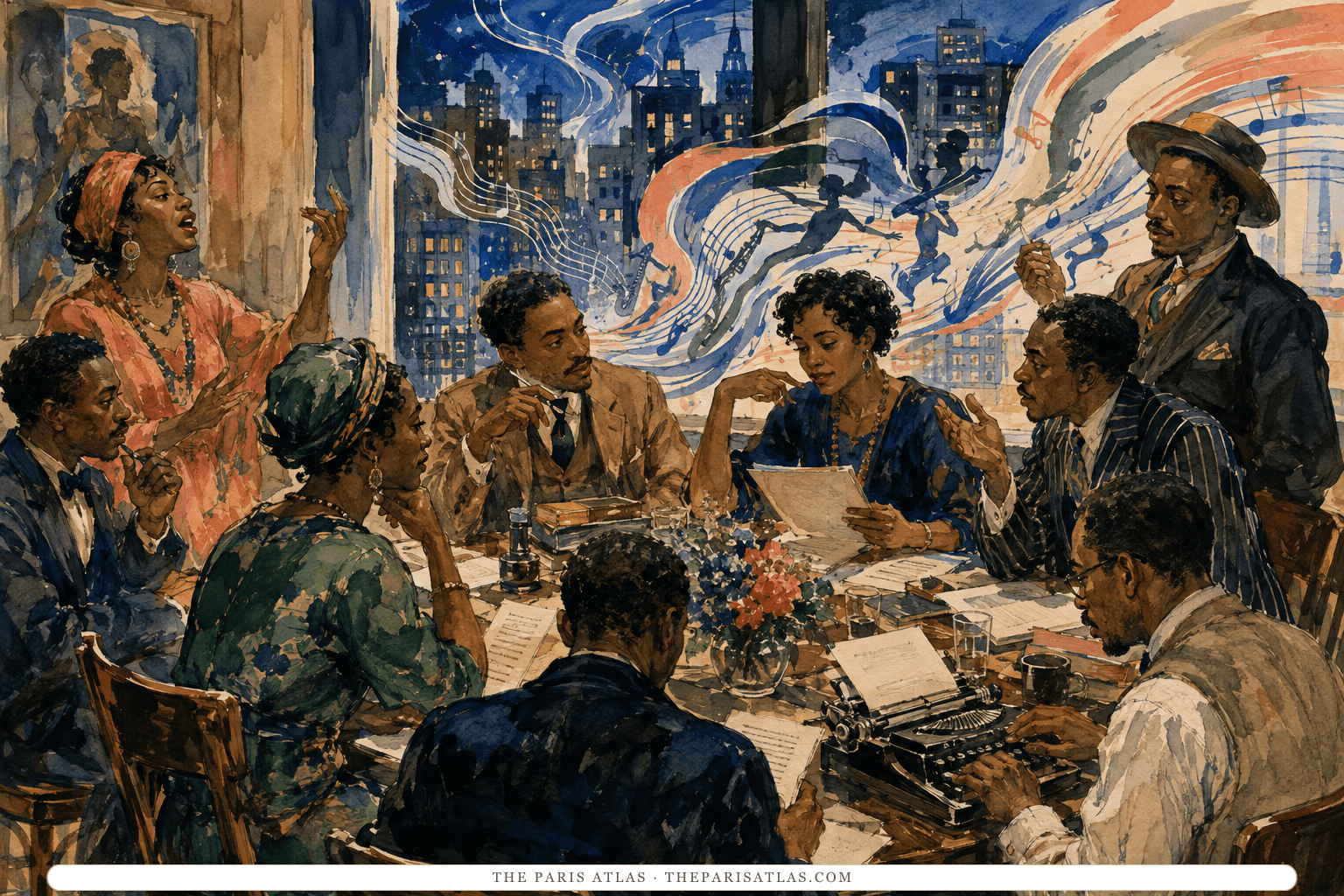
In November 1926 the younger writers — Hughes, Hurston, Wallace Thurman, and the artist Aaron Douglas among them — produced Fire!!, a deliberately scandalous magazine of one issue, aimed as much at the Black establishment's respectability as at white expectations. It lost money, and it made the point.

The music

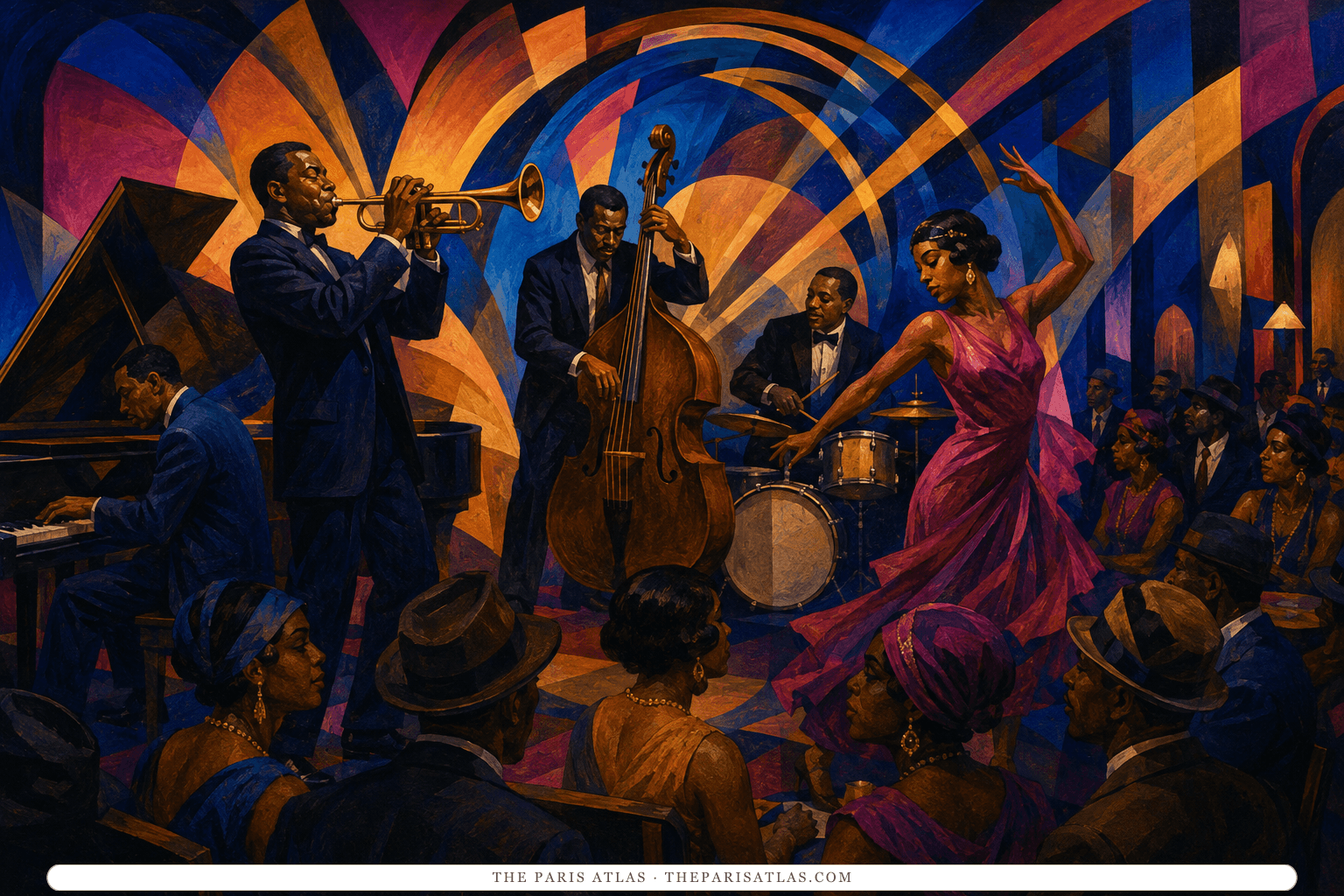
No part of the movement traveled further than its music. Harlem's nightclubs, cabarets, rent parties, and theaters ran on jazz and blues, and the era's roll call of musicians is its own canon: Duke Ellington, Louis Armstrong, Bessie Smith, Fats Waller, Cab Calloway, Eubie Blake, Jelly Roll Morton, Billie Holiday at the era's end. The neighborhood's music defined what the Smithsonian calls culture and cool for Black and white audiences alike — in America and around the world.

The literature and the music were not separate compartments. Hughes built poems on the twelve-bar blues and titled his first book after one; the cabaret and the piano player on Lenox Avenue are the subject matter of the movement's poetry as much as its soundtrack. When the music crossed the Atlantic, the writers followed it.

The artists

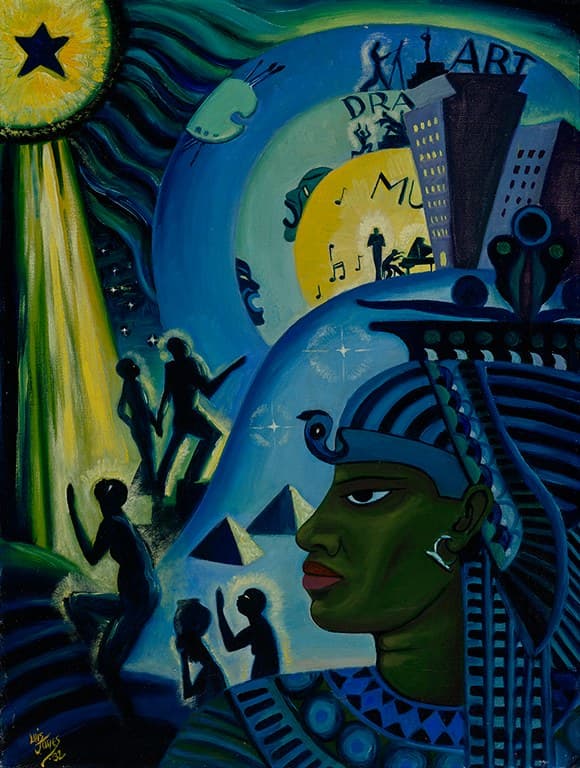
The movement's visual identity was made above all by Aaron Douglas, whose silhouetted figures and concentric rays illustrated its books and magazines — including The New Negro and Fire!! — and by the sculptor Augusta Savage, whose Harlem studio doubled as a school for the next generation. Painting, sculpture, and illustration ran through the movement alongside the writing: the same magazines that printed the poems commissioned the covers.

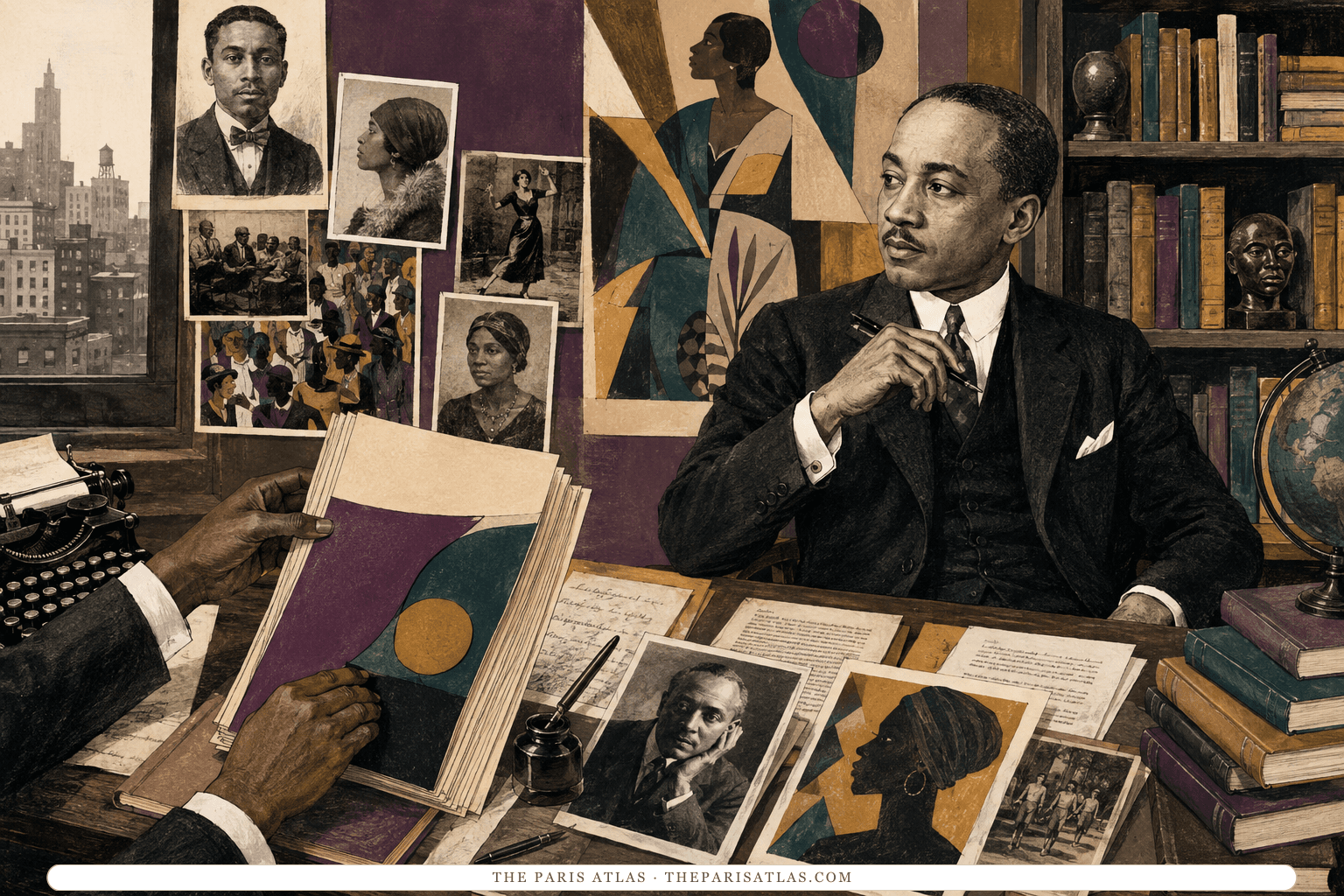
The photographs came from the studios of Harlem itself, and the portrait record of the movement — its writers in wide-brimmed hats and fur collars — is part of its art. This atlas's own galleries carry several of them.

Harlem in Montmartre

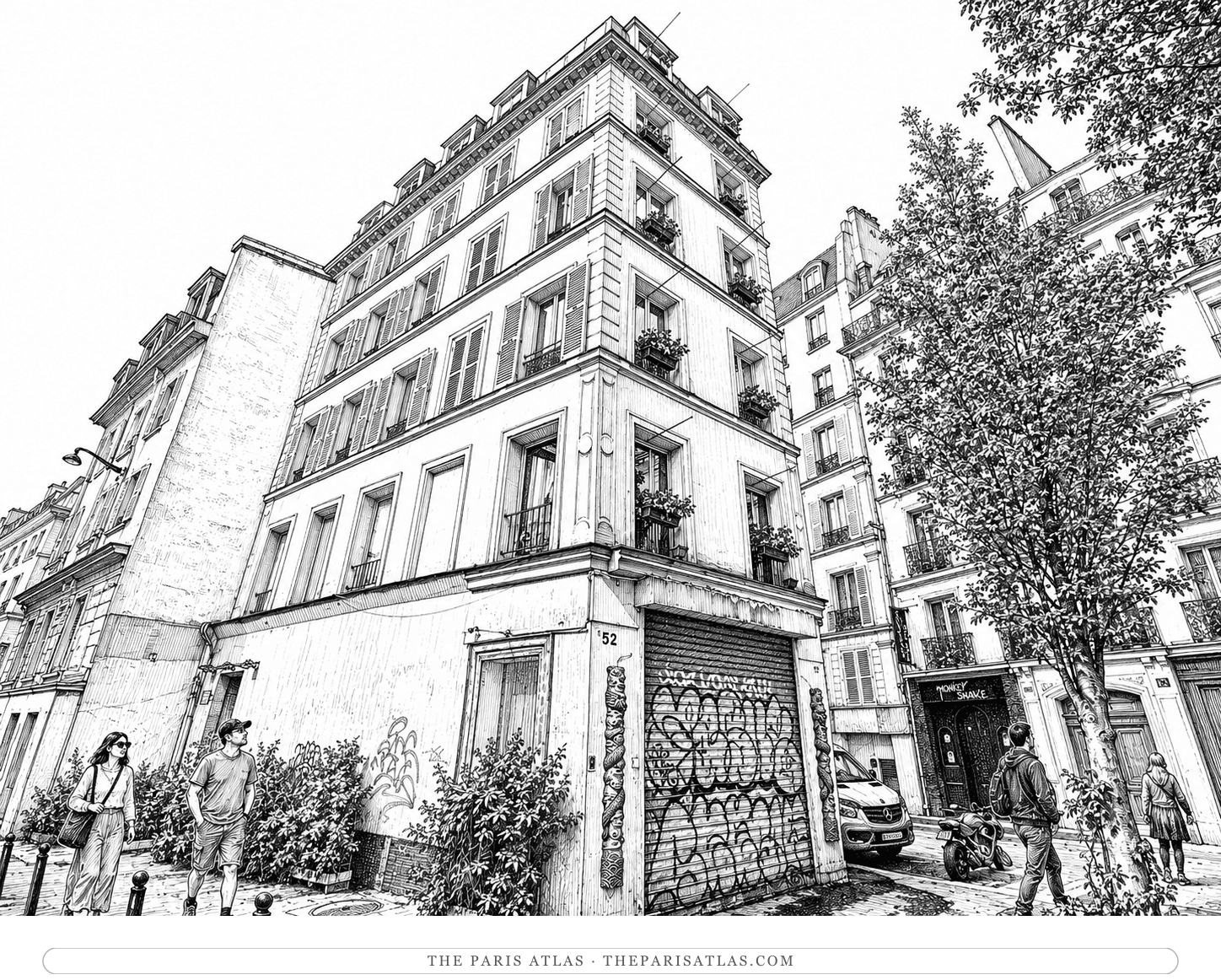
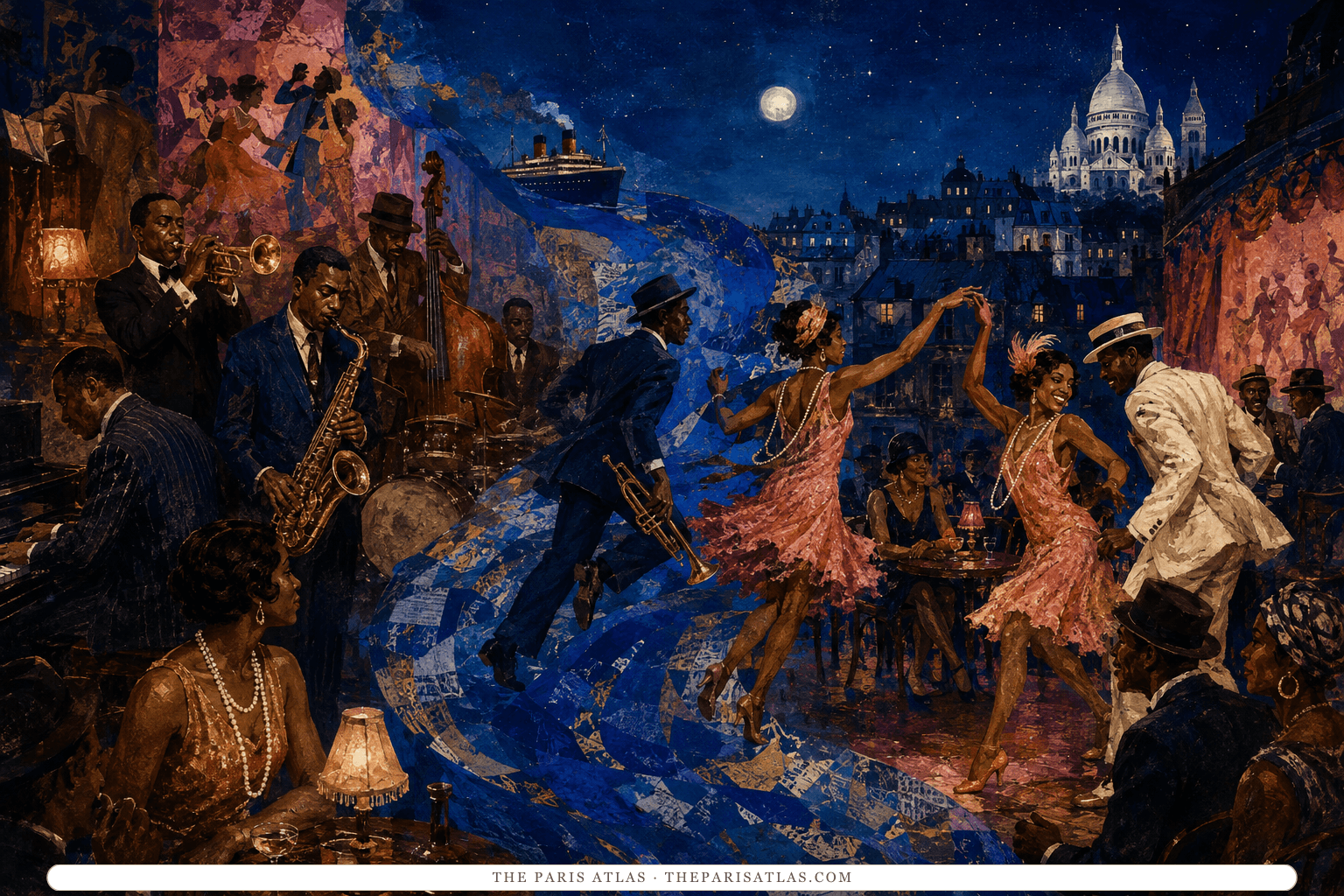
The movement had a Paris address. After the First World War, Black American musicians and performers — many of whom had first come to France in uniform — built a nightlife district on the hillside of Montmartre, around the rue Pigalle and the rue Fontaine. Its most famous room was [Le Grand Duc](place:le-grand-duc), where the Harlem singer Florence Embry Jones drew the after-hours celebrity trade and her successor, Ada "Bricktop" Smith, began the career that made her the most famous nightclub hostess in Paris.

The dishwasher at Le Grand Duc in 1924 was [Langston Hughes](person:langston-hughes), twenty-three years old, who had arrived at the Gare du Nord that February with seven dollars. The year fed directly into The Weary Blues, and The Big Sea's account of that Montmartre is the fullest anyone wrote. It was in Paris that Alain Locke found him for The New Negro — the movement recruiting its central poet in a Montmartre attic.

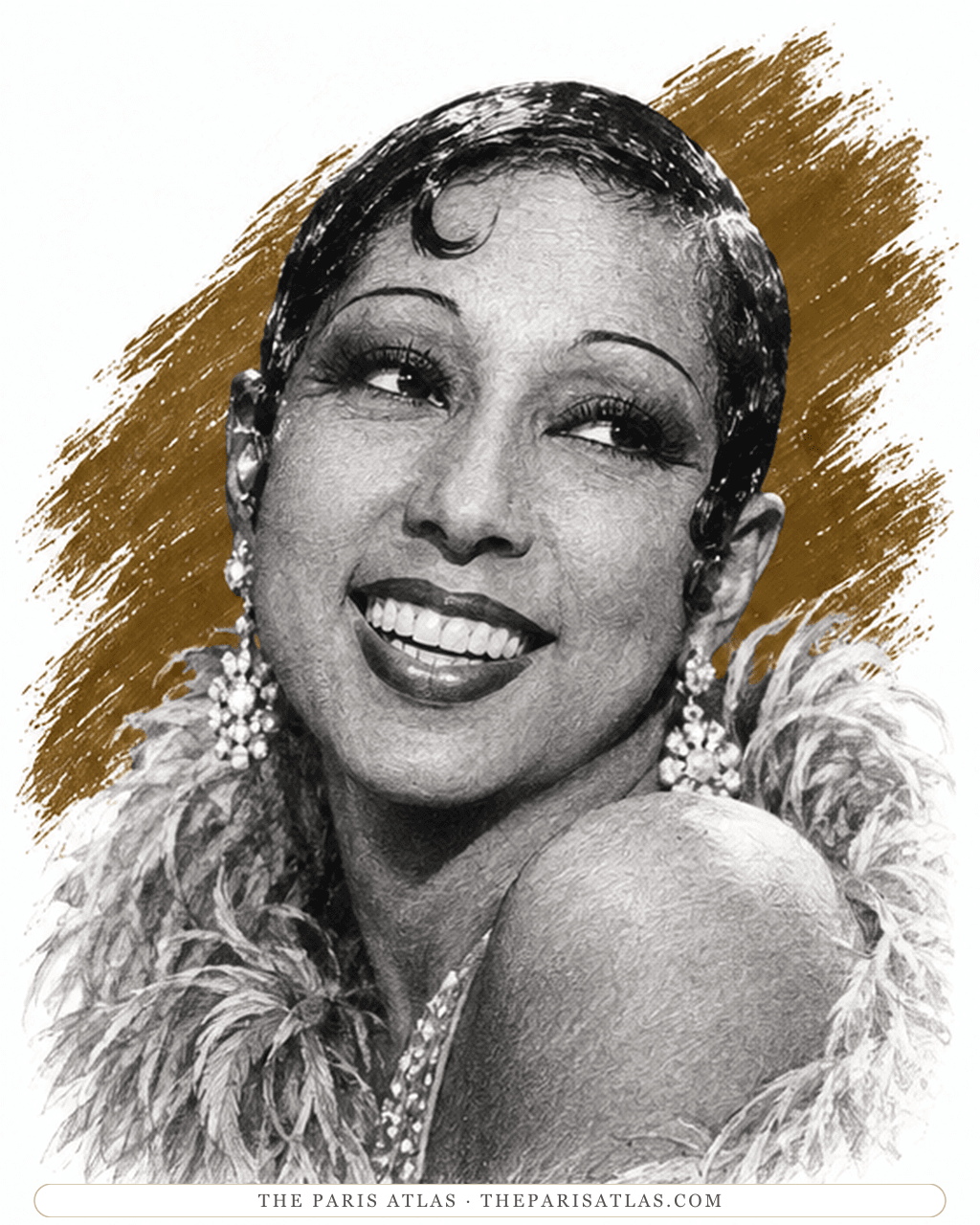
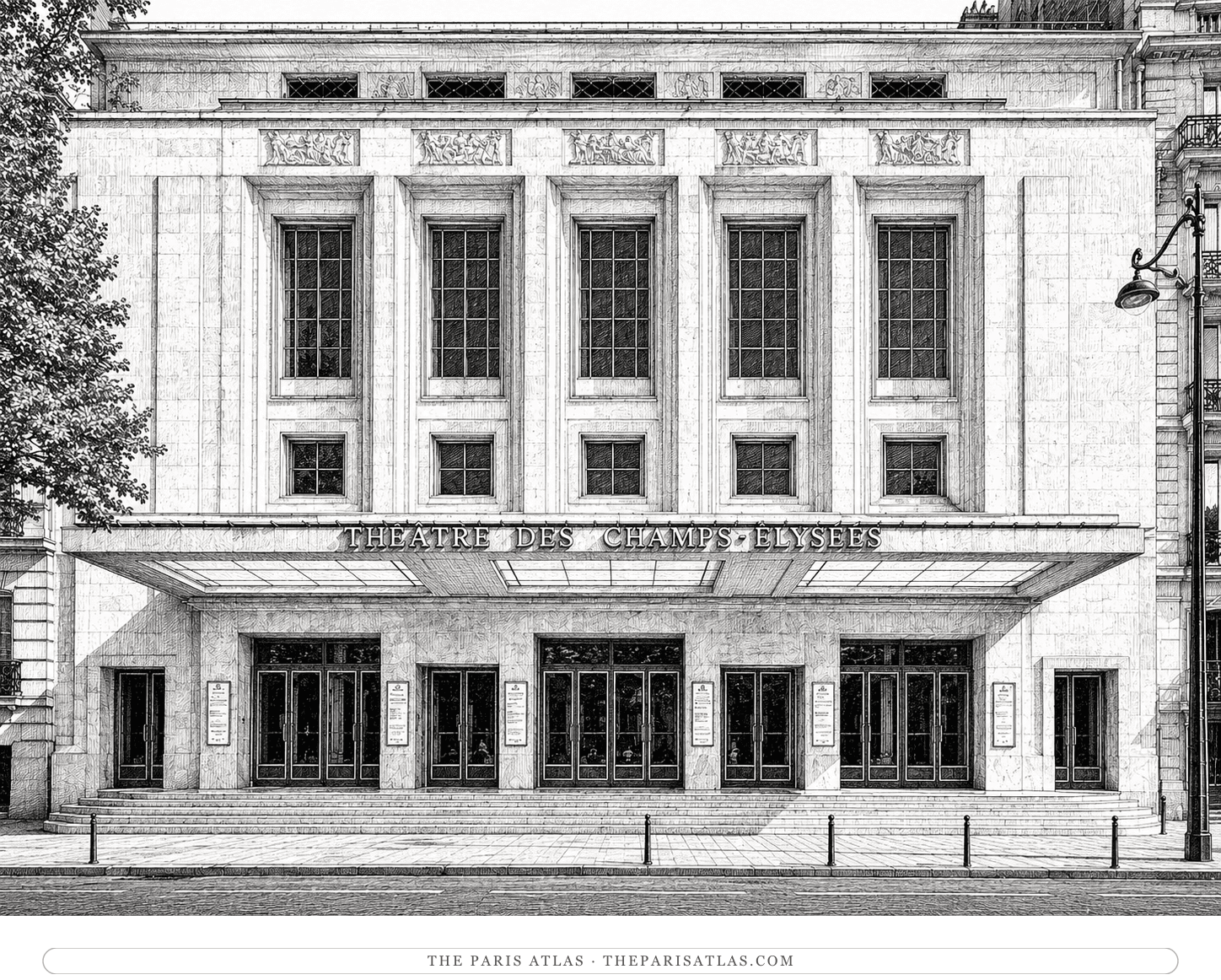
In October 1925 the Paris fascination with Black American performance reached its peak on the other side of town: La Revue Nègre opened at the [Théâtre des Champs-Élysées](place:theatre-des-champs-elysees) on 2 October with Sidney Bechet in the band, and made a nineteen-year-old chorus dancer named [Josephine Baker](person:josephine-baker) the sensation of the city within days. Paris offered freedoms American segregation denied — and, as the atlas's pages on these places record, its own exoticizing gaze came with them.

How it ended, and what it left

The Depression ended the party. The 1929 crash dried up the patrons, foundations, and theatrical money that had financed the movement, and hit Harlem's own businesses and publications hard. By the mid-1930s the Renaissance as a concentrated moment was over — though the careers it launched ran on for decades, and its writers kept producing major work into the 1940s and beyond.

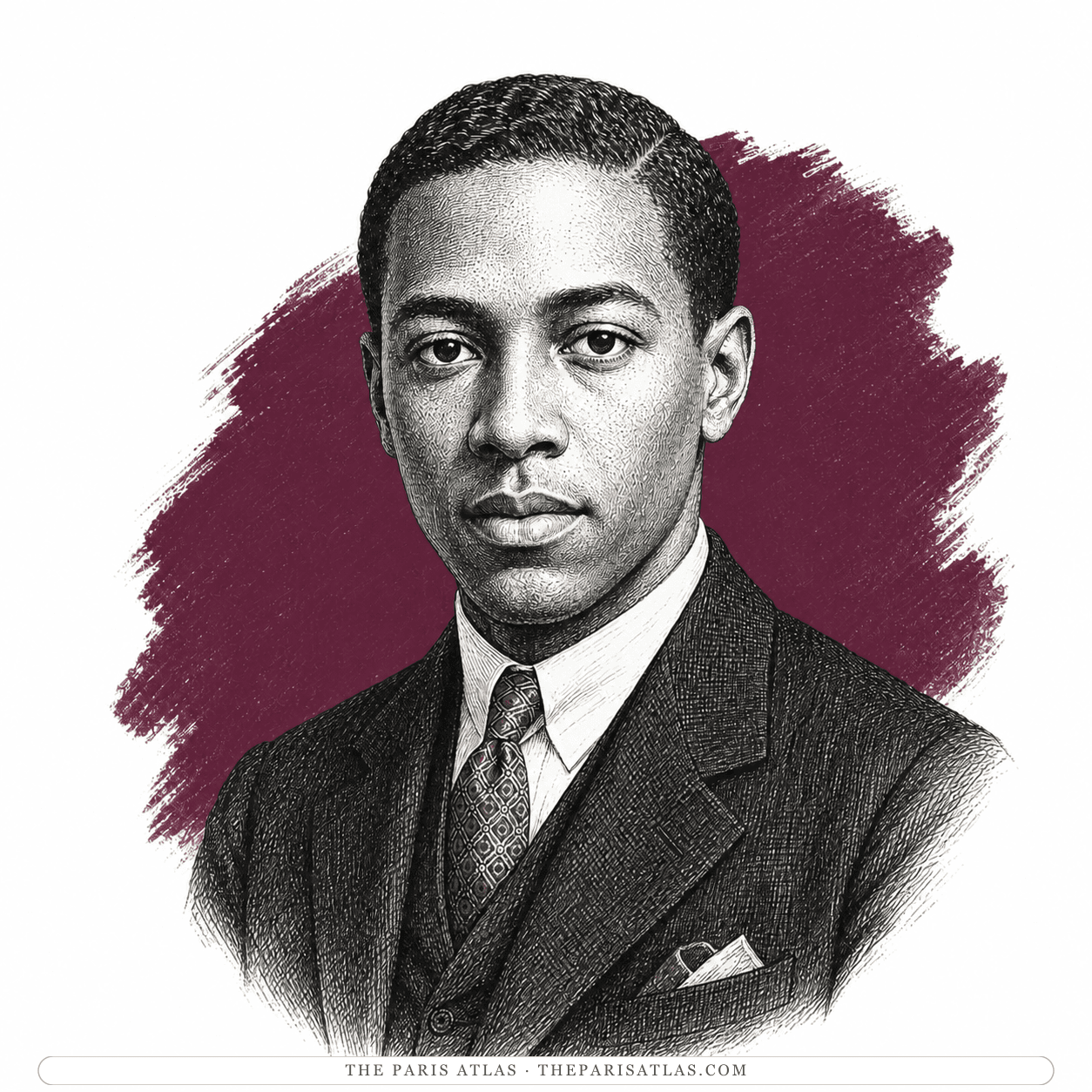
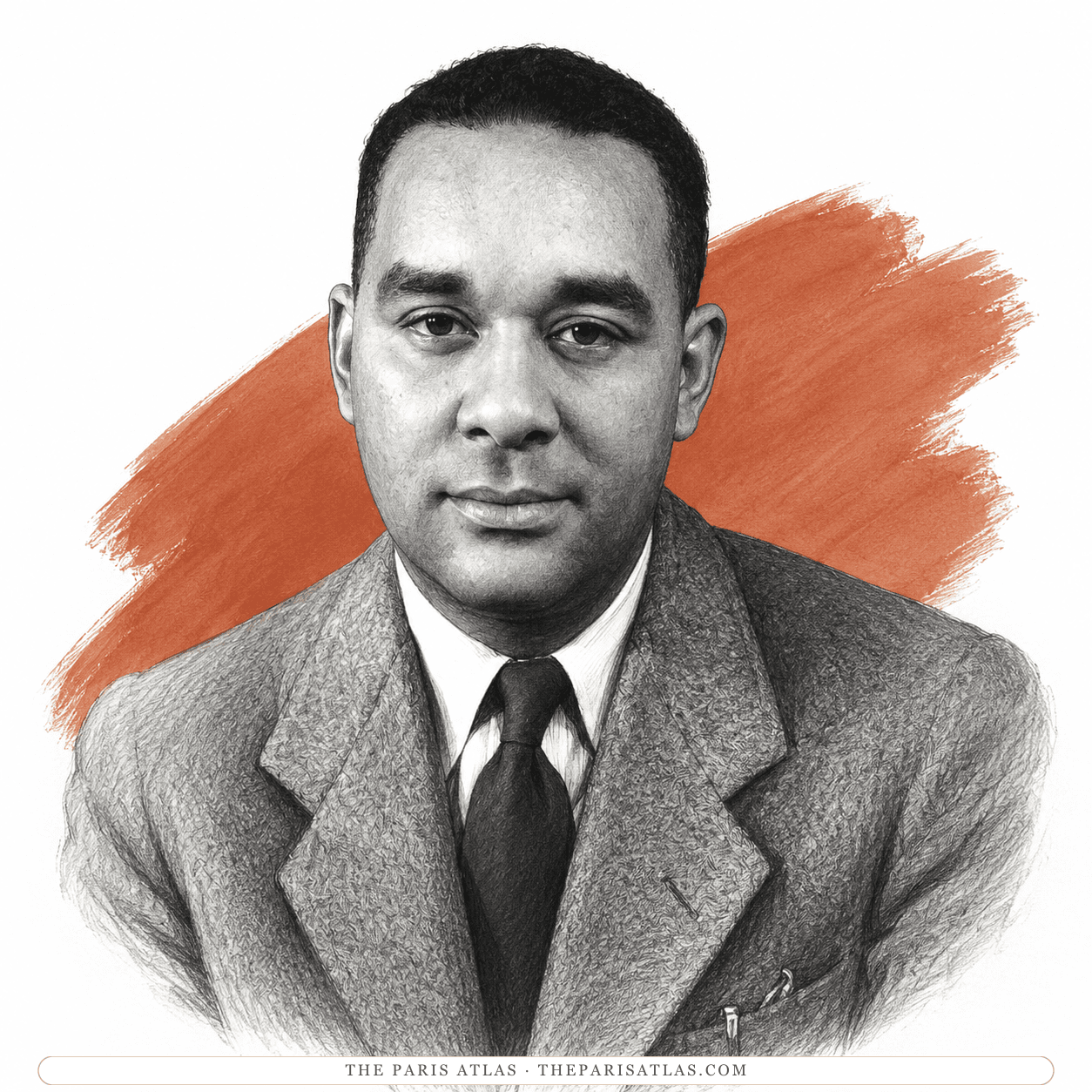
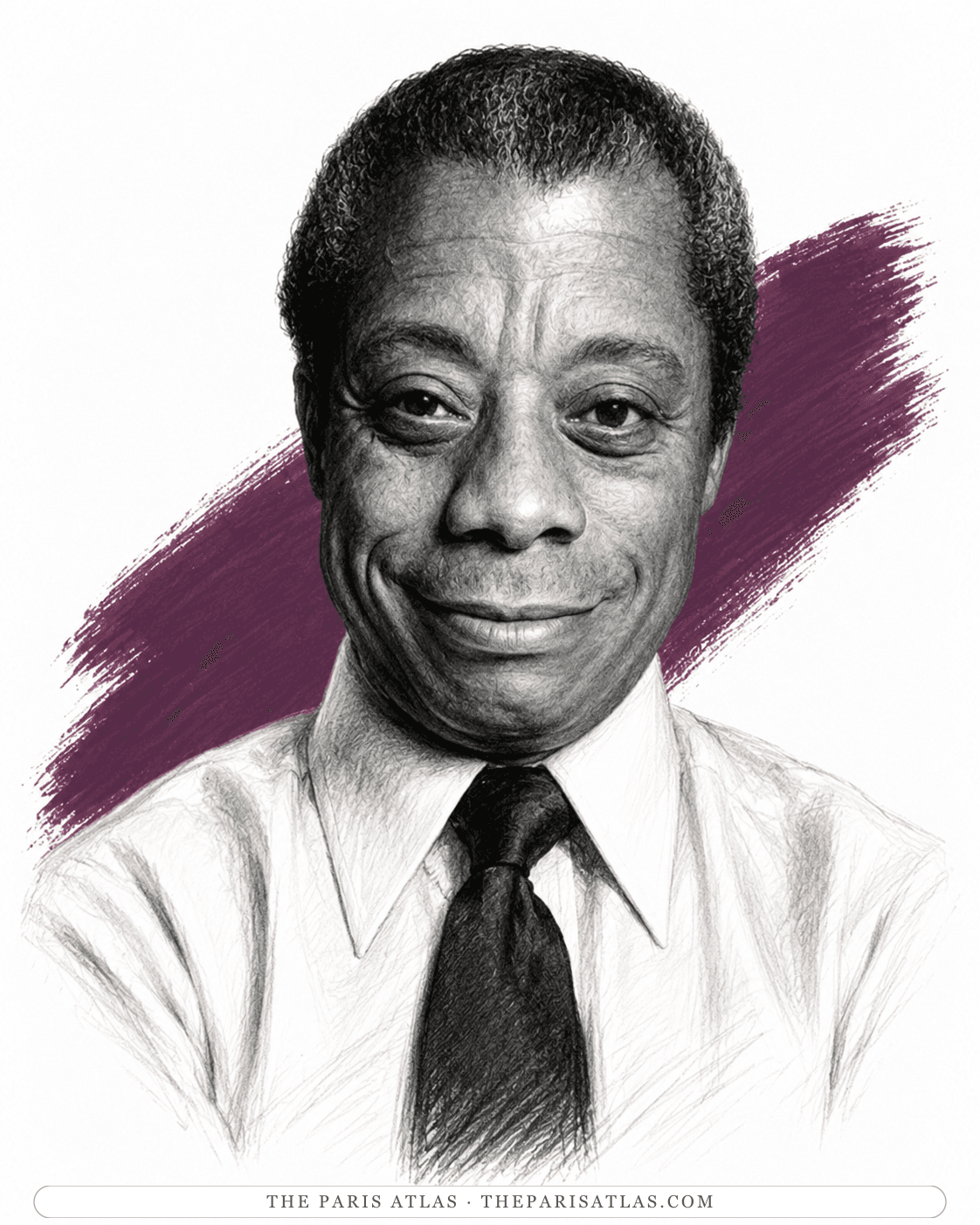
Its legacy outgrew it. The movement demonstrated that Black art could command national and international attention on its own terms, and the pride and political consciousness it instilled became, in the Smithsonian's assessment, a foundation for the civil rights movement of the 1950s and 60s. The line of succession runs through this atlas's own pages: [Richard Wright](person:richard-wright), who arrived in the movement's wake and carried its ambitions into naturalism; [James Baldwin](person:james-baldwin), who inherited and argued with both; [Lorraine Hansberry](person:lorraine-hansberry), whose A Raisin in the Sun took its title from a Hughes poem about Harlem's deferred dream.

Hughes lived long enough to sit beside Baldwin and Hansberry on a 1961 radio panel — the movement's central poet, by then, an ancestor at the table he had once been sent away from.

Key works

The defining works already in the atlas, each with its own page.

Follow it through the atlas

Timeline

  1. c. 1900–1920

    The Great Migration draws hundreds of thousands of Black Southerners to Northern cities; Harlem's three square miles come to hold nearly 175,000 African Americans, the largest concentration of Black people in the world.

  2. 1921

    The Crisis publishes the twenty-year-old Langston Hughes's "The Negro Speaks of Rivers" in June.

  3. 1924

    Hughes washes dishes at Le Grand Duc in Montmartre; Alain Locke finds him in Paris that summer to recruit poems for what becomes The New Negro.

  4. 1925

    Locke's anthology The New Negro appears; Opportunity's first awards banquet launches careers in May; on 2 October La Revue Nègre opens in Paris and makes Josephine Baker a star.

  5. 1926

    The Weary Blues, "The Negro Artist and the Racial Mountain," and the one-issue rebel magazine Fire!! all appear — the movement's creed stated three ways in one year.

  6. 1929

    The stock market crash begins drying up the patronage, publishing money, and nightclub economy the movement ran on.

  7. mid-1930s

    The Renaissance ends as a concentrated moment; its careers, and its argument, continue.

  8. 1940

    Hughes's memoir The Big Sea gives the movement — and its Montmartre outpost — its fullest firsthand account.

The Harlem Renaissance: frequently asked questions

What was the Harlem Renaissance?

The flowering of Black American literature, music, visual art, theater, and thought centered on Harlem between the end of the First World War and the mid-1930s. Fed by the Great Migration, it produced writers like Langston Hughes and Zora Neale Hurston, musicians like Duke Ellington and Louis Armstrong, and artists like Aaron Douglas — united less by a style than by presenting Black American life as it actually was.

When did the Harlem Renaissance start and end?

Roughly from the end of the First World War to the mid-1930s, with its peak in the 1920s. The 1929 stock market crash and the Depression that followed dried up the patrons, publishers, and nightclub economy that had financed it, and by the mid-1930s the concentrated moment was over.

Who were the most famous Harlem Renaissance writers?

Langston Hughes above all, with Zora Neale Hurston, Claude McKay, Countee Cullen, Jean Toomer, Nella Larsen, Jessie Redmon Fauset, and Wallace Thurman. The elder statesmen were W. E. B. Du Bois and James Weldon Johnson; the movement's theorist was the philosopher Alain Locke, editor of The New Negro (1925).

Who were the Harlem Renaissance artists and musicians?

In the visual arts, Aaron Douglas — whose silhouetted illustrations gave the movement its look — and the sculptor Augusta Savage. In music, an era-defining roll call: Duke Ellington, Louis Armstrong, Bessie Smith, Fats Waller, Cab Calloway, Eubie Blake, Jelly Roll Morton, and the performers Josephine Baker and Paul Robeson.

What was The New Negro?

The movement's founding anthology, edited by Alain Locke in 1925 from a special issue of Survey Graphic. It gathered the new generation's poems, stories, and essays into a single declaration that Black artists needed no one's permission — and gave the era its first name, the New Negro Renaissance.

What does Paris have to do with the Harlem Renaissance?

Montmartre held the movement's overseas outpost. Black American musicians built a nightlife district around the rue Pigalle after the First World War; Langston Hughes washed dishes at its most famous club, Le Grand Duc, in 1924, and Alain Locke recruited him for The New Negro in Paris that summer. In October 1925, La Revue Nègre at the Théâtre des Champs-Élysées made Josephine Baker the sensation of the city.

Why is it called a renaissance?

Because its participants understood it as a rebirth — Alain Locke called it a "spiritual coming of age" that turned "social disillusionment to race pride." The name claimed for Black American culture what the word had always claimed for Europe: that something old and suppressed was flowering again in public.

Sources

  • A New African American Identity: The Harlem Renaissance
  • A Reading Guide to Langston Hughes
  • The Harlem Renaissance in Black Queer History
  • Langston Hughes, The Big Sea (1940)
  • Kayla Chenault, A Bone to Pick with the Writing and Fallout of Mule Bone
  • Langston Hughes