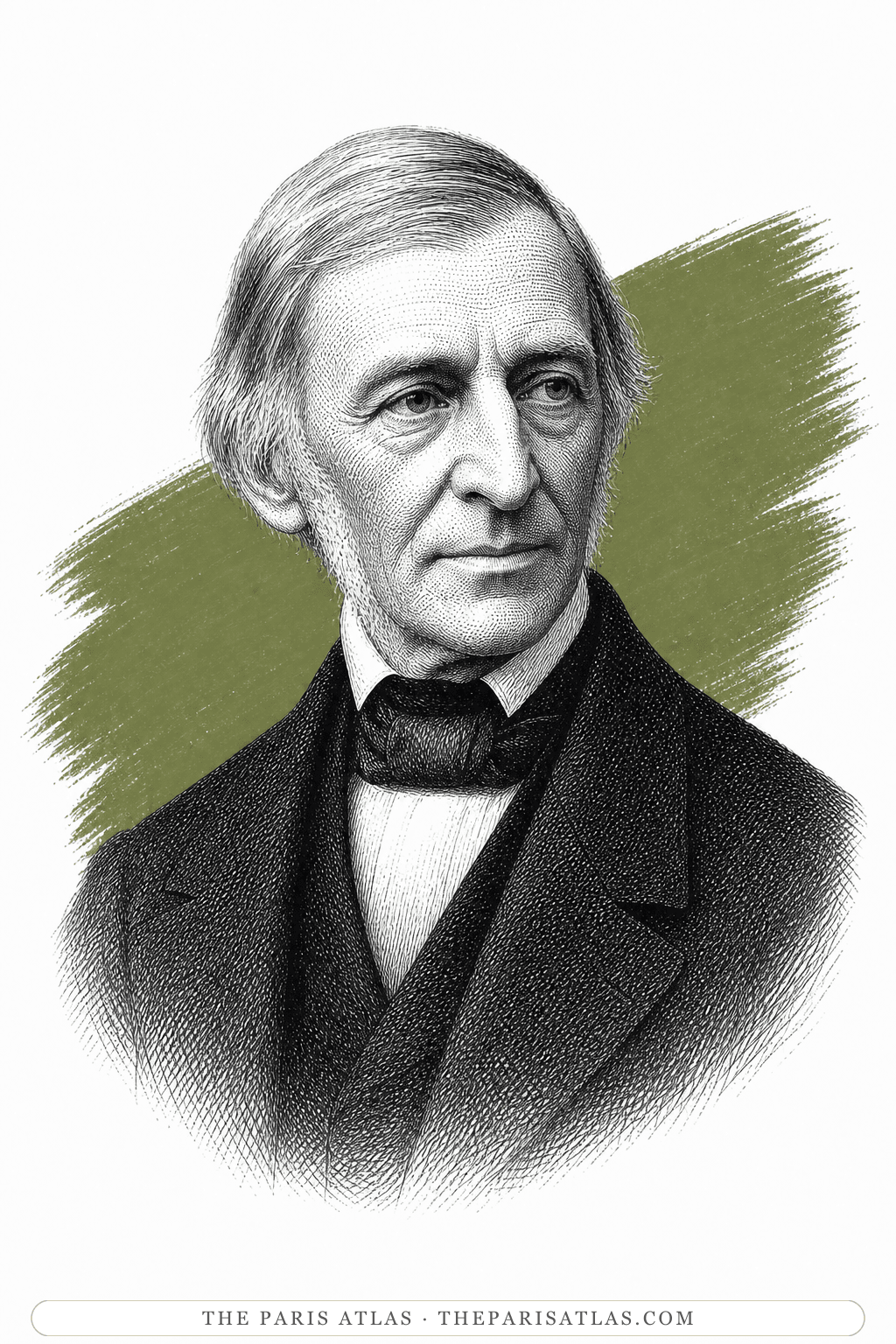
Concord Hymn
Sung at the dedication of the Battle Monument at Concord on 4 July 1837. The source of "the shot heard round the world". The last poem in the book.
Poems
Ralph Waldo Emerson
Emerson's first book of verse opens with a riddling Sphinx and ends with "the shot heard round the world". Near the end is his lament for his five-year-old son.
Poems is Ralph Waldo Emerson's first book of verse. James Munroe and Company published it in Boston, and the title page is dated 1847. The book has more than fifty poems in 251 pages.[1] The book opens with "The Sphinx" and closes with the Concord Hymn, the poem about the fight at Concord's North Bridge in 1775 that gave the world the phrase "the shot heard round the world".[1][2] In between are nature poems such as "The Rhodora" and "The Snow-Storm", political poems, love poems, and "Threnody". Emerson wrote "Threnody" after his son Waldo died of scarlet fever at the age of five.[3]
His literary executor, James Elliot Cabot, says that verse, not lecturing, was the form Emerson aspired to, because it let him speak more freely. Emerson still called himself only "half a bard". To Thomas Carlyle he wrote that he was "not a poet, but a lover of poetry and poets".[3]
Friends passed his poems around, and a few appeared in magazines. James Freeman Clarke printed three in the Western Messenger in Louisville, Kentucky. Some of the best came out first in The Dial, the Transcendentalist magazine Emerson edited for a time.[3][4][5] On 3 December 1843 Emerson told his brother William that a Boston bookseller had asked, for the second time, to print a volume of his poems. He hesitated, unsure he had "one true spark of that fire which burns in verse".[3]
Oliver Wendell Holmes dates the book to 1846. The Boston edition's title page says 1847, and the publisher's list of new books bound in the front is dated 1 January 1847. John Chapman published a London edition the same year.[4][1][6] Emerson's second book of poems, May-Day and Other Pieces, followed twenty years later, in 1867.[4]
The book opens with "The Sphinx", in which the drowsy Sphinx asks who will tell her secret, the meaning of man. "Each and All" and "The Problem" follow, then "Uriel", about an angel whose dangerous idea shakes heaven. "Hamatreya" names six farmers who called the land theirs, and lets the earth answer them.[1]
The nature poems are in the middle of the book. "The Rhodora" is about a wild shrub flowering unseen in the woods. "The Humble-Bee" follows a bumblebee through a summer day. "The Snow-Storm" watches a storm hide the hills, the woods and the farmhouse. "Woodnotes" and "Monadnoc" go into the forests and up a New Hampshire mountain.[1]
Then come poems of love and argument. The "Ode" inscribed to William Henry Channing attacks the United States for "Harrying Mexico / With rifle and with knife" and says that "Things are in the saddle, / And ride mankind." "Give All to Love", "Merlin", "Bacchus" and "Saadi" are about love, poetry and inspiration. "Threnody" and the Concord Hymn close the book.[1]
The last poem in the book is its most famous. A stone monument was built at the North Bridge in Concord, Massachusetts, where local farmers fired on British soldiers on 19 April 1775. The monument was dedicated on 4 July 1837. Emerson's hymn was printed on slips of paper about six inches square and handed out, and everyone who could join in sang it.
By the rude bridge that arched the flood, / Their flag to April's breeze unfurled, / Here once the embattled farmers stood, / And fired the shot heard round the world.
In the 1847 book the poem is headed "Hymn: Sung at the Completion of the Concord Monument, April 19, 1836." April 19 is the anniversary of the battle, not the day the hymn was sung. Later editions correct the heading to "Sung at the Completion of the Battle Monument, July 4, 1837", and call it the Concord Hymn.
The four short stanzas move from the battle to the stream and the new stone. The last stanza asks the Spirit that made those heroes dare to die to let Time and Nature spare "The shaft we raise to them and thee."
Emerson's first child, Waldo, died on 27 January 1842 after four days of scarlet fever. He was a little over five years old. A friend of the family remembered him as his father's constant companion, who would sit for hours in the study without interrupting. Cabot writes that Emerson was stunned and could not write about the loss until long afterwards.
"Threnody", a word for a song of mourning, is one of the last poems in the book. The poem begins with the south wind returning in spring. The wind can bring back life, sunshine and desire, but it cannot bring back the dead.
The South-wind brings / Life, sunshine, and desire, / And on every mount and meadow / Breathes aromatic fire; / But over the dead he has no power, / The lost, the lost, he cannot restore
Oliver Wendell Holmes called "Threnody" the "tenderest and most pathetic" of Emerson's poems. He compared it with John Milton's "Lycidas" for dignity and with William Cowper's lines on his mother's picture for its plain grief.
Here once the embattled farmers stood, / And fired the shot heard round the world.
Tell them, dear, that if eyes were made for seeing, / Then Beauty is its own excuse for being
Announced by all the trumpets of the sky, / Arrives the snow
The Concord Hymn closes the book. The hymn was sung by the crowd at the dedication of Concord's Battle Monument on 4 July 1837.
Emerson's lament for his five-year-old son. Oliver Wendell Holmes set it beside John Milton's "Lycidas".
"The Rhodora", "Each and All" and "Hamatreya" put the ideas of Nature and "Self-Reliance" into a few lines each.
Sung at the dedication of the Battle Monument at Concord on 4 July 1837. The source of "the shot heard round the world". The last poem in the book.
A wild shrub blooming unseen in a damp corner of the woods. Ends with the idea that beauty is its own excuse for being.
Emerson's lament for his son Waldo, who died in January 1842 at the age of five.
A storm arrives "announced by all the trumpets of the sky" and shuts the household in by the fire.
The opening poem: the Sphinx waits for someone who can tell her the meaning of man.
A political poem against the war on Mexico, with the lines "Things are in the saddle, / And ride mankind."
Six farmers who thought they owned the land, and the Earth-Song that answers them.
1837
On 4 July the crowd at the dedication of the Battle Monument in Concord sings Emerson's hymn from printed slips.
1842
Emerson's son Waldo dies of scarlet fever on 27 January, aged five. The loss becomes "Threnody".
1843
On 3 December Emerson tells his brother William that a bookseller has asked, for the second time, to print his poems.
1847
James Munroe and Company publishes Poems in Boston, and John Chapman publishes it in London.
1867
Emerson's second book of verse, May-Day and Other Pieces, is published.
1994
The Library of America publishes Emerson's Collected Poems and Translations, compiled by Harold Bloom and Paul Kane.


Nature
Ralph Waldo Emerson
Emerson's first book, in prose. Many of the nature poems say in verse what Nature argues.
Read our takeEssays: First Series
Ralph Waldo Emerson
The 1841 essays, several of which open with short poems of Emerson's own.
Read our take
Edgar Allan Poe's collection of 1845, an American book of poems from the same years.
Read our takePoems, Emerson's first book of verse, dated 1847. The Concord Hymn is the last poem in the book, on pages 250 and 251.
From the first stanza of Emerson's Concord Hymn: "Here once the embattled farmers stood, / And fired the shot heard round the world." The shot was fired at Concord's North Bridge on 19 April 1775.
On 4 July 1837, at the dedication of the Battle Monument in Concord. The hymn was printed on slips of paper and sung by the crowd.
Emerson's first son, Waldo, who died of scarlet fever on 27 January 1842, when he was a little over five. A threnody is a song of mourning.
No. Both are later poems. In Emerson's collected Poems they appear in the section May-Day and Other Pieces, named after his second book of verse, published in 1867.
He wanted to be one. Verse was the form he most aspired to, but he called himself "half a bard" and told Thomas Carlyle he was "not a poet, but a lover of poetry and poets".
Explore authors with a similar voice, perspective, and influence.
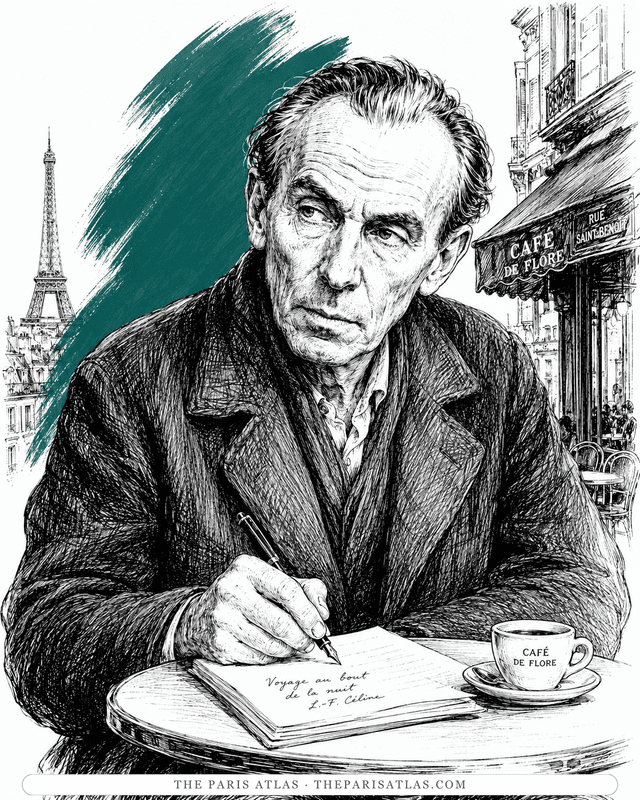
The doctor of the Paris slums who wrote the century's blackest, funniest novel — and changed the sound of French prose.
View author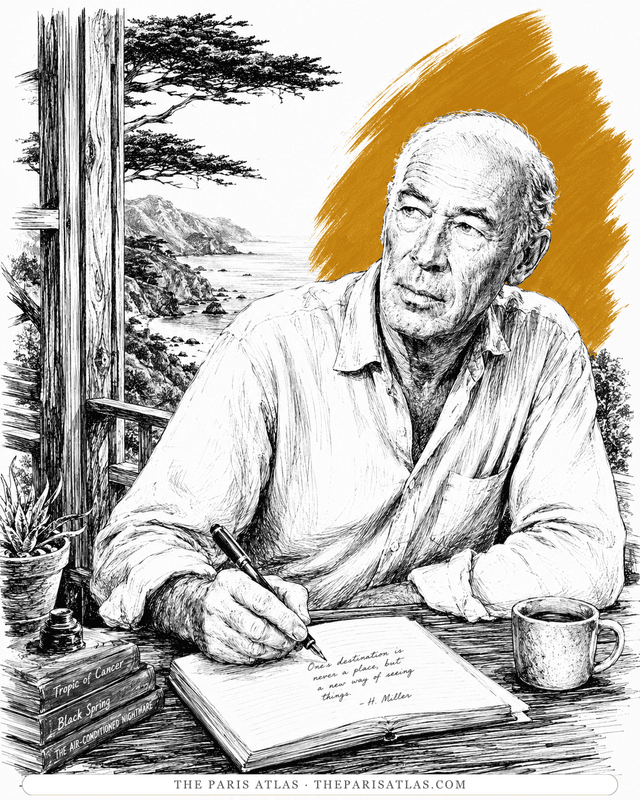
The Brooklyn dropout who arrived in Paris broke at thirty-eight and wrote the exuberant, banned books that ended American censorship.
View author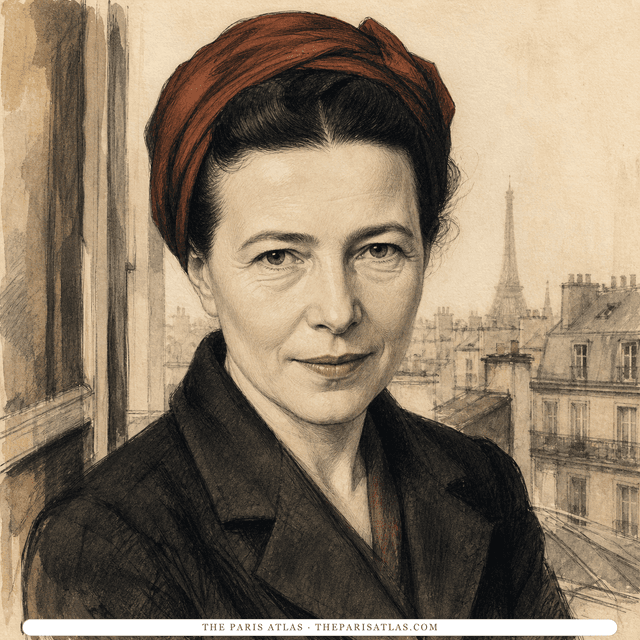
French writer and philosopher whose novels, memoirs, and social analysis examined freedom, gender, responsibility, aging, and the material conditions that shape a life.
View authorThe sources below include the primary text, editions, scholarship, archival materials, and other records that informed this page. They document Poems, its publication, and its place in literary history.

The National Park Service on the Battle Monument and the singing of the hymn on 4 July 1837.

The later collected Poems, for the corrected Concord Hymn heading and the contents of May-Day and Other Pieces.
The London edition of 1847.
Catalogue records for the Library of America and Harvard editions.
The primary text is the baseline reference for every book page. Additional references document publication history, interpretation, and historical context where that evidence is available.
 Explore more resources