Uses of Great Men
The opening lecture: what great men are for, and why no single one of them should rule us for long.
Representative Men
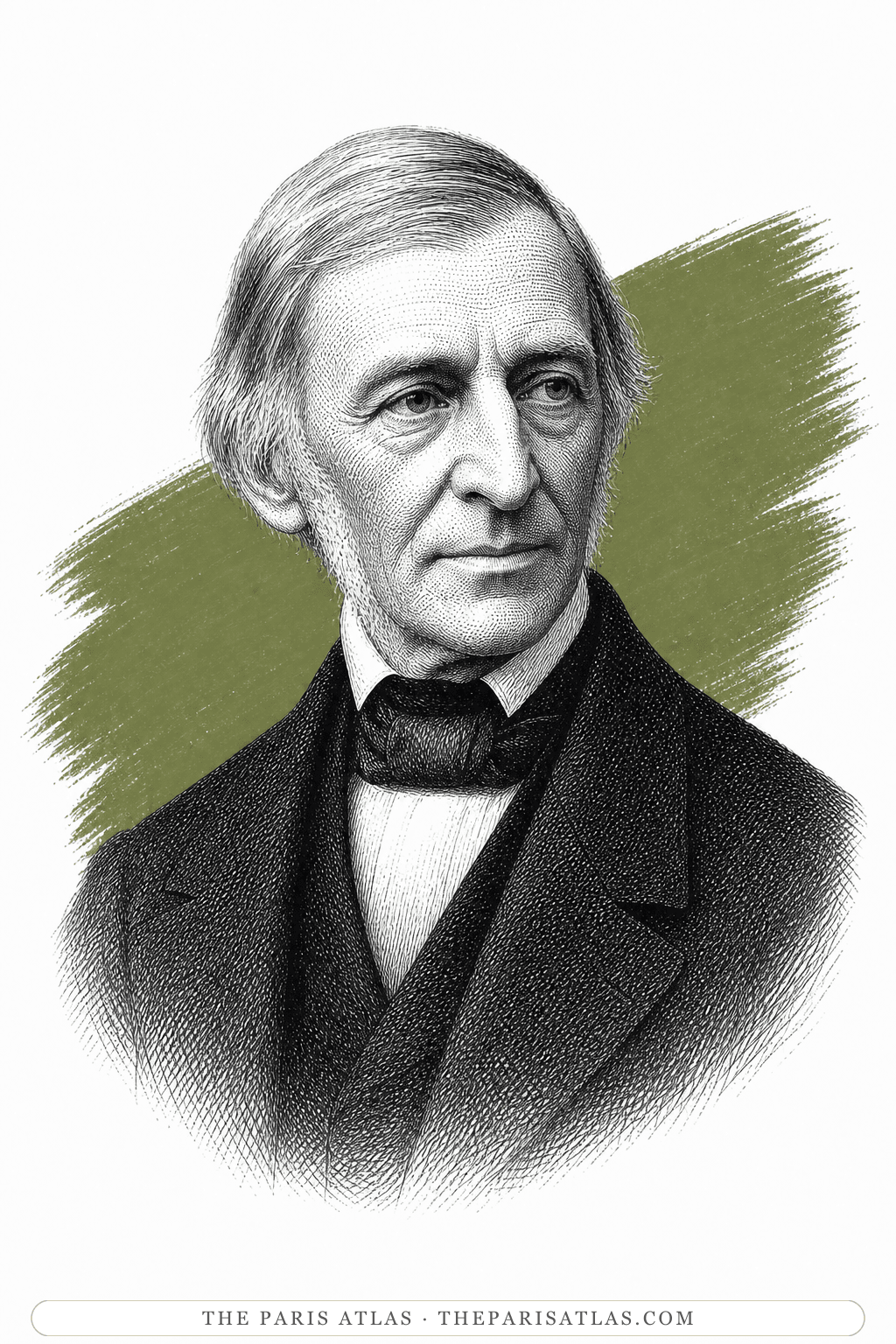
Ralph Waldo Emerson
Six great men as six kinds of mind: the philosopher, the mystic, the skeptic, the poet, the man of the world and the writer.
Representative Men is a book of seven lectures by Ralph Waldo Emerson, published in Boston in 1850 by Phillips, Sampson and Company. The first lecture asks what great men are for. The other six each take one man as the model of a type. Plato is the philosopher and Emanuel Swedenborg the mystic. Michel de Montaigne is the skeptic, William Shakespeare the poet, Napoleon the man of the world, and Johann Wolfgang von Goethe the writer.[1] Emerson first gave the lectures in Boston in the winter of 1845–46.[2] The Montaigne lecture includes a memory of Paris. In 1833 Emerson found a tomb at Père Lachaise whose epitaph praised Montaigne's Essays.[1]
Emerson began the course on 11 December 1845, with seven lectures before the Boston Lyceum at the Odeon. He read them in other cities that winter.[2] In the autumn of 1847 he sailed for his second visit to England, where he lectured through the winter. In June 1848 he read the lectures on Napoleon and on Shakespeare at Exeter Hall in London.[3][2]
The Boston first edition is dated 1850 and runs to 285 pages. Its copyright was entered in 1849.[1] Oliver Wendell Holmes thought the title a happy one. He said it had passed into ordinary speech as a convenient phrase.[3]
Holmes also said the lectures tell us as much about Emerson as about their subjects. Emerson shows his own sympathies and dislikes, and, as everywhere, writes his own biography.[3]
"Uses of Great Men" opens: "It is natural to believe in great men." Emerson says they help us by showing what a human being can do. He also warns against leaning on any one of them for too long: "Every hero becomes a bore at last."[1]
"Plato; or, the Philosopher" praises Plato as the thinker who joined the unity of things with their endless variety. "Plato is philosophy, and philosophy, Plato," Emerson writes. A short second piece, "Plato: New Readings", follows. "Swedenborg; or, the Mystic" admires the Swedish scientist turned visionary and then argues with him.[1]
"Montaigne; or, the Skeptic" defends the doubter who stands in the middle of the road. "Shakspeare; or, the Poet" treats Shakespeare as a writer who took what his age gave him and outgrew every category. "Napoleon; or, the Man of the World" presents Napoleon as the hero of the middle class, admired and then condemned. "Goethe; or, the Writer" closes the book with the writer as the recorder of his age.[1]
In the Montaigne lecture Emerson stops to explain why he loves Montaigne so much. As a boy he had one odd volume of Charles Cotton's translation of the Essays, left from his father's library. After college he read it, bought the other volumes, and felt as if he had written the book himself in some former life.
It happened, when in Paris, in 1833, that, in the cemetery of Pere le Chaise, I came to a tomb of Auguste Collignon, who died in 1830, aged sixty-eight years, and who, said the monument, "lived to do right, and had formed himself to virtue on the Essays of Montaigne."
Emerson's journal shows the day. On 15 July 1833 he walked out to Père Lachaise. He found the French tombstones vain and pleading, like advertisements. Then he copied one epitaph in full, in French. Auguste Charles Collignon, it said, had led a sweet and happy life by following, as far as he could, the morals and lessons of Montaigne's Essays and La Fontaine's Fables.
Seventeen years later, in the book, Emerson dropped La Fontaine and turned the epitaph into English of his own. What stayed was the man who shaped his life by Montaigne's Essays. The lecture goes on to call the Essays the language of conversation put into a book: "Cut these words, and they would bleed; they are vascular and alive."
Emerson went back to Paris in the middle of his English lecture tour. On 4 May 1848 he wrote that he would go on Saturday and spend the weeks before his London lectures in France. France was in the middle of a revolution. Alfred Tennyson, whom Emerson met in London just before he left, pretended to think he would never come back alive.
He arrived by way of Boulogne on the night of Saturday 6 May and took lodgings in the Rue des Petits Augustins. On Monday 15 May he watched a failed uprising. For an hour or two Paris believed a new government had taken power, until the National Guard swept the plotters away. Emerson had sat in the clubs of Auguste Blanqui and Armand Barbès, the two leaders, only days before.
He wrote to his wife, Lidian Emerson, that the clubs were the most interesting thing in Paris, because "the men are in terrible earnest." He saw the actress Rachel in Phèdre and heard her chant the Marseillaise. At the Sorbonne he heard Urbain Le Verrier lecture on mathematics and Jules Michelet on Indian philosophy. He heard Alphonse de Lamartine speak in the Chamber, and on 24 May he was due at an evening party at Alexis de Tocqueville's.
On one Sunday he stood among more than 120,000 people at a national festival on the Champ de Mars. He said the crowd was like one immense family. "I find Paris a place of the largest liberty that is, I suppose, in the civilized world," he wrote on 24 May. He left after twenty-five days and read his London lectures in June.
Holmes says the visit gave Emerson material for a lecture on France, which he gave in Boston in 1856 and never printed. Paris also appears in the book itself. The Napoleon lecture calls him the prophet sent to "Paris, and London, and New York, the spirit of commerce, of money, and material power."
It is natural to believe in great men.
Every hero becomes a bore at last.
It happened, when in Paris, in 1833, that, in the cemetery of Pere le Chaise, I came to a tomb of Auguste Collignon, who died in 1830, aged sixty-eight years
The Montaigne lecture explains where Emerson's own way of writing came from, and it starts with a tomb he found in Paris.
Emerson praises Napoleon's energy and then calls him a boundless liar. Every portrait in the book comes with its objections.
The lectures recall Paris in 1833, and Emerson read two of them in London just after his twenty-five days in revolutionary Paris in 1848.
The full text is on Project Gutenberg as ebook 6312.
The opening lecture: what great men are for, and why no single one of them should rule us for long.
Plato as the thinker who held together the one and the many. Followed by a shorter piece, "Plato: New Readings".
Emanuel Swedenborg, the Swedish scientist who became a visionary. Emerson admires him and argues with him.
The case for the honest doubter, with Emerson's memory of a Montaigne-lover's tomb at Père Lachaise in 1833.
Shakespeare as a man who borrowed freely from his age and still stands outside every category of author.
Napoleon as the hero of the middle class everywhere: admired for his energy, condemned for his lies and selfishness.
The last lecture: the writer as the one who records and understands his own time.
1833
On 15 July, at Père Lachaise in Paris, Emerson copies the epitaph of Auguste Charles Collignon, who lived by Montaigne's Essays and La Fontaine's Fables.
1845
On 11 December Emerson begins seven lectures on Representative Men before the Boston Lyceum at the Odeon.
1847
In October he leaves Concord for his second visit to England.
1848
Emerson spends twenty-five days in revolutionary Paris in May and June. Back in London, he reads the Napoleon and Shakespeare lectures at Exeter Hall.
1850
Phillips, Sampson and Company publishes Representative Men: Seven Lectures in Boston.
1987
Harvard University Press publishes Representative Men as volume 4 of The Collected Works of Ralph Waldo Emerson.


Essays: First Series
Ralph Waldo Emerson
Emerson's own essays of 1841, which owe much to the Montaigne he describes here.
Read our takeNature
Ralph Waldo Emerson
His first book, whose idea began in Paris in July 1833, two days before his visit to Père Lachaise.
Read our takeThe American Scholar
Ralph Waldo Emerson
The 1837 speech that warned Americans against simply copying great men. Representative Men explains how to use them instead.
Read our takePoems
Ralph Waldo Emerson
Plato the philosopher, Emanuel Swedenborg the mystic, Michel de Montaigne the skeptic, William Shakespeare the poet, Napoleon the man of the world, and Johann Wolfgang von Goethe the writer. An opening lecture, "Uses of Great Men", explains the idea.
Each man stands for a type of mind or life. Emerson is interested in what kind of person each one shows is possible, not in full biographies.
In 1850, in Boston, by Phillips, Sampson and Company. Emerson had first given the lectures in Boston in the winter of 1845–46.
In the Montaigne lecture Emerson recalls visiting Père Lachaise cemetery in Paris in 1833. He found the tomb of Auguste Collignon, whose epitaph said he had formed himself on Montaigne's Essays. In 1848 Emerson spent twenty-five days in Paris during the revolution, between his English lectures.
For his honesty and his style. Emerson says he knows no book that seems less written: the Essays are conversation put on paper. He had loved them since he read his father's odd volume after college.
Both admiration and contempt. He calls Napoleon the hero of the middle class everywhere, the "incarnate Democrat". Later in the lecture he calls him unjust to his generals and "a boundless liar".
Explore authors with a similar voice, perspective, and influence.
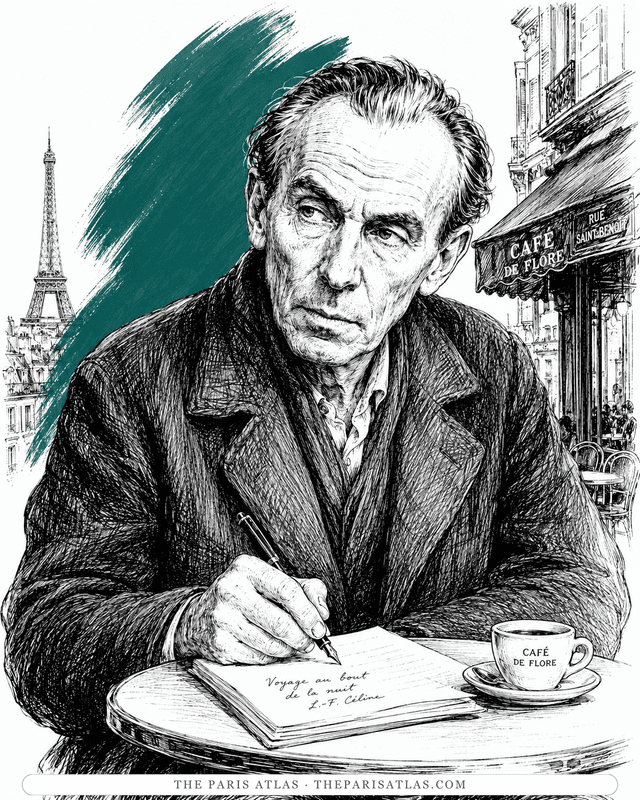
The doctor of the Paris slums who wrote the century's blackest, funniest novel — and changed the sound of French prose.
View author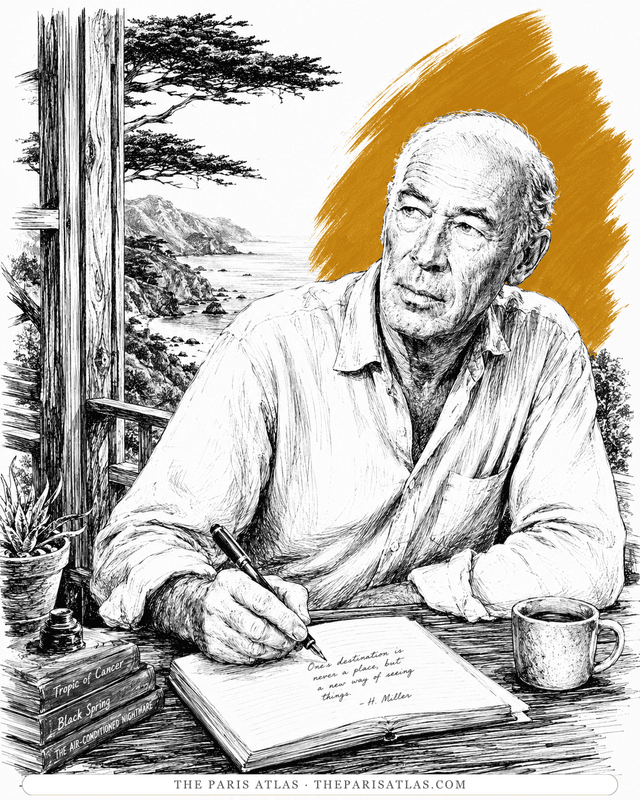
The Brooklyn dropout who arrived in Paris broke at thirty-eight and wrote the exuberant, banned books that ended American censorship.
View author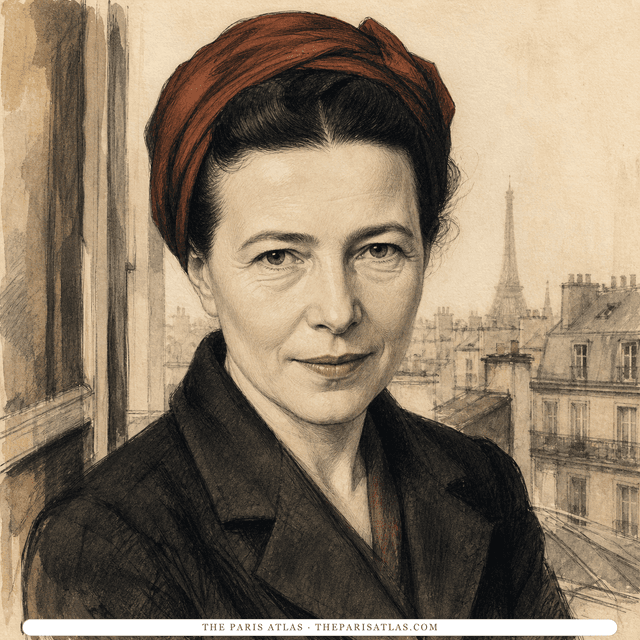
French writer and philosopher whose novels, memoirs, and social analysis examined freedom, gender, responsibility, aging, and the material conditions that shape a life.
View authorThe sources below include the primary text, editions, scholarship, archival materials, and other records that informed this page. They document Representative Men, its publication, and its place in literary history.

The full text, used to compare readings.

Emerson's journal of the visit to Père Lachaise, with the full French epitaph.
Catalogue records for the Harvard, Modern Library and other editions.
The Library of America volume: ISBN, contents and page count.
The primary text is the baseline reference for every book page. Additional references document publication history, interpretation, and historical context where that evidence is available.
 Explore more resources