Nature
Ralph Waldo Emerson
Nature
The small book Emerson published the year before. Nature is the first of the scholar's three teachers.
Read our takeThe American Scholar
Ralph Waldo Emerson
Emerson's speech to Harvard's Phi Beta Kappa Society in 1837, telling American students to stop copying Europe and think for themselves.
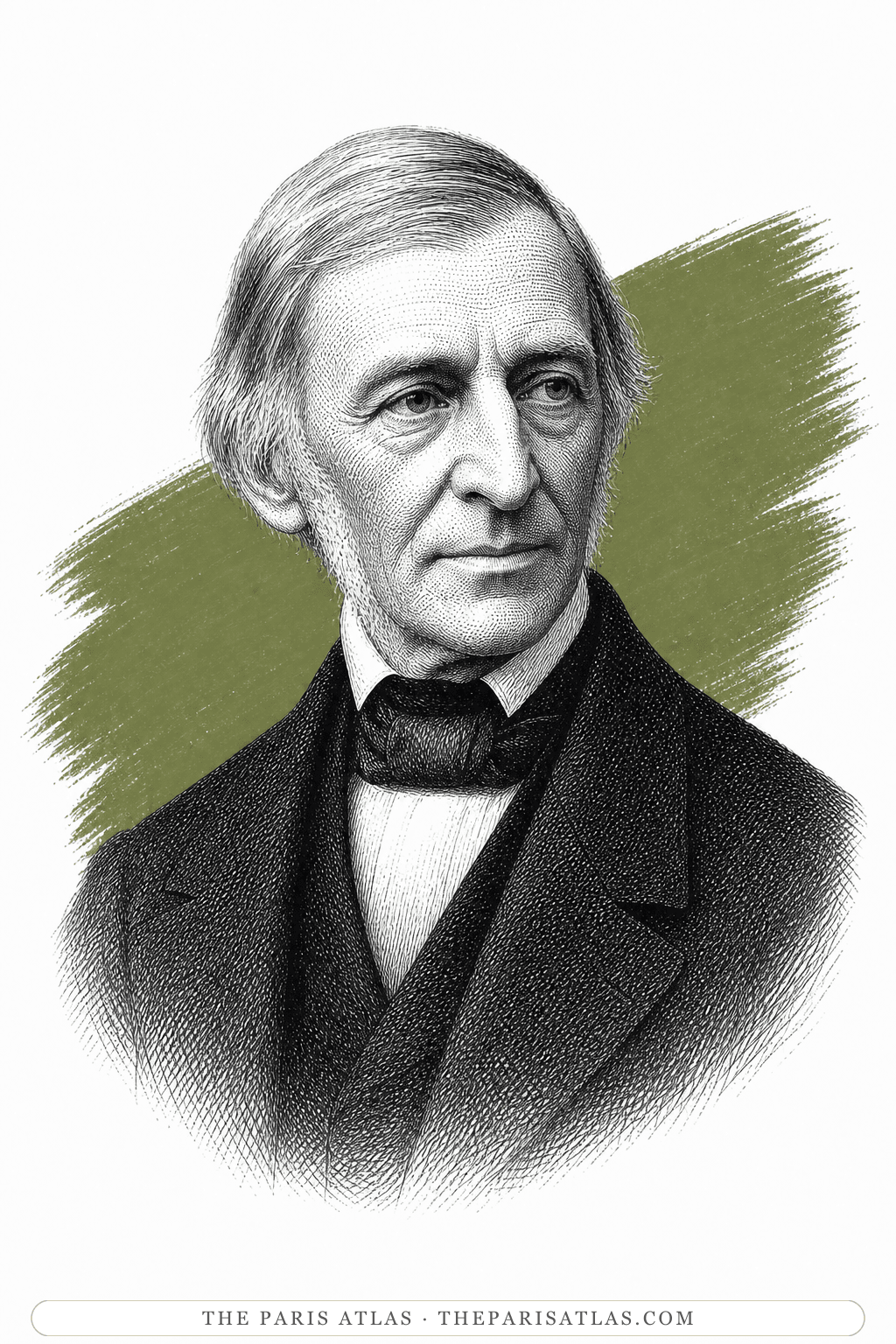
The American Scholar is the speech Ralph Waldo Emerson gave to the Phi Beta Kappa Society at Cambridge, Massachusetts, on 31 August 1837. The Phi Beta Kappa Society is a college honour society, and its yearly address at Harvard drew distinguished speakers. James Munroe and Company printed the speech in Boston the same year as An Oration, Delivered before the Phi Beta Kappa Society.[1] Emerson argues that the scholar should be "Man Thinking", not a bookworm or "the parrot of other men's thinking". He names three teachers: nature, books and action. He ends by telling American scholars to stop listening to Europe.[2] Oliver Wendell Holmes later called the speech "our intellectual Declaration of Independence".[3]
Emerson was thirty-four and had published one small book, Nature, the year before. The oration opened Harvard's literary year, as Emerson says in his first sentence. The poet James Russell Lowell remembered the day as an event without parallel in American literary history. He recalled "crowded and breathless aisles", "windows clustering with eager heads", enthusiasm from some listeners and "grim silence" from others.[3][4]
The speech was printed as a pamphlet in 1837, and a second edition of 32 pages followed in 1838.[1][2] Emerson later put it into his collected writings, where it carries the title The American Scholar.[3]
James Elliot Cabot, Emerson's literary executor, saw a lesson in the reception. The same ideas that shocked people in a pulpit were welcome on a weekday platform, dressed as a literary lecture. Cabot thought this helped Emerson decide to give up the preaching he still did. Early that winter he told the church committee at Lexington that he meant to give up his charge there.[4]
Emerson opens by saying that America's long apprenticeship to the learning of other countries is nearly over. He tells an old fable in which the gods divided Man into men, so each person now holds only part of the whole. The scholar is the part that thinks. In the right state he is "Man Thinking". In the wrong state he is only a thinker, or "the parrot of other men's thinking".[2]
The first teacher is nature, and the scholar learns from it that nature and his own mind answer to each other. The second is books, the mind of the past. "Books are the best of things, well used; abused, among the worst," Emerson says. They are for nothing but to inspire. The third is action. Without it, Emerson says, "thought can never ripen into truth."[2]
The scholar's duties, Emerson says, are all contained in self-trust. He then turns to the present day. The best writers of the age are exploring the near, the low and the common, and he wants the meaning of "the meal in the firkin; the milk in the pan". A firkin is a small wooden tub. The speech ends by calling on American scholars to walk on their own feet and speak their own minds.[2]
The closing pages are the part people remember. Emerson tells his audience that confidence in the unsearched might of man belongs to the American scholar. Then he describes what goes wrong when that confidence is missing. The American spirit is thought to be "timid, imitative, tame", and the country's minds are taught to aim at low things.
We have listened too long to the courtly muses of Europe.
Young men of promise, he says, are disgusted by the way business is done and give up, some of them by suicide. His remedy is patience and self-trust. A single person who plants himself on his instincts and holds there will find that "the huge world will come round to him".
The last sentences turn the idea into a promise for the whole country. "We will walk on our own feet; we will work with our own hands; we will speak our own minds." A nation of men will exist for the first time, he says, because each will believe himself inspired by the same Divine Soul.
Oliver Wendell Holmes, who wrote Emerson's biography in 1884, quoted those sentences and then gave the speech its lasting name: "This grand Oration was our intellectual Declaration of Independence." He added that the young men went out as if a prophet had spoken to them. Some older listeners were startled by the homely examples, like the milk in the pan.
The speech never names Paris. Its first paragraph, though, says the Phi Beta Kappa members do not meet "for the advancement of science, like our cotemporaries in the British and European capitals." Emerson had watched such a meeting himself.
In the summer of 1833, on his only trip to Europe so far, he spent four weeks in Paris. He wrote in his journal that it was the most hospitable of cities, because a foreigner had only to show a passport to be let in anywhere. At the Sorbonne, the leading scientists in France lectured every day with the doors open to all. He went to hear the philosopher Théodore Jouffroy and the chemists Louis-Jacques Thénard and Joseph Louis Gay-Lussac. Before he left in July, David Bailie Warden took him to a session of the science class of the Institut de France. Emerson saw Jean-Baptiste Biot, François Arago and Gay-Lussac there while papers were read and debated.
We have listened too long to the courtly muses of Europe.
We will walk on our own feet; we will work with our own hands; we will speak our own minds.
In the right state, he is, Man Thinking. In the degenerate state, when the victim of society, he tends to become a mere thinker, or, still worse, the parrot of other men's thinking.
The 1838 printing runs to 32 pages, and a scan of it is free on the Internet Archive.
Emerson's picture of the scholar as a whole person thinking, not a bookworm, is the centre of the speech.
Oliver Wendell Holmes gave the speech that name in 1884, after quoting its closing lines in full.
1833
In Paris, Emerson attends free science lectures at the Sorbonne and calls the city the most hospitable in the world.
1836
Emerson publishes Nature, his first book.
1837
On 31 August he gives the Phi Beta Kappa oration at Cambridge. James Munroe and Company prints it in Boston the same year.
1838
A second edition of the oration appears. In July Emerson gives the Divinity School Address at Harvard.
1867
Emerson gives the Phi Beta Kappa oration at Harvard a second time.
1884
Oliver Wendell Holmes calls the 1837 speech "our intellectual Declaration of Independence".


Nature
Ralph Waldo Emerson
The small book Emerson published the year before. Nature is the first of the scholar's three teachers.
Read our takeEssays: First Series
Ralph Waldo Emerson
The essays of 1841, where the speech's call for self-trust becomes "Self-Reliance".
Read our takeRepresentative Men
Ralph Waldo Emerson
Emerson's later lectures on six great men, among them the scholars and writers the speech asks Americans to stop merely copying.
Read our takeWhat to the Slave Is the Fourth of July?
Frederick Douglass
Frederick Douglass's oration of 1852, another printed speech that asks what American independence really means.
Read our takeThe speech describes what an American thinker should be. Emerson says the scholar should be "Man Thinking", taught by nature, books and action. He should trust himself instead of copying the past or copying Europe.
On 31 August 1837, at Cambridge, Massachusetts, as the yearly oration of Harvard's Phi Beta Kappa Society.
Oliver Wendell Holmes, in his 1884 biography of Emerson. He wrote: "This grand Oration was our intellectual Declaration of Independence."
Emerson's name for the scholar at his best: a whole person who thinks, not someone who only repeats other people's ideas. The opposite, he says, is "the parrot of other men's thinking".
Nature, books, and action. Emerson calls books the mind of the past, and says they are for nothing but to inspire.
Not in the text, which never names Paris. The speech opens by mentioning the scientific meetings of "the British and European capitals". Four years earlier Emerson had spent four weeks in Paris, heard the Sorbonne's free science lectures, and watched a session of the Institut de France.
A scan of the 1838 second edition is free on the Internet Archive. The speech is also in the Penguin Classics Nature and Selected Essays and the Library of America's Essays & Lectures.
Explore authors with a similar voice, perspective, and influence.
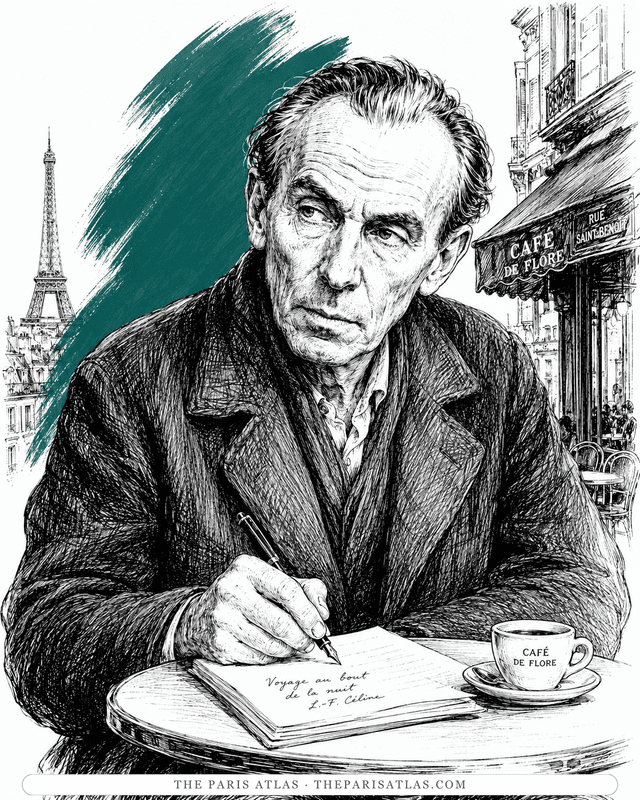
The doctor of the Paris slums who wrote the century's blackest, funniest novel — and changed the sound of French prose.
View author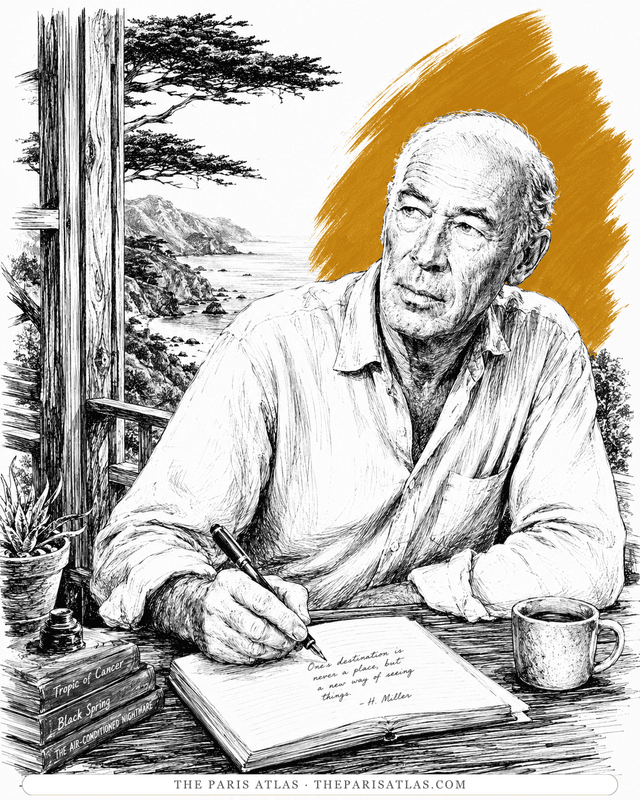
The Brooklyn dropout who arrived in Paris broke at thirty-eight and wrote the exuberant, banned books that ended American censorship.
View author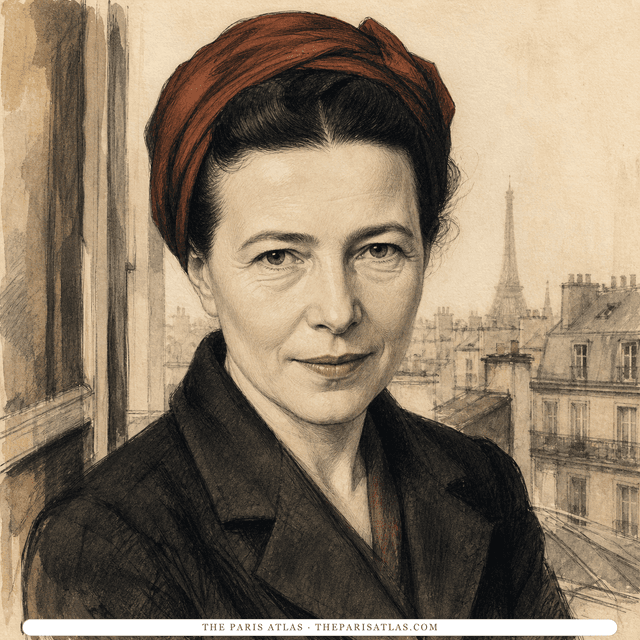
French writer and philosopher whose novels, memoirs, and social analysis examined freedom, gender, responsibility, aging, and the material conditions that shape a life.
View authorThe sources below include the primary text, editions, scholarship, archival materials, and other records that informed this page. They document The American Scholar, its publication, and its place in literary history.

The 1838 second edition, used for the contents, page numbers and every quotation.

Emerson's journal on Paris and the Sorbonne lectures, June 1833.
Edward W. Emerson's sketch, for the second Phi Beta Kappa oration of 1867.
The Penguin Classics selection: ISBN, contents and page count.
The Library of America volume: ISBN, contents and page count.
The primary text is the baseline reference for every book page. Additional references document publication history, interpretation, and historical context where that evidence is available.
 Explore more resources