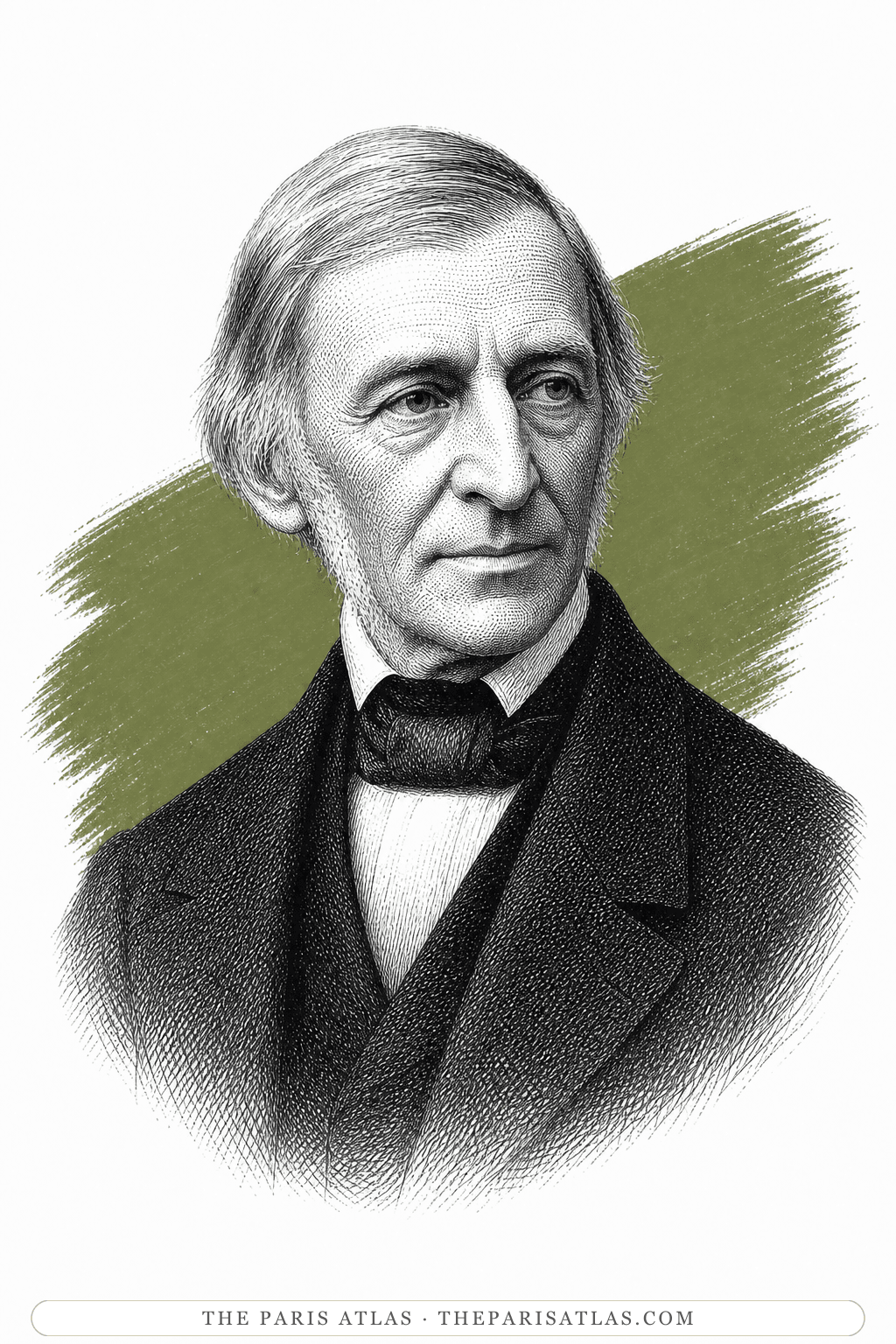
Self-Reliance
The second essay and the famous one: trust your own thought, refuse to conform, and do not fear contradicting yourself. Pages 35 to 73 of the first edition.
Essays: First Series
Ralph Waldo Emerson
Twelve essays from 1841, and the second of them is "Self-Reliance": trust yourself, and stop apologising for it.
Essays: First Series is the book that holds "Self-Reliance", Ralph Waldo Emerson's best-known essay. James Munroe and Company published it in Boston in 1841 under the plain title Essays. The words "First Series" were added after a second book of essays followed in 1844. The twelve essays are History, Self-Reliance, Compensation, Spiritual Laws, Love, Friendship, Prudence, Heroism, The Over-Soul, Circles, Intellect and Art.[1][2] Many of them grew out of lectures Emerson gave in Boston in the late 1830s. "Self-Reliance" is the source of "Whoso would be a man must be a nonconformist" and "A foolish consistency is the hobgoblin of little minds".[1]
Emerson built the essays out of his lecture notes. In the autumn of 1836 he advertised twelve lectures at the Masonic Temple in Boston, "On the Philosophy of Modern History". The course began on 8 December. His literary executor, James Elliot Cabot, says that much of it was printed three or four years later in the first series of Essays, many sentences with little change.[3] A later Boston course, begun in December 1838, supplied more. Cabot says the lecture on love went into the book almost entire.[4]
The Boston first edition runs to 303 pages. The title page reads only Essays, by R. W. Emerson, and one early owner wrote "First Series" on it by hand. "Self-Reliance" fills pages 35 to 73.[1]
The same year, James Fraser brought out a London edition with a preface by Thomas Carlyle, the Scottish writer Emerson had visited in 1833. Carlyle warned the great reading public off. The book, he said, was for "the small thinking public". Carlyle added that the small thinking public was growing in England.[5]
Emerson revised the essays for later printings, so later texts differ from the 1841 one in small ways. The first edition reads "Whoso would be a man must be a nonconformist", with no comma. The same page reads "Nothing is at last sacred but the integrity of our own mind". Project Gutenberg's text has a comma in the first sentence and "your own mind" in the second.[1][6]
"History" opens the book with its central idea: there is one mind common to all people, so anyone can read all of history as their own story. "Self-Reliance" follows. Emerson tells the reader to trust their own thought and to stop copying other people, other countries and the past. "Society everywhere is in conspiracy against the manhood of every one of its members," he writes. He attacks conformity, consistency, travel for its own sake and borrowed styles of building.[1]
"Compensation" argues that every gain is paid for and every loss brings something back. "Spiritual Laws" says a person does best by following their own bent without strain. "Each man has his own vocation," he writes there. "Love" and "Friendship" ask what the people closest to us are for. "Prudence" deals with ordinary good sense. "Heroism" praises the courage to hold out against what everyone else thinks.[1]
"The Over-Soul" describes a single spirit that every person shares, and which speaks through them when they stop blocking it. "Circles" says every truth can be surpassed by a larger one drawn around it. "Intellect" is about how thinking actually happens. "Art", the last essay, argues that great pictures are simple and that American artists need not copy Europe.[1]
"Self-Reliance" starts with a small event. Emerson had been reading some verses by an eminent painter and liked that they were original. From that he draws his rule: "To believe your own thought, to believe that what is true for you in your private heart, is true for all men, — that is genius." Then he describes something most readers will know. In every work of genius, he says, we recognise our own rejected thoughts, which come back to us "with a certain alienated majesty".
The essay's most quoted lines come in the next few pages. "Trust thyself: every heart vibrates to that iron string" is on page 39. "Whoso would be a man must be a nonconformist" is on page 41. On page 47 comes the line about consistency. Its target is the habit of refusing to say what you think today because it contradicts what you said yesterday.
A foolish consistency is the hobgoblin of little minds, adored by little statesmen and philosophers and divines. With consistency a great soul has simply nothing to do.
His answer to the fear of being misunderstood is a list. Pythagoras was misunderstood, he says, and so were Socrates, Jesus, Luther, Copernicus, Galileo and Newton. Then he ends the paragraph with the line that follows the list: "To be great is to be misunderstood."
Near the end, the essay turns to travel. "Travelling is a fool's paradise," Emerson writes. At home he dreams that Naples and Rome will cure his sadness. He packs his trunk, crosses the sea, and wakes up in Naples to find "the sad self, unrelenting, identical, that I fled from." Emerson had made that journey himself in 1833, through Sicily and Naples to Rome. A page later he gives his rule: "Insist on yourself; never imitate."
Paris comes into the book near the end, in "Art". Emerson recalls how, as a young man, he imagined the great Italian paintings would be strange and foreign. When he finally saw them, they showed him the plain, familiar things he had left at home. He says he met that same fact in a church in Naples, in Rome, in the Vatican, "and again at Milan, and at Paris, and made all travelling ridiculous as a treadmill."
The pictures he saw at Paris were in the Musée du Louvre. His journal for June and July 1833 records a visit there. He found more paintings by Leonardo da Vinci than in any other gallery, and he liked them. In the same weeks he sat in on free science lectures at the Sorbonne and walked through the natural history collections at the Jardin des Plantes.
Paris also gave the essays their first French readers in book form. In 1851 the Paris publisher Charpentier issued Essais de philosophie américaine, Emerson's essays translated by Émile Montégut. Montégut added a long introduction, and the book runs to 55 pages of introduction and 313 of text.
Whoso would be a man must be a nonconformist.
A foolish consistency is the hobgoblin of little minds, adored by little statesmen and philosophers and divines.
Trust thyself: every heart vibrates to that iron string.
Emerson's most searched and most quoted essay is the second in the book. The essays around it make the same case from other sides.
The hobgoblin of little minds, the nonconformist, and "to be great is to be misunderstood" all come from one essay, within ten pages of each other.
Thomas Carlyle introduced the London edition in 1841 and warned ordinary readers off. The book found its public anyway.
The full text is on Project Gutenberg as ebook 2944, and scans of both 1841 first editions are on the Internet Archive.
The second essay and the famous one: trust your own thought, refuse to conform, and do not fear contradicting yourself. Pages 35 to 73 of the first edition.
The opening essay. Because one mind is common to everyone, every reader can find all of history in their own experience.
Every gain has its price and every loss its return. The essay opens: "Ever since I was a boy, I have wished to write a discourse on Compensation".
On what friends are for. The source of "the only way to have a friend, is to be one", on page 176 of the first edition.
A single spirit shared by every person, which speaks through anyone who stops blocking it.
Every truth can be surpassed by a wider one. Ends with "Nothing great was ever achieved without enthusiasm."
The last essay. Great pictures are simple, and Emerson found the same plain fact in the galleries of Naples, Rome, Milan and Paris.
1833
Emerson travels through Italy to Paris and England. The journey shows up in "Self-Reliance" and "Art".
1836
He begins a course of twelve lectures in Boston on the philosophy of modern history. Much of it later goes into the essays.
1838
A new Boston lecture course begins in December. The lecture on love later goes into the book almost unchanged.
1841
James Munroe and Company publishes Essays in Boston. James Fraser publishes a London edition with a preface by Thomas Carlyle.
1844
Essays: Second Series appears, and the 1841 book becomes the first series.
1851
Charpentier publishes Essais de philosophie américaine in Paris, translated by Émile Montégut.
1979
Harvard University Press publishes Essays, First Series as volume 2 of The Collected Works of Ralph Waldo Emerson.


Nature
Ralph Waldo Emerson
Emerson's first book, five years earlier. Nature sets out the ideas the essays put to work.
Read our takeThe American Scholar
Ralph Waldo Emerson
The 1837 Harvard speech that first told American readers to trust themselves. "Self-Reliance" develops the same call.
Read our takeRepresentative Men
Ralph Waldo Emerson
His 1850 lectures on six great men. The Montaigne lecture explains where his own essay form came from.
Read our takePoems
Ralph Waldo Emerson
Essays: First Series, published in Boston in 1841. "Self-Reliance" is the second of its twelve essays, after "History". The first edition was titled simply Essays.
In 1841, in Emerson's first book of essays. Much of his thinking in it had already appeared in lectures he gave in Boston from 1836 onward.
Trusting your own judgment. Emerson argues that people should think for themselves instead of copying society, tradition or other countries. He also says they should not fear contradicting themselves or being misunderstood.
Emerson is attacking the habit of sticking to what you said before just to look consistent. The next sentences tell the reader to say what they think today and what they think tomorrow, even if the two contradict. The key word is foolish.
Both, depending on the edition. The 1841 first edition reads "Nothing is at last sacred but the integrity of our own mind." Emerson's revised text, which Project Gutenberg follows, reads "your own mind".
History, Self-Reliance, Compensation, Spiritual Laws, Love, Friendship, Prudence, Heroism, The Over-Soul, Circles, Intellect and Art.
Yes, in the essay "Art". Emerson says the plain truth he found in the great pictures of Naples and Rome met him again at Milan and at Paris. He had seen the Louvre's paintings in 1833. The essays were first published in French in Paris in 1851.
Project Gutenberg has the full text as ebook 2944. The Internet Archive has scans of the 1841 Boston first edition and the 1841 London edition with Thomas Carlyle's preface.
Explore authors with a similar voice, perspective, and influence.
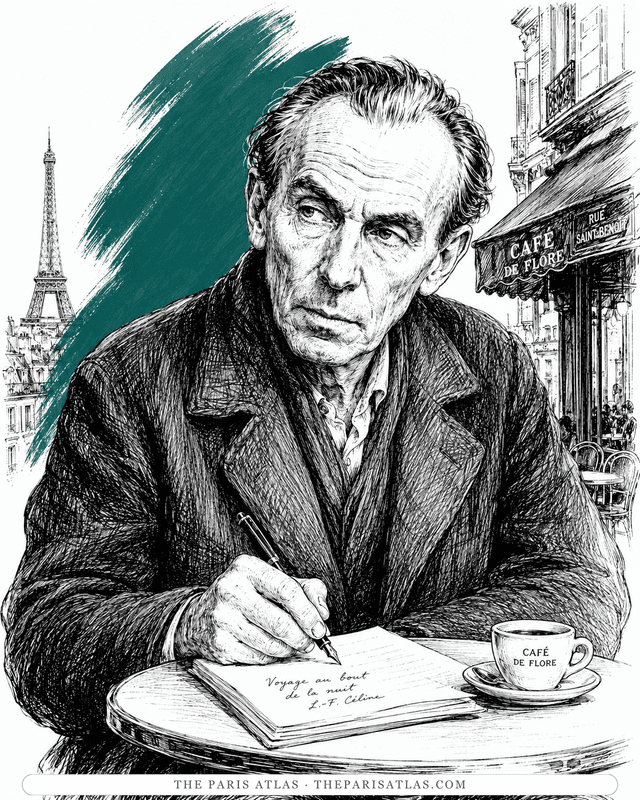
The doctor of the Paris slums who wrote the century's blackest, funniest novel — and changed the sound of French prose.
View author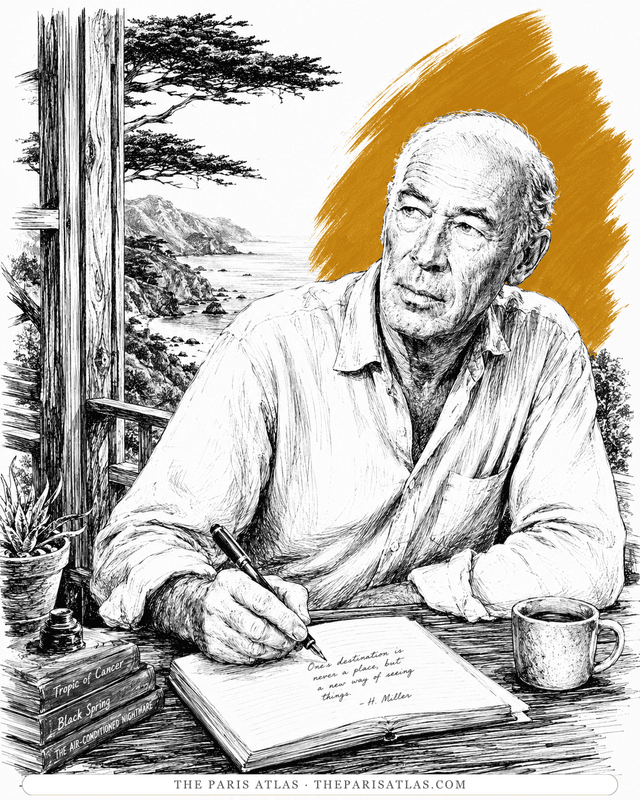
The Brooklyn dropout who arrived in Paris broke at thirty-eight and wrote the exuberant, banned books that ended American censorship.
View author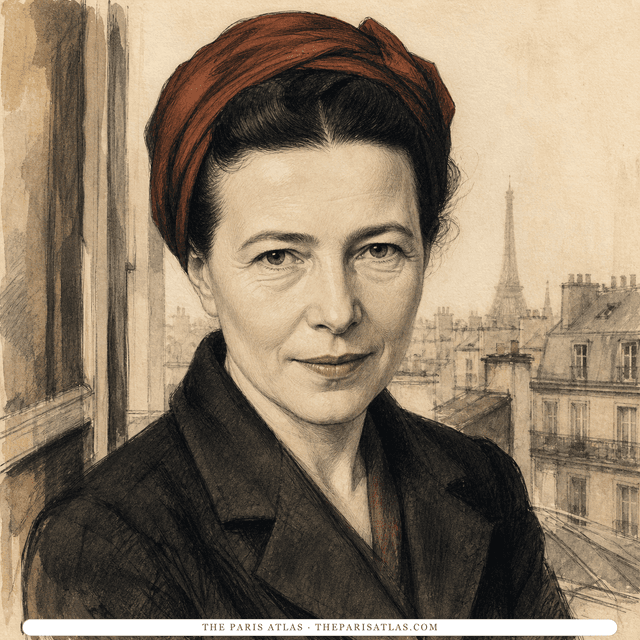
French writer and philosopher whose novels, memoirs, and social analysis examined freedom, gender, responsibility, aging, and the material conditions that shape a life.
View authorThe sources below include the primary text, editions, scholarship, archival materials, and other records that informed this page. They document Essays: First Series, its publication, and its place in literary history.

Oliver Wendell Holmes on the 1841 volume and its twelve essays.
James Elliot Cabot on the 1836 lecture course that fed the essays.
Cabot on the 1838–39 lecture course and the lecture on love.

The London edition of 1841, with Thomas Carlyle's preface.
Project Gutenberg's text, which follows Emerson's later revisions. Used to compare readings.
Emerson's journal of the 1833 journey, including the Louvre, the Sorbonne and the Jardin des Plantes.
The Bibliothèque nationale de France record of the 1851 Paris translation.
Catalogue records for the Harvard Collected Works volume and other editions.
The Library of America volume: ISBN, contents and page count.
The Penguin Classics selection: ISBN, contents and page count.
The primary text is the baseline reference for every book page. Additional references document publication history, interpretation, and historical context where that evidence is available.
 Explore more resources