Gertrude Stein
Buried here · 1946
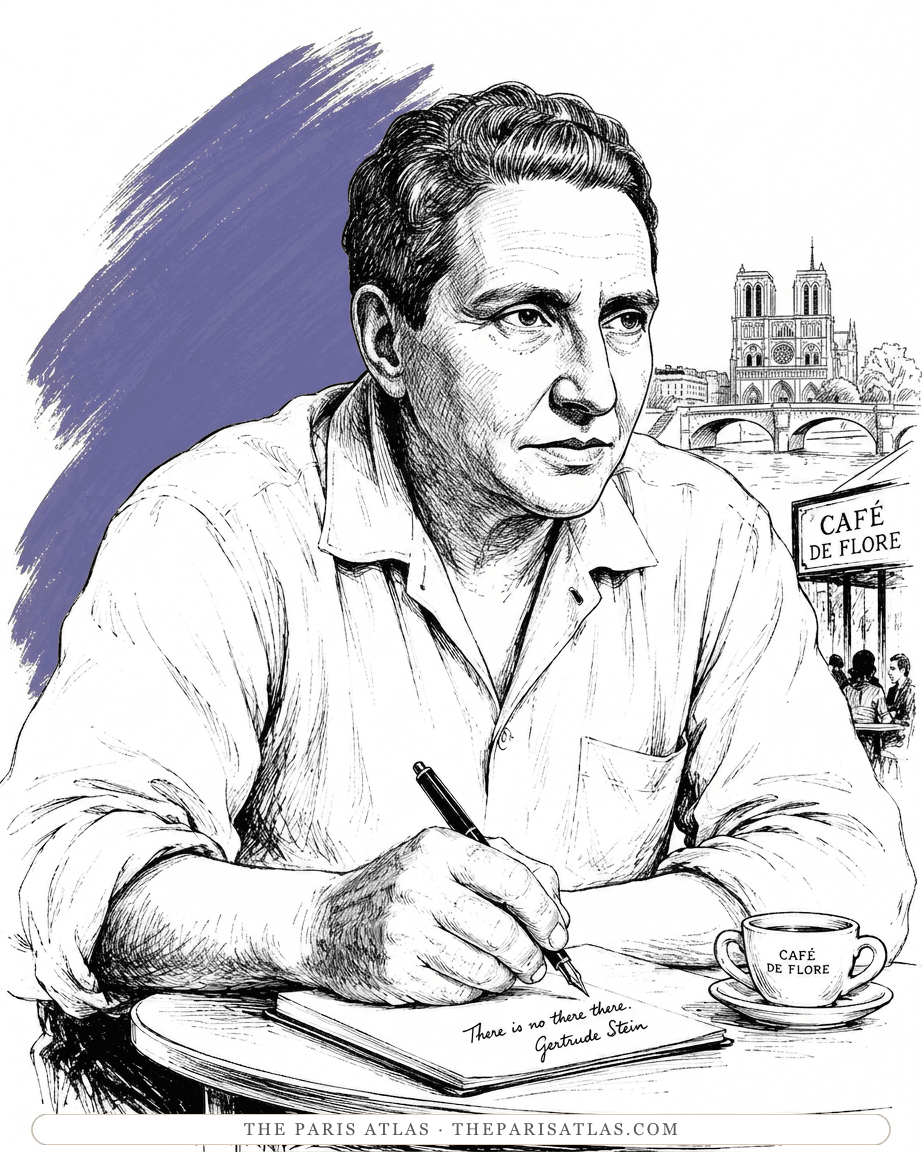
Buried in division 94 after her death in July 1946; Alice B. Toklas was buried beside her two decades later.
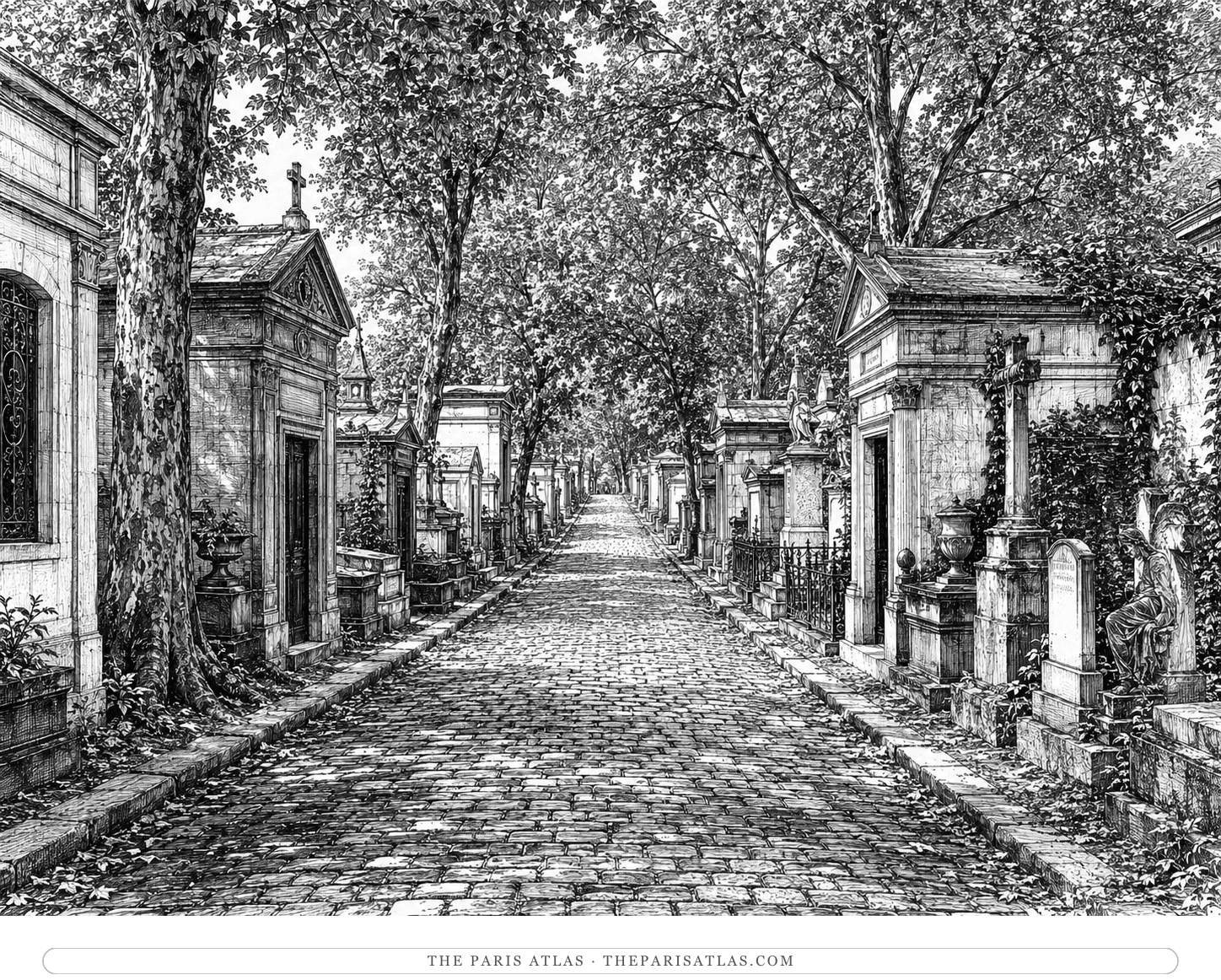
Paris's largest cemetery and its most famous — 43 hectares of tombs, trees, and cobbled lanes holding the graves of Édith Piaf, Oscar Wilde, Jim Morrison, Frédéric Chopin, Marcel Proust, Gertrude Stein, and Amedeo Modigliani.
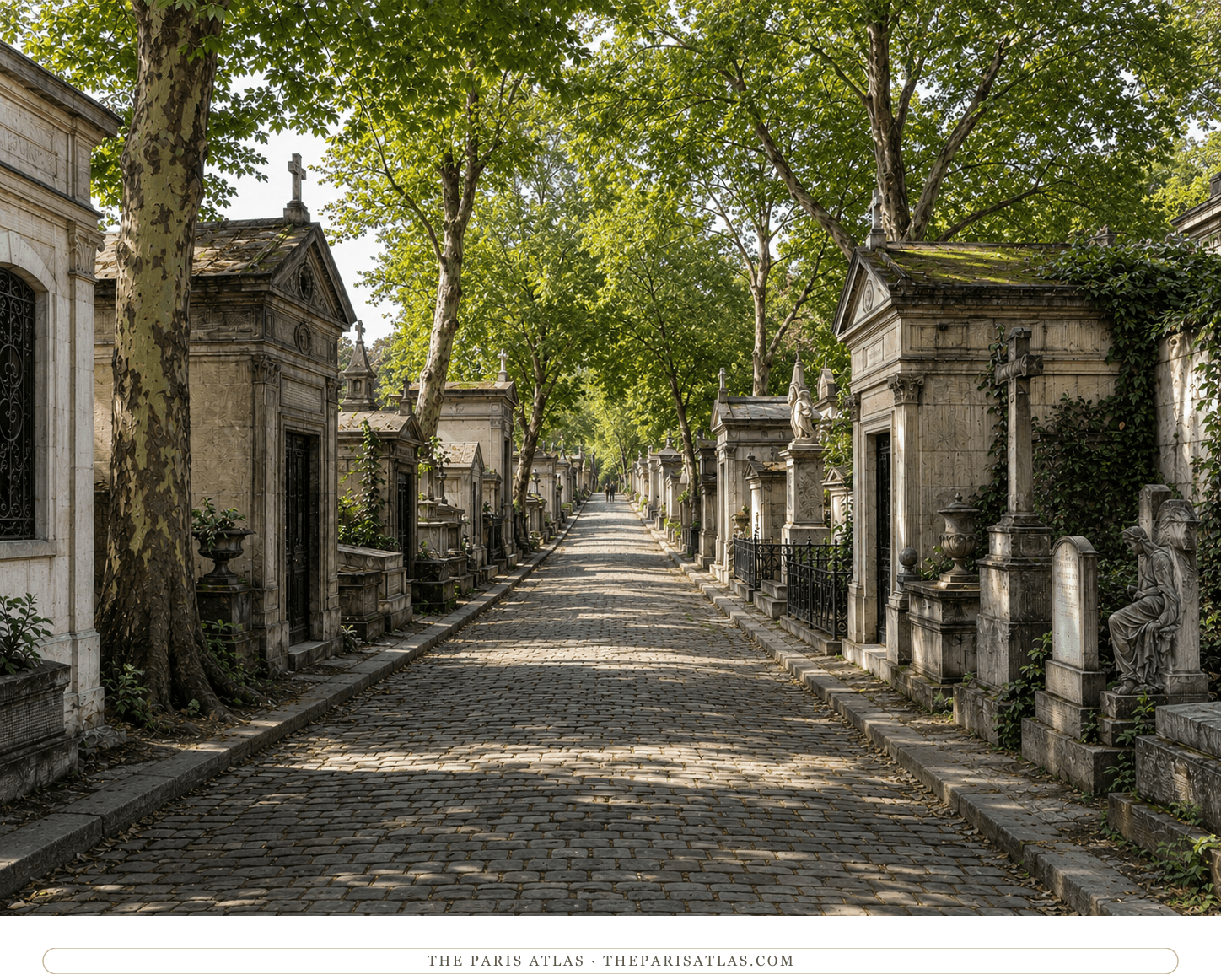
Père-Lachaise opened in 1804 as the Cimetière de l'Est, a landscaped garden cemetery laid out by Alexandre-Théodore Brongniart on a hill east of the city, built to replace the overflowing, unsanitary parish graveyards of old Paris. The name came with the ground: the hill had been the country retreat of Père François de La Chaise, confessor to Louis XIV. Fashionable Paris at first wanted nothing to do with a burial ground so far from town, so in 1817 the administration staged one of history's great acts of cemetery marketing — transferring the supposed remains of Molière and La Fontaine, and of the medieval lovers Héloïse and Abélard, to the new ground. It worked. To be buried at Père-Lachaise became a Parisian ambition, and the hill filled with the century's names.
Two hundred years on, it is an open-air pantheon: some 70,000 tombs on 43 hectares — the largest green space inside Paris — visited by more than three million people a year, which by most reckonings makes it the most visited cemetery in the world. The roll call runs from Balzac (division 48) and Chopin (division 11) to Proust (division 85), Colette, Sarah Bernhardt, and Eugène Delacroix; to Oscar Wilde's winged sphinx by Jacob Epstein in division 89; to Jim Morrison in division 6, whose modest grave has needed a crowd barrier for decades.
Our own people are scattered across the hill. Guillaume Apollinaire was buried in division 86 in November 1918, dead of influenza in the war's last days. Amedeo Modigliani was carried up in January 1920, and lies in division 96 beside Jeanne Hébuterne, whose remains were brought to join him years later. Gertrude Stein was buried in division 94 in 1946, and Alice B. Toklas joined her in the same grave in 1967 — the rue de Fleurus household reunited under one stone. And Édith Piaf lies in the Gassion family grave in division 97, in the east-end quarter of the city that raised her.
The cemetery is also a site of harder memory. Against its south-eastern wall — the Mur des Fédérés — the French army shot 147 men, women, and children in the final hours of the Paris Commune on 28 May 1871, and the wall remains a place of pilgrimage for the French left. France's first crematorium opened here in 1887, its first columbarium two years later. It is still a working cemetery: steep, cobbled, easy to get lost in, and worth a whole morning with the official map in hand.
Playwright and wit, died in exile in a Paris hotel
Division 89
In Search of Lost Time
Division 85
La Comédie humaine
Division 48
Novelist — Chéri, Gigi; first French woman of letters given a state funeral
Division 4
Writer and collector — the salon at 27 rue de Fleurus
Division 94
Writer, cook, and Stein's partner of four decades
Division 94
Poet of Alcools and Calligrammes; named both cubism and surrealism
Division 86
Native Son and Black Boy, written into Paris exile
Division 87
France's great comic playwright
Division 25
The Fables
Division 25
The medieval lovers and letter-writers
Division 7
Liberty Leading the People
Division 49
The great draughtsman of French classicism
Division 23
The Raft of the Medusa
Division 12
Impressionism's patriarch
Division 7
A Sunday on La Grande Jatte, dead at thirty-one
Division 66
Montparnasse's mournful portraitist
Division 96
Surrealist painter and collagist
Division 87
The piano's poet, dead in Paris at thirty-nine
Division 11
France's great popular voice
Division 97
Singer of The Doors, dead in a Marais apartment at twenty-seven
Division 6
The Barber of Seville
Division 4
Carmen — he died believing it a failure
Division 68
The century's defining operatic soprano
Division 87
The Divine Sarah — the first international stage star
Division 44
Singer and actor
Division 44
Actor — the first French winner of a Best Actress Oscar
Division 44
Cinema's first magician — A Trip to the Moon
Division 64
Bip the clown; the century's great mime
Division 21
Barefoot revolutionary of modern dance
Division 87
Journalist shot by Napoleon's cousin at twenty-one; his funeral drew 100,000
Division 92
The Cimetière de l'Est opens on the old La Chaise estate, a landscaped garden cemetery by Brongniart replacing the city's unsanitary parish graveyards.
The remains of Molière and La Fontaine — and of Héloïse and Abélard — are transferred to the unfashionable new cemetery. Paris follows.
28 May: 147 men, women, and children of the Paris Commune are shot against the cemetery's wall, since known as the Mur des Fédérés.
France's first crematorium opens here; its first columbarium follows in 1889.
Guillaume Apollinaire is buried in division 86, dead of influenza in the last days of the war.
Amedeo Modigliani is buried in division 96. Jeanne Hébuterne's remains are later transferred to the grave beside him.
Gertrude Stein is buried in division 94; Alice B. Toklas joins her in the same grave in 1967.
Édith Piaf is buried in the Gassion family grave in division 97.
Jim Morrison is buried in division 6; his grave becomes the most sought-out address on the hill.
Pick up your bearings — and ideally the official map — at the porte principale, opposite the rue de la Roquette. The hill climbs east; the route below climbs with it.
Just inside the entrance, on the broad avenue to the left: Colette under fresh flowers, and behind her the tomb Rossini rested in before his remains left for Florence in 1887.
The neo-Gothic canopy near the boulevard wall shelters the cemetery's oldest residents, reunited by the 1817 transfer that made Père-Lachaise fashionable.
A few paths in, follow the visitors: the cemetery's most hunted grave sits fenced behind its neighbors, usually ringed with flowers, notes, and Métro tickets.
Uphill on the chemin Denon, Clésinger's muse Euterpe mourns over her broken lyre. His heart, famously, is in Warsaw.
Side by side in matching sarcophagi since 1817 — the cemetery's founding publicity stunt, and still two of its most visited names.
Cross the cemetery's central heights: Balzac under his David d'Angers bronze, and a few steps on, Delacroix's plain dark sarcophagus.
On the flatter upper ground, a low black marble slab that readers leave pebbles and Métro tickets on.
A rough granite menhir carved with a heart-shaped calligramme, a few paths from Proust.
France's first crematorium, built in 1887, and the columbarium niches that hold or commemorate Maria Callas, Isadora Duncan, Max Ernst, and Richard Wright.
Epstein's winged sphinx, glassed in against lipstick, at the cemetery's far eastern corner.
The fallen bronze journalist whose legend makes visitors reach over the fence; note what a century of superstition has polished.
One modest headstone for the household of 27 rue de Fleurus.
Beside Jeanne Hébuterne, under a stone that calls death his moment of glory.
The Gassion family grave, in the corner of the cemetery nearest the streets that raised her.
End at the south-eastern wall where 147 Communards were shot on 28 May 1871 — the cemetery's most solemn ground, steps from Piaf. Exit downhill through the porte de la Réunion or back the way you came.
Édith Piaf, Jim Morrison, Oscar Wilde, Frédéric Chopin, Marcel Proust, Honoré de Balzac, Colette, Gertrude Stein, Amedeo Modigliani, Sarah Bernhardt, Maria Callas, and Molière, among many others. The directory above lists the graves most visitors come for, with verified division numbers.
In division 6, in the older western part of the cemetery, a short walk uphill from the main boulevard de Ménilmontant entrance. The grave itself is modest — a flat stone close to the ground, usually heaped with flowers, notes, and cigarettes — and a metal barrier has enclosed it for years to hold back the crowds and the graffiti. The Greek inscription, ΚΑΤΑ ΤΟΝ ΔΑΙΜΟΝΑ ΕΑΥΤΟΥ, is usually translated “true to his own spirit.” The Doors singer died in a Marais apartment in 1971, at twenty-seven.
Estimates run from 300,000 to about a million across two centuries of burials, in some 70,000 tombs on the cemetery's 43 hectares. It is still an active cemetery, and Parisians are buried here every week.
No. Père-Lachaise is a public municipal cemetery: entry is free, and no ticket or reservation is required. Paid guided tours exist, but they are optional — you can walk in and explore on your own.
Every day of the year. From mid-March to early November: 8:00–18:00 on weekdays, from 8:30 on Saturdays, and from 9:00 on Sundays and holidays; in winter the cemetery closes at 17:30. Last entry is fifteen minutes before closing. (Hours per the Ville de Paris, verified July 2026.)
Plan on two to three hours to see the famous graves at a walking pace — the walking route above covers the hill in roughly that time. Committed wanderers can fill half a day; the cemetery covers 43 hectares of steep, winding paths.
The main entrance is on the boulevard de Ménilmontant (Métro Père Lachaise or Philippe Auguste, line 2). A second gate sits at 16 rue du Repos, and an upper entrance near Métro Gambetta lets you start at the top of the hill by Oscar Wilde's tomb and walk down instead of up.
Only partly. The cemetery climbs a real hill on cobbled, often uneven lanes — comfortable shoes matter, and wheels of any kind will find the older sections hard going. The paved main avenues near the boulevard de Ménilmontant entrance are the most manageable ground. It is also an active cemetery: funerals take precedence, and quiet is expected.
Buried here · 1946
Buried in division 94 after her death in July 1946; Alice B. Toklas was buried beside her two decades later.
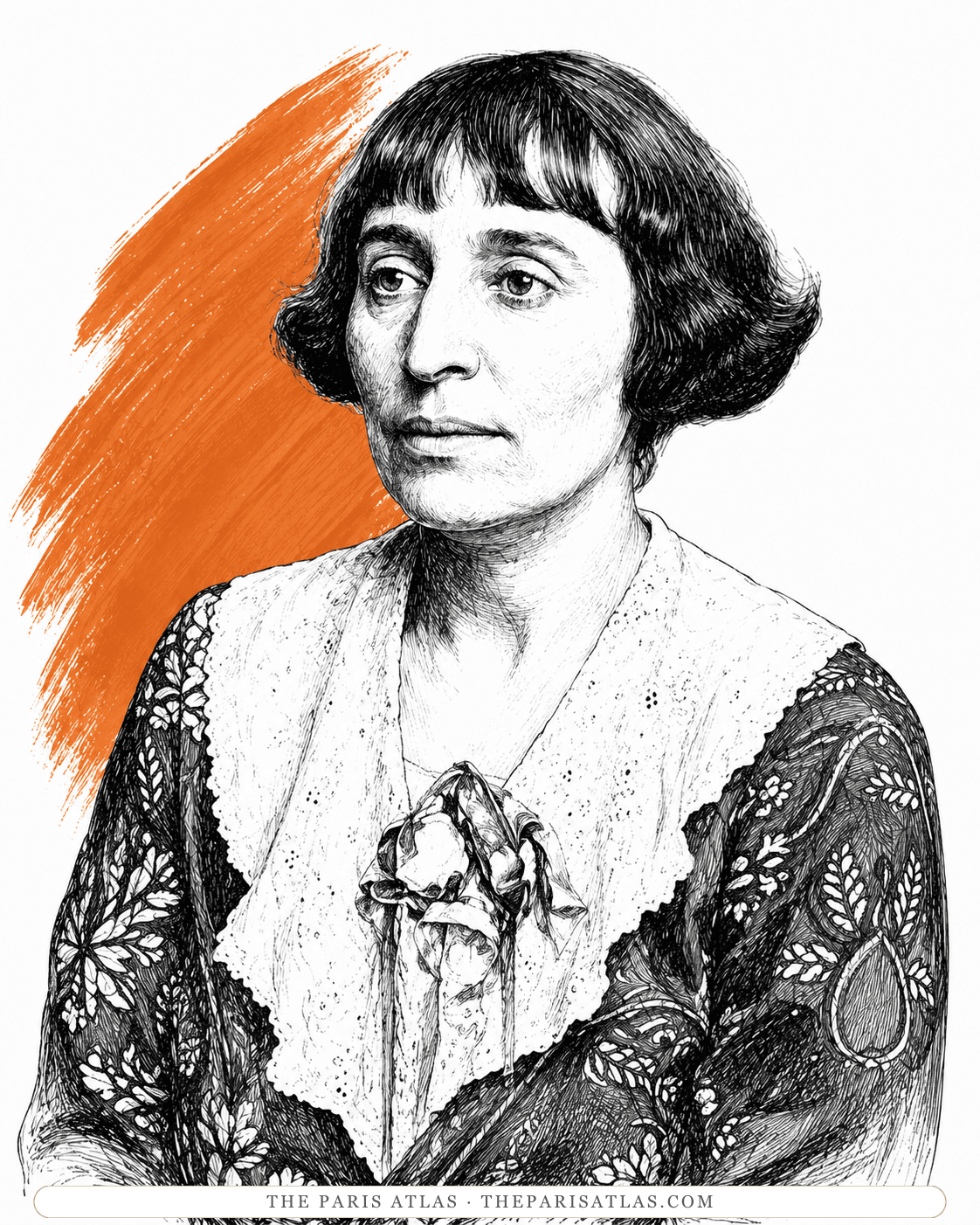
Buried here · 1967
Buried in 1967 in the same division-94 grave as Gertrude Stein — the rue de Fleurus household reunited under one stone.
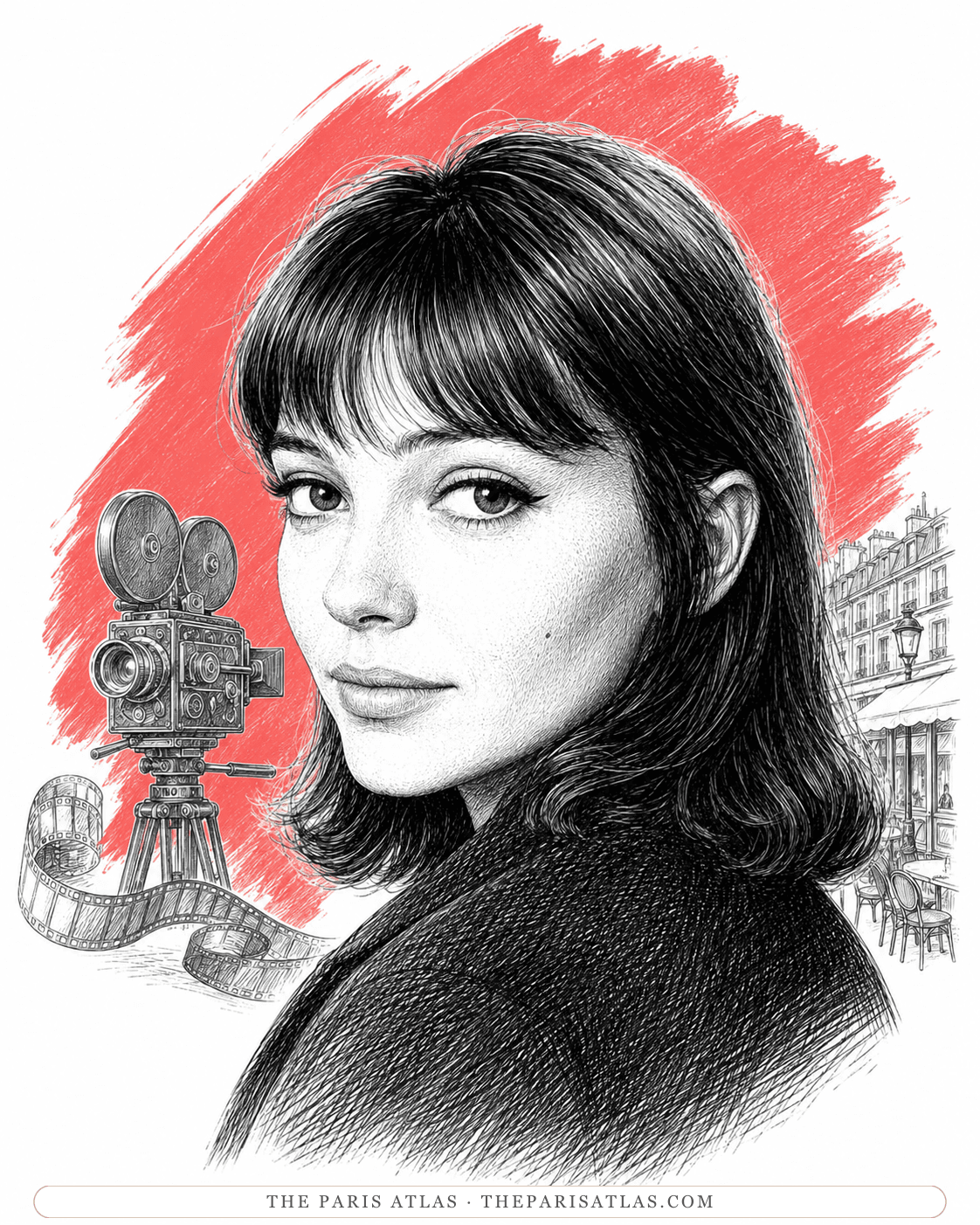
Buried here · 2019
Buried in Père-Lachaise after her death in Paris in December 2019, in the cemetery that also holds Gertrude Stein and, in the popular imagination, Jim Morrison.
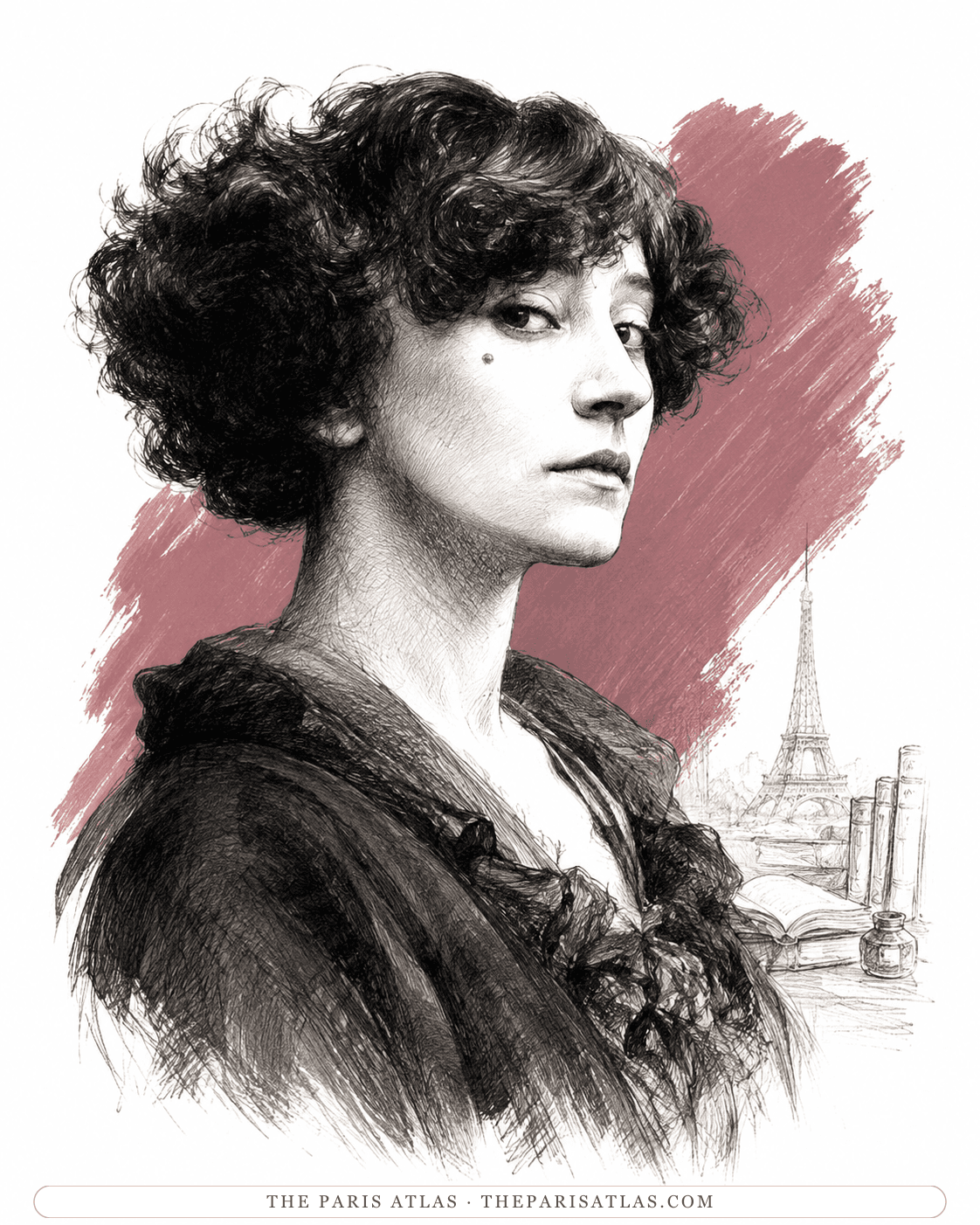
Buried here · 1954
After national funeral honours in the Palais-Royal courtyard, Colette was buried at Père-Lachaise Cemetery.
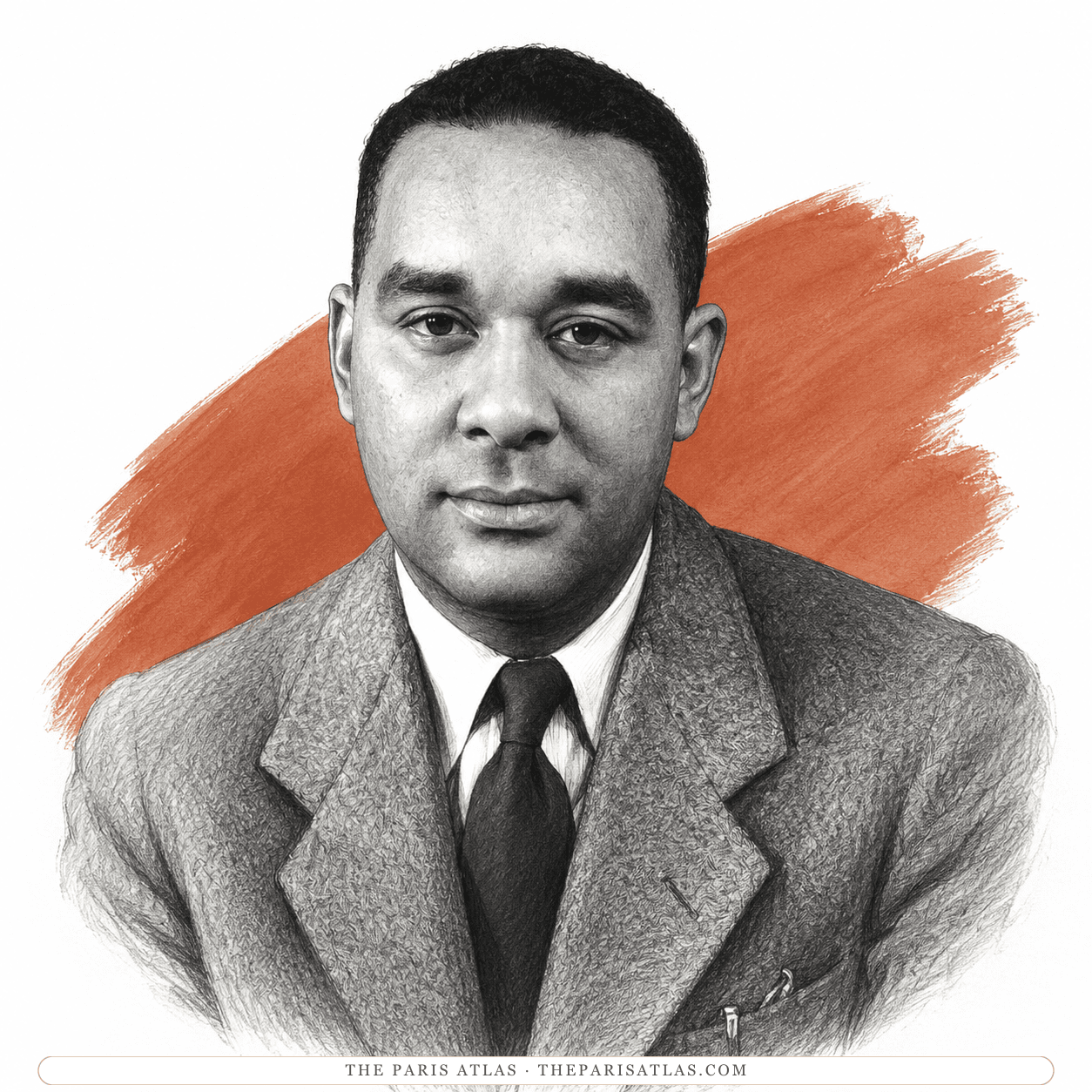
Buried here · 1960
Wright died in a Paris clinic on 28 November 1960. He was cremated, and his ashes were interred at Père Lachaise.
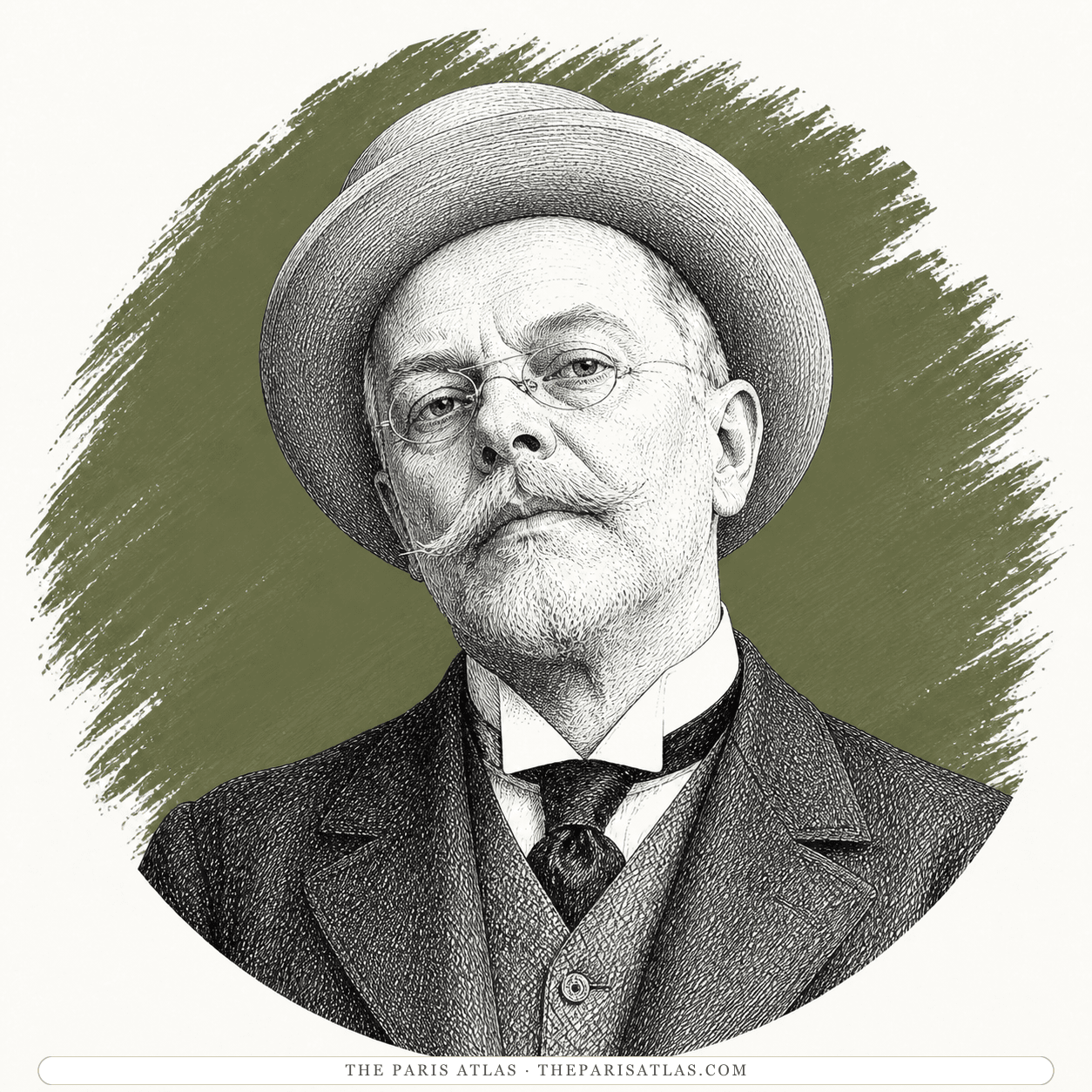
Buried here · 1915
Buried after his death on 27 September 1915, in the same grave as Berthe de Courrière, who had lived with him since 1886 and died the following year.
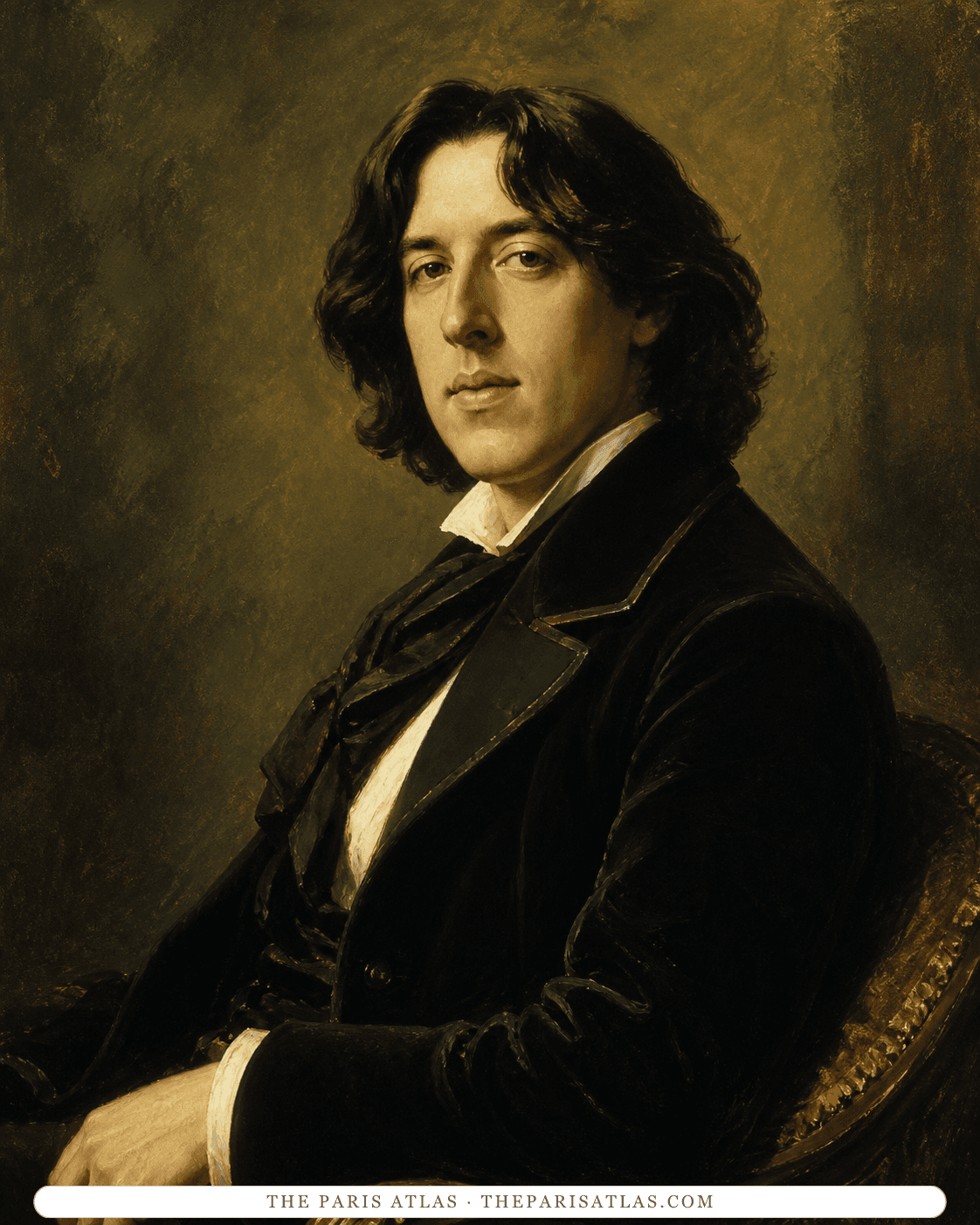
Buried here · 1909
Oscar Wilde died in Paris in 1900 and was first buried at Bagneux Cemetery. His remains were transferred to Père Lachaise Cemetery in 1909. Jacob Epstein's monument was installed over the grave in division 89.
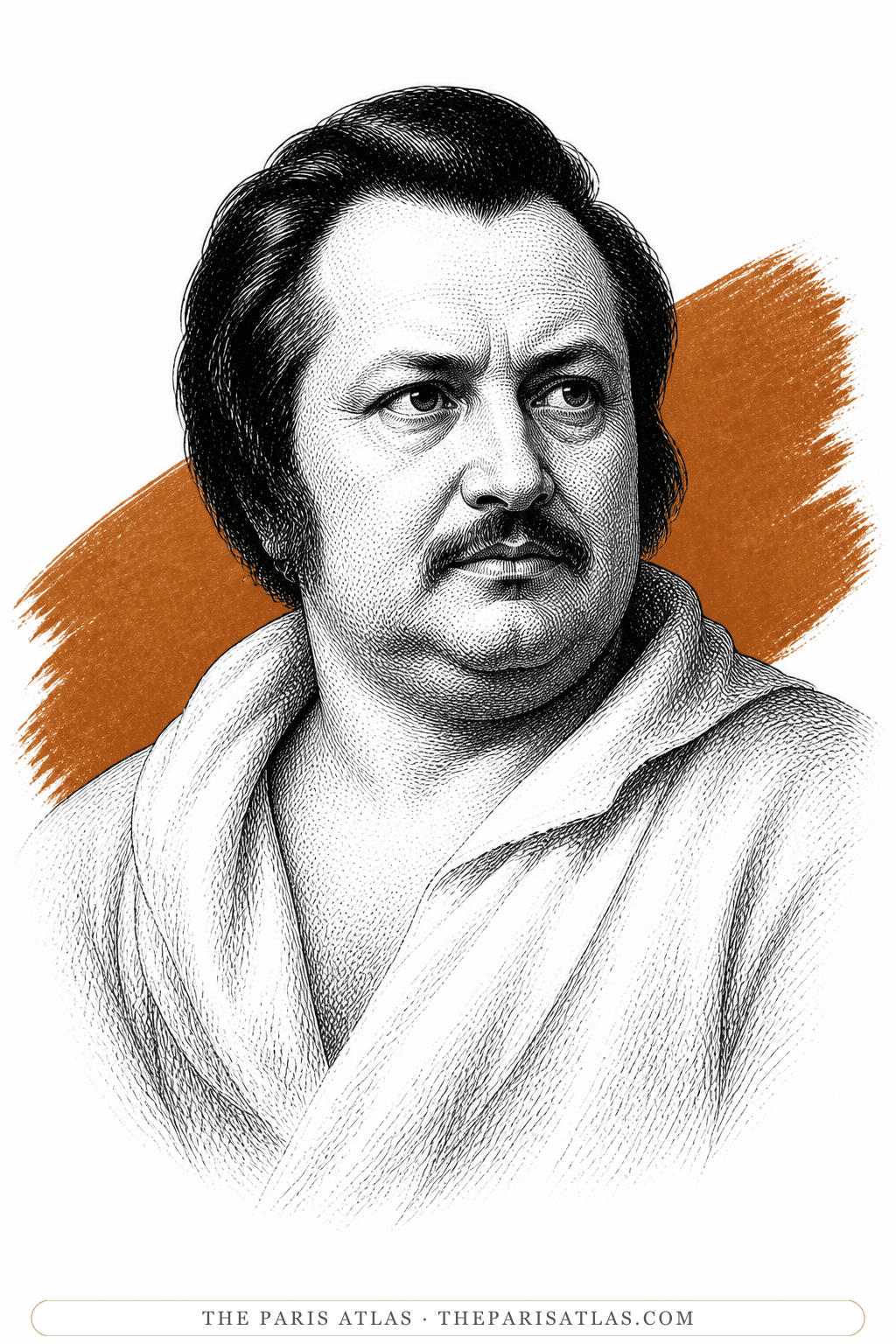
Buried here · 1850
Balzac died in Paris on 18 August 1850 and was buried at Père-Lachaise on 21 August, in division 48, with Victor Hugo delivering the funeral oration at the graveside. The cemetery's own history counts his funeral among those that drew the homage of the Paris crowd.
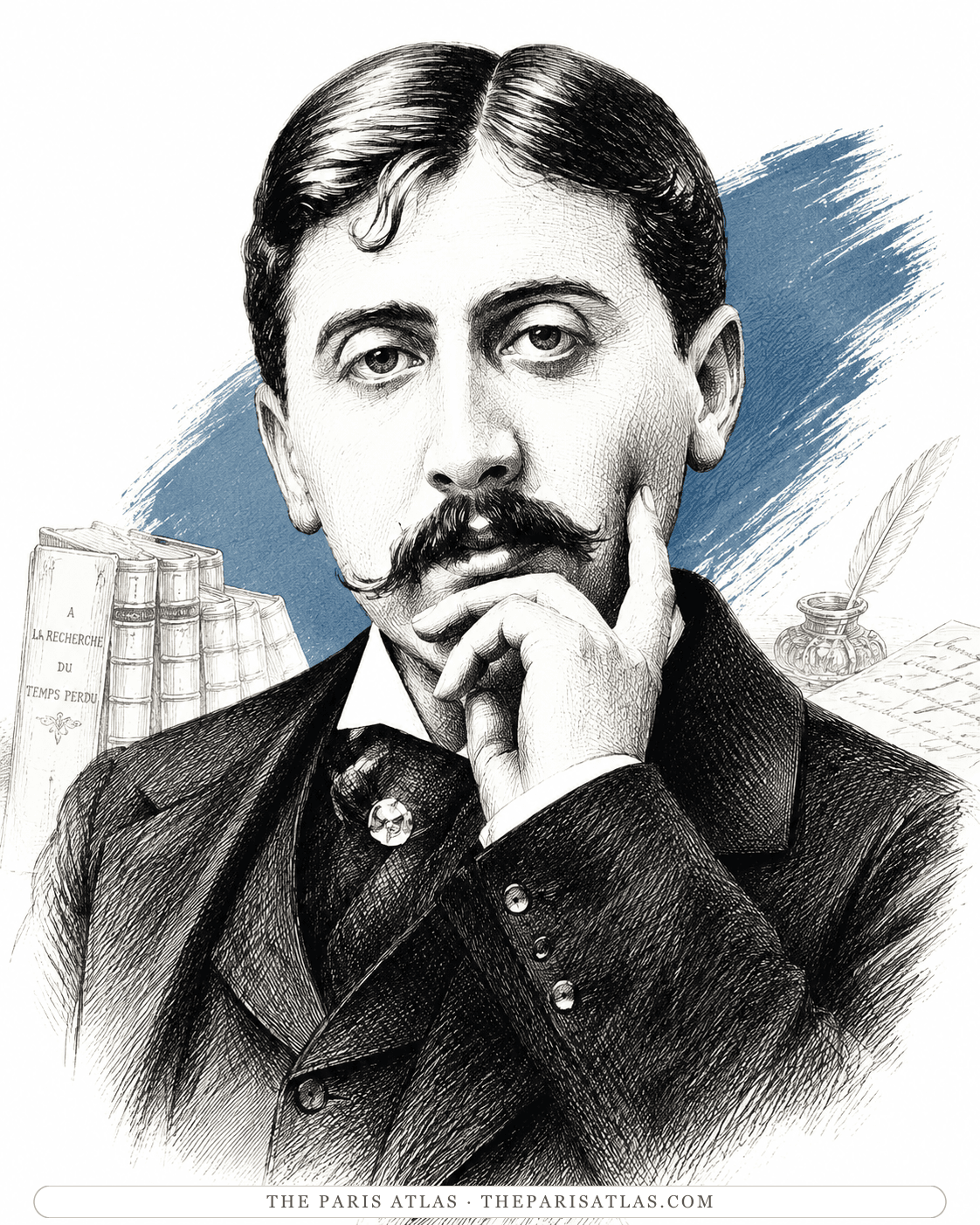
Buried here · 1922
Proust was buried at Père-Lachaise in division 85 after his death on 18 November 1922.
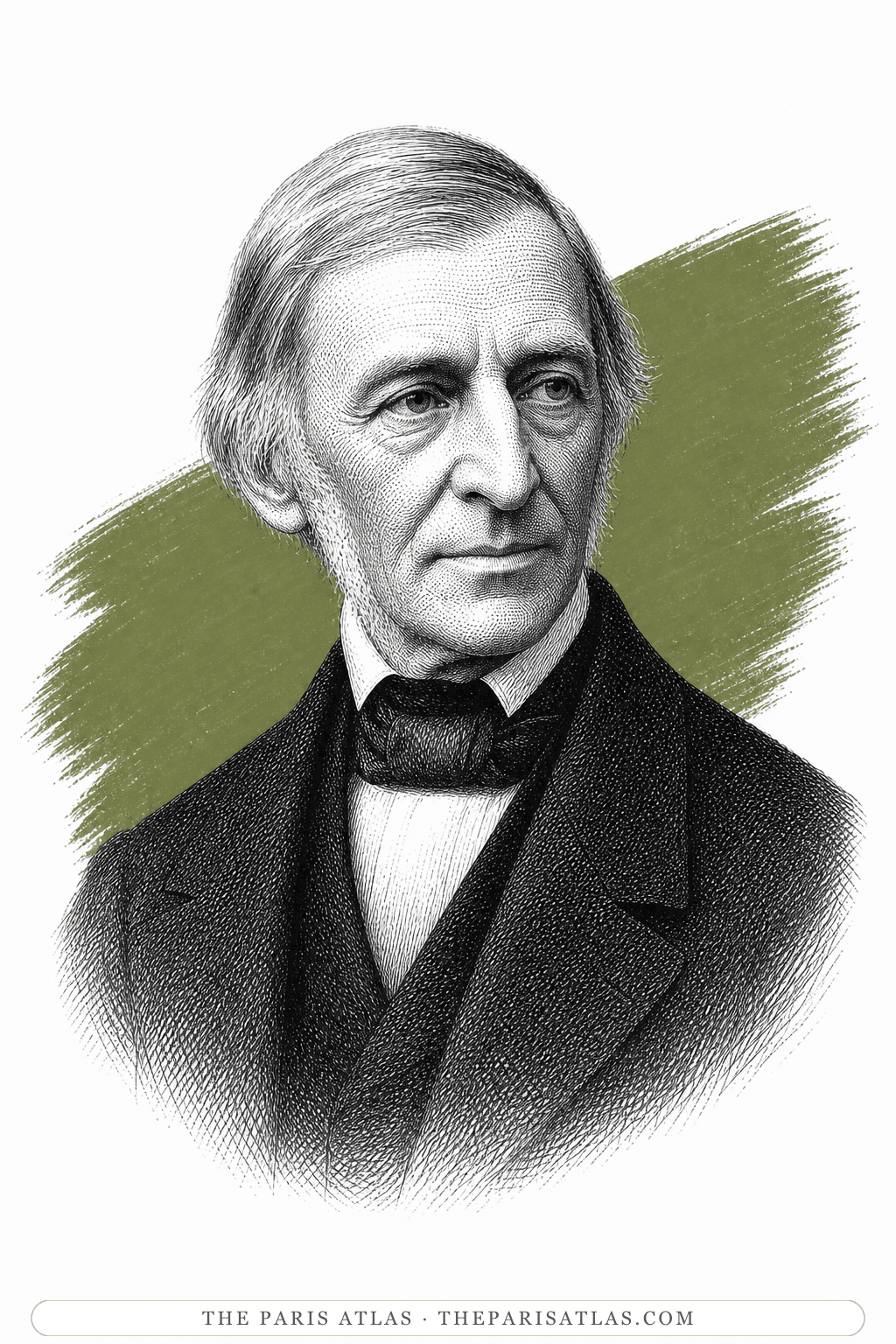
Visited by · 1833
15 July 1833. He judged the tombstones vain and advertisement-like, then copied out in full the epitaph of Auguste Charles Collignon, who had lived by the morals of Montaigne's Essays and La Fontaine's Fables.
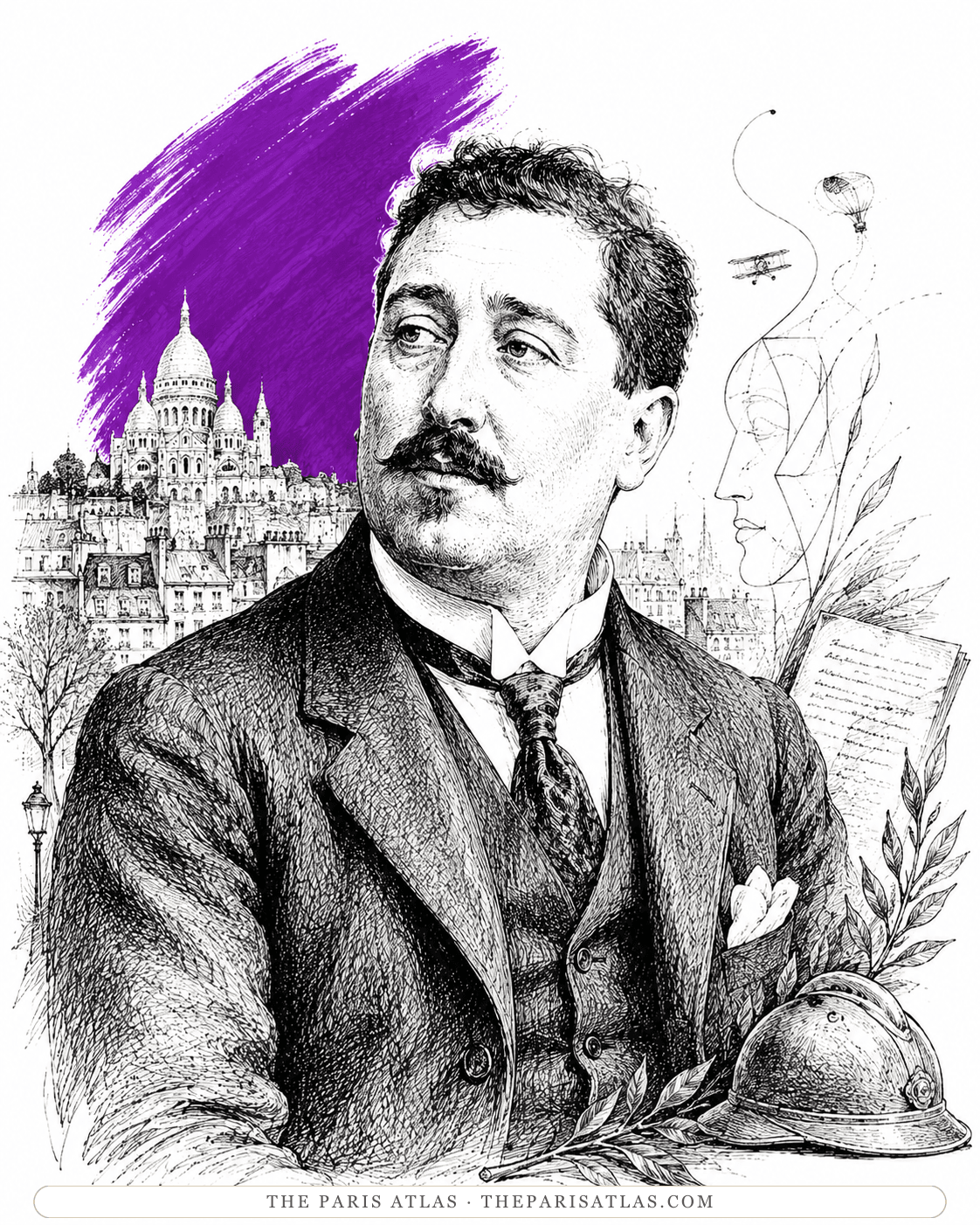
Buried in division 86 in November 1918, dead of influenza in the war's last days — the first of the people in these pages to reach the hill.
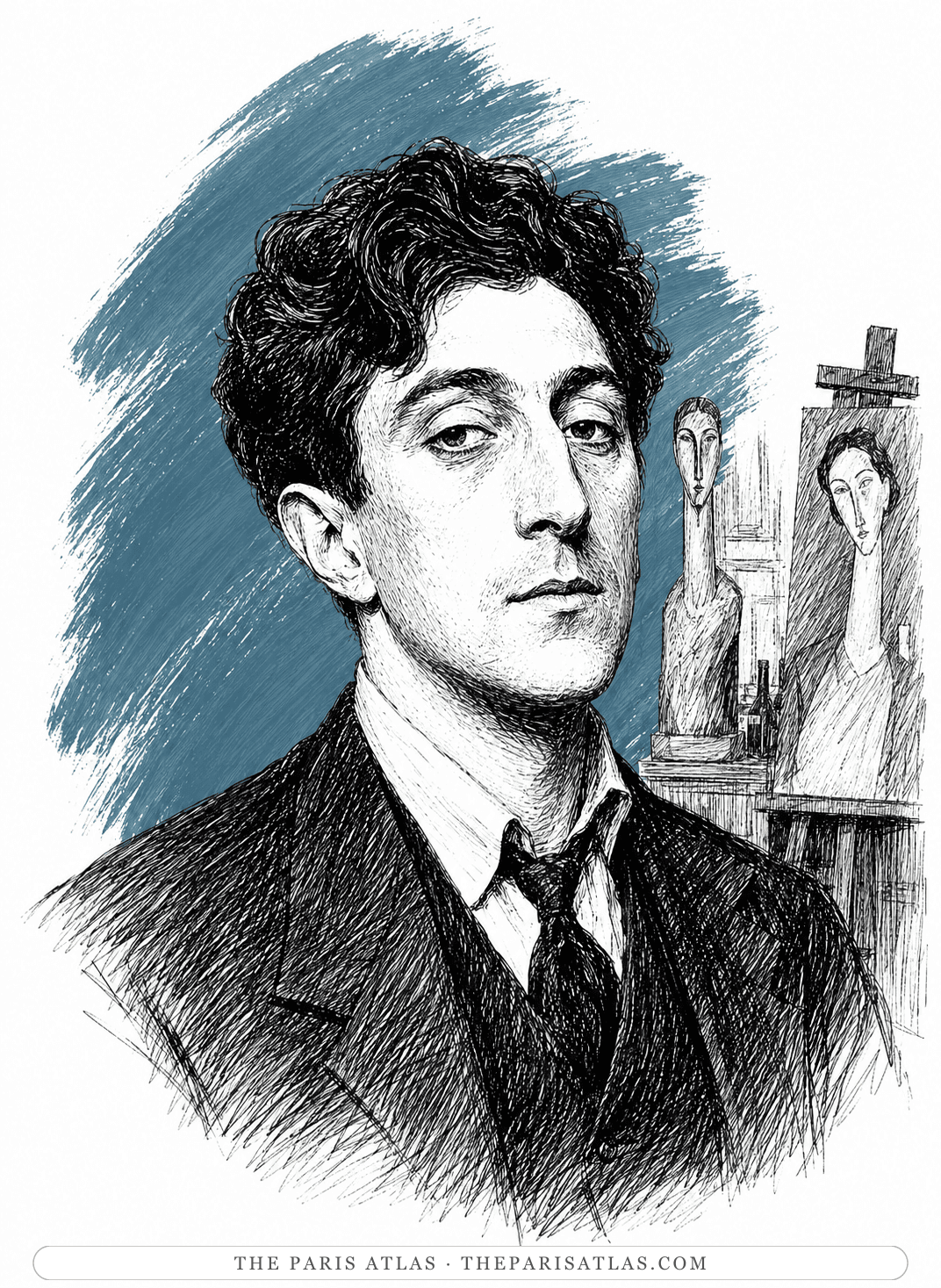
Buried in division 96 in January 1920; the remains of his partner Jeanne Hébuterne were later transferred to lie beside him.
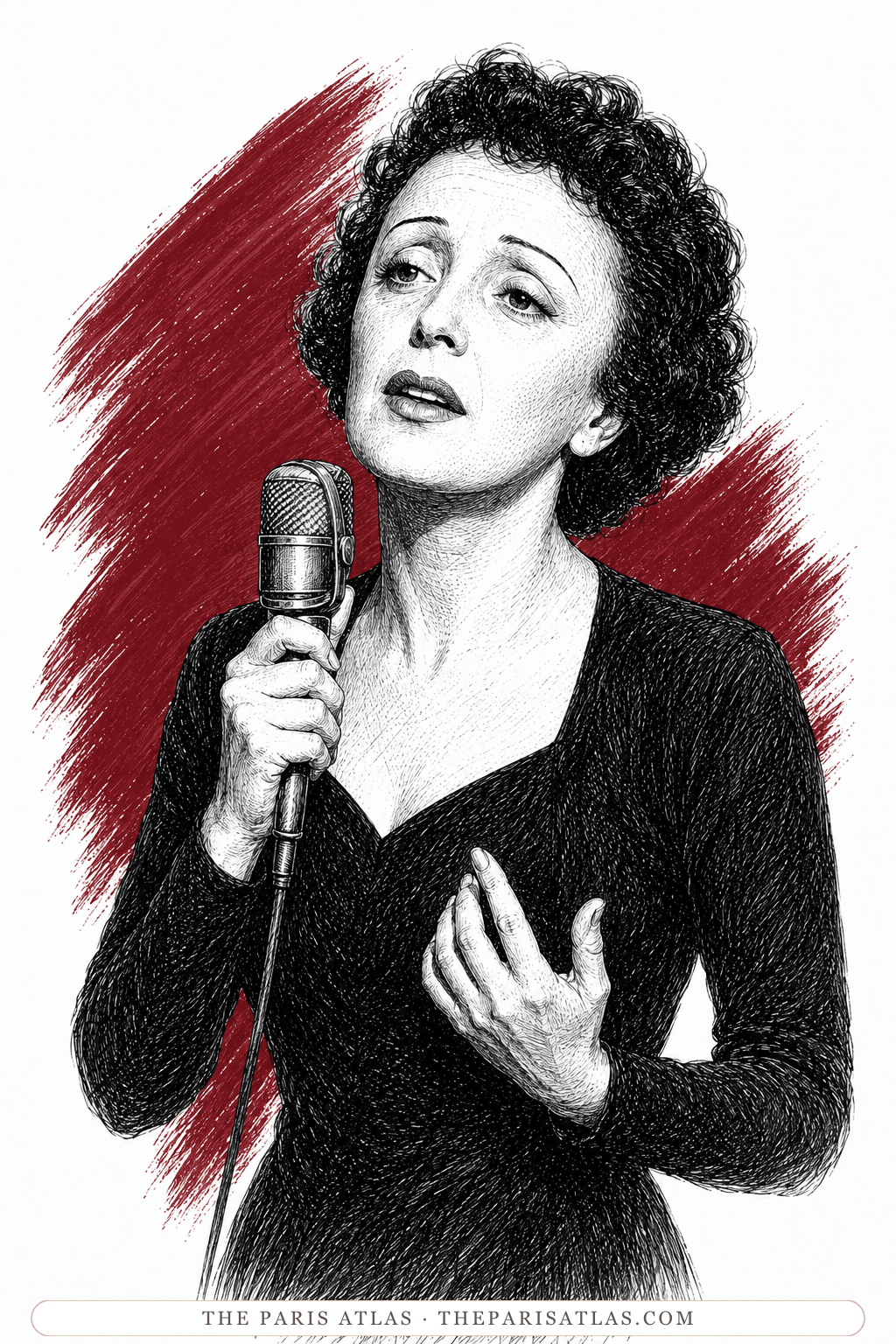
Buried in the Gassion family grave in division 97, in the east-end quarter of Paris that raised her — still one of the most visited graves in the cemetery.
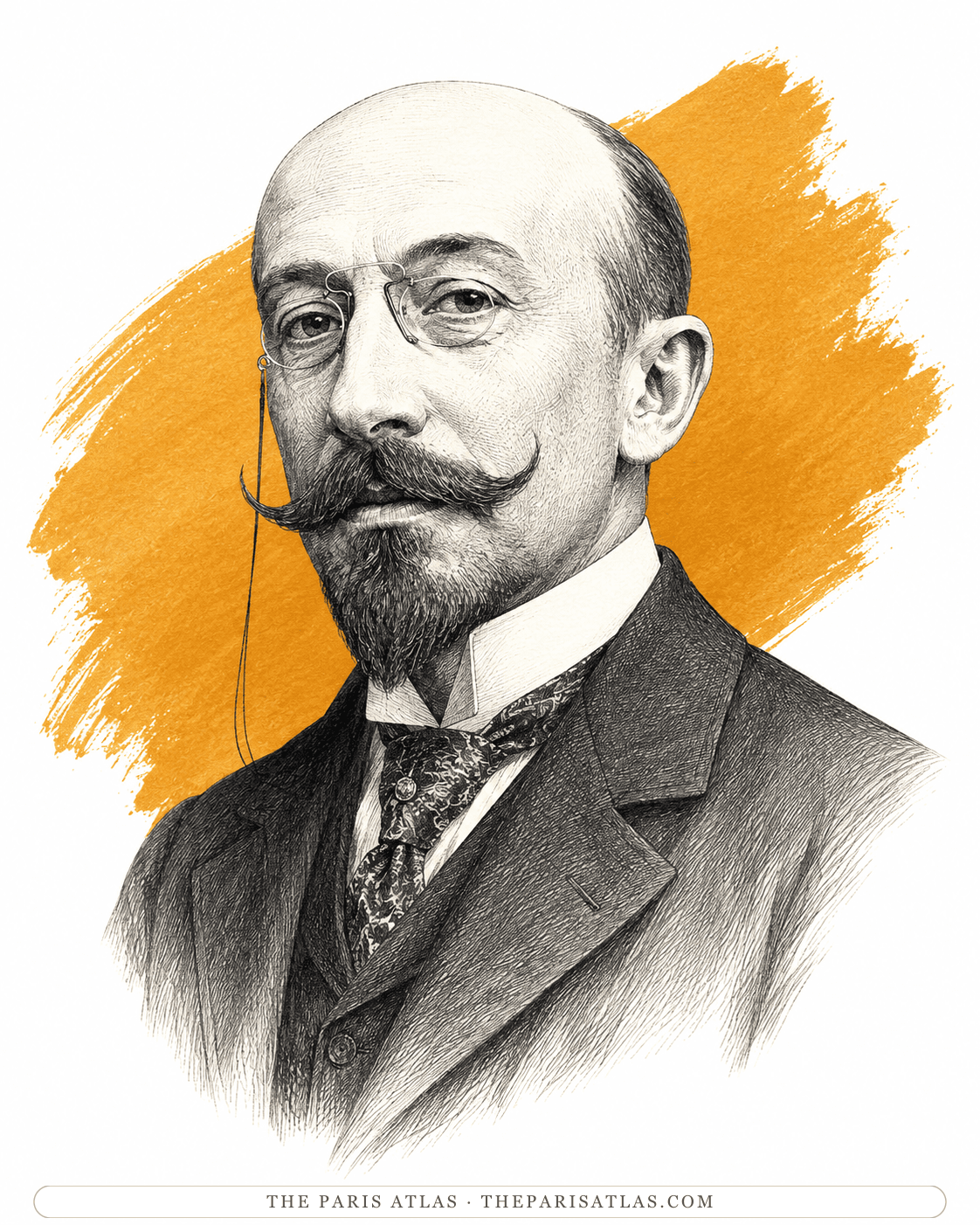
Buried in division 64 in January 1938 — cinema's first magician, a decade after the Gare Montparnasse toy stand and the rediscovery that restored his name.
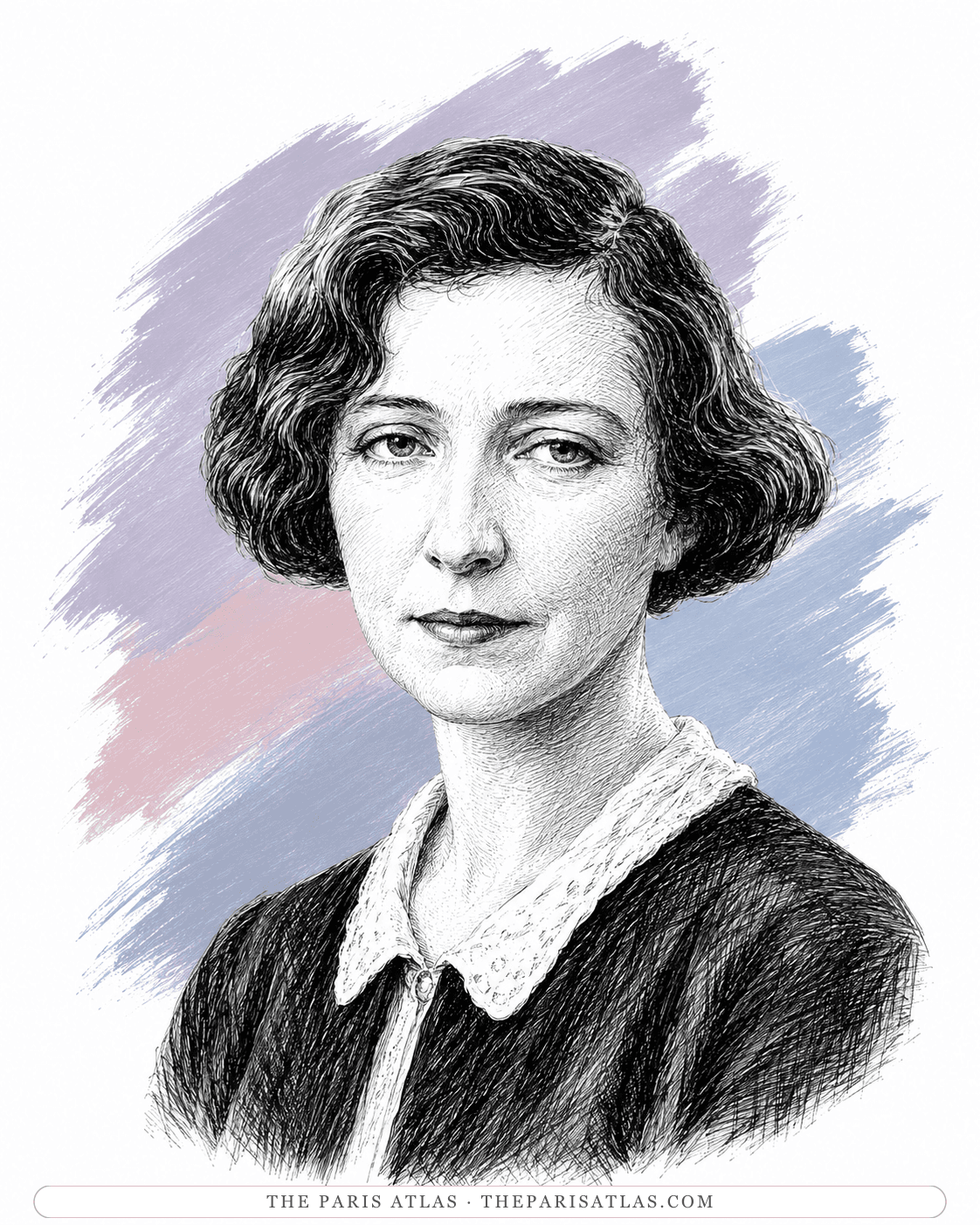
Division 88, on the avenue Circulaire. By the last wishes the cemetery association records, she was buried in a white dress with a rose in one hand and a letter from Apollinaire — whose grave is a short walk away — in the other.
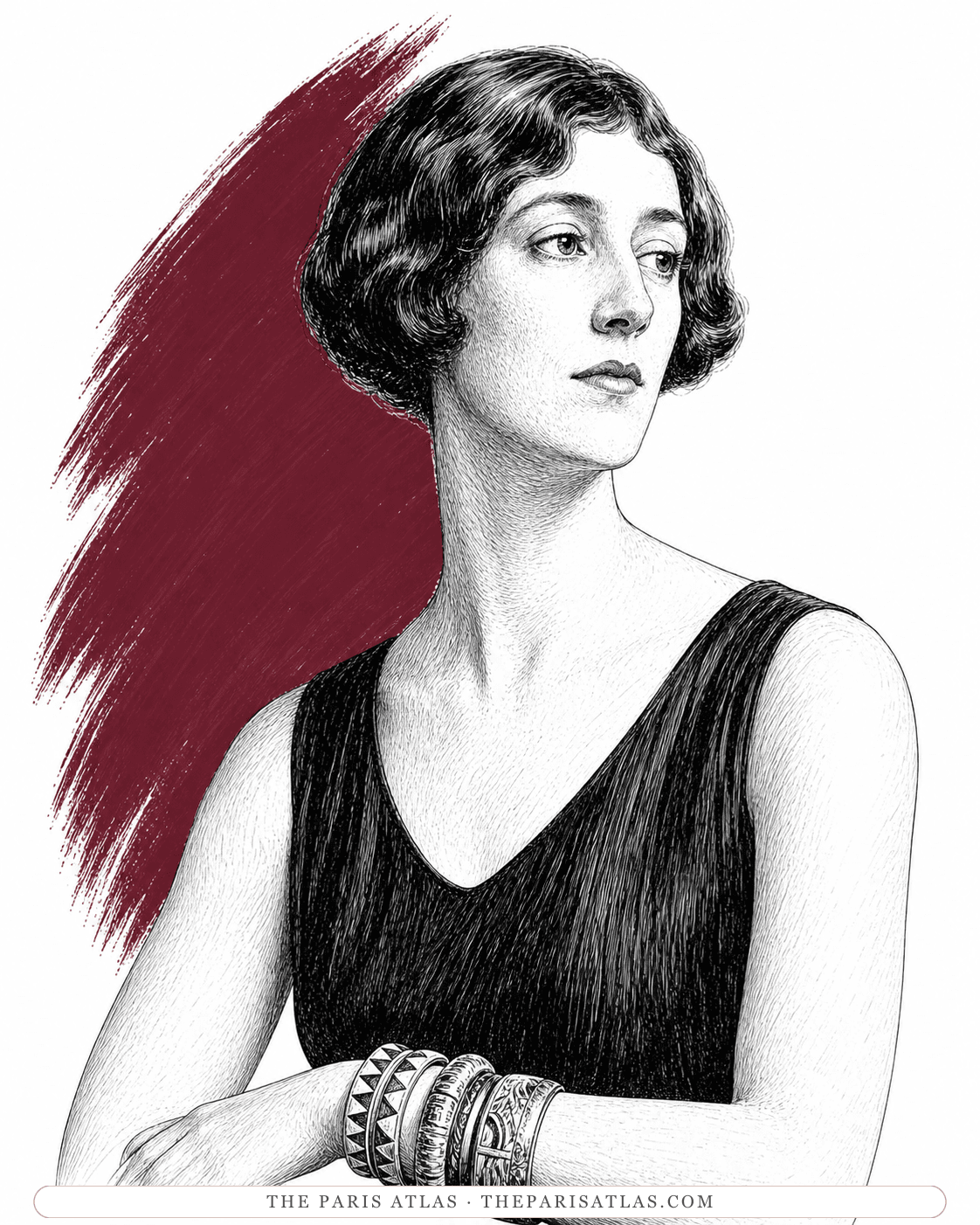
Cunard was cremated after her death at the Hôpital Cochin in March 1965 and her ashes were placed in the columbarium at Père Lachaise. Lois Gordon's biography carries the death and cremation; the urn number sometimes given has no institutional confirmation here.
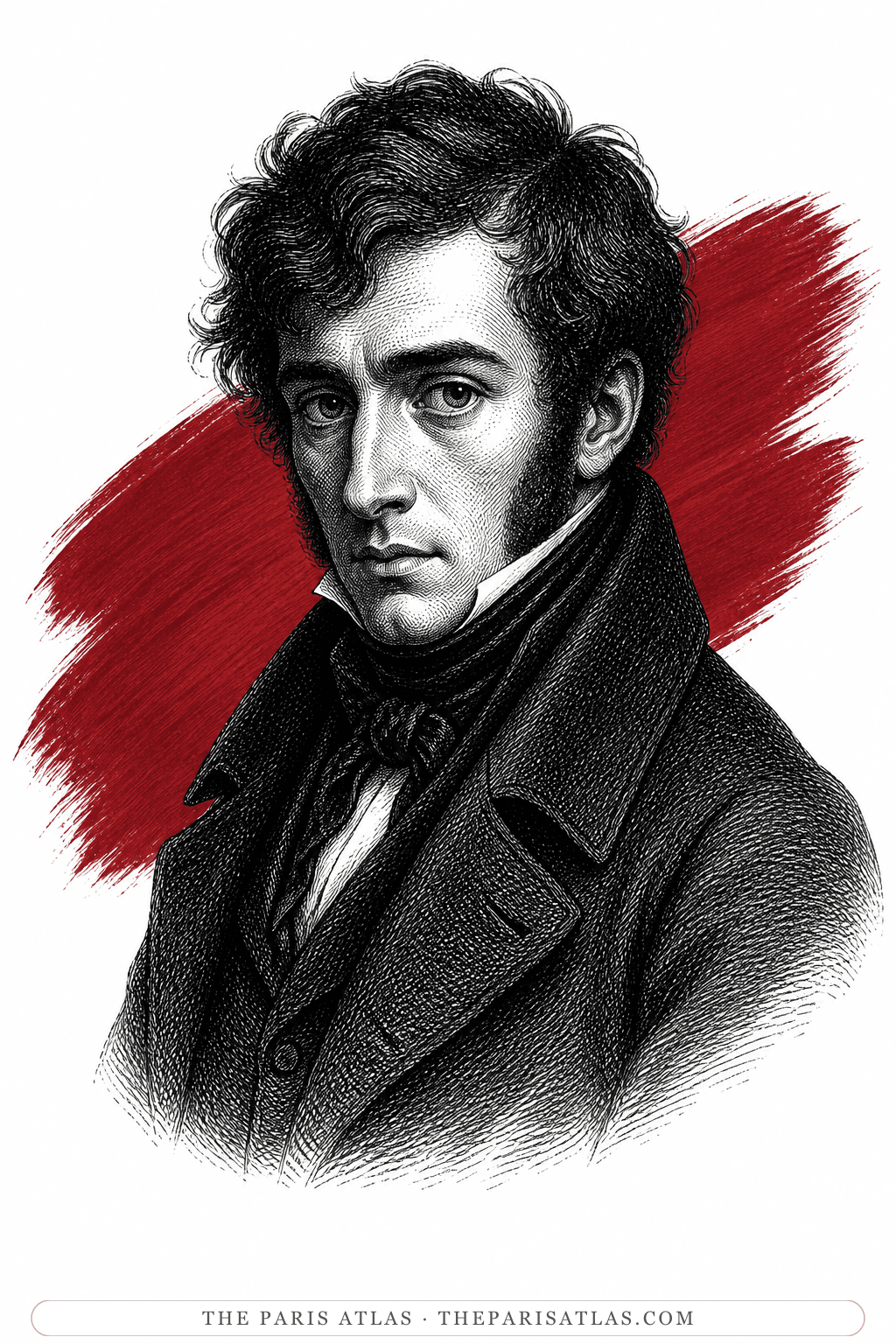
Buried in Division 12 in January 1824, aged thirty-two, after a series of horse-riding accidents and a spinal infection. His tomb, topped by a bronze relief of the Raft of the Medusa cast by Antoine Étex, is one of the cemetery's most visited artist graves and one of the earliest large monuments erected there to a painter of Romanticism.
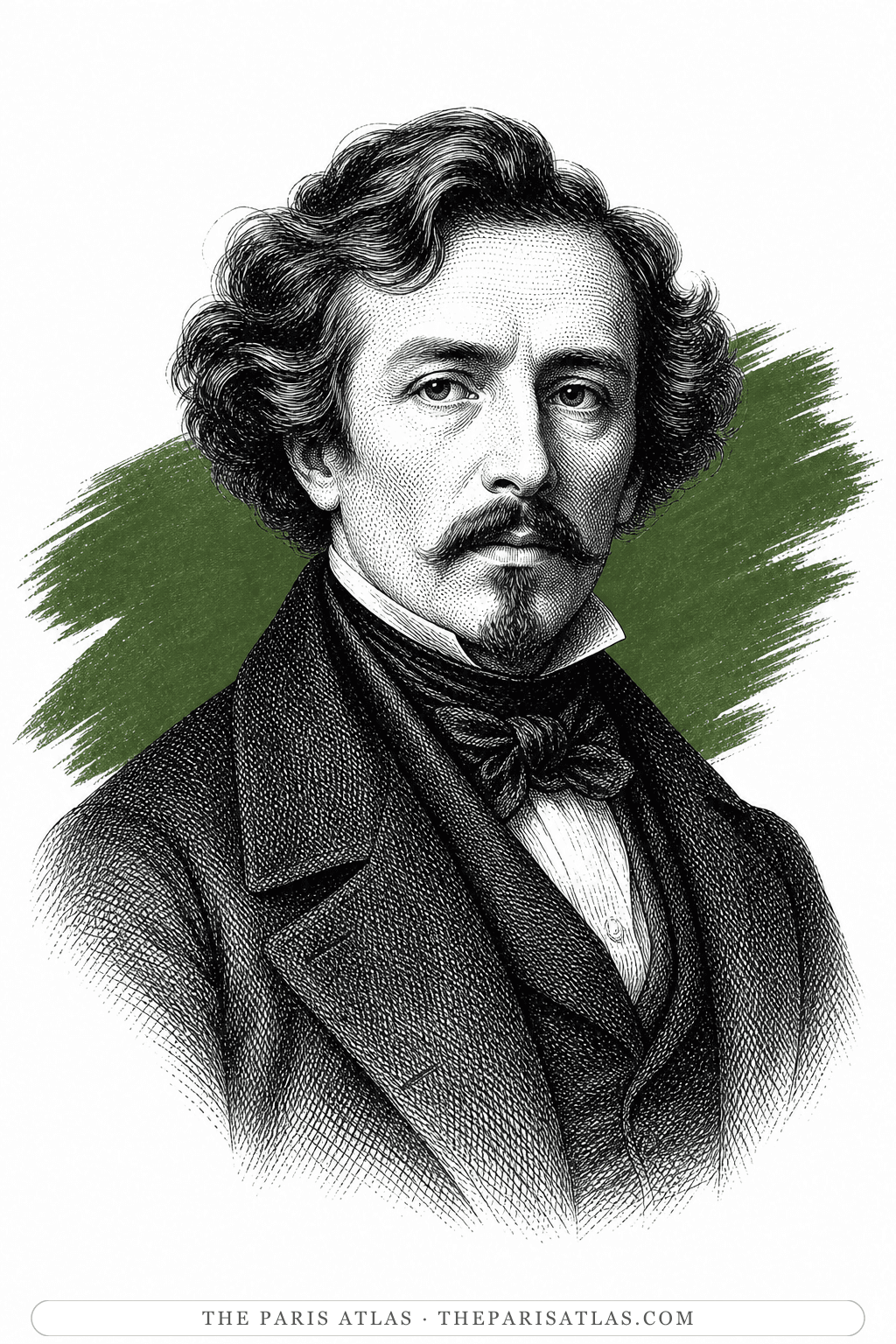
Buried in division 49 after his death on 13 August 1863 at his apartment on the rue de Furstemberg.
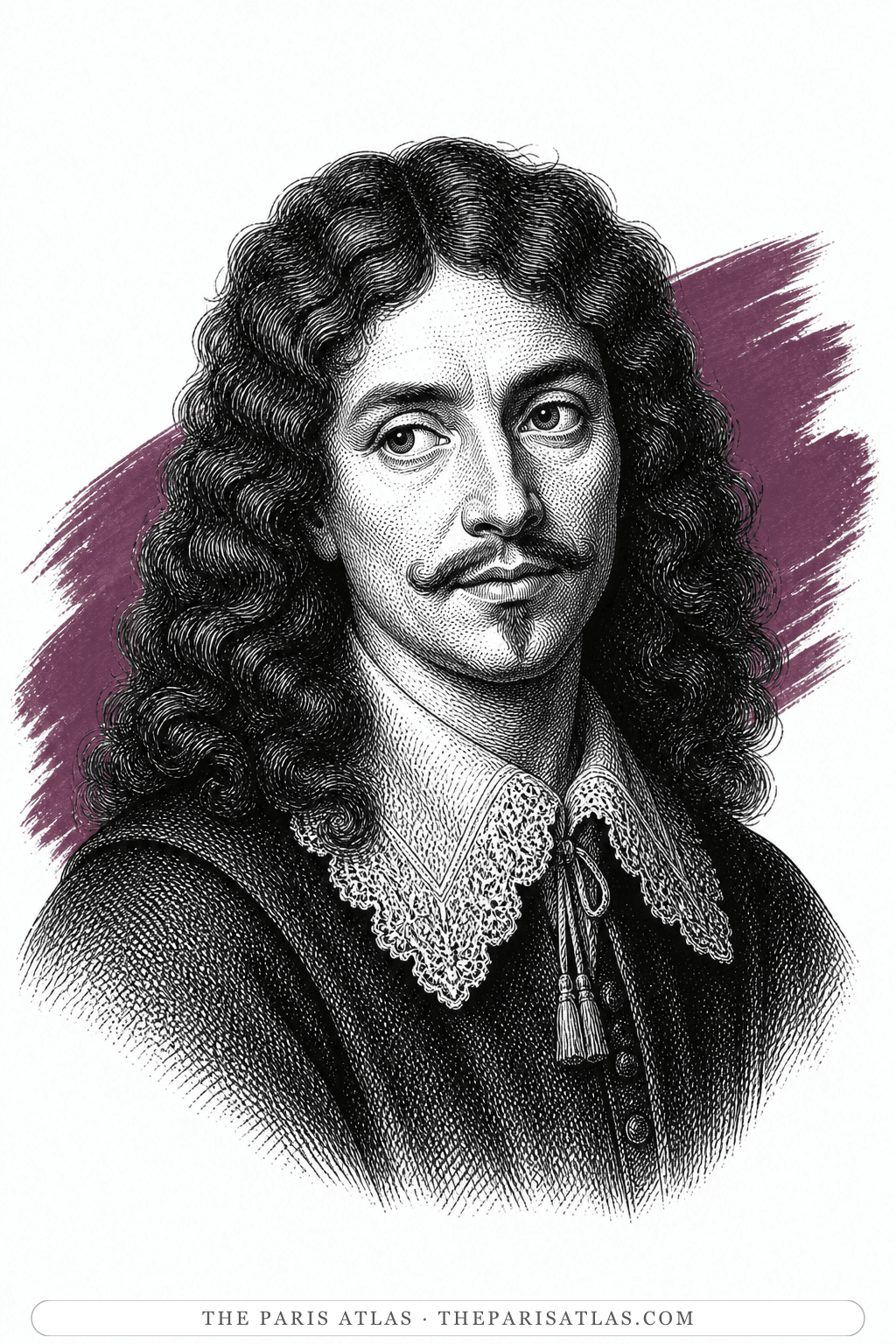
A tomb bearing Molière's name stands in division 25, but the identification of the remains is doubtful. Refused normal burial in 1673 as an actor who had not renounced the profession, he was put into the ground at night at the old cimetière Saint-Joseph, where ordinary Parisians went into common graves. In 1817 the Père-Lachaise administration transferred what were said to be his remains — with La Fontaine's — to promote its unfashionable new cemetery; the promotion worked, but the bones almost certainly belonged to someone else.
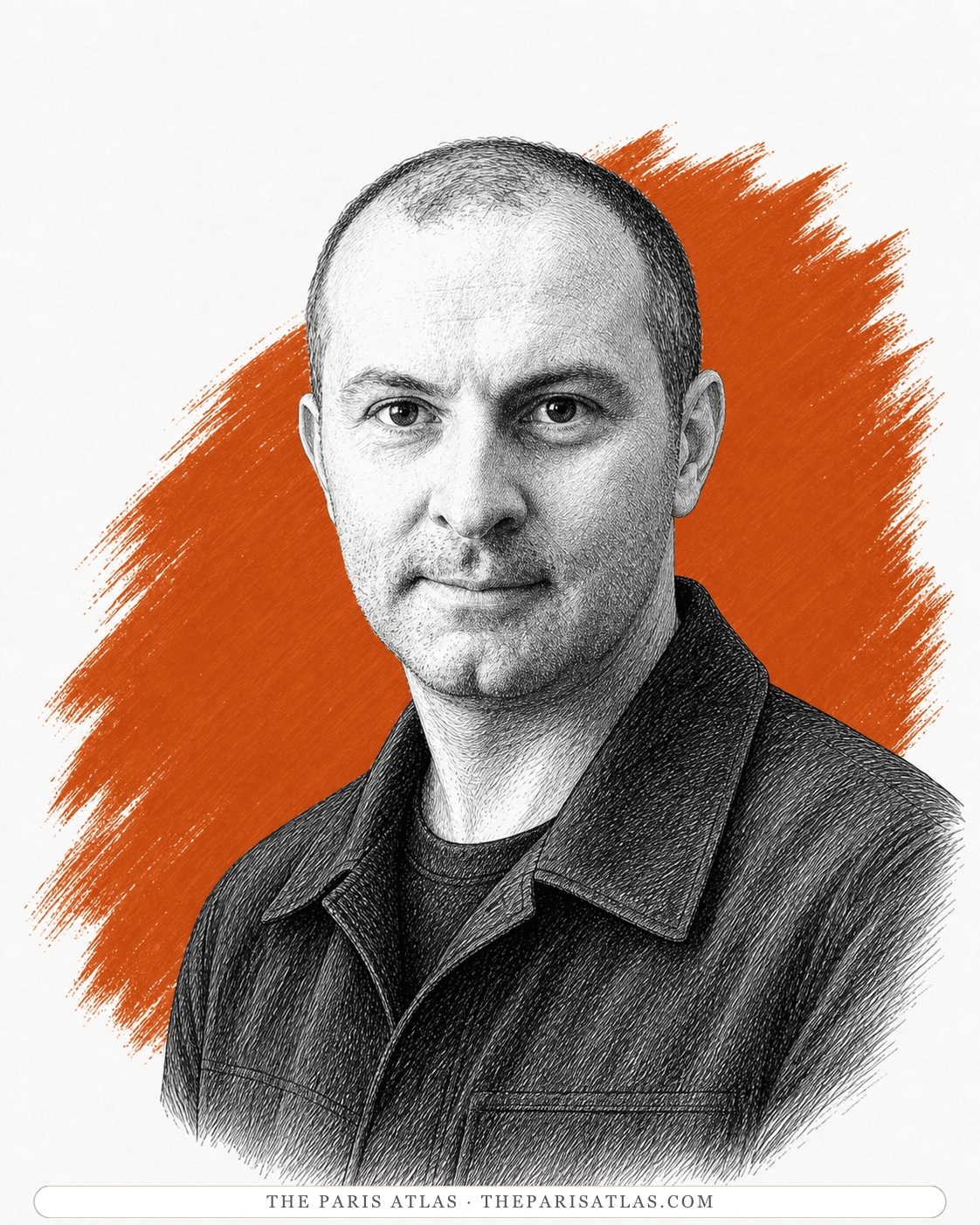
Arman died in New York on 22 October 2005. Part of his ashes was interred in division 11 on 17 November 2008, the day he would have turned eighty. The monument carries a bronze cello, and a plaque reads "Enfin seul !" — "Finally alone!"
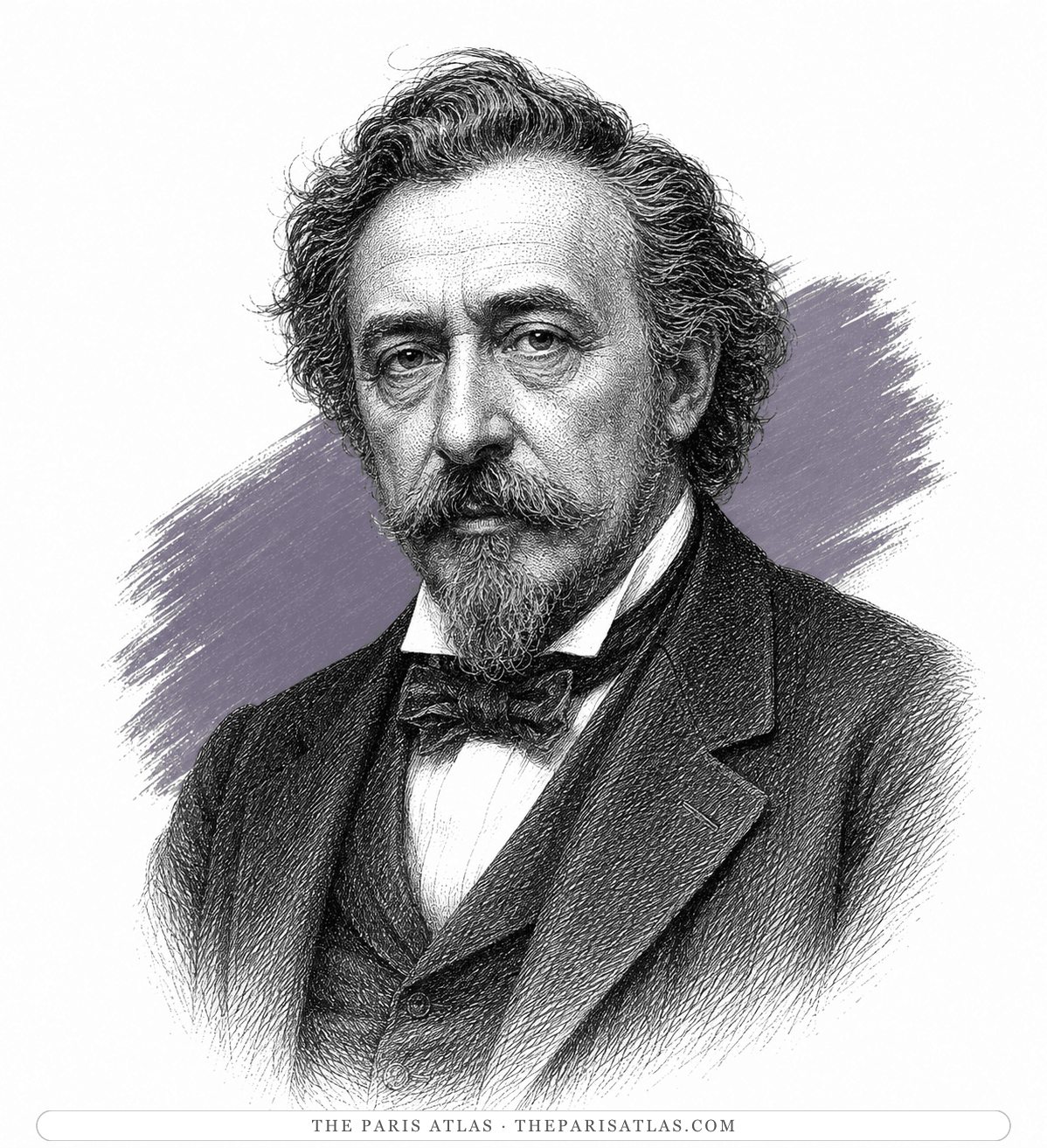
Buried in Division 22 in January 1883, after his death from a heart attack at fifty-one. His younger brother, General Paul Doré, was later buried in the same plot.
The sources below include histories, archival materials, scholarly research, and official records that informed this page. They document Père-Lachaise Cemetery, the people connected to it, and its place in Paris.


Web source consulted for documented facts and historical context presented on the Père-Lachaise Cemetery page.

Map data used to verify addresses, geographic coordinates, and the placement associated with Père-Lachaise Cemetery.
Web source consulted for documented facts and historical context presented on the Père-Lachaise Cemetery page.
Web source consulted for documented facts and historical context presented on the Père-Lachaise Cemetery page.
Web source consulted for documented facts and historical context presented on the Père-Lachaise Cemetery page.
Map data used to verify addresses, geographic coordinates, and the placement associated with Père-Lachaise Cemetery.
These references provide the documented foundation for this page's history and context. Claim-level citations remain attached to the specific claims they support.
 Explore more resources
Newsletter
The cafés, studios, and walk-up flats where the work was made — one story from the map in every letter.