The Paris AtlasCharting the artists, works, and places worth returning to.
  • Painter
  • Illustrator
· French · 1883–1956

Marie Laurencin

Painter of pale, dark-eyed women who entered Picasso's Bateau-Lavoir circle in 1907, was Apollinaire's companion, and designed Les Biches for the Ballets Russes; the Musée de l'Orangerie holds six of her works.

In images

Details

Lived
1883–1956
Born
31 October 1883
Birthplace
Paris
Died
8 June 1956 · aged 72
Place of death
Paris
Nationality
French
Married
Otto von Wätjen · 1914–1921
Partner
Guillaume Apollinaire · 1907–1912
Children
Suzanne Moreau (adopted, 1954)
Roles
PainterIllustrator

About Marie Laurencin

Marie Laurencin painted pale, dark-eyed women in grays, rose, and powder blue, and held to that manner for fifty years while the movements around her changed. She learned porcelain painting before oils, joined Pablo Picasso's Bateau-Lavoir circle in 1907, and spent five years as Guillaume Apollinaire's companion. She exhibited beside the Cubists without ever painting like them.

Her 1920s brought portrait commissions from Coco Chanel and Helena Rubinstein and the sets and costumes for Les Biches, the Ballets Russes production she designed for Serge Diaghilev. The Musée de l'Orangerie now holds six of her paintings, and its Walter-Guillaume rooms are where a visitor is most likely to meet her today.

Porcelain first

Laurencin was born in Paris on 31 October 1883, the illegitimate daughter of Pauline Laurencin, who raised her alone and saw to a middle-class education. The training she chose was applied art before fine art: she enrolled at the École de la Manufacture de Sèvres, the state porcelain works, and learned to paint on porcelain before taking private painting classes at the Académie Humbert in Paris from 1904.

At the Académie Humbert the company counted as much as the instruction: Georges Braque worked beside her there, and so did Francis Picabia.

The Bateau-Lavoir and Apollinaire

By 1907 she was a regular at the Bateau-Lavoir, the Montmartre studio building where Pablo Picasso worked. Accounts of the introduction differ: AWARE credits Braque with bringing her into the circle, while Britannica names the dealer Clovis Sagot. By every account, Picasso then introduced her to Guillaume Apollinaire, and she and the poet were together until 1912 — the Barnes Foundation puts the break at 1913.

Henri Rousseau, The Muse Inspiring the Poet, 1909 — Apollinaire and Laurencin. Second version, Kunstmuseum Basel. (Henri Rousseau (Kunstmuseum Basel), via Wikimedia Commons · Public domain)

The circle painted itself repeatedly in those years, and Laurencin was both painter and subject:

  • Group of Artists (1908) — her portrait of Picasso, Fernande Olivier, Apollinaire, and herself. Gertrude Stein bought it; it later passed to Claribel Cone and hangs in the Baltimore Museum of Art.
  • Apollinaire et ses amis (1909) — the larger gathering, with Gertrude Stein among the company, now in the Musée national d'art moderne.
  • The Muse Inspiring the Poet (1909) — Henri Rousseau's double portrait of Apollinaire and Laurencin, painted in two versions.

Stein was one of the first buyers of Laurencin's work — in that circle, an endorsement worth more than the price.

Beside Cubism, not inside it

Laurencin exhibited with the Cubists — The Elegant Ball, Dance in the Country, her most Cubist picture, hung at the 1913 Salon des Indépendants — but she never adopted the movement's grammar. Her figures simplified and flattened under its influence, but the palette stayed gray and rose and the subject stayed constant: women, singly and in groups. AWARE places her work on the movement's fringes, which is where she painted for the rest of her life.

Laurencin around 1912. Photographer unknown. (Unknown photographer, via Wikimedia Commons · Public domain)

Exile

In June 1914 she married Otto von Wätjen, a German painter she had known from the Paris studios. The timing could hardly have been worse. War was declared weeks later; marriage had made her a German national, and the couple left for Spain. The Barnes Foundation reads the hasty marriage as an aftershock of the break with Apollinaire and the death of her mother the year before.

She spent the war between Madrid and Barcelona, contributing to 391, the review Francis Picabia ran from Barcelona. After a stay in Düsseldorf she divorced von Wätjen in 1921 and returned to Paris the same year, French again and alone.

Chanel and Les Biches

In the autumn of 1923 she was working for Serge Diaghilev's Ballets Russes, designing the sets and costumes for Les Biches, the Francis Poulenc ballet that premiered in Monte Carlo in 1924 and then came to the Théâtre des Champs-Élysées. At the same moment Coco Chanel commissioned her portrait.

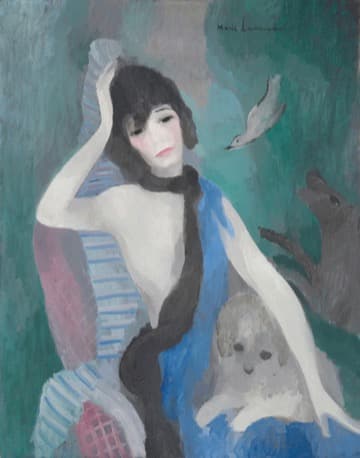
Chanel did not like the result and refused to buy it. Laurencin, by the Orangerie's account, was furious, declined to paint a second version, and kept the canvas. It entered Domenica Walter's collection and hangs today in the Musée de l'Orangerie — a portrait of Chanel that Chanel never owned.

The decade made her one of the most commissioned portraitists in Paris; Helena Rubinstein also sat for her. Her closest attachments in these years were to women, above all the fashion designer Nicole Groult, and the Barnes Foundation reads the intimate paintings of this period alongside the Sapphic Paris of writers like Natalie Clifford Barney. One of her last projects, in 1950, was a set of illustrations for the poems of Sappho.

Teaching, the Occupation, and Suzanne Moreau

From 1933 she taught at the Académie du XVIe, the school founded by the engraver Jean Émile Laboureur. She published a book of poems and memories, Le Carnet des nuits, in 1942. Her Paris apartment was requisitioned during the Occupation; she recovered it in 1944.

Laurencin in her atelier, 1932, a sitter posed beside the easel. Agence de presse Mondial photograph. (Agence de presse Mondial Photo-Presse / Bibliothèque nationale de France, via Wikimedia Commons · Public domain)

Her companion in the last decades was Suzanne Moreau, whose education she had taken charge of years earlier and whom she legally adopted as her daughter in 1954. Laurencin died in Paris on 8 June 1956, at seventy-two.

She is buried in Père-Lachaise Cemetery, division 88. By the last wishes the cemetery association records, she was buried in a white dress, a rose in one hand and a letter from Apollinaire in the other. His grave is a short walk from hers.

Six paintings at the Orangerie

The Walter-Guillaume collection at the Musée de l'Orangerie — the ensemble built by the dealer Paul Guillaume and reshaped by Domenica Walter — long held five of her paintings, the Chanel portrait among them. In November 2019 the museum added a sixth: a small 1908–1909 Portrait de Guillaume Apollinaire, oil on cardboard, bought at Drouot for 35,100 euros. The painter's Apollinaire now hangs a floor below Monet's water lilies.

In Japan, the collector Masahiro Takano opened a Musée Marie Laurencin at Tateshina in 1983, her centenary year. It closed there in 2011, reopened in Tokyo in 2017, and since ending permanent operations in 2019 has lent its six hundred works to touring exhibitions. In Philadelphia, the Barnes Foundation's Marie Laurencin: Sapphic Paris (October 2023 – January 2024) was the first major American exhibition of her work in over three decades.

Life events

  1. 1883

    Born in Paris on 31 October, raised by her mother, Pauline Laurencin.

    Marie Laurencin — Encyclopaedia Britannica; Marie Laurencin — AWARE: Archives of Women Artists, Research and Exhibitions

  2. 1904

    After porcelain training at Sèvres, begins painting classes at the Académie Humbert, where Georges Braque and Francis Picabia are fellow students.

    Marie Laurencin — AWARE: Archives of Women Artists, Research and Exhibitions; Marie Laurencin — Encyclopaedia Britannica

  3. 1907

    Becomes a regular of the Bateau-Lavoir circle; Picasso introduces her to Guillaume Apollinaire.

    The Barnes Foundation Presents Marie Laurencin: Sapphic Paris (2023); Marie Laurencin — AWARE: Archives of Women Artists, Research and Exhibitions

  4. 1908

    Paints Group of Artists; Gertrude Stein is among the first buyers of her work.

    Group of Artists — The Baltimore Museum of Art; Marie Laurencin — Encyclopaedia Britannica

  5. 1909

    Henri Rousseau paints the couple as The Muse Inspiring the Poet; she paints Apollinaire et ses amis, now in the Musée national d'art moderne.

    Henri Rousseau, The Muse Inspiring the Poet, 1909: Guillaume Apollinaire with Marie Laurencin as his muse. Second version, Kunstmuseum Basel. (Henri Rousseau (Kunstmuseum Basel), via Wikimedia Commons)

    Marie Laurencin — AWARE: Archives of Women Artists, Research and Exhibitions

  6. 1912

    The relationship with Apollinaire ends; the Barnes Foundation dates the break to 1913.

    Marie Laurencin in Paris around 1912, the year her relationship with Apollinaire ended. Photographer unknown. (Unknown photographer, via Wikimedia Commons)

    Marie Laurencin — AWARE: Archives of Women Artists, Research and Exhibitions; The Barnes Foundation Presents Marie Laurencin: Sapphic Paris (2023)

  7. 1914

    Marries the German painter Otto von Wätjen in June; the war makes her a German national and sends the couple into Spanish exile.

    Marie Laurencin — AWARE: Archives of Women Artists, Research and Exhibitions; The Barnes Foundation Presents Marie Laurencin: Sapphic Paris (2023)

  8. 1921

    Divorces von Wätjen and returns to Paris.

    LAURENCIN Marie (1883-1956) — Amis et Passionnés du Père-Lachaise; Marie Laurencin — AWARE: Archives of Women Artists, Research and Exhibitions

  9. 1923

    Designs Les Biches for Diaghilev's Ballets Russes and paints the portrait Coco Chanel commissioned and refused.

    Portrait de Mademoiselle Chanel — Musée de l'Orangerie

  10. 1924

    Les Biches premieres in Monte Carlo, then at the Théâtre des Champs-Élysées in Paris.

    LAURENCIN Marie (1883-1956) — Amis et Passionnés du Père-Lachaise

  11. 1933

    Begins teaching at the Académie du XVIe, founded by the engraver Jean Émile Laboureur.

    Marie Laurencin — AWARE: Archives of Women Artists, Research and Exhibitions

  12. 1954

    Legally adopts her companion Suzanne Moreau as her daughter.

    LAURENCIN Marie (1883-1956) — Amis et Passionnés du Père-Lachaise

  13. 1956

    Dies in Paris on 8 June; buried at Père-Lachaise in division 88.

    LAURENCIN Marie (1883-1956) — Amis et Passionnés du Père-Lachaise; Marie Laurencin — Encyclopaedia Britannica

  14. 1983

    The Musée Marie Laurencin opens at Tateshina, Japan, in her centenary year, built on Masahiro Takano's collection.

    About the Museum — Marie Laurencin Museum

  15. 2019

    The Musée de l'Orangerie buys her small Portrait de Guillaume Apollinaire at Drouot, its sixth Laurencin.

    Julie Demarle, Un portrait d'Apollinaire par Marie Laurencin pour l'Orangerie (2019)

  16. 2023

    Marie Laurencin: Sapphic Paris opens at the Barnes Foundation, the first major US exhibition of her work in over three decades.

    The Barnes Foundation Presents Marie Laurencin: Sapphic Paris (2023)

Selected works

Cataloged from the holding institutions' records. Reproductions appear only where the rights are verified.

Paintings

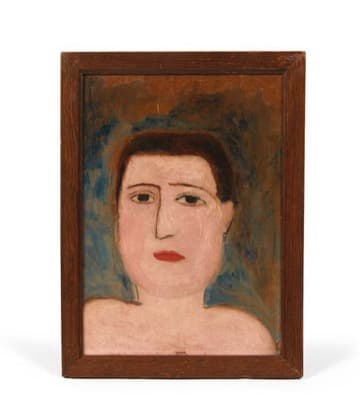
Small framed oil sketch of Apollinaire, shown frontally and bare-chested against a blue and brown ground, with dark hair and red lips

Artwork reproduction

Painting · The Bateau-Lavoir years

Portrait de Guillaume Apollinaire

c. 1908 · Oil on cardboard

Laurencin's small, frontal portrait of Apollinaire, painted around 1908 during their relationship and bought by the Orangerie at auction in 2019 — the painter's poet, hanging in the collection her dealer built.
Musée de l'Orangerie, Paris

Marie Laurencin, Portrait de Guillaume Apollinaire, c. 1908. Musée de l'Orangerie, Paris. Image © the rights holder, shown under fair use.

Chanel seated with her head against her raised right arm, a white poodle on her lap and a dove descending, in pale greens, blues, and pinks

Artwork reproduction

Painting · The 1920s portrait market

Portrait de Mademoiselle Chanel

1923 · Oil on canvas

Laurencin's 1923 portrait of Coco Chanel, commissioned by the couturière and refused by her; the painter kept the canvas, and it hangs today in the Orangerie's Walter-Guillaume rooms.

Musée de l'Orangerie, Paris

Marie Laurencin, Portrait de Mademoiselle Chanel, 1923. Musée de l'Orangerie, Paris. Image © the rights holder, shown under fair use.

People they knew

Documented connections — every one carries its source.

Illustrated portrait of Jean Cocteau

Jean Cocteau

  • Poet
  • Playwright
  • Illustrator
  • +1

Collaborated with

She illustrated a booklet by Cocteau, one of a run of book and stage commissions that continued through the end of the 1920s.

Marie Laurencin — AWARE: Archives of Women Artists, Research and Exhibitions

Illustrated portrait of Guillaume Apollinaire

Guillaume Apollinaire

  • Poet
  • Critic

Met · 1907–1912

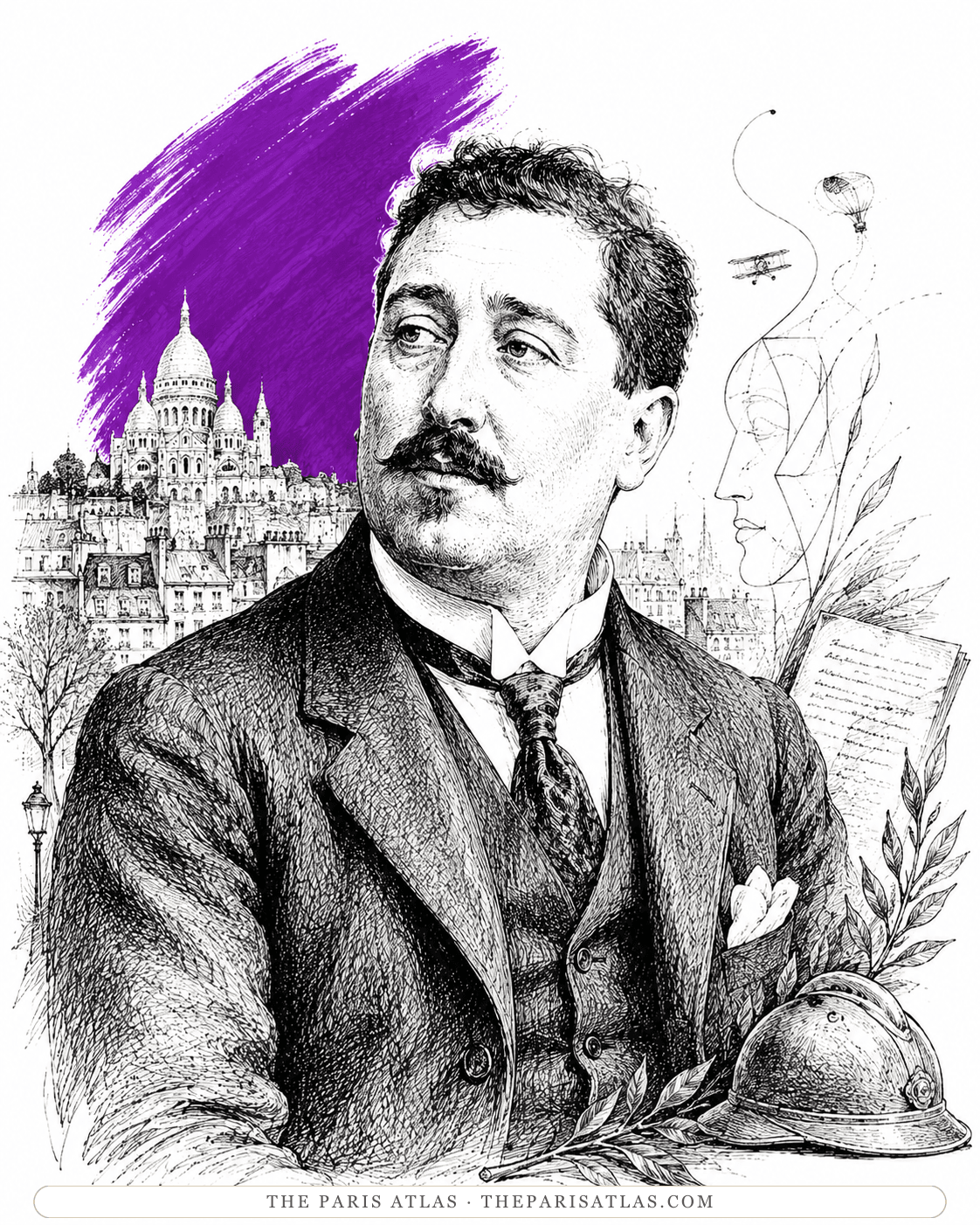
Picasso introduced them in 1907, and they were together until 1912; the Barnes Foundation puts the break at 1913. Henri Rousseau painted the couple twice as The Muse Inspiring the Poet.

The Barnes Foundation Presents Marie Laurencin: Sapphic Paris (2023); Marie Laurencin — AWARE: Archives of Women Artists, Research and Exhibitions

Illustrated portrait of Pablo Picasso

Pablo Picasso

  • Painter
  • Sculptor

Met · 1907

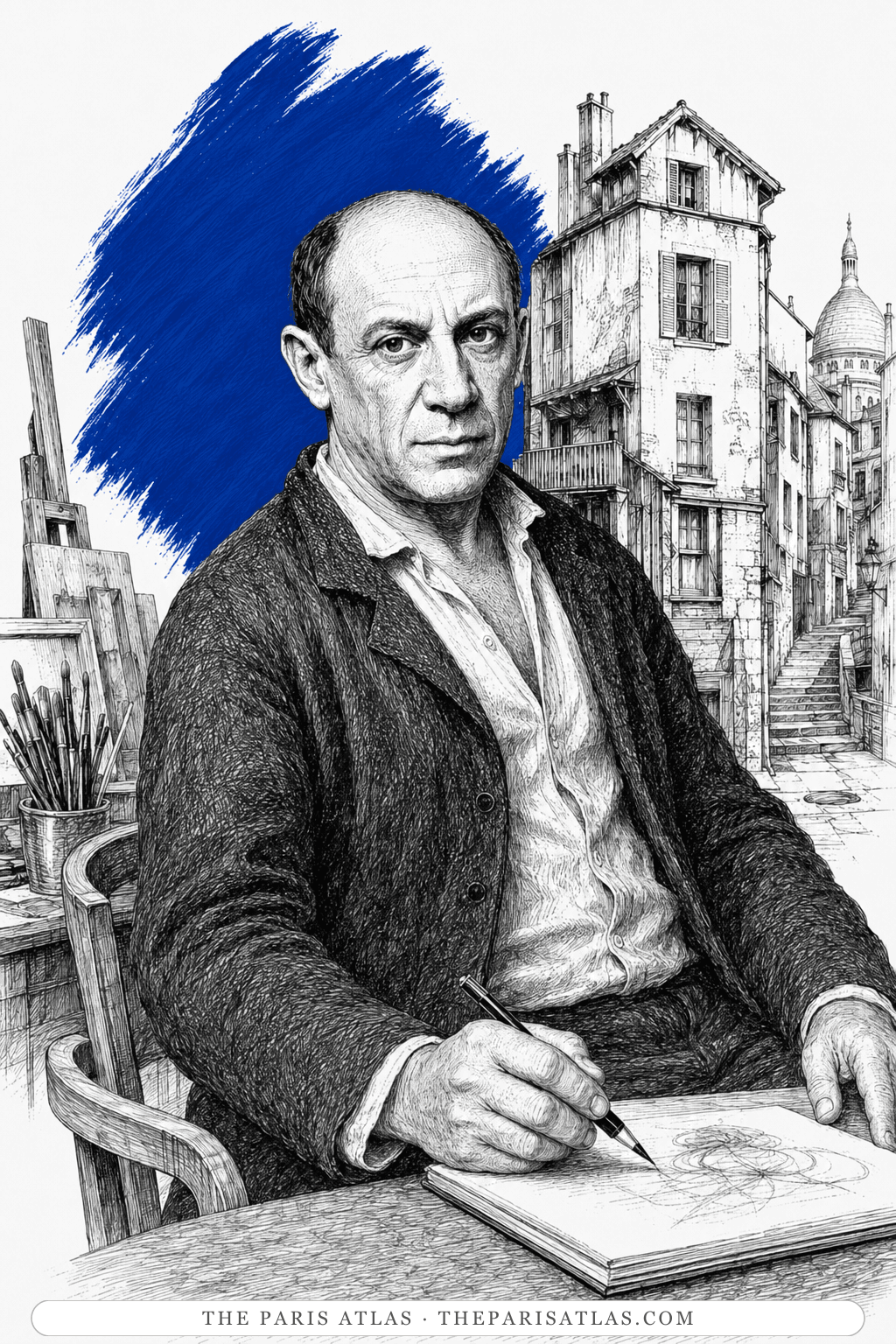
She joined the Bateau-Lavoir circle in 1907. Accounts of the introduction differ: AWARE credits her Académie Humbert classmate Georges Braque, Britannica the dealer Clovis Sagot.

Marie Laurencin — AWARE: Archives of Women Artists, Research and Exhibitions; Marie Laurencin — Encyclopaedia Britannica

Illustrated portrait of Gertrude Stein

Gertrude Stein

  • Author
  • Salon host
  • Patron

Supported by · 1908

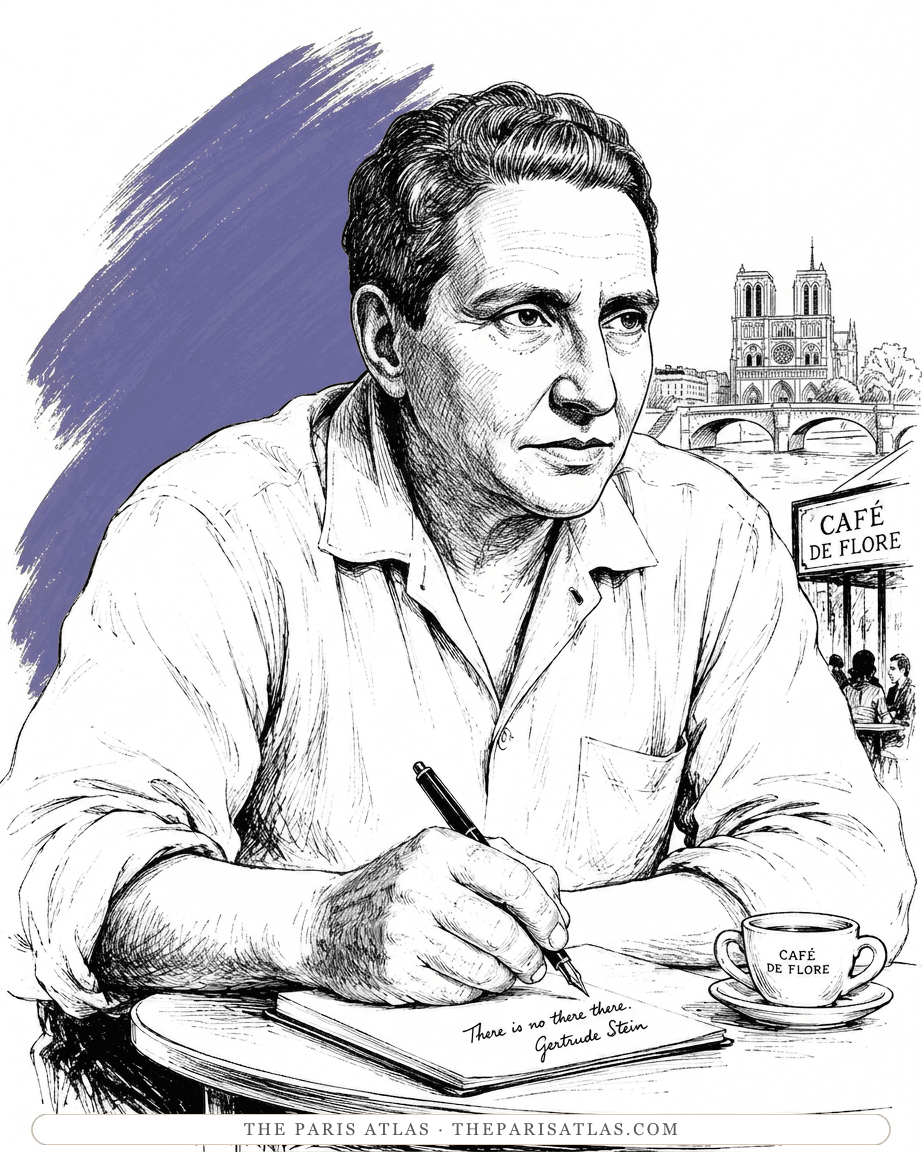
Britannica names Stein among the first buyers of Laurencin's work. Her 1908 Group of Artists — Picasso, Fernande Olivier, Apollinaire, and the painter herself — later passed to Claribel Cone and hangs in the Baltimore Museum of Art.

Marie Laurencin — Encyclopaedia Britannica; Group of Artists — The Baltimore Museum of Art

Movements

The artistic and literary currents this life ran through.

Sunlight through a railing breaking into diagonal planes of shadow across bare concrete

Art movement · 1907–1914

Cubism

She exhibited with the Cubists — The Elegant Ball, Dance in the Country hung at the 1913 Salon des Indépendants — but Britannica notes she never took up the movement's innovations, and AWARE places her work on its fringes.

Marie Laurencin — Encyclopaedia Britannica; The Barnes Foundation Presents Marie Laurencin: Sapphic Paris (2023); Marie Laurencin — AWARE: Archives of Women Artists, Research and Exhibitions

Marie Laurencin’s Places

The cataloged places connected to Marie Laurencin — through the books, and through the documented record.

Places you can enter today appear first, followed by addresses to see from outside and sites that have vanished.

Questions about Marie Laurencin

Who was Marie Laurencin?

Marie Laurencin (1883–1956) was a French painter known for pale, stylized portraits of women. She belonged to Picasso's Bateau-Lavoir circle from 1907, was the poet Guillaume Apollinaire's companion for five years, and became one of the most sought-after portraitists of 1920s Paris.

What is Marie Laurencin famous for?

Her portraits of women in grays, rose, and powder blue; the Portrait de Mademoiselle Chanel that Chanel herself rejected; and the sets and costumes for Les Biches, the 1924 Ballets Russes production. Six of her paintings hang in the Musée de l'Orangerie in Paris.

Was Marie Laurencin a Cubist?

No, though she exhibited with the Cubists and was close to the movement's founders. Britannica notes she never took up the movement's innovations; her work simplified forms while keeping its own pastel manner.

What was Marie Laurencin's relationship with Guillaume Apollinaire?

They were companions from 1907, when Picasso introduced them, until 1912 or 1913, depending on the account. Henri Rousseau painted the couple twice as The Muse Inspiring the Poet, and by her last wishes she was buried holding one of Apollinaire's letters.

Why did Coco Chanel reject her portrait?

The Musée de l'Orangerie, which owns the painting, records that Chanel did not appreciate the 1923 portrait and refused to buy it. Laurencin declined to paint a second version and kept the canvas, which later entered the Walter-Guillaume collection.

Where can you see Marie Laurencin's paintings?

The Musée de l'Orangerie in Paris holds six works, including the Chanel portrait and a small portrait of Apollinaire acquired in 2019. Apollinaire et ses amis is in the Musée national d'art moderne, Group of Artists is in the Baltimore Museum of Art's Cone Collection, and the Musée Marie Laurencin collection in Japan lends to touring exhibitions.

How did Marie Laurencin die?

She died in Paris on 8 June 1956, at seventy-two. She is buried in Père-Lachaise Cemetery, division 88, a short walk from Apollinaire's grave.

Sourced claims

Every connection the graph holds for Marie, with the evidence behind it.

Associated with

Cubism

She exhibited with the Cubists — The Elegant Ball, Dance in the Country hung at the 1913 Salon des Indépendants — but Britannica notes she never took up the movement's innovations, and AWARE places her work on its fringes.

Marie Laurencin — Encyclopaedia Britannica; The Barnes Foundation Presents Marie Laurencin: Sapphic Paris (2023); Marie Laurencin — AWARE: Archives of Women Artists, Research and Exhibitions

Buried at · 1956

Père-Lachaise Cemetery

Division 88, on the avenue Circulaire. By the last wishes the cemetery association records, she was buried in a white dress with a rose in one hand and a letter from Apollinaire — whose grave is a short walk away — in the other.

LAURENCIN Marie (1883-1956) — Amis et Passionnés du Père-Lachaise

Collaborated with

Jean Cocteau

She illustrated a booklet by Cocteau, one of a run of book and stage commissions that continued through the end of the 1920s.

Marie Laurencin — AWARE: Archives of Women Artists, Research and Exhibitions

Met · 1907–1912

Guillaume Apollinaire

Picasso introduced them in 1907, and they were together until 1912; the Barnes Foundation puts the break at 1913. Henri Rousseau painted the couple twice as The Muse Inspiring the Poet.

The Barnes Foundation Presents Marie Laurencin: Sapphic Paris (2023); Marie Laurencin — AWARE: Archives of Women Artists, Research and Exhibitions

Met · 1907

Pablo Picasso

She joined the Bateau-Lavoir circle in 1907. Accounts of the introduction differ: AWARE credits her Académie Humbert classmate Georges Braque, Britannica the dealer Clovis Sagot.

Marie Laurencin — AWARE: Archives of Women Artists, Research and Exhibitions; Marie Laurencin — Encyclopaedia Britannica

Supported by · 1908

Gertrude Stein

Britannica names Stein among the first buyers of Laurencin's work. Her 1908 Group of Artists — Picasso, Fernande Olivier, Apollinaire, and the painter herself — later passed to Claribel Cone and hangs in the Baltimore Museum of Art.

Marie Laurencin — Encyclopaedia Britannica; Group of Artists — The Baltimore Museum of Art