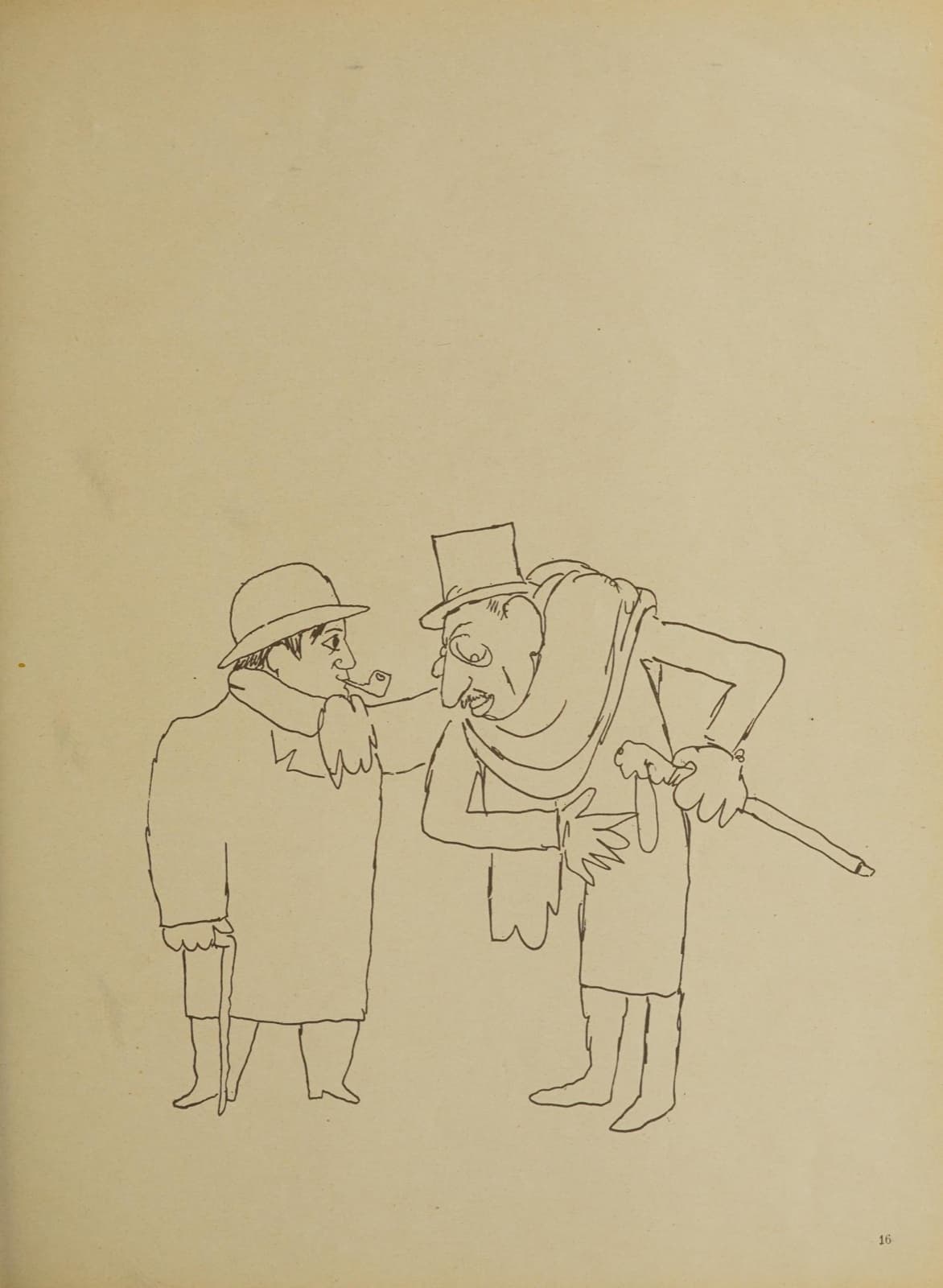
Drawing
P. Picasso — Igor Stravinsky
Picasso in his bowler, pipe clamped; Stravinsky monocled under a top hat, bowing into the conversation — two revolutions of the Ballets Russes years caught gossiping in Cocteau's single wandering line.
The painter whose canvases papered the walls of 27 rue de Fleurus before the writers arrived — the salon's resident modern master.
Spanish painter, sculptor, printmaker, ceramicist and stage designer whose repeated reinvention of the human figure, pictorial space and artistic materials made him one of the central figures of twentieth-century art.
Pablo Picasso did not arrive in Paris once and immediately become Picasso. He first came in 1900, still a teenage painter from Barcelona, returned in 1901 and 1902, and only settled permanently in the city in 1904. By then the Blue Period was nearing its end. Within a few years, however, the poor young Spaniard working in the ramshackle Bateau-Lavoir had become central to one of the most important artistic networks in Paris. Gertrude and Leo Stein began buying his work; their Saturday evenings at 27 rue de Fleurus introduced international visitors to paintings by Picasso and Matisse that could scarcely be seen anywhere else; and Picasso's prolonged struggle with Gertrude Stein's portrait became part of his transition away from straightforward likeness toward a radically different understanding of the human face. Stein later claimed that she sat for eighty or ninety sessions, though modern research suggests that number was probably exaggerated.
Picasso's career is often described as a sequence of periods — Blue, Rose, Cubist, Neoclassical, Surrealist, late — but that can create the false impression that one style neatly replaced another. He was much less orderly than that. He repeatedly returned to old methods while inventing new ones, sometimes working in sharply different styles at the same time. He could dismantle a face into Cubist planes and then produce an almost conventionally modeled drawing. He could make sculpture from cardboard and string, paint monumental figures inspired by Greco-Roman art, distort bodies almost beyond recognition, and then spend months arguing with Velázquez or Manet through new versions of paintings made centuries earlier. MoMA describes this openness to multiple styles, subjects and media as one of the central principles of his nearly eighty-year career.
Paris remained crucial to nearly every major transformation. Picasso painted Les Demoiselles d'Avignon in Montmartre, developed Cubism with Georges Braque in Paris studios, worked with Daniel-Henry Kahnweiler, married Olga Khokhlova at the Russian church on rue Daru, met Marie-Thérèse Walter on boulevard Haussmann, painted Guernica at 7 rue des Grands-Augustins, remained in that studio throughout the German occupation, and joined the French Communist Party after the Liberation. After the Second World War he increasingly lived in the south of France, but Paris remained the center of his dealers, exhibitions, political relationships and public reputation.
The story is also inseparable from the people around him. Fernande Olivier, Eva Gouel, Olga Khokhlova, Marie-Thérèse Walter, Dora Maar, Françoise Gilot and Jacqueline Roque were not interchangeable “muses.” They had different lives, personalities and relationships with Picasso, and several were artists or performers in their own right. His relationships could be loving, productive, possessive, secretive and cruel, sometimes all at once. Recent scholarship has increasingly resisted reducing these women to the changing faces in Picasso's paintings and has examined the unequal power that often accompanied his intimate relationships.
What makes Picasso difficult to summarize is therefore exactly what makes him important. There is no single Picasso style. There is instead a continuous argument with what an image can be, what materials art can use, what a face needs in order to remain recognizable and how much of the history of art an artist can dismantle without ceasing to belong to it.
Picasso across a working life — from the young man at a Montmartre café table to the old one walking a village lane in the south. These are illustrations rather than photographs.
Pablo Ruiz Picasso was born in Málaga on 25 October 1881, the first child of José Ruiz Blasco and María Picasso López.[1] His father was a painter, drawing teacher and museum curator whose own work concentrated largely on conventional subjects such as birds and still lifes. Picasso therefore did not discover painting as a mysterious vocation outside his family. It was an ordinary part of household life. He watched his father work, accompanied him to museums and began drawing under his encouragement while still very young.
Stories later grew around the precocious boy, including the famous claim that José eventually surrendered his brushes after recognizing that his son had surpassed him. It is safer to treat that as family legend rather than a securely documented event. What is well established is that José gave Pablo formal instruction unusually early and that the son became technically accomplished long before most artists enter serious training.[1] Picasso's childhood exercises include ornamental drawing, casts, figures and observations from nature.
He had two younger sisters, Lola, born in 1884, and Conchita, born in 1887. Conchita died of diphtheria in 1895, when Picasso was thirteen. The loss coincided with another major change: the family moved to Barcelona after years in La Coruña, where José had been teaching and Pablo had already begun studying at the local School of Fine Arts.
Picasso eventually adopted his mother's surname as his professional name.[1] Early works carry signatures such as “P. Ruiz” and “P. Ruiz Picasso,” but by around 1901 he had effectively become simply Picasso. The double “s” of his mother's surname was unusual in Spain and helped make it memorable.
The family arrived in Barcelona in 1895, and fourteen-year-old Pablo entered the School of Fine Arts at La Llotja, where his father also taught.[2] The teenage works preserved by the Museu Picasso show how completely he could already handle conventional academic techniques.[3] He painted religious scenes, portraits and large compositions using modeled figures and traditional perspective. First Communion, shown publicly in 1896, is far removed from the flattened faces and broken spaces that later made his name.[3]
In 1897, Picasso was admitted to Madrid's Royal Academy of Fine Arts of San Fernando.[4] That same year he completed Science and Charity, an ambitious academic painting of a sick woman attended by a doctor and a nun. The work demonstrates something important about the later revolutionary: Picasso did not break conventional representation because he was unable to master it. He had learned the system thoroughly before deciding that it was insufficient.
Madrid interested him less as a school than as a place to encounter Spanish painting. El Greco became especially important. The Prado has emphasized that Picasso's fascination with El Greco never disappeared and later contributed directly to the flattened perspective, elongated figures and fractured forms of Analytic Cubism.[5] Velázquez and Goya also remained permanent reference points. Picasso's late habit of remaking canonical paintings was not a new interest suddenly acquired in old age; Spanish art history had been present from the beginning.
Illness interrupted the Madrid period, and Picasso returned to Catalonia. In 1898, he spent months at Horta de Sant Joan with his friend Manuel Pallarès. The rural landscape, physical isolation and distance from academic instruction gave him another environment in which to rethink his work. He returned to Barcelona the following year with an increasingly independent identity.
By 1899, Picasso had entered the artistic circle around Els Quatre Gats, a Barcelona café modeled partly on Parisian bohemian establishments such as Le Chat Noir. Writers, illustrators and painters gathered there, and Picasso designed menus and posters, drew caricatures and held an exhibition in the café in 1900.[2]
Among the friends he made there was Carles Casagemas, a young painter and poet. Their friendship would have an enormous effect on Picasso's early work.
The Barcelona circle also made Paris feel reachable. French poster art, Toulouse-Lautrec, Théophile Steinlen and the Parisian cabaret world circulated through Barcelona reproductions and magazines. Picasso was already watching the French capital before he saw it. In the autumn of 1900, Picasso and Casagemas left for Paris.[2]
Picasso was eighteen when he made his first trip to Paris for the Exposition Universelle. One of his paintings, Last Moments, had been selected for display in the Spanish section. He and Casagemas settled in Montmartre, at that moment still a relatively inexpensive district dense with studios, dance halls, cabarets and artists. He encountered the dealer Berthe Weill, one of the earliest Paris dealers willing to exhibit his work, and Pere Mañach, who became his first regular dealer.
Picasso returned to Spain at the end of the year, but Paris had become the center toward which his career was moving.
Casagemas remained emotionally unstable, principally over his obsession with the model Germaine Gargallo. On 17 February 1901, at the Café de l'Hippodrome on boulevard de Clichy, Casagemas attempted to shoot Germaine and then killed himself. Picasso was in Spain at the time. The suicide entered his painting almost immediately.
Picasso's Blue Period, conventionally dated from about 1901 to 1904, is often explained as the direct result of Casagemas's death.[6] The death unquestionably mattered — Picasso painted his dead friend and returned to the event symbolically — but grief was only one source. The period also grew from the poverty Picasso saw and experienced in Barcelona and Paris, his interest in hospitals and prisons, and his attention to people whose bodies made hardship visible.
Beggars, blind men, prisoners, prostitutes, impoverished mothers and solitary figures dominate the work. The palette narrows toward blues, blue-greens and gray. Bodies become thin and elongated, sometimes recalling El Greco. Blue gradually stops functioning merely as the color of sadness and becomes a complete visual environment capable of unifying skin, walls, clothing and shadow.
Picasso moved repeatedly between Paris and Barcelona during these years. In June 1901, he returned to Paris and had an exhibition with Francisco Iturrino at Ambroise Vollard's gallery. He also met Max Jacob, the poet who became one of his closest early Paris friends. In 1902 he showed Blue Period works at Berthe Weill's gallery, but commercial success remained limited.
The defining Blue Period painting is The Old Guitarist, painted in Barcelona in late 1903 and early 1904, shortly before Picasso settled permanently in Paris.[7] The blind musician is almost entirely blue except for the brown guitar, whose warm color and rounded body contrast with the angular, emaciated man holding it. The Art Institute of Chicago emphasizes the influence of El Greco in the stretched figure and the central role of human misery in the Blue Period.[7]
By the time Picasso left Barcelona for Paris in April 1904, blue had become a fully developed system. He was about to abandon its near-monochrome severity almost as quickly as he had perfected it.
Picasso's fourth trip to Paris in April 1904 became permanent.[2] He moved into a studio at 13 rue Ravignan in Montmartre, in the dilapidated building later nicknamed the Bateau-Lavoir because its ramshackle appearance reminded residents of the laundry boats once moored along the Seine.[8]
The building was cold, poorly equipped and crowded with artists, but it placed Picasso in an extraordinary social environment. His circle included Max Jacob, Guillaume Apollinaire, André Salmon, sculptors, models, actors and other young artists. Montmartre was both cheap enough for poverty and socially dense enough for constant exchange.
In the autumn of 1904, Picasso met Fernande Olivier, a model living at the Bateau-Lavoir.[6] She became his partner for roughly seven years. Olivier's memoirs later preserved unusually vivid details of Picasso's Montmartre life: the chaotic studio, animals, visitors, arguments, parties, lack of money and intense work. The Musée Picasso describes their circle as the “Picasso gang,” a community of young artists and writers whose personal and artistic lives overlapped continually.[6] The Blue Period was ending.
Around 1905, Picasso's palette warmed toward pink, ochre, orange and red. His subjects also shifted. Harlequins, acrobats, clowns and itinerant circus performers appeared repeatedly, particularly people associated with the Cirque Médrano near Montmartre.[9]
The change is traditionally called the Rose Period, but the emotional tone is more complicated than the name suggests. These figures may wear costumes, but they are rarely jubilant. Picasso was interested in performers away from the stage: resting, waiting, traveling or simply existing between performances. Their social marginality connects them to the Blue Period subjects even as the colors change.
In At the Lapin Agile of 1905, Picasso depicts himself as a harlequin beside a woman identified with Germaine Pichot, while the guitarist Frédéric Gérard appears behind them.[9] The painting compresses Montmartre nightlife into a deliberately theatrical scene and demonstrates how quickly Picasso was learning to make his own social circle into imagery. The Rose Period also coincided with the beginning of serious collecting.
In 1905, Gertrude and Leo Stein began buying Picasso's work.[10] They were American siblings living at 27 rue de Fleurus, near the Luxembourg Gardens, and were building a collection that eventually included Cézanne, Matisse and Picasso in unusual depth.
Beginning in 1906, the Steins opened their home on Saturday evenings.[11] The gatherings became one of the most important unofficial viewing spaces for avant-garde art in Paris. Picasso rarely exhibited publicly during the most radical early Cubist years, and Paris museums offered almost no access to such work. At rue de Fleurus, artists, writers, collectors and visitors could see it directly. The Met describes the Stein salons as an alternative institution through which news of modern art spread internationally.[10]
Picasso also became personally close to Gertrude. Between 1905 and 1906, he painted her portrait. Stein later claimed that she sat for him eighty or ninety times. Modern scholarship regards the exact number with skepticism, but Picasso certainly struggled with the face and reworked the picture over an extended period.[12]
Eventually he stopped attempting conventional likeness and transformed Stein's face into something more masklike and sculptural. The result marks an important transition. Picasso was beginning to ask whether a portrait needed to reproduce what a sitter looked like at one moment, or whether it could construct a more permanent visual identity through simplification.
The familiar story says that when someone complained that the portrait did not resemble Stein, Picasso replied that eventually she would resemble the portrait. Whatever the exact wording, the anecdote survives because it captures the change in his thinking: resemblance was no longer simply a matter of optical accuracy.
Through the Steins, Picasso met Henri Matisse around 1905 and 1906.[13]
Their relationship became one of the great productive rivalries in modern art. Matisse was twelve years older and already attracting enormous controversy through Fauvism. Picasso watched him closely, and Matisse watched Picasso in return. The two exchanged works, argued, admired and competed with each other for decades.
This rivalry matters especially in the years leading to Les Demoiselles d'Avignon. Matisse had already demonstrated how violently a painting could reject naturalistic color. Picasso's response would attack something different: the coherence of the human body and the perspectival space around it.
In the summer of 1906, Picasso and Fernande Olivier spent several months in Gósol, a remote Catalan mountain village.
The experience coincided with a new interest in simplified, weighty bodies and Iberian sculpture. Picasso began reducing facial features and treating the human form almost as carved mass rather than soft flesh.
On returning to Paris, this process accelerated. The soft melancholy of the Rose Period gave way to increasingly rigid bodies, masklike faces and an interest in artistic traditions outside the academic European canon. In 1907, those investigations converged in the largest and most difficult painting Picasso had yet attempted.
Picasso began planning Les Demoiselles d'Avignon during the winter of 1906 and 1907 in the Bateau-Lavoir and completed the enormous canvas during the summer of 1907. He produced hundreds of studies, repeatedly changing the number of figures, their poses and the structure of the room.[14] Early versions included two male figures — a sailor and a medical student carrying a skull — who disappeared from the final painting, leaving five nude women confronting the viewer directly.[15]
The title was applied later and refers to carrer d'Avinyó, a street associated with brothels in Barcelona, not the French city of Avignon.
The painting pulls together multiple sources. Cézanne's bathers mattered. Picasso had been studying ancient Iberian sculpture. He also encountered African and Oceanic objects in Paris, including at the Musée d'Ethnographie du Trocadéro. MoMA now places those encounters within their colonial history: many such objects entered French collections through imperial systems that stripped them from their original cultural contexts, while European artists frequently treated them under the racist category of “primitive” art. Picasso appropriated visual strategies from these works without meaningfully engaging their original meanings.[15]
The result was not stylistically consistent, and that inconsistency is one reason the painting remains so powerful. Some faces are Iberian in appearance; the two women at the right have violently masklike features. The bodies are angular, space folds unpredictably and the women look outward instead of behaving as passive nudes awaiting inspection.
Picasso showed the painting privately to friends. Many disliked it. Matisse was disturbed. Braque reportedly found it shocking. Leo Stein did not become an admirer of the direction it announced. Picasso did not exhibit the painting publicly until 1916. Yet Demoiselles opened the problem that he and Georges Braque would spend the next several years solving.
Picasso met Georges Braque in 1907.[16]
Their collaboration became so intense that the distinction between individual innovations can sometimes be difficult to reconstruct. Braque later compared them to mountain climbers roped together.[17] Picasso recalled that they visited each other's studios almost daily to inspect what the other had done.
The immediate catalyst included Paul Cézanne, whose retrospective at the 1907 Salon d'Automne emphasized the structural simplification of natural forms.[18] Picasso and Braque began treating the visible world not as a stable scene viewed from one position but as something that could be broken apart, turned, compressed and rebuilt.
Cubism did not attempt to reproduce exactly what the eye sees from one fixed viewpoint.[19] Objects could be presented from several angles within a single picture.[20] Space became shallow. Figure and background interlocked. A face might contain both frontal and profile information.
The movement acquired its name after critic Louis Vauxcelles described Braque's 1908 landscapes in terms of cubes.[16] Picasso and Braque themselves were less interested in naming what they were doing than in continuing the experiment.
By 1910 to 1912, their work had entered the stage later called Analytic Cubism.[21]
The palette narrowed to browns, ochres, creams and grays so that color would not distract from the restructuring of form.[22] Objects and bodies were fragmented into small overlapping planes. Traditional depth was compressed. The subject often remained present — a face, bottle, violin, guitar — but recognition happened in flashes rather than immediately.
Picasso's Portrait of Daniel-Henry Kahnweiler of 1910 is one of the clearest examples. The dealer is broken into an intricate field of facets, yet enough remains — a head, clasped hands, jacket, watch chain — to maintain a portrait. Kahnweiler himself became one of the principal theorists explaining how Cubism could show an object from more than one side rather than limit itself to a single viewpoint.[23]
Picasso was not trying to become an abstract painter in the later sense. He insisted that art still began with things in the world. Cubism radically changed representation without abandoning its contact with real objects.
The young German-born dealer Daniel-Henry Kahnweiler first visited Picasso at the Bateau-Lavoir in 1907 and became indispensable to the economics of Cubism.[23]
Unlike dealers who demanded immediately saleable work, Kahnweiler bought extensively and supported the artists he represented while they pursued paintings that ordinary collectors often found incomprehensible. Picasso signed a formal arrangement with him around 1910.[23]
Picasso then painted him. The Portrait of Kahnweiler dissolves the dealer into the same Cubist visual language he was helping finance. It is difficult to imagine a better image of their relationship: the man keeping the experiment commercially alive becomes material for the experiment itself.
The arrangement was shattered by the First World War. Kahnweiler was a German citizen and was declared an enemy alien by France. His Paris gallery and enormous stock were confiscated in December 1914 and later sold at state-supervised auctions. More than a thousand works by Picasso, Braque, Juan Gris and Fernand Léger were dispersed.[24] Kahnweiler spent the war in Switzerland before eventually returning to Paris.
Around 1912, Cubism changed direction.
Instead of breaking objects into ever-smaller facets, Picasso and Braque began reconstructing images from large, simplified signs and actual materials. The phase became known as Synthetic Cubism.[21]
Picasso's Still Life with Chair Caning of 1912 incorporated a commercially printed piece of oilcloth imitating woven chair caning and framed the oval canvas with rope. Such works challenged the assumption that painting needed to represent reality when a piece of reality — or at least a manufactured imitation of it — could simply be attached to the artwork.
Newspaper entered Cubist compositions. Wallpaper entered. Typography entered. Wood-grain effects, commercial lettering and fragments of everyday printed culture became part of fine art. The implications were enormous. Collage made the border between artwork and ordinary material unstable.
Picasso carried the same question into sculpture.
In late 1912, he constructed a Guitar from cardboard, paper, string and wire.[25] Traditional sculpture was supposed to be carved from a solid mass or modeled and cast. Picasso instead cut flat pieces, folded them, joined them and left the resulting object visibly assembled.
The sound hole of a real guitar is an absence. Picasso turned that absence into a projecting cylinder. This reversal of positive and negative space helped change the logic of modern sculpture.[25] MoMA treats the Guitar constructions of 1912 to 1914 as a fundamental twentieth-century breakthrough.[26]
Picasso did not regard media as separate territories. Drawing could become sculpture. Newspaper could become painting. A guitar could be both image and object. That flexibility would remain one of his defining habits.
Picasso's relationship with Fernande Olivier deteriorated during the Cubist years. Around 1911 and 1912, he began a relationship with Marcelle Humbert, whom he called Eva Gouel.
References to Eva entered Cubist works indirectly through phrases such as Ma Jolie, a popular song title that also served as a private declaration of affection.
Picasso separated from Fernande and lived with Eva through the final prewar Cubist years. In 1913, they moved to a studio at 5 bis rue Schoelcher in Montparnasse.[4]
The First World War then dismantled much of the artistic structure around Picasso. Braque and Derain were mobilized. Kahnweiler was forced out of France. Picasso, as a Spanish citizen, was not subject to French military service and remained behind.
Eva became seriously ill and died of tuberculosis on 14 December 1915. Picasso had lost both his partner and the intense daily collaboration with Braque that had defined the invention of Cubism. His work changed again.
In 1916, Picasso became connected with Serge Diaghilev's Ballets Russes. The following year, Jean Cocteau brought him into the production of Parade, with music by Erik Satie and choreography by Léonide Massine.
Picasso traveled to Rome in 1917 to design sets and costumes.[27]
The project widened his scale. Paintings had lived on walls; now Picasso was designing enormous theatrical environments, costumes and curtains to be seen in performance. The ballet premiered at the Théâtre du Châtelet in Paris on 18 May 1917.[27]
In Rome he also met Olga Khokhlova, a dancer with the Ballets Russes.[27] The relationship brought him into a very different Paris.
Olga came from a traditional Russian military family and was about ten years younger than Picasso.[28] After leaving the Ballets Russes, she followed him to France.
They married on 12 July 1918 at the Russian Orthodox church on rue Daru in Paris.[27] Picasso's witnesses included Max Jacob, Guillaume Apollinaire and Jean Cocteau.
The couple moved to 23 rue La Boétie in the 8th arrondissement.[4] Picasso had moved from the poverty and communal bohemianism of the Bateau-Lavoir into a wealthy Right Bank household with servants, fashionable acquaintances and an increasingly expensive lifestyle. His artistic change looked just as dramatic.
After the First World War, Picasso began producing monumental bodies with heavy limbs, calm faces and strong references to classical Mediterranean art.
The change is frequently described as his Neoclassical Period, though Cubism did not disappear. He could produce a classical drawing and a Cubist still life during the same year.
Works such as Three Women at the Spring of 1921 evoke Greco-Roman sculpture and French academic painting while deliberately distorting those traditions.[29] The figures are massive, immobile and sculptural, but their bodies remain subtly disjointed and masklike.
The birth of Picasso and Olga's son Paulo in 1921 also produced numerous images of mothers and children. Domestic life and classical monumentality briefly overlapped.
The neoclassical turn was not a retreat in any simple sense. Picasso was demonstrating that modernism did not require permanent loyalty to one avant-garde style.
During the 1920s, a younger avant-garde gathered around André Breton and Surrealism.
Picasso never formally joined the movement, but the Surrealists claimed him as an important predecessor and repeatedly exhibited and published his work. In 1925, he participated in the exhibition La Peinture Surréaliste at Galerie Pierre.[30] A contemporary critic joked that the “father of Cubism” had become the Surrealists' adopted son.
Picasso's bodies became increasingly distorted. Faces could contain multiple views simultaneously; limbs expanded or contracted; mouths became jagged openings; sexual forms merged with faces and hands. The imagery often feels more psychologically aggressive than Cubism. The Surrealist relationship also encouraged Picasso's interest in myth. The Minotaur became a particularly important figure.
Picasso began using the Minotaur around 1928 and returned to it repeatedly through the 1930s.[30]
The creature — half man, half bull — allowed him to combine several longstanding interests: Spanish bullfighting, classical mythology, sexuality, violence, blindness, artistic creation and self-portraiture. In the Vollard Suite and the 1935 Minotauromachy, the Minotaur can be violent, erotic, wounded, blind or vulnerable.
The figure is often read as a partial stand-in for Picasso himself, but its meaning changes too much to reduce it to a single code. At the same time, Picasso's personal life had become increasingly divided.
In January 1927, Picasso met Marie-Thérèse Walter near the Galeries Lafayette on boulevard Haussmann.[30]
She was seventeen; Picasso was forty-five and married to Olga. Because Walter was a minor and because of his marriage, the relationship was initially secret. The Musée Picasso explicitly notes both facts.[30]
Marie-Thérèse became one of the most recognizable presences in Picasso's art. Her profile appears as sweeping curves, rounded foreheads and strong noses. Compared with the increasingly jagged portraits associated with Dora Maar later in the decade, images of Walter are often soft, brightly colored and intensely sensual.
Picasso acquired the Château de Boisgeloup near Gisors in 1930 and established a sculpture studio there.[30] Large plaster heads and busts repeatedly transformed Marie-Thérèse's features into swelling volumes.
In Girl before a Mirror of 1932, her face becomes both profile and frontal mask while her reflected body changes color and form.[31] The mirror turns an ordinary portrait subject into an image of sexuality, age, self-perception and physical transformation. The relationship eventually made Picasso's marriage impossible to maintain.
In 1935, Marie-Thérèse gave birth to Picasso's daughter María de la Concepción, known as Maya.
Picasso and Olga separated, but they did not divorce. Under the marital property arrangements that would have accompanied divorce, Picasso feared losing control of part of his art and possessions. They therefore remained legally married until Olga's death in 1955.[28]
This period brought an unusual interruption in painting. Picasso spent months writing poetry, often in a deliberately unpunctuated, image-heavy style. At roughly the same moment, he met another woman who brought him much closer to Surrealist politics and photography.
Dora Maar, born Henriette Théodora Markovitch, was already an accomplished photographer when she met Picasso around 1935 and 1936. She ran a professional studio on rue d'Astorg, participated in Surrealist exhibitions and held strong left-wing political commitments.[32] She was not simply a model whom Picasso discovered.
Paul Éluard helped introduce them at Les Deux Magots in Saint-Germain-des-Prés. Their relationship quickly became both personal and artistic.
Picasso represented Maar repeatedly, often using angular, unstable forms.[33] The famous Weeping Woman imagery later became so closely associated with her that her independent photographic career was nearly eclipsed by it. Maar herself objected to being reduced to Picasso's portraits and continued making art long after their relationship ended.[32] Their most important collaboration concerned Guernica.
The Spanish Civil War began in 1936.
Picasso had long avoided straightforward party politics, but the war changed his public position. The Republican government appointed him director of the Museo del Prado in September 1936.[34] He accepted the appointment but never formally took up the post in Madrid; the Prado itself stresses that he remained in Paris while acting symbolically as a representative of Republican Spanish culture.[34]
The Republican government also commissioned Picasso to produce a major work for the Spanish Pavilion at the 1937 International Exhibition in Paris.[35] Initially, Picasso planned a studio scene. Then came the bombing of Gernika on 26 April 1937. The project changed completely.
Picasso had recently taken a large studio at 7 rue des Grands-Augustins in Paris.[36]
There, beginning in May 1937, he developed Guernica at extraordinary speed. The mural-sized painting abandoned naturalistic color for black, white and gray and transformed the bombing into a compressed field of screaming people, broken bodies, a horse, a bull, fire and harsh artificial light.
Picasso did not paint an aerial view of the town or attempt documentary reportage. There are no airplanes in the painting. Instead he constructed a generalized image of civilian terror.
Dora Maar photographed the painting repeatedly as it developed, creating one of the most important visual records of a major modern artwork in progress. Her photographs allow researchers to follow Picasso's revisions and demonstrate how substantially figures changed during the painting process.[37]
Guernica was installed on the ground floor of the Spanish Pavilion alongside work by artists including Joan Miró and Alexander Calder. The pavilion itself served as an international propaganda statement for the embattled Spanish Republic.[35]
The painting later traveled internationally to raise awareness and support for the Republican cause. After Franco's victory, Picasso refused to allow Guernica to return to Spain while the dictatorship remained in power. It eventually returned to Spain in 1981, eight years after Picasso's death and six years after Franco's.
The Grands-Augustins studio became one of the most important places of Picasso's later Paris life.
It had historical associations with Balzac's story The Unknown Masterpiece, a text Picasso knew well.[36] The large upper room gave him enough scale for Guernica and later became a gathering place for writers, artists and intellectuals.
During the German occupation, it also became something stranger: the working studio of perhaps the most famous modern artist in Europe, living under a regime that officially condemned the kind of art he represented.
Picasso remained in France after war began.
He spent part of 1939 and 1940 in Royan, then returned to Paris and remained at 7 rue des Grands-Augustins throughout the Occupation.[38] A 1940 application for French citizenship had been rejected, partly because police reports associated him with anarchist circles from his early years in Paris.[38]
Nazi cultural doctrine classified Picasso's art among the modernist tendencies it despised. He did not receive normal public exhibition opportunities under the occupation, but he continued working privately and receiving visitors.
The period produced dark still lifes, skulls, distorted figures and the sculpture Man with a Sheep. Picasso later emphasized that he had not attempted to function as a journalist recording individual battles, but the atmosphere of violence entered the work in less literal forms.
He also wrote the surreal, absurdist play Desire Caught by the Tail during the war.
In June 1944, shortly after his old friend Max Jacob had died following imprisonment at Drancy, a private reading of the play took place in Picasso's studio. Participants and guests included Simone de Beauvoir, Albert Camus, Jean-Paul Sartre, Jacques Lacan, Michel Leiris and Dora Maar. Brassaï photographed the gathering.[38]
The studio had become a meeting place connecting the prewar avant-garde to the intellectual world that would dominate postwar Paris.
After the liberation of concentration camps in 1945, Picasso began The Charnel House.
The painting returns to the black-and-white severity associated with Guernica but depicts a murdered family entangled beneath a table. MoMA relates the work to newspaper photographs of bodies discovered after the liberation of Nazi concentration camps.[39]
It is a difficult painting partly because Picasso does not make the figures easy to read. The bodies dissolve into a network of lines and broken forms. The confusion is part of the meaning. Violence has damaged not just bodies but the possibility of seeing them whole.
In 1944, after the Liberation of Paris, Picasso joined the French Communist Party.
The decision surprised some observers but was consistent with the political direction his work had taken since the Spanish Civil War and with his friendships with figures such as Paul Éluard and Louis Aragon.
Picasso never became an obedient party artist. His relationship with the party included friction, most famously after his 1953 portrait of Stalin was criticized by Communist officials for failing to portray the Soviet leader appropriately. He also joined criticism of the Soviet suppression of the Hungarian uprising in 1956.
Nevertheless, peace politics became an important part of his postwar public identity. His dove was adopted as the symbol of the 1949 Paris Peace Congress and became one of the most widely reproduced political images associated with him.
In 1943, while still involved with Dora Maar, Picasso met the young painter Françoise Gilot at a Paris restaurant. She was twenty-one; Picasso was sixty-one.
The Musée Picasso emphasizes that Gilot was a painter in her own right, associated with the Réalités nouvelles milieu, and that she and Picasso sometimes worked side by side rather than simply occupying the traditional roles of male artist and female model.[40] Their relationship became established after the war and lasted until 1953.
They had two children: Claude, born in 1947, and Paloma, born in 1949.
Gilot appears in Picasso's paintings in increasingly plantlike forms, sometimes described as the “flower woman.” But she continued developing her own work and held a solo exhibition at Galerie Louise Leiris in 1952.[40]
Their relationship also provides some of the clearest firsthand evidence of Picasso's controlling behavior. In her later memoir Life with Picasso, Gilot described emotional cruelty, possessiveness and acts of physical intimidation.[41] Picasso attempted unsuccessfully to prevent the book's publication. After she left him in 1953, later accounts describe him using his influence against her career and eventually cutting contact with Claude and Paloma for a period after the memoir appeared.[42] These accounts have become central to modern reassessments of the mythology surrounding Picasso's private life.
Gilot's decision to leave was unusual in Picasso's intimate history. She later built a long independent career and lived until 2023.[41]
After the Second World War, Picasso increasingly moved away from Paris toward the Mediterranean.
In 1946, he worked for several months in the Château Grimaldi in Antibes, which later became the Musée Picasso.[43] The open windows, sea, centaurs, fauns and Mediterranean imagery of this period contrast sharply with the enclosed spaces and death imagery of occupied Paris.
The south of France did not mean retirement. It opened new materials.
Picasso first visited Vallauris in 1946 with Paul Éluard and met potters Suzanne and Georges Ramié, owners of the Madoura workshop.[43]
When he returned the following year, ceramics became a major part of his practice. He worked with plates, pitchers, bowls and sculptural vessels, transforming their existing shapes into faces, animals and mythological figures.
This was not merely painting on pottery. Picasso scratched, molded, cut, painted and rethought the relationship between an object's function and its image. A plate could become a face because it was already round. A pitcher's handles might become ears. A vessel could become an owl.
He and Gilot moved to Vallauris with Claude and Paloma, establishing family life at La Galloise.
Picasso also continued making sculpture from ordinary material. In works such as The Goat, discarded objects and found forms could be incorporated into larger sculptural bodies. The logic had begun decades earlier with Cubist collage and Guitar. Everyday things remained available to become art.
Picasso's postwar political imagery culminated in the monumental War and Peace murals made for a former chapel at Vallauris in 1952.
Rather than repeat Guernica, he constructed opposing allegories: violence and destruction set against domestic, cultural and communal peace. The chapel later became known as the Temple of Peace. The Mediterranean setting therefore carried both pleasure and politics.
Picasso met Jacqueline Roque in 1952 at the Madoura pottery operation, where she worked.[43]
Their relationship developed after Gilot left him. Jacqueline became the dominant figure of Picasso's final two decades and appears in an enormous number of portraits. The Musée Picasso notes her dark almond-shaped eyes, long black hair and upright posture as recurring features through his late work.[43]
They married secretly at Vallauris on 2 March 1961.[43] Jacqueline increasingly controlled access to the aging artist, particularly in his final years. Together they moved through a series of large southern properties whose interiors became part of Picasso's art.
In 1955, Picasso bought La Californie, a Belle Époque villa overlooking Cannes.
He transformed its grand rooms into working studios crowded with canvases, sculptures, furniture, objects and his own collection. Paintings of the studio turn the villa itself into subject matter. The Musée Picasso describes these as “interior landscapes,” where the boundaries between domestic life, collection and workspace disappear.[40]
At La Californie, Picasso also entered one of the most remarkable phases of his late career: sustained conversations with the dead.
From the late 1940s through the early 1960s, Picasso repeatedly chose canonical paintings and produced large series of variations on them.
This was not copying in the academic sense. He treated famous images as structures that could be taken apart, exaggerated, recolored and rebuilt.
Delacroix's Women of Algiers became a major series in 1954 and 1955. Velázquez's Las Meninas became a vast sequence in 1957. Manet's Luncheon on the Grass generated dozens of paintings and far more drawings and other studies beginning in 1959. MoMA records twenty-seven paintings, approximately 150 drawings, eighteen maquettes and five prints connected to the Manet series.[44]
Picasso was no longer primarily competing with the younger avant-garde. He was arguing directly with art history.
Picasso began the Las Meninas series at La Californie in August 1957.[45]
The completed sequence contains 58 works, including forty-five interpretations of Velázquez's painting, nine paintings of pigeons, landscapes and a portrait of Jacqueline.[45] He altered scale, color and emphasis repeatedly.
In his first large version, Velázquez himself becomes an enormous figure dominating the composition, much larger relative to the Infanta than in the original.[46] The change turns the seventeenth-century painting's meditation on court, representation and looking into a meditation on the power of the artist.
The series also demonstrates why the idea of a single “late Picasso style” is misleading. Within weeks, he moves from black-and-white simplification to bright color, from near-Cubist fragmentation to broad linear shorthand. Style had become a vocabulary he could switch at will.
In 1958, Picasso bought the Château de Vauvenargues near Aix-en-Provence, beneath Mont Sainte-Victoire, the mountain associated above all with Cézanne.[43]
The symbolism was obvious. Picasso had once helped build Cubism partly through Cézanne's example. Now, as one of the most famous living artists in the world, he bought a château beneath Cézanne's mountain.
He and Jacqueline lived there intermittently from 1959 to 1962. Picasso continued painting, engraving and experimenting with cut and painted sheet metal. He never allowed old age to become stylistic caution.
Printmaking ran through Picasso's entire career rather than occupying a minor sideline.
He worked in etching, drypoint, aquatint, lithography and linocut. The Vollard Suite of the 1930s, the bullfight prints, illustrations for literary texts and the enormous late graphic production all show how print processes allowed him to think in sequences and variations.
During the 1960s, he worked intensely with the printers Aldo and Piero Crommelynck. The late prints revisit familiar themes — the painter and model, musketeers, erotic scenes, old masters — but with increasing speed and freedom. Picasso was approaching ninety and still treating technique as something to learn rather than something completed.
During the late 1960s and early 1970s, Picasso became fascinated with bearded musketeers, seventeenth-century painters, matadors, lovers and studio scenes.
The paintings are often broad, fast and almost deliberately rough. Critics initially regarded some of them as evidence of decline. Later artists saw something else: freedom from finish.
Picasso was no longer attempting to prove technical mastery. He had proved it seventy years earlier. The late work often emphasizes brushstroke, speed, sexuality and the act of painting itself. The subject of many pictures is effectively the old painter imagining the history of painting and his place inside it.
Picasso underwent serious stomach surgery in 1965 and spent much of the following year recovering.[47] Once he returned to work, production accelerated again.
In 1972, the final full year of his life, he made a remarkable series of self-portraits. The face becomes increasingly skull-like. Eyes widen. The head becomes a mask.
The images do not resemble the controlled academic self-portraits of the young man who arrived in Paris seventy years earlier. They confront age directly. The Musée Picasso describes the late self-portraits as images in which the head can take on the appearance of a skull and the final reclining nudes as confrontations with physical decay.[47] He continued working almost to the end.
Picasso spent his final years with Jacqueline at Notre-Dame-de-Vie, a large property in Mougins, above Cannes.
By this point access to him had become increasingly restricted, but he continued producing paintings and preparing an exhibition of his recent work for the Palais des Papes in Avignon.
Picasso died at Notre-Dame-de-Vie on 8 April 1973, aged ninety-one. Contemporary reporting described a cardiac crisis after several weeks of illness; his physician attributed the death to a heart attack associated with pulmonary congestion or edema.[48] Le Monde reported that he died at approximately 11:40 in the morning.[48]
The night before, he had entertained friends with Jacqueline and worked late.[49]
His death did not end the complicated family dynamics surrounding him. Picasso had not made a conventional will, and disputes over access, inheritance and recognition among his descendants followed.
He was buried not in Paris, Barcelona or Málaga but in the grounds of the Château de Vauvenargues, beneath the mountain of Cézanne.[43] The choice was unexpectedly appropriate. Picasso had spent his entire career remaking the work of artists who came before him. He was buried inside the landscape of one of them.
Picasso's intimate relationships overlap so closely with changes in his work that older art history often organized his career around women: “Fernande period,” “Marie-Thérèse period,” “Dora period.” That method can be useful for dating portraits, but it also reduces independent people to raw material for a male artist. A better account keeps both facts visible: Picasso's relationships strongly affected his art, and the people involved had identities and careers beyond him. The Musée Picasso's own recent scholarship now explicitly treats women such as Fernande Olivier, Dora Maar and Françoise Gilot as participants in complex relationships rather than simply “muses.”[50]
Fernande Olivier belonged to Picasso's poorest Montmartre years. She knew the Bateau-Lavoir before it became myth and later wrote a memoir describing Picasso and the group around him. Their relationship lasted roughly from 1904 to 1912 and encompassed the Rose Period, Gósol, Les Demoiselles and the beginnings of Cubism.
Eva Gouel entered his life during the Cubist years. She appears less frequently as a recognizable portrait because Picasso often encoded her through words and signs. Her death from tuberculosis in 1915 came at the same moment that the First World War had broken apart his collaboration with Braque and his support system around Kahnweiler.
Olga Khokhlova was a professional dancer with the Ballets Russes before she became Picasso's wife. Their marriage brought a new social world, domestic stability and their son Paulo, but eventually became deeply unhappy. Picasso never divorced her, and they remained legally married until her death.
Marie-Thérèse Walter was seventeen when the forty-five-year-old married artist began a secret relationship with her in 1927. She became the model for some of Picasso's most sensuous paintings and sculptures and the mother of Maya. The age and power imbalance are important parts of the biography, not incidental details.
Dora Maar was an accomplished Surrealist photographer and political artist before meeting Picasso. She documented Guernica, influenced his engagement with photography and politics, and continued producing her own work. Her reduction in popular memory to Picasso's “weeping woman” has increasingly been challenged by museum exhibitions and scholarship.
Françoise Gilot was a painter who continued her career during and after their ten-year relationship. Unlike several earlier partners, she chose to leave Picasso. Her memoir later provided one of the most detailed firsthand accounts of his charisma, creativity, possessiveness and cruelty.
Jacqueline Roque became Picasso's final partner and second wife. She appears in hundreds of late works and helped shape his increasingly secluded final life in Cannes, Vauvenargues and Mougins.
The pattern that emerges is not simply one of artistic inspiration. Picasso often transformed intimate relationships into artistic material while retaining extraordinary power over the people involved. Accounts by Gilot and later biographers describe controlling and abusive behavior that now forms an unavoidable part of serious discussion of his life. Recognizing that history does not require pretending that his artistic innovations did not occur; it requires refusing the older habit of treating harm as another picturesque privilege of genius.
Picasso's earliest paintings demonstrate conventional academic training: careful drawing, modeled bodies, traditional perspective and historical or religious subjects. Works such as First Communion and Science and Charity establish that the later rejection of naturalism was deliberate rather than the product of technical limitation.
From roughly 1901 to 1904, Picasso restricted his palette largely to blues and blue-greens and concentrated on poor, sick, blind and socially marginal people. Elongation, reduced detail and compressed space intensify emotional isolation. The Old Guitarist represents the period at its most complete: almost every element is absorbed into the same cold chromatic atmosphere.
Around 1905 and 1906, the palette warms and circus performers, harlequins and acrobats become central. The figures remain psychologically distant, but their bodies are less starved and colors become pink, ochre and rust. Picasso increasingly simplifies faces and shapes while drawing from classical and Iberian sources.
Between 1906 and 1908, Picasso increasingly drew upon ancient Iberian sculpture and African and Oceanic objects encountered in Paris. These sources contributed to masklike faces, strong contours and a rejection of Renaissance naturalism. Modern scholarship also places this appropriation within the colonial conditions that brought many African and Oceanic objects into European museums without respect for their original contexts.
Developed with Georges Braque from about 1909 to 1912, Analytic Cubism breaks forms into overlapping facets, compresses space and frequently uses subdued colors. Objects can appear from several viewpoints simultaneously. Recognition becomes an active process rather than something delivered immediately.
Beginning around 1912, Picasso and Braque reverse the direction of analysis. Instead of endlessly fragmenting objects, they rebuild them from simplified signs, paper, newspaper, wallpaper and other materials. Collage and papier collé bring pieces of ordinary reality into artworks and make representation itself part of the subject.
Picasso's Guitar constructions use cut and folded cardboard, paper, string and wire rather than carved or modeled mass. Later sculptures incorporate found objects and scrap. His sculptural technique repeatedly depends on recognizing what an existing thing could become: a bicycle seat and handlebars can suggest a bull's head; a basket can become the rib cage of an animal.
After the First World War, Picasso returned to monumental figurative art influenced by Greco-Roman sculpture and the long European classical tradition. These works do not simply reject Cubism; the bodies often remain subtly assembled, flattened or structurally strange.
Picasso never formally became a Surrealist, but during the later 1920s and 1930s his figures grow increasingly biomorphic, violent and sexually ambiguous. Human anatomy becomes flexible enough to merge face, breast, mouth, genital form and limb. The Minotaur becomes a recurring mythological self-image.
Guernica, The Charnel House and Massacre in Korea demonstrate that Picasso could use distortion and fragmentation for political imagery without abandoning the formal discoveries of earlier work. Violence is represented through damaged bodies and damaged pictorial structure rather than straightforward reportage.
At Vallauris, Picasso treated the existing shapes of bowls, pitchers and plates as visual prompts. The object's function and body become part of the image. Ceramics allowed him to work between drawing, sculpture and useful object without respecting conventional divisions between fine and decorative art.
In the 1950s and 1960s, Picasso repeatedly rebuilt famous paintings by Delacroix, Velázquez and Manet. These works demonstrate his late belief that art history was not a sequence of sealed masterpieces but a living set of forms available for argument, parody and transformation.
The final works often use broad brushwork, heavy outlines and deliberate speed. Musketeers, painters, models and self-portraits confront old age, sexuality and artistic history. What earlier critics sometimes dismissed as uncontrolled late work is now frequently understood as another deliberate loosening of convention.
Picasso's artistic life can be mapped across Paris almost like a biography written in addresses.
His first Paris belonged to Montmartre. He arrived in 1900, moved through the cabarets and dealers of the district and, in 1904, settled at the Bateau-Lavoir on rue Ravignan. There he lived with Fernande Olivier, became close to Apollinaire and Max Jacob, moved from Blue to Rose and painted Les Demoiselles d'Avignon.
The Steins' apartment at 27 rue de Fleurus became another essential site. Picasso's works covered the walls as the collection grew, and the Saturday salons gave international visitors access to paintings that conventional institutions were not showing. This was where writers, patrons and other artists encountered Picasso as part of the new visual culture of Paris rather than as an isolated studio eccentric.
Cubism moved with him through boulevard de Clichy, Montparnasse and rue Schoelcher. Kahnweiler's gallery created the commercial structure around the movement.
After his marriage to Olga, 23 rue La Boétie represented a different phase: wealth, Right Bank society and a more conventional domestic life coexisting with experimental art. Boulevard Haussmann became part of the private story through his meeting with Marie-Thérèse Walter. Les Deux Magots belongs to Dora Maar. The Russian church on rue Daru belongs to Olga. The Théâtre du Châtelet belongs to Parade. And 7 rue des Grands-Augustins belongs above all to Guernica, the Occupation and the intellectual gatherings of the 1940s.
After the war, Picasso increasingly chose the Mediterranean rather than Paris as the place where he physically lived. But he never stopped belonging to Parisian art history. His dealers remained there. His Communist political relationships were centered there. Major retrospectives were staged there. The Louvre honored his ninetieth birthday in 1971. And after his death, the extraordinary body of work transferred to the French state became the foundation of the Musée national Picasso-Paris.
Paris did not create Picasso from nothing. Barcelona had trained him. Spain gave him much of his visual memory. But Paris gave him the concentration of artists, collectors, dealers, writers and arguments within which he could repeatedly reinvent himself.
Picasso is frequently called the most influential artist of the twentieth century, a description so common that it can become meaningless unless the influence is specified.
With Braque, he helped dismantle single-point perspective and develop Cubism, which became a foundation for later abstraction, Futurism, Constructivism, design and modern sculpture. His collages made ordinary manufactured material available to serious art. His constructions helped redefine sculpture as assembly rather than carving or modeling. His constant shifts in style undermined the idea that a modern artist needed one recognizable visual identity.
His engagements with African and Oceanic art also exemplify one of modernism's most difficult histories: European artists transformed objects from colonized societies into resources for their own revolutions while frequently ignoring or misunderstanding the cultures that produced them.
His private life has undergone a similar reassessment. The older Picasso mythology treated women principally as the beautiful catalysts who caused successive style changes. More recent work asks what happened to the women themselves and how Picasso's power affected their lives and careers. Dora Maar is again being treated as a photographer rather than merely the crying woman in Picasso's paintings. Françoise Gilot's independent career is receiving greater attention. Olga Khokhlova is increasingly studied through her own correspondence and history.
None of this makes Picasso simpler. It makes him more historically legible.
He was capable of extraordinary artistic openness and profound personal possessiveness. He resisted artistic rules while exerting severe control within relationships. He was deeply attached to Spanish culture while spending most of his adult life in France. He could paint Guernica as a universal image of civilian suffering and remain indifferent or cruel in private circumstances.
An encyclopedia should preserve those contradictions rather than solve them.
Picasso's achievement was not that he invented modern art alone. No artist did. It was that for more than seventy years he remained unusually capable of identifying where an artistic convention had become predictable and then forcing it open again.
Born in Málaga on 25 October, the son of painter and art teacher José Ruiz Blasco and María Picasso López.
Begins painting and drawing under his father's encouragement while still a child.
Begins formal study at the School of Fine Arts in La Coruña, where his father teaches.
His younger sister Conchita dies. The family moves to Barcelona, and Picasso enters La Llotja at fourteen.
Shares his first studio with Manuel Pallarès and exhibits First Communion publicly in Barcelona.
Enters Madrid's Royal Academy of Fine Arts of San Fernando and completes Science and Charity.
Spends an extended period in Horta de Sant Joan with Manuel Pallarès.
Returns to Barcelona and enters the avant-garde world around Els Quatre Gats, where he becomes close to Carles Casagemas.
Holds an exhibition at Els Quatre Gats and travels with Casagemas on his first visit to Paris for the Exposition Universelle. He settles temporarily in Montmartre and encounters dealer Berthe Weill.
Casagemas dies by suicide in Paris on 17 February. Picasso returns to Paris in June, exhibits with Francisco Iturrino at Vollard's gallery, meets Max Jacob and begins the work conventionally identified as the Blue Period.
Exhibits Blue Period paintings at Berthe Weill's gallery and continues moving between Paris and Barcelona.
Paints The Old Guitarist in Barcelona, one of the defining works of the Blue Period.
Moves permanently to Paris and installs himself at the Bateau-Lavoir, 13 rue Ravignan, in Montmartre.
Meets Fernande Olivier, who becomes his partner for roughly seven years. His palette begins moving from the Blue Period toward the Rose Period.
Paints circus and harlequin subjects including At the Lapin Agile. Meets Gertrude and Leo Stein, who begin collecting his work.
Paints Gertrude Stein's portrait. Stein later claims eighty or ninety sittings, though the number is probably exaggerated.
The Stein Saturday salons at 27 rue de Fleurus become an important gathering place for the Paris avant-garde. Picasso meets Matisse and spends the summer with Fernande in Gósol.
Encounters African art at the Trocadéro ethnographic museum, deepening his break with naturalistic representation. Meets Georges Braque and dealer Daniel-Henry Kahnweiler.
Paints Les Demoiselles d'Avignon in Paris after hundreds of preparatory studies. The painting shocks much of his own circle and is not publicly exhibited until 1916.
Works extremely closely with Georges Braque, developing the visual language that becomes known as Cubism. Braque later compares the pair to mountaineers roped together.
Moves with Fernande from the Bateau-Lavoir to a new Paris studio at 11 boulevard de Clichy. Cubist forms become increasingly fragmented.
Enters a formal arrangement with Daniel-Henry Kahnweiler and paints the dealer's famous Analytic Cubist portrait.
Analytic Cubism reaches an extreme level of fragmentation. Picasso begins a relationship with Eva Gouel and separates from Fernande.
Begins Synthetic Cubism, using collage, papier collé and everyday materials. Produces Still Life with Chair Caning and the first cardboard Guitar construction.
Participates in the Armory Show in New York, helping spread Cubism internationally. Moves with Eva to 5 bis rue Schoelcher in Montparnasse. His father dies.
The First World War breaks apart the Cubist circle. Braque and Derain are mobilized; Kahnweiler, as a German citizen, is excluded from France and his gallery stock is later confiscated.
Eva Gouel dies of tuberculosis on 14 December.
Les Demoiselles d'Avignon is publicly exhibited for the first time. Picasso becomes involved with Serge Diaghilev and the Ballets Russes.
Travels to Rome with Jean Cocteau to design the sets and costumes for Parade. Meets Ballets Russes dancer Olga Khokhlova. Parade premieres at Paris's Théâtre du Châtelet on 18 May.
Marries Olga at the Russian Orthodox church on rue Daru in Paris. The couple later settles at 23 rue La Boétie.
Works on additional Ballets Russes productions while developing the monumental Neoclassical figure style alongside continuing Cubist work.
Son Paulo is born. Picasso paints Three Women at the Spring at Fontainebleau, one of the defining works of his Neoclassical phase.
Participates in the first major Surrealist painting exhibition at Galerie Pierre while never formally joining Breton's movement.
Meets seventeen-year-old Marie-Thérèse Walter near the Galeries Lafayette on boulevard Haussmann and begins a secret relationship while remaining married to Olga.
Works with Julio González on welded iron sculpture. The Minotaur begins appearing in his imagery.
Buys the Château de Boisgeloup, creating a large sculpture studio in which Marie-Thérèse's features become the basis for monumental plaster heads and busts.
Produces major Marie-Thérèse paintings and sculptures and develops the Vollard Suite. Girl before a Mirror is painted in March 1932.
Receives a major retrospective at Galerie Georges Petit in Paris, consolidating his international status.
Makes his last visit to Spain before the Franco era prevents his return.
Separates from Olga without divorcing her. Marie-Thérèse gives birth to their daughter Maya on 5 September. Picasso spends months writing poetry and meets Dora Maar.
Begins a relationship with Dora Maar and becomes more openly engaged with the political crisis in Spain. The Republican government appoints him director of the Museo del Prado, a post he accepts but never formally occupies in Madrid.
Takes the large studio at 7 rue des Grands-Augustins. After the bombing of Gernika, paints Guernica for the Spanish Pavilion at the Paris International Exhibition. Dora Maar photographs the painting throughout its development.
Picasso's mother dies. Guernica travels to the United States as Europe enters another war.
A French naturalization request is rejected. Picasso returns to rue des Grands-Augustins and remains there through the German occupation of Paris.
Writes Desire Caught by the Tail and produces wartime images including skulls, still lifes and Bull's Head.
Meets the twenty-one-year-old painter Françoise Gilot while his relationship with Dora Maar is deteriorating.
A private reading of Desire Caught by the Tail at the Grands-Augustins studio brings together figures including Sartre, Beauvoir, Camus and Lacan. Picasso joins the French Communist Party after the Liberation.
Paints The Charnel House in response to images of Nazi mass murder discovered at the end of the war.
Works at the Château Grimaldi in Antibes and increasingly establishes his postwar life in southern France.
Son Claude is born to Françoise Gilot. Picasso begins intensive work with ceramics at Vallauris.
Moves with Gilot and Claude to La Galloise in Vallauris and participates in international peace activism.
Picasso's Dove of Peace becomes the image of the Paris Peace Congress. Daughter Paloma is born.
Paints Massacre in Korea, another major political work.
Begins the War and Peace decoration for the Vallauris chapel and meets Jacqueline Roque at Madoura.
Françoise Gilot leaves Picasso after a ten-year relationship. His portrait of Stalin causes conflict with the French Communist Party.
Jacqueline becomes Picasso's principal companion. Olga dies in February 1955. Picasso buys La Californie in Cannes and begins his extensive Women of Algiers series after Delacroix.
Henri-Georges Clouzot's The Mystery of Picasso records the artist working and wins a special jury prize at Cannes.
Produces the 58-work Las Meninas series after Velázquez at La Californie.
Buys the Château de Vauvenargues near Cézanne's Mont Sainte-Victoire.
Produces extended variations after Manet's Luncheon on the Grass while working in painting, printmaking and cut metal.
Marries Jacqueline Roque in Vallauris and increasingly bases his life at Notre-Dame-de-Vie in Mougins.
The Museu Picasso Barcelona opens, founded largely through the efforts and donations of his longtime friend and secretary Jaume Sabartés.
Undergoes major stomach surgery and spends much of the following year recovering. Françoise Gilot's Life with Picasso appears despite Picasso's attempts to prevent publication.
Paris stages the enormous Hommage à Picasso exhibitions at the Grand Palais and Petit Palais.
After the death of Sabartés, Picasso gives his complete Las Meninas series to the Museu Picasso Barcelona in his friend's memory.
Gives a large body of his early work to the Museu Picasso Barcelona, greatly expanding the museum's ability to document his youth.
On his ninetieth birthday, an exhibition of Picasso works from French public collections opens in the Grande Galerie of the Louvre.
Produces a group of increasingly skull-like self-portraits while continuing to paint and draw at Notre-Dame-de-Vie.
Dies at Notre-Dame-de-Vie in Mougins, aged ninety-one, after a cardiac crisis associated with pulmonary congestion. He had continued working almost to the end.
Is buried in the grounds of the Château de Vauvenargues, beneath Mont Sainte-Victoire. A major posthumous exhibition of his 1970–72 work opens at the Palais des Papes in Avignon.
Art is a lie that makes us realize truth, at least the truth that is given us to understand.
In my opinion to search means nothing in painting. To find, is the thing.
There is no abstract art. You must always start with something.
Drawing
Picasso in his bowler, pipe clamped; Stravinsky monocled under a top hat, bowing into the conversation — two revolutions of the Ballets Russes years caught gossiping in Cocteau's single wandering line.
Ballet
The one-act ballet that dragged the avant-garde onto the popular stage: Cocteau's scenario, Satie's score with its typewriter and siren, and Picasso's Cubist curtain, sets, and costumes for Diaghilev's Ballets Russes — premiered in Paris in May 1917 to a scandalized house. In his program note, Guillaume Apollinaire described it as 'a kind of surrealism' — the word's first prominent appearance in print, and the name André Breton's movement later adopted. The Rome working trip also gave Picasso his first long look at the antique, helping initiate the classical turn that became the Return to Order.
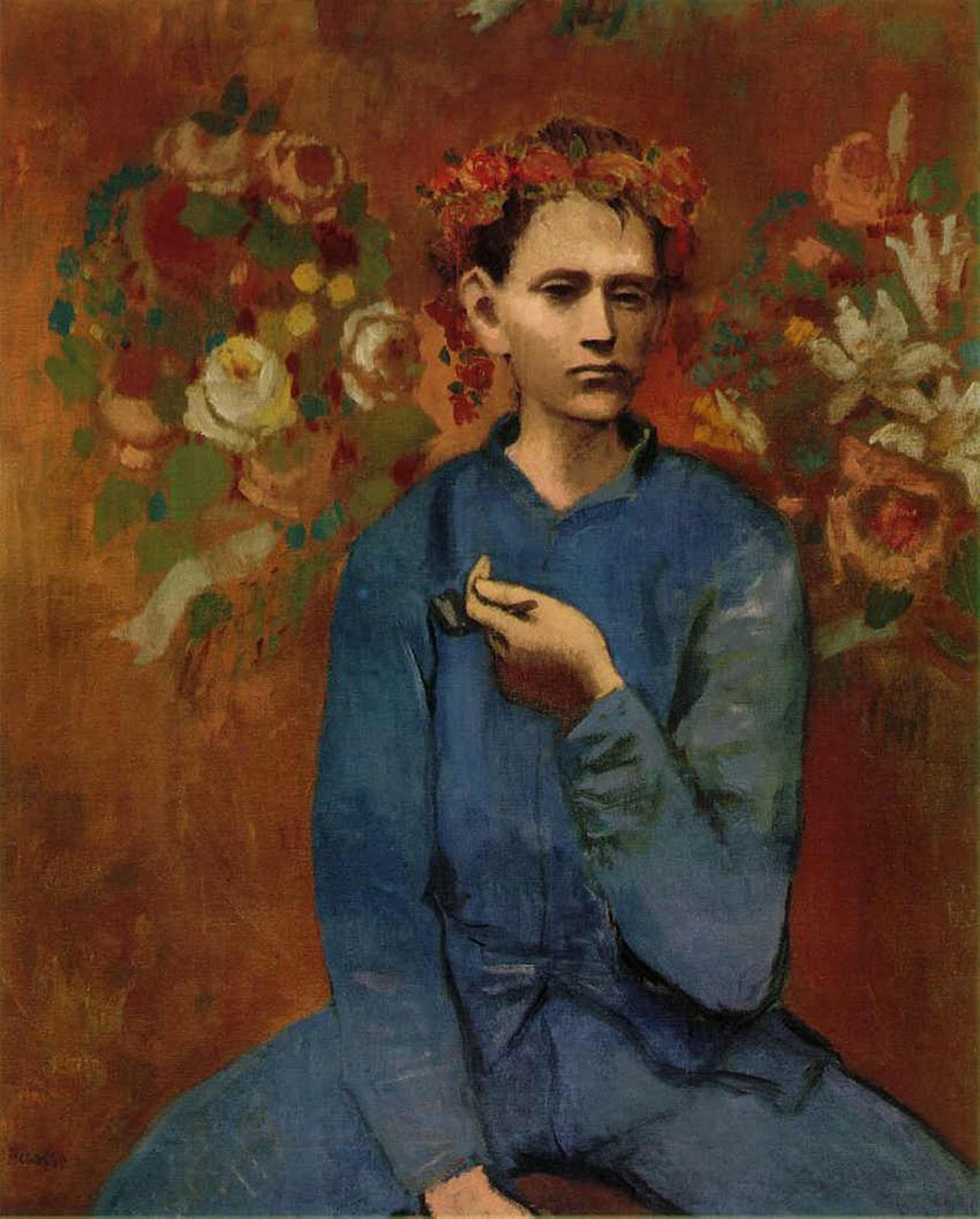
Painting · Rose Period
Picasso's 1905 portrait of a Montmartre boy, seated in blue workman's clothes with a garland of roses on his head and a pipe in his left hand, against a wall of painted flowers. A Rose Period picture that in 2004 became, for a time, the most expensive painting ever sold at auction.
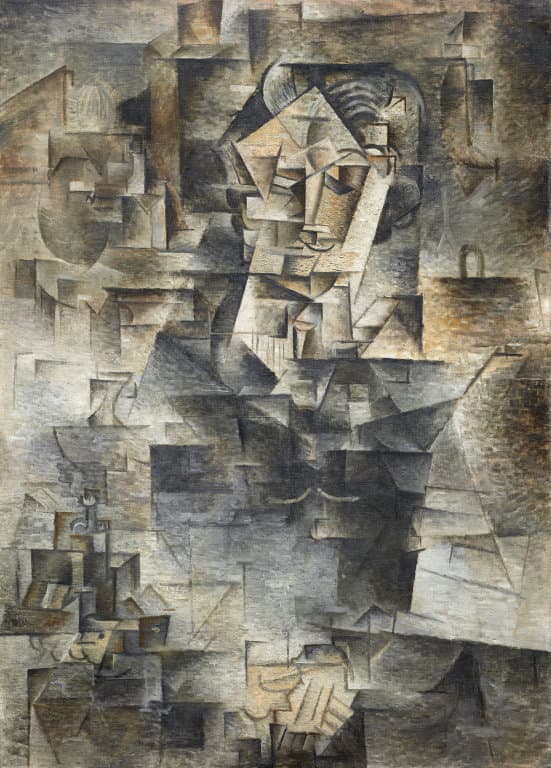
Painting · Analytic Cubism
The dealer who kept Cubism solvent, dissolved into its planes — painted in Paris at the movement's most austere moment.
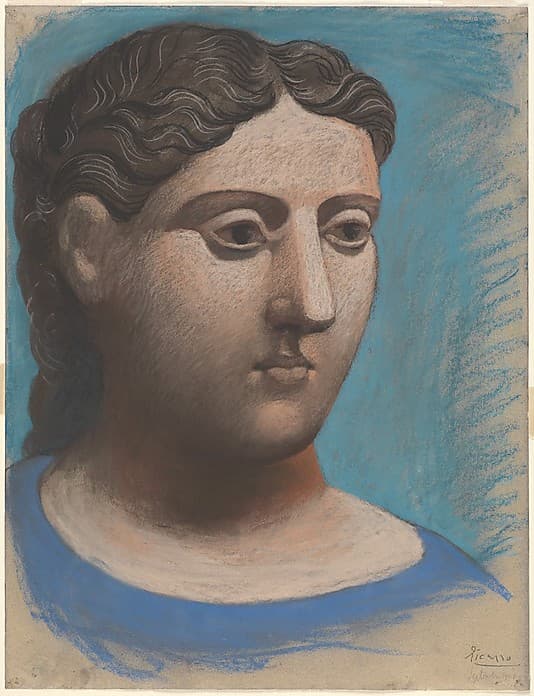
Painting · Return to Order
A monumental pastel study for Picasso's Three Women at the Spring, shaped by the features of Olga Khokhlova and by ancient Roman wall painting he studied in Italy. Its fragile medium is worked to suggest the mass and stillness of sculpture.
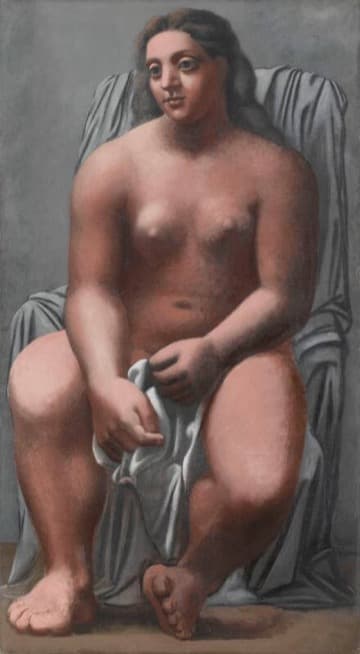
Painting · Return to order
Picasso's monumental 1921 seated nude — Antiquity exaggerated rather than copied — the Walter-Guillaume collection's clearest statement of the postwar return to order.
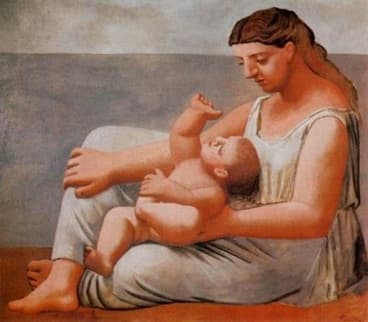
Painting · Return to Order
The postwar neoclassical turn — monumental calm from the same hand that had taken the figure apart a decade earlier.
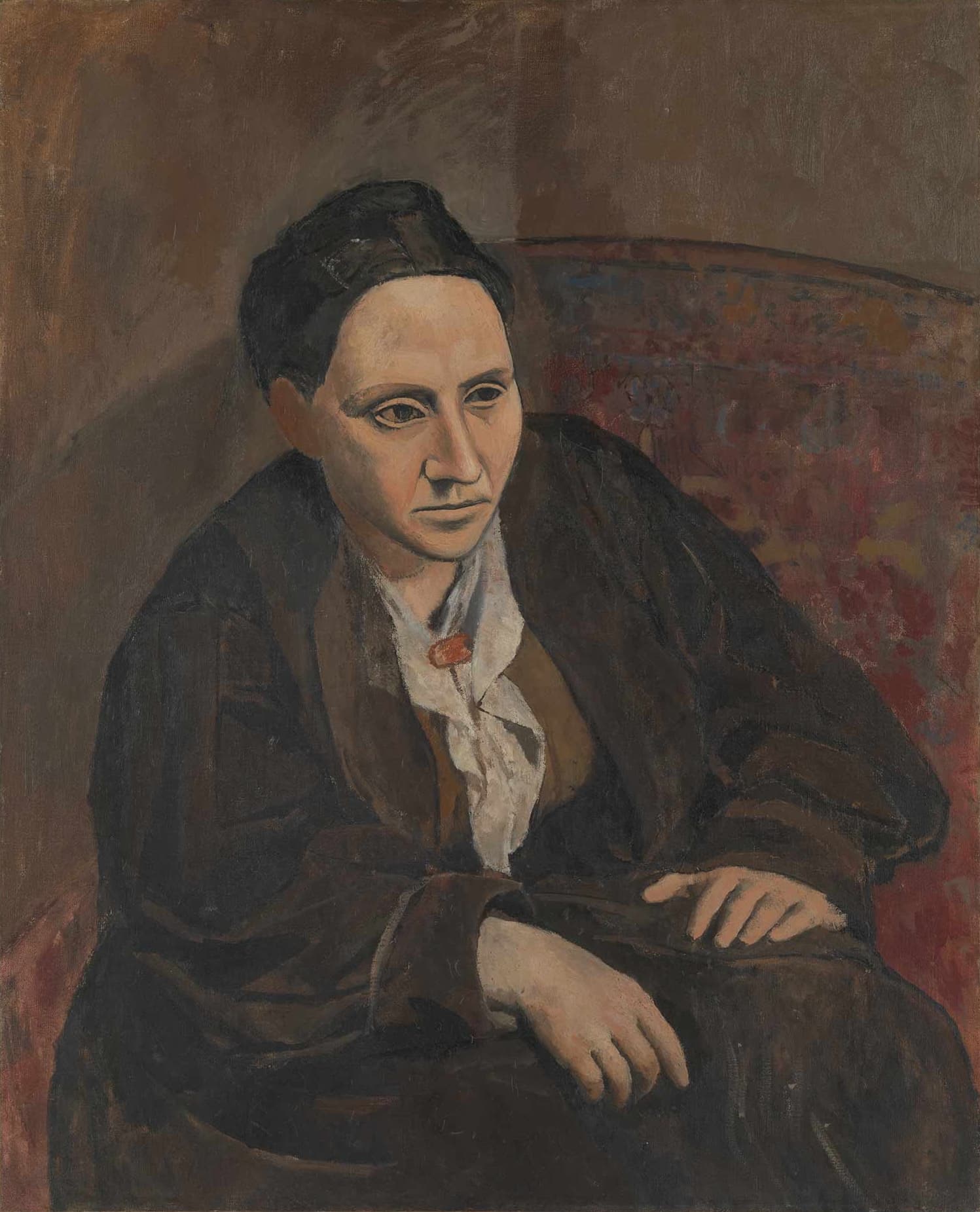
Painting · Rose Period · toward Cubism
Painted through eighty or ninety sittings at Picasso's Bateau-Lavoir studio, the portrait joins Stein's massive, calmly seated body to a face radically reinvented in 1906. She hung it above the fireplace at 27 rue de Fleurus, where it became both her public image and a threshold on Picasso's road to Cubism.
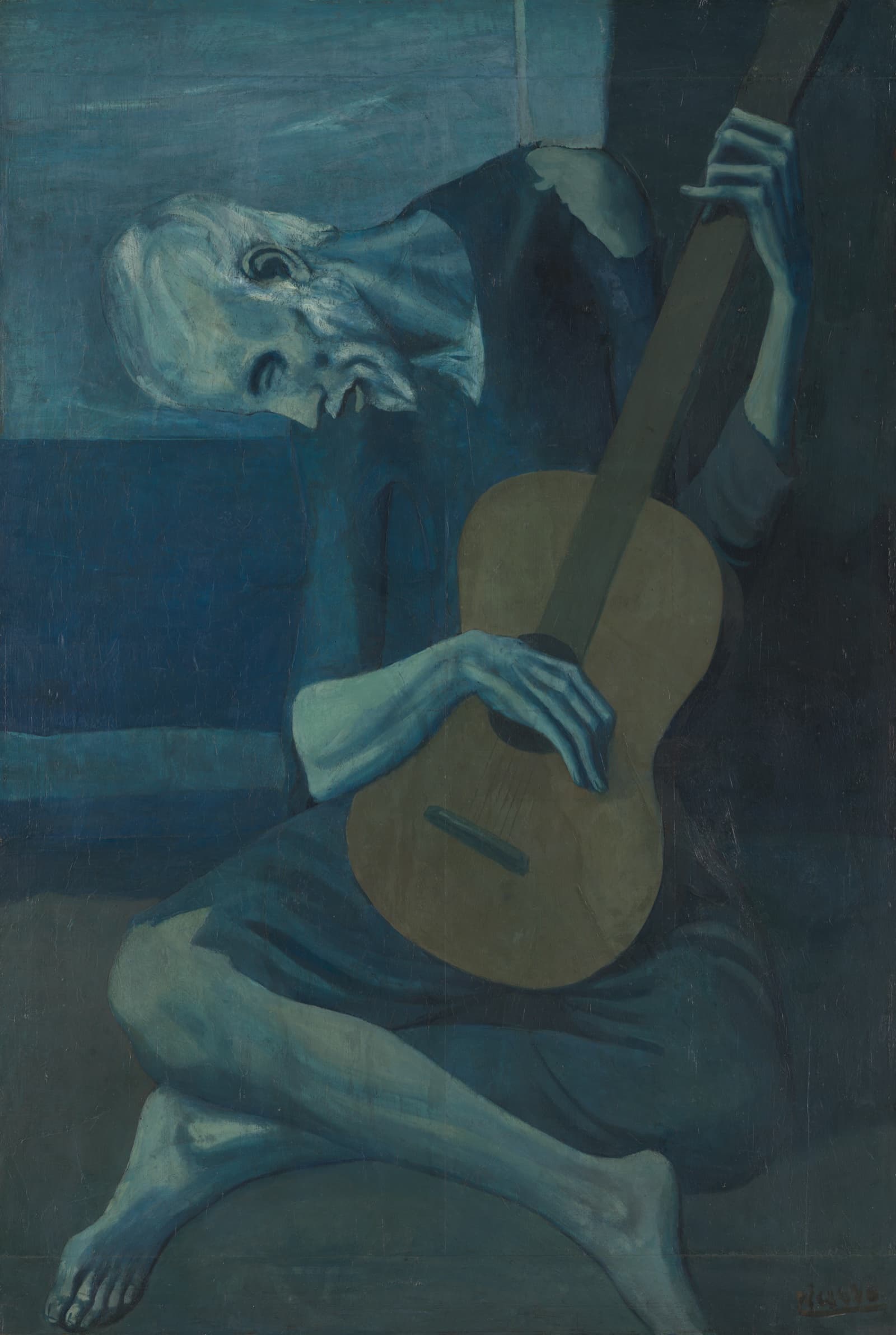
Painting · Blue Period
Painted in Barcelona when Picasso was twenty-two, a blind musician folds himself around the only warm object in a nearly monochrome world. Beneath him lie abandoned figures — a woman, a child, animals — making this Blue Period icon literally a painting built over other lives.
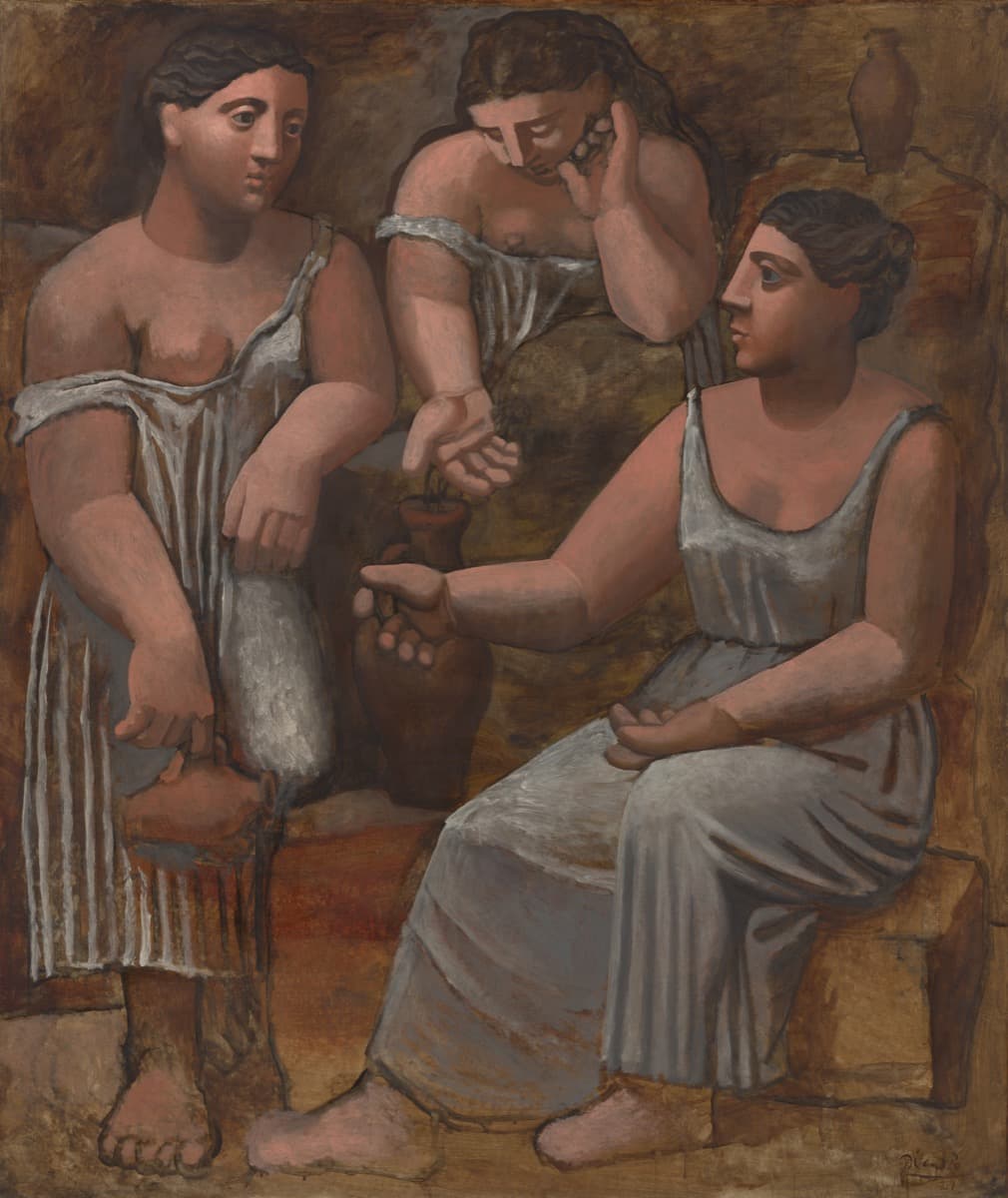
Painting · Return to Order
At Fontainebleau in 1921, Picasso enlarged an ancient scene of women gathering water into a nearly seven-foot meditation on classical order. Yet the ritual has stalled: the bodies are disjointed, the faces masklike, and no water reaches the waiting hand.
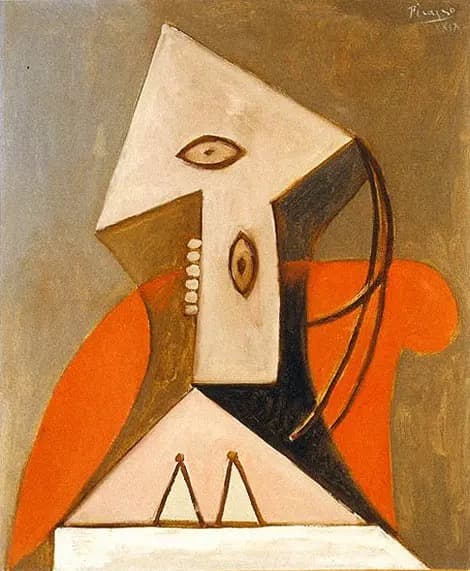
Painting · Surrealist period
Picasso's 1929 painting of a seated woman broken into curved, bone-like forms — a Surrealist-era portrait so distorted that the sitter cannot be securely identified, though she is often read as his first wife, Olga Khokhlova. It hangs in the Menil Collection in Houston.
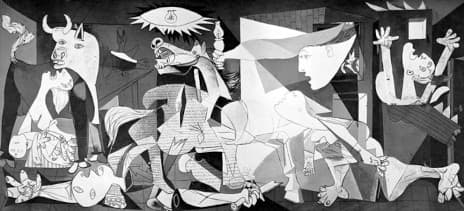
Painting · Interwar modernism
Picasso's mural-sized response to the bombing of the Basque town of Gernika, painted in five weeks in his Paris studio for the Spanish Republic's pavilion at the 1937 World's Fair. Now in the Museo Reina Sofía in Madrid.
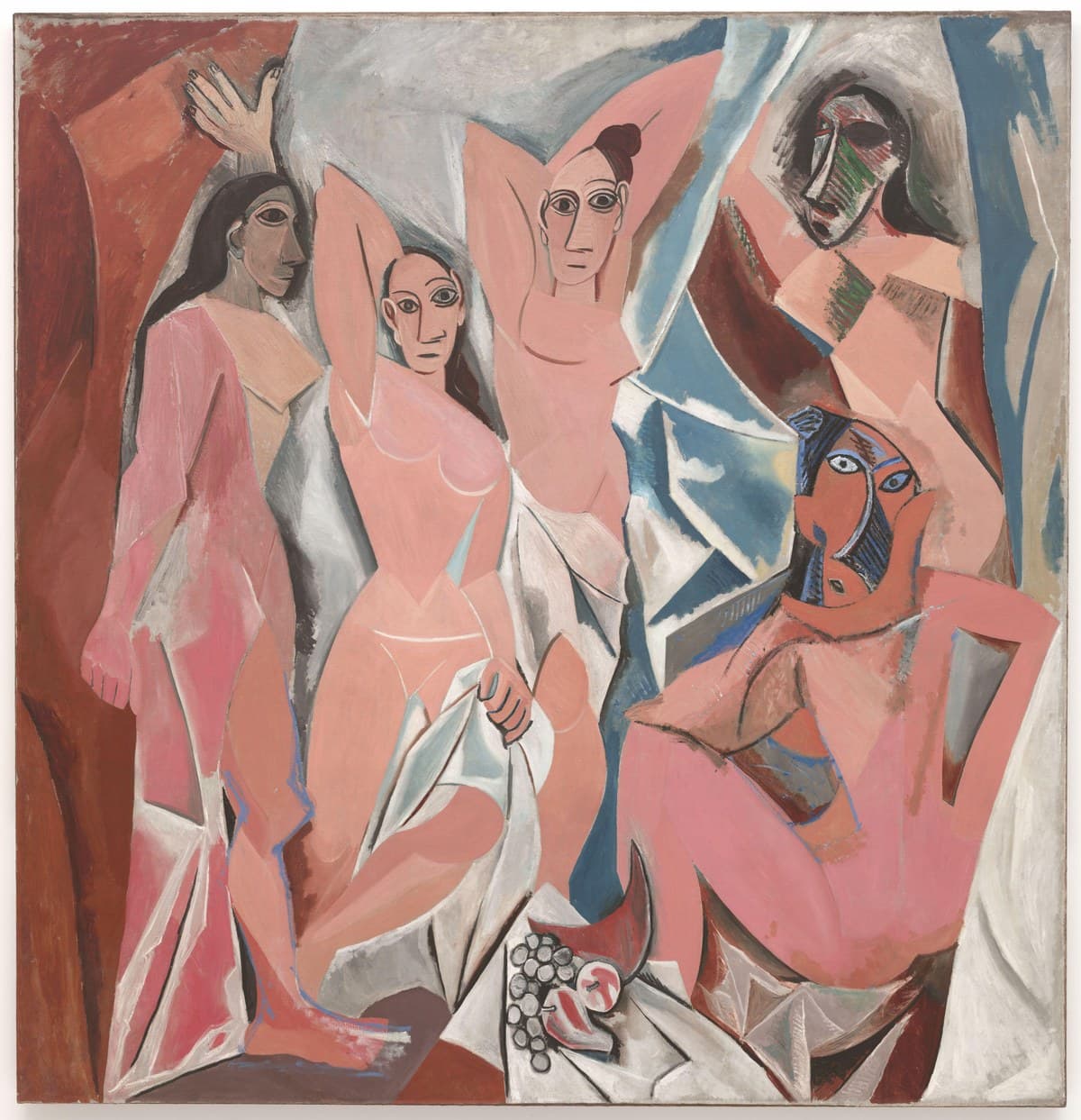
Painting · Modern Art
Pablo Picasso painted Les Demoiselles d'Avignon in Paris in 1907, in a studio at the Bateau-Lavoir in Montmartre. Five women stand and crouch in a shallow space, their bodies and the curtains around them broken into hard planes, the two on the right wearing masklike faces. It is nearly two and a half metres square, and hangs at the Museum of Modern Art in New York.
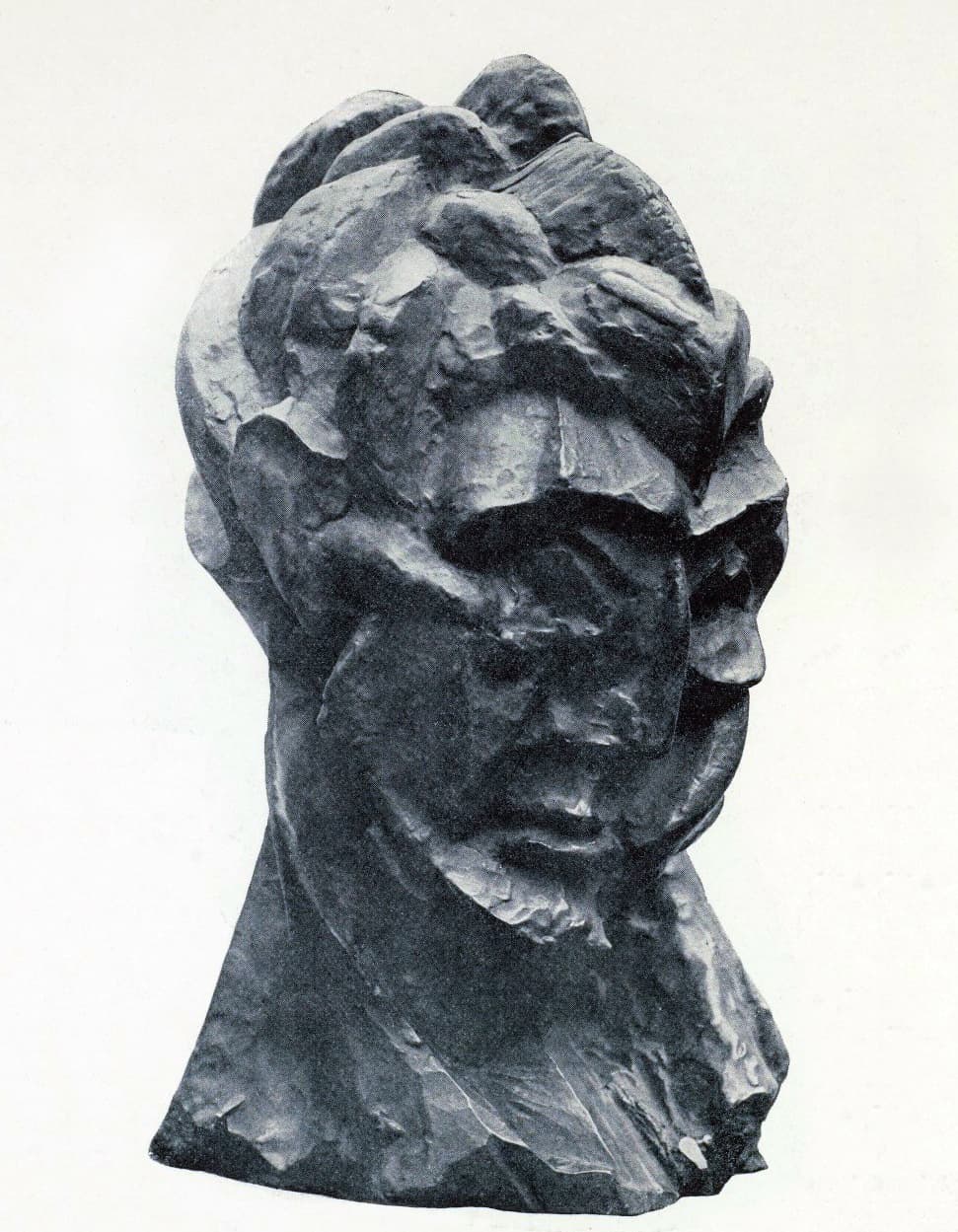
Sculpture · Cubism
Picasso's 1909 portrait of Fernande Olivier, modeled in clay as interlocking ridges, hollows, and facets. Often identified as his first fully Cubist sculpture, it tests how several implied viewpoints can occupy one solid head.
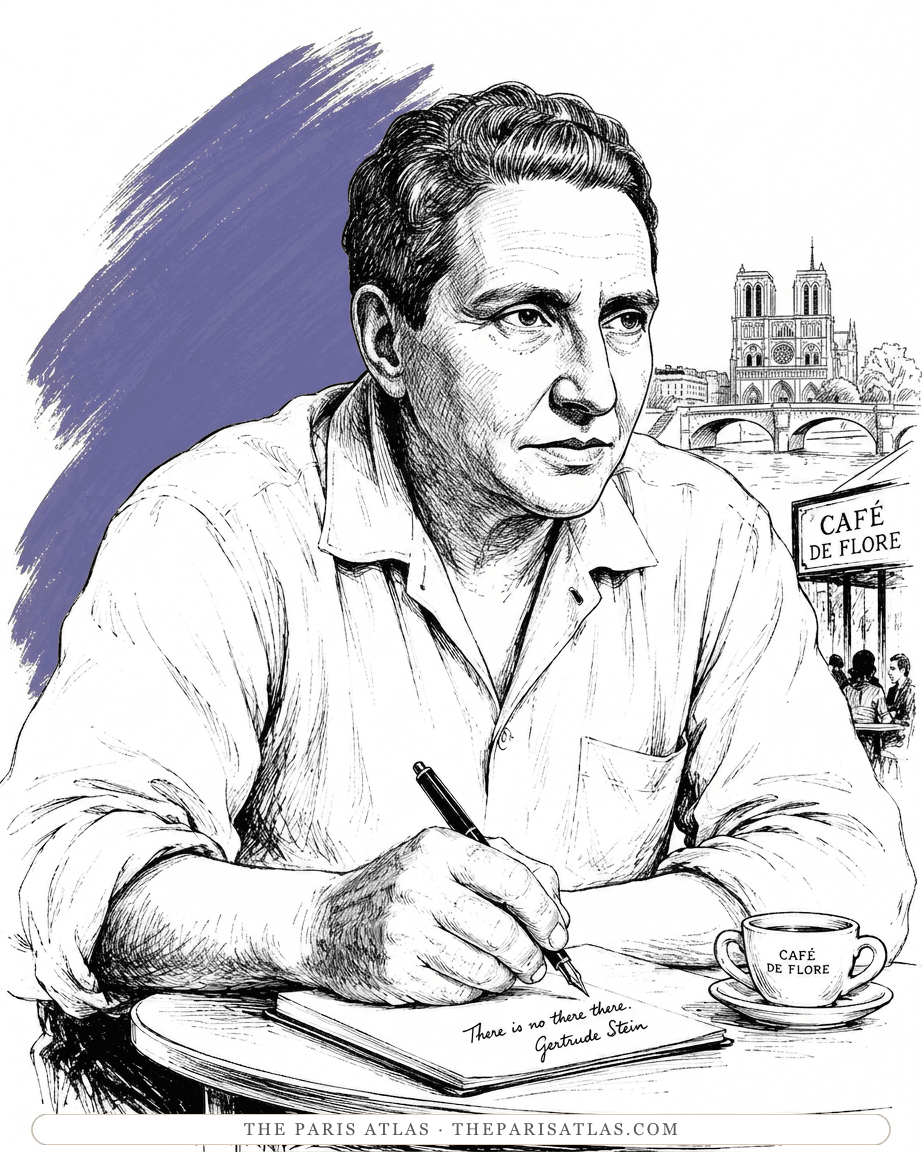
Met · 1905–1907
Picasso painted Stein's portrait over some ninety sittings in 1905–07 — the sittings around which the Saturday salons took their form.
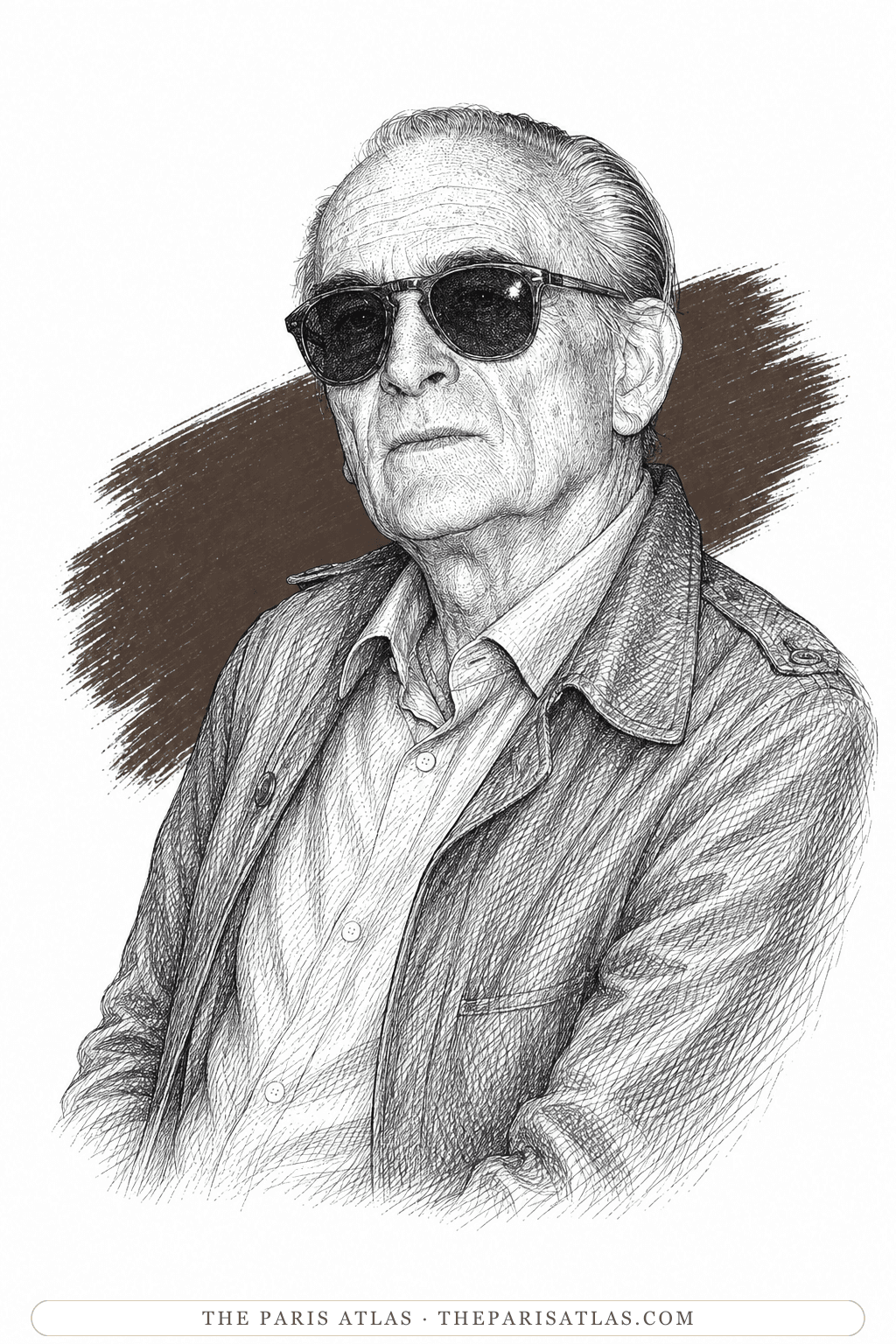
Patron of · 1937
Picasso acquired Balthus's 1937 painting The Children and continued to speak admiringly of the younger painter's work. The painting later entered the Musée Picasso through Picasso's collection.
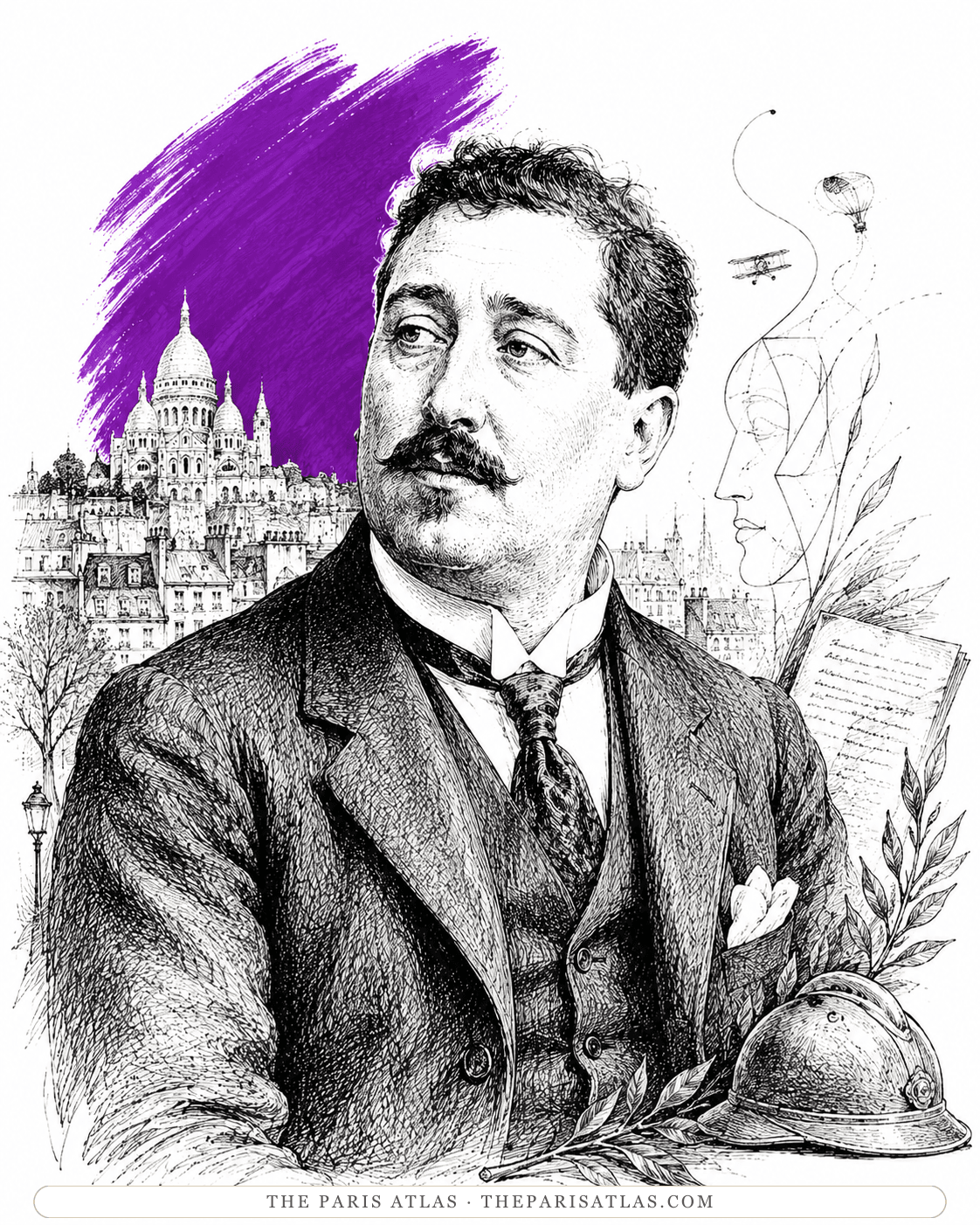
Met · 1905
A fixture of Picasso's circle from the Bateau-Lavoir years — the Autobiography remembers him at the salon's tables and at the 1908 banquet for the Douanier Rousseau, where Apollinaire presided.
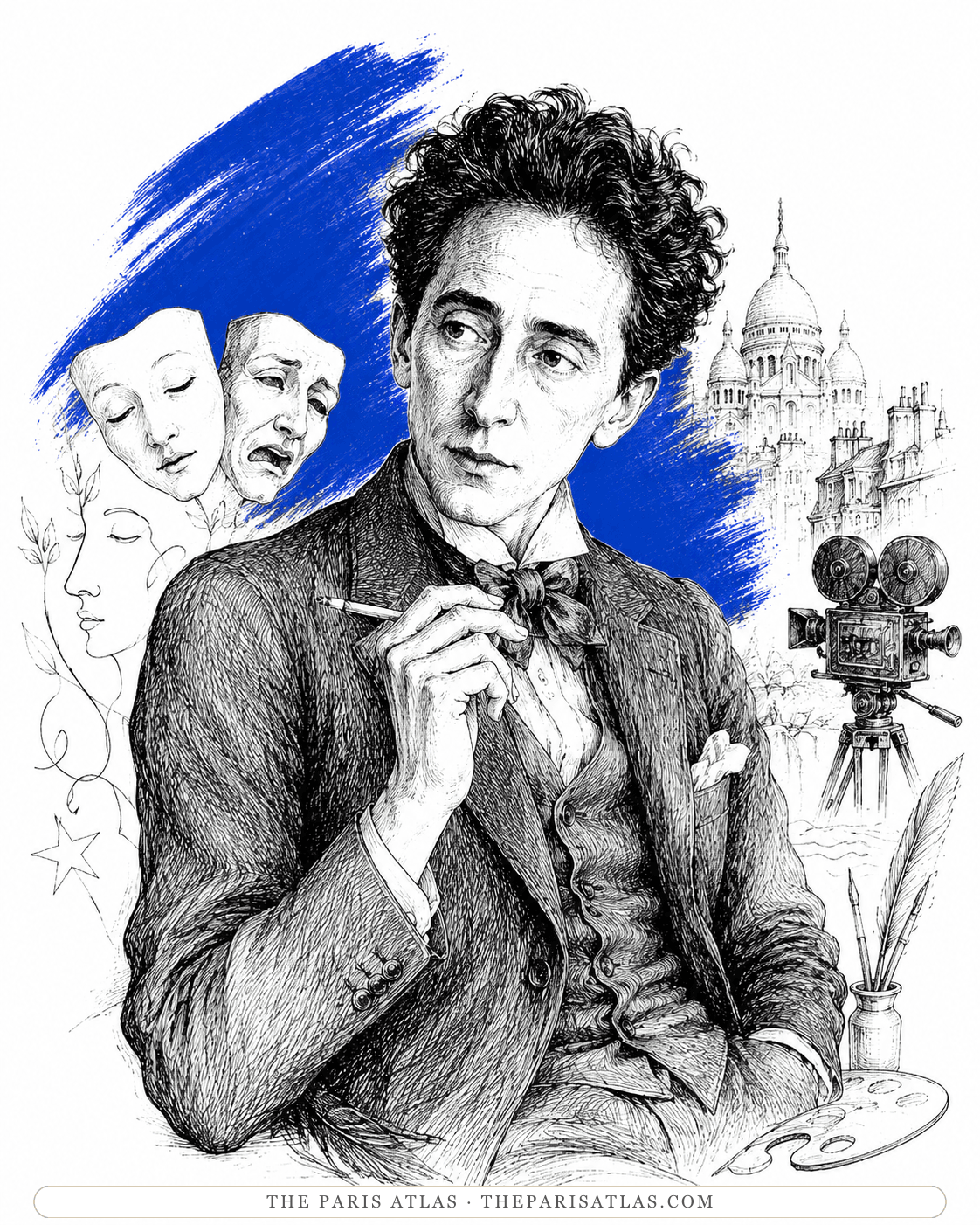
Met · 1915–1917
Cocteau sought Picasso out mid-war and by 1917 had carried him to Rome to design Parade for the Ballets Russes — the collaboration that opened the painter's classical turn. Cocteau's 1923 monograph on Picasso made the friendship a matter of public record.
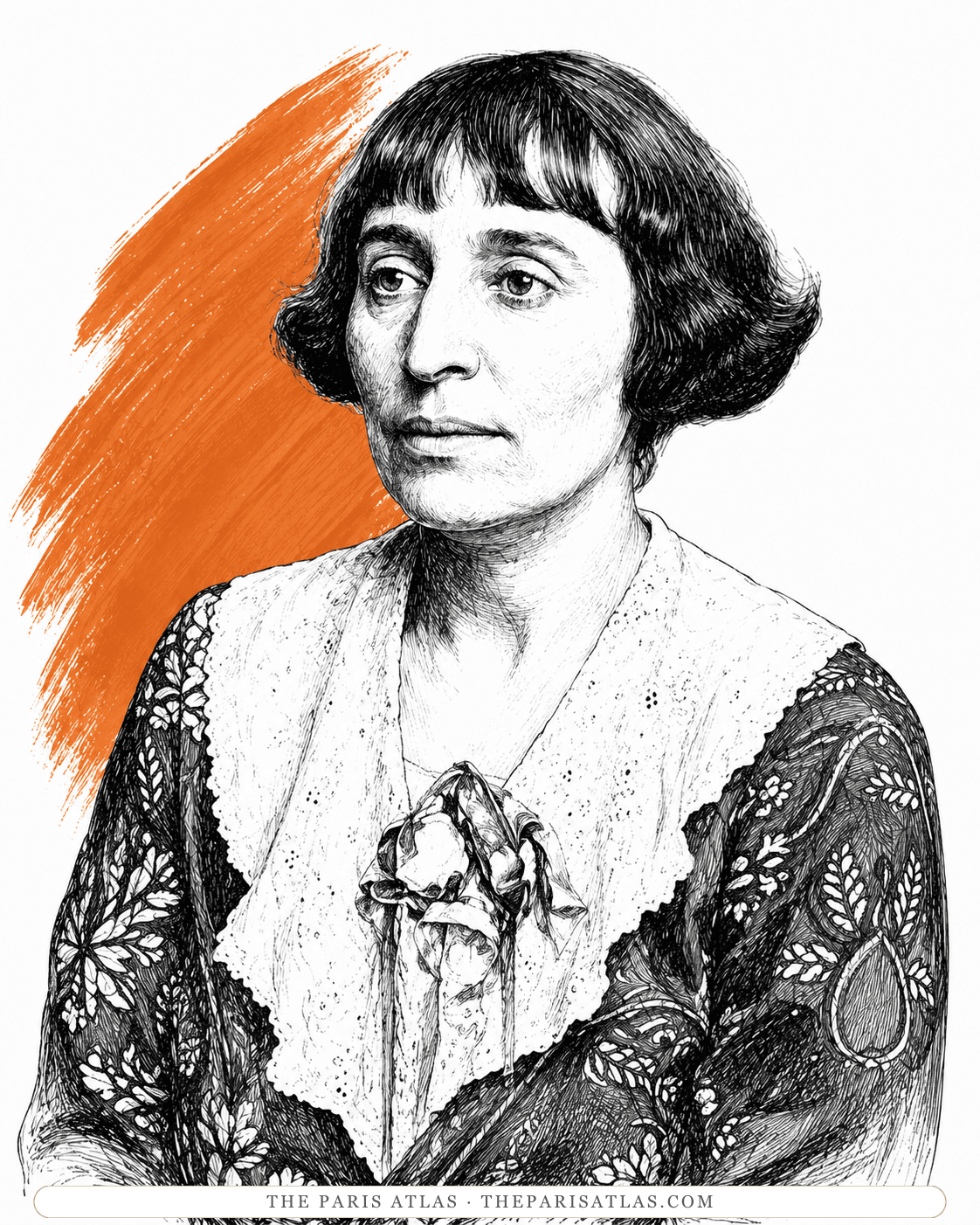
Met · 1907
The second of Toklas's three bells: she met Picasso within weeks of arriving in Paris, at a rue de Fleurus dinner before the 1907 Autumn Salon — the start of a sixty-year acquaintance conducted largely across dinner tables.
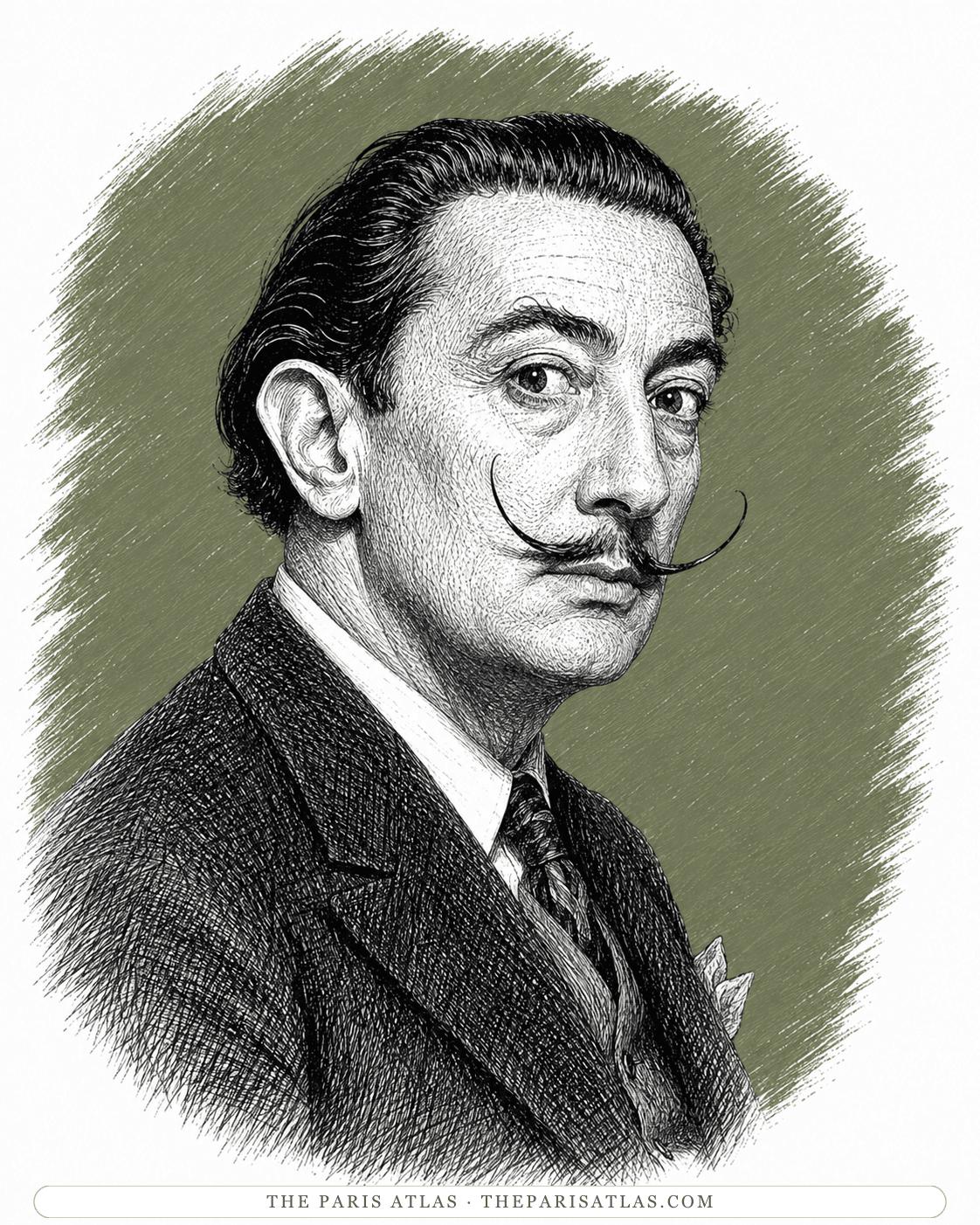
Met · 1926
Dalí went to Picasso's studio on his first trip to Paris in April 1926, at twenty-one, on Miró's recommendation.
Met
The two knew each other across decades of the Paris and New York avant-garde. The relationship was respectful rather than close; each measured himself against the other as the century's rival model of what a modern artist could be.
Met · 1907
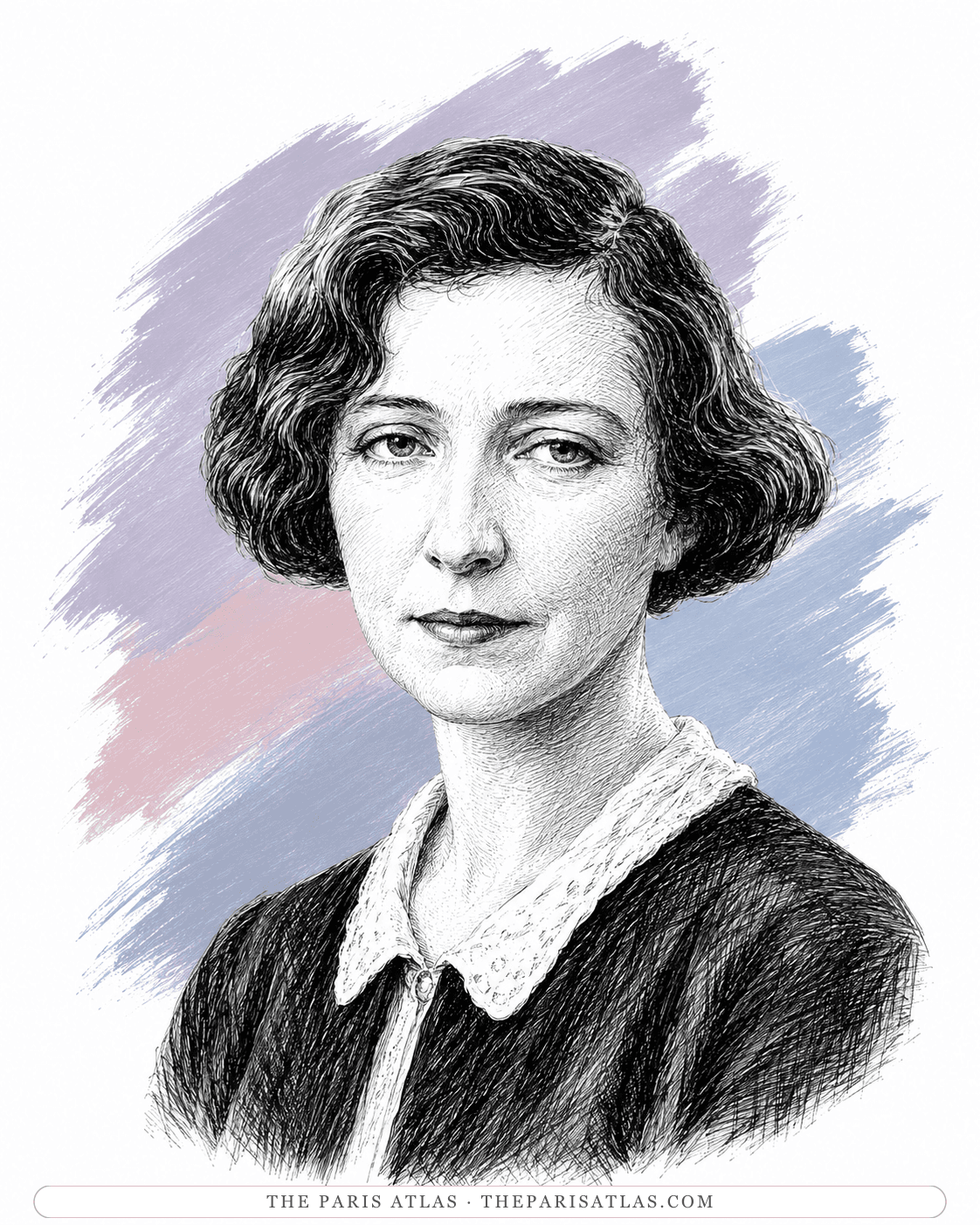
She joined the Bateau-Lavoir circle in 1907. Accounts of the introduction differ: AWARE credits her Académie Humbert classmate Georges Braque, Britannica the dealer Clovis Sagot.
Met · 1908
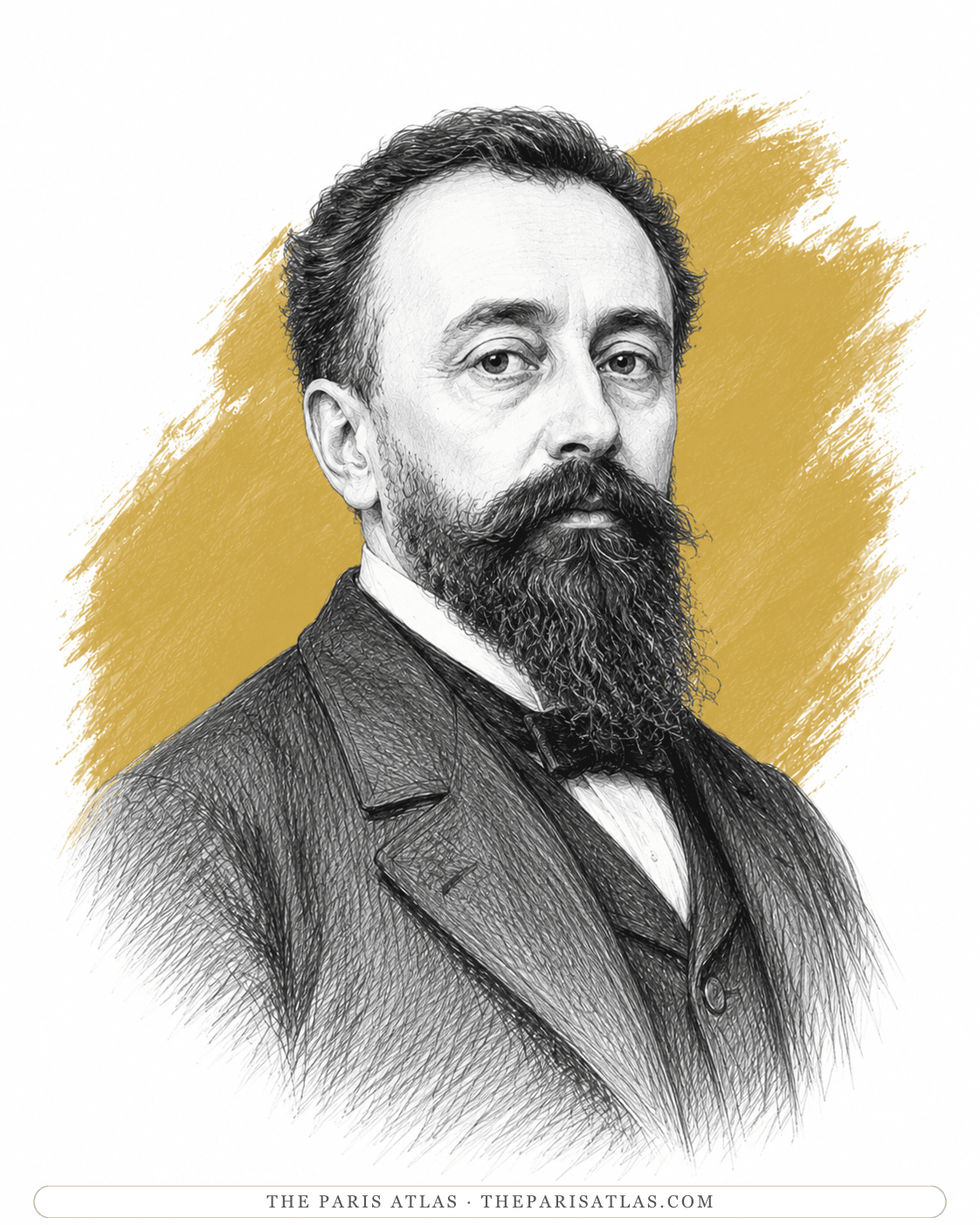
The 1908 banquet in Picasso's Bateau-Lavoir studio honored the old painter, with Apollinaire presiding — the evening the Autobiography of Alice B. Toklas made famous.
Met · 1920
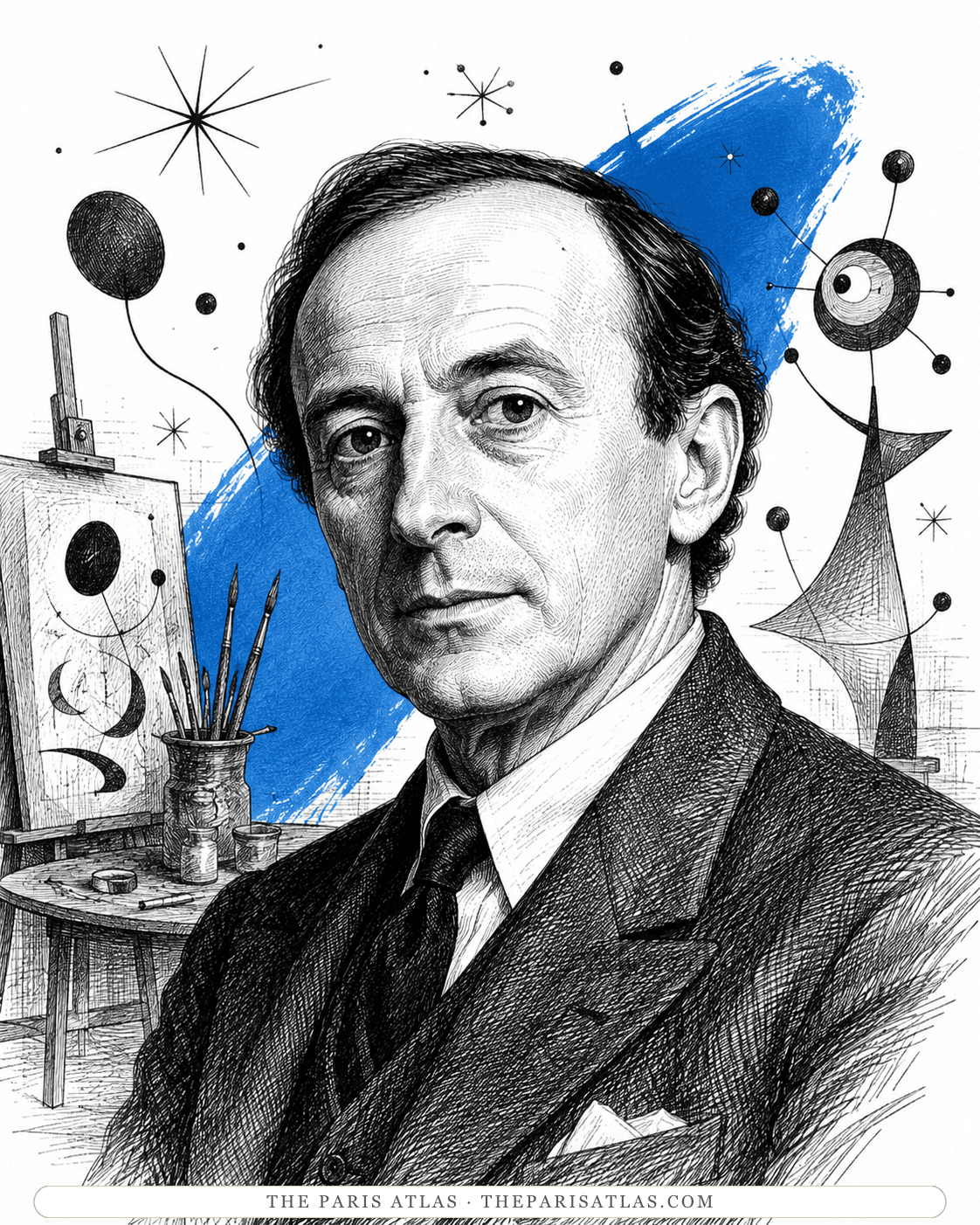
Miró's first trip to Paris, in 1920, was made to visit Picasso. The older Catalan remained a fixed point of his Paris world; six years later Miró was the one talking to Picasso about a still-unknown Dalí.
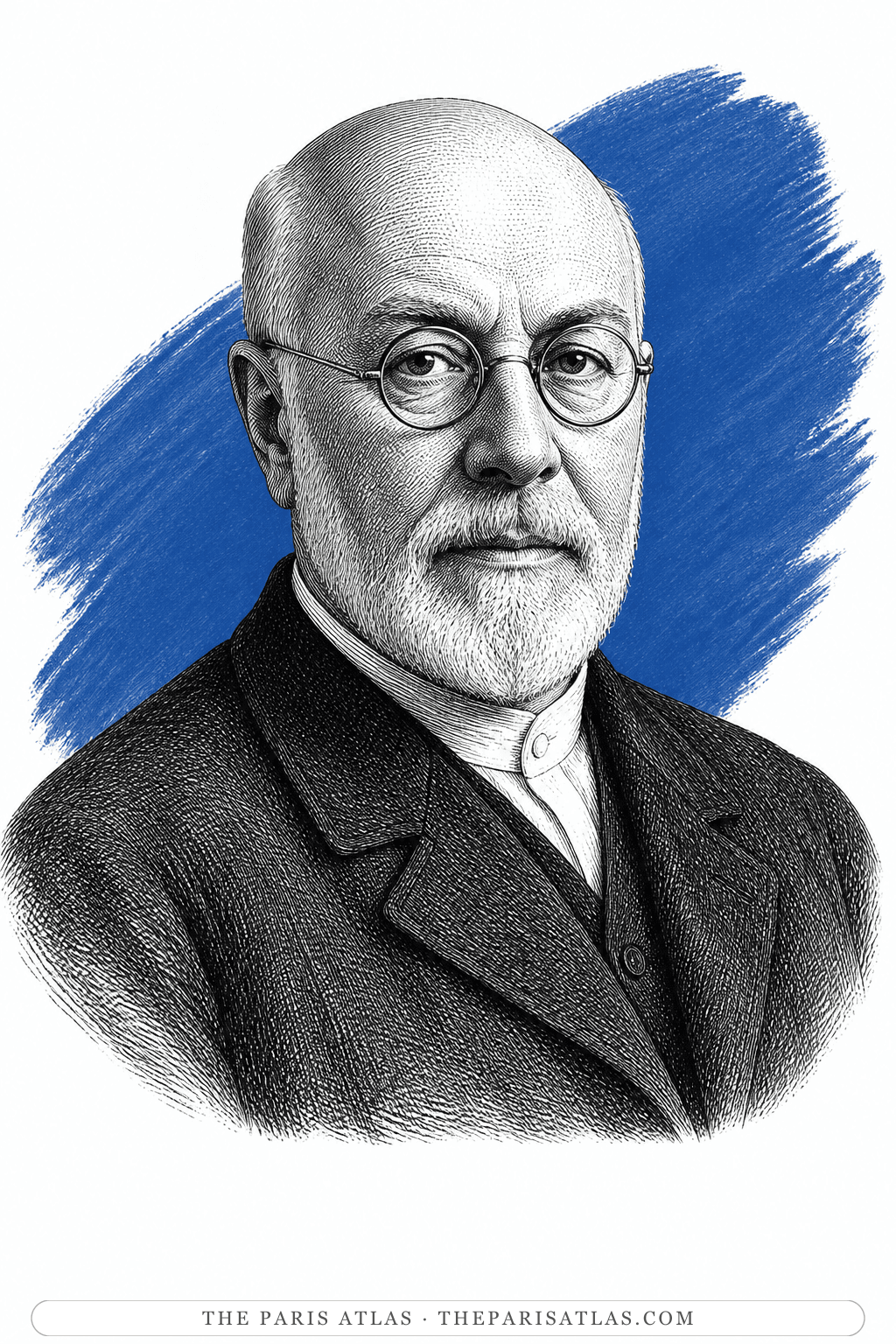
Met · 1906
Met in 1906 at Gertrude and Leo Stein's apartment at 27 rue de Fleurus, where both painters' work hung. The rivalry and wary friendship ran until Matisse's death in 1954.
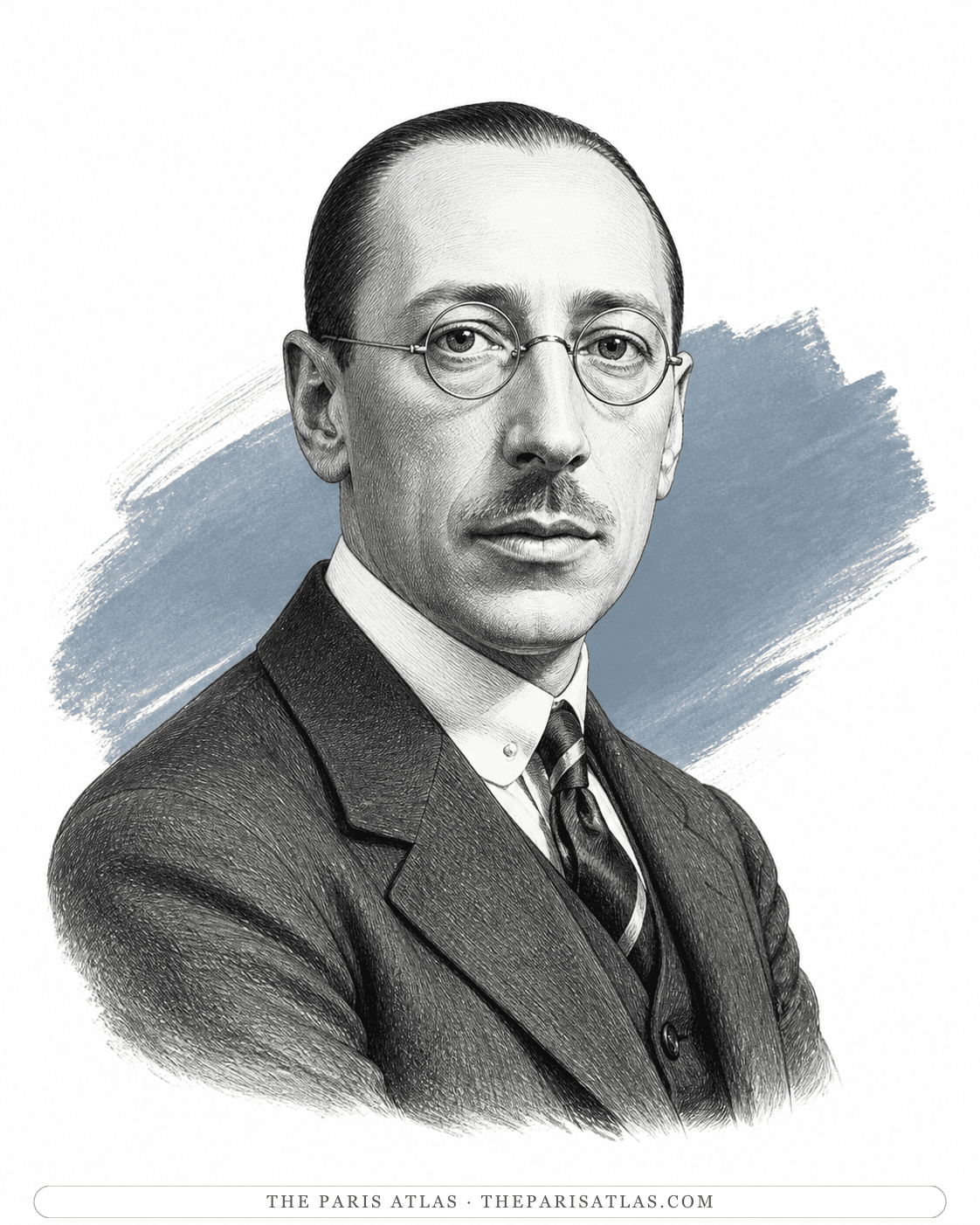
Collaborated with · 1920
Pulcinella, 1920: Stravinsky recomposed eighteenth-century Italian scores for Diaghilev's Ballets Russes while Picasso designed sets and costumes. Picasso also drew Stravinsky's portrait several times.
Met
Stravinsky and Picasso both worked for Diaghilev's Ballets Russes, and Picasso designed the sets and costumes for Stravinsky's Pulcinella, first staged in Paris in 1920. Picasso drew Stravinsky several times.
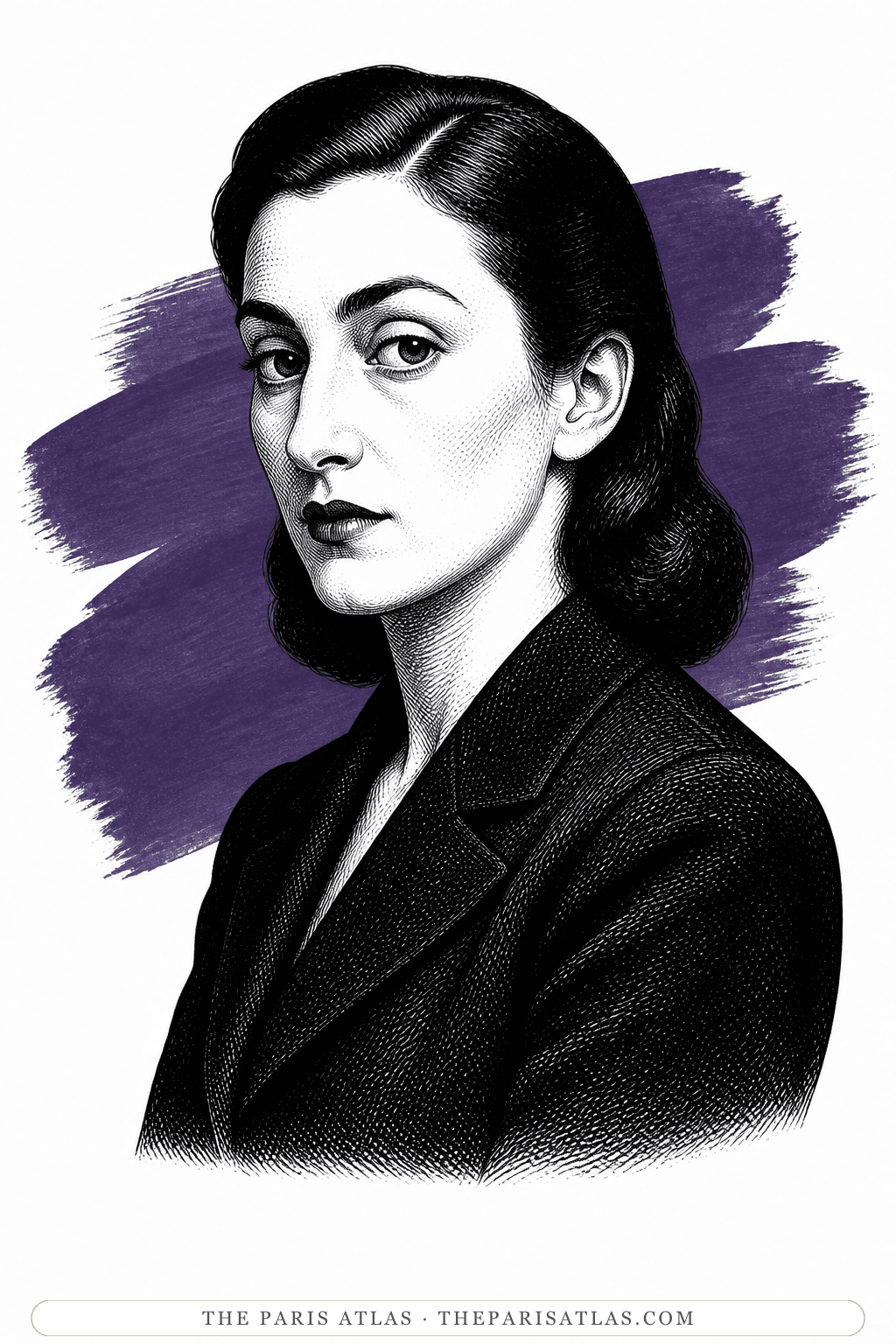
Partner of · 1936–1943
Introduced by Paul Eluard at Les Deux Magots in the winter of 1935-36. She found him the Grands-Augustins atelier and photographed Guernica's painting stage by stage; he painted her as the Weeping Woman. Her verdict on the portraits: they are Picassos, not one is Dora Maar.
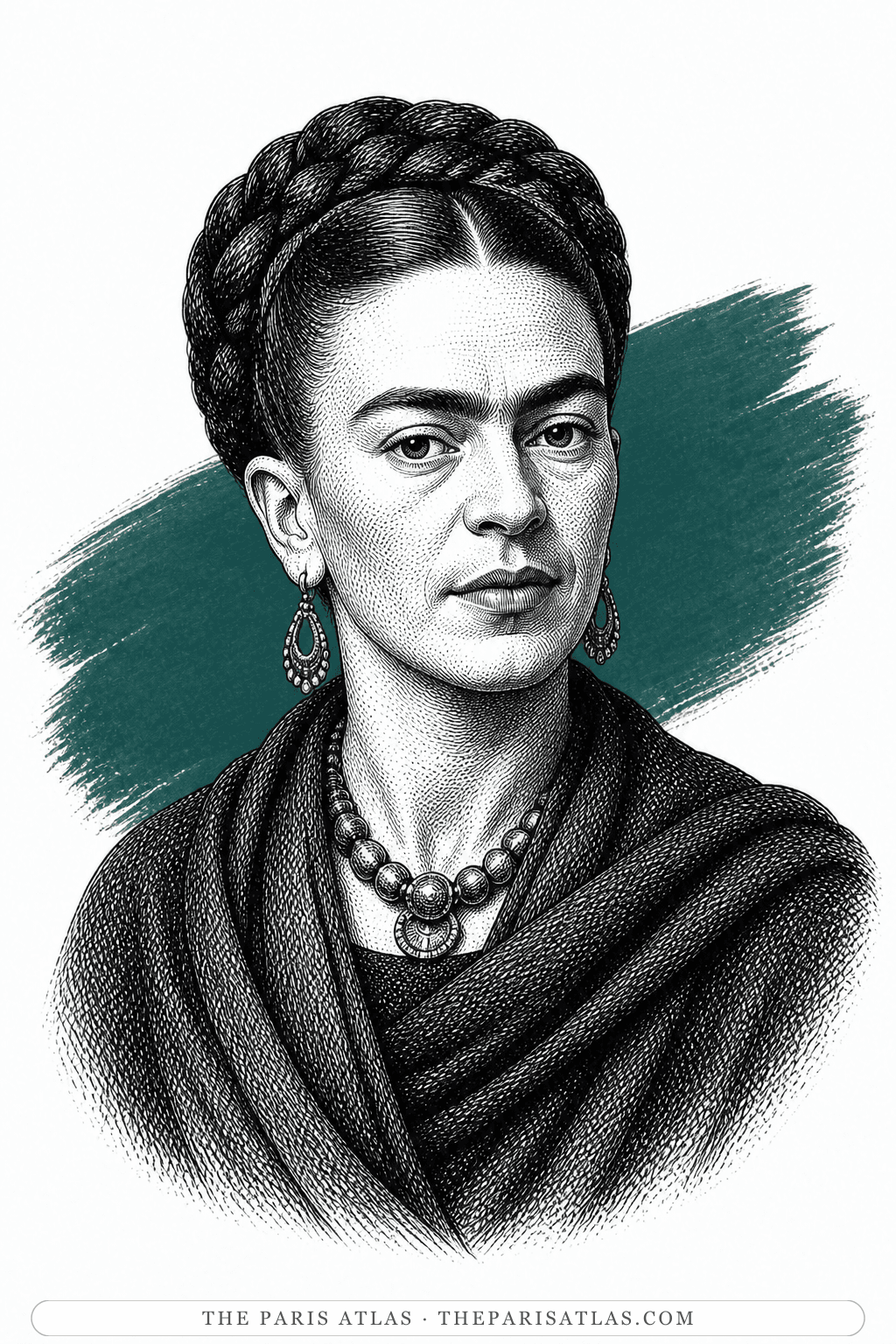
Met · 1939
Picasso was among the artists who congratulated Kahlo at the opening of the Mexique exhibition in Paris on 10 March 1939. Her own museum lists him among the European artists whose regard her work won.
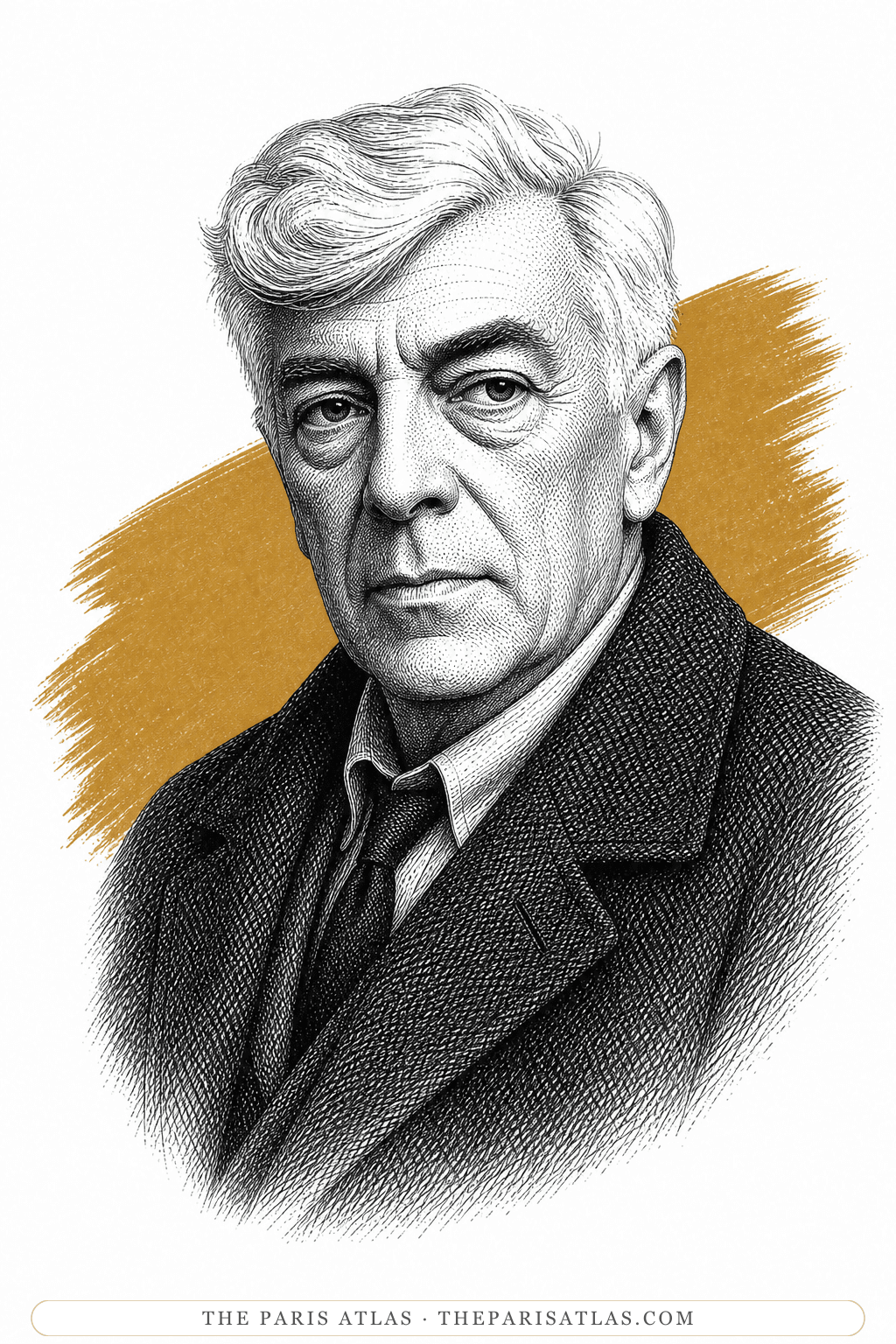
Collaborated with · 1908–1914
They invented Cubism together in Montmartre, in near-daily contact and deliberately holding back personal style in favour of a shared problem; by 1911 their canvases are so alike that attributions are still occasionally disputed. Braque's image for the years was two mountaineers roped together. Braque's mobilisation in August 1914 ended it, and neither man worked that way again.
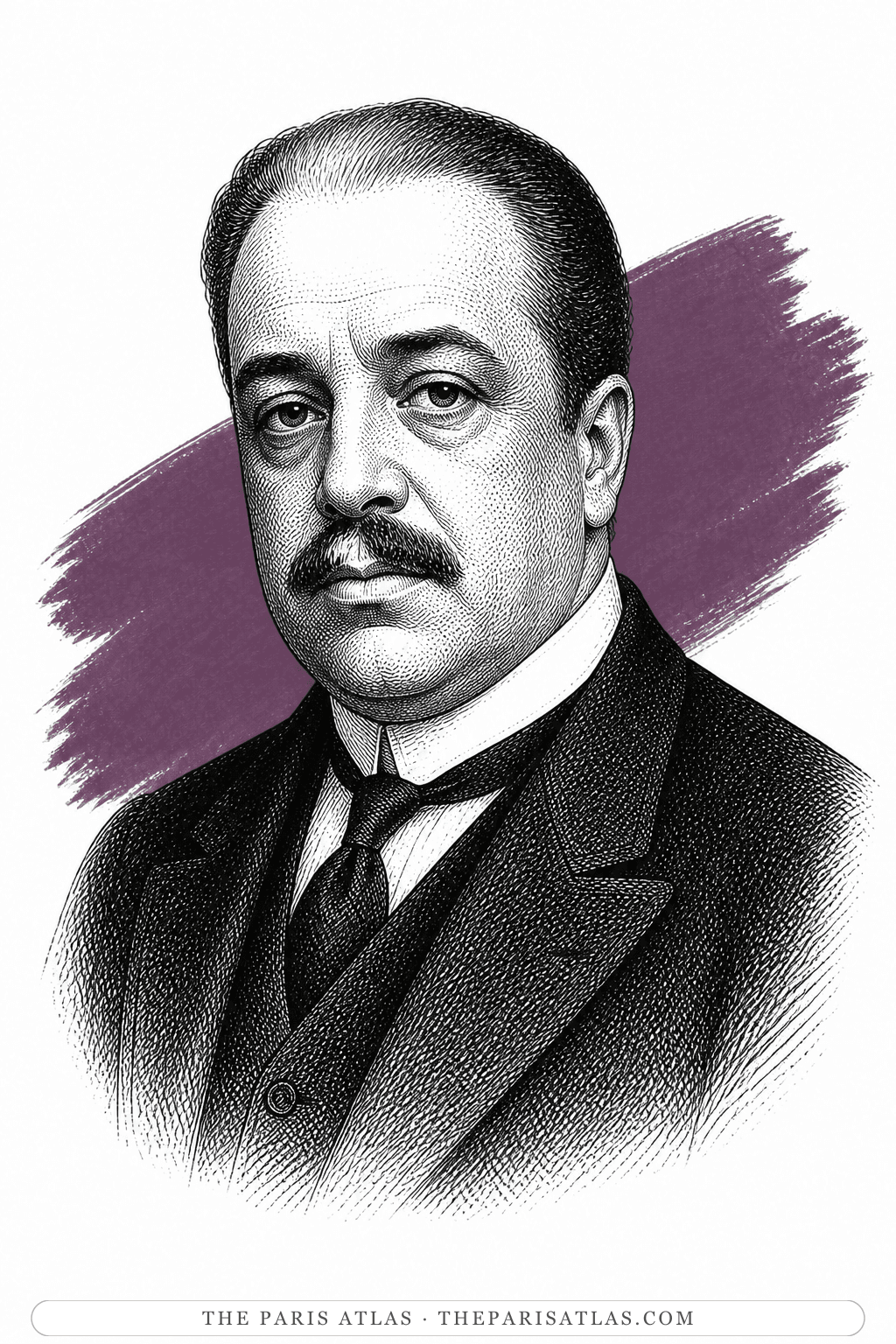
Collaborated with · 1917–1924
Diaghilev commissioned Picasso's first work for the stage: the Cubist curtain, sets and costumes for Parade (1917), then designs for Pulcinella (1920) and the painted front cloth for Le Train Bleu (1924), which the V&A holds — 'Stage cloth for Le Train Bleu, designed by Pablo Picasso, painted by Prince Alexander Schervachidze, 1924'.
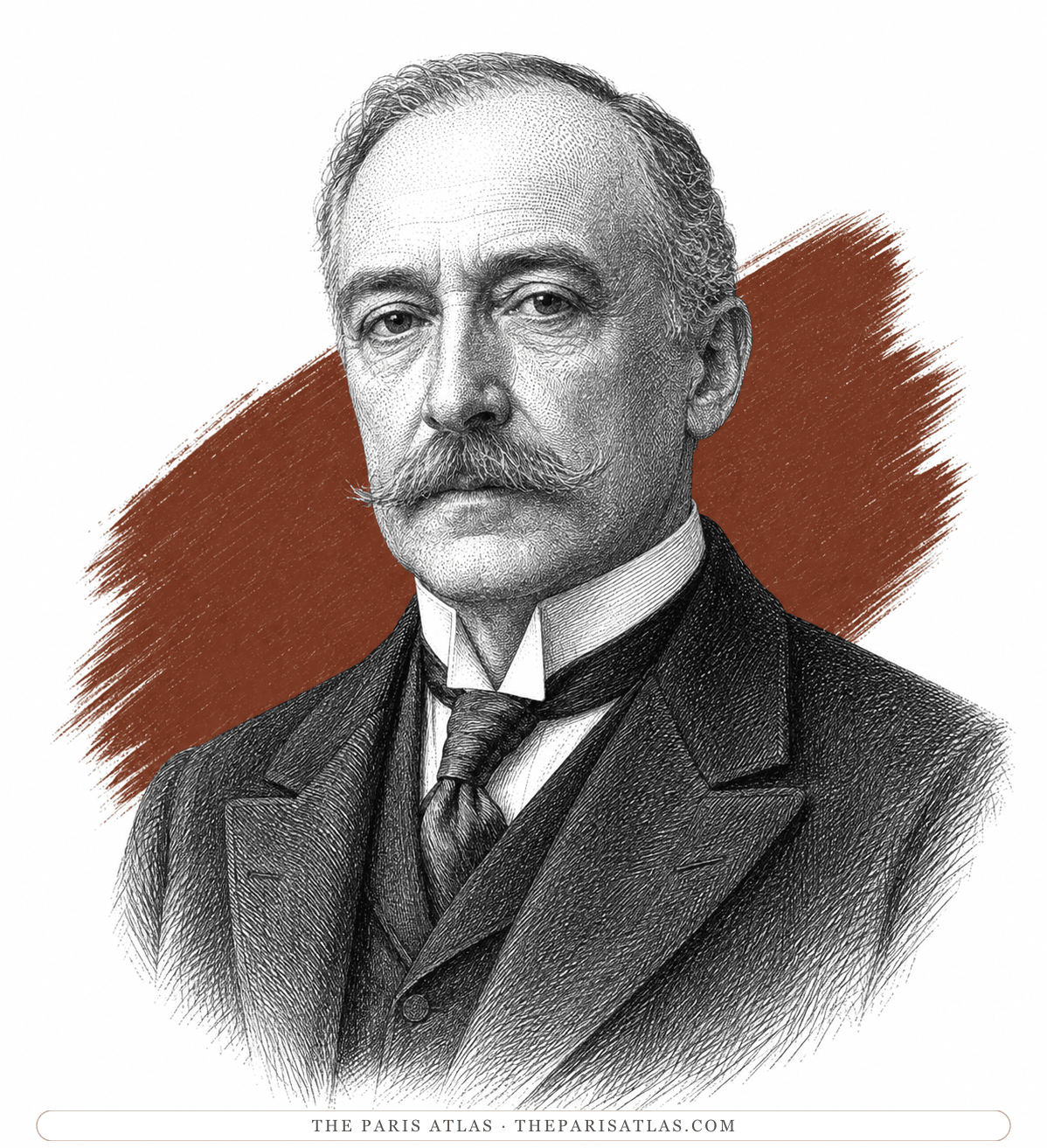
Supported by · 1924
On André Breton's advice, Doucet bought Les Demoiselles d'Avignon straight from Picasso's studio in 1924. The painting had been made in 1907 and had barely been shown; Doucet's purchase took it out of the studio and into a collection for the first time.
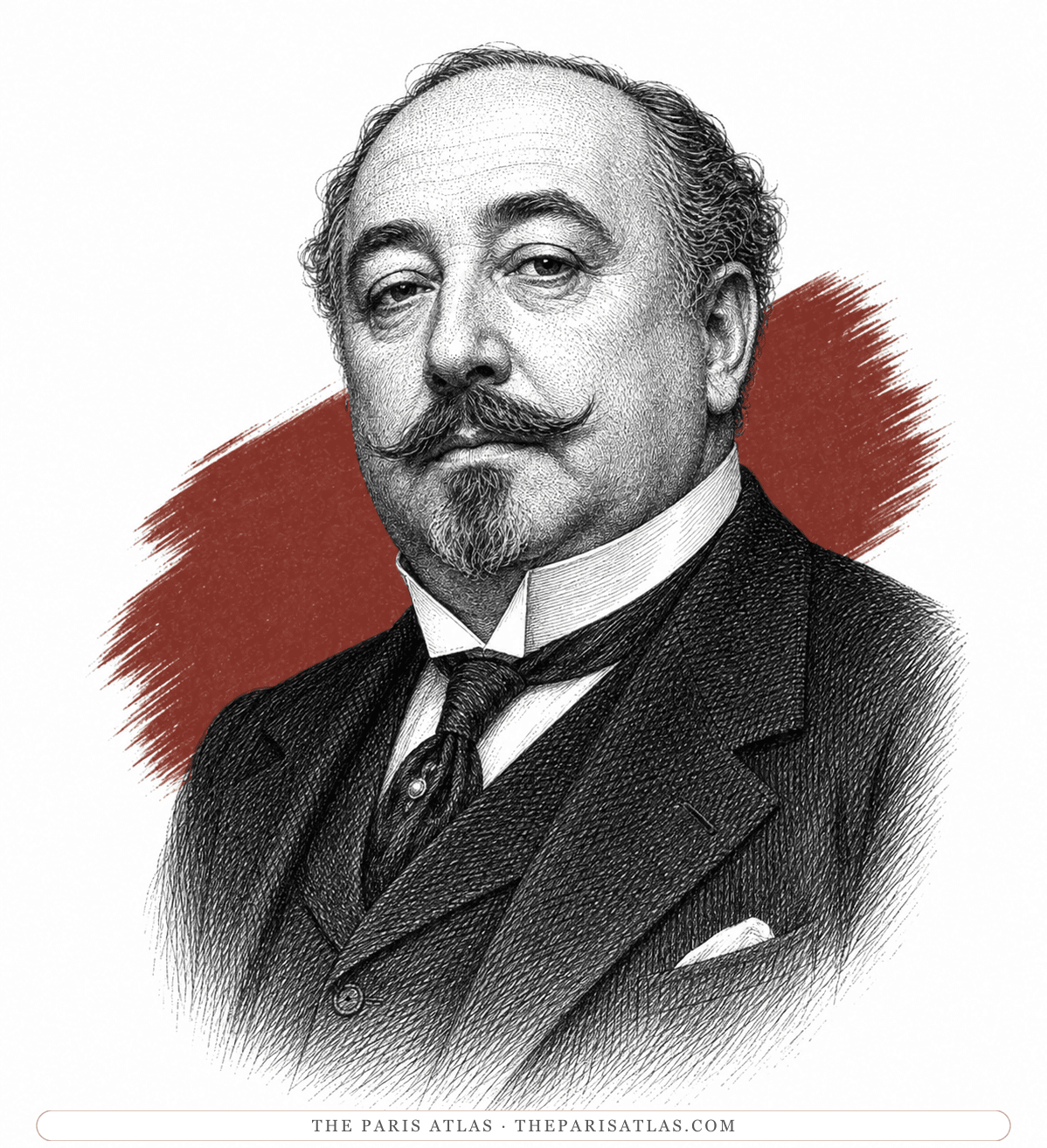
Met · 1916
Poiret ran the Galerie Barbazanges beside his mansion and reserved the right to mount exhibitions there. At the July 1916 Salon d'Antin, organised by André Salmon in Poiret's space, Pablo Picasso showed Les Demoiselles d'Avignon in public for the first time, so the couturier gave one of modern art's decisive paintings its debut.
The Met states it plainly: the monumental, classically inspired style Renoir built from the 1880s onward influenced avant-garde giants including Picasso, and the late bathers' vision of plenitude was admired by Picasso, Matisse, and Maillol. The debt shows in Picasso's neoclassical figures after 1917.
Matisse and Picasso met at Gertrude and Leo Stein's apartment in 1906 and watched each other's work for fifty years, exchanging paintings and answering each other in them. Picasso's Les Demoiselles d'Avignon of 1907 is generally read in part as a response to Matisse's Bonheur de Vivre of the previous year.
Picasso bought a Rousseau canvas being sold on the street to be painted over, recognised its power at once, and threw the famous 1908 banquet in his Bateau-Lavoir studio in the older painter's honour. Rousseau's flat, frontal, unschooled directness fed the avant-garde's turn away from academic illusion, and he is counted among the naïve painters who freed Picasso's generation.
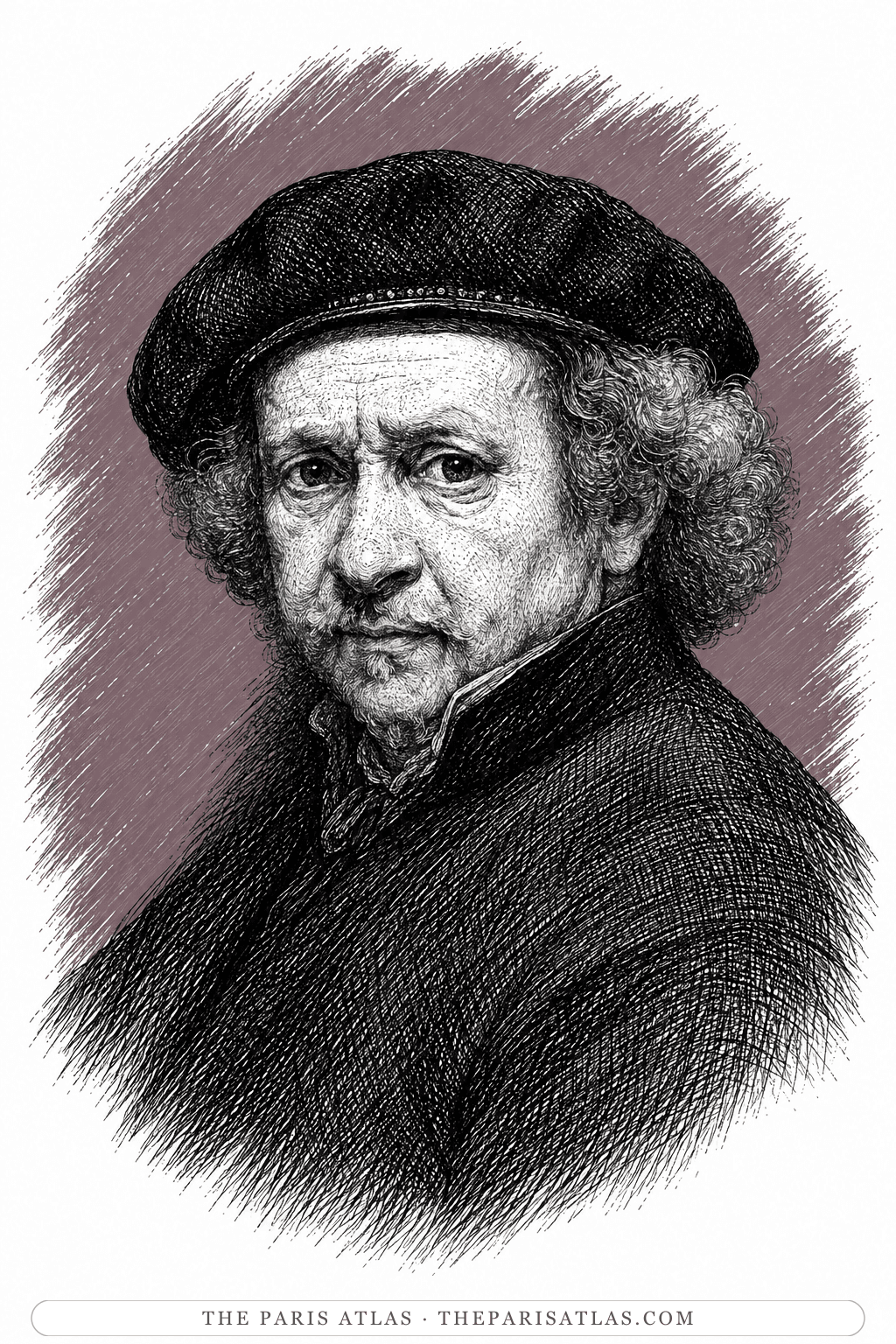
Pablo Picasso put Rembrandt's head into the Vollard Suite in 1934. The Metropolitan Museum of Art holds an impression of that etching, titled Rembrandt with a Palette, made in 1934 and printed in 1939. Picasso returned to him thirty-four years later with a sugar-lift aquatint from the 347 Suite that the Met titles Le déjeuner sur l'herbe, in the style of Rembrandt, with Maja and Célestine.
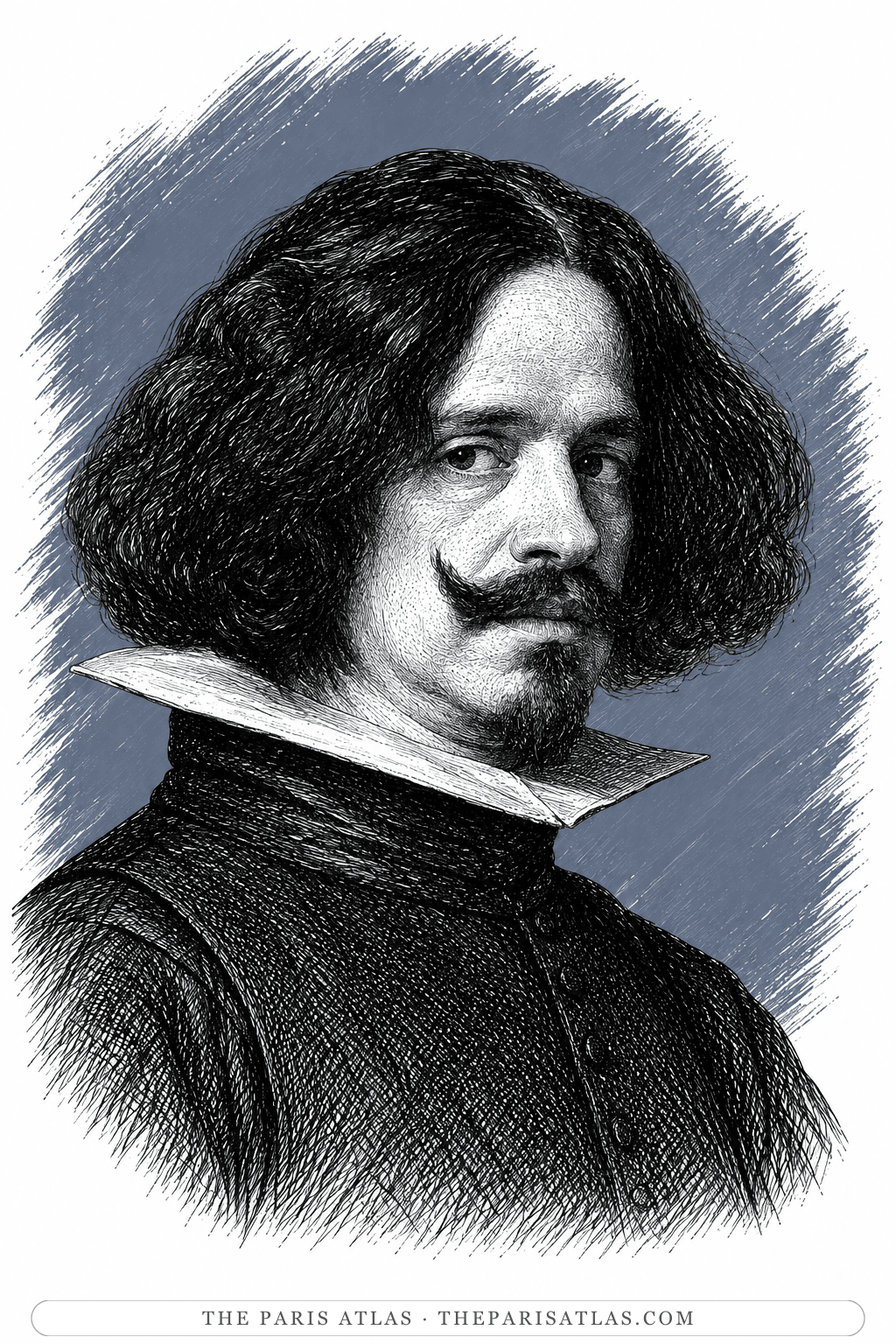
Between 16 August and 30 December 1957, at his house in Cannes, Pablo Picasso made 58 works that come out of Velázquez's Las Meninas. Forty-five take the 1656 painting apart, figure by figure and group by group; the rest are nine pictures of the pigeons outside his studio, three landscapes and a portrait of his companion Jacqueline Roque. The largest canvas, 194 by 260 centimeters, changes the shape from upright to wide and makes the painter almost as tall as the canvas itself. Picasso gave the whole series to the Museu Picasso in Barcelona in 1968.
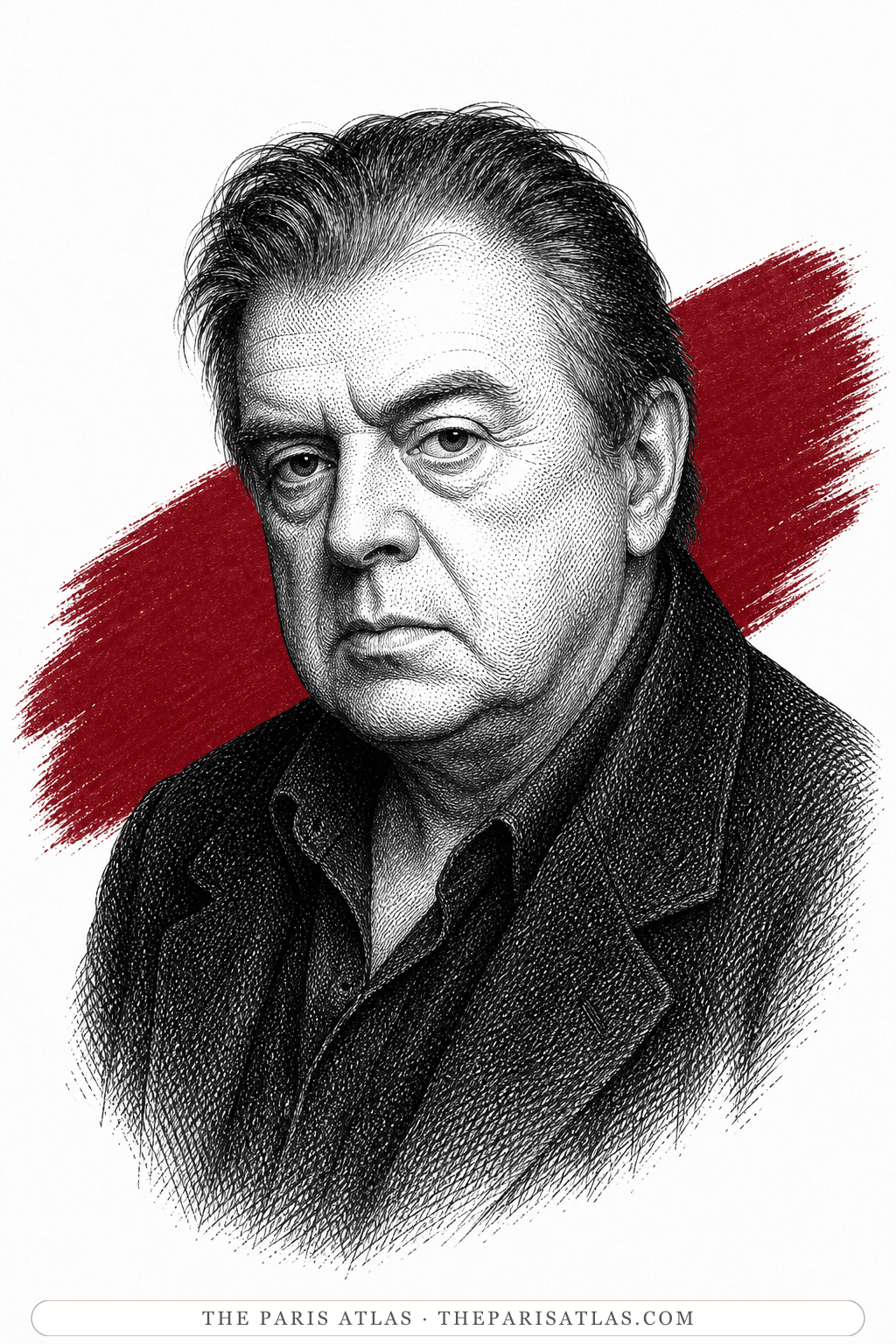
Bacon, then seventeen and with no thought of painting, saw an exhibition of Picasso's drawings at the Galerie Paul Rosenberg in Paris in the summer of 1927 and claimed ever afterwards that it made him want to be a painter. The Estate of Francis Bacon states the claim and its caution — he 'seems to have considered becoming an artist only after' that show — and traces the boneless, distended figures of Picasso's Dinard and Cannes bathers into Bacon's own biomorphs, down to Three Studies for Figures at the Base of a Crucifixion (1944). Bacon's own verdict: 'Let's say perhaps that Picasso helped me to see…'
Art movement · 1907–1914
Created Cubism with Georges Braque in Paris — from Les Demoiselles d'Avignon in 1907 through the papiers collés, until the war ended the partnership.
Art movement · c. 1918–1930
The classical turn: from the 1917 Rome trip with Cocteau to design Parade, through the monumental neoclassical figures — Mother and Child (1921) — painted in parallel with his continuing Cubist work.
Historical period and art category · circa 1860s–1970s
Les Demoiselles d'Avignon of 1907 broke with conventional anatomy, perspective and idealised beauty, and led into the Cubism Picasso and Georges Braque developed in Paris to 1914. Guernica, painted for the Spanish Pavilion at the 1937 Paris International Exposition, showed that the same experimental language could make a public statement against violence.
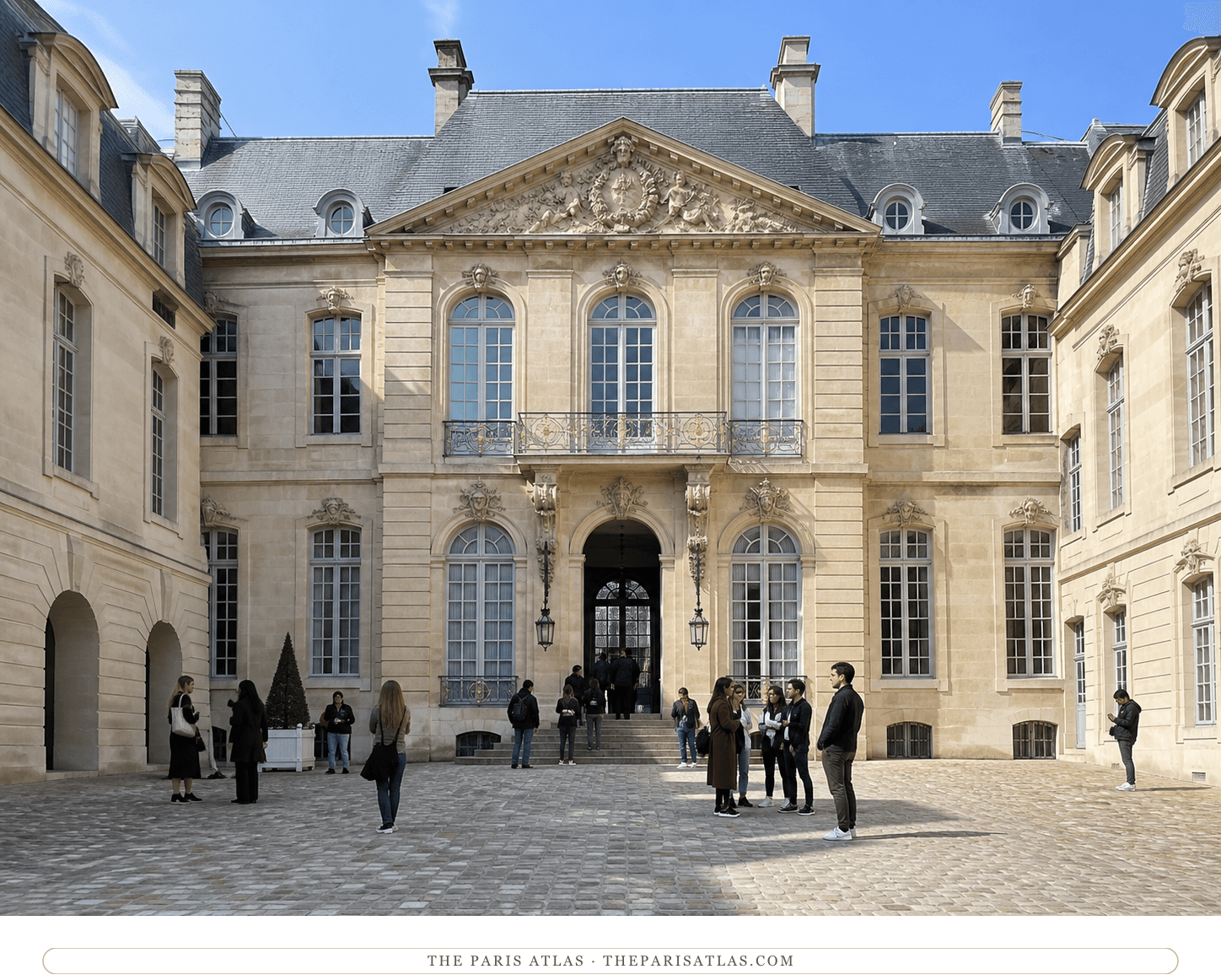
The national Picasso collection opened in the Hôtel Salé in 1985, formed largely from work that came to the French state in lieu of inheritance tax after Picasso's death in 1973 and Jacqueline Picasso's in 1986 — that is, mostly what he chose not to sell.
Visit the place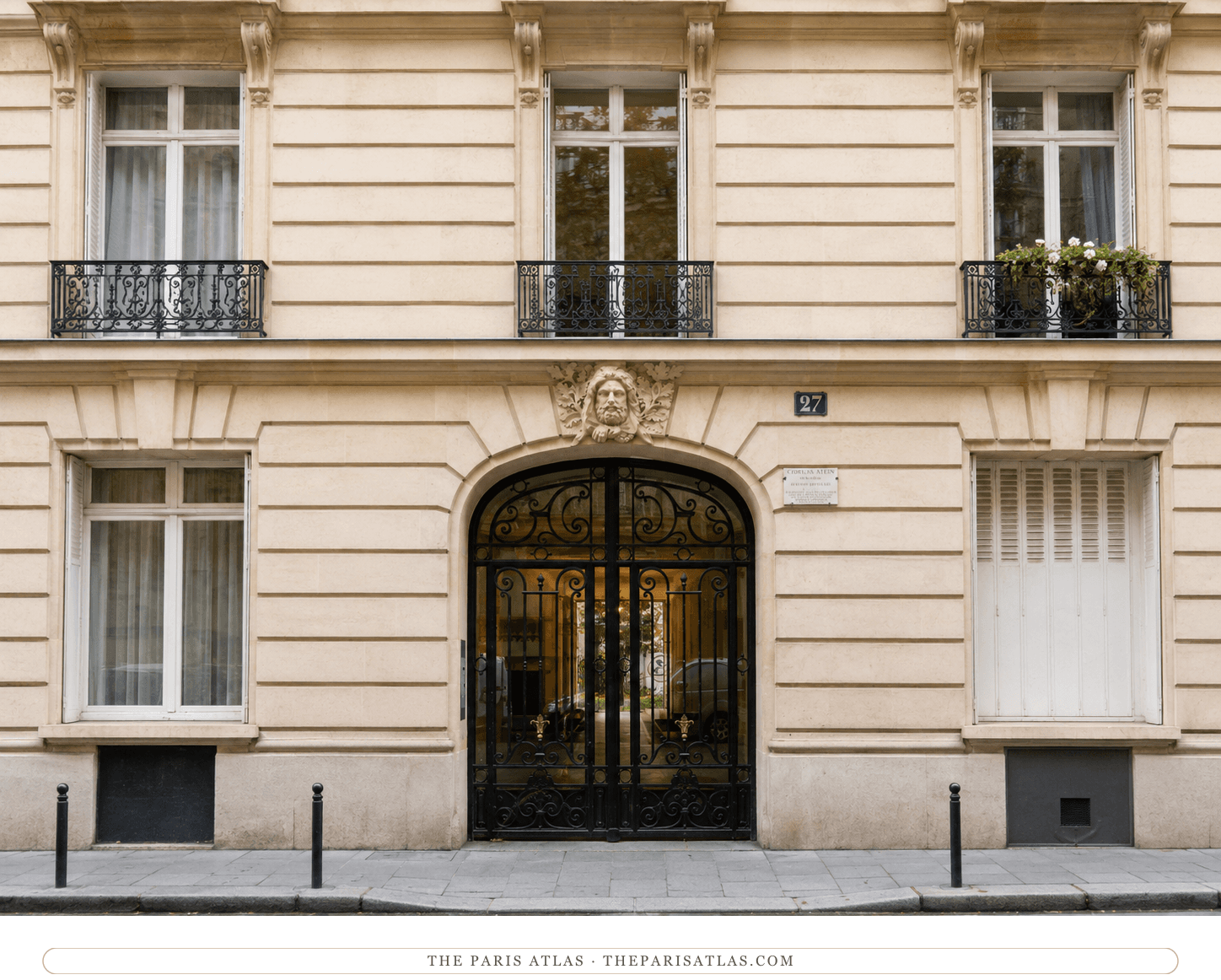
A notable regular of the Saturday salons, whose paintings papered the atelier's walls before the writers arrived.
Visit the place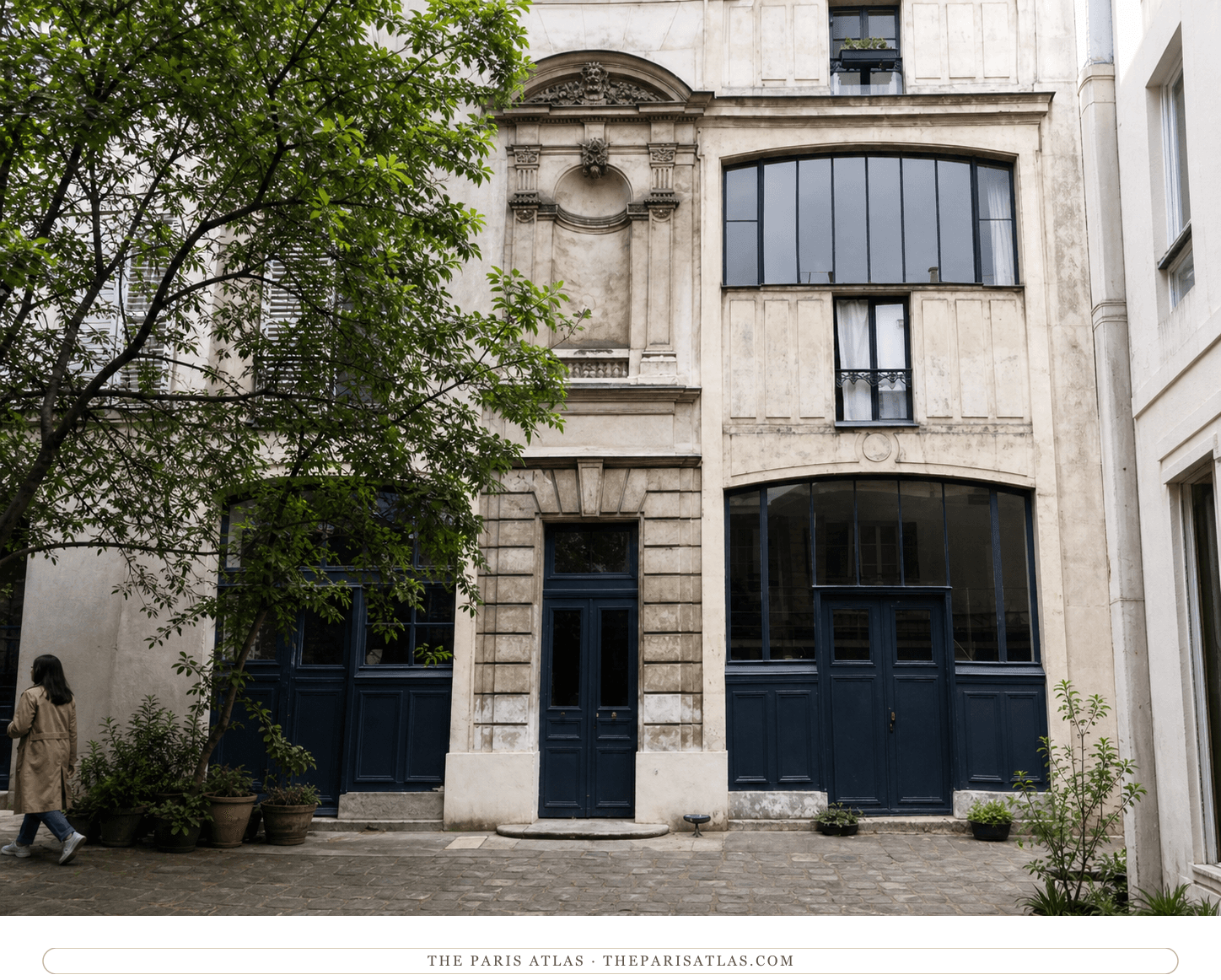
Picasso rented a studio and a comfortable apartment here from 1909 to 1912, overlooking the avenue Frochot — the move out of the Bateau-Lavoir's squalor and into a bourgeois life, made once the work had started selling. He kept the Bateau-Lavoir studio for part of the period.
Visit the place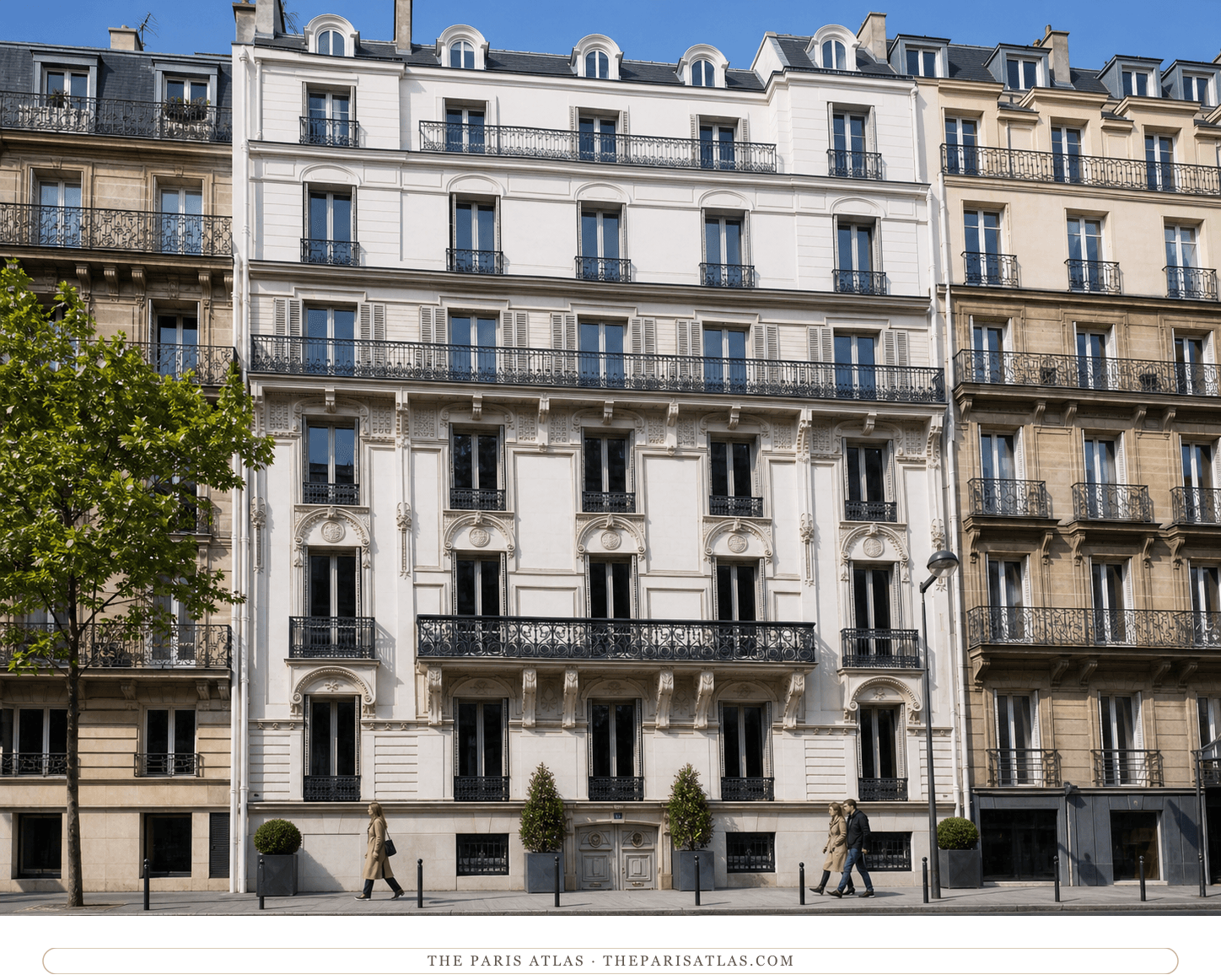
Picasso and Olga Khokhlova moved here after marrying in July 1918. The Musée Picasso records it as the address where notoriety, social engagements and luxury entered his daily life — a household with a cook, chauffeur, chambermaid and nurse. His dealer Paul Rosenberg's gallery stood two doors away at number 21, and held an exclusive contract with him from 1918 to 1940.
Visit the place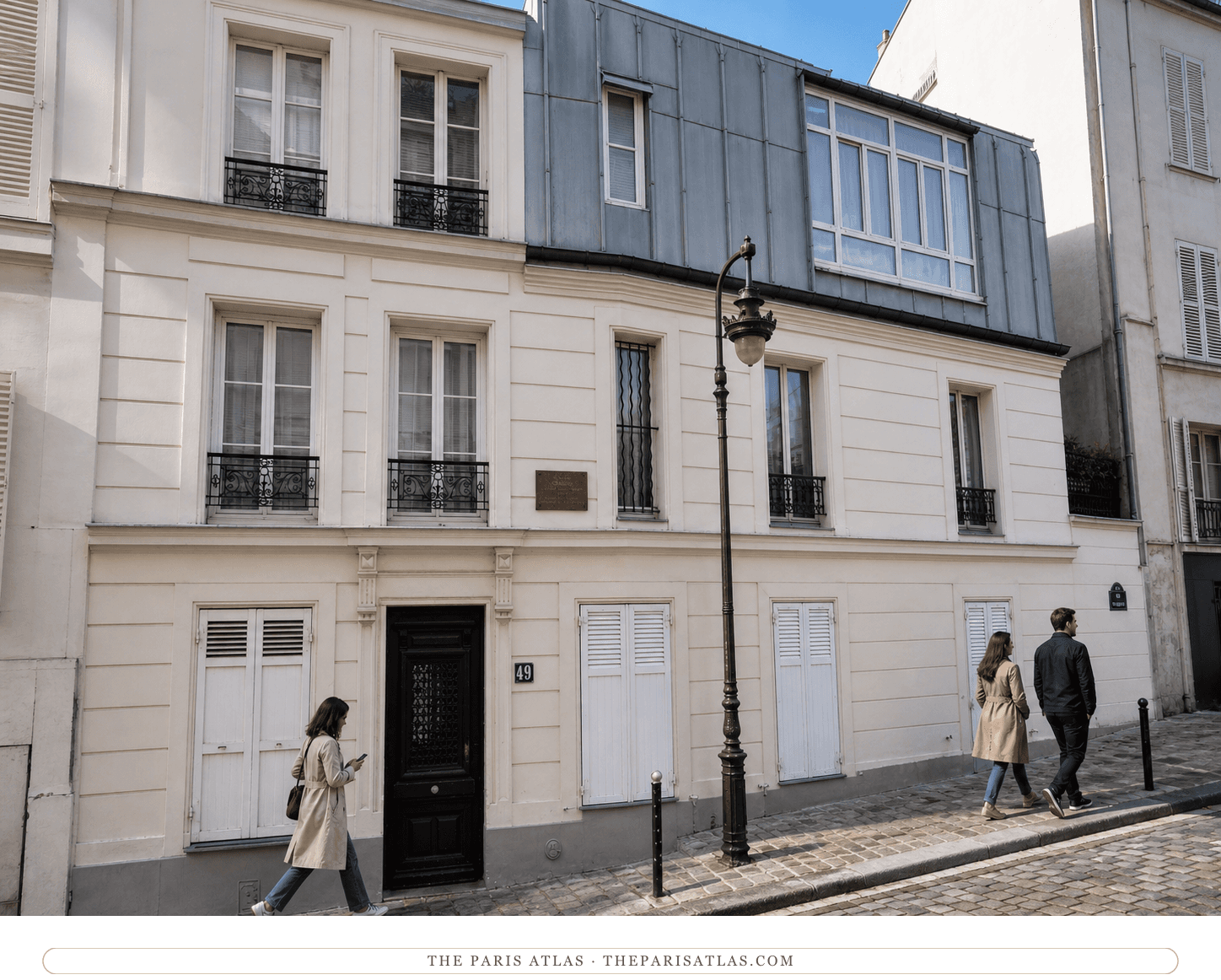
Picasso installed his first Paris studio here in 1900, aged eighteen, having come for the Exposition Universelle where one of his paintings hung in the Spanish section. The work of this period is the beginning of the Blue Period.
Visit the place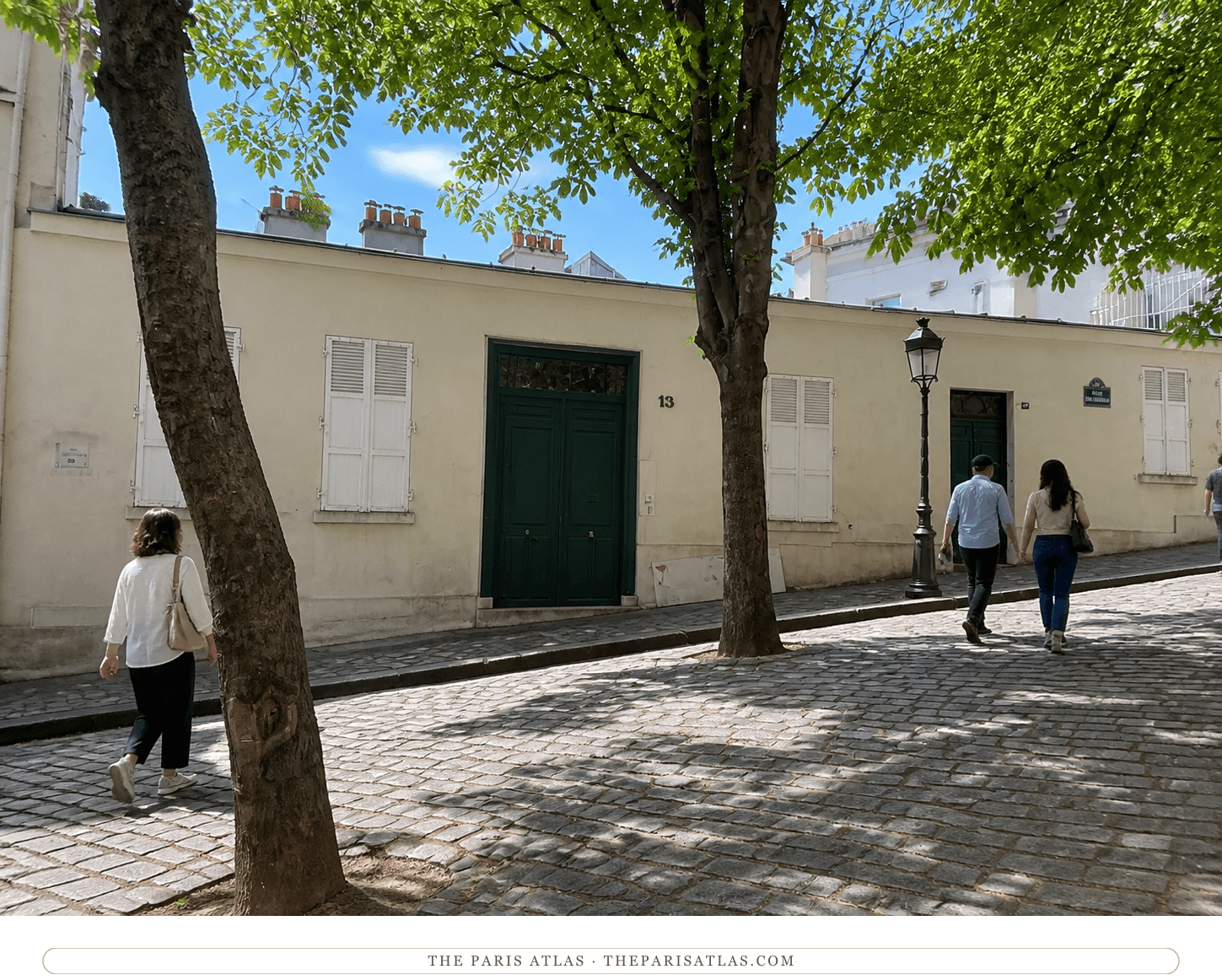
Picasso moved into the Bateau-Lavoir in 1904, aged twenty-two, and stayed until 1909, living there with Fernande Olivier. He painted Les Demoiselles d'Avignon in the building in 1907 and kept it turned to the wall.
Visit the place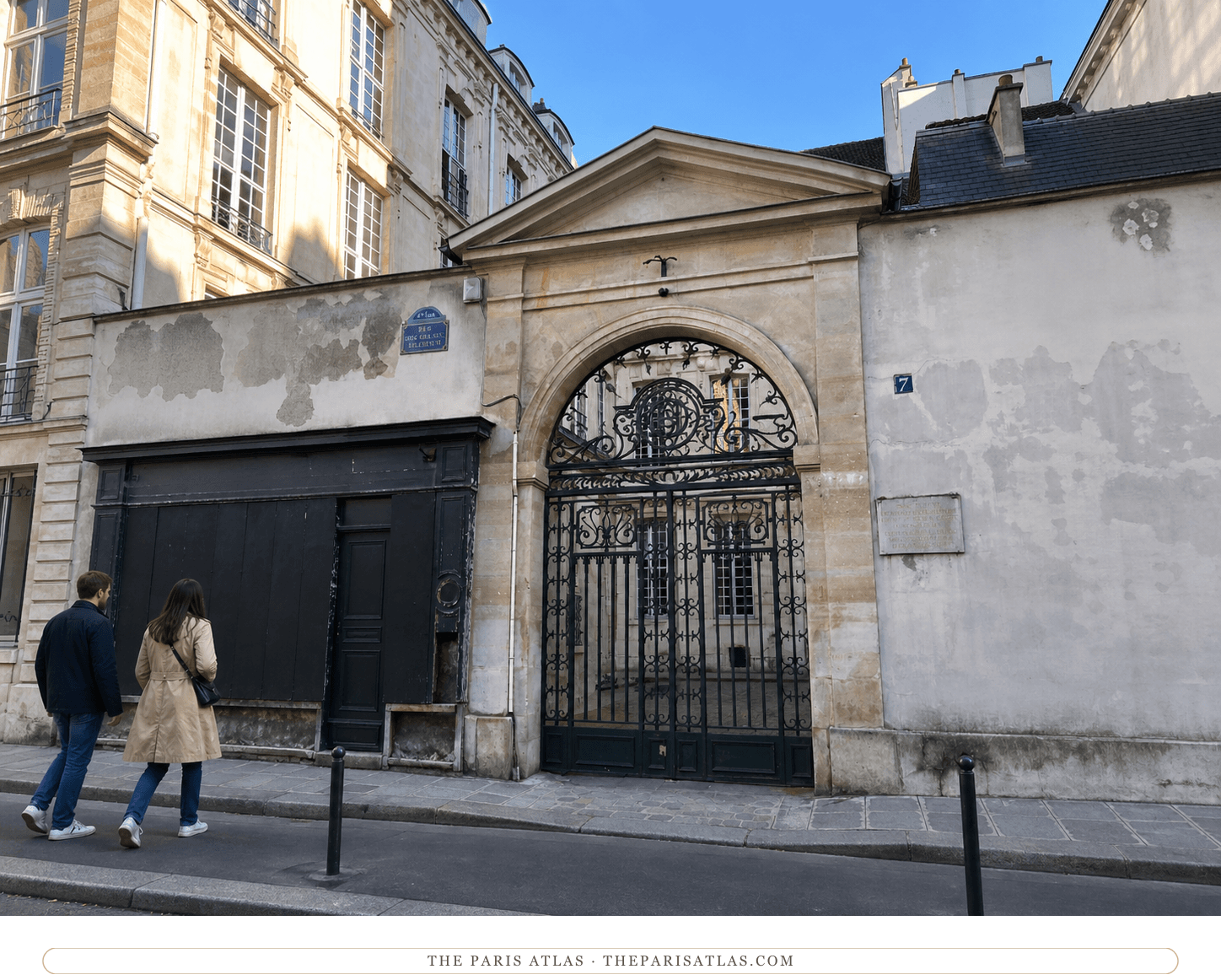
Picasso's Paris studio from the winter of 1936 until 1955. He painted Guernica here between 1 May and 4 June 1937, on a canvas nearly eight metres wide, after the bombing of the town on 26 April; Dora Maar photographed it at every stage from 11 May.
Visit the placeA Spanish painter and sculptor (1881–1973), co-founder of Cubism and one of the most influential artists of the twentieth century. Here, he is the resident modern master of Gertrude Stein's salon, whose canvases hung on the walls before the writers arrived.
Co-inventing Cubism with Georges Braque, and the 1907 painting Les Demoiselles d'Avignon that opened the way to it. His work moved restlessly between styles across seven decades, from Cubism to the monumental classical figures of the 1920s.
He painted her famous portrait over some ninety sittings in 1905–07, and his paintings papered the walls of her salon at 27 rue de Fleurus. The sittings were the occasion around which the Saturday salons took their form.
He created it, with Georges Braque, in Paris between 1907 and 1914 — breaking the single fixed viewpoint and rebuilding the subject from fractured planes. The First World War ended the founding partnership.
After travelling to Rome with Jean Cocteau in 1917 to design the ballet Parade, Picasso turned to massive, calm classical figures — Mother and Child (1921) is the essence of it. He painted them in parallel with his continuing Cubist work, part of the postwar Return to Order.
Through Stein's salon, yes. He was a fixture there alongside Guillaume Apollinaire and, later, Jean Cocteau, in the same rooms where the young Hemingway was schooled in modern art.
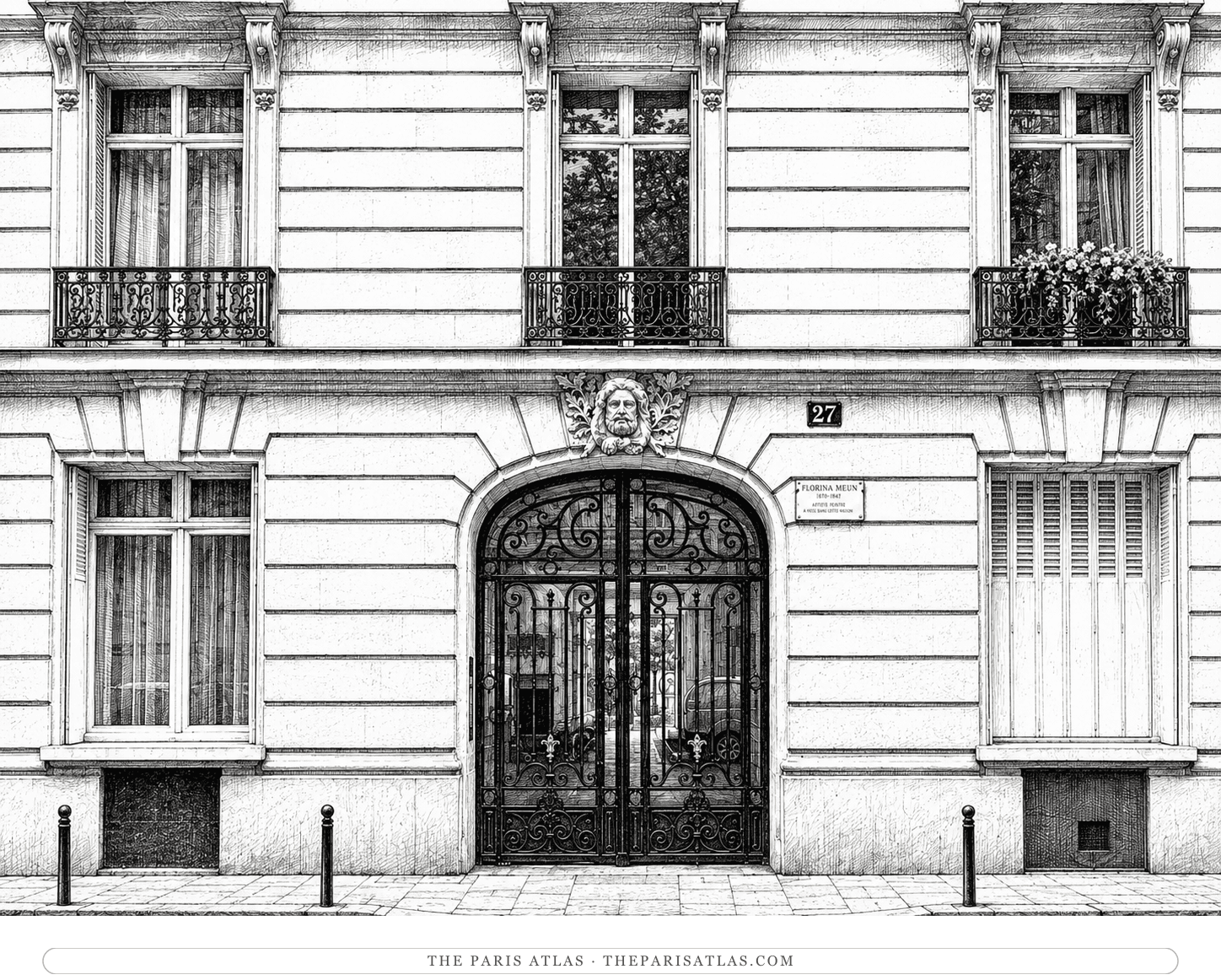
Frequented · 1905
A notable regular of the Saturday salons, whose paintings papered the atelier's walls before the writers arrived.
Met · 1905–1907
Picasso painted Stein's portrait over some ninety sittings in 1905–07 — the sittings around which the Saturday salons took their form.
Associated with · 1907–1914
Created Cubism with Georges Braque in Paris — from Les Demoiselles d'Avignon in 1907 through the papiers collés, until the war ended the partnership.
Associated with · 1917–1925
The classical turn: from the 1917 Rome trip with Cocteau to design Parade, through the monumental neoclassical figures — Mother and Child (1921) — painted in parallel with his continuing Cubist work.
Influenced · 1927
Bacon, then seventeen and with no thought of painting, saw an exhibition of Picasso's drawings at the Galerie Paul Rosenberg in Paris in the summer of 1927 and claimed ever afterwards that it made him want to be a painter. The Estate of Francis Bacon states the claim and its caution — he 'seems to have considered becoming an artist only after' that show — and traces the boneless, distended figures of Picasso's Dinard and Cannes bathers into Bacon's own biomorphs, down to Three Studies for Figures at the Base of a Crucifixion (1944). Bacon's own verdict: 'Let's say perhaps that Picasso helped me to see…'
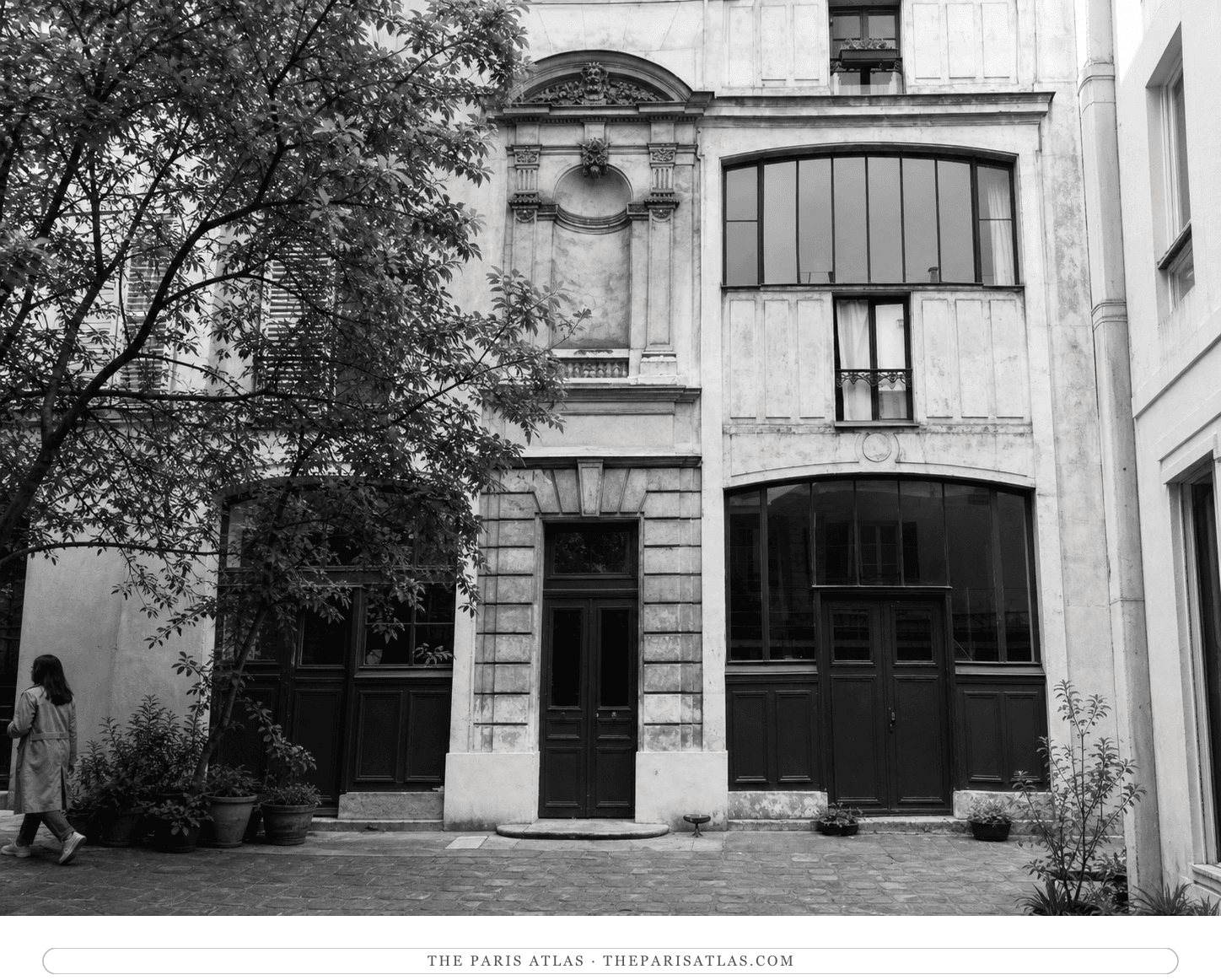
Lived at · 1909–1912
Picasso rented a studio and a comfortable apartment here from 1909 to 1912, overlooking the avenue Frochot — the move out of the Bateau-Lavoir's squalor and into a bourgeois life, made once the work had started selling. He kept the Bateau-Lavoir studio for part of the period.
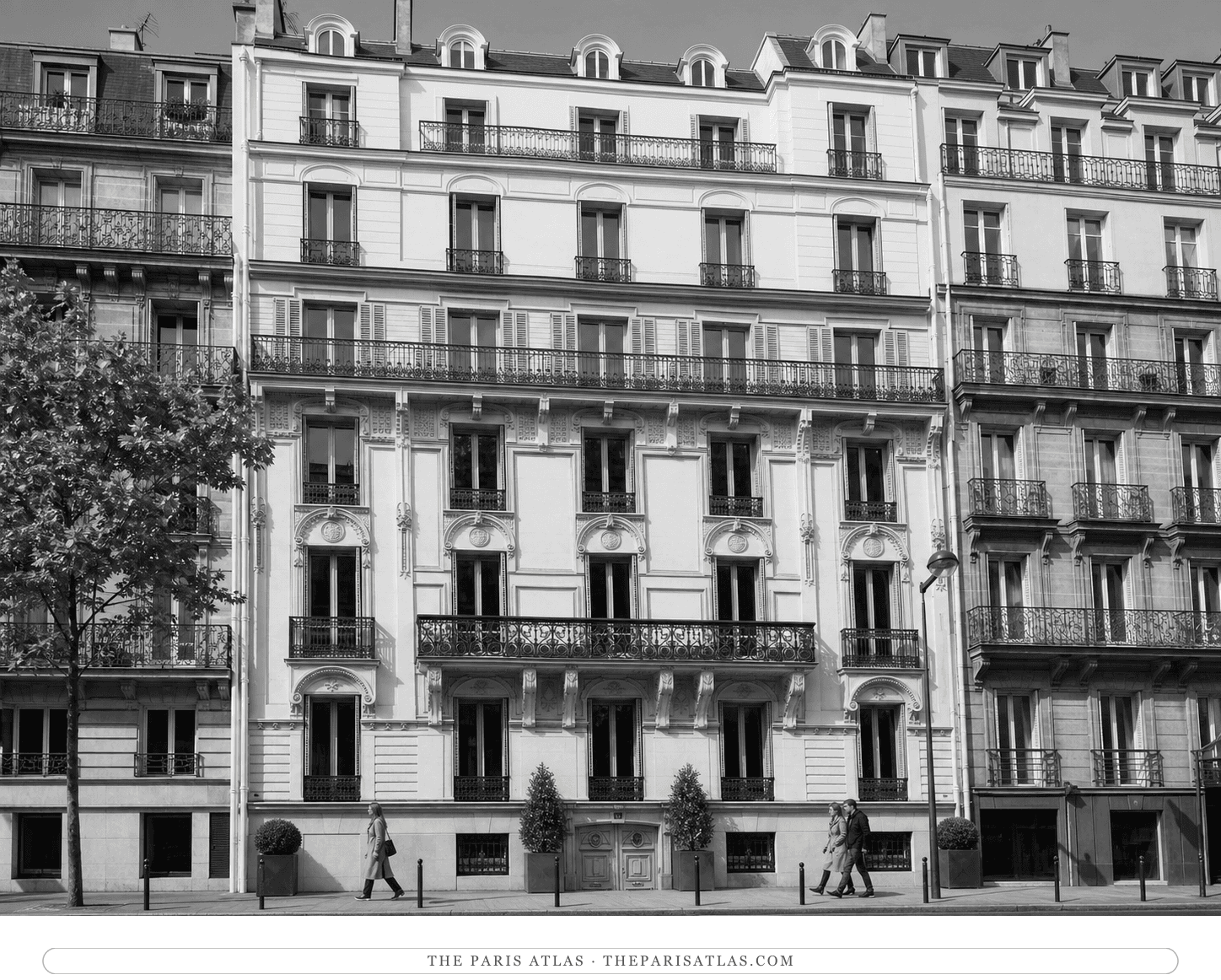
Lived at · 1918
Picasso and Olga Khokhlova moved here after marrying in July 1918. The Musée Picasso records it as the address where notoriety, social engagements and luxury entered his daily life — a household with a cook, chauffeur, chambermaid and nurse. His dealer Paul Rosenberg's gallery stood two doors away at number 21, and held an exclusive contract with him from 1918 to 1940.
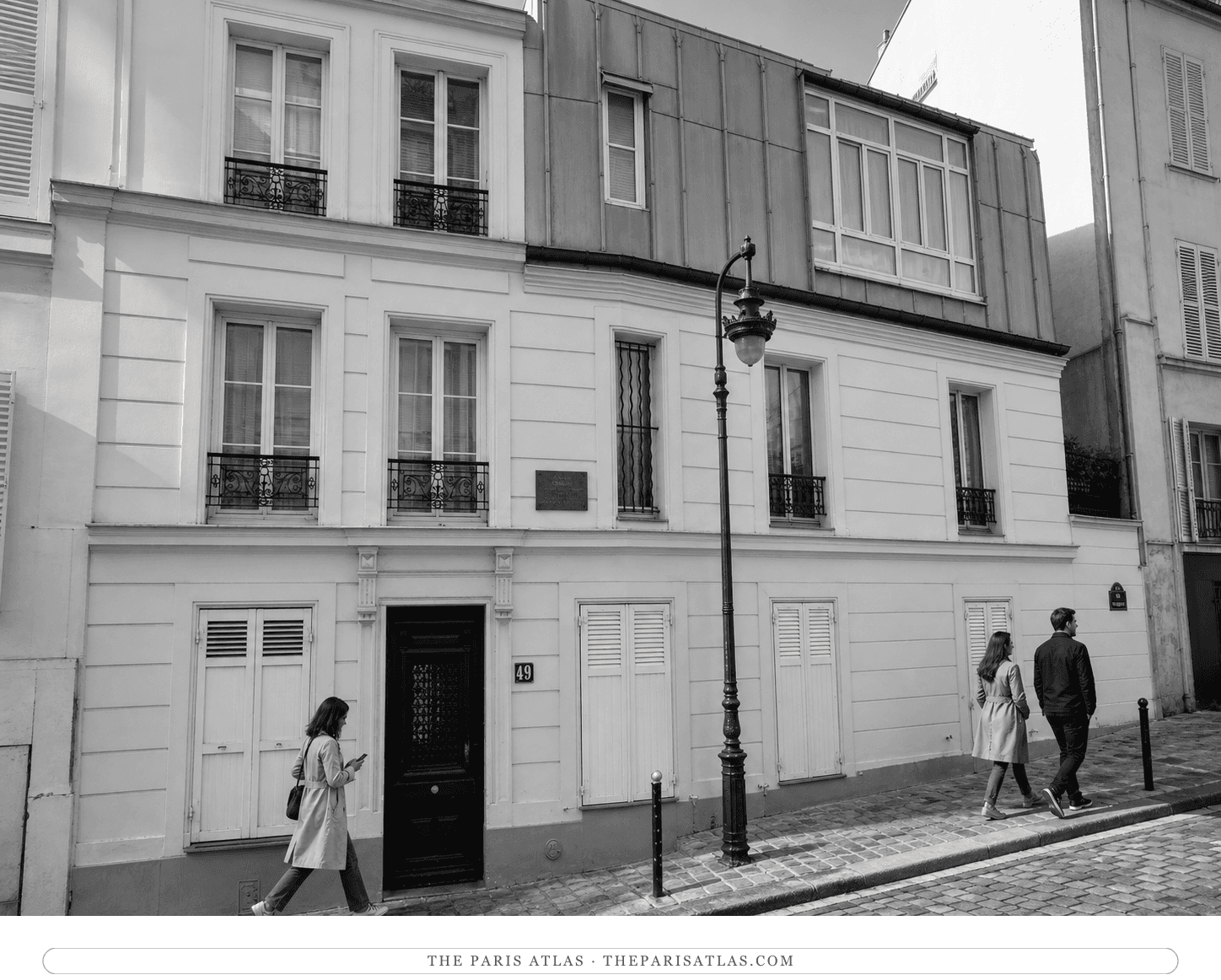
Lived at · 1900
Picasso installed his first Paris studio here in 1900, aged eighteen, having come for the Exposition Universelle where one of his paintings hung in the Spanish section. The work of this period is the beginning of the Blue Period.
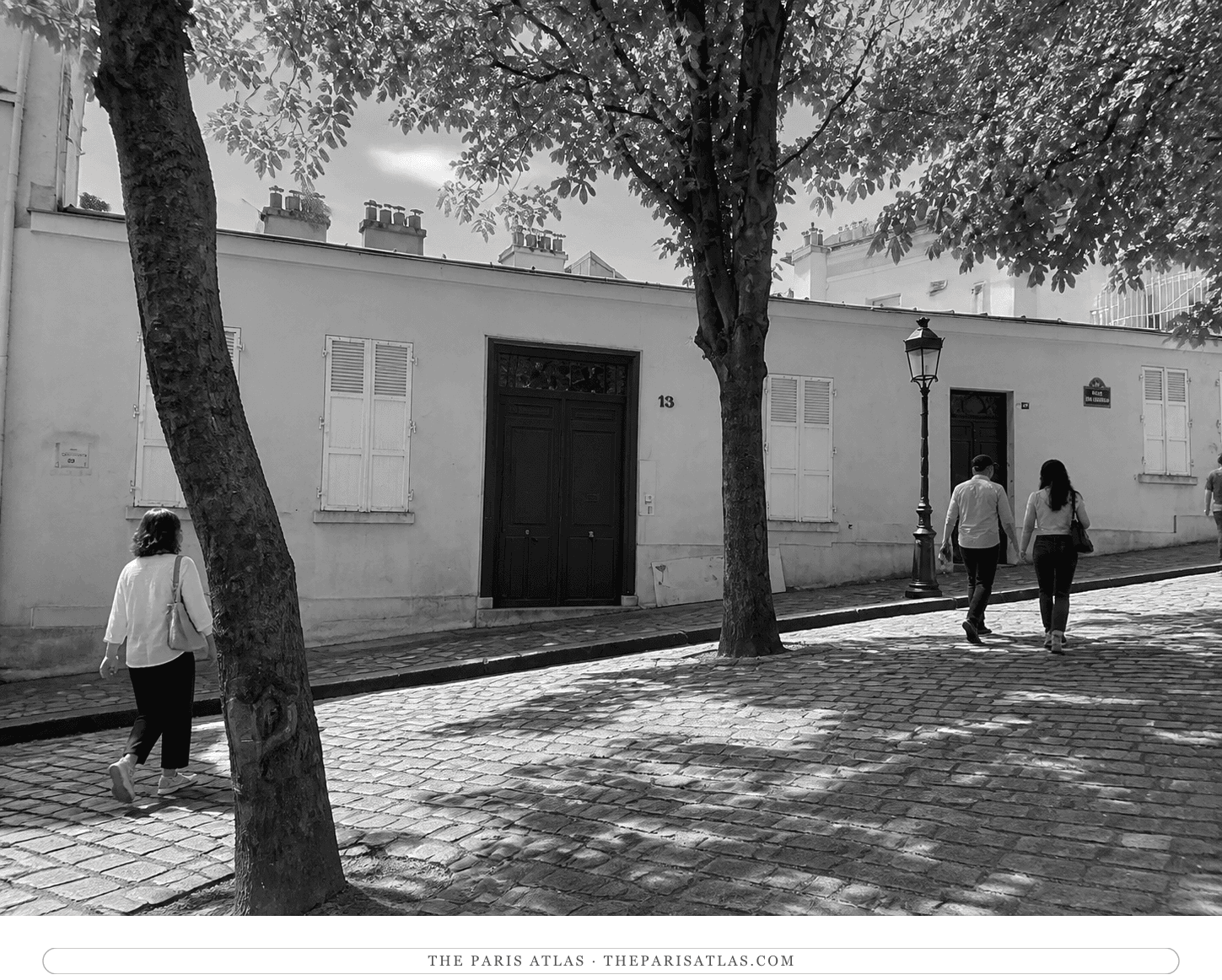
Lived at · 1904–1909
Picasso moved into the Bateau-Lavoir in 1904, aged twenty-two, and stayed until 1909, living there with Fernande Olivier. He painted Les Demoiselles d'Avignon in the building in 1907 and kept it turned to the wall.
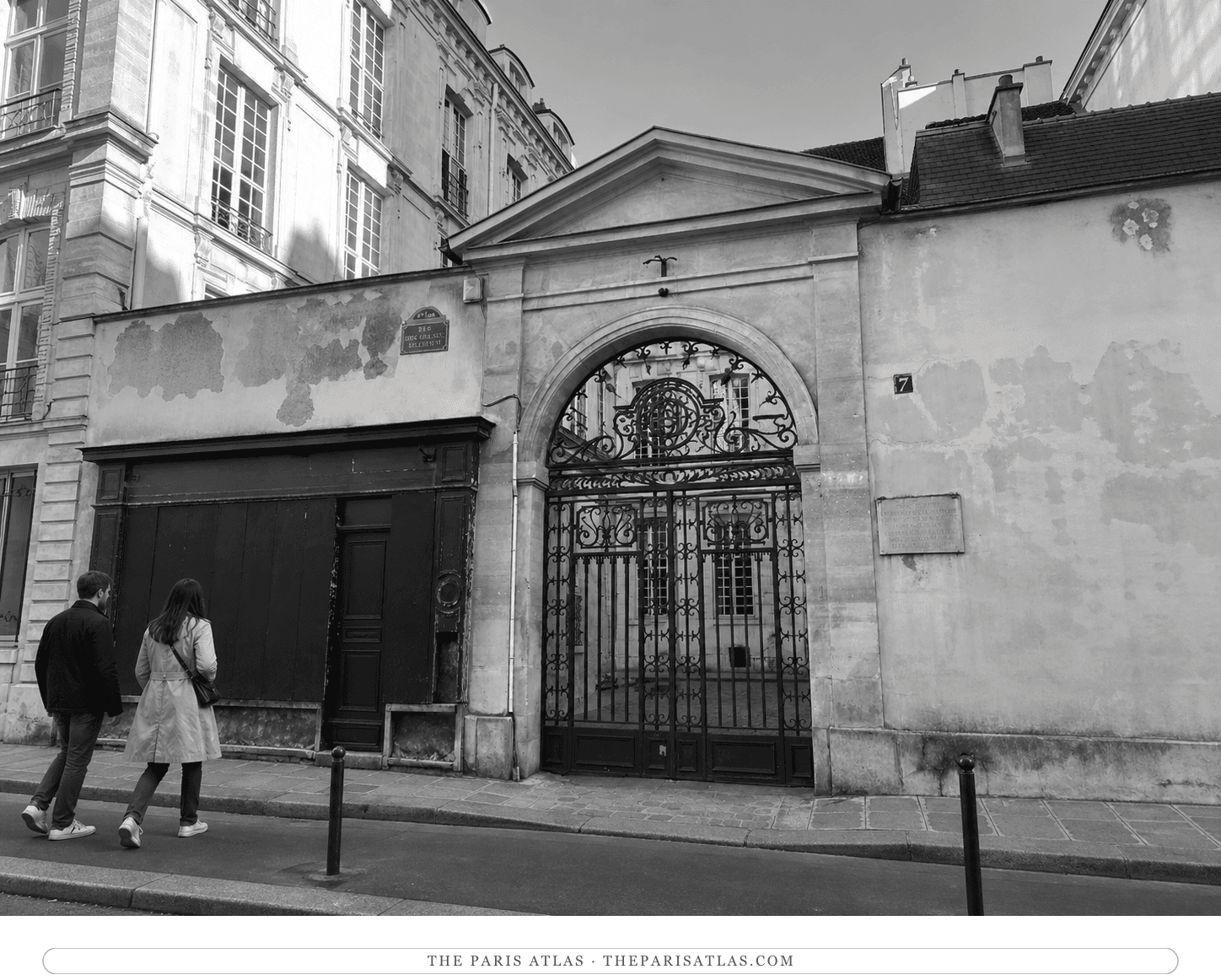
Worked at · 1936–1955
Picasso's Paris studio from the winter of 1936 until 1955. He painted Guernica here between 1 May and 4 June 1937, on a canvas nearly eight metres wide, after the bombing of the town on 26 April; Dora Maar photographed it at every stage from 11 May.
Patron of · 1937
Picasso acquired Balthus's 1937 painting The Children and continued to speak admiringly of the younger painter's work. The painting later entered the Musée Picasso through Picasso's collection.
Associated with · 1907–1973
Les Demoiselles d'Avignon of 1907 broke with conventional anatomy, perspective and idealised beauty, and led into the Cubism Picasso and Georges Braque developed in Paris to 1914. Guernica, painted for the Spanish Pavilion at the 1937 Paris International Exposition, showed that the same experimental language could make a public statement against violence.
Depicted in · 1923
Captioned 'P. Picasso — Igor Stravinsky' in the album — Picasso in the bowler with his pipe, Stravinsky leaning in under the top hat.
Met · 1905
A fixture of Picasso's circle from the Bateau-Lavoir years — the Autobiography remembers him at the salon's tables and at the 1908 banquet for the Douanier Rousseau, where Apollinaire presided.
Met · 1915–1917
Cocteau sought Picasso out mid-war and by 1917 had carried him to Rome to design Parade for the Ballets Russes — the collaboration that opened the painter's classical turn. Cocteau's 1923 monograph on Picasso made the friendship a matter of public record.
Met · 1907
The second of Toklas's three bells: she met Picasso within weeks of arriving in Paris, at a rue de Fleurus dinner before the 1907 Autumn Salon — the start of a sixty-year acquaintance conducted largely across dinner tables.
Met · 1926
Dalí went to Picasso's studio on his first trip to Paris in April 1926, at twenty-one, on Miró's recommendation.
Met
The two knew each other across decades of the Paris and New York avant-garde. The relationship was respectful rather than close; each measured himself against the other as the century's rival model of what a modern artist could be.
Met · 1907
She joined the Bateau-Lavoir circle in 1907. Accounts of the introduction differ: AWARE credits her Académie Humbert classmate Georges Braque, Britannica the dealer Clovis Sagot.
Met · 1908
The 1908 banquet in Picasso's Bateau-Lavoir studio honored the old painter, with Apollinaire presiding — the evening the Autobiography of Alice B. Toklas made famous.
Influenced by
The Met states it plainly: the monumental, classically inspired style Renoir built from the 1880s onward influenced avant-garde giants including Picasso, and the late bathers' vision of plenitude was admired by Picasso, Matisse, and Maillol. The debt shows in Picasso's neoclassical figures after 1917.
Met · 1920
Miró's first trip to Paris, in 1920, was made to visit Picasso. The older Catalan remained a fixed point of his Paris world; six years later Miró was the one talking to Picasso about a still-unknown Dalí.
Met · 1906
Met in 1906 at Gertrude and Leo Stein's apartment at 27 rue de Fleurus, where both painters' work hung. The rivalry and wary friendship ran until Matisse's death in 1954.
Collaborated with · 1920
Pulcinella, 1920: Stravinsky recomposed eighteenth-century Italian scores for Diaghilev's Ballets Russes while Picasso designed sets and costumes. Picasso also drew Stravinsky's portrait several times.
Partner of · 1936–1943
Introduced by Paul Eluard at Les Deux Magots in the winter of 1935-36. She found him the Grands-Augustins atelier and photographed Guernica's painting stage by stage; he painted her as the Weeping Woman. Her verdict on the portraits: they are Picassos, not one is Dora Maar.
Met · 1939
Picasso was among the artists who congratulated Kahlo at the opening of the Mexique exhibition in Paris on 10 March 1939. Her own museum lists him among the European artists whose regard her work won.
Collaborated with · 1908–1914
They invented Cubism together in Montmartre, in near-daily contact and deliberately holding back personal style in favour of a shared problem; by 1911 their canvases are so alike that attributions are still occasionally disputed. Braque's image for the years was two mountaineers roped together. Braque's mobilisation in August 1914 ended it, and neither man worked that way again.
Collaborated with · 1917–1924
Diaghilev commissioned Picasso's first work for the stage: the Cubist curtain, sets and costumes for Parade (1917), then designs for Pulcinella (1920) and the painted front cloth for Le Train Bleu (1924), which the V&A holds — 'Stage cloth for Le Train Bleu, designed by Pablo Picasso, painted by Prince Alexander Schervachidze, 1924'.
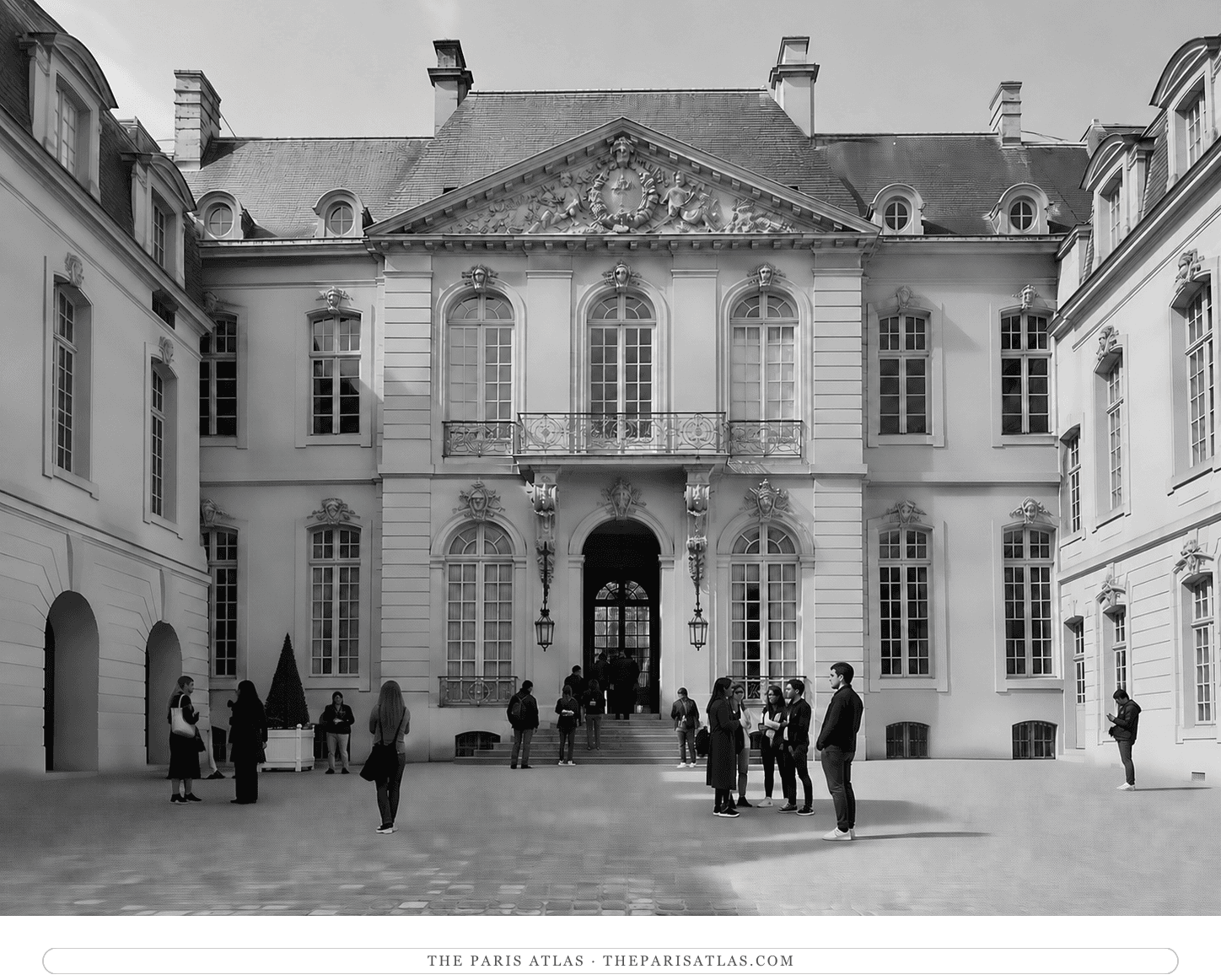
Commemorated in · 1985
The national Picasso collection opened in the Hôtel Salé in 1985, formed largely from work that came to the French state in lieu of inheritance tax after Picasso's death in 1973 and Jacqueline Picasso's in 1986 — that is, mostly what he chose not to sell.
Influenced by
Matisse and Picasso met at Gertrude and Leo Stein's apartment in 1906 and watched each other's work for fifty years, exchanging paintings and answering each other in them. Picasso's Les Demoiselles d'Avignon of 1907 is generally read in part as a response to Matisse's Bonheur de Vivre of the previous year.
Met
Stravinsky and Picasso both worked for Diaghilev's Ballets Russes, and Picasso designed the sets and costumes for Stravinsky's Pulcinella, first staged in Paris in 1920. Picasso drew Stravinsky several times.
Influenced by
Picasso bought a Rousseau canvas being sold on the street to be painted over, recognised its power at once, and threw the famous 1908 banquet in his Bateau-Lavoir studio in the older painter's honour. Rousseau's flat, frontal, unschooled directness fed the avant-garde's turn away from academic illusion, and he is counted among the naïve painters who freed Picasso's generation.
Supported by · 1924
On André Breton's advice, Doucet bought Les Demoiselles d'Avignon straight from Picasso's studio in 1924. The painting had been made in 1907 and had barely been shown; Doucet's purchase took it out of the studio and into a collection for the first time.
Met · 1916
Poiret ran the Galerie Barbazanges beside his mansion and reserved the right to mount exhibitions there. At the July 1916 Salon d'Antin, organised by André Salmon in Poiret's space, Pablo Picasso showed Les Demoiselles d'Avignon in public for the first time, so the couturier gave one of modern art's decisive paintings its debut.
Influenced by · 1934–1968
Pablo Picasso put Rembrandt's head into the Vollard Suite in 1934. The Metropolitan Museum of Art holds an impression of that etching, titled Rembrandt with a Palette, made in 1934 and printed in 1939. Picasso returned to him thirty-four years later with a sugar-lift aquatint from the 347 Suite that the Met titles Le déjeuner sur l'herbe, in the style of Rembrandt, with Maja and Célestine.
Influenced by · 1957
Between 16 August and 30 December 1957, at his house in Cannes, Pablo Picasso made 58 works that come out of Velázquez's Las Meninas. Forty-five take the 1656 painting apart, figure by figure and group by group; the rest are nine pictures of the pigeons outside his studio, three landscapes and a portrait of his companion Jacqueline Roque. The largest canvas, 194 by 260 centimeters, changes the shape from upright to wide and makes the painter almost as tall as the canvas itself. Picasso gave the whole series to the Museu Picasso in Barcelona in 1968.
The sources below include biographies, scholarly essays, interviews, and primary materials that informed this page. They reflect both the historical record and ongoing critical conversations about Pablo Picasso and their work.


El Greco's lasting effect on the elongated figures and fractured space.
Web source consulted for documented facts and historical context presented on the Pablo Picasso page.
The rue de Fleurus salons as an alternative institution for seeing modern art.
The sittings for Stein's portrait and the scepticism about the eighty-or-ninety-sittings claim.
Web source consulted for documented facts and historical context presented on the Pablo Picasso page.
The hundreds of studies and the changes made during the painting's composition.
Biographical evidence used to verify chronology, relationships, and historical context connected to Pablo Picasso.
Cubism's sources and its afterlife in later art.
The basic account of Cubist space and viewpoint.
How a single picture can hold several viewpoints at once.
Web source consulted for documented facts and historical context presented on the Pablo Picasso page.
The December 1914 confiscation and the state-supervised sales that dispersed the stock.
The Guitar constructions as a twentieth-century breakthrough in sculpture.
The Neoclassical figures and their deliberate distortions.
The March 1932 painting of Marie-Thérèse Walter.
A Picasso portrait of Maar, used for the angular late-1930s manner.
Maar's photographic record of the painting in progress at rue des Grands-Augustins.
The painting's relation to press photographs from the liberated camps.
What happened to Gilot's career in France after she left him and published the memoir.
The scale of the Manet series: paintings, drawings, maquettes and prints.
The first large canvas of the series, with Velázquez enlarged against the Infanta.
The last evening, the death and the journey to Vauvenargues.
The museum's own reassessment of the women in Picasso's life as people rather than muses.
First-person evidence and historical context used in preparing the Pablo Picasso page.
Web source consulted for documented facts and historical context presented on the Pablo Picasso page.

Archival evidence used to document the historical record connected to Pablo Picasso.
Biographical evidence used to verify chronology, relationships, and historical context connected to Pablo Picasso.
Web source consulted for documented facts and historical context presented on the Pablo Picasso page.
Biographical evidence used to verify chronology, relationships, and historical context connected to Pablo Picasso.
Biographical evidence used to verify chronology, relationships, and historical context connected to Pablo Picasso.
Web source consulted for documented facts and historical context presented on the Pablo Picasso page.
Web source consulted for documented facts and historical context presented on the Pablo Picasso page.
Web source consulted for documented facts and historical context presented on the Pablo Picasso page.
Web source consulted for documented facts and historical context presented on the Pablo Picasso page.
Web source consulted for documented facts and historical context presented on the Pablo Picasso page.
Biographical evidence used to verify chronology, relationships, and historical context connected to Pablo Picasso.
Web source consulted for documented facts and historical context presented on the Pablo Picasso page.
Web source consulted for documented facts and historical context presented on the Pablo Picasso page.
Web source consulted for documented facts and historical context presented on the Pablo Picasso page.
Web source consulted for documented facts and historical context presented on the Pablo Picasso page.
Web source consulted for documented facts and historical context presented on the Pablo Picasso page.
Web source consulted for documented facts and historical context presented on the Pablo Picasso page.
Web source consulted for documented facts and historical context presented on the Pablo Picasso page.
Web source consulted for documented facts and historical context presented on the Pablo Picasso page.

Published analysis and historical context used in preparing the Pablo Picasso page.
Web source consulted for documented facts and historical context presented on the Pablo Picasso page.
Web source consulted for documented facts and historical context presented on the Pablo Picasso page.
These references anchor the page in the documented record and in the scholarly conversations around Pablo Picasso. Every claim on this page traces back to one or more of the works listed here.
 Explore more resources