Boy with a Pipe
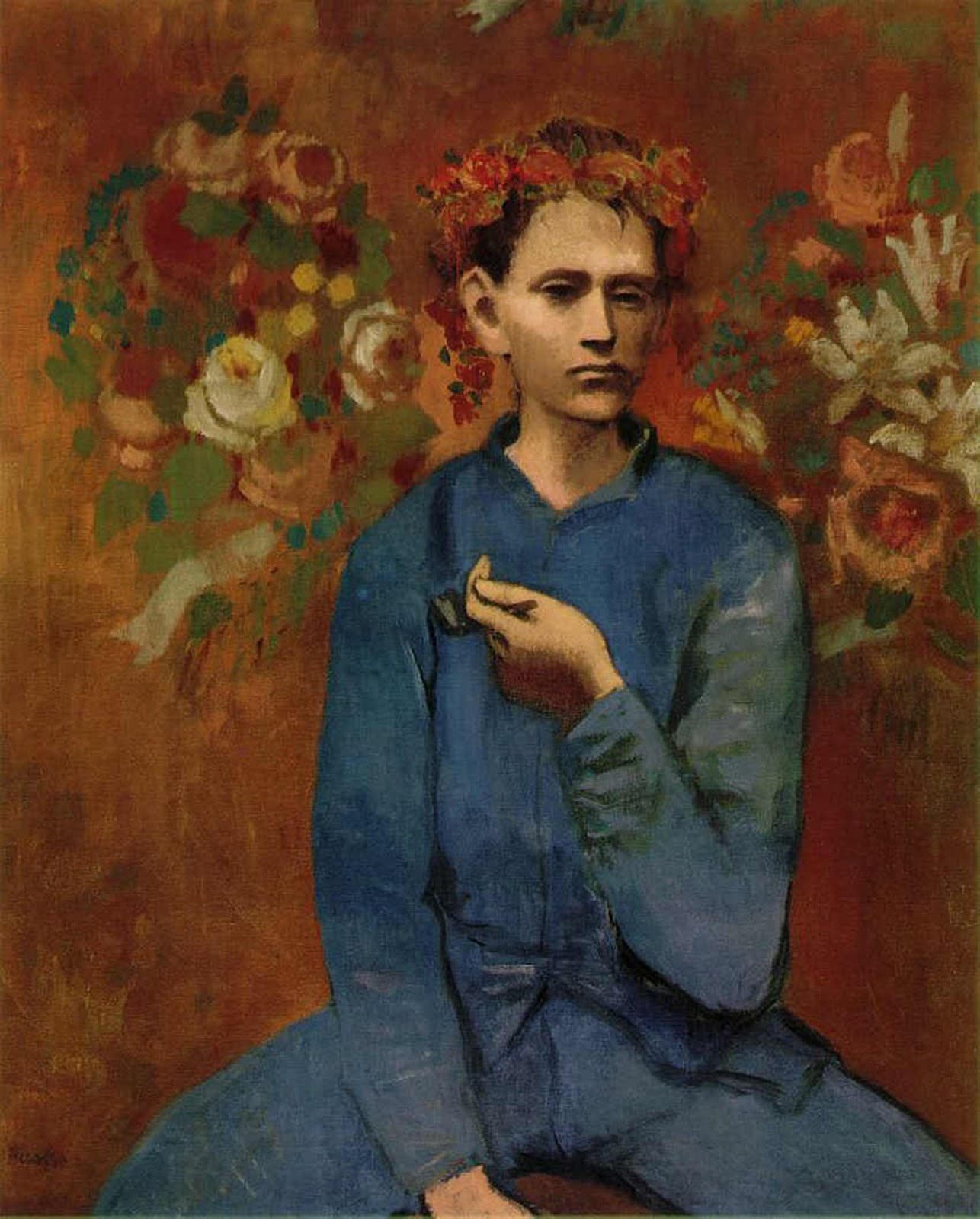
Picasso's 1905 portrait of a Montmartre boy, seated in blue workman's clothes with a garland of roses on his head and a pipe in his left hand, against a wall of painted flowers. A Rose Period picture that in 2004 became, for a time, the most expensive painting ever sold at auction.
- 1905
- Oil on canvas
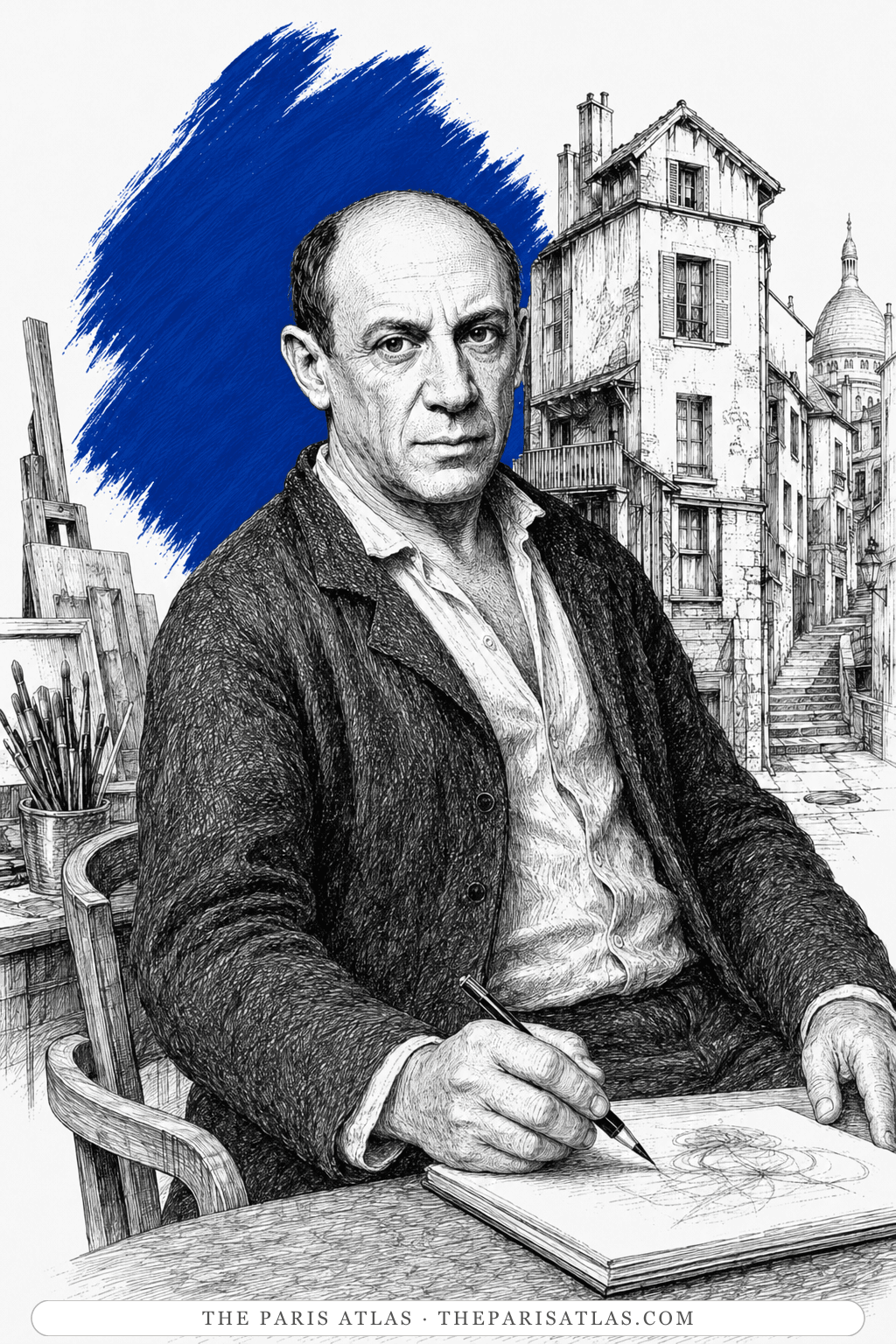
About Pablo Picasso
What the painting shows
A young man sits facing the viewer in loose blue coveralls, a garland of roses resting on his head and a pipe held loosely in his left hand. Behind him a reddish wall carries two painted bouquets, so the figure seems set against flowers rather than in a room.
The mood is quiet and slightly withdrawn. The boy does not perform for the viewer; he sits with the stillness of someone waiting, and the flowers give the picture a softness unusual even for the Rose Period.
A Rose Period picture
Pablo Picasso painted it in 1905, at twenty-four, while living at Le Bateau-Lavoir, the run-down artists' building in Montmartre. The work belongs to his Rose Period, when the cold blues and beggars of the preceding years gave way to warmer tones and to circus and studio subjects.
The garland and the flowered ground are the sentimental note, and not everyone has admired them. The picture's tenderness is the same quality that later divided its critics.
The boy called P'tit Louis
The model was a local boy who hung around the studio, remembered by the nickname "P'tit Louis." He was one of several neighborhood figures Picasso drew and painted in these Montmartre years rather than a hired professional model.
Little else about him is documented, which is part of the painting's hold: a specific Parisian child, named only by a nickname, fixed at the point between boyhood and whatever came next.
The 2004 sale
John Hay Whitney and his wife bought the painting in 1950 for about thirty thousand dollars. On 5 May 2004 the Whitney estate's foundation sent it to Sotheby's in New York, where it sold for $104,168,000 including the buyer's premium.
That price set an auction record for any painting at the time. The buyer stayed anonymous, and the work returned to a private collection, which is where it remains.
Admired and doubted
The sale sharpened an old disagreement about the picture's worth. Some critics treat it as one of Picasso's most affecting early images; others regard it as minor Picasso whose fame owes more to the market than to the work.
Both readings start from the same softness. The garland of roses that makes the painting so appealing is also what makes some viewers distrust it, and the record price only raised the stakes of the argument.
Close reading
Reading the work, detail by detail
The picture sits at the hinge between Picasso's Blue and Rose periods. Its close passages show the change happening unevenly: melancholy remains in the figure while flowers and warmer color begin to surround him.
1.A solemn face under an improbable wreath
The boy's features are subdued and inward, while the wreath above him is bright and decorative. Picasso does not reconcile the two moods. The garland feels placed upon melancholy rather than expressive of joy.
2.The pipe gives the sitter a fragile adult pose
The long fingers and small pipe create a pose of practiced self-possession, but the hands remain tentative. The accessory performs adulthood while the body still reads as adolescent.
3.Rose-period decoration enters a blue figure
Pink blossoms interrupt the cool clothing and earth-toned wall like a new palette arriving at the edge. The transition between periods is visible as coexistence, not a clean stylistic break.
4.Flowers spread across the wall beside the shoulder
Red and yellow flower shapes spread across the warm wall, with green leaves and pale stems between them. Their irregular edges differ from the smooth outer line of the blue shoulder. The cluster adds several small color changes beside the figure's much larger unbroken area of blue.
5.A dark collar edge separates clothing from skin
A dark line runs around the blue collar beneath the pale neck. The two sides meet at slightly different angles, leaving a small opening below the throat. That concentrated boundary makes the change from face to clothing clear without a detailed description of the fabric.
6.Dark seams organize the lower blue clothing
Dark lines converge near the lower edge of the jacket and continue into broader blue folds. Some areas turn greenish or gray where the light changes. These limited shifts distinguish overlapping parts of the clothing without breaking the figure into many unrelated colors.
Timeline
1905
Picasso painted the portrait at Le Bateau-Lavoir in Montmartre, during his Rose Period.
1950
John Hay Whitney and his wife bought the painting for about thirty thousand dollars.
2004
Sold at Sotheby's in New York for $104,168,000, an auction record for a painting at the time; the buyer remained anonymous.
Where to see it
A viewing location has not yet been listed for this work.
Frequently asked questions
What is Boy with a Pipe?
A 1905 oil painting by Pablo Picasso, from his Rose Period, showing a Montmartre boy in blue clothes with a garland of roses and a pipe, against a wall of painted flowers. Its French title is Garçon à la pipe.
Who is the boy in the painting?
A local Montmartre boy remembered by the nickname "P'tit Louis," who spent time around Picasso's studio at Le Bateau-Lavoir. He was a neighborhood model rather than a professional sitter, and little else about him is recorded.
Why is it called a Rose Period work?
It dates from 1905, when Picasso moved away from the cold blues and destitute subjects of his Blue Period toward warmer pinks and reds and gentler studio and circus themes. Boy with a Pipe is one of the best-known pictures of that shift.
How much did it sell for?
It sold at Sotheby's in New York on 5 May 2004 for $104,168,000 including the buyer's premium — an auction record for a painting at the time. The buyer was not named, and the work went to a private collection.
Where is Boy with a Pipe now?
In a private collection. It has not been on regular public view since the 2004 sale, and the owner has not been publicly identified.
Why do some critics dislike it?
The garland of roses and the flowered background give the painting a sweetness that some find sentimental. Critics who call it a minor work argue that its record price reflects the market rather than the picture's place in Picasso's career.
More by Pablo Picasso

If you like Pablo Picasso
Explore painters from the same movements and circles.
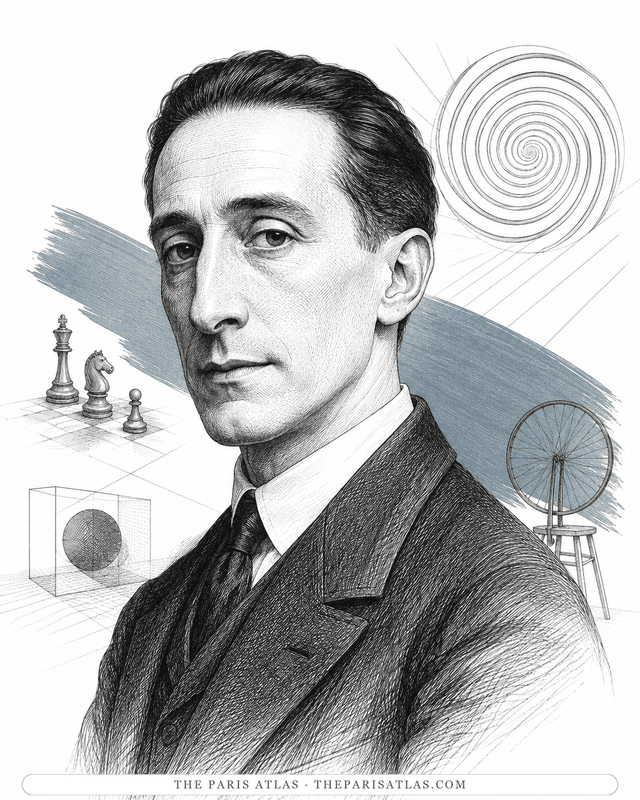
Marcel Duchamp
The century's quietest revolutionary — readymades, the abandonment of painting, chess on a Paris rooftop in Entr'acte, and one anemic film of spinning puns signed Rrose Sélavy.
View artist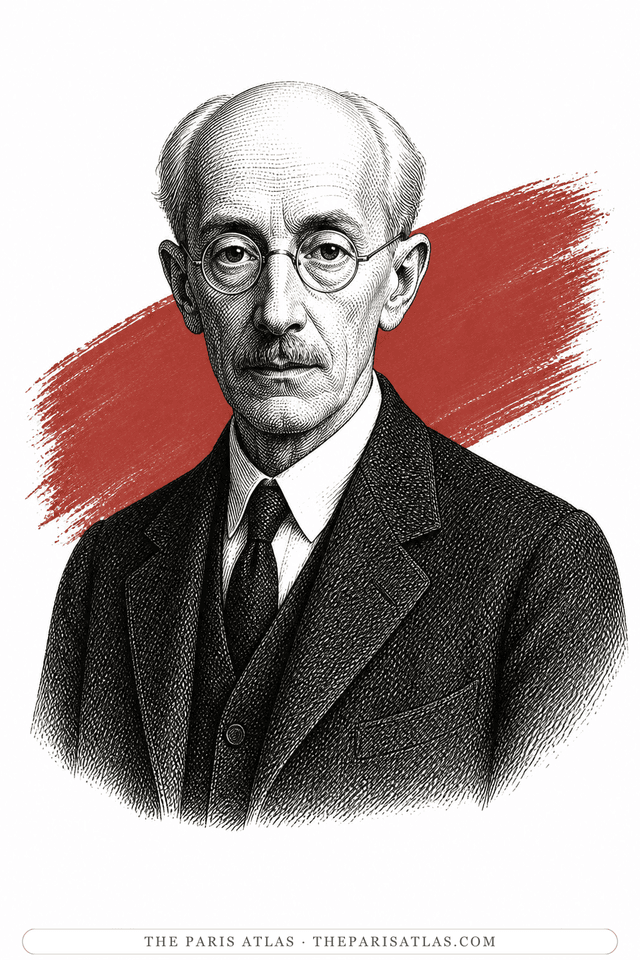
Piet Mondrian
Dutch painter of the primary-colour grids, made mostly in a studio beside the Gare Montparnasse where he lived on and off from 1912 to 1938. He dropped an 'a' from Mondriaan on arriving in Paris, painted his studio walls in movable rectangles, and danced the Charleston.
View artist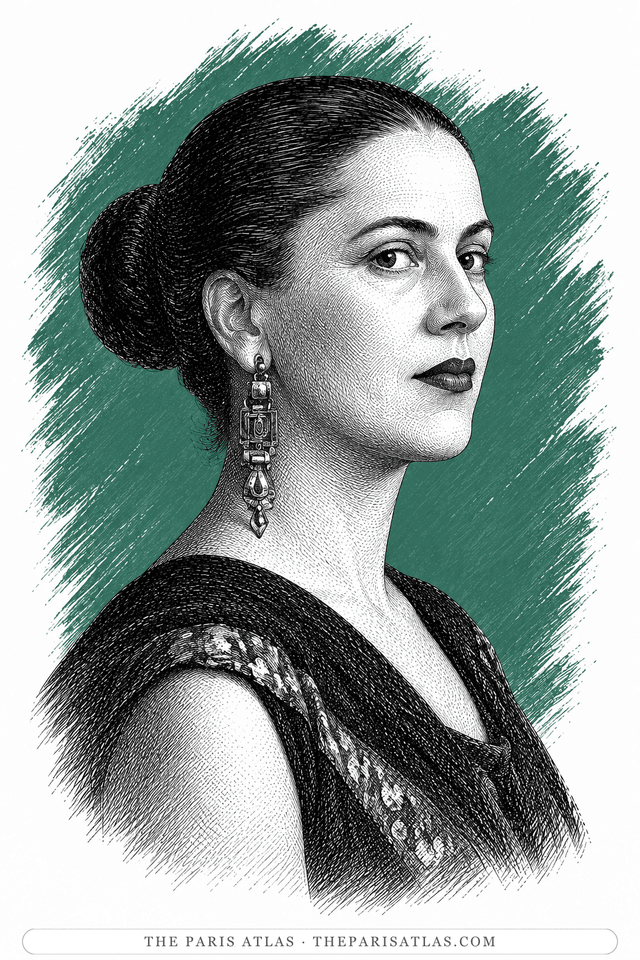
Tarsila do Amaral
Brazilian painter who spent the 1920s moving between São Paulo and Paris, studied Cubism under André Lhote, Albert Gleizes and Fernand Léger, and used what she learned to paint Brazilian towns, railways, plants and bodies. Her 1928 painting Abaporu prompted the manifesto that gave the Anthropophagic movement its name.
View artist
References
The sources below include collection records, catalogues, scholarly research, and primary materials that informed this page. They document Boy with a Pipe, its making, and its place in cultural history.


1Pablo Picasso, Garçon à la pipe — lot 7, Impressionist and Modern Art from the Collection of Mr and Mrs John Hay Whitney
WebsiteSotheby's, 2004Used forWeb source consulted for documented facts and historical context presented on the Boy with a Pipe page.

2Pablo Picasso breaks auction record
PeriodicalAl Jazeera, 2004Used forContemporary reporting or criticism used to document the historical reception and context of Boy with a Pipe.
3Picasso Timeline
WebsiteMusée National Picasso-ParisUsed forThe Musée Picasso chronology places the 1905 painting within Picasso's Rose Period and Paris career.
4Pablo Picasso — Artist and Collection Record
WebsiteThe Museum of Modern ArtUsed forMoMA's artist record provides independent museum context for Picasso's early modern development and legacy.
These references provide the documented foundation for this work's history and interpretation. Claim-level citations remain attached to the specific claims they support.
 Explore more resources