

The Autobiography of Alice B. Toklas
Stein's earlier, longer version of the Picasso years, with the portrait sittings and the rue de Fleurus Saturday evenings.
Read our takePicasso
Gertrude Stein
Gertrude Stein's short book about her friend Pablo Picasso, written in French in Paris in 1938 by one of his first collectors.
Gertrude Stein knew Pablo Picasso from 1905 onward, sat for his portrait of her, and collected his paintings. In 1938 she wrote a short book about him, in French, for a Paris art-book series.[1][2] The book follows his work from his arrival in Paris through the blue and rose periods, cubism and the ballet years, to the time he stopped painting. Her argument is that Picasso was a Spaniard who saw the twentieth century before anyone else did. She suggests she understood him early because she was doing the same thing in words.[3] Alice B. Toklas translated it for the English edition.[1]
Librairie Floury of Paris published the book in 1938 as number fourteen in its series Anciens et modernes. The French edition runs to 168 pages with 63 reproductions, eight of them in colour.[2] Writing in French was unusual for Stein. Apart from letters and the odd short piece, she wrote in English.[1]
Sometime in 1938 the London publisher B.T. Batsford asked for an English edition. Alice B. Toklas did the translation, working from Stein's French manuscript and adapting it freely. Her first draft gave Stein a choice of several English wordings in places.[1] The English book came out in London and New York, with 55 pages of text and plates in colour and black and white.[4]
The book moves through Picasso's life in order. He was born in Málaga on 25 October 1881. He first came to Paris in 1900, and the first influence on him there was Henri de Toulouse-Lautrec. A return to Spain in 1902 produced the blue period, and the rose period followed in France. Stein says the rose period ended with her portrait.[3]
Most of the book is argument, not biography. Stein insists that Picasso stayed a Spaniard, and that cubism was Spanish. "Cubism is a part of the daily life in Spain," she writes. She says the twentieth century was a time when everything cracks. Picasso, in her account, was the only painter who saw it with his own eyes. Her general rule is that a creator is simply the first person to notice what is happening to his generation.[3]
The early years. Picasso's birth in Málaga in 1881, his first stay in Paris in 1900, the pull of Toulouse-Lautrec, and the return to Spain in 1902 that produced the blue period. Then the rose period in Paris and the rue Ravignan studio in Montmartre.[3]
The portrait and cubism. Stein describes sitting for her portrait through the winter of 1905 to 1906 and her satisfaction with it. Then comes what she calls the negro period of 1907, and the start of cubism alongside Georges Braque and André Derain. Picasso stays in the rue Ravignan until 1910.[3]
War and the ballet. Picasso moves to Montparnasse, first to the boulevard Raspail and then the rue Schoelcher. In 1914 a camouflaged army truck goes by, and he claims camouflage for cubism. In 1917 his work for the Russian ballet turns his attention to calligraphy, which Stein treats as a Spanish habit of mind.[3]
The later years. The move to Montrouge, the later periods, and the times Stein says Picasso stopped painting altogether. Since he could not do nothing, she writes, he made poetry. Throughout, she returns to her claim that he saw the century before anyone else.[3]
Stein wrote Picasso in French for a Paris publisher, Librairie Floury, at 14 rue de l'Université. The book appeared in 1938 in an illustrated series called Anciens et modernes, meaning old and modern. Edward Burns, who edited Stein's writings on Picasso, notes that writing in French was a real departure for her.
The English text is Alice B. Toklas's work. Batsford approached Stein about an English edition during 1938, and the job of translating fell to Toklas. She followed the French manuscript but adapted it freely. Her first draft offered Stein several English choices here and there, and Stein picked among them.
Readers of the English edition are therefore reading two people. The sentences have Stein's repetitions and missing commas, but they passed through Toklas first. The Library of Congress holds the English edition as a London book of 1939, and Dover's 1984 reprint gives 1938 for the Batsford original.
The book's camouflage story is set at the start of the First World War. Stein was with Picasso on the boulevard Raspail at night when a camouflaged army truck went by. They had heard of camouflage but had never seen it. Picasso stared at it and cried out: "yes it is we who made it, that is cubism."
Stein builds a larger claim on the story. Older wars, she says, were arranged around one man in the centre with other men around him. The war of 1914 to 1918 had no beginning and no end, and one corner of it mattered as much as another. In her account, the war had the same shape as a cubist picture.
The same idea runs through the whole book. Stein describes the twentieth century as a time when everything cracks, everything is destroyed and everything isolates itself. She says Picasso was the only painter who saw that century with his own eyes. She puts the rule in one sentence: "A creator is not in advance of his generation but he is the first of his contemporaries to be conscious of what is happening to his generation."
Stein is never far from the centre of Picasso. She dates the end of the rose period by her own portrait, which he worked on through the winter of 1905 to 1906. She writes that she was and still is satisfied with it: "for me, it is I." The painting, Gertrude Stein, is now in the Metropolitan Museum of Art in New York.
She also makes a large claim about herself. At one stage, she says, she alone understood him. She gives two possible reasons: that she was expressing the same thing in literature, and that she was an American.
The book has lighter moments too. Stein tells how a painter asked Alice B. Toklas to lend her name so some pictures could hang at a Paris salon. The pictures were accepted. Stein showed Picasso the catalogue and told him that Toklas had never painted and yet had a picture in the salon. Picasso, she writes, went red.
Museums have taken up the same pairing. In 2023 the Musée du Luxembourg in Paris staged Gertrude Stein and Pablo Picasso: Inventing Language, with the support of the Musée national Picasso-Paris. The exhibition set Stein's word portraits beside his cubist ones.
The French edition had a second life under the German occupation. On 10 May 1943 the occupying authorities issued the third Liste Otto of books that could not be sold in France. Stein appears on it among Jewish authors writing in French, as "Miss Gertrude Stein", with Floury named as her publisher.
A writer on the list could not have books sold, and libraries had to remove them. Stein and Toklas were then living near Belley, in the Ain, and had moved to Culoz that February.
yes it is we who made it, that is cubism.
A creator is not in advance of his generation but he is the first of his contemporaries to be conscious of what is happening to his generation.
it is a time when everything cracks, where everything is destroyed, everything isolates itself
I was and I still am satisfied with my portrait, for me, it is I
Stein knew Picasso from 1905, sat for his portrait, and bought his paintings through the cubist years. The book is her account of the whole career up to 1938.
The truck on the boulevard Raspail, Picasso crying that cubism made camouflage, and Stein's claim that the 1914 war had a cubist shape all come from this book.
The sentences repeat, but the book says plain things about a painter most readers already know. The English edition takes under an hour to read.
Stein wrote it in French for a Paris publisher, and Alice B. Toklas turned it into English. The book comes out of their life at the rue de Fleurus.
1905–1906
Picasso paints his portrait of Gertrude Stein through the winter in his Montmartre studio.
1938
Librairie Floury publishes Picasso in French, in its series Anciens et modernes.
1938
B.T. Batsford asks for an English edition, and Alice B. Toklas translates the French manuscript.
1939
The English edition appears in London and New York.
1943
On 10 May the third Liste Otto of banned books names Stein among Jewish authors writing in French, with Floury as her publisher.
1970
Liveright publishes Gertrude Stein on Picasso, edited by Edward Burns with the Museum of Modern Art.
1984
Dover Publications reprints the English edition in paperback.
2023
The Musée du Luxembourg in Paris opens Gertrude Stein and Pablo Picasso: Inventing Language on 13 September.


Stein's earlier, longer version of the Picasso years, with the portrait sittings and the rue de Fleurus Saturday evenings.
Read our take
Stein's own attempt to do in words what Picasso was doing to still lifes, written in 1912 at the height of cubism.
Read our take
Stein wrote part of Melanctha while Picasso was painting her portrait, the portrait this book dates the rose period by.
Read our takeParis France
Gertrude Stein
Stein's book about France and the French, published two years later. Picasso appears in it too.
Read our take
Alice B. Toklas's own memoir, which covers the same Picasso years from the woman who translated this book.
Read our takeA short book about Pablo Picasso's life and work up to 1938, by the American writer who knew him from 1905. Stein follows his periods in order and argues that he was the painter who saw the twentieth century first.
Yes. She wrote it in French for Librairie Floury, a Paris publisher, which issued it in 1938. Writing in French was unusual for her.
Alice B. Toklas. B.T. Batsford of London asked for an English edition in 1938, and Toklas translated the French manuscript, adapting it freely. In places she gave Stein several English wordings to choose from.
Stein says cubism came from Picasso's Spanish way of seeing, and that it matched the shape of the twentieth century. She tells how Picasso saw a camouflaged army truck in 1914 and claimed camouflage for cubism.
Yes. Stein says the rose period ended with her portrait, which he worked on through the winter of 1905 to 1906. She writes that she was still satisfied with it and that, for her, it is her.
The English edition has 55 pages of text followed by plates. Most readers finish it in under an hour.
Dover Publications reprinted the English edition in 1984. Beacon Press prints it in Picasso: The Complete Writings, edited by Edward Burns, with Stein's two shorter word portraits of Picasso.
Explore authors with a similar voice, perspective, and influence.
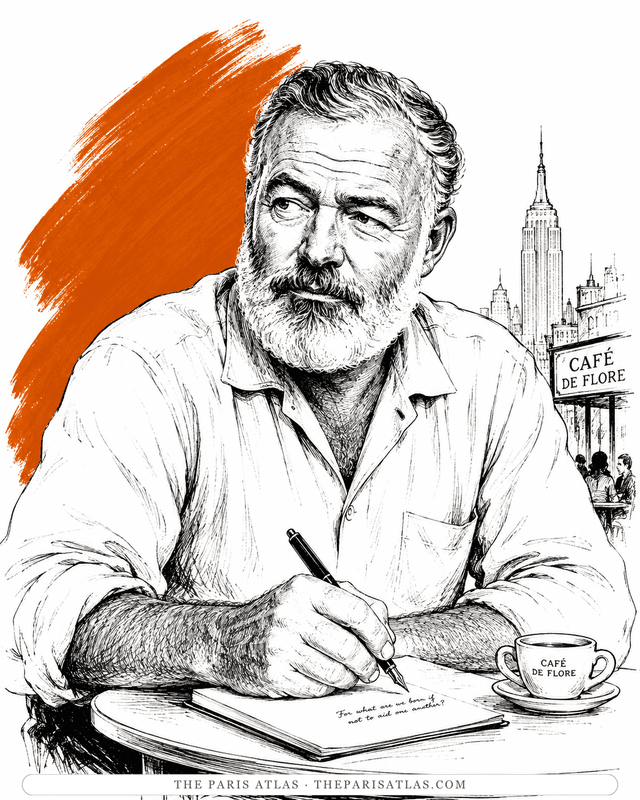
Her most famous pupil — the tutorials at the rue de Fleurus, the godmother years, and the 'lost generation' epigraph all passed through her studio before the celebrated falling-out.
View author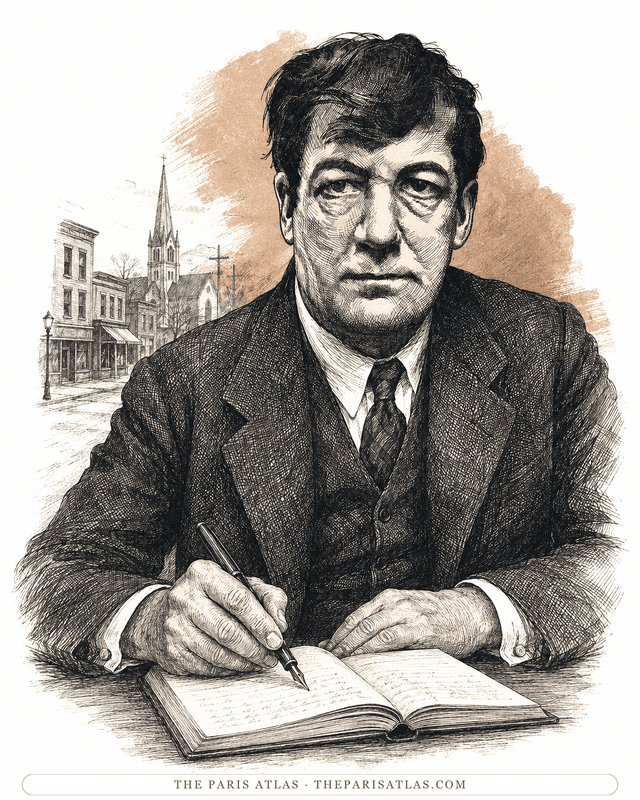
Her loudest American champion — he wrote the introduction to her Geography and Plays, and it was his letter that first brought Hemingway to her door.
View author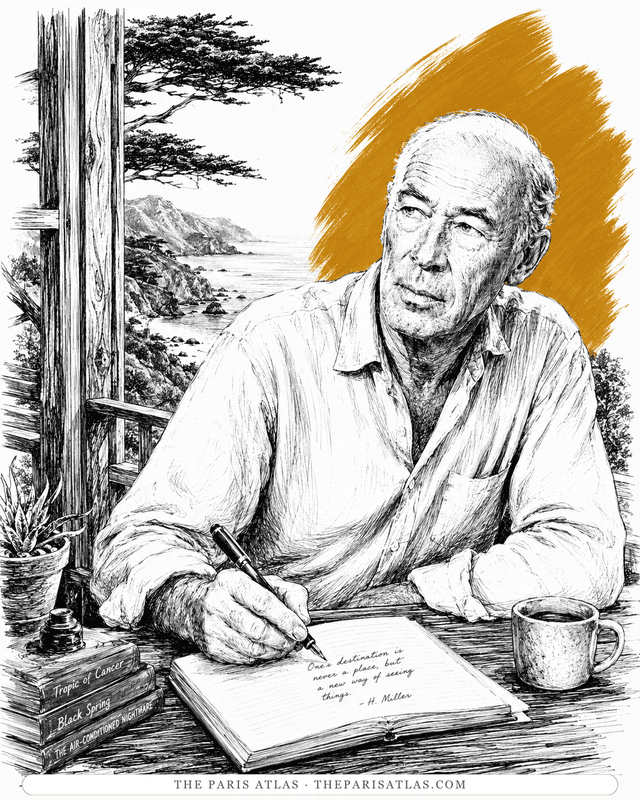
The Brooklyn dropout who arrived in Paris broke at thirty-eight and wrote the exuberant, banned books that ended American censorship.
View authorThe sources below include the primary text, editions, scholarship, archival materials, and other records that informed this page. They document Picasso, its publication, and its place in literary history.

Edward Burns's edition of Stein's Picasso writings, whose note on the text records the French original, the Batsford request and Alice B. Toklas's translation.
Library of Congress record for the English edition, London, 1939.
Library of Congress record for the Dover reprint, used for the ISBN and the date of the Batsford original.
Library of Congress record for Picasso: The Complete Writings, used for the ISBN and contents.
Edward Burns on Stein's war years, for the 1943 Liste Otto entry naming Floury.
Guide to the 2023 to 2024 Paris exhibition on Stein and Picasso.
The Metropolitan Museum of Art's record for Picasso's portrait of Stein.
HathiTrust rights check for the French and English editions, 23 September 2026.

The primary text represented by this page, used for descriptions of the work’s contents and for any quoted passages shown here.
The primary text is the baseline reference for every book page. Additional references document publication history, interpretation, and historical context where that evidence is available.
 Explore more resources