
A Moveable Feast
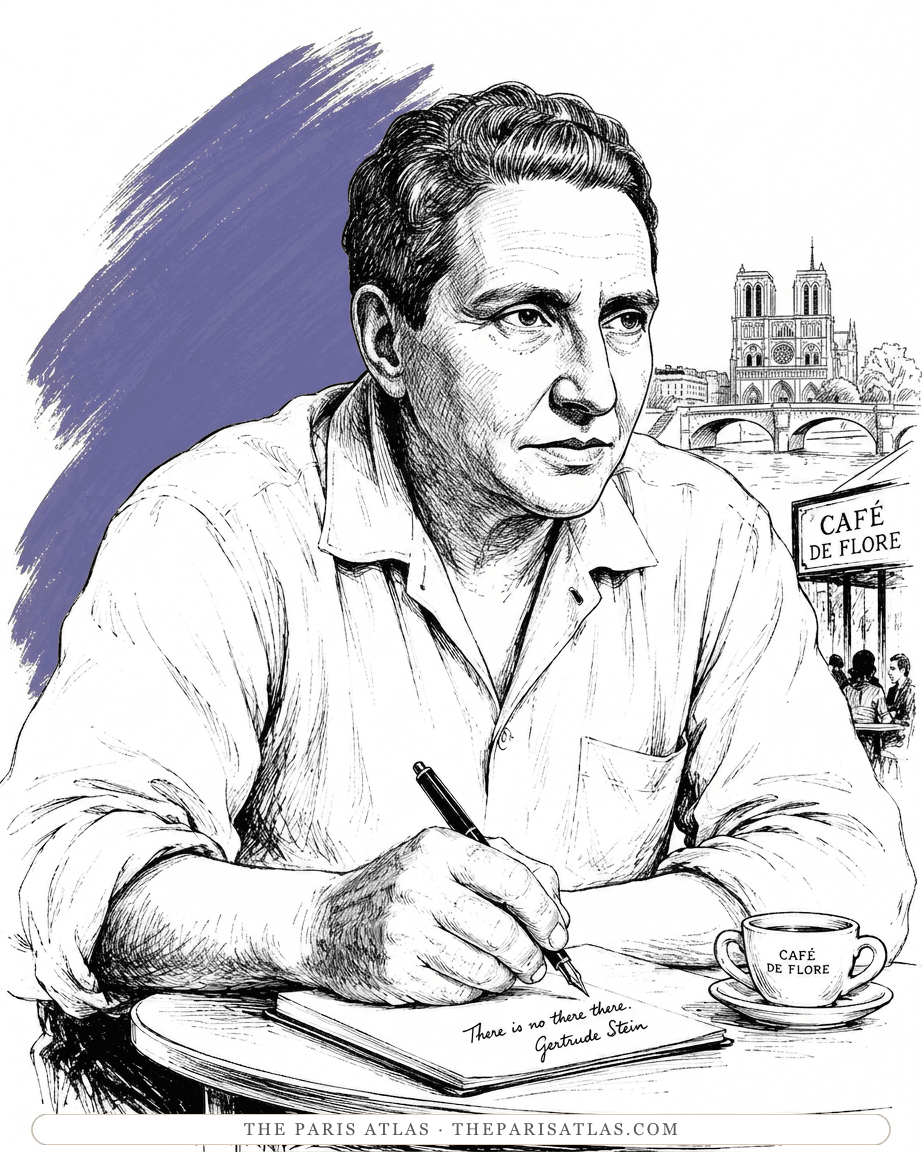
Hemingway's memoir opens inside Stein's studio — the tutorials, the paintings, and the 'lost generation' phrase she handed him.
Read our take
Still lifes in words from the studio hung with Picassos — objects, food, and rooms painted in sentences. Modernism at its most playful.
Three suites of short prose poems — Objects, Food, Rooms — in which a carafe, a red hat, roast beef, and the family sitting-room are described the way the paintings on Stein's studio wall described things: from every side at once, in language let off its usual errands. Written while cubism was being invented around her and published in June 1914 by the tiny New York press Claire Marie, it became the most quoted and most argued-over experiment of the modernist years. There is no plot to spoil — only sentences to read aloud.
Stein wrote it in 1912, much of it while traveling in Spain with Alice B. Toklas: still lifes in prose, arranged like a museum with three rooms — Objects, Food, Rooms — in which a carafe, a red stamp, roast beef, and the furniture are described in sentences that have severed relations with description. It was the verbal equivalent of what her friend Picasso was doing to guitars and bottles across town, and she knew it.
Donald Evans's little New York press, Claire Marie, published it in 1914 in an edition of about a thousand copies, and the American press had the time of its life — Tender Buttons became the national punchline for modern art, quoted in columns as proof the avant-garde had lost its mind. Stein, who understood publicity better than her mockers, noted that they were quoting it.
The last laugh took decades but arrived: the book became a permanent touchstone for experimental writing — the poets of every subsequent avant-garde, down to the Language school, treat it as a founding document. It remains the era's purest dare: language asked to be paint. Readers still argue over whether it means; nobody argues over whether it mattered.
Three sections — Objects, Food, Rooms — of short prose pieces with titles like 'A Carafe, That Is a Blind Glass,' 'A Red Stamp,' 'Roastbeef,' and 'A Chair.' Each looks like a definition and behaves like a painting: Stein renders not what the thing is but the experience of perceiving it, in sentences that use ordinary words with all their ordinary duties suspended. It is the closest literature ever came to doing what her friends Picasso and Braque were doing to guitars and bottles — taking the object apart and reassembling it from several angles at once.
There is no story, and summary is beside the point; the book is an instrument you play by reading, preferably aloud, where the pleasure is watching language freed from errands. It scandalized and delighted 1914 in roughly equal measure, became the era's favorite joke about modern art, and then outlived the joke: every experimental writer since — down to the present — has had to reckon with the little book where a rose stopped standing for anything and became a thing made of words.
The opening piece's title seems to explain its object, then makes the glass blind. That reversal prepares us for a paragraph that withholds a stable picture of the vessel. Kinship, spectacle, color and arrangement become competing ways of approaching it. Crucially, the passage denies that a failure of resemblance means an absence of order. Its shifting connections ask us to distinguish unfamiliar organization from mere randomness. Read this way, the carafe is not a puzzle with one concealed definition: it is a test of how much a description can change while still directing attention.
In Asparagus, repetition supplies a movement that ordinary description would explain. The opening returns to the idea of leaning before arriving at heat; the ending expands wetness into weather, repeats the longer phrase and contracts again. Read aloud, the small shifts keep the sounds moving without resolving them into a recipe or botanical portrait. The declaration that this makes art draws attention to that making. Familiar material becomes unfamiliar through its arrangement in time, so the reader experiences the transformation rather than receiving an explanation of what the vegetable symbolizes.
No earlier book treated English so completely as raw material; a hundred years of poetry and prose experiment descend from these pages.
This is the teacher of the Paris moderns at full stretch — the writing the Saturday-evening visitors to the rue de Fleurus crossed town to argue about.
An hour's read in the public-domain edition, and small enough to return to the way you return to a painting — which is what it asks for.
1912
Stein writes it, much of it while traveling in Spain with Alice B. Toklas.
1914
Donald Evans's small New York press Claire Marie publishes it in an edition of about a thousand copies, and the American press makes it the national punchline for modern art.
2014
City Lights' corrected centennial edition restores Stein's own revisions.
Hemingway's memoir opens inside Stein's studio — the tutorials, the paintings, and the 'lost generation' phrase she handed him.
Read our take
The era's other great affront to ordinary prose — Joyce's arrived via a Paris bookshop, Stein's via a tiny New York press, and partisans of each filled the same cafés.
Read our takeGertrude Stein. It was published in 1914 by the small New York press Claire Marie.
Three suites of short prose poems — Objects, Food, Rooms — describing everyday things the way the Cubist paintings on Stein's walls described them: from every side at once, in language let off its usual errands.
No. It is a set of verbal still lifes with no story to follow — a book to be read aloud rather than decoded.
Stein wrote it around 1912, while Cubism was being invented in her circle, and applied a similar method to language — breaking the single fixed viewpoint.
It became the most quoted and most argued-over literary experiment of the modernist years, and remains the touchstone of Stein's radical style.
Explore authors with a similar voice, perspective, and influence.
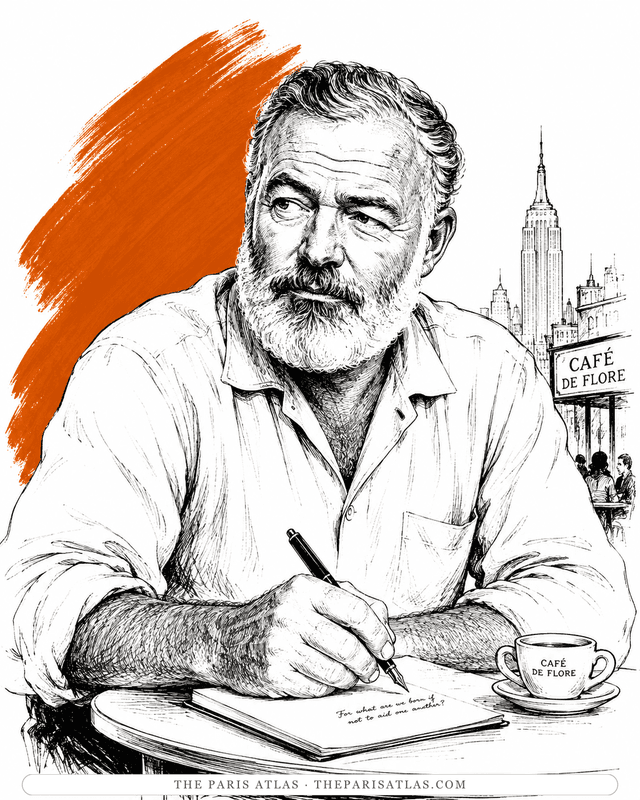
Her most famous pupil — the tutorials at the rue de Fleurus, the godmother years, and the 'lost generation' epigraph all passed through her studio before the celebrated falling-out.
View author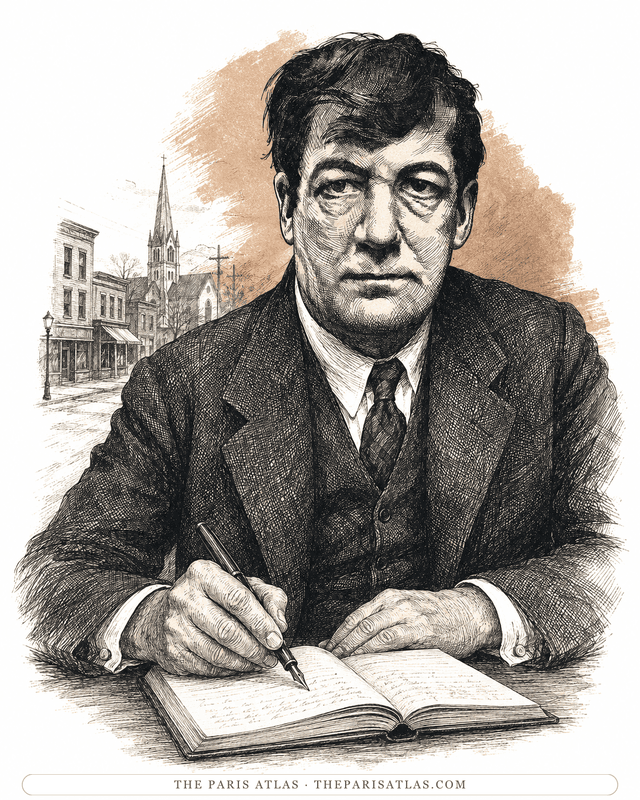
Her loudest American champion — he wrote the introduction to her Geography and Plays, and it was his letter that first brought Hemingway to her door.
View author
The Brooklyn dropout who arrived in Paris broke at thirty-eight and wrote the exuberant, banned books that ended American censorship.
View authorThe sources below include the primary text, editions, scholarship, archival materials, and other records that informed this page. They document Tender Buttons, its publication, and its place in literary history.

The primary text represented by this page, used for descriptions of the work’s contents and for any quoted passages shown here.
Used to place Tender Buttons within Gertrude Stein's published work and verify its bibliographic context.
Used for independent biographical, archival, or historical context surrounding Gertrude Stein's career and the period in which Tender Buttons appeared.

Used to cross-check authorship, chronology, and the work's place in Gertrude Stein's wider catalogue.
Used to verify Gertrude Stein's bibliography and place Tender Buttons within the broader chronology of Gertrude Stein's career.
Primary text for close readings of the complete Carafe and Asparagus pieces; not a claim to resolve every possible interpretation.
The primary text is the baseline reference for every book page. Additional references document publication history, interpretation, and historical context where that evidence is available.
 Explore more resources