
Discussed in
A Moveable Feast
The memoir treats Joyce's novel as a central fact of Sylvia Beach's bookstore and as one of the standards against which the young writers around Shakespeare and Company measured themselves.

by James Joyce
One Dublin day, June 16th, 1904 — the novel that remade the form, published by a Paris bookshop when no one else would touch it.
Leopold Bloom walks Dublin for a single June day — buying a kidney, attending a funeral, dodging his wife's four o'clock appointment — while young Stephen Dedalus orbits toward him. From that almost plotless day Joyce built the century's most inventive novel: eighteen episodes, each in a different style, mapping a whole city, a marriage, and most of what a mind does in sixteen waking hours. Banned in America and Britain on publication, it reached print because a Left Bank bookshop decided it must.
It took seven years and three cities — Trieste, Zurich, Paris — to write one Dublin day: June 16, 1904, followed through Leopold Bloom, Stephen Dedalus, and Molly Bloom in a different style per episode. The Little Review began serializing it in New York in 1918 and was convicted of obscenity in 1921 for the Nausicaa episode; every commercial publisher in the English-speaking world promptly backed away from the greatest novel of the century.
A bookseller saved it. Sylvia Beach of Shakespeare and Company — a lending library, not a publishing house — offered to bring it out herself, took subscriptions from half of literary Europe, and drove Maurice Darantiere's printers in Dijon through Joyce's endless proof revisions, delivering the first two copies on the author's fortieth birthday: February 2, 1922, a thousand numbered copies in Greek-flag blue. It is the most famous act of literary patronage of the century, and it nearly bankrupted her shop.
For eleven years the book lived as contraband — copies seized and burned by postal authorities, pirated in America by Samuel Roth over the signed protest of the world's writers — until Judge Woolsey's 1933 decision admitted it to the United States and Random House published it legally in 1934, an edition from which Beach, who had given everything, saw essentially nothing. The scandal faded; the book remained; June 16 is now celebrated annually on several continents, which is not bad for a day on which nothing much happens.
One Dublin day — June 16, 1904 — carried by two men. Stephen Dedalus, poet without poems, teaches a morning history class, quarrels with his roommate Buck Mulligan in their seaside tower, and walks the city grieving a mother at whose deathbed he refused to kneel. Leopold Bloom, advertising canvasser, cooks a pork kidney, attends the funeral of an acquaintance, works the newspaper office, lunches on a cheese sandwich and burgundy, and carries all day the knowledge he cannot act on: at four o'clock, his wife Molly will receive her concert manager, Blazes Boylan, and not for rehearsal.
The day expands into an epic by method: every episode shadows an adventure of Homer's Odyssey and adopts a different style — the newspaper chapter runs on headlines, the music chapter on fugue, the maternity-hospital chapter recapitulates the whole history of English prose, and in a nationalist pub a one-eyed 'citizen' provides the Cyclops to Bloom's Ulysses, who answers bigotry with the book's quiet credo and escapes as the biscuit tin flies. Father in search of a son, son in search of a father, the two orbits tighten all day toward their meeting.
The night brings them together: in the hallucinatory brothel-district chapter, Bloom follows the drunken Stephen Dedalus, watches over him through a phantasmagoria in which both men's guilts take the stage, and picks him up off the cobbles after an English soldier knocks him down. He walks the young man home to 7 Eccles Street for cocoa and conversation; Stephen, offered a bed, courteously declines and disappears into the night — the son adopted for exactly one hour. Bloom climbs in beside the sleeping Molly and the novel hands her the last word: forty unpunctuated pages of her drifting, remembering mind, closing with the day on Howth Head when Bloom proposed — and the most famous final word in modern literature, her repeated, capitalized Yes.
Bloom first throws a crumpled leaflet that the gulls ignore, then buys cakes they immediately devour. The change from useless paper to edible fragments gives his sympathy a practical form. Yet the gesture does not turn him into an uncomplicated emblem of generosity: irritation at the birds' lack of thanks follows almost at once, and his thoughts wander toward their possible taste as meat. Joyce lets concern, curiosity and petty complaint occupy the same mind without resolving them into a verdict. The kindness matters because it happens within this restless, contradictory attention, not outside it.
The question-and-answer narration measures spoonfuls and drinking speeds as if hospitality could be exhaustively tabulated. Within that elaborate accounting, Bloom gives up his special cup so that the two cups match, then serves Stephen more cream than himself. Ordinary adjustments carry the welcome. But numerical precision does not provide complete access to either man's thoughts: the account explicitly corrects Bloom's guess that his silent guest is composing. The shared drink creates company without perfect understanding. The episode's cool, exacting form can register the tenderness of an action while preserving the distance between the people involved.
…and first I put my arms around him yes and drew him down to me so he could feel my breasts all perfume yes and his heart was going like mad and yes I said yes I will Yes.
—History, Stephen said, is a nightmare from which I am trying to awake.
Love loves to love love.
Discussed in
The memoir treats Joyce's novel as a central fact of Sylvia Beach's bookstore and as one of the standards against which the young writers around Shakespeare and Company measured themselves.

Discussed in
Orwell uses Joyce's novel as an artistic benchmark, judging Tropic of Cancer far inferior as a novel while arguing that Miller is pursuing a fundamentally different kind of writing.
Every writer of the generation that followed worked in its shadow — Hemingway carried the blue first edition home from the rue de l'Odéon, and the century's fiction split into before and after.
No novel has ever been more precisely located in a real city — Joyce claimed Dublin could be rebuilt from its pages. It is the idea of an atlas, executed as literature.
Serialized, prosecuted, burned by customs — then published entire by Sylvia Beach from 12 rue de l'Odéon in 1922. The story of how it reached print is a Paris story, and several of its rooms are on this site.
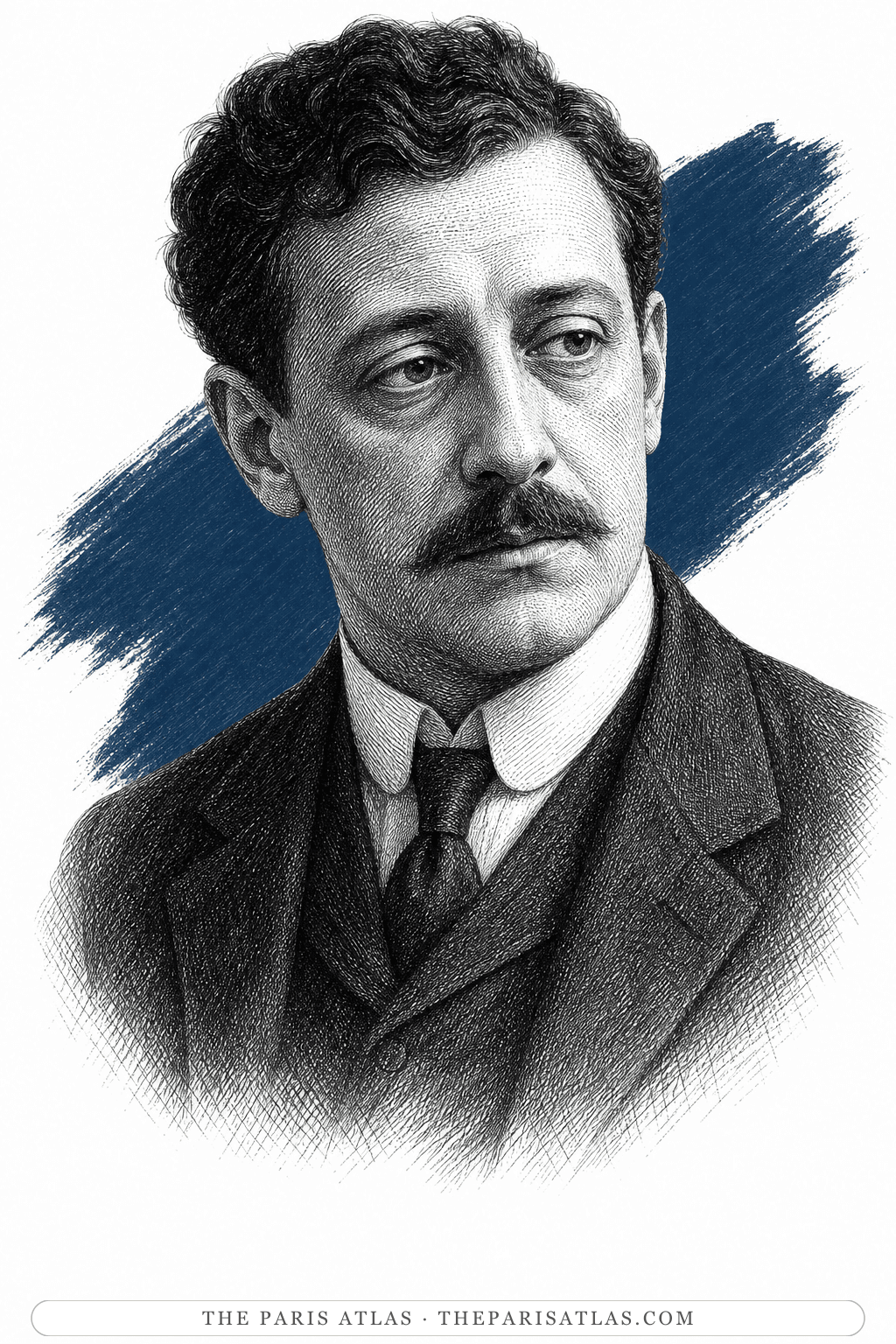
The man Ulysses follows through 16 June 1904 — a Dublin advertising salesman of 38 who cooks a kidney for breakfast, goes to a funeral, and ends the night walking a drunk stranger home.
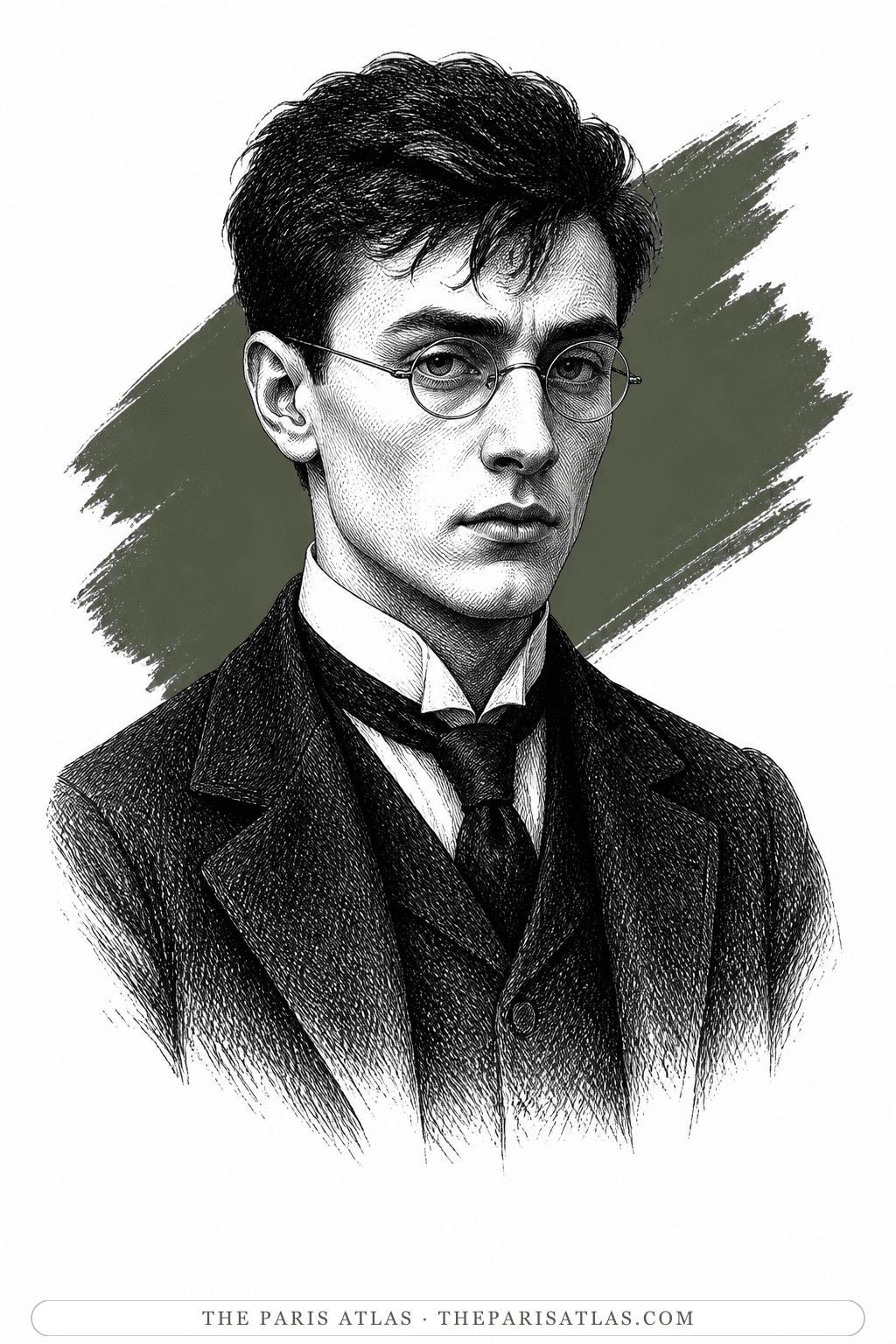
A 22-year-old schoolteacher who means to be a writer and has not written anything. He is also the central figure of Joyce's earlier novel, A Portrait of the Artist as a Young Man.
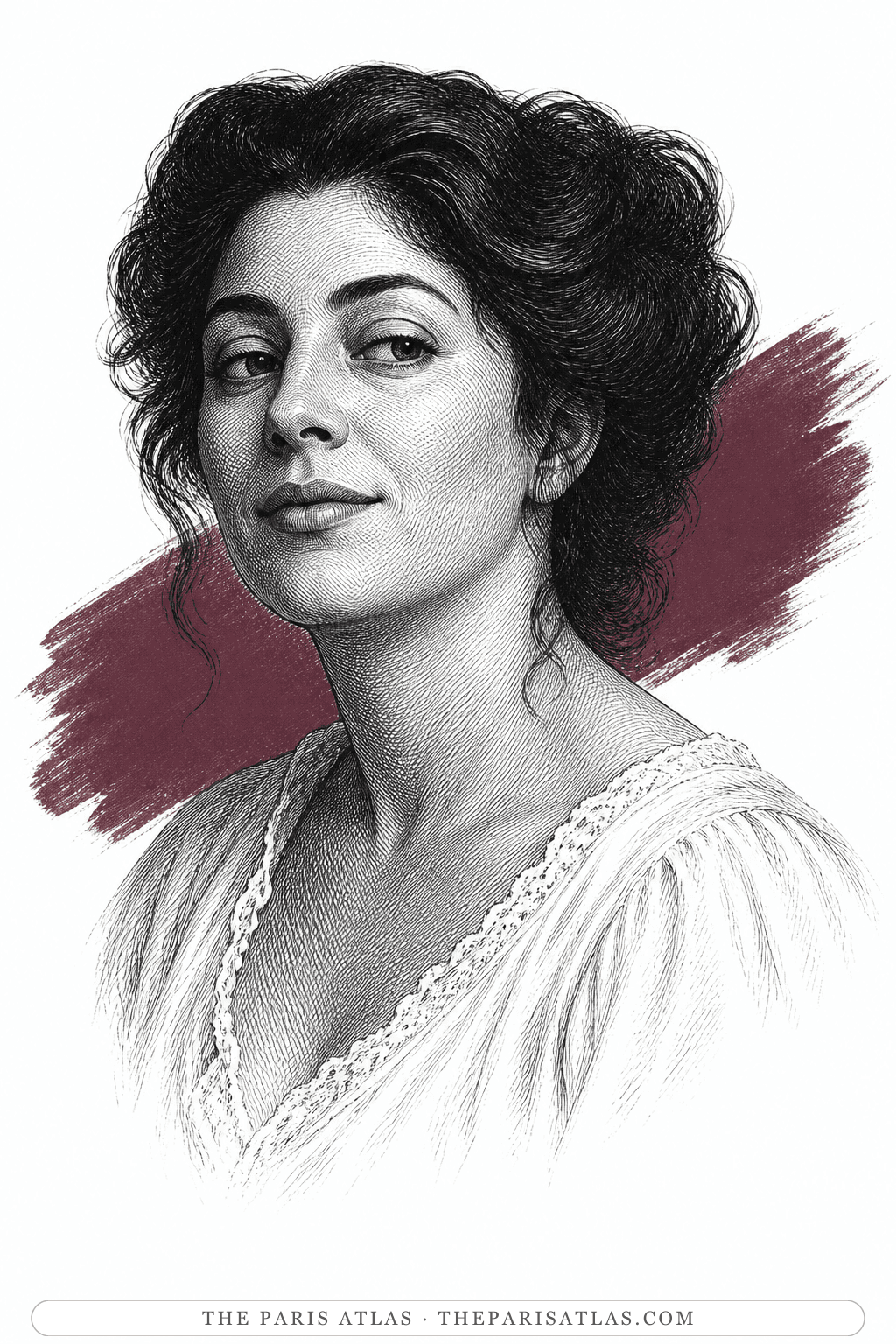
Leopold Bloom's wife, a professional singer born in Gibraltar. She is in bed for almost the whole book and speaks last: the closing forty pages are her thoughts, printed with almost no punctuation.
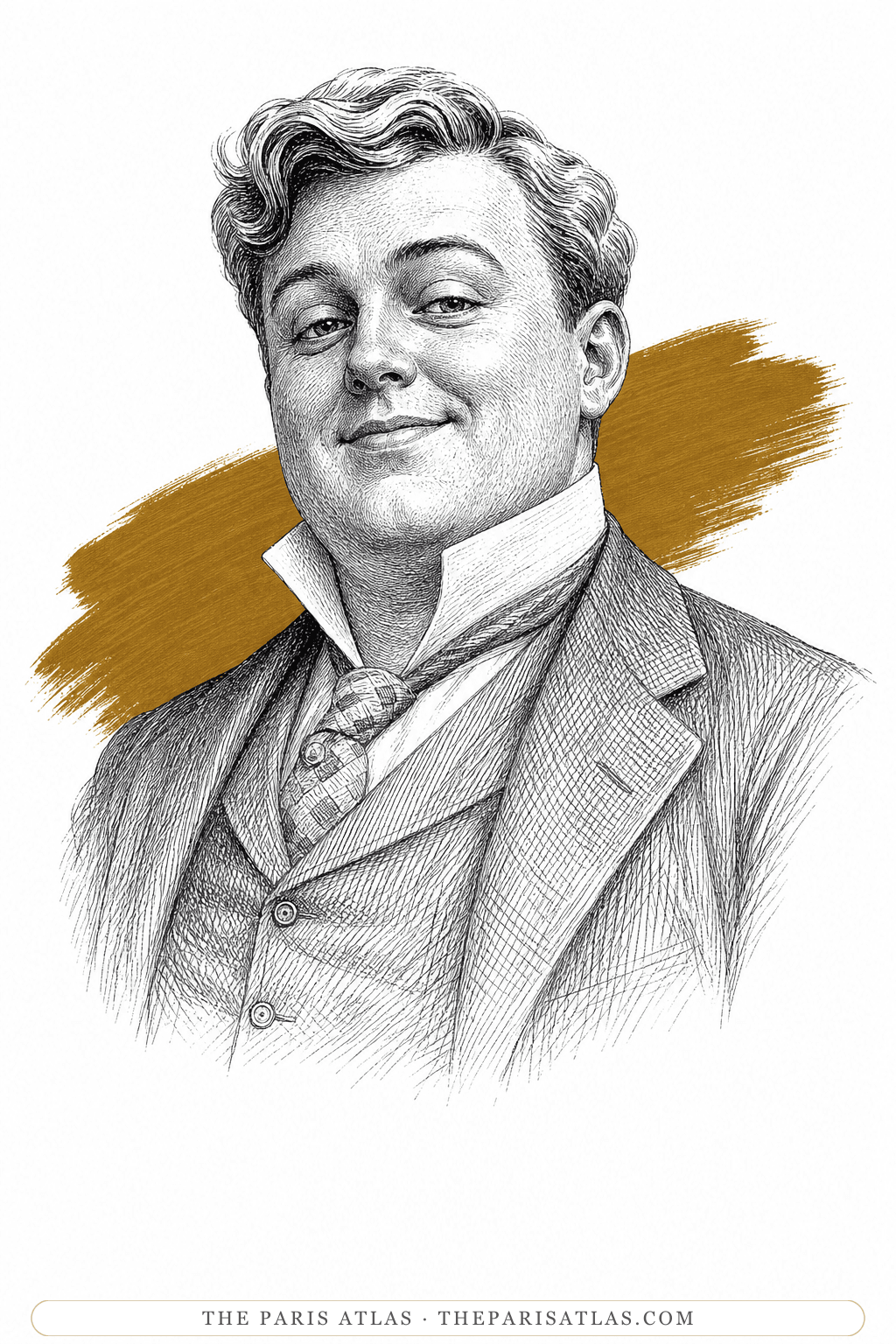
The medical student who shares a seaside tower with Stephen Dedalus and speaks the first words of the novel. He is generous, extremely funny, and not a friend.
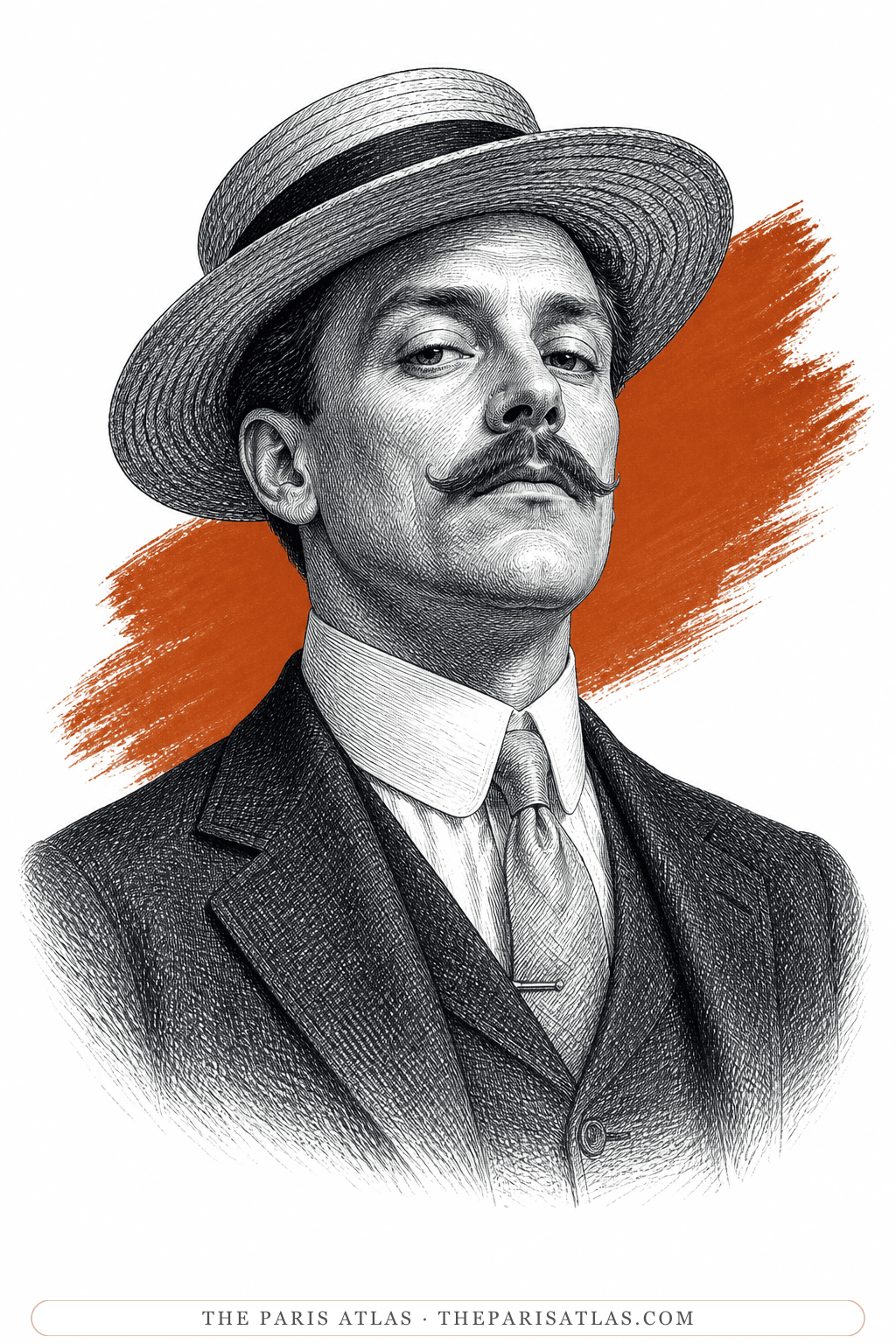
The Dublin concert promoter who is Molly Bloom's lover. His four o'clock call at her house is the fact her husband arranges the whole day around.
1918
The Little Review begins serializing it in New York.
1921
The magazine is convicted of obscenity over the Nausicaa episode, and commercial publishers back away.
1922
Sylvia Beach's Shakespeare and Company publishes it; the first copies arrive on Joyce's fortieth birthday, 2 February.
1933
Judge Woolsey's decision admits it to the United States.
1934
Random House publishes it legally in America.

The publisher's own memoir — how a lending library came to print the century's most notorious novel.
Read our take
Huddleston watched Joyce read aloud and recorded the Beach–Joyce exchange that decided publication.
Read our takeHemingway borrowing books from Beach's shop while the Joyce legend filled the quarter around him.
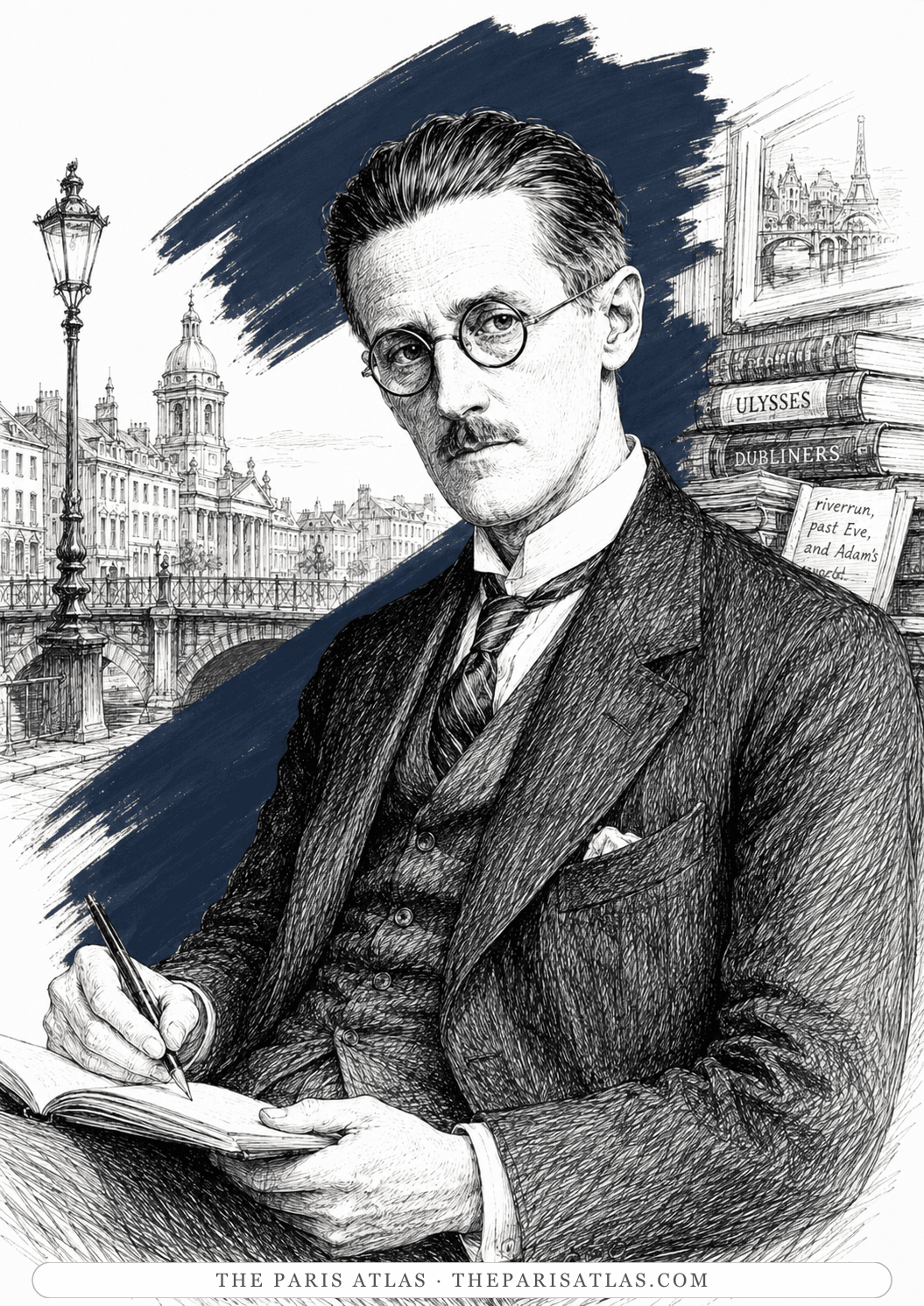
Read our takeThe Irish writer James Joyce. It was published in 1922 and is one of the central works of literary modernism.
A single day — 16 June 1904 — in Dublin, following Leopold Bloom and the young Stephen Dedalus through ordinary errands. From that almost plotless day Joyce built eighteen episodes, each in a different style, mapping a whole city and a marriage.
For obscenity. Serialized chapters were convicted in New York in 1921, and the book was effectively barred in the United States and Britain for over a decade after publication.
In Paris, by Sylvia Beach at Shakespeare and Company, on 2 February 1922 — when no English-language publisher would touch it.
Each of its eighteen episodes uses a different style and technique, and the book is dense with allusion and interior monologue. Many readers use a guide or an audiobook to carry the hardest stretches.
16 June, the day on which Ulysses takes place. It is now celebrated by readers around the world with readings and walks through Dublin.
Explore authors with a similar voice, perspective, and influence.
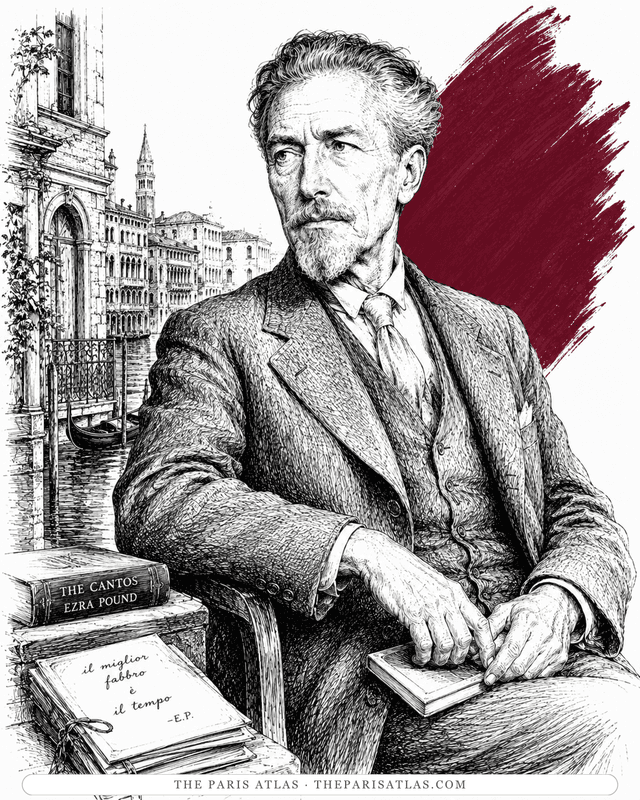
The impresario who dragged Joyce's early books into print, brought him to Paris, and championed Ulysses until the world caught up.
View author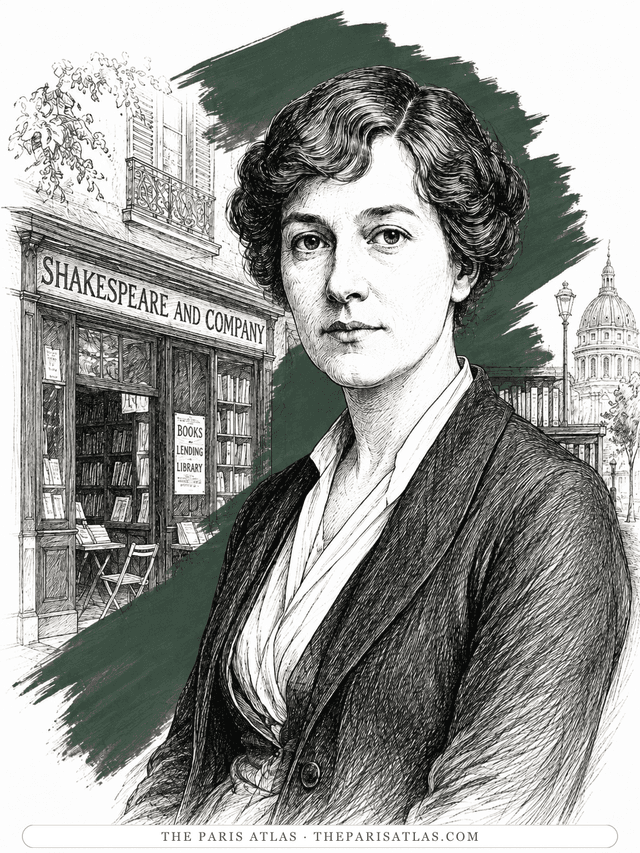
His publisher of last resort and first devotion — the bookseller who printed Ulysses when no one else would.
View author
The doctor of the Paris slums who wrote the century's blackest, funniest novel — and changed the sound of French prose.
View authorThe sources below include the primary text, editions, scholarship, archival materials, and other records that informed this page. They document Ulysses, its publication, and its place in literary history.


The primary text represented by this page, used for descriptions of the work’s contents and for any quoted passages shown here.
Selected passages of episodes 8 and 17 read in Project Gutenberg #4300, updated November 27, 2025 and described by its catalogue as based on pre-1923 print editions. The gull-feeding and cocoa passages support literary analysis, not a whole-novel, specific-printing or scientific/medical fact-check.
First-person evidence and historical context used in preparing the Ulysses page.
Used for the novel’s composition, Paris publication, and the chronology of Joyce’s life and work.
The Morgan Library exhibition supplies archival context for John Quinn, censorship, and the legal history surrounding Ulysses.
The Morgan Library exhibition provides an independent account of the book’s Paris reception and modernist circle.
The primary text is the baseline reference for every book page. Additional references document publication history, interpretation, and historical context where that evidence is available.
 Explore more resources