
A Moveable Feast
The same cafés remembered from the next table — written thirty-six years earlier, and without the knives.
Read our take
A Times correspondent's eyewitness tour of the salons and café tables of 1920s Paris — Joyce, Pound, Sylvia Beach, and the young Hemingway, sketched from the next chair.
Huddleston was the best-connected English journalist in Paris, and in 1928 he wrote it all down while it was still happening: Paul Fort holding court at the Closerie des Lilas, Sylvia Beach deciding to publish Ulysses, Pound turning composer, the Ballet Mécanique riot, the tourists in pearls slumming at the Rotonde — and a young Hemingway, freshly famous, affectionately parodied in his own style. Half the rooms in this book still have addresses; this is what they sounded like from a chair inside.
Huddleston had the best seat in Paris and knew it. The Times of London sent him to cover the 1919 Peace Conference; he stayed to cover everything else, and by the mid-twenties the portly Englishman presiding over the Anglo-American press lunches knew both literary Parises — the French one of Paul Fort and the academies, and the foreign one assembling at the Dôme and the rue de l'Odéon — better than anyone writing in English.[1]
In 1928 he did the sensible, priceless thing: he wrote it all down while it was still happening. Salon by salon, café by café, studio by studio, the book tours the era mid-performance — Sylvia Beach deciding to publish Ulysses, Pound turning composer, the riots at modernist premieres, and a newly famous young Hemingway, whose hunt for a simple style Huddleston had watched at the press lunches and whose finished manner he affectionately parodies in these pages.[1]
Lippincott published it in America in 1928; Britain got it from Harrap as Bohemian Literary and Social Life in Paris. It sold as journalism and survives as testimony: no hindsight, no legend-polishing, no idea how any of it would end. The book is now in the public domain — free to read — and half its rooms are addresses you can still walk to, which makes it the closest thing to a founding document, written from the next chair.[1]
A guided tour of literary and artistic Paris in the twenties, written by the Times correspondent who had a chair in every room. Huddleston organizes it the way the city organized itself: by salon, café, and studio — the French literary world of Paul Fort and the academies on one side, the Anglo-American colony of Montparnasse on the other, and the traffic between them that most memoirs never mention. Sylvia Beach and the publishing of Ulysses, Pound's operatic experiments, the riots that greeted the new music and painting, the tourist invasion of the Rotonde — all reported as news, because it still was.[1]
The pleasure is the eyewitness present tense: nobody in these pages knows how the story ends, least of all the affectionately parodied young Hemingway. Chapters stand alone, so the book rewards browsing — start with a room you already know and read outward. It is the era's best single piece of testimony from the next chair, and it is in the public domain: the whole thing can be read free online.[1]
Beach's enthusiasm acquires weight because Huddleston first describes the financial difficulty of her shop: expensive English-language books need readers who can afford them. His account then gives Joyce the practical objections and Beach the insistence that Ulysses deserves publication. The exchange makes literary judgment an undertaking with consequences, not merely an expression of taste. Beach must create the means by which the work can reach an audience. In this portrait, the publisher's courage joins artistic conviction to the material business of keeping books in circulation.
Moving Ford's parties out of his home changes who must answer for the guests. Huddleston describes the dance hall as a release from the host's obligations, but his own approval is withheld: he prefers the later studio gatherings with a selected company. That shift makes the anecdote more than a celebration of free-ranging bohemian sociability. The narrator distinguishes the crowd from the people he considers genuinely creative. His pleasure in the dancing does not erase the exclusions that helped assemble his favored circle.
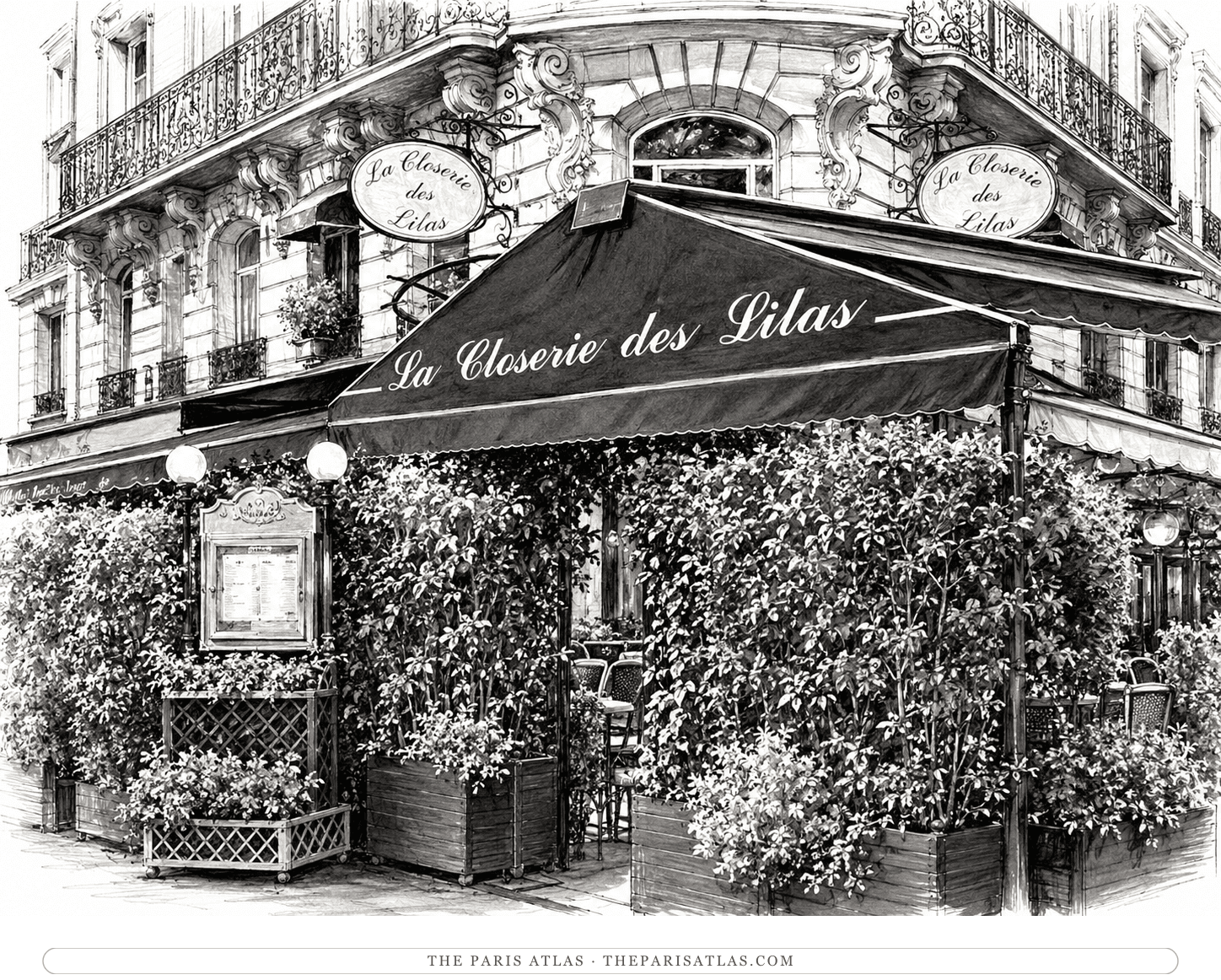
The evenings of the Closerie des Lilas come back to me vividly. The Prince of Poets sat in state on an upholstered bench of the café; while around him was his court of writers … To the drinking of coffee and of bocks, poetry was recited, analysed, and appraised.
Once upon a time the Closerie des Lilas at the corner of the Boulevard du Montparnasse was a guinguette — a country-inn on the route to Fontainebleau. Baudelaire frequented it.
My attention was first called to them by a tremendous row one evening at the Closerie des Lilas. Chairs hurtled through the air, crockery crashed through the window.
Huddleston isn't remembering an era forty years later — he's reporting it in 1928, with Joyce still reading aloud, Beach still at the shop, and the Surrealists still throwing chairs at the Closerie.
Paul Fort, Maeterlinck, and the French literary world share these pages with the Anglo-Americans — the half of café life the expatriate memoirs mostly walked past.
The Closerie, the Rotonde, the Dôme, the Select, Shakespeare and Company — chapter by chapter, the rooms the Paris books were written in, and it is public domain.
1919
Huddleston reports on the Paris Peace Conference, beginning the period of observation behind his portrait of the city.
1928
J. B. Lippincott publishes Paris Salons, Cafés, Studios in the United States.
1928
Harrap publishes the British edition as Bohemian Literary and Social Life in Paris, the alternate title of the same work.
The same cafés remembered from the next table — written thirty-six years earlier, and without the knives.
Read our take
Huddleston watched Hemingway hunt the style, then parodied the finished novel within two years — with obvious fondness.
Read our takeSisley Huddleston, the best-connected English journalist in Paris. It was published in 1928.
An eyewitness record of 1920s literary Paris — Paul Fort at the Closerie des Lilas, Sylvia Beach deciding to publish Ulysses, the Ballet Mécanique riot, and a young, freshly famous Hemingway.
In 1928, while the scene it describes was still happening — a contemporary account rather than a memoir written decades later.
Half the book is set in rooms that still have addresses. It is a primary source for how those salons, cafés, and studios sounded from a chair inside them.
The whole quarter — Sylvia Beach, Ford Madox Ford, Ezra Pound, F. Scott Fitzgerald, the young Hemingway, and the tourists in pearls slumming at the Rotonde.
Explore authors with a similar voice, perspective, and influence.
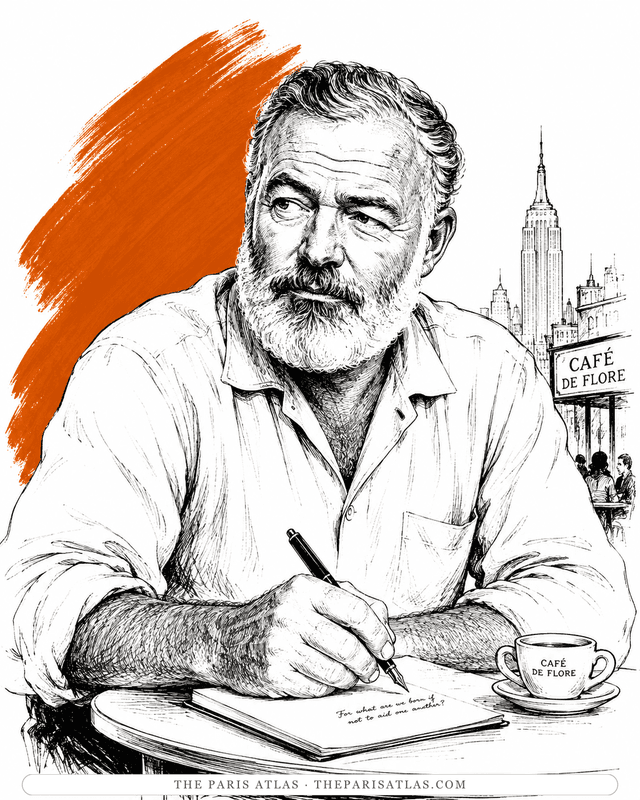
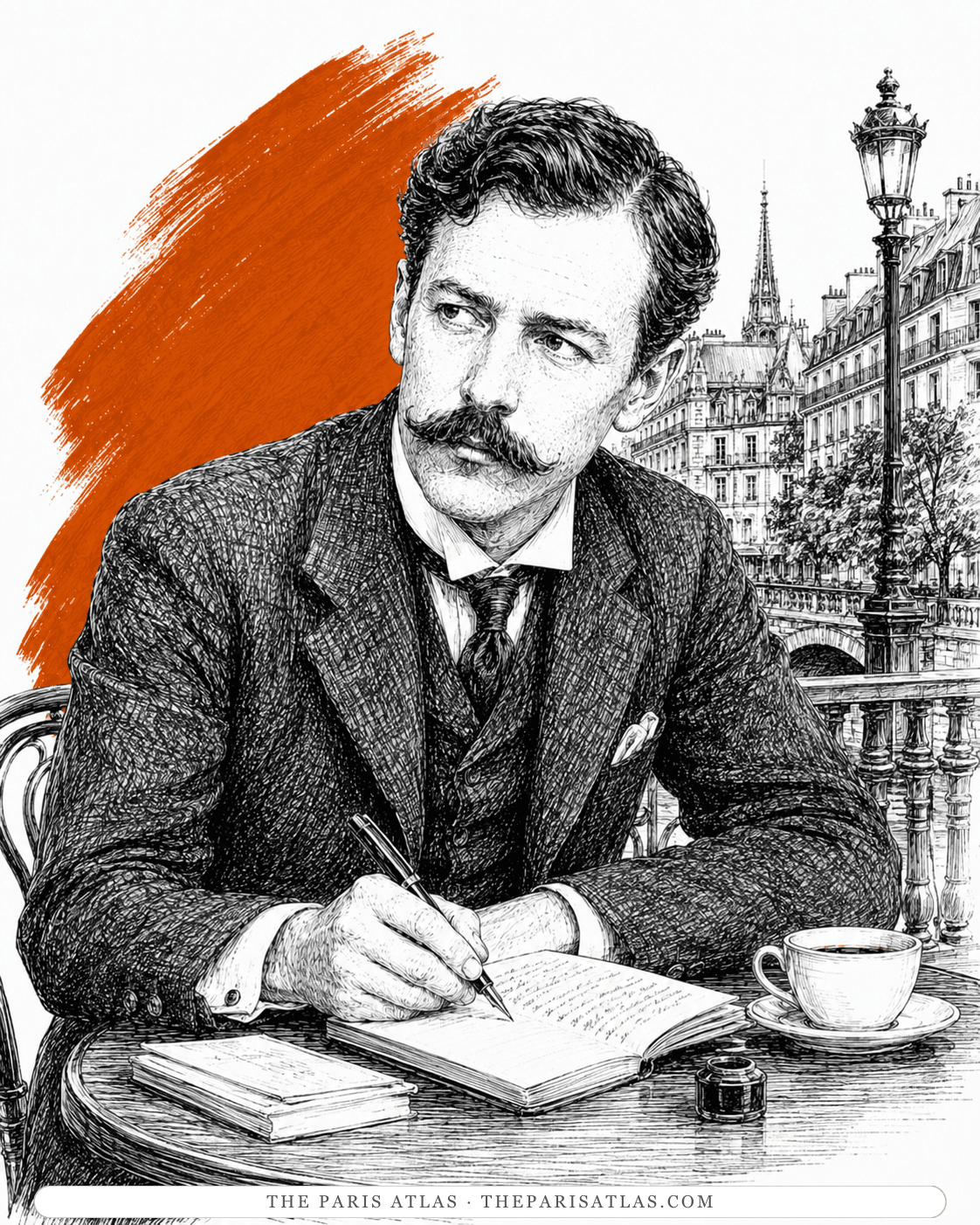
The same cafés from the other side of the notebook — Huddleston watched the young Hemingway seek his style at the press-association lunches, and parodied the finished product with obvious fondness.
View author
The doctor of the Paris slums who wrote the century's blackest, funniest novel — and changed the sound of French prose.
View author
The Brooklyn dropout who arrived in Paris broke at thirty-eight and wrote the exuberant, banned books that ended American censorship.
View author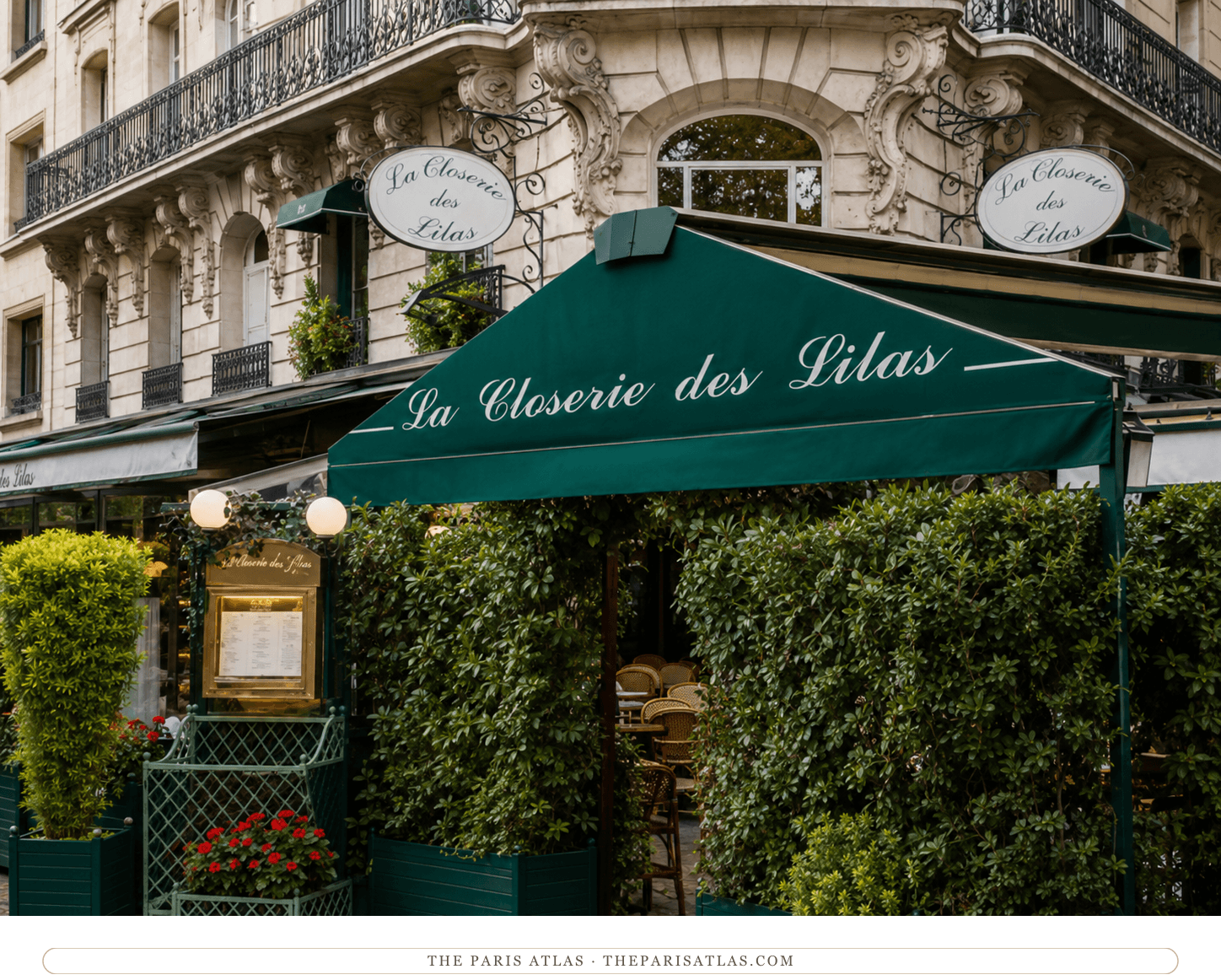
Depicted
Paul Fort's Tuesday court, the old guinguette history, and the Surrealist banquet row — three eras of the café in a few pages.
Visit the place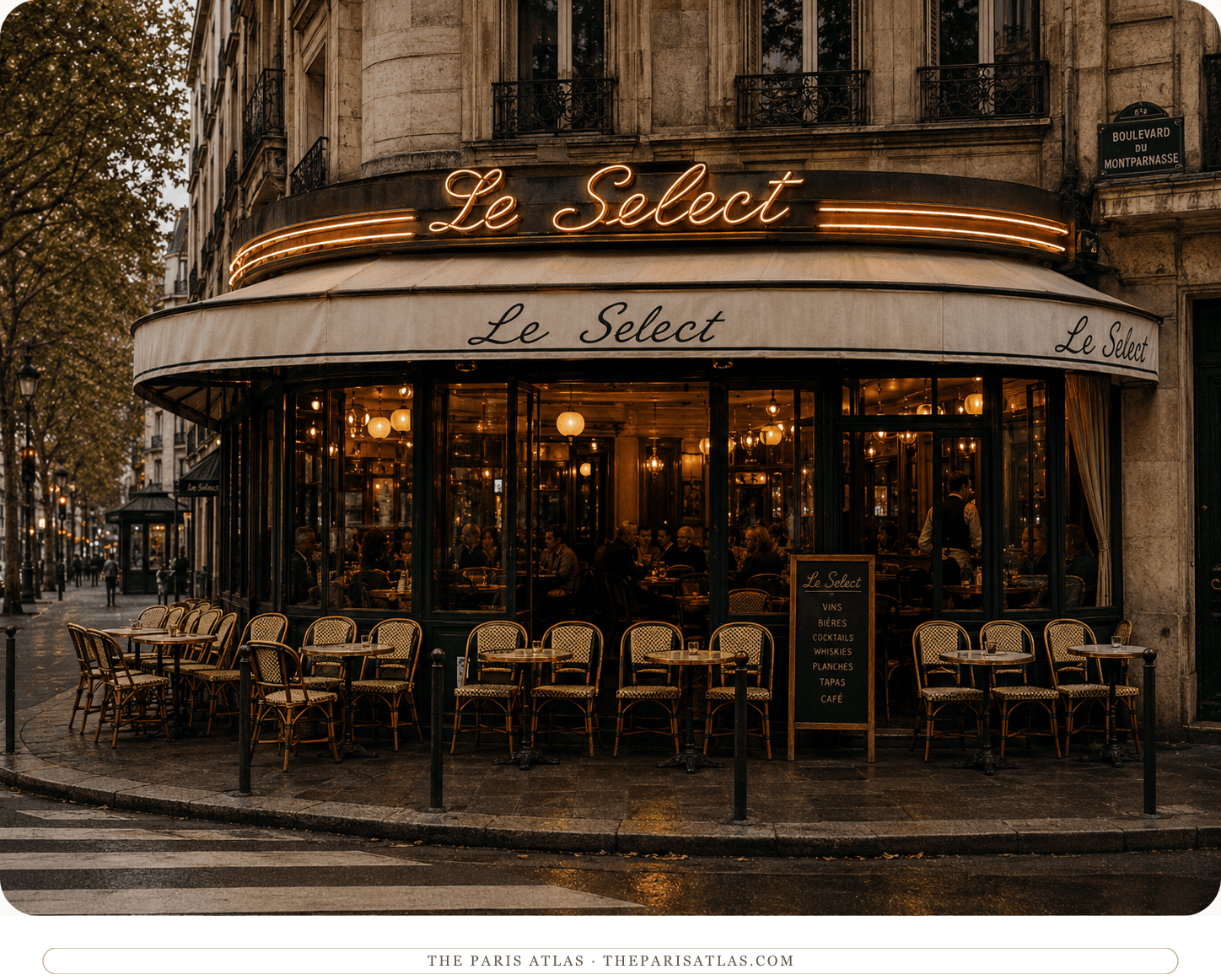
Depicted
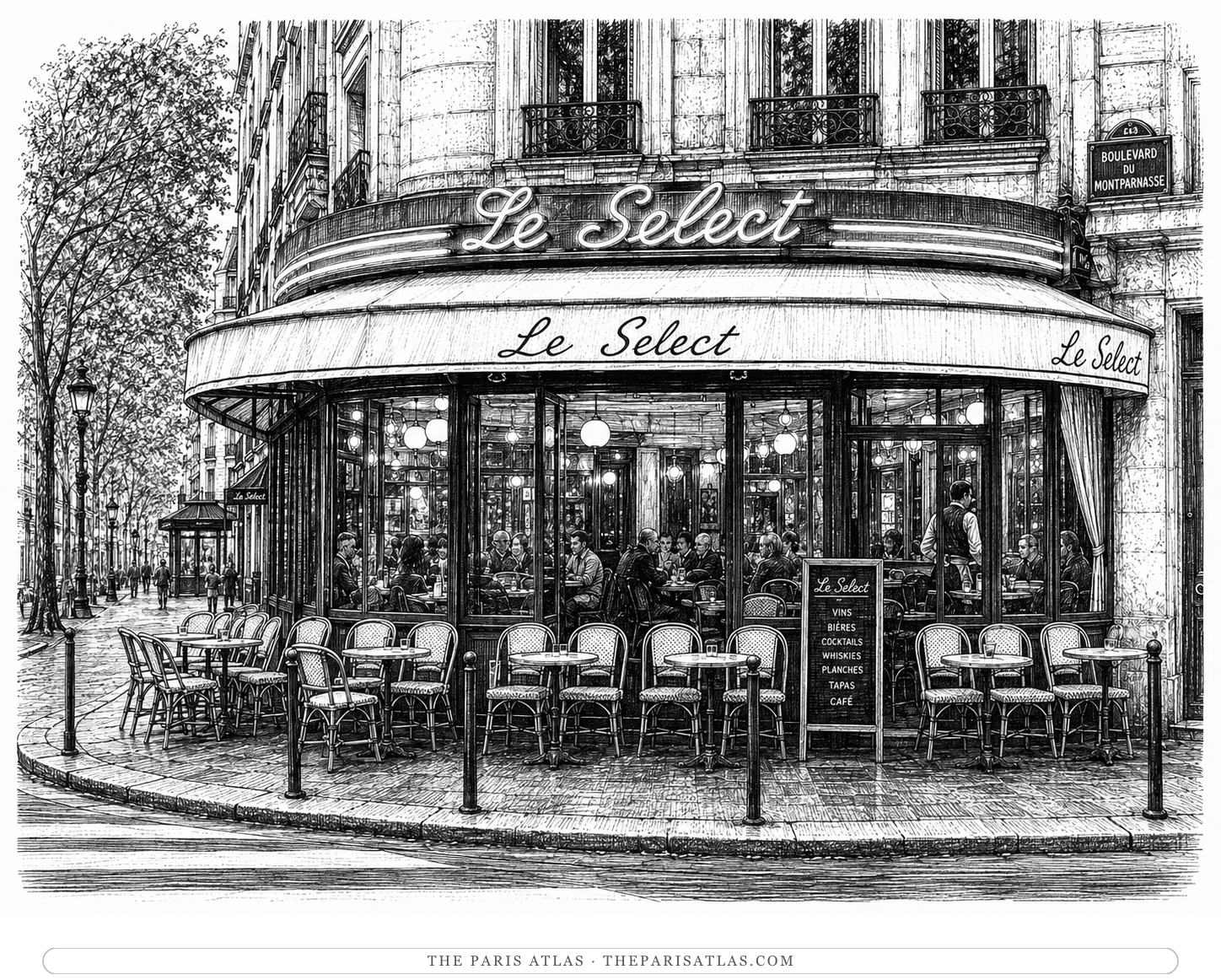
Where Huddleston sets his affectionate parody of the Hemingway style — 'Well, let's go over to the Select.' 'Righto!'
Visit the place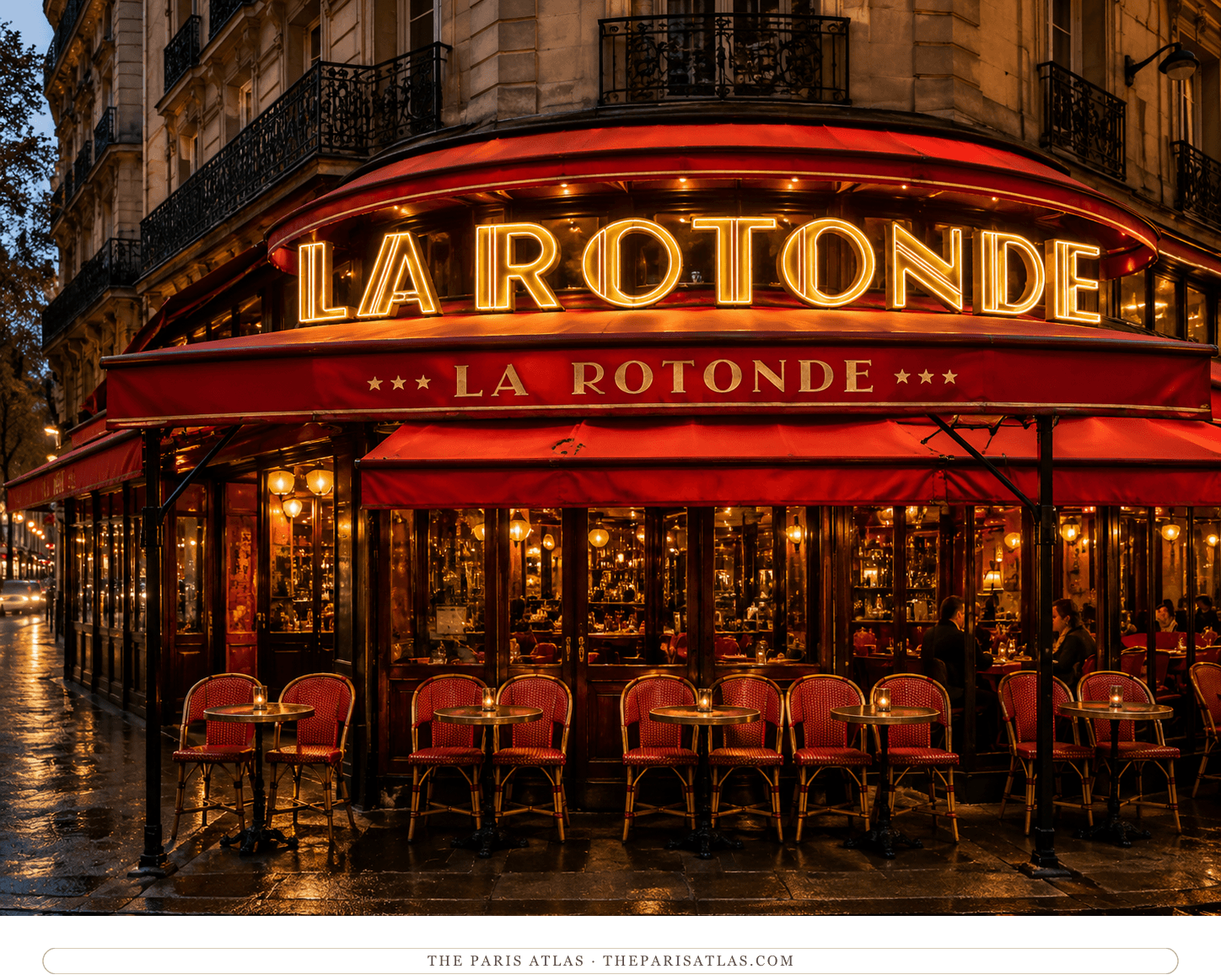
Depicted
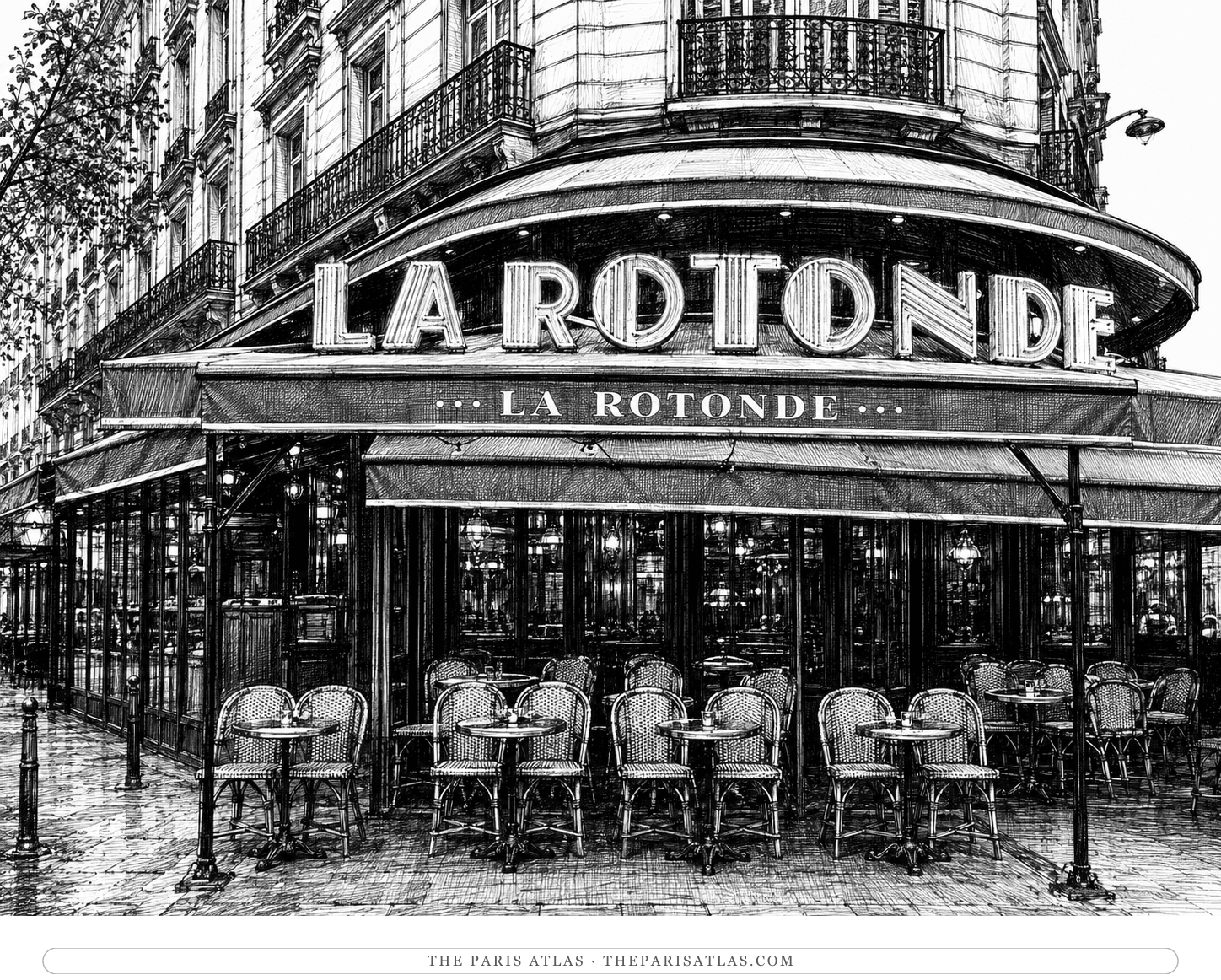
Italians, Spaniards, and Balkanics with a sprinkling of French — the Rotonde's row in Huddleston's café census of the crossroads.
Visit the place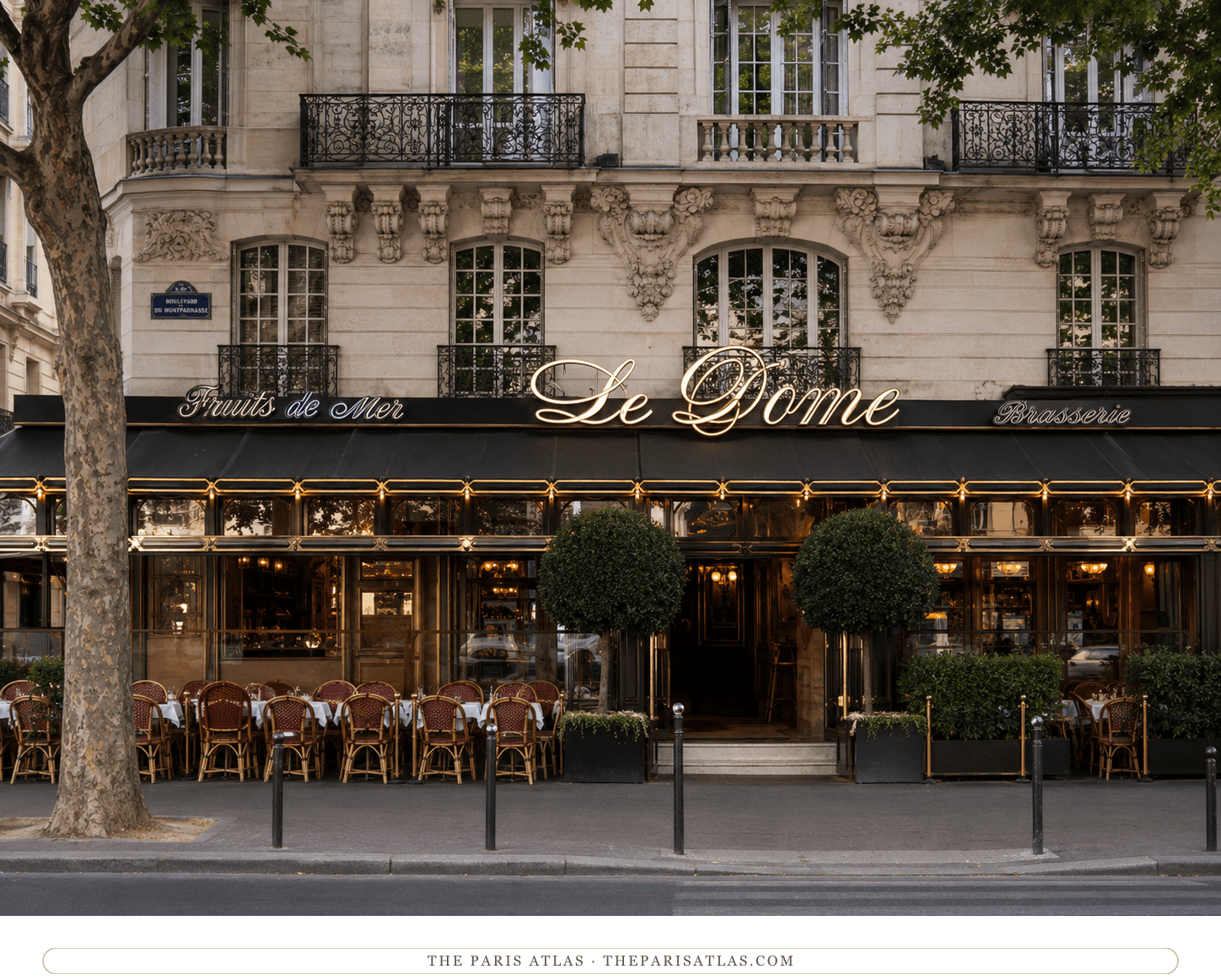
Depicted
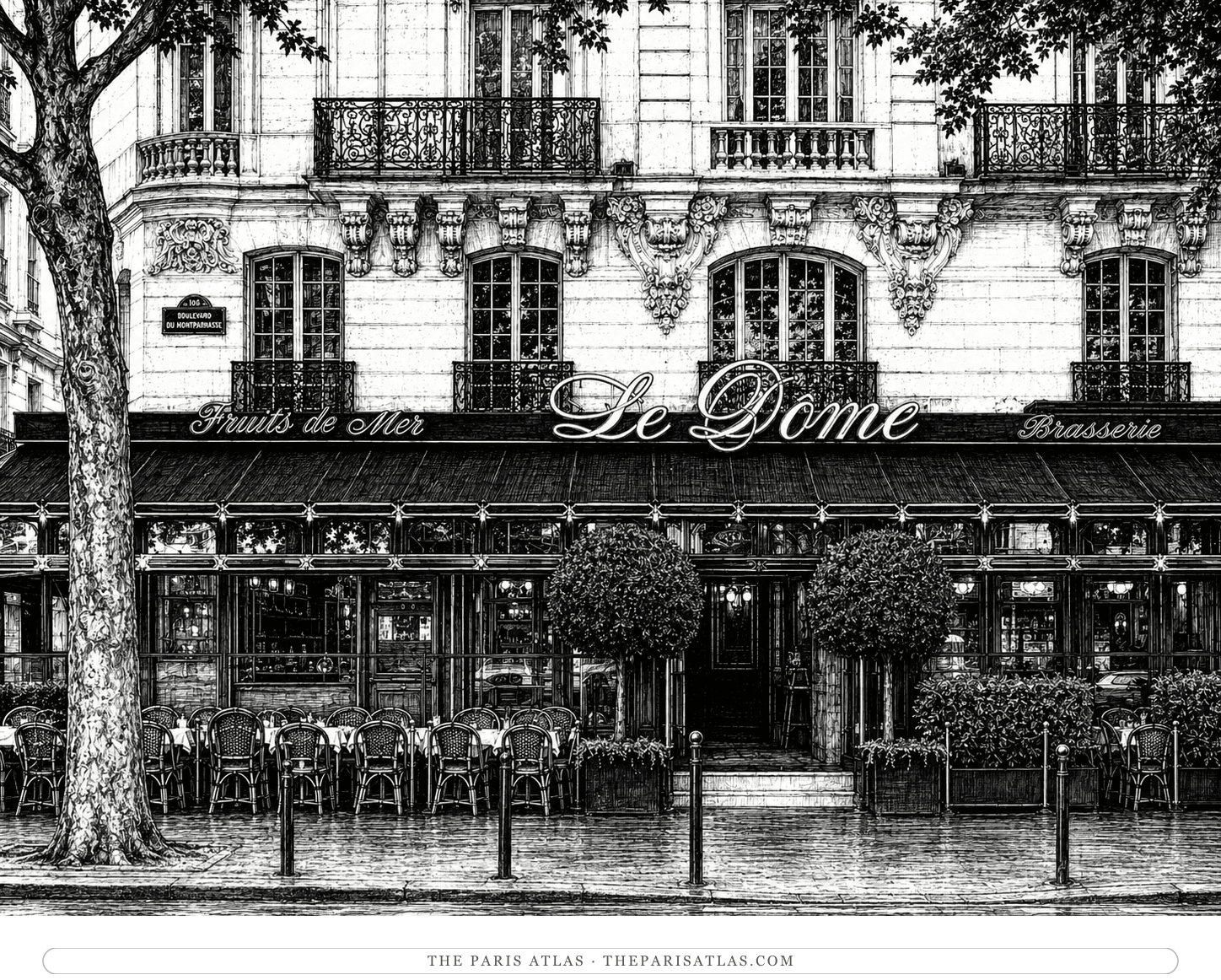
Scandinavians, British, and Americans — the Dôme's row in the café census, plus the painters in négligé dodging the tourists in pearls.
Visit the place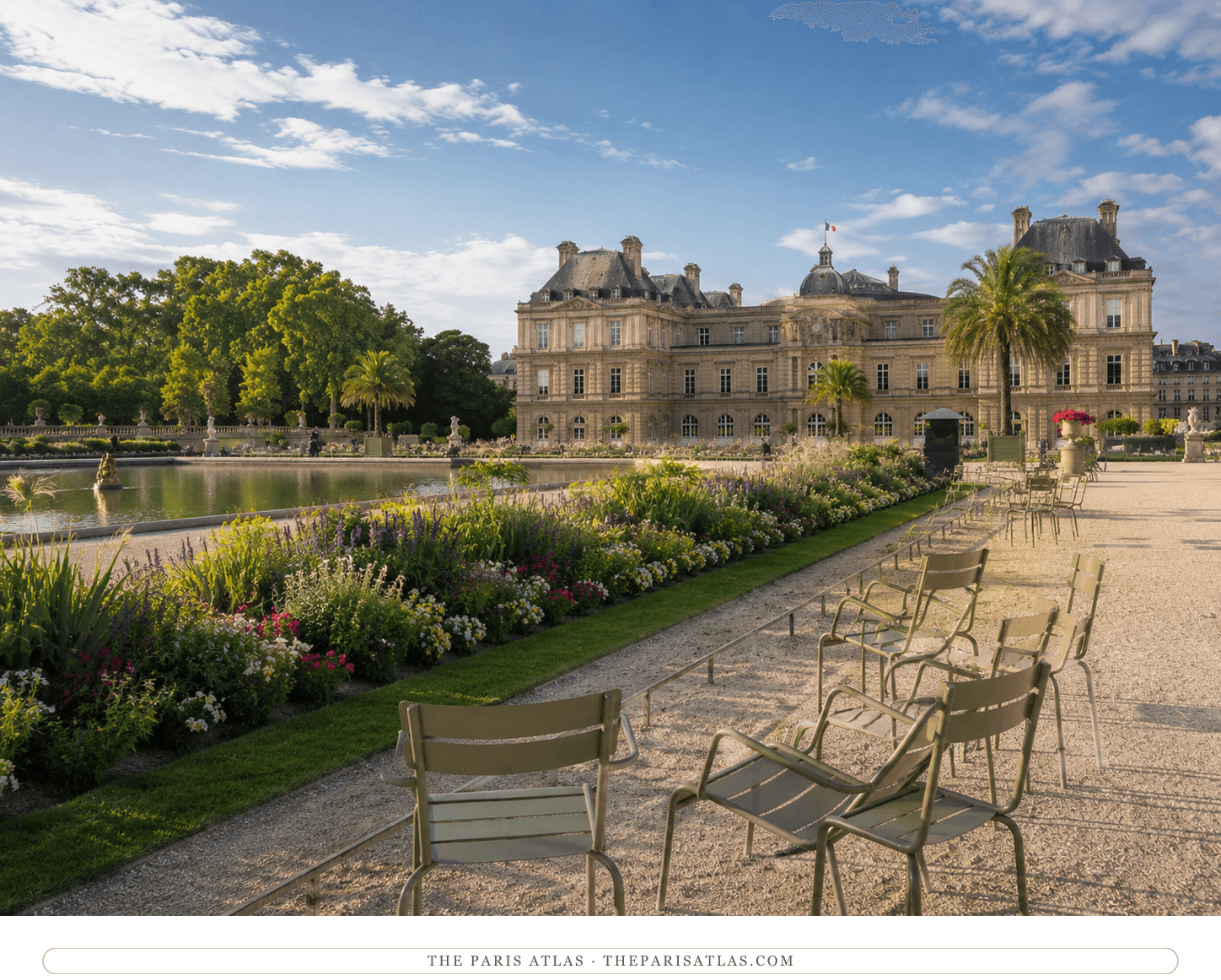
Depicted
Sherwood Anderson's Paris, as Huddleston saw it — a man who could hardly set foot outdoors without entering the great gates of the gardens.
Visit the place
Depicted
The Ballet Mécanique riot, reported from the seats — sixteen pianolas, an electric propeller, and Pound in a flowing blue shirt shouting down the hecklers.
Visit the place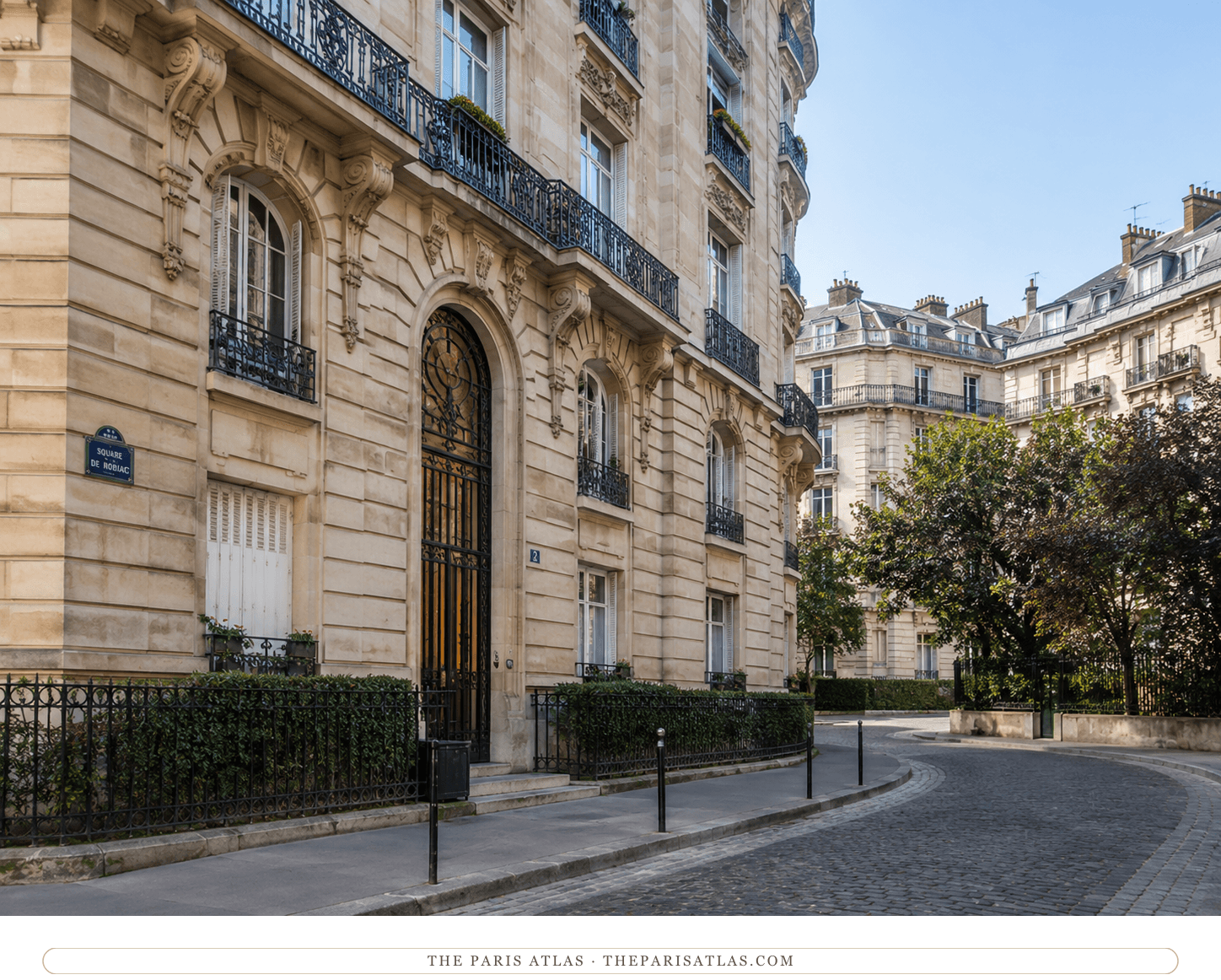
Depicted
Joyce's cool quiet study by the Champ de Mars — where Huddleston heard the twelve-hundred-hours defense of Work in Progress.
Visit the place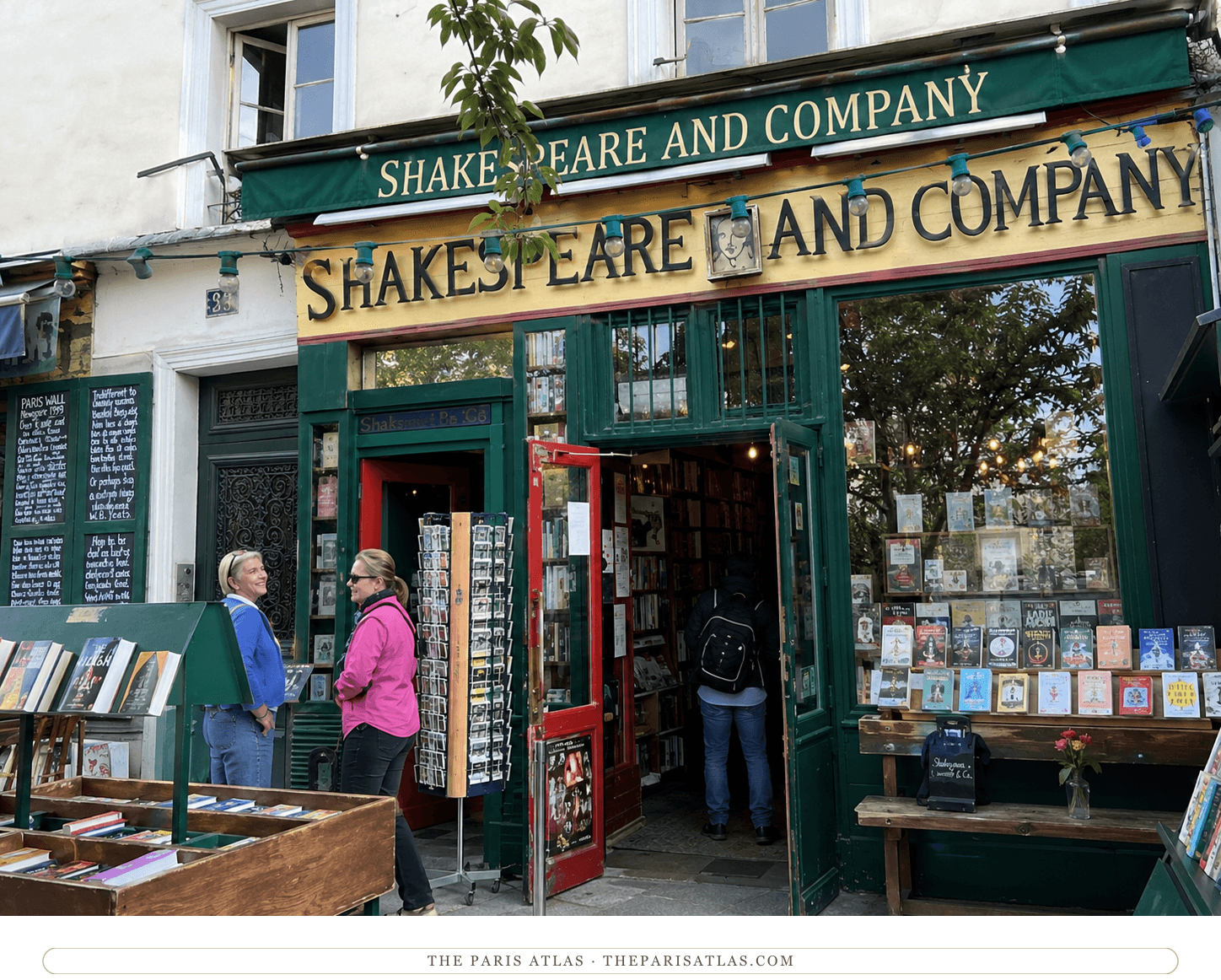
Depicted
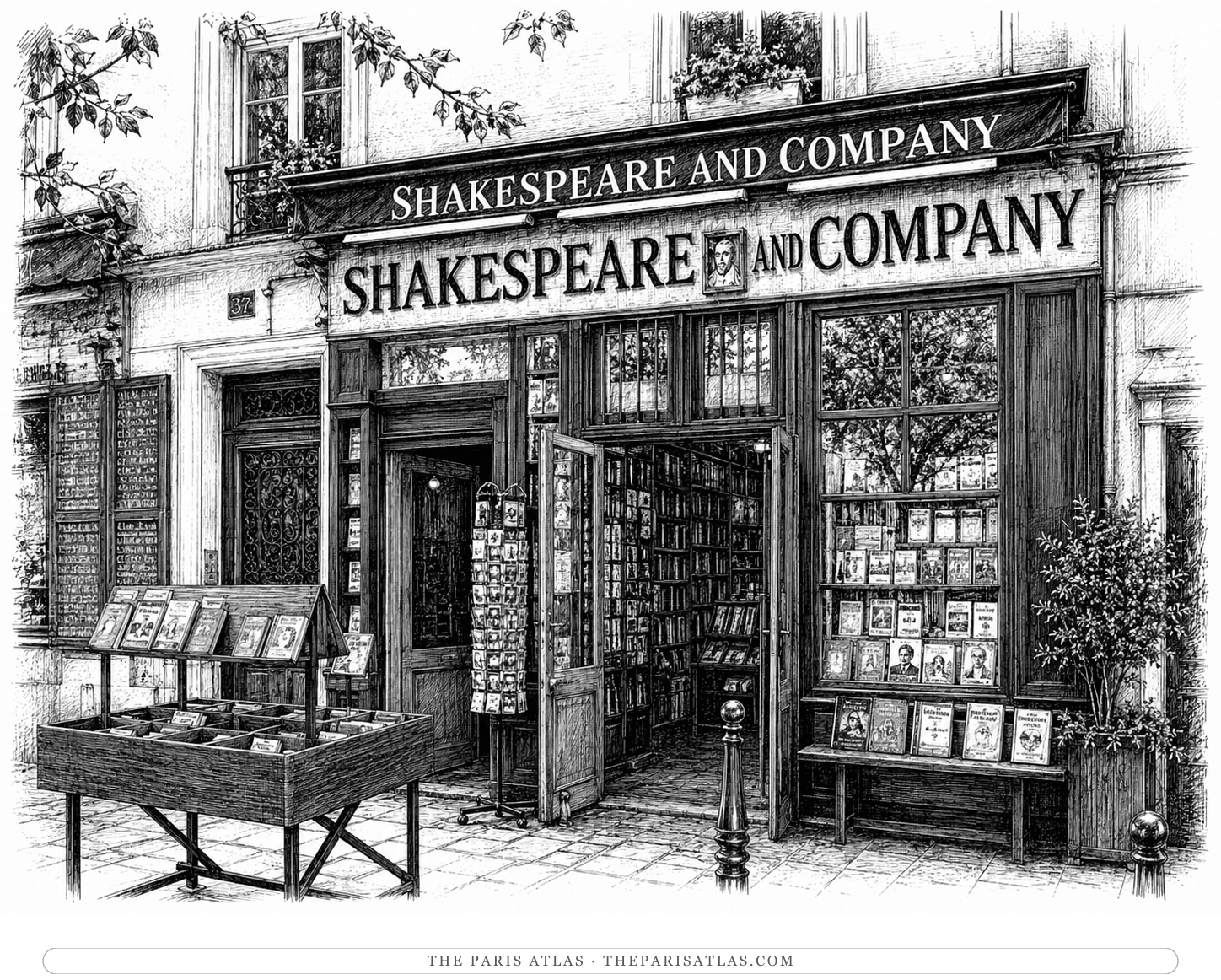
A full chapter on Sylvia Beach's shop — the goldfish bowl, the Whitman manuscripts pinned in the back parlor, and the decision to publish Ulysses.
Visit the place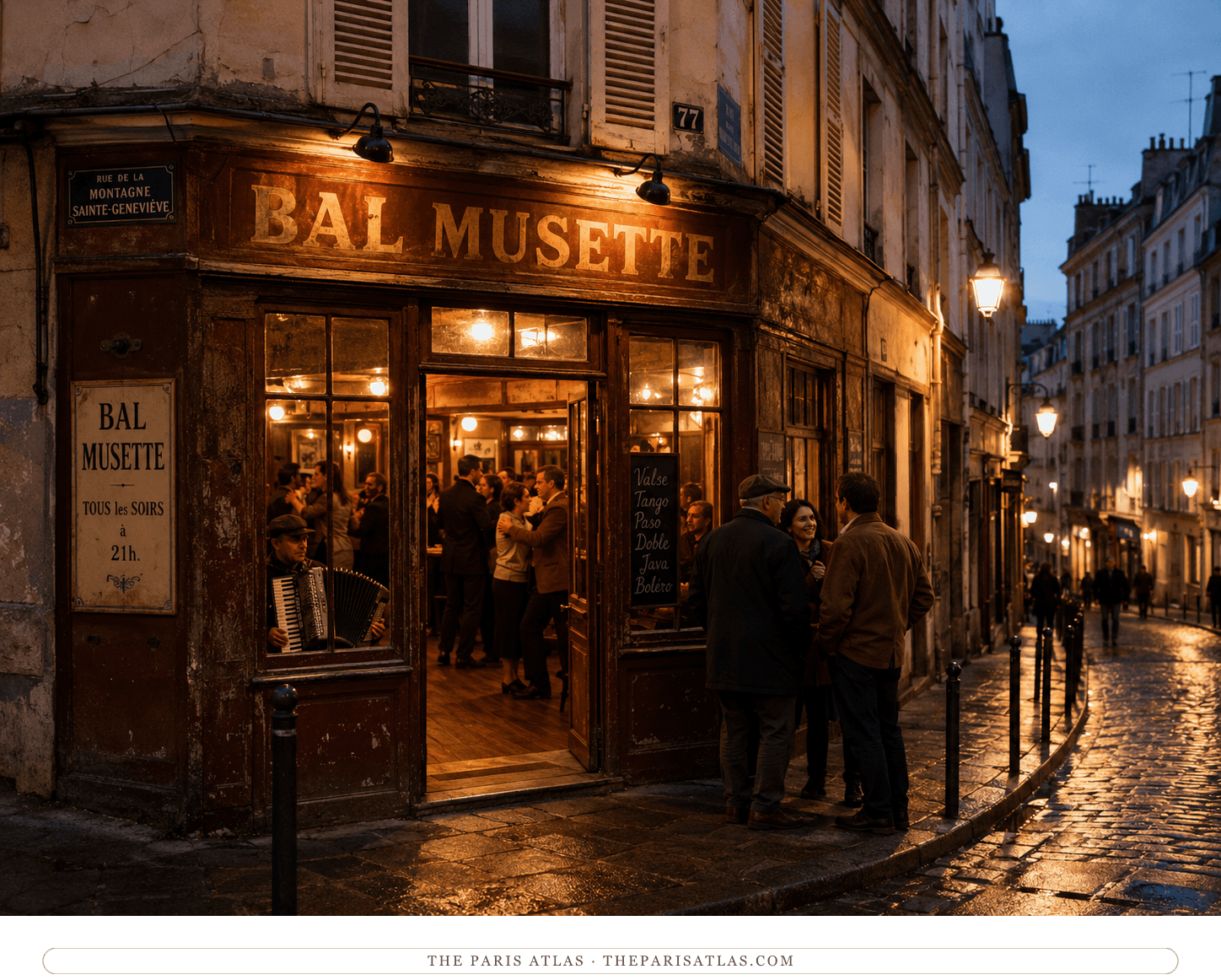
Depicted
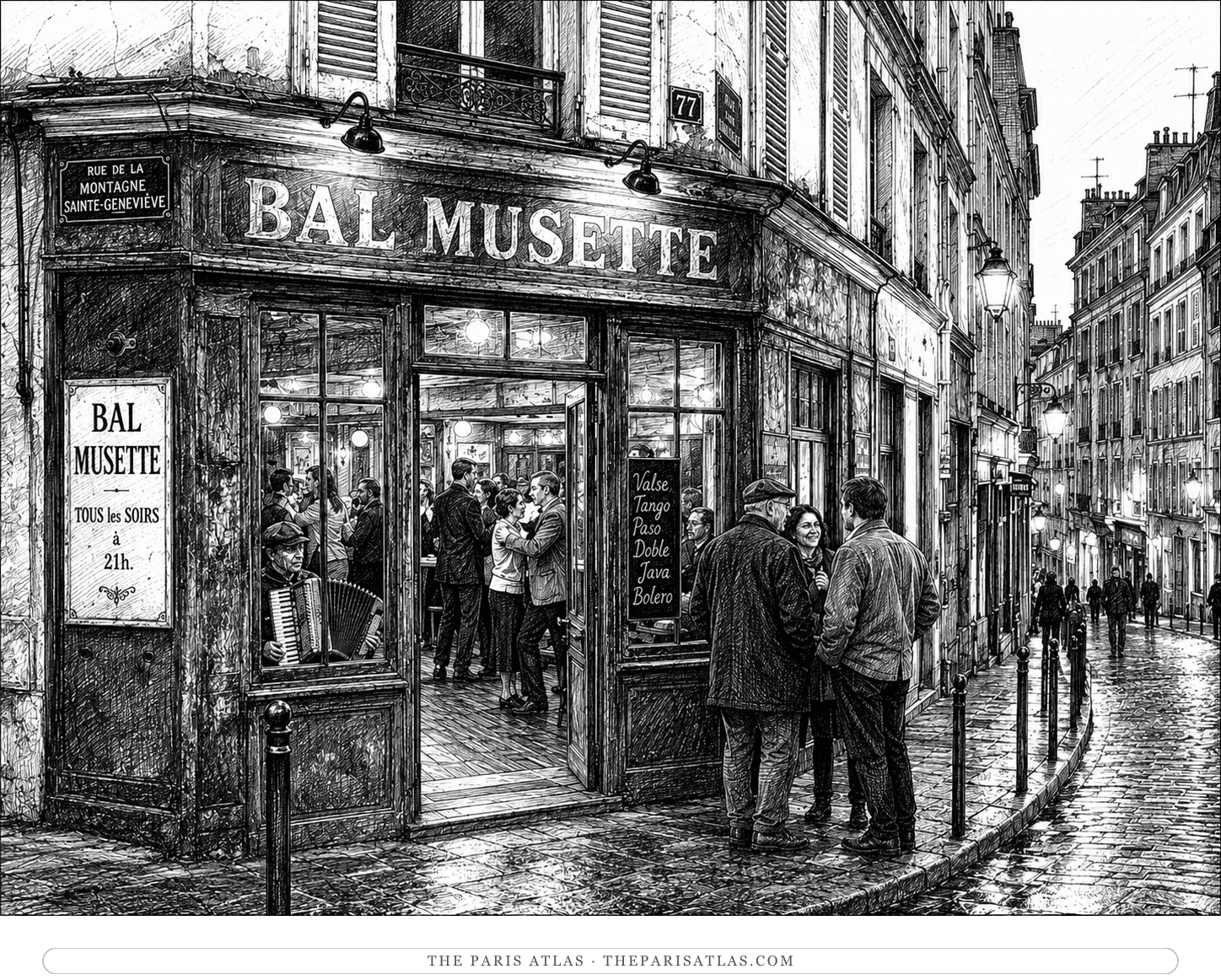
Ford Madox Ford's parties, exiled from his studio to a bal musette behind the Panthéon — the workers astonished at the invasion of artists and writers.
Visit the place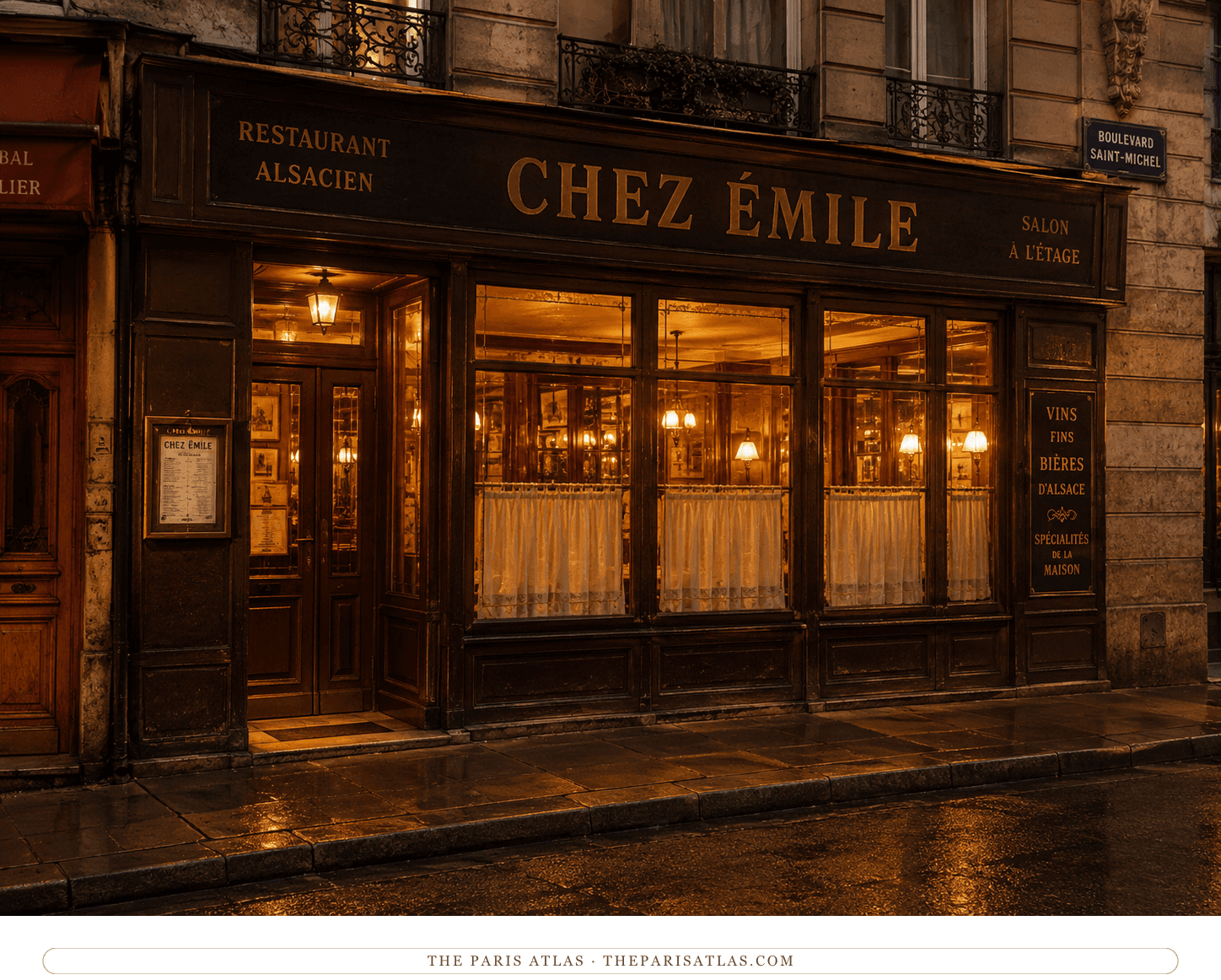
Depicted
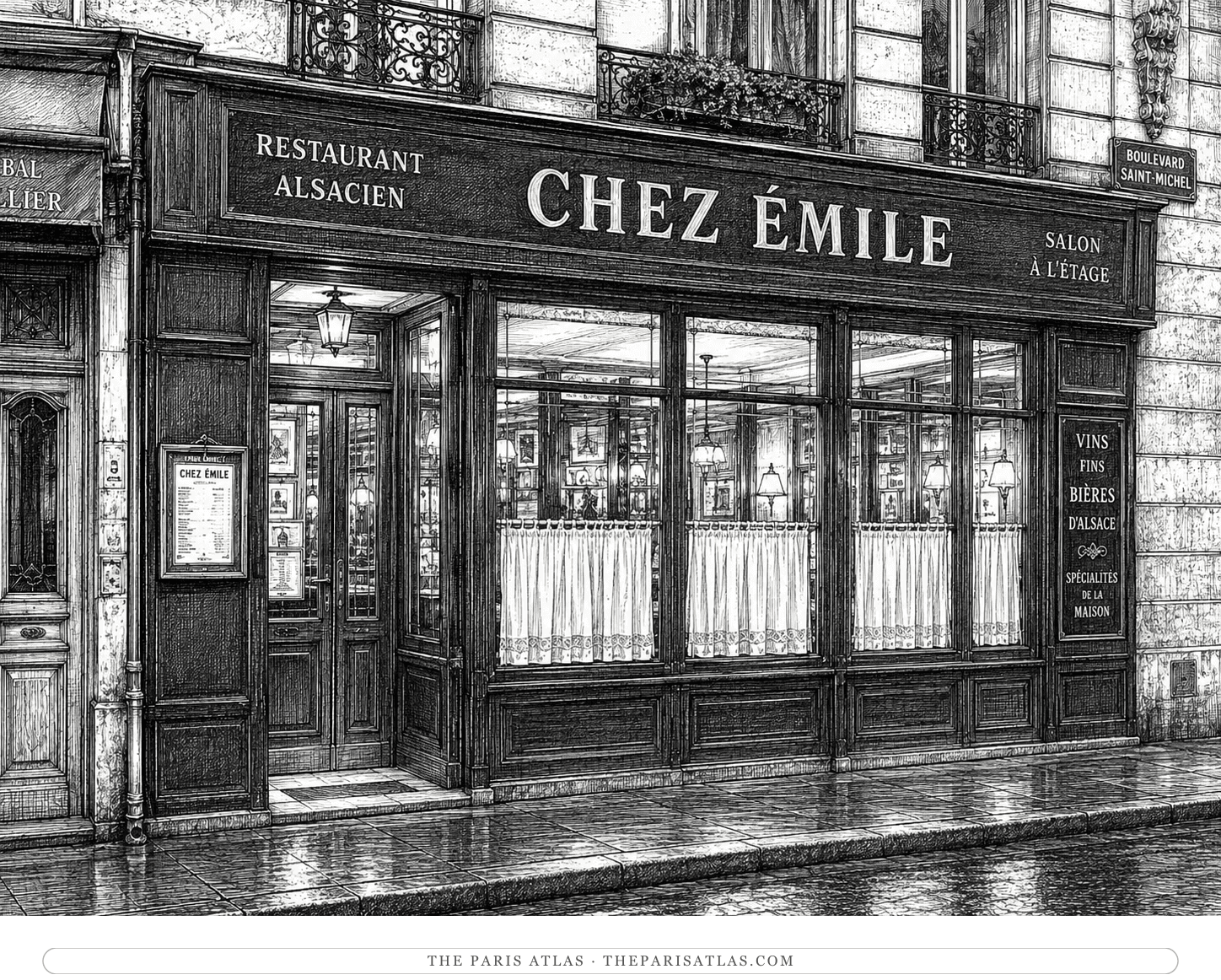
The upper room on the Boul' Mich' where Ford, Pierre Loving, Pound, and Huddleston played with ideas for hours — a room only this memoir remembers.
Visit the place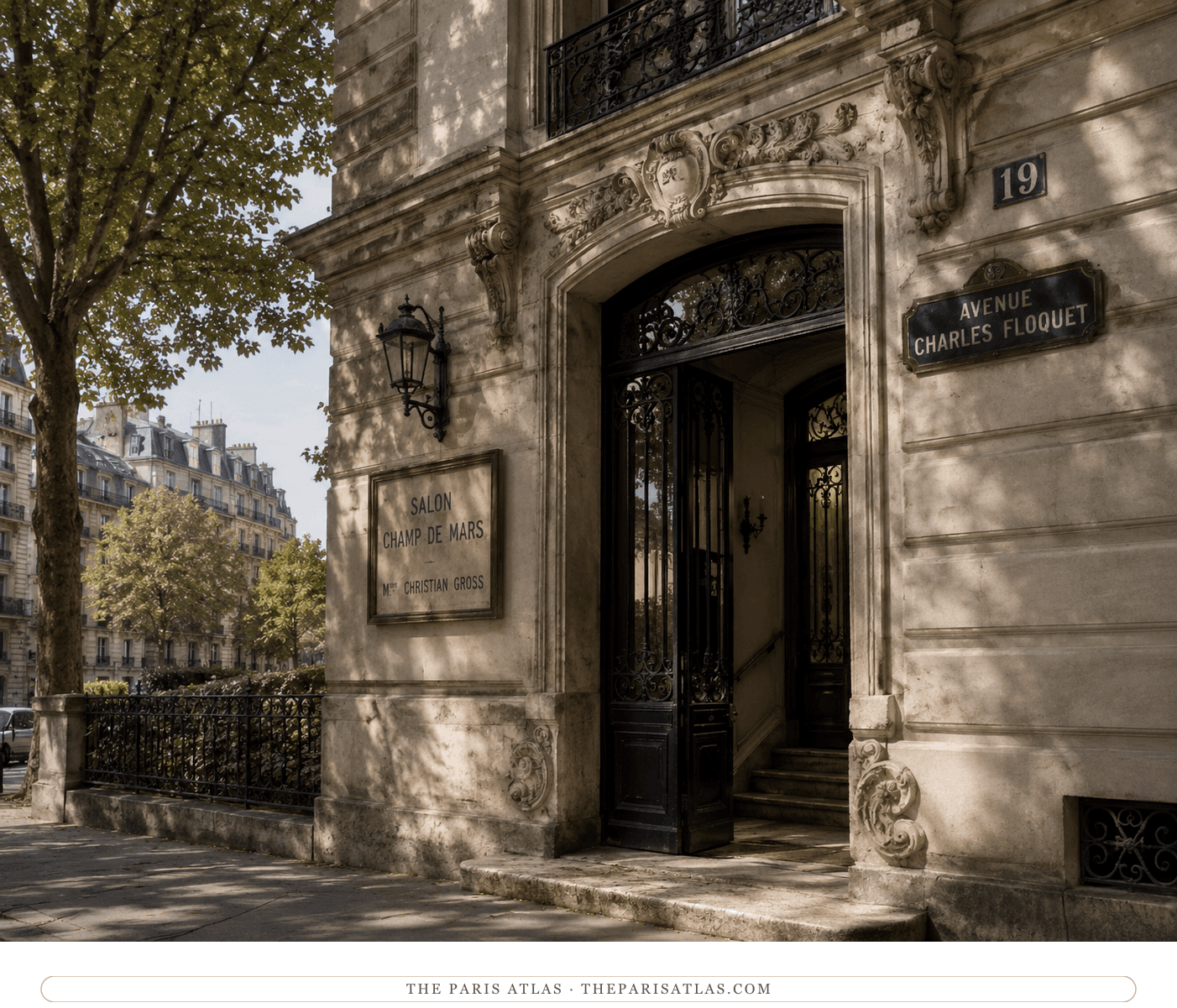
Depicted
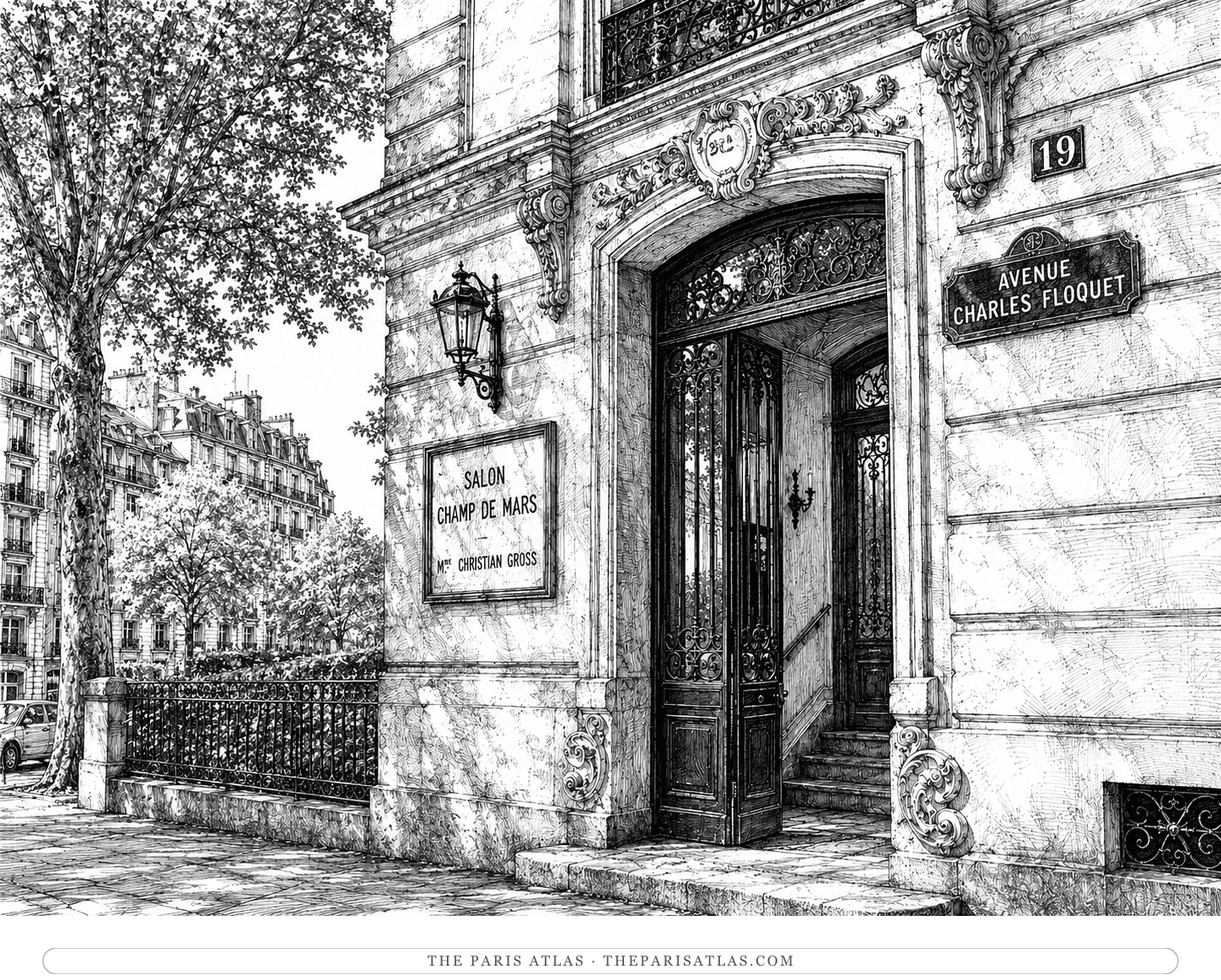
Mrs. Christian Gross's drawing room by the Champ de Mars, where Pound the composer debuted his Villon songs to an invited and astonished audience.
Visit the place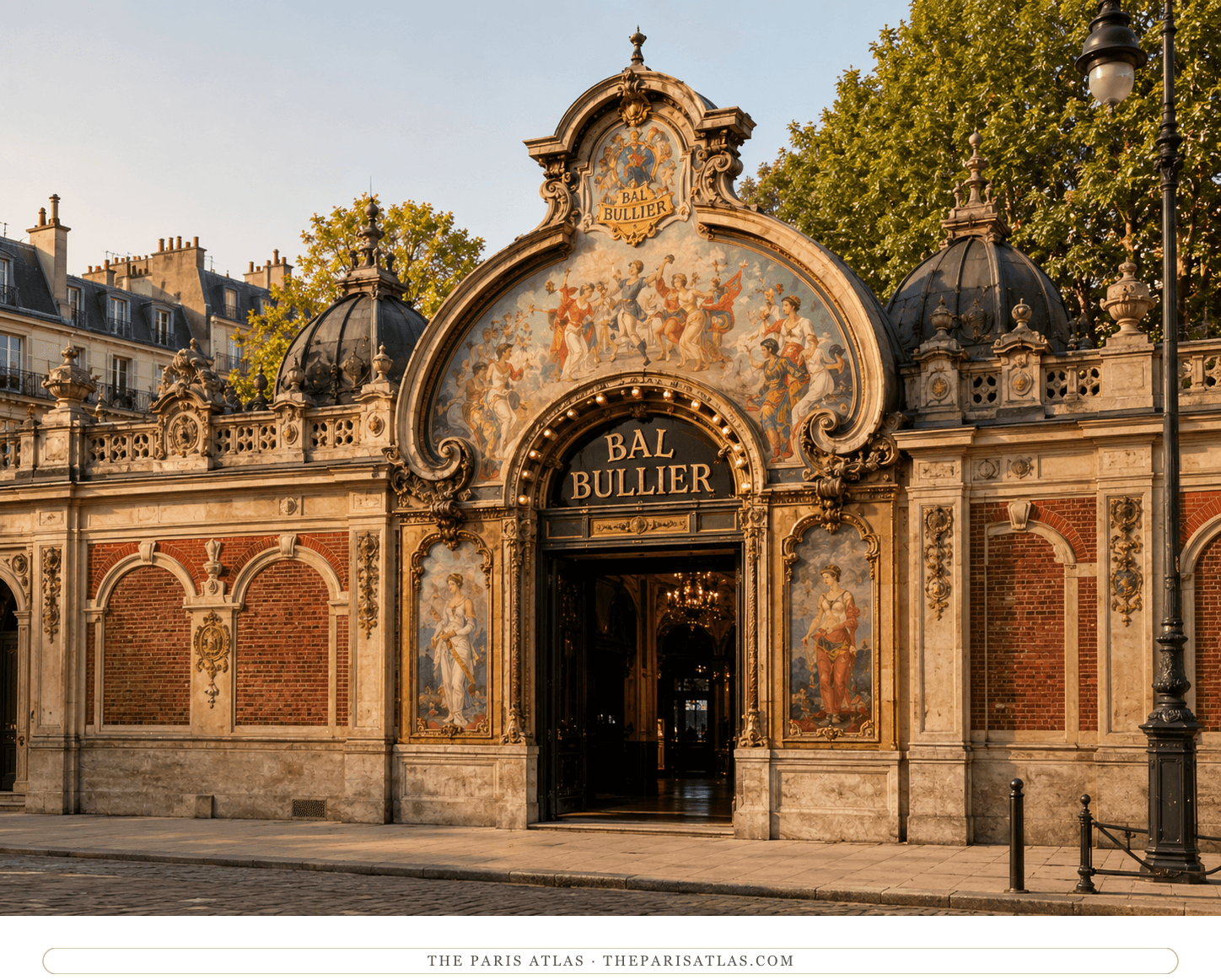
Depicted
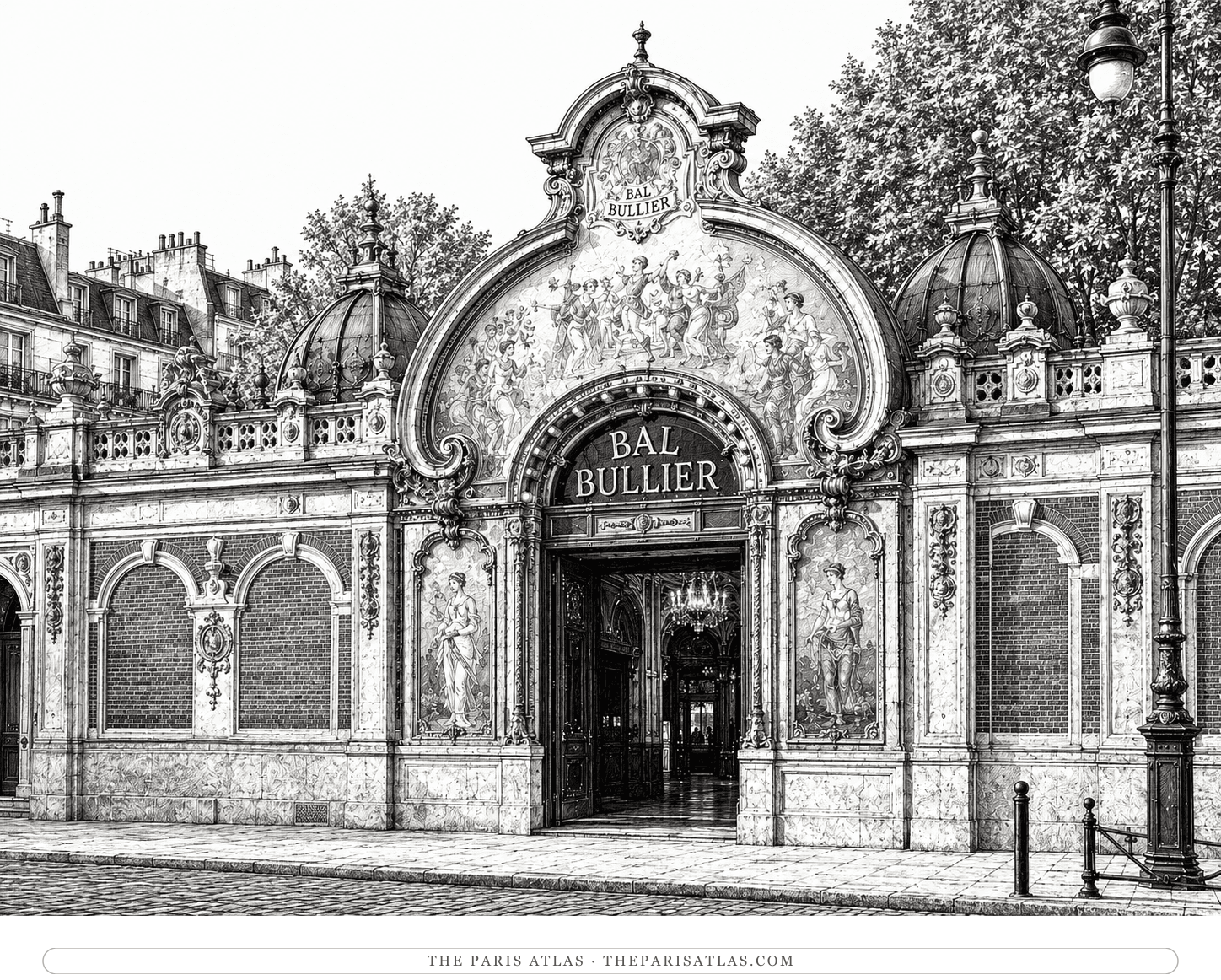
The mock-oriental dance hall opposite the Closerie — the landmark by which the quarter navigated, and the lilac garden that named the café.
Visit the placeThe sources below include the primary text, editions, scholarship, archival materials, and other records that informed this page. They document Paris Salons, Cafés, Studios, its publication, and its place in literary history.


Used to verify the 1928 edition, authorship, publisher, and bibliographic record.
Used to cross-check the book's contents, length, publication details, and subjects.
The Internet Archive-linked record provides a complete scan and independently verifies the 1928 edition's pagination and imprint.
A contemporary university periodical review records how Huddleston's account of literary and artistic Paris was received on publication.

Web source consulted for documented facts and historical context presented on the Paris Salons, Cafés, Studios page.
Primary passages, pp. 121 and 208–210.
The primary text is the baseline reference for every book page. Additional references document publication history, interpretation, and historical context where that evidence is available.
 Explore more resources