Civilization in the United States
The manifesto whose conclusion this life obeyed — read the argument, then the invoice.
Read our take
The prophet of the exodus tells his own story — the manifesto, the Select's saucers, the blindness, and the trip home.
Stearns's memoir of the whole arc: the Village critic who edited Civilization in the United States and sailed on its logic; the Montparnasse decade spent at the Select handicapping horses as 'Peter Pickem' while the books went unwritten; the eyes and the money giving out together; and the 1932 repatriation of a man taking honest inventory of what the great expatriate experiment had cost him. The era's cautionary tale, told by the tale himself — rueful, clear-eyed, and far better written than anyone had a right to expect. (A memoir; he doesn't spare himself.)
The man who wrote the manifesto of the exodus spent the thirties writing its audit. Repatriated from Paris in 1932 — broke, nearly blind, the decade gone — Stearns recovered his health, his eyesight, and his prose, and in 1935 delivered to the small New York house of Lee Furman the memoir of the whole arc: Harvard, Greenwich Village, the symposium that sent a generation abroad, and what actually happened to its editor when he followed his own advice.[1]
The Paris chapters are the cautionary tale told from inside: the Select, the borrowed francs, the racing sheets signed 'Peter Pickem,' the slow discovery that exile without work is just exile. What startled reviewers was the tone — no self-pity, no alibi, the same cold audit he had once run on American civilization now run on himself.[1]
It stands as the era's most honest invoice: the memoir that prices what A Moveable Feast romanticizes, written by the man Hemingway had already fixed in fiction as Harvey Stone. Read the novel's Select scene and then this book's version of those years — the portrait and the self-portrait, reconciled almost exactly, which is its own kind of vindication of both writers.[1]
The autobiography of the man who wrote the exodus's manifesto and then lived out its cautionary tale. Stearns tells it straight through: the Massachusetts boyhood, Harvard on scholarship and nerve, the young critic's New York of little magazines and Village arguments, the making of Civilization in the United States — and then the sailing for France that turned the argument into a life. The Paris chapters are the heart: Montparnasse from the inside of the decline, the Select and its saucers, the racing sheets written as 'Peter Pickem,' the borrowed money, the eyes going, the decade evaporating.[1]
The last movement is the return: repatriated broke and nearly blind in 1932, Stearns recovers his sight, his sobriety, and his craft, and audits the whole adventure without alibi — what exile promised, what it cost, and what a man salvages from having been his generation's warning. It is the necessary dark companion to A Moveable Feast: the same cafés, the same years, and the bill.[1]
The memoir's last movement is the bottom, and then the climb. By 1932 Harold Stearns is destitute in Paris — the racing-sheet work gone, his eyesight failing, his health collapsing — and the expatriate experiment ends not with a decision but with a rescue: friends and charity get the wreck of the exodus's prophet onto a boat home. The final chapters follow the recovery in America, step by unglamorous step — treatment, sobriety, the eyes and the nerve coming back, and with them the discovery that the country he had prosecuted in 1922 was somewhere he could live and work after all. The proof of the recovery is the object in the reader's hands: the book ends, in effect, with the writing of the book — the clear-eyed man on the far shore, auditing the drowned decade without asking for a single tear.
Ernest Boyd's contemporary review offers a counterweight to the memoir's story of decline. He remembers Stearns's Jones Street rooms as a meeting place for writers and complains that the book gives too little space to his editorial achievements. That objection makes selection part of the story: a self-portrait can understate productive years as well as conceal failures. Boyd's warmer memories do not settle whose version is right. They make it harder to treat Stearns's account as the single, inevitable meaning of a shared past.
The racing chapters exposed a similar divide over what belonged in an expatriate memoir. Boyd wanted some of their space given to literary friendships; The New Yorker's 1935 reviewer preferred the passages about horses to the famous people. Their disagreement matters because it changes what counts as wasted time. In one reading, racing distracts from the life worth recording; in the other, it gives the book its most compelling material. The horses need not be read only as a symbol of failure: they also challenge a literary circle's claim to define a life.
Every memoir of the era has a wreck at the edge of the frame; this is the only one where the wreck picks up the pen and out-writes the rumor.
Not the feast — the losing table: borrowed francs, racing tips as a profession, and the quarter's charity wearing thin. It maps the same streets as the myth, at street level.
Thesis (1922), experiment (the decade), audit (this book) — read with the symposium, it's one of the era's most complete arguments conducted by a single life.
1932
Repatriated from Paris broke and nearly blind, the decade gone, Stearns recovers his health, eyesight, and prose in America.
1935
Lee Furman publishes his memoir of the whole arc — Harvard, Greenwich Village, the symposium that sent a generation abroad, and the Montparnasse decade he spent at the Select handicapping horses as 'Peter Pickem.'
2014
M. Evans & Company reissues the memoir as The Street I Know: The Autobiography of the Last of the Bohemians.
The manifesto whose conclusion this life obeyed — read the argument, then the invoice.
Read our take
The novel that borrowed him: Harvey Stone at the Select is this book's author, seen from across the saucers.
Read our take
The romance to this memoir's reckoning — the same cafés, opposite ledgers.
Read our take
Huddleston's panorama of the same quarter from the winning tables; Stearns supplies the view from the losing one.
Read our takeHarold Stearns. His memoir was published in 1935.
The whole arc of the man who edited Civilization in the United States and sailed on its logic — the Montparnasse decade at the Café du Select handicapping horses as "Peter Pickem" while the books went unwritten, and his 1932 return to America.
It is the expatriation's most honest audit — the era's cautionary tale, told by the tale himself: rueful, clear-eyed, and far better written than anyone expected.
Yes. Hemingway drew him as Harvey Stone, the down-and-out expatriate at the café, in The Sun Also Rises.
The racing-tips byline Stearns wrote under in Paris while his own writing stalled — a symbol of the decade he spent at the Select instead of at his desk.
Explore authors with a similar voice, perspective, and influence.
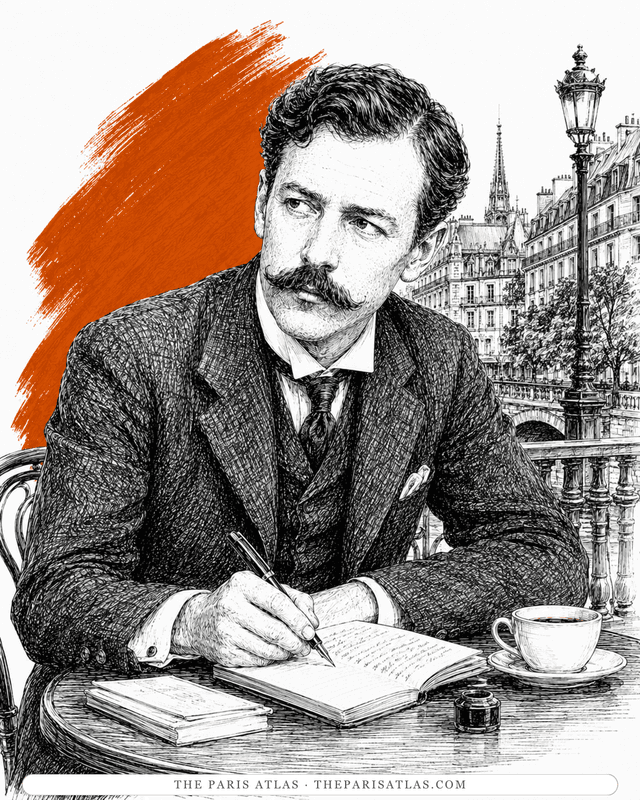
The shelf's other nonfiction witness — Huddleston wrote the café world from the winning table, Stearns from the losing one.
View author
Watched Stearns across the Select's saucers and fixed him in fiction as Harvey Stone; the novel and the memoir answer each other across a decade.
View author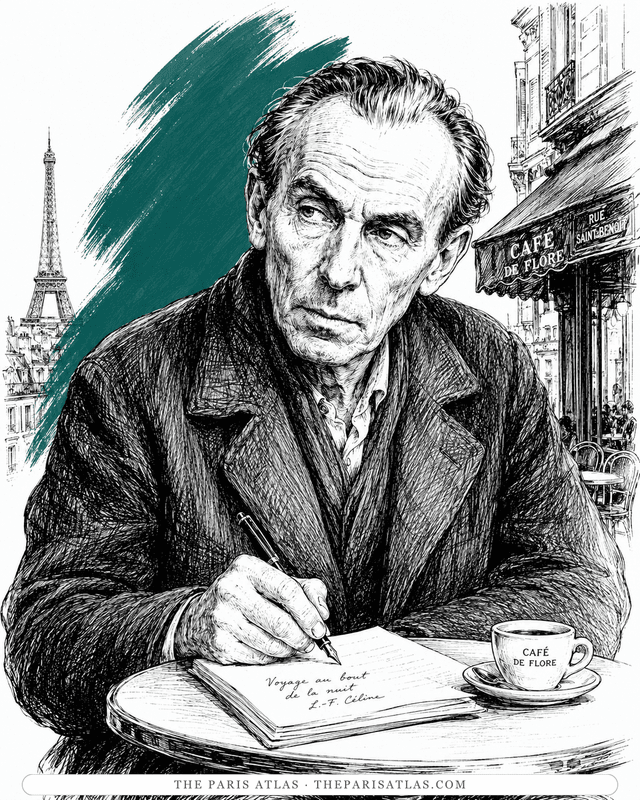
The doctor of the Paris slums who wrote the century's blackest, funniest novel — and changed the sound of French prose.
View authorThe sources below include the primary text, editions, scholarship, archival materials, and other records that informed this page. They document The Street I Know, its publication, and its place in literary history.


Used to verify the memoir's authorship, 1935 publication, publisher, and physical edition details.
Used for independent period context on Harold Stearns, expatriate Paris, and his return to the United States.
The Houghton Library finding aid documents Stearns's surviving papers and the archival record of his later career.
The Oxford scholarly bibliography places Stearns and his memoir within the broader Lost Generation and expatriate record.

Web source consulted for documented facts and historical context presented on the The Street I Know page.
Contemporary review and Boyd's own recollections, not a transcription of Stearns's memoir.
The anonymous contemporary capsule provides a contrasting judgment of the memoir's racing passages.
The primary text is the baseline reference for every book page. Additional references document publication history, interpretation, and historical context where that evidence is available.
 Explore more resources