The Paris AtlasCharting the artists, works, and places worth returning to.

Bookshop · Odéon · 6e arrondissement

Shakespeare and Company (12 Rue de l'Odéon)

The buildingStill standing
Getting inOutside only
What's there nowSomeone else

The original shop closed under the Occupation in 1941; a separately owned successor trades under the name at 37 rue de la Bûcherie.

Part of the Shakespeare and Company story

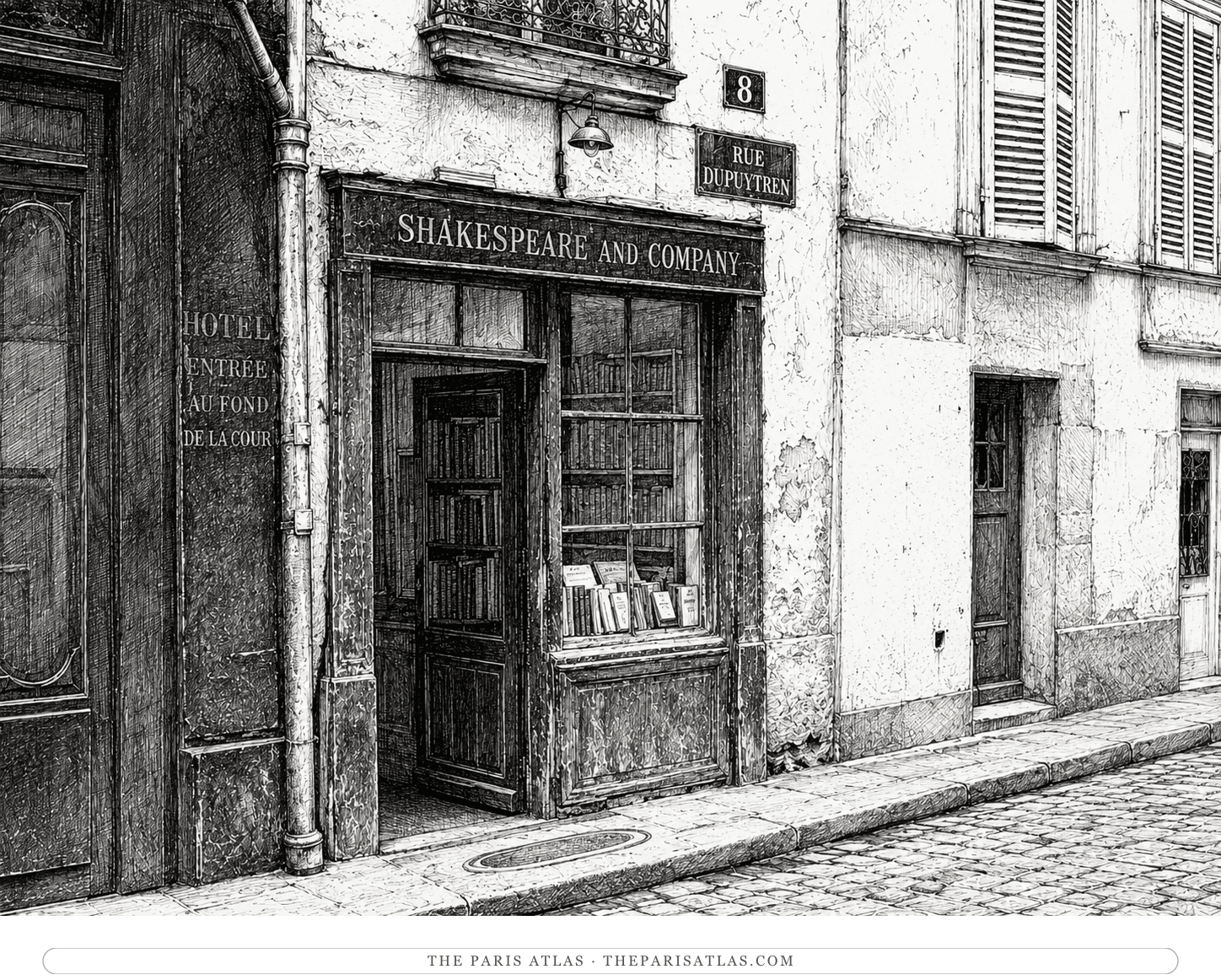
1919–1921: 8 Rue Dupuytren1921–1941: 12 Rue de l'Odéoncultural successor: 1951–present: 37 Rue de la Bûcherie

Sylvia Beach's original bookshop and lending library — Ernest Hemingway's home away from home, and where James Joyce's Ulysses was first published. The shop closed in 1941; the current Shakespeare and Company is a successor at a different address.

Address
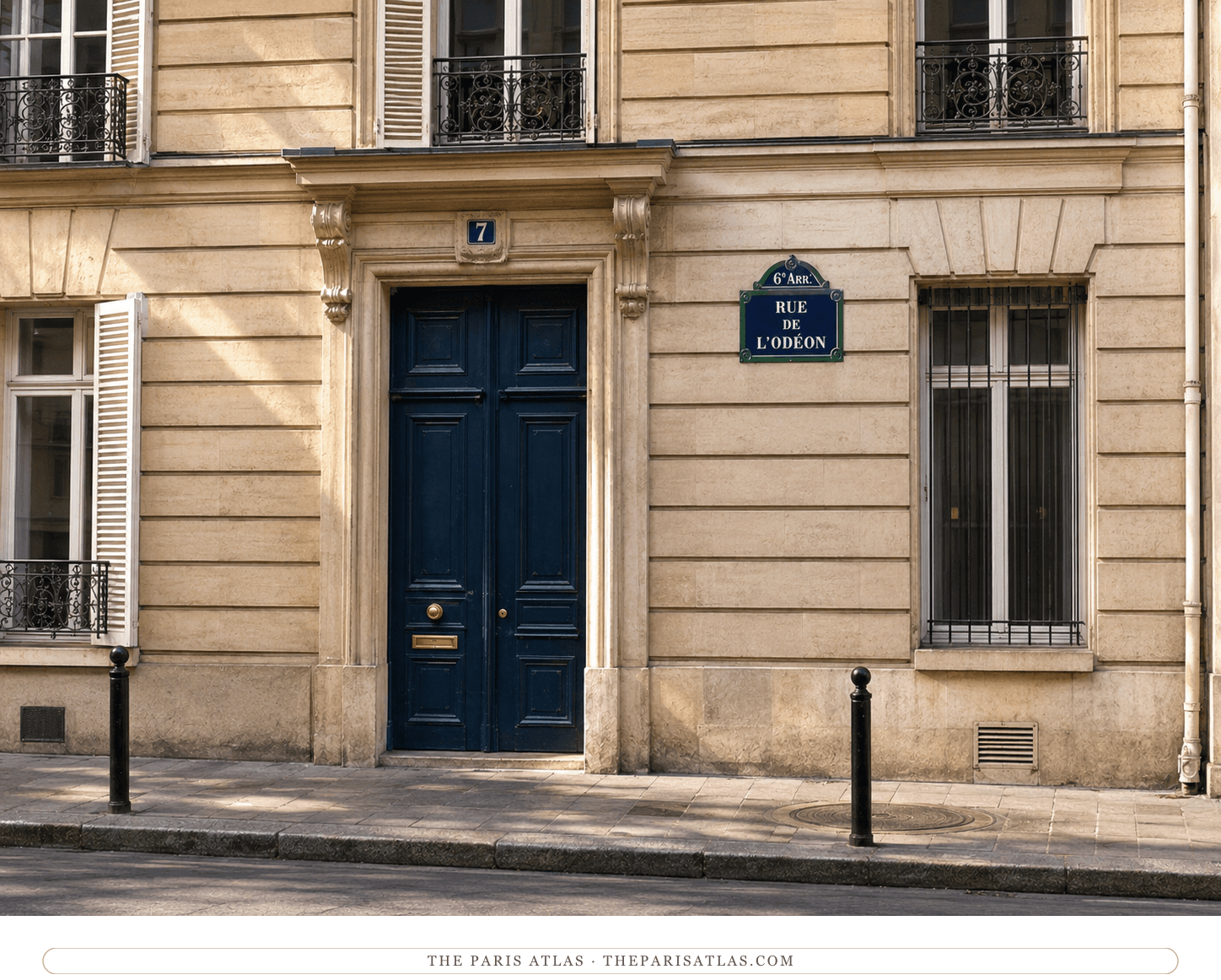
12 Rue de l'Odéon, 75006 Paris
Years
1919–1941
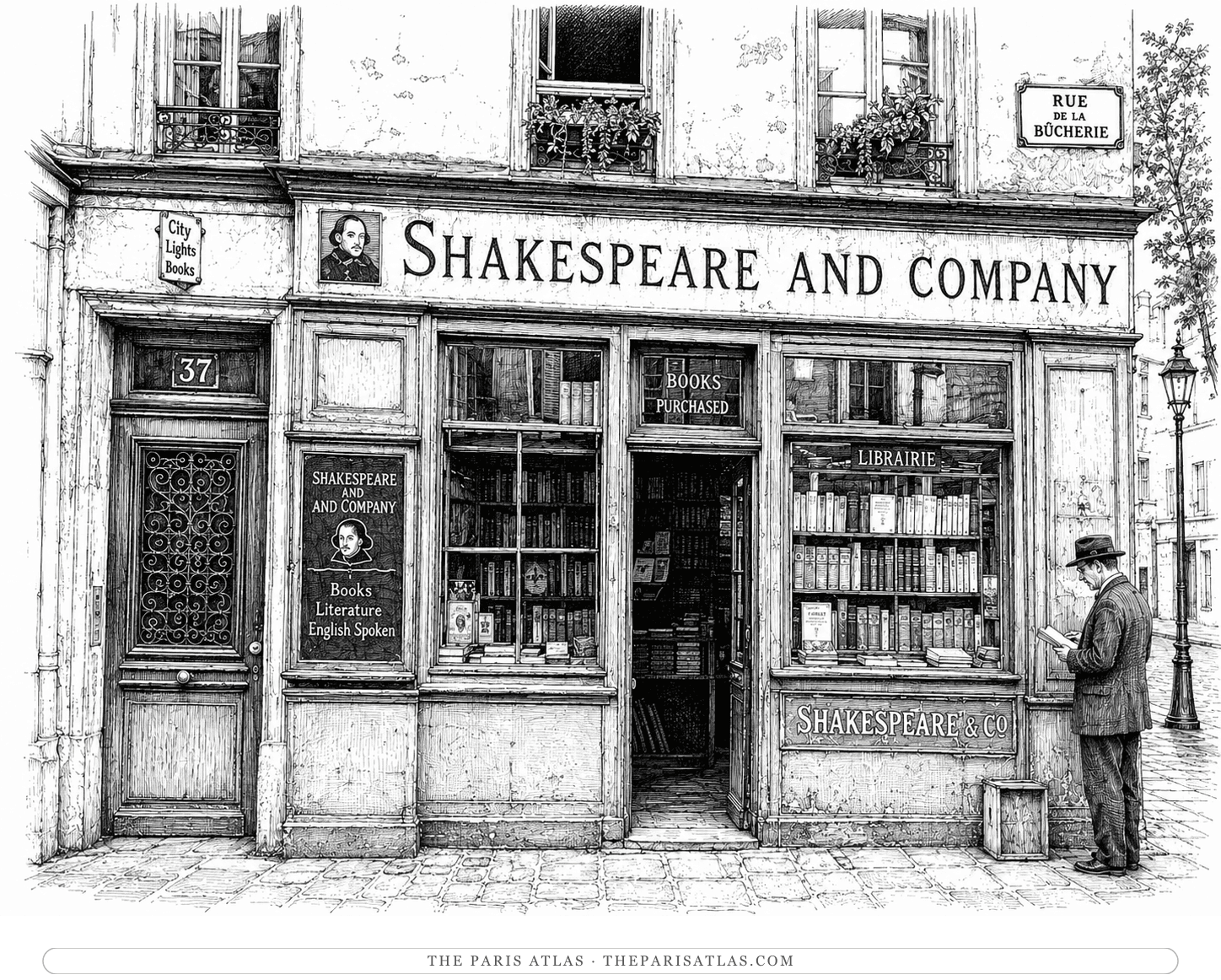
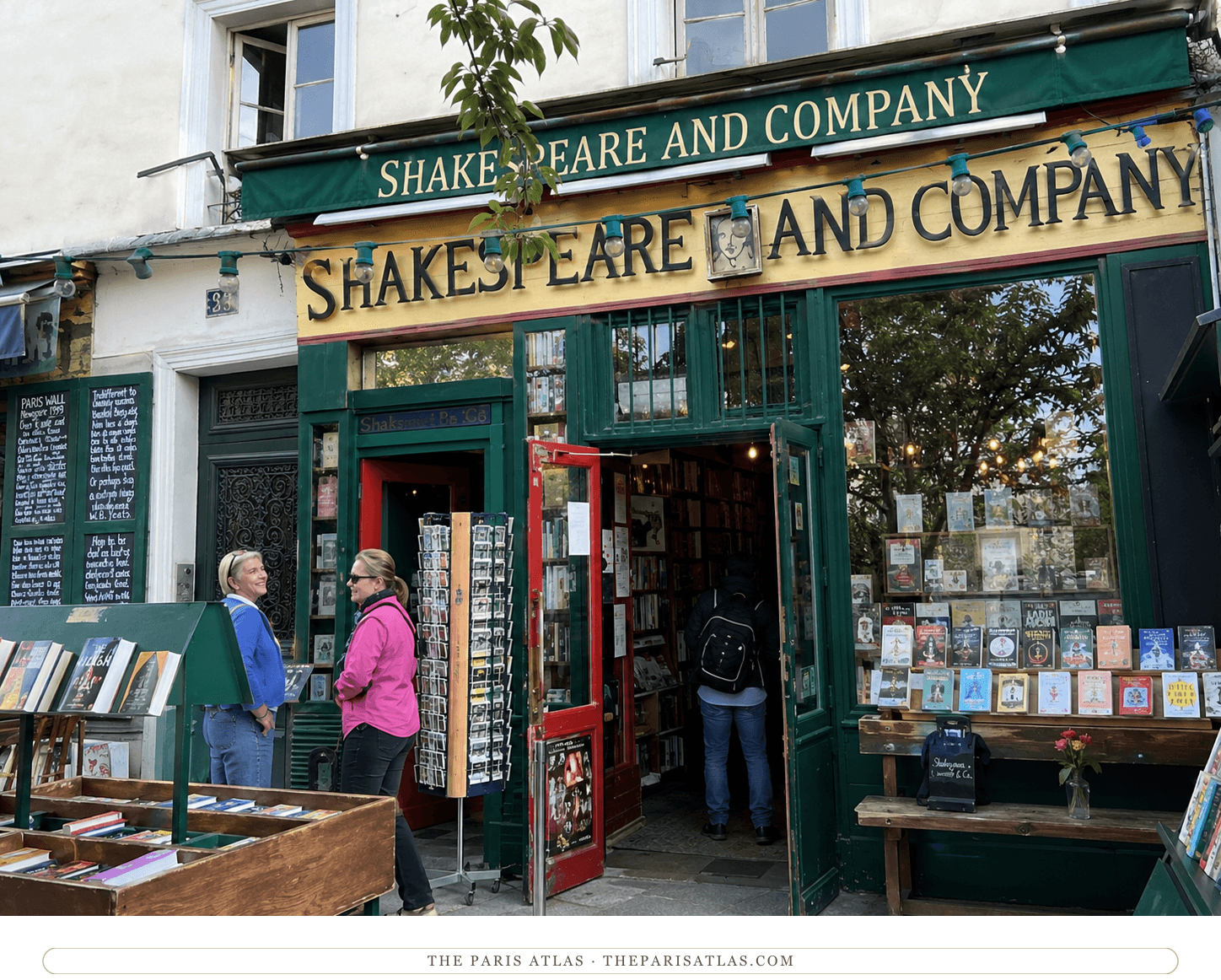
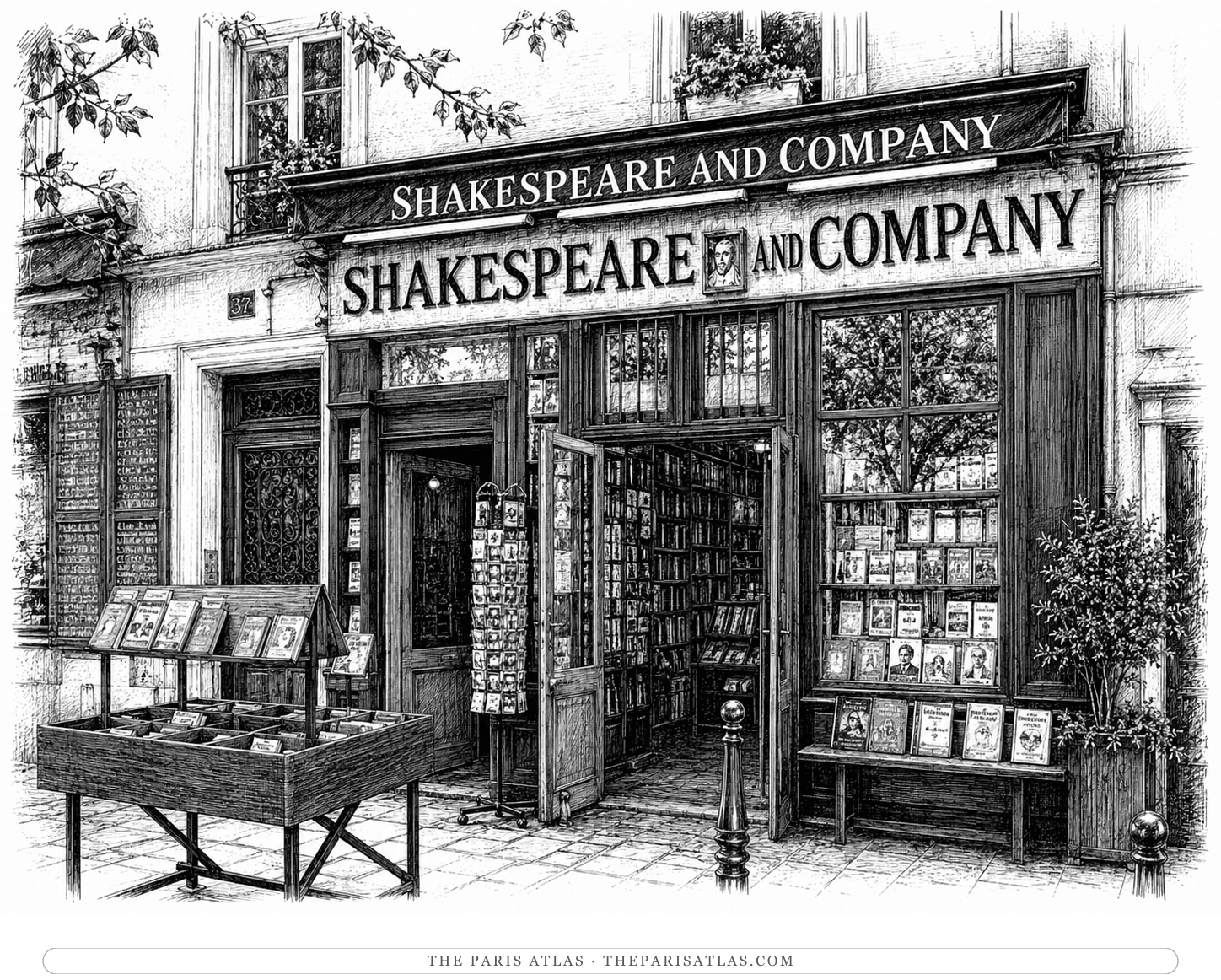
IllustrationThe successor Shakespeare and Company bookshop today, green shopfront with browsers at the outdoor book bins

The successor shop at rue de la Bûcherie — a different address, carrying the name since 1964.

Editorial illustration

The place, briefly

Sylvia Beach opened Shakespeare and Company in November 1919 and moved it in 1921 to 12 rue de l'Odéon, directly across the street from La Maison des Amis des Livres, the French bookshop run by her partner Adrienne Monnier. Between the two shops, the little street became the exchange point of two literatures — and Beach's lending library became the university of every broke Anglophone writer in Paris. Hemingway, who arrived unable to afford books, borrowed by the armload on credit; the chapter he gave Beach in A Moveable Feast is the warmest thing in the book.

Then, in 1922, the bookshop did what no publisher in London or New York would risk: it published James Joyce's Ulysses, seeing the most notorious novel of the century through a Dijon printer and into subscribers' hands. A lending library on a Left Bank side street was, for a moment, the most important publisher in the English language.

The end came with the Occupation. In December 1941 a German officer, refused the shop's last copy of Finnegans Wake, threatened to confiscate everything; Beach emptied the premises into an upstairs flat within hours and the shop never reopened. Hemingway, by his own cheerful account, personally liberated the rue de l'Odéon in August 1944 — but there was nothing left to liberate. The Shakespeare and Company that stands today by Notre-Dame is a successor, renamed in Beach's honor in 1964 by George Whitman; the original address bears only a plaque.

In their words

Their photographs were pinned on the walls above the bowl of goldfish. In the back parlour there were manuscripts of Walt Whitman — poems scribbled on the backs of envelopes — which had been presented by the good grey poet to the aunt of Sylvia Beach
Sisley Huddleston, Paris Salons, Cafés, Studios (1928)
‘It is impossible,’ said Joyce. ‘You will lose money.’ ‘Nothing is impossible,’ replied Sylvia Beach with American determination. ‘It will not interest the public,’ returned Joyce. ‘It is a masterpiece,’ declared Miss Beach, ‘and come what may it must appear.’
Sisley Huddleston, Paris Salons, Cafés, Studios (1928) — the decision to publish Ulysses

Key facts

Open
1919–1941; at 12 rue de l'Odéon from 1921
Founder
Sylvia Beach, with Adrienne Monnier's shop across the street
What it was
English-language bookshop, lending library, and one-book publisher
Neighborhood
Odéon, between the boulevard and the theater
Notable regulars
Joyce, Pound, Fitzgerald, Stein, Gide, Valéry
Today
Closed — a plaque marks the address; the current shop of the same name is a 1964 successor elsewhere

Documentary photographs

Archival and present-day photographs, reproduced with rights verified.

Inside the shop in 1920: Beach at her desk, the lending-library shelves at her back.1920 · Photographer unknown · Public domain
12 rue de l'Odéon — the plaque between the windows marks where Beach published Ulysses in 1922.2004 · Andreas Praefcke · CC BY 3.0
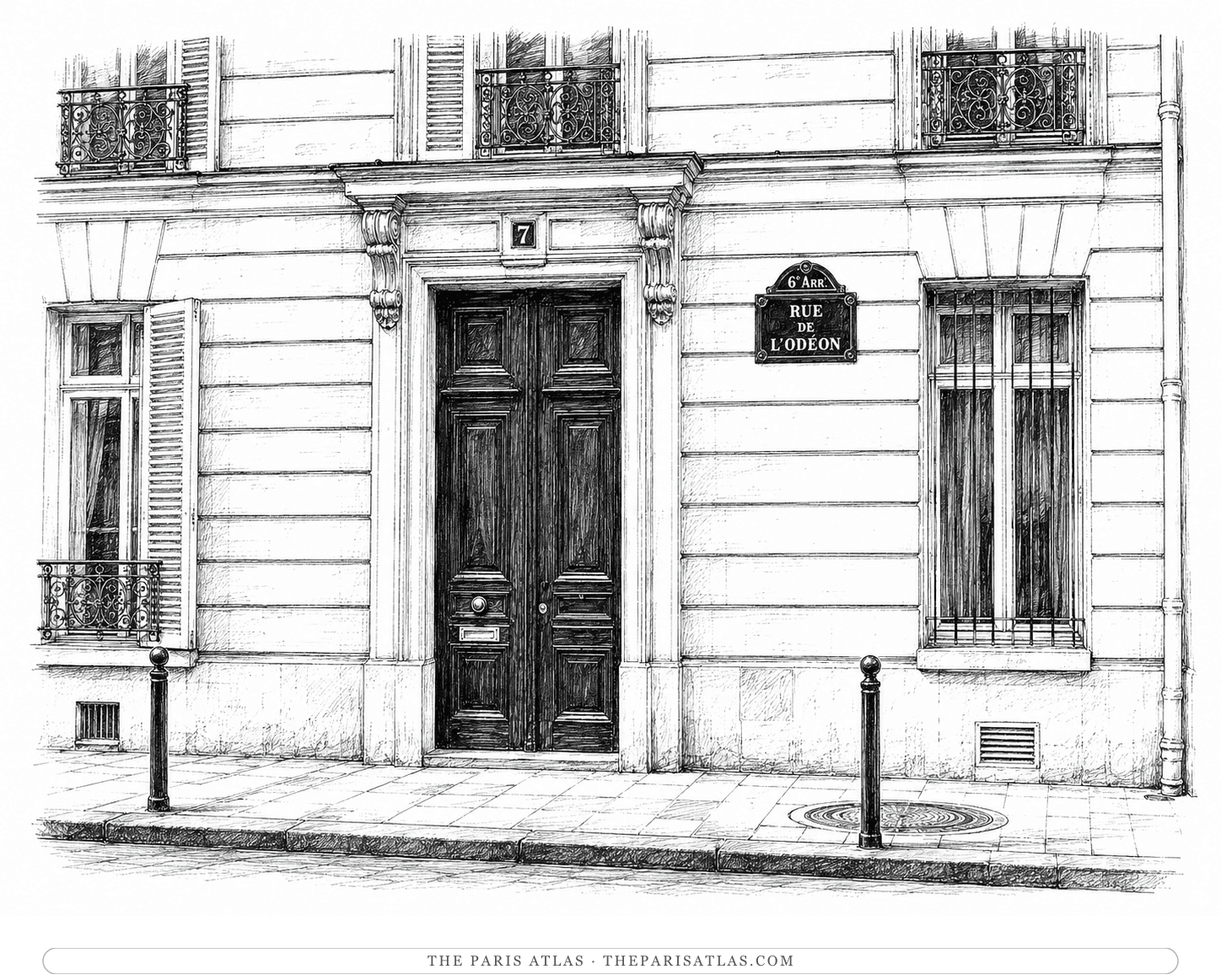
Sylvia Beach's shop at 12 rue de l'Odéon, as it stood between the wars.Editorial illustration
The successor shop at rue de la Bûcherie — a different address, carrying the name since 1964.Editorial illustration

Timeline

  1. 1919

    Sylvia Beach opens the first shop on the rue Dupuytren.

  2. 1921

    The shop moves to 12 rue de l'Odéon, opposite Adrienne Monnier's La Maison des Amis des Livres.

  3. 1922

    Publishes Joyce's Ulysses on 2 February — Joyce's fortieth birthday.

  4. 1921–28

    Hemingway's lending-library years; he repays the debt with a chapter of A Moveable Feast.

  5. 1941

    Beach closes the shop overnight rather than sell her last Finnegans Wake to a German officer. It never reopens.

  6. 1944

    Hemingway 'liberates' the rue de l'Odéon in August; the shop is already gone.

  7. 1964

    George Whitman renames his rue de la Bûcherie shop Shakespeare and Company in Beach's honor.

On the map

Related books

Cover of A Moveable Feast by Ernest Hemingway

Recalled in the memoir

A Moveable Feast

Ernest Hemingway · 1964

Sylvia Beach's original bookshop and lending library — Hemingway's home away from home, and where Joyce's Ulysses was first published. The shop closed in 1941; the current Shakespeare and Company is a successor at a different address.
Cover of Shakespeare and Company by Sylvia Beach

Recalled in the memoir

Shakespeare and Company

Sylvia Beach · 1959

The subject, the setting, and the hero — twenty-two years at 12 rue de l'Odéon, told from behind the counter.

Writers who knew this place

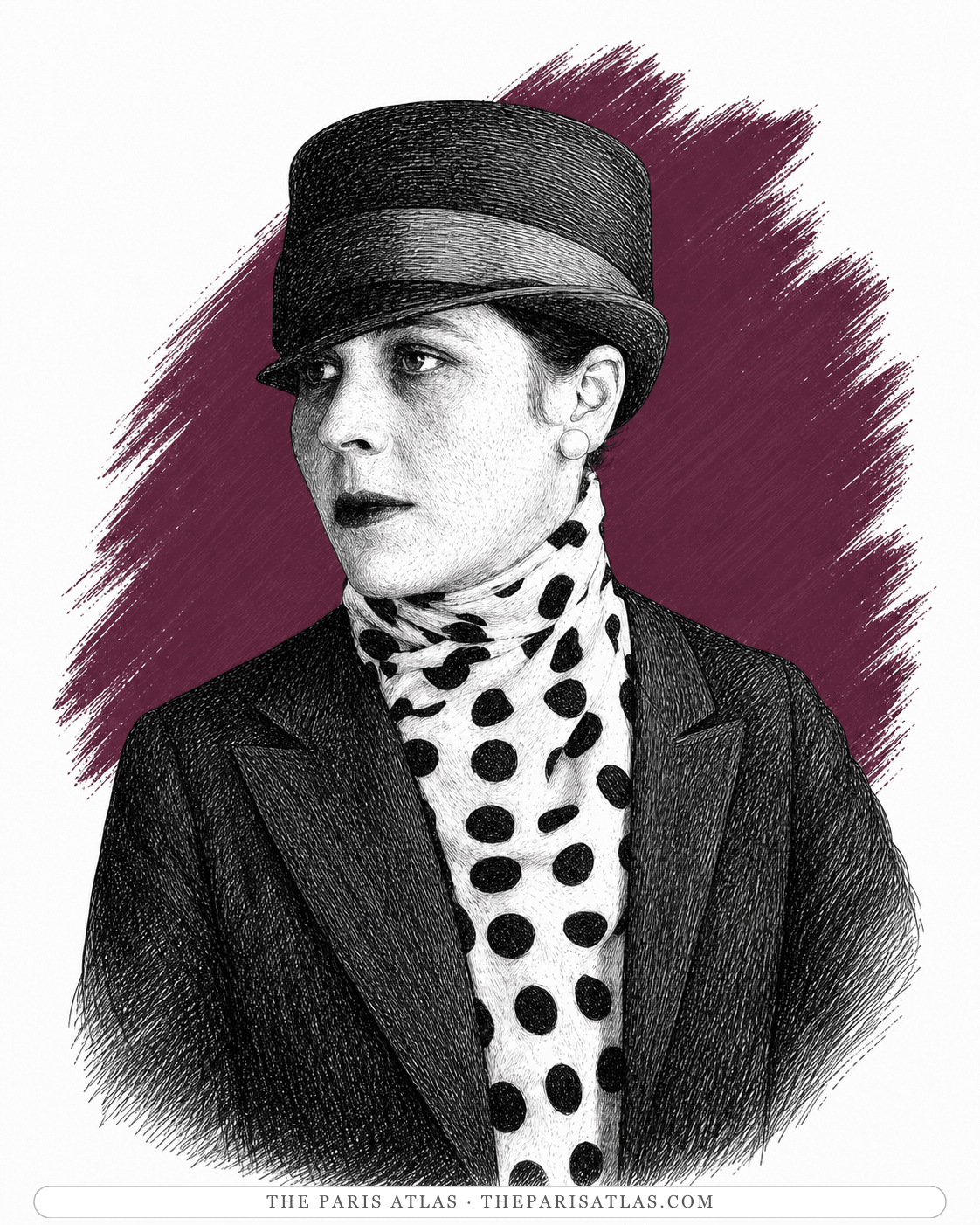
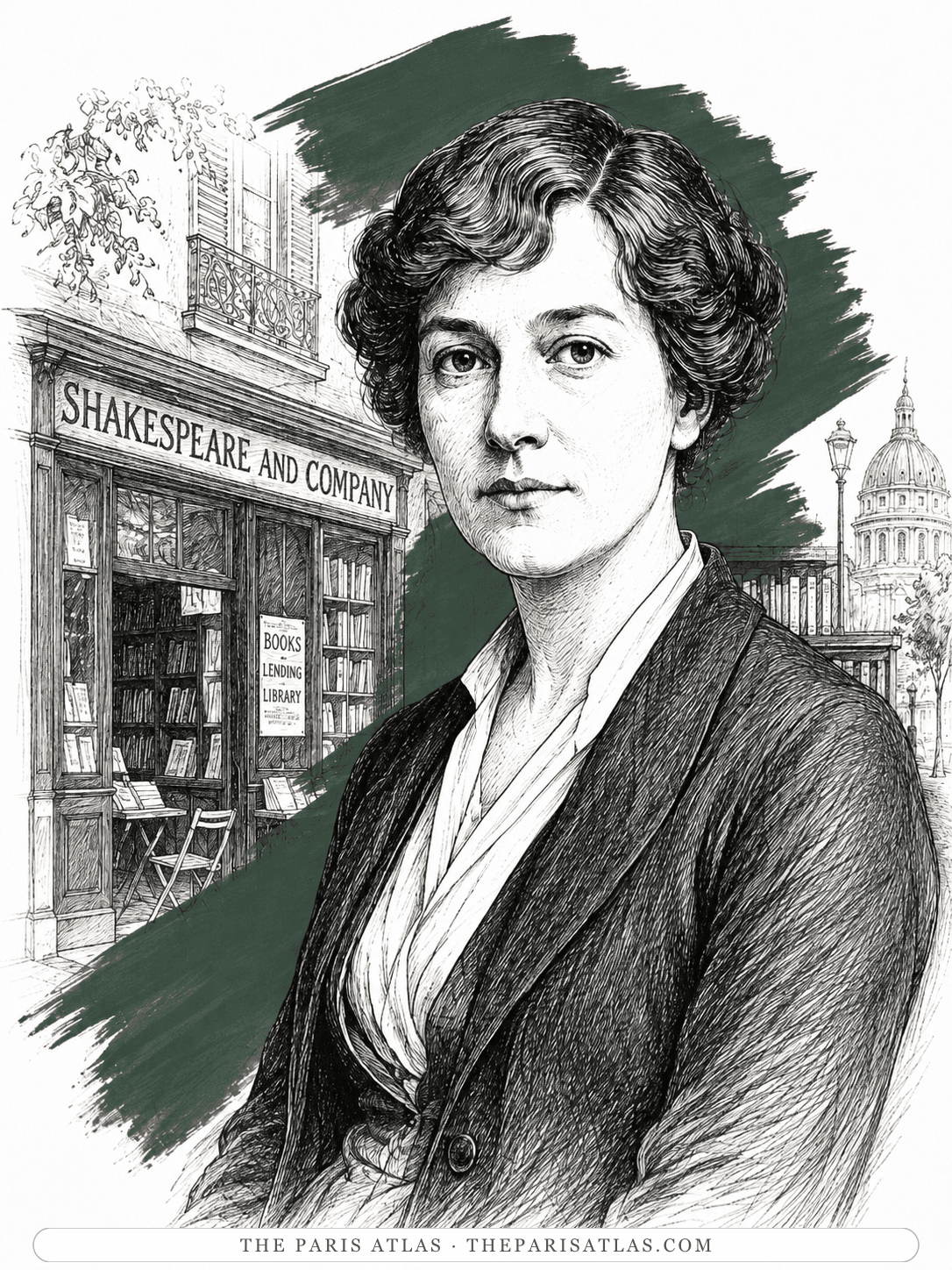
Illustrated portrait of Sylvia Beach

Sylvia Beach

American · Founder of the original Shakespeare and Company, lender and publisher to the Lost Generation — the woman who put Ulysses into print.

Worked here · 1919–1941

Sylvia Beach ran the shop from behind its counter for twenty-two years — lending library, publishing house, and post office for a generation, until she closed it under the Occupation.

Sylvia Beach, Shakespeare and Company (1959)

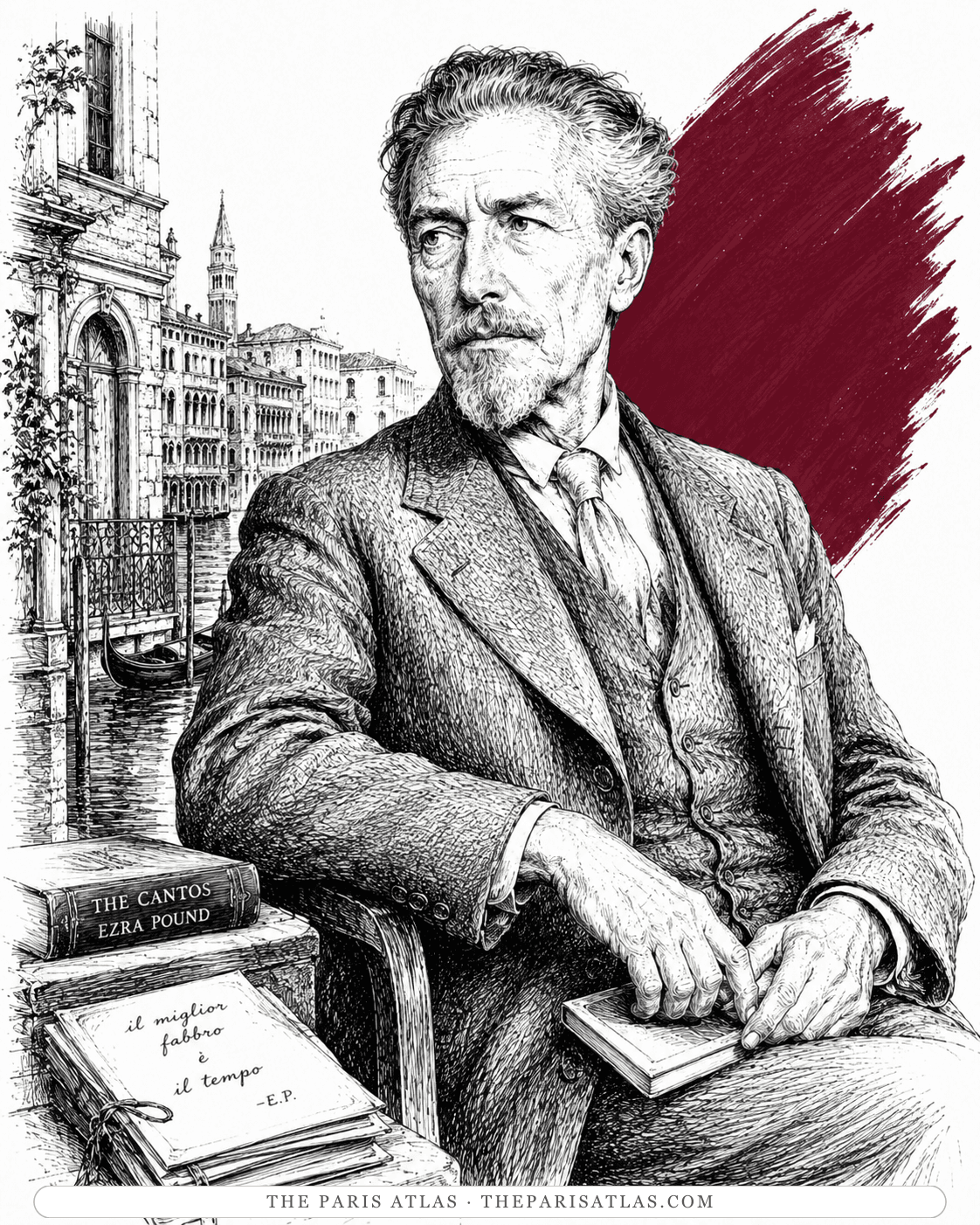
Illustrated portrait of Ezra Pound

Ezra Pound

American · Modernism's impresario — editor of Eliot, publisher of Joyce, Hemingway's line-cutter, and the era's most brilliant, most compromised poet.

Frequented by · 1922–1924

A lending-library member from January 1922 — Princeton's Shakespeare and Company Project preserves his membership and borrowing records.

Shakespeare and Company Project

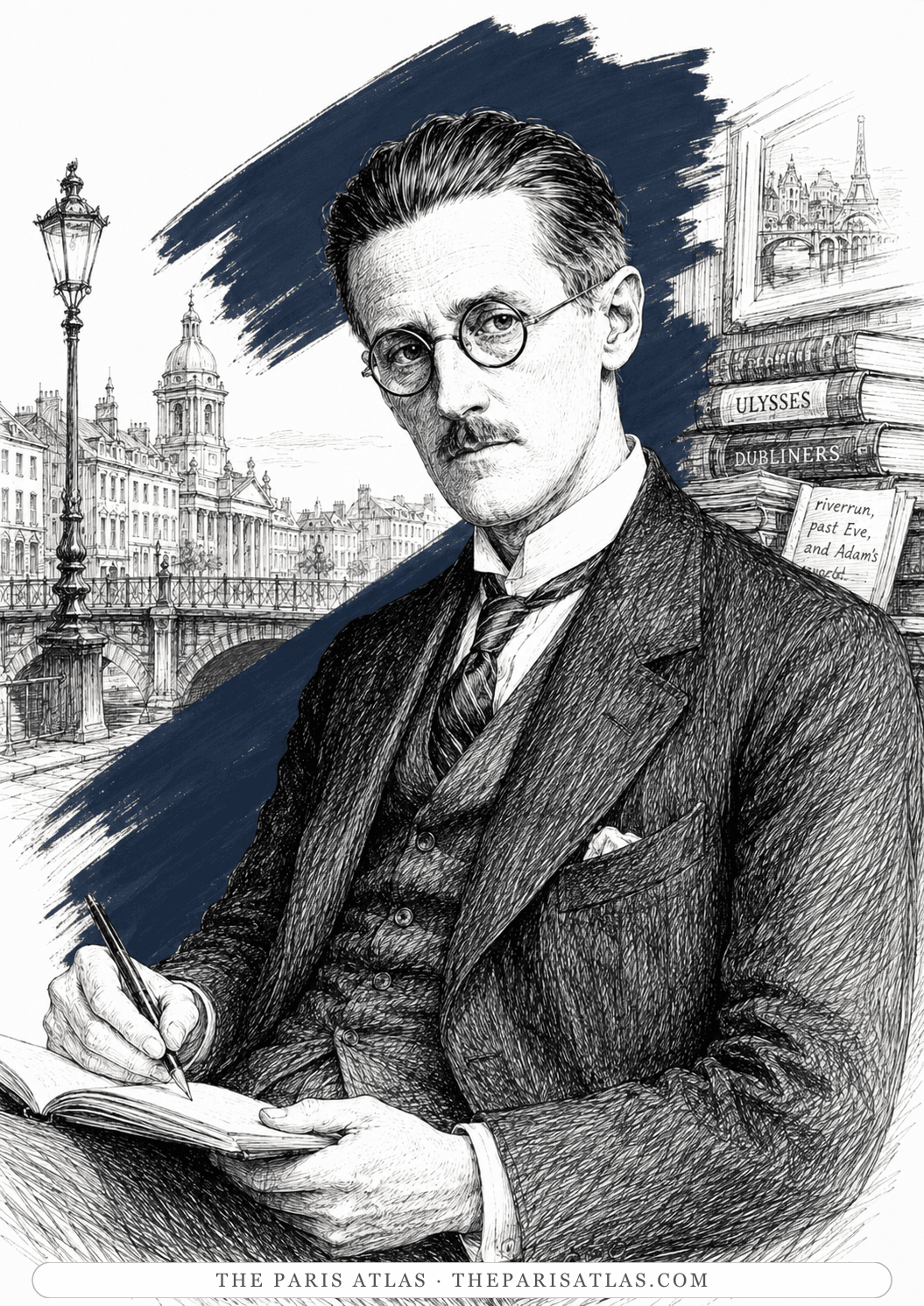
Illustrated portrait of James Joyce

James Joyce

Irish · Dublin's great exile — he left Ireland at twenty-two, carried the city with him through Trieste, Zurich, and Paris, and rebuilt it entire in Ulysses.

Frequented by · 1920–1931

James Joyce's Paris headquarters — the shop published Ulysses, banked and posted for him, and hosted the readings where Huddleston heard the thin clear voice with its ever-changing mimicry.

Sylvia Beach, Shakespeare and Company (1959); Sisley Huddleston, Paris Salons, Cafés, Studios (1928)

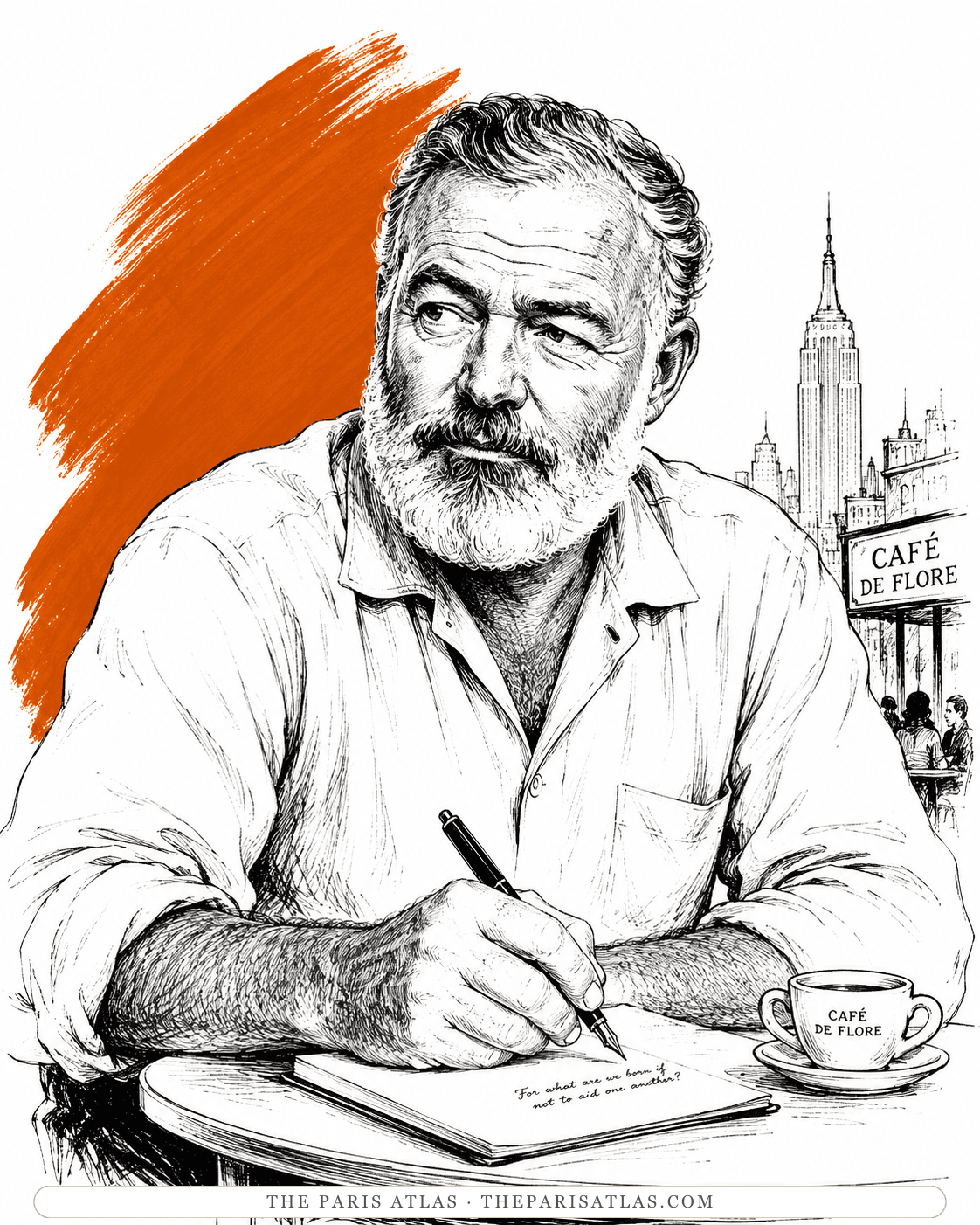
Illustrated portrait of Ernest Hemingway

Ernest Hemingway

American · Author of The Sun Also Rises and A Moveable Feast; his pared-down style, developed in 1920s Paris, became the most imitated in American prose.

Frequented by

Too poor to buy books when he arrived, he borrowed from Beach's lending library by the armload, on credit.

Ernest Hemingway, A Moveable Feast (1964); Sylvia Beach, Shakespeare and Company (1959)

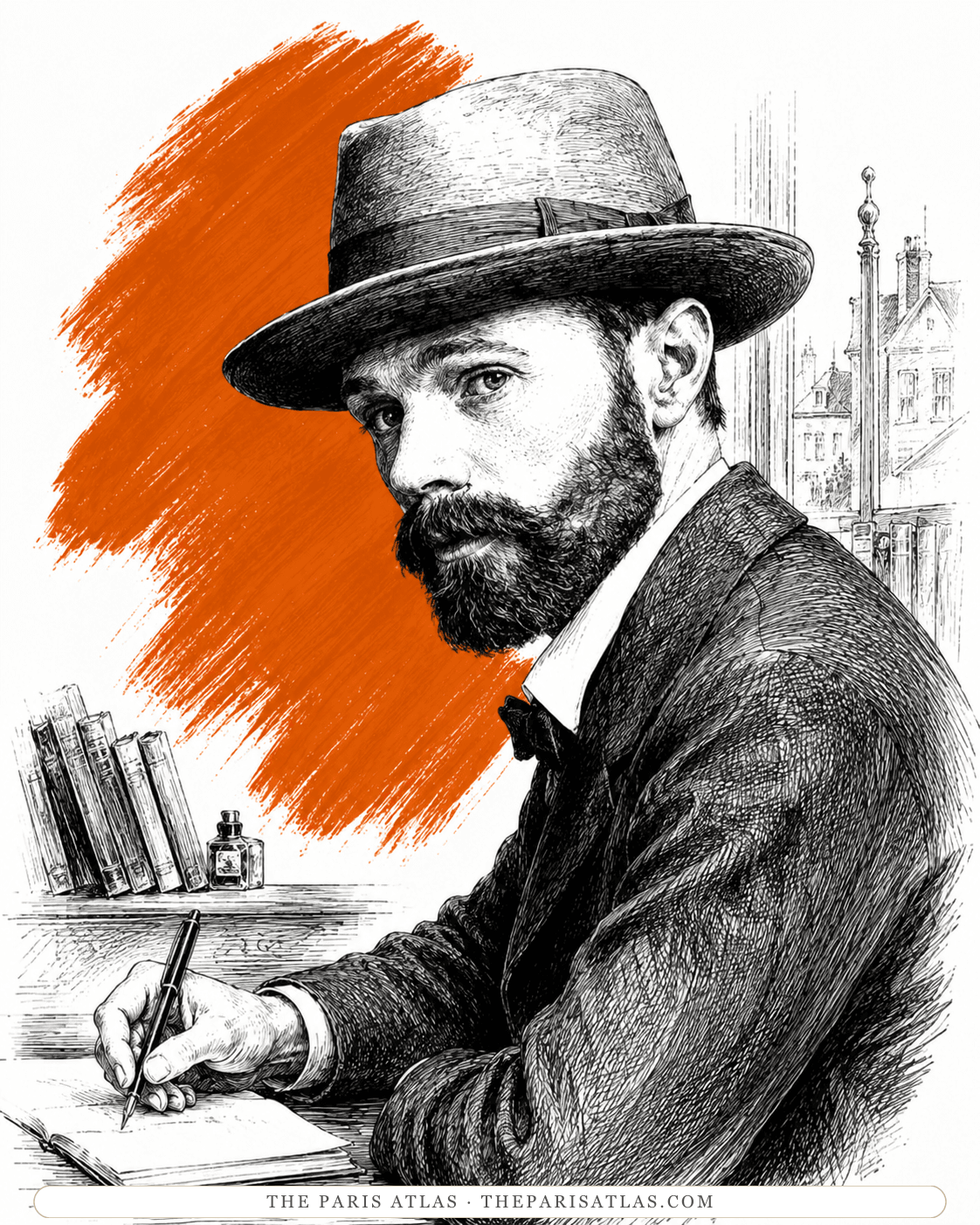
Illustrated portrait of D. H. Lawrence

D. H. Lawrence

English · English novelist and poet out of a Nottinghamshire coalfield. A court destroyed The Rainbow in 1915, the police took his paintings off a London wall in 1929, and he came to Paris that March to get Lady Chatterley's Lover cheaply into print.

Frequented by · 1929

He went to Sylvia Beach's shop in mid-March 1929 to ask her to publish the cheap Lady Chatterley's Lover. She refused, saying she had had enough of controversy after Ulysses, and appears to have sent him on to Edward Titus.

Catherine Brown, D. H. Lawrence in Paris in 1929; Sylvia Beach, Shakespeare and Company (1959); D. H. Lawrence, Lady Chatterley's Lover and "Popular" Editions

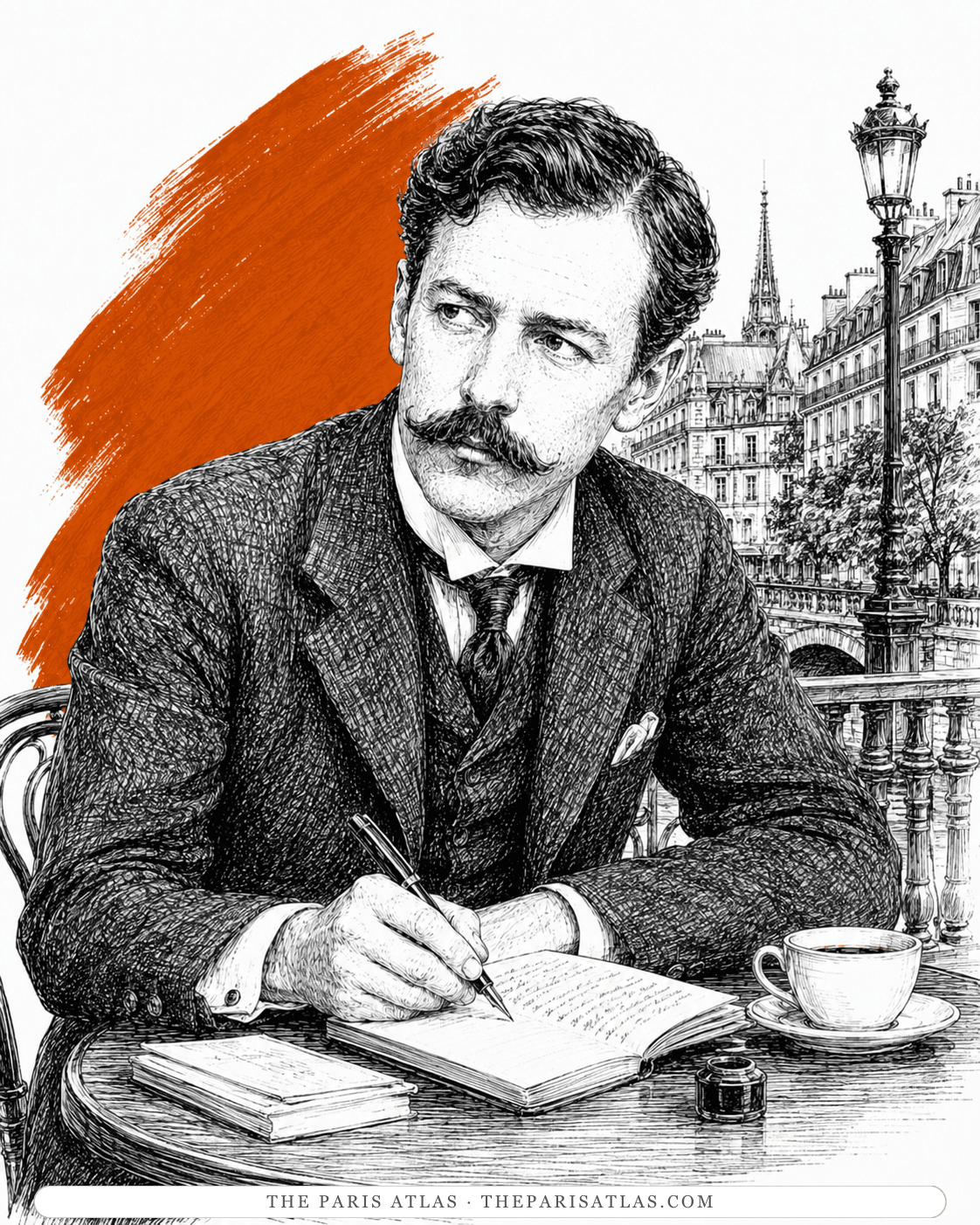
Illustrated portrait of Sisley Huddleston

Sisley Huddleston

British · The Times's man in Paris — the journalist who knew every table in the quarter, French and Anglo-American alike, and wrote the era down while it was happening.

Sisley Huddleston wrote about Shakespeare and Company (12 Rue de l'Odéon) in Paris Salons, Cafés, Studios.

Artists who knew this place

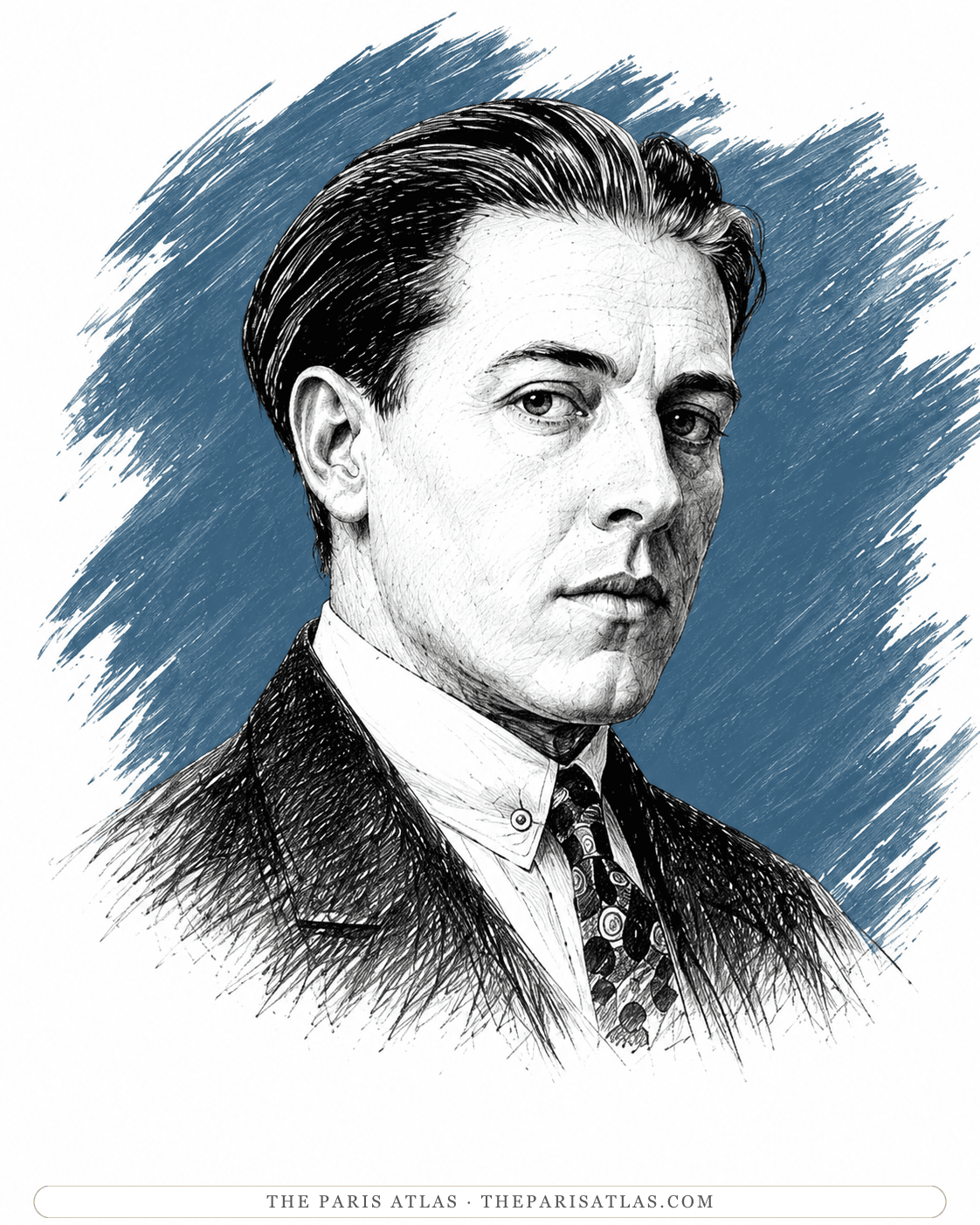
Illustrated portrait of George Antheil

George Antheil

American · Musician

The composer lived in the mezzanine above Sylvia Beach's shop on the rue de l'Odéon — the Morgan's Ulysses centenary exhibition places him 'living in Paris above Shakespeare and Company' while he wrote Ballet Mécanique.

Literary generation · c. 1921–1929

The Lost Generation gathered here

The writers remade by war and expatriate Paris — Hemingway, Fitzgerald, Stein, Pound, and the rooms, presses, and bookshops that turned their encounters into literature.

Enter the movement

The name lives on

Pen-and-ink illustration of the green Shakespeare and Company shopfront at 37 rue de la Bûcherie, book-filled windows under the painted fasciaThe successor · open todayShakespeare and Company (Rue de la Bûcherie)The succession was personal, not corporate: Sylvia Beach announced in 1958 that she was handing George Whitman the name of her long-closed shop, and in 1964 — on Shakespeare's 400th birthday, two years after her death — Le Mistral became Shakespeare and Company.See the shop that's open today

The other addresses of this story — chapters of one name, each with its own page.

Within walking distance

The Friday Letter

Paris, one address at a time.

The cafés, studios, and walk-up flats where the work was made — one story from the map in every letter.

One email a week. No spam, no selling your address. Unsubscribe anytime.