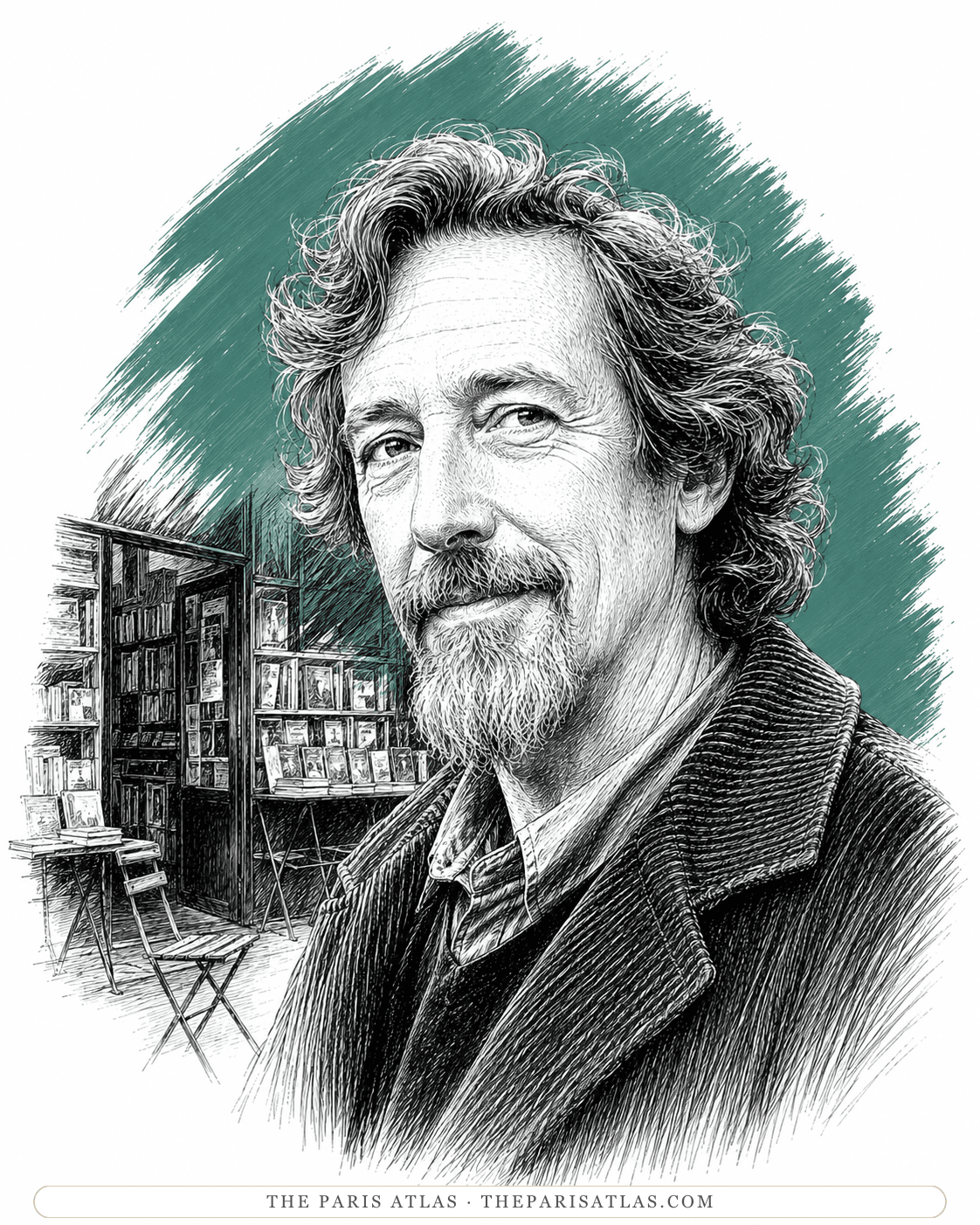
George Whitman
Whitman opened the shop as Le Mistral in 1951 and ran it for sixty years on the rule 'give what you can, take what you need' — living above it until his death at ninety-eight, two days past his birthday, in 2011.
Part of the Shakespeare and Company story
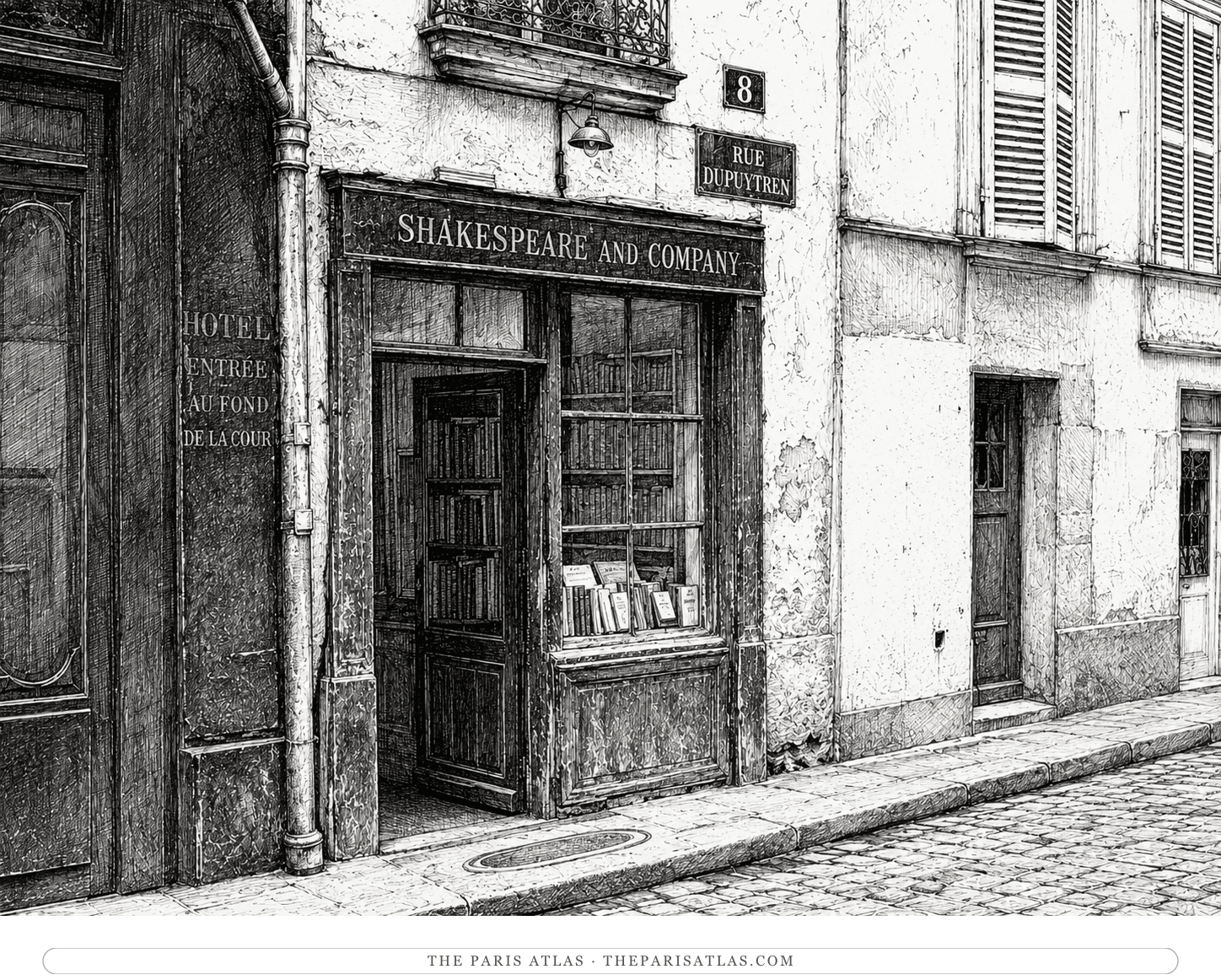
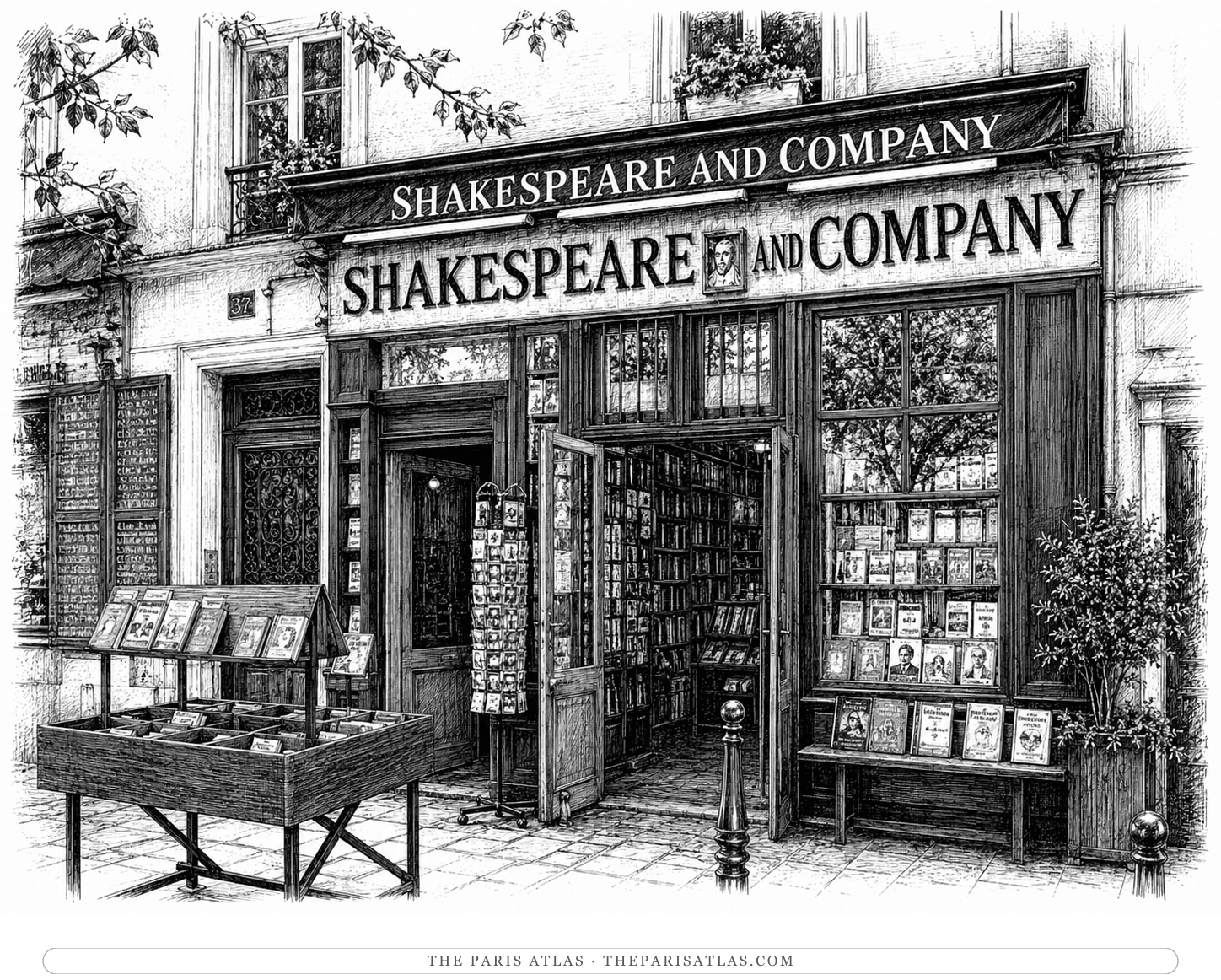
George Whitman's bookshop by the Seine — opened as Le Mistral in 1951, renamed Shakespeare and Company in 1964 with Sylvia Beach's blessing, and still sleeping writers among its shelves.
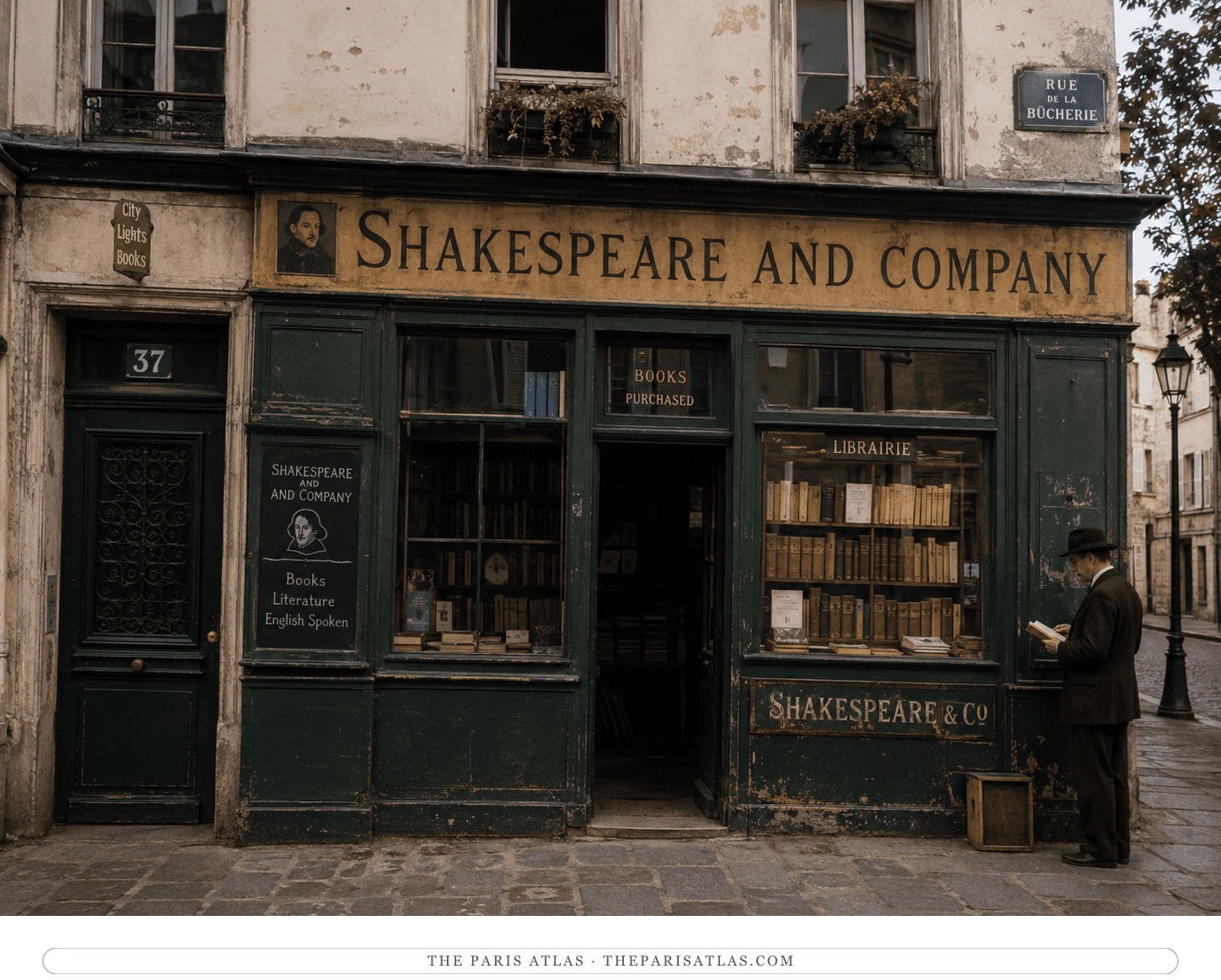
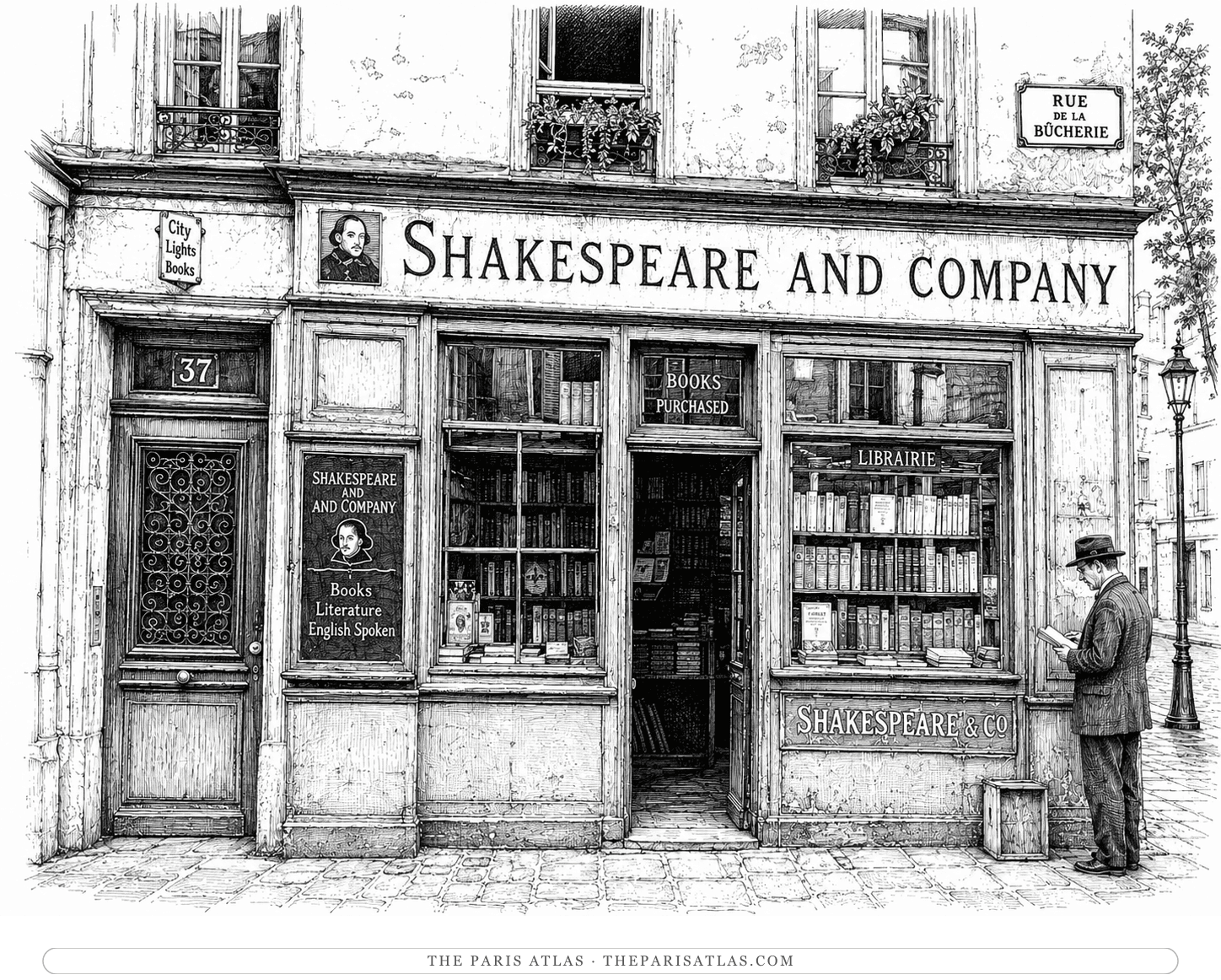
George Whitman had spent his young manhood drifting the world on the kindness of strangers — a self-described tumbleweed — and when he settled in Paris he repaid the debt with a bookshop built on the same principle. In 1951 he bought a former grocery at 37 rue de la Bûcherie, across the Seine from Notre-Dame, and opened Le Mistral: bookshop, lending library, and free hotel for writers. Beds stood among the shelves from the beginning, and the deal never changed — sleep free, help in the shop, read a book a day, and leave a one-page autobiography for the archives. He called his guests Tumbleweeds, after himself; by now they number in the tens of thousands.
The fifties made it the Beat Generation's Paris living room: Allen Ginsberg and Gregory Corso read there, William Burroughs is said to have researched stretches of Naked Lunch in the shop's medical section, and Merlin — the little magazine that first published Samuel Beckett in English — used the shop as an editorial address. Henry Miller pronounced it 'a wonderland of books.' Sylvia Beach herself was a visitor — and in 1958, at a Paris party, she announced she was handing Whitman the name of her long-closed shop. He took it up in 1964, on the four-hundredth anniversary of Shakespeare's birth and two years after Beach's death, and Le Mistral became Shakespeare and Company — a second, separately owned shop carrying the first one's flag a mile downriver.
Whitman ran it for sixty years as, in his own phrase, 'a socialist utopia masquerading as a bookstore' — give what you can, take what you need — in a building he liked to say had been part of a sixteenth-century monastery, with the motto painted over an inner doorway: 'Be not inhospitable to strangers lest they be angels in disguise.' His daughter Sylvia — named for Sylvia Beach — joined in the 2000s and runs the shop today, adding a literary festival, a prize, and the café next door. George died in 2011, two days past his ninety-eighth birthday, in his apartment above the shop; the beds among the shelves are still made.
The shop's history extends beyond its Beat-era reputation. Its official history names Anaïs Nin, Richard Wright, William Styron, Julio Cortázar, Lawrence Durrell, James Jones, and James Baldwin among its early visitors. After returning to Paris in 2002, Sylvia Whitman worked alongside her father before he officially placed her in charge in January 2006. She expanded the literary programming that began with the shop's first festival in 2003 while preserving the Tumbleweed tradition and its growing archive of autobiographies.
George Whitman opens Le Mistral in a former grocery at 37 rue de la Bûcherie — beds among the bookshelves from the first week.
The Beats move in: Ginsberg and Corso read at the shop; Burroughs works in the medical section.
At a Paris party, Sylvia Beach announces she is handing Whitman the name of her old shop.
On Shakespeare's 400th birthday, two years after Beach's death, Le Mistral becomes Shakespeare and Company.
Sylvia Whitman — George's daughter, named for Beach — takes up the running of the shop; festival, prize, and café follow.
Sylvia Whitman returns to Paris and begins working in the shop in 2002; its first literary festival follows in 2003, and George officially places her in charge in January 2006.
George Whitman dies at ninety-eight in the apartment above the shop, two days after his birthday.
Open daily — bookshop, pilgrimage site, and the world's most famous free hotel for writers.
Whitman opened the shop as Le Mistral in 1951 and ran it for sixty years on the rule 'give what you can, take what you need' — living above it until his death at ninety-eight, two days past his birthday, in 2011.

George's daughter — named for Sylvia Beach — joined the shop in the early 2000s and runs it today, adding the literary festival, the Paris Literary Prize, and the café beside the shop.
 The historic original · 1919–1941Shakespeare and Company (12 Rue de l'Odéon)The succession was personal, not corporate: Sylvia Beach announced in 1958 that she was handing George Whitman the name of her long-closed shop, and in 1964 — on Shakespeare's 400th birthday, two years after her death — Le Mistral became Shakespeare and Company.See the historic original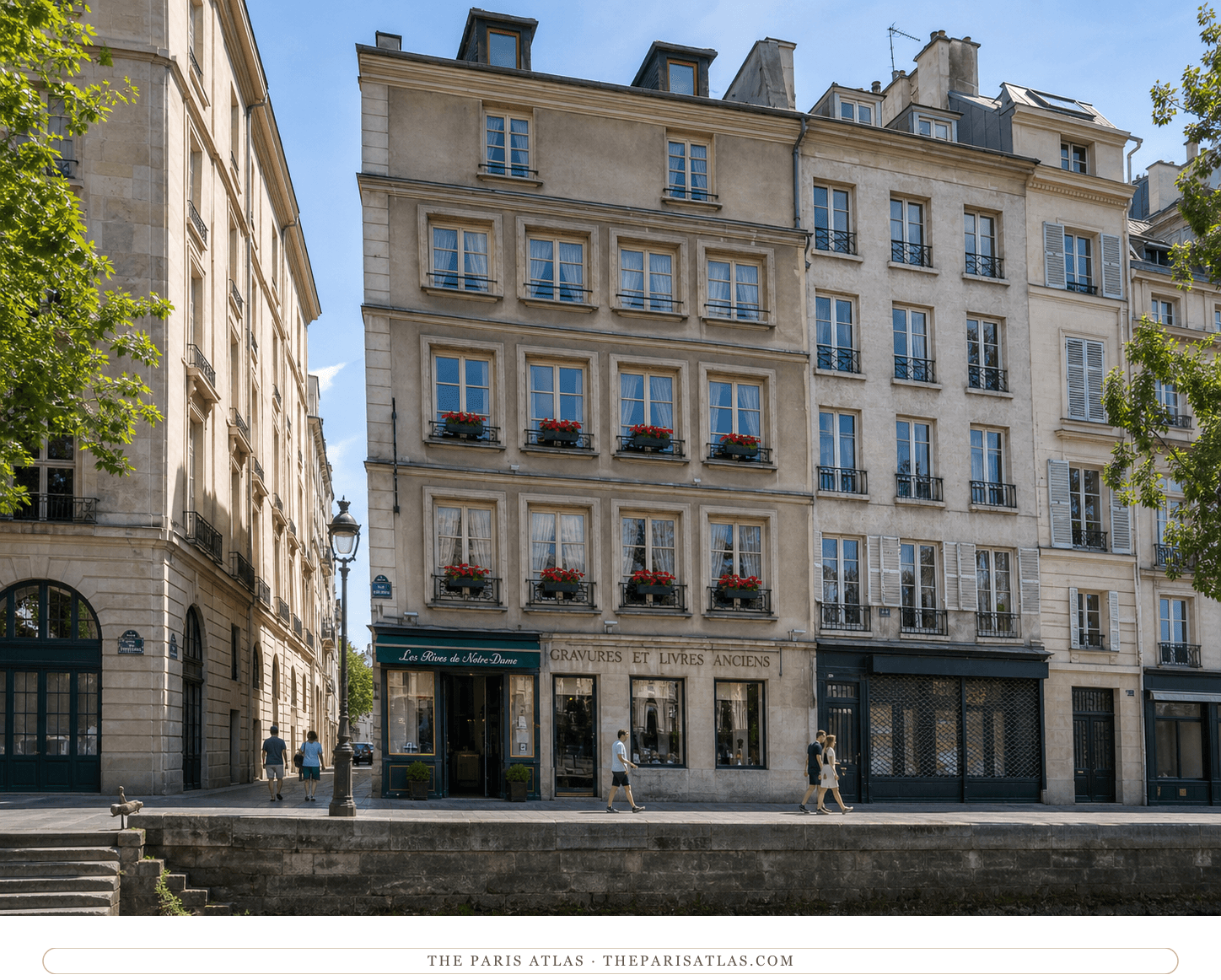
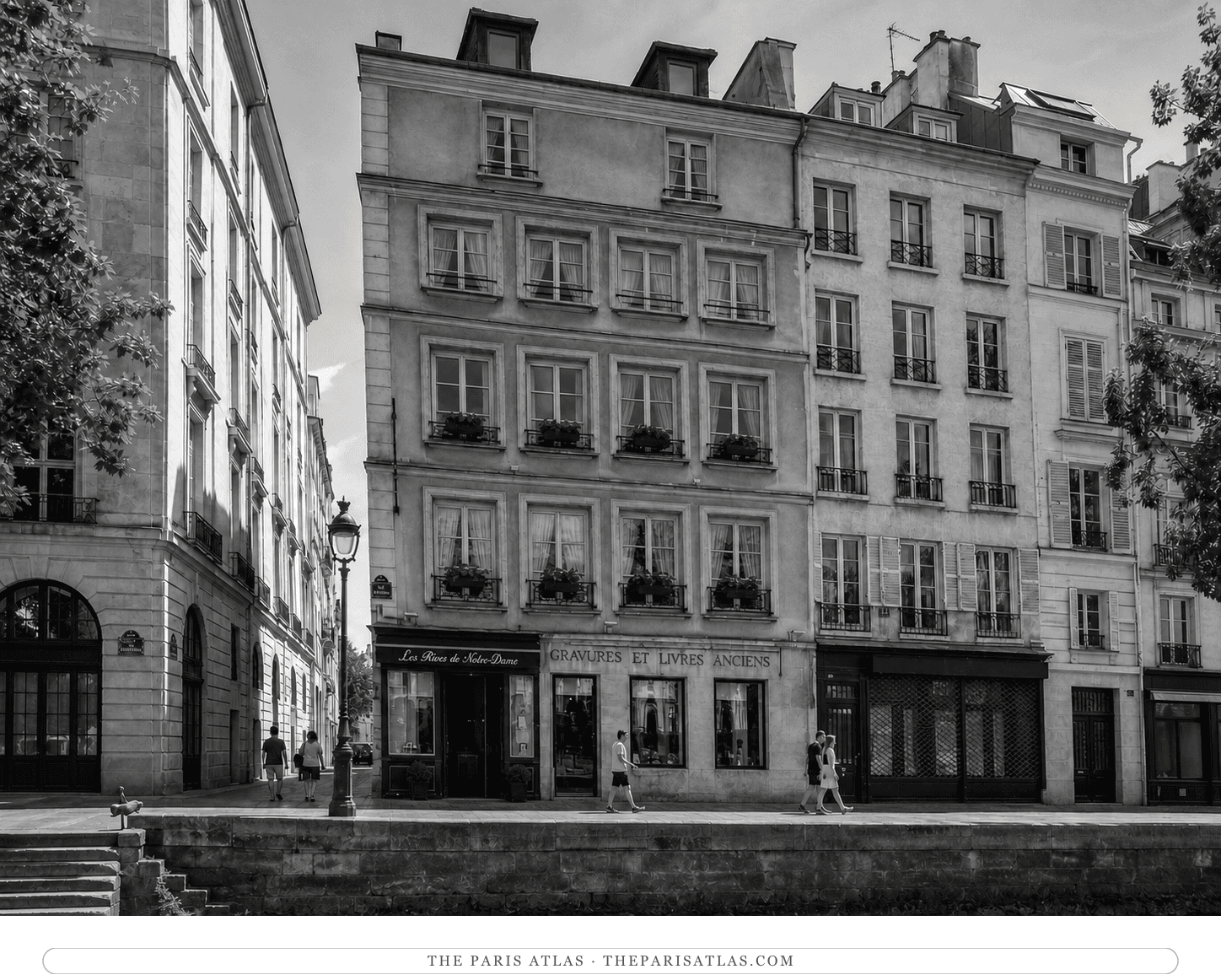
The small Left Bank hotel on the quai Saint-Michel, facing Notre-Dame, where Godard shot the long bedroom scene of Breathless in Room 12. The hotel closed in 1993; the site is now the Hôtel Les Rives de Notre-Dame.
Visit the place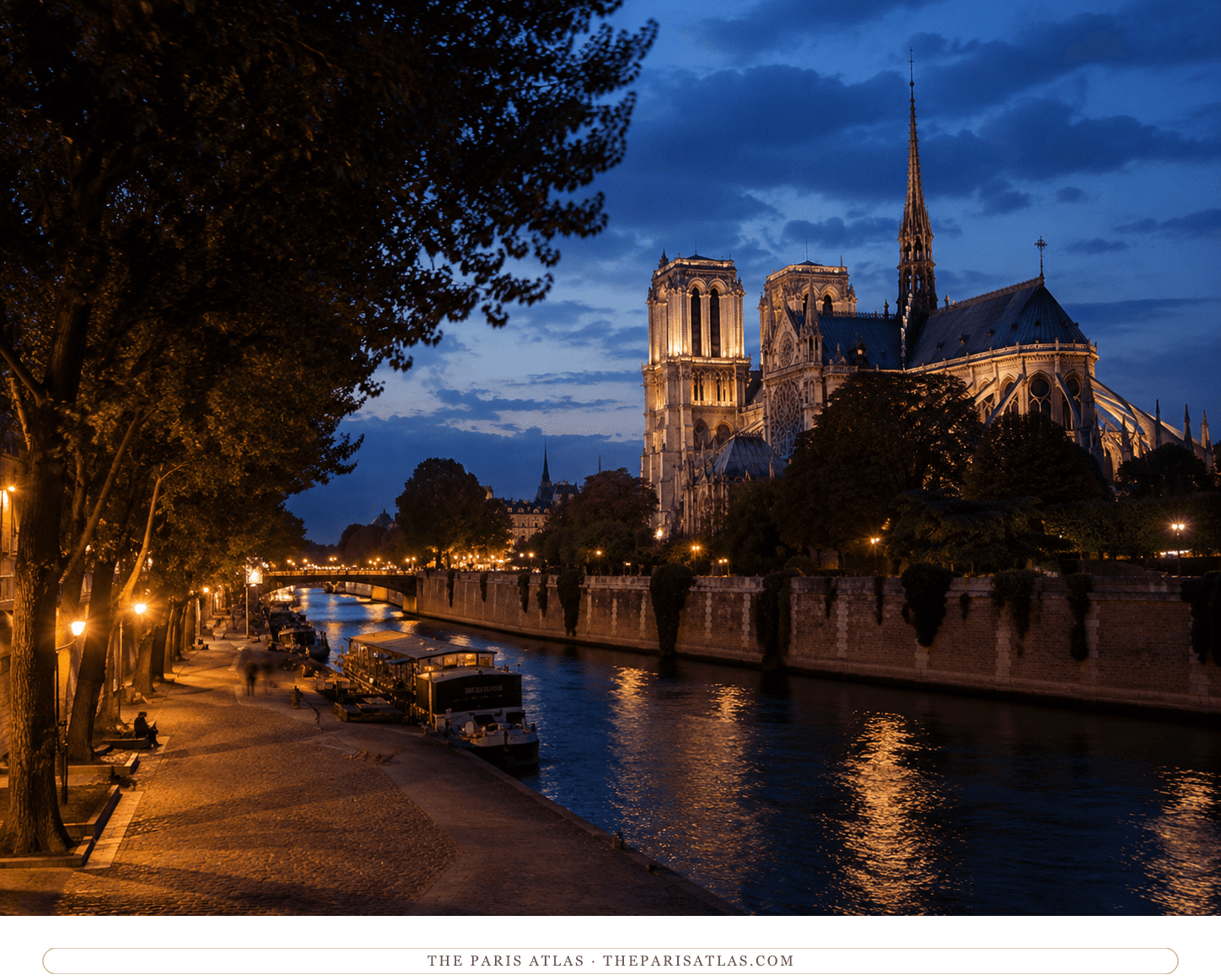
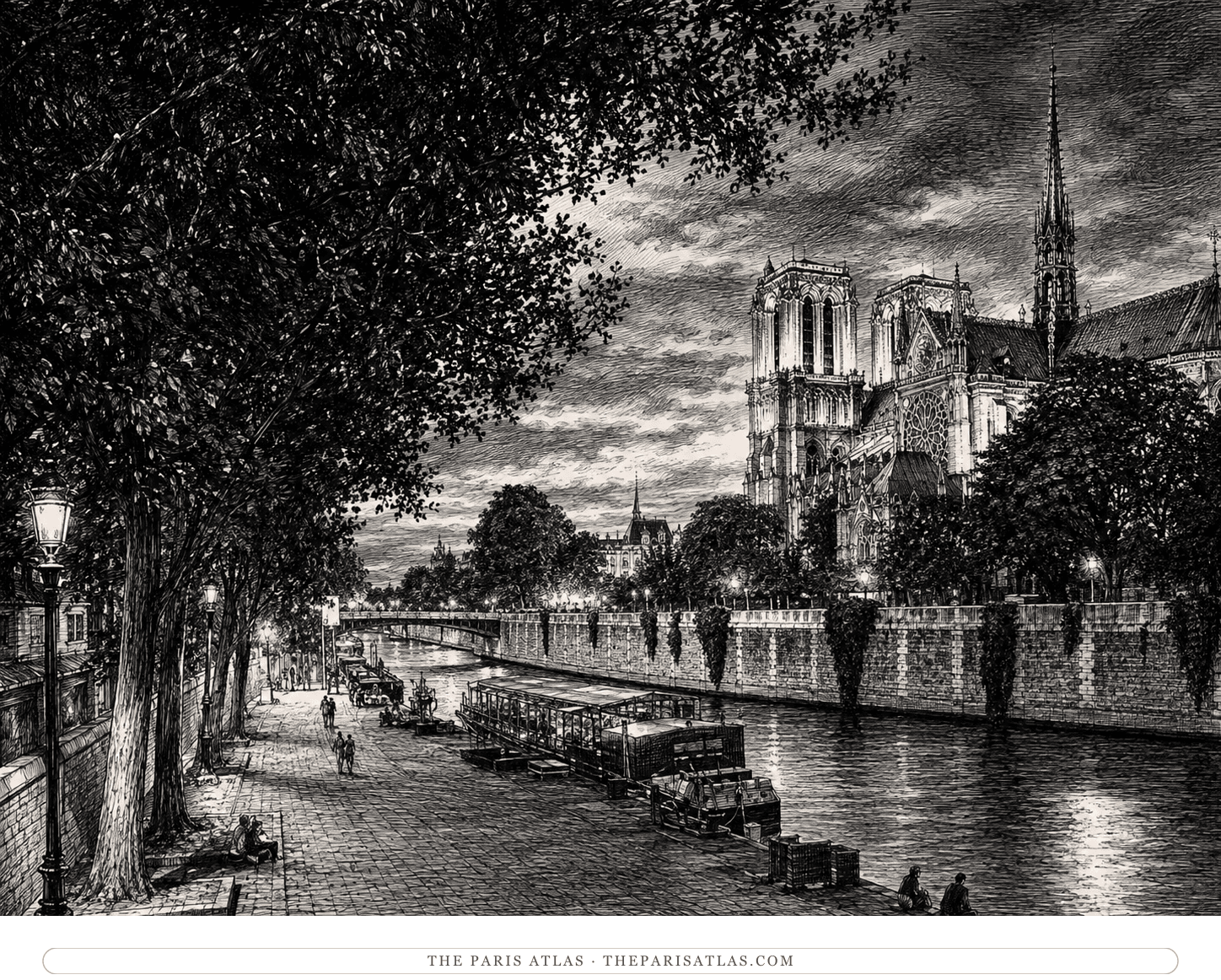
The cathedral seen at night from the wooden footbridge off the Quai de Béthune — the still point of the finest walk in Ernest Hemingway's The Sun Also Rises, answered a decade later from the same river in Henry Miller's Tropic of Cancer.
Visit the place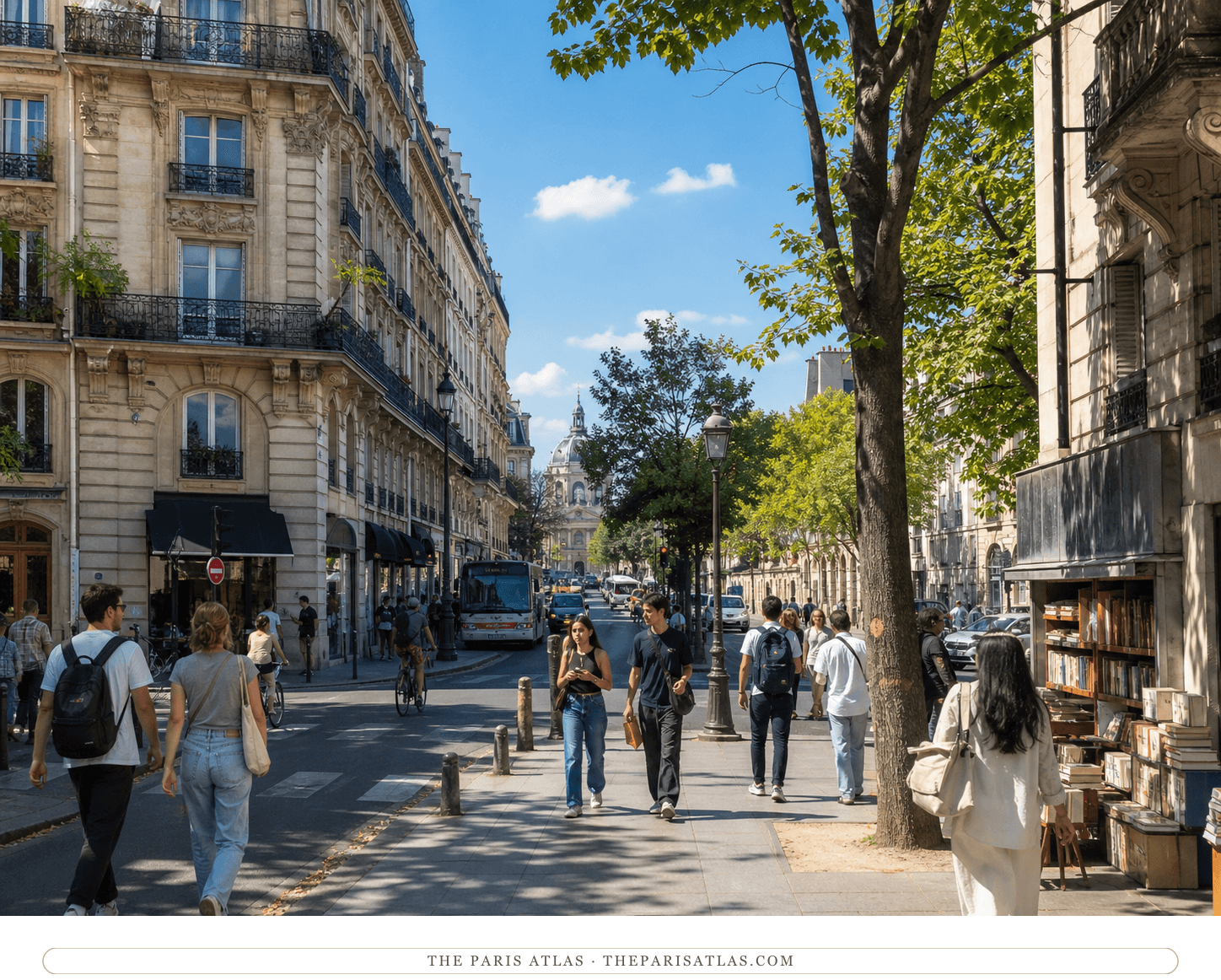
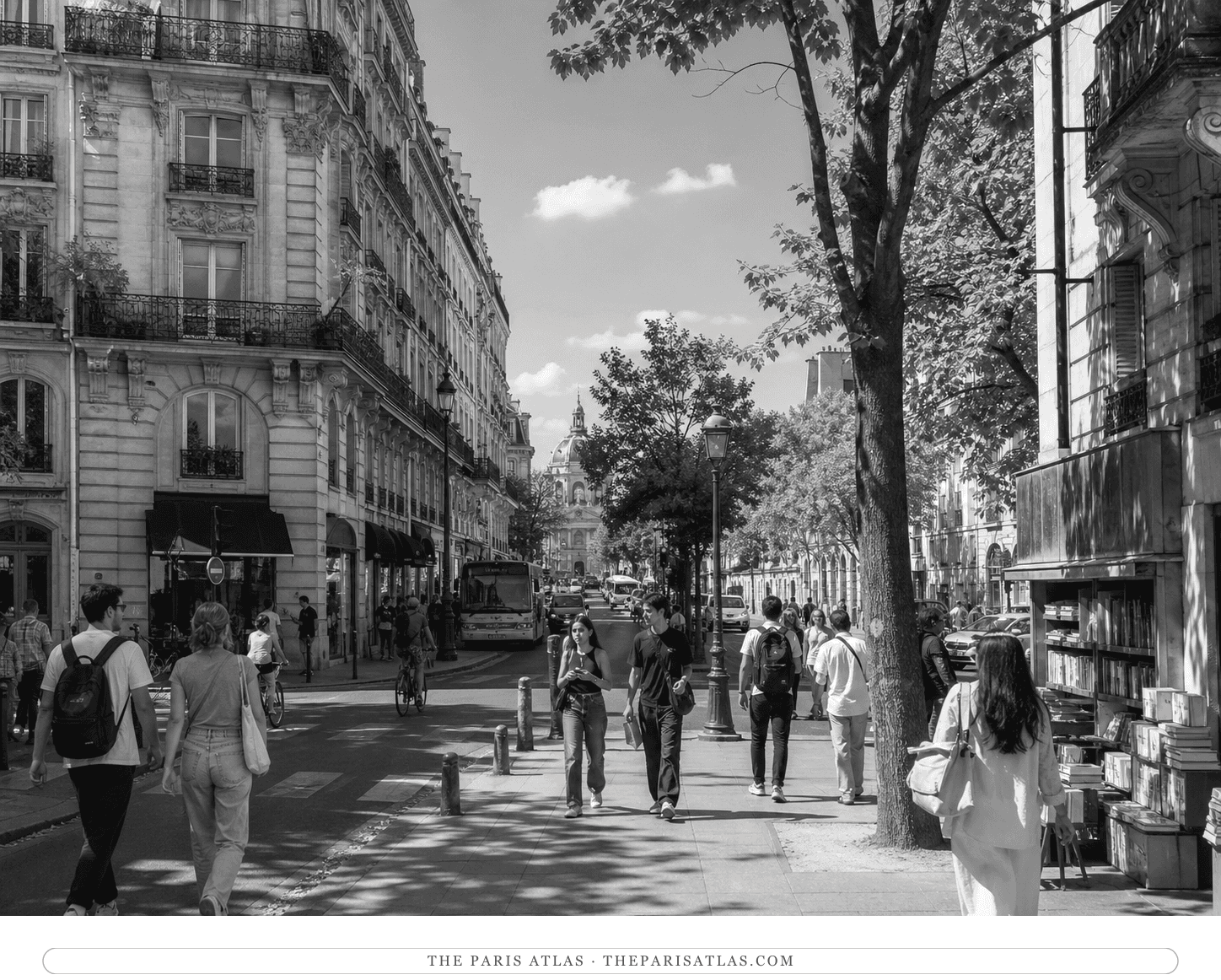
The boulevard that runs from the Seine up past the Sorbonne to the Luxembourg — the main axis of the Latin Quarter, cut through by Haussmann and known for a century as the Boul'Mich. In Down and Out in Paris and London it is where a pair of Orwell's fellow lodgers ran one of the neatest frauds in the book.
Visit the place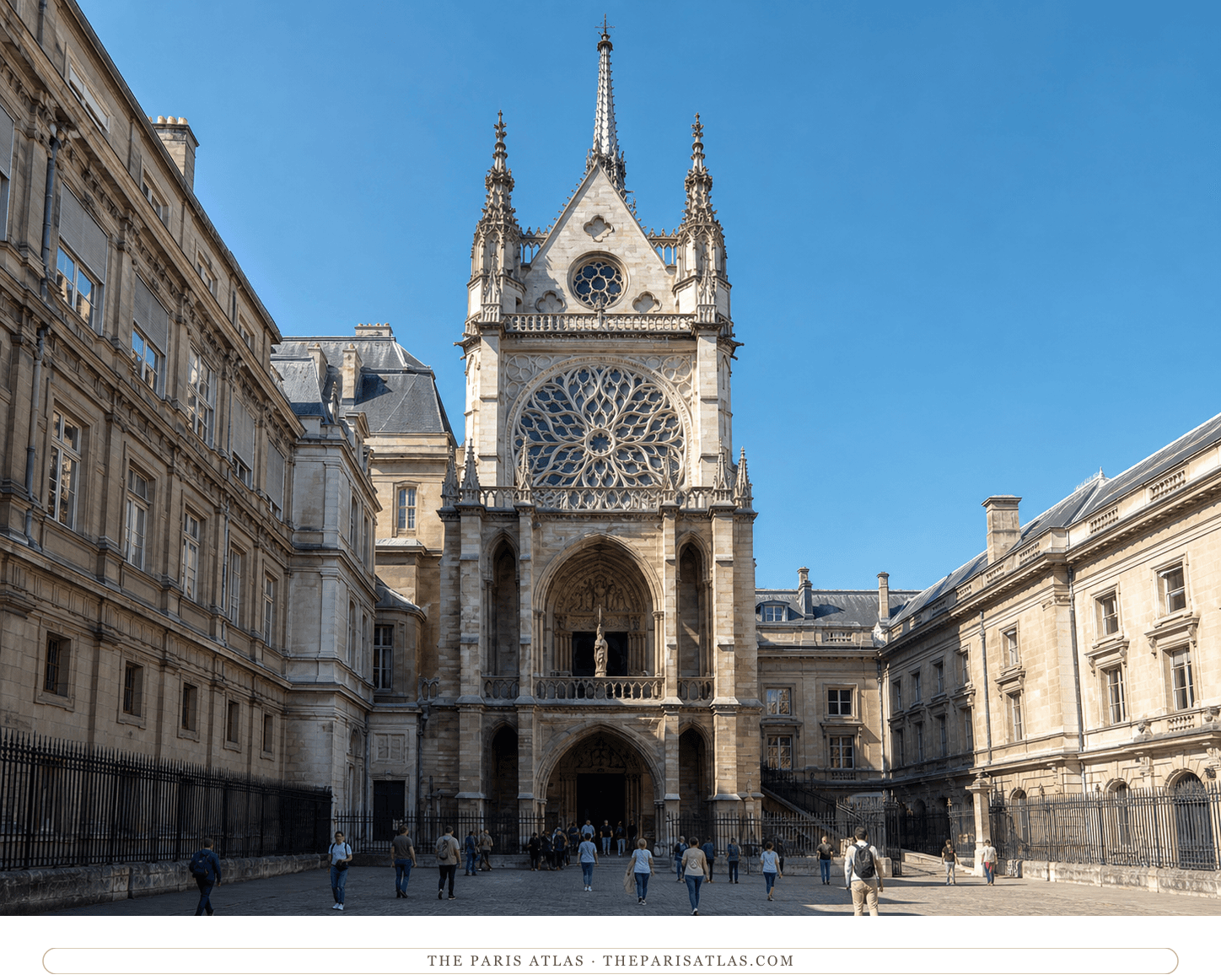
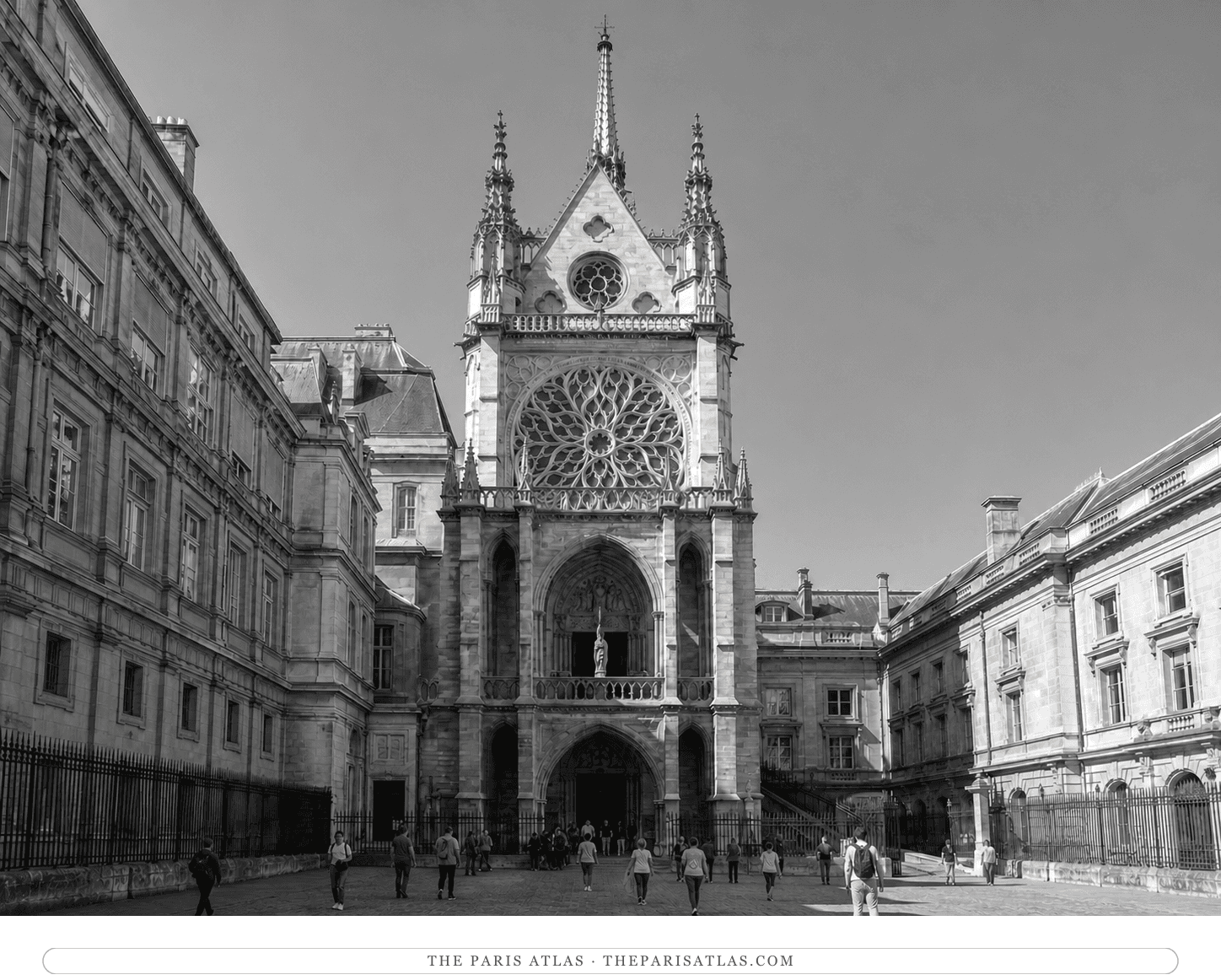
A royal chapel on the Île de la Cité, built by Louis IX in under seven years to hold the Crown of Thorns — a relic that cost more than twice what the building did. Its upper chapel has fifteen windows carrying 1,113 stained-glass scenes, two-thirds of them medieval. Open 9 a.m.–7 p.m. in summer and 9 a.m.–5 p.m. in winter; €16 for EEA visitors, €22 otherwise.
Visit the placeThe sources below include histories, archival materials, scholarly research, and official records that informed this page. They document Shakespeare and Company (Rue de la Bûcherie), the people connected to it, and its place in Paris.


Biographical evidence used to verify chronology, relationships, and historical context connected to Shakespeare and Company (Rue de la Bûcherie).
Web source consulted for documented facts and historical context presented on the Shakespeare and Company (Rue de la Bûcherie) page.

Map data used to verify addresses, geographic coordinates, and the placement associated with Shakespeare and Company (Rue de la Bûcherie).
Archival evidence used to document the historical record connected to Shakespeare and Company (Rue de la Bûcherie).
Web source consulted for documented facts and historical context presented on the Shakespeare and Company (Rue de la Bûcherie) page.
Contemporary reporting or criticism used to document the historical reception and context of Shakespeare and Company (Rue de la Bûcherie).
Contemporary reporting or criticism used to document the historical reception and context of Shakespeare and Company (Rue de la Bûcherie).
These references provide the documented foundation for this page's history and context. Claim-level citations remain attached to the specific claims they support.
 Explore more resources
Newsletter
The cafés, studios, and walk-up flats where the work was made — one story from the map in every letter.