The place, briefly
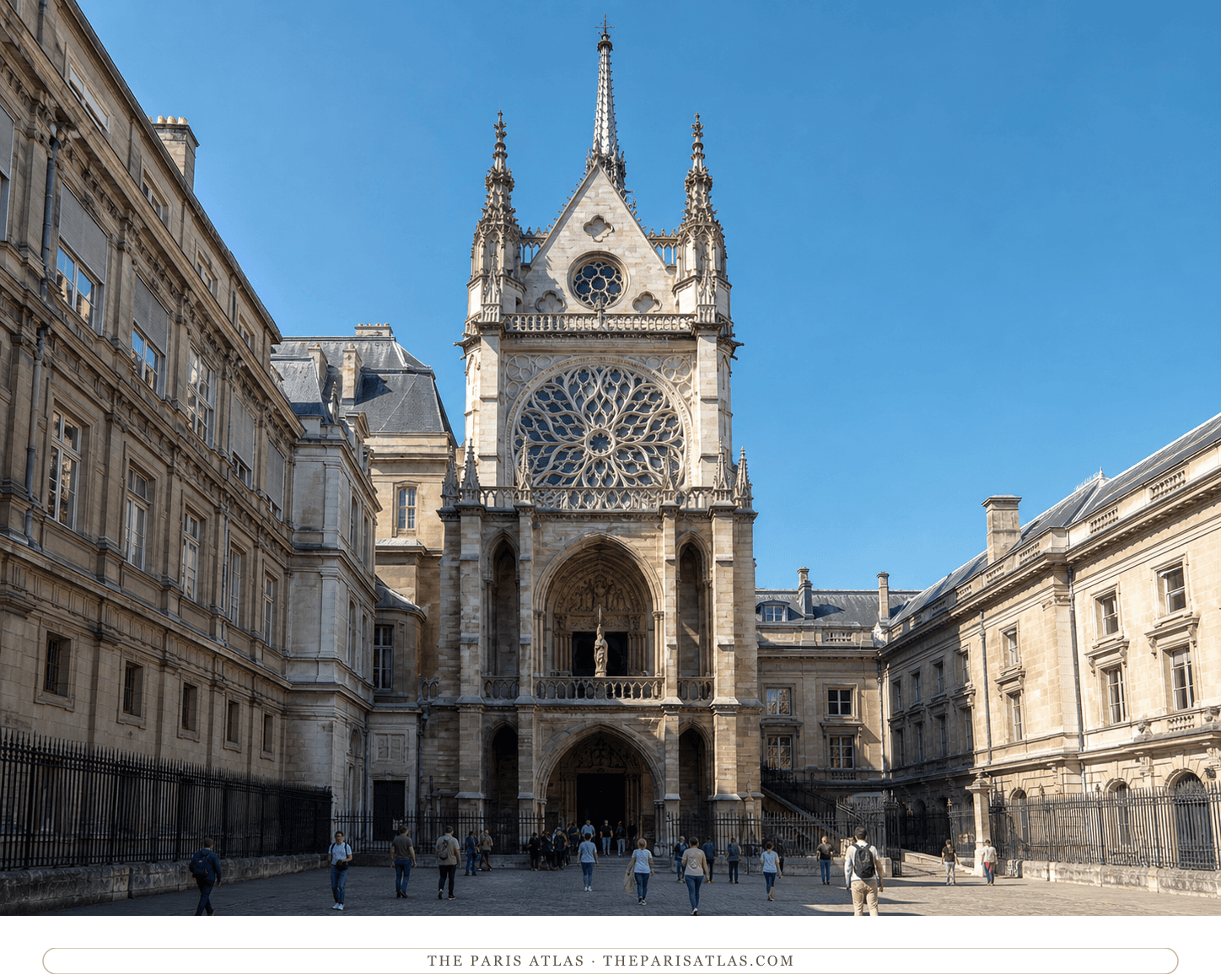
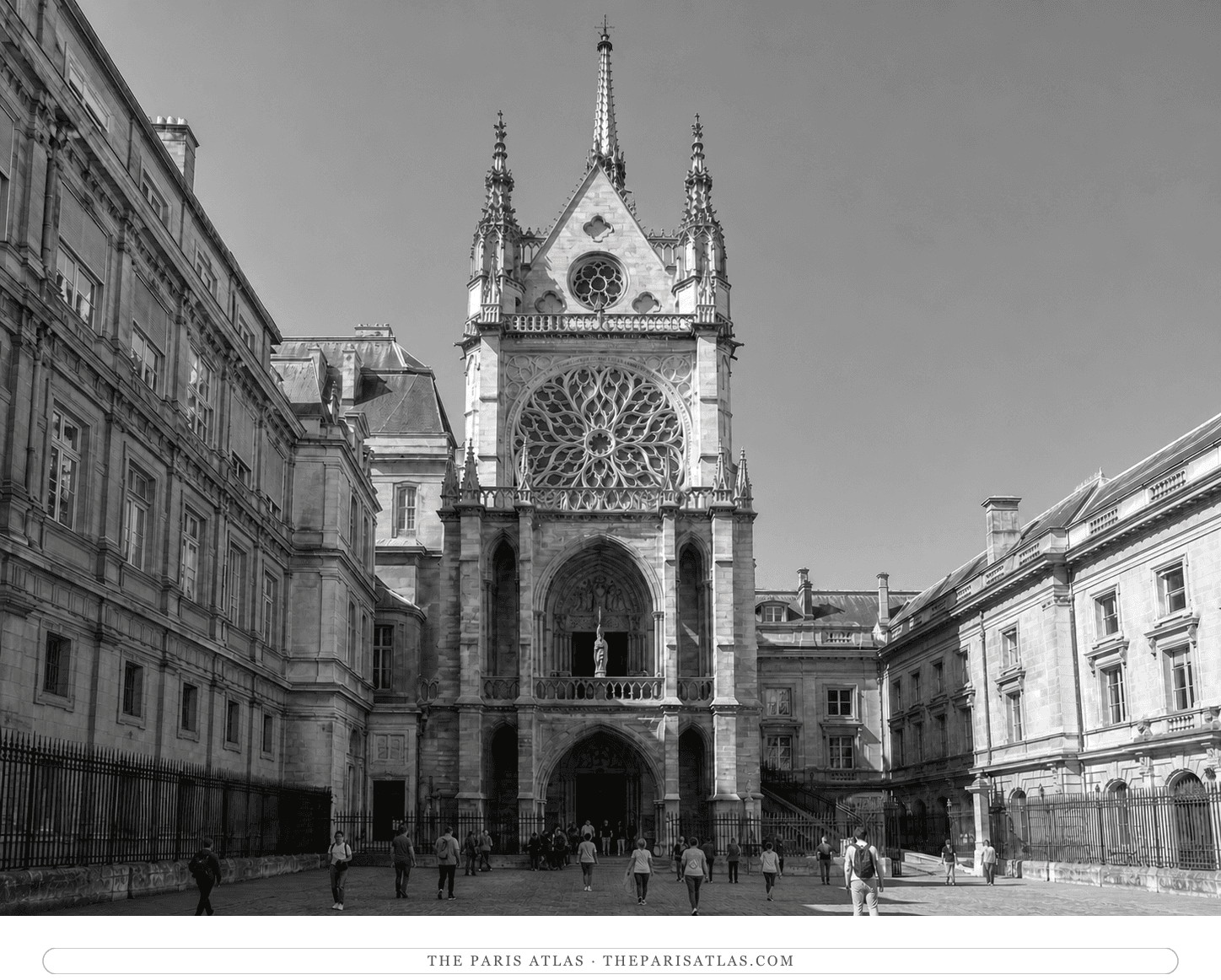
The Sainte-Chapelle was built to be a container. In 1239 King Louis IX — later canonised as Saint Louis — bought the Crown of Thorns from Baldwin II, the hard-up Latin Emperor of Constantinople, who had pawned it to Venetian bankers. The king paid 135,000 livres tournois, which the monument's own history puts at half the annual revenue of the kingdom. Having acquired the most valuable object in Christendom, he needed somewhere to put it, and the answer was what the chapel's curators call a monumental reliquary: a building that is itself the jewel box.[1]
It went up in under seven years, which is extraordinarily fast for a Gothic building — most cathedrals of the period took a century or more. The speed is visible in the result. There is no accumulation of styles, no seam where one generation's taste gives way to another's. It is a single idea, executed once.[2]
That idea is Rayonnant Gothic taken to its limit: reduce the stone to the minimum the structure will bear, and fill everything else with glass. The upper chapel has fifteen tall bays carrying 1,113 separate scenes, of which two-thirds are the original thirteenth-century glass. Standing in it on a bright afternoon is the closest thing medieval architecture offers to being inside a lit lantern.[2]
The windows are a book, and they are meant to be read in order. The sequence begins in the north with Genesis, runs through the Old Testament — Noah, Abraham, Moses, Joshua on the north side; Judith, Job, David on the south — reaches the Passion of Christ in the central choir window, and ends in the west with the rose of the Apocalypse.[3]
There were two chapels stacked on each other, and the arrangement was social as much as architectural. The upper chapel, the one with the glass, was reserved for the king and his distinguished guests, who reached it directly from the royal palace. The lower chapel served the palace staff. By 1306 the building held 22 relics of the Passion, along with a gold, enamel and jewelled reliquary containing Saint Louis's own skull, made by the goldsmith Guillaume Julien for Philip the Fair.[2]
Almost all of that treasure is gone. The Revolution stripped the chapel: most of the reliquaries were melted down for their metal, the windows were boarded over, and glass was destroyed or dispersed — a good deal of it ending up in England. The building itself was put to work as a flour store and then, from 1803 to 1838, as a government archive depot, with the archives shelved against the windows.[1]
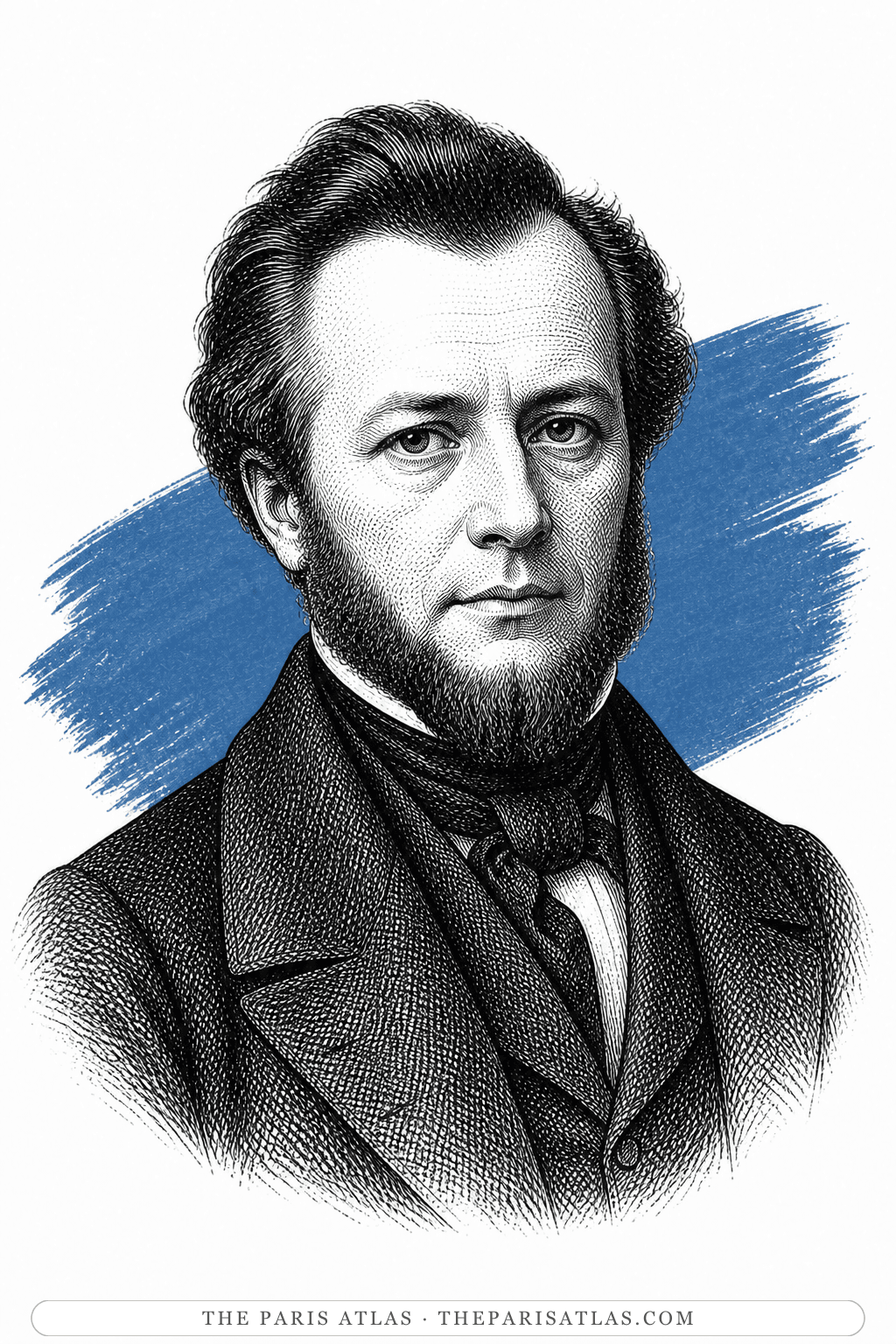
It was rescued by the nineteenth century's rediscovery of the Gothic. The restoration ran from 1840 to 1863 under Félix Duban, Jean-Baptiste-Antoine Lassus and Émile Boeswillwald, with the declared aim of returning the chapel to its thirteenth-century state. Lassus took it on in 1841, and what he learned here he carried to Notre-Dame, which he restored with Viollet-le-Duc. The Crown of Thorns itself had already left: it went to the treasury of Notre-Dame in 1806, where it survived the 2019 fire.[4]



 View source