
Depicted in its pages
Tropic of Cancer
The cathedral seen from the river — one of the novel's set-piece descriptions of night-time Paris, answering Hemingway's view from the footbridge.
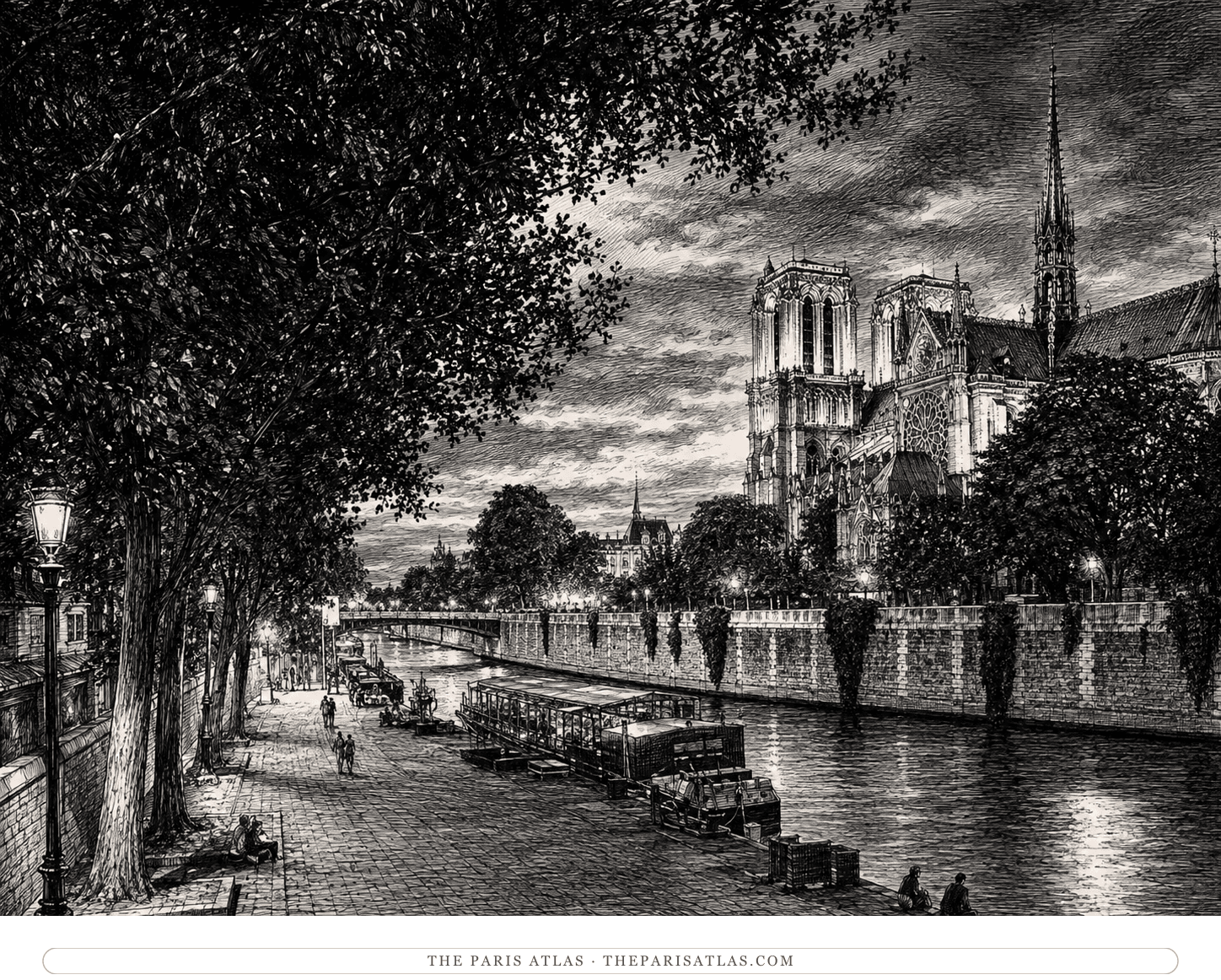
The cathedral seen at night from the wooden footbridge off the Quai de Béthune — the still point of the finest walk in Ernest Hemingway's The Sun Also Rises, answered a decade later from the same river in Henry Miller's Tropic of Cancer.
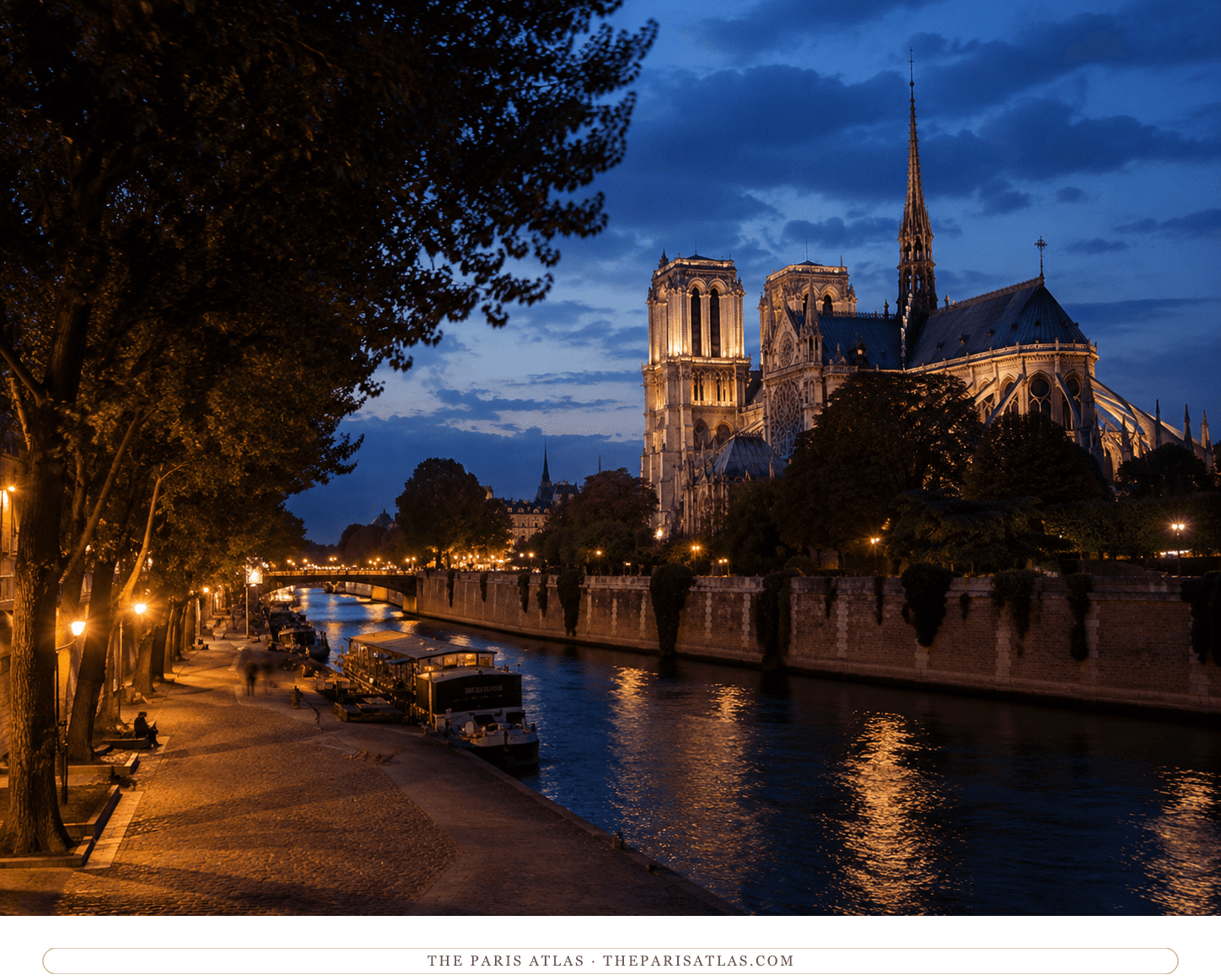
The cathedral needs no literary introduction, but Ernest Hemingway gives it one of the era's best anyway in The Sun Also Rises, his 1926 novel. After dinner at Madame Lecomte's, the narrator Jake Barnes and his friend Bill Gorton walk around the Île Saint-Louis under the trees and cross toward the Left Bank on the wooden footbridge from the Quai de Béthune. From the bridge they stop and look down the river at the cathedral — which Jake sees, in the book's phrase, 'squatting against the night sky' — with the island dark behind them and the houses high against the light. Two sentences, and the most photographed building in Europe becomes an animal resting on the water.
The footbridge itself is a small time-capsule. The old Pont de la Tournelle had been taken down after the war, and while its replacement was being built the crossing was a temporary wooden footbridge — which is exactly what Bill and Jake use in 1925. The stone Pont de la Tournelle that opened in 1928, with Sainte Geneviève on her pillar facing east, now stands where the planks were; the downriver view of the apse and the flying buttresses is unchanged.
The cathedral's own story since needs only two dates that every reader now carries: the fire of April 2019, which took the roof and the spire while the world watched, and December 2024, when it reopened, rebuilt. The night view from the Tournelle crossing survived both — still the best free thing in Paris, exactly as the 1926 novel serves it.
Notre-Dame rises tomb-like from the water.
Down the river was Notre Dame squatting against the night sky. We crossed to the left bank of the Seine by the wooden foot-bridge from the Quai de Bethune, and stopped on the bridge and looked down the river at Notre Dame. Standing on the bridge the island looked dark, the houses were high against the sky, and the trees were shadows.
Construction begins under Bishop Maurice de Sully.
The night of the great walk in Hemingway's The Sun Also Rises — the view from the wooden footbridge.
The rebuilt Pont de la Tournelle replaces the temporary wooden crossing.
The fire of 15 April destroys the roof and spire.
Reopens in December, restored.
Depicted in its pages
The cathedral seen from the river — one of the novel's set-piece descriptions of night-time Paris, answering Hemingway's view from the footbridge.

Depicted in its pages
Seen from the wooden footbridge off the Quai de Béthune, dark against the night sky — the quiet center of the novel's Paris.
Frequented by · 1833
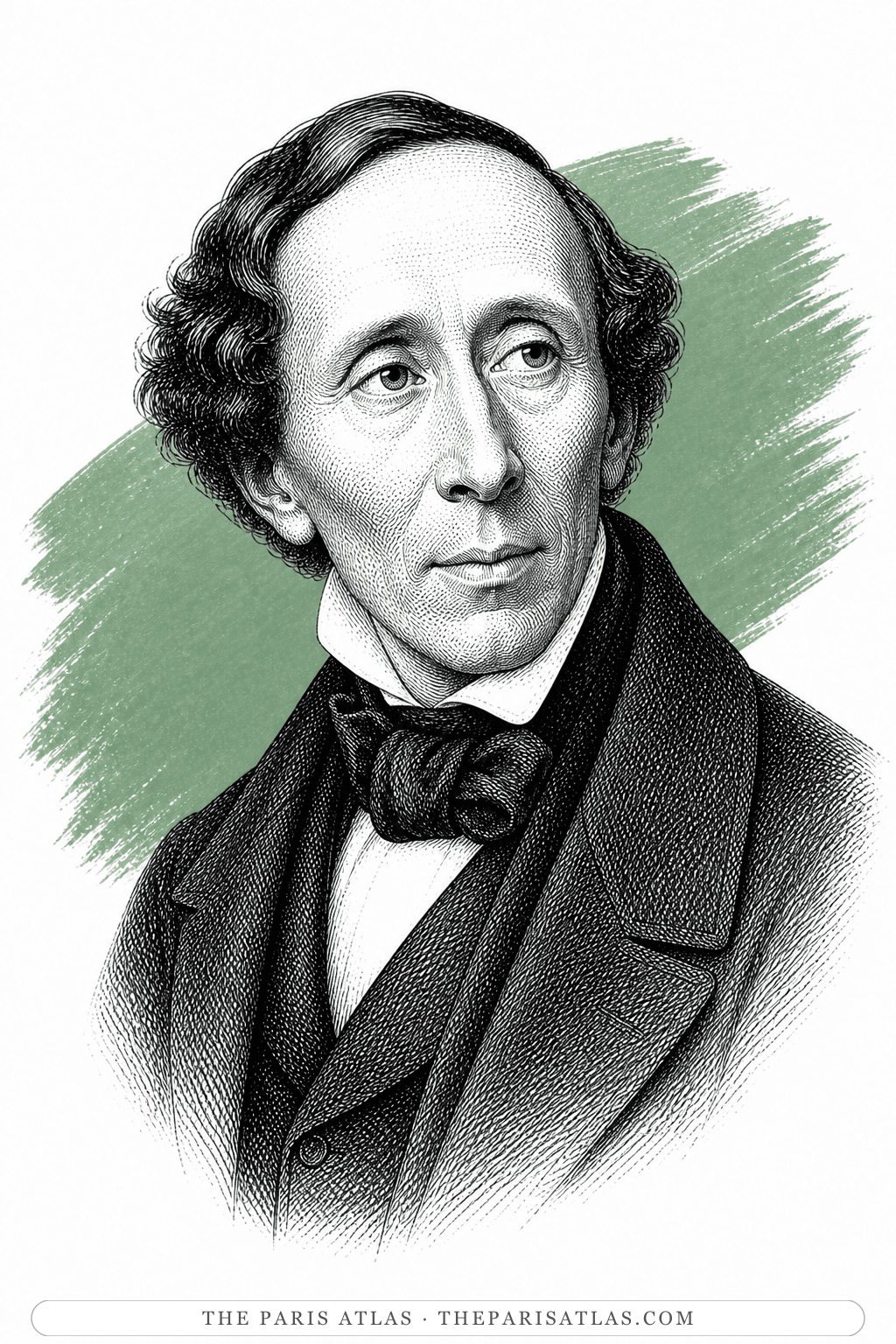
The first French book Andersen tried to read during his 1833 stay was Victor Hugo's Notre-Dame de Paris, published two years earlier. He went to the cathedral daily through that summer to look at the places the novel described, and the reading led him to call on Hugo himself in August.
Visited by · 1858
January 1858, on two successive days. He studied the carved histories in the arches of the west front, walked right round the building, and came away unmoved by its scale after the English cathedrals.
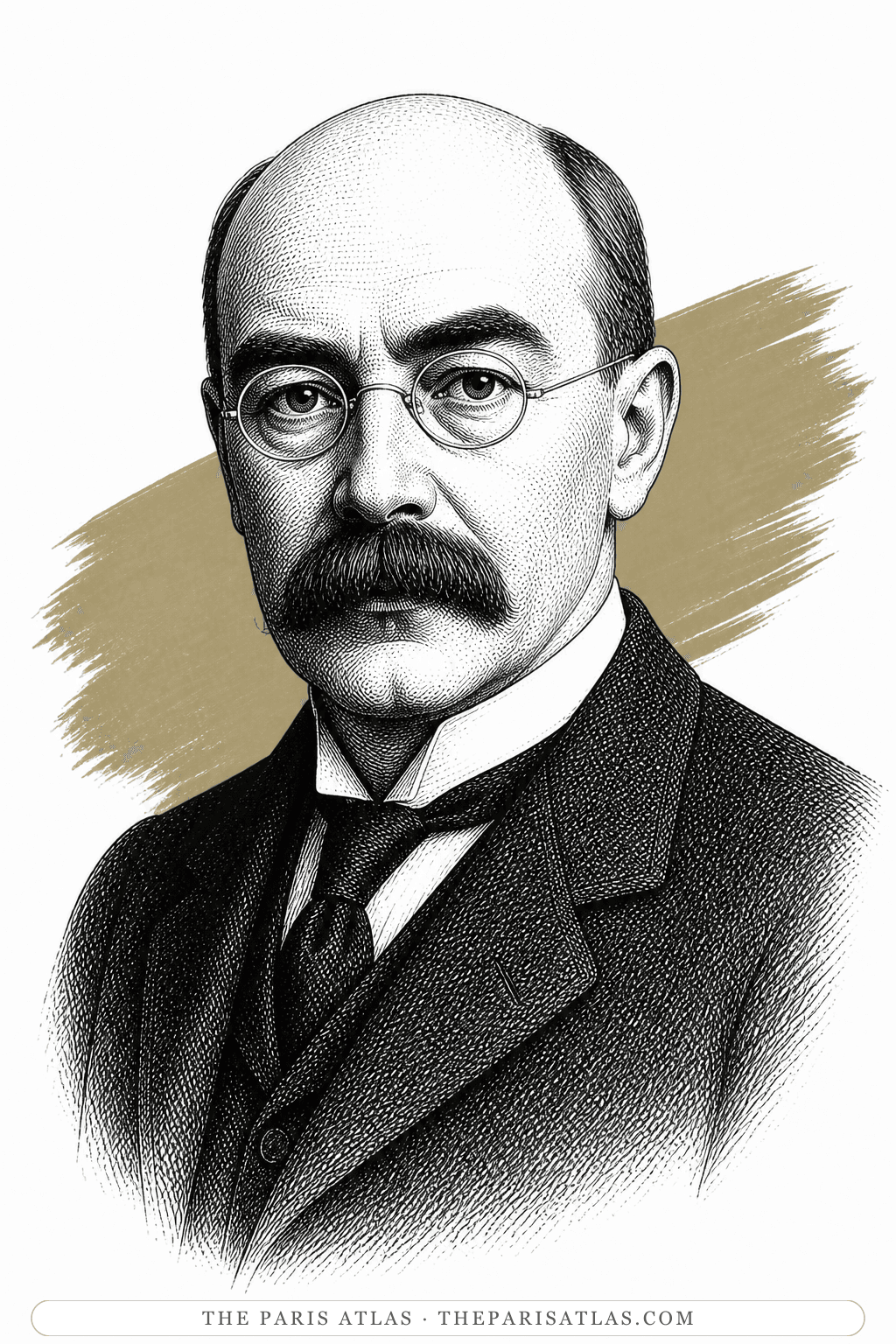
Visited by · 1878
Kipling was twelve, turned loose in Paris while his father arranged the Indian section of the 1878 Exposition Universelle, and found the cathedral for himself by way of Victor Hugo: "I discovered on my own account Quasimodo's Notre Dame." Forty years later the building took his words back. The Imperial War Graves Commission recorded after his death that the inscriptions on its memorials had all been written, approved or selected by him, and named the memorial in Notre Dame among the handful that were his work alone.
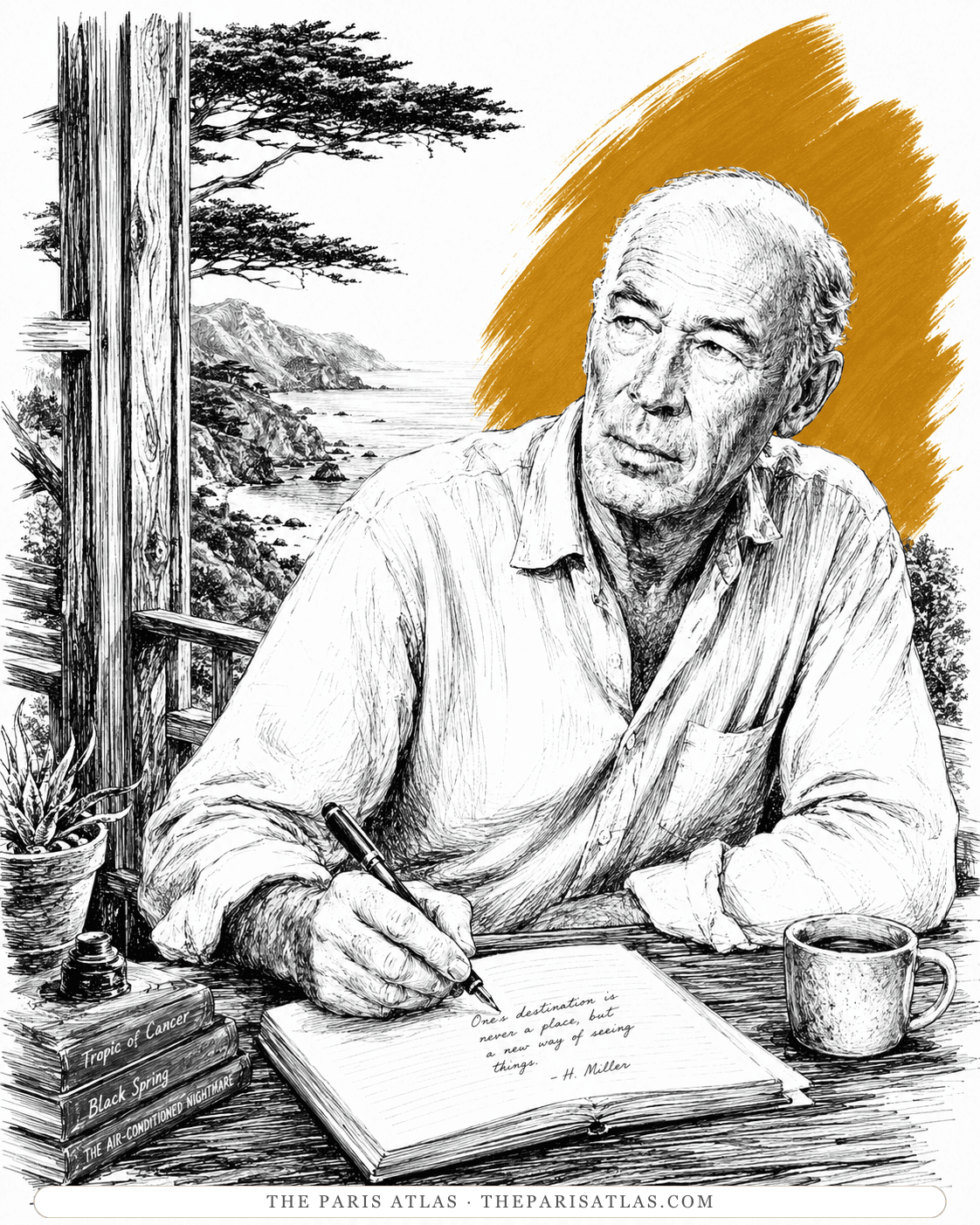
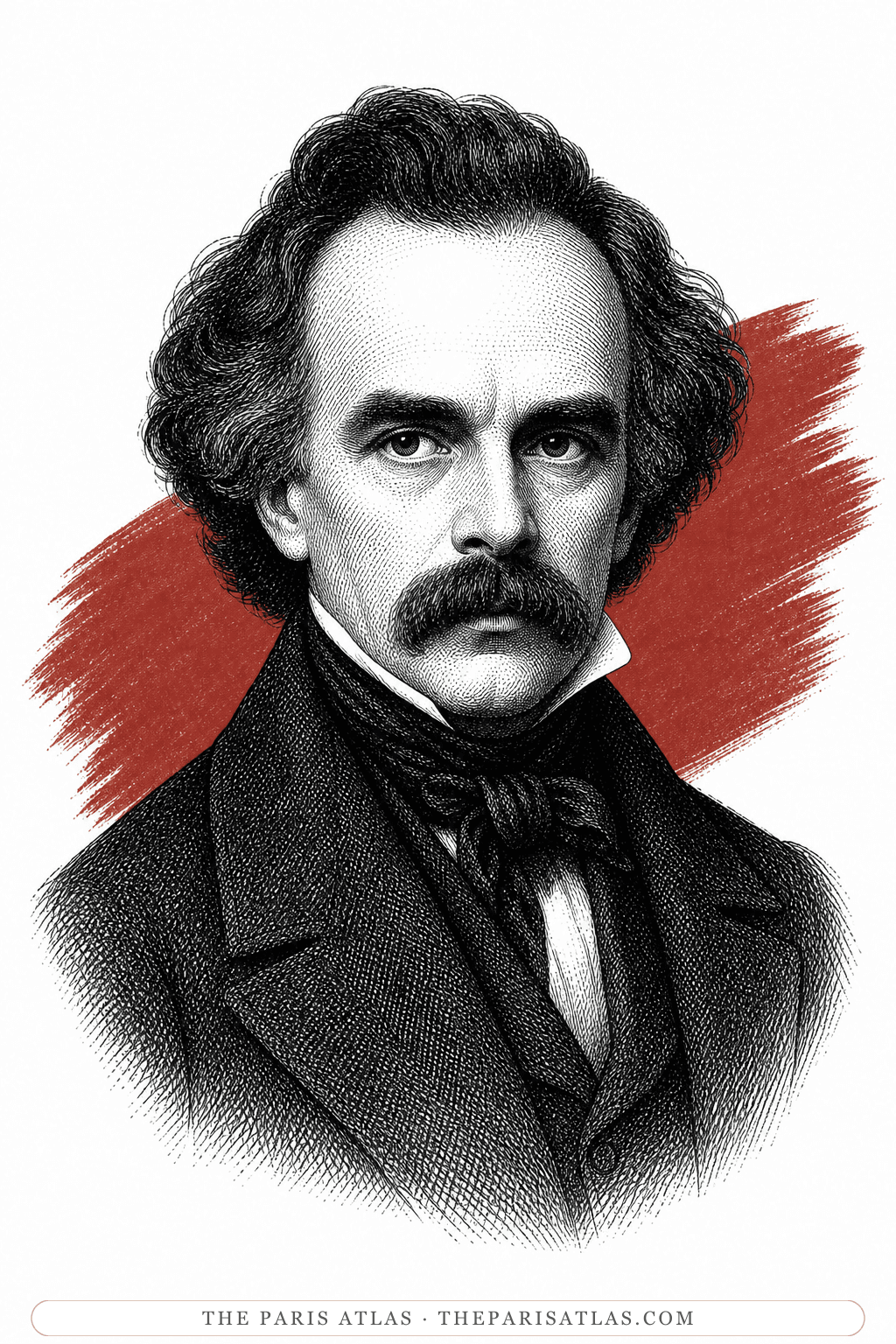
Henry Miller wrote about Notre-Dame de Paris in Tropic of Cancer.
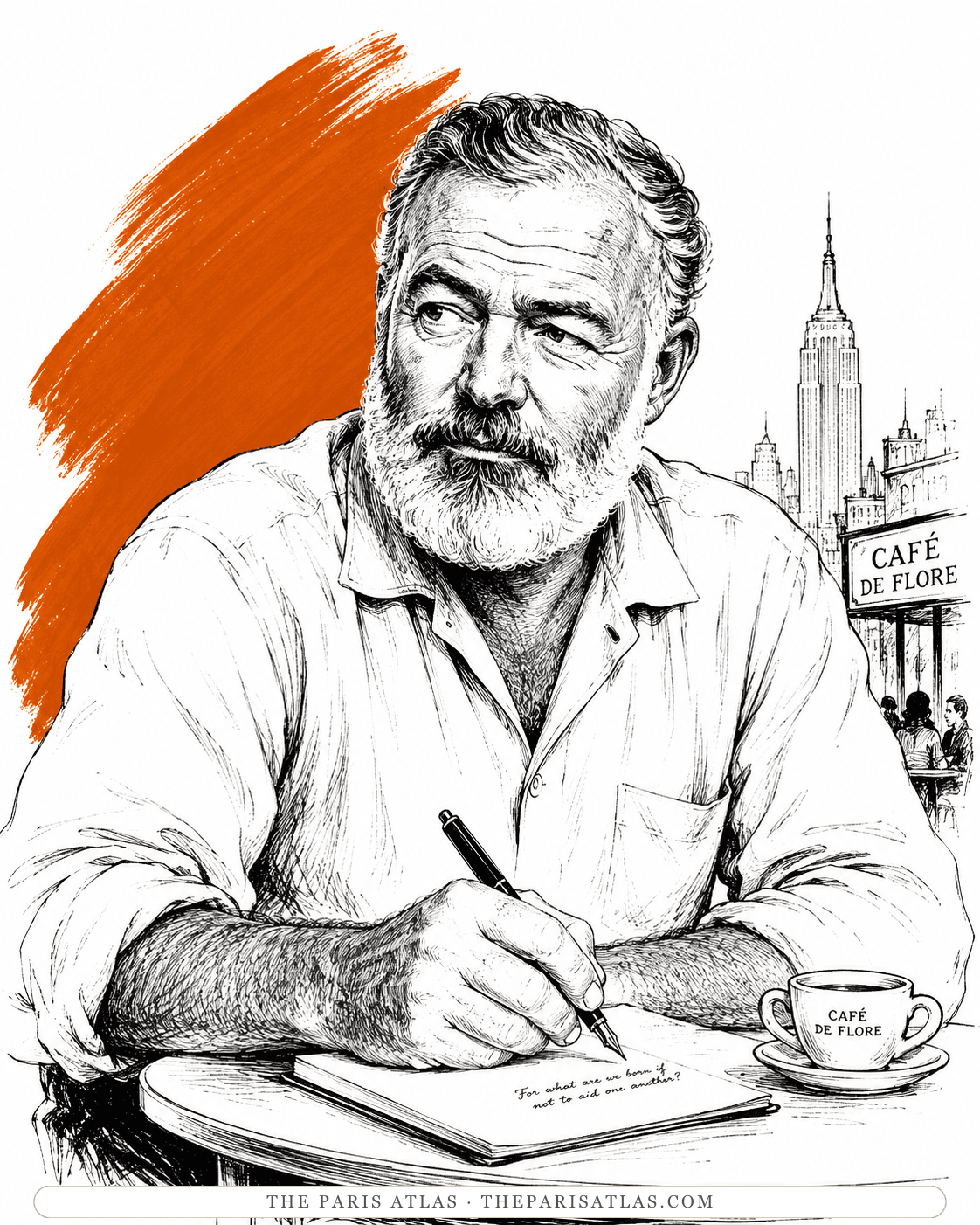
Ernest Hemingway wrote about Notre-Dame de Paris in The Sun Also Rises.
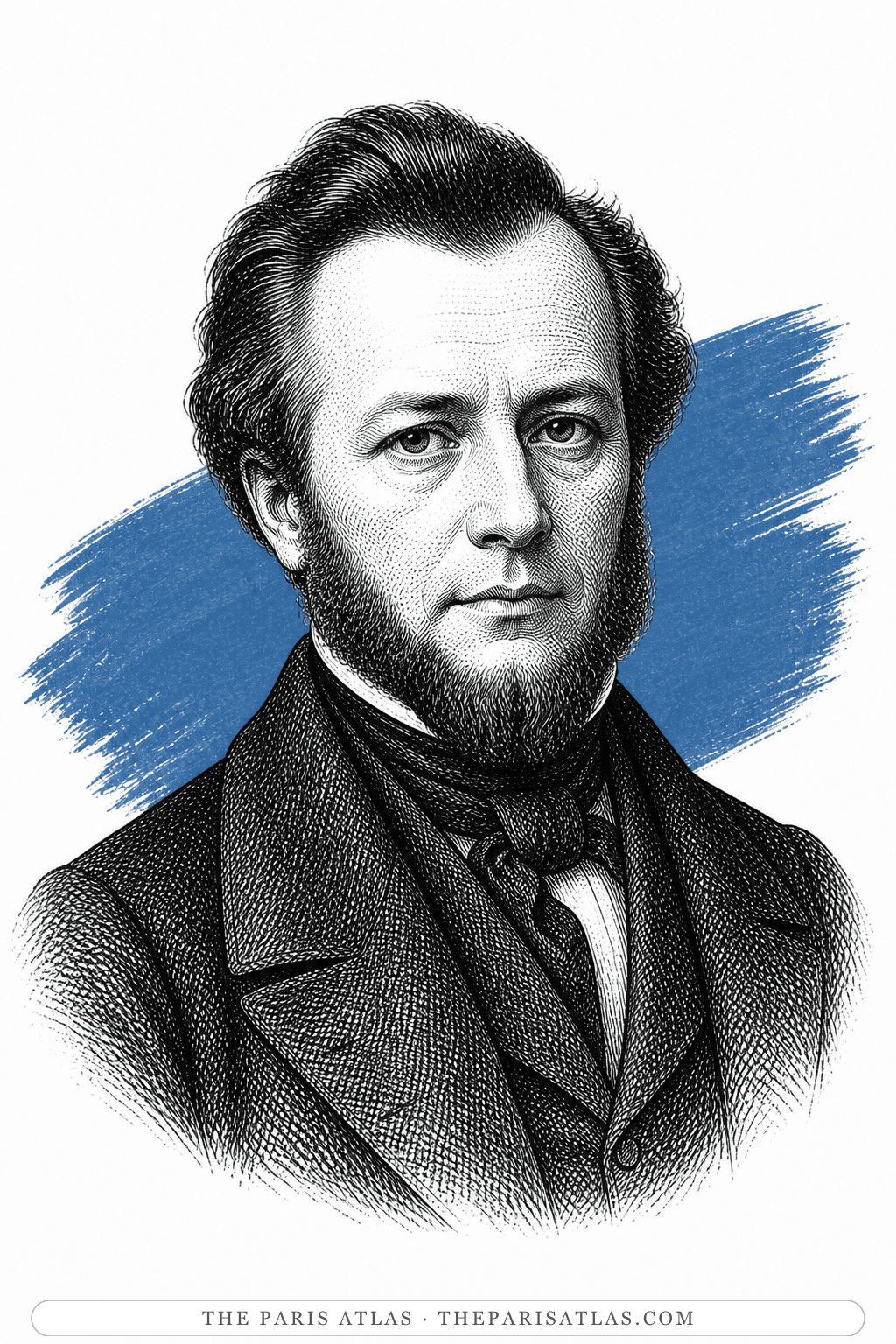
The competition to restore Notre-Dame was launched in 1842 and won in 1844 by Lassus and Eugène Viollet-le-Duc. Their submission proposed a deliberate restraint — "une religieuse discrétion", a complete self-effacement before the building. Lassus died in 1857 with the work unfinished; Viollet-le-Duc carried it on, and the spire they designed together stood until the 2019 fire.
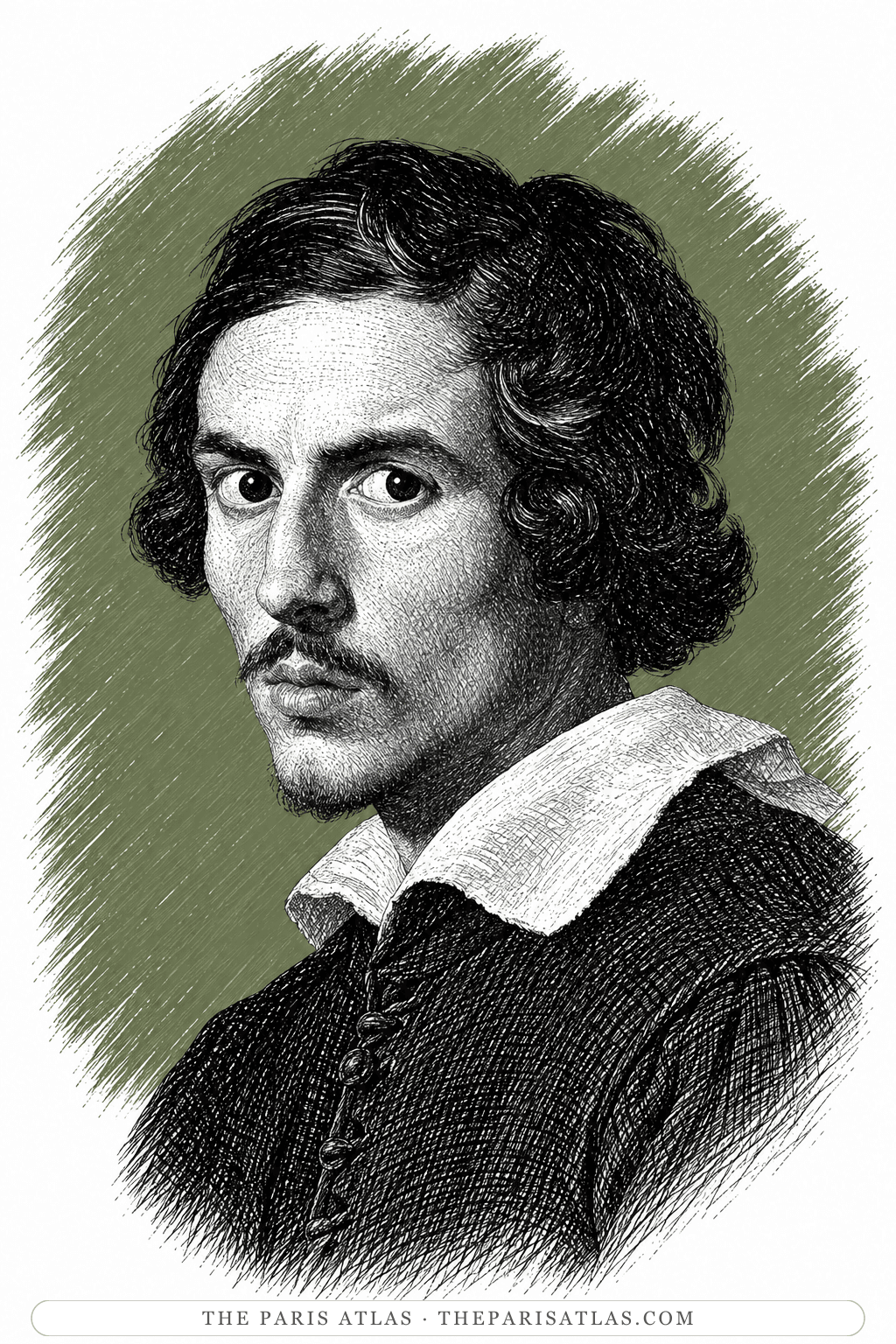
Bernini went to Notre-Dame on 15 August 1665, the feast of the Assumption, after making his devotions with the fathers of the Oratory. He was in Paris for five months that year to design a new east front for the Louvre and to carve Louis XIV's portrait, and Chantelou's diary follows him to church almost every day of it.
Art & literary movement · c. 1790–1850
The argument that feeling, imagination and freedom belong at the centre of art rather than at its edges — settled in Paris, in the 1830s, in a theatre riot and at the Salon.
Enter the movementHistorical period · 5th century to the 15th
Medieval art across a thousand years: Byzantine, Romanesque and Gothic traditions, manuscripts, sculpture, stained glass, makers and Paris collections.
Enter the movement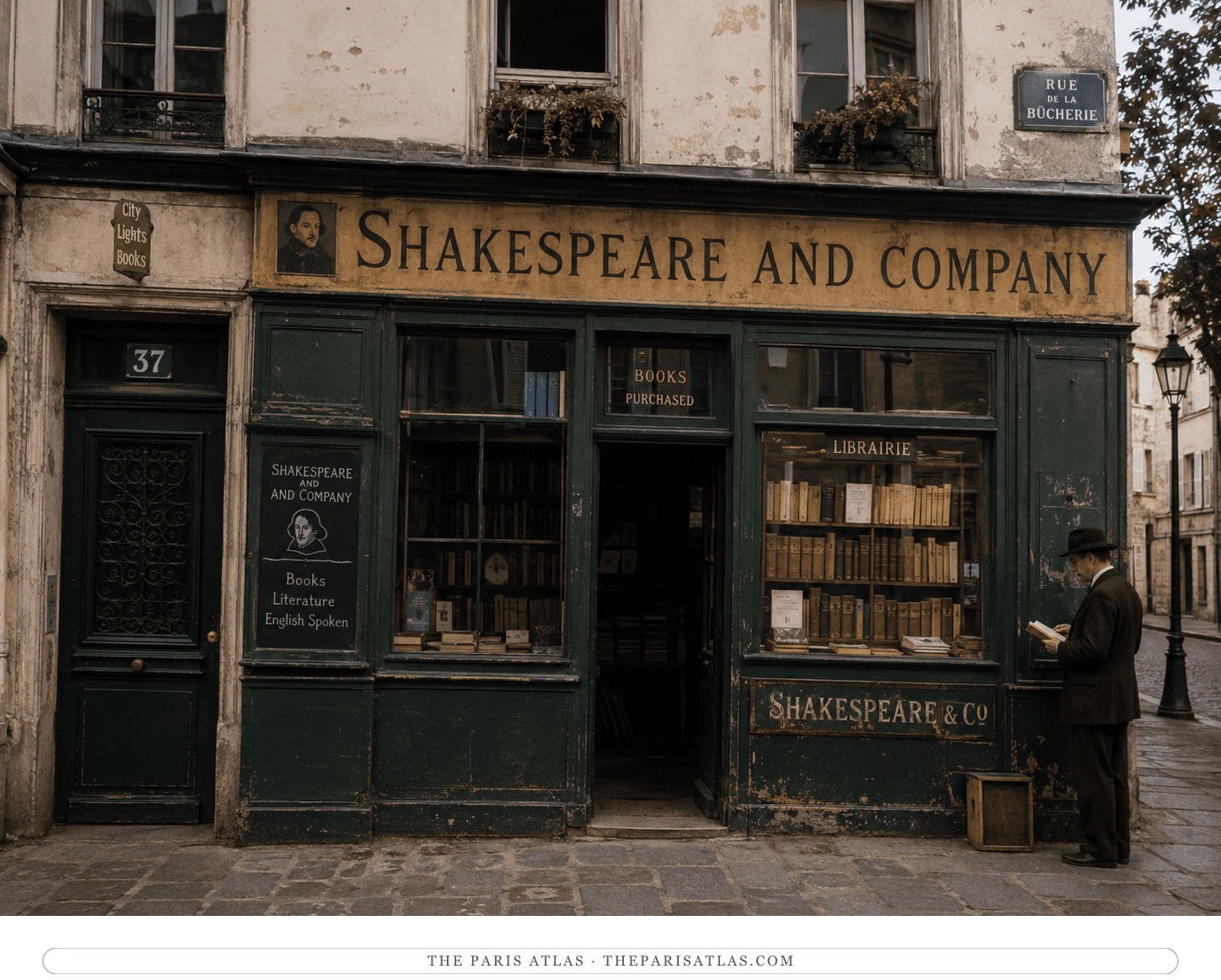
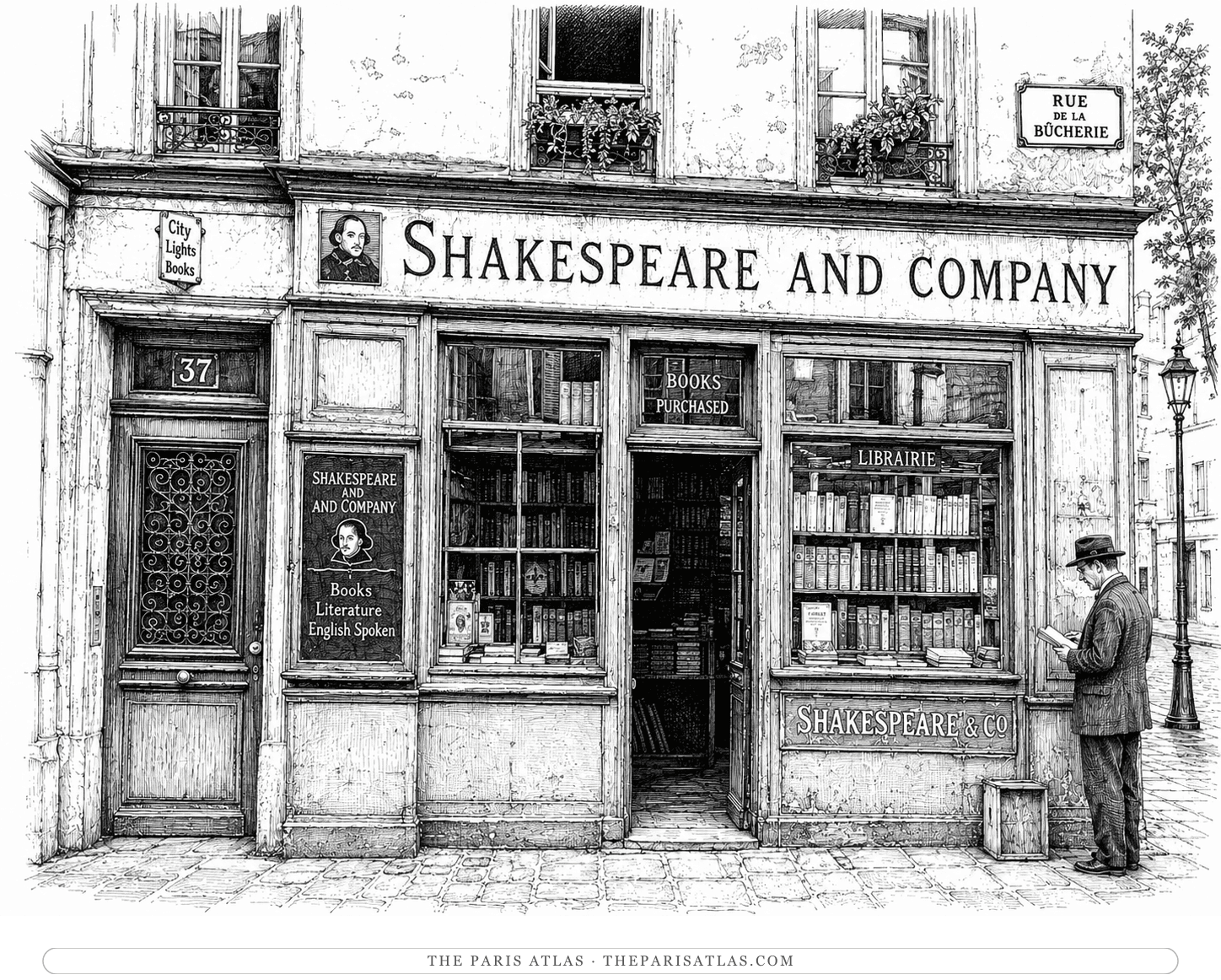
George Whitman's bookshop by the Seine — opened as Le Mistral in 1951, renamed Shakespeare and Company in 1964 with Sylvia Beach's blessing, and still sleeping writers among its shelves.
Visit the place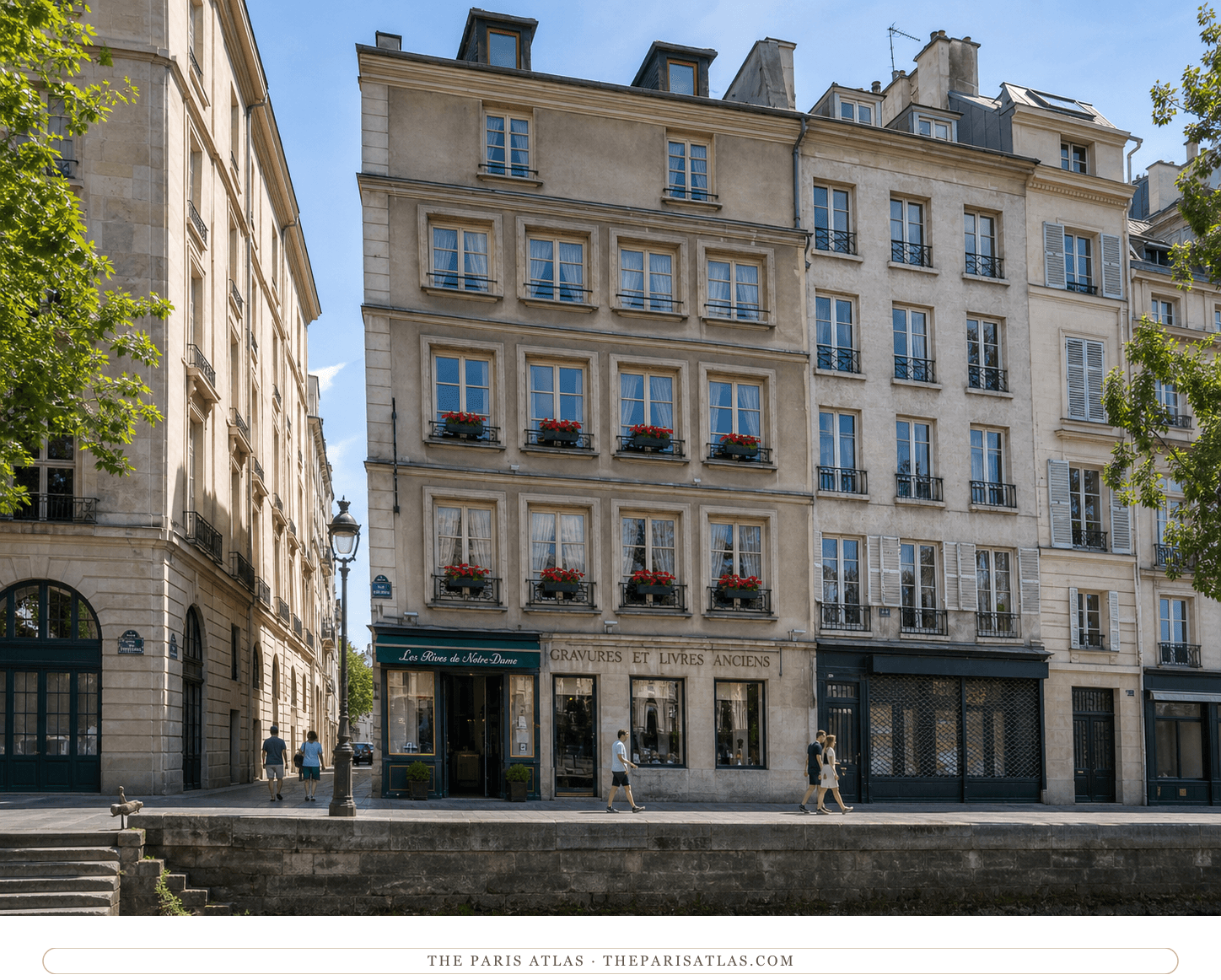
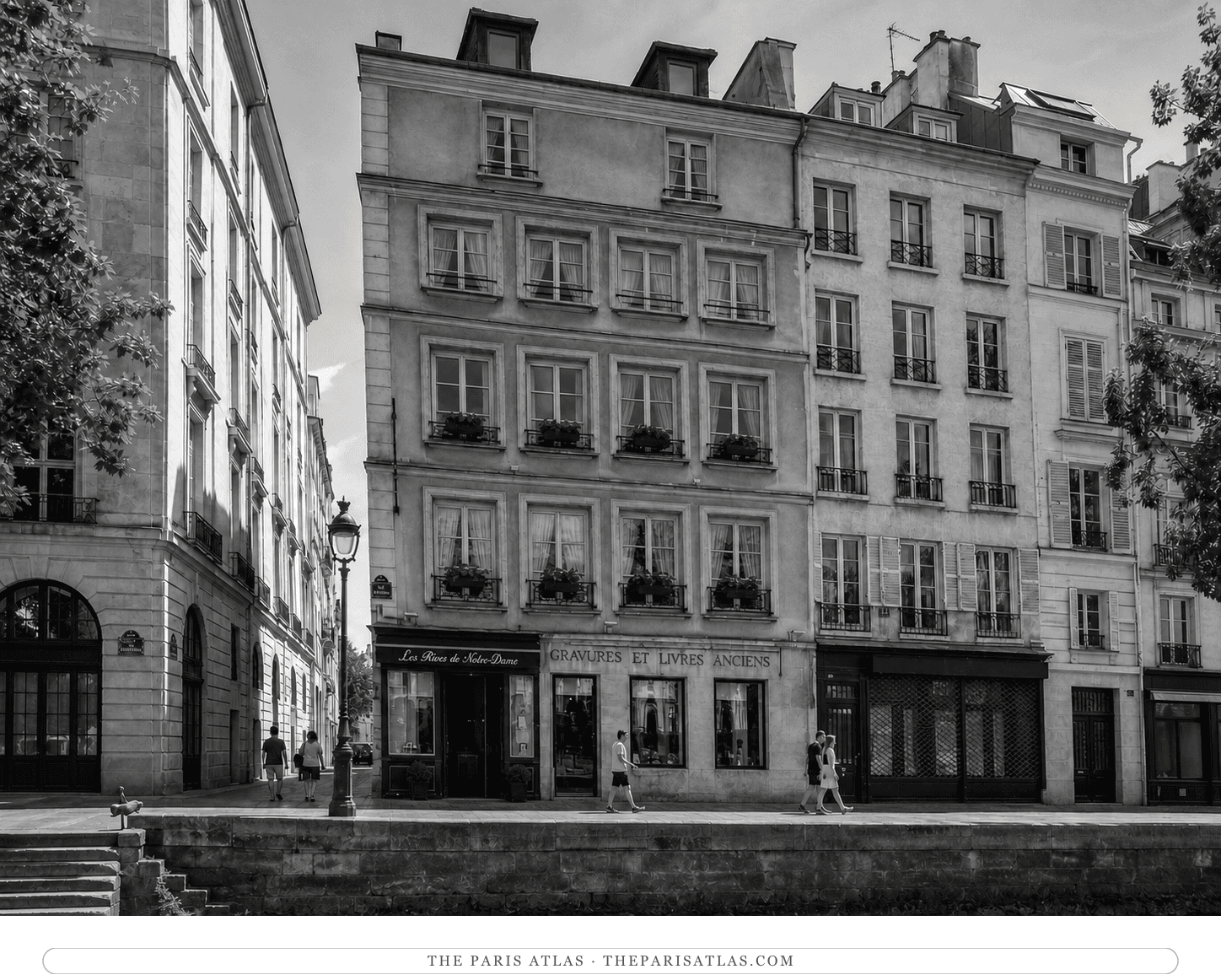
The small Left Bank hotel on the quai Saint-Michel, facing Notre-Dame, where Godard shot the long bedroom scene of Breathless in Room 12. The hotel closed in 1993; the site is now the Hôtel Les Rives de Notre-Dame.
Visit the place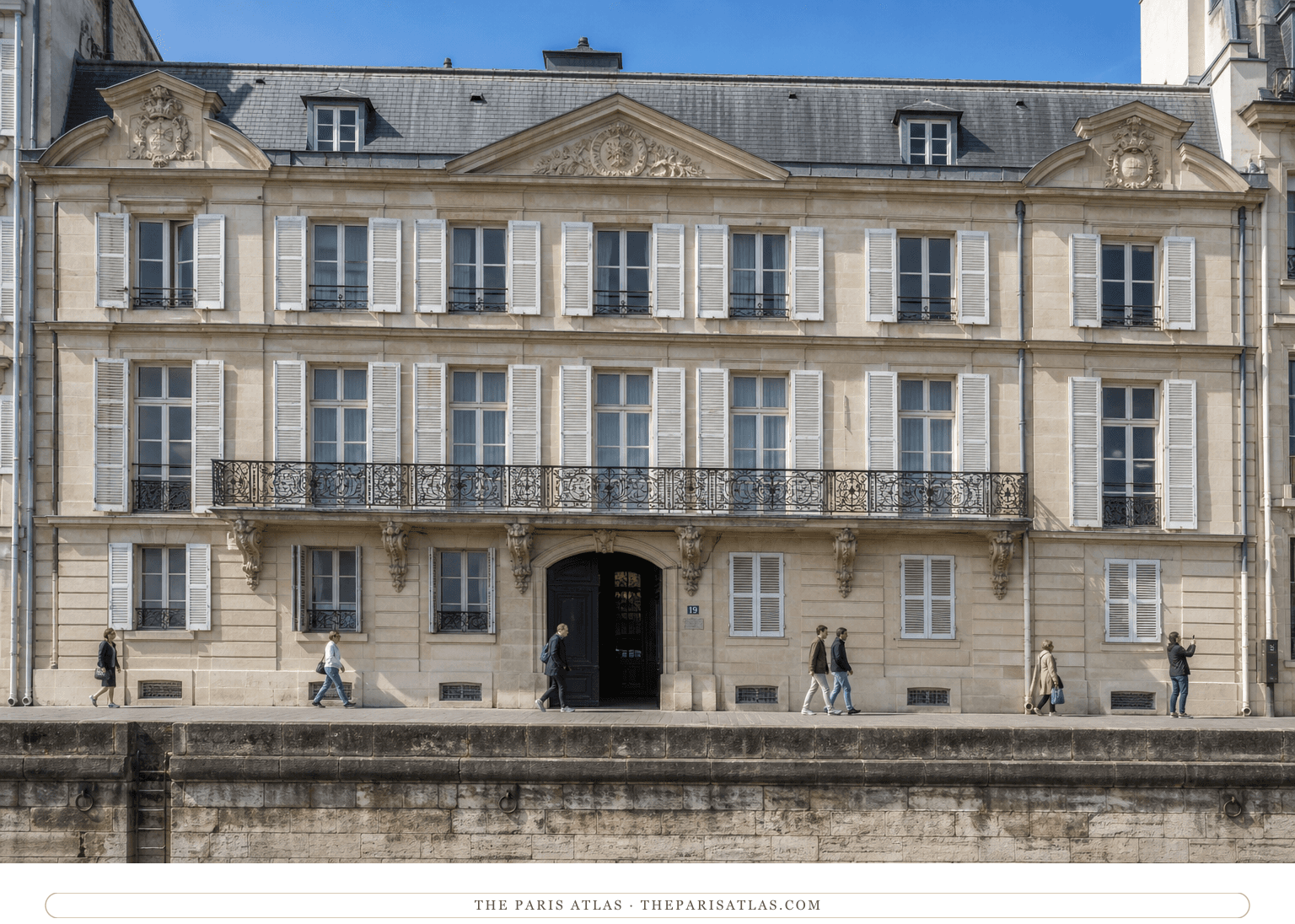
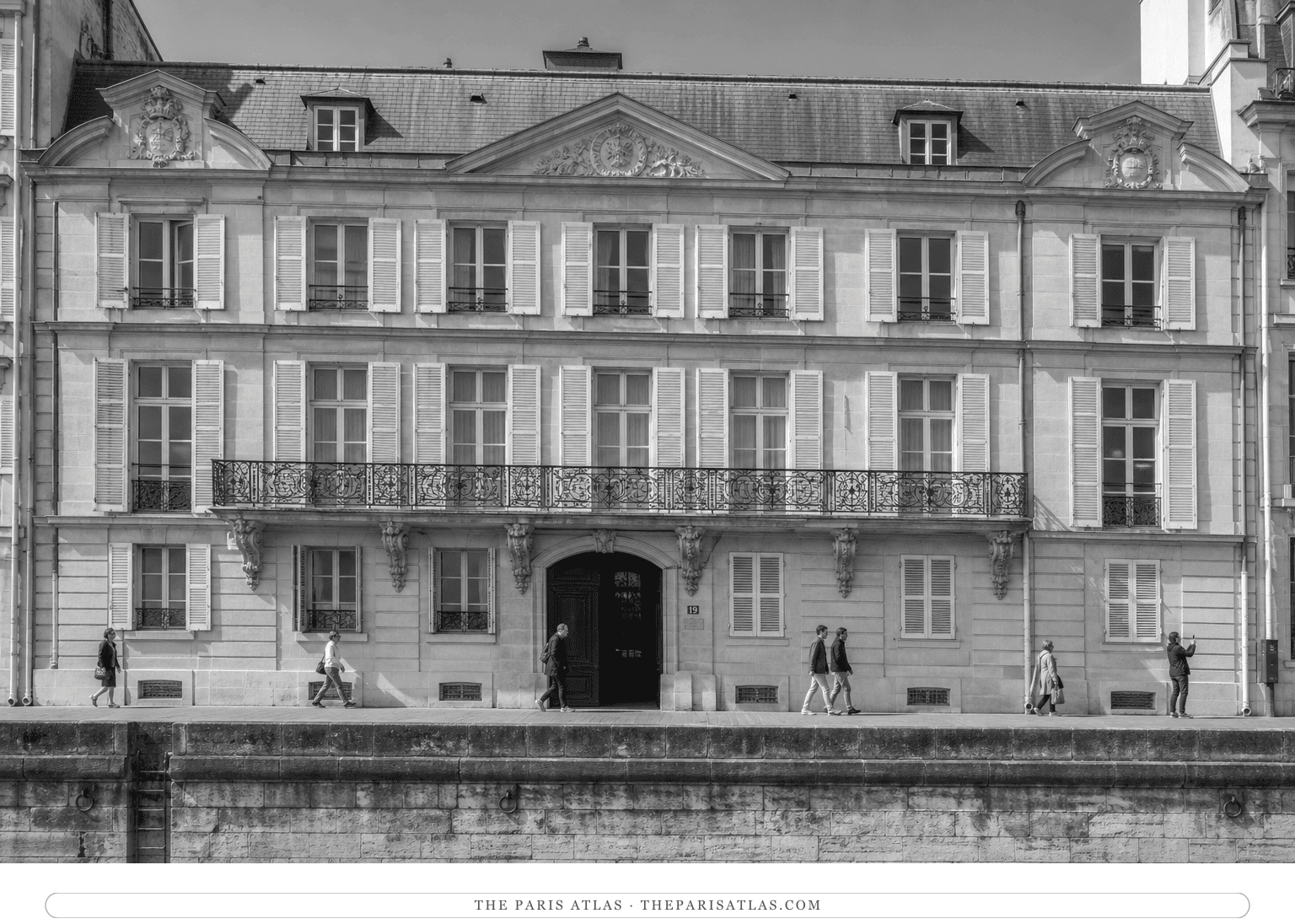
The last place Camille Claudel lived and worked — a very small studio at the back of the courtyard of the Hôtel de Jassaud on the Île Saint-Louis, from January 1899 until she was committed in 1913. The building stands and carries a plaque; the studio is private.
Visit the place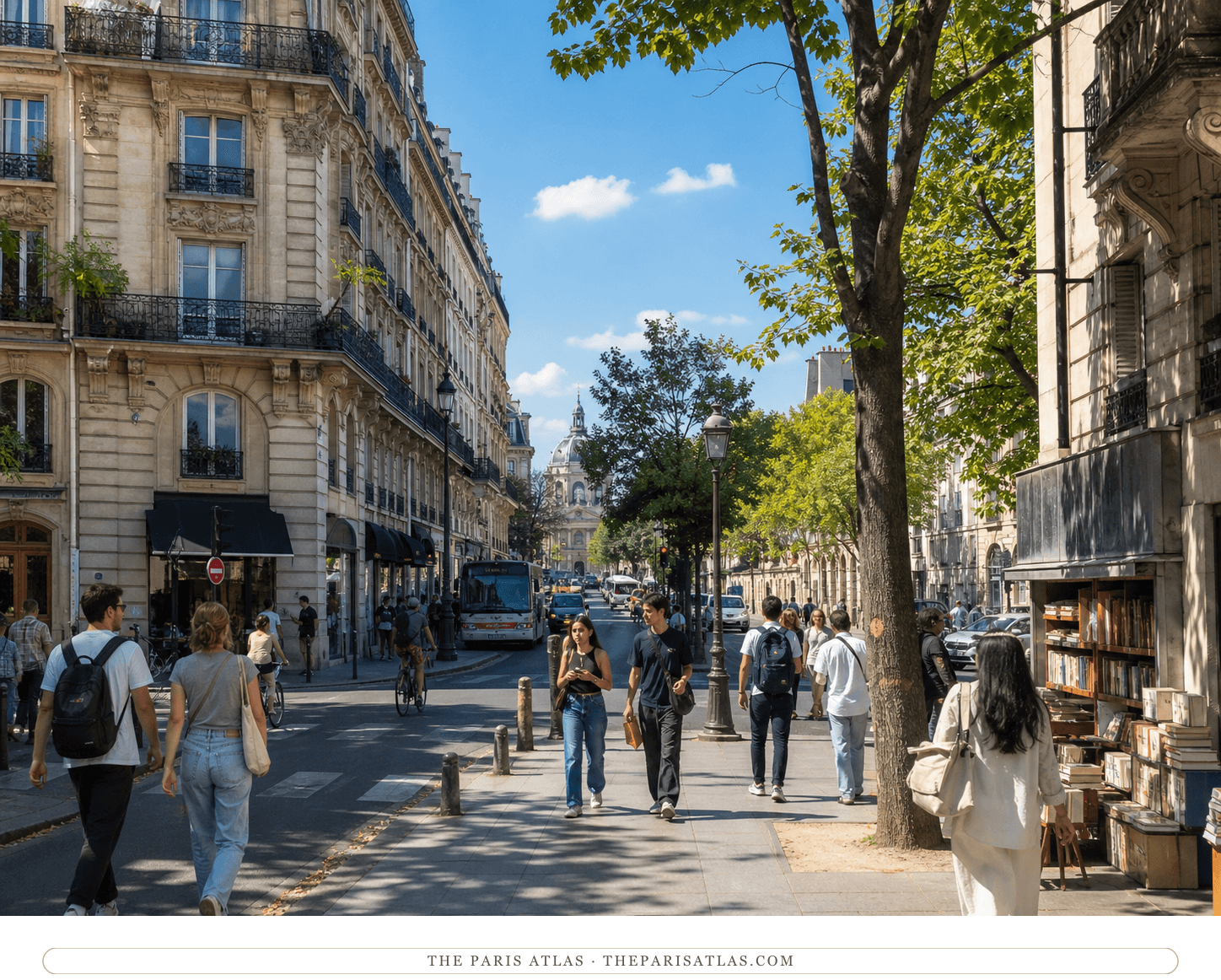
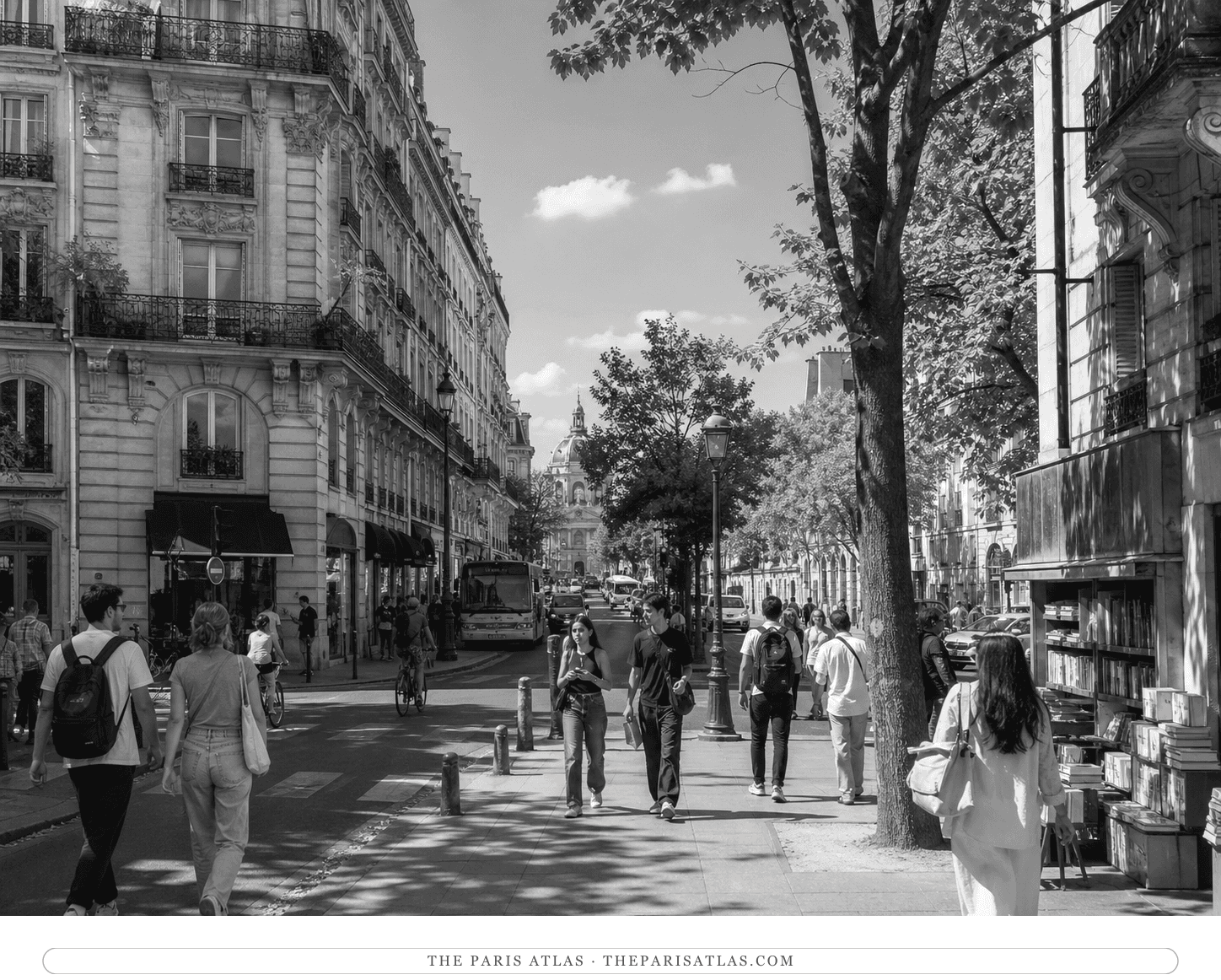
The boulevard that runs from the Seine up past the Sorbonne to the Luxembourg — the main axis of the Latin Quarter, cut through by Haussmann and known for a century as the Boul'Mich. In Down and Out in Paris and London it is where a pair of Orwell's fellow lodgers ran one of the neatest frauds in the book.
Visit the placeThe sources below include histories, archival materials, scholarly research, and official records that informed this page. They document Notre-Dame de Paris, the people connected to it, and its place in Paris.


Primary text included as part of the documented record for Notre-Dame de Paris.
Web source consulted for documented facts and historical context presented on the Notre-Dame de Paris page.

Map data used to verify addresses, geographic coordinates, and the placement associated with Notre-Dame de Paris.
Web source consulted for documented facts and historical context presented on the Notre-Dame de Paris page.
These references provide the documented foundation for this page's history and context. Claim-level citations remain attached to the specific claims they support.
 Explore more resources
Newsletter
The cafés, studios, and walk-up flats where the work was made — one story from the map in every letter.