The Paris AtlasCharting the artists, works, and places worth returning to.

Restaurant · Île Saint-Louis · 4e arrondissement

Madame Lecomte's

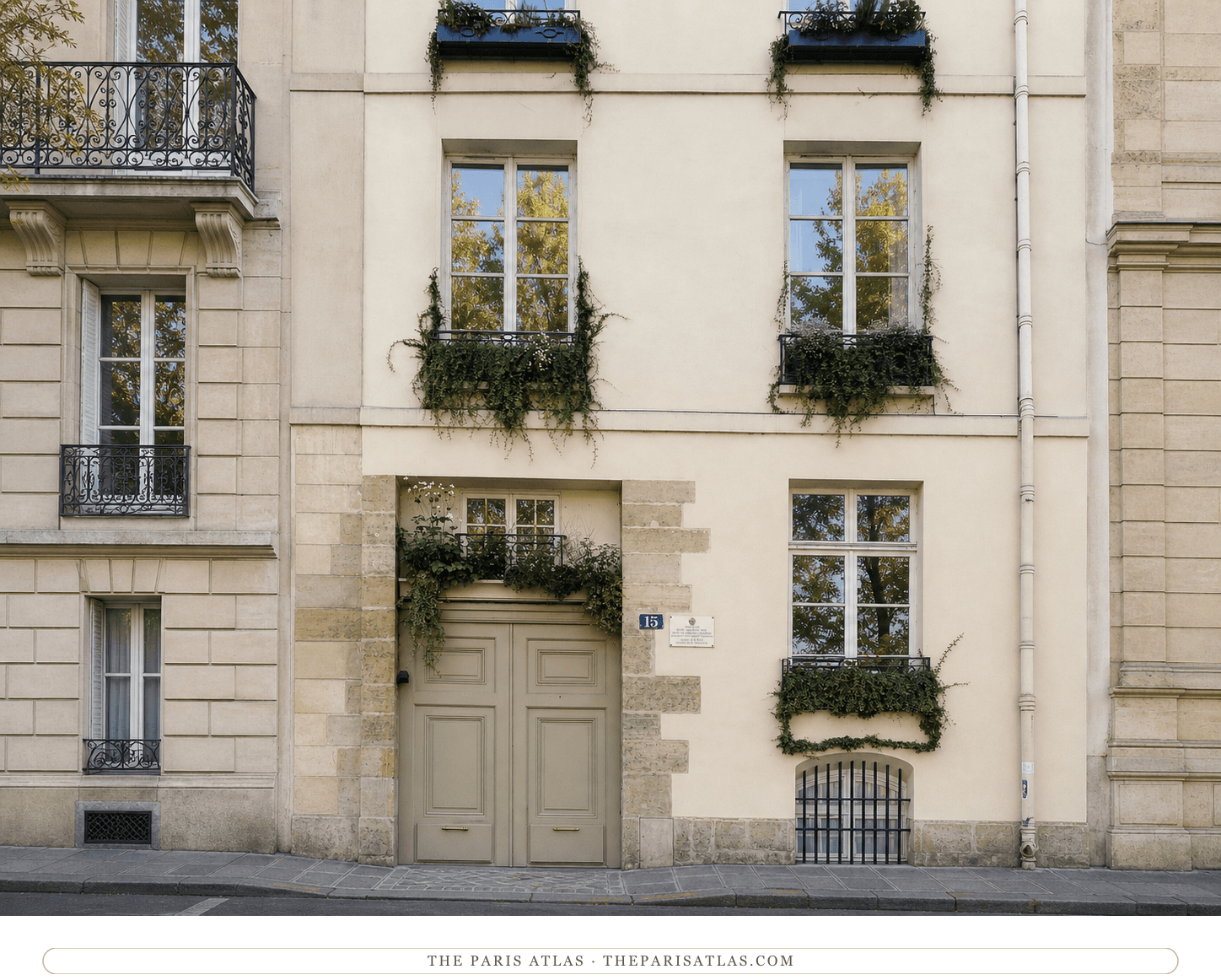
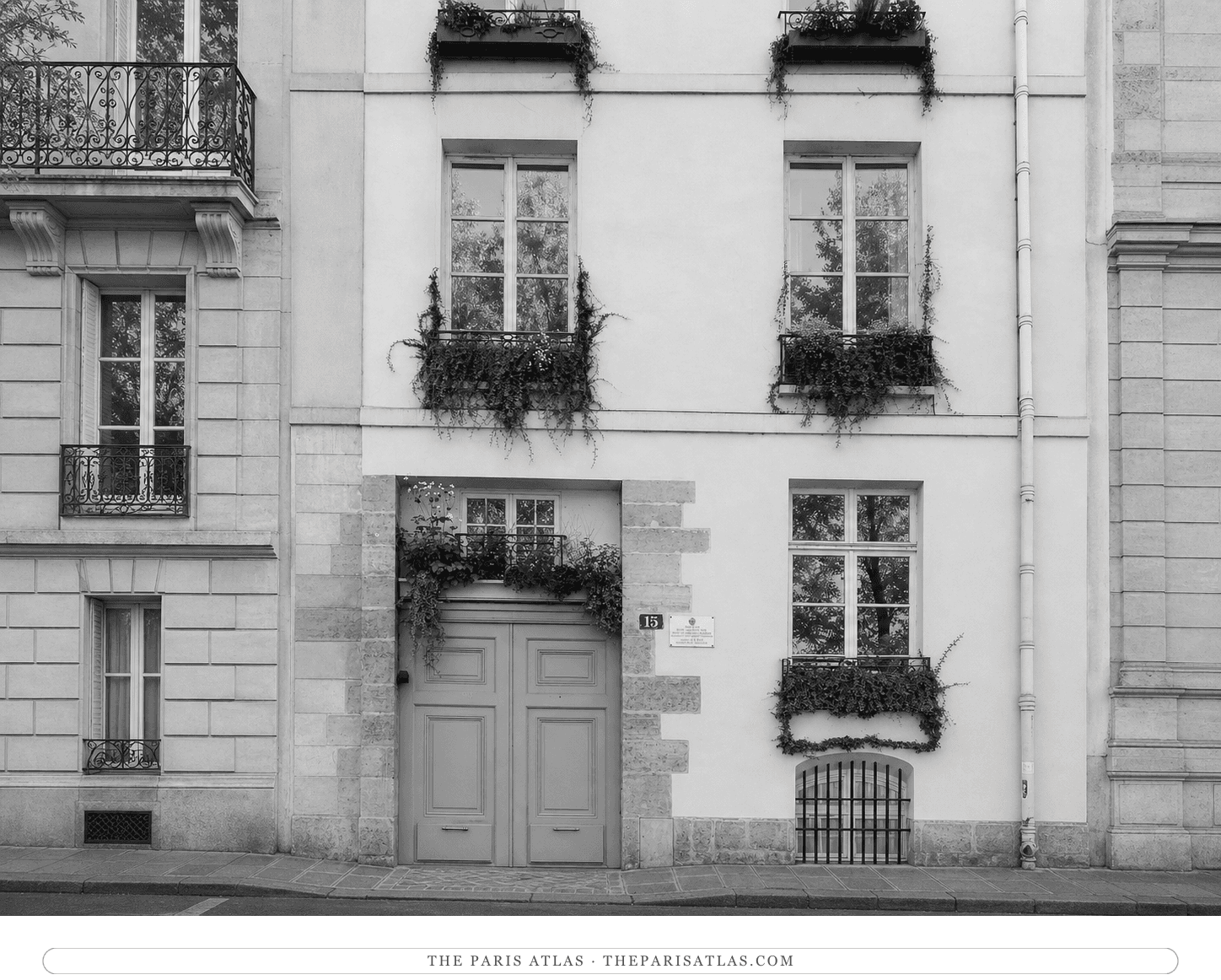
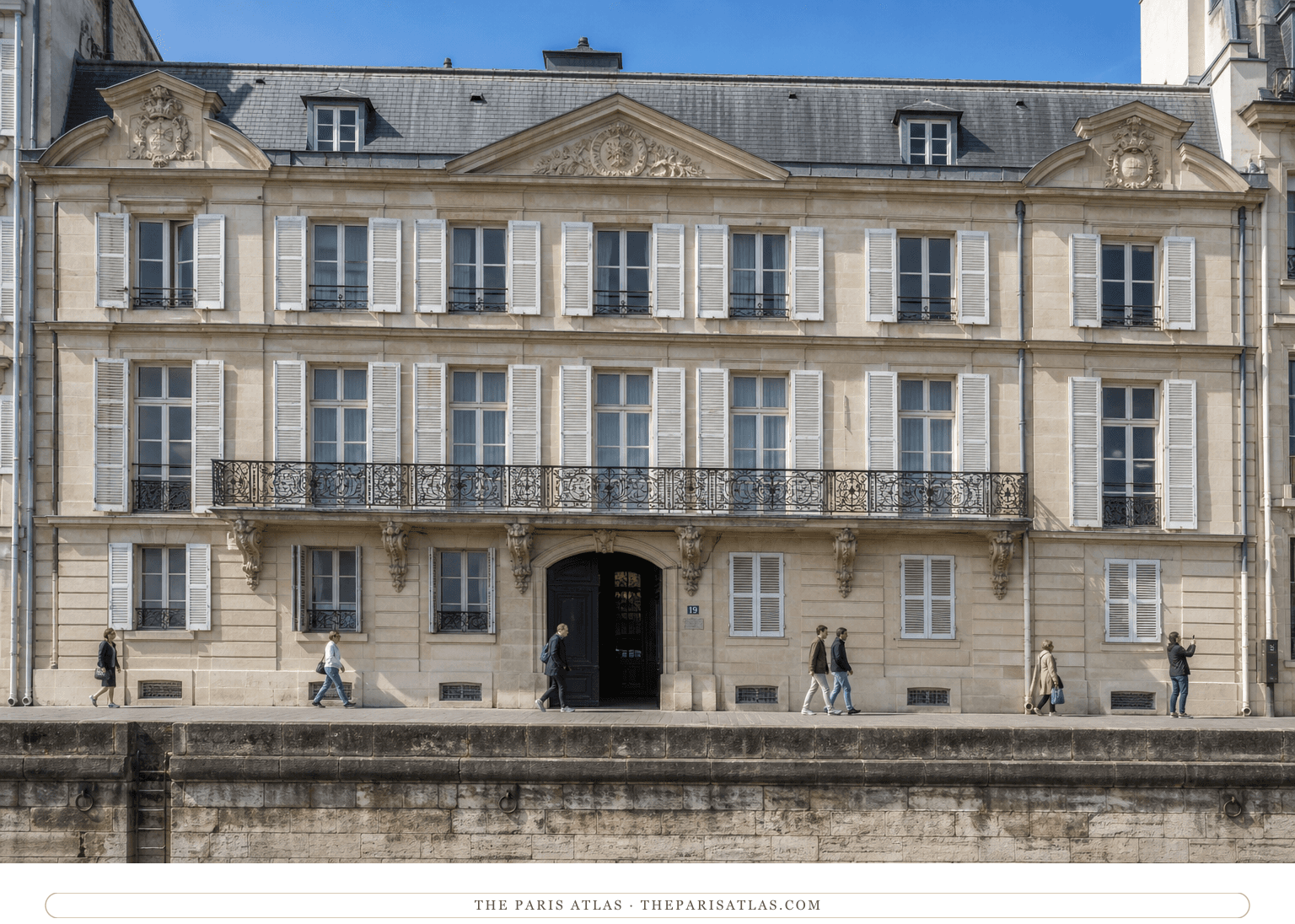
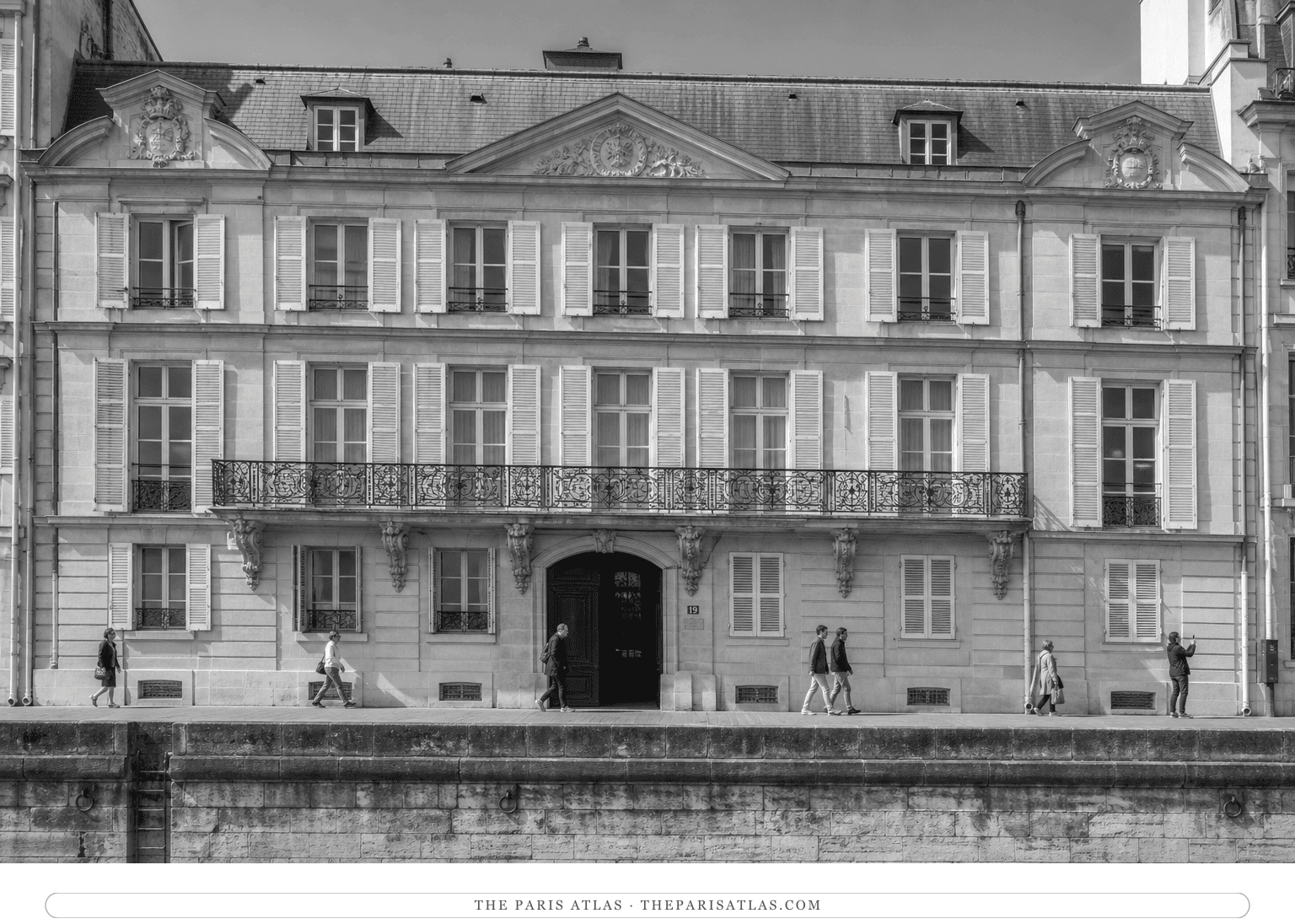
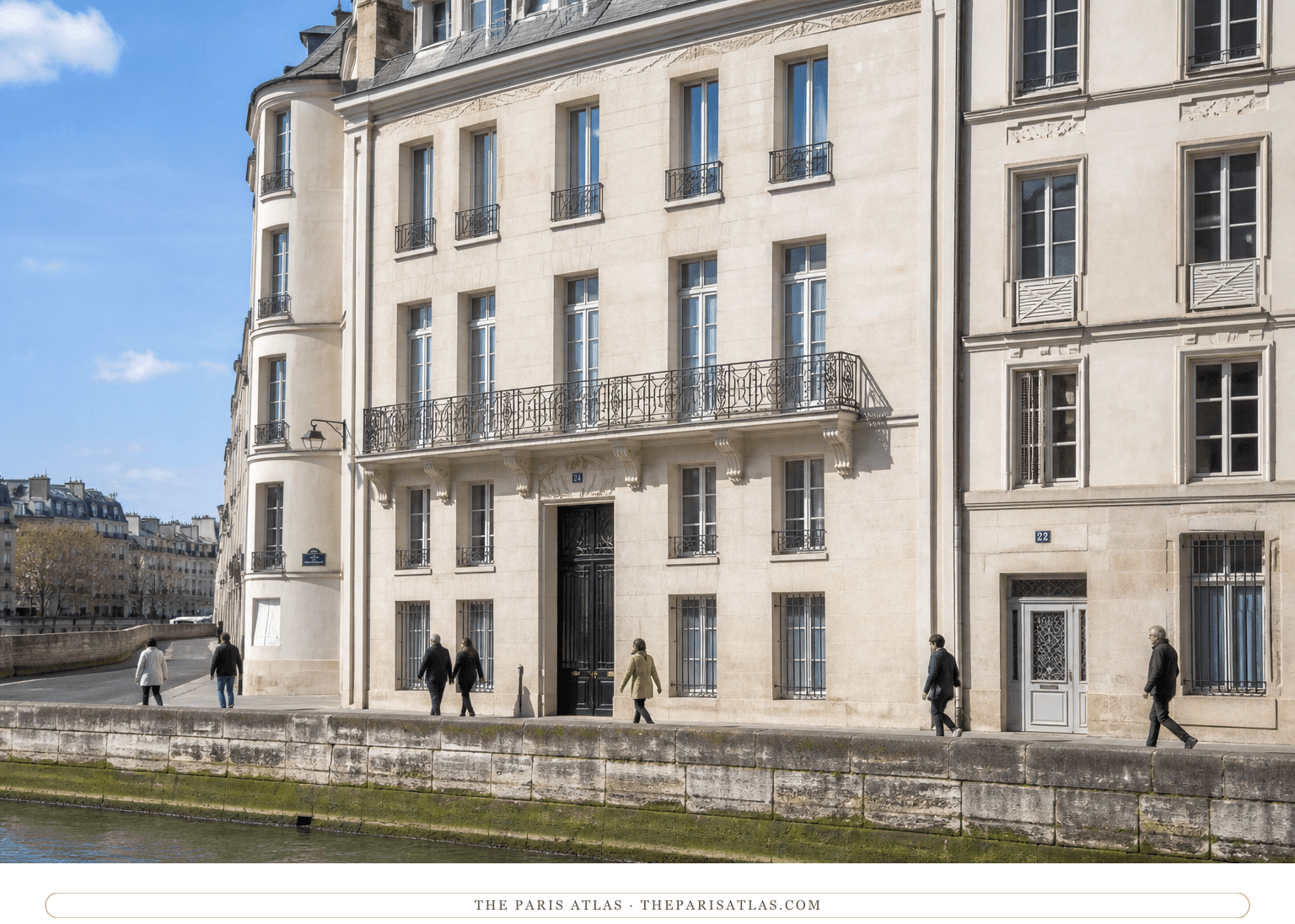
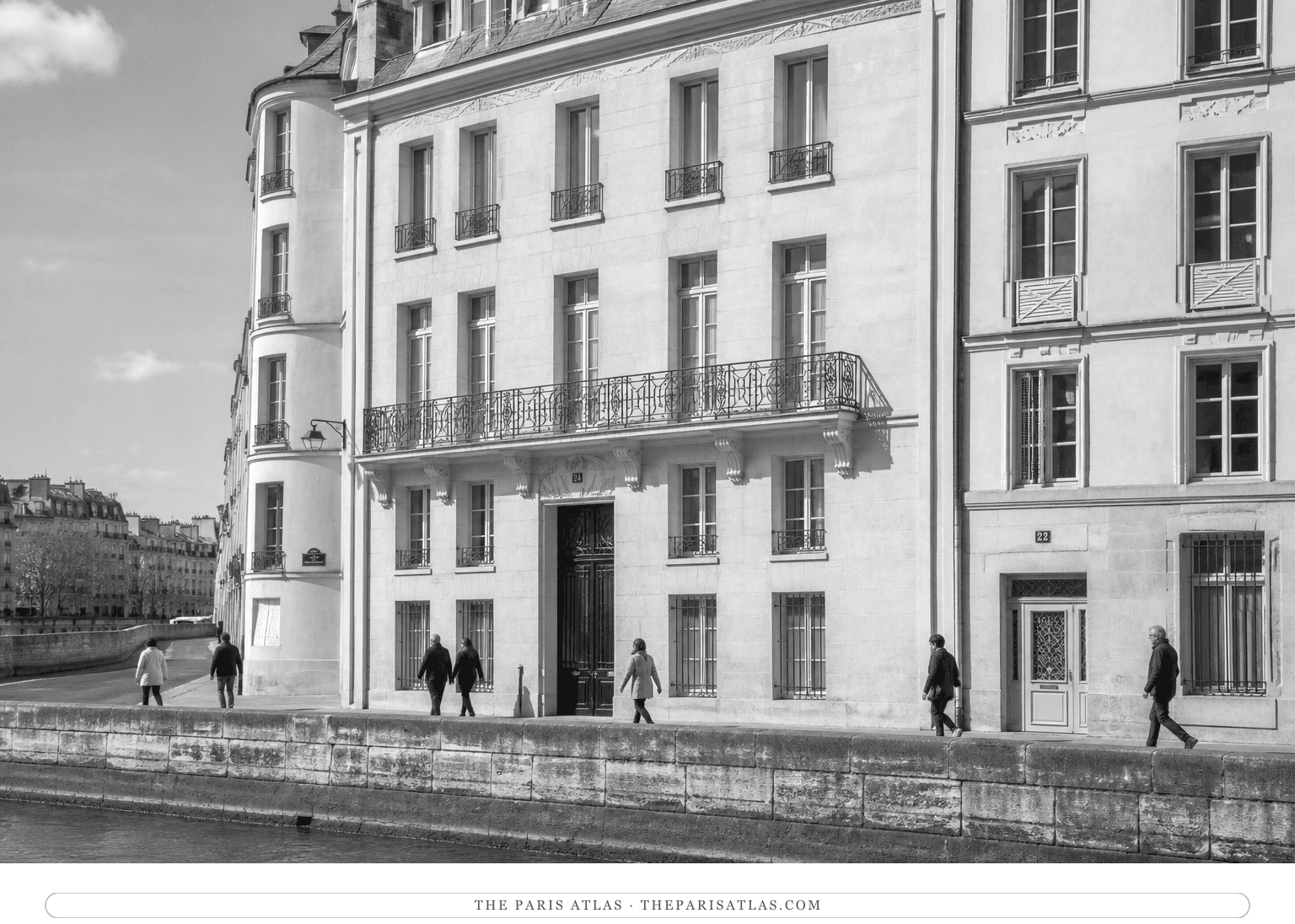
The buildingStill standing
Getting inOutside only
What's there nowSomeone else

The riverside table on the far side of the Île Saint-Louis — wonderful food, Madame Lecomte at the door, and a forty-five-minute wait since the Americans found it.

Address
33 Quai d'Anjou, 75004 Paris
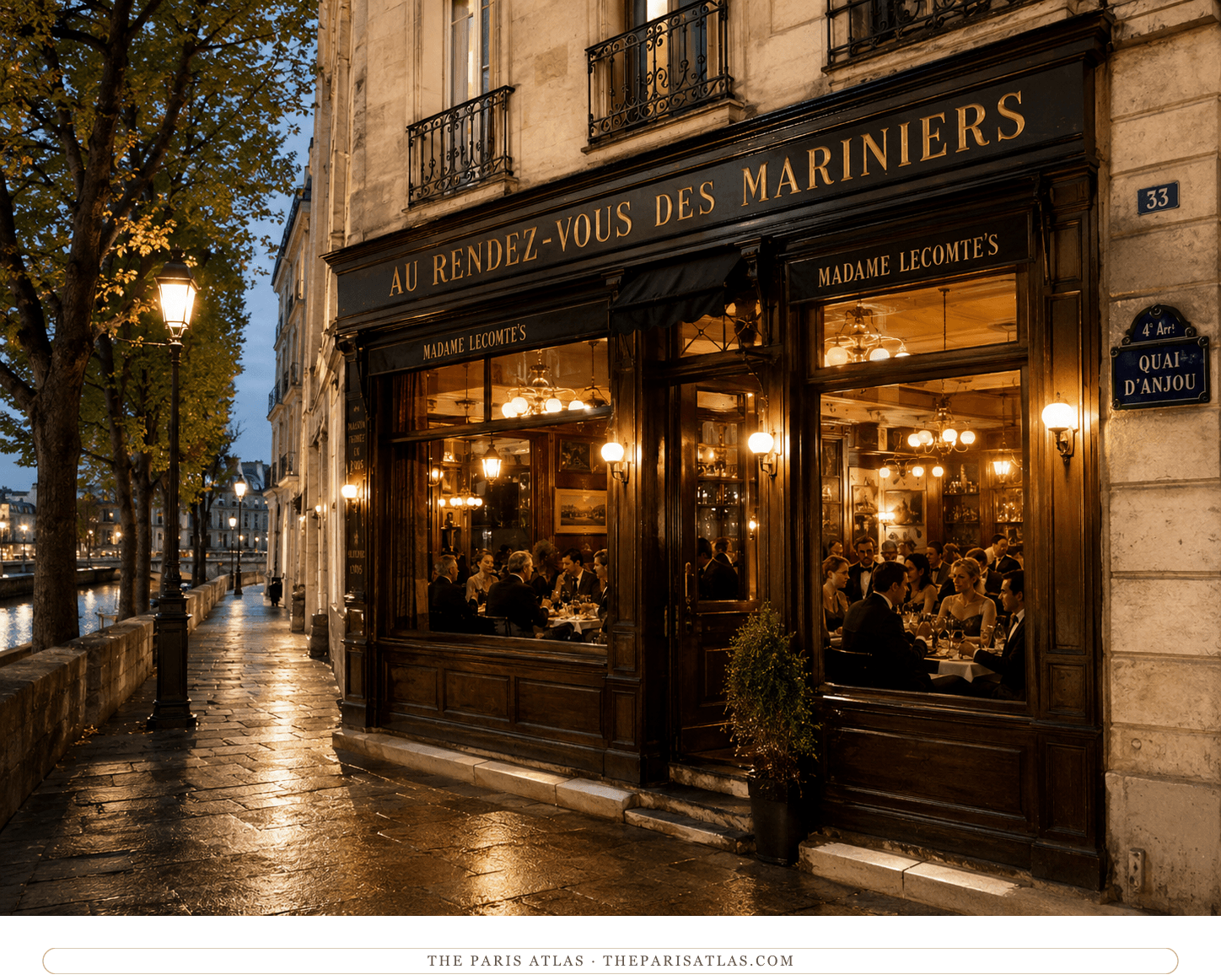
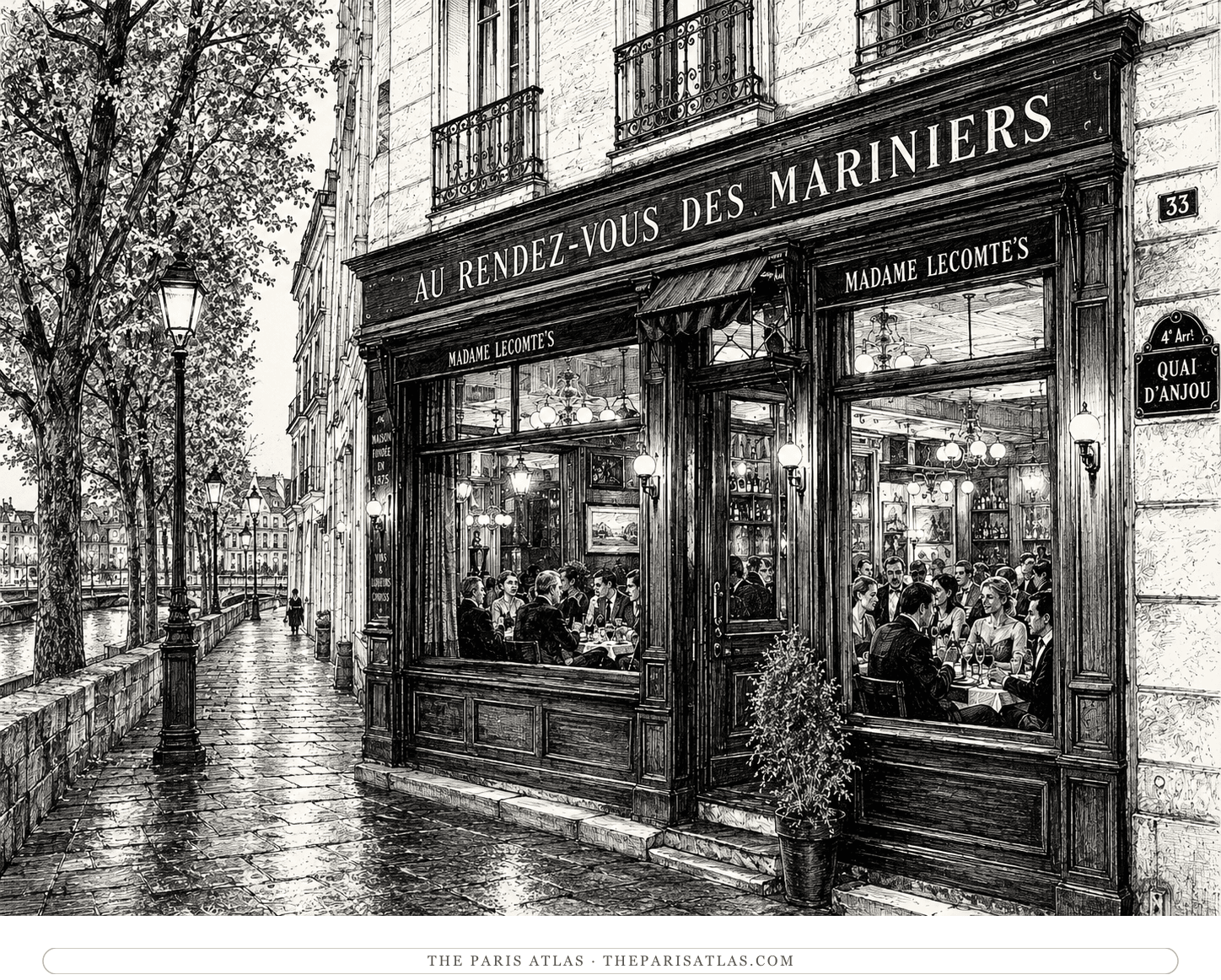
Artistic reconstructionThe riverside restaurant at dusk, warm light spilling from its windows onto the wet quai beside the Seine

The far side of the island at dinner time — worth the forty-five-minute wait.

Artistic reconstruction

The story

How certain is the identification

Ernest Hemingway never prints the restaurant's trading name. He writes "Madame Lecomte's restaurant on the far side of the island," and everything else has to be argued from there. The argument is a strong one. A restaurant called Au Rendez-vous des Mariniers stood at 33 quai d'Anjou, on the far side of the Île Saint-Louis, and from 1904 to 1928 its cook and proprietress was a Madame Lecomte — Pascaline Lecomte, who ran it with her husband. After the armistice it filled with Americans, which is the exact complaint the novel makes about it, and John Dos Passos, who ate there and is a documented friend of Hemingway's, is one of its recorded regulars.

That is an identification by surname, address, clientele and date rather than by a name in the text, so this page treats it as probable rather than settled. Frédéric Vitoux, who wrote the restaurant's history and grew up on the island, treats the two as the same place.

The restaurant that was really there

It opened in 1904 and closed in 1953, and for most of that half-century it was not a literary restaurant at all. It fed the people who worked the river: bargemen moored along the quai, the households of the neighbourhood, and the women employed on the laundry boats. Three owners ran it in turn, the Lecomtes first.

The room was plain. Diners ate off marble table tops, the cutlery was plain metal, and the bill was chalked up on a large slate. Hemingway noticed the slate: in the novel it is "doubtless one of the 'quaint' features" — a working detail that had turned into part of the appeal.

The writers came anyway, and kept coming long after the novel. Vitoux's account of the house puts Pablo Picasso, Georges Simenon, Louis Aragon and Blaise Cendrars at its tables alongside Dos Passos, and in March 1933 Louis-Ferdinand Céline dined here with François Mauriac — an unlikely pairing, a year after Journey to the End of the Night. Hemingway is the least documented of them. He is named among the restaurant's writers, but the evidence everyone reaches for is the novel itself.

The meal in chapter VIII

The dinner is one line long and completely specific:

  • Roast chicken
  • New green beans
  • Mashed potatoes
  • A salad
  • Apple pie and cheese
  • Coffee, and a fine — brandy — afterwards

That is a complete French restaurant dinner of the period and nothing more elaborate. It is not chicken Marengo, not a cream sauce, not a named preparation of any kind — it is plain home-style roast chicken served as part of a fixed meal, which is what a bargemen's restaurant would have been cooking. "New green beans" means young beans freshly in season rather than a recipe. The cheese would conventionally have come as its own course after the salad, and Hemingway does not say which cheese.

"You never come here any more, Monsieur Barnes." "Too many compatriots."

The Sun Also Rises (1926), ch. VIII

Her answer is the practical one, and the reason the exchange is funny rather than sour: come at lunchtime, she tells him, it is not crowded then.

Can you still eat it

No. The restaurant closed in 1953 and there is no successor at the address, so the roast chicken cannot be ordered where it was eaten and no venue can honestly claim to serve a recreation of it. Of the novel's meals, this is the one with the clearest answer.

What survives is the walk. From No. 33 the two men go along under the trees on the Quai d'Orléans side, circle the island, watch a bateau mouche go up under the bridge, and cross to the left bank by the wooden footbridge from the Quai de Béthune to stop and look downriver at Notre-Dame. The planks they use were temporary, a stopgap while the Pont de la Tournelle was rebuilt; the stone bridge that opened in 1928 stands in their place. The route is walkable as written, and the downriver view from the bridge is unchanged.

In their words

We ate dinner at Madame Lecomte’s restaurant on the far side of the island. It was crowded with Americans and we had to stand up and wait for a place. Some one had put it in the American Women’s Club list as a quaint restaurant on the Paris quais as yet untouched by Americans, so we had to wait forty-five minutes for a table. Bill had eaten at the restaurant in 1918, and right after the armistice, and Madame Lecomte made a great fuss over seeing him.
Ernest Hemingway, The Sun Also Rises (1926), Chapter 8

Served here

The dishes the books ate at this table — quoted verbatim from the text.

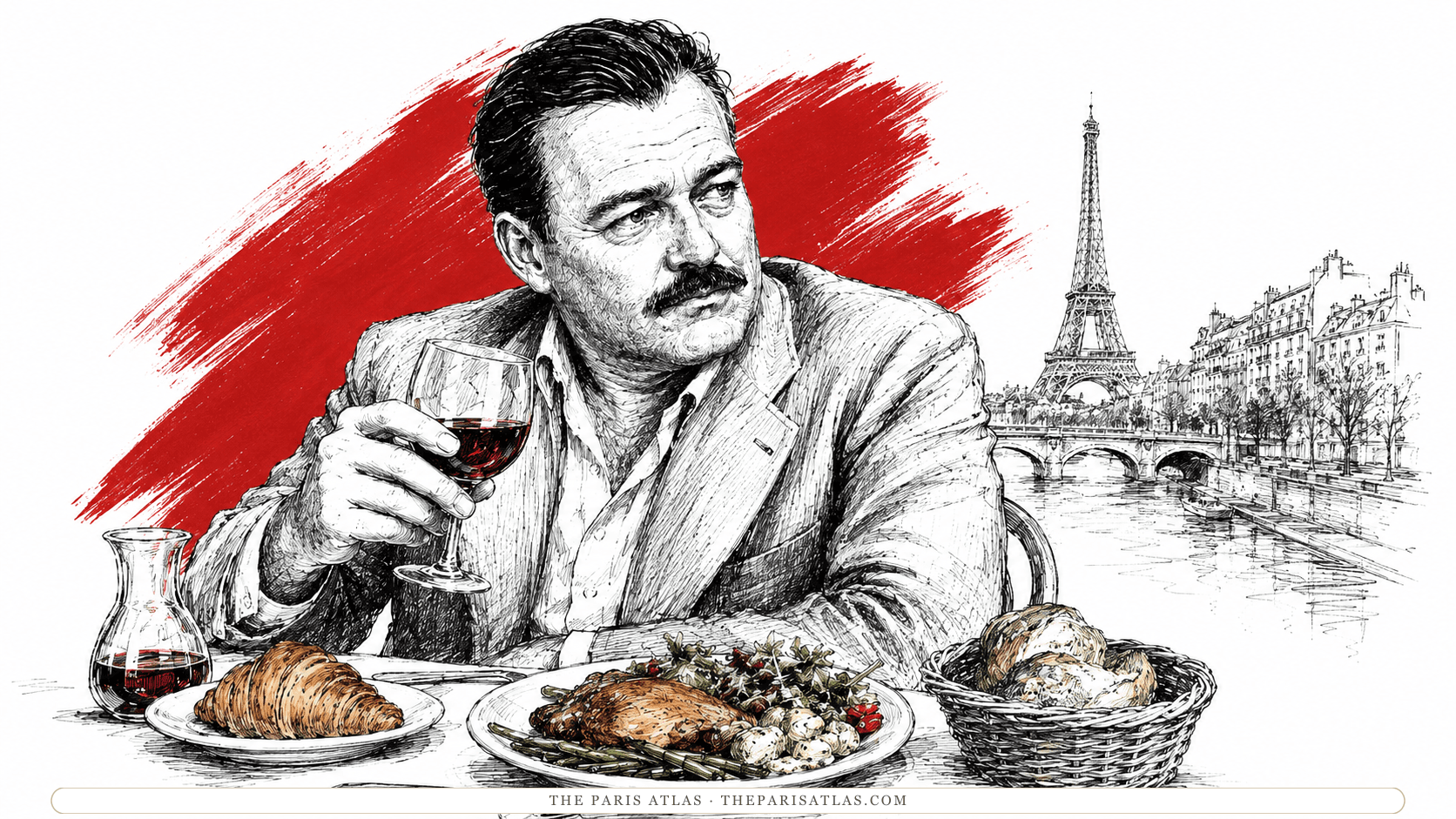
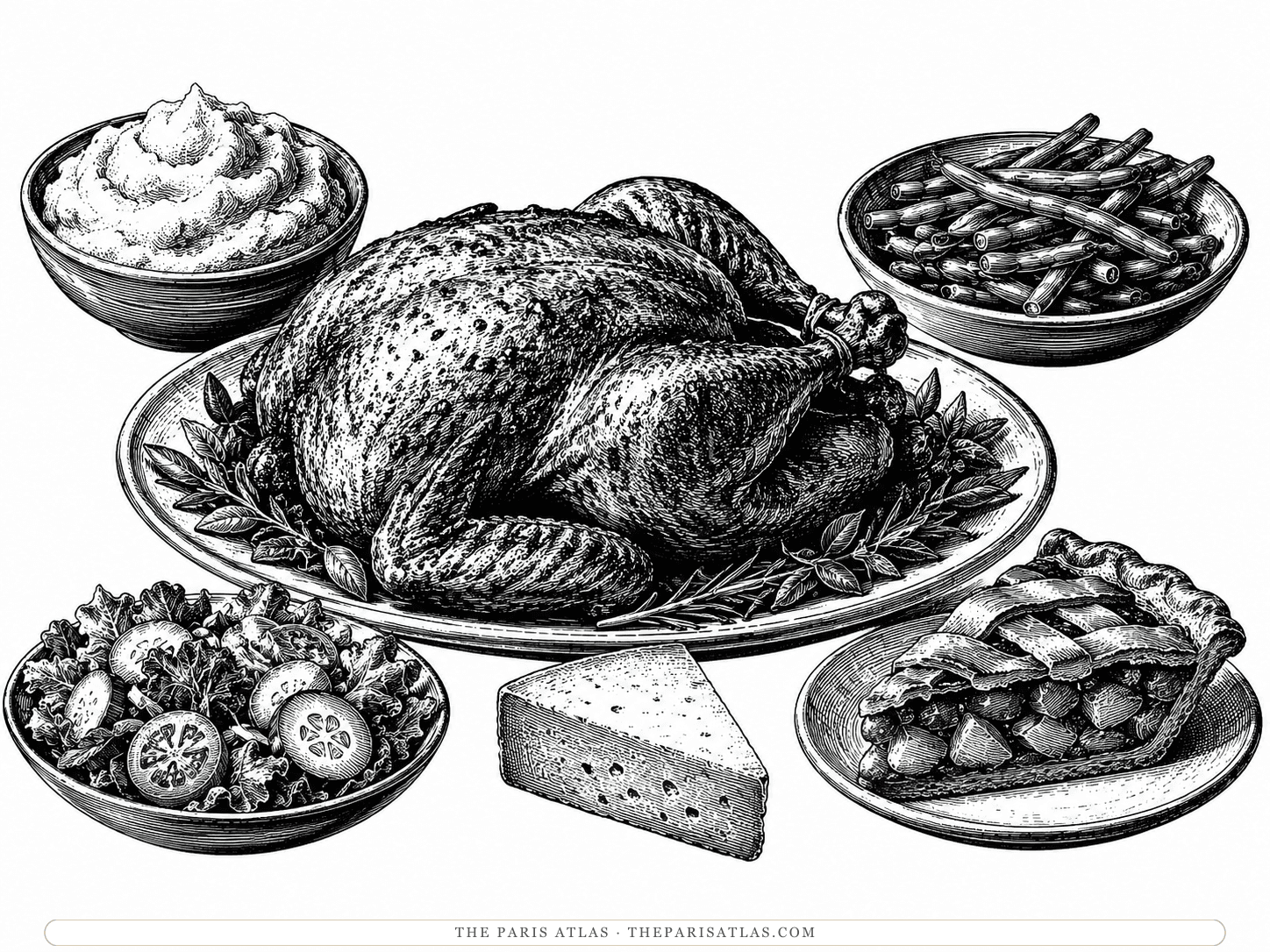
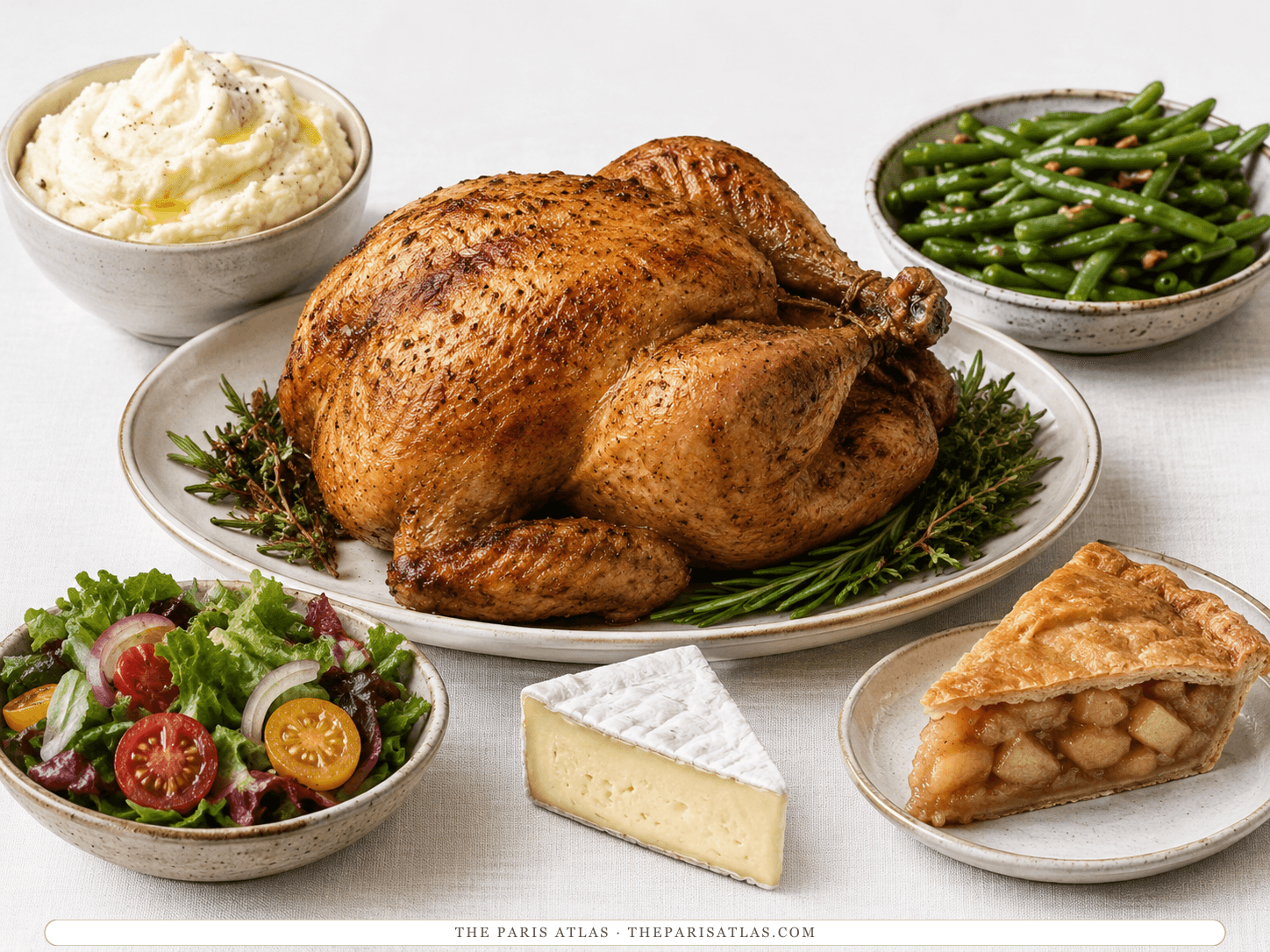
Roast chicken on a platter ringed with herbs, with mashed potatoes, green beans, a salad, a wedge of cheese and a slice of apple pie — dinner at Madame Lecomte's on the Île Saint-Louis.

Chapter VIII — dinner with Bill on the Île Saint-Louis

Roast chicken at Madame Lecomte's

We had a good meal, a roast chicken, new green beans, mashed potatoes, a salad, and some apple-pie and cheese.

Worth the forty-five-minute wait — an American women's club had just listed the place as 'untouched by Americans.'

From The Sun Also Rises

Key facts

What it was
A bargemen's restaurant, Au Rendez-vous des Mariniers, kept by Madame Lecomte
Neighborhood
Quai d'Anjou, the quiet north shore of the Île Saint-Louis
Literary neighbors
Three Mountains Press and the transatlantic review at No. 29, down the quai
In The Sun Also Rises
The island dinner of the narrator Jake Barnes and his friend Bill Gorton, before the great night walk
Open
1904–1953; the Lecomtes ran it until 1928, and two owners followed
The room
Marble table tops, plain metal cutlery, the bill chalked on a slate
Today
Gone — the quai is quiet again
Madame Lecomte's windows on the quai d'Anjou, full house visible from the street.Editorial illustration
The far side of the island at dinner time — worth the forty-five-minute wait.Artistic reconstruction

Timeline

  1. 1904

    Au Rendez-vous des Mariniers opens at 33 quai d'Anjou, feeding bargemen, neighbours and the laundry-boat women.

  2. 1918–1919

    The visits of Bill Gorton, a character in The Sun Also Rises, mirror the real postwar clientele; Dos Passos lodges here.

  3. 1924

    Three Mountains Press prints Hemingway's in our time a few doors along the quai.

  4. 1920s

    An American guidebook listing packs the little dining room with compatriots.

  5. 1926

    The dinner scene in Ernest Hemingway's The Sun Also Rises fixes Madame Lecomte's name in print.

  6. 1928

    Pascaline Lecomte and her husband give up the restaurant after twenty-four years; two owners follow them.

  7. 1933

    Louis-Ferdinand Céline dines here with François Mauriac in March, a year after Journey to the End of the Night.

  8. 1953

    The restaurant closes; the address returns to private life.

On the map

Questions before you go

Was Madame Lecomte's in Ernest Hemingway's The Sun Also Rises a real restaurant?

Almost certainly. Ernest Hemingway never prints a trading name, but a restaurant called Au Rendez-vous des Mariniers stood at 33 quai d'Anjou on the Île Saint-Louis, and from 1904 to 1928 its cook and proprietress was Pascaline Lecomte. The address, the surname, the postwar American clientele and the date all match, so the identification is probable rather than proven.

What do Jake and Bill eat there?

Roast chicken, new green beans, mashed potatoes, a salad, and apple pie with cheese, followed by coffee and a fine. Jake Barnes, the novel's narrator, and his friend Bill Gorton are characters in Ernest Hemingway's The Sun Also Rises; the dinner is in chapter VIII. It is a plain, complete French restaurant meal rather than a named preparation.

Can you still eat at Madame Lecomte's?

No. Au Rendez-vous des Mariniers closed in 1953 and nothing succeeded it at the address. No restaurant in Paris can honestly claim to serve a recreation of the meal. You can walk the quai d'Anjou and the route the two men take after dinner.

Why is the restaurant crowded with Americans in the novel?

Someone had listed it in the American Women's Club guide as a quaint restaurant on the Paris quais as yet untouched by Americans. Jake and Bill wait forty-five minutes for a table. Asked why he never comes any more, Jake answers "Too many compatriots" — and Madame Lecomte tells him to come at lunchtime instead.

Which other writers went there?

Frédéric Vitoux's history of the house names Pablo Picasso, John Dos Passos, Georges Simenon, Louis Aragon and Blaise Cendrars among its customers. In March 1933 Louis-Ferdinand Céline dined here with François Mauriac. Dos Passos, who lodged on the island, is the best-documented of the Americans.

Where was it, and what is there now?

33 quai d'Anjou, on the northern shore of the Île Saint-Louis in the 4th arrondissement. The building stands and the address is private; nothing marks the restaurant. Bill Bird's Three Mountains Press, which printed Hemingway's in our time, was a few doors along at No. 29.

Related books

Cover of The Sun Also Rises by Ernest Hemingway

Setting of the story

The Sun Also Rises

Ernest Hemingway · 1926

Bill and Jake's dinner on the far side of the Île Saint-Louis — wonderful food, and a forty-five-minute wait since the American Women's Club listed it.

Writers who knew this place

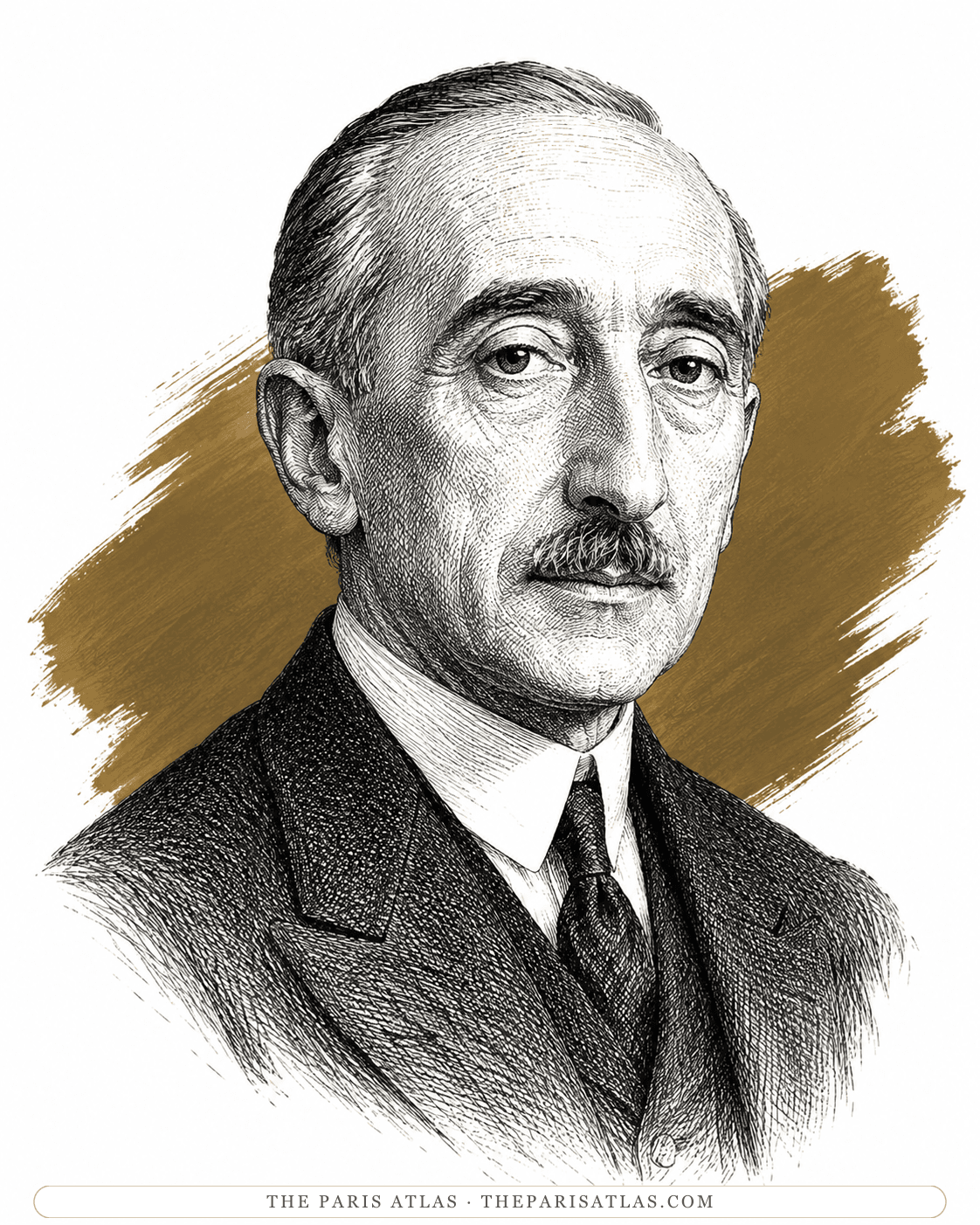
Illustrated portrait of Louis-Ferdinand Céline

Louis-Ferdinand Céline

French · The doctor of the Paris slums who wrote the century's blackest, funniest novel — and changed the sound of French prose.

An unlikely pairing preserved by Vitoux: Céline and François Mauriac dine together at the Rendez-vous des Mariniers in March 1933, the year after Journey to the End of the Night.

Illustrated portrait of François Mauriac

François Mauriac

French · Novelist of Bordeaux and the Catholic conscience, future Nobel laureate — and Céline's documented dinner companion on the Île Saint-Louis in 1933.

An unlikely pairing preserved by Vitoux: Céline and François Mauriac dine together at the Rendez-vous des Mariniers in March 1933, the year after Journey to the End of the Night.

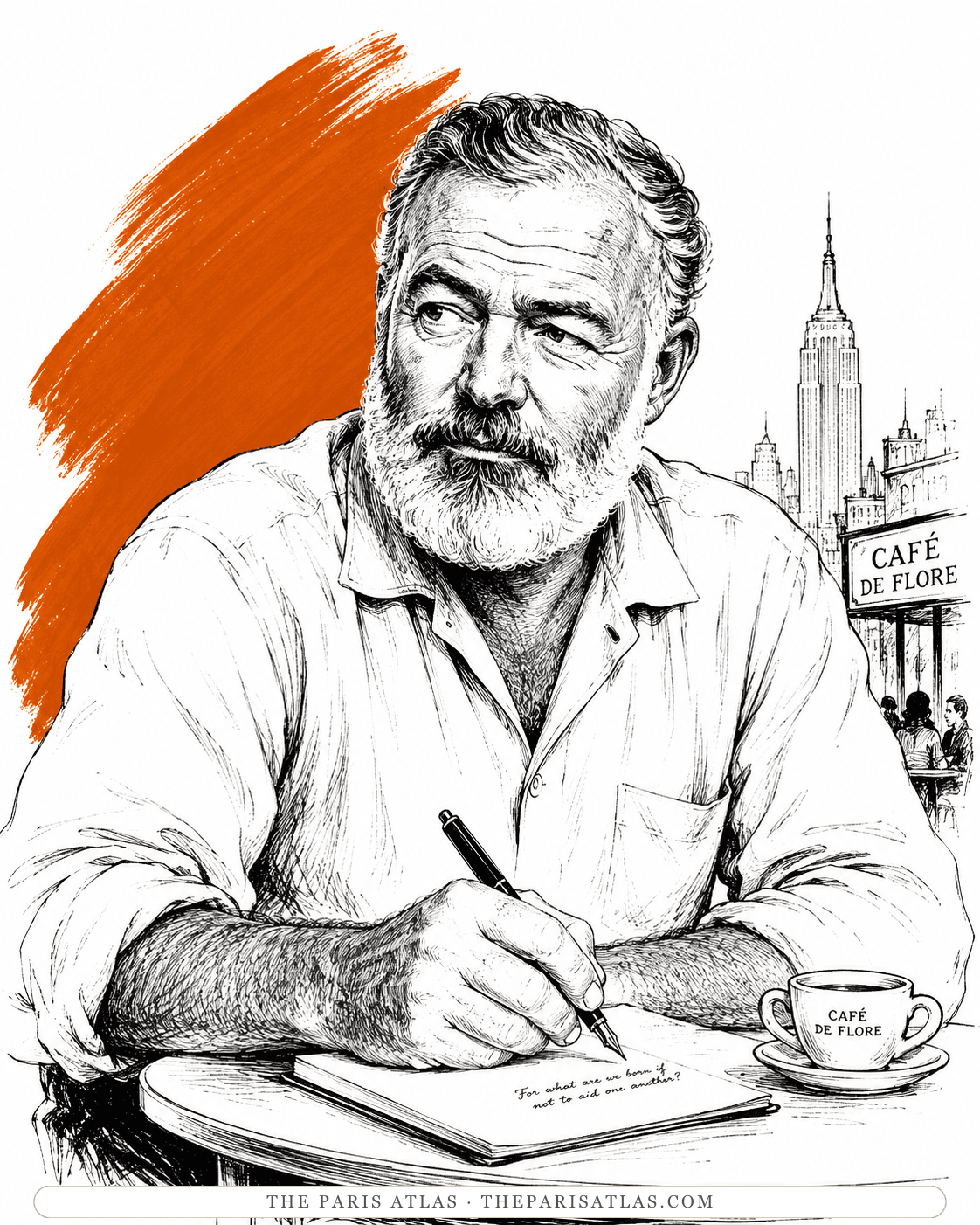
Illustrated portrait of Ernest Hemingway

Ernest Hemingway

American · Author of The Sun Also Rises and A Moveable Feast; his pared-down style, developed in 1920s Paris, became the most imitated in American prose.

Ernest Hemingway wrote about Madame Lecomte's in The Sun Also Rises.

Artists who knew this place

Guides featuring Madame Lecomte's

Take them with you.

Within walking distance

The Friday Letter

Paris, one address at a time.

The cafés, studios, and walk-up flats where the work was made — one story from the map in every letter.

One email a week. No spam, no selling your address. Unsubscribe anytime.