1833: the grant, the cathedral, and the autograph
On 13 March 1833 Andersen was awarded a travel grant by royal order from the Danish state fund ad usus publicos — Latin for 'for public purposes', the fund the crown used to support artists and scholars — of six hundred rixdollars a year for two years, the rixdaler being the Danish currency of the day. He was twenty-eight, had published poems and a failed play or two, and had written to Henriette Wulff, the Copenhagen friend who was his closest correspondent, a month earlier that unless he was torn away from his surroundings he would amount to nothing. He left Copenhagen on 22 April and reached Paris by way of Hamburg, Kassel, Frankfurt, Mainz, Metz and Verdun. He stayed from 10 May to 15 August.[1]
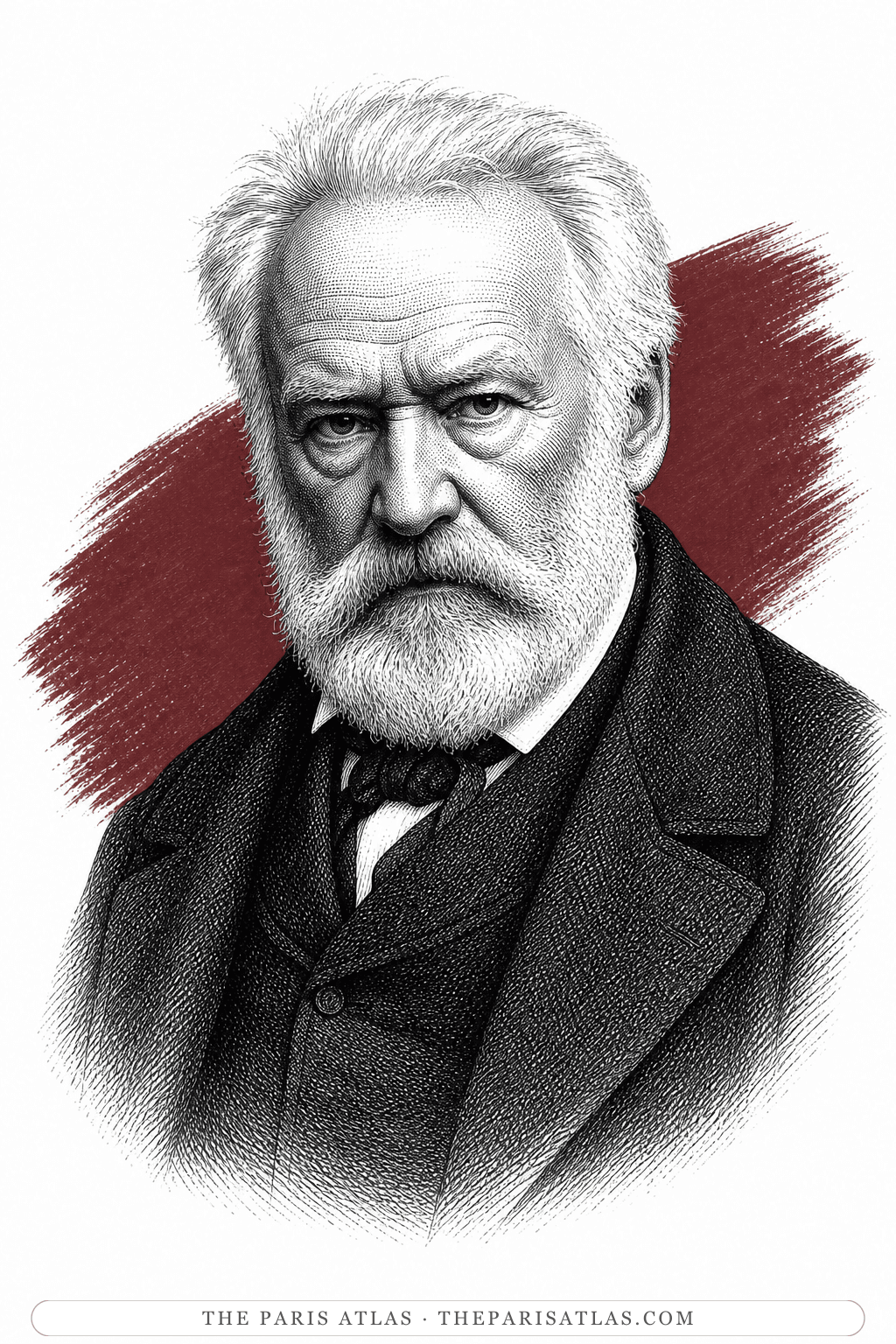
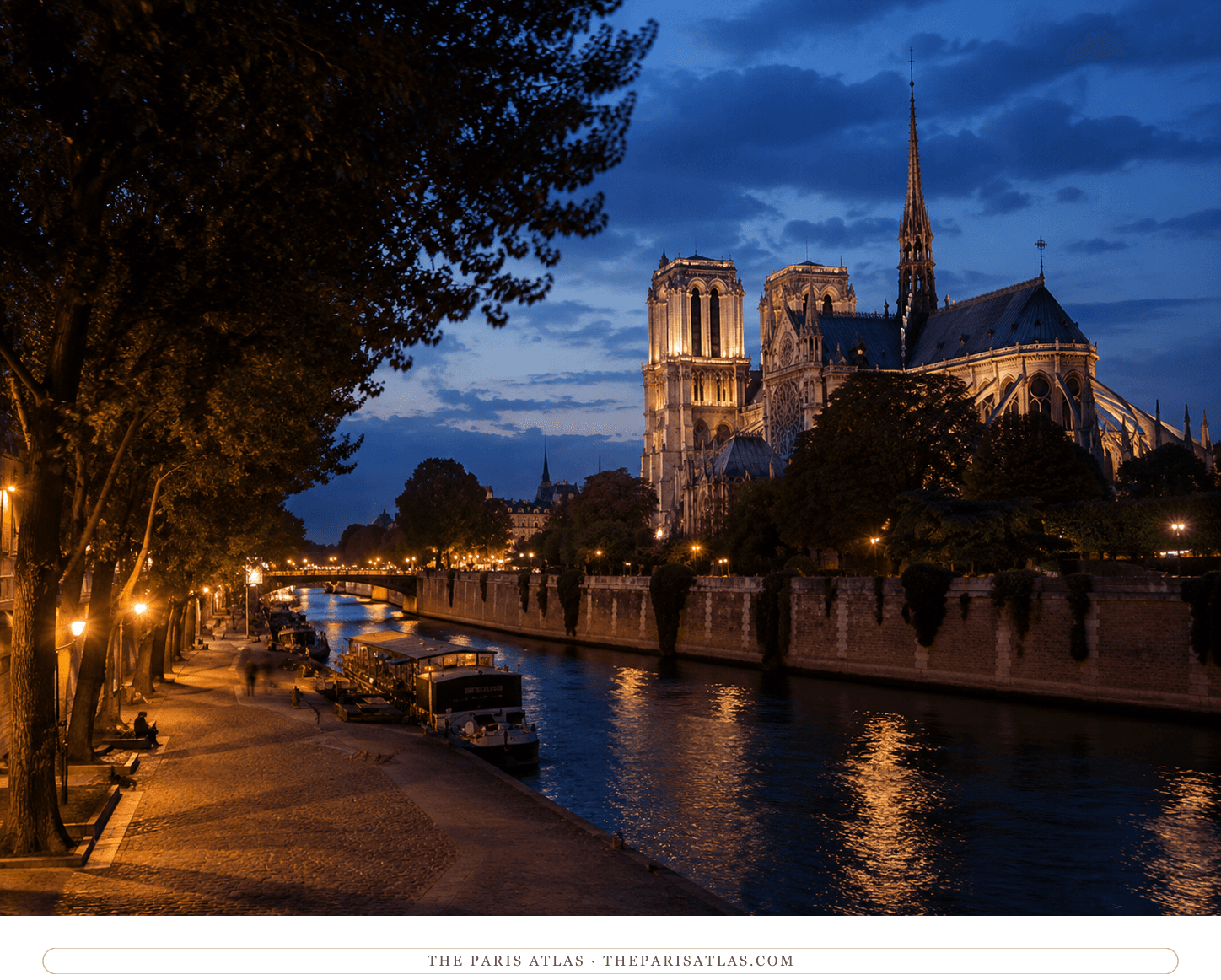
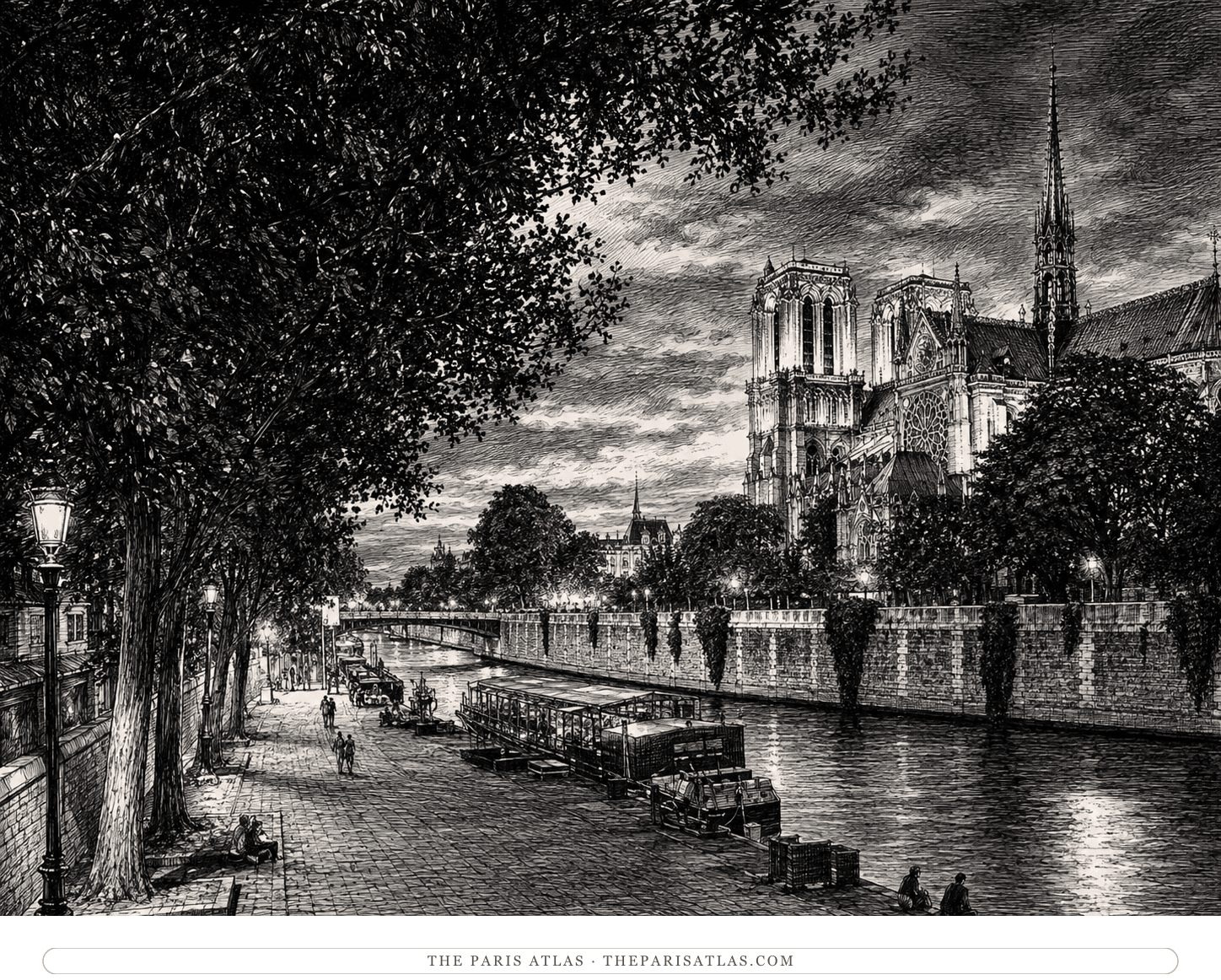
The first French book he tried to read in Paris was Victor Hugo's Notre-Dame de Paris, the 1831 novel set in and around the medieval cathedral, published in English as The Hunchback of Notre-Dame. He described going daily to Notre-Dame, the cathedral itself, to look at the places the novel described. Then he did what a young writer does: he went to see the author, who was thirty-one, already the most celebrated writer in France, and lived on a corner of the Place Royale, the square in the Marais district now called the Place des Vosges. Hugo received him in a dressing gown, drawers and morning boots, in rooms hung with engravings of the cathedral.
On leaving, Andersen asked Hugo to write his name on a piece of paper. Hugo did, placing the signature hard against the top edge of the sheet. Andersen understood the gesture immediately and it stung: Hugo did not know who he was, and was making sure there was no blank space above the signature in which an unknown Dane might later write something of his own. He recorded it in his memoirs decades afterwards, still smarting, and added only that on a later stay he came to know the poet better.[2]
The other meeting of that summer was with Heinrich Heine, the German poet then living in Paris in political exile, whom Andersen called the occupant of the throne of his poetical world. They met by accident, probably on 25 June. When Andersen said how happy the meeting made him, Heine replied that this could hardly be true or Andersen would have sought him out; Andersen answered that he had stayed away precisely because he admired him so much, and had feared a sarcastic smile. The summer's one cruelty also arrived in Paris. The first letter to reach him from home came after a month of silence and cost him a large sum, because postage was then paid by the person receiving a letter rather than the sender — and inside there was no letter at all, only a Copenhagen newspaper carrying a lampoon, a printed mockery, of him, sent, he assumed, by its anonymous author.[2]
1843: Dumas in bed, and Rachel behind the scenes
Andersen returned in March 1843 and stayed until 8 May. Everything had changed. The French critic Xavier Marmier had published an article about him, La Vie d'un Poète — 'The Life of a Poet' — in the Revue de Paris, one of the leading literary magazines in France, and his name, as he put it, had carried out into the literary world there like a sound. Heine, whom he visited three times that spring, had read The Improvisatore, Andersen's novel of an Italian street singer, and called him ein wahrer Dichter — German for 'a true poet'.[1]
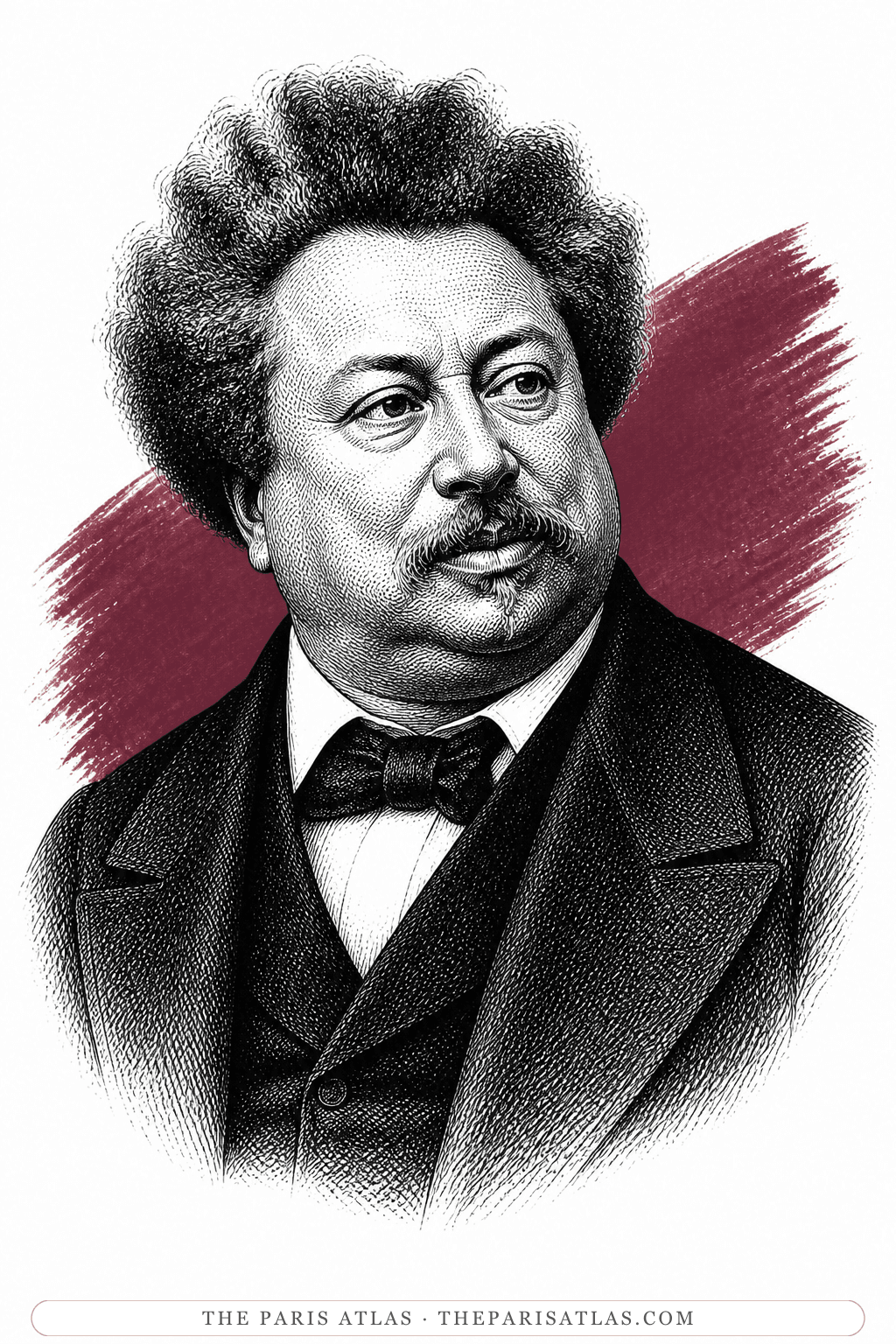
Alexandre Dumas, then the most commercially successful writer in France, received him in bed. Andersen generally found him there long after midday, propped up with paper, pen and ink, writing his newest play. On one visit Dumas nodded and told him to sit down a minute — he had a visit from his muse, and she would be going directly. He wrote on, spoke the lines aloud, shouted a viva — a cheer — sprang out of bed and announced that the third act was finished.
One evening Dumas walked him arm in arm along the boulevard and took him round the theatres to show him the life behind the scenes. He also introduced Andersen to Rachel, the tragic actress who dominated the French stage, leading him onto the stage of the Théâtre-Français — the state theatre, home of the national company, the Comédie-Française — while she waited to go on as Phèdre, the queen destroyed by forbidden love in Jean Racine's tragedy of that name. Behind a folding screen there was a table of refreshments and a thin, very young-looking woman who greeted them in a deep voice, then fell into conversation with Dumas and forgot Andersen entirely. Dumas noticed, said something handsome about him, and Andersen ventured in with an apology for his French. Rachel's reply was the line he kept: when you say anything so polite as that to a Frenchwoman, she will always think you speak well. She invited him to her Thursday evenings, and he went to a party of hers on 27 April.[2]
He saw Hugo again on 10 April and 30 April, and thought him greatly aged in the ten years since the autograph. Hugo invited him to Les Burggraves — 'The Burgraves', after the medieval German castle lords of its story — his new tragedy at the Théâtre-Français, which was being hissed nightly and parodied at the smaller theatres. Andersen also met the novelist Honoré de Balzac, then at work on the vast sequence of novels he called The Human Comedy, at a countess's house, and there fell into conversation with an older woman who turned out to be Madame Reybaud, author of the story Les Épaves — 'The Castaways' — which he had adapted into his own play The Mulatto. He visited the poets Alfred de Vigny and Alphonse de Lamartine, and Lamartine wrote him a short poem that he kept among his dearest relics.[2]
He got home in June. On 11 November 1843 he published Nye Eventyr — New Tales — containing The Angel, The Nightingale, The Sweethearts and The Ugly Duckling. The first printing of 850 copies sold out at once and a second followed within weeks. 'None of my other books have been such a source of joy,' he wrote in December. The tales he had treated as a sideline had become the thing he was.




 View source