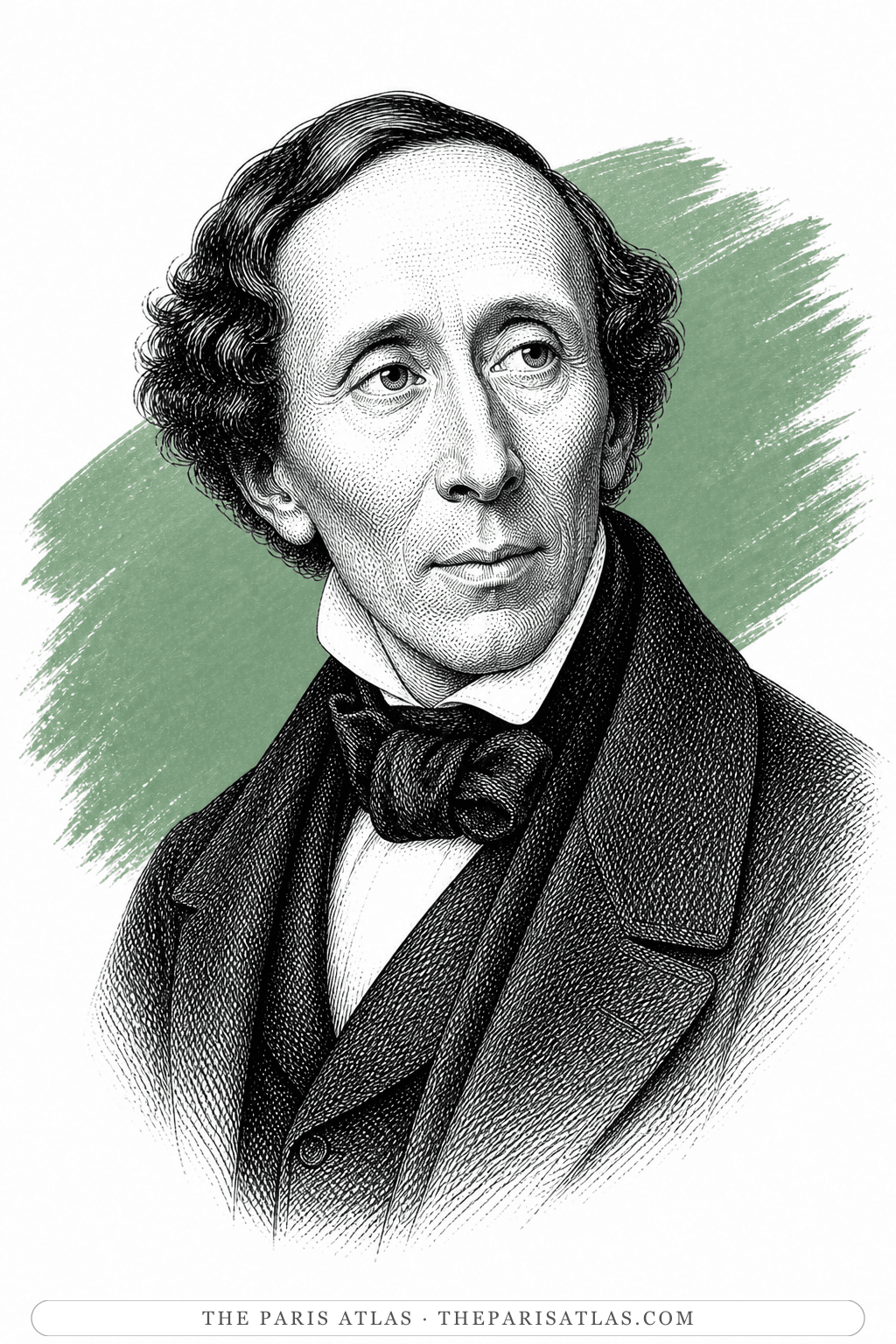
Fairy Tales Told for Children: First Booklet
Hans Christian Andersen
Fairy Tales Told for Children: First Booklet
The first booklet of fairy tales, whose hostile reception Andersen describes here.
Read our takeThe Fairy Tale of My Life
Hans Christian Andersen
A shoemaker's son from Odense tells how he became famous, and how Paris met him three times: as a nobody, as a known writer, and as a celebrity.
The Fairy Tale of My Life is Hans Christian Andersen's own account of his life. He was born poor in Odense in 1805, went to Copenhagen alone at fourteen, and became famous across Europe. The Danish book, Mit Livs Eventyr, came out on 19 July 1855 as two volumes of his collected writings. The book expanded a shorter memoir he had written in 1846 for a German edition, which Mary Howitt translated into English in 1847. Paris runs through the book. Andersen describes Victor Hugo, Alexandre Dumas, Heinrich Heine and the actress Rachel.
Andersen wrote his life story more than once. In 1846 a German publisher, Lorck of Leipzig, was bringing out his collected works, and he wrote a sketch of his life for it. The German title, Das Märchen meines Lebens ohne Dichtung, means The Fairy Tale of My Life Without Fiction. Mary Howitt translated it into English as The True Story of My Life, published in the summer of 1847.[1][2]
Eight years later a Danish collected edition gave him the chance to do it properly. He finished Mit Livs Eventyr in May 1855. Mit Livs Eventyr came out on 19 July as volumes 21 and 22 of his Collected Writings, 589 pages, and was also sold on its own.[1][3] The book kept many passages from the 1846 sketch word for word and carried the story up to 1855.[2]
The first English translation of the full book was American. Hurd and Houghton of New York published The Story of My Life in 1871, as part of an authorised edition of his works. Andersen added new chapters that took the story to 1867, and sent them to America to be translated. The new chapters appeared in English six years before they appeared in Danish.[4][2]
Andersen grows up in one small room in Odense, almost filled by his father's shoemaker's bench, the bed and his crib. His father reads him plays and the Arabian Nights. His mother had been sent out to beg as a child. At fourteen he goes to Copenhagen to try his luck at the theatre, and patrons eventually pay for his schooling.[2]
In 1833 a royal travel grant sends him abroad, first to Paris and then to Italy. His novel The Improvisatore, set in Italy, makes his name in 1835. The same year he publishes his first booklet of fairy tales, which the critics dislike. He keeps writing them anyway.[2][1]
The rest of the book follows his travels and his growing fame. In 1843 he is back in Paris and welcomed. In 1847 he is fêted in London and meets Charles Dickens. Kings and queens ask him to read his stories aloud. Through it all he keeps a tally of every slight from Danish critics.[2]
The American edition of 1871 carries the story on to 1867. That year Andersen visits the Paris world's fair twice. On 6 December his home town of Odense makes him an honorary citizen, and the book ends with the celebrations there. Before he left for Copenhagen at fourteen, his mother had a wise woman read his future in coffee grounds and cards. She said Odense would one day be lit up in his honour. In 1867 the local papers said the prophecy had come true.
Andersen spent 10 May to 15 August 1833 in Paris. The first French book he tried to read there was Victor Hugo's Notre-Dame de Paris. He went every day to Notre-Dame to compare the cathedral with the novel. Then he called on Hugo at his corner house on the Place Royale, now the Place des Vosges. Hugo received him in a dressing gown and morning boots.
As he left, Andersen asked for Hugo's name on a piece of paper. Hugo signed right up against the top edge. Andersen understood at once: Hugo did not know him and was leaving no space above the signature for anything to be added. "I felt very badly," he wrote.
The German poet Heinrich Heine, then living in Paris, came to see Andersen at the Hôtel Vivienne, where he was staying. When Andersen left for Italy, Heine wrote him a note dated 10 August 1833, urging him to write down in German what he saw there.
For a month no letter came from home. When one finally arrived, it was large, and Andersen had to pay the postage. Inside was no letter at all, only a Copenhagen newspaper of 13 May 1833 with a mocking poem about him. He stayed for the July festivals and watched the unveiling of the Napoleon statue on the column in the Place Vendôme.
Ten years later Andersen came back as a known writer. He took a room at the Hotel Valois on the rue de Richelieu. The critic Xavier Marmier had written about him in the Revue de Paris, and Andersen found his name had reached the literary world ahead of him.
He usually found Alexandre Dumas in bed well after midday, writing his newest play. Dumas walked him arm in arm along the boulevard and round the theatres. One evening he led Andersen onto the stage of the Théâtre-Français to meet the actress Rachel, who was about to play Phèdre.
Andersen also saw Hugo again, and at Hugo's invitation went to his new play Les Burgraves. He met Alphonse de Lamartine, Alfred de Vigny and Honoré de Balzac. He visited Heine three times.
The chapters Andersen added for the American edition end with Paris again. In April 1867 the world's fair had just opened on the Champ de Mars. Andersen wrote that he had to go and see "the fairy tale of our time", and by 11 April he was on the train. He went to the fair almost every day.
At the fair he was introduced to the actor Ira Aldridge, then playing Othello at the Odéon theatre. Andersen wrote that it gave him great pleasure to be greeted by Aldridge as a friend. He also dined at the Grand Hôtel du Louvre with the explorer Samuel Baker. He came back in September to study the fair for his tale The Dryad.
My life is a lovely story, happy and full of incident.
he complied with my wishes, and wrote his name close up to the edge of the paper. I felt very badly, for it came immediately to my mind that he did this because he did not know me
Sit down a minute; I have just now a visit from my muse; she will be going directly.
From the shoemaker's room in Odense to reading his tales to kings, told by the man who lived it.
Hugo's careful signature in 1833, Dumas writing plays in bed in 1843, and the world's fair of 1867.
Andersen explains how the first booklet was received and names the real garden behind The Snow Queen.
Mary Howitt's 1847 translation and the 1871 American edition are both in the public domain and online.
1833
Andersen's first stay in Paris, 10 May to 15 August: Notre-Dame, Heinrich Heine and Victor Hugo's signature.
1843
Second stay in Paris, with Alexandre Dumas, Rachel and Victor Hugo again.
1847
The German Das Märchen meines Lebens ohne Dichtung opens his collected works in Leipzig. Mary Howitt's English version, The True Story of My Life, appears that summer.
May 1855
Andersen finishes Mit Livs Eventyr.
19 July 1855
Mit Livs Eventyr is published in Copenhagen as volumes 21 and 22 of his Collected Writings, 589 pages.
1867
Two visits to the Paris world's fair. Odense makes him an honorary citizen.
1871
Hurd and Houghton in New York publish The Story of My Life, with new chapters taking the story to 1867.
1877
The chapters for 1855 to 1867 are published in Danish, as a supplement to Mit Livs Eventyr.

Fairy Tales Told for Children: First Booklet
Hans Christian Andersen
The first booklet of fairy tales, whose hostile reception Andersen describes here.
Read our takeFairy Tales Told for Children: Third Booklet
Hans Christian Andersen
The booklet with The Little Mermaid, the tale Andersen called his own invention.
Read our takeNew Fairy Tales
Hans Christian Andersen
The collection that made his name, published months after the 1843 Paris stay.
Read our take
The Victor Hugo novel Andersen tried to read in Paris in 1833, checking it daily against the cathedral.
Read our takeDavid Copperfield
Charles Dickens
Charles Dickens's own half-disguised life story, by the writer Andersen admired most in England.
Read our takeMit Livs Eventyr, published in 1855, known in English as The Fairy Tale of My Life. An earlier, shorter version appeared in English in 1847 as The True Story of My Life, and an expanded one in 1871 as The Story of My Life.
With the line "My life is a lovely story, happy and full of incident," in Mary Howitt's 1847 translation. He goes on to say that a good fairy could not have guided his life better.
Yes, at length. He describes his stays of 1833 and 1843, meeting Victor Hugo, Heinrich Heine, Alexandre Dumas and Rachel. The 1871 American edition adds his visits to the 1867 world's fair.
In 1833 Andersen asked for Hugo's signature. Hugo wrote it right at the top edge of the paper, so that nothing could be added above it. Andersen felt hurt, because it showed Hugo did not know who he was.
Yes, in London in 1847, at Lady Blessington's house. Andersen wrote that Dickens mentioned The Little Mermaid, and that meeting him brought tears to his eyes.
The 1871 American edition, The Story of My Life, is the fullest, and it is free online. The Cooper Square Press paperback of 2000 (ISBN 9780815411055) has an introduction by Naomi Lewis.
Explore authors with a similar voice, perspective, and influence.
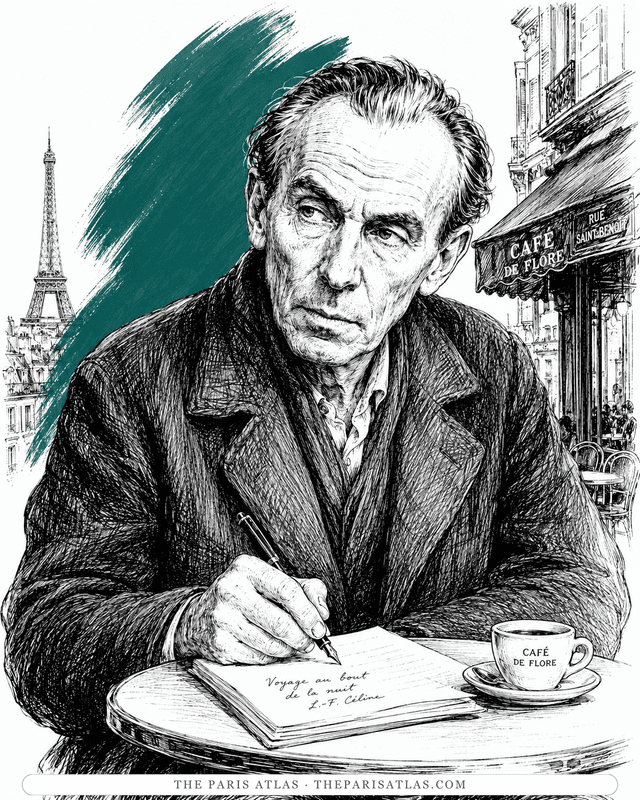
The doctor of the Paris slums who wrote the century's blackest, funniest novel — and changed the sound of French prose.
View author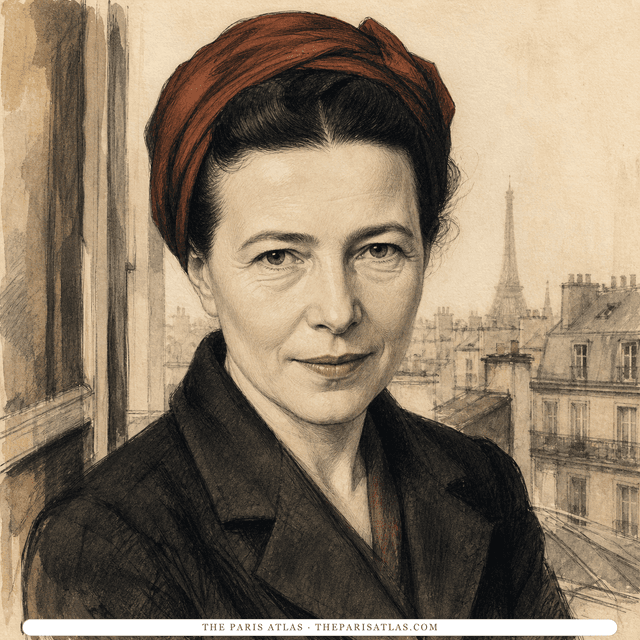
French writer and philosopher whose novels, memoirs, and social analysis examined freedom, gender, responsibility, aging, and the material conditions that shape a life.
View author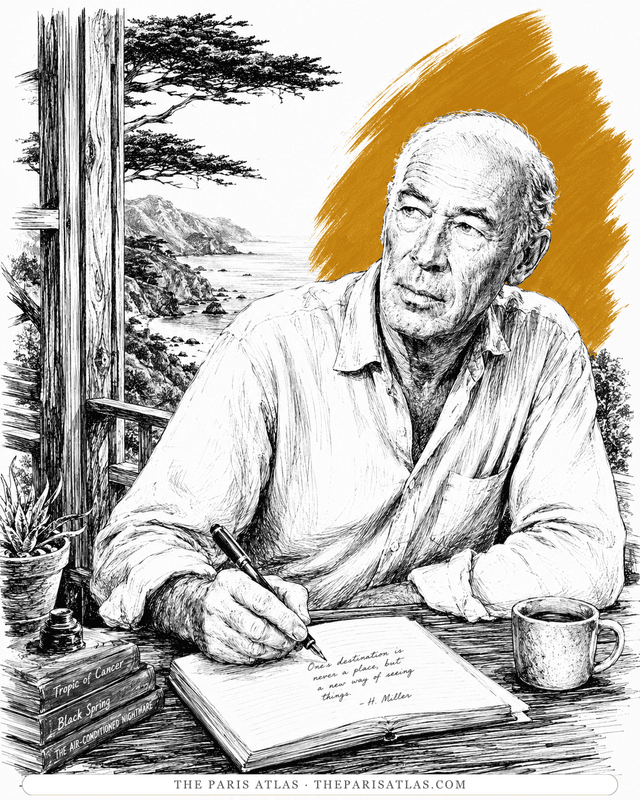
The Brooklyn dropout who arrived in Paris broke at thirty-eight and wrote the exuberant, banned books that ended American censorship.
View authorThe sources below include the primary text, editions, scholarship, archival materials, and other records that informed this page. They document The Fairy Tale of My Life, its publication, and its place in literary history.

Title page, publisher, page count and prices of the 1855 first edition.
The Andersen Centre's record of the 1871 American edition and its new chapters.
The Andersen Centre's record of the 1855 book and its publication date.
Mary Howitt's 1847 translation, used for the opening line and the Dumas and Rachel scenes.
The tale Andersen wrote after the 1867 fair.
Library record confirming ISBN 9780815411055, Cooper Square Press, 2000, 569 pages, introduction by Naomi Lewis.
The primary text represented by this page, used for descriptions of the work’s contents and for any quoted passages shown here.
The primary text is the baseline reference for every book page. Additional references document publication history, interpretation, and historical context where that evidence is available.
 Explore more resources