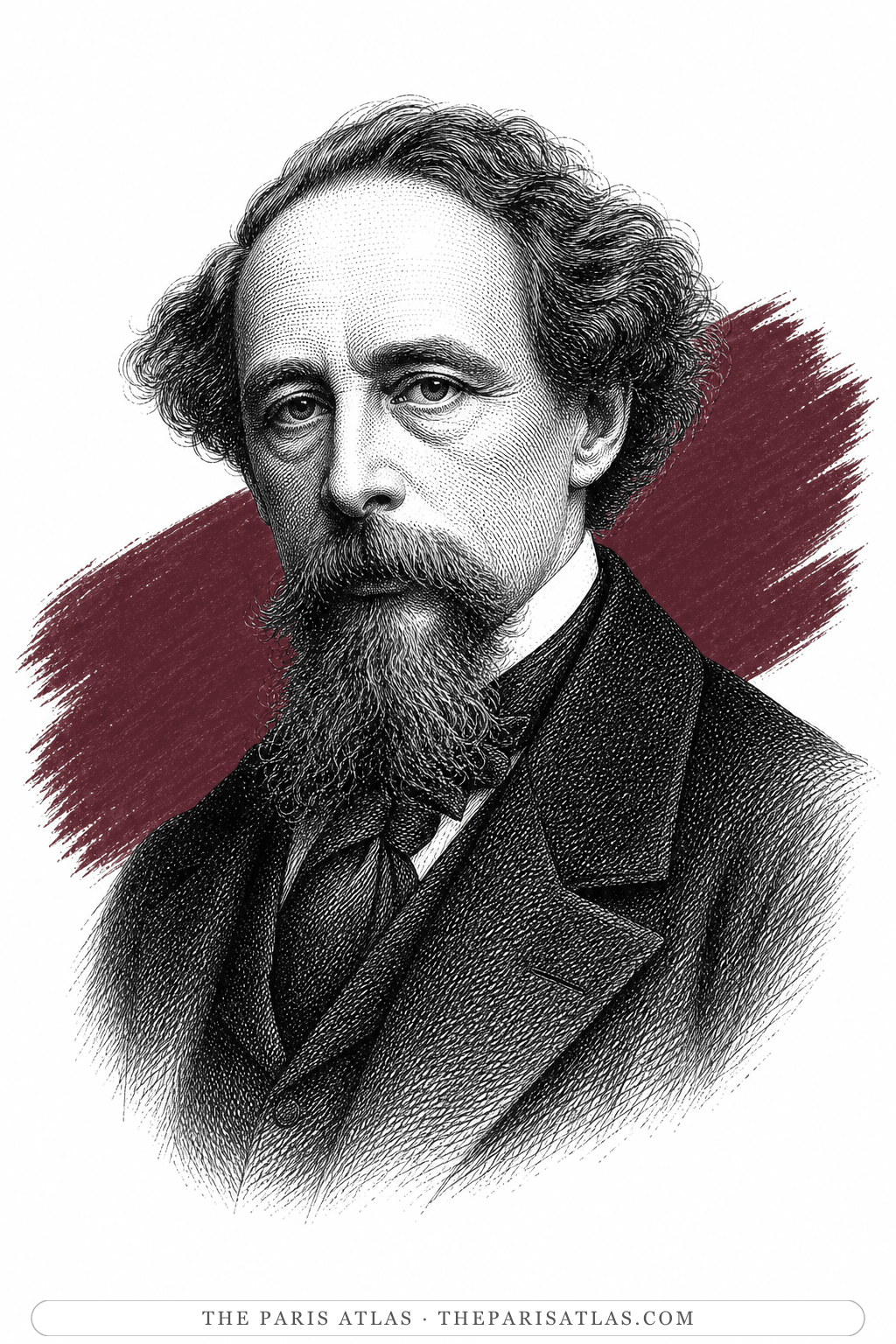

Great Expectations
Written ten years later, and also told by a grown man looking back on his boyhood. Pip remembers with more shame and less comedy.
Read our takeDavid Copperfield
Charles Dickens
David tells his own life from a fatherless birth in Suffolk to success as a writer, with his own boyhood hidden inside it.
Charles Dickens's eighth novel is told by David Copperfield himself, looking back on his life. His father is dead before he is born, and his mother marries the harsh Mr Murdstone. David is sent to a brutal school, then put to work in a London warehouse at ten. He runs away to his great-aunt Betsey Trotwood, and grows up to become a lawyer's clerk, a reporter and a novelist. Along the way he meets Mr Micawber, who is always waiting for something to turn up, and Uriah Heep, who is always very humble. The novel came out in monthly parts from May 1849 to November 1850. Dickens used his own months in a blacking warehouse for David's time at the bottle warehouse.
Dickens called the book his favourite. In the preface to a later edition he wrote that he loved all the children of his fancy, but that like many fond parents he had a favourite child, and his name was David Copperfield.[1] The book is the closest he came to an autobiography. In 1847 he had started writing his own life story for John Forster, his closest friend. He then dropped it and moved the most painful part into the novel.[2]
The name took some finding. Dickens's first idea was Mag's Diversions, the personal history of Mr Thomas Mag the Younger, of Blunderstone House. Over several days he sent Forster new versions, and Mag turned into David Copperfield. Forster pointed out that the initials were Dickens's own, reversed. Dickens was startled. He had not noticed.[2]
The novel came out in nineteen monthly parts published by Bradbury and Evans, with illustrations by Hablot Knight Browne, who signed himself Phiz. The first number appeared at the end of April 1849. The last, a double number, came out in November 1850, when the whole book was published in one volume.[3][2] Dickens signed the preface in London in October 1850.[1]
David is born at Blunderstone in Suffolk six months after his father's death. His great-aunt Betsey Trotwood turns up on the night of the birth, certain the baby will be a girl, and leaves in disgust when she hears it is a boy. David grows up happily with his young mother and their servant Clara Peggotty. Then his mother marries Mr Murdstone, who arrives with his sister and a belief in firmness.[1]
When Murdstone beats him over his lessons, David bites his hand. He is sent to Salem House, a school run by the brutal Mr Creakle. There he makes friends with the charming older boy James Steerforth and the good-natured Tommy Traddles. His mother dies while he is at school. At ten Murdstone sends him to London to wash bottles at the wine warehouse of Murdstone and Grinby. He lodges with the Micawbers, who are always about to be rescued from debt.[1]
When Mr Micawber goes to the King's Bench prison for debt and the family then leaves London, David runs away. He walks to Dover, selling his waistcoat and jacket on the road, to find his aunt. Betsey Trotwood takes him in on the advice of her lodger Mr Dick, and sends him to school in Canterbury. He lodges there with the lawyer Mr Wickfield and his daughter Agnes, and meets Wickfield's clerk, Uriah Heep.[1]
As a young man David is articled as a proctor, a kind of lawyer, at Doctors' Commons in London, and falls helplessly in love with his employer's daughter, Dora Spenlow. Steerforth persuades little Em'ly, Mr Peggotty's niece at Yarmouth, to run away with him shortly before she is to marry Ham. Aunt Betsey arrives at David's rooms to announce she is ruined. David learns shorthand and becomes a reporter of debates in Parliament. Meanwhile Uriah Heep works his way into a partnership with Mr Wickfield.[1]
David marries Dora, who cannot keep house and knows it. Mr Micawber, working as Heep's clerk, gathers evidence and exposes Heep's forgeries and thefts at a meeting in Canterbury. Aunt Betsey's lost money turns out to have been in Heep's hands. Dora falls ill and dies. In a great storm at Yarmouth, Ham tries to swim out to a wrecked ship and drowns. The body washed ashore from the wreck is Steerforth's.
The Micawbers, Mr Peggotty and Em'ly emigrate to Australia. David goes abroad for three years, much of it in Switzerland, and writes. He comes home, tells Agnes Wickfield he loves her, and they marry. Heep ends up in prison for a fraud on the Bank of England, praised by the visiting magistrates as a model prisoner. News comes from Australia that Mr Micawber is now a district magistrate at Port Middlebay. Aunt Betsey finally gets her Betsey Trotwood, as godmother to David and Agnes's daughter.
In the spring of 1847 John Forster mentioned, by chance, that someone had once seen Dickens as a boy working in a warehouse near the Strand. Dickens went silent for several minutes. A few weeks later he told Forster the whole story. When he was about twelve, with his family deep in debt, he had worked at a blacking warehouse, a business that made boot polish, at Hungerford Stairs. His father was in the Marshalsea, the debtors' prison, for part of that time. He wrote it down as plain fact, meaning it to begin an autobiography.
He gave up the autobiography and used the warehouse in David Copperfield instead. The two texts are very close. In the fragment Dickens calls himself a child of singular abilities, quick, eager, delicate, and soon hurt, and says it is wonderful to him that he could have been so easily cast away at such an age. Chapter 11 of the novel opens with David saying he was so easily thrown away at such an age, a child who was quick, eager, delicate, and soon hurt.
The details moved across too. The real warehouse was a crazy, tumbledown old house by the river, overrun with rats. So is Murdstone and Grinby's, down at Blackfriars. At the real warehouse a boy in a ragged apron and a paper cap showed Dickens how to tie the knot, and his name was Bob Fagin. In the novel a boy in a ragged apron and a paper cap shows David his work, and his name is Mick Walker. Dickens had already used Bob Fagin's name for the villain of Oliver Twist.
Dickens noted in January 1849 that it was highly probable the fragment would never see the light, and that he had no wish for it to. He left the decision to Forster. The first number of David Copperfield came out five months later. Forster printed the fragment in his biography after Dickens died.
David falls for Dora Spenlow the moment he meets her, and the novel spends many chapters on his foolish, desperate courtship. Forster used to laugh and tell Dickens he believed in no Dora except the one in the book. Then, nearly six years after the novel was written, the real woman came back into Dickens's life, and Forster changed his mind. He decided there was more truth behind those chapters than he had wanted to think.
Dickens's answer to Forster, in 1855, is the plainest thing he said about the book. He wrote that the feeling had begun when he was his eldest son's age and had filled his mind for four years. No one, he wrote, could imagine what pain the recollection gave him in Copperfield. He could never open that book the way he opened any other. Forster does not name the woman.
Paris comes into the novel through Dora. Mr Spenlow tells David his daughter is coming home from finishing her education in Paris. When David meets her and she asks whether he has been there, he says no. She hopes he will go soon. David cannot bear the idea that she could imagine him going anywhere away from her. So he runs down Paris and runs down France, and says nothing on earth would make him leave England.
France is also where the search for Em'ly goes. Mr Peggotty crosses the Channel and walks through France looking for her. Em'ly herself, after running away from Steerforth's household in Italy, reaches France and works at an inn in a port, waiting on travelling ladies. A man she fears turns up there, and she flees back to England.
Dickens took a short break in Paris while he was writing the book. At the end of June 1850 he went over with his friend the painter Daniel Maclise and stayed at the Hotel Windsor on the rue de Rivoli. He wrote to Forster that the heat was frightful and sleep next to impossible. They were going to the little theatres and to the Théâtre-Français, the Comédie-Française, for the actress Rachel's last performance before she left for London. He was dining at the Trois Frères, and refused an offer of a dinner with all the notable people of Paris.
Paris readers had the novel in French almost at once. The national library in Paris records a third edition, dated 1851, of Le Neveu de ma tante, which means My Aunt's Nephew. The book was subtitled the personal history of David Copperfield and came out in three volumes from the offices of the Revue britannique, with a biographical notice by Amédée Pichot. In 1856, during his long winter in Paris, Dickens sold the publisher Louis Hachette the right to translate all his novels, and Hachette kept David Copperfield in print for decades.
Mr Micawber is the novel's most famous comic figure, and his joke is money. He lives on the hope that something will turn up, which David says was his favourite expression. He can come home in tears saying nothing is left but prison, then go to bed working out the cost of putting bow windows on the house. Before he leaves London for Plymouth he gives David his rule for life. Twenty pounds a year spent at nineteen pounds, nineteen shillings and sixpence means happiness. Spent at twenty pounds and sixpence, it means misery.
Dickens's own father, John Dickens, was locked up in the Marshalsea for debt while twelve-year-old Charles was working at the blacking warehouse. Micawber's rule is sound, and he never manages to keep it. He ends the book in Australia as a district magistrate, the subject of a public dinner reported in the Port Middlebay Times.
Whether I shall turn out to be the hero of my own life, or whether that station will be held by anybody else, these pages must show.
Annual income twenty pounds, annual expenditure nineteen nineteen and six, result happiness. Annual income twenty pounds, annual expenditure twenty pounds ought and six, result misery.
Barkis is willin'.
He said so in the preface: of all his books he liked this one best, and it was his favourite child.
Chapter 11 takes whole phrases from the account of his own months in a blacking warehouse that he wrote for John Forster.
Mr Micawber waiting for something to turn up, Uriah Heep being very umble, Barkis who is willin', and Betsey Trotwood chasing donkeys off her grass.
David ends the book a novelist. Along the way he learns shorthand, reports Parliament and publishes his first story in a magazine.
The narrator, a fatherless boy from Suffolk who is sent to work at ten and grows up to be a novelist. His aunt renames him Trotwood.
Wilkins Micawber, David's landlord in London, grand in speech and always in debt, always sure that something will turn up.
Mr Wickfield's clerk in Canterbury, red-haired, cold-handed and forever saying how umble he is. He wants the firm and he wants Agnes.
David's fierce great-aunt at Dover. She walks out on his birth because he is a boy, and takes him in ten years later.
Clara Peggotty, the family servant who loves David like a mother. She marries Barkis the carrier, who sent word that Barkis is willin'.
Edward Murdstone, David's stepfather, who believes in firmness. He beats David and sends him out to work at ten.
The handsome, careless older boy David worships at school. Years later he runs away with little Em'ly.
The Canterbury lawyer's daughter who keeps her father's house and gives David steady advice for most of the book.
Mr Spenlow's pretty, childlike daughter, just home from school in Paris, with a little dog called Jip. David falls for her at once.
Aunt Betsey's gentle lodger, forever writing a Memorial that King Charles the First keeps getting into. His advice is better than it sounds.
Mr Peggotty's niece at Yarmouth, David's first childhood love, engaged to Ham before Steerforth takes her away.
David's cheerful friend from Salem House, who draws skeletons when he is beaten and grows up to be a patient, honest lawyer.
Spring 1847
John Forster learns by chance of Dickens's boyhood in the blacking warehouse. Dickens writes the story down for him.
20 January 1849
Dickens notes that the autobiographical fragment will probably never be published, and leaves the decision to Forster.
February 1849
Dickens tries titles on Forster. Mag's Diversions gives way to David Copperfield, and Forster points out the reversed initials.
30 April 1849
The first monthly number appears, published by Bradbury and Evans with illustrations by Phiz.
June 1850
Midway through the serial, Dickens spends a few days in Paris with the painter Daniel Maclise at the Hotel Windsor on the rue de Rivoli.
15 November 1850
The last double number comes out and the novel is published in one volume. The preface is dated October 1850.
1851
Le Neveu de ma tante, a French version with a notice by Amédée Pichot, is in its third edition in Paris.
January 1856
Living on the Champs-Élysées, Dickens sells Louis Hachette the right to translate all his novels into French.
1869
Dickens's preface to the Charles Dickens Edition calls the book his favourite child.
2004
Penguin Classics publishes the edition with Jeremy Tambling's introduction and notes, based on the 1850 text.

Written ten years later, and also told by a grown man looking back on his boyhood. Pip remembers with more shame and less comedy.
Read our takeOliver Twist
Charles Dickens
The earlier novel took its villain's name from Bob Fagin, the boy who shows up again here, renamed Mick Walker, in Chapter 11.
Read our take
Another Dickens story in which a grown man revisits scenes from his own childhood.
Read our take
George Orwell read David Copperfield at about nine, and his essay on Dickens returns to it again and again.
Read our takeThe life of David Copperfield, told by himself, from his birth in Suffolk to success as a writer. He survives a cruel stepfather, a warehouse job at ten, a walk to Dover and a foolish first marriage, with help from his aunt Betsey Trotwood.
In part. David's months washing bottles at Murdstone and Grinby's are Dickens's own months at a blacking warehouse when he was about twelve. Chapter 11 repeats whole phrases from the private account he wrote for John Forster.
Yes. In the preface to the Charles Dickens Edition he wrote that of all his books he liked this one best, and that like many fond parents he had a favourite child, David Copperfield.
In nineteen monthly parts from May 1849 to November 1850, the last a double number, then in one volume on 15 November 1850. Bradbury and Evans published it, with illustrations by Hablot Knight Browne, known as Phiz.
Mr Micawber's rule in Chapter 12: an income of twenty pounds spent at nineteen pounds, nineteen shillings and sixpence means happiness. Spent at twenty pounds and sixpence, it means misery. He never manages to follow it.
Dora Spenlow comes home from finishing her education in Paris. Dickens made a short trip to Paris while writing the book in June 1850, and a French version was selling in Paris by 1851.
ISBN 9780140439441 is the Penguin Classics paperback, on sale 28 December 2004, 1,024 pages, with an introduction and notes by Jeremy Tambling. The edition uses the text of the 1850 volume.
Explore authors with a similar voice, perspective, and influence.
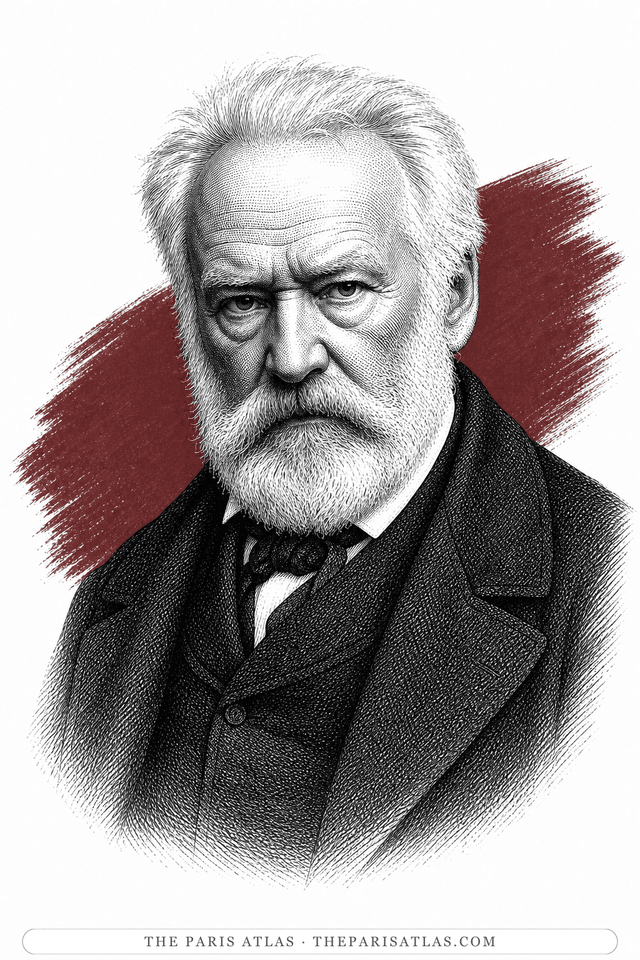
Poet, novelist and playwright who spent sixteen years in an apartment on the Place des Vosges that is now his museum, wrote a novel about Notre-Dame that shamed France into repairing the cathedral, spent nineteen years in exile for opposing the emperor Napoleon III, and was buried in the Panthéon — the Paris monument where France buries its most honoured dead — in 1885 after a funeral that brought roughly two million people into the streets of Paris.
View author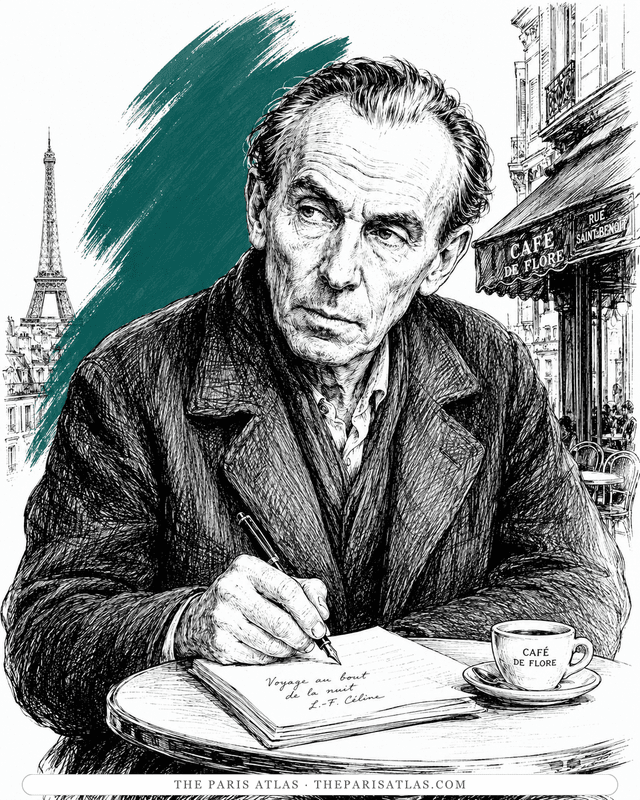
The doctor of the Paris slums who wrote the century's blackest, funniest novel — and changed the sound of French prose.
View author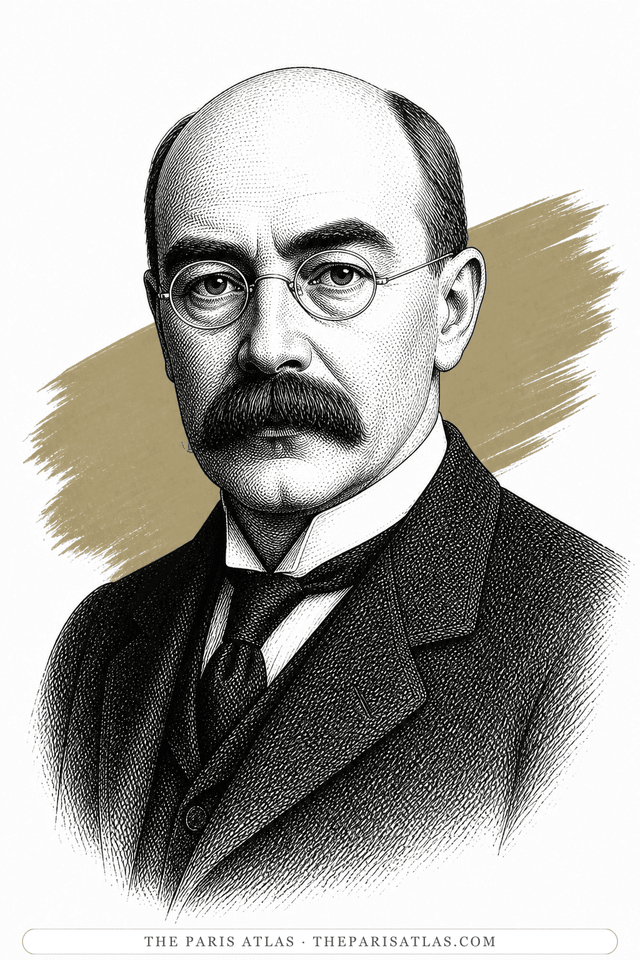
The English writer of the Jungle Books, Kim and Just So Stories, and in 1907 the first author writing in English to win the Nobel Prize in Literature. His love of France began at twelve, when his father turned him loose alone in the Paris Exhibition of 1878 with two francs a day; it ended with the war-graves work that kept him crossing the Channel after his only son was killed at Loos, and with a small French book, Souvenirs of France, published in Paris in 1933.
View authorThe sources below include the primary text, editions, scholarship, archival materials, and other records that informed this page. They document David Copperfield, its publication, and its place in literary history.

Dates of the first monthly number and the one-volume edition.

Catalogue record for the 1851 Paris edition of Le Neveu de ma tante.
Catalogue record for Hachette's French translation.
Selected ISBN, on-sale date, page count, editor and text basis.
Library record confirming ISBN 9780140439441 as the 2004 Penguin edition, 1,024 pages.
The primary text represented by this page, used for descriptions of the work’s contents and for any quoted passages shown here.
The primary text is the baseline reference for every book page. Additional references document publication history, interpretation, and historical context where that evidence is available.
 Explore more resources