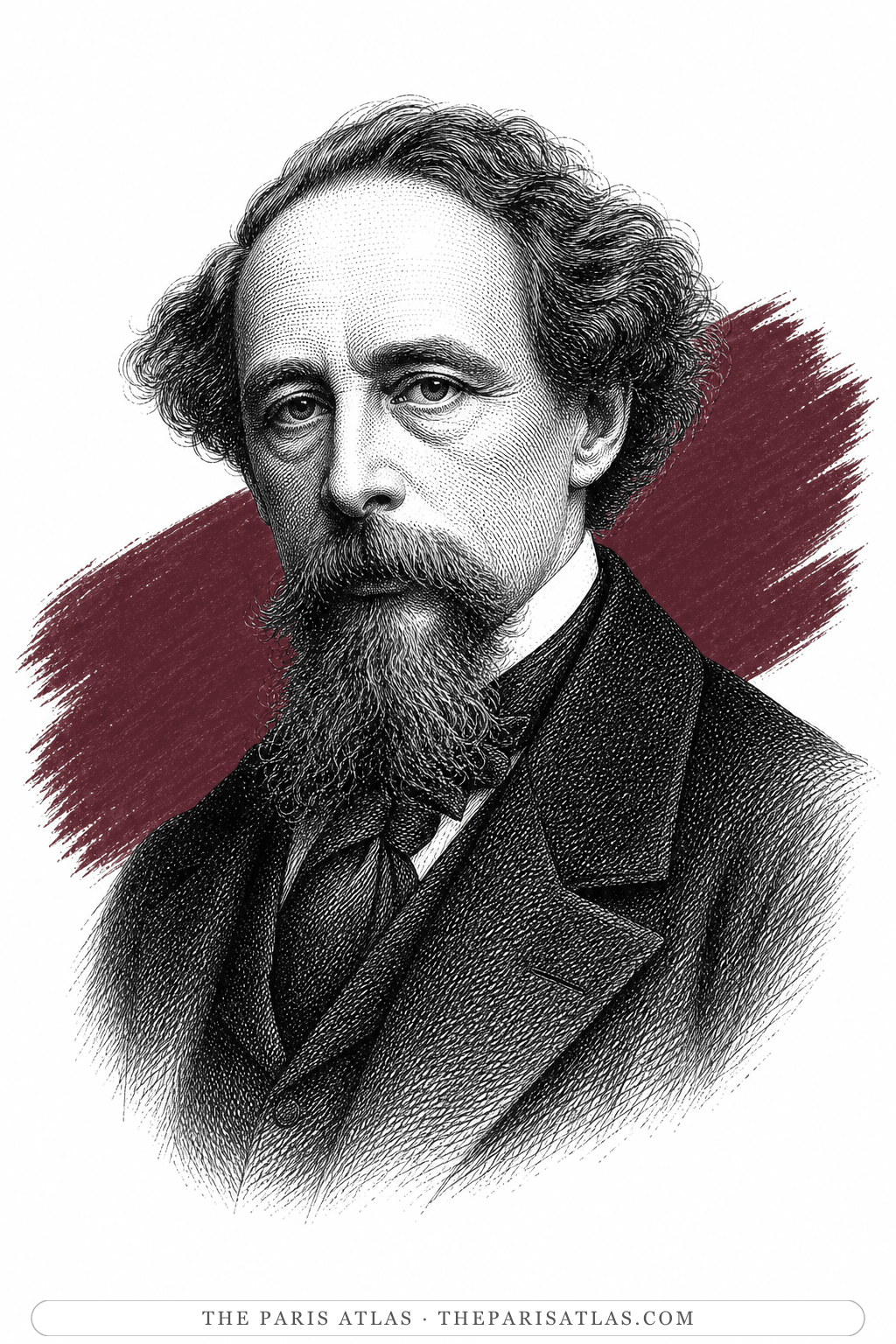

Great Expectations
Dickens returns to an orphan, a convict and an unknown benefactor more than twenty years later, with the boy telling his own story.
Read our takeOliver Twist
Charles Dickens
A workhouse orphan asks for more gruel, walks to London, and falls in with Fagin's gang of child thieves.
Charles Dickens's second novel follows Oliver Twist, a boy born in a workhouse, from a starving childhood into the London underworld. He runs away to the city and is taken in by Fagin, an old receiver of stolen goods who trains boys to pick pockets. Nancy, a young woman in the gang, and Bill Sikes, a housebreaker, decide much of what happens to him. The story came out in monthly parts in Bentley's Miscellany from early 1837. Richard Bentley published it as a three-volume book on 9 November 1838.
Dickens was twenty-four and in the middle of The Pickwick Papers when he started Oliver Twist. He was also the editor of Bentley's Miscellany, a new monthly magazine, and the first instalment of the novel appeared there at the end of January 1837.[1] For most of the next two years he was writing two serials at once, first beside Pickwick and then beside Nicholas Nickleby. When his seventeen-year-old sister-in-law Mary Hogarth died suddenly in May 1837, he stopped both Pickwick and Oliver Twist for a month.[1]
The opening chapters are an attack on the workhouse, the institution where the parish housed and fed people too poor to keep themselves. Dickens writes them as grim comedy. A board of well-fed gentlemen decides the paupers are enjoying themselves too much and cuts their food. Mr Bumble, the parish beadle, a minor official in charge of order, names the foundlings in alphabetical order. Oliver gets a T.[2]
The London half of the book is built on real streets. The Artful Dodger brings Oliver in at night past the Angel at Islington and down into Saffron Hill and Field Lane, a district of narrow, filthy streets where Fagin keeps his den.[2] The book ends at Jacob's Island, a slum by the Thames near the church at Rotherhithe, surrounded by a muddy creek called Folly Ditch. George Cruikshank drew the illustrations for the first edition.[3]
Oliver is born in a workhouse. His mother, found lying in the street the night before, dies soon after the birth, and nobody knows where she came from. He spends his first nine years at a branch workhouse for infants, where the woman in charge keeps most of their allowance for herself. Back in the main house, the starving boys draw lots to decide who will ask for a second helping of gruel. Oliver loses, and asks. The board offers five pounds to anyone who will take him away.[2]
He is apprenticed to Mr Sowerberry, an undertaker. When Noah Claypole, the older charity boy in the shop, insults his dead mother, Oliver knocks him down. Beaten for it, he runs away and walks seventy miles to London. At Barnet he meets Jack Dawkins, known as the Artful Dodger, who takes him to Fagin. Fagin feeds him, lodges him, and teaches him a game with pocket handkerchiefs that Oliver does not understand.[2]
On his first outing Oliver watches the Dodger and Charley Bates steal a handkerchief from an old gentleman at a bookstall, and finally sees what the game is. He runs, is caught as the thief, and is taken before a magistrate. The gentleman, Mr Brownlow, takes him home instead and nurses him through a fever. Fagin is afraid the boy will talk, so Nancy and Bill Sikes snatch him off the street while he is running an errand.[2]
Sikes takes Oliver on a burglary at a house in Chertsey, west of London, to climb in through a small window. Oliver decides to wake the family instead, and is shot by the servants. The women of the house, Mrs Maylie and her niece Rose, take him in. Meanwhile a man called Monks is paying Fagin to turn Oliver into a thief. Nancy overhears them, and secretly tells Rose Maylie what she has heard.[2]
Nancy meets Rose Maylie and Mr Brownlow on the steps of London Bridge late on a Sunday night. She will not betray Sikes or leave him. Fagin has had her followed by Noah Claypole, and before dawn he lets Noah tell Sikes what she said. Sikes beats her to death in their room. He flees into the country, comes back to London, and is cornered by a crowd at Jacob's Island. Trying to escape over the roof on a rope, he slips, and the noose closes round his own neck.
Monks turns out to be Oliver's half-brother. He had been trying to destroy the boy so as to keep their father's money. Oliver's mother was Agnes Fleming, and Rose Maylie is her younger sister, so Rose is Oliver's aunt. Fagin is tried and sentenced to hang. Oliver visits him in the condemned cell at Newgate the night before the execution. Mr Brownlow adopts Oliver. Mr Bumble and his wife end up as paupers in the workhouse they once ran.
When Dickens was about twelve, with his family sinking into debt, he was sent to work at a blacking warehouse, a business that made boot polish, at Hungerford Stairs by the Thames. His job was to cover the pots of polish with paper, tie them with string and paste on the labels. His father was soon locked up in the Marshalsea, a prison for debtors. He told almost nobody. His friend John Forster found out by accident in 1847, and Dickens then wrote the story down for him. Forster printed it after Dickens died.
On the first Monday another boy came up from downstairs, in a ragged apron and a paper cap, to show him how to tie the knot. Dickens names him. His name was Bob Fagin, and Dickens wrote that he took the liberty of using the name, long afterwards, in Oliver Twist. The real Bob Fagin was kind to him. When Dickens was taken ill at work, Bob filled empty blacking bottles with hot water and held them to his side for half the day. Then he insisted on walking him home. Dickens was too proud to say his family was in prison, so he knocked at a stranger's door near Southwark Bridge and pretended he lived there.
Dickens introduces Fagin in Chapter VIII as a very old, shrivelled Jew with matted red hair, standing over a frying pan with a toasting fork. After that the narrator mostly calls him "the Jew" rather than Fagin. In the Project Gutenberg text, the words appear more than 260 times in the first thirty-eight chapters. In the last fifteen chapters they appear about thirty times, and the name Fagin takes over. Dickens used the same label in his own letters while he was writing the book.
In June 1863 Dickens received a letter from Eliza Davis, a Jewish woman whose husband had bought his former London home, Tavistock House. She was asking for money for a convalescent home for the Jewish poor. She also wrote that Dickens "has encouraged a vile prejudice against the despised Hebrew". Dickens wrote back quickly and defended the book. He said Fagin was a Jew "because it unfortunately was true of the time to which that story refers, that that class of criminal invariably was a Jew".
Eliza Davis was not satisfied and wrote again. The scholar Lauriat Lane Jr. later studied the changes Dickens made to the text of Oliver Twist in 1867. Critics have often read those changes as an apology, together with Riah, the kind old Jewish man in Our Mutual Friend, the novel Dickens began soon after the letters. The scholar James D. Mardock sets out that history, and also shows how Fagin is built from the stage figure of the wicked Jew, down to the red hair.
In the last years of his life Dickens toured Britain and America giving paid readings from his books. In October 1868 he told Forster he had made a short reading of the murder in Oliver Twist. The reading had three parts: Fagin setting Noah Claypole to watch Nancy, the meeting on London Bridge, and Fagin waking Noah to tell his story to Sikes. Then came the murder, and the murderer's feeling of being haunted.
Forster disliked the idea. Dickens added Sikes and Nancy to his readings on 5 January 1869. At Clifton, near Bristol, he wrote to his daughter that between a dozen and twenty women had been carried out stiff and rigid. His friend the actor William Charles Macready told him the murder was two Macbeths.
Forster printed the pulse readings taken by Dickens's doctor, Frank Beard, at the farewell readings in London in 1870. On the opening night his pulse was 72. On the first night of the Sikes and Nancy scenes, Friday 21 January, it went from 80 to 112. On 15 February it rose from 90 to 124 after the Oliver Twist scenes. The farewell readings ended in March, and Dickens died on 9 June 1870.
Paris had the book early, in English and then in French. In 1839 the Paris bookseller Baudry printed Oliver Twist in English as volume 229 of his Collection of Ancient and Modern British Authors, cheap reprints for English readers on the Continent. In 1841 G. Barba of Paris published a four-volume French translation by Ludovic Bénard. He called it Olivier Twist, ou L'Orphelin du dépôt de mendicité, which means Oliver Twist, or the Orphan of the Poorhouse.
Dickens earned nothing from those editions. French money finally came during his winter on the avenue des Champs-Élysées. In January 1856 he agreed to sell the Paris publisher Louis Hachette the right to translate all his novels for 440 pounds, paid at 40 pounds a month. He said the money would pay his Paris rent for the year. In April he wrote that he was going to dine with all his translators at Hachette's. Hachette's Olivier Twist was translated by Alfred Gérardin. The national library in Paris holds an 1869 printing.
Please, sir, I want some more.
The master was a fat, healthy man; but he turned very pale.
the law is a ass—a idiot. If that's the eye of the law, the law is a bachelor
The novel is less than half the length of David Copperfield. The streets are real: the Angel at Islington, Saffron Hill, Field Lane, London Bridge, Jacob's Island.
The workhouse board, Mr Bumble and the undertaker's shop are very funny. They are also a direct attack on how the parish treated orphans.
Dickens borrowed Fagin's name from Bob Fagin, the boy who showed him how to tie up pots of boot polish when he was sent to work at about twelve.
Nancy's murder became his most demanding public reading. Forster printed the doctor's pulse figures from the 1870 farewell nights.
A workhouse orphan with no name but the one the beadle gives him. Gentle, hungry and much tougher than he looks.
An old receiver of stolen goods who runs a gang of boy pickpockets near Field Lane. Dickens took his name from a real boy.
A young woman who has stolen for Fagin since she was a child and lives with Bill Sikes. She tries to save Oliver and pays for it.
A violent housebreaker, always followed by his dog Bull's-eye. He takes Oliver on the Chertsey burglary and later kills Nancy.
Jack Dawkins, Fagin's sharpest pickpocket, in a man's coat far too big for him. He meets Oliver at Barnet and brings him to London.
The pompous parish beadle who names Oliver. He marries the workhouse matron for her furniture and ends up a pauper himself.
The old gentleman whose handkerchief is stolen at the bookstall. He takes Oliver in instead of prosecuting him.
The young woman at the Chertsey house who nurses the wounded Oliver and later meets Nancy in secret.
A secretive man with fits who pays Fagin to ruin Oliver. His reason is the last secret in the plot.
31 January 1837
The first instalment appears in Bentley's Miscellany, the monthly magazine Dickens edits.
May 1837
Mary Hogarth, Dickens's sister-in-law, dies at seventeen. He stops Oliver Twist and The Pickwick Papers for a month.
9 November 1838
Richard Bentley publishes the novel in three volumes, with George Cruikshank's illustrations.
1839
The serial ends in Bentley's Miscellany. In Paris, Baudry prints the novel in English for readers on the Continent.
1841
G. Barba of Paris publishes Ludovic Bénard's French translation in four volumes.
January 1856
Living on the Champs-Élysées, Dickens sells Louis Hachette the right to translate all his novels into French.
June 1863
Eliza Davis writes to Dickens that the portrait of Fagin has encouraged prejudice against Jews.
5 January 1869
Dickens adds the murder of Nancy, as Sikes and Nancy, to his public readings.
2003
Penguin Classics publishes the edition edited by Philip Horne, which follows the text of the magazine serial.

Dickens returns to an orphan, a convict and an unknown benefactor more than twenty years later, with the boy telling his own story.
Read our take
Dickens's other famous attack on how the comfortable treated the poor, written five years later.
Read our takeDavid Copperfield
Charles Dickens
Dickens puts his own months at the blacking warehouse into this later novel, the same months that gave Fagin his name.
Read our take
Victor Hugo's novel of Paris also follows orphans, thieves, the police and a man who cannot escape his past.
Read our take
George Orwell's long essay on Dickens asks whether the novels attack society or only its bad people, and uses the workhouse and the criminals to test it.
Read our takeAn orphan born in a workhouse runs away to London and is taken in by Fagin, who trains boys to pick pockets. Kind strangers try to rescue him, the gang tries to keep him, and a mystery about his parents runs underneath.
The monthly serial began in Bentley's Miscellany at the end of January 1837 and ended in 1839. Richard Bentley published the three-volume book on 9 November 1838, before the magazine had finished.
Chapter II. The starving boys in the workhouse draw lots to decide who will ask the master for more gruel, and Oliver loses. The next sentence says the master was a fat, healthy man, but he turned very pale.
His name was. Dickens took it from Bob Fagin, a boy who worked beside him at a boot-polish warehouse when he was twelve and was kind to him. Nothing suggests the real Bob Fagin was a thief.
The portrait of Fagin is. He is built from old stage images of the wicked Jew and is called "the Jew" hundreds of times. Dickens defended him when Eliza Davis complained in 1863, then changed the text for the 1867 edition.
Through its publishers. Baudry printed it in English in Paris in 1839 and a French translation followed in 1841. In 1856, while living on the Champs-Élysées, Dickens sold Louis Hachette the French rights to all his novels.
ISBN 9780141439747 is the Penguin Classics paperback, on sale 29 April 2003, 608 pages, with an introduction by Philip Horne. The edition reproduces the text as it first appeared in Bentley's Miscellany.
Explore authors with a similar voice, perspective, and influence.
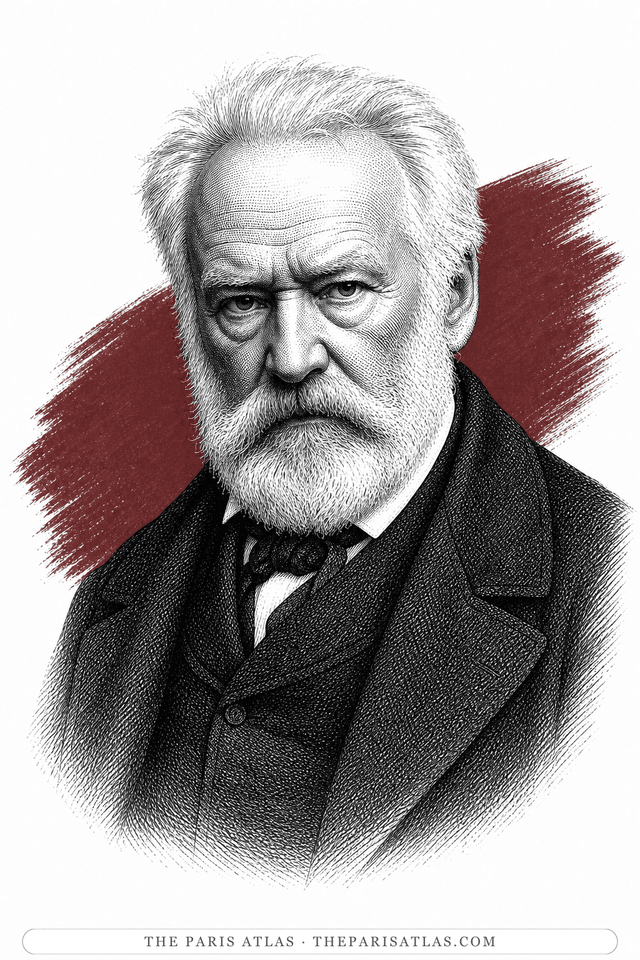
Poet, novelist and playwright who spent sixteen years in an apartment on the Place des Vosges that is now his museum, wrote a novel about Notre-Dame that shamed France into repairing the cathedral, spent nineteen years in exile for opposing the emperor Napoleon III, and was buried in the Panthéon — the Paris monument where France buries its most honoured dead — in 1885 after a funeral that brought roughly two million people into the streets of Paris.
View author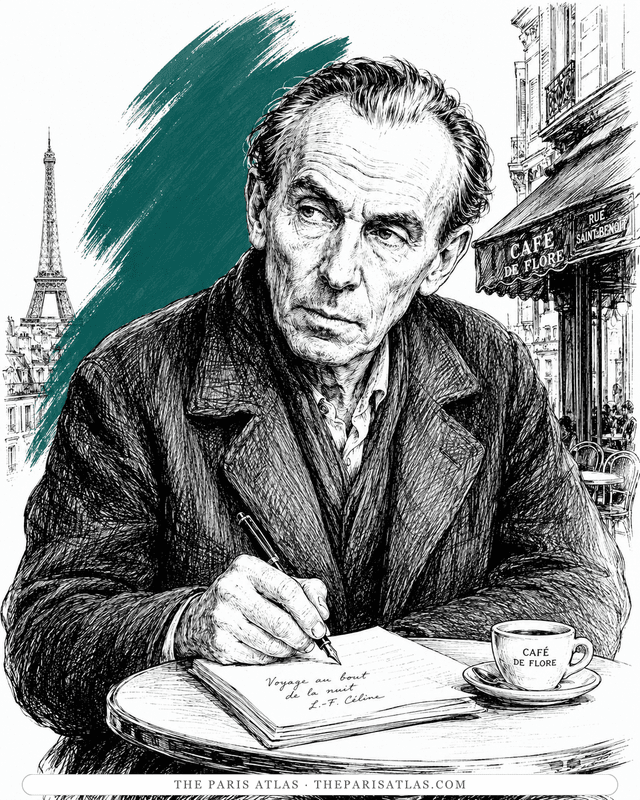
The doctor of the Paris slums who wrote the century's blackest, funniest novel — and changed the sound of French prose.
View author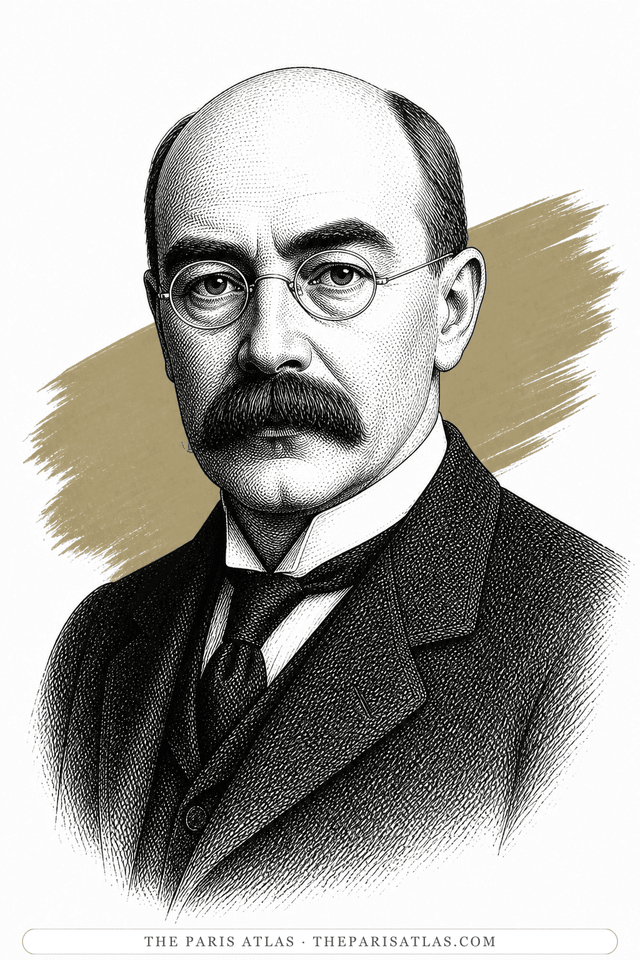
The English writer of the Jungle Books, Kim and Just So Stories, and in 1907 the first author writing in English to win the Nobel Prize in Literature. His love of France began at twelve, when his father turned him loose alone in the Paris Exhibition of 1878 with two francs a day; it ended with the war-graves work that kept him crossing the Channel after his only son was killed at Loos, and with a small French book, Souvenirs of France, published in Paris in 1933.
View authorThe sources below include the primary text, editions, scholarship, archival materials, and other records that informed this page. They document Oliver Twist, its publication, and its place in literary history.

Bob Fagin, the writing and illustration of the book, the Hachette agreement, and the Sikes and Nancy readings.

Eliza Davis's 1863 letter, Dickens's reply, and the scholarship on his 1867 revisions.
Catalogue record for the 1839 Paris edition in English.
Catalogue record for Ludovic Bénard's 1841 French translation.
Catalogue record for Alfred Gérardin's translation in Hachette's authorised edition.
Selected ISBN, on-sale date, page count, introduction and text basis.
Library record confirming ISBN 9780141439747 as the Penguin Classics edition with Philip Horne.
The primary text represented by this page, used for descriptions of the work’s contents and for any quoted passages shown here.
The primary text is the baseline reference for every book page. Additional references document publication history, interpretation, and historical context where that evidence is available.
 Explore more resources