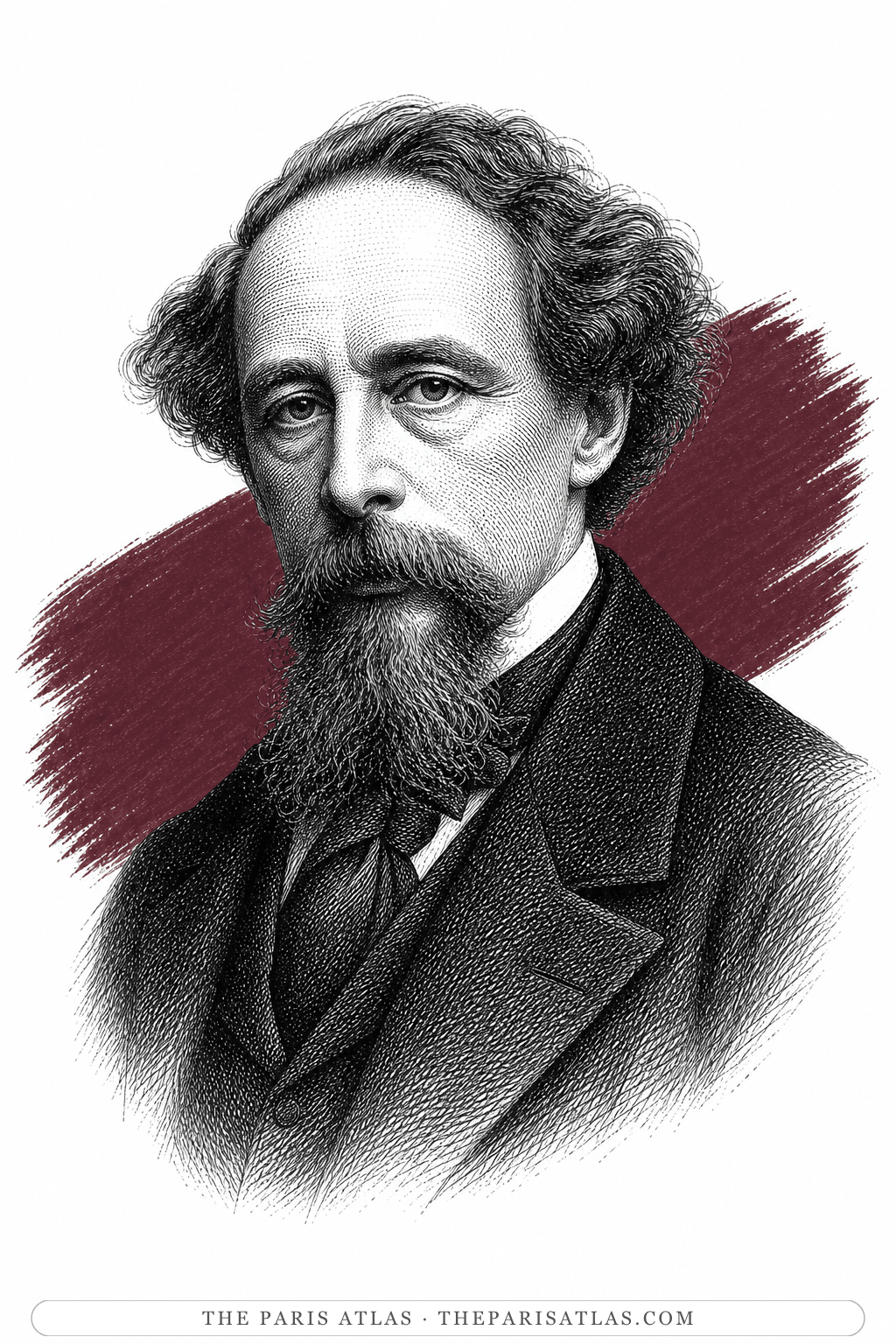
Frequented
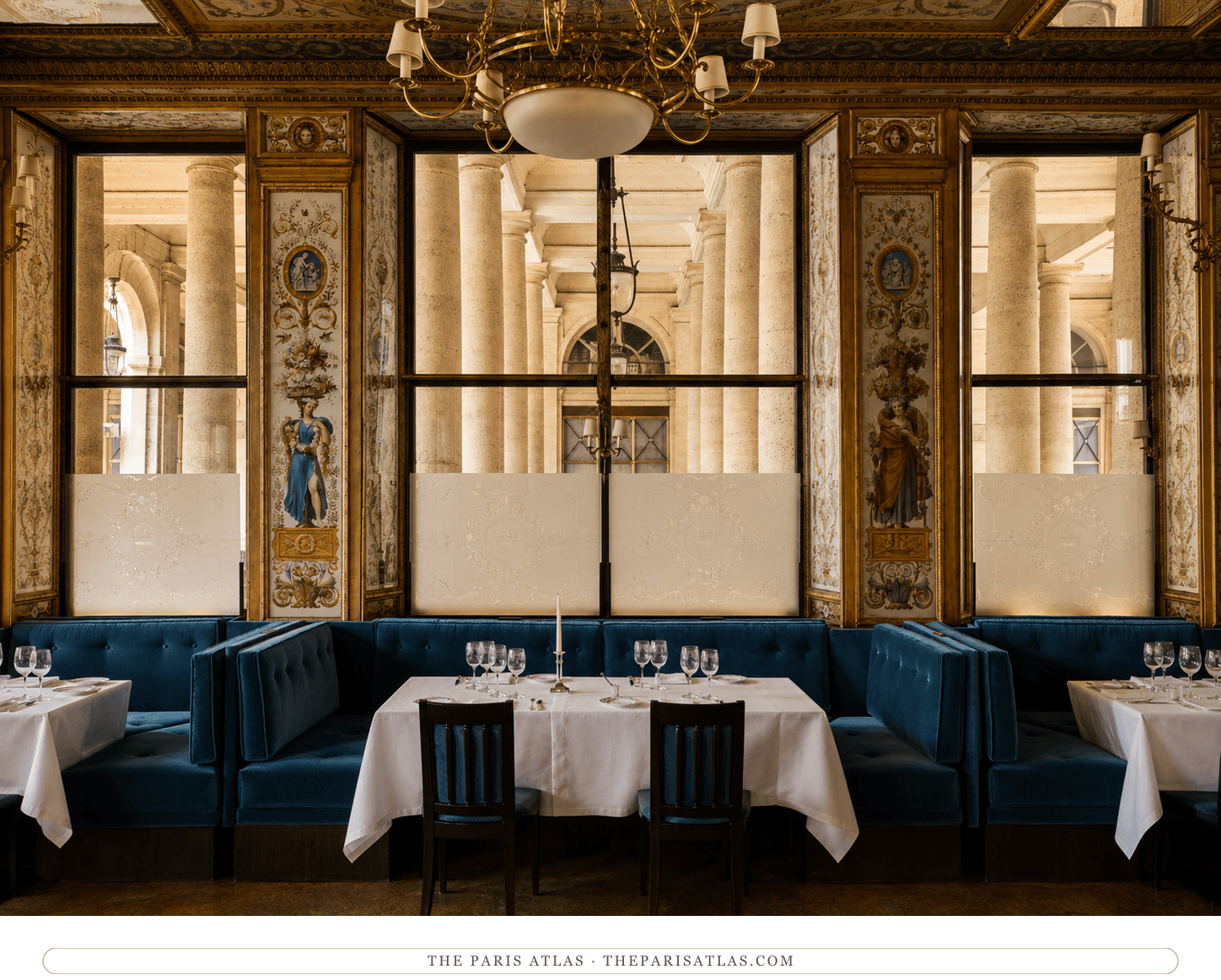
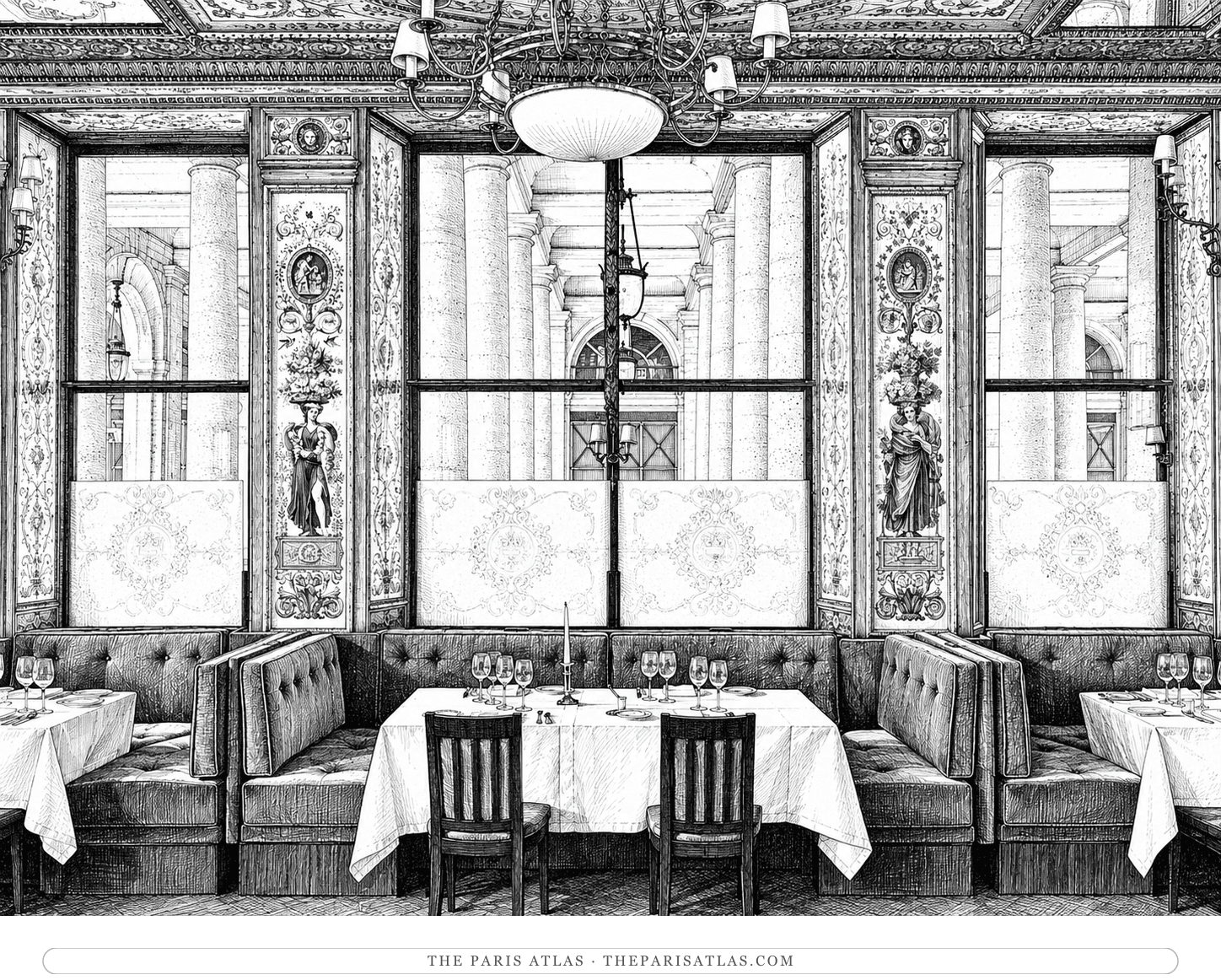
Le Grand Véfour
The restaurant lists Hugo among its historic regulars and records what he ordered: vermicelli and lamb, unvaryingly. His is one of the five tables the house says still stand in their original places.
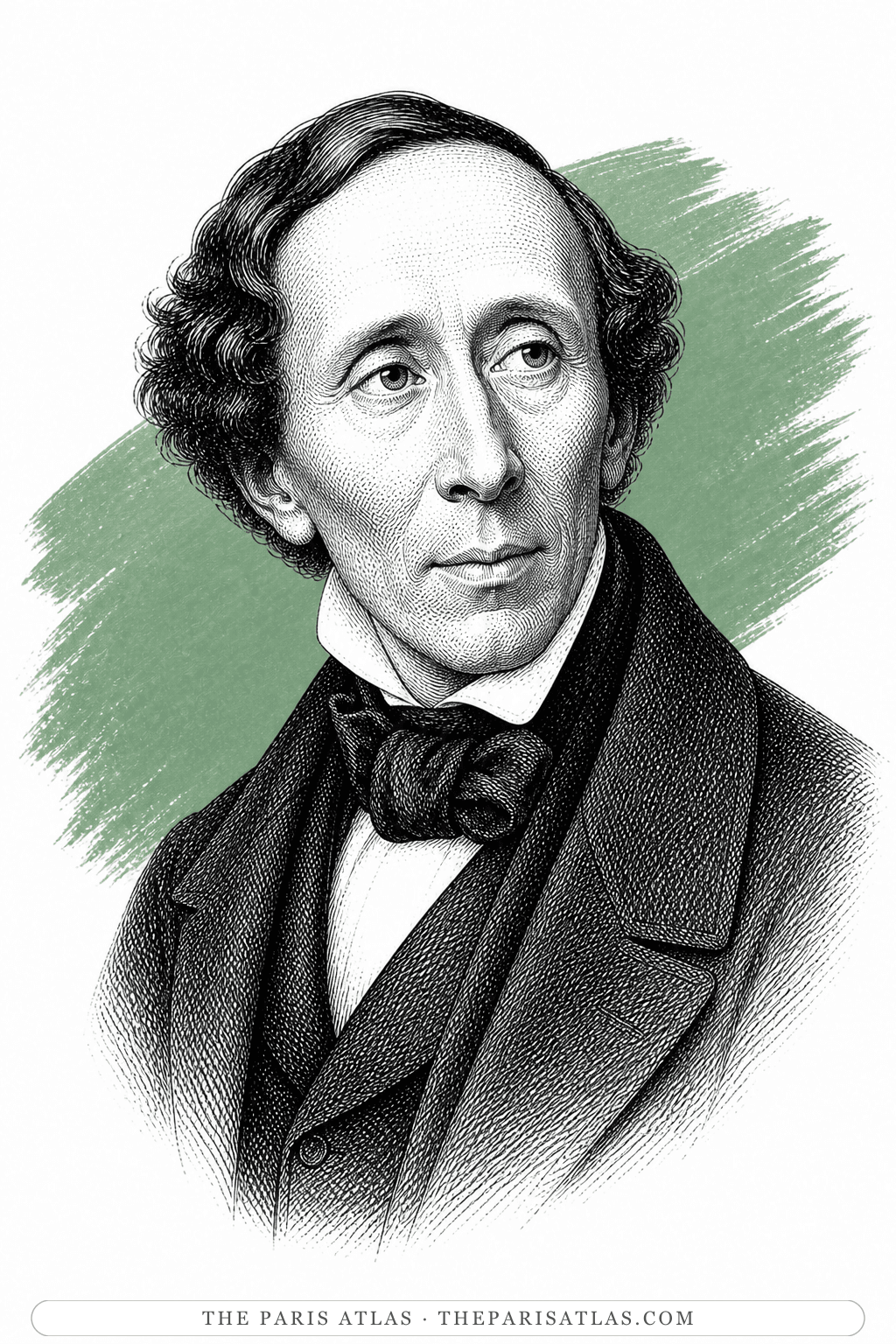
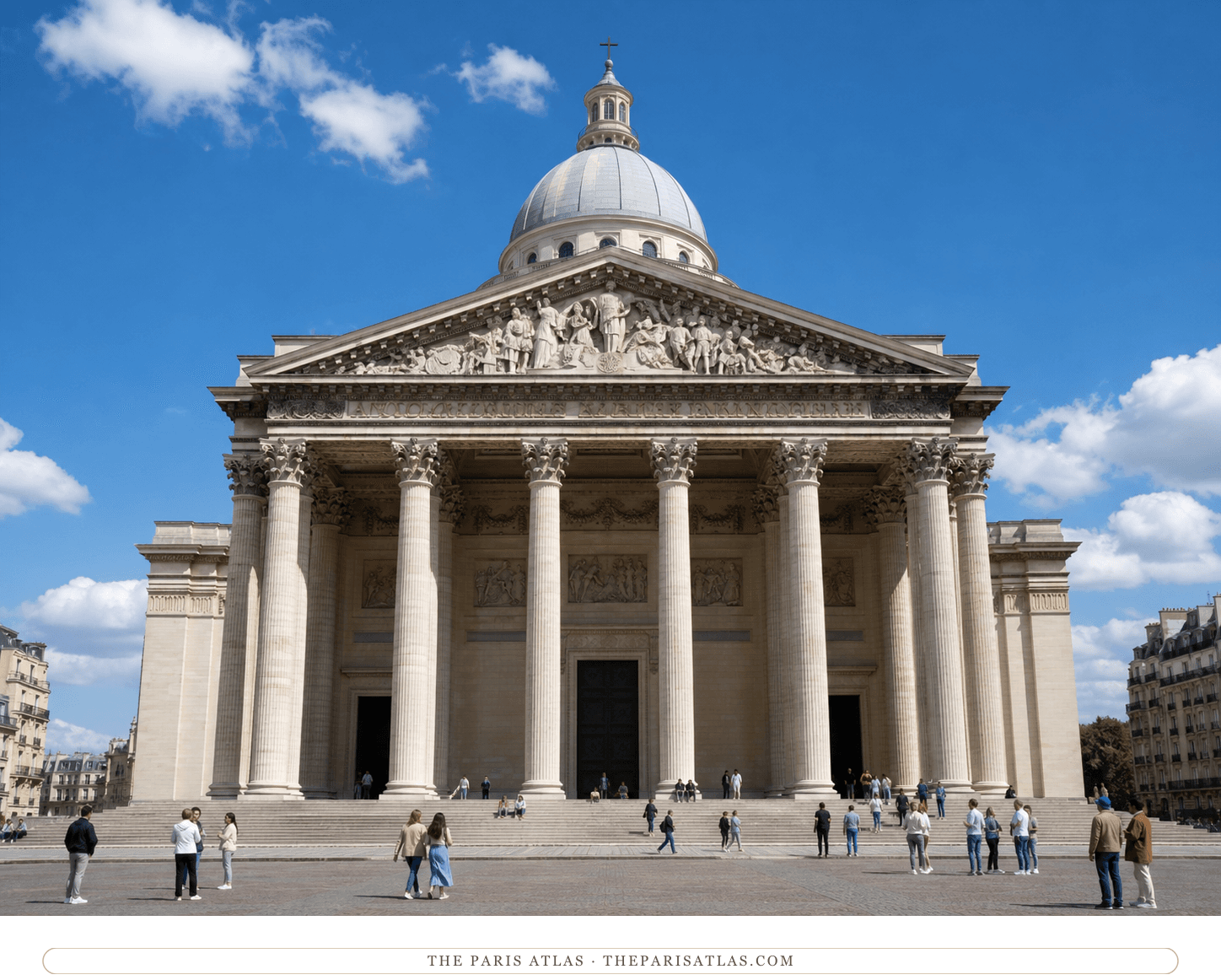
Poet, novelist and playwright who spent sixteen years in an apartment on the Place des Vosges that is now his museum, wrote a novel about Notre-Dame that shamed France into repairing the cathedral, spent nineteen years in exile for opposing the emperor Napoleon III, and was buried in the Panthéon — the Paris monument where France buries its most honoured dead — in 1885 after a funeral that brought roughly two million people into the streets of Paris.
Victor Hugo was the dominant French writer of the nineteenth century, and most of his life was lived at Paris addresses. He was born in Besançon in eastern France in 1802, published his first book of poems at twenty, and at twenty-seven wrote the preface to his play Cromwell that told French playwrights to abandon the strict rules inherited from the seventeenth century. From 1832 to 1848 he lived on the second floor of 6 Place des Vosges, in the Marais district on the Right Bank, where he wrote plays, poetry, and the first pages of the novel that became Les Misérables. The apartment is now the Maison de Victor Hugo, a free museum run by the City of Paris.
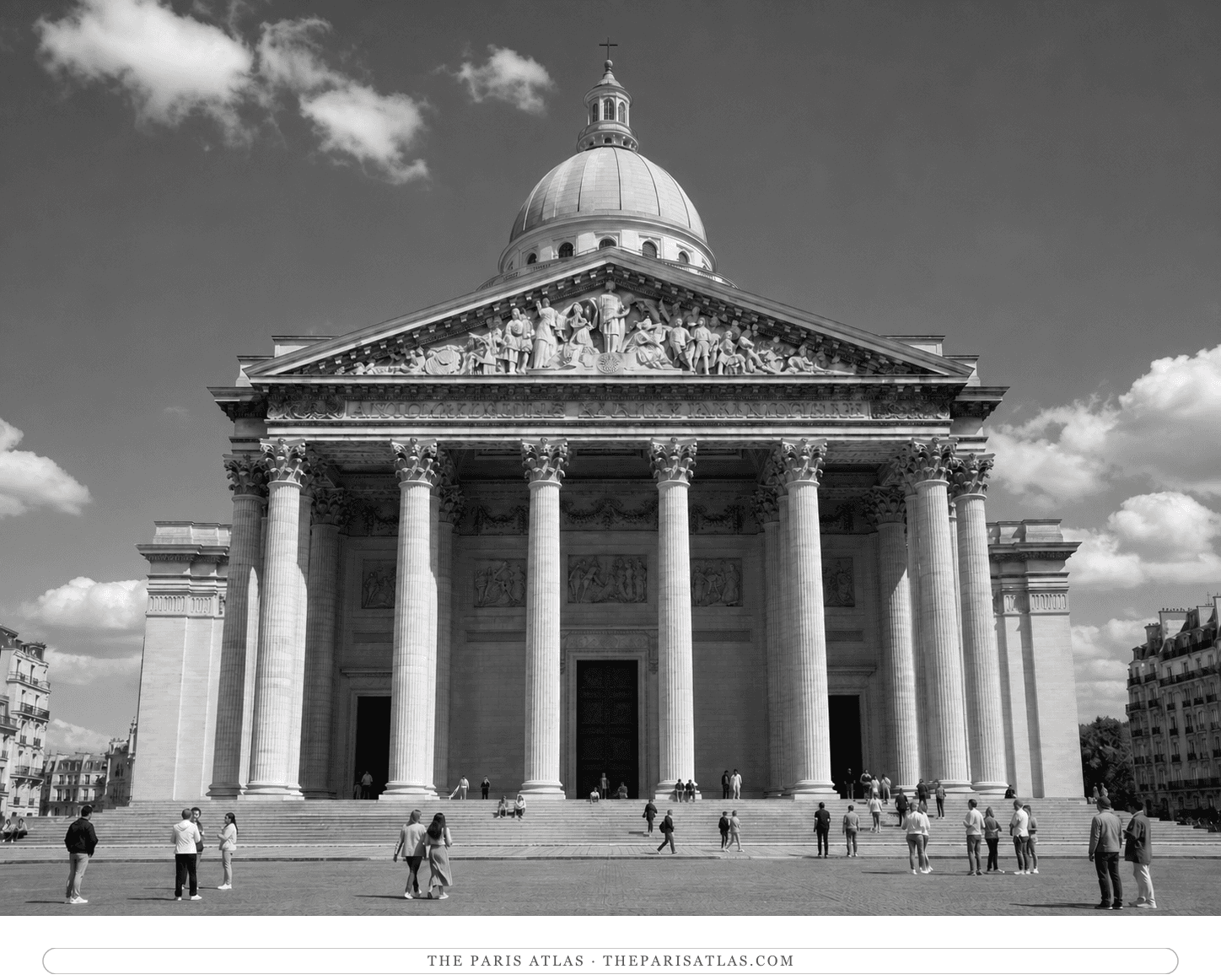
Two things made him more than a famous author. The first was Notre-Dame de Paris, his 1831 novel about the medieval cathedral, which was then neglected and decaying: the book's success turned public opinion, and a restoration campaign followed. The second was politics. When the president of the republic, Louis-Napoléon Bonaparte, seized full power in December 1851 and made himself the emperor Napoleon III, Hugo opposed him, fled the country, and stayed away for nineteen years, writing from the Channel Islands, off the coast of Normandy. He came home in 1870, and when he died in 1885 the French state gave him a funeral that ended at the Panthéon — the domed building in the Latin Quarter where France buries the people it honours.
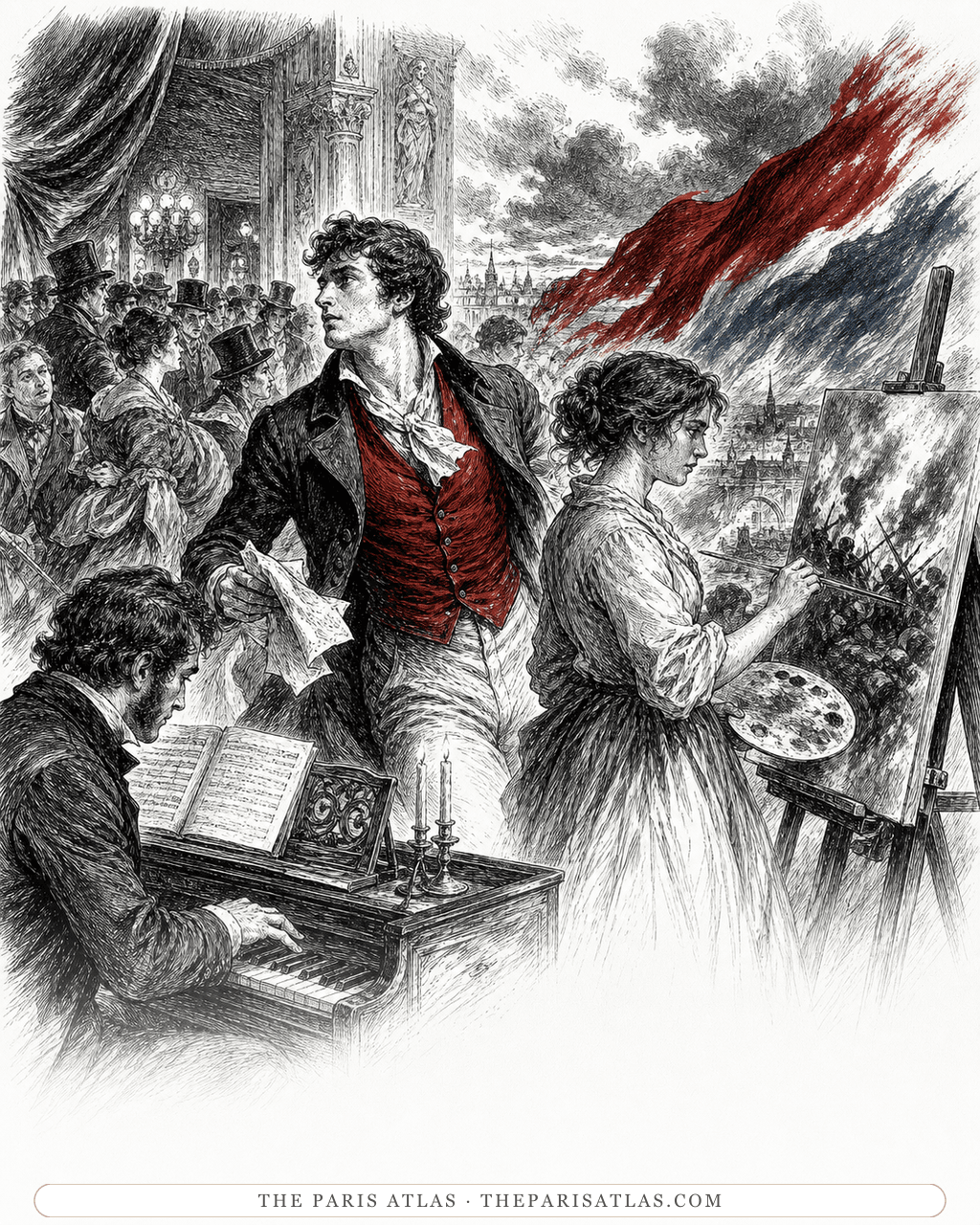
Hugo was the son of Léopold Hugo, a general in Napoleon's armies, and Sophie Trébuchet. He published Odes et poésies diverses, a first collection of poems, in 1822, and in 1827 wrote a preface to his play Cromwell that became the manifesto of French Romanticism — the movement that wanted drama built on real feeling and real history rather than on the rules of classical tragedy. The argument was settled in a theatre. His play Hernani opened at the Comédie-Française, the state theatre, on 25 February 1830, and his friends packed the house to shout down the traditionalists; the poet Théophile Gautier led them in a red waistcoat, with the novelist Honoré de Balzac, the poet Gérard de Nerval and the composer Hector Berlioz among the crowd. From the fourth act the Romantics had the room, and the evening became known as the bataille d'Hernani, the battle of Hernani.
In 1832 Hugo moved into the second floor of the Hôtel de Rohan-Guéménée — hôtel here meaning a grand townhouse, not an inn — at 6 Place des Vosges, then called the Place Royale, and stayed sixteen years. He was elected to the Académie française, the body that guards the French language, in 1841, and made a peer of France — a member of the upper house of parliament — in 1845. In 1833 he met the actress Juliette Drouet, who became his companion for the rest of her life. His eldest daughter Léopoldine drowned in 1843, at nineteen, a few months after her marriage. Visitors to the apartment today walk through it in three parts — his life before the exile, during it, and after. Along the way are a hand-painted Chinese-style room he designed for Drouet's house in Guernsey, a dining room of Gothic furniture he assembled from salvaged pieces, and the desk where he wrote the first series of La Légende des siècles, a cycle of poems telling the history of humanity; the visit ends in the bedroom, rebuilt from the apartment where he died.
Notre-Dame de Paris appeared in 1831, and in English it is usually called The Hunchback of Notre-Dame. It is set in the Paris of 1482 and turns on Quasimodo, the deaf bell-ringer of the cathedral, and Esmeralda, the young dancer he tries to protect. The cathedral it described was in poor condition: its windows had been smashed during the disturbances of 1830, and demolition had been discussed. Hugo wrote about the building as a work of centuries and a record of the people who made it, and the novel's success produced a public outcry about what had been allowed to happen to it. Hugo's line about the printed book displacing the cathedral as the way a civilisation records itself, "ceci tuera cela", "this will kill that", is the argument the book is built around.
A major restoration campaign was launched in 1842, and the architects Eugène Viollet-le-Duc and Jean-Baptiste Lassus were put in charge of it. Notre-Dame was added to France's list of protected historic monuments in 1862. The restoration also answered the book directly: the Stryge, the horned stone creature that leans on its hands above Paris and is now one of the most photographed things in the city, was carved in 1849 and took its idea from Quasimodo. A work of fiction had ended up as heritage policy.
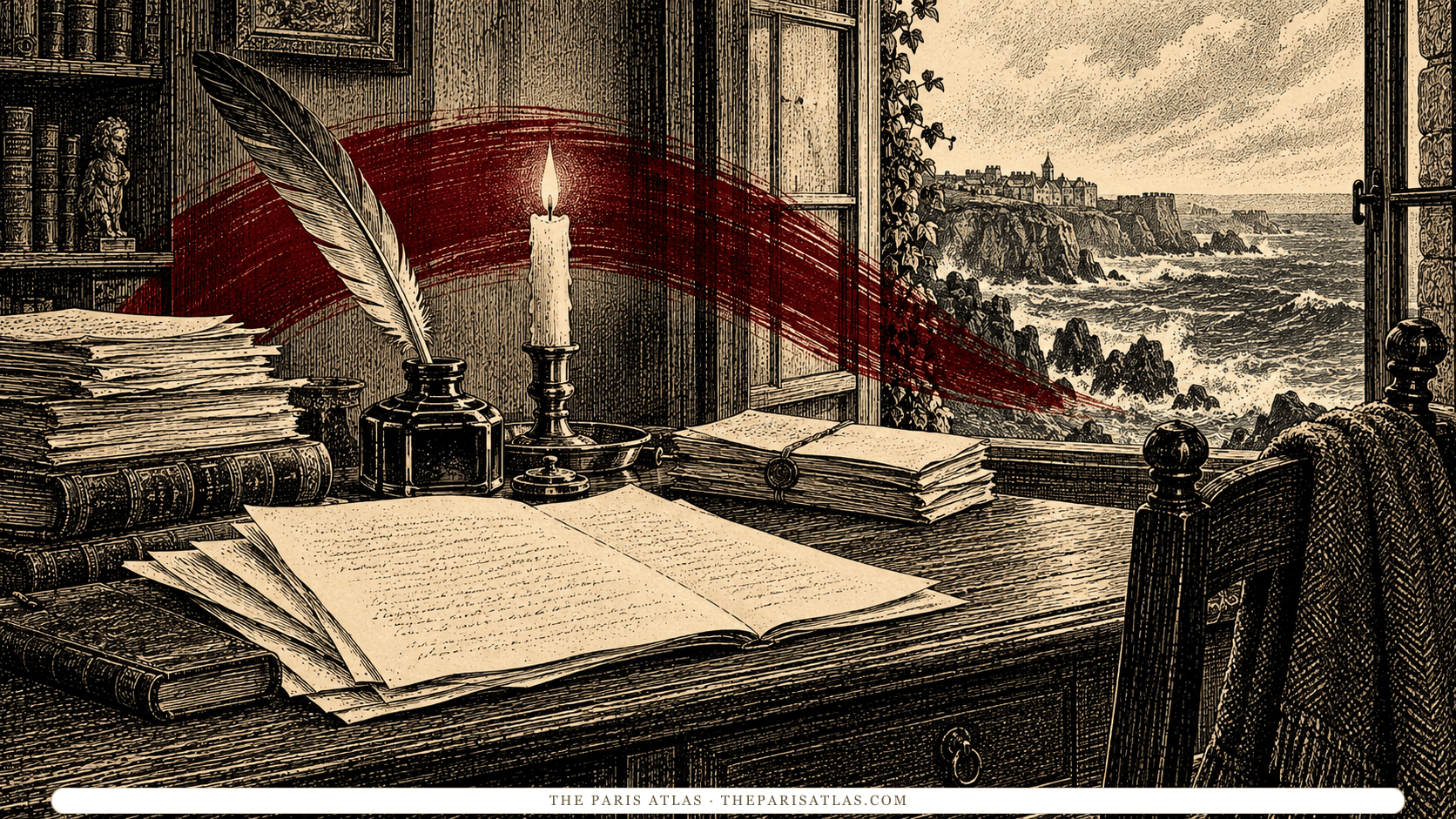
Les Misérables was published in 1862, and Hugo wrote it in exile at Hauteville House on Guernsey, one of the Channel Islands off the coast of Normandy. Its hero is Jean Valjean, a former convict pursued for decades by a policeman named Javert; around them are Fantine, a mother destroyed by poverty, her daughter Cosette, and Gavroche, a Paris street child. The novel's central set piece is the republican rising of June 1832, when Paris insurgents threw up barricades in the streets and were defeated. Hugo had been in the city that week. Thirty years later, from an island he was not allowed to leave, he wrote the failed insurrection into the book that made his name a household word in languages he did not speak.
Hugo was elected a deputy after the revolution of 1848 and expected the new republic to hold. On 2 December 1851 its president, Louis-Napoléon Bonaparte, seized full power in a coup and made himself the emperor Napoleon III. Hugo resisted in the streets for several days, then fled to Brussels. He moved to Jersey in August 1852 and, after being expelled from it in 1855, to Guernsey, where he stayed until the empire fell.
The exile produced his strongest work. Napoléon le Petit and Les Châtiments, published in 1853, are sustained attacks on the emperor; Les Contemplations followed in 1856, La Légende des siècles in 1859, and Les Misérables in 1862. Napoleon III's regime collapsed after the French defeat by Prussia at Sedan, and Hugo was back in Paris on 4 September 1870, the day the Third Republic was declared. He was elected a senator in 1876 and spent his last years as something close to a national institution, which is what made his death a state occasion.
Hugo died in Paris on 22 May 1885, aged eighty-three. The bed he died in is now in the museum at the Place des Vosges. His funeral was held on 1 June, and the crowd that came out for it was estimated at around two million people — more than the population of Paris at the time. Photographs taken that day show the procession and the packed square at the entrance to the Panthéon.
The Panthéon had spent a century switching between being a church and being a mausoleum for national figures, and the argument was never settled. Hugo's funeral settled it: from 1885 the building kept its role as the resting place of the people France chooses to honour, and it has never gone back. The novelist Alexandre Dumas, who had died in 1870, was moved there in 2002. Hugo's own apartment became a museum through his friend and literary executor Paul Meurice, who gathered the collection, bought Juliette Drouet's papers and pictures for it, and gave the whole thing to the City of Paris in 1902. It opened at 6 Place des Vosges on 30 June 1903 and is still free to enter.
Born in Besançon, son of Léopold Hugo, a general under Napoleon, and Sophie Trébuchet.
Hernani opens at the Comédie-Française on 25 February; Hugo's supporters shout down the traditionalists and Romantic drama wins the house.
Notre-Dame de Paris is published. The neglected cathedral it describes becomes a public cause.
Moves into the second floor of 6 Place des Vosges, then the Place Royale, and stays sixteen years.
Elected to the Académie française; made a peer of France four years later.
A major restoration campaign for Notre-Dame is launched; Eugène Viollet-le-Duc and Jean-Baptiste Lassus lead the work.
His daughter Léopoldine drowns at nineteen, months after her marriage.
Louis-Napoléon Bonaparte seizes power on 2 December. Hugo flees to Brussels, beginning nineteen years of exile.
Settles on Jersey in August; expelled in 1855, he moves to Guernsey.
Les Misérables is published, written at Hauteville House on Guernsey and built around the failed Paris rising of June 1832.
Returns to Paris on 4 September, the day the Third Republic is proclaimed.
Dies in Paris on 22 May. The national funeral on 1 June draws a crowd estimated at two million and ends at the Panthéon.
The Maison de Victor Hugo opens at 6 Place des Vosges on 30 June, built on the collection Paul Meurice gave the City of Paris the year before.
From 1832 to 1848 he rented the second floor of the Hôtel de Rohan-Guéménée at 6 Place des Vosges, in the Marais district. That apartment is now the Maison de Victor Hugo, a City of Paris museum; entry to the permanent collection is free. He had many other Paris addresses across his life, but this is the one that survives as a museum, and it is where he was living when he wrote the first pages of Les Misérables.
He did not repair it, but his book started the process that did. When Notre-Dame de Paris was published in 1831 the cathedral was damaged and neglected, and demolition had been discussed. The novel was a large success and turned public feeling toward the building; a major restoration campaign was launched in 1842 under the architects Eugène Viollet-le-Duc and Jean-Baptiste Lassus, and the cathedral joined France's list of protected historic monuments in 1862.
For opposing a coup. On 2 December 1851 the president of the French republic, Louis-Napoléon Bonaparte, seized full power and soon declared himself the emperor Napoleon III. Hugo resisted, then fled to Brussels, moved to Jersey, in the Channel Islands off the Normandy coast, in August 1852, and after being expelled from Jersey in 1855 settled on the neighbouring island of Guernsey. He stayed away nineteen years and returned to Paris on 4 September 1870, the day the Third Republic was declared.
A former convict named Jean Valjean, released after nineteen years and pursued for decades by the policeman Javert, who tries to build a decent life and raises the orphaned Cosette. Around them are Fantine, Cosette's mother, destroyed by poverty, and Gavroche, a Paris street child. The novel's central action is the republican rising of June 1832, when insurgents built barricades in the Paris streets and were crushed. Hugo published it in 1862, writing it in exile on Guernsey.
Around two million, which was more than the population of Paris at the time. Hugo died on 22 May 1885 and the national funeral took place on 1 June, ending at the Panthéon — the burial place of France's national figures — in the Latin Quarter. Photographs from that day, held by the Maison de Victor Hugo, show the crowd filling the square outside the entrance.
Because the French state decided his death was a national event. The Panthéon had spent a century alternating between use as a church and use as a burial place for national figures. Hugo's funeral in 1885 ended the alternation: from that point the building kept its role as the resting place of the people France honours, and it has held it since. Alexandre Dumas was moved there in 2002.
Yes. The Maison de Victor Hugo at 6 Place des Vosges opened on 30 June 1903 and is run by the City of Paris. The apartment is arranged in three stages, before his exile, during it, and after, and includes furniture and decoration he designed himself, along with the bed in which he died on 22 May 1885. The museum exists because his friend and executor Paul Meurice assembled a collection and gave it to the city in 1902.
Frequented
The restaurant lists Hugo among its historic regulars and records what he ordered: vermicelli and lamb, unvaryingly. His is one of the five tables the house says still stand in their original places.
The sources below include biographies, scholarly essays, interviews, and primary materials that informed this page. They reflect both the historical record and ongoing critical conversations about Victor Hugo and their work.

The museum's own room-by-room account of the apartment.
How the apartment became a museum: Paul Meurice's 1902 gift.
The cathedral's own account of what the 1831 novel did for it.
Why 1885 fixed the Panthéon's purpose.
Standard English-language biography.
These references anchor the page in the documented record and in the scholarly conversations around Victor Hugo. Every claim on this page traces back to one or more of the works listed here.