Colette
Frequented by · 1948–1954
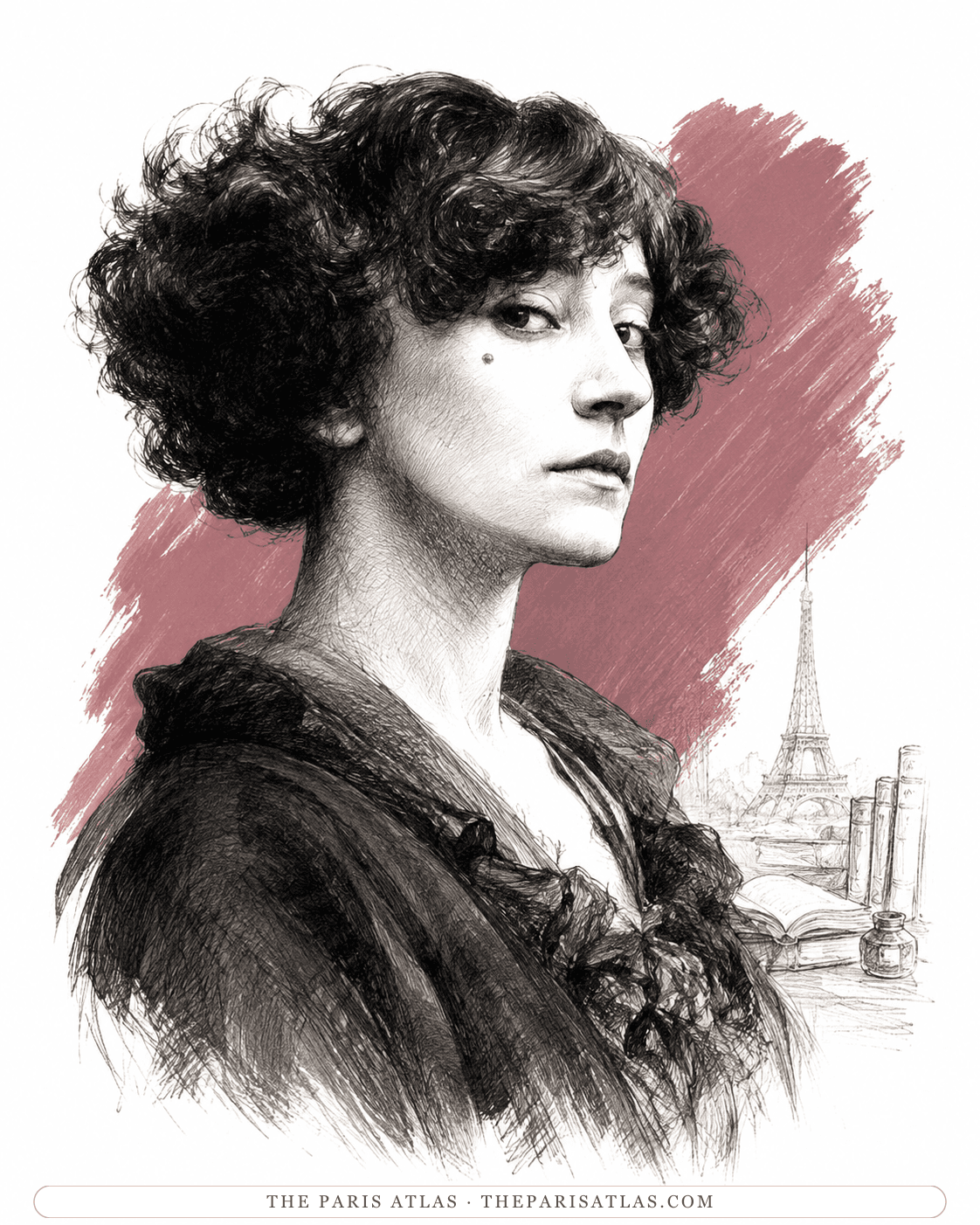
The City of Paris names Le Grand Véfour a restaurant Colette favored. The restaurant reopened in 1948, a short walk from her Palais-Royal apartment, and a brass plaque marks her banquette beside Jean Cocteau's.
The Palais-Royal restaurant Colette favored in her last years, a few doors from her apartment. A brass plaque still marks her seat.
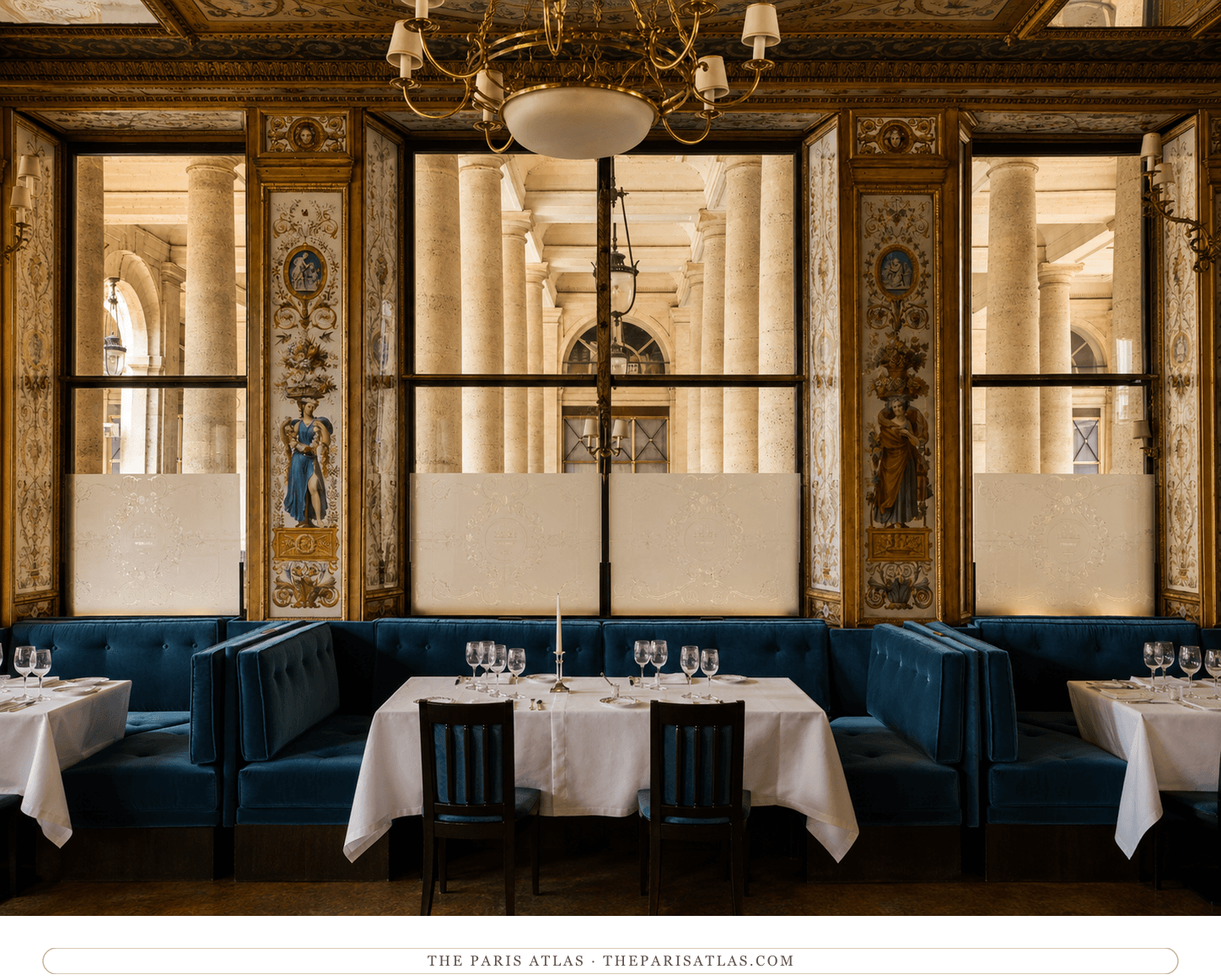
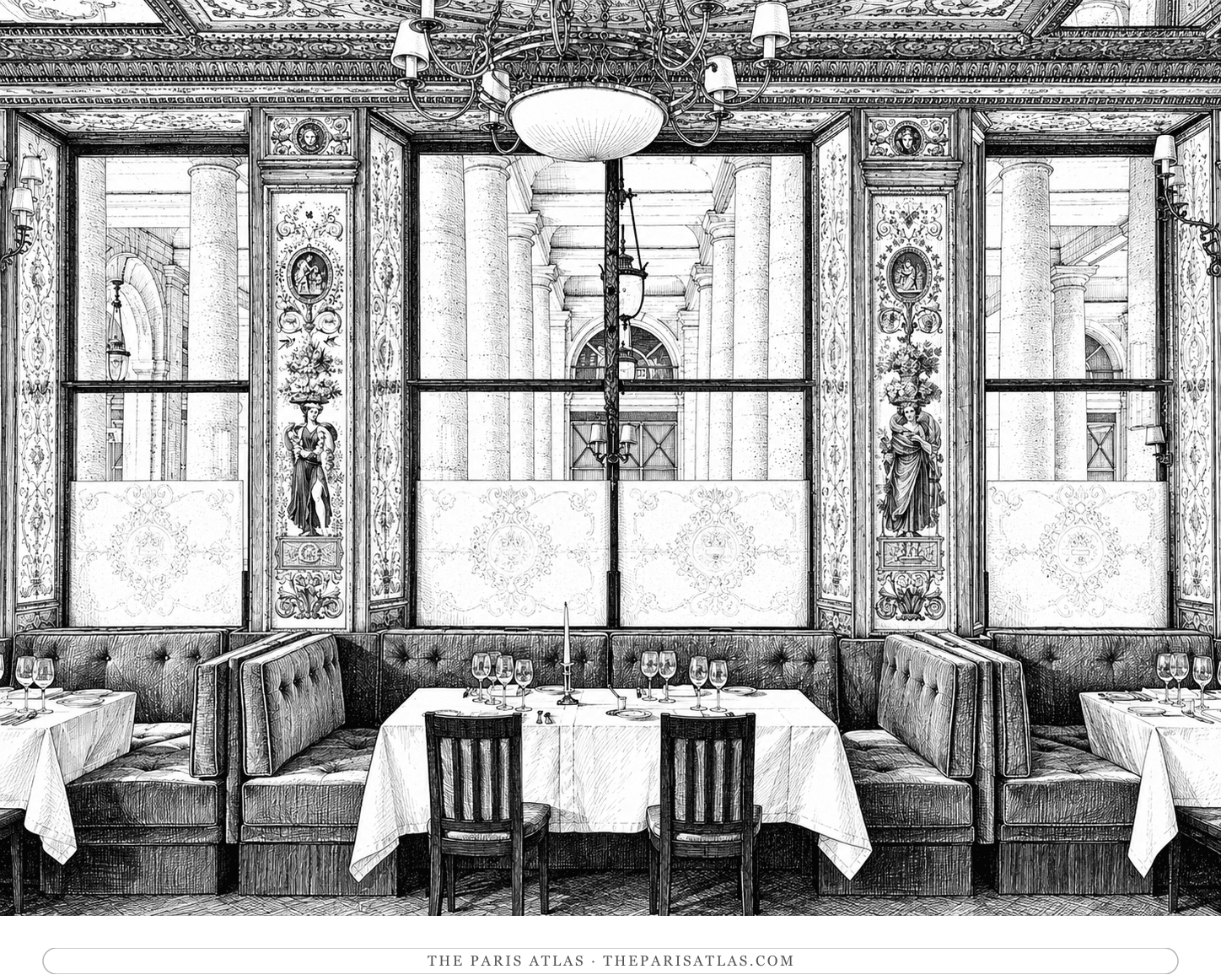
Le Grand Véfour occupies the same corner of the Palais-Royal arcade it has held since 1784, when it opened as the Café de Chartres. Its painted and mirrored rooms are among the oldest restaurant interiors in Paris. The City of Paris names it plainly as a restaurant Colette was fond of, and it stood barely a hundred steps from her door at 9 rue de Beaujolais.
The connection belongs to her final decade. The restaurant was closed from 1905 and reopened in 1948 under the chef Raymond Oliver, by which time Colette was installed above the garden and increasingly housebound. She and her neighbor Jean Cocteau took to it in those years, and the house set small brass plaques on their favored banquettes — a habit it extends to other regulars, from Victor Hugo to later writers and statesmen.
It remains a working restaurant rather than a museum, and one of the few places on Colette's Paris map where a visitor can still sit where she sat.
Opens in the Palais-Royal arcade as the Café de Chartres.
Closes; the rooms stand empty for decades.
Reopens as Le Grand Véfour under chef Raymond Oliver, near Colette's apartment.
Colette and Jean Cocteau become regulars; brass plaques mark their seats.
Frequented by · 1948–1954
The City of Paris names Le Grand Véfour a restaurant Colette favored. The restaurant reopened in 1948, a short walk from her Palais-Royal apartment, and a brass plaque marks her banquette beside Jean Cocteau's.
Frequented by
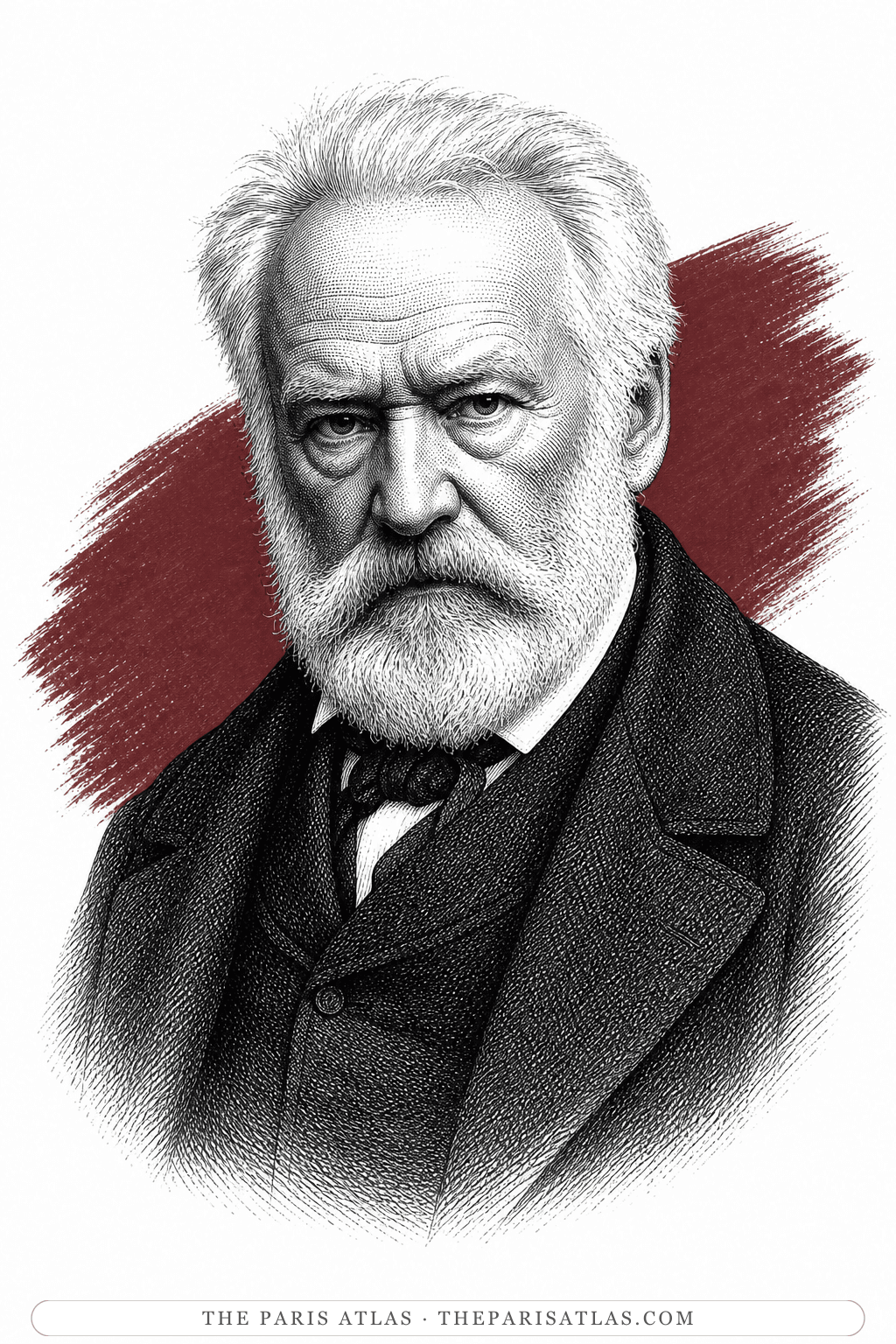
The restaurant lists Hugo among its historic regulars and records what he ordered: vermicelli and lamb, unvaryingly. His is one of the five tables the house says still stand in their original places.
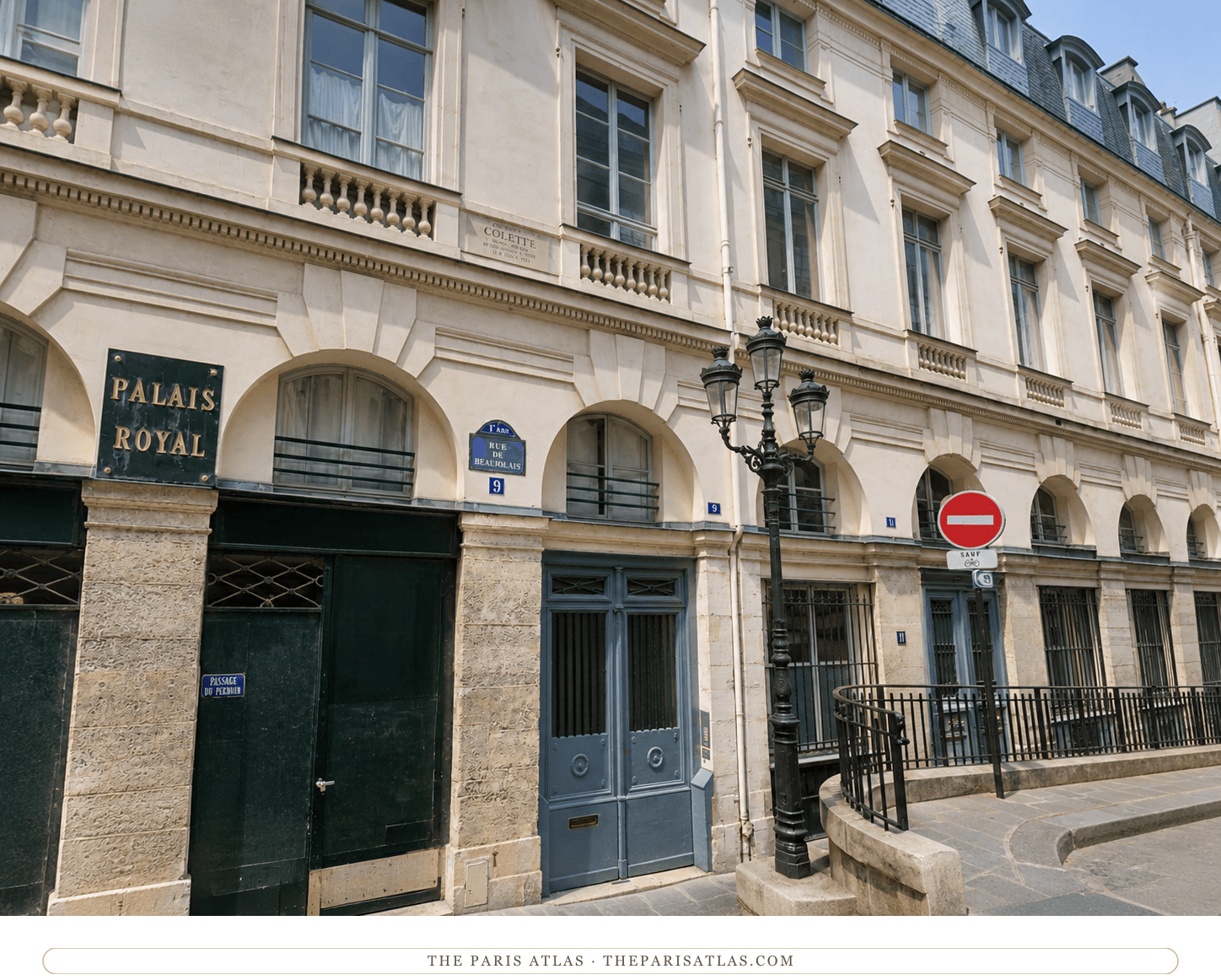
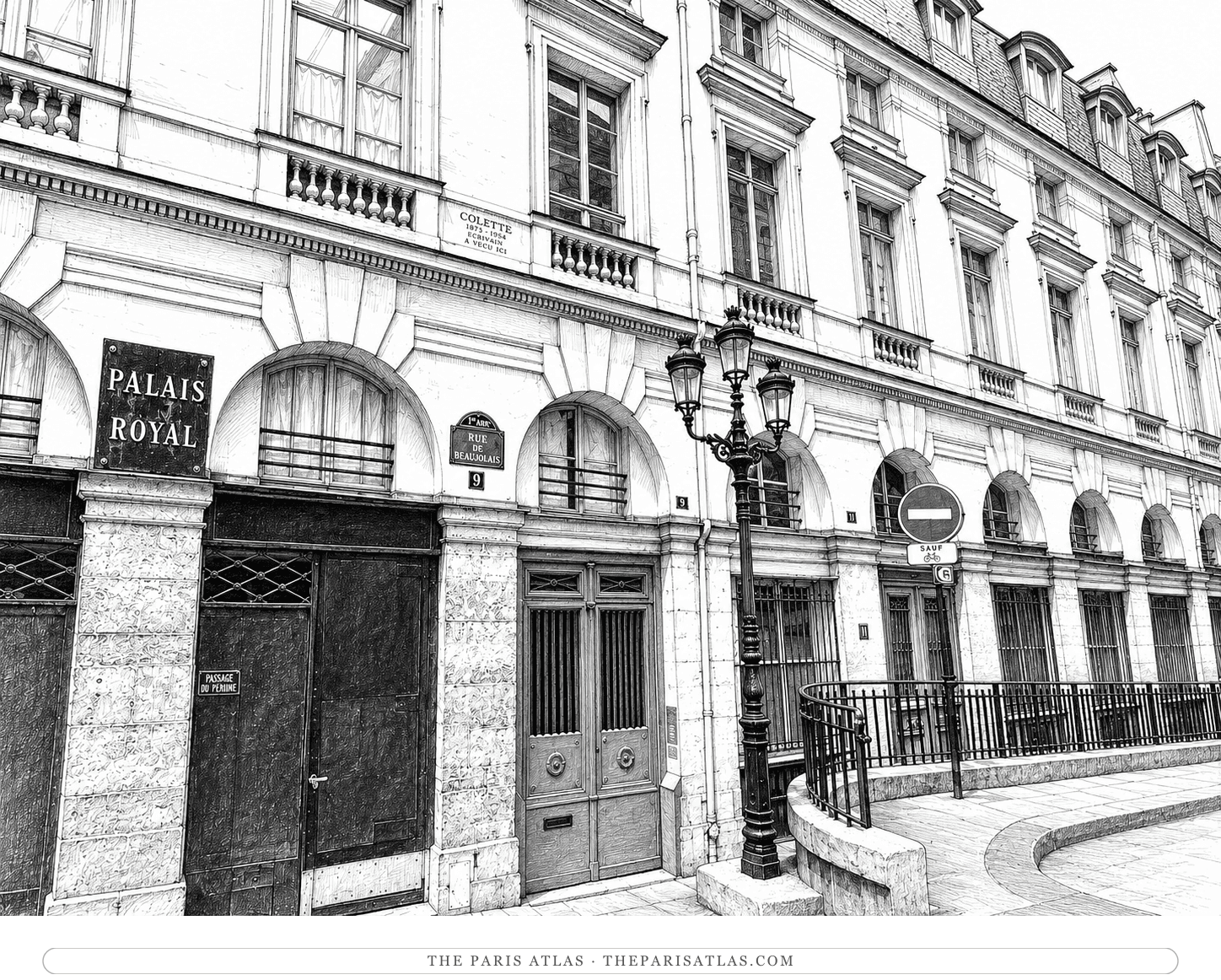
Colette's home above the Palais-Royal garden, and the address that made her its dame. She lived here from 1938 until her death in 1954.
Visit the place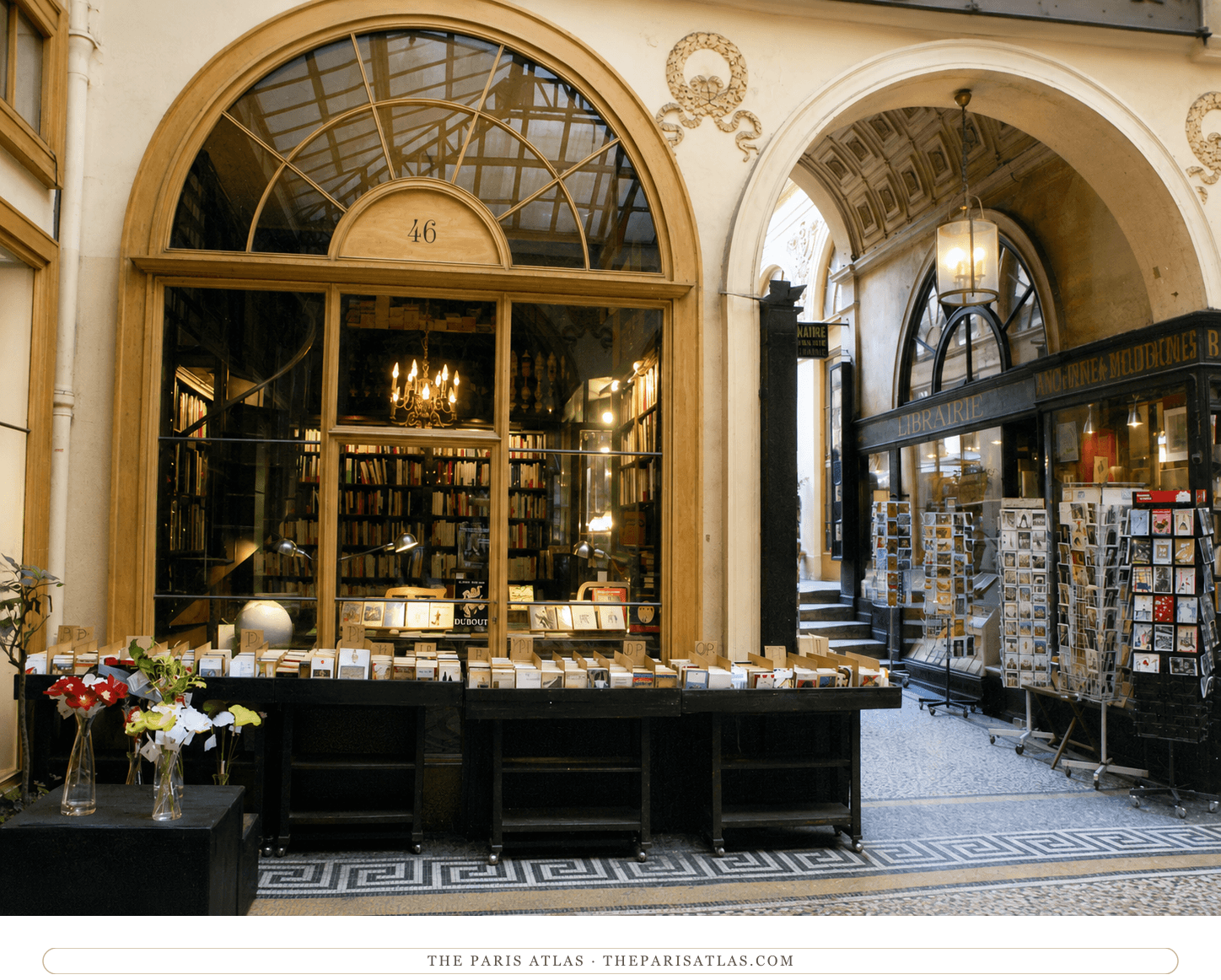
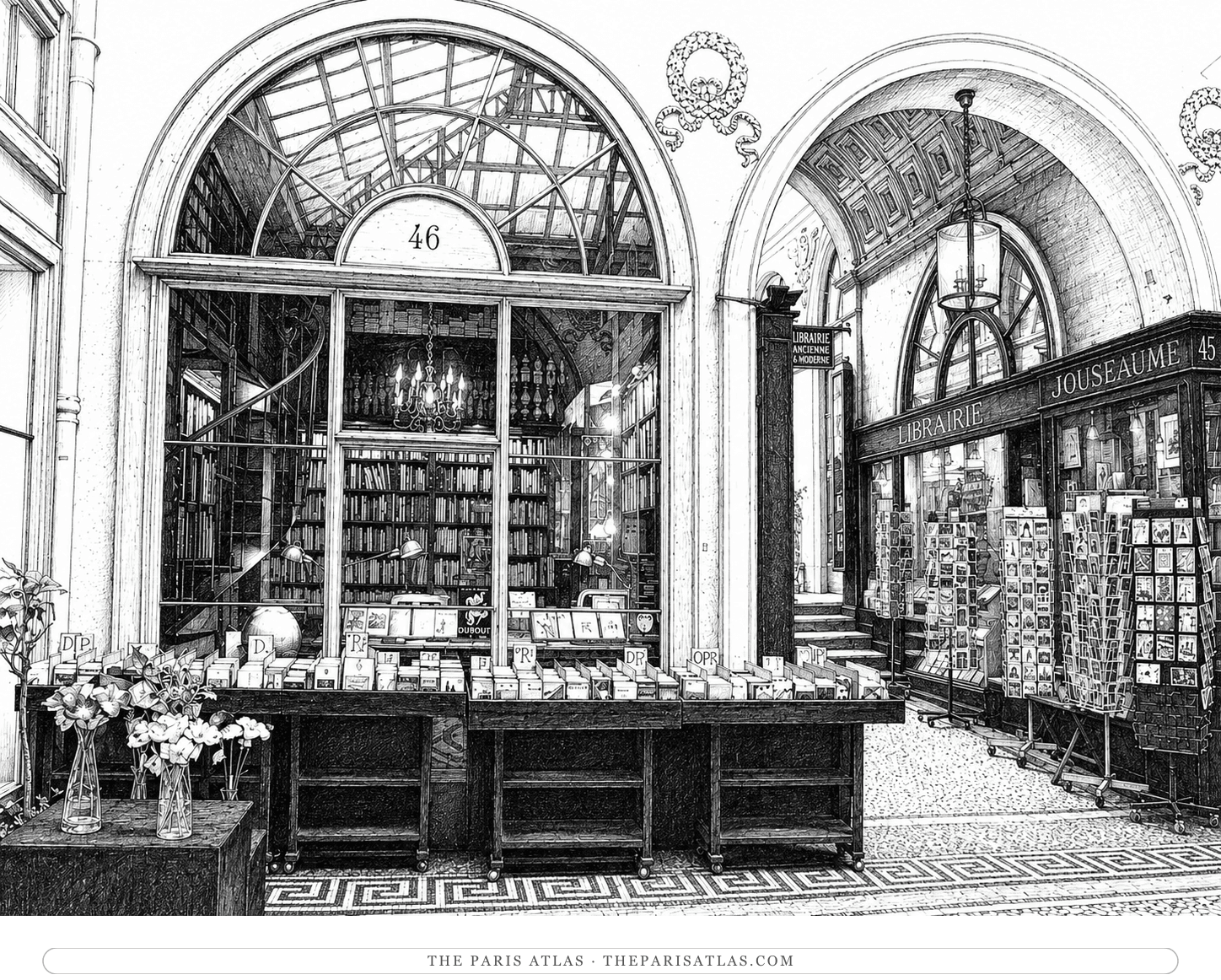
A glass-roofed 1820s shopping arcade near the Palais-Royal, and home to the bookshop the City of Paris calls Colette's haunt.
Visit the place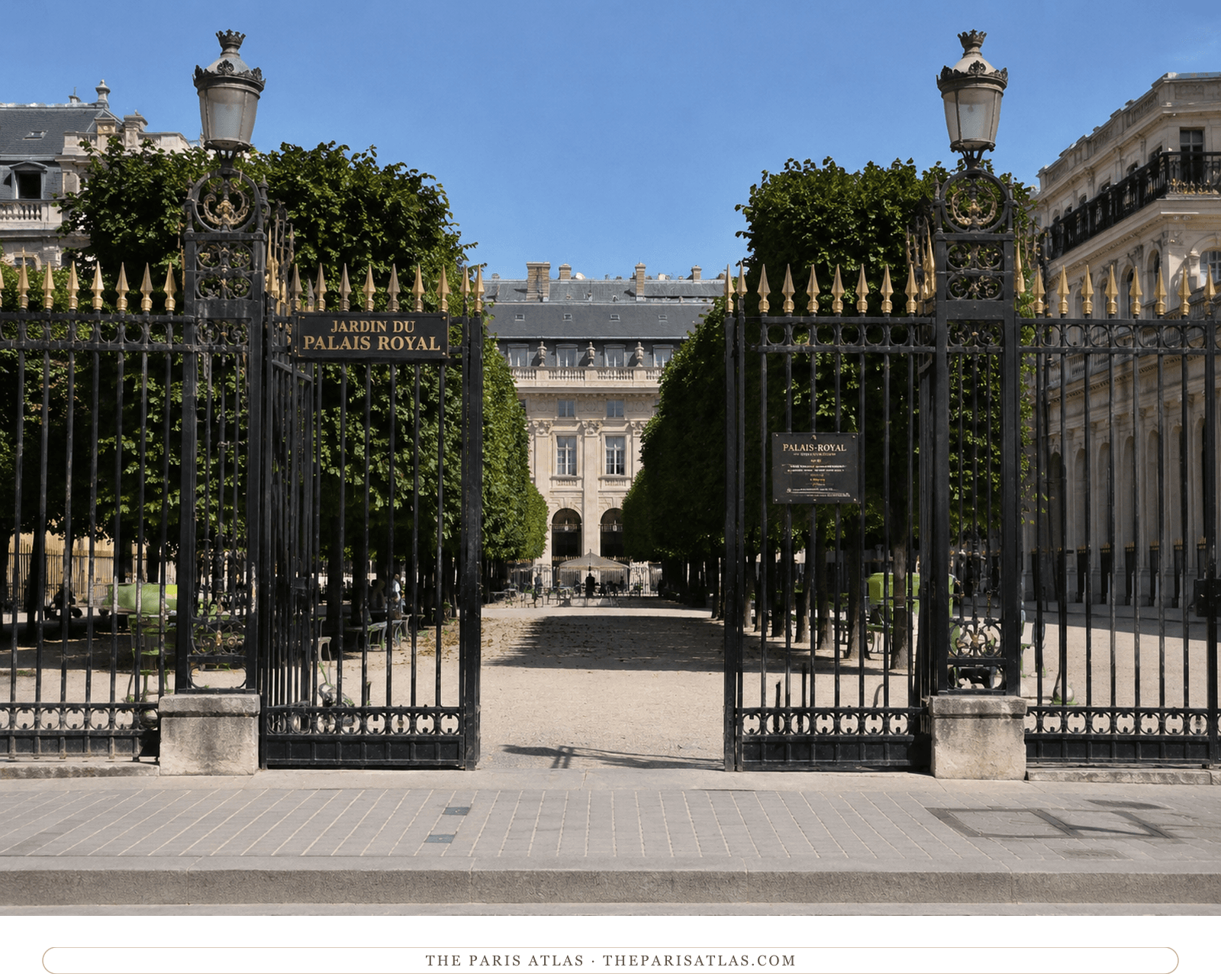
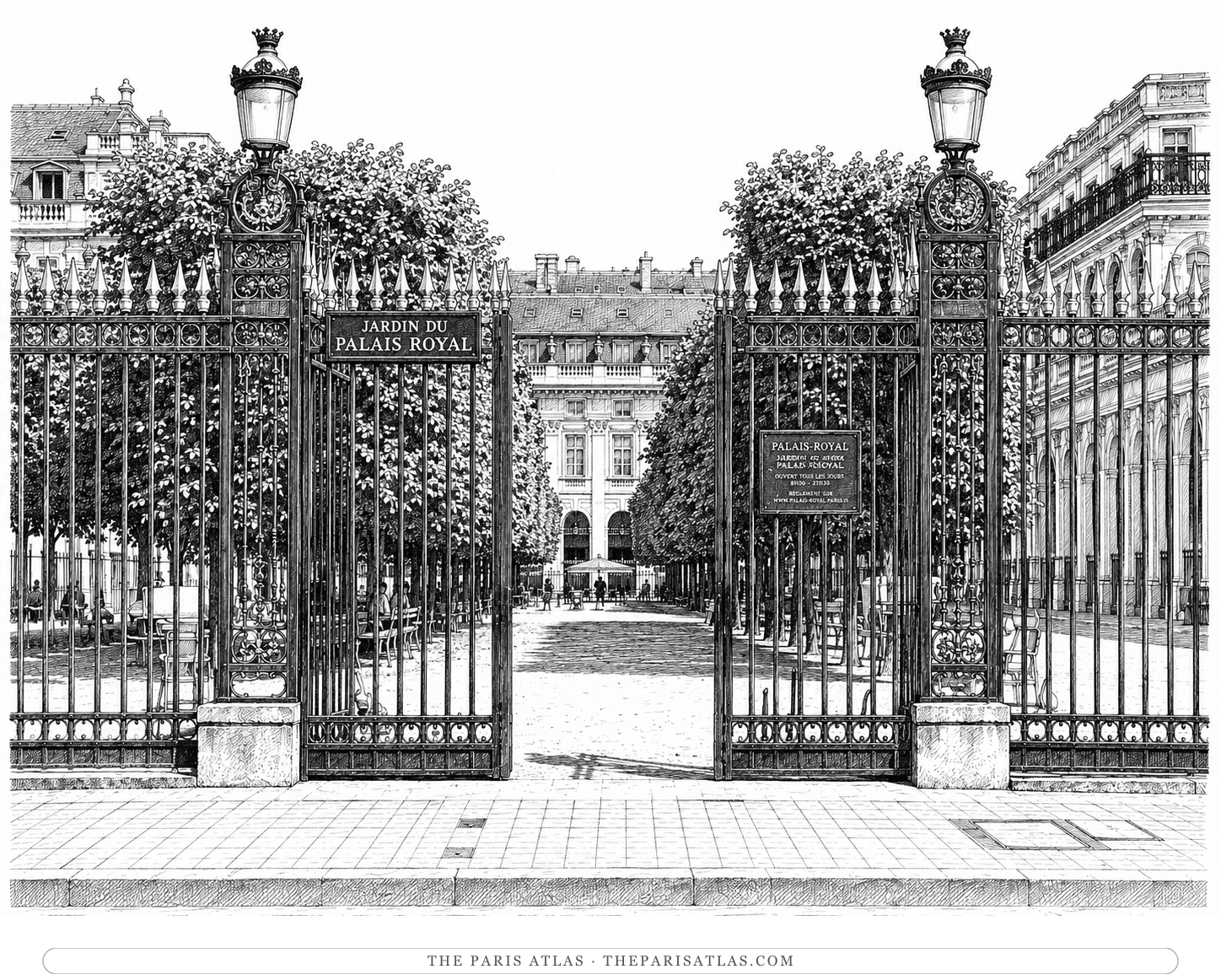
The colonnaded garden Colette watched from her Palais-Royal windows for the last years of her life, and the setting of her 1954 state funeral.
Visit the place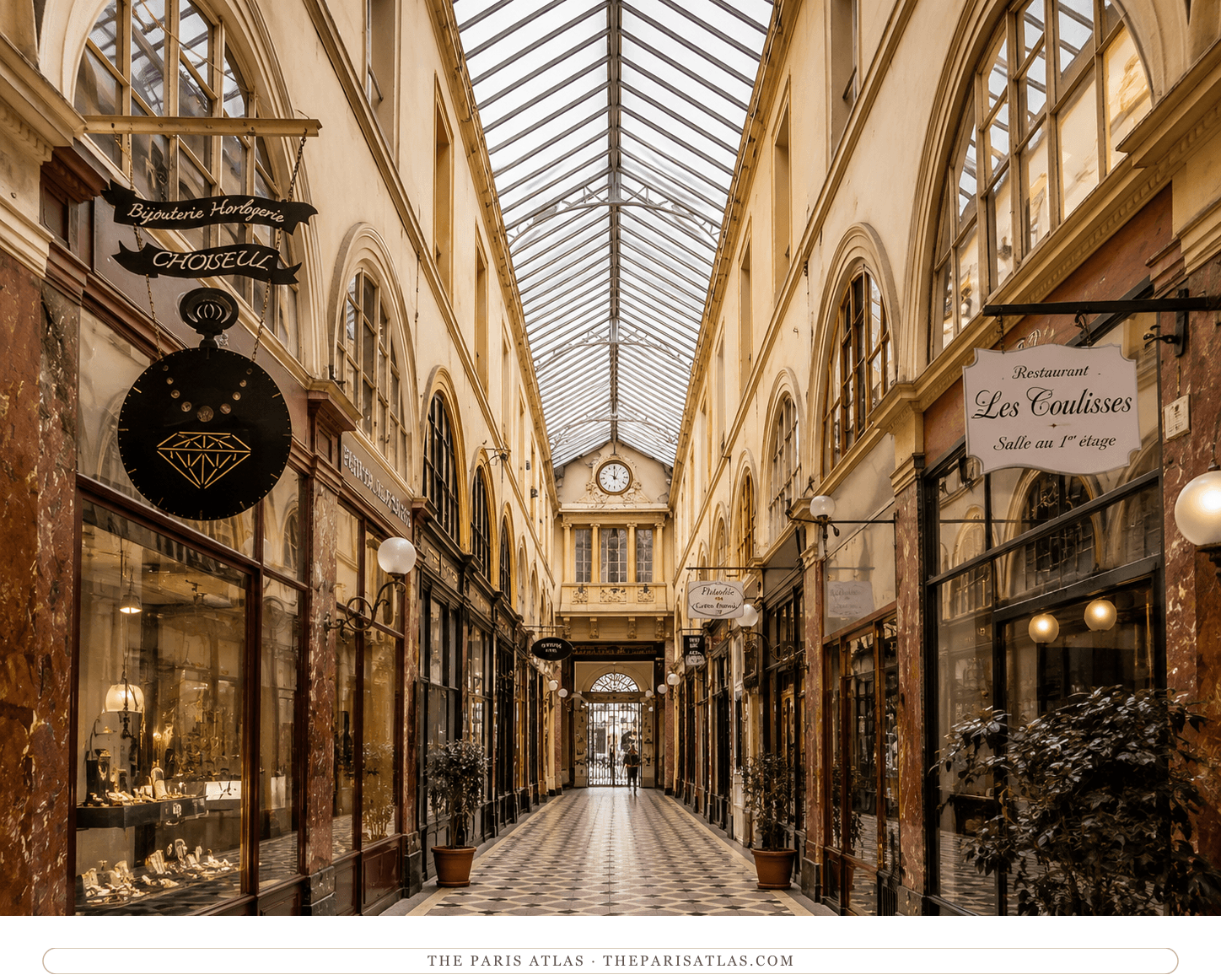
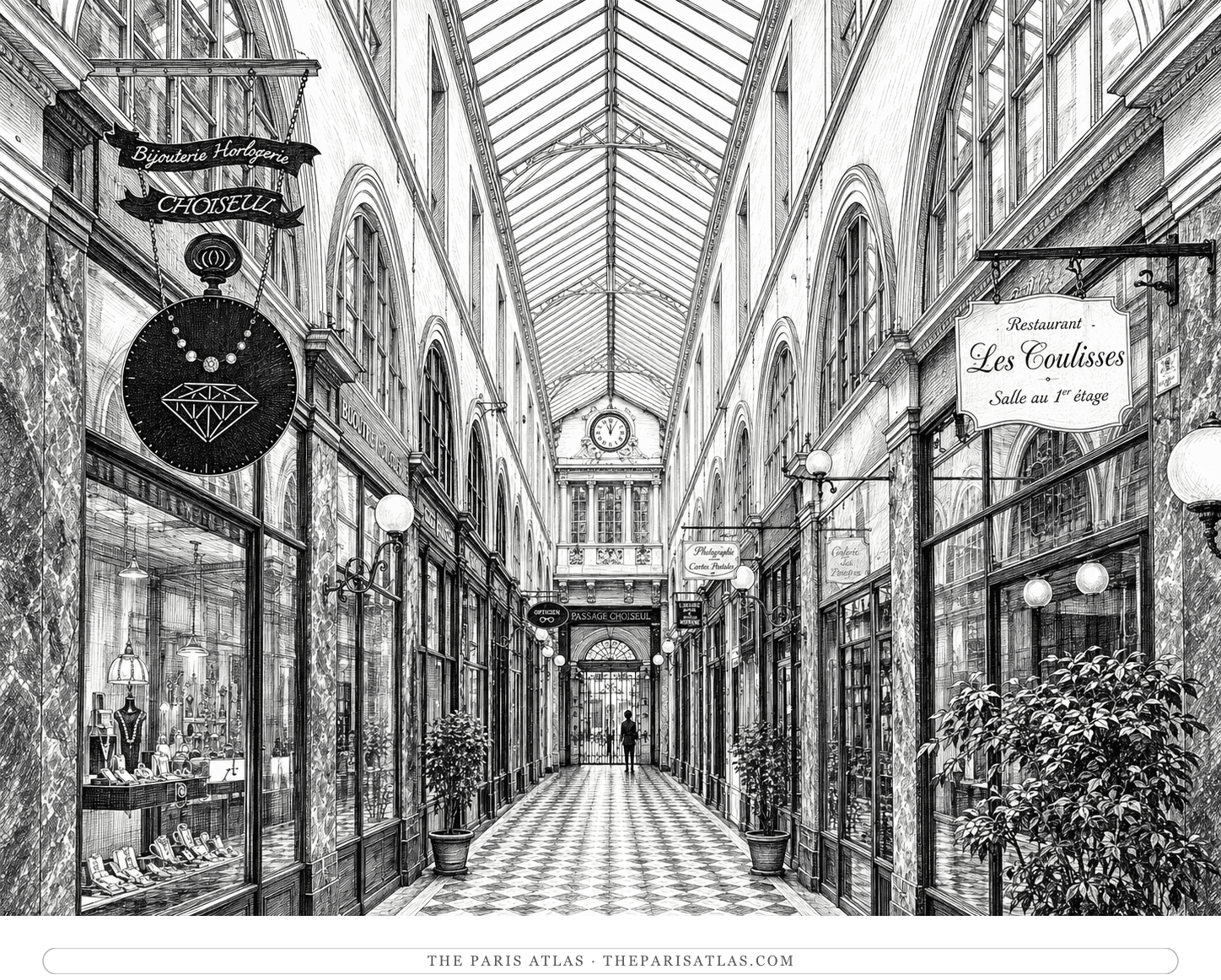
The covered arcade where Louis-Ferdinand Céline grew up over his mother's lace shop — reborn in his novel Death on the Installment Plan as the Passage des Bérésinas, the gaslit 'gas jar' of its narrator Ferdinand's childhood.
Visit the placeThe sources below include histories, archival materials, scholarly research, and official records that informed this page. They document Le Grand Véfour, the people connected to it, and its place in Paris.


Web source consulted for documented facts and historical context presented on the Le Grand Véfour page.
The restaurant's own account of the house, listed as a monument historique, and of Colette being carried down from the flat above to dine in her last years.

A history of the restaurant: the Café de Chartres opened under the Palais-Royal arcades in 1784, its eighteenth-century rooms, and Raymond Oliver's tenure.
Map data used to verify addresses, geographic coordinates, and the placement associated with Le Grand Véfour.
These references provide the documented foundation for this page's history and context. Claim-level citations remain attached to the specific claims they support.
 Explore more resources
Newsletter
The cafés, studios, and walk-up flats where the work was made — one story from the map in every letter.