The Paris AtlasCharting the artists, works, and places worth returning to.

Park · Palais-Royal · 1er arrondissement

Jardin du Palais-Royal

The buildingStill standing
Getting inWalk straight in
What's there nowStill the same

A public garden managed by the Centre des monuments nationaux and listed as a Jardin Remarquable; open daily and free to enter, with seasonal hours.

The colonnaded garden Colette watched from her Palais-Royal windows for the last years of her life, and the setting of her 1954 state funeral.

Address
8 rue de Montpensier, 75001 Paris
Years
1633–present
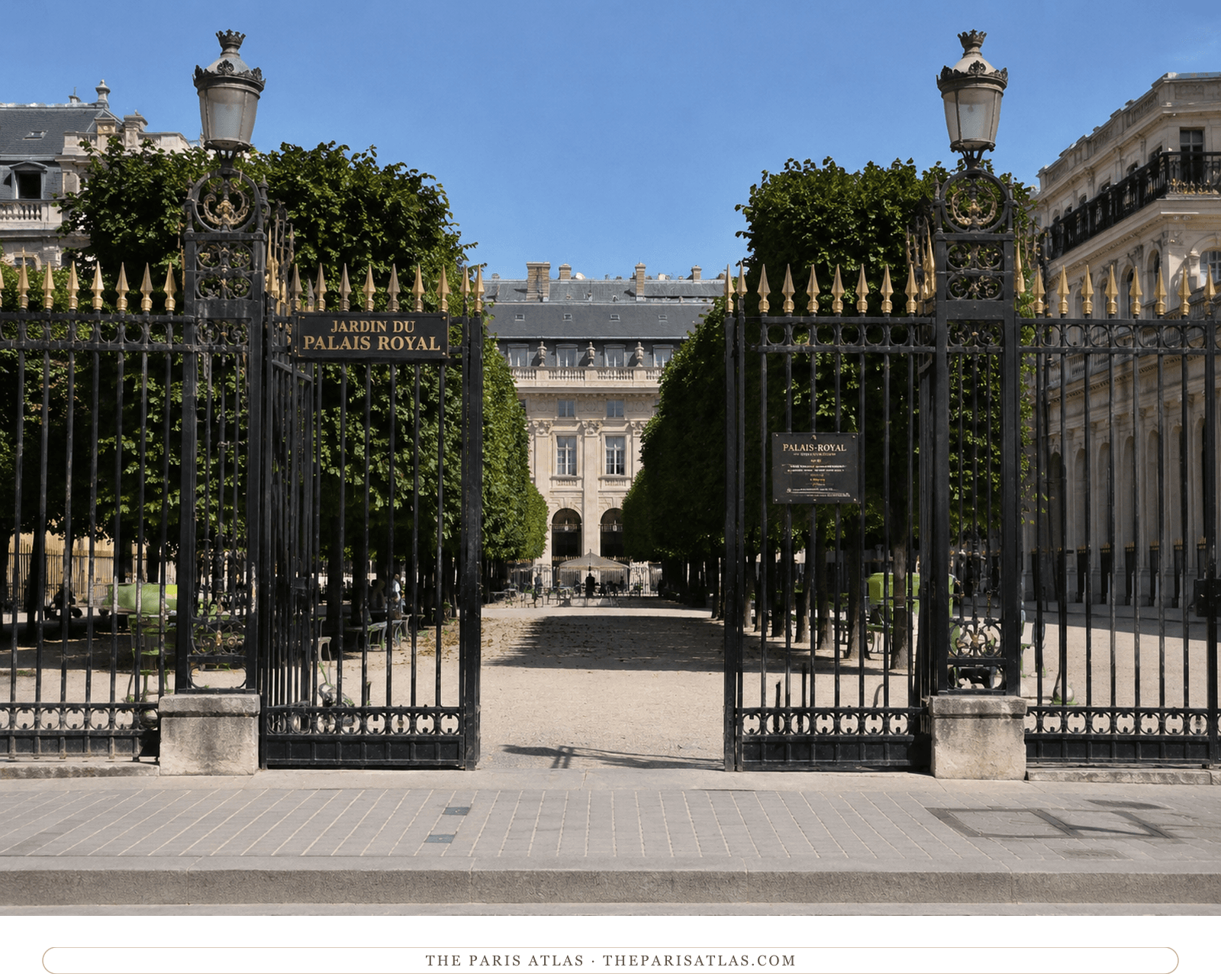
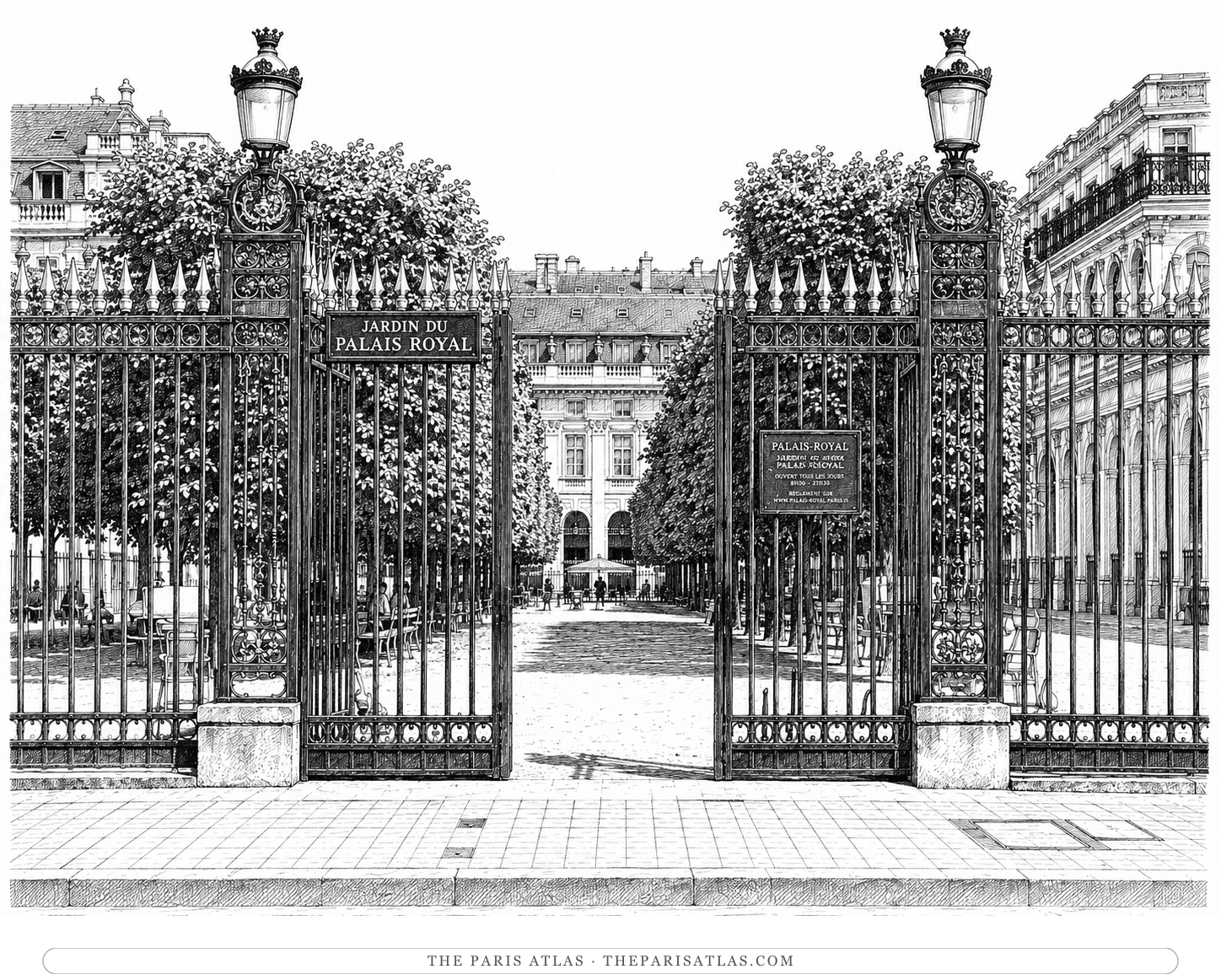
IllustrationThe Palais-Royal garden gates and colonnade in colour, clipped trees and gravel walks beyond

The garden today, seen through its gates.

Editorial illustration

The place, briefly

The Jardin du Palais-Royal is a long planted rectangle enclosed by arcades a few steps north of the Louvre, laid out for Cardinal Richelieu in the 1630s and rebuilt in its present form in the 1780s. For most visitors it is a quiet shortcut with fountains, lime allées and rows of shops under the colonnade. For Colette it was the view from the desk.

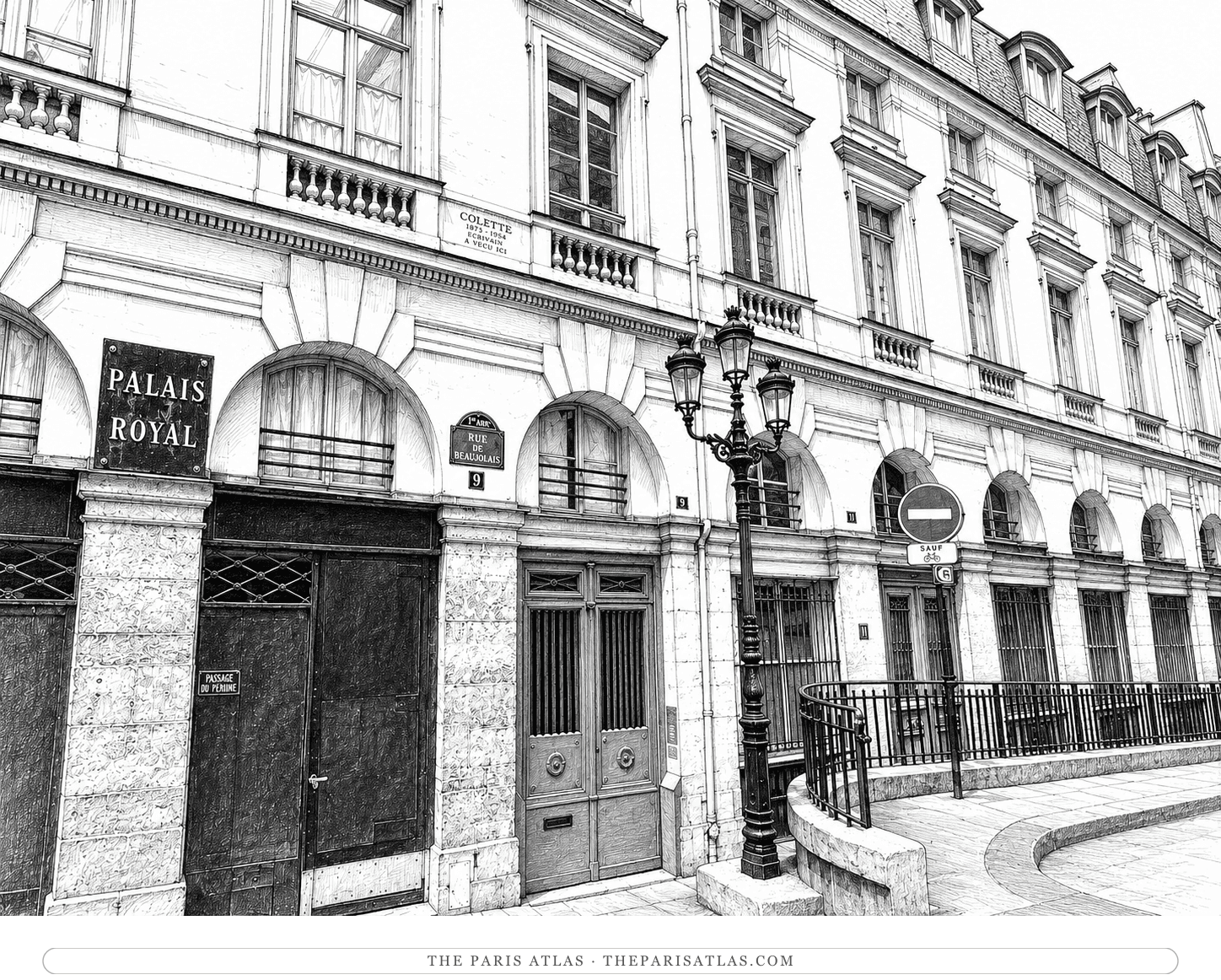
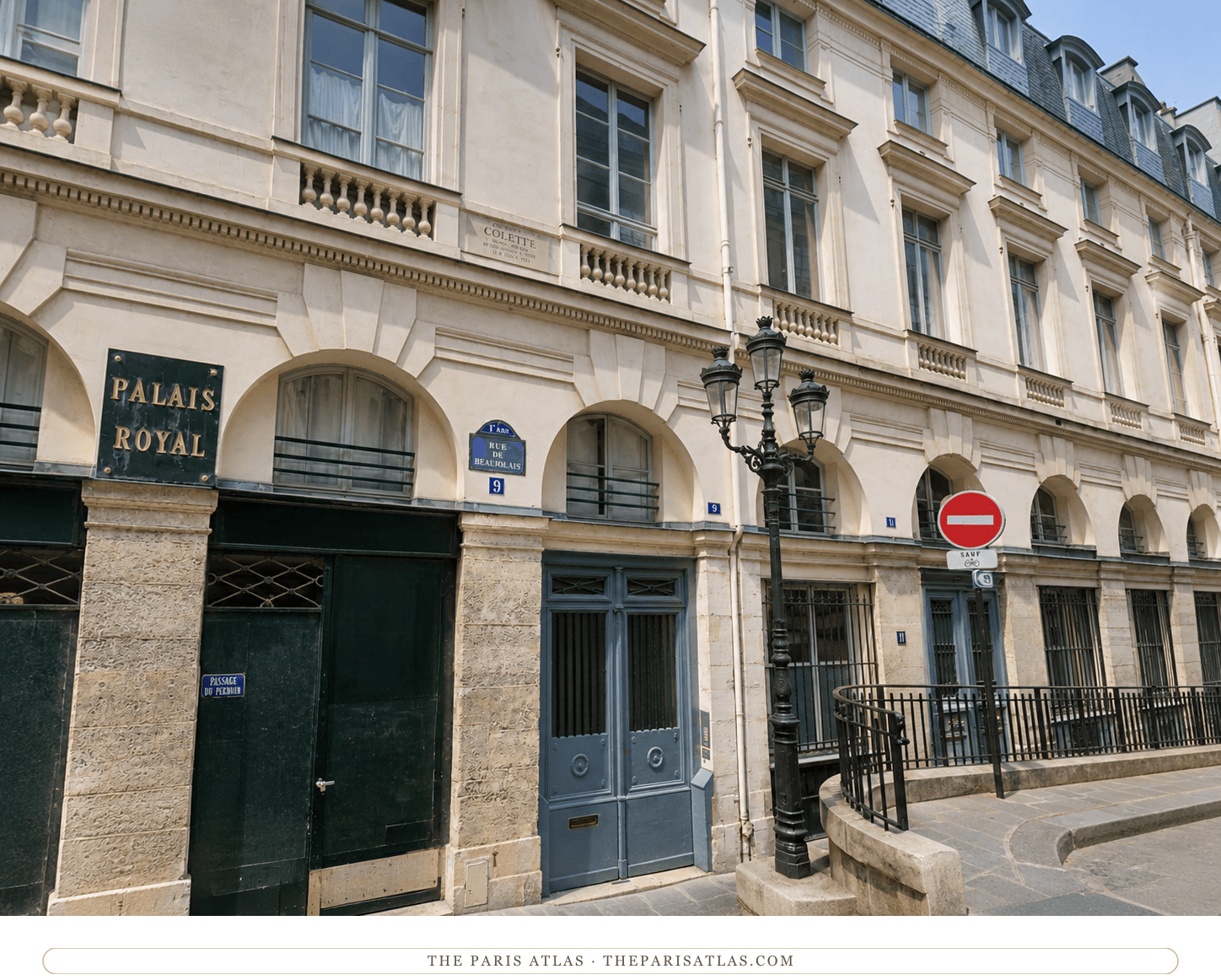
From her first-floor apartment on the rue de Beaujolais side, she watched the garden through the seasons and made it a recurring subject of her late writing, most directly in Le Fanal bleu (1949). She walked its allées with her neighbor Jean Cocteau before arthritis confined her, and the garden's cats, gardeners and regulars pass through the books of these years.

When Colette died in August 1954, France held a state funeral for her in the courtyard of the Palais-Royal. The garden and its arcades are open to the public today; Daniel Buren's striped columns, Les Deux Plateaux, have stood in the adjoining main court since 1986.

Key facts

What it is
A public garden and colonnade at the heart of the 1st arrondissement
Laid out
1630s for Cardinal Richelieu; rebuilt in the 1780s
Colette's connection
Her Beaujolais windows overlooked it; it is the subject of Le Fanal bleu (1949)
Managed by
Centre des monuments nationaux; listed as a Jardin Remarquable
Today
Open daily and free to enter, with seasonal hours
The gates to the Jardin du Palais-Royal, the garden Colette watched from her window.Editorial illustration
The garden today, seen through its gates.Editorial illustration

Timeline

  1. 1630s

    The garden is laid out beside Richelieu's Palais-Cardinal, later the Palais-Royal.

  2. 1780s

    Rebuilt with the surrounding arcades and shops in their present arrangement.

  3. 1938

    Colette settles overlooking the garden at 9 rue de Beaujolais and makes it her daily view.

  4. 1949

    Publishes Le Fanal bleu, written from her window on the garden.

  5. 1954

    France holds Colette's state funeral in the courtyard of the Palais-Royal.

On the map

Questions before you go

Is the Jardin du Palais-Royal open to the public?

Yes. It is a public garden managed by the Centre des monuments nationaux, open daily and free to enter, with hours that change by season.

What is the garden's connection to Colette?

Colette lived overlooking it at 9 rue de Beaujolais from 1938 until her death in 1954. She watched it from her window, walked it with Jean Cocteau, and made it the subject of Le Fanal bleu (1949).

How do you get into the Palais-Royal garden?

Through the arcades on the rue de Montpensier, rue de Valois and rue de Beaujolais sides, and from the main court off the Place du Palais-Royal near the Louvre.

Where was Colette's funeral held?

In the courtyard of the Palais-Royal, in August 1954 — the first state funeral France granted to a woman of letters. She was afterward buried at Père-Lachaise.

What are the striped columns in the courtyard?

Les Deux Plateaux, an installation of black-and-white columns by Daniel Buren, placed in the main court of the Palais-Royal in 1986. They stand in the forecourt beside the garden, not in the planted garden itself.

Writers who knew this place

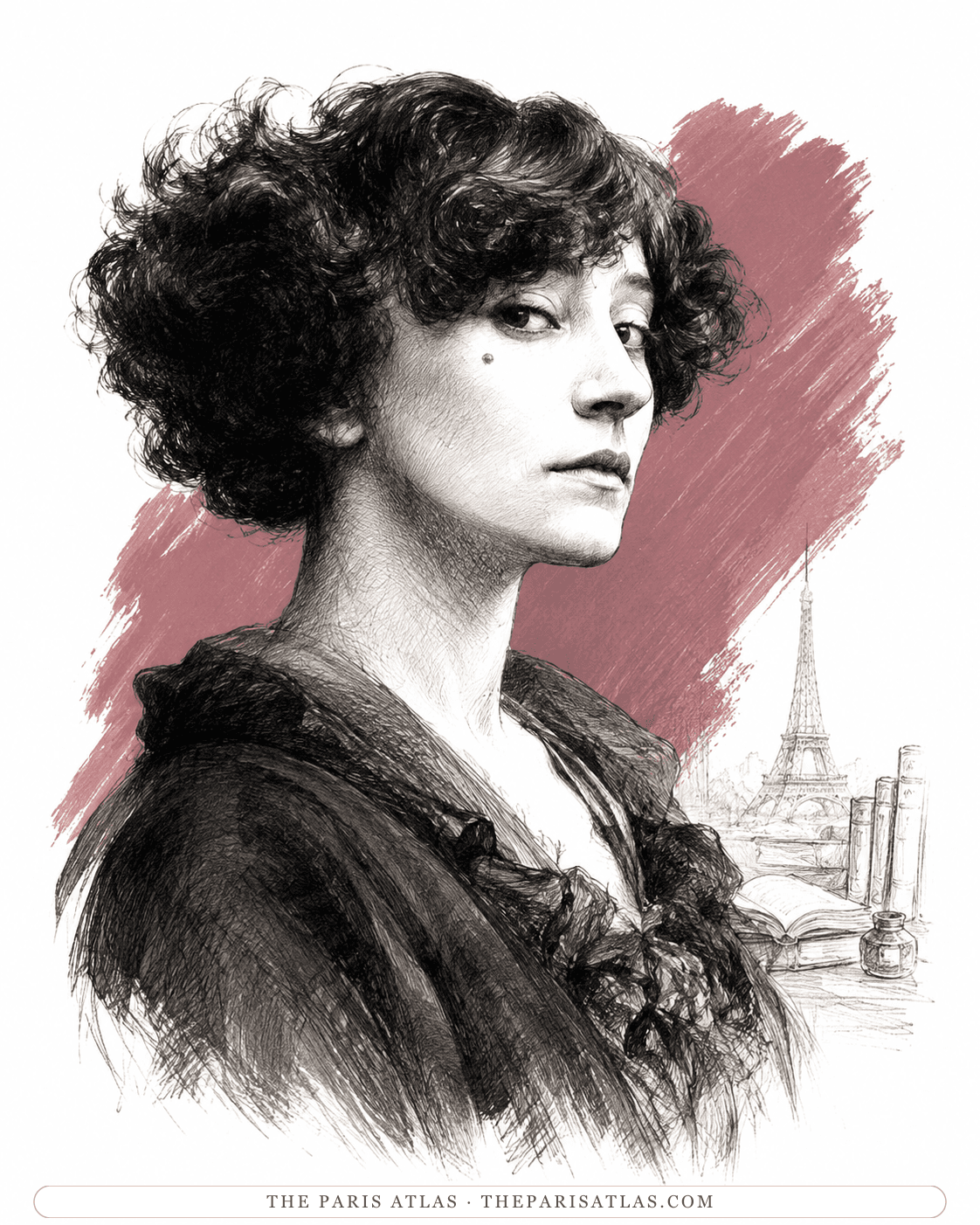
Illustrated portrait of Colette

Colette

French · The French novelist who wrote the Claudine books under Willy’s name, earned her independence on the music-hall stage, and made women’s private lives a serious literary subject.

Frequented by · 1938–1954

From her first-floor apartment Colette watched and walked the Palais-Royal garden for the last years of her life; it is the subject of Le Fanal bleu (1949). Her state funeral was held in the courtyard of the Palais-Royal in 1954.

Une balade sur les pas de Sidonie devenue Colette; Société des amis de Colette — Chronology

Illustrated portrait of D. H. Lawrence

D. H. Lawrence

English · English novelist and poet out of a Nottinghamshire coalfield. A court destroyed The Rainbow in 1915, the police took his paintings off a London wall in 1929, and he came to Paris that March to get Lady Chatterley's Lover cheaply into print.

Frequented by · 1929

Frank Groves, a pirate publisher, kept a bookshop in the arcades on the north side of the garden, and Lawrence went there in March 1929 to discuss a Paris edition before changing his mind on the pavement outside. Groves published a pirated edition anyway, printed in Germany; Lawrence learned of it on 15 March. The account places him at the shop rather than in the garden itself, which is why this reads as probable.

Catherine Brown, D. H. Lawrence in Paris in 1929; D. H. Lawrence, Lady Chatterley's Lover and "Popular" Editions

Within walking distance

The Friday Letter

Paris, one address at a time.

The cafés, studios, and walk-up flats where the work was made — one story from the map in every letter.

One email a week. No spam, no selling your address. Unsubscribe anytime.