Colette
Frequented by
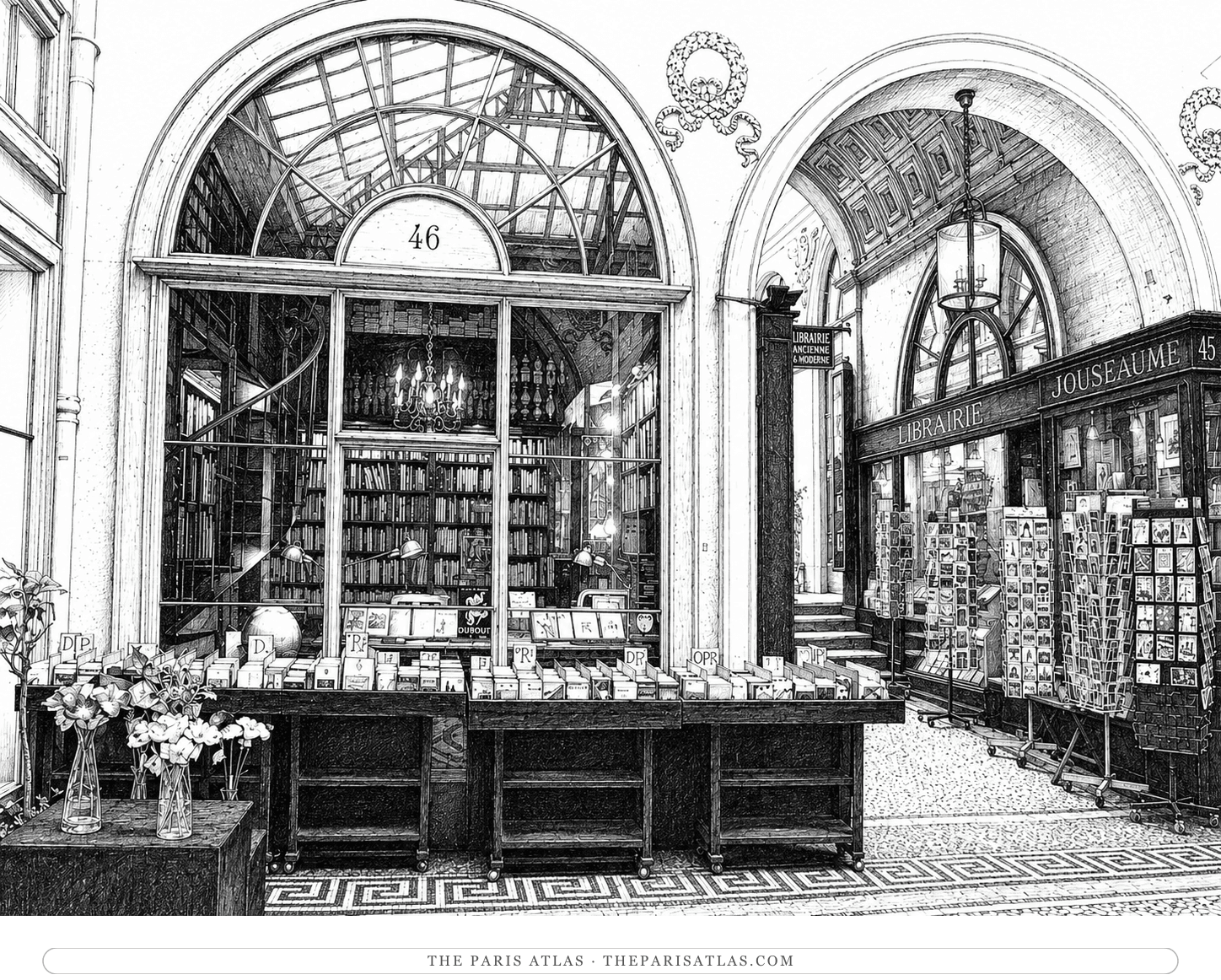
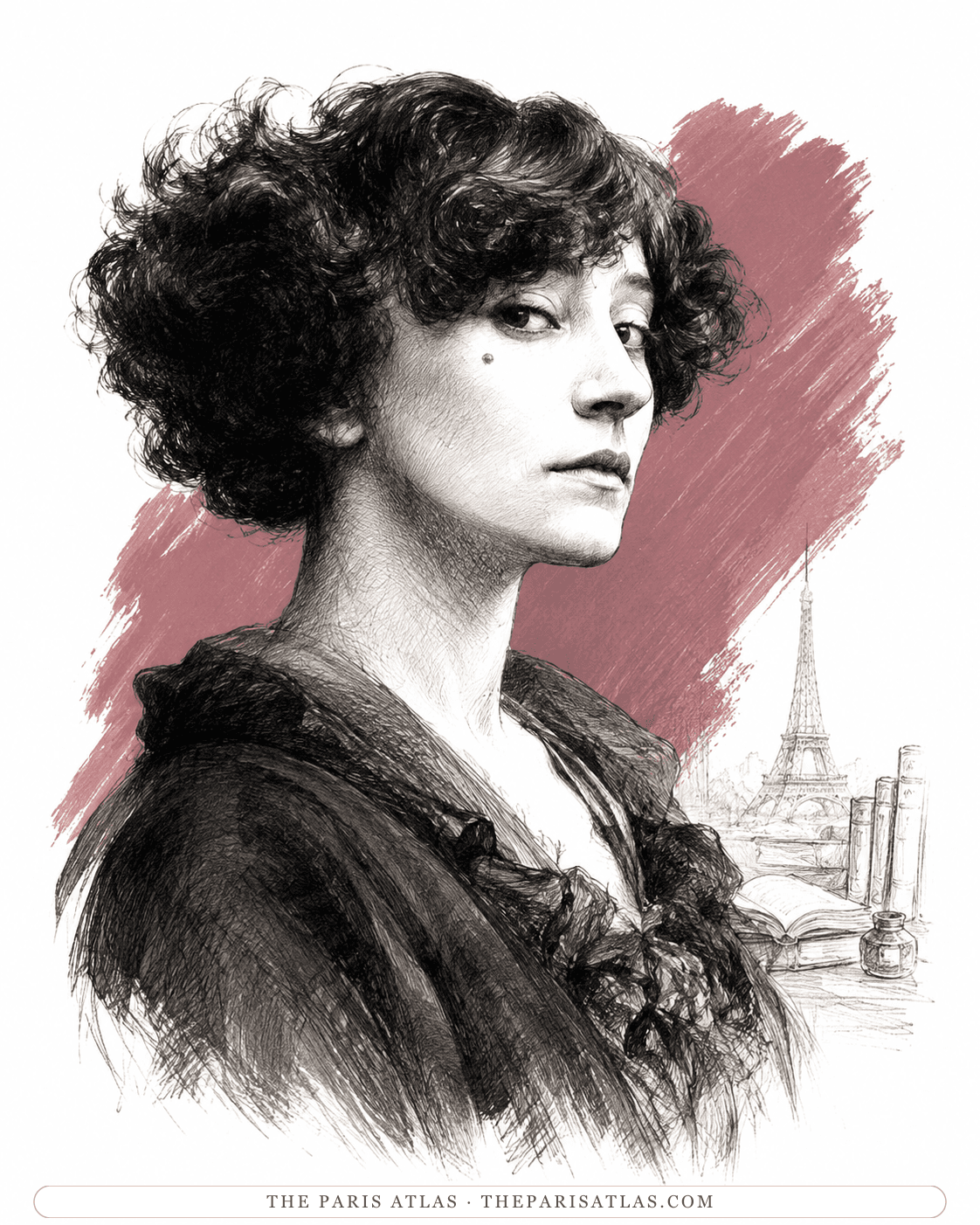
Colette frequented the Galerie Vivienne from her nearby Palais-Royal home, often with Jean Cocteau. The City of Paris describes the passage's Petit-Siroux bookshop, now the Librairie Jousseaume, as her repaire.
A glass-roofed 1820s shopping arcade near the Palais-Royal, and home to the bookshop the City of Paris calls Colette's haunt.
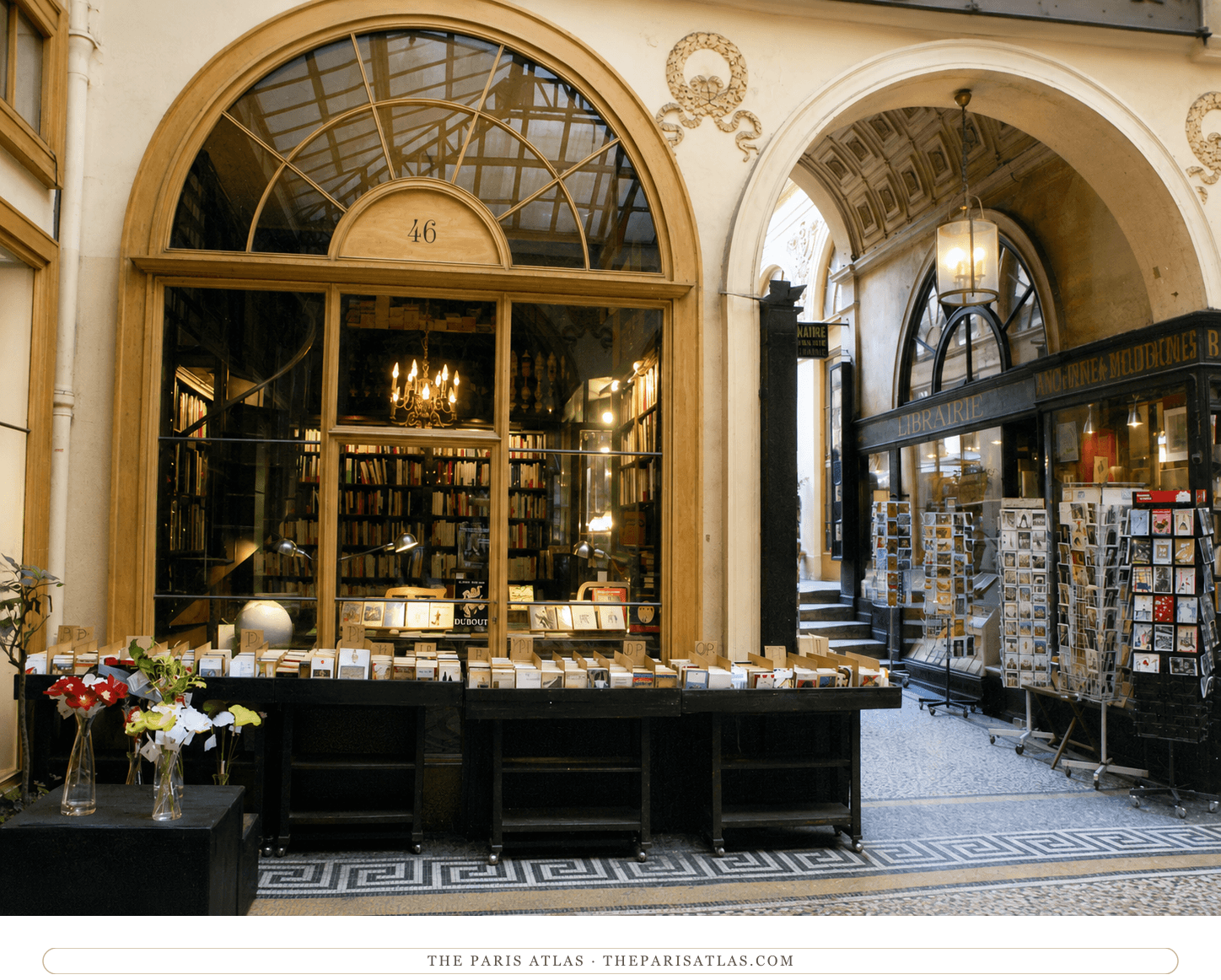
The Galerie Vivienne is one of the covered passages built into central Paris in the 1820s, a few minutes' walk north of the Palais-Royal. From her rooms on the rue de Beaujolais, Colette came here with her neighbor Jean Cocteau. At nos. 45–47 stood the bookshop Petit-Siroux, now the Librairie Jousseaume, which the City of Paris describes as her repaire — her haunt.
The passage was constructed in 1823 and inaugurated in 1826, and it kept its decoration where grander neighbors lost theirs: a mosaic floor, a glass roof and dome, and pale neo-classical plasterwork run the length of its arms. That survival is why it reads today much as it did when Colette used it.
The Librairie Jousseaume still trades from the same address, and the galerie remains a public passage rather than a preserved monument — open, free to walk, and lined with shops.
The passage is constructed off the rue Vivienne.
The Galerie Vivienne is inaugurated.
Colette, living at the nearby Palais-Royal, frequents the galerie and the Petit-Siroux bookshop.
The bookshop, now Librairie Jousseaume, still trades at nos. 45–47; the passage keeps its mosaics and glass roof.
A covered shopping passage in the 2nd arrondissement, near the Palais-Royal. It was constructed in 1823 and inaugurated in 1826, and keeps its mosaic floors, glass roof and neo-classical decoration.
Colette frequented the galerie from her nearby Palais-Royal home, often with Jean Cocteau. The bookshop here, Petit-Siroux — now the Librairie Jousseaume — is described by the City of Paris as her repaire, or haunt.
Yes. The former Petit-Siroux bookshop trades today as the Librairie Jousseaume, at nos. 45–47 of the galerie.
Yes. It is a public passage, free to walk, and lined with shops, bookdealers and tea rooms. It is open daily.
Between the Palais-Royal and the Bourse, with entrances on the rue Vivienne, the rue des Petits-Champs and the rue de la Banque.
Frequented by
Colette frequented the Galerie Vivienne from her nearby Palais-Royal home, often with Jean Cocteau. The City of Paris describes the passage's Petit-Siroux bookshop, now the Librairie Jousseaume, as her repaire.
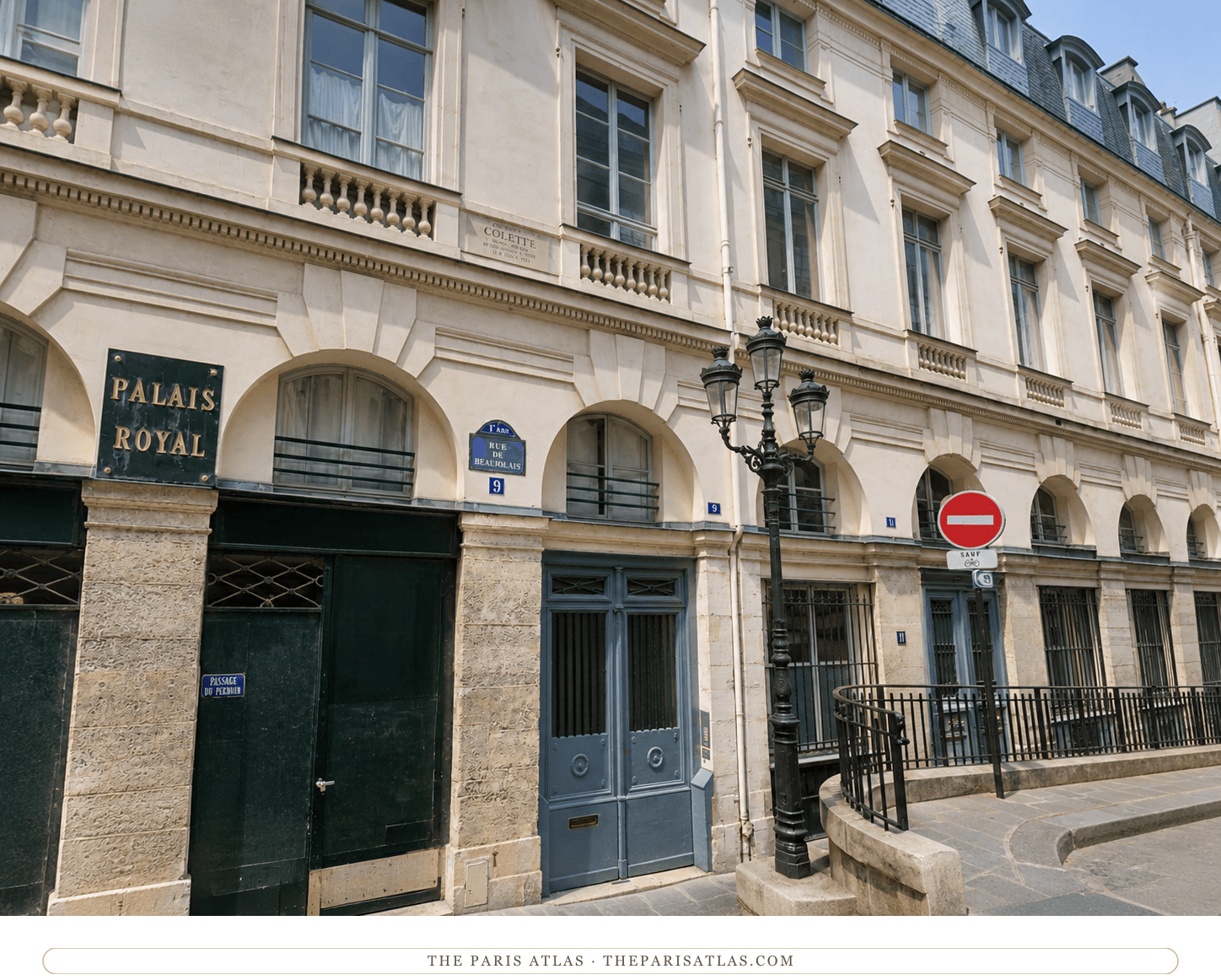
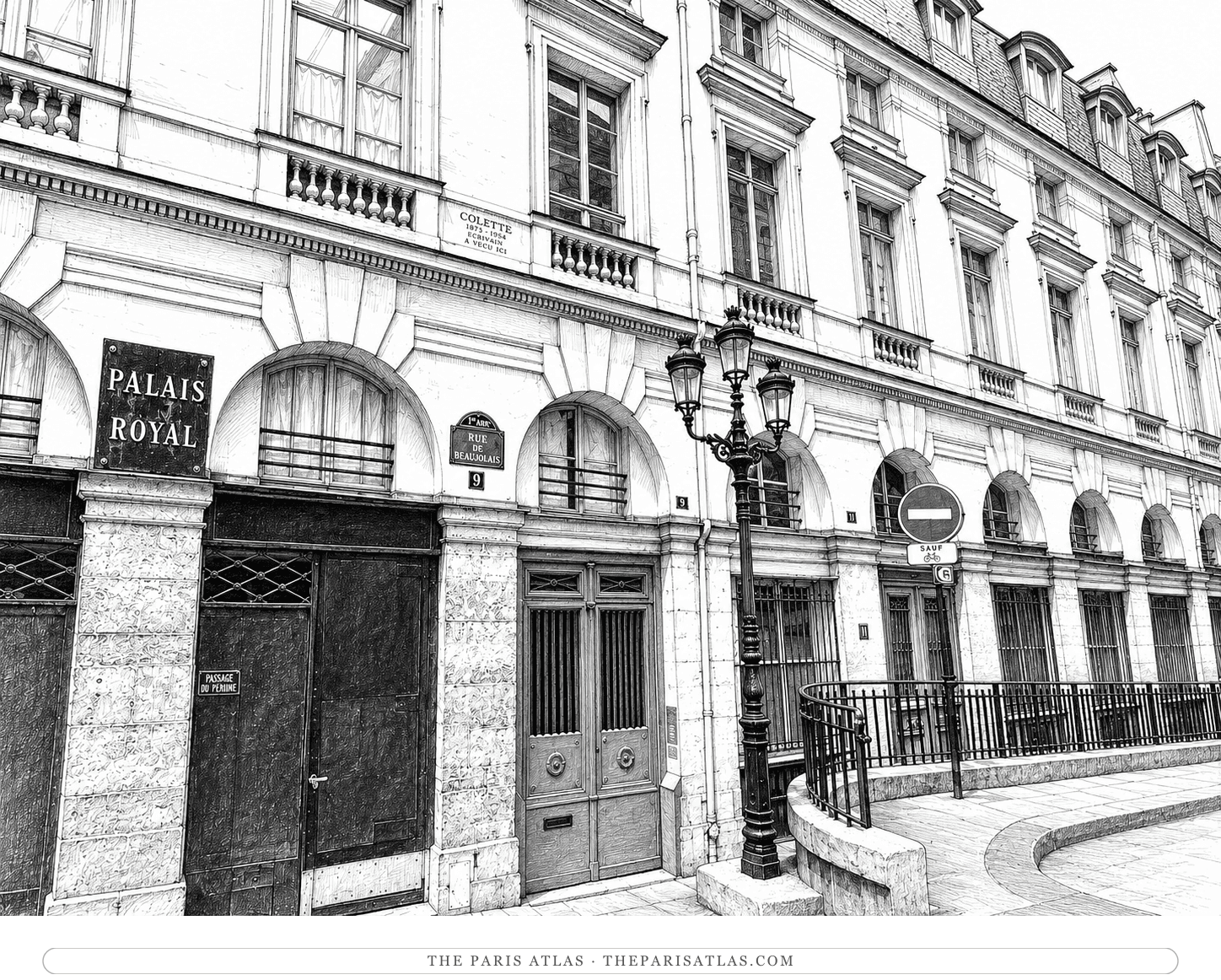
Colette's home above the Palais-Royal garden, and the address that made her its dame. She lived here from 1938 until her death in 1954.
Visit the place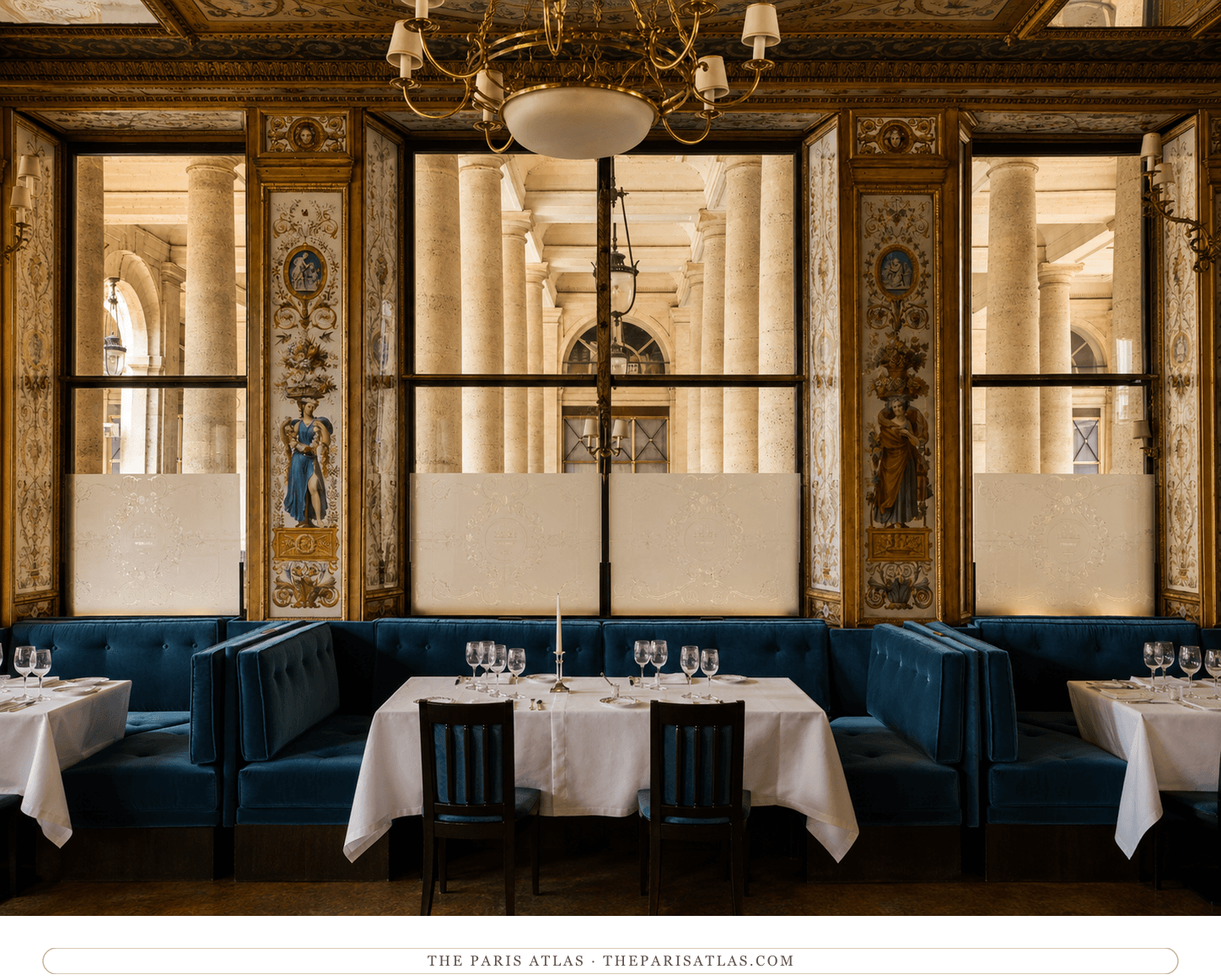
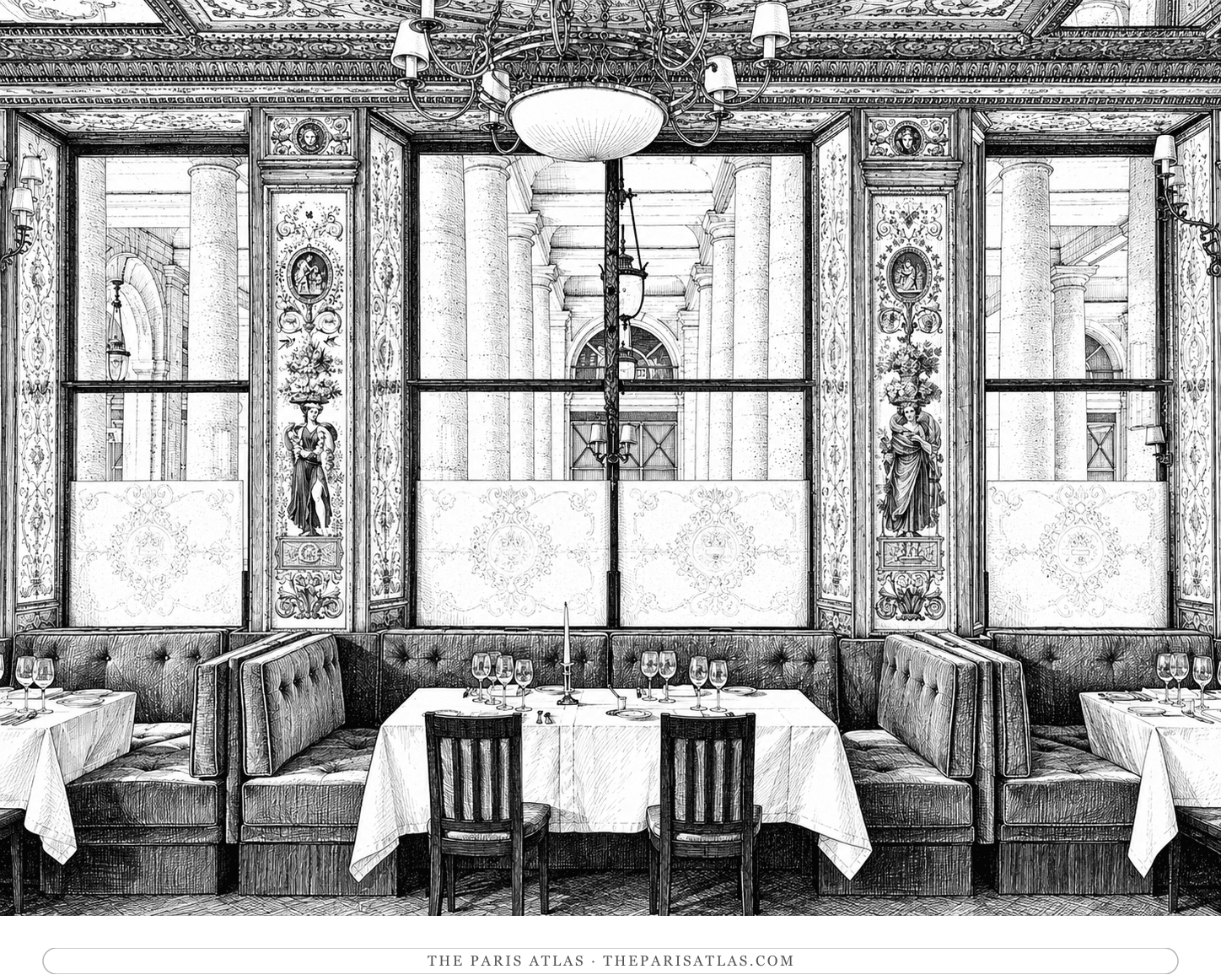
The Palais-Royal restaurant Colette favored in her last years, a few doors from her apartment. A brass plaque still marks her seat.
Visit the place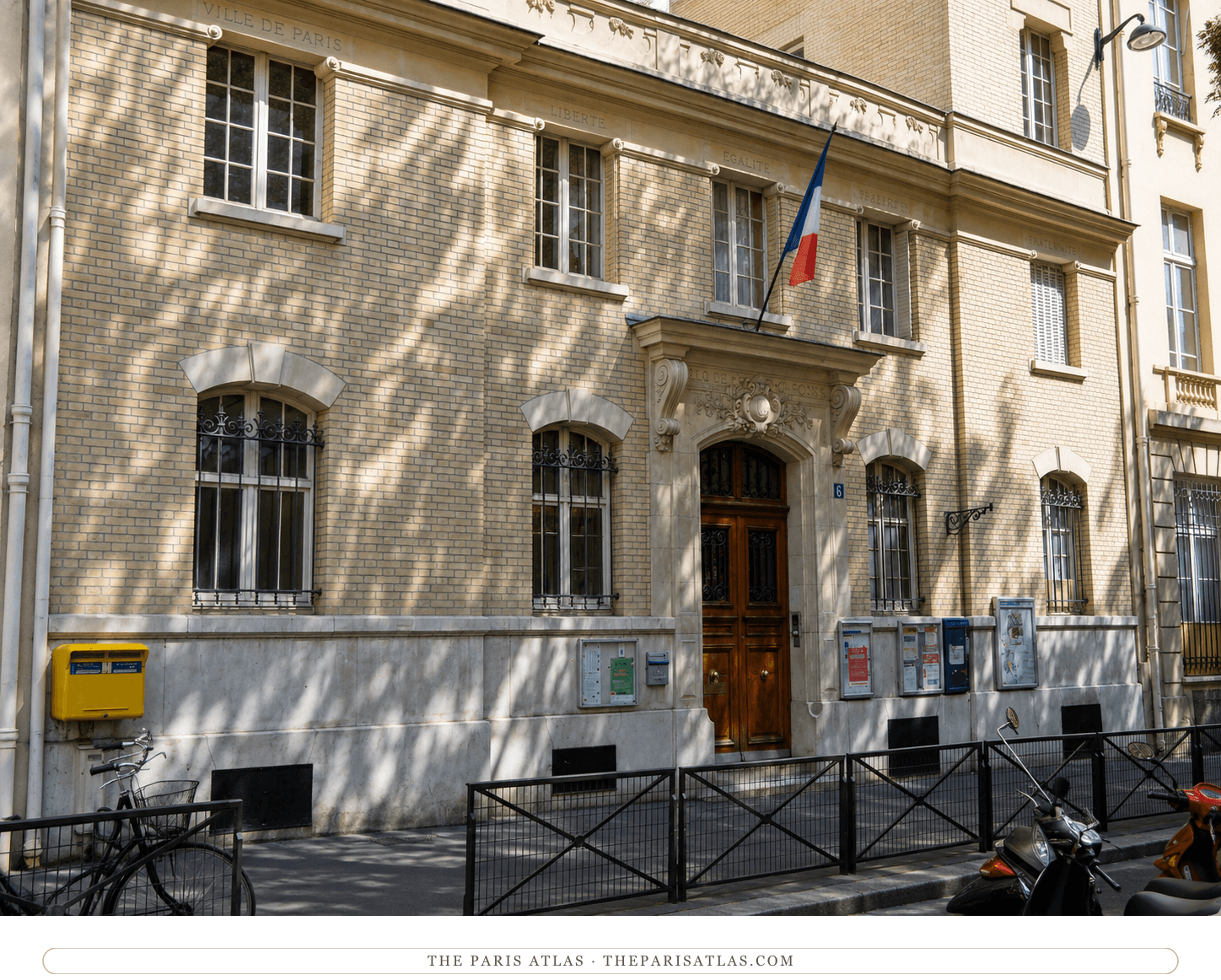
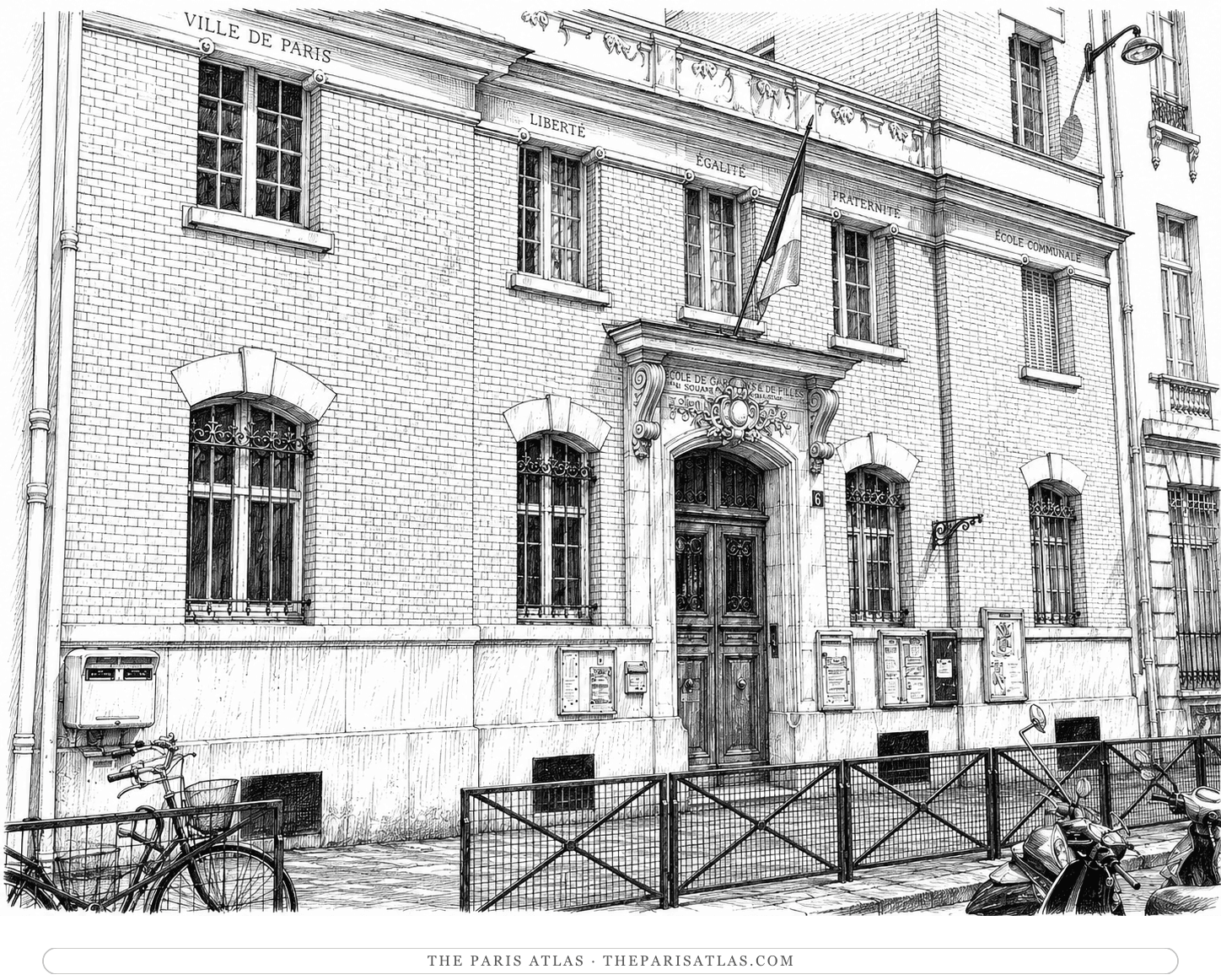
The municipal school Louis-Ferdinand Céline attended from 1900 to 1905, two minutes' walk from the family shop in the Passage Choiseul — the first classroom of the boy then registered as Louis-Ferdinand Destouches.
Visit the place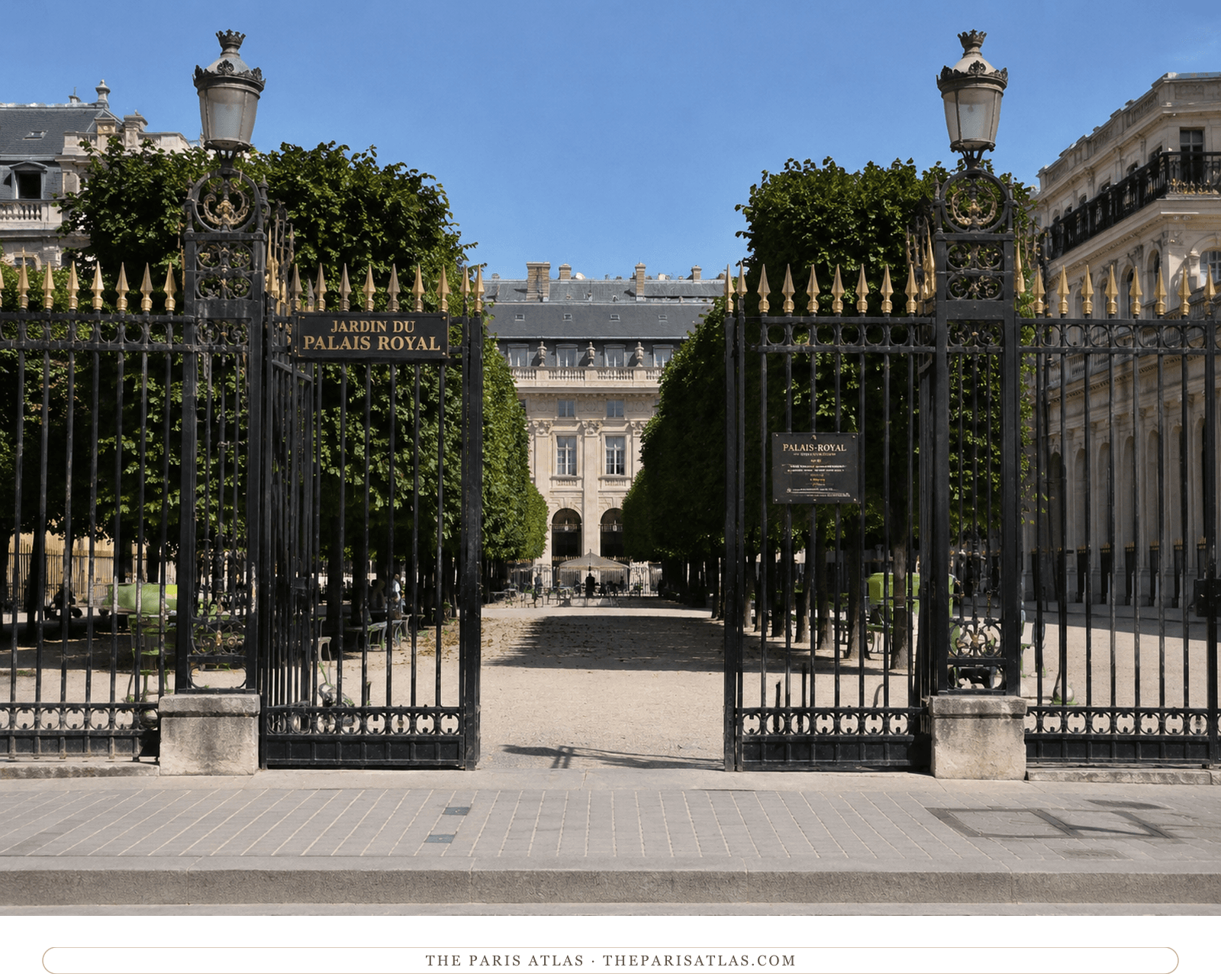
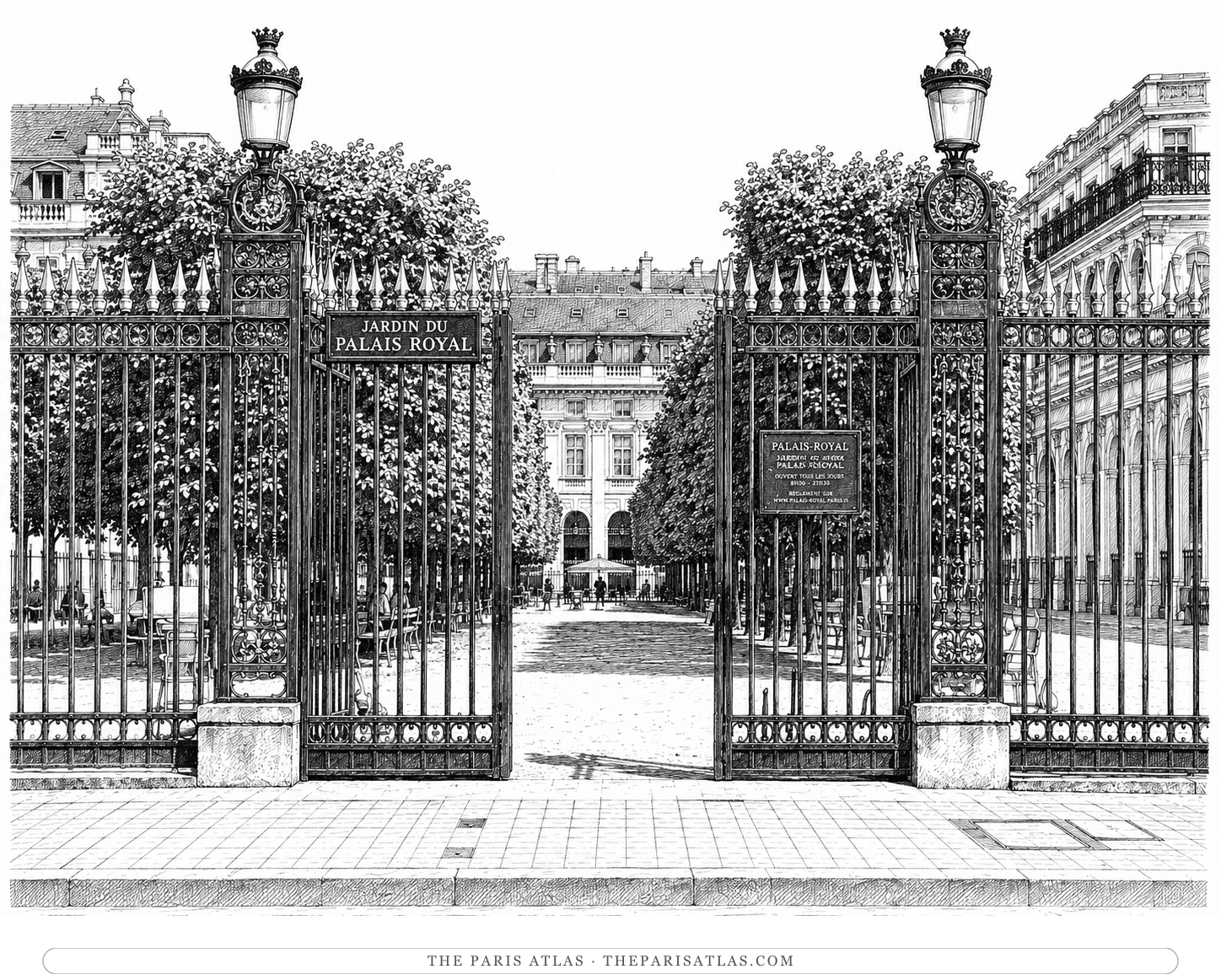
The colonnaded garden Colette watched from her Palais-Royal windows for the last years of her life, and the setting of her 1954 state funeral.
Visit the placeThe sources below include histories, archival materials, scholarly research, and official records that informed this page. They document Galerie Vivienne, the people connected to it, and its place in Paris.

Web source consulted for documented facts and historical context presented on the Galerie Vivienne page.
Web source consulted for documented facts and historical context presented on the Galerie Vivienne page.

Map data used to verify addresses, geographic coordinates, and the placement associated with Galerie Vivienne.
Official record used to verify names, dates, institutional details, or other factual information on this page.
These references provide the documented foundation for this page's history and context. Claim-level citations remain attached to the specific claims they support.
 Explore more resources
Newsletter
The cafés, studios, and walk-up flats where the work was made — one story from the map in every letter.