The Paris AtlasCharting the artists, works, and places worth returning to.

Street · Passages couverts · 2e arrondissement

Passage Choiseul

The buildingStill standing
Getting inWalk straight in
What's there nowStill the same

The covered arcade where Louis-Ferdinand Céline grew up over his mother's lace shop — reborn in his novel Death on the Installment Plan as the Passage des Bérésinas, the gaslit 'gas jar' of its narrator Ferdinand's childhood.

Address
40 Rue des Petits-Champs, 75002 Paris
Years
1827–present
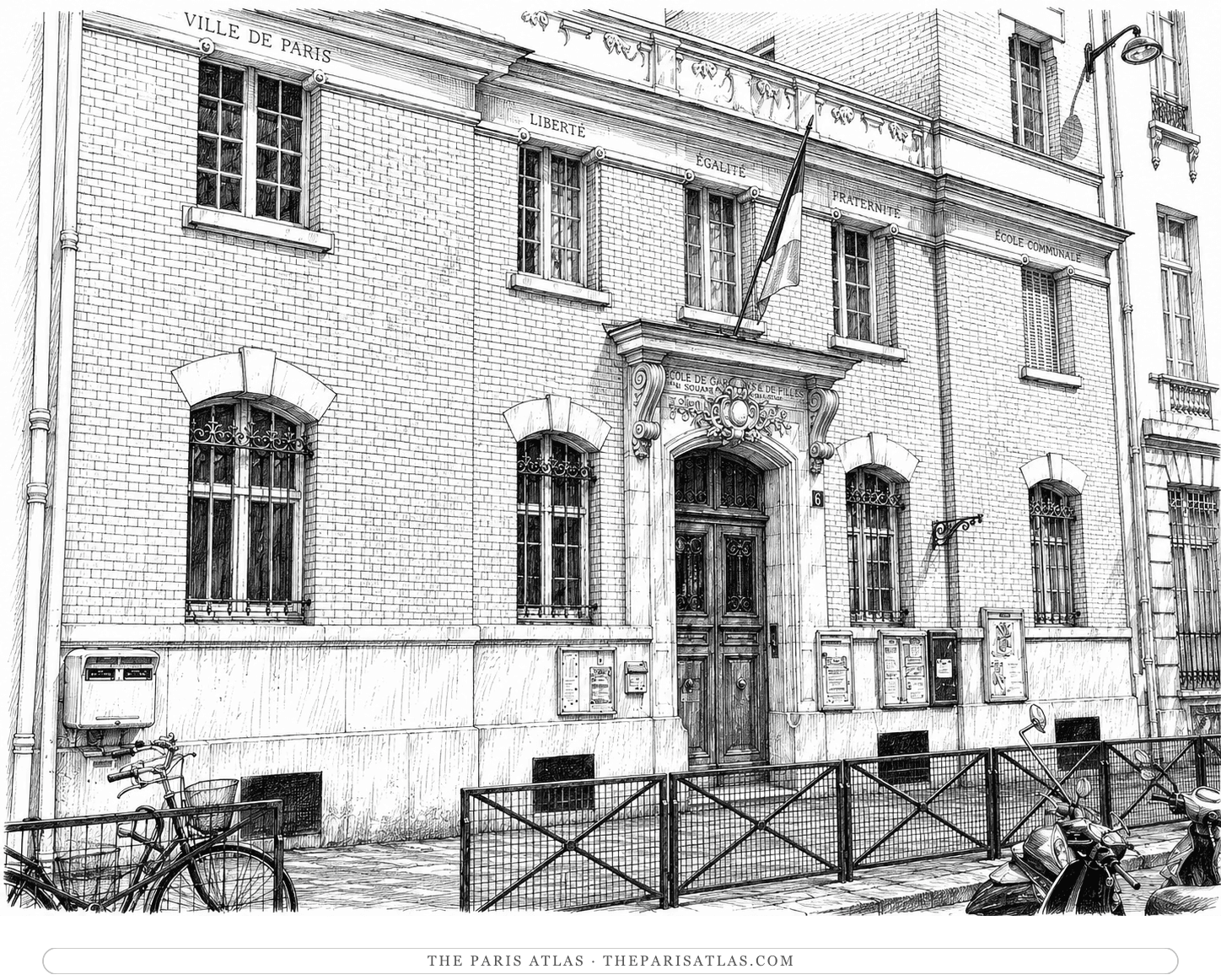
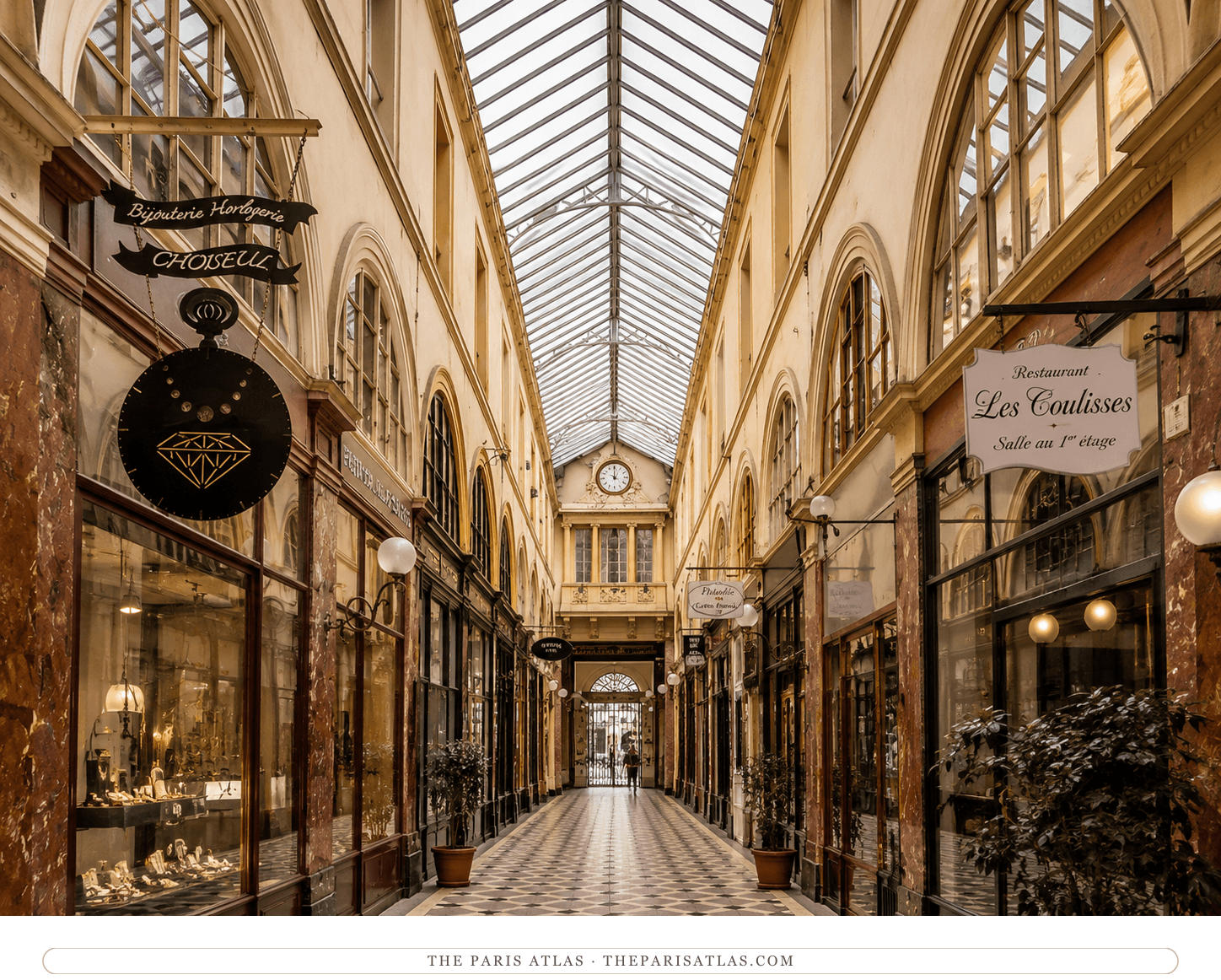
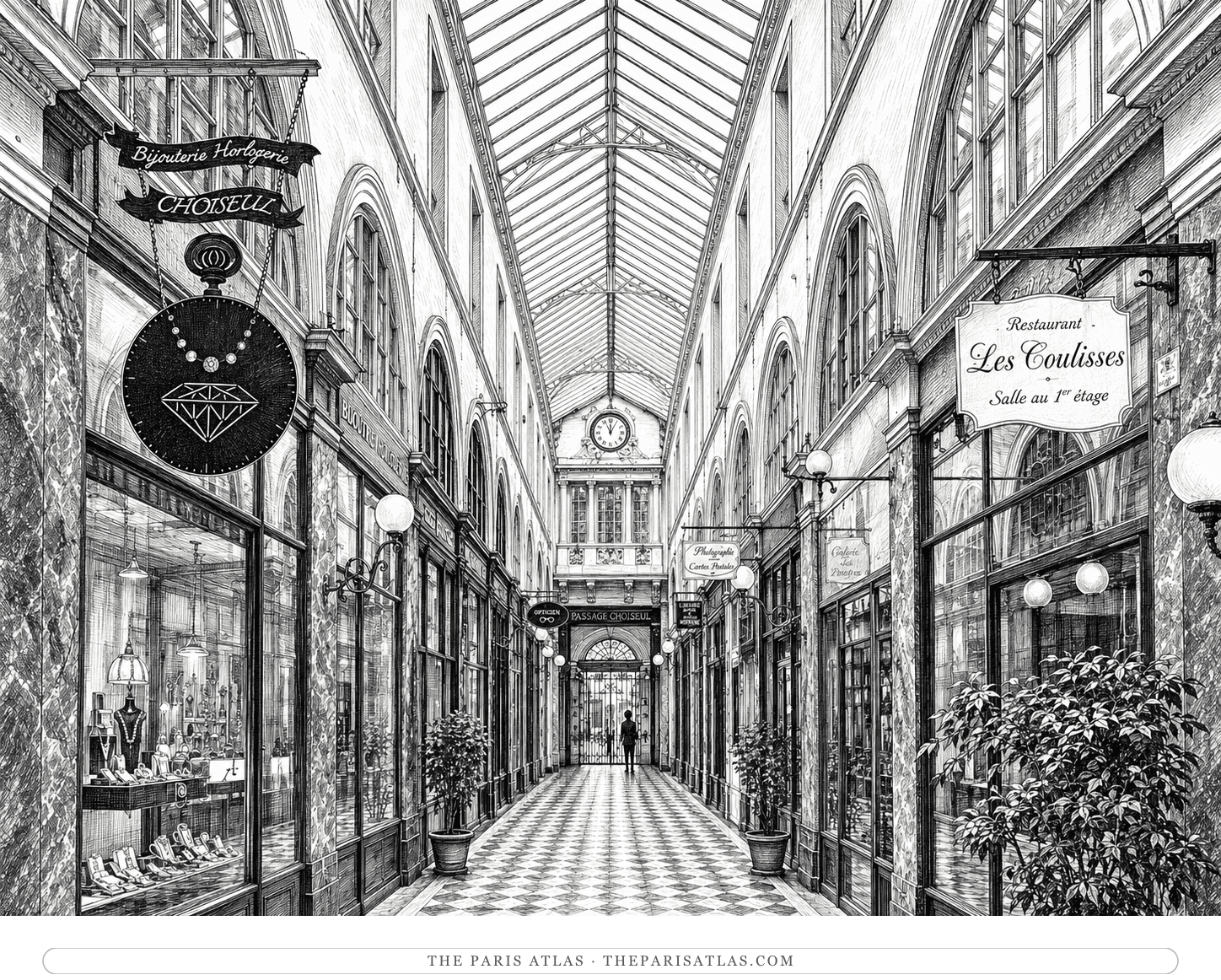
IllustrationThe Passage Choiseul in color — shopfronts and glass roof along the covered gallery

The passage today, restored and trading — the gas jar of the novel, scrubbed and relit.

Editorial illustration

The place, briefly

The passage opened in 1827, at the height of the Parisian arcade craze: a glass-roofed pedestrian street of shops running between the rue des Petits-Champs and the rue Saint-Augustin, with the stage door of the Bouffes-Parisiens — Offenbach's theater — letting out into it. By the century's end the fashion had moved to the boulevards and department stores, and the passage settled into the shabby-genteel register it would keep: small trades under a dirty glass sky.

In 1899 the Destouches family moved in — father an insurance clerk, mother a dealer in lace and old things, shop and lodgings in the gallery — and their son Louis spent his childhood under the glass. Three decades later, writing as Céline, he rebuilt it in Death on the Installment Plan as the Passage des Bérésinas: the airless glass tube where Ferdinand's family suffocates on respectability, the gaslight, the smells, the shopkeepers' wars — childhood remembered as an aquarium with the water going bad. It is among the most complete transformations of a real address in modern fiction, and the novel's readers have been making the pilgrimage ever since.

The passage itself outlived its portrait: restored in the 2010s, its glass roof renewed, it trades on — bookshops, galleries, lunch counters, the theater's back door still in service. Walk it end to end and the novel's geography assembles itself around you, scrubbed clean and considerably better lit.

Key facts

Opened
1827 — one of the great covered passages of the arcade era
The theater
The Bouffes-Parisiens' stage door opens into the gallery — Offenbach's house
1899
The Destouches family arrives; Céline's childhood over the lace shop
In Céline's fiction
The Passage des Bérésinas of Death on the Installment Plan — the 'gas jar' of Ferdinand's childhood
Today
Restored and open — shops and the theater door under a renewed glass roof

Documentary photographs

Archival and present-day photographs, reproduced with rights verified.

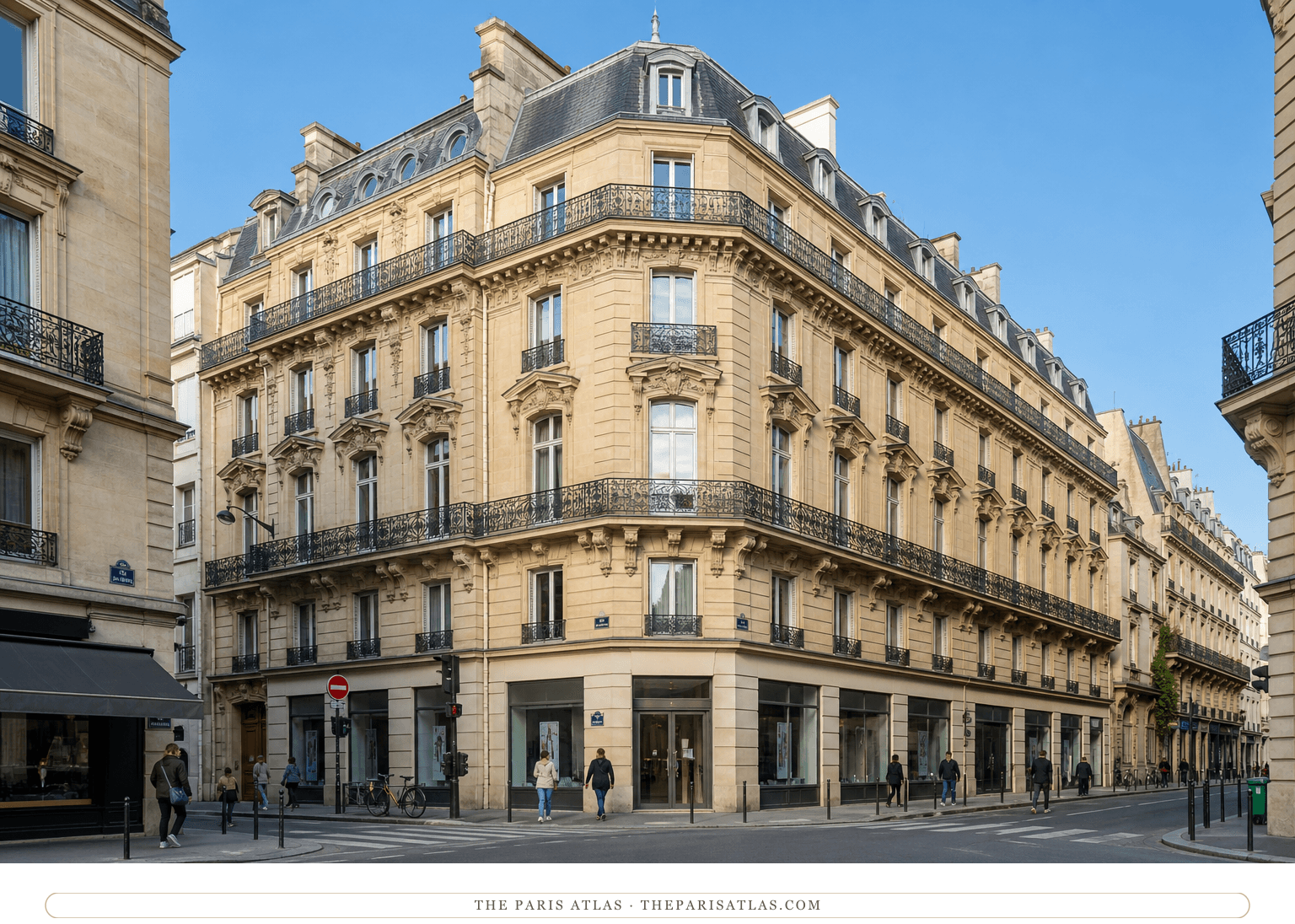
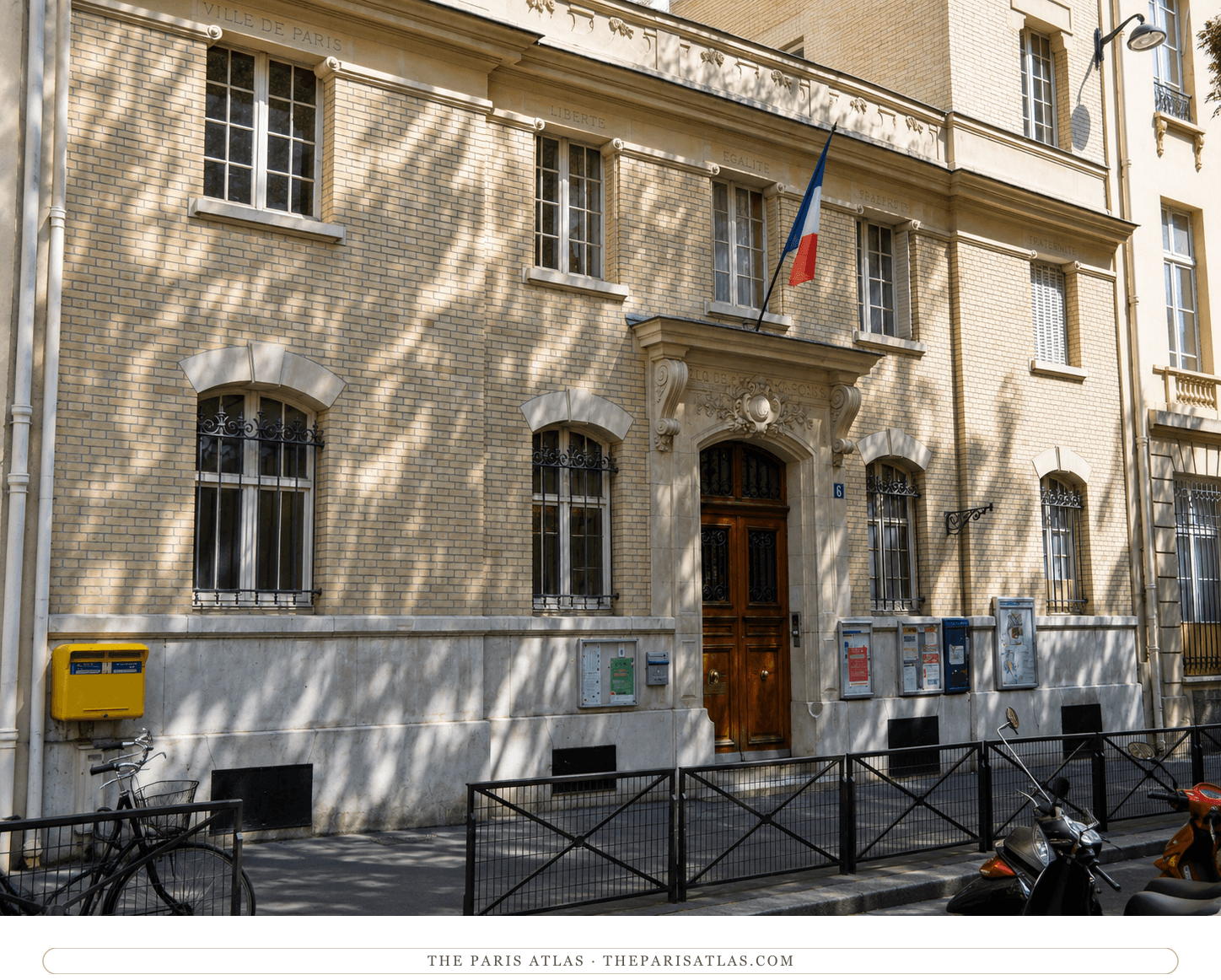
Number 64, on the right beneath its street plate. Céline's mother kept a lace shop at this address and the family lived above it; the arcade is still trading.LPLT, Wikimedia Commons · CC BY-SA 3.0
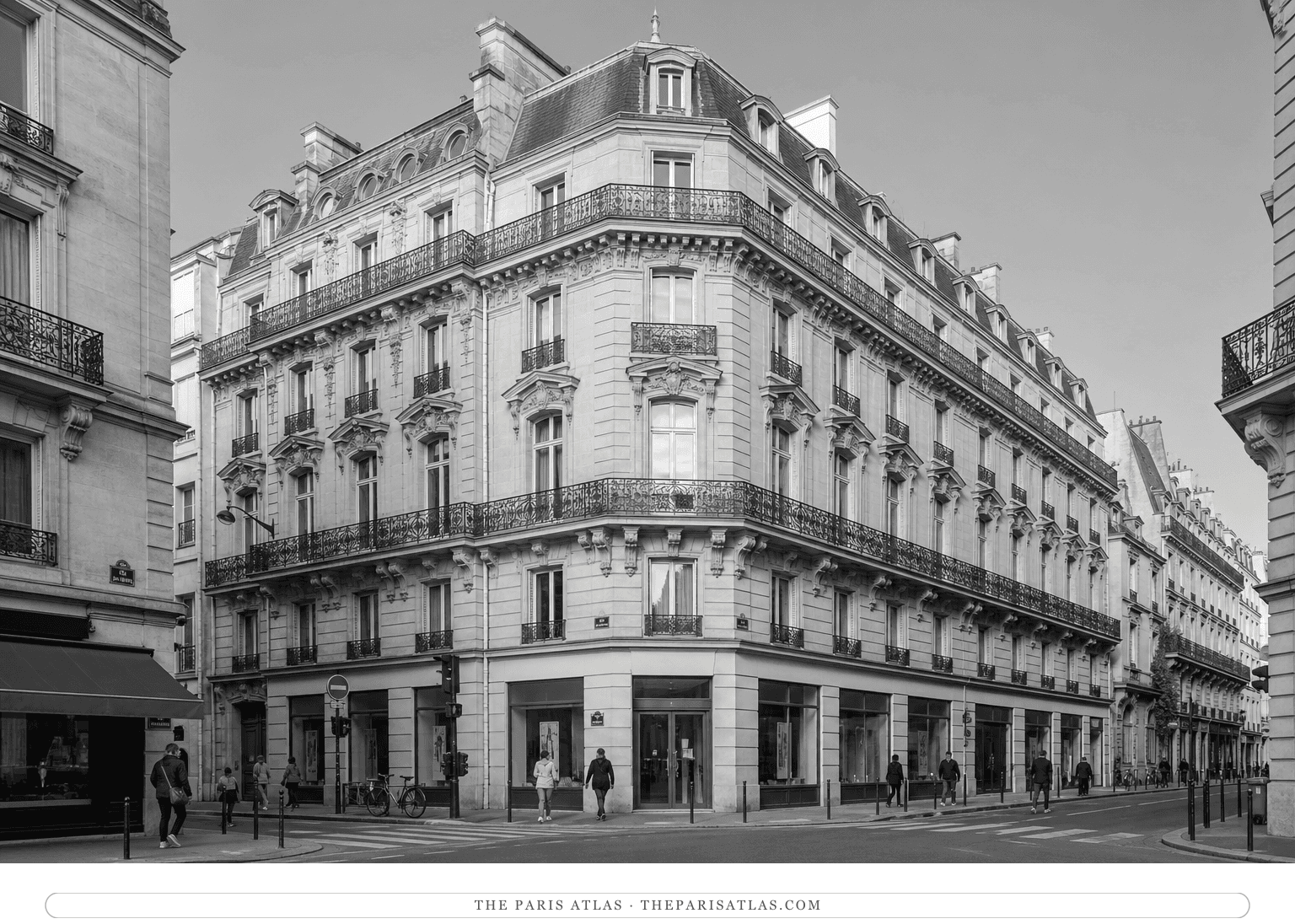
The rooms above the shop at number 64, under the glass roof of the arcade. The family's living quarters were on these floors.2011 · LPLT, Wikimedia Commons · CC BY-SA 3.0
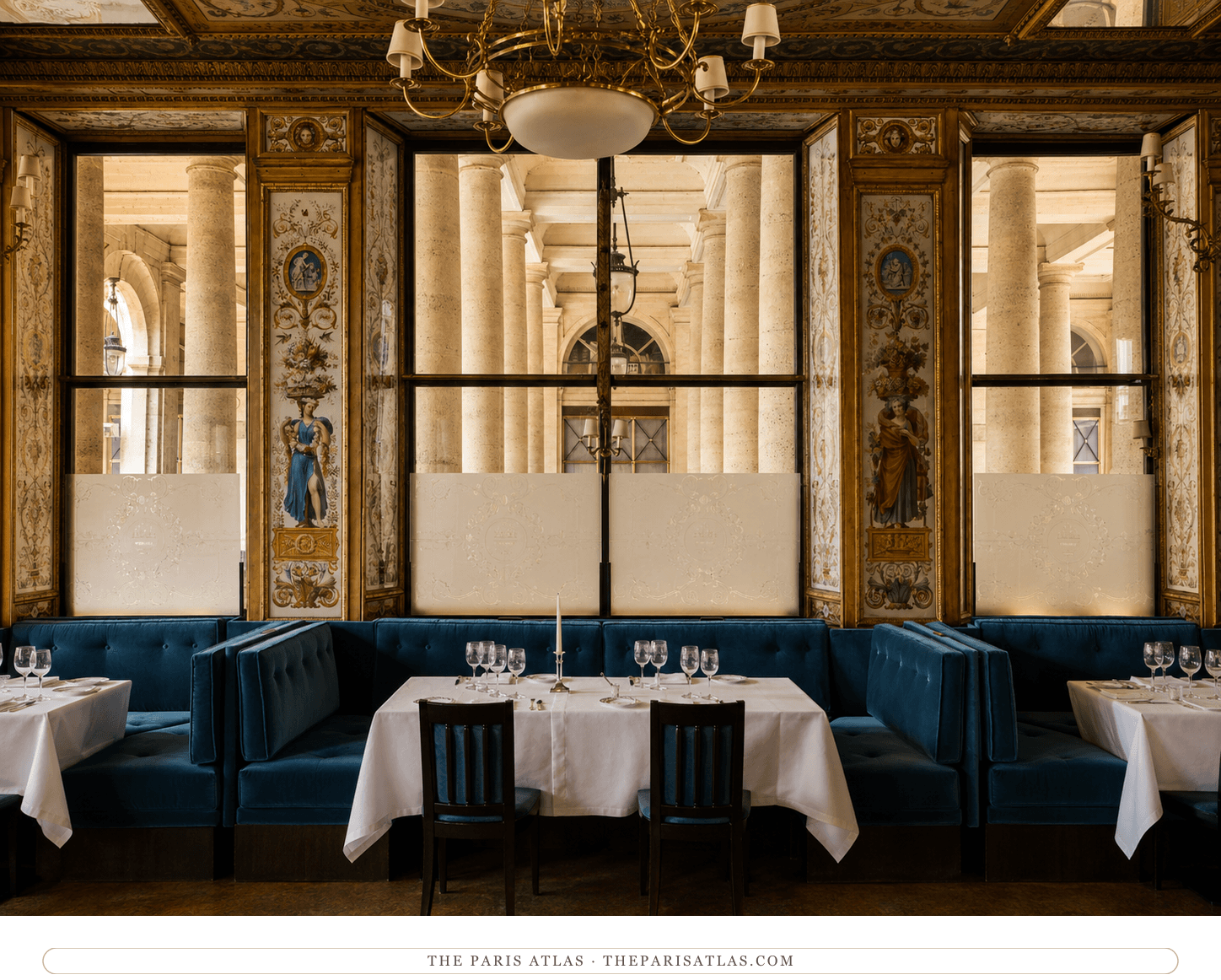
Under the glass roof — the long gallery Céline's family called home and his novel called the Passage des Bérésinas.Editorial illustration
The passage today, restored and trading — the gas jar of the novel, scrubbed and relit.Editorial illustration

Timeline

  1. 1827

    Opens between the rue des Petits-Champs and the rue Saint-Augustin — glass roof, gas light, forty shops.

  2. 1855

    Offenbach's Bouffes-Parisiens opens with its stage door on the passage; operetta comes and goes through the gallery.

  3. 1899

    The Destouches family moves in — the lace shop, the lodgings above, and a small son named Louis.

  4. 1936

    Mort à crédit renames it the Passage des Bérésinas and makes it the most famous airless childhood in French literature.

  5. Today

    Restored in the 2010s — the glass renewed, the shops trading, the pilgrimage easy.

On the map

Related books

Cover of Death on the Installment Plan by Louis-Ferdinand Céline

Depicted in its pages

Death on the Installment Plan

Louis-Ferdinand Céline · 1936

The novel rebuilds the passage of Céline's childhood as the Passage des Bérésinas — the airless glass 'gas jar' where Ferdinand's family suffocates on respectability, the most complete transformation of a real address in the book.
Writers who knew this place

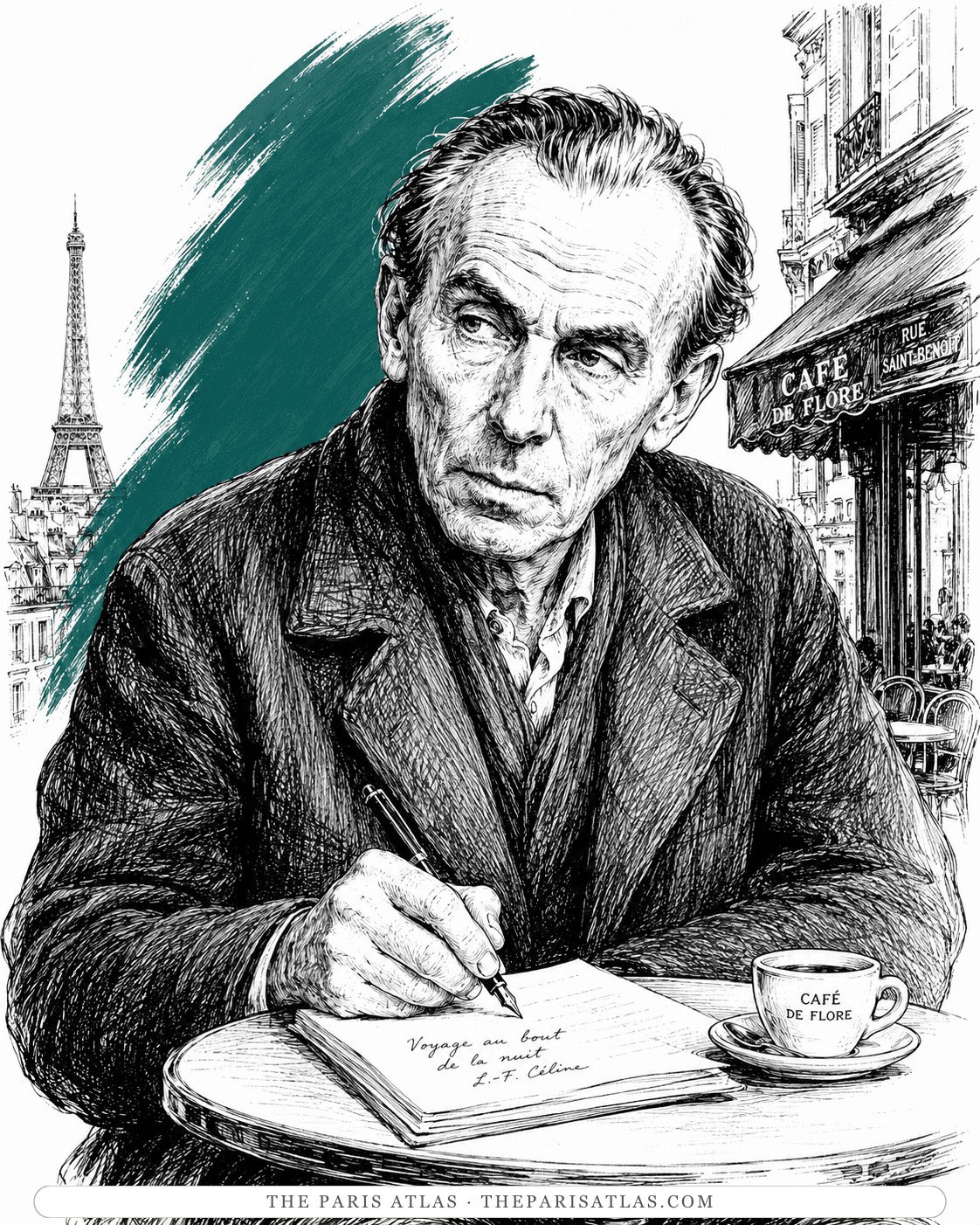
Illustrated portrait of Louis-Ferdinand Céline

Louis-Ferdinand Céline

French · The doctor of the Paris slums who wrote the century's blackest, funniest novel — and changed the sound of French prose.

Lived here · 1899–1907

The childhood address — the family arrived in 1899, when his mother opened her shop at number 67, and moved within the arcade to number 64 in 1904, staying until 1907. Death on the Installment Plan rebuilds the passage as the Passage des Bérésinas.

ParisVox — Histoire de Paris : Céline et le passage Choiseul; Frédéric Vitoux, Céline: A Biography (1992); Louis-Ferdinand Céline, Mort à crédit (1936)

Within walking distance

The Friday Letter

Paris, one address at a time.

The cafés, studios, and walk-up flats where the work was made — one story from the map in every letter.

One email a week. No spam, no selling your address. Unsubscribe anytime.