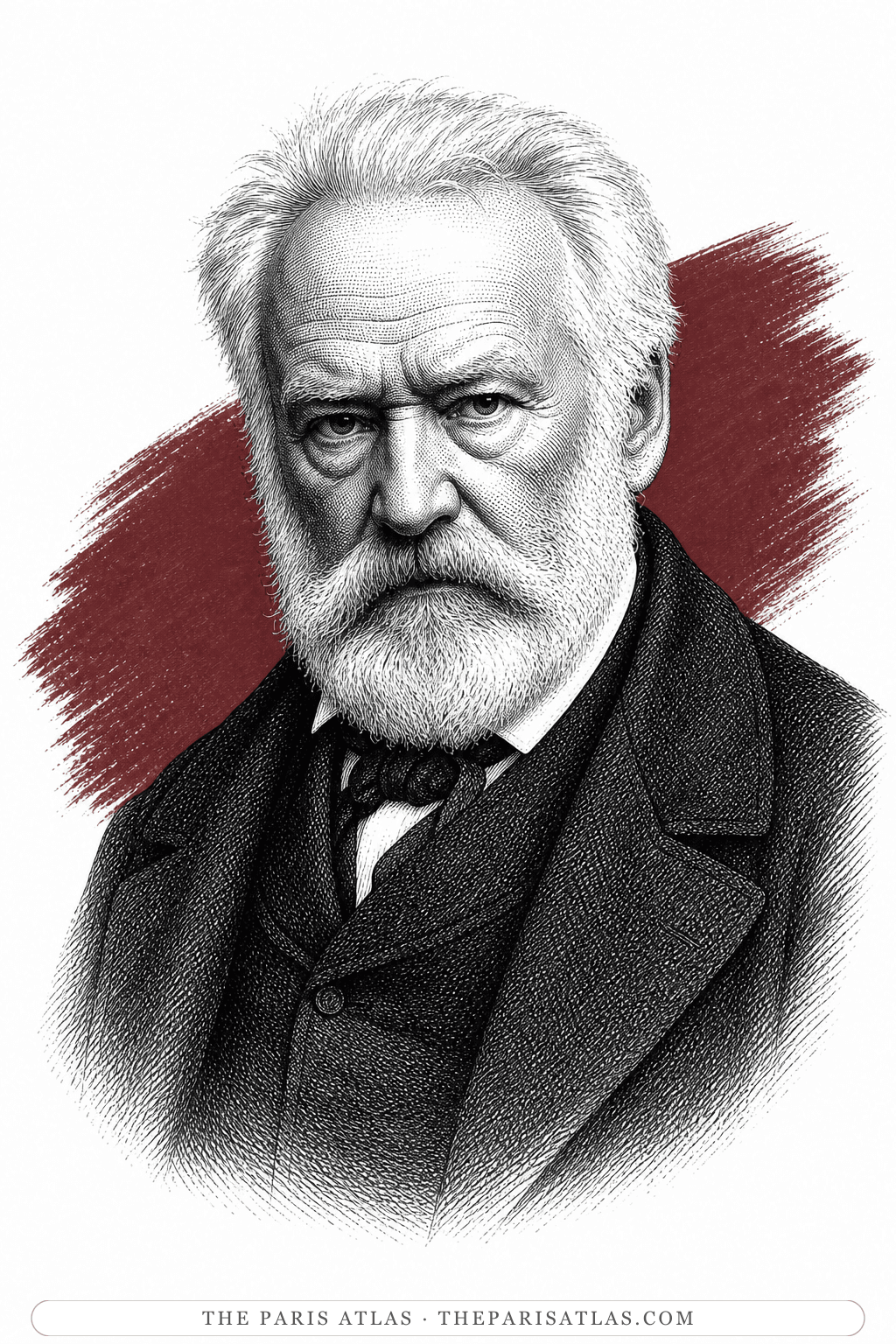
Les Misérables
Victor Hugo
Les Misérables
The late novel, where the argument Hugo won in a theatre in 1830 has become a political programme.
Read our takeHernani
Victor Hugo
by Victor Hugo
The verse play whose opening night was a fist fight, and whose first scandal was a sentence that ran over the end of a line.
Victor Hugo's Hernani opened at the Comédie-Française, the state theatre of France, on 25 February 1830, and the audience fought about it. Hugo had packed the house with his own supporters, led by the young poet Théophile Gautier in a red waistcoat, and the traditionalists were in the same room. The play is five acts of verse set in Spain in 1519. A bandit called Hernani, a sixty-year-old duke called Don Ruy Gomez de Silva, and the king of Spain all want to marry the same woman, Doña Sol, and the king is about to become the Holy Roman Emperor. Hugo's preface to the printed text calls romanticism nothing but liberalism in literature, which tells you what the fight in the theatre was actually about.
The evening became known as the bataille d'Hernani, the battle of Hernani.[1] Hugo's friends filled the seats to shout down the classicists, with Théophile Gautier leading them in a red waistcoat and the novelist Honoré de Balzac, the poet Gérard de Nerval and the composer Hector Berlioz in the crowd. From the fourth act the Romantics had the room.[2]
The fight had been coming for three years. Hugo's preface to his earlier play Cromwell, written in 1827, had become the manifesto of French Romanticism, arguing for drama built on real feeling and real history rather than on the rules inherited from classical tragedy.[2] Hernani is that argument staged at the Comédie-Française, the institution most committed to those rules.[3]
The text used here is the Hetzel edition of 1889, in a proofread transcription.[4] The play was printed in Paris in 1830, but catalogue records disagree about which house issued that first printing, so no publisher is named here. Library records do show an E. Renduel edition in Paris by 1836 and a Brussels printing by 1838.[5]
Saragossa, 1519. An old servant, Doña Josefa Duarte, is waiting up in a bedroom for a man to come in by the back stairs. The man who arrives is not the one she expects: it is Don Carlos, the king of Spain, who hides in a cupboard to watch. The woman of the house is Doña Sol de Silva, promised to her elderly uncle Don Ruy Gomez de Silva and in love with a bandit called Hernani. Hernani has been an outlaw since the king's father had his father executed.[4]
All three men pursue her through the first two acts, the king by abduction and the duke by contract. In the third act Hernani takes refuge in the duke's castle in disguise, and the duke gives him shelter under the laws of hospitality. When the king arrives demanding the fugitive, Don Ruy Gomez refuses to hand over a guest, even after Hernani reveals himself, and lets the king take Doña Sol as a hostage instead.[4]
Hernani then makes the bargain the play turns on. In gratitude, he gives Don Ruy Gomez a hunting horn and swears that whenever the duke sounds it, he will kill himself on the spot. In the fourth act, at Aachen, Don Carlos is elected Holy Roman Emperor, discovers a conspiracy against his life, and finds Hernani among the conspirators. Hernani declares his real name and rank in open court: Jean d'Aragon, grand master of Avis. The new emperor pardons everyone and gives Doña Sol to him.[4]
The fifth act is the wedding night in Saragossa. Hernani and Doña Sol are alone on a terrace when a horn sounds in the dark. Don Ruy Gomez appears in a domino mask and holds Hernani to the oath, offering him a choice of poison or a dagger. Doña Sol pleads, fails, and then takes the flask and drinks first. Hernani drinks what she leaves.
They die on stage talking about the dark and about whether it hurts. Doña Sol's last speech refuses the word: Dead? No, we are sleeping; he sleeps; he is my husband, you see; we are lying here together; this is our wedding night. She asks the duke not to wake him. The play's final line belongs to Don Ruy Gomez, standing over both bodies, and it is two words and a curse on himself.
The scandal starts in the first six words of the play. A servant hears knocking and says, in effect, can that be him already, and then adds that the knocking is at the hidden staircase. Hugo splits that phrase across the line break: the word escalier, staircase, ends one twelve-syllable line, and its adjective dérobé, hidden, opens the next. The noun and the word that completes it are on different lines.
That looks like nothing now, and in 1830 it was the declaration of war. French classical verse treated the alexandrine as a closed unit, with sense and line ending together, and the rule was a matter of decorum rather than convenience. Breaking it in the opening seconds told the audience that the evening would not be following the rules, before any character had done anything. The play then breaks a good many more, mixing a king and a bandit in one room and running comedy into tragedy.
Hugo used the printed preface to say what the argument was, and he made it political rather than aesthetic. Romanticism, so often badly defined, is in the end, and this is its real definition, if one looks at it only on its militant side, nothing but liberalism in literature. He goes on to say that literary freedom is the daughter of political freedom, and offers a slogan: to a new people, a new art.
The preface also sets a limit, which is the part usually left out of the quotation. Hugo wants freedom that reconciles itself with order in the state and with art in literature. He puts it as a refusal of both extremes: no red heels and no red caps. The phrase means neither the aristocrats' shoes nor the revolutionaries' bonnets. In letters as in society, he writes, no etiquette and no anarchy, but laws. He also promises a later attack on theatre censorship, which he calls a small inquisition of the mind with its own secret judges and its own death penalty.
Hernani's best-known speech is a warning to the woman who loves him. In the fourth scene of act three he tells Doña Sol to take the duke, take hell, take the king, because anything that is not him is worth more than he is. Then he corrects her idea of what he is: you take me, perhaps, for a man like other men, an intelligent being who runs straight at the goal he dreamed of. Undeceive yourself, he says. I am a force that goes.
The line is hard to carry into English because the French verb is bare. Une force qui va is a force that simply goes, with no object and no destination. Hernani spells out the consequence in the lines that follow: a blind and deaf agent, driven by a breath he did not choose, going down and never stopping. The speech is doing plot work as well as character work. Hernani has just given away his own life on a hunting horn, and this is the play explaining why a man would do that.
Hugo builds the ending out of a single object handed over in act three. Don Ruy Gomez has just protected Hernani from the king at the cost of Doña Sol, and Hernani repays him with a hunting horn and an oath: sound it, and I kill myself wherever I am. The horn then sits unused through the whole of act four, while the king becomes emperor, pardons the conspirators and gives Doña Sol to Hernani. Every good thing that happens is happening on borrowed time, and the audience knows the terms.
The pay-off is quiet, which is unusual for Hugo. The horn sounds offstage in the middle of a wedding night, and an old man in a mask walks on with poison. Hugo gives the dying couple small, practical exchanges rather than speeches: is it dark, does it hurt, can you see lights yet. Doña Sol's last lines deny the fact outright and ask the duke not to wake her husband, and the final line of the play is Don Ruy Gomez looking at the two of them and damning himself.
Le romantisme, tant de fois mal défini, n'est, à tout prendre, et c'est là sa définition réelle, si l'on ne l'envisage que sous son côté militant, que le libéralisme en littérature.
À peuple nouveau, art nouveau.
Détrompe-toi. Je suis une force qui va !
Hugo splits a phrase across the end of a twelve-syllable line in the opening seconds, putting the noun escalier on one line and its adjective dérobé on the next. That break is what the audience of 25 February 1830 came to fight about.
Romanticism, he writes, is nothing but liberalism in literature, and literary freedom is the daughter of political freedom. He also sets his own limit: no red heels and no red caps, no etiquette and no anarchy, but laws.
A hunting horn given away in gratitude in act three, with a promise of suicide attached, sits unused through an imperial election and a general pardon before it sounds on a wedding night.
Five acts, about 240 pages in the Gallimard edition, and out of copyright. A proofread transcription of the Hetzel text is on French Wikisource, and nineteenth-century English translations by Camilla Crosland and Frederick L. Slous are also out of copyright.
A bandit in the mountains, outlawed since the king's father had his own father executed. Reveals himself in act four as Jean d'Aragon, grand master of Avis, and has already promised his life away on a hunting horn.
Betrothed to her elderly uncle, wanted by the king, and in love with an outlaw. Drinks the poison first on her wedding night and refuses, in her last speech, to use the word dead.
A duke of about sixty, betrothed to his own niece. Shelters Hernani from the king because hospitality forbids handing over a guest, then holds him to the oath on his wedding night.
King of Spain, hiding in a cupboard in the first scene and elected Holy Roman Emperor in the fourth act. Pardons the men who plotted to kill him and gives Doña Sol to Hernani.
The old servant who opens the play waiting at a back door, and who speaks the broken line that scandalised the first audience.
1827
Hugo's preface to his play Cromwell becomes the manifesto of French Romanticism, arguing for drama built on real feeling and real history rather than classical rules.
25 February 1830
Hernani opens at the Comédie-Française. Hugo's supporters, led by Théophile Gautier in a red waistcoat, shout down the traditionalists, and from the fourth act the Romantics hold the room.
1830
The play is printed in Paris with Hugo's preface, which defines romanticism as liberalism in literature. Catalogue records disagree on which house issued it.
1836
E. Renduel issues an edition in Paris, followed by a Brussels printing in 1838.
1889
Hetzel publishes the edition of the play whose text is the basis of the standard modern transcription.


Les Misérables
Victor Hugo
The late novel, where the argument Hugo won in a theatre in 1830 has become a political programme.
Read our takeThe Hunchback of Notre-Dame
Victor Hugo
Published a year later, and the first big success of the movement this play fought for.
Read our takeLes Contemplations
Victor Hugo
The poems, whose earliest pieces come from the same years as the battle of Hernani.
Read our takeThe Toilers of the Sea
Victor Hugo
The exile novel, thirty-six years on, by which time Hugo was the establishment he had attacked.
Read our takeThree men want to marry the same woman in Spain in 1519: a bandit, her sixty-year-old uncle, and the king who is about to be crowned Holy Roman Emperor. The bandit wins her, having already promised to kill himself whenever the uncle sounds a hunting horn.
The fight in the audience at the Comédie-Française on 25 February 1830. Hugo had filled the house with supporters, led by the young Théophile Gautier in a red waistcoat, and the defenders of classical rules were there too. From the fourth act the Romantics had the room.
French classical verse required sense and line to end together. In the play's first six words Hugo puts the noun escalier at the end of one line and its adjective dérobé at the start of the next, so the phrase runs over the break. That announced, in seconds, that the rules were being abandoned.
That the freedom he wants in verse and in the theatre is the same freedom being argued about in politics. His preface says literary freedom is the daughter of political freedom, and also sets limits: no etiquette and no anarchy, but laws.
On the wedding night. Don Ruy Gomez sounds the horn, Hernani honours the oath, and Doña Sol drinks the poison first so that she dies with him. The last line of the play is the duke standing over both bodies and damning himself.
Yes. The nineteenth-century translations by Camilla Crosland and Frederick L. Slous are out of copyright, and Howard Fertig reprinted them in Three Plays by Victor Hugo. The Methuen collection uses William D. Howarth's modern translations, which are in copyright.
Yes. Don Carlos is Charles the First of Spain, elected Holy Roman Emperor as Charles the Fifth in 1519, the year the play is set. The fourth act stages that election at Aachen.
Explore authors with a similar voice, perspective, and influence.
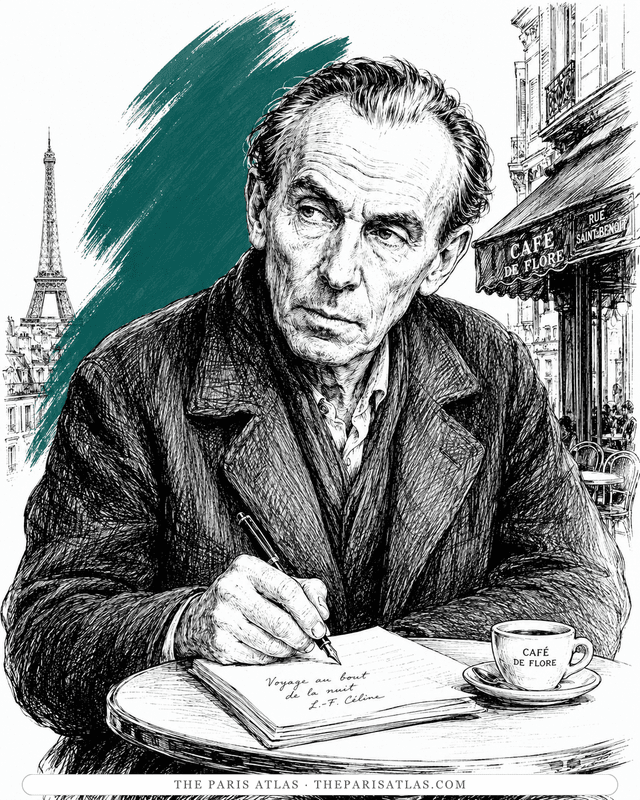
The doctor of the Paris slums who wrote the century's blackest, funniest novel — and changed the sound of French prose.
View author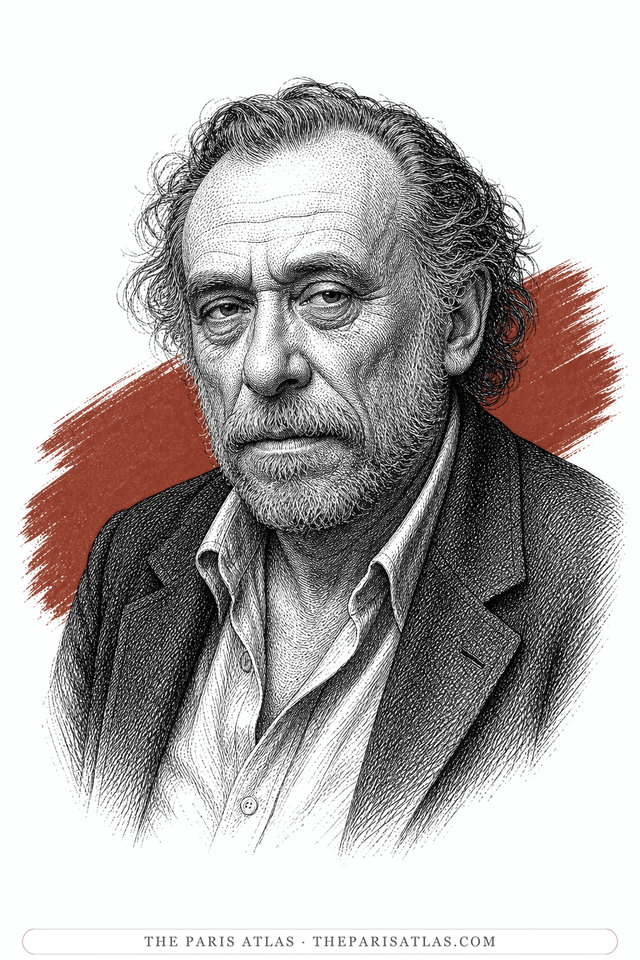
American poet and novelist of Los Angeles rooming houses, racetracks and the post office, who quit his job to write when a publisher offered him a hundred dollars a month. He came to Paris once, in September 1978, drank his way through a live television book programme and walked off the set — and French television has been replaying it ever since.
View author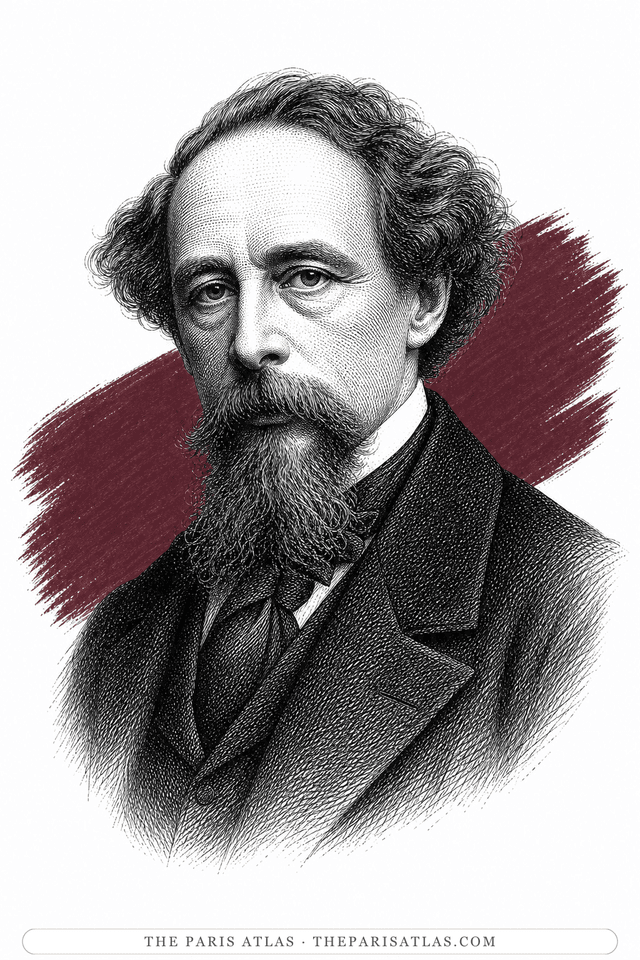
The most popular English novelist of the nineteenth century, who was never a Paris resident in the ordinary sense but kept coming back for twenty-five years: one winter in a rented mansion on the rue de Courcelles, a second winter on the Champs-Élysées writing Little Dorrit, repeated compulsive visits to the Paris Morgue — the riverside building where the city displayed its unidentified dead to the public — and a novel of the French Revolution, A Tale of Two Cities, that has shaped how English readers picture Paris ever since.
View authorThe sources below include the primary text, editions, scholarship, archival materials, and other records that informed this page. They document Hernani, its publication, and its place in literary history.


Encyclopédie Larousse on the bataille d'Hernani, the fight in the audience on the opening night.
The Comédie-Française's own history, for the standing of the theatre that staged the play.
Library catalogue records for the editions. The source for the conflicting 1830 imprints, the 1836 Renduel and 1838 Brussels printings, and each modern ISBN and translator.
The primary text represented by this page, used for descriptions of the work’s contents and for any quoted passages shown here.
The primary text is the baseline reference for every book page. Additional references document publication history, interpretation, and historical context where that evidence is available.
 Explore more resources