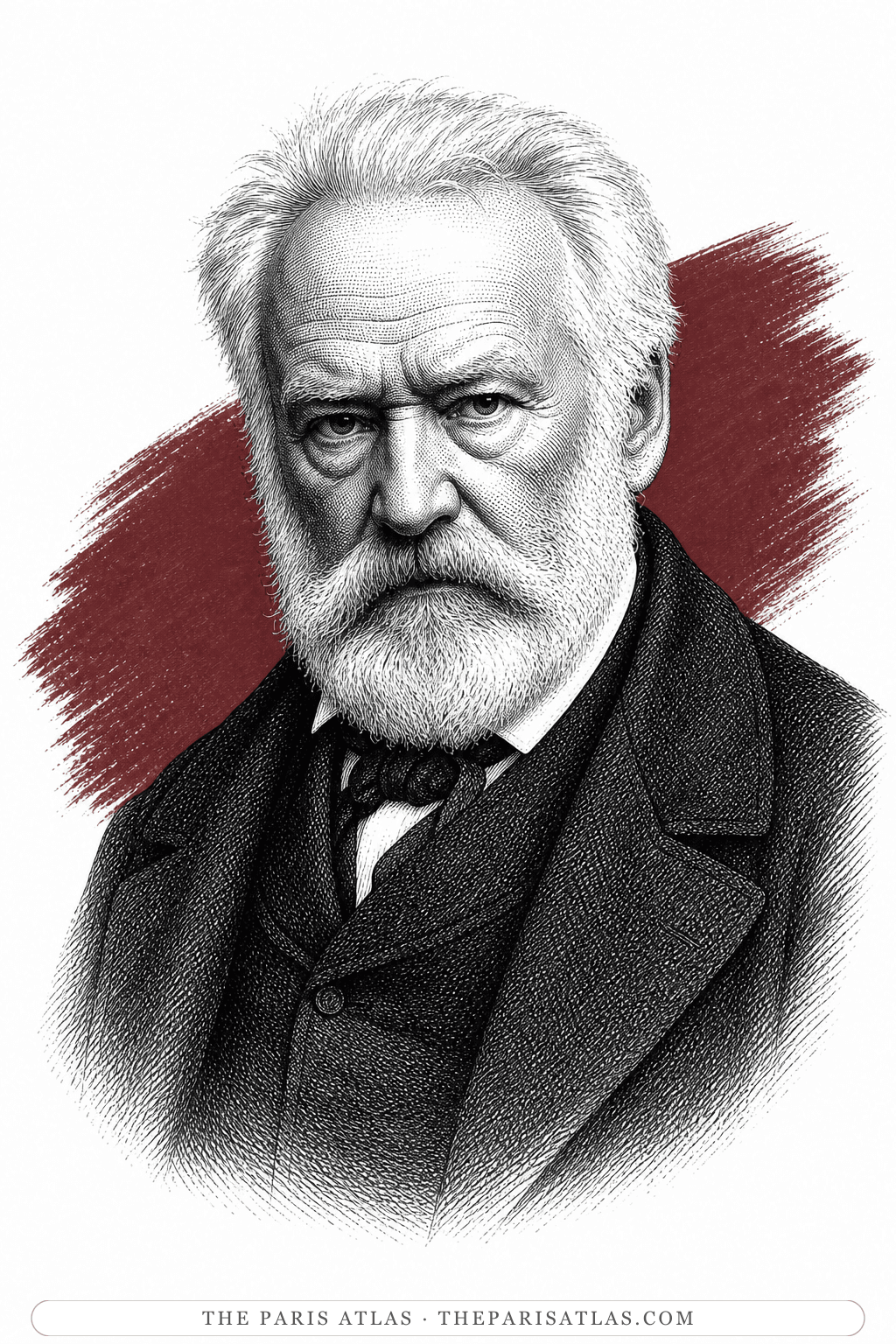
Les Misérables
Victor Hugo
Les Misérables
The later Paris novel, which does the same thing on a bigger scale and stops for the sewers instead of the roof.
Read our takeThe Hunchback of Notre-Dame
Victor Hugo
by Victor Hugo
Hugo's French title names the cathedral, not the bell-ringer. The book is about the building, and it saved it.
Victor Hugo set his second novel in the Paris of 1482 and published it in 1831. Charles Gosselin was the publisher. Esmeralda, a young street dancer, is wanted by three men: Claude Frollo, the archdeacon of Notre-Dame; Phoebus de Châteaupers, a captain of the archers; and Quasimodo, the deaf bell-ringer Frollo raised. Frollo has Esmeralda condemned for a murder he committed, and Quasimodo carries her into the cathedral and claims sanctuary for her. Around that plot Hugo stops twice at length. The first halt is a chapter on the building itself, followed by a survey of medieval Paris from the towers. The second is the pair of chapters where Frollo looks at a printed book and says the printing press will destroy the cathedral.
The French title is Notre-Dame de Paris, which names the cathedral. The English title readers know came later and from a publisher. In 1833 R. Bentley of London, with Bell and Bradfute of Edinburgh, issued a translation made expressly for that edition by Frederic Shoberl, and called it The Hunchback of Notre-Dame.[1] The name stuck, and it moved the subject from the building to the man in the bell tower.
Two of the book's most quoted chapters were missing from the first printing. In a note added to the definitive edition, Hugo explained what had gone wrong. The manuscript of three chapters was mislaid when the book was first printed, and two of them were chapters on art and history. He judged that the public would not notice their loss. He also gave the real reason for not rewriting them, which was that he could not face it. The two chapters on art and history make up Book Fifth, where the printing-press argument sits.[2]
The cathedral in the novel is in poor condition, and so was the real one. A restoration campaign began in the 1840s under the architects Eugène Viollet-le-Duc and Jean-Baptiste Lassus, and Notre-Dame was added to France's list of protected historic monuments in 1862.[3] The Stryge, the horned stone creature leaning on its hands above the city and now one of the most photographed things in Paris, was carved during that campaign and took its idea from Quasimodo.[3]
Paris, January 1482. A crowd at the Palace of Justice is watching a play by Pierre Gringoire, a poor poet, and abandons it for a contest to find the ugliest face in the city. Quasimodo wins. He is the bell-ringer of Notre-Dame, deaf from the bells, and was left at the cathedral as a foundling and raised by the archdeacon Claude Frollo. Outside, a young dancer called Esmeralda performs in the square with a trained white goat, Djali.[2]
Frollo, who has spent his life in study and celibacy, wants Esmeralda and sends Quasimodo to seize her. Phoebus de Châteaupers, a captain of the archers, rescues her and she falls in love with him. Quasimodo is flogged and left on the pillory for the attempted abduction. Esmeralda climbs the ladder and gives him water from a gourd, which is the first kindness he has been shown.[2]
Frollo follows Esmeralda to a meeting with Phoebus, stabs the captain, and lets her be tried for it. She is tortured, confesses to witchcraft, and is sentenced to hang. On the day of the execution Quasimodo swings down from the cathedral, carries her inside, and shouts sanctuary. The beggars and thieves of Paris, led by Clopin Trouillefou, storm the cathedral to rescue her, and Quasimodo, not understanding who they are, defends the towers against them.[2]
Esmeralda is taken out of the cathedral during the assault and hidden by Frollo, who offers to save her if she will have him. She refuses. He hands her to the recluse in the Rat-Hole, who turns out to be her mother, Paquette, searching for a lost daughter for fifteen years. The soldiers find them anyway. Esmeralda is hanged in the Place de Grève, and her mother dies on the pavement. Quasimodo, watching from the tower beside Frollo, sees the archdeacon laughing, and throws him off the balustrade.
Quasimodo disappears from Notre-Dame the same day. Roughly two years later, workers searching the cellar of the gibbet at Montfaucon for another body find two skeletons, one holding the other. The smaller is a woman's, still wearing strips of a white garment and a string of beads. The other has a crooked spine, a head set down on the shoulder blades, one leg shorter than the other, and no broken neck: the man had come there himself and died there. When they try to separate the two, he falls to dust.
Frollo makes the book's central claim in a small room with a window. A visitor asks what his books are, and the archdeacon opens the shutter and points at Notre-Dame across the dark. He then stretches one hand towards a printed volume on the table and the other towards the cathedral, and says that this will kill that. Pressed to explain, he goes further: small things come at the end of great things, a tooth triumphs over a mass, and the book will kill the edifice.
The chapter that follows is Hugo unpacking his own line for twenty pages, and he separates two meanings. The first is the priest's fear, that printing will break the Church's hold on what people believe. The second is larger and is Hugo's own: for six thousand years, he argues, humanity wrote itself down in buildings, and from the fifteenth century it writes itself down in books instead. Architecture stops being the record of a civilisation. That argument was almost lost, because the manuscript of these chapters was mislaid before the first printing and Hugo restored them later.
Book Third has no story in it at all. Its first chapter is called Notre-Dame and describes the cathedral as a record of centuries rather than one architect's design, naming the damage done to it and the repairs that did more harm. Its second chapter, A Bird's-Eye View of Paris, climbs the towers and reconstructs the whole medieval city from up there, street by street and spire by spire. Readers hunting for Quasimodo have sixty pages to wait.
Those sixty pages did work in the world. Hugo writes about the building as something made by generations of ordinary hands and then vandalised by people who thought they were improving it, and the novel's success turned that into public anger. A restoration campaign began in the 1840s under Eugène Viollet-le-Duc and Jean-Baptiste Lassus, and the state listed Notre-Dame as a protected monument in 1862. The campaign also answered the novel directly: the Stryge, the horned creature that leans over Paris from the gallery, was carved then and took its idea from Quasimodo.
Quasimodo is flogged and then left tied on the pillory in the sun, begging the crowd for a drink. The crowd answers by throwing things: a jug, a stone, insults. Esmeralda comes up the ladder and he assumes she has come to hurt him like the rest, and strains to get away from her. She says nothing, unhooks a gourd from her belt, and holds it to his mouth. Hugo then reports one physical fact, which is that a tear ran down his face, and adds that it was probably the first he had ever shed.
Hugo has built the scene so that the kindness costs Esmeralda nothing and changes everything. Quasimodo had been sent to abduct her the night before, and she is repaying that with water. From here he will defend the cathedral against an army for her sake and throw the man who raised him off a tower. The chapter is titled for the exchange rate, a tear for a drop of water. Hugo gives no speech to either of them, and the whole transaction is a gourd, a mouth and a tear.
Hugo does not end in the bell tower. The final chapter moves to Montfaucon, the public gallows outside the walls between the Temple and Saint Martin districts. Hugo describes it in detail: a block of masonry on a low hill, sixteen rough stone pillars thirty feet high, chains hanging between the beams, skeletons on the chains, crows overhead. Under the platform there was a hollow cellar where the bodies were thrown. Esmeralda's body was carried there the night she was hanged.
The discovery is then reported as an archive entry rather than a death scene. Workers looking for a different corpse find two skeletons in the cellar, one holding the other. Hugo identifies Quasimodo by three details and a negative: a crooked spine, the head sitting on the shoulder blades, one leg shorter, and no fracture at the neck, so the man was not hanged and walked in himself. Naming neither of them, and letting the reader do it, is what makes the last line land when the workers pull the skeletons apart and he falls to dust.
small things come at the end of great things; a tooth triumphs over a mass. The Nile rat kills the crocodile, the swordfish kills the whale, the book will kill the edifice.
The press will kill the church.
She approached, without uttering a syllable, the victim who writhed in a vain effort to escape her, and detaching a gourd from her girdle, she raised it gently to the parched lips of the miserable man.
Hugo wrote about Notre-Dame as a damaged record of centuries, and the book's success helped produce the restoration begun in the 1840s under Eugène Viollet-le-Duc and Jean-Baptiste Lassus. The state listed the cathedral as a protected monument in 1862.
Book Fifth is Hugo watching one medium replace another five hundred years early. He has Frollo say the book will kill the edifice, then spends a chapter separating the priest's fear from his own claim about how civilisations record themselves.
A Bird's-Eye View of Paris rebuilds the whole city of 1482 as seen from the cathedral roof. Nothing else in nineteenth-century fiction does that job at that length.
The last chapter leaves the cathedral for the cellar under the public gallows at Montfaucon, and reports what was found there years later in the flat voice of a record office.
Left at Notre-Dame as a foundling and raised by Claude Frollo, deaf from ringing the bells. Wins a contest for the ugliest face in Paris, then defends the cathedral single-handed against an army.
A street dancer who performs with a trained white goat and is wanted by three men at once. Gives Quasimodo water on the pillory and is hanged for a murder she did not commit.
Archdeacon of Notre-Dame, scholar and alchemist, who raised Quasimodo and cannot govern his own desire. Stabs Phoebus, lets Esmeralda hang for it, and is thrown from the tower.
A poor poet whose play the crowd walks out of in the first chapter. Married to Esmeralda by the law of the thieves' court, and more attached to her goat than to her.
A captain of the king's archers, engaged elsewhere, who rescues Esmeralda and then wants only one night with her. Survives the stabbing and does not come forward at her trial.
King of the beggars and thieves of the Court of Miracles, who nearly hangs Gringoire and later leads the assault on the cathedral to get Esmeralda out.
Walled into a cell beside the Place de Grève as the recluse of the Rat-Hole, after her baby daughter was stolen fifteen years earlier. Hates Esmeralda until she recognises her.
Esmeralda's white goat, trained to spell words with lettered blocks and to tell the time. The trick is produced at her trial as evidence of witchcraft.
1831
Notre-Dame de Paris is published in Paris by Charles Gosselin. The story is set in 1482.
1832
Hugo adds a note to the definitive edition explaining that three mislaid chapters are restored to the book, two of them on art and history.
1833
R. Bentley of London, with Bell and Bradfute of Edinburgh, publishes Frederic Shoberl's translation under the title The Hunchback of Notre-Dame.
1840s
A restoration campaign begins at Notre-Dame under the architects Eugène Viollet-le-Duc and Jean-Baptiste Lassus. The Stryge is carved during the works, its idea taken from Quasimodo.
1862
Notre-Dame is added to France's list of protected historic monuments.
1888
Isabel Florence Hapgood's English translation appears. Project Gutenberg's free text of the novel is this translation.


Les Misérables
Victor Hugo
The later Paris novel, which does the same thing on a bigger scale and stops for the sewers instead of the roof.
Read our takeHernani
Victor Hugo
Written a year earlier, and the fight that established the kind of drama this novel is written in.
Read our takeLes Contemplations
Victor Hugo
The poems, where Hugo writes in his own voice rather than an archdeacon's.
Read our takeThe Toilers of the Sea
Victor Hugo
The other novel built around a long technical digression, this time on the sea rather than a building.
Read our take
Mary Shelley's novel of a made creature who learns what he looks like from other people's faces.
Read our takeHugo called it Notre-Dame de Paris, which is the cathedral's name. The Hunchback of Notre-Dame was coined for the first English translation, made by Frederic Shoberl and published in London by R. Bentley in 1833. Oxford World's Classics still uses the French title in English.
Paris in 1482, and three men who want the same street dancer: the archdeacon of Notre-Dame, a captain of the archers, and the deaf bell-ringer the archdeacon raised. Hugo also stops the story twice to write about the cathedral itself and about printing replacing architecture.
It helped. Hugo described the cathedral as a work of centuries that had been damaged and badly repaired, and the book's popularity turned that into public pressure. A restoration campaign began in the 1840s under Eugène Viollet-le-Duc and Jean-Baptiste Lassus, and the building was listed as a protected monument in 1862.
Not the way the films do. Esmeralda is hanged, her mother dies trying to hold on to her, and Quasimodo throws Claude Frollo from the tower. Two years later two skeletons are found in the cellar of the gallows at Montfaucon, one holding the other.
This will kill that. Claude Frollo says it in Book Fifth with one hand pointing at a printed book and the other at the cathedral. Hugo then spends a chapter arguing that humanity had recorded itself in buildings and would now record itself in print instead.
Alban Krailsheimer's for Oxford World's Classics and Walter J. Cobb's for Signet are both complete and both in copyright. Isabel Florence Hapgood's 1888 translation is out of copyright and free from Project Gutenberg as ebook 2610.
Yes. Hapgood's complete English translation is Project Gutenberg ebook 2610, and the French text is free as well. Both are out of copyright.
Explore authors with a similar voice, perspective, and influence.
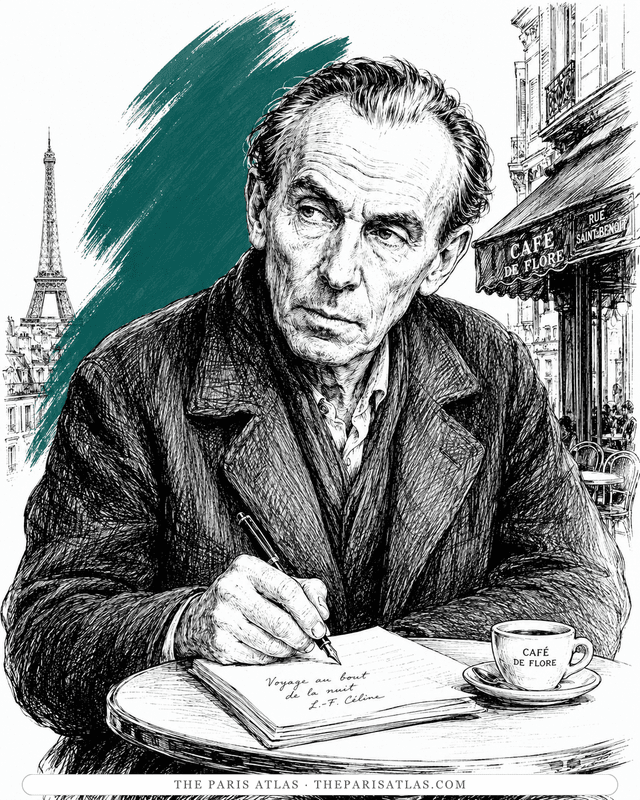
The doctor of the Paris slums who wrote the century's blackest, funniest novel — and changed the sound of French prose.
View author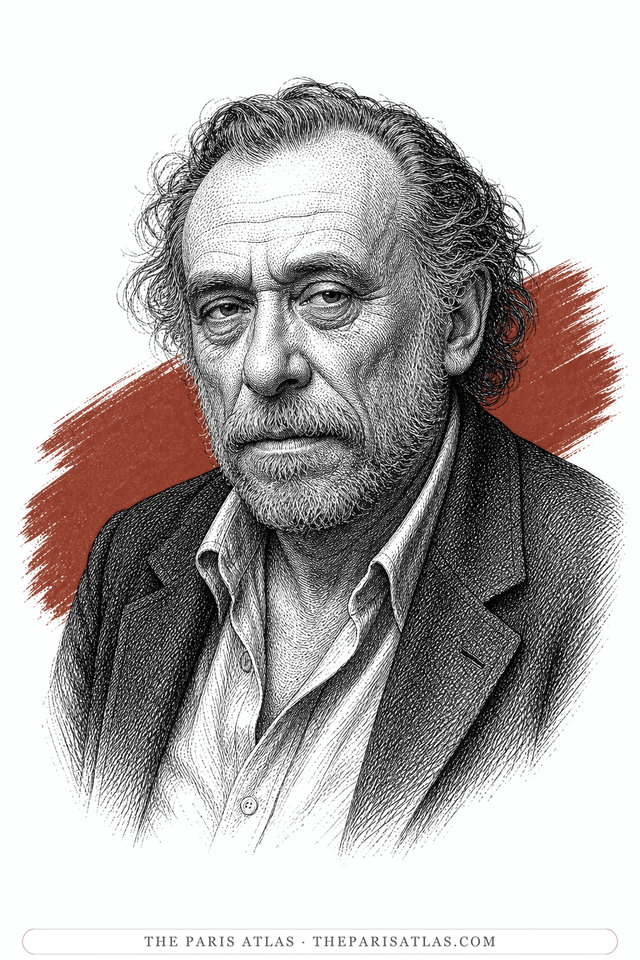
American poet and novelist of Los Angeles rooming houses, racetracks and the post office, who quit his job to write when a publisher offered him a hundred dollars a month. He came to Paris once, in September 1978, drank his way through a live television book programme and walked off the set — and French television has been replaying it ever since.
View author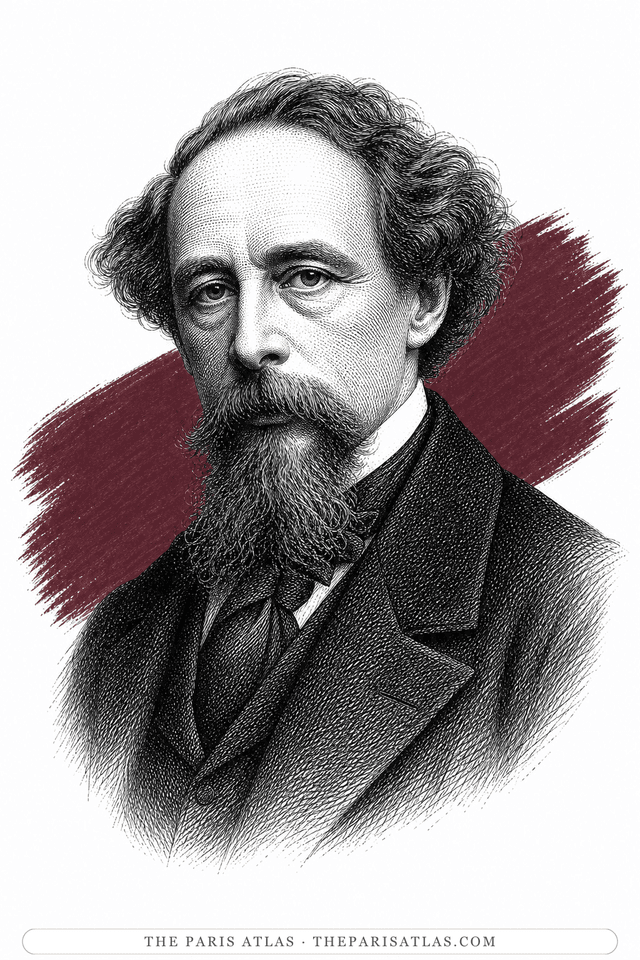
The most popular English novelist of the nineteenth century, who was never a Paris resident in the ordinary sense but kept coming back for twenty-five years: one winter in a rented mansion on the rue de Courcelles, a second winter on the Champs-Élysées writing Little Dorrit, repeated compulsive visits to the Paris Morgue — the riverside building where the city displayed its unidentified dead to the public — and a novel of the French Revolution, A Tale of Two Cities, that has shaped how English readers picture Paris ever since.
View authorThe sources below include the primary text, editions, scholarship, archival materials, and other records that informed this page. They document The Hunchback of Notre-Dame, its publication, and its place in literary history.

Library catalogue records for the editions. The source for the 1831 Gosselin printing, for each modern ISBN and translator, and for the 1833 Bentley edition that named the book in English.
The primary text used throughout, in Isabel Florence Hapgood's out-of-copyright translation, including Hugo's note to the definitive edition. The quotations were checked word for word against it.
The cathedral's account of its architects, used for the restoration under Eugène Viollet-le-Duc and Jean-Baptiste Lassus.
A short biographical record of Eugène Viollet-le-Duc, the architect who led the restoration.
Encyclopédie Larousse on Hugo, for the place of this novel in his career.
The primary text represented by this page, used for descriptions of the work’s contents and for any quoted passages shown here.
The primary text is the baseline reference for every book page. Additional references document publication history, interpretation, and historical context where that evidence is available.
 Explore more resources